10.2 C
London
Thursday, June 11, 2026
Home Blog

Cheap Iranian drone downed $25 million US Army helicopter—maybe by chance

0
cheap-iranian-drone-downed-$25-million-us-army-helicopter—maybe-by-chance
Cheap Iranian drone downed $25 million US Army helicopter—maybe by chance

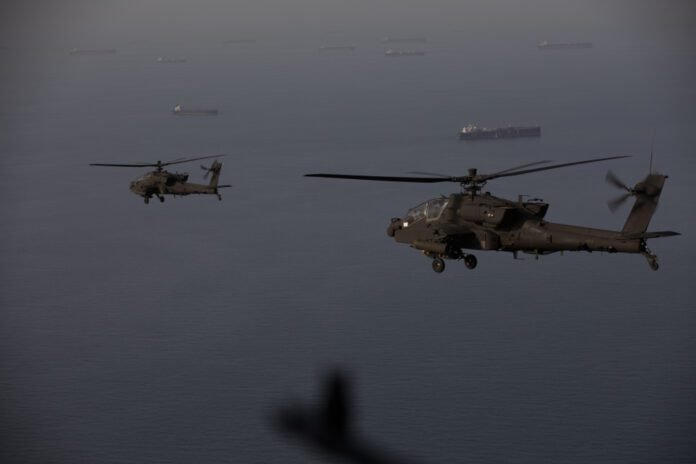
A US Army helicopter gunship was apparently struck by an Iranian Shahed drone before going down near the Strait of Hormuz—but it’s unclear whether the one-way attack drone was deliberately aimed or achieved more of a lucky accidental strike.

Axios correspondent Barak Ravid first reported an unnamed US government official’s comments that an Iranian drone had hit the US Army AH-64 Apache helicopter before the latter went down on June 8. The New York Times later confirmed that reporting through more anonymous US officials, including one official who said US military investigators were still evaluating whether the Iranian drone strike on the helicopter was intentional or accidental.

Iran has fired thousands of such Shahed drones against a wide range of military and civilian targets in the Gulf region since February 28, 2026, when the United States and Israel began the war by jointly attacking Iran with a barrage of bombs and missiles. But Shahed drones have mainly struck stationary targets such as Amazon data centers and energy facilities, sometimes hitting slow-moving commercial ships in the Strait of Hormuz.

The basic models of Iranian Shahed drones rely on GPS satellite guidance and preprogrammed coordinates to strike stationary targets from long range and are not usually designed to track and strike moving targets, said Mark Cancian, a senior adviser with the Center for Strategic and International Studies, a think tank based in Washington, DC, in an interview with The New York Times. But he suggested that Iran may have received newer Russian-modified Shahed drones that can be remotely operated to strike targets in motion.

Whatever the case, the result is that an Iranian drone that usually costs about $35,000 managed to take down a US Army helicopter with a price tag of $25 million. The only silver lining for the US military was its successful rescue of both helicopter crew members from the water due to the unprecedented use of a drone boat.

The growing tally of US military aircraft losses

This represents the first US Army Apache helicopter to go down during the conflict—and apparently the first such helicopter to be taken out by a drone. The United Arab Emirates and Israel had been using their own US-supplied Apache helicopters to hunt and shoot down Iranian Shahed drones.

But Iran had previously succeeded in shooting down an F-15E Strike Eagle fighter jet and an A-10 Thunderbolt ground-attack aircraft on April 5 and April 6, respectively, using ground-launched missiles. All crew members were rescued, though the US military had to mount a risky combat search-and-rescue operation to retrieve the F-15 fighter jet’s weapon systems officer from the Zagros Mountains in Iran.

Iran has also shot down dozens of US MQ-9 Reaper drones used for surveillance that can each cost more than $30 million. Other US military aircraft have sustained damage during combat operations over Iran or while sitting on the ground at air bases targeted by Iranian missile and drone attacks, according to a tally compiled by the Congressional Research Service on May 13. Furthermore, six aircrew died after their KC-135 Stratotanker aerial refueling aircraft crashed on March 12 following a collision with another tanker aircraft.

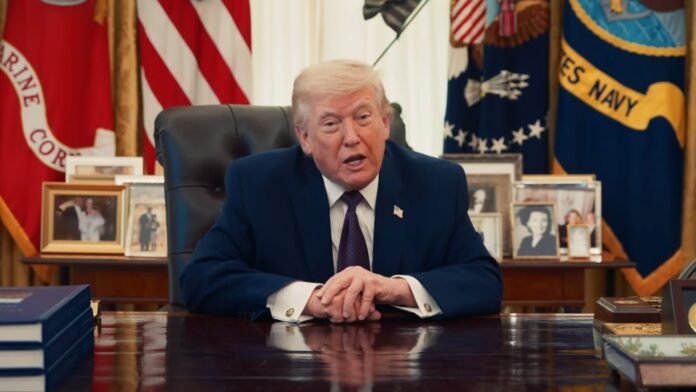
The US military was initially tight-lipped about how the Army Apache helicopter went down. But, in a social media post on June 9, President Donald Trump became the first to publicly blame Iran for shooting down the Apache helicopter, while also warning that “the United States must, of necessity, respond to this attack.”

US Central Command, the US military combat command responsible for Middle East operations, followed up by launching what its press release described as “self-defense strikes against Iran, June 9, at the Commander in Chief’s direction in response to yesterday’s downing of a US Army Apache helicopter.”

The latest flashpoint

Trump was initially inclined to shrug off the Apache helicopter’s downing after the pilots were rescued, according to The Wall Street Journal. But the president apparently changed his mind during a White House briefing when both Defense Secretary Pete Hegseth and Chairman of the Joint Chiefs of Staff Gen. Dan Caine “recommended military action” and shared more details about the Iranian Shahed drone striking the US helicopter.

The strikes from US fighter jets targeted Iranian air defense, ground control stations, and surveillance radar sites near the Strait of Hormuz, according to the US Central Command press release. But Iran’s state broadcaster claimed the US military strikes also damaged water tanks and cut off the water supply for at least 20,000 people in Hormozgan province.

Iran also retaliated by launching yet another round of Iranian missile and drone attacks against Gulf countries such as Bahrain and Kuwait, along with Jordan, according to The New York Times. The Islamic Revolutionary Guard Corps, an Iranian paramilitary force, said it had targeted US bases in the region, including the US Fifth Fleet base in Bahrain, while claiming to shoot down yet another US MQ-9 Reaper drone.

The latest tit-for-tat strikes threaten to completely shatter any lingering illusion of a ceasefire between the United States and Iran that supposedly began on April 8. The ceasefire period has been punctuated by intermittent fighting and dueling blockades in and around the Strait of Hormuz, the vital shipping lane choked off by the conflict.

South Asia’s water wars hinge as much on data as dams

0
south-asia’s-water-wars-hinge-as-much-on-data-as-dams
South Asia’s water wars hinge as much on data as dams

When India placed the Indus Waters Treaty (IWT) in abeyance last year, attention naturally focused on the diplomatic and legal consequences of the decision.

Yet the more consequential question may lie elsewhere: what happens when transparency begins to disappear from one of the world’s most successful transboundary water-sharing arrangements? The answer can be found in the long-running controversy surrounding India’s Kishanganga Hydroelectric Project.

For more than six decades, the Indus Waters Treaty has survived wars, military crises and recurring periods of hostility between India and Pakistan. Frequently cited as one of the world’s most durable water-sharing agreements, the treaty established a framework for managing competing interests over a river system vital to hundreds of millions of people.

Today, however, the challenge facing the treaty extends beyond water allocation itself. It concerns transparency, compliance and the growing strategic value of information in shared river basins.

The controversy has acquired renewed significance following India’s decision to place the treaty in abeyance after the April 2025 Pahalgam attack and follow-up hostilities.

While the immediate debate focused on the legal and diplomatic implications of suspending treaty mechanisms, a less examined consequence has been the growing uncertainty surrounding data sharing, project transparency and compliance monitoring.

The move also raised concerns that data-sharing obligations and institutional monitoring mechanisms that had long insulated water management from political crises could become increasingly vulnerable to broader bilateral tensions.

Environmental security as national security

In an increasingly water-stressed region, access to timely hydrological information is arguably becoming as important as access to the water itself. This shift is transforming water data into a strategic resource with implications extending far beyond a single hydroelectric project.

The debate over environmental flows is often treated as a technical matter. In reality, it is increasingly a security issue.

The Neelum Valley represents a fragile mountain ecosystem dependent upon sustained river flows that support biodiversity, agriculture and local livelihoods. Environmental flow requirements exist precisely because river systems perform functions that extend beyond electricity generation.

Reduced flows can alter aquatic habitats, affect sediment transport, accelerate riverbank erosion and place additional pressure on communities already adapting to environmental change. Over time, such disruptions can produce economic and social consequences far beyond the immediate project area.

The Indus Basin supports one of the world’s largest irrigation networks and underpins roughly 90% of Pakistan’s food production. Nearly 80% of the country’s cultivated land depends directly on waters originating from the basin, while agriculture contributes approximately one-fifth of national GDP and remains a major source of employment and rural livelihoods.

In such circumstances, even relatively small uncertainties regarding river flows, seasonal releases or reservoir operations can generate significant economic consequences. This is why disputes over environmental flows can no longer be viewed solely through an engineering lens; they increasingly sit at the intersection of environmental security, economic stability and national resilience.

Transboundary water governance test

The Kishanganga dispute ultimately raises a larger question about the future of international river management.

The Indus Waters Treaty had long been regarded as a rare example of institutional success in a region otherwise characterized by geopolitical rivalry. Its endurance demonstrated that legal frameworks, technical cooperation and dispute-resolution mechanisms could survive even when broader political relations deteriorated.

That achievement should not be taken for granted. As climate pressures intensify and water demand rises across Asia, confidence in transboundary river agreements will become increasingly important.

The challenge extends far beyond the Indus Basin. From the Mekong to the Brahmaputra, governments are grappling with the same fundamental issue: how to balance national development objectives with the responsibilities that accompany shared water resources.

Similar disputes over upstream data sharing have emerged along the Mekong River, where downstream Southeast Asian states like Thailand and Laos have been adversely affected by the limited transparency of China’s dam operations, complicating their drought management, flood forecasting and agricultural planning.

The real danger is not simply the possibility of reduced river flows. It is the gradual erosion of trust that occurs when information becomes contested and treaty mechanisms lose credibility. Once confidence in institutional safeguards begins to weaken, technical disputes can quickly escalate into political and strategic conflicts.

Water war triggers

The Indus Waters Treaty endured because both sides, despite their differences, generally accepted that cooperation remained preferable to confrontation. Preserving that principle will be essential as the basin enters an era of mounting environmental and geopolitical pressures.

In an age of climate uncertainty, control over hydrological information may prove as consequential as control over dams themselves. The future of the Indus Basin will depend not only on how water is shared, but on whether the data needed to verify that sharing remains available.

Once transparency erodes, trust often follows. In South Asia, where water security, food production and strategic stability are crucially intertwined, that may prove the most consequential risk of all.

Saima Afzal is a researcher specializing in South Asian security, counterterrorism, and broader geopolitical dynamics across the Middle East, Afghanistan and the Indo-Pacific. She is currently a research scholar at Justus Liebig University, Germany.

Iran says nearly 3,500 people killed in US-Israel attacks since February

0
iran-says-nearly-3,500-people-killed-in-us-israel-attacks-since-february
Iran says nearly 3,500 people killed in US-Israel attacks since February

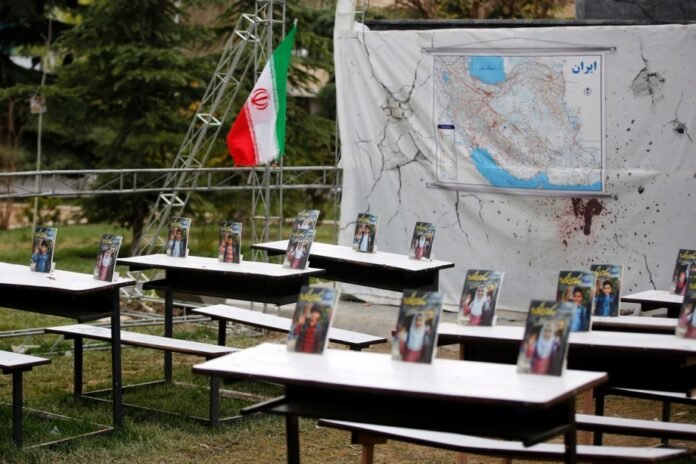
A symbolic classroom is set up at Vanak Square in memory of students who lost their lives in attacks carried out on February 28 in Minab, Hormozgan province, with photographs of students from Shajarat al-Tayyiba Girls Primary School placed on desks and the phrase “Today’s lesson: defense of the homeland” written on the blackboard, highlighting the impact and losses caused by the attacks, in Tehran, capital of Iran, on March 29, 2026. [Fatemeh Bahrami - Anadolu Agency]

A symbolic classroom is set up at Vanak Square in memory of students who lost their lives in attacks carried out on February 28 in Minab, Hormozgan province, with photographs of students from Shajarat al-Tayyiba Girls Primary School placed on desks and the phrase “Today’s lesson: defense of the homeland” written on the blackboard, highlighting the impact and losses caused by the attacks, in Tehran, capital of Iran, on March 29, 2026. [Fatemeh Bahrami – Anadolu Agency]

Iran’s Foundation of Martyrs and Veterans Affairs said on Wednesday that nearly 3,500 people have been killed in attacks by the US and Israel since the outbreak of hostilities on Feb. 28, Anadolu Agency reports.

According to statistics released by the foundation, 3,499 people have been killed so far in the war launched by Washington and Tel Aviv.

The dead included 2,988 men and 511 women, the foundation said, adding that 1,609 of those killed were unmarried.

The region has remained on edge since the US and Israel launched the airstrikes on Iran, triggering Iranian retaliation against Israel and other regional countries hosting US assets.

READ: 2 high-ranking military personnel killed in Monday’s Israeli strikes on Iran

A temporary ceasefire was reached on April 8, but a permanent deal to end the conflict has yet to be signed.

Iran’s Revolutionary Guards on Wednesday said they carried out attacks on US assets in Kuwait, Jordan, and Bahrain after American strikes on southern Iran.

The drone and missile strikes came after US President Donald Trump said Iran had downed a US Apache helicopter a day earlier.

Trump later said in a social media post that Iran took “too long” to negotiate an agreement and will now “have to pay the price.” He, however, did not elaborate on the status of the truce.

WATCH: 100 Days In: Palestine, Iran, and the War Remaking the Middle East | Palestine This Week with Mouin Rabbani

President Trump Says Secret US Mission Guided 100 Million Barrels of Oil Through Strait of Hormuz 

0
president-trump-says-secret-us-mission-guided-100 million barrels-of-oil-through-strait-of-hormuz 
President Trump Says Secret US Mission Guided 100 Million Barrels of Oil Through Strait of Hormuz 


President Donald Trump said Wednesday that a covert US military operation in the Strait of Hormuz helped safeguard commercial shipping and facilitated the movement of more than 100 million barrels of oil through one of the world’s most important energy corridors. 

In a Truth Social post, Trump said he had authorized the mission last month to assist oil tankers and commercial vessels traveling through the strategic waterway. He said the effort resulted in the safe passage of more than 200 commercial ships and allowed oil shipments to reach international markets. 

“Last month, I directed our Great U.S. Military to execute a secret mission to support Oil Tankers and other Commercial Ships through the Strait of Hormuz,” Trump wrote. 

“Today, I am pleased to announce that this effort has resulted in more than 100 MILLION Barrels of Oil making its way through the Strait, and into the Open Market. More than 200 Commercial Ships have safely traveled through the Strait.” 

The president described the operation as evidence of American dominance in the region and argued that Iran no longer controls developments in the waterway. 

“This wildly successful effort is because the UNITED STATES of AMERICA CONTROLS the Strait of Hormuz — NOT Iran. Their military is defeated, and their economy is lost. It’s over for Iran! Thank you for your attention to this matter,” he wrote. 

Speaking separately to reporters, Trump said the operation included nighttime activities targeting Iranian oil shipments. He credited those efforts with helping to reduce pressure on global energy markets. 

“We are taking millions of barrels of oil out of Iran. Last night we seized 22 ships full of oil, and they didn’t know about it. That’s why oil prices are falling,” Trump said. 

President Trump also said the mission helped keep crude prices from rising beyond an estimated range of $85-$90 per barrel. 

US Energy Secretary Chris Wright did publicly state that ship traffic and oil exports through the Strait of Hormuz were increasing and that US military support played a role in facilitating non-Iranian oil shipments. 

The Financial Times and the Wall Street Journal reported that covert or “dark” tanker transits have increased and that vessels have been operating under US military protection in some areas, which is broadly consistent with President Trump’s description of military support for shipping. 

However, his statement about the US seizing “22 ships full of oil” has not been independently verified.  


Nobody needs AI to search the Internet, court says in ruling against Google

0
nobody-needs-ai-to-search-the-internet,-court-says-in-ruling-against-google
Nobody needs AI to search the Internet, court says in ruling against Google

Potentially impacting all AI search engines and chatbots known to poorly paraphrase source links, a German court has ruled that Google is liable for false statements in AI Overviews.

The preliminary ruling came in a case flagged by The Decoder, where two publishers found that Google’s AI Overviews incorrectly linked them to scams and other sketchy business practices. After smearing publishers by making affirmative statements like “Yes, [it] is known for dubious business practices and is often perceived as a scam,” Google failed to correct the misleading output, even after the publishers sent a cease-and-desist letter earlier this year.

Google tried the usual arguments to shield itself from liability for false statements in AI Overviews, such as arguing that most users understand that AI outputs aren’t always accurate and must be verified.

But the court found that, unlike traditional search engines that merely present lists of links to third-party statements, Google’s tool made “independent, new, and substantive statements” based on its own misinterpretation of links on the Internet.

That’s a problem, the court said, because while publishers may have been able to sue to stop third parties from publishing defamatory statements appearing in Google search results, only Google can correct the underlying algorithm and outputs displayed in AI Overviews. And because, at least initially, the company did not, it therefore “must be held accountable,” the court ruled. Beyond that, Google’s argument was deemed particularly weak, since the AI overview in this case “contains statements that do not appear in the search results at all.”

The court’s order—requiring a temporary injunction barring Google from spreading the false claims in any further AI Overviews—may have global implications, as the court seems to be the first to hold an AI firm liable for AI speech.

In the past, AI firms have hoped that disclaimers warning about misinformation would protect them from lawsuits over untrustworthy outputs. Last year, one chatbot maker even argued that AI speech is its own category of “pure speech” and the First Amendment should protect it.

According to a Google translation of the German court ruling, however, the false outputs were “primarily an expression of the defendant’s commercial activity,” and the AI tool’s “opinions” and false statements were capable of impacting public opinion.

The court concluded that, in weighing the balance, publishers’ interest in removing the false information outweighed Google’s commercial speech rights.

AI is not necessary to search the web

Historically, any potentially harmful content surfaced by search engines has been protected from direct liability because that surfacing was considered largely unavoidable when helping users sort through an enormous tangle of information online. But the German court emphasized that AI search engines do not enjoy those same protections because AI summaries merely provide “an additional function—one without which the use of the search engine would still be (and is) possible, and without which users are perfectly capable of finding results amidst the ‘flood of data.’”

In other words, nobody needs AI to search the Internet, so AI firms can’t just let their tools attribute false claims to fake sources without assuming any liability.

The court also seemed to take a dig at Google for expecting users not to “blindly trust” AI overviews, noting that the AI tool’s utility “would be significantly diminished if the ‘AI overview’ were generally regarded as unreliable and if every single displayed link required independent verification.”

It seems clear that’s not how people approach AI search tools. The Decoder noted a Pew survey last July showing most people don’t click on AI Overview source links, as well as a May analysis published by The New York Times that showed that AI Overviews with the current Gemini 3 model are inaccurate about 9 percent of the time and include inaccurate source links about 56 percent of the time.

Together, these findings suggest that Google’s AI tool may be cranking out millions of wrong answers daily, with few users verifying the information. Should other courts agree that tech firms are liable for any defamatory outputs emerging from this experimental period of AI search chaos, the biggest AI leaders could find themselves soon buried in lawsuits.

It remains unclear if Google expects to appeal or perhaps start addressing requests to fix false statements in AI Overviews more quickly following the ruling.

Google will likely fight the preliminary ruling. Asked for comment, a Google spokesperson told Ars that “we invest deeply in the quality of AI Overviews to ensure that the overwhelming majority of responses provide accurate information, and they are designed to reflect the information that exists on the web. We’re carefully reviewing this decision, which is not yet final.”

This story was updated to include a statement from Google’s spokesperson.

Netanyahu to run for re-election, his party says

0
netanyahu-to-run-for-re-election,-his-party-says
Netanyahu to run for re-election, his party says


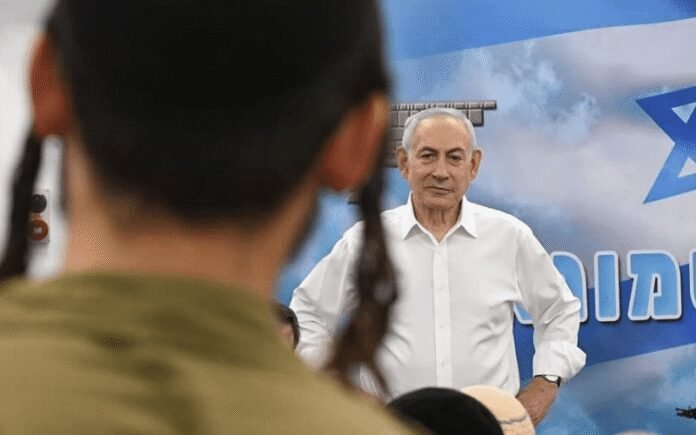
Benjamin Netanyahu will seek re-election this year, his party announced on Wednesday, after U.S. President Donald Trump said ​he wasn’t sure if the Israeli prime minister would stand again.

In a brief statement, ‌Netanyahu’s Likud Party said he would run in the election and, God willing, he would win. The election has not yet been formally announced but must be held by October.

Earlier, ABC ​News Chief Washington Correspondent Jonathan Karl posted on X that Trump had ​told him he did not know if Netanyahu would stand.

“I don’t ⁠know, he’s had an amazing career. Does he want to continue?” the journalist ​quoted Trump as saying.

The Israeli election will be the first since the October 7, ​2023 Hamas attack, the country’s worst security failure, which precipitated Israel’s assault on the Gaza Strip.

Netanyahu has faced a tumultuous term since returning to power in December 2022 at the helm of ​the most right-wing coalition in Israeli history. He faced mass anti-government protests before ​the wars in Gaza, Lebanon and Iran.

Polls have repeatedly indicated that his coalition would fail to ‌win ⁠a majority at the next election. A poll published by the Jerusalem-based Israel Democracy Institute think tank on June 9 said that 61% of the Israeli public believe he should not run.

However, polls also show that a potential coalition of opposition ​parties would fall short ​of a parliamentary ⁠majority unless they form a coalition with Arab parties, which some opposition leaders have ruled out.

U.S. and Israeli officials say Trump ​and Netanyahu, who launched the Iran war together in February, ​still have ⁠a close relationship, though it has at times seen strain, including in recent weeks as Trump has demanded Israel curb military action in Lebanon while Washington negotiates a peace deal with Tehran.

Last ⁠week, ​Trump acknowledged calling Netanyahu “fucking crazy” in a hot-tempered phone call, ​though he also said they get along well. He has repeatedly called on Israel’s president to pardon ​Netanyahu over outstanding corruption charges that Netanyahu denies.

Source:  Reuters

ICE Rushes to Deport Palestinian Grandpa Despite Judge’s Order to Free Him

0
ice-rushes-to-deport-palestinian-grandpa-despite-judge’s-order-to-free-him
ICE Rushes to Deport Palestinian Grandpa Despite Judge’s Order to Free Him


Less than two weeks ago, in a scathing rebuke, a federal judge ordered U.S. Immigration and Customs Enforcement to release a Louisiana grandfather who’d suffered a heart attack while in ICE custody.

The man, Akram Mahmoud Omar, 77, lived in the U.S. for 50 years until ICE abruptly seized him during a routine check-in last October and soon sent him to “Camp 57,” the ICE detention camp within the notorious Angola, Louisiana, state prison.

The stress of the poor conditions there contributed to Omar’s heart attack, according to the habeas petition he filed in April. On May 29, a federal judge found ICE had violated Omar’s constitutional rights and ordered his immediate release. 

Then on Monday, just 10 days after his release, ICE seized Omar again and tried to whisk the still-recovering man onto a deportation flight the next morning, according to his lawyer Ken Mayeaux. 

Following an emergency motion from Mayeaux, the same judge again ordered ICE to release Omar and cautioned the agency not to make another deportation attempt.

“U.S. Immigration and Customs Enforcement (‘ICE’) shall IMMEDIATELY RELEASE Omar from ICE custody,” said the Monday order from Judge Brian Jackson in Louisiana’s Middle District. “ICE shall not RE-DETAIN or REMOVE Omar from the United States during the pendency of Omar’s Emergency Motion to Enforce the Court’s May 29 Order.”

In the May order, the judge found that ICE had violated Omar’s constitutional rights by unlawfully detaining him and denying him the chance to prepare for an orderly departure.

ICE directly defied that order by seizing him without warning for immediate deportation, the emergency motion alleges, blocking him from arranging his affairs or even saying goodbye.

“Petitioner’s re-detention and planned removal are in direct contempt of this Court’s prior order,” reads the June 8 emergency motion. The government “lied to Mr. Omar, telling him and his family that he did not need to report to ICE/ERO” — ICE’s Enforcement and Removal Operations division — “until December, but now, Respondent is racing to remove petitioner within hours.”

In a statement to The Lens and The Intercept, ICE spokesperson Angelina Vicknair said, “ICE complies with all court orders, and any allegation that a judge’s orders were not followed are categorically false.”

Federal courts are now constantly dealing with flagrant violations of judicial orders by ICE, said Bridget Pranzatelli, an attorney with the National Immigration Project.

“This level of cruelty and disrespect for federal courts is the rule, not the exception,” said Pranzatelli, who is familiar with the case. “The Court looked at the entire record before it and issued a well-reasoned decision, which specifically mandated certain protections for this very elderly, very sick man, and ICE ignored it.”

ICE’s actions in Omar’s case are also in line with the way that the government is using extreme measures to target Palestinians, Pranzatelli said. Omar was born in Palestine before the formation of the state of Israel; in 1975, he moved to the U.S. as a lawful permanent resident.

“If In Fact He Survives the Flight”

After his release last month, Omar attended his regular ICE check-in on the first Wednesday in June; his next check-in would be in December, he was told. But last Friday, he received a letter telling him to report to an ICE office on Monday morning, June 8.

After Omar received the letter, Mayeaux emailed the ICE office in Bossier City, Louisiana, where Omar lives, warning immigration officials that “any attempted removal of Mr. Omar in June would be in direct contempt of the Court Order,” according to a copy of the email included with the motion. “I am instructing my client not to report as requested.”

Instead, on Monday, ICE came to Omar’s home and arrested him again. Omar’s wife immediately called Mayeaux. Only hours later did ICE tell Omar’s family he was being taken nearly two hours away, to an ICE staging area for deportation flights, and would be put on a plane the next morning to Israel.

By early afternoon, Mayeux had filed the emergency motion. 

His client’s health, Mayeux wrote in the emergency motion, was his main concern. Omar is still recovering from his April heart attack and open-heart surgery. His wife told the arresting ICE officer that she was planning to take Omar to a cardiologist later that day, and that he could not move well. 

According to the filing, a doctor was prepared to testify that the roughly 14-hour flight without medical clearance raised serious concerns about Omar’s health, “if in fact he survives the flight.” 

“Heartless and Cruel”

Omar had been in the U.S. for half a century when ICE picked him up in Mississippi during a routine check-in last fall. There was no readily apparent cause: ICE had long known about two minor, nonviolent convictions, one in 2005 and one in 2022, but Omar had lived in the U.S. for years under ICE supervision and had complied with required immigration check-ins. 

“Incredibly, despite these undisputed facts, Immigration and Customs Enforcement (‘ICE’) considers Omar to be both a ‘flight risk’ and a ‘priority for removal,” said the May release order from Jackson, a federal judge in Baton Rouge. “Omar has been held in ICE detention since October 28, 2025 — 7 full months — with no end in sight.” 

Jackson ruled that ICE had to abide by its own regulations: If ICE were to deport him, the agency needed to give him advance notice, a reason, an opportunity for an orderly departure, and an informal interview to respond to ICE’s deportation efforts.

ICE did not serve Omar’s counsel with notice until he was already back in ICE custody. 

“The Notice also makes a mockery of the Court’s Order,” says Mayeaux’s June 8 emergency motion. “It was only after he was taken back into custody — in contravention of the Court’s Order — that he was informed of the existence of the travel document and of his imminent removal.” 

But even at that point, the motion alleged, ICE didn’t give Omar the chance to speak directly with counsel.

The court had also directed ICE to facilitate communication with Omar’s doctors and family “to ensure the most efficient and effective continuation of his required medical treatment upon his release.”

ICE appears to have violated most of Jackson’s orders when its agents re-detained Omar. Even when ICE SUVs showed up at his door to bring him to the Bossier City field office, the agents continued to say that it was only a routine check-in. Not until less than 24 hours before the flight was scheduled to depart were family members told he was being deported.

Again, an order from Jackson mandated Omar’s immediate release. ICE agents returned him to his home around 7 p.m. Monday evening — leaving his family relieved, but shaken.

“They’re all completely traumatized,” Mayeaux said of his client’s family.

While ICE’s letter last week had made him suspicious, he said, “I couldn’t believe they would be so heartless and cruel as to do this to a 77-year-old man who’s ill. I just didn’t.”

Trump’s Cuba strategy is economic genocide

0
trump’s-cuba-strategy-is-economic-genocide
Trump’s Cuba strategy is economic genocide

Cuba has been under a US trade embargo since the Eisenhower administration, although it was President John F. Kennedy who implemented a comprehensive embargo on all trade with Cuba.

And while every subsequent administration has tried since to cause pain and suffering to the Cuban people for its support of a revolutionary government, it is the Trump administration that has made the collapse of the communist regime on the island a top priority by expanding sanctions against the island, blocking fuel deliveries, and threatening Cuba with military action.

Cuba is indeed on the brink and unlikely to survive since the inhumane and criminal actions of the second Trump administration have plunged the island into a deep humanitarian crisis.

In the interview that follows, Danny Shaw discusses President Donald Trump’s policy of strangling Cuba and offers an anatomy of the impact of the economic embargo on its people after having witnessed firsthand the existing conditions on the island.

Danny Shaw is a scholar of Latin American and Caribbean studies and a longtime supporter of the Cuban revolution. He recently traveled across Cuba, where he documented for The Grayzone the harrowing conditions following the Trump administration’s imposition of an energy blockade.

C. J. Polychroniou: US President Donald Trump has revived the Monroe Doctrine with a series of forceful actions in the Western Hemisphere, such as the attack on Venezuela, which resulted in the kidnapping of Venezuelan President Nicolas Maduro, and conducting military strikes against fishing boats in the Caribbean.

It may not be totally clear what’s driving the Trump administration’s gunboat diplomacy, but Cuba, which has endured perhaps the longest economic embargo in modern history, is next on the wannabe dictator’s hit list.

Danny, can you talk about the policy methods the second Trump administration has used in order to further isolate Cuba and, in the process, strangle its economy and its people?

Danny Shaw: On January 29, the Trump administration—the true spokesman of the billionaire class with global reach, as we’ve seen from Caracas to Tehran—took actions to completely shut down the Cuban economy.

Threatening any country that sold oil to Cuba or continued to trade with them tightened the screws on an already long-existing, illegal, unilateral Economic War. Washington and their right-wing minions across the hemisphere also went after Cuban medical missions from Honduras to Jamaica, which brought much-needed foreign reserves for Cuba and most importantly afforded medical attention throughout the Americas and the world to marginalized populations. 

Ecuador and Costa Rica kicked out the Cuban embassies. The Trump administration has made it clear to the world: Any attempt to support the Cuban government will be severely criminalized. Concretely, this means Cuba is more isolated and desperate than it has ever been.

We must see Trump’s energy blockade in the context of an economic blockade which has left Cuba on life support since 1991, the year the Soviet Union and the Socialist Block countries fell. Overnight, these measures cut Cubans’ average caloric intake in half. Periodically, under both Democratic and Republican presidencies, the US government has taken a scalpel to the Cuban economy.

With a Gazaesque strategy of surgical precision, the State Department has cut off remittances, wiped out tourism, and penalized any foreign company that did business with Cuba.

January 29 was yet another inflection point of what has truthfully been an ongoing “special period” and is now proving to be a death sentence for many Cuban families. Now the FBI and Homeland Security are going after those of us who have brought humanitarian aid to Cuba.

Every word I share, including my quotation of hungry and dispirited Cubans, has to be seen within the context of a 67-year-old war on a country that has sought to be sovereign from empire. As an ethnographer, an international affairs analyst for Cuban and Venezuelan television since 2014, and someone building fluency in Cuban Spanish for over three decades, I have had a lot of intimate contact with Cubans, their opinions, and their struggles.

We have to go back to the original State Department memorandum as laid out by Deputy Assistant Secretary of State for Inter-American Affairs Lester Mallory on April 6, 1960:

..it follows that every possible means should be undertaken promptly to weaken the economic life of Cuba. If such a policy is adopted, it should be the result of a positive decision which would call forth a line of action which, while as adroit and inconspicuous as possible, makes the greatest inroads in denying money and supplies to Cuba, to decrease monetary and real wages, to bring about hunger, desperation and overthrow of government.“

I quoted the ruling class’s thinking at length because that is precisely what has been happening in Cuba now since at least 1991. The US method of stoking “hunger” and “desperation” has completely crushed this fascinating, historical experiment in resistance and a people’s government. What I witnessed in Cuba in February, March and April of this year was apocalyptic.

C. J. Polychroniou: The Trump administration forced a leadership change in Venezuela, but it is debatable whether there has also been a regime change. However, the plan for Cuba seems to be regime change even though its government is not doing anything to threaten the United States. Why is Trump after regime change in Cuba and to what end? Whose interests is he really serving?

Danny Shaw: Trump is the ultimate distraction. Like all billionaire bubble boys, there are no consequences for his lies, threats, and general clownishness. But behind the bombastic, arrogant billionaire are the true global power brokers, a small group of 2,800 billionaires who seek to preside over humanity’s destiny. They use Trump as their spokesman to carry out a fascist global agenda that was thought to be impossible prior to 2016 when he first came into power.

The War on Cuba and all states who represent any type of resistance—China, Nicaragua, Venezuela, Zimbabwe, Palestine, Russia etc.—is designed to convince us again and again of “the end of history.” The idea that cowing to the billionaires and soon-to-be trillionaires is inevitable.

The corporate media has long presented “Cuba” as a “failed socialist state.” This serves the empire’s ideological interests. They can showcase this “miserable island,” stripped of all contexts, and show this horrible place on CNN and Fox hemorrhaging their own people. Millions of Cubans are dying and migrating.

Even before this crisis, the most extreme ever, the Cuban population shrank by 1.4 million between 2020 and 2024. The capitalist media can then propagandistically contrast this reality with a mirage of extreme abundance and excess that they parade in front of our faces through their ideological apparatuses. Think social media, Hollywood, the mainstream media etc.

The other interest the US has in Cuba is of course economic. The Cuban state has been the ultimate arbiter of questions of foreign trade and investment and an obstacle to unfettered penetration by private capital. Trump, his business partners, and cronies will cash in on land grabs, mineral deals, and the buying of shorefront hotels. Cuba has long had a big tourist economy that they can cash in on.

So these are some of their motivations. But I think your question is an interesting one that I have sat with for decades. Truthfully, the Empire would only have to blow and the Cuban government would fall. In terms of being able to provide for and defend the Cuban people, the Cuban government fell long ago, arguably in 1991.

Private property is now ascendant in Cuba and has been arguably since 1991. Whatever leadership that is there now, though they put out daily patriotic statements, is not the leadership of Fidel, Che, and Camilo that we in the Western left came to love and defend since 1959.

What I have seen over the past 31 years was a people left to fend for themselves. The ethos and general mindset in Cuba is not “Patria o Muerte” and “Venceremos,” (“Homeland or Death” and “We Shall Overcome”), the historic slogans of the Revolution; it is the “Law of the Jungle” and “Every Man For Himself.”

While leftist tourists maintain a glorified, outdated image of this museum of socialism, another mentality already reigns over Cuba, especially among the two generations born into the special period. For example, in the province of Sancti Spiritus I stayed with a family that was relatively stable. The father was a retired track coach and the mother a retired physical therapist.

The son plays professional basketball in Brazil and, at 6 feet 9 inches, is one of the tallest Cubans in the country. They have given a plate of food to two elderly neighbors, Sonia and Francisco, for years now. They can no longer afford to do so as they can barely feed themselves and their immediate family.

Sonia and Francisco are now hungry and malnourished. They will soon die, two more anonymous victims of this macabre US foreign policy. But who will record their deaths? Who will know their names? The local officials will just record that they died of old age.

And this happens everyday now in Cuba. Generalized hunger has become mass malnutrition, and everyday that passes there is more death. Many Cubans say there is already starvation in the most historically neglected areas like Guantanamo and Las Tunas.

So I think being able to point a finger and enact laws in Florida about “commemorating the victims of communism” serves the billionaires’ interests. This begins to explain why they have sadistically sought to cause so much suffering in Cuba.

C. J. Polychroniou: As you already pointed out, you were recently in Cuba and traveled throughout the island. Describe the actual conditions that you encountered.

Danny Shaw: Let me take you deeper into the class contradictions that have long been surfacing in Cuba.

One of the first things a visitor to Cuba will notice is that as the people are dehydrated and starved, the private sector is growing. It is important to clarify that Marco Rubio, Trump, and the architects of the intensification of the economic war on Cuba are at the same time bolstering the private sector. So the owners of private businesses, the MIPYMES, are allowed to import gas, generators, food, etc.

It is the Cuban masses that are completely cut off, as an emerging business sector continues to consolidate its economic power on the island functioning as Miami and Washington’s beachheads.

But to access these private shops one has to have dollars, or big stacks of Cuban pesos. The 99% of Cubans have neither. The private MYPIMES also have more quality food, but they are private peninsulas of privilege, or Little Miamis, that very few Cubans can afford.

Four days after the guerrillas took power in Havana on January 1 1959, Fidel Castro asked a crowd of tens of thousands in Camaguey, “How can we call this our homeland, if the homeland gives us nothing?”

Today, the children, grandchildren and great-grandchildren of that generation of Cubans circulate this heroic speech that grew out of their anti-imperialist and anti-dictatorship struggle and ask, “Why are we being shut out of our own country?”

Collectively, right now, Cuban children have less access to toys and food than what I have seen across Haiti since I first went there in 1998. Some of my friends in Cuba have asked me if there is any way for them to escape to Haiti.

Haitian medical students I knew in Santiago and other Haitians were forced to flee Cuba and return to their besieged homeland because of how bad Cuba is. When Haiti is a reference for relative abundance, that is the ultimate indicator of how blockaded and dire Cuba is.

Agricultural products cannot get from the countryside into the city. Every day there is more hunger, malnutrition, and encroaching starvation. The Cuban people say they have no voice. The most vulnerable, the elderly, children and prisoners, are already dying. There is a stark sense of generalized hopelessness.

There are no functioning means of transportation. Yet as one waits for buses that never arrive, imported cars from Miami speed down the highways. The people say those are rich Cubans or government officials. The people do not trust their government and see them as a central ingredient in the genocidal campaign they are facing.

Let’s break down the math of starvation, CJ. Because we are all focused on US drones, bombs, and boots on the ground, but the invasion has already arrived. What will play out in the upcoming days and months is the consolidation of the umpteenth US intervention in the affairs of the people of the Caribbean, South America and the world. And it will continue to exterminate a lot of lives. When Cubans say that today Cuba is the equivalent of Gaza without bombs, they are not exaggerating.

A liter of gasoline in Cuba costs more than 6,000 pesos (US$10), meaning a gallon of gas costs $40. The average Cubans’ salary or pension is 2,400 pesos ($4) monthly. A bottle of Turkish sunflower oil to cook costs 1,500 ($2.50), a pound of rice costs 350 ($0.60), and the electricity bill, regardless of whether there is any, is 400-500 pesos (less than $1 per month), meaning that alone consumes a Cuban’s money for the month.

In Cuba, no matter how much money you have in the bank, you can only take out $2 or $3 dollars. That is why you see long lines across Cuba of retirees and heads of family waiting all day in front of banks, trying to get their money out. Cuba is a country of lines, long lines.

Infant mortality rates have increased by 148% in Cuba. Center for Economic and Policy Research’s director of international policy Alexander Main: explains: “The Trump policy of ‘maximum pressure’ on Cuba has killed a lot of babies… it’s highly likely that more babies are dying now, and at an even higher rate than last year as a result of the current US fuel blockade targeting Cuba.”

Many families have to get up in the middle of the night because that is the only time they have access to a few hours of electricity. Measures of insomnia, depression, and all mental health indicators are skyrocketing. US terrorism comes in many different forms.

By the time we publish, the hyperinflation and devaluation of the Cuban peso will be even more extreme. Everyday, the peso is worth a fraction less than the dollar, damaging Cubans’ earning power even more. What Cubans have whispered to me since 1995 is that if they film their reality or try to speak out against the economic disparities, the authorities will arrest them immediately.

What if you have children? How do you feed them? Cuban families are wary of having children because they cannot feed them. The War on Cuba is a Demographic War, a War of Depopulation. From the perspective of capital, Cuba’s population is excessive and expendable, especially old people who are generally more loyal to the revolution because they can remember what it once was prior to 1991.

Similar to Palestine and Haiti, masses of people can be displaced and exterminated. Why would capital care? And why would a Western public care, if they have never heard one positive word about these “sh^thole countries,” to quote the ever-eloquent Trump again.

Religion, alcohol and drug addiction all find a foothold among a population who cannot see beyond this bleak material reality. All of the ingredients for an Economic Genocide are in place. Cubans I met and hung out with in Las Tunas, Holguin, or Granma were not worried about imperialist drones or bombs. They said the bombs of thirst and hunger have long been their number one enemy. Colonial death comes in many different forms.

C. J. Polychroniou: Cuban government officials have said that the country will fight to death in the event of a US invasion. But is it realistic to expect a starving nation fight back in the event of a full-scale invasion of the island by the world’s most powerful and advanced military?

Danny Shaw: Minister of Foreign Affairs, Bruno Rodriguez, himself explained: “It seems that the US government has chosen a dangerous path, a path that could lead to unimaginable consequences, to humanitarian catastrophe, to a genocide.”

He then says what every leader has to say but it is tough to take seriously: “Cuba will exercise its right for its legitimate defense to the very last consequences with massive, mass support of the people.” These militant government statements are out of touch with mass sentiment.

Observing our movement of activists, Marxists, the left, or whatever we call ourselves, we pretend like it is 1959 or 1989 and Fidel and well-trained, honest revolutionaries are still at the helm of the state. If we cannot honestly reflect on this question of leadership, the Cuban state and the masses, aren’t we complicit in the ongoing strangling and starvation of today’s mambisado (the masses who fought for Cuba’s independence against Spain)?

Do we judge a revolution by the objective and subjective conditions the people confront, or by the latest interview or speech of Diaz-Canel? Have any of these activists who defend Cuba ever gotten outside of the Hotel Nacional and outside of the government-guided tours? If we mischaracterize the objective and subjective conditions in Cuba, aren’t we complicit in our own way in the war on Cuba, which Cubans say comes from both an internal and external blockade?

To think Cuba can resist in any way is ridiculous. How can a half-starved, unarmed people resist the largest military with the largest budget, $1.5 trillion, in the history of the world? Cubans overwhelmingly told me they are so sick of “resolving,” “surviving,” and “resisting.” Besides some elderly veterans of the heroic war of liberation in Angola and that generation of fighters, I met almost no Cubans with any enthusiasm for the idea of fighting back against the United States.

There’s a complete state of demoralization across Cuba. Hyperbolic leftist comparisons to “People’s War” in Vietnam under the direction of Ho Chi Minh and General Nygun Vo Giap are goofy and dishonest.

Cubans see their government and police as complicit in everything that is happening. Why would they die for a process they long stopped believing in? The Western “left movement” is clueless about the objective and subjective conditions in Cuba because we uncritically take our cues from the Cuban government.

The private sector could not be ascendant in Cuba if there was not collusion with high-level officials. The Cuban masses perceive that government officials are saying one thing publicly but behind the scenes are looking out for themselves. And if you listen to the statements on CNN by this generation of Castros, that is exactly what they say. They praise capitalism and position themselves to adapt to the inevitable reconquering of the island.

Cuban officialdom and their leftist counterparts have engaged in what we can call “high politics.” Spanish researcher of communes in Venezuela, Cira Pascual Marquina, explains that we often base our conclusion on “institutional declarations, negotiations, geopolitical responses—while overlooking the dense fabric of everyday political practice that sustains the process.”

Look at the Venezuela General Vladimir Padrino and all of his rhetoric before January 3 about a “people’s war” in Venezuela that would resist any efforts by the Trump administration. What resistance has there been in Venezuela? Today, six months after the US occupation of Venezuela, Padrino is an agricultural minister.

All of these triumphant-sounding speeches mask the reality of the Cuban masses, and arguably do more damage than good. As a supporter of the Cuban Revolution, I waited years if not decades to say some of these things publicly. Because again, I am with David, not Goliath. But scholars and supporters of Cuba need to be vocal about the whole truth.

My responsibility is not to parrot Cuban government speeches and positions as the left does here in the West, but to give a voice to a population captured in a looming Economic Genocide, trapped between two bureaucracies. Here is an essay by a Cuban student in Ireland which brilliantly captures how the Cuban people feel they are stuck between two competing rhetorics, which both ignore their interests.

C. J. Polychroniou: US imperialism never went away but has gone totally berserk under the second Trump administration. Can the beast be reformed?

Danny Shaw: In Cuba, the closest place to get Cuban food is Miami.

It’s surreal. After navigating dehydration and hunger across Cuba for one month, I returned, like other activists and friends of Cuba, to be detained and interrogated by the FBI in Miami. When I was released, after my third detention and interrogation in less than two years, I walked through an airport full of every last type of food and consumer good. Capitalism is the accumulation of misery in one pole, and luxury in the other. 

The Donroe Doctrine means US imperialism cuts off any attempt by China, Russia, Iran, etc., at building multipolarity in the hemisphere and recolonizes any bad example or “maroon state” that has escaped their hegemony.

There is no reforming US imperialism. Only the unity of oppressed peoples as expressed through multipolar projects like the BRICS+ nations could ever defeat empire. That is the only hope right now for defeating this beast which will continue to starve, bomb, and genocide resistant populations until a knife is plunged into its neck.

Like the War on Haiti, first through the use of paramilitary gangs beginning in 2018, and now through Erik Prince and his private security companies to displace the once resistant population of Port-au-Prince and Latibonit (another department or province of Haiti), this constitutes the latest and most intense chapter of war on the Cuban people.

Cubans are dying in silence as US government officials talk about bringing “freedom” to Cuba and Cuban government officials give speeches about Cuba’s “historic resistance.” What I have lived and witnessed in Cuba since 1995 constitutes an ongoing Economic Genocide against a defenseless, muzzled population.

C.J. Polychroniou is a political economist/political scientist who has taught and worked in numerous universities and research centers in Europe and the United States. His latest books are “The Precipice: Neoliberalism, the Pandemic and the Urgent Need for Social Change” (A collection of interviews with Noam Chomsky; Haymarket Books, 2021), and “Economics and the Left: Interviews with Progressive Economists” (Verso, 2021).
Google DeepMind releases DiffusionGemma, a model that runs local AI 4x faster

0
google-deepmind-releases-diffusiongemma,-a-model-that-runs-local-ai-4x-faster
Google DeepMind releases DiffusionGemma, a model that runs local AI 4x faster

Another day, another AI model from Google. This time, Google DeepMind has released a new member of the Gemma 4 open model family, but it’s fundamentally different from the rest of the lineup. DiffusionGemma doesn’t generate outputs linearly like most AI models. Instead, it can produce an entire block of text in parallel. Google says this makes it faster and more efficient when running on local hardware like an Nvidia DGX or a humble gaming GPU.

Most AI models are designed to be autoregressive—they generate text left to right one token at a time. DiffusionGemma has more in common with image generation models, which start with static and then denoise it to create the desired content. This model takes a field of placeholder tokens running over the canvas multiple times to generate likely tokens and using those to improve estimation of others. At the end of the process, the model finalizes its token outputs in one large block—the “denoised” text canvas.

DiffusionGemma is fairly large in the realm of Google’s open models. It’s a Mixture of Experts (MoE) model with a total of 26 billion parameters, but only 3.8 billion are activated during inference. That means it should fit in the 18GB RAM allotment of a high-end GPU. In testing with an RTX 5090, DiffusionGemma spits out around 700 tokens per second. With a single Nvidia H100 AI accelerator, DiffusionGemma can produce 1,000+ tokens per second. That’s about four times the output of the similarly sized autoregressive Gemma models.

Credit: Google

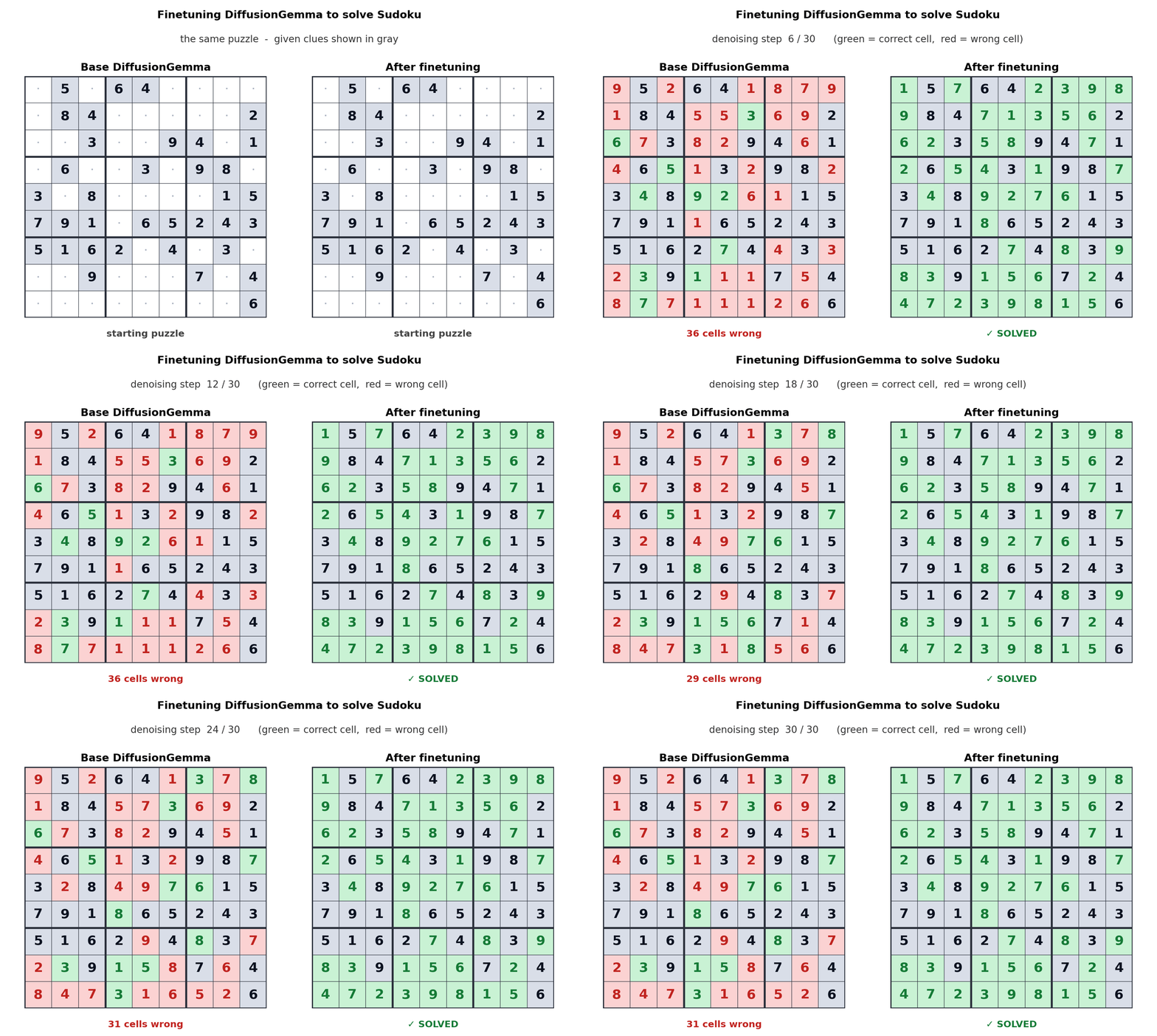
This approach to text generation shifts the bottleneck from memory bandwidth to compute, generating up to 256 tokens in parallel. Google says this offers a measurable boost in non-linear tasks like in-line editing, molecular sequencing, and mathematical graphing. The animation above shows how DiffusionGemma was tuned to solve Sudoku puzzles, which is a notoriously challenging task for standard autoregressive AI models because each token depends on future tokens. DiffusionGemma’s ability to continuously self-correct large sets of tokens makes that easier.

Multiple paths to local efficiency

If diffusion is so much faster, why isn’t Google using it in big cloud-based Gemini models? Google has experimented with this, but there are a few drawbacks to text diffusion, including a higher error rate. In image diffusion models, a single badly predicted pixel doesn’t make the image useless, but language is discrete. An equivalent error in text can make a block of tokens meaningless and force you to start over to get a better output. Diffusion models also waste resources when the desired output is only a few tokens long. They have to do a lot more parallel work to whittle down to, say, five tokens that an autoregressive model does from beginning to end in just five steps.

DiffusionGemma is about as capable as other Gemma models, but it’s much faster.

DiffusionGemma is about as capable as other Gemma models, but it’s much faster. Credit: Google

The efficiency gain for local processing makes this an appealing avenue of experimentation, though. In the cloud, autoregressive models can batch large numbers of compute jobs from multiple users so they’re always churning out tokens, and the high bandwidth memory (HBM) used in these systems can move data around much more efficiently.

Conversely, local AI encounters wasted compute cycles due to lower memory bandwidth and idle time. Diffusion models can make more efficient use of available compute, but this isn’t the only way. Google also recently began implementing Multi-Token Prediction (MTP) drafters, which use otherwise wasted compute cycles to predict possible tokens to increase speed. But diffusion is even faster than the MTP versions of Gemma.

Google stresses that DiffusionGemma is experimental, but it’s available under the same Apache 2.0 license as all the other fourth-generation Gemma models. You can download the model weights today from Hugging Face. Google says it worked with Nvidia to ensure DiffusionGemma was optimized for a variety of setups, including high-end RTX GPUs (quantized) and enterprise systems like the H100 or DGX Spark platform.

John Wayne’s Secret Side Revealed in Personal Letters

0
john-wayne’s-secret-side-revealed-in-personal-letters
John Wayne’s Secret Side Revealed in Personal Letters


John Wayne’s softer side is coming back into the spotlight nearly five decades after his death.

The legendary Hollywood tough guy, best known for his cowboy swagger, gravelly voice and larger-than-life Western roles, was not all grit and gunfire behind the scenes.

Old personal letters written by “The Duke” reveal a more tender side of the screen icon, including warm notes he sent to two of Hollywood’s biggest stars: Lucille Ball and Elizabeth Taylor.

Wayne, who died on June 11, 1979, at age 72, built his career playing rugged, no-nonsense men. But away from the cameras, he was capable of charm, affection and even a little old-school sweetness.

In 1955, Wayne sent a heartfelt note to Lucille Ball after working with the beloved redheaded comedy queen.

“It is always such a great pleasure working with you, Lucy,” Wayne wrote at the time. “You’re so dedicated and so talented.”

Wayne famously appeared on I Love Lucy in the 1950s during a hilarious two-part episode that saw Lucy and Ethel accidentally destroy his cement footprints from Grauman’s Chinese Theatre.

The episode became one of the sitcom’s classic Hollywood moments, with Ball’s wild physical comedy clashing perfectly against Wayne’s famously serious movie-star image.

Years later, Wayne reunited with Ball on The Lucy Show in 1966.

In the episode “Lucy and John Wayne,” Ball’s character once again found herself in a string of awkward disasters involving the movie legend, including one scene where she spilled ketchup on him.

But Ball was not the only Hollywood icon who received kind words from The Duke.

In 1961, Wayne reached out to Elizabeth Taylor after she won the Academy Award for Best Actress for Butterfield 8.

Wayne’s own passion project, The Alamo, had been nominated that same year, but he made it clear he was more thrilled for Taylor than disappointed for himself.

“Dear Liz … I am more happy that you received your award than if The Alamo had received all that it was nominated for,” he wrote. “Affectionately, Duke.”

The note was especially striking because Taylor herself famously despised Butterfield 8, despite it earning her one of the biggest honors of her career.

Author Kate Andersen Brower previously claimed Taylor hated the movie so much that after seeing it, she wrote an angry message on the screening room wall with lipstick.

Taylor reportedly felt insulted by the role and saw the movie as a personal affront.

Still, Wayne’s note showed that even one of Hollywood’s toughest leading men could set competition aside and celebrate another star’s victory.

While audiences knew Wayne as a symbol of strength and masculinity, the actor himself once admitted the screen version of John Wayne was not who he really was.

“The guy you see on screen really isn’t me,” he said in a 1950s interview. “I’m Duke Morrison, and I never was and never will be a film personality like John Wayne. I know him well. I’m one of his closest students. I have to be. I made a living out of him.”

Wayne, born Marion Morrison, spent decades building the John Wayne image that made him one of the most recognizable stars in the world.

But his private words to Ball and Taylor suggest there was more to the man than the cowboy myth.

The actor died from complications related to stomach cancer and respiratory issues. He left behind seven children and a towering Hollywood legacy.

After his cancer diagnosis, Wayne opened up about facing his own mortality.

“I thought about the possibility of death, but that wasn’t what bothered me the most,” he said at the time. “It was the feeling of helplessness. I just couldn’t see myself lying in bed, not being able to help myself. That, to me, was worse than the fear of death.”

Nearly 47 years after his passing, those old letters offer fans a rare glimpse at the man behind the movie legend — a Hollywood giant who could be tough on screen, but surprisingly tender in real life.

0FansLike
0FollowersFollow
0FollowersFollow
0SubscribersSubscribe
- Advertisement -
Google search engine

Recent Posts