32.4 C
London
Wednesday, June 24, 2026
Home Blog

Do You Administer SNAP or Medicaid Benefits? Help ProPublica Report on America’s Safety Net.

0
do-you-administer-snap-or-medicaid-benefits?-help-propublica-report-on-america’s-safety-net.
Do You Administer SNAP or Medicaid Benefits? Help ProPublica Report on America’s Safety Net.

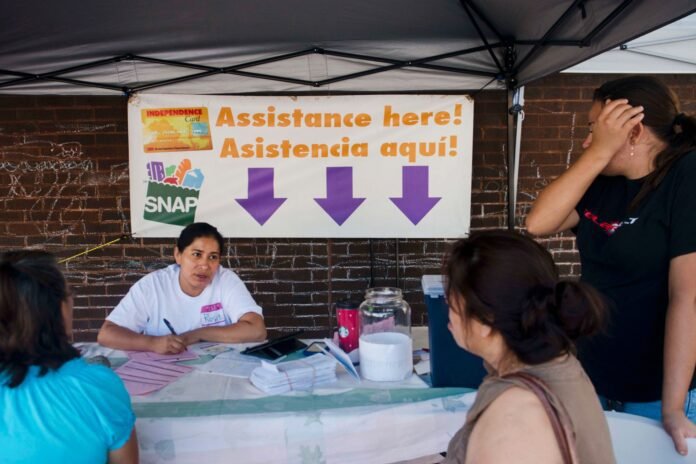
ProPublica is digging into pressing issues affecting millions who rely on America’s safety net programs — from longstanding concerns like electronic benefit transfer theft to changes in federal SNAP and Medicaid policies. We want to hear from officials and workers on the ground who help people navigate these programs, because no one knows the ins and outs of the safety net better.  

If you are a current or former state or local eligibility worker, intake specialist, or human services or social services administrator, or if you’re a current or former federal worker who has supported states in administering the Supplemental Nutrition Assistance Program or Medicaid, we want to hear your thoughts about new work requirements, shifts in cost-sharing between the federal government and states, efforts to combat fraud, and what other priorities may have been pushed to the wayside. 

ProPublica’s reporting goes beyond big-picture policy coverage and dives into the ways those federal policies shape everyday life throughout the country. We know each community operates differently, and we can’t be everywhere at once. That’s why we need your help.

We want to know: How is your agency, county or state preparing for the so-called One Big Beautiful Bill Act? Have shifting federal priorities changed the way you do your work? What do you feel people should know?  

Please fill out the brief form below to tell us what we should be reporting on or to stay in touch as all of these changes unfold. Our reporters read every response and may follow up with you. Your insight is what drives our reporting.

If you have questions or if your SNAP or Medicaid benefits have recently changed, we want to hear from you too. Email us at [email protected]. If you prefer to reach us via Signal, you can contact reporter Eli Hager at 301-758-2768 or Cassandra Garibay at 707-234-5175.

Formula E reveals first calendar for GEN4 with lots of real race tracks

0
formula-e-reveals-first-calendar-for-gen4-with-lots-of-real-race-tracks
Formula E reveals first calendar for GEN4 with lots of real race tracks

Formula E is in its final year for the current technical regulations, with a new single-seater EV set to be introduced at the start of next season, which begins in December in Saudi Arabia. The new car, known as GEN4, is a big upgrade—at times more powerful than a Formula 1 car, although heavier and with much less downforce. As speeds rise with the GEN4 car, we knew the sport would become too fast for some of its current venues.

With the release of the season 12 calendar for 2026–2027, that limitation has become clear: a 21-race lineup across 13 cities that now includes several traditional race tracks.

The Saudi double-header is scheduled for December 18 and 19, and is the only season 12 round this year. Then the series starts 2027 off with a string of Formula 1 venues in North America: Mexico on January 16, the Circuit of the Americas in Texas on February 7, and the Miami International Autodrome on February 20. The addition of COTA to Formula E’s calendar makes it the seventh US location for the sport since 2015, including the American Airlines Arena in actual Miami; Long Beach, California; Brooklyn, New York; Portland, Oregon; Homestead-Miami, and the Hard Rock Stadium on the outskirts of Miami.

The race at COTA will use the shorter version of that circuit, as used by NASCAR for its visits, rather than the full F1 configuration. This spares the inevitable lap-time comparisons between the two series, but the new calendar marks a clear departure from one of the series’ original selling points: racing in city centers where no other series could come visit.

Some traditional Formula E tracks remain. Berlin-Templehof takes place in May, as does the Monaco e-Prix. But the indoor-outdoor ExCel Arena in London has been outgrown; instead, Formula E will race at the Brands Hatch circuit in Kent, just outside London, in late May. It is believed that rather than use either the Indy or GP configurations of this historic circuit, the sport will use a unique layout, similar to the way Formula E’s Monaco is ever so slightly changed from the F1 layout used a couple of weeks later.

Zandvoort in the Netherlands—another F1 venue—takes place in mid-June, followed by Jarama in Spain at the end of that month, then Shanghai at another F1 track in early July, and the season finale in Japan in late July.

A corner at Brands Hatch

Brands Hatch and its swooping elevation change will test the GEN4 car.

The Formula E 2026-2027 calendar

“We are incredibly proud to unveil our biggest and most ambitious calendar to date. Expanding to 21 races across 13 iconic cities is a huge milestone, and welcoming world-renowned tracks like COTA in Austin, Zandvoort, and Brands Hatch provides the ultimate stage to showcase our new GEN4 era,” Alberto Longo, Formula E cofounder and chief championship officer, said in a statement.

“Every stop on this calendar has been chosen to deliver maximum sporting drama. Launching the season with our first-ever opener under the lights in Jeddah to demonstrate the speed of these GEN4 cars sets a spectacular tone, while grouping our races into distinct continental clusters ensures we do so as sustainably as possible. The tracks are faster, the competition is fiercer, and we cannot wait to get this historic season underway,” Longo said.

There’s also a new format for weekends with double-header events, which is most of them. On the first day, the cars will race for 30 minutes with high downforce bodywork. This is a true sprint race, where the aim is just to go flat-out. The second day will feature a more traditional 45-minute e-prix, where the drivers will need to stay on top of energy management, as they do currently.

China’s Dong minority: why we’re digitally recording and preserving their Indigenous architectural heritage

0
china’s-dong-minority:-why-we’re-digitally-recording-and-preserving-their-indigenous-architectural-heritage
China’s Dong minority: why we’re digitally recording and preserving their Indigenous architectural heritage

The Dong people in China are an Indigenous ethnic group who are known to have lived in the mountainous regions of southwestern China for about 600 years. They don’t have a written language – instead their cultural knowledge is shared by word of mouth. This means that the outside world doesn’t know much about them.

But an ambitious university-led research project to document the Dong people’s distinctive architecture is revealing a great deal about this marginalised Indigenous group’s way of life.

There are an estimated 3 million Dong people living in the provinces of Guizhou, Hunan and Guangxi. They are renowned for their polyphonic choral singing, which has been inscribed by Unesco since 2009 as an example of world-class intangible cultural heritage. Their architecture, landscape and refined agricultural terracing are also distinctive, but less well known and never digitally recorded.

Dong buildings and settlements are typically hidden in fir forests with direct access to waterways at the bottom of valleys or halfway up hills. A Dong settlement typically has around 200 households of four to five people – although some larger villages can have as many as 500 households.

These villages tend to have a gatehouse marking their boundary, defining their territory in relation to neighbouring settlements. Many feature a distinctive “wind-and-rain bridge” – a mix of village gate and covered bridge – used for communal gatherings and blocking ceremonies. Ponds, wells, and granaries are scattered throughout the landscape.

At the heart of most villages, surrounded by wooden houses of two or three storeys, there is a “drum tower” and a “Sa-Sui shrine”. The former represents the connection of the people’s sacred belief of clan kinship and fir trees, while the latter represents the centre of the Dong’s worship of the “Sa” or grandmother. They are the most important buildings in a village – for security, social and spiritual reasons.

External view of the drum tower of Zeng Chong village

External view of the drum tower of Zeng Chong village. Xiang Ren, Author provided (no reuse)

Culture at risk

Nowadays, the Dong’s built and cultural heritage are increasingly at risk. This is due to a combination of climate change, natural disasters, urban infrastructure development and the expansion of rural tourism.

A warming climate is increasingly triggering wild fires and causing mountain flooding. We are also seeing the encroachment of urbanism into the Dong’s rural settings. While bringing improvements in the quality of life, this often presents domestic fire hazards due to poor-quality electrical infrastructure. And in recent years, the growth of tourism and the encroachment of roads, railways and bridges is in danger of turning these villages into decorated stage-sets. This may bring in money, but threatens the Dong people’s unique architecture and landscape.

It’s a pressing challenge for this Indigenous people and for those of us dedicated to preserving their historic environment, their culture and their highly ritualised way of life.

Tragically, the scarcity of resources means that schemes for repair, restoration and regeneration works, as well as insufficient conservation policies and frameworks, have been slow to help preserve these precious villages. The far remote mountainous environment does not help. Both the local communities and government authorities have extremely limited resources to manage almost any change to their historic environment.

Despite the remote location of many of these villages, they are now being encroached upon by modern development. We’re seeing the growth of contemporary housing developments using modern structures and materials. It’s part of the rapid urbanisation of China over the past few decades – but, like elsewhere, it’s irreversibly changing the image and identity of the Dong settlements and their architecture.

aerial photo of the village of Ju Dong, CHina

Modern infrastructure is irreversibly changing the context and historic fabric surrounding the drum tower of Ju Dong village. XIan Ren, Author provided (no reuse)

The problem of modern tourist development can be seen in the way traditional-style drum towers are being built as theme park attractions. At the Danzhai Wanda Village, a newly developed theme park near Kaili in Guizhou, the nearest city to the Dong’s Indigenous areas, there are five newly built drum towers, billed as “iconic”, which are presented as standalone monuments with no sense of their relationship with the surrounding houses and forests.

A newly built modern vaerion of a traditional Dong drum tower

The Dong drum tower as a distinctive building type is also at risk to be developed completely as a tourism object and commodity. XIang Ren, Author provided (no reuse)

Decoding Dong built heritage

The need to document and protect authentic Indigenous Dong culture is what has driven the Decoding Dong project.

This was launched in 2023 and completed in 2025 and set to digitally document Dong physical and cultural heritage.

This interdisciplinary project draws on humanities and social science disciplines ranging from architecture, anthropology, heritage sciences, sociology and digital humanities.

It put together a series of innovative and complementary research methods. This has involved 3D LiDAR scanning, aerial and terrestrial photogrammetry (the science of applying mathematics to photographs to extract accurate 3D measurements), 3D reality capture modelling, measured drawing, documentary film making and mapping. This has been complemented with oral histories from provided by Dong people.

The project has completed a first-of-its-kind digital documentation of the Dong architectural heritage, building digital and audio-visual documentaries of around 100 historic buildings across a dozen remote Dong villages.

Architect's digital drawings of a Dong drum tower

Exported and justified cross-sectional axonometric drawing showing wooden tectonics of the Zeng Ying drum tower. Xiang Ren, Author provided (no reuse)

A key part of the research process was to consult with key stakeholders, including clan leaders, elderly villagers and provincial policymakers wherever possible.

Indigenous Dong heritage is still under threat, due to the scarcity of resources faced by both the local authority and the communities themselves.

But this project represents a step change. By building a mutually beneficial store of information, supported by cutting-edge digital technologies, we hope to draw more attention to this distinctive people without threatening what it is that makes them unique.

Israeli minister says army won’t leave occupied territory in Lebanon ‘even if US demands’ it

0
israeli-minister-says-army-won’t-leave-occupied-territory-in-lebanon-‘even-if-us-demands’-it
Israeli minister says army won’t leave occupied territory in Lebanon ‘even if US demands’ it

Israeli Defense Minister Israel Katz vowed Wednesday army forces will not leave territory occupied in southern Lebanon “even if the United States demands withdrawal.”

“Israel will not leave its security zone in Lebanon, even if the United States demands withdrawal,” Katz said during an event in Tel Aviv, as cited by Yedioth Ahronoth newspaper.

There was no immediate response from Washington.

The comments come as senior Israeli officials continue to insist on maintaining control over occupied areas in southern Lebanon despite a recent US-Iran understanding, which includes commitments related to respecting Lebanon’s sovereignty and territorial integrity.

Earlier this week, Prime Minister Benjamin Netanyahu, Katz and Israeli Chief of Staff Eyal Zamir pledged to maintain control of what Israel describes as a “security zone” in southern Lebanon.

Israel occupies areas in southern Lebanon, some held for decades and others seized during the 2023-2024 conflict. During its current military campaign, Israeli forces have advanced more than 10 kilometers into Lebanese territory.

Since March 2, Israel’s attacks in Lebanon have killed 4,192 people, wounded 12,171 others and displaced more than one million residents, according to Lebanese official figures.

Katz also vowed that Israel will not allow the return of around 200,000 Lebanese to their areas in southern Lebanon.

READ: Iran says Israeli strikes on Lebanon delayed next round of US talks

He claimed that allowing civilians to return could expose Israeli troops to attacks.

“What happened in the past in security zones that included civilian populations was the planting of explosive devices and attacks against soldiers,” he said.

“The soldiers are inside, the population is outside, the infrastructure is destroyed and the houses are demolished. We will not withdraw,” he said.

Katz further said Israel would maintain its occupation of areas in both Syria and Lebanon.

“We will not leave the security zone in Syria and Lebanon; this is the security doctrine,” he said, claiming that Israeli forces must “be present in enemy territory to protect Israeli communities.”

His remarks come as Lebanese and Israeli delegations are holding a fifth round of talks in Washington from Tuesday through Thursday.

According to Israeli media reports, the discussions include possible areas from which Israeli troops could withdraw and be replaced by Lebanese army forces.

In addition to occupying territory in southern Lebanon, Israel continues to occupy Palestinian territories and areas inside Syria, while rejecting international calls for withdrawal and the establishment of an independent Palestinian state in line with relevant UN resolutions.

READ: Israeli soldiers’ parents demand end to Lebanon fighting and return of troops

Ukraine submits updated bid for OECD membership

0
ukraine-submits-updated-bid-for-oecd-membership
Ukraine submits updated bid for OECD membership


President Volodymyr Zelenskiy said that Ukraine had submitted a revised application to join the Organisation ​for Economic Co-operation and Development (OECD), a club of ‌mostly advanced economies, as Kyiv pursues closer integration with Western institutions.

Ukraine has been working with the OECD on reforms and governance ​standards for several years and is now seeking ​candidate-country status as a step towards full membership.

Zelenskiy, ⁠after meeting with Mathias Cormann, OECD’s Secretary-General, on ​his visit to Kyiv, said in a Telegram post that ​Prime Minister Yulia Svyrydenko has submitted the updated bid.

“We hope to obtain candidate country status as early as this autumn. The next ​stage will be a roadmap toward OECD membership. ​We discussed this during our meeting,” Zelenskiy wrote.

Ukraine, in a full-scale war ‌with ⁠Russia after Moscow’s invasion in 2022, is actively pushing for European integration which Kyiv says is the best security guarantee both for itself and for Europe.

Last week, ​Zelenskiy reiterated Kyiv’s desire ​for a ⁠fast-track EU membership.

Ukraine hopes to open the remaining negotiating clusters with the EU by ​July 15 when Ukraine marks its Statehood ​Day, ⁠Zelenskiy said, according to a separate statement published by his office on Tuesday.

Russian President Vladimir Putin said on Tuesday that ⁠he did ​not see grounds for direct ​talks with Zelenskiy given what he described as Kyiv’s strikes on civilian ​targets.

Middle powers such as Australia can learn from Iran’s strategies

0
middle-powers-such-as-australia-can-learn-from-iran’s strategies
Middle powers such as Australia can learn from Iran’s strategies

Iran has emerged undefeated after nearly four months of war against a nuclear-armed regional rival (Israel) and the world’s most powerful military (the United States).

The regime is still in control of its population and territory. Though its economy is suffering, Iran’s industrial base is still churning out missiles, drones and rockets.

Many of Tehran’s top leaders have been killed, but the survivors remain determined to drive negotiations to an advantageous outcome.

Australia is obviously very different from Iran in many respects. And war here is not imminent. But that doesn’t mean we can’t learn anything from Iran’s experience – in addition to Ukraine’s.

Here are a few lessons to consider about the way war is changing and how a middle power such as Australia can better prepare to defend itself.

Unconventional deterrence

Before the war, Iran’s “axis of resistance” – the Houthis in Yemen, Hezbollah in Lebanon, Hamas in Gaza and Shia militias in Iraq – gave it strategic depth.

Specifically, this network of proxy groups created asymmetric deterrence – it prevented more powerful adversaries from directly attacking it for decades.

Yes, the US and Israel did eventually attack Iran in last year’s 12-day war and this year’s conflict. But they did so knowing that Iran’s proxies might retaliate by striking their bases, sabotaging their infrastructure or subverting their alliances – all of which ended up happening.

Australia would never sponsor terrorism. However, adopting an unconventional deterrence strategy is still possible if it adheres to ethical and legal norms.

For instance, Australia could use irregular warfare capabilities, such as small, well-armed, amphibious teams or air, sea-surface and undersea drones – to influence an adversary’s calculus in deciding whether and how to attack us.

Keep deterring, even during war

Deterrence is sometimes seen as solely a pre-war strategy. If war breaks out, it has failed by definition.

More sophisticated analysts, however, talk about “intra-war deterrence,” or the ability to keep deterring once war starts.

Think of Iran using drones and mines to keep US ships out of the Persian Gulf and making it harder for US forces to raid Iran’s oil terminal at Kharg Island.

For Australia, this means continuing to demonstrate the ability to prevent an enemy from achieving its goals after war breaks out. This can be hugely valuable if it stops the enemy from using certain weapons or taking specific actions against us.

Build regional relationships

Although Iran attacked many of its Persian Gulf neighbors, its relationships with Pakistan and Oman paid off.

Both countries hosted negotiations to try to end the war and played restraining roles during the conflict.

Likewise, before the war started, many regional countries were reluctant to allow Israeli or American aircraft to use their bases or fly over their territories, partly as a result of Iran’s diplomatic efforts.

For Australia, which sometimes has a blind spot for its neighborhood, regional relationships can be a source of support in war.

Hold at risk something your enemy needs

Within a week of the war breaking out, Iran closed the Strait of Hormuz. The US and Israel responded by escalating their air campaign and establishing a counter-blockade of Iranian ports. US warships also began escorting tankers through the chokepoint.

But Iran still held at risk a chunk of global energy sea traffic, creating leverage for peace talks.

In Australia’s case, our adversaries also need things we can control, such as raw materials, sea lanes, supply chains, financial resources or data links.

Again, Australia is not Iran. We would act in accordance with legal and ethical norms and only in the extreme case of a war for national survival. But in those circumstances, we could exert leverage over these things.

Decentralize for resilience

The Israeli-US “decapitation strikes” killed Iranian Supreme Leader Ali Khamenei on the war’s first day, but Iran fought on with barely a break.

This is largely due to its “mosaic defense” strategy. Military authority was automatically delegated to 31 regional commanders who had the freedom to strike targets identified before the war. This made Iran’s regime much harder to topple.

Given Australia’s vast size and dispersed population, a decentralized command-and-control strategy makes sense. Australia’s traditional structure of military districts offers a precedent, alongside our decentralized civil defense and emergency services.

Recently, our preference has been centrally coordinated command from Canberra and the Joint Operations Command at Bungendore, New South Wales. This kind of system is appropriate for managing operations outside our territory, but it might need rethinking in the event of a major attack on Australia.

Build a mobilization base and resilient defense industry

Iran has a very large fighting force, including 340,000 regular armed forces, around 120,000 members of the Iranian Revolutionary Guard Corps and about 600,000 members of its Basij militia. This provided a large mobilization base after the initial US and Israeli strikes.

Likewise, Iran’s defense industry is decentralized and was able to continue producing missiles and drones in hardened, concealed and dispersed facilities, despite heavy air attack.

Australia could learn from this by decentralizing its own defense industry, particularly dual-use facilities and small and medium enterprises, and stockpiling our critical manufacturing inputs, such as minerals, fuel, advanced electronics and other hard-to-source components. This was routine during the World War II and needs to return to our thinking.

Likewise, Australian Defense Force reserves are far smaller than needed for wartime mobilization, something successive governments have failed to remedy.

Extended range weapons and magazine depth

Finally, Iran has demonstrated an impressive variety of long-range, low-cost, rapidly manufactured rockets, missiles and drones. The lesson is that quantity counts as much as quality.

Australia has historically had a high-tech military with advanced capabilities, but limited capacity. For example, the most recent Defense Strategic Review cut the army’s armored forces to the point where we can probably sustain only one limited combat deployment.

For future conflicts, we need greater “magazine depth.” This means investing more in low-cost drones, rockets and missiles and stockpiling the right kinds of ammunition in the right places. And crucially, we need the ability to keep producing weapons during extended conflict.

David Kilcullen is a professor of international and political studies, UNSW Sydney.

This article is republished from The Conversation under a Creative Commons license. Read the original article.

ICC Oversight Body Recommends Dismissal of Prosecutor Karim Khan

0
icc-oversight-body-recommends-dismissal-of-prosecutor-karim-khan
ICC Oversight Body Recommends Dismissal of Prosecutor Karim Khan


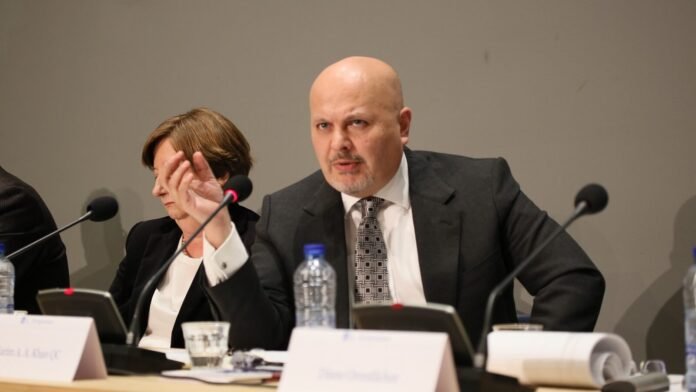
Diplomats overseeing the International Criminal Court (ICC) have concluded that suspended Chief Prosecutor Karim Khan engaged in an inappropriate sexual relationship with a junior staff member and should be removed from his position, according to two copies of a decision reported by Reuters.

The determination was made by the executive bureau of the ICC’s governing body and follows allegations brought in 2024 by a female lawyer. Reuters reported that the decision marks the first public disclosure of details from the bureau’s findings, including its recommendation that Khan be dismissed.

A recommendation will be presented to the ICC’s 125-member Assembly of States Parties, which is scheduled to vote on Khan’s future in New York on July 24.

Khan has repeatedly rejected the allegations against him.

“The decision is unlawful, procedurally unfair and unsupported by evidence,” his lawyers said in comments sent to Reuters on Tuesday.

Khan’s legal team also cited a review conducted by judges that concluded the available evidence was insufficient to establish the allegations “beyond a reasonable doubt.”

These findings stem from an 18-month inquiry into claims that Khan engaged in non-consensual sexual relations with a female lawyer employed in his office. Khan has denied those allegations throughout the investigation.

The executive bureau’s conclusion places the matter before ICC member states, which will decide whether to accept the recommendation and remove Khan from office.

Allegations against Khan emerged while he was serving as the court’s chief prosecutor and overseeing a range of investigations and cases before the ICC.

During Khan’s tenure, the court issued arrest warrants for Israeli Prime Minister Benjamin Netanyahu and former defense minister Yoav Gallant in connection with the Israel-Hamas war in Gaza.

Military branches restore flu shot requirement after virus swept through base

0
military-branches-restore-flu-shot-requirement-after-virus-swept-through-base
Military branches restore flu shot requirement after virus swept through base

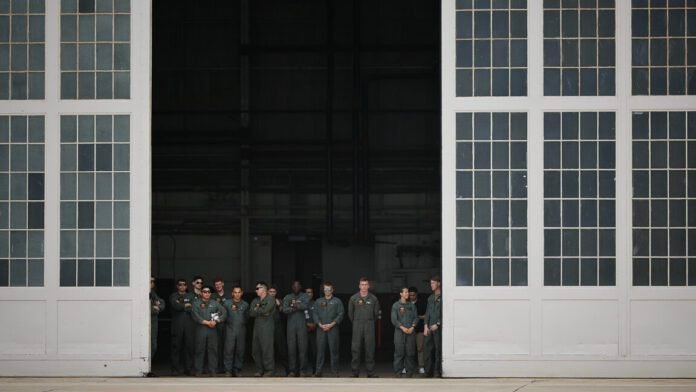
The Army, Navy, and Air Force are once again requiring basic trainees to get vaccinated against influenza after the virus quickly swept through an Air Force base in Texas, sickening at least 222 recruits and hospitalizing four.

The outbreak flared just two months after Defense Secretary Pete Hegseth abandoned a decades-long requirement for flu shots. The requirement was intended to keep armed forces healthy in their bases, which provide ideally tight conditions for a variety of pathogens, including influenza, to run rampant. Mandates stem from centuries of intertwining histories of militaries, war, and human pathogens that have firmly established the danger that infectious diseases pose to armed forces.

But in April, Hegseth claimed that flu shot requirements were “not rational” and said removing the requirement was “restoring freedom” to military members.

Last week, news broke of a flu outbreak sweeping through Lackland Air Force Base, part of Joint Base San Antonio in Texas. Two unnamed sources told ABC News that the situation at the base has been worsening.

In addition to the 222 cases and four hospitalizations reported as of Tuesday, one recruit, Keon McDaniel, died. McDaniel was in his sixth week of basic training and suffered a medical emergency on June 12. It’s unclear if his death was related to the outbreak.

ABC News reported that sources think only about 40 percent of the new Air Force trainees at the base were vaccinated and that the outbreak began in early June.

Historical requirements

It remains unclear what strain of flu is circulating in the base. Circulation of seasonal influenza viruses tends to be low during the summer amid the general population. But activity does not fall to zero, and the close quarters and extensive contact within a base make it easy for transmission to skyrocket.

In a statement to Ars Technica, Pentagon spokesperson Sean Parnell said that the Pentagon had granted exceptions to Hegseth’s optional flu shot policy to the Army, Navy, Air Force, National Security Agency, and the Defense Health Agency. The exceptions came after a “comprehensive review” and are in line with a standard policy of “adapting force health protection measures to critical operational realities.”

“The decisions were based upon thorough risk assessments and are designed to maximize operational readiness, lethality, and force generation, while safeguarding at-risk populations,” Parnell said.

With the exception, the Air Force is aiming to vaccinate all recruits at the Texas base, according to ABC News, and the Army is preparing to expand the restored vaccine requirement to other groups, including troops deploying overseas.

US armed forces have a long history with pathogens, beginning in 1777 when George Washington mandated Continental soldiers be inoculated against smallpox, which had ravaged the army during the Revolutionary War. In March of 1918, cases of severe flu broke out at a military base in Kansas. The subsequent 1918 flu pandemic is estimated to have killed around 43,000 US soldiers, nearly half of all US military deaths during World War I.

The US Army supported the development of the first flu vaccine, which was tested for safety and efficacy in military members. The US military issued its first flu shot mandate in 1945, when the vaccine was licensed.

From Belfast to Washington, a familiar script of the ‘dangerous migrant’ has emerged

0
from-belfast-to-washington,-a-familiar-script-of-the-‘dangerous-migrant’-has-emerged
From Belfast to Washington, a familiar script of the ‘dangerous migrant’ has emerged

It tends to start with a violent assault. Then video documentation of the incident quickly circulates online, priming people to see not just an individual crime but a broader story about perceived dangerous outsiders.

So it was on June 8, 2026, when an assailant badly injured a man in an evening knife attack in Belfast. Within hours, a graphic video of the assault was all over social media, and masked rioters had set homes, cars and a bus on fire. Moreover, police said properties believed to belong to immigrants were deliberately targeted after authorities charged a Sudanese asylum-seeker with attempted murder.

As the unrest spread, immigrants and immigration lawyers repeatedly found their addresses and personal information released online, with social media users urging so-called patriots to act.

What played out in Northern Ireland was not a one-off. As a civil rights scholar who studies racial threat narratives and immigration politics, I see the Belfast episode as indicative of a now familiar script. A similar cycle of events occurred in Dublin in 2023 and in Southport in northern England in 2024. In each, a single, shocking crime allegedly involving a foreign-born suspect was quickly reframed into a broader indictment of migrants, asylum-seekers and minorities.

And while these events all played out in the U.K. and Ireland, I would argue that the same basic logic behind the pattern runs through contemporary U.S. immigration rhetoric and policy.

A playbook with repeatable stages

The first stage is the triggering event: a shocking crime, often involving children or a graphic video, that primes people for blaming a group of people.

The second is what I call “categorical expansion.” Instead of treating the suspect as an individual defendant, activists and online networks recast the incident as evidence of criminality among a larger category: immigrants, asylum-seekers or other racialized outsiders. Often this is conveyed through disinformation and social media narratives that depict such people as a security threat.

The third is amplification. In Belfast, social media helped circulate both the attack footage and the lists of addresses supposedly linked to immigrants and their defenders. In Dublin and in later Irish protests outside asylum housing, far-right networks and online influencers used digital platforms to intensify grievances and spread anti-migrant views.

The fourth stage is political translation. Fear becomes mobilization, and mobilization becomes demands for exclusion, detention, deportation or harsher border enforcement. Once people are primed to see isolated criminal acts as collective proof, punitive policy can begin to sound like common sense rather than ideology.

Masked demonstrators stand in front of flags and flames.

Far-right activists hold a rally in Sunderland, England, following the killing of three girls in Southport in July 2024 that set off rampant misinformation and rioting. Simone J Rudolphi/Drik/Getty Images

Dublin and Southport show the same pattern

Dublin provided a vivid earlier example. After the stabbing of three children and a care worker in November 2023, the suspect was described as a foreign‑born man. Far-right groups seized on that fact, blaming “immigrants” for the assault and fueling riots in the city center; dozens of people were later charged in the unrest. Civic groups and trade unions called the unrest racist and xenophobic violence directed at migrants, not the kind of public safety protest that far‑right organizers claimed it was.

By late 2024, immigration had become markedly more salient in Irish politics, with anti-immigration candidates gaining traction and political observers tying that shift directly to the riots. That turn is notable in a country that has prided itself on keeping the far right at the margins, and whose own history of colonization and emigration has generally made such politics a hard sell.

Southport, a seaside town close to Manchester, England, offered another version. After a knife attack at a children’s dance event in 2024, misinformation spread online claiming the attacker was a Muslim immigrant, and anti-immigration protests and riots followed across parts of the U.K. Later reporting identified the attacker as a British teenager, underscoring how quickly false narratives about migrant criminality can take hold before basic facts are established.

Across Belfast, Dublin and Southport, the details differ, but the storyline is the same: a shocking crime, a suspect cast as alien or foreign, and then a rush to treat an isolated incident as a warning about the perceived dangers of largely male immigrants, justifying hostility toward entire communities.

The US version is more institutionalized

In the United States, the same script in recent years has often traveled less through street riots than through political rhetoric, legislative branding and government enforcement. In 2025, President Donald Trump signed into law the Laken Riley Act, named after a Georgia nursing student who was murdered by an undocumented immigrant from Venezuala. The legislation would, as the White House described it, require “the Secretary of Homeland Security to take into custody aliens who have been charged in the United States with theft or burglary” and related offenses.

It was promoted as a way to keep “dangerous criminal aliens” off the streets. Major news coverage presented the law as an early marker of the administration’s broader effort to link immigration enforcement to public safety and crime prevention, including coverage of the signing.

The White House has likewise framed stricter enforcement, increased removals of people it labels “criminal aliens” and expanded cooperation with state and local authorities as measures that protect communities from the consequences of unauthorized immigration. I would argue that such framing also appears in Trump’s 2025 executive order, titled Protecting The American People Against Invasion, which directs agencies to intensify immigration enforcement against people without legal immigration status.

Masked law enforcement agents put someone into the back of a car.

Federal immigration agents in Minneapolis detain a person in January 2026 near where an ICE officer fatally shot unarmed citizen Renee Good. AP Photo/Adam Gray

This script does not need a riot to operate. It works by linking immigration and criminal danger so consistently that the association begins to feel natural. In that context, the language of immigrant criminality becomes part of the rationale for detention rules, enforcement surges and legal changes that treat noncitizens as a standing public safety risk. Belfast shows the script in accelerated street form; the U.S. often shows it in durable bureaucratic form.

Why the phenomenon keeps happening

One reason this narrative process endures is that it converts complex social stress into an intuitive moral drama. The immigrant-threat frame offers a quicker villain and a simpler solution to persistent social problems such as violent crime.

Another reason is infrastructure. Belfast was not only a reaction to one stabbing; it was also an event organized and accelerated through far-right networks that already knew how to circulate footage, identify targets and call people into the streets. The same underlying machinery appears in Ireland and the U.K., where far-right online ecosystems have repeatedly converted individual criminal allegations into collective anti-migrant agitation.

For analysts of racial and immigrant threat narratives, this pattern is now familiar. It is not mere concern about immigration, and it is not a neutral response to crime. Rather, it is a repeatable narrative that takes one perpetrator, assigns representative meaning to that person, and then directs fear toward a much larger population.

What Belfast reveals

Belfast matters because it makes visible, in compressed form, what is often harder to see when the same dynamics unfold through speeches, policy proposals or election messaging. The city shows how quickly a violent act can be transformed into collective punishment. That’s more true than ever in the age of social media and instant, unvetted content pushed out to millions with a click.

It also shows why journalists, scholars and policymakers often treat each episode as a discrete eruption, even when the underlying pattern is similar. The through line from Belfast to Dublin to Southport to the U.S. is not identical institutions or identical laws. Rather, it is a common reactive pattern.

Recognizing that script helps explain why each new incident can so quickly become a story about all immigrants – and why future crimes, wherever they occur, are likely to be read through the same lens.

Vietnam graft case lifts veil on To Lam’s security-state economy

0
vietnam-graft-case-lifts-veil-on-to-lam’s-security-state-economy
Vietnam graft case lifts veil on To Lam’s security-state economy

When Vietnamese prosecutors indicted the leadership of Nam Trieu Company for allegedly inflating the prices of interrogation chairs and other specialized law-enforcement equipment, domestic media predictably focused on the headline figure of more than 18 billion dong (US$710,000) in state losses.

Yet the significance of the case goes well beyond the financial losses alleged in the indictment. According to publicly available information from Vietnam’s Ministry of Public Security, Nam Trieu operates under the Department of Security Industry and manufactures specialized vehicles, patrol boats, license plates and technical equipment for law enforcement agencies.

In other words, Nam Trieu operates within Vietnam’s state security sector, from which State President and Communist Party General Secretary To Lam rose to national power.

Its prosecution offers a rare glimpse into an area about which relatively little public information is available, raising broader questions about transparency, oversight and accountability in a sector that has become increasingly important to the Vietnamese state under To Lam.

The Nam Trieu case comes at a time when the Ministry of Public Security’s role extends far beyond traditional law enforcement responsibilities. In recent years, the ministry has assumed growing responsibilities in areas ranging from digital data management and cybersecurity to telecommunications infrastructure and the domestic security industry.

Economic actor

This trend reflects a broader state strategy aimed at strengthening control over critical infrastructure and information systems.

International attention was drawn to this development in 2025 when reports emerged that the ministry was seeking a controlling stake in FPT Telecom, following its earlier assumption of control of MobiFone.

Officials involved in those restructuring efforts argued that stronger state oversight was necessary to safeguard critical digital infrastructure and national cybersecurity interests.

The Nam Trieu case is not directly related to those developments. Nevertheless, it arrives at a moment when the ministry’s expanding economic footprint is attracting increased attention both domestically and internationally.

From a governance perspective, the participation of security institutions in strategic sectors is not unique to Vietnam. Similar arrangements exist in various forms around the world.

Scholars of security-sector governance have long noted that commercial activities undertaken by security institutions require particularly strong accountability mechanisms. Similar debates have emerged in countries where military- or security-linked enterprises play significant economic roles, including China, Egypt and Pakistan.

The challenge for policymakers is how to balance legitimate security considerations with transparency and accountability as institutions with security responsibilities assume broader economic roles.

Procurement beyond public view

Enter the alleged corruption at Nam Trieu. According to prosecutors, Nam Trieu executives inflated the production costs of thousands of specialized products to generate off-the-books funds for what court documents described as “external relations” and “hospitality” activities.

One contract involving interrogation chairs allegedly accounted for nearly 17 billion dong in losses. That’s raised an unusual amount of scrutiny of the ministry’s procurement practices.

Publicly available information provides only a partial picture of the scale of Vietnam’s security industry, the volume of public spending involved and the mechanisms used to evaluate procurement contracts.

It’s thus difficult to assess how pricing decisions are reviewed, how performance is measured and whether existing oversight mechanisms are functioning effectively.

Because many activities associated with security and law enforcement involve legitimate confidentiality concerns, transparency at the ministry will never match that of ordinary public procurement.

Nevertheless, the Nam Trieu case illustrates how limited public visibility can complicate efforts to evaluate accountability and institutional performance. The case therefore raises questions not only about the conduct of specific individuals but also about the effectiveness of existing governance and oversight mechanisms.

Where accountability and rights intersect

The implications of the case extend beyond budgetary oversight. Questions of transparency in the sector also raise broader issues concerning accountability and the protection of rights within systems of detention, interrogation and law enforcement.

Equipment used in detention facilities and investigative processes occupies a unique position in the state apparatus. That is, these are not ordinary government purchases comparable to office furniture or administrative supplies.

They are used in environments where state authority directly affects individuals’ liberty and rights. An interrogation chair, by itself, is not a tool of abuse. However, it forms part of a broader infrastructure associated with detention, questioning and law enforcement procedures in a state globally renowned for abuse.

In democratic countries, the procurement and use of law-enforcement equipment is subject to multiple layers of oversight, including auditors, legislative bodies, inspectors general and, in some cases, independent monitoring organizations.

The objective is not only to prevent waste or corruption but also to ensure that institutions exercising coercive authority operate within legal and rights-based frameworks.

Vietnam has not traditionally had a broad public debate about these issues. However, as the country’s security institutions assume wider economic and administrative responsibilities, questions concerning accountability and rights protections are likely to receive increasing attention.

Credibility on trial

The Nam Trieu case will eventually be resolved in court, and those found responsible may face criminal penalties.

Yet the significance of the case will extend beyond the verdict, offering a rare window into a sector that plays an increasingly important role in Vietnam’s governance, yet remains only partially visible to the public. It will be a de facto trial of whether existing oversight mechanisms are evolving at the same pace as the responsibilities these institutions now carry.

The verdict, of course, will not provide a complete answer. But it will provide a rare view of how transparency, accountability and public oversight operate within one of the least-scrutinized agencies of Vietnam’s security-state economy.

Nguyen Ngoc Nhu Quynh, also known as Mother Mushroom, is a Vietnamese writer, human rights commentator and former political prisoner based in Texas, United States. She is the founder of WEHEAR, an independent initiative focusing on Southeast Asian politics, human rights and economic transparency.

0FansLike
0FollowersFollow
0FollowersFollow
0SubscribersSubscribe
- Advertisement -
Google search engine

Recent Posts