9.5 C
London
Tuesday, June 9, 2026
Home Blog

FCC lifts looming deadline for Amazon Leo satellite broadband constellation

0
fcc-lifts-looming-deadline-for-amazon-leo-satellite-broadband-constellation
FCC lifts looming deadline for Amazon Leo satellite broadband constellation

The Federal Communications Commission has waived a requirement for Amazon to launch half of its satellite broadband constellation by the end of July, a key regulatory reprieve that buys the tech giant time to get more of its spacecraft into orbit.

Amazon won regulatory approval for the Amazon Leo network in July 2020. The FCC’s authorization came with two deadlines. First, Amazon had to launch half of its 3,232 satellites by July 30, 2026, in order to maintain authorization to launch the rest of the network. The regulator gave Amazon a deadline of July 30, 2029, to have all of its first-generation satellites in orbit.

It has been apparent for some time that Amazon would not meet the FCC’s requirement to launch half of its satellites—1,616 spacecraft—by the end of next month. Amazon filed an application in January requesting the FCC extend the deadline to July 2028 or waive it altogether. The commission decided on the latter option, removing any time limit for the 50 percent deployment milestone, but keeping the July 2029 deadline in place for the entire constellation.

Waiver granted

The FCC made its decision public in a letter Friday signed by Jay Schwarz, chief of the FCC Space Bureau. The ruling was expected. After all, Amazon is the only company with a realistic chance of launching a satellite broadband service to compete directly with SpaceX’s Starlink anytime soon. The FCC acknowledged the sparse competition in the satellite broadband sector in the letter.

“Waiver serves the public interest by promoting a second large satellite broadband constellation,” the FCC said. “At this time, only one operator, SpaceX, is providing broadband to American consumers from low-Earth orbit. Amazon Leo’s service promises to be ‘groundbreaking,’ both in quality of service and affordability for consumers. Amazon Leo has further invested significant resources into meeting its commitments, including more than $10 billion to deploy the system along with investments in physical infrastructure and manufacturing capabilities.”

Consideration of public interest and Amazon’s multibillion-dollar investment in Amazon Leo, formerly known as Project Kuiper, are among the “special circumstances” the FCC cited for doing away with this summer’s deadline.

“In this case, strict adherence to the rules would curtail Amazon Leo’s deployment of its Gen1 constellation by limiting the service it can provide to American consumers,” the FCC continued.

While the July deadline is gone, the FCC said it wants to incentivize Amazon to “continue deploying satellites at a rapid clip by temporarily demoting the spectral priority of satellites launched after the relevant July 2026 milestone deadline, until and unless Amazon Leo builds those satellites at a faster pace.”

Building satellites isn’t the biggest problem for Amazon Leo. It’s launching them. The company has stacks of satellites—each a little more than a half-ton in mass—awaiting rides to space on Blue Origin’s New Glenn rocket and United Launch Alliance’s Vulcan launch vehicle. Both rockets are grounded after recent anomalies.

Amazon has booked launches on other rockets, but none have the lift capacity to put as many satellites into orbit as Vulcan and New Glenn, each of which can deliver more than 40 Amazon Leo platforms to space in one go. United Launch Alliance’s soon-to-retire Atlas V rocket has done most of the heavy lifting for Amazon Leo to date, but just one more Atlas V is available to Amazon. It will launch in the coming weeks from Cape Canaveral, Florida, with 29 satellites.

Amazon Leo’s launcher fleet.

Amazon Leo’s launcher fleet. Credit: Amazon

Europe’s Ariane 6 rocket is on contract for 18 launches for Amazon Leo. Two of them have already flown, and the third one is set to launch later this month with 36 Amazon Leo satellites. SpaceX’s Falcon 9, capable of launching 24 Amazon Leo satellites at a time, has launched three times for Amazon.

In all, Amazon has purchased more than 100 launches for the Amazon Leo constellation. Thirteen of these launches are now complete, having deployed 333 satellites since October 2023, including two demonstration satellites that are not part of Amazon’s operational fleet.

Amazon initially reserved launches on all of the West’s commercially available heavy-lift rockets except those from SpaceX, which owns Starlink, Amazon Leo’s chief competitor. The freeze-out of SpaceX ended in 2023 when Amazon bought three Falcon 9 launches. The company has since added 10 more. SpaceX filed comments with the FCC opposing Amazon’s application for relief from this summer’s deadline.

There were optimistic signs recently that Amazon was about to turn a corner with its launch strategy. Blue Origin’s New Glenn, the most powerful vehicle in Amazon’s stable of rockets, was supposed to make its first launch for the Amazon Leo network earlier this month. Those plans went up in flames when the rocket exploded on its launch pad in Florida on May 28. The 48 Amazon Leo satellites that were awaiting launch on New Glenn were spared from the fireball.

In summary, Amazon is hitting a stride with launches on Atlas V and Ariane 6, and perhaps soon with Falcon 9. It’s getting close to launching 80 satellites per month, as officials predicted three years ago. But the Atlas V is about to become unavailable. When Amazon asked the FCC in January to extend or waive this year’s deadline, the company estimated it was on pace to have deployed around 700 satellites by July 30, 2026. The number is likely to end up close to 400. Delays with New Glenn and Vulcan are largely responsible for the missed schedules.

Amazon argued that the delays with Amazon Leo have been “unforeseeable,” and that the company’s expenditures and progress “demonstrate an overall commitment to deploying its system,” the FCC said.

None of the rockets—Ariane 6, New Glenn, or Vulcanto which Amazon originally entrusted the bulk of its missions had reached the launch pad when the company announced its massive launch order in 2022. Only the Atlas V had any flight heritage, and its lifetime was finite. Vulcan and New Glenn still haven’t delivered for Amazon Leo, and until they do, the company’s only options are to continue flying with rival SpaceX or wait for the heavy-lift launch spigot to finally open.

It is true that Amazon’s commitment is real and substantial. The company has spent hundreds of millions of dollars to pay for a new integration hangar and mobile launch platform for ULA’s Vulcan rocket in Florida in a bid to shore up the Amazon Leo launch cadence. But as this investment is finally coming to fruition, ULA has suspended Vulcan launches to investigate a recurring problem with its strap-on solid rocket boosters.

Angelina Jolie’s Son Shocks Fans with Vulgar Graduation Speech (Video)

0
angelina-jolie’s-son-shocks-fans-with-vulgar-graduation-speech-(video)
Angelina Jolie’s Son Shocks Fans with Vulgar Graduation Speech (Video)


Angelina Jolie was the proud mom in the crowd as her youngest son, Knox Jolie-Pitt, marked a major milestone — but his graduation speech quickly turned into a jaw-dropping moment no one saw coming.

The 17-year-old son of Jolie and Brad Pitt stunned attendees at his high school graduation when he grabbed the spotlight and dropped a crude F-bomb while promoting his upcoming Muay Thai fight.

Knox, who was dressed in a blue cap and gown with bright orange hair, floral leis and a string of Tibetan prayer flags, used his big moment to fire up the audience ahead of an exhibition fight later that night.

“Tonight, I’m gonna be fighting at Total Sonic Knockout 5 at 12:45 a.m., so catch me,” Knox said in a clip shared on X.

Then came the line that had the crowd roaring.

“I’m gonna knock ‘em the f— out. Let’s go!” he added as the audience erupted in cheers.

The wild moment came during Knox’s graduation from The Fusion School in Los Angeles on June 5, just hours before he headed downtown for the fight.

Jolie, 51, was seated in the audience and appeared to be every inch the proud mother. The Oscar-winning actress was seen holding up her phone to record her son’s speech as he celebrated the end of his high school years.

The Maleficent star kept things casual for the outdoor ceremony, wearing a short-sleeved black top with her sandy-blonde hair flowing down her back.

Several of Knox’s siblings were also there for the family milestone, including his twin sister Vivienne, his sister Zahara, and brothers Maddox and Pax. Zahara recently celebrated her own big moment after graduating from Spelman College in May.

But one person appeared to be missing from the emotional day: Knox’s famous father, Brad Pitt.

The 62-year-old Hollywood heartthrob was nowhere to be seen as his youngest son accepted his diploma. Instead, Pitt was across the Atlantic with girlfriend Ines de Ramon.

The couple was photographed the next day at the French Open in Paris, where they were seen looking cozy while watching the women’s final.

The absence has only fueled more chatter about Pitt’s strained relationship with several of his children following his long and bitter split from Jolie.

Knox is believed to still use the Jolie-Pitt surname, but many of his siblings have distanced themselves from their father’s famous last name.

Zahara introduced herself as Zahara Marley Jolie during a sorority event in 2023 and was later announced with the same name when she graduated from Spelman.

Vivienne was listed as Vivienne Jolie in the playbill for the Broadway production of The Outsiders in 2024.

Maddox and Pax also reportedly do not use the Pitt name, while Shiloh legally moved to drop Pitt from her name after turning 18. Her request to become Shiloh Nouvel Jolie was granted in 2024.

After graduation, Knox turned his attention from the classroom to the ring. Footage from his exhibition match showed the muscular teen shirtless and throwing a rapid series of punches.

Fans online were quick to compare the moment to Pitt’s famous bare-knuckle brawls in the 1999 cult classic Fight Club.

For Jolie, the day marked the end of an era. Knox is the last of her six children with Pitt to graduate from high school.

But with one shocking speech, a late-night fight and his father nowhere in sight, Knox’s graduation became more than just a family milestone.

It became the latest headline-grabbing chapter in the Jolie-Pitt family saga.

Rupiah’s collapse could trigger a political crisis for Prabowo

0
rupiah’s-collapse-could-trigger-a-political-crisis-for-prabowo
Rupiah’s collapse could trigger a political crisis for Prabowo

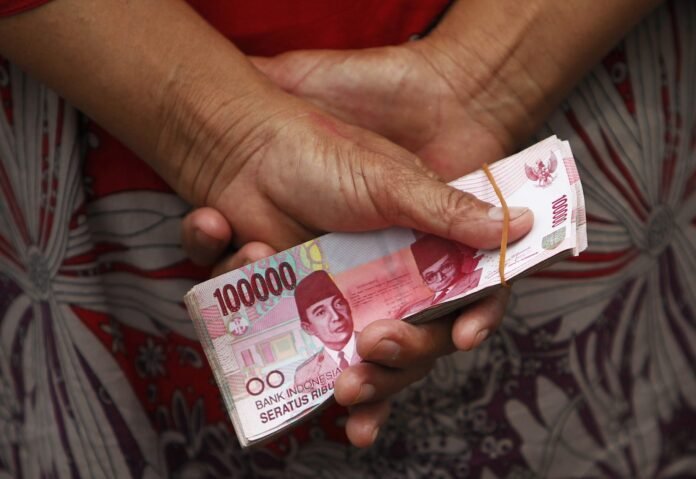
When Indonesia’s rupiah breached the new psychological threshold of 18,155 per US dollar today (June 8), the currency’s lowest ever level, social stability alarm bells rang louder than at any time since the 1997-98 Asian financial crisis.

Attempts to calm public anxiety with familiar assurances that economic fundamentals remain strong – or by attributing the problem to external shocks such as geopolitical tensions around the Strait of Hormuz – will no longer suffice as the effects of an increasingly weak currency ripple through the economy.  

Investors and businesses have spent the first half of the year assessing domestic policies and developments, and judging by the rising capital flight, many have concluded that Indonesia’s economic and financial outlook is dimming.

Hardship of a weak rupiah

The consequences of a weakening rupiah are no longer confined to macroeconomics. They are increasingly being felt at the household level through imported inflation.

Indonesia’s heavy dependence on imported energy means that every rise in the dollar immediately increases the rupiah cost of crude oil and refined fuel imports. For ordinary Indonesians, higher energy costs quickly translate into more expensive transportation, power and food.

Imported soybeans used for tofu and tempeh production, wheat for instant noodles and imported livestock feed have all become significantly more expensive. While official inflation figures may appear manageable, households are increasingly forced to spend more simply to maintain the same standard of living.

Indonesia’s vast middle class is particularly vulnerable to these price pressures. Long regarded as the backbone of domestic consumption and tax revenue, middle-income households are now in survival mode, with real wages stagnant, living costs rising and discretionary spending quietly cut.

Families have postponed home and vehicle purchases and switched to lower-cost consumer goods. Savings that once represented future security are increasingly being used to cover monthly deficits, eroding the nation’s already thin financial buffers.

As real incomes decline, a new class of gig-economy working poor is emerging in urban areas, lacking reliable incomes or adequate social protections. Many have turned to online loans and buy-now-pay-later schemes, deepening household financial fragility.

For lower-income Indonesians, a rupiah above 18,000 per dollar represents an existential threat. These households have little room to cut spending because consumption is already concentrated on basic necessities.

Since food accounts for roughly 36–38% of monthly expenditures among poorer families, any increase in staple-good prices directly threatens their ability to purchase sufficient food.

Combined with stagnant agricultural production and weak income growth among farmers, fishermen and informal workers, this dynamic is producing rising vulnerability and a growing sense of social frustration amid widening inequality.

Erosion of public trust

These social pressures have been compounded by layoffs across labor-intensive manufacturing industries.

Rising import costs for raw materials and capital goods have squeezed production, while weakening consumer demand has prevented firms from passing higher costs on to customers.

Manufacturing growth has slowed, and businesses increasingly face difficult choices between profits and employment. The consequences are already visible in the labor market. According to government data, more than 88,000 formal-sector workers lost their jobs in 2025, while an additional 23,470 workers were laid off between January and May this year.

West Java, Indonesia’s manufacturing heartland, recorded the largest number of layoffs. These figures likely understate the true scale of the problem, as many temporary and informal workers fall outside official reporting systems.

The accumulation of these hardships poses a growing risk to the political legitimacy of President Prabowo Subianto’s administration.

Social unrest is seldom driven solely by poverty itself, but rather by the gap between what people expect and what they actually experience, a dynamic political scientist Ted Robert Gurr described as relative deprivation. When expectations rise while opportunities fall, popular frustrations can become politically explosive, as seen elsewhere in the region.

Prabowo entered office promising rapid economic growth of 8% and ambitious welfare initiatives, raising high public expectations of more equitable wealth distribution.

Yet many citizens now confront a starkly different reality: a collapsing currency, rising living costs, declining housing affordability and shrinking formal employment. As the gap between promise and reality widens, public confidence in the political system could sharply deteriorate.

Digital dissent rising

Signs of this growing discontent are already rife online. The viral hashtag #IndonesiaGelap (“Dark Indonesia”) has become a rallying cry for public frustration, particularly among younger Indonesians who view the government’s priorities as increasingly detached from their economic welfare.

Students have recently taken to the streets alongside middle- and lower-class people with similar grievances. They’ve targeted everything from a lack of transparency surrounding government policies and newly created agencies such as the Danantara wealth fund to growing military influence in civilian bodies to a perceived wasteful, super-sized government Cabinet.  

If Prabowo ignores these rising calls for remedy and change, what is now, in the main, a cost-of-living economic crisis could soon be a political one that challenges national stability.

Jannus TH Siahaan is political, social, and sustainable development analyst on Indonesia. He is a doctoral alumnus of Padjadjaran University, Bandung, Indonesia.

Israel Strikes Iranian Petrochemical Complex as Tehran Launches Missile Response

0
israel-strikes-iranian-petrochemical-complex-as-tehran-launches-missile-response
Israel Strikes Iranian Petrochemical Complex as Tehran Launches Missile Response


Israel and Iran exchanged fresh attacks on Monday, marking a significant escalation in tensions and raising concerns over regional stability and global energy supplies.

The Israeli military confirmed that its air force struck several targets at the petrochemical complex in Mahshahr, in southwestern Iran. Iranian authorities said the Karun petrochemical plant near Bandar-e-Mahshahr sustained damage from an Israeli projectile. Following the attack, Iranian state media reported that the Mahshahr Special Petrochemical Economic Zone was being evacuated.

The strike is believed to be the first direct hit on Iranian energy infrastructure since U.S. President Donald Trump announced a ceasefire in April.

In response, Iran’s Islamic Revolutionary Guard Corps said it had launched attacks against the Nevatim and Tel Nof air bases in Israel, describing the strikes as retaliation for attacks on radar sites inside Iran. The IRGC said it was prepared for “any scenario” and capable of conducting widespread operations on multiple fronts.

The Israeli military later reported detecting additional missile launches from Iran and said its air defence systems were working to intercept the incoming threats.

The renewed hostilities were felt across Israel, where U.S. Ambassador to Israel Mike Huckabee said Iranian missiles had targeted the country. Posting on social media, Huckabee reported hearing “loud booms overhead” while sheltering during the attacks.

The escalation comes despite diplomatic efforts by Washington to prevent a wider conflict. According to U.S. and Israeli officials, Trump and Israeli Prime Minister Benjamin Netanyahu spoke by phone on Sunday. A U.S. official quoted by Axios said Trump urged Netanyahu to avoid further military action because negotiations were close to producing a potential agreement.

Hours before the latest strikes, Trump told the Financial Times that any new attacks by either side would not affect ongoing diplomatic efforts and stressed that he remained in control of U.S. policy.

The fighting also rattled global energy markets. Brent crude oil rose more than $3 a barrel to $96.24, while U.S. crude climbed to $93.41. The gains reversed losses recorded at the end of last week, as traders reacted to the renewed military confrontation and concerns about potential disruption to Middle Eastern energy supplies.

Before Sunday’s exchange, Iran had not directly attacked Israel since the ceasefire that took effect in April, although the Iran-backed militant group Hezbollah had continued launching attacks against Israel from Lebanon.

US did not intercept Iranian missiles fired at Israel, report says

0
us-did-not-intercept-iranian-missiles-fired-at-israel,-report-says
US did not intercept Iranian missiles fired at Israel, report says

The US did not intercept any Iranian ballistic missiles launched toward Israel overnight, contrary to an earlier claim by an Israeli military official, according to a CNN report citing a US official.

CNN reported that the US military did not intercept any of the Iranian missiles fired during the latest exchange, marking a departure from previous rounds of conflict when US forces used missile defense systems to help defend Israel against Iranian attacks.

The official also told CNN that the Israeli military coordinated closely with the US military during the operation.

Israeli Chief of Staff Lt. Gen. Eyal Zamir reportedly held two conversations with US Central Command (CENTCOM) commander Adm. Brad Cooper, according to the report.

READ: Israel to halt attacks on Iran at Trump’s request, to continue offensive in Lebanon, Israeli official says

Tensions escalated Sunday after Israel bombed the Lebanese capital Beirut despite an ongoing ceasefire. Iran subsequently launched missiles toward northern Israel, and Israel later carried out several waves of airstrikes against Iran.

The region has remained on edge since the US and Israel launched airstrikes on Iran in late February, triggering Iranian retaliation against Israel and other regional countries hosting US assets.

A temporary ceasefire was reached on April 8, but negotiations later stalled amid disputes over its implementation and subsequent regional developments.

READ: Iran’s parliament speaker says negotiations with US focused on lasting security, not normalization

macOS 27 requires Apple Silicon, as Apple draws down the Intel Mac era

0
macos-27-requires-apple-silicon,-as-apple-draws-down-the-intel-mac-era
macOS 27 requires Apple Silicon, as Apple draws down the Intel Mac era

As Apple announced last year, this year’s macOS release will end support for Intel Macs. The macOS 27 Golden Gate release will require a Mac with an Apple Silicon chip inside, including the original M1 that launched in the MacBook Air, MacBook Pro, and Mac mini back in late 2020.

Intel Macs running macOS 26 Tahoe can expect security and Safari patches for about two more years after the release of macOS 27 Golden Gate. Macs running macOS 15 Sequoia will receive one more year of updates. Apple Silicon Macs will still be able to run Intel Mac apps via the Rosetta 2 compatibility layer in macOS 27, but future releases will begin to limit the technology (Apple has said it will mainly be used to support older games that still use Intel code).

This change has been a long time coming, and every new macOS release has left a longer and longer list of Intel Macs behind. But many Mac owners who purchased late-model Intel machines in 2019 and 2020 could still run the latest version of the operating system, and third-party utilities like the OpenCore Legacy Patcher helped more adventurous Mac owners use their unsupported hardware a bit longer.

Apple’s compatibility list for macOS 27 includes no Intel Macs.

Apple’s compatibility list for macOS 27 includes no Intel Macs. Credit: Apple

Those workarounds will presumably no longer work for macOS 27 Golden Gate. Apple is jettisoning most of the remaining Intel code in macOS, as it did when ending support for PowerPC machines in the Mac OS X Snow Leopard release; without that code, continuing to force new macOS versions to run on old Intel machines will become functionally impossible.

Even some Apple Silicon Macs will miss out on some of the new Apple Intelligence features Apple demonstrated during its Worldwide Developers Conference keynote today. The basic version of Apple Intelligence will continue to work on all Apple Silicon Macs, including M1 devices and models like the MacBook Neo with just 8GB of RAM. But Apple’s more capable on-device models will require an M3 Mac or newer with at least 12GB of RAM.

The first macOS 27 and developer beta is available now, and a version aimed at public beta testers will follow in July. The final release will land in the fall.

Congress Is Trying to Permanently Integrate U.S. and Israeli Defense Tech

0
congress-is-trying-to-permanently-integrate-us.-and-israeli-defense-tech
Congress Is Trying to Permanently Integrate U.S. and Israeli Defense Tech


A controversial insertion in the National Defense Authorization Act currently winding its way through the House would permanently intertwine U.S. and Israeli defense technology, including artificial intelligence and autonomous systems.

Lawmakers and military experts told The Intercept that Section 224, named “United States-Israel Defense Technology Cooperation Initiative,” is highly irregular — and closely resembles a bipartisan bill backed by the pro-Israel lobby that died in Congress earlier this year.

“I can’t think of another example of Congress formalizing integration of critical national security technologies with a foreign power,” said retired Air Force Lt. Col. William Astore.

Unlike traditional foreign military aid programs, Section 224 would establish a framework for integrating Israeli-developed technologies directly into U.S. research, procurement, manufacturing, and acquisition processes — which military experts warned would be complicated, if not impossible, to unwind. It would apply across areas including AI, autonomous systems, cyberwarfare, biotechnology, missile defense, and defense industrial production.

Astore, who has taught military history at multiple institutions, said he’s particularly concerned about the AI component. “Israel is a leader in using AI predictive models and programs to surveil and kill people, using manned and unmanned drones,” he said. “The ‘smart,’ even autonomous technologies Israel has used against Palestinians could very well be used by the U.S. government against American citizens — especially the so-called radical left that President Trump appears to see as domestic terrorists.”

“The ‘smart,’ even autonomous technologies Israel has used against Palestinians could very well be used by the U.S. government against American citizens.”

The debate is raging as Congress prepares to take up the fiscal year 2027 NDAA, a routine piece of legislation that spells out congressional priorities and budgeting for the armed forces. The House Armed Services Committee approved the legislation on Thursday evening; it now advances for consideration by the full House.

A handful of legislators from both parties have rebuked Section 224. Among them is Rep. Thomas Massie, the Kentucky Republican known for opposing all foreign military aid — a stance that drew the ire of the American Israel Public Affairs Committee and drove millions in spending against him in the recent primary he lost to a Trump-backed challenger.

Massie was quick to condemn the proposal before it moved forward, writing: “If the provision in the NDAA to integrate/synchronize the U.S. and Israeli militaries (section 224) makes it out of committee, I’ll offer an amendment to strip it from the bill on the floor.”

Rep. Ro Khanna, a California Democrat and Massie’s frequent collaborator, attempted to do something similar at the committee stage. On Thursday, Khanna introduced an amendment seeking to remove Section 224, arguing that Congress should not deepen military integration with Israel at a time when lawmakers are increasingly questioning the future of the U.S.–Israel relationship. But the amendment failed in committee after opposition from both Republicans and Democrats, including Armed Services Committee Ranking Member Adam Smith, D-Wash., who argued the U.S. benefits from access to Israeli military technologies developed under real-world combat conditions, citing missile defense, drone warfare, and other emerging capabilities as areas of mutual interest.

According to its proponents, the goal of Section 224 is to transition Israel away from decades of dependence on U.S. taxpayer-funded military assistance and toward a model centered on trade, co-development, and defense partnership — mirroring a desire expressed by Israeli Prime Minister Benjamin Netanyahu.

With the Obama-era Memorandum of Understanding with Israel set to expire in 2028, Israel and its backers in Congress are searching for new ways to preserve U.S.–Israeli military collaboration. The current U.S.–Israel MOU provides approximately $3.3 billion annually in foreign military financing and $500 million annually for missile defense cooperation, totaling $38 billion over 10 years through 2028.

Netanyahu stated in January that he hoped to replace Israel’s dependence on American military assistance in the next decade. Less than a month later, lawmakers in both the House and Senate introduced the United States–Israel Framework for Upgraded Technologies, Unified Research, and Enhanced Security (FUTURES) Act of 2026, a bipartisan proposal designed to expand U.S.–Israel cooperation in many of the same tech and AI areas as Section 224.

The FUTURES Act was introduced in the Senate by Sens. Ted Budd, R-N.C., and Kirsten Gillibrand, D-N.Y., and in the House by Reps. Ronny Jackson, R-Texas, and Don Davis, D-N.C. All four sponsors have received substantial campaign support from AIPAC and other pro-Israel groups.

The legislation also received public backing from both AIPAC and FDD Action, the advocacy arm of the Foundation for Defense of Democracies, which has long advocated for deeper U.S.–Israel defense and technology cooperation.

The FUTURES Act did not advance as standalone legislation — but many of its core concepts later reappeared in Section 224 of the FY2027 NDAA. Legislative records and congressional offices contacted by The Intercept indicate that Section 224 adopts the same initiative and many of the same provisions previously proposed in the FUTURES Act, including language related to integrating Israeli-origin technologies into U.S. military programs, defense industrial cooperation, artificial intelligence, autonomous systems, biotechnology, cyber capabilities, and joint research and development.

The Intercept contacted the House Armed Services Committee and the Department of Defense, including Secretary of Defense Pete Hegseth’s office, seeking clarification on the origins of Section 224 and whether Pentagon officials participated in its development. Neither the committee nor the Pentagon responded to requests for comment before publication.

The Pentagon’s refusal to answer questions about Section 224 comes amid renewed scrutiny of U.S.–Israel intelligence relations. Reporting published this weekend by the New York Times and Military.com detailed Defense Department concerns regarding Israeli espionage risks, raising additional questions about efforts to deepen technological integration between the two countries.

Wes Bryant, a former Air Force special operations member who previously served as chief of civilian harm assessments at the Pentagon’s Civilian Protection Center of Excellence, argued that deeper military integration raises broader concerns about the technologies and doctrines the United States may adopt through closer cooperation with Israel.

“Israel is a terrorist state, wantonly committing atrocity and genocide largely facilitated by its use of AI, and we are further along on the same path but, at the very least, complicit,” Bryant said. “And moreso the more we militarily integrate and partner with Israel.”

In a piece for The Guardian, the co-authors of the upcoming book “Israel’s Lobby: America in the Grip of a Foreign Power,” Eli Clifton and Ian Lustick, described Section 224 as “not an alliance with a talented and responsible ally that will help keep the US safe, but a trap being set by Israel and its lobby to bind our country to a state that, for all its past promise, has gone rogue.”

China’s HQ-16F primed for Taiwan war far beyond the Strait

0
china’s-hq-16f-primed-for-taiwan-war-far-beyond-the-strait
China’s HQ-16F primed for Taiwan war far beyond the Strait

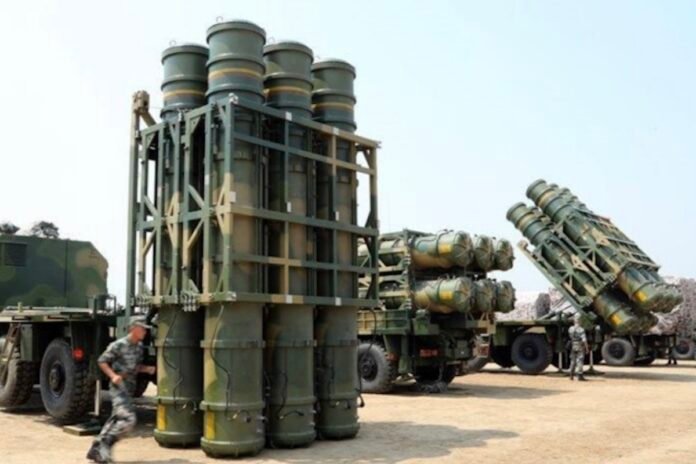
China’s deployment of the HQ-16F missile opposite Taiwan reflects Beijing’s growing concern that future wars may be fought not just across the Strait, but deep inside the mainland itself.

This month, the South China Morning Post (SCMP) reported that China has deployed a sophisticated new medium-range surface-to-air missile (SAM) system, believed to be the HQ-16F, to frontline military units stationed directly opposite Taiwan.

Chinese state broadcaster CCTV aired footage on Friday (June 5) documenting the first live-fire and operational assessment of the weapon by the 73rd Group Army.

The strategic unit, headquartered in Xiamen, Fujian province, traveled thousands of kilometers to the northwestern Gobi Desert to conduct drills, during which a mobile-launched missile reportedly successfully intercepted an incoming target 50 kilometers away.

Designed to enhance the People’s Liberation Army (PLA) Eastern Theater Command’s capabilities, the wingless, high-efficiency missile employs four tail fins, an integrated motor and advanced thrust vectoring to engage highly evasive, low-altitude or supersonic threats.

While official specifications remain classified, the system’s capabilities match or exceed those of its export variant, the HQ-16FE, which features an active electronically scanned array (AESA) radar tracking range of over 250 kilometers.

The upgrade significantly bridges the qualitative gap with US-made Patriot PAC-2 and PAC-3 systems protecting Taiwan, introducing a directional fragmentation warhead to counter cross-strait defense networks.

The HQ-16F may have been developed in response to Taiwan’s emerging precision-strike capabilities against potential invasion staging areas.

Brennan Deveraux and Kyle Marcrum note in a February 2026 article for the US Army 75th Reserve Innovation Command that Taiwan’s US-supplied Army Tactical Missile System (ATACMS) could enable it to strike targets in China from a 300-kilometer ring around the island, possibly prompting the deployment of air defense assets such as the HQ-16F near invasion embarkation sites or command and control facilities within that area.

Deveraux and Marcrum note that the ATACMS threat could be very difficult for China to address, pointing out that the Taiwan Strait is just 180 kilometers wide and that Taiwan has a significant number of ATACMS missiles dispersed across many sites on the island. ATACMS missiles are also very difficult to intercept, given their Mach 3 terminal-phase speed, leaving air and missile defense systems little time to react.

Aside from ATACMS, Taiwan’s emerging deep strike capabilities may also be a concern for China. Taiwan has reportedly fielded cruise missiles, including the Hsiung Feng IIE. According to Missile Threat, its extended-range variants have a range of 1,200 kilometers, enough to reach targets deep in mainland China when launched from Taiwan.

The Tomahawk missile combines extended range with low-altitude flight to evade enemy air defenses. Mission planners can route Tomahawk attacks through known gaps in radar coverage, use indirect flight paths rather than predictable ballistic trajectories, fly at high subsonic speeds below radar detection thresholds and exploit terrain masking to reduce the likelihood of interception. The Hsiung Feng IIE may employ similar tactics against Chinese air defenses.

Aside from the Hsiung Feng IIE, China’s large landmass, often viewed as a source of strategic depth, may become a liability in an era of long-range precision strikes. Russia’s experience in Ukraine suggests that vast territory can be difficult to defend comprehensively, allowing attacks on critical military, industrial and energy infrastructure far from the front lines.

As with Russia, China may face a similar dilemma: its vast territory may make comprehensive air defense impractical, forcing it to concentrate air and missile defenses around critical military, political and strategic sites rather than providing nationwide coverage.

Taiwan’s long-range missiles – particularly the ATACMS and Hsiung Feng IIE – could pose a significant threat to China’s invasion staging areas and strategic rear, exploiting gaps in China’s air defenses to strike critical targets, inflict economic damage and impose psychological costs, including possible doubts about China’s leadership.

While conventional strikes on China’s invasion staging areas and targets deep within its territory could, in theory, raise public opposition to an invasion of Taiwan, they could also harden public sentiment against the self-governing island, thereby supporting a doubling down on military operations against Taiwan.

China’s concerns may extend beyond Taiwan’s growing strike capabilities to include advanced US conventional strike systems capable of threatening strategic targets deep inside the mainland. Beyond the missile threat posed by Taiwan, the HQ-16F may be used to defend against US threats to China’s nuclear arsenal and core leadership.

The June 2025 US strikes on Iran’s nuclear facilities likely underscored the possibility that the same US capabilities could be used against China in the event of a conflict over Taiwan. Seven US B-2 stealth bombers carrying 14 13,600-kilogram Massive Ordnance Penetrator (MOP) bombs struck three key underground nuclear sites in Iran – Natanz, Fordow and Isfahan.

While it is unclear if the strikes actually destroyed Iran’s nuclear facilities, they most likely inflicted serious damage on Iran’s underground centrifuge facilities and collapsed underground tunnels, possibly cutting off Iran’s access to its stockpile of fissile material and enrichment facilities.

In line with that, the HQ-16F may be used to defend sites such as the Hami nuclear silo field, with Reuters reporting in May 2026 that the facilities appear to be protected by camouflaged positions cut into the desert, probably housing air defense batteries.

Aside from protecting nuclear silo fields, the HQ-16F could also be used to defend critical leadership and command-and-control (C2) facilities, such as Beijing Military City, a massive underground complex designed as a command center and meant to protect China’s leadership from nuclear attack.

While the HQ-16F may have been designed to defend China’s strategic rear, leadership, critical infrastructure and nuclear arsenal, such conventional attacks could trigger nuclear retaliation.

Although China maintains a no-first-use (NFU) nuclear policy, it could abandon that if it deems that its ruling Communist Party regime or nuclear arsenal is threatened, or to stave off an impending catastrophic military defeat.

Yet even the HQ-16F may not fully solve China’s vulnerability to long-range precision strikes against its strategic rear. It may strengthen China’s defenses against emerging long-range strike threats, but its deployment also highlights a deeper reality: China increasingly expects that a conflict over Taiwan could extend well beyond the Strait and into the mainland itself.

Maintaining deterrence without crossing China’s nuclear red lines may therefore become one of the defining challenges of any future Taiwan crisis.

Trump Administration Killed Criminal Investigation of GOP Senator’s Coal Companies

0
trump-administration-killed-criminal-investigation-of-gop-senator’s-coal-companies
Trump Administration Killed Criminal Investigation of GOP Senator’s Coal Companies

Trump administration officials earlier this year killed a federal criminal investigation into the coal empire owned by Sen. Jim Justice, a Republican from West Virginia and a close ally of the president’s.

The investigation examined potential criminal violations of the Clean Water Act by the multistate mining operations largely run by Justice’s son, Jay, according to current and former officials familiar with the matter.

The criminal probe was a significant escalation in the yearslong effort to police serial pollution offenses by Virginia-based Southern Coal and dozens of affiliated mining operations controlled by the family. In the past decade, Southern Coal and other Justice corporations have racked up tens of thousands of alleged violations of the Clean Water Act and have been sued repeatedly by state and federal prosecutors over their failure to properly follow environmental laws at their mining sites.

The investigation shuttered by the Trump administration was a joint effort by prosecutors and investigators with the Environmental Protection Agency, the Department of Justice’s Environmental Crimes Section and the U.S. Attorney’s Office of the Western District of Virginia to probe whether the incessant violations of antipollution laws had risen to the level of criminal behavior, people familiar with the matter said.

People familiar with the investigation told ProPublica that prosecutors believed they had a strong case. They initially had the blessing of Robert Tracci, President Donald Trump’s top official in the Western District of Virginia, to move forward.

But in recent months, as prosecutors battled the Justice companies in court over subpoenas for records, the Office of the Deputy Attorney General shut down the probe. At the time, Todd Blanche still headed the office, before assuming the role of acting attorney general in April.

“They were told ‘pencils down,’” a person familiar with the investigation said.

That prosecutors were even conducting a criminal investigation is noteworthy, people said, because the DOJ only charges a dozen or so criminal Clean Water Act cases each year. It is rare for top DOJ officials to derail a criminal investigation initiated by career officials at such an early stage, people familiar with the case said.

“I’ve never heard of that happening before,” said former federal prosecutor Rick Mountcastle, speaking generally about DOJ protocols. Mountcastle spent 24 years as a prosecutor in the Western District of Virginia. “There shouldn’t be some sort of untouchables list of people who are immune from enforcement.”

The move is part of a pattern of behavior at the top echelons of the DOJ to push cases against Trump’s political adversaries and ease up on allies.

Environmental enforcement against large polluters has plunged under the second Trump administration. Just days after inauguration, the administration reassigned top career environmental lawyers at the DOJ, including those overseeing the Southern Coal case, to work on the president’s immigration crackdown. At the beginning of the year, Blanche personally ordered prosecutors to stand down from cases against diesel emissions cheating.

Steven Ruby, an attorney for the Justice companies, said they became aware of the criminal investigation earlier this year.

“Ultimately the finding of the inquiry by the government was that there wasn’t any evidence to pursue criminal charges,” Ruby said. “There’s never been any intentional wrongdoing by the companies.”

While objecting to the subpoenas in court, the company simultaneously convinced the DOJ to drop the case, he said.

“The Justice companies — because Sen. Justice has been governor and because he’s now a senator — are singled out and put under a microscope, and there’s news coverage of violations and consent decrees and compliance actions,” Ruby said. “But the fact of the matter is that those kinds of issues exist throughout the industry.”

Current and former government officials familiar with the companies’ environmental record called them routine bad actors. 

Spokespeople for the EPA and the Western District of Virginia referred questions to the DOJ. Justice’s senate office did not respond to questions.

“There is no case to be made here for a criminal investigation,” Emily Covington, a DOJ spokeswoman, said in an email. “Any career prosecutor who would paint a criminal case as strong is simply a deep state prosecutor continuing to push the priorities of the Biden administration.”

The deputy attorney general’s office is routinely involved with reviewing cases, she added. The office determined that this case was not consistent with the Trump administration’s priorities, she continued, and it was more appropriate to resolve it through the less punitive civil process. “The bottom line is that this was a politically motivated prosecution for a case that can and should be resolved civilly,” she wrote.

The Justice family runs a sprawling coal mining enterprise that extends across the South. Estimates of its fortune fluctuate. Forbes tallied Jim Justice’s net worth to be as much as $1.9 billion until 2021; more recently, it declared him “broke” and facing $1 billion in debt. But environmental groups have accused his companies of misrepresenting their assets to avoid paying environmental penalties. 

Ruby said company finances seesaw because coal is a “boom and bust” industry.

Justice, who was first elected governor of West Virginia as a Democrat, announced he had become a Republican at a Trump rally in 2017. Trump backed Justice’s bid for Senate in 2023, amid a contested GOP primary. Justice went on to win the seat, helping Trump clinch a GOP majority in the Senate.

Coal mines often leach dangerous chemicals like arsenic into waterways and are required to strictly monitor pollution discharge and keep it under certain limits. The family’s companies have settled many accusations of environmental violations by agreeing to pay fines and invest in better pollution prevention without admitting or denying culpability.

In recent years, however, the company has repeatedly flouted regulators and the legal process. Jay Justice has been a no-show at court hearings involving Clean Water Act violations in the past, and in 2024 a judge in Alabama issued a civil contempt order against him for his repeated failure to respond to those lawsuits. Ruby, the Justice companies’ lawyer, attributed the violations in that case to surrounding facilities the family does not own. The case is now in mediation. 

A number of recent legal proceedings have laid bare the extent to which the Justice companies may have knowingly violated environmental laws, a key threshold for bringing a criminal matter. 

Such allegations surfaced in a 2023 civil case brought by the Justice companies’ former chief of environmental compliance Robert Fowler. In the suit, Fowler claimed that Jay Justice blocked him from spending the money necessary to comply with environmental laws, including making court-ordered payments and repairing equipment. As a result, according to emails disclosed in the lawsuit there were at times complaints of near-daily violations of permit water requirements.

In a resignation letter and in subsequent court filings, Fowler said he was concerned the circumstances exposed him to “potential civil and criminal liability.” Fowler declined to comment. 

The Justice companies denied Fowler’s accusations. The Justice companies believe the government’s criminal investigation was based primarily on Fowler’s claims, which Ruby dismissed as the allegations of a “disgruntled” former employee. 

Last month, a jury in Alabama found that the Justice companies had made false representations to Fowler about his role, but it did not award him the millions of dollars in damages he demanded in his lawsuit. The judge has yet to enter his final ruling.

In the DOJ’s aborted investigation of Southern Coal, prosecutors and federal agents had begun to gather evidence, scrutinizing testimony in the Justices’ various civil trials, and had approached former employees seeking information. Government attorneys also sent subpoenas seeking further documentation, said those familiar with the probe, a move that was opposed by the company’s lawyers.

People familiar with the case said Justice Department attorneys were ready to fight the Justices’ lawyers over the subpoenas.

But before they could move forward, Blanche’s office shut it down.

Tests suggest Russian satellites can jam GPS on a continental scale

0
tests-suggest-russian-satellites-can-jam-gps-on-a-continental-scale
Tests suggest Russian satellites can jam GPS on a continental scale

Russian satellites have been identified as the cause of mysterious, seconds-long bursts of GPS interference across Europe—a rare example of human-made GPS interference coming from space. But uncertainty still hangs over whether such interference is intentional and if it could be more powerfully weaponized as GPS jamming with continental reach in the future.

The discovery came from an investigation detailed in a June 2 preprint paper by Todd Humphreys and his student Zach Clements at The University of Texas at Austin, along with Argyris Krizise at Stanford University in California. By sifting through public data from ground-based stations with global navigation satellite system (GNSS) receivers, they identified a pattern of high-powered interference lasting less than 10 seconds each time but simultaneously detectable by ground stations across Europe from Norway to Spain to Poland, and even reaching as far west as Greenland and Canada.

By analyzing the ground station data from January 2019 to April 2026, the researchers found 75 days with at least one widespread GNSS interference event overlapping with the GPS L1 frequency band centered on 1575.42 megahertz. That represents the main band used for signal transmission by the US-made GPS satellite constellation and GNSS constellations from other countries.

Such interference patterns happened mostly on Tuesdays, Wednesdays, and Thursdays during business hours in Europe, Humphreys told the YouTube channel Veritasium. Because such “continental-scale” interference was simultaneously affecting GPS receivers across Europe and beyond, Humphreys and his colleagues calculated that the source had to be at least 1,200 kilometers above the Earth.

By examining which satellites were above the horizon over the affected region during each interference event, the researchers narrowed their search to a handful of suspect satellites. But they couldn’t go further because they only had data processed by the GNSS receivers of the ground stations—they needed to capture the raw radio signal data from the interference source.

In September 2025, the researchers sought help from the broader community at the Institute of Navigation conference in Baltimore, Maryland, according to Veritasium. Months later, Humphreys received a breakthrough tip about the raw interference signal data having been captured by stations in Amsterdam, Netherlands, and Trondheim, Norway, during an interference event on February 11, 2026.

By examining the difference in timing when that signal arrived at the two different stations, Humphreys and Clements calculated a “quasi-hyperboloid surface”—the term they used in the paper—stretching tens of thousands of kilometers into space where the interference satellite must have been located. As explained by Veritasium, the margin of error represented by the thickness of that surface was only five meters.

A comparison of suspect satellite orbits with the quasi-hyperboloid surface showed that only one satellite’s orbit aligned perfectly—the Russian satellite Kosmos 2546. That discovery, in turn, pointed them to six satellites in the Russian Edinaya Kosmicheskaya Sistema (EKS) constellation, including Kosmos 2546, which are designed to provide early warnings when they detect ballistic missile launches.

Such satellites sit in highly elliptical Molniya orbits extending far above the high latitudes of the Earth that provide long-duration coverage of the northern hemisphere. The analysis by Humphreys, Clements, and Krizise showed that there was at least one such Russian satellite well above the horizon for every single reference ground station during all the GPS interference events.

The uncomfortable why

There is still the open question of why the Russian satellites appear to be periodically engaging in short bursts of targeted GPS interference over Europe—especially because the jamming signal is slightly offset from the usual GPS frequency band.

In the Veritasium video, Humphreys speculated that the Russians may have been testing the satellites’ GPS interference capabilities only briefly on a neighboring frequency adjacent to the typical GPS band. “And then in the eventual future when there is a hot conflict, they go ahead and tune their transmitter down to the GPS band, but it’s much more damaging now that it lies right on that band,” he said.

Incidentally, the raw data also revealed a second interference burst from the Russian satellites in a lower-frequency band used by China’s BeiDou navigation system.

“I can no longer say this is accidental with confidence,” Humphreys told Veritasium. He also described the Russian satellites’ quiet demonstration as a “massive escalation in the electronic warfare background conflict that is going on right now.”

But Richard Bowden, division head of assured and resilient PNT at the multinational technology company GMV in Spain, shared a different theory with Veritasium about how the interference bursts may actually represent short communication messages being sent from Russian satellites. Bowden’s team independently identified at least two of the Russian satellites as the source of the GPS interference pattern.

“These signals are, without a doubt, intentional and placed on or around GNSS signals, and have the potential to disrupt legitimate use of GNSS services,” Bowden wrote in a LinkedIn comment. “But from our side at least, we can’t be sure they are intentionally malicious or intended as an EW [electronic warfare] weapon.”

Veritasium: Something is jamming GPS over Europe.

An active space-based, human-made source of GPS jamming is still extremely rare. Most sources of GPS jamming originate from ground stations or vehicles, and potentially from ships and aircraft.

Experts interviewed by The New York Times expressed skepticism that Russia would use its only known early-warning satellites for a secondary GPS-jamming purpose. The European Union said it had been investigating but could not share results because they were classified. The Russian Embassy in Washington, DC, told the newspaper it had no comment.

But Russia has been demonstrating a growing number of systems that can potentially neutralize space-based assets belonging to the United States and Europe. In April 2026, the leader of US Space Command warned that Russia had operationalized anti-satellite weapons capable of targeting US government satellites. In May 2026, open source orbital tracking data revealed that at least four Russian military satellites performed orbital maneuvers to match the orbit of a Finnish-American radar surveillance satellite.

0FansLike
0FollowersFollow
0FollowersFollow
0SubscribersSubscribe
- Advertisement -
Google search engine

Recent Posts