Home Blog

What ProPublica Found in the Genetic Code of America’s Measles Outbreaks

0
what-propublica-found-in-the-genetic-code-of-america’s-measles-outbreaks
What ProPublica Found in the Genetic Code of America’s Measles Outbreaks

ProPublica is a nonprofit newsroom that investigates abuses of power. Sign up to receive our biggest stories as soon as they’re published.

American children lined up for the world’s first measles shots in the early 1960s, but it took nearly 40 years of shoring up immunization programs before the infamous contagion had been so thoroughly controlled that a panel of experts declared in 2000 that the United States had eliminated measles within its borders.

For a quarter century, the U.S. only saw outbreaks when infected travelers brought the virus in from abroad. The resulting waves of measles didn’t last more than a year.

Those days are gone.

Measles began tearing through the dusty plains of West Texas in January last year, and since then, all but a handful of states have seen cases. Two unvaccinated Texas girls and an adult across the border in New Mexico died before the West Texas outbreak seemed to burn out last July.

By then, measles was popping up in Utah, and state health officials couldn’t tell where the earliest patients had caught the virus. Infections in that state took off that fall and winter and continued into May of this year.

The Texas and Utah cases now sit at the center of an unusually technical — and politically fraught — question: whether the United States will lose its measles-free distinction.

Countries aren’t penalized for losing the status, but it’s an indication of cracks in a nation’s once rock-solid immunization programs, a loss of faith in vaccines among its people — or both.

To have any chance of keeping the designation, the U.S. will need to make a strong case that measles didn’t spread endemically — from person to person in a continuous chain within the country for more than a year. If the Texas virus, for example, made its way across the Southwest to Utah and continued infecting people there, that would be a problem. But if cases in Utah were instead sparked by a patient who caught measles abroad, that would be a new chain, restarting the clock.

For clues, the Centers for Disease Control and Prevention is analyzing the full genetic code of measles viruses that infected patients. Last November, the CDC’s leader at the time said preliminary genomic analysis suggested the Utah cases were not directly linked to those in Texas. A spokesperson for the Department of Health and Human Services told ProPublica that the work was done by the state laboratories and the CDC is conducting a more comprehensive investigation.

ProPublica embarked on its own analysis, reviewing over 1,800 whole genome sequences, including those released as recently as last month, to compare the genetic fingerprints of measles viruses circulating in the U.S. and Canada. This showed that the measles virus still spreading in Utah as of this May is very closely related to the one that sickened Texans over a year ago.

ProPublica’s analysis isn’t a smoking gun that proves endemic spread. It’s impossible to tell from this information whether the virus spread from state to state or if it at some point left the country and was brought back by a sick traveler.

But given how similar the viruses are in the sequences ProPublica identified, it’s going to be difficult for the U.S. to prove measles isn’t endemic — “unless CDC has something up their sleeves,” said Dr. Alberto Severini, a retired molecular virologist and measles expert who spent two decades at Canada’s Public Health Agency.

The unique fingerprint of mutations hasn’t been limited to these states. The five mutations observed in Texas and Utah were also present in sequences the CDC published of viruses that infected patients last May and June in Iowa, North Dakota, Minnesota and Alaska.

But it’s not clear that the genetic fingerprint is only in the U.S.: No whole genome sequencing has been made public from cases in either Mexico or the Canadian province of Ontario, where measles has also raged.

That matters because whether the virus was spreading continuously in the United States for more than a year — rather than circulating abroad and being brought back into the country by travelers — is a key question facing a panel of experts convened by the Pan American Health Organization.

A regional office of the World Health Organization, PAHO will decide whether the U.S. keeps its measles-free designation. Canada lost its status last year. PAHO invited the U.S. to make its case in April, but American officials asked for more time to investigate how the virus had been spreading. The review was moved to November.

Daniel Salas, a PAHO official, said the kind of thorough analysis that CDC is doing “takes time.”

“What the U.S. is trying to do with this whole genome sequencing is trying to find some patterns that could eventually say, for example, this mutation of the virus occurred in a different country, in a different place to the current outbreak that they’re trying to analyze, so that eventually, that might be taken into consideration to somehow replace the epidemiological information that is missing,” he said. “There’s no country that has done this before.”

One of the biggest questions is how the virus got into Utah. Health officials determined that the first confirmed patient there, identified last June, couldn’t have been exposed to measles in another country or even another state. Utah State Epidemiologist Dr. Leisha Nolen said she and her team reviewed the places the patient had been and the people they had been around, but still couldn’t figure out where they caught the virus.

Clues suggested measles had been quietly spreading in the region. A CDC disease detective investigating subsequent cases that spanned the Utah-Arizona border said there had been reports of community members with rashes last June, but the patients declined measles testing and families were often reluctant to answer questions.

Throughout the outbreak, no interviews suggested any patient was exposed in another country, Nolen said, but she and her team cannot rule out the possibility.

ProPublica asked the CDC whether its epidemiologists had linked any of Utah’s measles cases to an international outbreak, but the agency wouldn’t say, nor would it directly comment on genetic similarities ProPublica found between viruses in Texas and Utah. In a written statement, a spokesperson said, “Sequencing alone cannot determine whether transmission has been continuous or sustained.”

While genomic analysis can provide clues, the spokesperson wrote, “These findings must be interpreted alongside epidemiological data, including travel history, exposure information, and known outbreak connections.”

The CDC is still working on “a comprehensive analysis of potential linkages among cases and outbreaks” and has gathered additional epidemiological data, the spokesperson said, but did not elaborate on what that shows.

With the midterm elections approaching, the spread of measles has become a political liability for President Donald Trump, who picked the founder of an antivaccine organization to be his health secretary. Since Trump’s inauguration last year, there have been more than 4,300 U.S. cases, a high not seen in three decades.

Eliminating the endemic spread of measles is the public health equivalent of slaying a dragon. The disease is among the most contagious humans have ever encountered. Patients are infectious even before the telltale rash appears, and the contagion can linger in a room for two hours after they leave.

Policymakers built the U.S. immunization system on lessons learned from measles outbreaks. To get the sky high-vaccination rates needed to stop the disease from spreading, states made shots mandatory for school and daycare attendance, and the federal government provided them free to low-income kids. When measles still managed to roar back, state lawmakers in California and New York cracked down on exemptions to their school mandates. The U.S. helped other countries fight measles, too, not only to prevent deaths but also because people in power recognized that infectious diseases kept in check abroad are less likely to return to American shores.

During prior U.S. outbreaks, health and political leaders, with unwavering language, urged Americans to vaccinate their children and assured them the shots were safe.

Trump and HHS Secretary Robert F. Kennedy Jr. haven’t followed that playbook. Both have fueled doubts about the safety of the MMR shot, which guards against measles, mumps and rubella.

Researchers around the world have found the vaccine does not cause autism. Nevertheless, at a press conference on autism last fall, Trump said he had heard for years that there was a problem with the combination vaccine and urged parents to insist on separate shots for their kids — even though standalone shots don’t exist in the U.S.

Kennedy has said the vaccine offers protection from measles, but he also has repeatedly made the shot sound scarier than the disease.

“There are adverse events from the vaccine,” he told Sean Hannity on Fox News last year. “It does cause deaths every year.”

On a podcast, Kennedy said that when he got the virus as a kid, he got to watch television for a week. “I got chicken soup and vitamin A, which nobody can patent,” he said.

Measles kills 1 to 3 out of every 1,000 people infected and can cause deafness, intellectual disability and brain swelling. In a “know the facts” post, the Infectious Diseases Society of America said there have been no deaths shown to be related to the shot in healthy people. “There have been rare cases of deaths from vaccine side effects among children who are immune compromised, which is why it is recommended that they don’t get the vaccine,” the medical society explained. “That’s why it is so important that everyone who can get vaccinated does so, to protect those who can’t.”

HHS spokesperson Andrew Nixon said in an email that Kennedy “believes Americans deserve clear information about both the benefits and risks of medical products so they can make informed healthcare decisions in consultation with their healthcare providers.”

Nixon said “heavy-handed mandates” contributed to the significant loss of trust in health institutions during the COVID-19 pandemic. “The Secretary maintains that public health agencies rebuild trust through honesty, transparency, and respect for individual choice — not coercion,” Nixon wrote.

Kennedy has tried to distance himself and the administration from the measles resurgence. He said the U.S. has done a better job of limiting the spread than any other country and pointed to the far higher number of cases in Canada and Mexico, whose populations are much smaller.

White House spokesperson Kush Desai told ProPublica, “Fake News reporters should be spending more time examining why the Trump administration’s efforts to contain America’s measles outbreak has been so much more successful than those of Canada and Mexico instead of regurgitating the same, tired narratives.”

Kennedy has also reminded lawmakers that the Texas outbreak began before he became health secretary.

“We have a global pandemic,” he told senators in April. “It has nothing to do with me.”

Kennedy has been among the most prominent voices in the antivaccine movement for more than a decade.

Dr. Adam Ratner, a pediatric infectious disease physician who wrote a book about measles, said Kennedy has done “everything in his power to undermine confidence in vaccines in the U.S.”

During a measles outbreak in New York City that began in 2018, Ratner treated at least five unvaccinated kids who were hospitalized, including a couple who needed intensive care, so he knows that not every child escapes the disease with nothing more than memories of screen time and soup.

While most parents still support immunizations, Ratner worries that the country no longer has the stomach for the kinds of policies that once stopped endemic spread. Rather than making school vaccine requirements stricter, some states are working to do away with them altogether in the name of medical freedom.

“You need a highly vaccinated population to control the spread,” he said. “In the absence of that, I think that we will have ongoing spread, and we’ll have tragedies like the ones that we saw in West Texas with the two kids who died.”

The U.S. may very well find the international travelers it needs to prove that the country is still measles free. But if all remains the same, experts said, it will only be delaying the inevitable.

“It doesn’t change the fact that there’s been transmission of measles in the United States for over a year,” Severini said. “If people don’t vaccinate, measles is going to be endemic.”
With or without China, Shangri-La Dialogue is still relevant

0
with-or-without-china,-shangri-la-dialogue-is-still-relevant
With or without China, Shangri-La Dialogue is still relevant

Former Straits Times editor-in-chief Warren Fernandez writes with characteristic elegance in his latest RSIS piece, “With or Without You: The U2 Doctrine Comes to Shangri-La”, carried in The Straits Times on June 3, 2026.

The piece gives cause for three reflections from this year’s Shangri-La Dialogue: whether middle power coalitions can substitute for hard power; whether the SLD can be both a pro-American forum and a genuine platform for US-China ministerial dialogue; and whether deterrence and diplomacy are coequal in one’s foreign policy toolkit.

Let’s take them in reverse, because deterrence is the precondition for everything else.

Diplomacy comes after deterrence

Deterrence works by changing an adversary’s cost-benefit calculation before a decision to act is made. Diplomacy has room to operate only when the costs of aggression exceed the benefits. Without a coercive backstop, the stronger party has little reason to concede anything.

Fernandez cited Sun Tzu’s “supreme art” of prevailing without battle. But that only works when the adversary calculates that battle is irrational – and that calculation is produced by deterrence.

What happens when we invert this sequence? Europe spent three decades deepening economic interdependence with Russia while hollowing out its deterrence posture, betting commercial ties would socialize Moscow into the rules-based order. Then, Russia invaded Ukraine in 2022, undercutting Europe’s peace via economics premise.

In the South China Sea, ASEAN has pursued dialogue, while China has built at least seven artificial islands in the Spratly Islands, equipped with anti-ship missile batteries and operational runways, and has outright rejected the 2016 Permanent Court of Arbitration ruling. An ASEAN-China Code of Conduct may eventually be concluded, but it’s unlikely to change the territorial facts on the ground.

Questions of neutrality

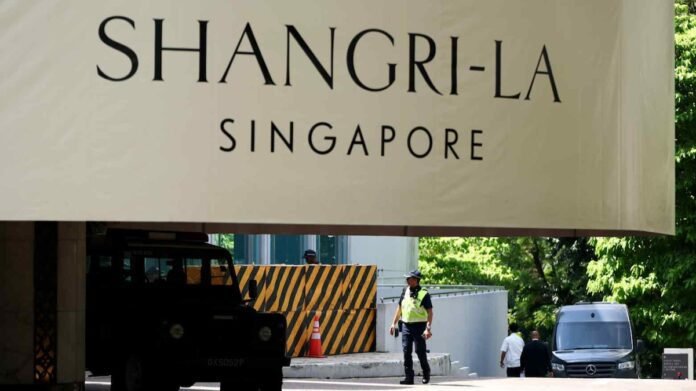
For the second consecutive year, China’s defense minister skipped the SLD. Beijing’s explanation for his absence as “a completely normal work arrangement” was neither credible nor to the point, which is that China views the SLD as dominated by the US and the West.

Singapore’s former Ministry of Foreign Affairs permanent secretary, Bilahari Kausikan, affirmed as much on the sidelines of this year’s SLD : “The Shangri-La Dialogue was always primarily about anchoring the US in Southeast Asia.” IISS should own this assessment, rather than equivocate when critics call it out.

China’s Xiangshan Forum, which draws ASEAN and Global South defense ministers each September, is a rational response. So was Chinese Foreign Minister Wang Yi’s choice to attend the Munich Security Conference in February 2026 rather than Singapore in May.

He went where he could contest the normative order at its weakest, not where Chinese hard power is already the operating assumption among Indo-Pacific neighbors.

I make these points because the SLD should not simultaneously try to be both an American-anchored forum and a neutral platform for US-China ministerial dialogue to remain relevant and purposeful. Given today’s state of regional geopolitical contest, those are structurally incompatible functions.

If SLD exists to anchor US commitment to the Indo-Pacific, then Japan, Australia, the Philippines, and other American-aligned states are not merely attending a dialogue but are also using SLD as a stage to reaffirm Washington’s regional role.

China has no rational or strategic interest in legitimizing a forum that is structured around that purpose. Expecting Beijing to do so is asking a competitor to dignify its opponent’s press conference.

And because Singapore is hosting the conference, its local defense community should stop expressing “disappointment” at China’s absence. Lamenting it signals confusion about what SLD is for.

Worse still, mistaking SLD for a neutral convening platform – and then acting surprised when China declines – is self-deception. Singapore hosts SLD as an institutional choice and its internal clarity about the forum’s structural meaning must follow.

Don’t mistake activity for capability

This confusion about the SLD reflects a broader problem: mistaking the momentum of multilateral activity for the substance of deterrence.

Fernandez references the Guiding Principles for Underwater Infrastructure Defense Exchanges framework (GUIDE), Japan-Australia agreements, and middle-power Plan B architectures in his essay. He said that middle powers are “seeking agency – not just to adapt to a changing world, but to shape it.”

But shaping a security order (even a regional one) requires the ability to impose costs on a major power that is seeking to contest it.

Threat perception can be defined as intent multiplied by capability. In deterrence, intent matters little if a power lacks the capability to act on it, or if its capability is inferior to that of its competitor.

As US War Secretary Pete Hegseth said at the SLD, a favorable balance of power requires “capable allies with genuine military strength, industrial capacity and political resolve.” On this point, Hegseth is right.

For any smaller state, autonomy exists in the space that competing great powers leave open as they constrain one another.

In Singapore’s case, its ability to speak sincerely to both Washington and Beijing, to host the SLD and send ministers to Xiangshan, and to maintain the Agreement on Defense Exchanges and Security Cooperation with China while deepening US access arrangements, depends entirely on that balance of power remaining credible.

It’s worth noting that Singapore established an MOU granting US forces access to Sembawang and Changi in 1990, anchoring America’s forward presence before Singapore formalized defense ties with Beijing in 2008, from a position of strength. As Singapore enhanced the ADESC in October 2019, it also renewed the MOU with the US on base access through 2035.

In short, Singapore was able to deepen ties with both major powers because the balance was assured.

Friends with everyone

Keeping that balance on an even keel enables Singapore to stay friends with all. To illustrate this point, I’ll reference two of my earlier essays.

The first concerns Singapore’s September 2025 decision to acquire four Boeing P-8A Poseidon maritime patrol aircraft. The US$2.3 billion platform is US-built, US-interoperable and optimized for anti-submarine warfare in precisely the waters  whose stability is undergirded by a US-led architecture.

Second, I reflected last month on the New International Land-Sea Trade Corridor, with Singapore embedded as an indispensable logistics node in Beijing’s western maritime supply line, as a sustainable way of deepening economic ties and other strategic interests with China.

Warren’s counsel to “shape ties with a capricious America” treats US commitment as one variable among many. But Singapore’s experience suggests that without America’s commitment here, there is simply no balance to be had; without balance, there is no autonomy; and without autonomy, Singapore’s diplomacy – with Washington, Beijing, or anyone else – has little ground to stand on.

Singapore’s Defense Minister Chan Chun Sing recalled Emeritus Senior Minister Goh Chok Tong’s counsel at this year’s SLD, saying, “We cannot control the sea, but we can certainly keep our boat seaworthy.”

That is precisely why we should go beyond debating whether China should have attended the SLD or whether the US is coercing partners to burden-share. The SLD serves a purpose, but it is only one side of the ledger. Indeed, a seaworthy boat is necessary, but it still needs sea lanes that no single power can toll.

Marcus Loh is the chairman of the Public Affairs Group at the Public Relations and Communications Association (PRCA) Asia Pacific and a director at Temus, a Singapore AI and digital services firm. Formerly the president of the Institute of Public Relations of Singapore, he helped strengthen the role of strategic communication and public affairs amid shifting policy, technological and geoeconomic landscapes. He is currently an MA candidate at the War Studies Department of King’s College London.

France and Cyprus to sign defense pact for French deployment to island

0

France and Cyprus will sign on Monday a status of forces agreement allowing Paris to station troops on the Mediterranean island, two senior Cypriot government officials told POLITICO. The agreement will be signed by French Armed Forces Minister Catherine Vautrin and Cypriot Defense Minister Vasilis Palmas in Nicosia, as both will attend the informal European […]

Spinach and Artichoke Stuffed Spaghetti Squash

0
spinach-and-artichoke-stuffed-spaghetti-squash
Spinach and Artichoke Stuffed Spaghetti Squash

You are here: Home / All RECIPES / Spinach and Artichoke Stuffed Spaghetti Squash

This Spinach and Artichoke Stuffed Spaghetti Squash is creamy, cheesy, savory, and full of cozy flavor. Sweet roasted spaghetti squash is filled with a rich spinach and artichoke mixture, then baked until bubbly and golden on top.

It is a beautiful way to enjoy seasonal squash and makes a wonderful vegetarian dinner, low-carb meal, or impressive side dish for a special dinner.

Why You’ll Love This Recipe

If you love spinach and artichoke dip, this recipe turns that classic creamy filling into a satisfying meal. Instead of serving it with bread or chips, the cheesy spinach-artichoke mixture is spooned into tender roasted spaghetti squash boats.

The natural sweetness of spaghetti squash balances the savory filling perfectly. The squash strands become soft and noodle-like, while the filling adds richness from cream cheese, mozzarella, Parmesan, garlic, and artichokes.

This recipe is comforting enough for fall and winter dinners, but still fresh thanks to the spinach and artichokes.

What Is Spaghetti Squash?

Spaghetti squash is a winter squash that looks firm and solid when raw, but once cooked, the inside separates into long, pasta-like strands. That is where it gets its name.

The flavor is lightly sweet and mild, making it a great base for savory fillings and sauces. It is often used as a lighter alternative to pasta, especially in low-carb meals.

For this recipe, the squash is roasted first, then filled with a creamy spinach and artichoke mixture and baked again until golden.

Ingredients

  • 2 medium spaghetti squashes
  • 2 tablespoons olive oil, divided
  • Salt and black pepper, to taste
  • 2 cloves garlic, minced
  • 7 cups fresh spinach
  • 1 can artichoke hearts, drained and chopped, about 14 ounces
  • 1 cup full-fat cream cheese
  • 4 tablespoons mayonnaise
  • ½ cup grated Parmesan cheese, divided
  • 1 cup shredded mozzarella cheese

Ingredient Notes

Spaghetti Squash

Choose medium spaghetti squashes that feel heavy for their size. The skin should be firm without soft spots.

Spinach

Fresh spinach works best because it wilts quickly and blends beautifully into the creamy filling. Make sure any excess liquid cooks off before adding the cheeses.

Artichokes

Canned artichoke hearts are easy and convenient. Drain them well and chop them before adding them to the filling.

Cream Cheese

Full-fat cream cheese gives the filling the best creamy texture. Let it soften slightly so it melts smoothly into the spinach mixture.

Mayonnaise

A small amount of mayonnaise adds tang and richness, similar to classic spinach artichoke dip.

Parmesan and Mozzarella

Parmesan adds salty, savory flavor, while mozzarella makes the filling melty and bubbly.

For the best melt, shred mozzarella from a block instead of using pre-shredded cheese.

Step 1: Roast the Spaghetti Squash

Preheat the oven to 400°F.

Carefully cut each spaghetti squash in half lengthwise. Scoop out the seeds with a spoon.

Brush the cut sides with 1 tablespoon of olive oil and season with salt and black pepper.

Place the squash halves on a baking sheet, cut side up, and roast for about 40 minutes, or until the flesh is tender and can be easily scraped into strands with a fork.

Step 2: Cook the Spinach

While the squash is roasting, heat the remaining 1 tablespoon of olive oil in a large skillet over medium heat.

Add the minced garlic and cook for a few seconds, just until fragrant.

Add the fresh spinach and stir until wilted. Continue cooking until most of the liquid has evaporated.

Step 3: Add the Artichokes

Stir in the drained and chopped artichokes.

Cook for about 1 minute to warm them through and combine them with the spinach and garlic.

Step 4: Make the Creamy Filling

Reduce the heat to low.

Add the cream cheese and stir until melted and smooth.

Remove the skillet from the heat, then stir in the mayonnaise, mozzarella cheese, and most of the Parmesan cheese. Reserve about 2 tablespoons of Parmesan for topping.

Mix until everything is creamy and well combined.

Step 5: Stuff the Squash

Once the spaghetti squash is roasted, gently scrape the inside with a fork to loosen the strands, but keep them inside the squash shells.

Divide the spinach and artichoke filling evenly between the four squash halves.

Sprinkle the tops with the remaining Parmesan cheese.

Step 6: Bake Until Golden

Return the stuffed squash to the oven and bake for 20 to 25 minutes, or until the filling is hot, bubbly, and lightly golden on top.

Serve warm.

Recipe Tips

Use a sharp knife when cutting spaghetti squash. The skin is firm, so place the squash on a stable cutting board and cut carefully.

Do not overcook the spinach. You only need to wilt it and cook off excess liquid so the filling does not become watery.

Drain the artichokes well. Too much liquid can make the filling loose.

Use block mozzarella if possible. Pre-shredded cheese often contains anti-caking ingredients that prevent it from melting as smoothly.

Roast the squash ahead of time if you want to save time. You can roast it 1 to 2 days in advance and keep it in the fridge until ready to fill and bake.

Substitutions and Variations

Use a Different Squash

If you cannot find spaghetti squash, try acorn squash or butternut squash. The texture will be different, but the filling will still taste delicious.

Make It Lighter

Use light cream cheese and reduce the mayonnaise slightly. The filling will be less rich but still creamy.

Add Protein

For a heartier meal, add cooked chicken, turkey, or crispy bacon to the spinach-artichoke filling.

Add Heat

Stir in red pepper flakes, chopped jalapeños, or a little hot sauce for a spicy version.

Make It Vegetarian-Friendly

If needed, use vegetarian Parmesan or another vegetarian hard cheese.

Serving Suggestions

This stuffed spaghetti squash can be served as a main dish or a side dish.

As a vegetarian main, pair it with:

  • A simple green salad
  • Roasted vegetables
  • Garlic bread
  • Tomato cucumber salad
  • Lentil soup
  • White bean salad

As a side dish, serve it with:

  • Braised short ribs
  • Grilled steak
  • Roast chicken
  • Baked salmon
  • Turkey meatballs
  • Garlic butter shrimp

Storage Instructions

Store leftovers in an airtight container in the refrigerator for 3 to 4 days.

To reheat, place the stuffed squash in a 350°F oven for 15 to 20 minutes, or until warmed through.

You can also reheat it in the microwave, though the oven gives the best texture.

Freezing Instructions

Stuffed spaghetti squash can be frozen for up to 3 months.

Let it cool completely, wrap tightly, and store in a freezer-safe container.

Thaw in the refrigerator overnight before reheating.

Frequently Asked Questions

Can I make stuffed spaghetti squash ahead of time?

Yes. You can roast the squash and prepare the filling ahead of time. Store them separately in the fridge, then assemble and bake when ready to serve.

Can I use frozen spinach?

Yes. Thaw it first and squeeze out as much liquid as possible before adding it to the filling.

Can I use marinated artichokes?

Yes, but the flavor will be stronger and tangier. Drain them well before using.

How do I know when spaghetti squash is cooked?

The squash is done when the flesh is tender and easily pulls apart into strands with a fork.

Can I make this recipe low-carb?

Yes. Spaghetti squash is naturally lower in carbs than pasta, and the creamy spinach-artichoke filling makes it satisfying without needing noodles or bread.

Recipe Card

Spinach and Artichoke Stuffed Spaghetti Squash

Sweet roasted spaghetti squash filled with creamy spinach and artichoke filling, then baked until bubbly and golden.

Prep Time: 10 minutes
Cook Time: 1 hour 10 minutes
Total Time: 1 hour 20 minutes
Servings: 4

Ingredients

  • 2 medium spaghetti squashes
  • 2 tablespoons olive oil, divided
  • Salt and black pepper, to taste
  • 2 cloves garlic, minced
  • 7 cups fresh spinach
  • 1 can artichoke hearts, drained and chopped, about 14 ounces
  • 1 cup full-fat cream cheese
  • 4 tablespoons mayonnaise
  • ½ cup grated Parmesan cheese, divided
  • 1 cup shredded mozzarella cheese

Instructions

  1. Preheat the oven to 400°F.
  2. Cut the spaghetti squashes in half lengthwise and scoop out the seeds.
  3. Brush the cut sides with 1 tablespoon olive oil and season with salt and black pepper.
  4. Place the squash halves on a baking sheet, cut side up, and roast for 40 minutes, or until tender.
  5. While the squash roasts, heat the remaining 1 tablespoon olive oil in a large skillet over medium heat.
  6. Add the garlic and cook briefly until fragrant.
  7. Add the spinach and cook until wilted and most of the liquid has evaporated.
  8. Stir in the chopped artichokes and cook for 1 minute.
  9. Add the cream cheese and stir over low heat until melted.
  10. Remove from heat and stir in the mayonnaise, mozzarella, and most of the Parmesan cheese. Reserve about 2 tablespoons Parmesan for topping.
  11. Scrape the roasted squash lightly with a fork to loosen the strands.
  12. Divide the spinach-artichoke filling evenly between the squash halves.
  13. Sprinkle with the remaining Parmesan cheese.
  14. Bake for 20 to 25 minutes, or until bubbly and golden on top.
  15. Serve warm.

Nutrition Estimate

Per serving, approximate:

  • Calories: 620
  • Carbohydrates: 49g
  • Protein: 19g
  • Fat: 42g
  • Fiber: 10g
  • Sugar: 18g
  • Sodium: 1003mg

Nutrition may vary depending on ingredient brands and portion size.

Final Thoughts

This Spinach and Artichoke Stuffed Spaghetti Squash is a cozy, creamy, and flavorful way to enjoy squash season. It takes the flavors of classic spinach artichoke dip and turns them into a satisfying meal that feels special but is still simple to make.

Serve it as a vegetarian main dish, a low-carb dinner, or a comforting side for a holiday-style meal.

Pinterest Description

This Spinach and Artichoke Stuffed Spaghetti Squash is creamy, cheesy, savory, and perfect for a cozy fall or winter dinner! Sweet roasted spaghetti squash is filled with a rich spinach artichoke mixture, topped with Parmesan, and baked until bubbly and golden. A delicious vegetarian dinner or low-carb comfort food idea! #SpaghettiSquash #StuffedSquash #SpinachArtichoke #VegetarianDinner #LowCarbRecipes #FallRecipes #HealthyComfortFood #EasyDinnerIdeas #SquashRecipes #CheesyVegetables

Why Europe should erect high and hard trade barriers on China

0
why-europe-should-erect-high-and-hard-trade-barriers-on-china
Why Europe should erect high and hard trade barriers on China

As regular readers of this blog know, I’m pretty ambivalent about trade barriers as an economic policy.

On one hand, I think targeted tariffs and other trade barriers can be used to protect strategic industries from surges in underpriced import competition, especially by geopolitical rivals.

On the other hand, broad tariffs like the ones Trump has used are generally bad — they hurt domestic manufacturing by making intermediate goods more expensive, they limit scale for domestic companies, etc.

And yet I do think that Europe should erect much higher trade barriers — both tariffs and non-tariff barriers — against Chinese high-tech manufactured export goods. The basic reason is that it’s important to protect Europe’s nascent modern defense industry. But I also think that blocking Chinese exports might nudge China to change its economic model to one that benefits regular Chinese people more.

In other words, China-Europe trade has some unusual characteristics right now that make trade barriers a much smarter idea than usual.

First, let’s talk about what’s going on with the Chinese economy. For the past few years, China’s government has unleashed an unprecedented torrent of subsidies for high-tech manufacturing industries.

This — along with structural factors about how the Chinese economy works — has resulted in China making big global market share gains in industries like autos, pharmaceuticals, and shipbuilding. No one knows just how much of China’s market share gains are a result of government support, but as Paul Hannon reports, the OECD estimates that it’s more than half:

Government subsidies have driven most of the increase in the global market share of Chinese businesses over the past two decades as they have received three to eight times more support than their competitors, the Organisation for Economic Cooperation and Development said Monday…The analysis is based on the OECD’s Manufacturing Groups and Industrial Corporations database, which includes subsidy estimates and financial information for 525 of the world’s largest manufacturing groups spread across 15 key industrial sectors…[T]he OECD database tracks the amounts that firms are actually given…

“Industrial firms based in China receive more subsidies than their competitors based everywhere else,” the OECD said…For Chinese businesses, however, the share of [market share] gains explained by subsidies was…60%.

The Rhodium Group has a deeper dive into China’s new industrial policy. Essentially, instead of selecting a few industries to specialize in, China’s leaders just want the country to dominate everything — not just manufacturing, but services as well:

China’s industrial strategy…is becoming more systemic and pervasive, extending across all layers of production, from upstream inputs and industrial equipment to downstream applications, services, and frontier technologies…China’s next-generation industrial policy represents a shift from targeted sectoral intervention to what can be described as an “industrial policy of everything.”…While [Made in China 2025] focused on a defined set of strategic emerging industries, current policy frameworks extend across mature sectors, foundational supply chain nodes, and frontier technologies alike…

Even in mature industries facing overcapacity and severe price pressures, Beijing is providing continued support and pushing firms to upgrade production technologies to gain market share and lower production costs, rather than cutting capacity…Services, relatively neglected in earlier rounds of industrial policy, are getting more attention[.]

Basically, China does not want[1] to exist in a trading system, where goods are traded for other goods. China wants to make all the goods, and have other countries pay for those goods with debt.

There are two basic reasons China is doing this. The first is pure mercantilism; China is trying to export its way out of the economic slump created by its housing bust. The second, as the Rhodium Group report explains, is power. If China controls key segments of other countries’ supply chains, it can use the threat of export controls to bring those countries to heel.

What should other countries do about this? The US has chosen to respond with tariffs. These are of limited effectiveness, but they do appear to be doing something; even when you take into account the intermediate goods that China exports to America via third countries like Vietnam and Mexico, China’s share of America’s imports has fallen slightly from 2021 (or from 2017):

Source: Rhodium Group

There are almost certainly much more effective tools that the US could use to accelerate the decoupling of the two economies and reduce dependence on China…but since when has US policy been driven by a desire for effectiveness?

The question is now what Europe and other developed countries — who have marginally more rational decision-making processes — are going to do about China’s attempt to dominate all tradable industries.

One proposal — which Germany seems to be following so far — is to do nothing, and to simply let China make all the physical objects in the world, while focusing on services instead. This is essentially the proposal of Tej Parikh, who writes that China “has a comparative advantage in industrial policy itself”, and that trying to compete with China in any manufacturing industry is therefore doomed to fail.

This annoys me, because it represents a deep misunderstanding of the entire concept of comparative advantage! The theory of comparative advantage is about traded goods; it’s about which traded goods can be produced relatively more cheaply by which countries.

If I’m better at making TVs than cars, and you’re better at making cars than TVs, then I’ll make TVs and you’ll make cars and then we’ll trade. That’s how comparative advantage works. This is why you cannot have a “comparative advantage in industrial policy.” Industrial policy is a production input, not a traded good. No one buys and sells industrial policy!

“OK, Noah,” you’re about to say. “Stop being a pedant. You know what he means. He means China is better at making anything and everything, because they use industrial policy for everything.”

Yes, I know that’s what he means. And yes, this reflects a deep misunderstanding of the concept of comparative advantage.[2] Even if one country is better at making everything, it doesn’t have a comparative advantage in everything. That’s impossible. Every country has a comparative advantage at something!

That’s why in the theory of comparative advantage, trade is balanced. In the real world, China’s massive trade surplus means that trade is not balanced; much of the time, China isn’t trading goods for other goods, it’s trading goods for IOUs. That kind of unbalanced trade is something that just doesn’t happen in the theory of comparative advantage.

OK, so that was a bit of a rant. The real point here is that Parikh’s preferred solution — that every country except China should focus on innovation, and leave the making of everything to the Chinese — is simply ridiculous. First of all, it doesn’t deal at all with the issue of supply chain vulnerabilities.

Second of all, China has an industrial policy for innovation, too — in fact, it’s China’s most important industrial policy. The idea of “We’ll do the innovation while China makes everything” sounds straight out of 2002 — and it was obviously wrong even back then.

The cold, hard fact is that Europe needs to do something, or risk losing its sovereignty to foreign conquerors. China — the very country that Europe’s free-traders are now suggesting should supply every single manufactured good — is waging a proxy war against Europe even as we speak.

China trains Russian soldiersprovides Russia with battlefield intelligence in its war against Ukraine, helps out Russian defense manufacturers, and even does some defense manufacturing for Russia — in addition to buying Russian oil and keeping the Russian economy afloat.

And this is all while Russia is actively threatening to invade the EU. If Russia eventually does invade, Europe will need to make large amounts of drones to resist the invasion. All militaries that are not centered around large masses of drones are now obsolete — when NATO conducts war games against drone-equipped Ukrainian units, the Ukrainians easily triumph.

But both Europe and Ukraine cannot currently make drones from scratch without relying on Chinese industry. Many of the components and materials that go into making a drone are controlled by China — things like radio modules, lithium-ion batteries, electric motors, navigation cameras, and even carbon frames. Europe cannot currently make these — or can’t make many of them, at least.

If Russia were to invade Europe, China could simply decide not to sell Europe the components it needs to make drones. Why wouldn’t it? China has already proven itself perfectly willing to use export controls on rare earths and other upstream technologies to throttle other countries’ defense industries.

And a Europe cowed and dominated by China’s most important ally would probably be more useful to Xi Jinping than a free and independent Europe that steers its own destiny.

If Russia invaded Europe and China simultaneously halted the export of drone components, Europe would be a lost cause. Unless Europe could assemble upstream industries for drone components from scratch before Russia’s drone-equipped armies marched across the Baltics and into Poland, the war would quickly be lost for lack of weapons.

Whether they realize it yet or not, Europe’s dependence on China for the manufacture of many key defense inputs puts it at China’s mercy. This is a downside to free trade that the folks who advocate a European retreat from manufacturing simply fail to engage with or acknowledge. It provides a strong rationale for putting up trade barriers against the import of certain intermediate goods — something that harms economic efficiency, but is necessary for defense.

When invading armies are burning your country to the ground, you should worry less about deadweight loss than about being dead.

But those who wring their hands about the economic losses should take heart. Blocking the import of Chinese goods might harm economic efficiency, but it could have some positive knock-on effects in terms of political economy.

For all China’s high-tech wizardry, its big industrial policy push doesn’t seem to be doing much to help the actual people of China.

The real estate industry, which previously created plenty of labor demand and broad-based wealth for regular Chinese people, is still in the dumps and may even be getting worse. The continued property bust is weighing on aggregate demand — Fixed-asset investment is shrinking, while retail sales have flatlined.

“Industrial policy for everything” was supposed to fill the hole left by real estate, but it isn’t doing a very good job of it. Because the rise in Chinese manufacturing output is being done mostly for export, regular Chinese people aren’t able to share in the bounty the policies are creating. For example, Chinese motor vehicle consumption is below where it was a decade ago, despite surging exports:

Source: National Bureau of Statistics

In fact, this shift dates back to the pandemic. Matt C. Klein has a good series of charts on China’s anemic consumption. Here’s an example:

Source: Matt C. Klein

This is often framed as China helping producers at the expense of consumers. But often it’s not even that. China’s industrial subsidies pay a bunch of different companies to produce the same goods, competing their profits to zero even as they also undercut the overseas competition. A prime example of this is the solar industry:

China’s solar exports have enjoyed a surge since the bombing [of Iran] began. But that will be small cheer to its companies…Domestic demand for their products is falling for the first time in decades because the country’s power grids—far and away the biggest market for solar panels—have become overloaded with the things. Solar-panel supply, meanwhile, is overabundant because of years of splashy investment in factories…Most companies have been running at a loss since 2024 because of brutal price wars; bankruptcies are mounting.

But it’s not just undifferentiated commodity products like solar that are suffering this fate; China’s vaunted auto industry, which came out of nowhere to leapfrog all other countries with its mastery of EVs, is locked in an endless brutal price war:

China’s efforts to cool its automotive price war are faltering as BYD Co and rivals expand discounts to avoid ceding ground in the world’s largest car market…The average price reduction for BYD cars accelerated to 10% in March…Discounts by competitors…also edged higher…Regulators’ missives aimed at halting deflationary momentum have fallen on deaf ears so far, and industry observers say it won’t stop the discounting trend anytime soon.

China’s industrial policy is accomplishing its central goal of national greatness. China’s technology level is advancing, its companies are winning global market share, and it’s gaining control over key strategic technological choke points. But China’s workers, its savers, its investors, and even its entrepreneurs are on a treadmill, unable to enjoy the fruits of their country’s industrial dominance.

European trade barriers could potentially nudge China out of this toxic political economy. If Xi Jinping & co. see that they can’t forcibly deindustrialize the West by subsidizing infinite exports, their cost-benefit calculations may shift.

Providing growing living standards for Chinese people might once again become the central goal of policy, as it was during the time of Deng Xiaoping, Jiang Zemin, and Hu Jintao.

So Europe should push back against the Chinese import flood, not just for their own security, but also for the sake of regular Chinese people. Fortunately, there are indications that European leaders have had enough of Xi’s little game, and are preparing to take real action.

Hopefully this newfound resolve doesn’t get lost in the maze of European bureaucracy and inertia like so many other worthwhile initiatives.

Notes

1 This is a colloquial expression. Countries don’t want things; I’m taking about what the Chinese government, or at least Xi Jinping, wants for China.

2 Parikh is confusing comparative advantage with something called “competitive advantage.” In the theory of comparative advantage, competitive advantage — who makes which good more cheaply in the absolute sense — doesn’t end up mattering for the patterns of international trade. That’s why the theory is so brilliantly counterintuitive.

This article was first published on Noah Smith’s Noahpinion Substack and is republished with kind permission. Become a Noahopinion subscriber here.

Prince William Sparks ‘Sexless Marriage’ Rumors

0
prince-william-sparks-‘sexless-marriage’-rumors
Prince William Sparks ‘Sexless Marriage’ Rumors


Prince William probably thought he was making a harmless joke about married life.

Instead, the future king set off a wave of online chatter after making a surprisingly personal comment about Princess Kate’s bedroom habits.

The Prince of Wales, 44, opened up during a recent UK radio appearance while discussing Kate’s return to royal duties and her trip to Reggio Emilia, Italy. The overseas visit marked one of Kate’s biggest public steps since undergoing cancer treatment in 2024.

William praised his wife for throwing herself back into work, especially her longtime focus on early childhood development. But one off-the-cuff remark about their private home life quickly grabbed attention.

“She wanted to do a lot of research — God knows how much time now looking through all the paperwork,” William said.

Then came the line that sent royal watchers buzzing.

“She’s a proper pro on early years, and most evenings I’m fighting to get past in the bedroom all the paperwork she’s got lined up to read,” he joked. “So I’m so pleased it went so well for her, and I think she came back buzzing.”

The comment was clearly meant as a loving joke about Kate’s dedication to her work. But that did not stop internet trolls from pouncing.

Some online critics twisted William’s words into speculation about the couple’s marriage, with a few claiming the remark hinted at a “sexless” relationship behind palace doors.

Royal insiders, however, are pushing back hard against the chatter.

One source said the online reaction has been completely overblown, insisting William was simply trying to show how seriously Kate takes her royal work.

“There has been a lot of noise online trying to twist William’s comments into something they are not,” the source said. “Those close to him say he was simply highlighting how dedicated Catherine is to her work. He is immensely proud of her and the way she has approached her return to public duties, even if it means their evenings are sometimes taken over by documents and preparation.”

Another insider dismissed the marriage rumors as ridiculous.

“From William’s perspective, this was a light-hearted and affectionate observation about how seriously Catherine takes her role,” the insider said. “The idea that it reflects anything deeper about their relationship is wide of the mark.”

William also used the interview to shower Kate with praise after what has been a difficult period for the Wales family.

He called her “an amazing mom and an amazing wife,” and said their family “couldn’t cope without her.”

“She’s been absolutely stunning,” William said.

Kate’s health battle has been closely watched by royal fans around the world. Her gradual return to public life has been seen as a major moment for the monarchy, especially as William takes on more responsibility while preparing for his future role as king.

According to one royal source, William is carefully watching how much pressure Kate is under as she resumes more public duties.

“He is very conscious that returning to a full schedule takes time, especially after what she has been through,” the insider said. “There is a real focus on balance — making sure she can continue her work while also protecting her wellbeing.”

The radio interview also gave listeners a glimpse of everyday family life inside the Wales household.

William revealed that Prince George, 12, had spent the night boarding at Lambrook School in Berkshire. The school allows students between the ages of seven and 13 to board on a flexible basis.

The prince then sent a playful message to his two younger children, Princess Charlotte and Prince Louis.

“Charlotte and Louis, because George is boarding last night, if you’re listening, make sure you’re on time, please,” he said. “Make sure you’re not fighting over who’s listening to what this morning.”

William also laughed off questions about whether he might score an invitation to the upcoming wedding of Taylor Swift and Travis Kelce.

When asked if he expected an invite, William joked that he could not comment before adding: “I’m hoping, and I’m sure there might be an invitation around, but we’ll see.”

A palace aide said William’s relaxed interview was part of his effort to show a more human side to the public.

“He understands there is intense public interest in his and Catherine’s lives,” the aide said. “But moments like this are about sharing something jokey and genuine — even if it ends up being taken out of context.”

For now, insiders say the royal marriage gossip is nothing more than internet noise.

William’s joke may have sparked a frenzy, but those close to the couple say the real story is much simpler: Kate is back at work, deeply committed to her causes, and her husband is proud of her.

Myanmar’s military ‘comeback’ claim doesn’t hold water

0
myanmar’s-military-‘comeback’-claim-doesn’t-hold-water
Myanmar’s military ‘comeback’ claim doesn’t hold water

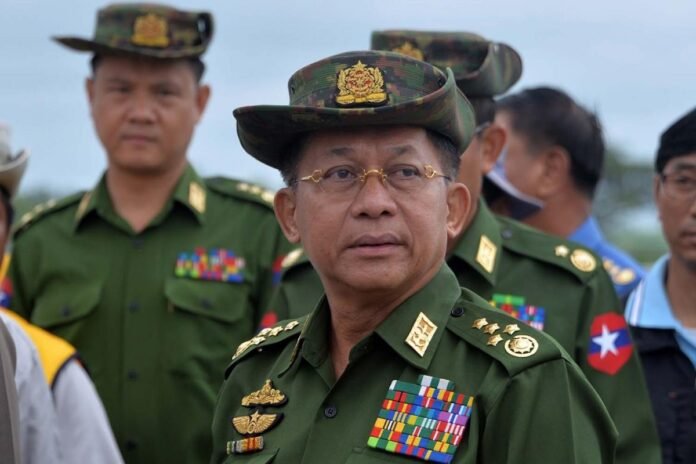
Coup maker Senior General Min Aung Hlaing’s allies want the world to believe that Myanmar’s military is “on the upswing” and “mounting a comeback” in a war that foreign media increasingly describe as “forgotten.”

Recent US media coverage leans into that storyline, highlighting tactical gains, diplomatic outreach, and a presidential façade after tightly controlled elections. To outside observers, it can sound as though the junta has reversed the tide (NPR).

Inside the country, the picture looks different. The military has more firepower than its opponents and has clawed back specific towns. But it is not winning the war that matters: the contest over territory, basic governance, and political consent. On those fronts, the fundamentals still run against Min Aung Hlaing’s post-election administration (CFR).

The territorial map is the clearest corrective. The Council on Foreign Relations’ Global Conflict Tracker, drawing on a BBC World Service investigation, estimates that the junta fully controls only about 21% of Myanmar’s territory, while resistance forces and ethnic armed organizations hold roughly 42%, with the rest contested (BBC).

In the west, the Arakan Army has taken most of Rakhine State and Paletwa Township in neighboring Chin State, and by late 2024 controlled 13 of Rakhine’s 17 townships, including the entire Bangladesh border (CSIS). ACLED reports the Arakan Army has since extended operations into Bago, Magway, and Ayeyarwady and now functions as the de facto government in western Myanmar (ACLED).

Honest analysis must concede that the junta has scored real, recent gains. With heavy Chinese support, it recaptured Kyaukme and Hsipaw in northern Shan State in October 2025, restoring the corridor to the Chinese border, and retook Lashio in April 2025 after the Myanmar National Democratic Alliance Army withdrew under Beijing’s pressure (BBC).

New tactics, tens of thousands of conscripts, Chinese and Russian drones and unprecedented air power have shifted momentum in specific theaters. None of this is in dispute. The question is whether it adds up to a strategic reversal. It does not, and for three main reasons.

First, recovered territory has not translated into restored governance. The Chinese-brokered Lashio handover left hundreds of surrounding villages outside junta authority and was accompanied by resentment over Beijing’s coercion rather than a stable return to order (SAC-M).

Across much of the country, law and order remain fractured, public services degraded, and administrative reach thin (BTI). That is nominal control without durable state power.

Second, the military’s growing dependence on air power underlines the weakness rather than masking it. Fortify Rights documented 304 paramotor and gyrocopter attacks on civilians across Sagaing, Magway, Mandalay, Ayeyarwady and Bago between December 2024 and January 2026, with peaks coinciding with election rounds (Fortify Rights).

Human Rights Watch documented escalating airstrikes, artillery, and drone attacks across all 14 states and regions in 2025 (HRW). Late-stage counterinsurgencies often look strongest from the air precisely when they are weakest on the ground.

Myanmar is not Vietnam, but the underlying lesson holds: more bombing does not prove more control, and firepower cannot by itself restore political legitimacy (Mitchell Institute).

Third, the economic and geopolitical dimension undercuts the comeback thesis where it should be strongest.

India’s outreach to Naypyidaw — rupee-kyat trade settlement, the Kaladan Multi-Modal Transit Transport Project, the India–Myanmar–Thailand Trilateral Highway, energy and mining cooperation — runs into the same obstacle as every other corridor: the formal counterpart in the capital often does not control the territory the projects must cross (Rediff). The Kaladan route runs through townships now held by the Arakan Army, not the junta (ACLED).

The same logic shapes the rare-earth conversation. CSIS has warned that courting the junta for rare-earth access amounts to betting on the weaker side (CSIS). After the Kachin Independence Army seized Chipwi and Pangwa in late 2024, it became the de facto authority — and tax collector — over Myanmar’s heavy rare-earth corridor along the China border (Asia Times).

A June 2026 Foreign Policy report quoted former US Chargé d’Affaires in Myanmar, Susan Stevenson, describing Myanmar’s rare-earth sourcing as “more of a pipe dream than a realistic proposition” because much of the resource base lies outside junta control (Foreign Policy).

The NPR piece’s hardest claim — that ethnic armed organizations with Chinese ties have “turned off the spigot” of arms to People’s Defense Forces and that some opposition forces are “beginning to collapse” — deserves a direct answer (NPR). Some of that is real and serious. China has clearly pressured groups along its border.

But the resistance architecture is not collapsing; it is reconfiguring. In March 2026, the National Unity Government, the Committee Representing Pyidaungsu Hluttaw, and major ethnic revolutionary organizations — the Karen National Union, Kachin Independence Organization, Karenni National Progressive Party, and Chin National Front — formed the Steering Council for the Emergence of a Federal Democratic Union to coordinate political and military strategy for a federal democratic order (SAC-M).

The Arakan Army has not publicly joined but cooperates militarily with the Chin Brotherhood and other resistance actors. Survey data cited by CFR indicate roughly 93 percent of respondents inside Myanmar view the NUG favorably (CFR). The pattern is uneven coordination among actors who still hold real ground, not resistance collapse.

If relevance is measured only by diplomatic protocol, Min Aung Hlaing’s administration can appear to be regaining ground. If relevance is measured by who can shape Myanmar’s eventual political settlement, secure and tax territory, govern communities, sustain trade routes, and command consent, resistance actors remain structurally central (Al Jazeera).

The risk of the “military comeback” narrative is therefore not just analytical. It encourages foreign governments, investors, and strategists to misread Myanmar as a normalizing authoritarian state rather than a fractured war zone where coercive reach and legitimacy have sharply diverged.

That misreading produces poor choices: premature normalization, corridor projects built on paper sovereignty and extractive deals that deepen instability in the name of realism (Foreign Policy).

Myanmar’s generals have improved their international posture – but posture is not tantamount to power. They have not shown that airstrikes can be converted into stable territorial recovery, that elections held under military domination can manufacture consent or that diplomatic theater can solve the counterparty problem at the heart of Myanmar’s transit and extraction economy.

The more defensible conclusion is not that the military is on the upswing, but that outside actors are once again mistaking optics for control.

James Shwe is a Myanmar American professional engineer and advocate for democracy in Myanmar, affiliated with the Los Angeles Myanmar Movement.

Israeli attacks across Gaza kill 10 Palestinians, wound 29 despite ceasefire

0
israeli-attacks-across-gaza-kill-10-palestinians,-wound-29-despite-ceasefire
Israeli attacks across Gaza kill 10 Palestinians, wound 29 despite ceasefire

Ten Palestinians were killed and 29 others injured in Israeli attacks on various areas of the Gaza Strip since Sunday morning, according to medical sources, as Israel continued its daily violations of the ceasefire agreement, Anadolu reports.

In central Gaza City, four Palestinians were killed and seven others injured when an Israeli drone struck a civilian vehicle near Palestine Square in the Rimal neighborhood.

The sources also said that 14-year-old Hadeel Ayman Jundi died of wounds sustained in an Israeli strike on Gaza City on Saturday.

In the southern Gaza Strip, five Palestinians were killed and 17 others injured in an Israeli strike targeting a police post in the Al-Nass area west of Khan Younis.

In northern Gaza, medical sources said five injured Palestinians were brought to the Al-Saraya Field Hospital after an attack carried out by the Israeli navy west of the town of Beit Lahia.

In central Gaza, a Palestinian teenager who worked as a fisherman was killed Sunday morning when the Israeli navy opened machine-gun fire at fishing boats off the coast of Deir al-Balah, according to medical sources.

Medical sources also reported that the bodies of two Palestinians were brought to the Al-Shifa Hospital in western Gaza after they were recovered Sunday morning from a house hit by Israeli artillery shelling in the Zeitoun neighborhood southeast of Gaza City on Saturday.

READ: Palestinian factions, mediators resume Cairo talks on next phase of Gaza ceasefire

The attacks come as Israel continues to escalate its aggression on the Gaza Strip despite ongoing talks in Cairo aimed at completing the first phase of the ceasefire agreement and discussing mechanisms and arrangements for moving to the second phase.

In September, US President Donald Trump announced a 20-point plan outlining a ceasefire framework that includes the release of Israeli captives, Israel’s withdrawal from Gaza, the formation of a technocratic administration, and the deployment of an international stabilization force, along with a call for Hamas to disarm.

The first phase of the ceasefire agreement included a truce and prisoner exchange between Israel and Palestinian factions. However, Palestinian sources say Israel has continued to violate the agreement on a near-daily basis.

Under the second phase, Israel is expected to carry out further withdrawals from the territory, while an international stabilization force would assume security responsibilities, including facilitating the delivery of humanitarian aid and reconstruction materials.

Israel’s genocide in Gaza since October 2023 has killed nearly 73,000 Palestinians and injured more than 173,000, most of them women and children, according to Palestinian figures.

Despite a ceasefire that took effect on Oct. 10, 2025, the Israeli army has killed at least 961 Palestinians and injured over 3,000 others in near-daily attacks, according to the Gaza Health Ministry.

READ: Islamic Jihad accuses Israel of continued violations of Gaza ceasefire

American Airlines Flight Attendant Found Dead on Florida Beach

0
american-airlines-flight-attendant-found-dead-on-florida-beach
American Airlines Flight Attendant Found Dead on Florida Beach


A young American Airlines flight attendant was found dead in the surf along a popular South Florida beach, and investigators say her injuries appear to point to a terrifying possibility: she may have been struck by a boat.

The Florida Fish and Wildlife Conservation Commission identified the woman as 31-year-old Kellie Melinda Williams. Her body was discovered near Hollywood Beach on June 3 at around 8 p.m., according to officials.

Authorities said two fishermen spotted Williams’ body in the water near North Boardwalk and Thomas Street and immediately alerted police.

The discovery has left investigators trying to piece together what happened in the final moments before the airline worker’s body washed up along the busy beach area.

According to the FWC, Williams’ injuries were consistent with a vessel strike, suggesting she may have been hit by a boat while in the water.

Investigators believe Williams may have been snorkeling or diving before her death, though officials have not released additional details about what she was doing, how long she had been in the water, or whether the vessel involved has been identified.

The circumstances surrounding her death remain under investigation.

Williams was originally from California and worked as a flight attendant for American Airlines. Her sudden death has stunned those connected to the airline and raised troubling questions about boating safety off Florida’s crowded coastline.

In a statement to ABC News, American Airlines said it was mourning the loss of one of its own.

“We are deeply saddened by the loss of our colleague. Our thoughts and support are with her family, loved ones and colleagues at this time,” the airline said Sunday.

The case comes as Florida’s beaches and waterways remain packed with locals, tourists, boaters, divers, and snorkelers, especially during the busy summer season. While officials have not said whether negligence played a role, the tragedy is another grim reminder of how quickly a day on the water can turn deadly when swimmers and boaters share the same space.

No further information has been released, and the investigation remains ongoing.

Iran warns of ‘decisive’ response to Israeli strike on southern Beirut

0
iran-warns-of-‘decisive’-response-to-israeli-strike-on-southern-beirut
Iran warns of ‘decisive’ response to Israeli strike on southern Beirut

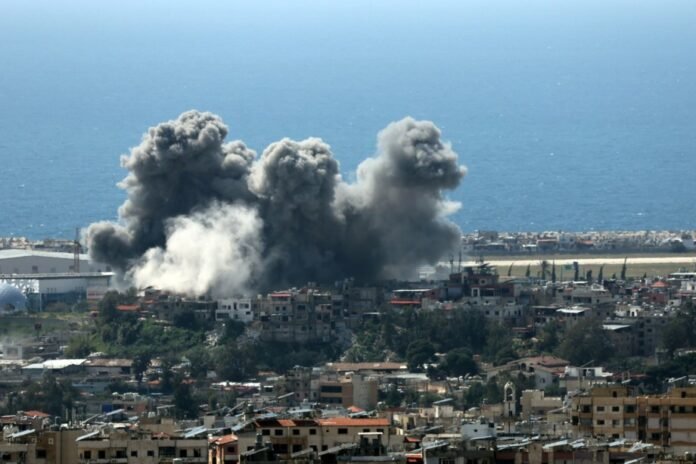
Smoke rises over residential area following the Israeli attack on Beirut, Lebanon on April 8, 2026. [Houssam Shbaro - Anadolu Agency]

Smoke rises over residential area following the Israeli attack on Beirut, Lebanon on April 8, 2026. [Houssam Shbaro – Anadolu Agency]

Iranian lawmaker Ebrahim Rezaei on Sunday warned that Tehran would respond “decisively” to the latest Israeli airstrike on Beirut’s southern suburbs, which killed at least two people and injured 11 others, Anadolu reports.

Rezaei, spokesperson for the Iranian parliament’s National Security and Foreign Policy Commission, made the remarks in a post on the US social media platform X following the strike.

“We will deliver a decisive and painful response to the Zionist regime’s attack on Dahiyeh,” he wrote.

“These rabid dogs must be disciplined and put back in their place,” he added.

READ: Israeli army launches airstrikes on Lebanese capital despite ceasefire

Rezaei also appeared to hint at possible military action, saying: “Look at the skies over the occupied lands tonight.”

The remarks came hours after an Israeli airstrike targeted Beirut’s southern suburb, a Hezbollah stronghold, killing at least two people and injuring 11 others, according to the Lebanese state news agency NNA.

Sunday’s strike was the first on the Lebanese capital since the ceasefire was extended on June 3 following US-mediated talks between Israel and Lebanon in Washington.

Israel has continued carrying out airstrikes in Lebanon since a Hezbollah cross-border attack in early March, killing more than 3,600 people and injuring over 11,000 others since March 2.

0FansLike
0FollowersFollow
0FollowersFollow
0SubscribersSubscribe
- Advertisement -
Google search engine

Recent Posts