16.6 C
London
Monday, June 15, 2026
Home Blog

US-Iran peace deal rattles China’s energy strategy, geopolitics

0

Beijing officially welcomed the United States-Iran peace deal announced over the weekend, hoping the reopening of the Strait of Hormuz will ease a months-long oil supply disruption that has rattled China’s fuel markets and battered its refining sector.

However, the unofficial response, from the Chinese commentariat, is not so uniformly positive.

Chinese commentators do say approvingly that the reopening of the Strait of Hormuz should allow Beijing to replenish its strategic crude reserves and benefit from softening oil prices, with some sanctioned “teapot” refiners potentially finding relief in the diplomatic thaw.

However, with Western governments unfreezing Iranian assets and allowing Tehran to legally sell crude, China will lose the discounts it enjoyed by importing Iranian oil through a shadow fleet that bypassed sanctions.

“International oil prices will likely fall after the US-Iran reconciliation, which is a double-edged sword for China,” a Sichuan-based columnist using the pseudonym Fanyuzhi says. “In the short term, lower oil prices will reduce logistics costs and ease inflation. But over the long term, cheap oil will slow the push for new energy, and China stands to lose the privileged position it built with Iran during the sanctions years.”

He says that once Tehran reopens to the world, European, Japanese, and South Korean companies will rush back in to compete for the crude oil that China once had to itself.

“That said, a more stable Middle East is good for China’s Belt and Road Initiative (BRI),” he says. “Beijing helped broker the Saudi-Iranian reconciliation and played a behind-the-scenes role in the US-Iran talks as well. China’s influence in the region is clearly rising, and Middle Eastern countries will increasingly look eastward when weighing their relationships with the major powers.”

But he cautions against putting too much faith in the peace deal – saying it resembles two exhausted boxers catching their breath after the referee calls a stop, with another round still possible once their strength returns.

Since the US-Iran war broke out on February 28, it has strained China’s gasoline supply on two fronts, according to media reports. Disruptions to crude flows through the Strait of Hormuz drove up global oil price expectations, squeezing margins for Chinese refiners.

At the same time, as fuel prices remained volatile, many Chinese consumers turned to purchase electric vehicles, eroding domestic demand for gasoline and leaving the country’s independent “teapot” refiners under mounting pressure to cut output.

While US sanctions on some teapot refiners added to the pressure, the blow was less severe than expected. China’s large strategic crude reserves gave Beijing room to maintain domestic fuel supply without relying on sanctioned imports.

China’s crude oil imports fell 20% year-on-year in April to 9.25 million barrels per day, the lowest level since July 2022, according to customs data. The decline deepened in May, when imports dropped to around 7.8 million barrels per day, down 29% year-on-year.

For the first five months of 2026, total crude imports fell 4.8% from the same period of last year. Refined fuel imports fell even more sharply, with May figures dropping 58% from a year earlier.

“When crude shipments through the Strait of Hormuz were first cut off in March, Chinese authorities ordered the independent refiners to maintain high output of gasoline and diesel even at a loss, warning that cutting utilization rates could result in their crude import quotas being slashed,” says a Beijing-based writer using the pen name All About Energy.

He says some of the loss-making “teapot” refiners were allowed to reduce output only after Beijing saw a slowdown in domestic gasoline demand.

“China’s gasoline demand has been declining since the Iran war disrupted crude shipments through the Hormuz Strait,” he says. “Rising fuel prices have discouraged driving of combustion engine vehicles, particularly in cities where electric vehicles are more convenient and cheaper to run. This year’s drop in gasoline demand is expected to exceed earlier forecasts.”

“April 2026 was a turning point,” says Xie Duiren, a Shandong-based columnist. “New energy vehicles accounted for more than 60% of domestic passenger car retail sales for the first time, with domestic brands crossing 80%. As more people choose electric vehicles, combustion-engine cars lose their residual-value protection in the second-hand market.”

He says fewer buyers and more sellers mean used car prices can only go one way, and the downward spiral has begun.

“Electric vehicles are now improving in technology and holding their value better, steadily squeezing out used combustion-engine cars, “ he says. “When a combustion-engine car goes from being an asset to a liability, who would still want to own one?”

Reuters reported on June 2 that China’s National Development and Reform Commission (NDRC) allowed some independent refiners in Shandong province to cut output from June to no lower than 80% of last year’s monthly average.

US presence in Indo-Pacific

Washington has gained significant leverage over the global energy market through two major developments this year.

In January, US special forces arrested Venezuelan President Nicolas Maduro in Caracas and flew him to New York to face drug trafficking and narco-terrorism charges. Trump said the US would run Venezuela for an unspecified period, giving Washington significant leverage over the country’s vast crude oil reserves. The end of the Iran war further extends that reach, with the Strait of Hormuz set to reopen under terms heavily shaped by Washington.

Together, the two developments give the Trump administration far greater bargaining power in the global fossil fuel market and leave it with more bandwidth to focus on the Indo-Pacific, both politically and militarily, say some Chinese analysts. 

“While global attention was fixed on the Iran negotiations, reports emerged that the Trump administration was considering purchasing the Chagos Islands in the Indian Ocean from Mauritius, bypassing the United Kingdom to secure direct control of the Diego Garcia naval base,” a military affairs commentator writes in an article on Sina.com. “Diego Garcia forms the southwestern anchor of Washington’s Indo-Pacific strategy, working alongside the island chain system and India to form a multi-layered encirclement of China’s sea lanes.”

He stresses that the base, which hosts about 2,400 military and civilian personnel and supports strategic bombers and naval operations, has served as a critical logistics hub for US operations across the Indo-Pacific for decades, most recently during the Iran war. 

He says China needs to stay alert and watch every move Washington makes now that the war in Iran is drawing to a close.

Official response in more detail

Chinese Foreign Ministry spokesman Lin Jian said Monday that Beijing welcomes the agreement between the US and Iran on the first-stage memorandum of understanding (MOU) and commends Pakistan’s mediation efforts. He called on both sides to sign it as scheduled on June 19, and said China is willing to work with the international community to help restore peace in the Middle East and Gulf region.

“The Strait of Hormuz is an important strait for international navigation. Restoring stability in the Strait serves the common interests of regional countries and the international community,” Lin said. “We hope the Strait will become safe again for free passage at an early date. China stands ready to maintain communication with regional countries and the international community on relevant issues.”

US President Donald Trump announced the deal after more than 100 days of military conflict with Iran, saying that the agreement with Tehran was “now complete” and authorizing the immediate removal of the US naval blockade. Pakistan and Qatar mediated the talks, and the formal signing ceremony is scheduled to take place in Geneva on June 19.

The 14-point MOU includes a permanent cessation of hostilities on all fronts, including Lebanon, the full lifting of the naval blockade within 30 days, the reopening of the Strait of Hormuz, and a suspension of sanctions on Iranian oil sales. It also calls for the release of US$24 billion in frozen Iranian assets during a 60-day negotiation period, after which a final agreement on nuclear issues is to be reached.

Read: Trump-Xi summit to weigh US energy sales amid Hormuz crisis

Follow Jeff Pao on X at @jeffpao3
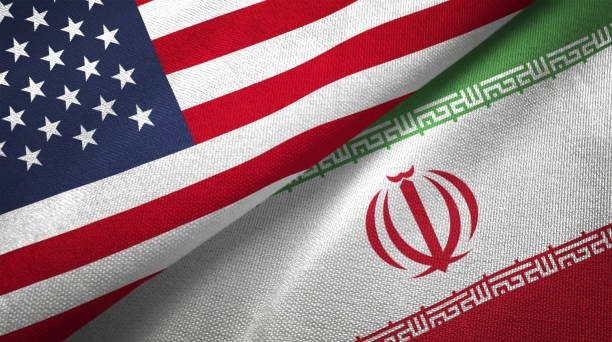
Iran and US agree deal to end war as Trump says Strait of Hormuz will be reopened

0
iran-and-us-agree-deal-to-end-war-as-trump-says-strait-of-hormuz-will-be-reopened
Iran and US agree deal to end war as Trump says Strait of Hormuz will be reopened


U.S. and ​Iranian officials said they had reached an agreement to end their war and reopen the Strait of Hormuz, a preliminary pact that sent oil prices falling but leaves the fate of Tehran’s ‌nuclear program to further negotiations.

While still a framework, the deal marked the biggest breakthrough towards resolving the conflict that has killed thousands and upended energy markets since it began with joint U.S.-Israeli strikes on Iran in February.

“The Deal with the Islamic Republic of Iran is now complete,” U.S. President Donald Trump wrote on his Truth Social platform at around 5:30 p.m. in Washington (2130 GMT) on Sunday. His post came shortly after Pakistani Prime Minister Shehbaz Sharif, whose country has served as a mediator, announced a deal had been struck early on Monday ​local time.

The memorandum of understanding is scheduled to be officially signed on Friday in Switzerland.

This is what the U.S. and Iran, along with mediator Pakistan, have said about what is in the preliminary deal they have announced to end the war.

HOW THE DEAL WILL BE PHASED AND WHAT HAPPENS WHEN
  • Pakistan’s Prime Minister Shehbaz Sharif said both ​sides had declared an immediate and permanent end of all military operations.
  • All sides have said the memorandum of understanding on an ‌end to the war will be signed in Switzerland on Friday. Iran’s Deputy Foreign Minister Kazem Gharibabadi said the memorandum would then be published.
  • Iran and the U.S. have both said the Strait of Hormuz would start to reopen and the U.S. blockade on Iranian ports start to lift as soon as the memorandum is signed.
  • Both sides have said negotiations on more difficult ​further areas of dispute – notably Iran’s nuclear issue and U.S. sanctions on Iran – will be conducted over the following 60 days.
STRAIT OF HORMUZ ​AND BLOCKADE OF IRANIAN PORTS
  • U.S. President Donald Trump said the Strait of Hormuz would be reopened on Friday and he ⁠had ordered a lifting of the blockade on Iranian ports.
  • A senior Iranian official said the strait would be reopened “to all commercial vessels” once the memorandum ​was signed.
  • Iran’s semi-official Fars news agency reported that under the memorandum, marine traffic through the strait would be regulated by Iran in coordination with Oman.
IRAN’S NUCLEAR ​PROGRAMME
  • Both sides have said that Iran agrees that it will neither produce nor acquire nuclear weapons – a promise Tehran has been making repeatedly for decades.
  • The senior Iranian official said pending a final agreement Iran would freeze its nuclear activity, refraining from further uranium enrichment or the expansion of nuclear facilities.
  • The senior Iranian official said the U.S. had agreed that Iran ​could dilute its stockpile of highly enriched uranium inside Iran under a future comprehensive agreement.
  • Trump said on Saturday there was no urgency to extract Iran’s stockpile ​of nuclear material, and that the U.S. would retrieve it “when all is calm”.
  • Trump said there would be a strong inspections regime for Iran under any deal, but he did not ‌give specifics.
  • U.S. ⁠Senator Lindsey Graham said any final deal on Iran’s nuclear programme would have to be reviewed and approved by Congress.
SANCTIONS AND FINANCIAL IMPACT
  • The senior Iranian official said the U.S. had agreed not to impose any new sanctions on Iran until a final deal was reached.
  • They added the U.S. would waive oil sanctions on Iran for a specified period and that after the final agreement all U.S. and U.N. sanctions would be lifted to an agreed timetable.
  • The senior Iranian official ​said the U.S. had agreed to release $25 ​billion of Iran’s frozen assets, ⁠including via direct cash transfers, cooperation among regional countries, and financial credit lines.
  • Washington, in coordination with its regional allies, would prepare a reconstruction and development plan for Iran, to be negotiated and agreed with Tehran within 60 days, they added.
  • Trump ​said Iran would not be provided with cash but that sanctions could potentially be lifted.
LEBANON
  • Sharif said the immediate ​and permanent end of ⁠all military operations would include Lebanon.
  • The Secretariat of Iran’s Supreme National Security Council said military operations would stop permanently on Monday night including in Lebanon.
  • Iran’s Foreign Minister Abbas Araqchi said there must be a complete halt to Israeli attacks against Lebanon and the U.S. bears responsibility for implementing the framework deal.
  • Israel’s Defence Minister Israel Katz ⁠said the Israeli ​military would remain in security zones it has captured in Lebanon, Syria and Gaza and ​that Prime Minister Benjamin Netanyahu had made this clear to Trump.
  • Before the memorandum was announced, Trump said he would bring peace to the region, including Lebanon. He said there should be no ​more Israeli attacks on Lebanon and no more attacks by the Iran-backed Lebanese group Hezbollah on Israel.

Source:  Reuters

Cowboy Ranch Seasoning

0
cowboy-ranch-seasoning
Cowboy Ranch Seasoning

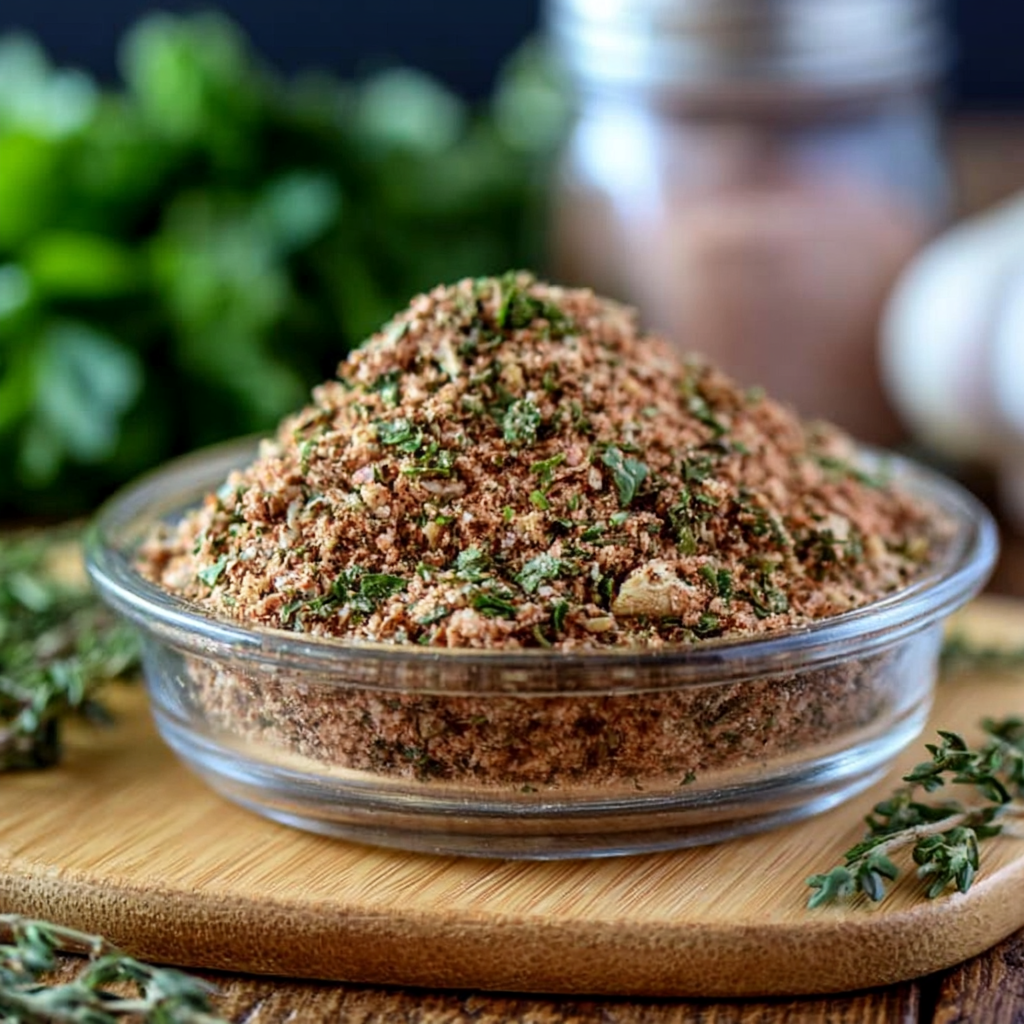
This Cowboy Ranch Seasoning is smoky, savory, creamy, herby, and just a little spicy. It takes classic ranch seasoning and gives it a bold cowboy-style twist with smoked paprika, cayenne pepper, cumin, brown sugar, dried herbs, garlic, onion, and powdered buttermilk.

Use it as a dry seasoning for chicken, pork, potatoes, vegetables, popcorn, eggs, roasted nuts, or fries. You can also turn it into a creamy cowboy ranch dip or dressing with mayonnaise, sour cream, apple cider vinegar, Worcestershire sauce, and a touch of liquid smoke.

It is easy to make in just 5 minutes and perfect to keep in your spice cabinet for quick flavor anytime.

Why You’ll Love This Cowboy Ranch Seasoning

This seasoning blend is bold, easy, and versatile.

You’ll love it because it is:

  • Ready in 5 minutes
  • Smoky, tangy, savory, and slightly spicy
  • Great as a dry rub
  • Easy to turn into dip or dressing
  • Perfect for chicken, pork, potatoes, and vegetables
  • Made with pantry spices
  • Better than store-bought seasoning
  • Great for meal prep and snack seasoning

Cowboy ranch seasoning is a smoky ranch-style dry seasoning mix made with dried herbs, garlic, onion, buttermilk powder, smoked paprika, mustard, cumin, cayenne, and a little brown sugar.

It has the creamy tang of ranch seasoning with deeper smoky flavor and a small kick of heat. It works as a seasoning blend, dry rub, dip mix, or dressing base.

Recipe Summary

Prep Time: 5 minutes
Total Time: 5 minutes
Yield: About ¾ cup seasoning
Course: Seasoning, Dressing, Dip
Cuisine: American / Ranch-Inspired

Ingredients

Cowboy Ranch Seasoning Mix

  • ⅓ cup dry powdered buttermilk
  • 2 tablespoons dried parsley
  • 1 tablespoon smoked paprika
  • 2 teaspoons garlic powder
  • 2 teaspoons onion powder
  • 2 teaspoons dried onion flakes
  • 2 teaspoons dried dill weed
  • 1 tablespoon brown sugar
  • 1 teaspoon kosher salt
  • ½ teaspoon black pepper
  • ½ teaspoon cayenne pepper
  • ½ teaspoon ground mustard
  • ½ teaspoon cumin

Cowboy Ranch Dip

  • 1 cup mayonnaise
  • ½ cup sour cream
  • 2 tablespoons cowboy ranch seasoning
  • 1 tablespoon apple cider vinegar
  • 1 teaspoon Worcestershire sauce
  • ¼ teaspoon liquid smoke

Cowboy Ranch Dressing

  • Prepared cowboy ranch dip
  • 1–2 tablespoons whole milk, or enough to thin to your desired consistency

Ingredient Notes

Dry Powdered Buttermilk

Dry powdered buttermilk gives the seasoning its classic ranch-style tang and creamy flavor. It is usually found in the baking aisle.

Smoked Paprika

Smoked paprika gives this seasoning its signature smoky flavor. Regular paprika can be used, but the seasoning will taste less smoky.

Dried Parsley

Dried parsley adds classic ranch flavor and a little herb freshness.

Garlic Powder and Onion Powder

These two ingredients create the savory base of the seasoning.

Dried Onion Flakes

Dried onion flakes add extra texture and a stronger onion flavor. If you do not have them, add a little more onion powder.

Dried Dill Weed

Dill gives the seasoning that familiar ranch flavor. Dried dill seed can be used, but the flavor and texture will be slightly different.

Brown Sugar

Brown sugar adds a small touch of sweetness and helps balance the smoky and spicy flavors.

Cayenne Pepper

Cayenne gives this seasoning a little heat. Use less for a mild blend or more for a spicier version.

Ground Mustard

Ground mustard adds tang and depth. It helps balance the creamy buttermilk flavor.

Cumin

Cumin adds warm, earthy flavor and gives the seasoning a cowboy-style twist.

How to Make Cowboy Ranch Seasoning

Step 1: Combine the Ingredients

Add the dry powdered buttermilk, parsley, smoked paprika, garlic powder, onion powder, dried onion flakes, dill, brown sugar, salt, black pepper, cayenne pepper, ground mustard, and cumin to a small bowl.

Step 2: Mix Well

Whisk everything together until evenly combined.

Make sure the buttermilk powder and spices are fully blended.

Step 3: Make It Finer, Optional

For a smoother seasoning, pulse the mixture a few times in a food processor.

This is helpful if you want a finer texture for dressings, dips, or popcorn.

Step 4: Store

Transfer the seasoning to an airtight container or glass jar.

Store in a cool, dry place.

How to Make Cowboy Ranch Dip

In a medium bowl, combine mayonnaise, sour cream, cowboy ranch seasoning, apple cider vinegar, Worcestershire sauce, and liquid smoke.

Whisk until smooth and creamy.

Cover and refrigerate until ready to serve.

This makes about 1 ¾ cups of dip.

How to Make Cowboy Ranch Dressing

To turn the dip into dressing, add 1–2 tablespoons whole milk.

Whisk until smooth.

Add more milk as needed until it reaches your preferred dressing consistency.

This makes about 1 ¾ to 2 cups of dressing.

How to Use Cowboy Ranch Seasoning

This seasoning blend can be used in many different ways.

Try it on:

  • Chicken
  • Pork chops
  • Steak
  • Burgers
  • Roasted potatoes
  • Mashed potatoes
  • French fries
  • Popcorn
  • Roasted nuts
  • Scrambled eggs
  • Roasted carrots
  • Broccoli
  • Cauliflower
  • Green beans
  • Wings
  • Chips
  • Crackers
  • Pasta salad

Cowboy Ranch Dry Rub

To use this seasoning as a dry rub, sprinkle it directly over chicken, pork, or beef.

For a simple marinade, mix the seasoning with olive oil and rub it over the meat.

Let it sit for at least 30 minutes before grilling, baking, or roasting.

Best Foods to Serve with Cowboy Ranch Dip

This dip is creamy, smoky, and perfect for snacking.

Serve it with:

  • Carrot sticks
  • Celery sticks
  • Bell pepper strips
  • Tortilla chips
  • Potato chips
  • Pretzels
  • Chicken wings
  • French fries
  • Potato wedges
  • Fried pickles
  • Onion rings
  • Crackers
  • Fresh broccoli
  • Cauliflower florets

Tips for the Best Seasoning Blend

Use fresh spices for the best flavor.

Store the mix in a glass jar if possible.

Keep it away from heat, light, and moisture.

Pulse in a food processor for a finer texture.

Adjust the cayenne to control the heat.

Use smoked paprika for the best smoky flavor.

Shake the jar before each use.

Easy Variations

Extra Smoky Cowboy Ranch

Add a little extra smoked paprika or a pinch of chipotle powder.

Spicy Cowboy Ranch

Increase the cayenne pepper or add crushed red pepper flakes.

Herb Ranch Blend

Add dried chives or extra parsley.

Garlic Ranch Seasoning

Add an extra teaspoon of garlic powder.

Sweet Smoky Ranch

Add another teaspoon of brown sugar.

No-Buttermilk Version

Leave out the buttermilk powder for a dairy-free dry seasoning mix. The flavor will be less creamy and tangy.

Storage Instructions for the Seasoning

Store cowboy ranch seasoning in an airtight container in a cool, dry place.

A glass jar works best because it seals tightly and helps protect the spices from air and moisture.

Keep the seasoning away from direct sunlight and heat.

For the best flavor, use within 3 months. It may last up to 5–6 months, but the flavor will slowly become weaker over time.

Storage Instructions for Dip and Dressing

Store cowboy ranch dip or dressing in an airtight container in the refrigerator.

Use within 1 week.

Stir before serving.

Frequently Asked Questions

Can I make this seasoning without buttermilk powder?

Yes. You can leave it out for a dairy-free version, but the seasoning will taste less creamy and tangy.

Can I use regular paprika?

Yes. Regular paprika works, but smoked paprika gives the seasoning its smoky flavor.

Is cowboy ranch seasoning spicy?

It has a mild kick from cayenne pepper. You can reduce or increase the cayenne to taste.

Can I use this as a meat rub?

Yes. It works well as a dry rub for chicken, pork, beef, and even roasted vegetables.

Can I make ranch dressing with this mix?

Yes. Mix it with mayonnaise, sour cream, vinegar, Worcestershire sauce, liquid smoke, and milk for a creamy dressing.

How long does the seasoning last?

For the best flavor, use it within 3 months. Store it properly and it may last up to 5–6 months.

Can I make the dip ahead of time?

Yes. The dip can be made ahead and refrigerated for up to 1 week.

Recipe Card

Cowboy Ranch Seasoning

A smoky, savory ranch-style seasoning blend made with buttermilk powder, herbs, smoked paprika, garlic, onion, cayenne, mustard, cumin, and brown sugar. Use it as a dry rub, dip mix, dressing base, or all-purpose seasoning.

Prep Time: 5 minutes
Total Time: 5 minutes
Yield: About ¾ cup seasoning

Ingredients

Seasoning Mix

  • ⅓ cup dry powdered buttermilk
  • 2 tablespoons dried parsley
  • 1 tablespoon smoked paprika
  • 2 teaspoons garlic powder
  • 2 teaspoons onion powder
  • 2 teaspoons dried onion flakes
  • 2 teaspoons dried dill weed
  • 1 tablespoon brown sugar
  • 1 teaspoon kosher salt
  • ½ teaspoon black pepper
  • ½ teaspoon cayenne pepper
  • ½ teaspoon ground mustard
  • ½ teaspoon cumin

Cowboy Ranch Dip

  • 1 cup mayonnaise
  • ½ cup sour cream
  • 2 tablespoons cowboy ranch seasoning
  • 1 tablespoon apple cider vinegar
  • 1 teaspoon Worcestershire sauce
  • ¼ teaspoon liquid smoke

Cowboy Ranch Dressing

  • Prepared cowboy ranch dip
  • 1–2 tablespoons whole milk, or as needed

Instructions

To Make the Seasoning

  1. Add all seasoning ingredients to a small bowl.
  2. Whisk until evenly combined.
  3. For a finer texture, pulse the mixture in a food processor.
  4. Transfer to an airtight container.
  5. Store in a cool, dry place.

To Make the Dip

  1. In a medium bowl, combine mayonnaise, sour cream, cowboy ranch seasoning, apple cider vinegar, Worcestershire sauce, and liquid smoke.
  2. Whisk until smooth.
  3. Cover and refrigerate until ready to serve.

To Make the Dressing

  1. Start with the prepared cowboy ranch dip.
  2. Add 1–2 tablespoons whole milk.
  3. Whisk until it reaches your desired dressing consistency.
  4. Add more milk if needed.

Notes

Use smoked paprika for the best flavor.

Adjust cayenne pepper for more or less heat.

Store dry seasoning in a glass jar if possible.

Store dip or dressing in the refrigerator for up to 1 week.

Shake or stir before using.

Nutrition Estimate

Per tablespoon of seasoning:

  • Calories: 25
  • Carbohydrates: 4g
  • Protein: 1g
  • Fat: 1g
  • Sugar: 2g
  • Sodium: varies by salt and buttermilk powder

Nutrition values are approximate and may vary depending on ingredients used.

Final Thoughts

Cowboy Ranch Seasoning is a bold, smoky twist on classic ranch seasoning. It is easy to make, full of flavor, and useful in so many ways.

Sprinkle it on meats, vegetables, potatoes, eggs, popcorn, or snacks, or turn it into a creamy dip or dressing for parties, game day, cookouts, and everyday meals.

UK to ban social media for kids under 16, may impose overnight curfews

0
uk-to-ban-social-media-for-kids-under-16,-may-impose-overnight-curfews
UK to ban social media for kids under 16, may impose overnight curfews

The UK government announced today that it will ban social media for all kids under the age of 16 in rules expected to take effect in spring 2027. The ban will apply to platforms including Snapchat, TikTok, YouTube, Instagram, Facebook, and X.

“We’re going further than any country in the world by banning social media for under-16s and putting wider protections in place to give kids their childhood back,” Prime Minister Keir Starmer said in the announcement.

In addition to the ban on social media, Starmer’s government said it will impose “world-leading blocks on harmful functions such as livestreaming and stranger communication with children for under-16s… Restrictions on these functionalities will also be on by default for 16- and 17-year-olds to prevent a cliff-edge at 16.” The livestreaming and stranger-contact rules would apply to a range of services, such as online gaming.

“The government will also be looking in more detail at overnight curfews and breaks in infinite scrolling for under-18-year-olds and will set out more detail in July,” the announcement said. The planned social media ban will not apply to messaging services like WhatsApp and Signal.

Another planned change is that “so-called AI ‘romantic companion’ chatbots—designed to simulate sexual relationships or roleplay with users—will have to enforce a minimum age of 18. Similar intimate functionalities will be restricted for under-18s on AI chatbots more widely,” the UK government said.

Age checks

Platforms will be ordered to verify users’ ages. Communications regulator Ofcom will be tasked with determining what kinds of age-verification systems will be required to comply with the rules. The ban decision was made after a consultation that drew responses from 116,000 people.

“Ofcom will set out in the coming months different options for effective forms of age assurance for proving whether someone is over 16 that are accurate, robust, reliable, and fair,” the government said in a fact sheet on the rules, noting that facial recognition may be part of the age-check scheme. Adults can avoid the new age check on their existing social media accounts if they’ve already proven their age in another way.

The UK Online Safety Act already requires age checks for porn and other sensitive content. When it took effect last year, it appeared that many people in the UK used VPNs (virtual private networks) to circumvent the age verification.

VPNs themselves can create privacy and security problems. “The VPNs that children are incentivized to use pose privacy and security risks. Bad actors in the VPN space often trade in the sensitive browsing data that these tools can gather,” said the Center for European Policy Analysis, a research group whose funders include Google and Meta.

UK modeled rule on Australia ban

The UK government today said the social media ban will use the same model as Australia, where online platforms must pay financial penalties if they fail to block underage users. Social media companies criticized the Australian rules but agreed to comply.

YouTube said in a statement to media outlets today that “blanket bans push kids out of such curated, supervised, beneficial experiences and towards anonymous, less-safe services.” Meta said the similar rule in Australia showed that “bans risk isolating teens from online communities and information, and driving them to unregulated alternatives that lack built-in protections and parental controls.”

The Electronic Frontier Foundation has said that age-verification requirements harm privacy by requiring more collection of personal information from users of all ages. Banning social media also prevents kids from accessing useful content, the group said.

“Beyond being spaces where people can share funny videos and engage with enjoyable content, social media enables young people to engage with the world in a way that transcends their in-person realm, as well as find information they may not feel safe to access offline, such as about family abuse or their sexuality,” the EFF said in March as the UK discussions were progressing. “In severing this connection to people and information by banning social media, politicians are forcing millions of young people into a dark and censored world.”

Liberal Democrats prefer age-rating system

MP Victoria Collins of the Liberal Democrats party said the proposal is “woefully inadequate.” The UK should instead force tech companies to address addictive algorithms and harmful content, she said.

“That’s why the Liberal Democrats put forward a social media age-rating system that, instead of a blanket ban, puts the onus on the social media giants to clean up their act and have safety by design for all of us,” she said.

MP Nigel Farage, leader of the right-wing Reform UK party, said “the social media ban is well-intentioned” but is “unlikely to work given the mass adoption of VPNs. It will also mean the introduction of Digital ID via the back door. The real answer here is handsets for children with limited features.”

Conservative Party leader Kemi Badenoch took credit for Starmer’s Labour Party deciding on an under-16 ban. “It is fantastic news that the government has finally woken up to the dangers of social media for young people… Huge credit goes to MP Laura Trott and my Shadow Cabinet for relentlessly fighting for this. Conservatives welcome this latest Labour U-turn, and will continue to work for the best implementation of the policy,” Badenoch said.

Pat Sajak Gives Life Update Months After Leaving Wheel of Fortune

0
pat-sajak-gives-life-update-months-after-leaving-wheel-of-fortune
Pat Sajak Gives Life Update Months After Leaving Wheel of Fortune


Pat Sajak has finally resurfaced with a life update after months of silence, and fans are loving his classic dry humor.

The beloved former Wheel of Fortune host stepped away from the iconic game show in 2024 after more than 40 years and 41 seasons. The following year, he also left Celebrity Wheel of Fortune, officially ending his hosting duties.

Sajak, 79, had previously said he wanted to leave while the show was still going strong, rather than waiting too long. He also said he was ready to spend more time with family, enjoy retirement, do crossword puzzles, and embrace life as a grandfather.

Now, fans have gotten a glimpse of what life after Wheel looks like for him.

Sajak posted a video on social media titled “Update on life…” showing himself standing in a tropical-looking garden, dressed casually for warm weather. Behind him were palm trees and a view of the ocean.

“Hi, I know many of you have been wondering, been asking how I’ve been doing, and I’m enjoying life,” Sajak said.

Then came the joke.

Pointing toward the palm trees and water, he quipped, “I’ve moved here to Montana, and everything is going just great.”

The longtime TV host continued the bit, adding, “So, I just wanted to say hello. You’ll have to excuse me, I have cattle to attend to. Here, boy!”

As he walked off camera, a cow could be heard mooing in the background.

Fans immediately flooded the comments, laughing over Sajak’s fake “Montana” reveal.

“Wtf it looks like that in Montana?” one person joked.

“Bro had me second-guessing my geography for a sec,” another wrote.

“Wow! I did not know that Montana had palm trees and beaches,” a third fan joked.

Others said the video was a perfect reminder of the wit that made Sajak a television favorite for decades.

“This video underscores your signature dry wit. Enjoy your well-deserved retirement,” one commenter wrote.

Another fan played along, writing, “I grew up in Montana! You found my favorite part of the state, but we try to keep it a secret so it doesn’t become too popular so shhhhh!”

“We miss you, Pat! Well-deserved retirement! P.S. Please do a cameo on the show someday!” another added.

Sajak’s update comes after he fully stepped away from the franchise that made him a household name. His exit followed years of speculation about when he would finally say goodbye to Wheel of Fortune.

He had also survived a major health scare in 2019, when he underwent emergency intestinal surgery, an experience that reportedly made him rethink his priorities.

While fans still miss seeing him behind the famous puzzle board, Sajak’s latest update suggests he is doing exactly what he hoped to do after leaving the show.

He is relaxing, making jokes, and enjoying life far from the daily grind of television.

Boursin Chicken Orzo

0
boursin-chicken-orzo
Boursin Chicken Orzo
Overhead view of Boursin Chicken Orzo with shredded chicken, broccoli, and creamy herb sauce baked in a white oval dish.
Creamy, cozy, and packed with flavor, this Boursin Chicken Orzo turns simple ingredients into an easy dinner everyone will love.

Print Friendly, PDF & Email

Boursin Chicken Orzo is the kind of cozy dinner that somehow feels both comforting and a little special. Tender chicken, creamy herb cheese, broccoli, and delicate orzo come together in one baking dish, creating a rich and satisfying meal with very little effort.

The magic happens when the Boursin melts into the broth, turning into a velvety sauce that coats every bite. Meanwhile, the broccoli becomes perfectly tender, adding freshness and color to balance the richness.

This easy baked chicken orzo recipe is perfect for busy weeknights, yet it feels lovely enough to serve when family or friends stop by. Best of all, there’s only one dish to wash afterward. Some dinners just have a way of making everyone linger at the table a little longer.


Overhead view of Boursin Chicken Orzo with shredded chicken, broccoli, and creamy herb sauce baked in a white oval dish.
Creamy, cozy, and packed with flavor, this Boursin Chicken Orzo turns simple ingredients into an easy dinner everyone will love.

Recipe Yield: 6 servings

INGREDIENTS

1 lb cooked rotisserie chicken, shredded
1 cup uncooked orzo pasta
3 cups broccoli florets, cut into bite-size pieces
1 (5.2 oz) package Garlic & Fine Herbs Boursin cheese
2 1/2 cups low-sodium chicken broth
1/2 cup heavy cream
1/2 tsp garlic powder
1/2 tsp onion powder
1/2 tsp kosher salt
1/4 tsp black pepper
1/2 cup freshly grated Parmesan cheese
1 tbsp chopped fresh chives, for garnish

INSTRUCTIONS

1. Preheat the oven:
Preheat the oven to 425°F. Lightly grease a 9 x 13-inch baking dish.

2. Assemble the casserole:
Add the orzo, broccoli, shredded chicken, chicken broth, heavy cream, garlic powder, onion powder, salt, and pepper to the baking dish. Place the Boursin cheese in the center.

3. Bake covered:
Cover tightly with foil and bake for 30 minutes. Carefully remove the dish and stir well until the Boursin melts into the broth and creates a creamy sauce.

4. Finish baking:
Sprinkle the Parmesan cheese over the top. Return the dish to the oven uncovered and bake for 8 to 10 minutes, until the orzo is tender and the top is lightly golden.

5. Rest and serve:
Let the dish rest for 5 minutes. Garnish with fresh chives and serve warm.


Helpful Tips to Perfect This Recipe

  • Cover the dish tightly. A snug layer of foil traps the steam and helps the orzo cook evenly while keeping the sauce creamy.
  • Use freshly grated Parmesan. It melts beautifully and adds a richer flavor than pre-shredded cheese.
  • Let the casserole rest before serving. Those few minutes allow the sauce to thicken slightly, giving you the perfect creamy texture.

Rate This Recipe

Tried this recipe? Your rating helps others and means so much.

Bloody cage match on White House lawn marks Trump’s 80th birthday

0
bloody-cage-match-on-white-house-lawn-marks-trump’s-80th-birthday
Bloody cage match on White House lawn marks Trump’s 80th birthday

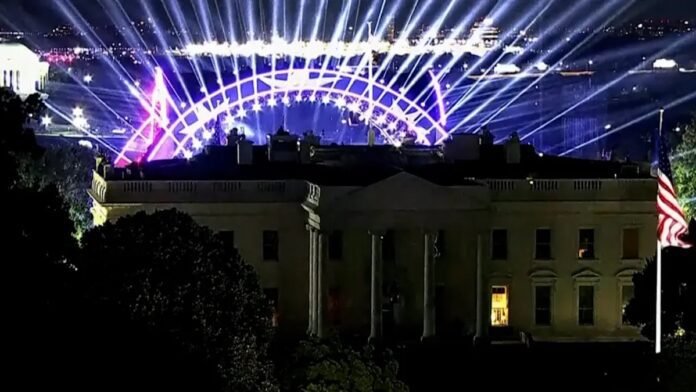
WASHINGTON — President Donald Trump celebrated his 80th birthday Sunday cageside at a multimillion-dollar bloody mixed martial arts event staged on the White House South Lawn, punctuated by fighter jet flyovers, a live military band and fireworks to mark the country’s 250th anniversary.  

It also included the airing of a conspiracy theory about a former first lady, Michelle Obama, during post-fight comments by one of the contestants.

The spectacle promoted by the Las Vegas-based Ultimate Fighting Championship, billed as Freedom 250, was exclusively shown on the paid subscription platform Paramount+. The Trump-organized event was not affiliated with the national nonpartisan organization America 250, a commission created by Congress.

Aside from a blood sport taking place in the backyard of the White House, the night served as a first for several other extraordinary sights. That included live pre-fight sports commentary from inside the White House, and fighters warming up in offices-turned-lockerrooms at the neighboring Eisenhower Executive Office Building.

The Ultimate Fighting Championship ring on the White House South Lawn on Thursday, June 11, 2026. (Photo by Ashley Murray/States Newsroom)

VIPs, including members of Congress and tech giants, sat under the lights in the temporary arena able to hold up to 4,300 guests. Tens of thousands of UFC fans crowded the Ellipse, where the fights were displayed on two mammoth screens.

The event reportedly cost $60 million, according to a government court filing. VIP sponsorship packages, including a chance to sit cage-side under “the claw” cost up to the widely reported price tag of $1.5 million.

Between praise for the American military and Jesus Christ, fighters delivered insulting and expletive-laden comments from inside “the Octagon.” Two American fighters, Bo Nikal and Josh Hokit, thanked Trump for having “the balls” to host the event at the White House. 

Hokit, a former NFL player, during his live post-fight comments to massively popular podcast host Joe Rogan, insulted Brazilian fighter Alex Pereira’s mother and then repeated a right-wing conspiracy theory claiming former first lady Michelle Obama is “a man.”

Rogan did not challenge the comment. Shortly after his remark, Hokit placed his victory chain around Trump’s neck and the two shook hands. The moment was captured and posted on social media by White House special assistant Margo Martin.

The official UFC YouTube clip of the California heavyweight’s speech does not include his unfounded insult of Obama.

Bright lights and flyovers

Spotlights from the UFC’s 92-foot steel canopy that dwarfed the White House and towered over “the Octagon” cage could be seen in the night sky from neighborhoods around Washington, D.C., and several residents took to social media to complain that a B-1 bomber flyover at 11:30 p.m. Eastern woke them. Fireworks exploded until nearly 1:30 a.m.

Drinks in hand, US service members in short-sleeve dress uniforms celebrated from the seats — several sailors even taking part in the “YMCA” dance during the Marine Corps band’s live cover of the Village People’s 1978 hit, a staple at Trump’s events. 

Trump and UFC CEO Dana White entered the arena just before 8:30 pm. Shortly after, a dozen fighter jets, in a joint “Super Delta” formation performed by the US Air Force Thunderbirds and Navy Blue Angels, flew overhead during the national anthem, performed by country music star Zac Brown.

Trump sat just below the fighting cage between first lady Melania Trump and White, an ally who has delivered primetime addresses in support of Trump at the 2016, 2020 and 2024 Republican National Conventions.

Trump was surrounded by family, including his son, Barron, who sat behind him and shook hands with several guests who approached the president, according to pooled dispatches from the White House press corps.

Several winning fighters jumped over the cage rail to shake the president’s hand following the individual matches.

Eight US fighters

Of the seven-fight card’s 14 competitors, eight were American. The violent bouts were accompanied by cheers of “USA!” and various taunts, including shouts that Canada should be “the 51st state” as American bantamweight fighter Sean O’Malley defeated Canada’s Aiemann Zahabi. Trump applauded O’Malley and shook his hand following the individual fight.

The main event featured a title match between lightweights American Justin Gaethje and Spanish-Georgian Ilia Topuria. Officials named Gaethje the winner just after 1 a.m., as the badly battered Topuria, with a bloodied face, was declared incapable of continuing, according to pool reports.

Fighters were paid a $250,000 performance bonus sponsored by World Liberty Financial, a crypto currency venture owned by the Trump family, according to broadcast announcers.

Cameras delivering the exclusive Paramount stream showed notable lawmakers and tech moguls in the crowd, including House Speaker Mike Johnson, R-La., former wrestler and college wrestling coach Rep. Jim Jordan, R-Ohio, and Meta CEO Mark Zuckerberg. The press corps reported Senate Majority Leader John Thune, R-S.D., was also nearby.

Trump, Zuckerberg and White spoke for several minutes during a break in the fights just before 10 pm, according to pool reports.

Other notable guests included Kris Marszalek, CEO of Crypto.com, one of the event’s two primary sponsors, and Polish President Karol Nawrocki.

Acting Attorney General Todd Blanche, Trump’s former personal defense attorney and his attorney general nominee, shook hands as he moved through the crowd, according to press pool reports. Several other presidential Cabinet members were present, including Secretary of State Marco Rubio, who on Thursday signed a “sports diplomacy” agreement with UFC.

Also in attendance was Paramount Skydance CEO David Ellison, whose reportedly $111 billion corporate takeover of Warner Bros. Discovery, was cleared by the Justice Department Friday, a key last step for the merger. 

Paramount+ has a $7.7 billion multi-year content deal to exclusively carry UFC events.

The event, which was to start at 8 pm, was delayed for roughly an hour because of the threat of thunderstorms. The fights wrapped up just after 1 am.

Weekend festivities included a UFC press conference Friday night in front of the Lincoln Memorial, and a two-day fan festival on the Ellipse that featured motorcycle stunts from the Nitro Circus and a concert from the Georgia-based Zac Brown Band.

The UFC controlled media credentialing for the event on the White House grounds.

‘No Kings’ protest

The event faced sharp criticism but remained unscathed by an eleventh-hour lawsuit challenging the legality of UFC’s use of the White House lawn.

Performers and celebrities staged a counter-concert organized by the Committee for the First Amendment, an activist coalition of artists spearheaded by Jane Fonda. 

The No Kings protest organization promoted a livestream from The Town Hall in New York City, and encouraged people to organize remote watch parties for the “Rise Up, Sing Out” concert featuring Patti Smith, Bette Midler and Rufus Wainwright, among others.

C-SPAN also streamed the nearly two-and-a-half hour concert, though some performances were muted because of licensing restrictions.

-States Newsroom

US-Iran agreement gave region a ‘sigh of relief,’ says Turkish president

0
us-iran-agreement-gave-region-a-‘sigh-of-relief,’-says-turkish-president
US-Iran agreement gave region a ‘sigh of relief,’ says Turkish president

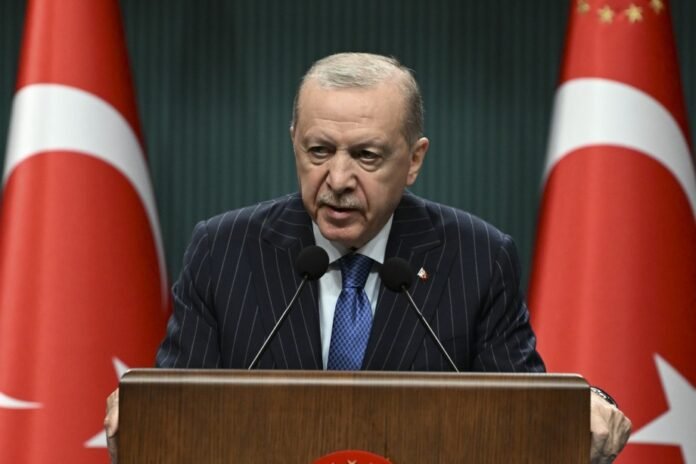
Turkish President Recep Tayyip Erdogan on Monday said that the agreement between the US and Iran marked a “very important step” to end the war that began with provocations from Israel on Feb. 28, adding that it gave the region “a sigh of relief,” Anadolu reports.

“The US-Iran agreement is a very important step in the war that began with provocations from Israel on Feb. 28,” Erdogan said after the Cabinet meeting. “Our region, which has been on the brink, has breathed a sigh of relief.”

Erdogan said Turkiye was greatly pleased “on behalf of our region and all humanity” with the agreement reached with Ankara’s contributions.

“We hope the agreement will fully open the way toward the establishment of lasting peace and stability in our region,” he said.

The Turkish president said no Turkish citizen was harmed in the crisis. “Plans to pit brothers against each other did not achieve their goal.”

READ: US, Iran sign nuclear pact to end war, reopen Strait of Hormuz, senior US official says

He added that attempts to “ignite new flames of discord among Turks, Arabs, Kurds and Persians” ended in a failure.

On NATO, Erdogan said Turkiye is among the leading countries supporting the alliance’s peace mission.

“As we develop our defense capabilities, we contribute to the alliance’s deterrence,” he said.

Erdogan said Turkiye would continue to play a leading role in NATO with its comprehensive military capabilities, strategically important geography and historical depth.

He also said Turkiye’s position within the alliance and developments unfolding in the region have increased interest and expectations from the alliance’s Ankara Summit.

READ: No lifting of Iran sanctions without behavior change: EU Commission chief

Netanyahu Admits ‘We Do Not Know What the Agreement Will Be,’ Vows Iran Will Never Have a Nuclear Weapon 

0
netanyahu-admits-‘we-do-not-know-what-the-agreement-will-be,’-vows-iran-will-never-have-a-nuclear-weapon 
Netanyahu Admits ‘We Do Not Know What the Agreement Will Be,’ Vows Iran Will Never Have a Nuclear Weapon 


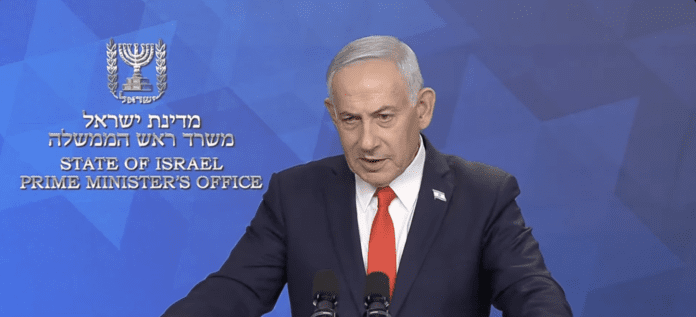
Prime Minister Benjamin Netanyahu said Monday that Israel does not yet know what will be included in a prospective agreement with Iran, but stressed that any deal must be backed by a credible military threat and that he would not limit Israel’s actions to prevent Tehran from obtaining nuclear weapons. 

Speaking at a press conference, Netanyahu declined to compare the emerging agreement with previous diplomatic efforts, saying the final terms remain unclear. 

“I would not make that comparison yet,” Netanyahu said. “We do not know what the agreement will be.” 

Netanyahu said the central difference between the current situation and past negotiations is the existence of military pressure on Iran. 

“I can say that the fundamental difference between the situation then and the situation today is that every agreement must be accompanied by a credible military threat,” he said. “Back then there was no credible military threat. There was no military threat. Today, because of what we did — not only the United States, because of us, because we went in there with 14,000 sorties — that is the biggest difference.” 

He then referred to roughly 140,000 sorties, saying they were divided approximately evenly between Israel and the United States. 

“About 140,000 sorties, roughly half and half,” Netanyahu said. “For us, a little, roughly half and half between the United States and us. There is a credible military threat.” 

Netanyahu said his position was rooted in a long-standing commitment to stopping Iran’s nuclear program. 

“I can speak about my commitment as prime minister of Israel, who has devoted most of his adult life to only one thing: preventing Iran from obtaining nuclear weapons,” he said. 

He argued that Iran would already have acquired nuclear weapons if not for actions he had taken over the years. 

“If I had not done the things I did over the years, Iran would long ago have had atomic bombs,” Netanyahu said. “So they do not have them, and I do not intend for them to have them.” 

The prime minister said Israel would act as needed to prevent that outcome. 

“We will do what is necessary,” he said. “Again, I am not limiting myself in any way regarding that objective, and that objective is simple: Iran will not have nuclear weapons.” 

Asked whether Israel was bound by provisions related to Lebanon or Iran in the US-Iran agreement, Netanyahu replied that “this agreement is being made by the United States, by the president of the United States. He thinks he can truly combine both the opening of the straits and the elimination of the nuclear program.” 

Netanyahu said he had shared his position with President Trump, but emphasized that the diplomatic effort was being led by Washington. 

“I said this is his decision,” Netanyahu said. “I repeat and say: This is his decision. He is leading this, and of course I expressed my opinion in various conversations.” 

Responding to questions about his relationship with President Trump, Netanyahu said differences between the two leaders do arise but have not undermined their years-long ties. 

“We have known each other for a long time,” Netanyahu said, noting that while they often share the same view, there are occasions when their positions diverge. He stressed that his decisions are guided by Israel’s security needs and not by public posturing. 

The prime minister also pushed back against criticism that Operation Rising Lion fell short of its goals. 

Asked whether the operation had been a mistake, Netanyahu dismissed the premise, arguing that Israel had neutralized a threat he characterized as existential. He said the campaign dealt a severe blow to Iran’s economy and infrastructure and helped create an environment in which Iranians could potentially challenge the ruling regime. 

At the same time, Netanyahu said Israel had its own security interests, beginning with the nuclear threat. 

“On the other hand, I said that we have our own interests,” he said. “First of all, regarding the nuclear threat, I am committed that there will not be such a threat against us.” 

Netanyahu also said Israel would remain in a security buffer zone in Lebanon for as long as it deems necessary, despite Iranian demands for an Israeli withdrawal. 

“Second, regarding Lebanon, we created a buffer zone there, a security zone,” Netanyahu said. “We will remain in it as long as required. Iran wanted us to withdraw from there. That did not happen.” 

He said the reason Israel had not withdrawn was, in part, because of his firm position. 

“Do you know why that did not happen?” Netanyahu said. “Among other things, because I stood very, very firm. I was very, very decisive on this matter, and I think our American friends respect that determination and that firm stand.” 

Netanyahu said Israel’s presence in the security zone was necessary to protect residents of northern Israel: “We are staying there because we need to protect the residents of the north, and there are other things as well,” adding that  Israel would continue working to preserve its freedom of action against threats. 

“In any case, we want to preserve, and are acting to preserve, our freedom of action,” Netanyahu said. 

Netanyahu said Israeli forces acted Monday against terrorists who approached or threatened Israeli troops. 

“If people come and attack us, attack us or come to attack us, as happened today—toda —then we eliminated four terrorists,” he said. “Two motorcyclists who approached our forces in a threatening manner were eliminated, and afterward two more terrorists.” 

Netanyahu said Israel would continue to maintain military freedom of action and hold the security zone to defend northern communities. 

“We are preserving our freedom of action, and we are preserving the security zone in order to protect the residents of the north,” he said 

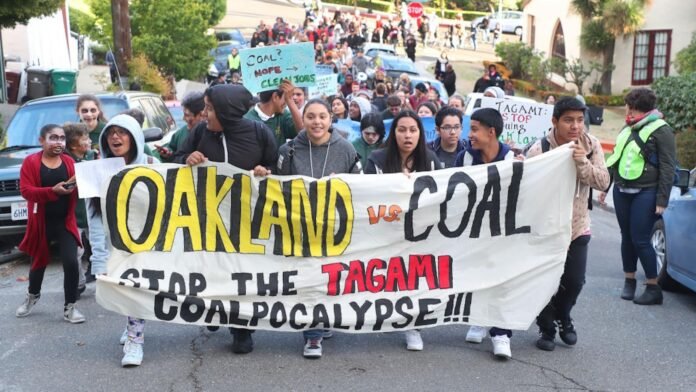
Even $75M from Trump may not save Oakland’s embattled coal terminal

0
even-$75m-from-trump-may-not-save-oakland’s-embattled-coal-terminal
Even $75M from Trump may not save Oakland’s embattled coal terminal

When investor Phil Tagami first proposed building an export terminal in Oakland, California, more than a decade ago, he probably didn’t anticipate the firestorm of litigation and controversy that would follow, in a saga that has now spanned three presidential administrations. There were early rumors that the terminal would export coal, much to the consternation of local residents, but Tagami said in a newsletter that the naysayers were “misinformed.” It was all downhill from there.

Tagami and others entered into a development agreement with the city of Oakland in 2013 after the city decided to redevelop a defunct army base on the city’s west side. At the time, Tagami was adamant that the developers were interested in building an all-purpose bulk terminal and capturing some of the traffic that Oakland was losing to other West Coast ports. But two years later, Oakland residents and environmental groups had their suspicions confirmed when the Salt Lake Tribune reported that the developers had quietly entered into an agreement to use the terminal to ship coal from Utah to buyers overseas. The revelation sparked intense backlash in the progressive city, and the ensuing conflict has put both the developers and the city on the hook for million-dollar losses at various times, though litigation is ongoing. 

Now, in the latest twist, the U.S. Department of Energy has stepped in to provide up to $75 million for building the terminal. The funding is the latest effort by the Trump administration to prop up the country’s coal industry — the Energy Department’s announcement last week also included over $400 million in support for coal-fired power plants — even as the fossil fuel’s role in generating U.S. electricity continues to collapse. Over the last year, the administration has loosened regulations that apply to the country’s coal fleet, ordered aging plants scheduled for retirement to keep running, and shifted the responsibility of overseeing coal contamination to states

The administration also argues that homegrown coal is still valuable abroad.

“For too long, limited West Coast export capacity has constrained America’s ability to move coal and other energy resources to global markets,” said Energy Secretary Chris Wright in a press release announcing the funding. Investing in the terminal would help in “advancing American energy dominance,” he added. 

Critics counter that the federal funding is the latest attempt to prop up a dying industry.

Ben Eichenberg, an attorney with the San Francisco Baykeeper, an environmental group in the Bay Area, said that terminal construction “really hasn’t gone anywhere because there’s no money to build” the facility. “The Trump administration stepping in and saying they’re going to supply that money gives it a new lifeline,” he said. “This terminal project was drowning, and they’ve just been thrown the life preserver.”

The Energy Department’s Hail Mary is unlikely to end the embattled terminal’s long saga. After Oakland officials learned a decade ago that the developers intended to transport coal through the terminal, they held public hearings and eventually passed an ordinance and adopted a resolution that barred the storage of coal anywhere in the city. That set the stage for the first round of lawsuits against the city.

Oakland’s development agreement stated that it would provide regulatory certainty for the terminal backers by locking in the regulations that existed at the time. In other words, the city wasn’t allowed to change the rules about what the terminal could be used for after development started. The developers sued Oakland on these grounds, claiming that the city had violated the terms of the agreement by passing the new anti-coal-storage ordinance, thereby affecting the developers’ ability to proceed with their project. 

The agreement did, however, make an important exception. New rules can be applied to the terminal if the city determines that the absence of those rules would put the people of Oakland in “substantial danger.” The city had held public hearings and collected evidence of the threat posed by coal dust, but the developers argued that the record was insufficient — and ultimately the judge overseeing the case agreed. He found that “the record is riddled with inaccuracies, major evidentiary gaps, erroneous assumptions, and faulty analyses, to the point that no reliable conclusion about health or safety dangers could be drawn from it.”

Crucially, the judge did not claim that the transport of coal through Oakland does not pose a threat to residents, or that the city didn’t have the right to pass an ordinance banning coal. A higher court also agreed with that decision and affirmed the ruling. 

“The fight was not about whether coal is safe or dangerous, but it was about the terms of the development agreement,” said Colin O’Brien, an attorney with Earthjustice, the nonprofit that represented the San Francisco Baykeeper and the Sierra Club as an intervenor in the proceedings. 

After suffering a loss in the courts, the city tried a different tack. The developers had signed a lease with the city, which required them to meet certain construction milestones. Because of the years spent litigating the terms of the development agreement, the developers hadn’t begun construction. Oakland officials canceled the lease on these new grounds, dragging the city into its next round of legal battles. The developers sued in state court in 2018, arguing that the city’s own decisions had prevented them from meeting the construction deadlines. The court once again sided with the developers, as did a higher court on appeal last year.

By then, Insight Terminal Solutions, the company that was slated to operate the terminal, had filed for bankruptcy in Kentucky and decided to pursue claims against the city. During the bankruptcy proceedings last year, the company claimed that the protracted legal battles with Oakland were to blame for its financial woes — and that it was owed more than $650 million in damages. A sympathetic bankruptcy court judge agreed with the firm’s rationale, but on appeal in a federal district court, the ruling was vacated late last year, much to the historically cash-strapped city’s relief. 

Despite the influx of federal support for the terminal, the project’s backers still have a long road ahead. The terminal needs to secure a range of permits, including air quality permits from the Bay Area Air Quality District, and local advocates have already mounted a campaign to require stringent regulations for the facility. (Tagami and another representative of California Capital & Investment Group, the lead developer of the project, did not respond to multiple requests for comment.)

For their part, environmental groups are keeping a close eye on the permitting process.

“We’re going to do everything in our power to protect the community in San Francisco Bay from the pollution that this coal terminal represents,” said Eichenberg. “We’ll be evaluating all of those permits and any additional action that we can take to protect the community and fulfill our mission.”

Editor’s note: Earthjustice is an advertiser with Grist. Advertisers have no role in Grist’s editorial decisions.


0FansLike
0FollowersFollow
0FollowersFollow
0SubscribersSubscribe
- Advertisement -
Google search engine

Recent Posts