13.4 C
London
Monday, June 8, 2026
Home Blog

French Jet Shoots Down Drone in Latvian Airspace

0
french-jet-shoots-down-drone-in-latvian-airspace
French Jet Shoots Down Drone in Latvian Airspace


A French Rafale fighter jet operating as part of NATO’s Baltic Air Policing mission shot down a drone that entered Latvian airspace from Russia on Monday, ending an airspace threat that had prompted authorities to warn residents in eastern Latvia to seek shelter indoors.

Latvia’s National Armed Forces (NBS) said the drone was a “foreign unmanned aerial vehicle that had flown into Latvia as a result of Russian electromagnetic warfare.” The military did not identify who launched the drone.

The airspace threat, first announced at around 9:20 a.m., was declared over at approximately 10:30 a.m. after NATO aircraft successfully intercepted and destroyed the drone. A cell broadcast alert had been sent to residents in the municipalities of Ludza, Balvi and Alūksne warning of a potential threat to airspace.

The NBS later confirmed that NATO jets had shot down the drone. Eyewitness reports indicated the incident occurred between Rēzekne and Kārsava in Nautrēni Parish in eastern Latvia.

At a press conference, Defence Minister Raivis Melnis praised the armed forces and NATO allies for quickly informing the public and responding to the threat. He said a search was under way for fragments of the drone to determine its identity and capabilities.

Asked about the cost of scrambling NATO aircraft and destroying the drone, Melnis said: “We shouldn’t count the money about how much each shot costs when we’re talking about our security.” He added that there were no indications of injuries or damage resulting from the incident.

Melnis also noted that a second drone alert remained in force during the press conference.

The French aircraft involved was based at Šiauliai Air Base in Lithuania, where four French Rafale fighter jets have been stationed since April as part of NATO’s Baltic Air Policing mission. The mission has patrolled the airspace of Latvia, Lithuania and Estonia since the three Baltic states joined NATO in 2004. It currently also includes Romanian F-16 fighters in Šiauliai and Portuguese F-16 fighters in Ämari, Estonia.

The incident is the latest in a series of drone-related security concerns along NATO’s eastern border. Military drones straying into the airspace of Russia’s neighbours have raised fears that the war in Ukraine could spill over into alliance territory.

Ukraine has increased long-range drone attacks on Russia in recent months, including in the Baltic Sea region. Several Ukrainian military drones have reportedly strayed into the airspace of Finland, Latvia, Lithuania and Estonia. Ukraine has attributed those incidents to Russian electromagnetic warfare affecting drone flight paths.

Last month, a Romanian fighter jet participating in the Baltic Air Policing mission shot down a suspected Ukrainian drone over Estonia, marking the first time a jet had “fired a missile in defence of the Alliance” in the Baltic region.

HK and Bangkok step aside, Vienna’s claim as spy capital is strong

0
hk-and-bangkok-step-aside,-vienna’s-claim-as-spy-capital-is-strong
HK and Bangkok step aside, Vienna’s claim as spy capital is strong

Egisto Ott is no James Bond. But the stories the 63-year-old Austrian told a Viennese jury recently would make good plotlines. Ott worked as an intelligence officer in Austria’s now-defunct Federal Office for the Protection of the Constitution and Counterterrorism. He was also moonlighting for the Russians.

Prosecutors say Ott, who was sentenced to four years in prison on May 20, handed over information to fellow Austrian Jan Marsalek, the fugitive former executive of the collapsed payments firm Wirecard. Marsalek ran a cell of Bulgarians who were convicted in London in 2025 of spying for Russia. They called themselves the “minions.”

In 2023, the London Metropolitan police in cooperation with MI5 secured chat messages between Marsalek and the minions, which led to Ott. It turned out Ott had provided sensitive data on dissidents, investigative journalists and a Russian intelligence defector. The trial also revealed that Ott had obtained the infamous “canoe-trip-mobiles.”

In 2017, high-ranking Austrian civil servants went on a canoe trip in a tributary of the Danube River. They managed to fall into the water and had their phones sent in for repairs. Their mobile data was copied by Ott and subsequently ended up in Moscow, along with Marsalek’s favourite Viennese chocolate cake, a Sachertorte. According to the chat messages, the minions had a stressful time finding the correct one (there are rival Sachertorte recipes).

A police officer stands guard at the Hofburg Palace in Vienna, Austria, during the 8th Opec international seminar in 2023. Photo: Max Slovencik / EPA

What sounds like a comic opera has a sinister backstory. Since the 1950s, Austria has hosted several international organizations that are regularly targeted by intelligence services. These include OPEC (the Organization of Petroleum Exporting Countries), the International Atomic Energy Agency and the United Nations Office on Drugs and Crime.

However, Austria’s reputation as a spying hub dates back even longer. The Austrian capital, Vienna, was known for espionage before and after the second world war. Arnold Deutsch, the recruiter of the Cambridge Five spy ring that passed information to the Soviet Union, hailed from Vienna. Its leading light, Kim Philby, was also talent-spotted by Soviet intelligence in the city in 1933.

But Vienna was never just a playground for Soviet intelligence. After the war, when the city was divided into four sectors for allied occupation, the UK’s foreign intelligence service, MI6, started its most creative cold war operations. Peter Lunn, head of MI6’s Vienna station, built listening stations in the city to tap Soviet phone lines.

He hid his listening tunnels underneath ordinary shops in the British zone. The first tunnel was built beneath a police station. Later, MI6 built another tunnel under a jewellery shop and then installed intelligence officers posing as a young, rich couple in a Viennese villa. While they were partying upstairs, their colleagues listened in to Russian military traffic downstairs.

A police officer stands guard at the Hofburg Palace in Vienna, Austria, during the 8th Opec international seminar in 2023. Photo: Max Slovencik / EPA

The only surviving witness of a listening station today is Sir Rodric Braithwaite, whom I first interviewed in 2024. As a 19-year-old conscript, Braithwaite worked with British Army Field Security in the Aspang listening station, next to the Aspang Bahnhof (a train station on the outskirts of Vienna).

It wasn’t an uplifting experience. He sat there for long shifts with earphones on, handling old equipment and pressing recording buttons. But his memories of the tunnel are valuable because to this day MI6 has not released any photos, let alone recordings, that were made during these operations.

The Third Man

They have also not revealed the details of another highly creative intelligence operation. In 1948, a British team arrived in Vienna to film The Third Man, a thriller set in the city. They were eager to shoot scenes in the Soviet sector.

Four key people involved in the making of the film were working for British intelligence: novelist Graham Greene, director Carol Reed, “Austria advisor” Elizabeth Montagu and, most importantly, producer Sir Alexander Korda. Korda’s film production company had been providing covers for British intelligence officers in Europe since the 1930s.

Whether the filming of The Third Man was connected to Lunn’s tapping operations or MI6 had to smuggle something out of the Soviet sector is a matter of conjecture. But “odd people” appeared on the set.

Carol Reed in Amsterdam in January 1950.
The director of The Third Man, Carol Reed, in Amsterdam in January 1950. Photo: Jack de Nijs / Wikimedia Commons, CC BY

The film’s sound engineer, Jack Davies, remembered a British technician who turned up out of the blue. After filming, the technician vanished completely and Davies never came across him again – something rather unusual in the small world of British film technicians.

The script girl, Angela Allen, whom I first interviewed for my book Das Haus am Gordon Place (Vienna ‘48) in 2024, also realized that something odd was going on. She noticed that Carol Reed was under enormous stress in Vienna and kept himself awake with Benzedrine. He stopped taking the drug once they were back in England, filming in London studios.

Allen, who is 97 now, wasn’t surprised to find out years later that Korda was working for the British intelligence services. She told me: “He had enormous charm. He could make his people do everything for him.”

Perhaps that is one reason why Ott and Marsalek failed. To succeed as a spy in Vienna, you need to be a great illusionist like Alexander Korda.

Karina Urbach is a senior research fellow at the Institute of Historical Research, School of Advanced Study, University of London.

This article is republished from The Conversation under a Creative Commons license. Read the original article.

Meta alleges NSO violated spyware injunction with new WhatsApp attacks

0
meta-alleges-nso-violated-spyware-injunction-with-new-whatsapp-attacks
Meta alleges NSO violated spyware injunction with new WhatsApp attacks

Meta today accused spyware maker NSO Group of violating a court order that barred it from targeting users of WhatsApp.

“WhatsApp caught and disrupted spear phishing attempts linked to NSO, a spyware firm blacklisted by the US government,” WhatsApp owner Meta said in an announcement. Meta said it is asking a court “to hold NSO in contempt for violating a permanent injunction that barred them from ever targeting WhatsApp and its users.”

NSO is an Israeli company that developed the Pegasus spyware. The US government added NSO to the Entity List in 2021, saying it “developed and supplied spyware to foreign governments that used this tool to maliciously target government officials, journalists, businesspeople, activists, academics, and embassy workers.”

WhatsApp won a permanent injunction against NSO last year in US District Court for the Northern District of California, and a jury awarded WhatsApp over $167 million in damages. A federal judge reduced the award to $4 million but granted the injunction, which NSO has since been trying to overturn. NSO complained in a court filing that “the injunction jeopardizes NSO’s principal product, Pegasus, which represented 100 percent of NSO’s sales in 2025.”

The district court denied NSO’s motion to stay the injunction, and NSO has appealed to the US Court of Appeals for the 9th Circuit. Today, Meta said it caught NSO violating the court order.

“We successfully disrupted NSO-linked social engineering attempts, after investigating user reports,” Meta said today. “They tried to trick people into clicking on malicious links to drive them to external websites outside of WhatsApp, similar to previously reported 1-click phishing campaigns linked to NSO. We also caught them creating test accounts and groups on WhatsApp, which we took down.”

Meta’s contempt-of-court filing was not yet available today. We contacted NSO Group and will update this article if it provides a comment.

Meta: NSO is malicious, “continues to defy US courts”

WhatsApp filed its case against NSO in 2019, alleging that NSO used WhatsApp to send malware to about 1,400 mobile phones and devices for the purpose of surveilling the devices’ users.

“The evidence showed that defendants reverse-engineered WhatsApp’s code to create a modified version of the WhatsApp client application, which they then used to install their software on target users’ devices via WhatsApp’s servers,” US District Judge Phyllis Hamilton wrote in the permanent injunction order. “The evidence further showed that defendants repeatedly re-designed their software to avoid detection and circumvent plaintiffs’ security fixes.”

Meta said today that its “case has shown that NSO continues to build spyware tools to target people’s devices… When a malicious company on the US government’s Entity List continues to defy US courts, existing restrictions must remain firmly in place.”

NSO’s appeal to the 9th Circuit was opposed in an amicus brief filed last month by the Knight First Amendment Institute at Columbia University.

“The proliferation of commercial spyware across the globe is a profound threat to free expression and freedom of the press, with serious implications for the United States,” the Knight Institute said. “The technology at issue in this case, NSO Group’s Pegasus, allows for near-perfect surveillance of the victims targeted by NSO Group’s customers. Pegasus enables operators to take full control of a target’s smartphone, providing access to GPS locations, contact details, text messages, phone calls, notes, web-browsing history, messaging-application activity, files, and passwords—even if the target used security measures like encryption to protect their data.”

Protester Sparks Outrage After Dressing as Charlie Kirk at TPUSA Event

0
protester-sparks-outrage-after-dressing-as-charlie-kirk-at-tpusa-event
Protester Sparks Outrage After Dressing as Charlie Kirk at TPUSA Event


A Turning Point USA event in Texas took a disturbing turn when a protester allegedly dressed up as slain conservative activist Charlie Kirk and appeared to mock the moment he was assassinated.

The shocking stunt unfolded during Erika Kirk’s appearance at the TPUSA Women’s Leadership Summit at the San Antonio Marriott Rivercenter, where demonstrators gathered outside and inside the event.

According to footage shared by TPUSA-linked accounts, one protester wore a papier-mache head made to resemble Charlie, along with a T-shirt that read “freedom.”

The person then collapsed to the ground in what appeared to be a crude reenactment of Charlie’s fatal shooting on September 10, 2025.

As the protester fell, another person used a megaphone to shout accusations at the crowd.

“You are protecting pedophiles. You are protecting Nazis,” the person yelled.

Nearby demonstrators then began chanting, “Deserved to die!”

The stunt quickly sparked outrage online, with critics calling it a grotesque attack on Erika and her late husband’s memory.

Erika, 37, also faced heckling inside the conference hall while addressing attendees. At one point, a woman interrupted her speech and shouted, “Erika Kirk protects pedophiles! Erika Kirk protects pedophiles!”

The woman was then escorted out of the room.

Erika responded calmly from the stage.

“It’s important to remember that happiness comes and goes — and I pray that you find it,” she told the protester.

She then turned the moment into a message about faith, forgiveness and perseverance.

“That’s an important moment because that just shows duty to faithfulness gives life meaning, and we must pray for our enemies and those that do not feel like their life has meaning,” Erika said. “And that’s a perfect example of that. A perfect example. You pray for your enemies. You pray for those that persecute you.”

The tense scene came after Erika had already faced alleged threats ahead of the event.

Authorities arrested 26-year-old Jacob Wenske, who was charged with two felony counts of making a terroristic threat causing public fear. Police said he allegedly posted online comments that appeared to reference violence against Erika and the TPUSA gathering.

“I can’t wait to be the valet for her escort,” one alleged comment read.

Another allegedly stated, “I know exactly where to bomb.”

Police also obtained an email allegedly written by Wenske that included violent threats against Erika and TPUSA speakers.

“Death to Erika Kirk and every single speaker there!!” the email allegedly read. “America will live on without those scum on this earth. Every Christian nationalist shall perish in the bombing that will take place at every single Turning Point rally and event.”

The threats prompted event organizers to increase security at the summit.

Turning Point USA later thanked law enforcement on X, formerly Twitter, saying, “We are grateful to the San Antonio Police Department and the FBI for their rapid response and arrest of the individual making these threats.”

The group added that its events include “enhanced, multi-layered security measures” involving private security and local police.

“We refuse to let threats silence us,” TPUSA said. “We look forward to a successful and inspiring gathering June 5–7 in San Antonio for 2,500+ ladies attending the Women’s Leadership Summit!”

Charlie Kirk was shot and killed in September 2025 while speaking at a public event on a Utah college campus. He was answering a question from the audience about gun violence when he was struck by a bullet.

He was rushed away by medical personnel but was later pronounced dead at age 31.

Following his death, Erika took on a larger public role with Turning Point USA and has made several appearances honoring her late husband.

But those appearances have also drawn backlash and protests, with critics accusing her of turning Charlie’s death into a political spectacle.

Still, supporters say the latest demonstration crossed a shocking line by mocking a real-life assassination in front of his widow’s organization.

Why are so many Democrats going quiet on climate change?

0
why-are-so-many-democrats-going-quiet-on-climate-change?
Why are so many Democrats going quiet on climate change?

As the midterm elections approach, something strange has happened: Democratic politicians who once talked about climate change as the defining crisis of our time now barely mention it at all. The phrase has begun disappearing from their speeches, social media posts, and podcast appearances. The main exception is Senator Sheldon Whitehouse, a Rhode Island Democrat who has given some version of his “Time to Wake Up” speech on the dangers of climate change more than 300 times over the past decade and a half. He’s accused “climate hushers” of pushing the party to stop talking about the overheating planet.

If you had to pinpoint the moment that “climate hushing” began, the 2024 presidential election would be the obvious contender. After President Donald Trump beat former Vice President Kamala Harris in all seven swing states, Democrats were left scrambling to figure out where they went wrong. One popular theory was that they were too busy harping on social justice and planetary problems at the expense of everyday concerns voters cared more about, like the rising cost of living. Whitehouse, however, sees global warming as a piece of that conversation, rather than a distraction from it.

“Climate change is right now raising costs for families across the country through higher property insurance premiums, grocery and electric bills, and health care expenses,” Whitehouse said in a statement to Grist.

The idea that talking about climate change is a liability for Democrats has become conventional wisdom. Last year, the Democrat-aligned think tank Searchlight Institute issued the advice “Don’t say climate change.” A recent op-ed in The New York Times concluded, “When it comes to climate change, for now, it might be better to say nothing at all.” An early draft of the Democratic National Committee’s autopsy report of the 2024 election, released under pressure in May, posited that messages about climate change and shifting to green energy “created anxiety among workers in traditional industries worried about job losses.”

“It’s very zeitgeisty to assume right now that it’s really important not to talk about climate, or that Democrats have paid a political cost for talking about climate,” said Matto Mildenberger, a professor of political science at the University of California, Santa Barbara. But there’s no hard evidence that discussing climate change hurts Democrats in elections, Mildenberger and other experts told Grist. If anything, it rewards candidates with a modest boost among voters, studies and surveys show. 

The basis for thinking that Democrats should avoid the subject comes from polls asking voters about their top priorities: Climate change ranks number 24 out of 25 when Americans are asked which issues will be very important to their vote, according to data from the Yale Program on Climate Change Communication last year. That’s mainly because other concerns have risen in importance, with liberal Democrats more concerned about things like protecting democracy, government corruption, and the treatment of immigrants than before the 2024 election. It’s a logical leap, however, to assume that talking about climate change is a political liability simply because voters don’t name it as one of their top issues.

Photo of Senator Whitehouse holding up an economist magazine with the headline

Senator Sheldon Whitehouse speaks during a Senate Committee on Finance confirmation hearing in 2025. Andrew Harnik / Getty Images

Some commentators argue that you can achieve climate action just by getting Democrats elected, regardless of whether they’re bringing it up. But deemphasizing climate change as part of their political platform could have long-term consequences: Without real discussion of it, you lose momentum for action and send a signal that it’s not important. “You actually need to have conversation and attention to an issue to slowly build the coalition and policy work necessary to address it,” Mildenberger said.

In effect, Democrats are ceding rhetorical ground to their opponents, he argues, even as polling shows that Trump’s agenda — blocking the construction of wind farms, scrubbing public information about global warming from government websites, and pulling the U.S. out of the Paris climate agreement — is broadly unpopular. “All of this is, frankly, doing the service of the fossil fuel industry, ultimately, because it’s helping climate delay,” Mildenberger said.  

Whitehouse has argued that Democrats are “poll-chasing,” parroting what voters say they want to hear with bland, backward-looking messages. “Many Americans don’t believe Democrats are fighters,” Whitehouse said. “The best way to shed that label is to actually step into the arena and fight. Our climate messaging has long been terrible, but it would be malpractice to shy away from a fight with Central Casting villains (the fossil fuel industry climate denial fraud and dark money corruption operations) with such high stakes for the economic well-being of American families.” As people in the U.S. struggle with rising costs and surging gas prices, oil giants are raking in billions from the Iran war, a dissonance that Democrats could tap into.

Matt Burgess, an economist at the University of Wyoming who studies how to find common ground on the environment, agrees with the broader sentiment that Democrats alienated voters on cultural issues and lost sight of concerns around affordability, and that progressive messaging about climate change was a piece of that. But he said it’s wrong to assume that climate change is a losing issue. “There are lots of different lines of evidence that suggest that climate change as an issue overall helps the Democrats and hurts Republicans,” Burgess said. A study he co-authored in 2024 found that in a hypothetical world in which climate change hadn’t been an issue in the 2020 election, Republicans could have gained somewhere around a 3-percent swing in the popular vote, enough to hand the White House to Trump instead of Joe Biden.

“If you have any issue that moves the needle a little bit in your favor in a super-close election, it can make the difference between winning and losing,” Burgess said.

Exit polling suggests there’s little reason to believe that climate change was a problem for Democrats in 2024, as opposed to other issues playing a larger role. Swing voters considered “U.S. efforts to fight climate change” a reason to support Harris over Trump by 21 points, according to a survey of 5,000 voters from Navigator Research just before and after the election. Trump won by large margins on inflation, the economy, and immigration — concerns that were top-of-mind for voters. “The very simple version is, Trump winning those voters won the election,” said Bryan Bennett, who runs the independent consulting practice Loft Beck Strategies, advising Democrats and progressives, and who directed the post-election survey in his previous role at Navigator. 

Harris, in other words, didn’t lose because she mentioned climate change a few times, or even because Democrats passed climate policies under the Biden administration. Federal investments in infrastructure and manufacturing projects were, on a county level, linked to a very small improvement in the vote share for Harris, an analysis from the Center for American Progress found. If anything, the problem was that voters didn’t know enough about the federal government’s involvement to give the administration credit.

Read Next

Even if climate change is not an electoral problem for Democrats, they might have other reasons for staying quiet about it. The media ecosystem now is fractured, with many people getting their news from TikTok, YouTube, and podcasts as opposed to traditional news sources, meaning that it’s harder than ever for politicians to make their preferred narrative heard, Bennett said. In recent years, the Democratic Party has gotten more serious about “message discipline,” the practice of sticking with a central message, to try to cut through the noise.

“So much of the oxygen in the room is taken up by, ‘How do Democrats deal with, and how do progressives deal with, talking about the economy in a way that really meets voters where they are?’” Bennett said. “And I think that inherently detracts from basically every other issue, regardless of whether it’s a good thing to talk about or not.”

The Democratic politicians who are still mentioning climate change have tended to do so indirectly, arguing that clean energy is “cheap energy” and tying it to rising electricity bills. Polling suggests that voters have an appetite for more: Last fall, 41 percent of those surveyed by the Yale Program on Climate Change Communication said they wanted political candidates to talk about efforts to reduce global warming more often, almost double the number who wanted to hear about it less. The trend of climate-hushing could stem from a misperception: Studies show that politicians and the public at large tend to vastly underestimate Americans’ appetite for taking action on climate change, from carbon taxes to expanding renewable energy. 

“We have this tension where, I think, empirically, talking about climate change provides a net benefit. It’s a very small net benefit, but it is a net benefit,” Mildenberger said. “But we have a discourse that somehow says that it’s this massive cost.”


California revenue miss, 8% Seoul collapse: AI investors be warned

0
california-revenue-miss,-8%-seoul-collapse:-ai-investors-be-warned
California revenue miss, 8% Seoul collapse: AI investors be warned

Broadcom, a US supplier of the chips and networking technology that underpin the global artificial intelligence boom, missed revenue expectations last week. Not by much.

On Monday, South Korea’s stock market had fallen more than 8%, Samsung Electronics had lost 10%, SK Hynix almost 8%, Taiwan’s market had been hit, Japanese semiconductor stocks were under pressure and roughly $1.8 trillion had been wiped from the value of the S&P 500.

Savvy investors should be paying close attention to that chain of events.

Not because it says something alarming about AI, but because it says something alarming about investors.

Broadcom’s results were disappointing. They were not disastrous. The company didn’t report a collapse in demand. It didn’t tell the market that AI spending was drying up, and it didn’t suggest data-center investment was slowing sharply.

Yet the reaction was brutal.

In my view, the sell-off exposed something that has been building for months beneath the surface of the AI rally: complacency.

The market has become so accustomed to positive surprises from AI-linked companies that even a relatively modest disappointment now triggers an outsized response across continents.

That’s rarely a healthy sign.

The dominant explanation for the sell-off is that tech stocks had become overextended and investors were taking profits. There’s some truth in that.

But profit-taking does not explain why a narrow revenue miss by a US company was capable of knocking more than 8% off South Korea’s stock market.

Complacency does.

For two years, investors have treated artificial intelligence as the closest thing markets have to a guaranteed growth story. The trade has been extraordinarily successful. Companies exposed to AI infrastructure have delivered exceptional earnings growth. Capital expenditure has surged. Demand has repeatedly exceeded forecasts.

The market gradually became conditioned to one outcome.

More spending, more growth and more upside surprises.

Every quarter reinforced the same belief. Investors who bought the story were rewarded. Investors who doubted it were punished.

Eventually, that creates a dangerous mindset.

The focus shifts away from risk and towards confirmation. Investors stop asking what could go wrong and start assuming the trend will continue uninterrupted.

This is what I believe happened here.

Broadcom exposed how little room for disappointment remains in the trade.

South Korea provides the clearest example.

Samsung Electronics and SK Hynix now account for roughly 40% of the KOSPI. Both companies have become major beneficiaries of the AI infrastructure boom. Investors around the world view them as direct ways to gain exposure to rising demand for advanced memory chips.

The same dynamic exists in Taiwan through TSMC. It exists in Japan through semiconductor equipment makers such as Tokyo Electron and Advantest.

As a result, a relatively modest earnings disappointment in the United States quickly became a reassessment of some of Asia’s largest and most influential companies.

This should concern investors for a simple reason.

Nothing material changed in South Korea, Taiwan or Japan.

What changed was sentiment.

A company headquartered thousands of miles away reported results that failed to satisfy a market accustomed to constant upside surprises, and investors immediately marked down some of Asia’s most important stocks.

As such, this isn’t a sign of a weak AI story, it’s a sign of a market that may have become too comfortable with a single narrative.

The irony is that the long-term case for artificial intelligence remains extremely strong. Businesses continue to invest heavily. Governments continue to invest heavily. Demand for computing power continues to grow.

Of course, I remain positive on the long-term outlook. But strong themes often create their own risks.

The stronger the narrative becomes, the more investors crowd into the same positions. The more investors crowd into the same positions, the more vulnerable markets become when expectations fail to match reality.

History is full of examples. The internet changed the world and investors still became too optimistic. China transformed the global economy and investors still became too optimistic. AI may prove even more significant than either, and guess what. Investors are capable of making the same mistake again.

It’s why I believe this week’s sell-off matters. Not because Broadcom missed estimates, nor that South Korea fell 8%, and not because AI suddenly faces a problem.

The significance lies in what the reaction revealed.

A market that has spent two years rewarding optimism is beginning to rediscover disappointment. And a market rediscovering disappointment can be a far more powerful force than a company missing expectations by a fraction.

A revenue miss in California should not be capable of wiping 8% off South Korea’s stock market.

The fact that it did should tell investors everything they need to know about where the real risk now lies.

Nigel Green is CEO and founder of the deVere Group.

Tehran plans nuclear power plants at 5 coastal sites, Iran’s atomic energy chief says

0
tehran-plans-nuclear-power-plants-at-5-coastal-sites,-iran’s-atomic-energy-chief-says
Tehran plans nuclear power plants at 5 coastal sites, Iran’s atomic energy chief says

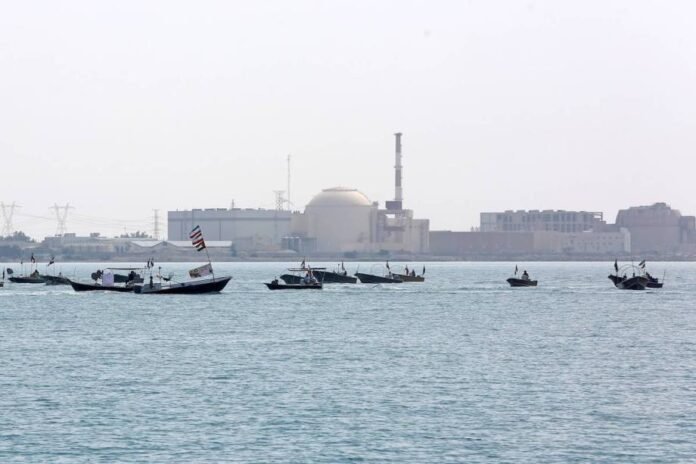
Iran is moving forward with plans to build nuclear power plants at five locations along its coastline as part of efforts to expand the share of nuclear energy in the country’s electricity mix, the head of Iran’s Atomic Energy Organization said Monday, Anadolu reports.

Mohammad Eslami, vice president and chief of the Atomic Energy Organization of Iran, made the remarks during a meeting with members of parliament’s energy and construction commissions, according to the official IRNA news agency.

Eslami said projects are being implemented under Iran’s comprehensive strategic document for the nuclear industry, unveiled in 2022.

“Based on this document, the construction of nuclear power plants at five coastal locations is on the agenda to increase the share of nuclear electricity in the country’s energy basket, and these projects are progressing according to plan,” he said.

The official also said the Bushehr Nuclear Power Plant recently surpassed 80 billion kilowatt-hours of electricity generation, a milestone he said had saved the equivalent of 131 million barrels of crude oil or 21.3 billion cubic meters of natural gas.

Eslami added that the second and third units of the Bushehr plant are currently under construction as part of a $10 billion investment project, describing them as among the country’s largest infrastructure developments.

READ: Trump vows to destroy Iranian uranium with or without deal

Bushehr, Iran’s only operating nuclear power plant, is located on the country’s southern Gulf coast and supplies electricity to Iran’s national grid.

Regional tensions have escalated since late February after the United States and Israel launched airstrikes on Iran.

Iranian media have reported that the Bushehr plant was targeted multiple times during the conflict but said the attacks did not disrupt operations or affect the facility’s electricity generation.

Tensions escalated again on Sunday when Israel bombed the Lebanese capital, Beirut, despite an ongoing ceasefire, prompting Iran to launch missiles toward northern Israel in response, while Israel carried out several waves of airstrikes against Iran.

Iran’s military said early Monday it was halting attacks on Israel while warning of a “crushing” response if Israeli attacks on Lebanon continued.

Israeli media, citing unnamed officials, reported that Israel had agreed to halt airstrikes on Iran but would continue its offensive in southern Lebanon.

READ: Israel to halt attacks on Iran at Trump’s request, to continue offensive in Lebanon, Israeli official says

For the 2nd time in weeks, Microsoft packages laced with credential stealer

0
for-the-2nd-time-in-weeks,-microsoft-packages-laced-with-credential-stealer
For the 2nd time in weeks, Microsoft packages laced with credential stealer

Dozens of cryptographically verified open source packages from Microsoft were compromised late last week to add advanced credential-stealing code that was triggered when developers opened them in AI coding agents.

In all, multiple researchers said, 73 packages were flagged as malicious when automated systems on GitHub blocked them on the platform. Rather than noting they are malicious—and that developers who used AI agents to work with them should assume their systems are compromised—the Microsoft-owned GitHub said it disabled the packages “due to a violation of GitHub’s terms of service.” The text went on to encourage the package owner to contact GitHub.

Devs: Assume compromise and proceed accordingly

It wasn’t until Monday that Microsoft even raised the possibility the packages were infected. In an email, the company stated: “We have temporarily removed some repositories as we investigate potential malicious content.”

The incident is the second supply-chain attack in as many months to breach an official Microsoft repository account. In mid May, the firm StepSecurity documented the compromise of Microsoft’s durabletask Python SDK on PyPI. The package is a framework for building fault-tolerant workflows and orchestrations to automate distributed transactions and other workflows. It receives 400,000 downloads per month.

The compromise packages executed a 28 KB payload that steals credentials from AWS, Azure, GCP, Kubernetes, password managers, and over 90 developer tool configurations. It then spreads laterally through cloud infrastructures to infect other developer machines. The attack, which has been linked to a threat actor tracked as TeamPCP, poisoned the durabletask package after compromising Microsoft credentials for publishing the package. The technique allows attackers to bypass the repository’s build pipeline entirely.

The malware used in the attack is tracked as Miasma. It’s essentially a clone of TeamPCP’s Mini Shai-Hulud toolkit, which the threat actor open-sourced recently. Security firm Cloudsmith said the malware harvests OIDC (OpenID-Connect) token credentials that are used in SLSA (Supply-chain Levels for Software Artifacts) provenance attestation, a method for providing cryptographically signed guarantees of a software’s integrity.

As was the case in the May compromise of Microsoft’s durabletask, the one last week made use of the functionality to steal a legitimate Microsoft OIDC token. It was also used in a separate supply-chain attack poisoning dozens of Red Hat packages.

“The genius of this Miasma worm lies in how it adhered to legitimate workflows,” Cloudsmith said. “It does not exploit any software vulnerability in GitHub or npm. Instead, it exploits the underlying trust model of the modern engineering ecosystem.” The company continued:

Compromised dev creds led to a legitimate GitHub OIDC token being requested. This was followed by a malicious build being published with valid SLSA provenance, which ultimately led to conventional scanners seeing it as a routine trusted update. By stealing legitimate maintainer credentials, the worm was able to act exactly as an authenticated publisher would have.

Furthermore, Miasma generates a uniquely encrypted payload for each individual infection. This means traditional hash-based IOCs are functionally useless for broad detection, as the file signature changes with every single package version. Andrew McNamara of Red Hat explained in a dedicated blog post where SLSA’s boundaries fall short.

While previous iterations of the Mini Shai-Hulud malware have focused purely on local secret scraping, the Miasma worm appears to have advanced data collectors specifically engineered for cloud identities in GCP and Azure. It attempts to harvest every cloud identity the infected developer machine and CI/CD runners have access to, proving a clear intent from the threat actors to leverage access away from the codebase and directly into live cloud environments.

The credential-stealing function in the Miasma worm infecting the Microsoft packages was triggered as soon as a developer opened it in AI agents, including Claude Code, Gemini CLI, Cursor, and VS Code. Follow-on attacks are likely to occur in the highly feasible event that credentials were successfully harvested from machines that opened the packages in one of the affected AI agents.

The Microsoft GitHub account compromised in the May attack is the same one used late last week. The explanation for this double compromise isn’t currently known. It may mean that Microsoft failed to fully change credentials for the account. It might also be the result of an unknown package run on a Microsoft developer machine that stole the new credentials. Microsoft isn’t providing details at the moment.

The self-replicating cryptographic verification of the malicious packages and the ability to bypass hash-based detection make the attacks difficult to detect. And as the subsequent compromise of the same Microsoft account shows, these breaches can be hard to fully remediate. Anyone who touched any one of the 73 packages—listed here—should drop whatever else they’re doing and thoroughly investigate, lest there are any compromised credentials that will be used in future attacks.

Pope Leo warns Spain’s parliament the world is in ‘profound’ crisis

0
pope-leo-warns-spain’s-parliament-the-world-is-in-‘profound’-crisis
Pope Leo warns Spain’s parliament the world is in ‘profound’ crisis


Pope Leo told Spain’s parliament ​that escalating conflict, deepening polarization and widespread disregard for human rights had pushed the world into a profound crisis, in one of his most ‌expansive political addresses yet on Monday.

Leo, who has adopted a more forceful tone recently against the direction of global leadership, also firmly repeated his opposition to increased European military spending, urging politicians instead to end the wars ravaging the globe and help migrants.

“The world is undergoing a profound spiritual and cultural crisis, which is manifested in multiple forms of violence, polarization, and mutual distrust,” the pope said in the ​address, which came hours after Israel and Iran renewed their attacks on one another in the most serious test of a two-month ceasefire.

“Weapons can impose a ​temporary silence; but they can never build an authentic and lasting peace,” he said.

MIGRATION CHALLENGING WORLD’S ‘ETHICAL FOUNDATION’

Leo’s speech, which was delivered in ⁠Spanish and was received with a seven-minute standing ovation by lawmakers, was a rare papal address to a national legislature and the first by a pope to Spain’s ​parliament. It is part of a week-long visit to the country in which the pontiff has met with migrants and the homeless, and called on national leaders to stop dividing their ​electorates.

The pope, whose Spain tour will culminate with the pontiff meeting migrants in the Canary Islands who braved dangerous Atlantic waters to enter Europe, said a lack of help for the world’s migrants was challenging “the ethical foundation of the international order”.

He said countries must look for solutions that go beyond “the mere management of flows” and should address the causes that force people to leave their countries of origin, ​including war, poverty and climate change.

The pope told parliament that “the moral greatness of a nation is manifested above all in its capacity to accompany, protect, and love those ​lives that pass through the greatest fragility”.

More than 3,000 people died in 2025 trying to reach the Canary Islands, off the western coast of Africa, often in makeshift dinghies, according to NGO ‌Caminando Fronteras.

Prime ⁠Minister Pedro Sanchez’s government has opened a mass amnesty programme, allowing an estimated 500,000 immigrants to apply for legal status.

POPE CALLS EUROPEAN REARMAMENT ‘TROUBLING’

Leo, who issued a fervent manifesto last month urging global governments to slow down the development of AI systems, called on Monday for “rigorous ethical vigilance” over how AI was used in warfare.

He said that rising European military spending, which grew last year by the highest amount since the end of the Cold War amid pressure from U.S. President Donald Trump, was “troubling.”

Spanish Prime Minister Pedro Sanchez has refused to meet Trump’s ​demands for NATO member countries to increase ​defence spending to 5% of GDP, ⁠although the expenditure has tripled since he took office in 2018, rising from around €10 billion ($11.5 billion) to more than €34 billion.

The pope last month called European rearmament a betrayal of diplomacy.

Leo also offered some of his most in-depth remarks yet addressing the balance in the relationship ​between Church and state. He urged protection of religious freedom, saying that faith “cannot be relegated to silence as though it ​were irrelevant to public ⁠life”.

The pope likewise defended the privacy of the Catholic seal of confession, which obliges a priest not to reveal any information given to him by penitents.

Several countries, including France, have debated whether to compel priests to report sexual abuse disclosed in confessions, following scandals that have shaken the Church internationally.

Protecting the seal, Leo said, preserves “a sacred space of inner freedom, where ⁠the believer can ​open his or her soul before God”.

A 2023 report by Spain’s human rights ombudsman estimated hundreds of ​thousands of victims of clerical abuse there over decades.

In a meeting with Catholic bishops on Monday after his speech in parliament, Leo said they must listen to survivors of abuse and offer them reparations.

The Vatican has said the ​pope would meet with a group of victims during the visit, but has yet to offer

They Were Serving the Longest Federal Sentence of Any 2020 BLM Protester. Then They Vanished in Prison.

0
they-were-serving-the-longest-federal-sentence-of-any-2020-blm-protester-then-they-vanished-in-prison.
They Were Serving the Longest Federal Sentence of Any 2020 BLM Protester. Then They Vanished in Prison.


Incarcerated activist Malik Muhammad’s standing client call in March with their lawyer had been canceled without any real explanation. When Muhammad’s attorney, Lauren Regan, went to check their status on the Oregon Inmate Tracker, she found nothing. They seemed to have vanished without a trace. 

Friends and family feared the worst. Muhammad, an army veteran and activist serving the longest federal sentence of any 2020 Black Lives Matter protester, had been a target inside the state prison because of their outspoken political beliefs and organizing efforts while incarcerated, several of their friends and supporters told The Intercept. 

“We were calling everyone,” said Christopher Kuttruff, a close friend and supporter. “We were terrified that they were in the hospital or dead …your mind obviously goes to the worst places.”

For weeks, the activist disappeared from all tracking systems. The best Muhammad’s supporters could ascertain by early April was that they had been transferred to a “confidential location.” Late that month, Muhammad was able to get a letter out to their partner from Kirkland Correctional Institute, in South Carolina, an intake facility 3,000 thousand miles from Oregon — or, as Regan puts it, “as far away from me as possible.”

Muhammad described the conditions at Kirkland as deplorable, claiming that incarcerated people are denied access to enough water, food, and recreation, and are forced to sleep on mats on the floor, which sometimes get confiscated as punishment.

The South Carolina Department of Corrections had little to say of Muhammad. In mid-May, the state’s prison system told The Intercept they had no record of someone named Malik Muhammad anywhere in their custody; the prison system did not respond to a follow-up query in June. The activist had become a living ghost within the carceral system. 

Even now, friends and family struggle to reach Muhammad, with only the occasional letter or call to the few people approved to contact them serving as proof of life. 

Because she is not licensed in South Carolina, Regan said she has “not been able to speak on the phone or in person in an attorney-client privileged manner since their transfer,” seriously impeding her ability to represent her client. She had to hire a local attorney to speak with them in person and collect potential evidence.

Millions of people flow through the U.S. prison system every year. And every year, an untold number of them vanish off the map, lost in a massive system that is legally obligated to watch over them. In New Mexico, Stephen Slevin spent nearly two years in solitary confinement in county jail after county officials appear to have simply forgotten about him after charging him with driving under the influence. Slevin never saw a judge or a lawyer and had to pull his own tooth due to consistent medical neglect.

Wanda Bertram, communications strategist for the Prison Policy Initiative, said that people getting lost in the prison system is “pretty common,” even when they haven’t moved as far away as Muhammad. “There’s never any effort made by prisons to tell incarcerated people’s families, ‘Hey, we’re moving this person,’” said Bertram.

As the Trump administration ramps up its use of incarceration as a method of immigration enforcement, concerns are mounting about the already stretched system’s ability to keep track of the people within its care — and the opportunity such lapses in oversight create for authorities to target activists and dissenters adversarial to the government.

“Not only is [Malik] intelligent,” said Regan, a founder and director of litigation and advocacy at the Civil Liberties Defense Center, “but Malik is Black, Muslim, an anarchist, [and] a political activist, and they have targeted Malik as a result of all of those things.”

Muhammad, who was arrested in October 2020, received the harshest sentence out of the hundreds of protesters hit with federal charges in the wake of the 2020 summer protests for racial justice. After tens of thousands were arrested in some of the largest mass arrests in history, many were released without charges or saw their cases dropped, but some prosecutors pushed for harsh sentences and elevated state or local infractions to the federal level, arguing that rioters were masquerading as protesters.

Muhammad pleaded guilty to both state and federal charges, including two counts of “unlawful possession of a destructive device,” for throwing a Molotov cocktail during a protest in East Portland. In 2022, the then-25-year-old was sentenced to 10 years in state prison.

Their plea agreement specifically stated that they would serve their time in Oregon state prison, near their supporters and community. Regan says that Oregon’s prison system has reneged on the agreement — illegally transferring Muhammad interstate as retaliation for their activism while incarcerated — in another attempt by the criminal legal system to punish Muhammad for their organizing.

“Normally, they would have been sentenced to the federal prison system,” said Regan. However, “because their friends and family and supporters at the time were based in Oregon, they explicitly negotiated an outcome that ensured that they would remain in Oregon.” 

Federal prisons tend to be “better,” said Regan, because they often have more funding, allow for more freedom of movement, and have marginally better food. Put it this way, she said, “generally speaking, if you had a choice between Oregon State Prison or Federal Prison, most people would choose [federal].” But instead of relative comfort, Muhammad chose community.

Prisons are essentially a “black box” where people can disappear into solitary confinement or be transferred without their family’s knowledge, according to Bertram of the Prison Policy Initiative. 

“There’s so many constant questions that you live with as the loved one of an incarcerated person, and then when that person suddenly disappears, it’s terrifying,” said Bertram.

To make matters worse, she said, “prisons have a kind of nasty habit of not telling the family when someone dies or is transferred to an outside hospital, or needs emergency care,” compounding concerns for people who cannot locate their loved ones on the inside.

In Regan’s view, there are “a number of reasons” to characterize Muhammad’s transfer as retaliatory. For starters, she said this is part of a pattern of behavior from the Oregon prison system. In 2024, The Intercept reported that Muhammad had been effectively held in solitary confinement, which in Oregon is called “special housing,” for more than 250 days — despite the fact that Oregon limits the use of this type of confinement to 90 days.

She said Muhammad had met people in prison, many who’d been through excessive solitary, and suggested that they could become potential plaintiffs in a class-action lawsuit her organization is seeking to file against the state prison system. “The prison is, of course, retaliating against them for basically assisting a nonprofit legal organization in bringing a giant lawsuit about the abuses of solitary confinement in the Oregon prison system,” Regan said. 

Oregon flatly denies sending Muhammad to South Carolina as retaliation.

“These decisions are not made lightly and require a thorough review process conducted by all parties. In the case of Mr. Muhammed [sic], there is extensive background for the reasons [they were] a candidate for an Interstate Compact,” Amber Campbell, communications manager at the public affairs division for the Oregon Department of Corrections, wrote in a statement to The Intercept. 

Muhammad’s advocacy and community building inside have consistently put a target on their back, said Jeremy, a close friend and pen pal. Friends described Muhammad as “empathetic,” “generous,” and “passionate,” as eager to sing for their cellmates as they are to share a book on political theory. 

Now, Muhammad’s friends and family have to sit and wait, and hope the prison system won’t lose them all over again. 

0FansLike
0FollowersFollow
0FollowersFollow
0SubscribersSubscribe
- Advertisement -
Google search engine

Recent Posts