15.7 C
London
Sunday, June 7, 2026
Home Blog

Xi’s North Korea visit puts a Trump-Kim summit back in play 

0
xi’s-north-korea-visit-puts-a-trump-kim-summit-back-in-play 
Xi’s North Korea visit puts a Trump-Kim summit back in play 

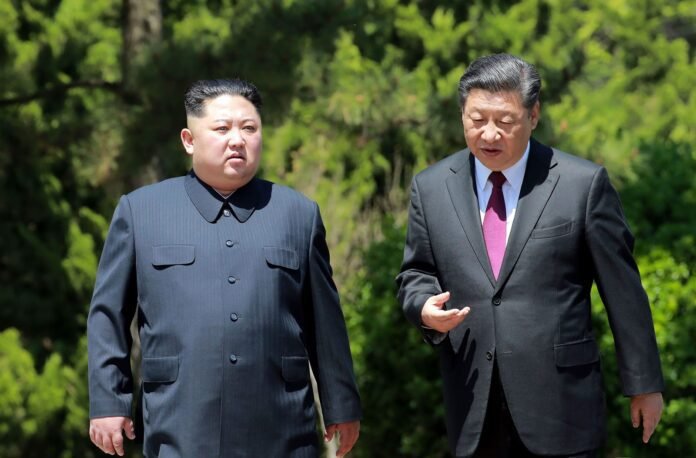
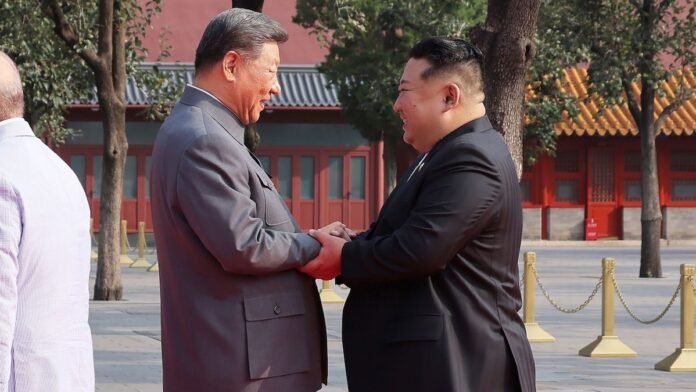
Chinese President Xi Jinping will make a rare visit to North Korea on June 8 – his first international trip this year – weeks after hosting US President Donald Trump and Russian President Vladimir Putin in Beijing. The sequencing has revived a scenario that seemingly grew less likely as Trump’s second term wore on: a third Trump-Kim summit.

This writer shared that skepticism, but recent conversations in Seoul with senior officials and North Korea analysts have produced a case for the summit that is proving harder to dismiss than six months ago.

Before reports of Xi’s Pyongyang visit surfaced, this writer had extensive discussions in Seoul with senior officials and well-informed North Korea analysts, during which the possibility of a Trump-Kim summit seemed to gain credence. The idea that such a meeting could even take place before the US midterm elections in November came up in these conversations.

There are, of course, differing views on this and on relations with North Korea. The Lee Jae-myung administration’s senior advisors are seemingly grouped into two broad camps. The “jaju,” or autonomy, camp emphasizes inter-Korean relations and autonomy. The “dongmaeng,” or alliance, camp prioritizes alliance relations with the United States.

While both of the camps may back another meeting between Trump and Kim to advance their respective goals, they interpret North Korea’s eagerness for talks differently.

The dongmaeng camp is more skeptical on this front. They argue Kim is now in a stronger position thanks to Russian aid and support for its nuclear weapons program, and point to tensions with China and sanctions for further strengthening the North Korea-Russia partnership.

For example, when Chinese Minister of Foreign Affairs Wang Yi flew to North Korea in April, interlocutors in Seoul told this writer that the Kim regime was unsatisfied with China’s reluctance to recognize it as a nuclear-weapon state.

In this view, economic problems in North Korea are not severe enough to threaten the country’s elite class or incentivize the regime to seek sanctions relief. The regime is focused on an intense military buildup, encouraged by its alliance with Moscow. As a result, the dongmaeng camp believes Kim is uninterested in dialogue but will want recognition of North Korea’s nuclear weapons in any future meeting.

Why Trump and Kim may want to meet

Not everyone is convinced. The jaju camp believes that Kim sees great utility in another summit with Trump because he is the only US president who will give him the kind of reception and respect he seeks.

Accordingly, if Trump does not set denuclearization as a precondition for talks and makes the initial move to seek a meeting, Kim will be open to the idea, those in the jaju circle argue. But, if denuclearization is explicitly on the table, one well-informed source told me, “he won’t go.”

From this perspective, a summit can happen even if Trump does not recognize or acknowledge North Korea as a nuclear state. The United States may not officially acknowledge this status, the argument goes, but if Trump refrains from bringing up the issue, Kim will think he has gone more than halfway. Russia has already acknowledged North Korea as a nuclear state. And China may be ready to follow Trump’s lead.

Whether this is a viable outcome for the US president largely depends on how the war in Iran concludes. If it ends with an ambiguous solution to Iran’s nuclear program, that could open the door to the US-North Korea summit outcome above. The claim would be that Trump and Kim have achieved “peace” on the Korean Peninsula, brought to an end the state of war that has existed for more than seventy years and stabilized the entire region.

Some in Seoul suggested a version of the deal discussed in Hanoi in early 2019 could now be agreed upon, with formal denuclearization put aside for later. Kim would commit to no additional production of nuclear warheads – his current stockpile of more than fifty warheads is more than sufficient – and pledge not to proliferate nuclear technology to others, including Iran.

Of particular appeal to Trump, Kim could offer to suspend the development and deployment of intercontinental ballistic missiles capable of reaching North America.

“Trump can sell to the US public that he prevented war on the Korean peninsula,” a well-informed source suggested.

The economic driver

One important driver of a summit, at least for Kim but maybe for Trump as well, is the prospect of expanded economic cooperation. Conditions within North Korea are extremely stressed, says Kim Byung-yeon, a North Korea economy expert at Seoul National University.

It is unclear whether living conditions have improved for most North Koreans since Kim took over in late 2011. The country is dealing with extremely high inflation, absurdly low exchange rates, runaway wages and high rice prices despite Russian assistance. Kim Byung-yeon says these crisis conditions are due to the regime’s “repression of the market, monopolistic conduct of trade and suppression of dissent in an attempt to curb South Korean influence.”

From the jaju camp’s view, Kim Jong Un wants to make North Korea a strong and wealthy country. Russian recognition and support alone cannot make this a reality. For that, he needs investment from China and the West. To that end, the United States and China would need to cooperate.

This is not a new argument, and it’s one contested by North Korea experts who see the regime driven mainly by its feverish security buildup, its own survival needs and even lingering aims of forced unification.

The third wheel

The odd man out in this game is South Korea. Kim has abandoned unification, declared the South a hostile state, and severed inter-Korean channels that brokered the 2018 engagement period. South Korean President Lee has far less, if any, leverage compared with what President Moon Jae-in had at that time.

Opening the doors to engagement with South Korea would be the most effective means of rapid economic development for the North. But, a senior official noted with some resignation, “It would lead to regime collapse. That is why they are open to every other country except the South.”

The Lee administration continues to call for broader talks. Minister of Unification Chung Dong-young, a prominent member of the jaju group, recently called for four-party dialogue among the two Koreas, the United States and China. But there is little reason to expect this proposal to go anywhere.

Ironically, perhaps, the Lee administration is now forced to rely on Trump’s outreach to Kim as the only means of improving inter-Korean relations.

Daniel C. Sneider is a non-resident distinguished fellow at the Korea Economic Institute of America (KEI), which originally published this article, and a lecturer in East Asian Studies at Stanford University. The article is republished with permission.


RIP Anthony Head: Our 10 favorite moments of Buffy’s Giles

0
rip-anthony-head:-our-10-favorite-moments-of-buffy’s-giles
RIP Anthony Head: Our 10 favorite moments of Buffy’s Giles

On Friday, news broke of the passing of actor Anthony Head at 72, best known for his portrayal of Watcher/father figure Rupert Giles on the supernatural drama Buffy the Vampire Slayer. Fans and former costars alike flooded social media with outpourings of appreciation for his talent and grief at his death.

Head certainly had a thriving career after Buffy: he played Uther Pendragon ins the series Merlin; the Prime Minister in Little Britain; a sinister headmaster in the Doctor Who episode “School Reunion”; and of course, the wealthy, entitled Rupert Mannion in Ted Lasso. But Giles remains his definitive role; there was even talk of a spinoff series, Ripper, although it was never made.

There are actually very few Giles-centric episodes, which belies the central importance of the character in the series. He definitely had some of the best, most cleverly cutting lines. But Head’s true genius—and that of his character—lay in quietly filling in the gaps in every scene, working with his fellow castmates to weave a complete tapestry. Remove him, and it diminishes everything.

(Spoilers for Buffy the Vampire Slayer TV series below.)

What better time to spend a few hours watching Buffy in Head’s honor? Should you want some suggestions, here are 10 of our favorite Giles moments, in chronological order. Feel free to weigh in with your own favorites in the comments.

Lie To Me (S2)

Credit: 20th Television/the WB

An old  Los Angeles classmate of Buffy’s, Ford (Billy Fordham) transfers to Sunnydale High for his senior year, and reveals that he knows she is the Slayer. We soon learn Ford has an ulterior motive for seeking her out. He has joined a secret “Sunset Club” whose members have read too much Anne Rice and romanticized vampires, ignorant of the demonic vicious nature. Ford is not deluded, but he still  approaches Spike (James Marsters) with a deal: Ford will deliver Buffy to Spike, and Spike in turn will turn Ford into a vampire. All the other club members will be killed.

When Buffy confronts Ford at the club, she learns he has a terminal brain tumor; his desperation to live is what drove him to betray her. This doesn’t excuse his choices, but it does make it harder for her to view him as a pure villain. After staking the newly sired Ford in the cemetery, Buffy asks Giles, “Does it get any easier?” Giles responds, “What do you want me to say?” Buffy asks him to lie to her. “Yes, it’s terribly simple,” Giles says. “The good guys are always stalwart and true. The bad guys are easily distinguished by their pointy horns or black hats. And we always defeat them and save the day. No one ever dies and everybody lives happily ever after.”

Buffy’s cheeky response? “Liar.”

The Dark Age (S2)

Credit: 20th Television/The WB

Earlier in the season we met Ethan Rayne (Robin Sachs), an old associate of Giles who traffics in the dark arts to sow chaos—such as casting a spell on Halloween to turn everyone into their costumes. His nickname for Giles is “Ripper,” our first hint that the stuffy librarian might have a wilder past. In “The Dark Age,” that past catches up to Giles and Ethan, as they discover that two other former friends are dead. All four have matching tattoos, the “mark of Eyghon.” Eyghon is a demon the quartet  had conjured for amusement in their youth. Now Eyghon is out for revenge.

Initially, Giles doesn’t tell Buffy and the Scoobies about any of this, preferring to conceal his rebellious youth from the impressionable youngsters. But he is forced to do so when Eyghon possesses an unconscious Jenny Calendar (Robia LaMorte Scott), Sunnydale’s computer teacher and Giles’ budding love interest. Eyghon is ultimately defeated, but a traumatized Jenny understandably decides to put the brakes on her romance with Giles, at least temporarily. It’s a recurring theme in the series: bad, reckless decisions can have nasty consequences that can follow us for years.

Passion (S2)

Credit: 20th Television/The WB

This is one of the most emotionally devastating episodes of the series—the first time fans suffered the loss of a major supporting character. Angel (David Boreanaz) has lost his soul and reverted to his demonically sadistic Angelus persona after experiencing a moment of “perfect happiness” when he and Buffy have sex for the first time. Jenny Calendar has been revealed to be of gypsy descent, the same clan that cursed Angel with a soul, and she was sent to Sunnydale to monitor Angel—a secret that served as another wedge in her relationship with Giles, although the pair were moving toward reconciliation.

Eager to earn back Giles’ trust, Jenny purchases a mystical orb and translates an ancient text to perform the ritual to restore Angel’s soul. Unfortunately, Angelus finds out and ruthlessly snaps her neck, smashing the orb for good measure. Jenny had made plans to meet Giles at his house later that evening. Giles arrives to find rose petals scattered around the living room and a note directing him upstairs. Expecting a romantic interlude, he is horrified to find Jenny’s lifeless body artfully arranged on the bed.

Giles responds how you’d expect to the brutal murder of the woman he loved: he heads out with a few weapons to hunt down Angelus in revenge. Buffy saves him in the nick of time, but Angelus escapes. “Why did you come here? This wasn’t your fight,” a grief-stricken Giles tells Buffy, who embraces him, sobbing, and insists she needs him: “You can’t leave me. I can’t do this alone.” It’s a turning point both in their relationship and in the season arc: Buffy has been reluctant to kill Angelus up to this point. Jenny’s murder strengthens her resolve.

Band Candy (S3)

Credit: 20th Television/The WB

High schoolers tend to forget that their parents (and teachers) were once hormonally challenged teenagers too.  So when all the adults in Sunnydale suddenly start acting like irresponsible adolescents again, it holds up an uncomfortable mirror to Buffy and the Scoobies. Those affected include Giles, who reverts to his younger, darker Ripper persona, and Buffy’s mother, Joyce (Kristine Sutherland). They have a wild night out on the town until a grossed-out Buffy interrupts them necking on the street.

It’s another Ethan Rayne spell, of course, this time delivered via the candy Sunnydale’s students were required to seek to buy new uniforms for the marching band. When Buffy confronts Ethan, he admits—after a blood-thirsty Ripper repeatedly urges Buffy to hit him—that he was hired to distract all the grown-ups so that Mayor Wilkins (Henry Groener) could pay a tribute of newborn babies to a demon, one of many supernatural beings to whom said mayor owes his august position.

Once that plot is foiled and the adults return to their usual selves, Buffy tells her mother and Giles that it was a good thing she came along before their whirlwind romance went too far. Giles and Joyce look distinctly uncomfortable. We learn in subsequent episodes that they had sex on the hood of a police car. The two never became an item, but when Joyce dies suddenly in S5, we see a grieving Giles listening to Cream’s “Tales of Brave Ulysses”—the music he shared with Joyce during their teen interlude.

The Wish (S3)

Credit: 20th Television/The WB

“The Wish” is one of the best episodes of the series, featuring an alternate dystopian reality in which Buffy never came to Sunnydale, the Master rose, and vampires took over and terrorized the town. A jilted Cordelia (Charisma Carpenter) makes the titular wish without realizing she is talking to a vengeance demon in disguise: Anyanka (Emma Caulfield Ford), who targets scorned and wronged women. But vengeance demons don’t grant wishes to be helpful and Cordelia soon realizes she’s made a dreadful mistake. She seeks Giles’ help—only for the vampire versions of Willow (Alyson Hannigan) and Xander (Nicholas Brendon) to track her down and drain her blood as a helpless Giles looks on.

A hardened and callous Buffy does eventually show up and take on the Master and his minions. Meanwhile, Giles summons Anyanka with a spell, having learned he must destroy her power center for reality to revert to its original form. He doesn’t remember that alternate reality, but reasons that it has to be better than this. As each of our favorites dies by each other’s hands—since they are not friends in this world—and the Master snaps Buffy’s neck, Giles smashes Anyanka’s necklace, correctly guessing it is the source of her power. Anyanka is rendered human and the original reality is restored.

Helpless (S3)

Credit: 20th Television/The WB

It’s a trope running throughout the series that something bad always happens on Buffy’s birthday, and in “Helpless” she turns 18—a rite of passage into adulthood. But it’s also a milestone for any Slayer lucky enough to make it to that age. The Watcher’s Council requires said Slayer to undergo a ritual known as the “Cruciamentum,” in which her Watcher drains her of her Slayer powers. She is then forced to fight a vampire as a mere mortal. Giles does this by putting Buffy into a trance with a crystal and then injecting her with muscle relaxants and adrenaline suppressors.

This is all done without Buffy’s knowledge, so it’s a significant betrayal from her perspective when Giles confesses that he’s responsible for her loss of power—an admission that invalidates the test. Things get complicated when the vampire captured for the ritual kills several Council members and escapes, kidnapping Buffy’s mother to lure the Slayer to the Sunnydale Arms building.

Buffy defeats the vampire using her wits and tells the Watcher’s Council to “bite me.” While Buffy passes, Giles does not: Council leader Quentin (Harris Yulin) fires him. “Your affection for your charge has rendered you incapable of clear and impartial judgement,” he tells Giles. “You have a father’s love for the child and that is useless to the cause.” The episode firmly establishes the father/daughter dynamic between the two, and as Buffy philosophically observes, “The important thing is that I kept up my special birthday tradition of gut-wrenching misery and horror.”

A New Man (S4)

Credit: 20th Television/The WB

It’s Buffy’s birthday again but this time the terrible thing happens to Giles, not to the Slayer. Giles has been feeling a bit left out and at loose ends. The S3 finale destroyed the school, so he’s no longer the librarian. And Buffy is enrolled in Sunnydale’s local college, preoccupied with a hot new (human) boyfriend and her brilliant psychology professor. He’s no longer a member of the Watcher’s Council. So when he bumps into Ethan Rayne, the two end up getting plastered together to drown their respective sorrows.

Giles should have known better than to trust his old adversary. Ethan spikes Giles’ drink and Giles wakes up the next morning as a giant Fyorl demon—a handy metaphor for his midlife crisis, per producer Douglas Petrie. He has trouble controlling his much larger body and can only speak in Fyorl, so none of the Scoobies recognize him; they think he killed or kidnapped Giles. Spike does recognize Giles, since he happens to speak Fyorl, and he finds the whole predicament hilarious. But he agrees to help in exchange for cash, and tells Giles about his demony powers (“you’ve got the mucus thing…”).

It all leads up to a showdown in Ethan’s hotel room. Buffy is about to kill Giles in his Fyorl demon form when she suddenly recognizes him and stops the attack. Ethan grudgingly reverses the spell. When Giles asks how she knew it was him, she says it was his eyes: “You’re the only person in the world that can look that annoyed with me.”

Hush (S4)

Credit: 20th Television/The WB

“Hush” is one of my favorite Buffy episodes. A group of fairytale ghouls called the Gentlemen come to Sunnydale and steal the voices of all the residents, including Buffy and her Scoobies. That’s to ensure that nobody can scream when the Gentlemen cut out their hearts; they need seven hearts in all for vague ritualistic purposes. It’s just bad luck that the Gentlemen arrive the same weekend Giles has an “orgasm friend” (in Anya’s words) named Olivia (Phina Oruche)  staying with him.

The premise means that almost the entire episode is free of dialogue, with the characters communicating by writing on chalkboards and gesturing. Giles gives his usual exposition of the threat they face using transparencies and an overhead projector, as Saint-Saens’ “Danse Macabre” plays in the background. In the original fairy tale, the Gentlemen can only be killed when the “princess’ (i.e., Buffy) screams—so to vanquish them, Buffy must get her voice back. And so she does, but the incident pretty much kills Giles’ budding relationship Olivia.

The Gift (S5)

Credit: 20th Television/The WB

“The Gift” is the S5 finale, marking the end of Buffy’s tenure at The WB network; the series subsequently moved to The CW.  The season arc features a banished, narcissistic god named Glory (Clare Kramer) who seeks a mystical Key that monks have transformed into human form: Buffy’s younger sister Dawn (Michelle Trachtenberg). Dawn’s blood will open an interdimensional portal so Glory can get back to her hell dimension. The catch: all the dimensions will bleed into one another and the universe will essentially be destroyed. But hey, at least Glory gets to go home.

Killing Dawn would solve the problem, but Buffy understandably refuses to do so. Glory has a human alter-ego, Ben (Charlie Weber), who can be killed. In the inevitable showdown, Buffy beats Glory until she’s weak enough for Ben to emerge, but Buffy can’t bring herself to take a human life. So Giles steps up and does the dirty deed by suffocating Ben.  “Sooner or later, Glory will reemerge and make Buffy pay for that mercy,” Giles tells Ben just before. “And the world with her. Buffy even knows that, and still she couldn’t take human life. She’s a hero, you see. She’s not like us.”

Once More With Feeling (S6)

Credit: 20th Television/The WB

Buffy‘s sixth season was admittedly a low point in the series. But the standalone musical episode, “Once More With Feeling,” was the shining exception. There’s even a plot-centric reason for all the Scoobies to suddenly break into song: someone has summoned a demon named Sweet (Hinton Battle) who compels people to sing out all the secrets they’ve been trying to hide from each other, working them into a frenzy until they spontaneously combust. Part of the charm is that not all the cast members were equally gifted musically. But Head was a very good singer, and the series had already revealed Giles shared the actor’s skills.

The musical numbers suit the characters: Spike gets a rock song, Tara (Amber Benson) croons a lilting romantic ballad, while Xander and Anya have a showtune-inspired duet in which they each reveal their misgivings about their impending wedding. Giles is struggling with the fact that the resurrected Buffy is leaning too much on him instead of finding her new path. She’s stuck in a holding pattern because, as he sings in his solo ballad, “I’m standing in the way.” It’s a fitting farewell. Giles leaves Sunnydale once Sweet’s influence is lifted, for both better and worse. And while he returns later in the season, and for a good chunk of S7, his role is never quite the same.


Soccer Star Collapses on Field During Game (Video)

0
soccer-star-collapses-on-field-during-game-(video)
Soccer Star Collapses on Field During Game (Video)


Danish soccer star Christian Eriksen sparked panic on Sunday after collapsing on the field during Denmark’s exhibition match against Ukraine — five years after he nearly died from cardiac arrest during the Euros.

The frightening moment unfolded in the 65th minute at Odense Stadium in Denmark, when the 34-year-old appeared to clutch his chest before suddenly going down.

Fans and players were left stunned as medical staff rushed onto the field.

Eriksen was briefly unconscious, according to Denmark’s team doctor, but quickly came around. He was later able to walk off the pitch on his own before being taken to a hospital for further testing.

“Christian is doing well and walked off the pitch by himself,” Denmark team doctor Morten Boesen said in a statement.

Boesen said Eriksen’s pacemaker appeared to respond properly during the terrifying scare.

“As I see it, the pacemaker responded as it should,” he said.

The doctor added that Eriksen was only unconscious for a short time and was communicating with medical staff soon after collapsing.

“He was briefly unconscious, but regained consciousness very quickly, and we were quickly in contact with him,” Boesen said.

Eriksen will now undergo additional hospital examinations to determine what caused the incident.

“We are in ongoing contact with him and the doctors at the hospital,” Boesen said.

Despite the shocking scene, Eriksen reportedly sent a message to his teammates letting them know he was okay.

“Christian is doing well, and he asked me to send his regards to all the players and tell them that he was okay,” Boesen said.

The collapse was especially chilling because of Eriksen’s terrifying medical emergency in 2021, when he suffered cardiac arrest during Denmark’s Euro 2020 match against Finland.

That incident horrified soccer fans around the world as Eriksen had to be resuscitated on the field.

Afterward, the former Manchester United star was fitted with an implantable cardioverter defibrillator, known as an ICD, which is designed to help correct dangerous heart rhythms.

Sunday’s collapse brought back painful memories of that nightmare moment, even though initial updates from Denmark’s medical staff were encouraging.

Denmark did not qualify for the 2026 World Cup, which begins Thursday.

Trump uses wartime powers to dole out $700 million to ‘clean, beautiful’ coal

0
trump-uses-wartime-powers-to-dole-out-$700-million-to-‘clean,-beautiful’-coal
Trump uses wartime powers to dole out $700 million to ‘clean, beautiful’ coal

This story was originally published by The Guardian and is reproduced here as part of the Climate Desk collaboration.

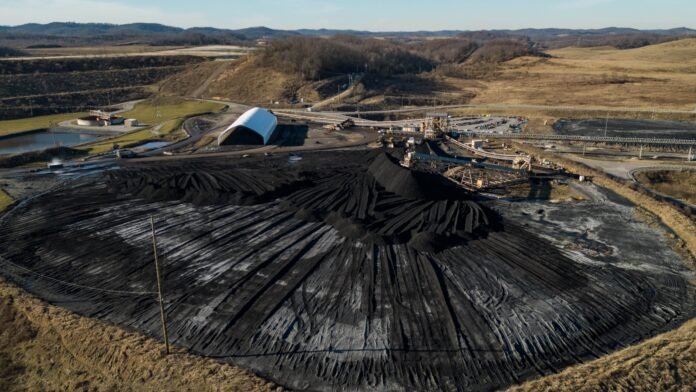
President Donald Trump is using wartime presidential authority to hand $700 million to coal-fired power plants in the U.S., the latest move by the president to bolster what he called “clean, beautiful coal,” despite it being the dirtiest of fossil fuels.

“Today, we’re taking historic action to bring down the price of energy and the cost of living for all Americans with the power of clean, beautiful coal,” he said at a press conference on Thursday.

Trump is using the Defense Production Act, a Cold War-era statute used to accelerate American industrial output in times of national need, to provide grants to more than a dozen existing coal plants across the U.S., including facilities capable of exporting coal.

“As a result of the $700 million investment that I’m announcing today, we will protect 14 coal plants and 42 coalmines, a tremendous number, and build two new coal plants and one massive new export terminal,” Trump said.

Read Next

The funds will be used to bring a new coal export terminal online in Oakland, California, and to restart an existing facility in Maryland.

They will also keep online plants across 10 states: West Virginia, Kentucky, North Carolina, Indiana, Tennessee, Arkansas, Arizona, Oklahoma, North Dakota, and Wisconsin. Each of those 10 states voted for Trump, the president boasted on Thursday. “We won them all,” he said.

The two new coal plants will be in Alaska and West Virginia.

Trump has long been a champion of reviving the United States’ ailing coal industry. Thursday’s White House event featured supportive governors and lawmakers from coal-rich states such as Wyoming and West Virginia.

In the past year, the Trump administration has doled out hundreds of millions of dollars to the coal industry, signed orders forcing ratepayers to pay extra for aging plants to stay open, and dismantled environmental rules that limit toxins from coal leaching into Americans’ shared air and water.

The administration’s attempts to provide a cuddly rebranding to coal have even extended to creating a new mascot with giant eyes, called Coalie, and gushing social media posts that include an image of a lump of coal wearing sunglasses as if it were on the TV show Love Island.

Read Next

“You’re not allowed to say ‘coal’ within the Trump administration unless it’s preceded by the words ‘clean, beautiful,’” Trump said on Thursday. “Complicates our life, but it’s good.”

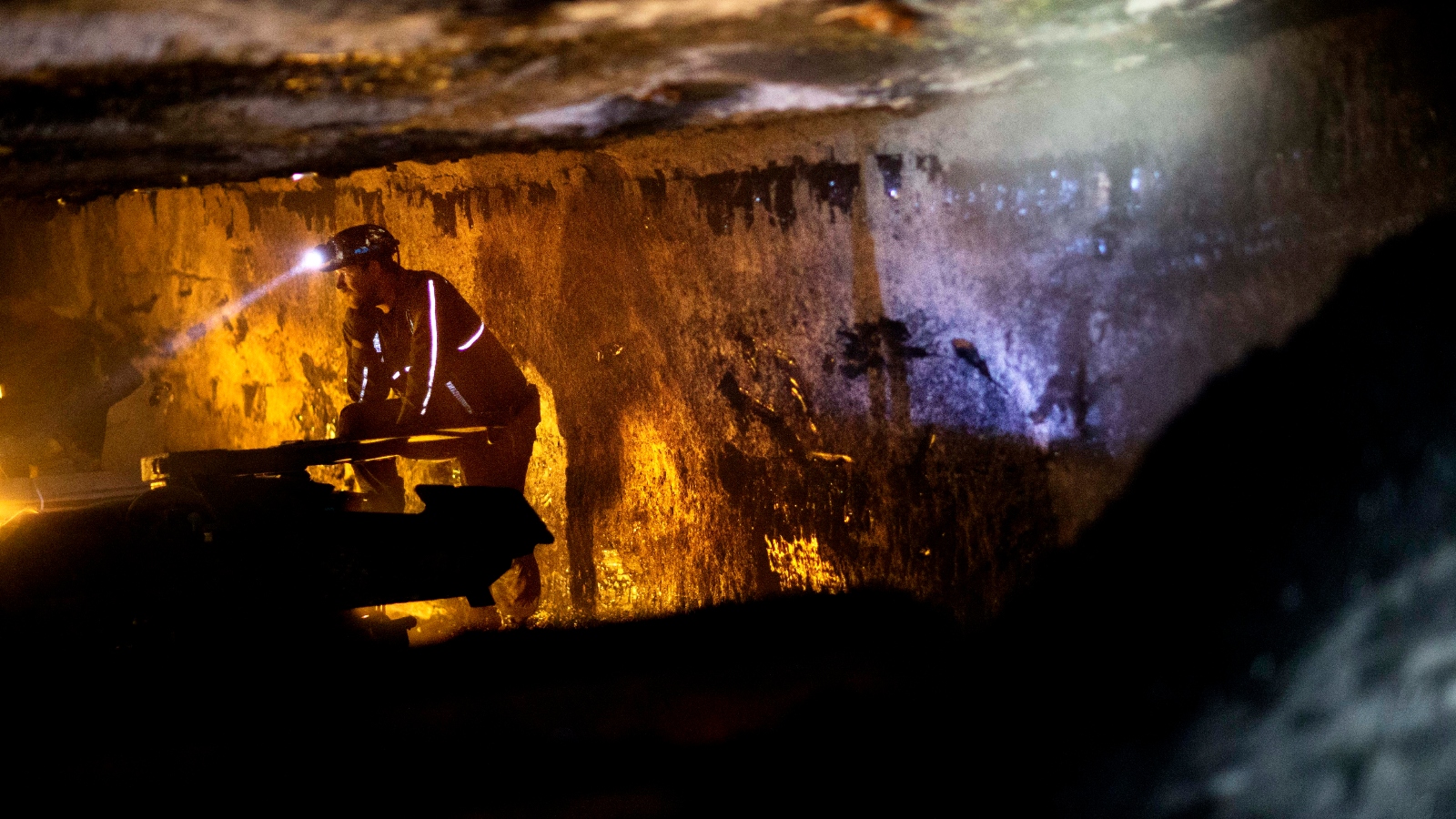
Regardless of such terminology, coal is not clean. It is the most carbon-dense fossil fuel and therefore a leading cause of the climate crisis when burned. Coal also gives off tiny toxic particles that sicken miners and trigger widespread respiratory and heart health problems across the U.S. — research has estimated that as many as 460,000 deaths in the U.S. from 1999 to 2020 were attributable to air pollution from coal plants alone.

Environmental groups strongly criticized the administration’s latest aid for coal. “It is disgusting and reprehensible that the president of the United States is giving away our taxpayer dollars to deadly and expensive coal plants that will make Americans sicker and drive up electricity prices even more,” said Patrick Drupp, climate policy director of the Sierra Club.

“This handout betrays everything Donald Trump promised and only serves his big coal buddies who stroke his ego and hand him shiny trophies.”

Though Trump on Thursday claimed that his pro-coal actions will lower energy bills and that wind power is “the most expensive energy,” experts say coal plants are more expensive to build and operate than renewable power sources.

Read Next

Trump’s attempts to revive the coal industry, while at the same time seeking to stymie the rapid growth of clean energy such as solar and wind, have so far floundered. The number of people working in coal has declined by more than 90 percent in the past century, with more people now working in Waffle Houses across the U.S. than in coal.

U.S. coal production is currently less than half of what it was in 2008, with coal recently declining as both a fuel for electricity and as an input for manufacturing materials such as iron and steel. Cheap, abundant gas has helped displace coal from power grids, with even cheaper renewable energy also now taking off in the U.S. despite the administration’s efforts to kill it off.

“What’s next, a taxpayer bailout to build new phone booths?” said Kit Kennedy, a senior climate campaigner at the Natural Resources Defense Council, of the new round of support for coal. “This is going to mean higher bills and dirtier air. What a waste.

“Propping up coal billionaires with taxpayer money is one more way for the Trump administration to put polluters first and put the rest of us at risk.”

The coal industry applauded Trump’s new order, arguing that ramped-up coal production will help the U.S. meet a historic spike in electricity demand caused by the surging artificial intelligence sector.

“Coal generation shields consumers from the impacts of volatile energy prices and supply challenges,” said Rich Nolan, chief executive of the National Mining Association.

The Environmental Protection Agency also announced plans to change an Obama-era emissions reductions plan that would have shuttered the Dave Johnston Unit 3 power plant in Wyoming.

Trump railed against Obama and Joe Biden for working to scale back coal power.

“Under four years of Sleepy Joe Biden and the radical left Democrats in Congress, not a single permit was approved for a new coal mining project, but in over one year of our administration, we’ve already approved 76 permits for clean, beautiful coal,” Trump said.


Trump talking points: Hegseth changes D-Day subject to migrants

0
trump-talking-points:-hegseth-changes-d-day-subject-to-migrants
Trump talking points: Hegseth changes D-Day subject to migrants

US Defense Secretary Pete Hegseth came under fire from critics around the world this weekend after he turned his speech at a Saturday event marking the D-Day anniversary into a “racist rant” against migrants.

On June 6, 1944, Allied forces stormed the beaches of Normandy in France, which was occupied by Nazi Germany’s troops. Thousands were killed, but it is now widely seen as the beginning of the end of World War II. More than eight decades later, Hegseth traveled to the Normandy American Cemetery in Colleville-sur-Mer for the second straight year.

“Sadly, today, different European beaches are stormed by different dangerous ideologies,” President Donald Trump’s Pentagon chief said at the cemetery. “Beaches in Spain, in Italy, in Greece, and Bulgaria – boats and men arrive. When will European capitals do something about that invasion? Or is it too late? I pray not, and I believe not.”

Critics quickly decried Hegseth’s comments as “straight-up white nationalist talk,” “utterly disgusting,” “despicable” and “a disgrace to the memory of the men and women who gave their lives to win World War II.”

US Army veteran and progressive advocate Mike Lavigne denounced Hegseth as “a disgrace to his office and to the nation.”

Sharing a report about Hegseth’s remarks on social media, Sen. Tim Kaine (D-Va.) wrote, “Apparently our nitwit secretary of war(drobe) thinks a D-Day commemoration is an appropriate time to push his far-right ideology in Europe.”

House Minority Leader Hakeem Jeffries (D-NY) said: “Thousands of American heroes died on D-Day to defend freedom and defeat fascism. Pete Hegseth should honor and respect their memory. Not politicize their ultimate sacrifice. May God Bless the Greatest Generation on D-Day and every day.”

After the speech, Hegseth “conspicuously skipped [the] afternoon’s main international ceremony marking the anniversary of the Allied landings,” France 24 reported. “His presence was not missed by some residents of the village hosting the ceremony, Langrune-sur-Mer, who said the US official was not welcome there.”

As the news network detailed:

“He has very warlike views and it seems to us that this man does not share our democratic values,” Sylvie Lamy Thepaut, a member of the municipal association Langrune en commun, told BFM TV.

A message on the association’s website called for Hegseth’s visit to be canceled on the grounds that the Pentagon chief “espouses values contrary to democracyhuman rights and peace” and had made “numerous anti-European remarks,” “warlike statements,” and “American supremacist pronouncements.”

“The honor of Langrune, that of France, and the memory of the young Allied soldiers – American, British, Canadian – who died on our beaches in the name of democracy would dictate canceling this individual’s visit,” the statement concluded.

Hegseth’s comments notably came a just day after US Vice President JD Vance claimed on social media that Henry Nowak – an 18-year-old student fatally stabbed in the United Kingdom last year by a fellow Brit who has since been sentenced to life in prison – would still be alive “if the last few generations of European elites had stood their ground against the politics of self-hatred and the mass invasion of migrants, many of whom despise the West and the people who love it.”

“Each time a life like his is lost, the proper response – the only response – is righteous anger,” Vance added. “One of the most important things the Trump administration has proven to the world is that stopping the flow of mass migration and defending national sovereignty is a matter of political will and leadership. Anything else is an excuse.”

In response, a spokesperson for UK Prime Minister Keir Starmer said that “in recent days we have seen people trying to interfere in our democracy and seeking to stir up division on our streets. The Nowak family are grieving after Henry’s horrific murder. They have said they don’t want his death to be used to create further division, hatred, or tension. We should be respecting their wishes. Our politics should bring people together even in the most terrible of circumstances. That is who we are as a country.”

The recent remarks from Vance and Hegseth align with the Trump administration’s official National Security Strategy, which was released in December and is full of rhetoric often used by white nationalists. The document accuses the European Union of enacting “migration policies that are transforming the continent and creating strife,” claims that “should present trends continue, the continent will be unrecognizable in 20 years or less,” and stresses that US policy is to help “Europe to remain European, to regain its civilizational self-confidence, and to abandon its failed focus on regulatory suffocation.”

Earlier this week, the 27-nation EU moved forward with an overhaul of its migration policy, which has led some human rights advocates to draw comparisons to Trump’s use of US Immigration and Customs Enforcement (ICE) to crack down on people in the United States.

“Across the Atlantic, we see the violence and fear created by ICE’s brutal immigration enforcement,” Silvia Carter, a spokesperson for the Brussels-based Platform for International Cooperation on Undocumented Migrants, told The Associated Press. “Europe should be learning from the harms of that model, not building its own version of it.”

Already, many migrants die while trying to reach Europe. The International Organization for Migration announced in February that at least 7,667 people died or went missing on migration routes worldwide last year—including at least 2,185 who died or went missing in the Mediterranean Sea, and another 1,214 on the Western Africa/Atlantic route toward the Canary Islands – but “the real toll is likely higher.”

-Common Dreams

Iran says US naval blockade, support for Israel make American, Israeli assets ‘legitimate targets’

0
iran-says-us-naval-blockade,-support-for-israel-make-american,-israeli-assets-‘legitimate-targets’
Iran says US naval blockade, support for Israel make American, Israeli assets ‘legitimate targets’

Iranian Parliament Speaker Mohammad Bagher Qalibaf said Sunday that the US naval blockade against Iran and Washington’s support for Israel have turned American and Israeli bases and interests in the region into “legitimate targets,” Anadolu reports.

In a post on the US social media company X following an Israeli airstrike on Beirut’s southern suburbs that killed at least two people and injured 11 others, Qalibaf accused the US of enabling the Israeli assaults.

“The naval blockade against the Iranian nation and America’s green light today to the Zionist regime (Israel) turn American and regime bases and assets in the region into legitimate targets,” he wrote.

“Our armed forces are always ready to respond,” he added.

Qalibaf also accused the US and Israel of violating ceasefire arrangements and rejecting diplomatic solutions.

“They are neither committed to a ceasefire nor believe in dialogue,” he said, adding that Tel Aviv and Washington “only understand the language of force.”

The Israeli army claimed that airstrikes in Beirut targeted a Hezbollah infrastructure facility in the area.

READ: Trump vows to destroy Iranian uranium with or without deal

Israel’s public broadcaster KAN said Israel informed the US of the attack before its aircraft bombed the area.

Sunday’s strikes were the first in the Lebanese capital since a ceasefire was extended on June 3 following US-mediated talks between Israel and Lebanon in Washington.

Israel has continued carrying out airstrikes in Lebanon since a Hezbollah cross-border attack in early March, killing over 3,600 people and wounding more than 11,000 others since March 2.

Tensions in the Middle East have escalated since the US and Israel launched strikes on Iran on Feb. 28. Tehran retaliated with attacks targeting Israel and US allies in the Gulf, alongside the closure of the Strait of Hormuz.

A ceasefire took effect on April 8 through Pakistani mediation, but subsequent talks in Islamabad failed to produce a lasting agreement.

Following stalled negotiations mediated by Islamabad, the US has imposed a blockade on Iranian ports since April 13, including those located along the strategic Strait of Hormuz.

The week in Japan: Takaichi gets her supplemental budget

0
the-week-in-japan:-takaichi-gets-her-supplemental-budget
The week in Japan: Takaichi gets her supplemental budget

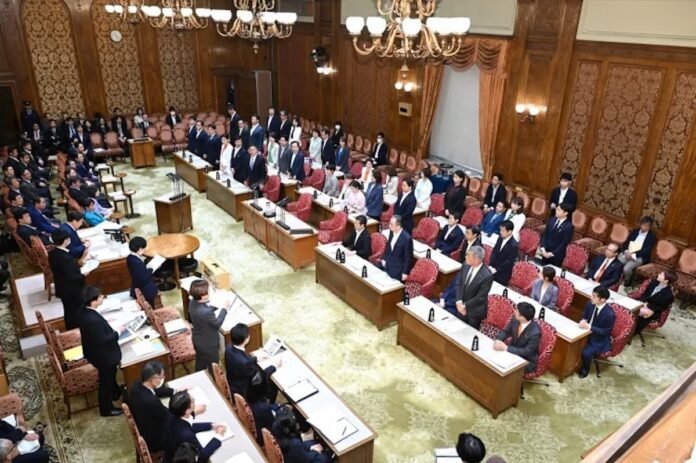
The House of Councillors passed the Takaichi government’s JPY 3.11 trillion budget on Friday, June 5, as expected, with the Democratic Party for the People (DPFP), Team Mirai, and the Conservative Party of Japan (CPJ) joining the Liberal Democratic Party (LDP) and Ishin no Kai to approve it.

The budget not only passed with extraordinary haste – the cabinet approved it on June 3 and each house deliberated on it for only a day – but it also came together quickly once Prime Minister Sanae Takaichi conceded in mid-May that an extra budget would be necessary.

While the extra budget will give the government a greater cushion for continuing fuel subsidies, the budget’s passage will do little to ease political pressure on Takaichi to indicate how she intends to exit from the costly subsidies – not least since the passage of the supplemental budget means that the Japanese government has gone from a projected surplus of JPY 1 trillion to a projected deficit of JPY 1.7 trillion in FY2026.

Government weighs support package for tax cut

Among the questions now facing the Takaichi government as it prepares to introduce a consumption tax on foodstuffs is whether and how to deliver support for businesses as they prepare to implement the tax cut.

The government could face broad demands for assistance that go far beyond supporting businesses modifying their cash registers to collect taxes at a lower rate.

For example, restaurants, which are already disadvantaged due to the 8% discounted consumption tax rate, fear that they will face a steeper disadvantage when the gap is between a 10% rate for dining in and 1% for grocery shopping or convenience store takeout. Meanwhile, food producers, who may also operate small retail operations that are exempt from paying consumption taxes they collect and who are complaining that their gross receipts will decline but their costs will remain the same, may also clamor for relief from the government.

As such, although Finance Minister Satsuki Katayama said Friday that the government will not rely on deficit bonds to fund the tax cut, it would be premature to take this claim at face value. The Takaichi government, after all, will have to account not only for the JPY 4.4 trillion or so that it could lose by reducing the consumption tax on foodstuffs to 1% but also for the various measures it introduces to compensate business interests as well as a possible rebate to households to make the tax cut equivalent to reducing it to zero.

Defamatory videos issue not going away

In the Diet deliberations on Friday, Takaichi continued to face questions over her staff’s involvement in the creation and dissemination of defamatory videos aimed at her rivals for the LDP’s leadership last year.

One day after she said that she lacked a subscription and therefore could not listen to a recording purportedly between one of her secretaries and a man who says he made videos – she said that she listened to it Thursday evening and could not discern whether it was her secretary’s voice.

She said that there was no record in her office of the meeting and took offense that a weekly tabloid article is being given more credence than her denials about having any connection to these activities. She claimed that there was something odd about the recording, implying that it was fake or manipulated. When a Constitutional Democratic Party (CDP) lawmaker suggested that she file a complaint with the publication, she replied that she was too busy with affairs of state and could not spare the time.

CRA leader Junya Ogawa discusses the defamatory video issue in a press conference on June 5. Screenshot by author.

Despite Takaichi’s indignation, this story does not seem to be going away. Asahi notes, for example, that her responses to questioning have subtly shifted, from the prime minister and her secretary “having no acquaintance” with the man alleged to have made the videos to “not having met” the man.

On Friday, Centrist Reform Alliance (CRA) leader Junya Ogawa said that if the prime minister does not provide clear answers, her secretary should be called for questioning in the Diet. Her response to questioning has also drawn some criticism from within the LDP, albeit anonymously for now.

Asahi has a timeline of the allegations and the prime minister’s response here.

Further reading

For the second time this week, Prime Minister Takaichi used her participation in parliamentary deliberations to remark upon the value of the yen. In the upper house budget committee on Friday, the prime minister repeated her oft-stated view that yen weakness “has merits and demerits,” and argued that strengthening Japan’s international competitiveness will “ensure confidence in the yen.” She also stressed that her focus is on boosting investment and potential growth.

The Mainichi Shimbun, analyzing its recent opinion poll, notes that Takaichi’s approval among independents (35%) fell below their disapproval (37%) for the first time, with dissatisfaction with the government’s handling of inflation as a possible cause of the shift. Inflation may also be a factor in the government’s falling support among the young; Mainichi found that Takaichi’s approval from voters under 30 fell below 50% for the first time.

Takaichi hosted LDP upper house officials at the Kantei (official residence) again on Friday evening to express her gratitude for their help in moving the supplemental budget through the Diet.

The Japanese government has begun talks with the Indonesian government regarding the sale of retired Asagiri-class destroyers.

The Ministry of Economy, Trade, and Industry announced an additional JPY 150 billion investment in chipmaker Rapidus, bringing the government’s total investment to at least JPY 2.6 trillion.

LDP lawmakers continue to voice their anger over Ishin no Kai’s intent to smuggle its Osaka metropolis plan into the debate over an auxiliary capital.

Real wages rose for the fourth straight month in April – climbing 1.9% thanks in part to the government’s gasoline subsidies and other measures that have contained price increases for the moment – but consumer spending fell 0.5% year-over-year, the fifth consecutive decline.

The speakers and deputy speakers of the two houses of the Diet announced on 5 June that they have concluded a compromise plan for securing the imperial line that will be presented to a general meeting of lawmakers on 8 June.

Sanseito leader Sohei Kamiya, whose party voted against the supplemental budget, reported his growing dissatisfaction with Takaichi, stating that although he once thought that their policies were “40% overlapping,” they are now “only 20% overlapping.”

Opposition lawmakers are dissatisfied with CRA leader Ogawa for his inability to question Takaichi effectively and there is mounting frustration between the CRA and its partners in the upper house, the CDP and Komeito, over how to oppose the Takaichi government. The three parties have generally failed to coordinate their positions on major legislation.

Can Japan’s “semi-parliamentary” system contain the rise of a populist strongman?

This article is republished with permission from Tobias Harris’s newsletter Observing Japan.

Xi heads to Pyongyang, Moscow on his mind

0
xi-heads-to-pyongyang,-moscow-on-his-mind
Xi heads to Pyongyang, Moscow on his mind

Chinese President Xi Jinping’s upcoming visit to North Korea will be delicate and difficult. The relationship no longer resembles that of “lips and teeth” from the Korean War era — Korean lips and Chinese teeth. It has evolved into far more complex and contradictory ties, not one-sided but full of thorns for the Chinese.

North Korea is, in fact, the single greatest beneficiary of the war in Ukraine. In exchange for supplying weapons and troops, it has obtained Russian technology that has enabled a strategic leap in its missile and nuclear capabilities. (Just ahead of Xi’s visit, North Korea announced that its nuclear program is “irreversible.”)

This leap, however, has created two serious issues for China, which had naively encouraged North Korean support for Russia to prevent its collapse and the dangerous fallout that would follow.

The first is that it has alarmed South Korea and Japan, pushing them into a rearmament race. The North Korean threat is real, and, as such, it provides a genuine justification for the two neighbors to rearm. It is against North Korea and against the more real but unspoken and unspeakable threat posed by China.

The second problem is that the political bond between North Korea and Russia has deepened, placing a significant burden on China’s political advancement in Russia. If North Korea becomes like eastern Belarus, it would pose a threat to Beijing, perhaps greater than the growth of Chinese interests in Siberia poses to Moscow.

Naturally, it is precisely for this reason that neither Russia nor North Korea is ready to give up this new relationship, despite both being dependent on China. And, indeed, South Korea and Japan’s rearmament becomes, in this light, a new lever for Moscow and Pyongyang over Beijing.

This pressure may outweigh China’s possible advantage of playing the indirect North Korean wild card against whatever Beijing doesn’t like, mostly Taiwan, the island, de facto independent but de jure part of one China, where the nationalists fled after the communists took over the mainland.

Xi is therefore likely to go to North Korea, probably not in pursuit of a complete solution to the dilemma in which he finds himself trapped, but rather to shake up the bilateral relationship. So, some form of rapprochement — a reopening of dialogue between North Korea and America — could give China a little breathing room.

After that, North Korean leader Kim Jong Un could meet Trump to reach a deal on nuclear weapons. It is unclear what kind of agreement could be reached. Perhaps the visit is also meant to gauge what is feasible, but a North Korean deal could serve as a diplomatic bargaining chip to pressure the US into leaning on South Korea and Japan.

This is a puzzle with millions of pieces all in motion, so the chance of anything fitting together would be something of a miracle.

North Korea has not historically served China well. The intervention in North Korea in the 1950s cost Mao Zedong very dearly. He lost his son and heir, killed in an American bombing, and had to forfeit any plan to conquer Taiwan.

North Korea dealt the newborn Chinese regime two systemic blows to its future: the end of an imperial line of succession and the failure to destroy its existential enemy, Nationalist China, which, from Taiwan, challenged the legitimacy of communist rule in Beijing.

This trip cannot be a non-event — at least not entirely. But whatever the outcome, it remains unclear whether it will be enough to get US President Donald Trump to meet North Korean leader Kim Jong Un, and whether that will be sufficient to assuage South Korean or Japanese fears.

That something is moving in this direction is nonetheless significant. It signals that China is unhappy with what is happening on the Korean Peninsula, that the situation has not been well managed — quite the contrary — and that the top leader must step in personally to set things right.

The Mao-Xi parallel

Xi came to power by skillfully moving every lever of China’s internal political machinery with undisputed ability. Mao had gained power and authority by managing war and foreign policy.

He had understood the connection between winning local consensus — among the peasants, the flesh and blood of China at that time — and the various internal and external actors stirring China.

He succeeded in purging the communist intellectuals, while also convincing non-communist intellectuals of his sincerity. Over the course of more than 20 years, he played Japanese against nationalists, Russians against Americans, each one against each other, and all for himself, to emerge in 1949 as the leader of China.

His game of cross-betrayals was blocked by the Russians, precisely in Korea. Russia’s Joseph Stalin compelled him to defend Kim Il Sung — then nearly overwhelmed by the American advance — thereby severing every thread connecting him to the US and dashing his hopes of conquering Taiwan. After the Chinese intervention in Korea, the Americans deployed their fleet to defend the island.

The official reason for the Korean intervention was that China had better have a buffer between itself and a US ally. In hindsight, it’s unclear whether the buffer was for China or the USSR, and whether the neighborly ties with a US ally would not have advanced China’s cause better than Soviet chains.

Mao’s authority — though he proved incapable of governing China and developing it economically — was never called into question, precisely because of his genius in international politics.

Xi, in some ways, finds himself working in reverse. He has shown he knows how to seize, maintain and expand his power domestically, but his judgment in foreign policy has shown flaws. This may have been the fault of the military, which in China bears primary responsibility for shaping the country’s foreign strategy.

Now, with the army purged and brought to its knees, it falls to Xi to see whether he can untangle the Gordian knot he holds in his hands.

Kim Il Sung sank Mao’s hopes; will his grandson salvage Xi’s? Over 20 years ago, the Chinese Journal “Strategy and Management was allegedly closed after it published an article suggesting the possibility of a Chinese invasion of North Korea. At the time, the six-party talks on North Korea were facing resistance in Pyongyang.

The idea, never made public, has circulated in Beijing for decades. An invasion of Taiwan is near impossible; a land invasion of North Korea, especially if backed from the south, would be a much easier proposition. The North Korean nuclear program could be directed against China as well as against Western enemies.

Rumors about Kim’s possible death in 2020, at the onset of the Covid crisis, might have been linked to a sudden tension between China and North Korea.

It would be impossible to untangle all of China’s problems with North Korea, especially given that over the past 25 years, the situation has grown far more complicated. But Xi could certainly ease a few of them.

With decades of hindsight, one could say that Stalin set an impossible trap for China with North Korea, and that trap has been leveraged again by Russian President Vladimir Putin. To get out of it, Xi may need a very different mindset.

Some 80 years ago, Mao was held prisoner in Moscow, unsure whether he’d ever go back. Stalin, who had given Mao victory by backing him in Manchuria when he was on the verge of annihilation, was ready to replace him with a more pliable leader. Now, Xi is at least in a stronger position vis-à-vis both Russia and North Korea.

This article was first published by Appia Institute and is republished with permission. Read the original here.

Crispy Vegan Baked “Honey” Mustard Tofu Tenders

0
crispy-vegan-baked-“honey”-mustard-tofu-tenders
Crispy Vegan Baked “Honey” Mustard Tofu Tenders

You are here: Home / All RECIPES / Crispy Vegan Baked “Honey” Mustard Tofu Tenders

These Crispy Vegan Baked “Honey” Mustard Tofu Tenders are golden, crunchy, slightly sweet, tangy, and completely plant-based. Extra-firm tofu is coated in a simple batter, rolled in crispy panko breadcrumbs, baked until beautifully crisp, then brushed with a sweet mustard glaze made with maple syrup or agave.

They are perfect as a snack, appetizer, party finger food, or even a fun meatless dinner. Serve them with extra vegan honey mustard sauce, fries, salad, roasted vegetables, or tuck them into wraps and sandwiches for an easy plant-based meal.

Why You’ll Love This Recipe

These tofu tenders are a must-try because they are crispy on the outside, tender inside, and packed with flavor. The “honey” mustard sauce gives them that perfect sweet-and-tangy balance without using real honey, making the recipe completely vegan.

They are also baked instead of fried, which means less mess and less oil, but still plenty of crunch. With simple pantry ingredients like flour, cornstarch, panko, mustard, and maple syrup, this recipe is easy enough for beginners and tasty enough to impress anyone who thinks tofu is boring.

What Makes These Tofu Tenders So Crispy?

The secret is the combination of extra-firm tofu, a cornstarch-based batter, and panko breadcrumbs. Cornstarch helps the batter bake up light and crisp, while panko creates a crunchy golden coating. A light spray or brush of oil before baking helps the outside crisp beautifully in the oven.

Pressing the tofu is also important. The less moisture in the tofu, the better the coating sticks and the crispier the tenders become.

Ingredients

For the Tofu Tenders

  • 1 block extra-firm tofu, drained and pressed
  • 1 cup all-purpose flour
  • ¼ cup cornstarch
  • 1 teaspoon baking powder
  • ½ teaspoon salt
  • ½ teaspoon paprika, optional
  • ¾ cup water, plus more if needed
  • 1 cup panko breadcrumbs
  • 2 tablespoons neutral oil, for brushing or spraying

For the Vegan “Honey” Mustard Sauce

  • ¼ cup maple syrup or agave syrup
  • ¼ cup yellow mustard or Dijon mustard
  • Pinch of salt
  • Dash of black pepper

Ingredient Notes

Extra-Firm Tofu

Extra-firm tofu works best because it holds its shape and has a meaty texture. Avoid soft or silken tofu because it will break apart too easily.

Flour

All-purpose flour creates the base of the batter. For a gluten-free version, use a gluten-free all-purpose flour blend.

Cornstarch

Cornstarch is one of the key ingredients for crispiness. It helps the batter become lighter and crunchier as it bakes.

Baking Powder

Baking powder gives the batter a little lift, making the coating less dense.

Panko Breadcrumbs

Panko breadcrumbs are larger and crispier than regular breadcrumbs, which makes them ideal for baked tofu tenders.

Maple Syrup or Agave

Since this is a vegan version of honey mustard, maple syrup or agave syrup gives the sauce that sweet “honey-like” flavor.

Mustard

Yellow mustard gives a classic honey mustard flavor, while Dijon mustard gives a sharper, more grown-up flavor. You can use either one or a mix of both.

Step 1: Make the Sauce

In a small bowl, whisk together the maple syrup or agave, mustard, salt, and pepper until smooth.

Set the sauce aside while you prepare the tofu. You will use it later to glaze the tenders after baking.

Step 2: Press the Tofu

Drain the tofu and wrap it in a clean kitchen towel or paper towels.

Place something heavy on top, such as a pan or a few books, and press for about 10 to 20 minutes.

Pressing removes excess moisture and helps the tofu bake up firmer and crispier.

Step 3: Slice the Tofu

Cut the pressed tofu into thick strips, about 1 inch wide.

Try to keep the pieces similar in size so they bake evenly.

Step 4: Make the Batter

In a mixing bowl, whisk together the flour, cornstarch, baking powder, salt, and paprika.

Slowly add the water and whisk until you have a smooth batter.

The batter should be thick enough to coat the tofu but not so thick that it clumps. If it is too thick, add a little more water, one tablespoon at a time.

Step 5: Coat the Tofu

Place the panko breadcrumbs in a shallow bowl or plate.

Dip each tofu strip into the batter, letting any excess drip off.

Then press the tofu into the panko breadcrumbs until fully coated on all sides.

Place each coated tofu tender on a parchment-lined baking sheet.

Step 6: Bake Until Crispy

Preheat the oven to 350°F.

Lightly brush or spray the coated tofu tenders with neutral oil.

Bake for 30 to 35 minutes, flipping halfway through, until the tofu is golden, crisp, and firm.

Step 7: Add the “Honey” Mustard Glaze

Remove the tofu tenders from the oven.

Brush or spoon the vegan honey mustard sauce over the crispy tofu pieces.

Return them to the oven for another 5 to 8 minutes so the sauce can set slightly and become sticky.

Serve warm with extra sauce on the side.

Tips for the Best Tofu Tenders

Press the Tofu First

Do not skip pressing the tofu. Removing moisture helps the coating stick and gives the tofu a better texture.

Use Panko Breadcrumbs

Panko makes the coating extra crunchy. Regular breadcrumbs will work, but the tenders will not be as crisp.

Do Not Overcrowd the Pan

Leave space between each tofu strip. If the pieces are too close together, they will steam instead of crisp.

Flip Halfway Through Baking

Flipping helps both sides become golden and crunchy.

Add the Sauce Near the End

Do not coat the tofu with the sauce before baking from the beginning. Add it at the end so the tenders stay crispy while still getting that sweet mustard flavor.

Serving Ideas

These crispy tofu tenders are delicious with:

  • Extra vegan honey mustard sauce
  • Sweet potato fries
  • Roasted potatoes
  • Garden salad
  • Coleslaw
  • Steamed vegetables
  • Quinoa salad
  • Rice bowls
  • Wraps
  • Burger buns
  • Pickles
  • Vegan ranch
  • Spicy mayo
  • Barbecue sauce

They also make a great appetizer for parties, game day, movie night, or a fun plant-based dinner.

Variations

Spicy Mustard Tofu Tenders

Add cayenne pepper, chili powder, or hot sauce to the batter for a spicy kick.

Gluten-Free Tofu Tenders

Use gluten-free flour and gluten-free panko breadcrumbs.

Herby Tofu Tenders

Add dried thyme, oregano, parsley, or rosemary to the batter or breadcrumbs.

Cheesy Vegan Tofu Tenders

Mix nutritional yeast into the panko breadcrumbs for a cheesy, savory flavor.

Sesame Crunch Tenders

Add sesame seeds to the breadcrumb coating for extra crunch and nutty flavor.

Dijon Maple Tofu Tenders

Use Dijon mustard and maple syrup for a deeper, tangier glaze.

Make-Ahead Instructions

You can prepare the tofu tenders ahead of time by pressing, slicing, battering, and breading the tofu up to 24 hours in advance.

Place the coated tofu strips in an airtight container and refrigerate until ready to bake.

When ready to serve, bake as directed, then brush with the honey mustard sauce during the final few minutes.

Storage Instructions

Store leftover baked tofu tenders in an airtight container in the refrigerator for up to 3 days.

They will soften slightly as they sit, but they can be crisped up again in the oven or air fryer.

Reheating Instructions

For the best texture, reheat tofu tenders in the oven at 350°F for 10 to 15 minutes, or until warmed through and crispy again.

You can also reheat them in an air fryer at 350°F for 5 to 7 minutes.

Avoid microwaving if possible, because it will make the coating soft.

Can You Freeze Tofu Tenders?

Yes. You can freeze them before or after baking.

To freeze unbaked tofu tenders, place them in a single layer on a baking sheet and freeze until firm. Then transfer them to a freezer-safe bag or container.

To bake from frozen, add a few extra minutes to the baking time.

You can also freeze fully baked tofu tenders for up to 3 months, then reheat in the oven until hot and crispy.

Frequently Asked Questions

Can I make these tofu tenders gluten-free?

Yes. Use gluten-free all-purpose flour and gluten-free panko breadcrumbs.

Can I use regular breadcrumbs instead of panko?

Yes, but panko gives the crispiest texture. Regular breadcrumbs will create a finer, softer coating.

What type of tofu is best?

Extra-firm tofu is best because it holds its shape and has the right texture for tenders.

Can I air fry these tofu tenders?

Yes. Air fry at 375°F for about 12 to 15 minutes, flipping halfway through, until crispy. Brush with the sauce during the last few minutes.

Can I make the sauce less sweet?

Yes. Reduce the maple syrup or agave and add extra mustard if you prefer a tangier sauce.

Why is my tofu not crispy?

The tofu may have too much moisture, the pan may be overcrowded, or the coating may not have enough oil. Press the tofu well, space the pieces apart, and lightly spray or brush with oil before baking.

Recipe Card

Crispy Vegan Baked “Honey” Mustard Tofu Tenders

These crispy vegan baked tofu tenders are coated in panko breadcrumbs, baked until golden, and finished with a sweet and tangy vegan honey mustard glaze.

Prep Time: 15 minutes
Pressing Time: 10 minutes
Cook Time: 35 minutes
Total Time: 1 hour
Servings: 4

Ingredients

Tofu Tenders

  • 1 block extra-firm tofu, drained and pressed
  • 1 cup all-purpose flour
  • ¼ cup cornstarch
  • 1 teaspoon baking powder
  • ½ teaspoon salt
  • ½ teaspoon paprika, optional
  • ¾ cup water, plus more if needed
  • 1 cup panko breadcrumbs
  • 2 tablespoons neutral oil, for brushing or spraying

Vegan “Honey” Mustard Sauce

  • ¼ cup maple syrup or agave syrup
  • ¼ cup yellow mustard or Dijon mustard
  • Pinch of salt
  • Dash of black pepper

Instructions

  1. In a small bowl, whisk together maple syrup or agave, mustard, salt, and pepper. Set aside.
  2. Drain and press the tofu for 10 to 20 minutes to remove excess moisture.
  3. Slice the tofu into 1-inch strips.
  4. In a bowl, whisk together flour, cornstarch, baking powder, salt, and paprika.
  5. Slowly add water and whisk until a smooth batter forms.
  6. Place panko breadcrumbs in a shallow bowl.
  7. Dip each tofu strip into the batter, then coat with panko breadcrumbs.
  8. Place the coated tofu strips on a parchment-lined baking sheet.
  9. Lightly brush or spray with neutral oil.
  10. Bake at 350°F for 30 to 35 minutes, flipping halfway through.
  11. Brush the tofu tenders with the vegan honey mustard sauce.
  12. Return to the oven for 5 to 8 minutes, until the sauce is slightly sticky.
  13. Serve warm with extra sauce on the side.

Nutrition Estimate

Per serving, approximate:

  • Calories: 111
  • Carbohydrates: 12g
  • Protein: 5g
  • Fat: 4g
  • Fiber: 1g
  • Sugar: 1g
  • Sodium: 300mg

Nutrition may vary depending on the tofu, breadcrumbs, flour, and sweetener used.

Final Thoughts

These Crispy Vegan Baked “Honey” Mustard Tofu Tenders are proof that tofu can be fun, flavorful, and totally crave-worthy. They are crunchy, sweet, tangy, and satisfying without needing deep frying or complicated ingredients.

Serve them as a snack, appetizer, or easy plant-based dinner, and do not forget extra sauce for dipping.

EU calls for ‘full accountability’ after another UNIFIL soldier killed in Lebanon

0
eu-calls-for-‘full-accountability’-after-another-unifil-soldier-killed-in-lebanon
EU calls for ‘full accountability’ after another UNIFIL soldier killed in Lebanon

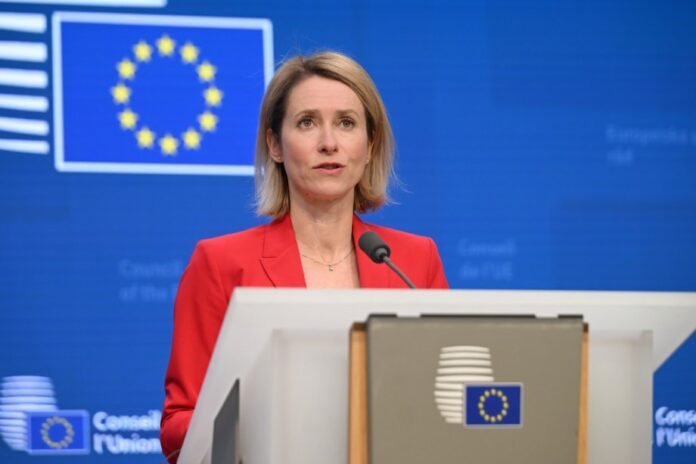
European Union High Representative for Foreign Affairs and Security Policy Kaja Kallas speaks during a press conference held as part of the EU Foreign Affairs Council meeting in Brussels, Belgium, on May 11, 2026. [Dursun Aydemir - Anadolu Agency]

European Union High Representative for Foreign Affairs and Security Policy Kaja Kallas speaks during a press conference held as part of the EU Foreign Affairs Council meeting in Brussels, Belgium, on May 11, 2026. [Dursun Aydemir – Anadolu Agency]

The EU foreign policy chief on Sunday condemned the killing of another UN Interim Force in Lebanon (UNIFIL) soldier earlier this week and renewed the bloc’s calls for accountability, Anadolu reports.

In a statement, Kaja Kallas said the EU urges all actors to fully abide by the terms of the agreement between Israel and the Lebanese group Hezbollah and reject “any additional conditions from Hezbollah.”

The statement underlined that the Lebanese people are paying a “heavy and unacceptable” humanitarian and socio-economic price from the continued escalation and airstrikes.

READ: French president confirms death of 2nd soldier after UNIFIL attack in Lebanon

“The EU demands the full implementation of UNSCR (UN Security Council Resolution) 1701 calling for the respect of Lebanon’s sovereignty and territorial integrity by Israel and the disarmament of non-state armed groups, including Hezbollah.”

Kallas also reaffirmed the bloc’s full support to UNIFIL and its mandate, saying the EU “strongly condemns all attacks against its personnel, including the killing of another UNIFIL soldier in the attacks of 4 June, the seventh peacekeeper to have died since March, and extends its deep condolences to his family.”

“The killing of peacekeepers is a violation of international law and must be met with full accountability,” the statement added.

0FansLike
0FollowersFollow
0FollowersFollow
0SubscribersSubscribe
- Advertisement -
Google search engine

Recent Posts