18.8 C
London
Wednesday, June 17, 2026
Home Blog

More Than 770,000 Children Are No Longer Receiving SNAP Benefits After Trump Changes Federal Food Program

0
more-than-770,000-children-are-no-longer-receiving-snap-benefits-after-trump-changes-federal-food-program
More Than 770,000 Children Are No Longer Receiving SNAP Benefits After Trump Changes Federal Food Program

As a House committee debated President Donald Trump’s signature domestic policy bill last year, Republican backers repeatedly emphasized that its changes to the Supplemental Nutrition Assistance Program, also known as food stamps, wouldn’t affect vulnerable people.

SNAP reforms would “restore integrity” to the program and ensure it works for the “most vulnerable among us, including children,” said Rep. Glenn “GT” Thompson, a Pennsylvania Republican and chair of the House Agriculture Committee.

Passing the bill would be a “historic accomplishment” that will ensure “those in need can continue to receive the assistance they need,” said Rep. John Rose, a Republican from Tennessee.

And Rep. Dusty Johnson, a South Dakota Republican, said the bill would focus resources on the “neediest” Americans. “If you are a pregnant woman, your benefits are unaffected. If you have young children at home, your benefits are unaffected by this bill. If you are disabled, your benefits are unaffected by this bill.”

But nearly a year after the measure was signed into law, the number of children receiving food assistance has plummeted by at least 776,000, according to a ProPublica analysis. At least 12 states break down program participation by age, and of the 1,670,011 people who are no longer receiving benefits in those states, 776,134, or 46%, were children.

Another analysis reached the same conclusion: Just last month, the nonpartisan Center on Budget and Policy Priorities found there were 700,000 fewer children receiving food assistance.

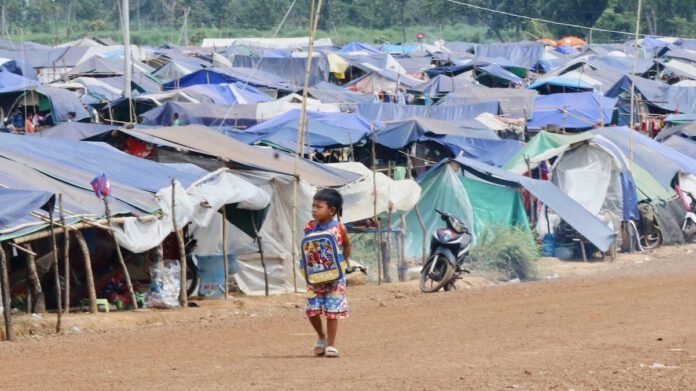
Arizona has seen the nation’s largest percentage decline in SNAP participants; 205,223 children are no longer receiving the benefit since July 2025, a 55% drop. Louisiana had the second largest percent decline among children, 22%.

The U.S. Department of Agriculture, which oversees SNAP, hasn’t detailed the impact on children aided by the program, but initial figures show that compared to February 2025, 4.3 million fewer people received SNAP nationwide in February 2026, leaving 37.8 million participants.

Although children weren’t the intended targets of the legislation’s changes, they’re increasingly “collateral damage,” said Katie Bergh, a senior policy analyst at the Center on Budget and Policy Priorities.

If states are trying to comply with the law’s changes to SNAP, they’re likely not focusing on making the program accessible, Bergh said. Other experts said that people may be pushed off the program because of increased paperwork requirements to remain eligible.

States are required to impose work requirements for most adult recipients, while preparing for two major cost shifts. In October, states will begin covering 75% of the program’s administrative costs. States have been paying 50% of those costs.

In addition, states will have to pay a larger share of SNAP benefits starting in October 2027, based on their error rate. Error rates reflect overpayments or underpayments of SNAP benefits. While sometimes characterized as fraud, such errors are usually the fault of the state agency or the SNAP recipient, according to USDA, which describes them as “largely unintentional.”

If a state agency is facing staffing shortages and struggling to comply with new regulations, it will be harder for low-income families to access the benefits, Bergh said. “Families are falling through the cracks.”

In Massachusetts, for example, the share of SNAP applicants who called an assistance line and couldn’t reach a worker rose from 61% in November to nearly 81% in March, according to the Department of Transitional Assistance, which administers SNAP in the state. The state agency did not respond to a request for comment.

A USDA spokesperson did not address ProPublica’s questions about the number of children who have lost access to SNAP. “There is no shortage of resources for the most vulnerable among us, including children,” the spokesperson said.

The three members of the House Agriculture Committee who defended last year’s bill before its passage — Rose, Thompson and Johnson — did not respond to ProPublica’s questions about their statements now that many children no longer receive SNAP benefits.

Rep. Jim McGovern, a Massachusetts Democrat, asked Secretary of Agriculture Brooke Rollins about her recent comments that it was “good news” that millions of people no longer receive SNAP. If more than 700,000 children have been dropped in the 12 states that report those figures, “that number’s going to be into the millions” when other states are included, he said.

Rollins responded, “The 700,000 number of children is not correct,” contending that most people who were kicked off SNAP were “fraudulent.”

“That is not a nonpartisan group that gave you that number,” she said. (ProPublica independently verified the figures reported by the Center on Budget and Policy Priorities.)

McGovern said he has talked to people who have lost food assistance. “These are people who actually need and rely on this food assistance to provide basic nutrition for their families,” he said.

Pressure to lower error rates “creates a temptation for the states to bump off working families,” said Parke Wilde, a food economist at Tufts University. Working families may have more volatile incomes, making it harder for state agencies to assess benefits accurately.

“When they say we want to preserve SNAP for those with the greatest need, they’re sort of acknowledging that they want the scale of the SNAP program to be smaller,” he said.

Mariana Chilton, an expert in child hunger at University of Massachusetts, Amherst, said a smaller program won’t save money in the long run. Research shows that children who receive SNAP benefits are healthier, have better academic outcomes, use hospitals less often and have better mental health as teenagers.

She called the situation a “public health crisis” in the making. “When children are not healthy, this affects children today and it affects them throughout their lifetimes,” she said, likening hunger during early childhood to a brain injury.

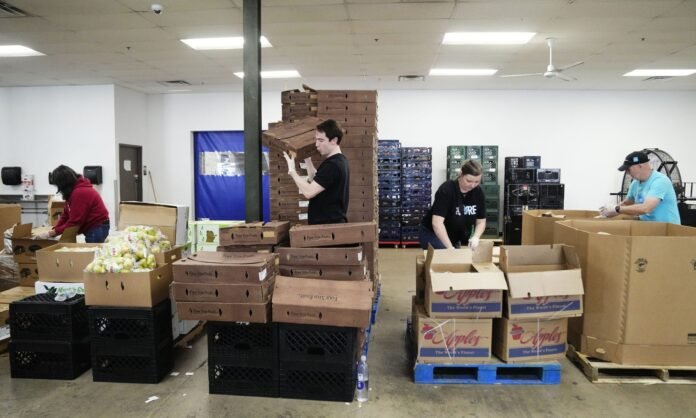
As Arizona’s SNAP participation drops, nonprofits are feeling the effects. St. Mary’s Food Bank, the largest in the state, has seen a 15% increase in need this year, which translates into 300,000 more visits from people in search of food, said Milt Liu, the chief executive officer.

Read More

“It’s important for everyone to realize that policies have implications for people on the edge, and we’re seeing that in our line every day,” he said.

On a recent morning, Ana Alvarez waited in a line of vehicles at a St. Mary’s food bank in Phoenix. Alvarez, a single mother of five who works at a restaurant, started coming to St. Mary’s after she lost her SNAP benefits in September.

She reapplied for SNAP with the Arizona Department of Economic Security in December, but the application is still pending. The department did not respond to questions about its backlog.

She clips coupons and has cut out trips to the zoo and restaurants with her children. The slow season at the restaurant where she works is about to hit. And as summer temperatures rise, Alvarez wonders how she will afford her electric bill, her rent and her car payment.

At least once a week she contacts the agency about her application. The last time she called, a worker told her what others have in the past: She will have to keep waiting.

Trump admin abandons fight against wind energy as clean energy output surges

0
trump-admin-abandons-fight-against-wind-energy-as-clean-energy-output-surges
Trump admin abandons fight against wind energy as clean energy output surges

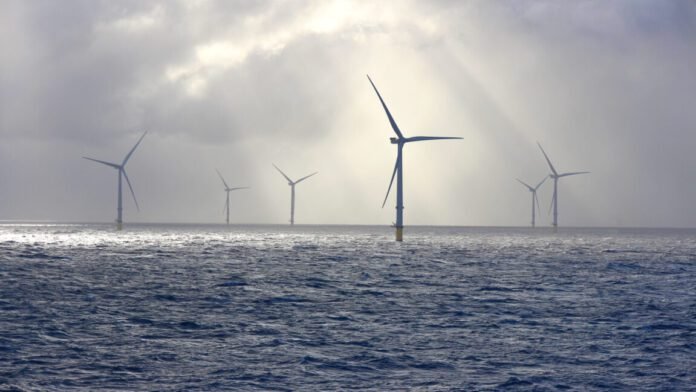
The Trump administration has abandoned its effort to halt wind energy projects across the United States and dropped its challenge to the court ruling that tossed President Donald Trump’s order freezing federal permitting and leasing for wind projects. States that challenged the order hailed the development as one of the most significant legal victories against the Trump White House’s campaign against the energy transition.

On Monday, the US Court of Appeals for the First Circuit dismissed the appeal after the Justice Department filed a motion for its voluntary dismissal on June 10.

The case against Trump’s executive order was filed in May 2025 by a coalition of attorneys general from 17 states and Washington, DC, led by New York Attorney General Letitia James.

Monday’s decision affirms the December 8 ruling by US District Court Judge Patti Saris, which concluded that Trump’s January 2025 executive order was unlawful, finding the sweeping ban on wind projects was “arbitrary and capricious” and exceeded the president’s authority.

Environmental and wildlife advocacy groups applauded the move. Nancy Pyne, a senior advisor to the Sierra Club, said renewable energy continues to prevail and grow in spite of Trump’s relentless attacks.

“While everyday Americans face soaring bills and unstable prices,” she said, “renewable energy offers an affordable, common sense solution to lower costs and protect our health and our environment.”

This latest victory in a string of legal setbacks for the administration comes at a time when clean energy production continues to surge despite a slew of policy, permitting, and procedural hurdles imposed by the White House.

According to a recent report from the nonprofit Environmental Defense Fund and Atlas Public Policy, a record 79.7 GW of clean power is projected to come online in the US in 2026, even as roughly 8 GW of clean energy projects were canceled in the first quarter of the year.

The project pipeline remains strong, the report found, with 222 GW of clean energy capacity planned or under construction nationwide as part of 693 GW of power announced through the first quarter. Developers have announced plans to invest an estimated $377 billion in new projects through 2031, the report said in its key findings.

The country already has 471 GW of clean power online, with a record 51.6 GW newly added in 2025, “the equivalent of about 25 Hoover Dams,” the report notes. Solar and battery storage now account for 85 percent of the planned pipeline.

The Monday court ruling arrives roughly a week after a different federal court restored a key tax-credit pathway for wind and solar developers.

On June 6, the US District Court for the District of Columbia tossed an August 2025 Treasury rule that made it difficult for wind and solar projects to qualify for federal tax credits. The change eliminated the longstanding practice whereby developers locked in tax credits by showing that 5 percent or more of a project’s total cost had been spent. Judge Colleen Kollar-Kotelly ruled that the administration had not given a sound reason for the change and sent the rule back to the IRS to reconsider.

“We see a strong correlation between the high rate of cancellation and the anti-renewable policies from the Trump Administration—from aggressive executive orders through attempts to repeal pollution protections,” said David Villagrana, lead counsel for clean energy tax solutions at EDF. In an emailed response, Villagrana said the Trump administration has significantly delayed projects through administrative measures. “Development within any industry likes consistency; for clean energy, the Trump administration has ensured a lack thereof.”

He cautiously welcomed the court’s overturning of the revised 5 percent rule, saying the administration could decide to appeal the district court’s decision, but “it would have to overcome the district court’s careful and thorough analysis of the many legal deficiencies in the IRS’ notice.”

The EDF report also tracked a sharp uptick in gas projects. “[T]otal planned and under construction natural gas capacity rose from 44.8 GW in Q4 2025 to 65.5 GW by the end of Q1 2026, an increase of 20.7 GW,” its authors wrote, more than four times the combined growth of solar, storage, and onshore wind over the same period. Fossil fuels’ share of planned capacity has climbed from 9 percent at the end of 2022 to 27 percent, “a threefold increase that points to an uptick in fossil fuel generation investment,” according to the report.

In an interview with Inside Climate News, Jon Gordon, senior policy director at Advanced Energy United, a clean energy advocacy group, said the gas buildout was “very concerning… particularly from an environmental standpoint,” warning that new plants are “likely going to be in service for 30 years plus, once they’re constructed.”

He said “the big reason we’re seeing this surge of natural gas is this administration that’s been throwing roadblocks in the way of renewables and providing incentives for fossil fuel.”

For a clean-energy state like Maryland, he said, the challenge was real because “a lot of our problems are very short term. We need new supply right away,” and yet gas plants “are the longest to build.” Gordon argued that economics increasingly favors the clean energy pathway because the cost of building gas plants “has almost doubled in just a couple of years,” while solar and battery costs keep falling.

The EDF-Atlas report also found that 80 percent of the nation’s existing, planned, and under-construction clean power capacity is located in congressional districts represented by Republicans. Of the 30 districts with the most clean power capacity, just five are Democratic. Texas leads every state with 164 GW, nearly double California, in second place with 83 GW.

Abe Silverman, an assistant research scholar at Johns Hopkins University’s Ralph O’Connor Sustainable Energy Institute, cautioned against reading the map in partisan terms. Talking to Inside Climate News, he said the first thing he looks for is “where is land cheap.”

“Is it really the red and blueness of the state, or is it the underlying cost of land and the density?” he asked. Much of the growth is in areas with low-cost land, he said, and it is further shaped by interconnection policies.

This article originally appeared on Inside Climate News, a nonprofit, non-partisan news organization that covers climate, energy, and the environment. Sign up for their newsletter here.

Indonesia’s nickel nationalism falters in the face of China’s tech

0
indonesia’s-nickel-nationalism-falters-in-the-face-of-china’s-tech
Indonesia’s nickel nationalism falters in the face of China’s tech

On May 12, 2026, the China Chamber of Commerce in Indonesia issued a sharply worded open letter to Indonesian President Prabowo Subianto, saying that Chinese firms operating locally have been burdened by stringent regulations, arbitrary law enforcement, and corruption and extortion by state officials. Those claims were reported by Reuters, Singapore’s Lianhe Zaobao and Indonesia’s Tempo.

Chinese investors in Indonesia have long opted to resolve disputes through quiet, behind-the-scenes negotiations. Thus, the letter’s high-profile public appeal to Jakarta’s top leadership thus marked a notable change in attitude and approach.

After years of disruptions brought by shifting policies and conflicting signals — not least the government’s recent move to centralize commodity trading under state authority —Chinese enterprises and firms apparently will no longer remain passive amid mounting operational pressures on their Indonesian investments.

Broad foreign investor squeeze

Indonesia has rolled out a range of tightening measures, including lower mining quotas, higher export levies and stricter localization requirements. The changes have affected nearly all foreign players, not Chinese companies alone.

Japan’s Sumitomo Metal Mining has faced lengthy approval procedures for its smelting projects. LG Energy Solution has seen its nickel downstream operations hampered by quota cuts. Singaporean investors, especially those active in resources and energy, are grappling with tougher cross-border foreign exchange rules, which have considerably delayed profit repatriation.

As reported by Nikkei Asia, the Japan External Trade Organization has repeatedly raised concerns about Indonesia’s erratic policy landscape. Foreign enterprises engaged in resource processing and related supporting industries are finding their room for maneuver shrinking. For senior Indonesian business leaders of Chinese descent who witnessed past social unrest, the current policy tightening has stirred deep concerns about the predictability of the investment environment.

Waning investor sentiment is reflected in the performance of the Indonesian rupiah. Since the start of 2026, the currency has depreciated sharply against the US dollar, ranking among Asia’s worst performers. In June, the rupiah breached 18,000 against the US dollar, sinking to a historic low — below the level recorded during the 1997-98 Asian financial crisis.

In March 2026, Fitch Ratings revised Indonesia’s sovereign credit outlook from stable to negative, citing weakened policy credibility and growing uncertainty. Continued weekly net outflows from local bonds and equities have further destabilized the currency, sparking broader concerns over regional asset reallocation.

Resource nationalism laid bare

The government’s response to the business chamber’s letter failed to reassure the investment community. On May 14, 2026, Finance Minister Purbaya Yudhi Sadewa stated bluntly: “These minerals belong to us. If investors intend to leave, they can seek resources elsewhere.”

The comment laid bare the administration’s strong resource nationalism, making clear that Jakarta prioritizes its claims over mineral wealth even at the cost of losing foreign investment.

A day earlier, on May 13, President Prabowo acknowledged existing governance flaws in a public address. He conceded that lengthy permit procedures and excessive red tape stemmed from bureaucratic misconduct, with some officials demanding bribes to speed up administrative work. His remarks essentially validated the grievances raised by foreign business groups.

The divergent stances between the president and finance minister have exposed policy inconsistencies within the government, adding to market jitters. This friction highlights a broader debate on whether Jakarta is entering a new era of state interventionism.

Since early 2026, Indonesia has pursued aggressive supply-side curbs in the nickel sector, aiming to maximize gains from its resources and strengthen its bargaining power against foreign investors.

The country cut its 2026 national nickel ore production quota from 379 million tonnes to 250 million tonnes, representing a year-on-year reduction of 34%. It also lifted royalty rates for low-grade nickel ore from 17% to 30%, while introducing new taxes on associated cobalt, iron and chromium metals.

On April 15, 2026, the new royalty rate officially took effect. Faced with a steep rise in overall production costs, major Chinese-backed nickel producers including Tsingshan Group and Huayou Cobalt began adjusting operations in early May, with some moving to scale back output.

The trend dragged down the operating rate across Indonesia’s nickel smelting industry.

Nickel OPEC dreams

Staring down industrial slowdown and looming financial losses, Indonesia sought to build regional dominance via industrial alliances.

On May 7, during the ASEAN Summit in Cebu, the Indonesian Nickel Miners Association (APNI) and the Philippine Nickel Industry Association (PNIA) signed a memorandum of understanding to launch the Indonesia-Philippines Nickel Corridor, witnessed by economic ministers from both sides.

The two nations hold more than 70% of the world’s nickel reserves and sought to create a mechanism akin to a “nickel OPEC” to coordinate supply and guide pricing.

The breakdown stemmed not only from conflicting commercial interests but also from shifting geopolitics. As the alliance between the United States and the Philippines deepens, Manila has little incentive to align its long-term policies with Indonesia’s nickel downstream ecosystem, which relies heavily on Chinese capital.

Throughout May 2026, the Philippines accelerated approvals for new mining rights and expanded production capacity. Lacking a mature domestic smelting industry, it prioritized near-term economic gains.

The bulk of Philippine nickel ore is shipped to China, with only a small volume supplied to Indonesian smelters, according to the Manila Bulletin Industry Report. Further regional friction and strategic realignment can be seen in recent industry updates via The Manila Times and Metal.com.

Faced with production cuts by foreign firms and the collapse of its regional partnership, Indonesia announced a suspension of the royalty hike on May 11, 2026, fully reversing the policy within less than a month.

Many market watchers attribute the policy U-turn to the failure of regional resource coordination. Yet a more fundamental factor lies in the structural shift toward nickel-free production across downstream industries led by China, which has eroded long-term confidence in Indonesia’s resource-focused strategies.

While immediate pressures such as a weak rupiah and capital flight forced Jakarta to backtrack quickly, China’s technological advances have stripped Indonesia of the leverage to sustain restrictive policies.

From an industrial perspective, the nickel supply game long dominated by Indonesia and the Philippines looks increasingly outdated amid today’s technological evolution, leaving limited room for sustained profit-taking.

China’s tech hedge

First, China has achieved large-scale adoption of nickel-free solutions in new-energy power batteries. High-nickel ternary batteries, once mainstream, are being phased out and replaced by lithium iron phosphate (LFP) batteries that contain no nickel or cobalt.

Official data tracked internationally by S&P Global Mobility Chemical and Battery Ecosystem Insights shows that LFP batteries accounted for 81% to 82% of newly installed power batteries in China in early 2026, while the share of high-nickel ternary products fell below 20%. As the biggest consumption hub for nickel, the new-energy vehicle sector has structurally reduced its reliance on the metal.

Second, the large-scale commercialization of sodium-ion batteries has further diminished nickel’s strategic importance. Major Chinese manufacturers including CATL and BYD have rolled out mass production of sodium-ion batteries free of lithium, nickel and cobalt, with cost and performance levels matching mainstream LFP products.

According to the 2026 global industry tracking released by Energy Iceberg China New Energy Strategic Reports, China commands over 98% of global production capacity for such batteries. These products are now widely used in energy storage, low-speed electric vehicles and entry-level new energy cars, steadily eating into nickel’s market share.

Third, a full range of alternative industrial chains in China has capped potential rallies in nickel prices. Low-nickel and nickel-free stainless steel, alongside alternative formulas for industrial alloys, are now widely used.

Globally, some 65% to 70% of nickel goes into stainless steel production, while batteries account for less than 20% of total demand. High-end stainless steel and aerospace-grade superalloys still depend on high-purity nickel, creating a rigid demand that cannot be fully replaced.

Even so, nickel is no longer an irreplaceable material in the fast-growing new-energy sector, greatly limiting Indonesia’s ability to manipulate supply chains for extra profit.

Argus Media Metals and Alloy Commodity Intelligence notes that any short-term spike in nickel prices will immediately trigger large-scale material substitution by Chinese downstream manufacturers, cooling market demand rapidly.

China has also built a complete recycling system for nickel and cobalt. Reprocessing of retired power batteries and stainless steel scraps has boosted supply from secondary metals, putting continuous downward pressure on prices of primary nickel and cobalt. The well-developed recycling sector has further weakened the long-term value of mineral exports from nickel-dependent economies like Indonesia.

In essence, resource-rich nations in Southeast Asia still stick to the old playbook of cutting output and raising prices to reap resource dividends. Meanwhile, China has completed industrial upgrades centered on material substitution and supply diversification. Nickel still plays an essential role in traditional industries, yet its overall pricing power has been fundamentally shaken.

This structural divide explains why Indonesia’s aggressive policy shifts have failed to lift industrial profits and instead led to production cuts and capital outflows. Decades of bargaining power built on nickel resources are being steadily eroded by China’s technological progress.

Together with a booming recycling industry, China has formed a dual buffer of technological alternatives and a circular economy. For resource exporters reliant on nickel and cobalt, the era of reaping handsome profits solely by controlling mineral supplies is effectively over.

Deeper institutional risks

Against a backdrop of frequent policy changes and fading resource leverage, foreign capital is increasingly reluctant to commit to long-term investments in Indonesia. Multinational firms are gradually diverting new projects to Vietnam, Malaysia and other Southeast Asian economies with more predictable and transparent policy frameworks.

Beyond short-term policy volatility, Indonesia’s bigger challenge lies in its unstable institutional environment. Sudden policy reversals and the departure of market-savvy technocrats have severely dented international confidence.

Investors now question the long-term stability of the country’s business rules and institutional framework, rather than merely assessing individual policies.

In the near term, investor caution and selective industrial divestment will weigh on Indonesia’s core mining and mineral processing sectors. In the longer run, the clash between resource nationalism and global industrial trends risks locking Indonesia’s nickel industry out of the future new-energy supply chain.

The Prabowo administration faces a clear strategic choice: continue chasing short-term resource gains and alienate global capital, or push through institutional reforms to rebuild trust and integrate into the evolving new-energy landscape across the region.

History has shown that no emerging economy can achieve lasting prosperity by monopolizing resources at the expense of investor confidence. As the shift away from nickel gathers pace across emerging industries worldwide, Indonesia must strike a balance between safeguarding national resource interests and embracing industrial cooperation.

Failure to do so will mean not only lost investment opportunities in the short run but also a missed chance to take part in the next phase of Southeast Asia’s new energy industrial development.

Ju Liang is an independent policy analyst with over 20 years of on-the-ground experience in Southeast Asia, specializing in supply chain economics and commodity policy governance across the region. He is currently based at Yunnan Agricultural University, China. All opinions expressed here are personal.

Strait of Hormuz transit will take ‘weeks’ to resume, largest tanker operator tells FT

0
strait-of-hormuz-transit-will-take-‘weeks’-to-resume,-largest-tanker-operator-tells-ft
Strait of Hormuz transit will take ‘weeks’ to resume, largest tanker operator tells FT


Shipowners will not resume transit through the Strait of Hormuz ​for weeks until they are confident that the U.S.-Iran peace ‌deal is “material”, the CEO of Japan’s Mitsui O.S.K. Lines told the Financial Times in an interview published on Tuesday.

The war, which began in late February, has largely halted shipping ​through the key route for around a fifth of the ​world’s oil and liquefied natural gas supply, along with ⁠products such as aluminum and urea.

“Given the experiences in the ​last couple of months, I think it’s reasonable to assume ​that it may take at least a couple of weeks or if not a month,” Jotaro Tamura told FT, before U.S. President Donald Trump announced ​a deal to end the war in Iran.

The agreement between ​Washington and Tehran has not changed Tamura’s view, the FT report said.

“We ‌recognize ⁠that there are signs of movement toward a ceasefire. However, operations will not be resumed until safety has been sufficiently confirmed,” Mitsui O.S.K. said in an emailed statement to Reuters.

“The resumption of ​transit will require ​close coordination ⁠with the governments of the relevant countries, insurers, and other stakeholders,” the Japanese shipping giant added.

Mitsui ​O.S.K., one of Japan’s three biggest shipping firms, has ​a ⁠fleet of more than 900 vessels, including bulk carriers, tankers and ferries.

Trump in a Truth Social post on Monday said that ships loaded ⁠with ​oil are starting to move out of ​the strait, “going along the Southern ‘Highway,’ which is totally safe, secure, and pristine”.

Source:  Reuters

Israeli media: UAE security delegation visited Israel secretly during Iran war

0
israeli-media:-uae-security-delegation-visited-israel-secretly-during-iran-war
Israeli media: UAE security delegation visited Israel secretly during Iran war

A senior UAE security delegation secretly visited Israel during the war on Iran as part of ongoing security and military coordination between the two sides, according to Israeli media reports.

Israeli public broadcaster Kan 11 reported on Tuesday evening that the delegation held undisclosed meetings with Israeli security and military officials to discuss coordination and developments related to the conflict.

According to the report, the visit took place in the early days of the war launched by Israel and the United States against Iran on 28 February, revealing that senior Emirati officials travelled to Israel while the conflict was ongoing.

READ: Israeli premier made secret trip to UAE to meet President bin Zayed

Kan 11 said the delegation met senior figures within Israel’s security establishment, with discussions focusing on security coordination between the two countries during the war against Iran and the related regional developments.

The broadcaster added that the delegation arrived on a Boeing 737 aircraft designated for VIP use and regularly used by very senior members of the UAE’s ruling family. However, it did not identify the members of the delegation.

Last week, the office of Israeli Prime Minister Benjamin Netanyahu announced that Netanyahu had visited the UAE during the war on Iran and met UAE President Mohammed bin Zayed.

The UAE Ministry of Foreign Affairs later denied the Israeli statement regarding the visit and also denied hosting any Israeli military delegation on its territory.

READ: US rejects Israeli request to review Iran agreement memorandum, Hebrew media report

Android 17 starts hitting Pixel phones and watches today

0
android-17-starts-hitting-pixel-phones-and-watches-today
Android 17 starts hitting Pixel phones and watches today

Android 17 has been in testing since early this year, with the final beta hitting devices just a couple of weeks ago. Insofar as a mature operating system like Android still has big days, this is one of them. The official Android 17 build is starting its rollout on Pixel phones, adding a small set of new features and laying the groundwork for the future. This release also coincides with a Pixel Drop and a new version of Wear OS (based on Android 17) on Pixel Watches.

Google no longer uses an unmodified version of Android on its phones—the Pixel build includes numerous features that are distinct from Android 17 itself. Other device makers will include versions of some of these features when they eventually update their phones, but for now, Google’s Pixel phones are the only way to experience Android 17.

The multitasking Bubbles system in Android 17 expands on a similar (but underutilized) messaging feature. In Android 17 on Pixels, you can long-press on any app icon to open that app as a floating window. When minimized, these bubbles stay on top of other apps. On foldable phones, the bubbles dock into a “bubble bar” for easy multitasking.

Bubbles on the Pixel 10 Pro Fold

Google says this interface is ideal for quick multitasking or chatting with Gemini while looking at other content. We may see Bubbles appear on other smartphones as Android 17 rolls out more widely, but Google isn’t the first to implement such a system. Samsung has had a floating app framework for years and may not want to change how it works, but Motorola could benefit, as it makes fewer tweaks to Android.

Foldable phones are also getting a new gaming interface in Android 17. Stretching phone-optimized games to a more square foldable screen can often cause distortion and awkward control placement. The updated OS offers a new approach, or at least it will eventually. Version 17 introduces a 50-50 split interface that displays the game on top and a touchscreen controller at the bottom. If you leave the phone’s hinge at an angle, it makes the device look a bit like a real handheld game machine.

Credit: Google

However, Google notes that foldable gaming mode will take a few more months to arrive on Android 17 devices. This isn’t the only feature the company is holding back. The anti-doomscrolling Pause Point that Google revealed a few weeks ago is also slated for release later in 2026.

The initial Android 17 release includes native screen reaction video support. You’ve probably seen these vertical clips on (or reposted from) TikTok or Instagram featuring a talking head overlaid on another video. This style of content has become so popular that Google is supporting it natively in Android 17. It’s built into screen recordings, so you can add yourself as an overlay to whatever is being displayed—no green screen required.

While many parts of Android 17 will be ignored or obscured when the OS expands beyond Google phones, the new security and safety features will be nearly universal. Android 17 keeps your personal data more private when apps request access. You can grant temporary location access to apps that request it, and software that needs to read your contacts can be limited to specific entries instead of the entire address book.

Credit: Google

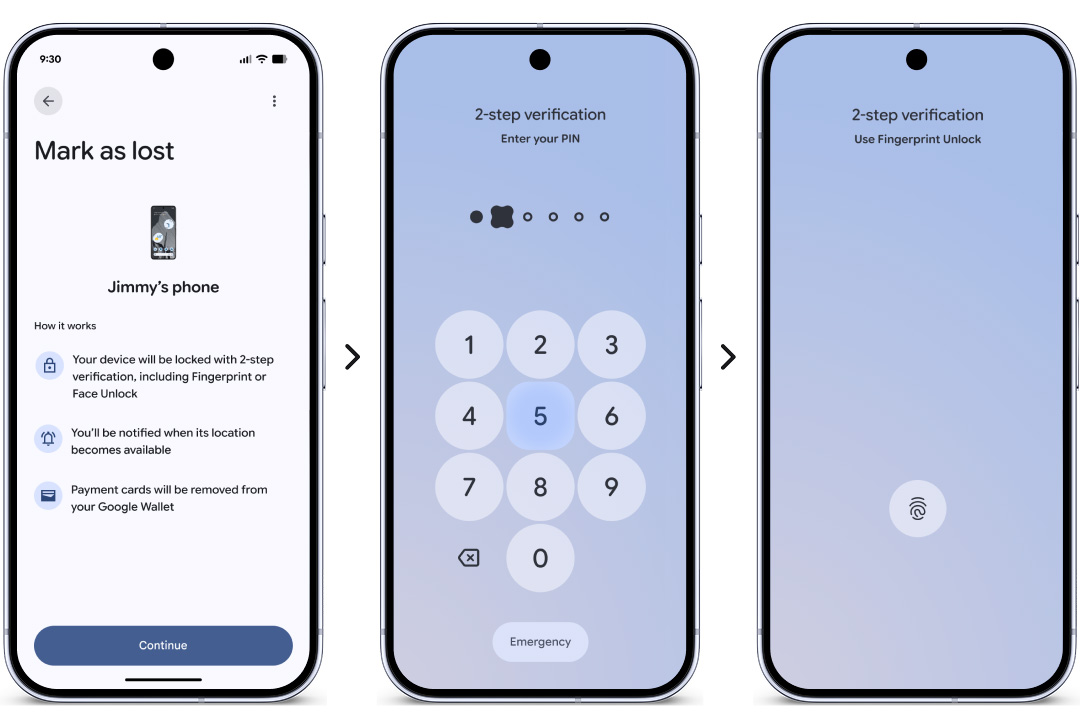
You’ll also have new protections in Android 17 if your phone grows legs and walks off. The improved “Mark as lost” feature in Find Hub can lock a missing phone with biometrics in addition to a passcode, so even a thief who can guess the code won’t get access. Android 17 reduces the number of allowed passcode guesses, too. There’s also a longer wait between failed attempts.

More Pixel things

The updates that begin rolling out today include new Pixel Drop features. These are exclusive to Google’s devices, and they (mostly) are not tied to Android 17. For instance, the Gemini Omni model announced at I/O last month is coming to the Gemini app on Pixels. For now, it will be used only for video generation, but Google hopes to expand Omni to more content types later. It currently requires a Gemini Pro or Ultra subscription. Similarly, Lyria 3 music generation will be available on Pixels in the app, but this one won’t require a premium subscription.

Gemini Omni on Pixel

Google began adding support for Apple AirDrop in Quick Share a few months back, but only for select Pixel phones. The feature later expanded to Samsung flagships and a few other devices. Unfortunately, hardware variation means AirDrop can’t currently be implemented as a universal feature, so it’s still piecemeal. AirDrop support is expanding to the Pixel 8a and 9a in the Pixel Drop. It’s still not available on the Pixel 8 or 8 Pro, although those are actually a bit older than the 8a.

And then there’s Magic Cue, the AI-powered feature that debuted on the Pixel 10 family. Magic Cue is supposed to use Gemini Nano on-device intelligence to proactively offer suggested links, actions, and content while you use your phone. In practice, Magic Cue doesn’t appear that often, but you may see it a little more following this Drop. Google says Magic Cue suggestions will expand beyond Google’s messaging app to Snapchat, Telegram, and Instagram. More apps may come later.

Android for your wrist is getting an upgrade today, assuming you have a Pixel Watch. Google says Wear OS 7 is a major update that brings Gemini Intelligence to the latest models. It’s not all AI, though. For starters, Google claims Pixel Watch users can expect a 10 percent battery life boost after the update.

Credit: Google

The new software, based on Android 17, ports several notable phone features to wearables, including live notifications. You can now track your DoorDash orders or check sports scores at a glance. The audio source picker from phones is also coming over to the Pixel Watch. For developers, Wear OS will make it easier to adapt phone-optimized widgets for the smaller wearable screen.

The initial rollout won’t include Gemini Intelligence (with the new Neural Expressive interface), but Google says that’s slated for the coming months. When it arrives, you’ll have features like the AI-powered Create My Widget and multi-step app automation. The idea that you’ll be able to hand Gemini a complex task like booking concert tickets from a watch screen is suspect, though. That doesn’t even work very well on phones where you can keep an eye on the robot’s meandering.

Ready, set, wait

It usually takes a few weeks for new Android versions to reach all eligible Pixel devices. This time around, the new OS is available for all Tensor-powered Pixels, starting with the Pixel 6 series and running through the current Pixel 10. You can’t force the OTA update, but you can sideload the new OS via a full system image or an OTA file from Google’s developer pages. Even if you do that, some of the more interesting features, like foldable gaming controls and Pause Point, won’t be available yet.

For anyone with a non-Pixel Android phone, the wait will be much longer. Samsung will probably begin updating its latest phones in a couple of months, followed by other OEMs like Motorola and OnePlus. Current-gen phones are likely to be first in line for updates, but given the relative lack of Android 17-specific features, you’re not missing much. Google will continue to release most new Android features via apps, Play Services, and OEM partnerships.

We also expect another major Android 17 release in late 2026, focused on API and developer changes.

Reality TV Producer Dies Suddenly During Filming

0
reality-tv-producer-dies-suddenly-during-filming
Reality TV Producer Dies Suddenly During Filming


Love Island USA executive producer James Barker has died unexpectedly while working on the hit reality show’s eighth season.

Barker, 40, suffered an “unexpected medical emergency” last week while the Peacock series was being filmed, according to TMZ. His cause of death has not been confirmed.

His sudden death has shaken the Love Island USA team, along with the wider ITV America and Peacock family.

“James’ unimaginable loss has been deeply felt across not just the entire Love Island USA production, but throughout all of ITV and Peacock,” ITV America and Peacock said in a statement following his death.

Barker will be honored during the June 16 episode of Love Island USA, according to People.

The DJ and television producer began his career in TV in 2011, working on shows including Counting Cars, Forged in Fire and Pawn Stars.

He later worked on Netflix’s hit reality series Queer Eye before joining Love Island USA in 2020.

Barker spent the past three years as an executive producer on the show, where he helped oversee both the production and the soundtrack that became part of the show’s signature style.

Outside of TV, Barker was also known for his love of music and his career as a DJ.

Just days before his death, he shared a post on Instagram celebrating the launch of Love Island USA’s eighth season.

“Hope you’re all enjoying the new season brought to you by a huge squad of brilliant people, including the three models standing beside me,” Barker wrote.

Love Island USA, hosted by television personality Ariana Madix, has become one of Peacock’s biggest reality hits. The show is known for turning contestants into social media stars while drawing a large audience of younger viewers.

Its seventh season, which aired multiple episodes per week in summer 2025, became Peacock’s most-watched original season of all time.

Barker’s death comes as the newest season continues airing, with the production now preparing to honor one of the people who helped shape the series behind the scenes.

Peace deal won’t end Thailand-Cambodia’s humanitarian crisis

0
peace-deal-won’t-end-thailand-cambodia’s-humanitarian-crisis
Peace deal won’t end Thailand-Cambodia’s humanitarian crisis

On May 28, 2025, a localized skirmish along the Thailand-Cambodia border rapidly escalated into one of the region’s most significant military conflicts in recent decades.

More than a year later, a tenuous ceasefire is in place, and recent talks — both at the ASEAN Leaders Summit and at a bilateral level — have provided a sense of hope that a lasting cessation of hostilities may be imminent, after months of uncertainty, nationalist rhetoric and saber-rattling.

But while diplomats discuss stabilization and governments promote progress, a more uncomfortable reality risks being overlooked: Peace on paper does not automatically translate into recovery on the ground.

In the first three weeks of the conflict alone, almost one million people on both sides of the border were displaced. Between May and December 2025, the human toll included dozens of casualties, the closure of 833 schools — which disrupted the education of 200,000 children — and the temporary closure of more than 50 frontline health facilities.

Despite trade between the two countries adapting and reaching almost $1 billion in the first four months of this year, people on the ground now face a 34% decline in average earnings, and there are increasing fears that controversial, high-interest microloan debt may become a last resort for many.

While some facilities have now reopened, the impacts of children missing vital years of education, of accumulated household debt, and of the fractured friendship between the two countries will not be fixed overnight.

There has also been an underappreciated political cost, particularly in Cambodia. Border conflicts and civil wars have long been associated with crackdowns on political and civil rights — from Myanmar’s ongoing civil war to Iran’s recent use of internet blackouts and the  brutal silencing of domestic critics.

The Cambodian regime in Phnom Penh, under the guise of a state of emergency, has weaponized the border conflict and used it to neuter criticism and the reporting of independent journalists.

Between January and mid-February 2026 alone, six Cambodian journalists were detained, arrested or charged with incitement over their reporting of the conflict. This follows the sentencing of two journalists last year to 14 years imprisonment for what the government claimed was “supplying a foreign state with information prejudicial to national defense.”

It has also impacted the movement of Cambodian activists, opposition figures and other civil society actors, who have historically sought refuge in Thailand when facing rising restrictions at home. Border closures have halted efforts by civil society groups to help individuals flee persecution in Cambodia.

For those who crossed the border before the closures, the rising nationalistic sentiment in both countries has reshaped not just their engagement with one another in international fora, but how they treat one another on a human level.

What was once a joint effort to advance democracy and civil rights in both countries has instead turned into a dispute over which government should be blamed for the conflict. Instead of supporting and learning from one another, civil rights groups now face public pressure if they publicly endorse one another.

Meanwhile, governments continue to use incidents of individuals on the street facing harassment and even assault as fodder in an online war of public opinion, distracting from human rights abuses in their own countries.

The result is not only weakened democratic movements within individual countries — it is the erosion of the regional networks that have long helped sustain them. This is why the international response to the conflict must extend beyond diplomatic de-escalation.

Regional governments, donors and multilateral organizations should recognize that post-conflict recovery requires sustained investment in people, not simply agreements between states.

That means creating safeguards for displaced and indebted households, supporting migrant workers returning home, rebuilding education and healthcare systems, and ensuring humanitarian assistance reaches communities still struggling with the consequences of displacement.

It also means maintaining support for independent civil society organizations, human rights defenders, journalists and democratic actors whose work may become even more difficult in the conflict’s aftermath. Political freedoms should not become another casualty of a crisis that has already imposed such heavy costs on ordinary people.

Recent productive discussions between Thailand and Cambodia are an important achievement. Diplomacy remains essential, and every step away from violence should be welcomed. But a lasting peace is measured not by the signing of agreements alone.

It is measured by whether displaced families can rebuild their lives, whether workers can regain their livelihoods, whether children can return to school and whether citizens retain the freedom to organize, speak and advocate without fear.

The danger now is not that peace efforts will fail — it is that the region will declare success too early. If governments and international partners focus exclusively on ending the conflict while neglecting the economic and societal impacts of the past year, they risk inflicting lasting damage to those most affected.

The challenge ahead is to ensure that recovery receives as much attention as diplomacy.

Soknin Chhoeun is a Cambodian human rights activist and youth leader with the Khmer Movement for Democracy (KMD).

IRGC Still Targeting Ships Despite US-Iran MoU as Fighting in Lebanon Continues

0
irgc-still-targeting-ships-despite-us-iran-mou-as-fighting-in-lebanon-continues
IRGC Still Targeting Ships Despite US-Iran MoU as Fighting in Lebanon Continues


Iran has fired drones at vessels in the Strait of Hormuz every day since the memorandum of understanding (MoU) ending the conflict was digitally signed Sunday, while Hezbollah acknowledged launching drones at Israel Defense Forces troops in southern Lebanon and Iran threatened retaliation over continued Israeli military operations there.

NBC reported that a US official said the Islamic Revolutionary Guard Corps has daily launched drones in the Strait of Hormuz. The official said US forces have intercepted the drones before they could pose a threat to commercial shipping or US military personnel operating in the area.

The activity continued despite the MoU that was digitally signed Sunday to end the conflict, according to NBC.

On Israel’s northern front, Hezbollah admitted firing drones at Israel Defense Forces (IDF) troops, claiming the forces were advancing into position in southern Lebanon.

The Lebanese National News Agency reported additional military activity in the area. The agency said Israeli fighter jets struck Nabatieh al-Fawqa, while a drone strike targeted Ansariyeh on the coast.

Iran also issued a warning regarding Israeli operations in Lebanon. Reuters reported that The Khatam al-Anbiya headquarters, Iran’s emergency command center, blamed Israel for the cross-border fighting and threatened action if Israeli attacks in southern Lebanon continue.

The command center claimed the IDF had violated the ceasefire “84 times” since it was announced and warned, “That if the Israeli military does not stop its evil in southern Lebanon, it should expect a harsh response from our forces.”

The statement said Tehran would respond forcefully if Israel does not halt its military activity in southern Lebanon.

In a joint statement Monday, Prime Minister Benjamin Netanyahu and Defense Minister Israel Katz said Israel would continue holding its positions in Lebanon and would maintain its efforts to defend northern Israel from Hezbollah attacks.

Anthropic “pauses” token-based billing for its Claude Agent SDK

0
anthropic-“pauses”-token-based-billing-for-its-claude-agent-sdk
Anthropic “pauses” token-based billing for its Claude Agent SDK

Last month, Anthropic announced a billing change that would have substantially increased costs for heavy users of its automation-focused Claude Agent SDK, including many third-party apps. On Monday, though, Anthropic abruptly announced it had paused those pricing changes just as they were set to take effect, allowing Agent SDK users to continue drawing from the more generous usage limits in their existing Claude subscriptions.

The plan, as announced on May 13, would have treated usage of the Claude Agent SDK (including via third-party apps and the programmatic “claude -p” command) separately from “standard” Claude usage via the chat interface or the official Claude CLI. As of June 15, Anthropic said that kind of outside SDK usage would be billed at Anthropic’s prevailing API rates, with subscribers receiving a simple monthly usage credit equal to their subscription price.

That would have been a major change from the current setup, where Agent SDK use is limited only by the standard weekly caps applied to a user’s current Claude subscription tier. Those generous limits allow power users to squeeze a lot more usage out of those paid subscriptions than they would get by paying the same price for API fees. One analysis suggests that Claude Opus users start saving money from their subscription after just two to three messages per day, and that their subscription could be worth many multiples of its monthly cost in API usage.

“If you are a developer using Claude as your primary coding assistant with Opus, you will blow past breakeven in the first week,” developer Matthew Diakonov writes in that analysis.

“For anyone using agents heavily, this is a major cost increase,” the developers behind code editor Zed warned its users after Anthropic announced the Agent SDK price change plans.

On Monday, though, Anthropic gave these power users a pricing reprieve, updating its billing support page to say that it was “pausing the changes to Claude Agent SDK usage described below.” The company says that “for now, nothing has changed” and that it is “working to update the plan to better support how users build with Claude subscriptions.” Some users report receiving similar notices via email from Anthropic.

“Nothing changes for now.”

“Nothing changes for now.” Credit: Reddit / Hopeful_Unter_9280

The sudden pullback on forcing API pricing comes just weeks after GitHub Copilot rolled out its own token-based billing changes, leading to sticker shock for many users who found themselves blowing past the new limits on their subscriptions. It also comes as Anthropic prepares for a possible initial public stock offering by filing confidential papers with the Securities and Exchange Commission.

While the temporary reprieve is welcome news for Claude Agent SDK users, they should probably expect to bear the full costs of their extensive use before long. In April, Anthropic Head of Claude Code Boris Cherny said “our subscriptions weren’t built for the usage patterns of these third-party tools,” referring to automated agent harnesses like OpenClaw that were no longer covered under standard subscription plans. “Capacity is a resource we manage thoughtfully and we are prioritizing our customers using our products and API. … We want to be intentional in managing our growth to continue to serve our customers sustainably long-term.”

0FansLike
0FollowersFollow
0FollowersFollow
0SubscribersSubscribe
- Advertisement -
Google search engine

Recent Posts