15.4 C
London
Tuesday, June 16, 2026
Home Blog

Why the US government shut down Anthropic’s latest Claude AI model

0
why-the-us-government-shut-down-anthropic’s-latest-claude-ai model
Why the US government shut down Anthropic’s latest Claude AI model

On June 12, artificial intelligence (AI) lab Anthropic suspended access to its latest Claude models, Fable 5 and Mythos 5, which had been released three days earlier.

The move came in response to an “export control directive” from the US government prohibiting use of the models by anyone who is not a US national.

Mythos is Anthropic’s most powerful, or “frontier,” model. When first announcing the model in April, the company said it was too good at hacking to release immediately. Instead, Mythos was made available to a handful of organizations (mostly US tech corporations) to use to patch weaknesses in essential digital systems.

Fable is the same basic model, but with added safeguards meant to stop it from being used for cybersecurity purposes. This is what was released to the public last week – and almost immediately shut down.

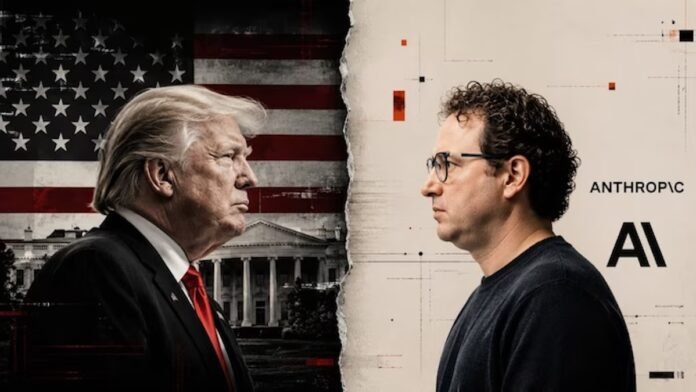
Anthropic and the Trump administration at loggerheads

Since early 2025, Anthropic and the Trump administration have been in escalating conflict. The administration has accused Anthropic of making “woke AI” and called chief executive Dario Amodei an “ideological lunatic”.

Early disagreements concerned AI regulation and semiconductor export policy. The dispute sharpened when Anthropic declined to let the Pentagon use its models for domestic surveillance and fully autonomous weapons systems.

The Department of Defense responded by threatening to designate Anthropic a “supply chain risk,” a classification that would have required military contractors to sever ties.

Jailbreaks

The US government has not yet publicly stated the reason for last week’s directive, but Anthropic it says it believes the government became aware of a jailbreak: a method for circumventing the safeguards in Fable that prevent using its most powerful features for nefarious purposes.

These safeguards classify user requests as safe or unsafe before passing them to the AI model. When triggered, the safeguards redirect the request to a less powerful model.

The government’s concern, according to Anthropic, was that the safeguards could be bypassed to extract information useful for cyberattacks.

Guardrails for large language models aren’t bulletproof. They mostly depend on the model’s own capacity to interpret the user’s intentions in making a request.

Beyond the inherent difficulty of this task, a large online community (which my colleagues and I call the Undersphere) is working hard to circumvent AI guardrails. Anthropic acknowledges that “perfect jailbreak resistance is not achievable for any current model provider.”

Anthropic says the research behind the government directive appears to have been produced by engineers at Amazon, which is both a rival to Anthropic and a significant investor.

But this was not the only relevant jailbreak. Within 48 hours of Fable’s release, a researcher using the pseudonym “Pliny the Liberator” published what the researcher identified as Fable 5’s full system prompt to X and GitHub repository.

The system prompt is a hidden set of instructions that helps determine an AI model’s behavior. It’s unclear exactly how knowledge of Fable’s system prompt could be used in practice, but it has drawn attention in the Undersphere.

A surprise – and an ongoing mystery

The deepest problem of making large language models such as Fable secure is that we don’t fully know how they work. According to Oxford University economist and machine learning expert Maximilian Kasy, they work much better than they “should..

Large language models have billions of internal parameters and are trained on unimaginably vast piles of data using machine learning methods. According to Kasy, we would expect such systems to be “overfitted”: good at reproducing patterns in their training data, but bad at generalizing to new situations.

However, modern systems such as Claude and ChatGPT do seem to be able to generalize. Kasy likens modern AI development to alchemy: successful through trial and error, not yet grounded in systematic theory.

As a result, the behavior of AI models is partly opaque even to their builders.

Hard to regulate

The opacity of the technology is one key reason it’s so hard to regulate. Governments lack independent access to the data, infrastructure and expertise they would need to evaluate proprietary frontier models.

The US administration’s recent executive order on AI security, published two weeks ago, reflects this realization. As the administration has realized the power of frontier AI models, it has moved from an initial hands-off posture to asking developers to share their models for review before release.

That demand is an implicit admission that the administration does not trust the companies to evaluate, fully and comprehensively, what their own models can do and how they might be misused. The public sees even less, and the consequence is measurable: a survey taken across 25 countries last year found people are, on balance, more than twice as concerned about AI as they are excited about it.

The future of AI safety

AI is a hugely hyped technology. But there is no doubt it is also extremely powerful and unpredictable. Understandably, this combination is very dangerous.

We cannot rely on regulations, as technology will develop more quickly than they can adapt. Nor can we rely on guardrails, as they will be bypassed.

We need a governance framework built for that eventuality: one that can predict and address the consequences of failure.

Such a framework must be global, participatory and founded on reciprocal trust. These are things the current US administration has shown little capacity to generate.

Francesco Bailo is a senior lecturer in data analytics in the social sciences and deputy director of the Centre for AI, Trust and Governance, University of Sydney.

This article is republished from The Conversation under a Creative Commons license. Read the original article.

‘Thanks to Your Content, I Don’t Hate Israelis Anymore’: Herut Davidson on Arabic, Social Media and Bridge-Building 

0
‘thanks-to-your-content,-i-don’t-hate-israelis-anymore’:-herut-davidson-on-arabic,-social media and-bridge-building 
‘Thanks to Your Content, I Don’t Hate Israelis Anymore’: Herut Davidson on Arabic, Social Media and Bridge-Building 


For Herut Davidson, social media has become both a battleground and an opportunity. She said traditional media often leaves citizens dependent on official or dominant narratives, while social platforms allow individuals to speak directly. 

When Herut Davidson posts in Arabic, she knows some viewers will curse her or accuse her of propaganda. Others, sometimes quietly and sometimes from countries where contact with Israelis remains taboo, tell her that hearing an Israeli Jewish woman speak their language has changed the way they see Israelis. 

Davidson, an Israeli content creator, has built an audience of more than 90,000 followers across TikTok, where she posts as hurriya.it.is.me, and Instagram, where she posts as hurriya.its_my_name. Her mission is unusual and increasingly sensitive: speaking directly to Arab audiences in Arabic at a time when war, polarization, and competing narratives have deepened mistrust across the region. 

Her videos are part of a fragile experiment in direct regional engagement that grew after the Abraham Accords and has been tested by the Hamas-led attack of October 7, 2023, and the Gaza war that followed. For Davidson, Arabic is not only a language skill. It is a way to challenge assumptions, reduce fear, and speak across a divide that formal diplomacy alone cannot close. 

The path to that mission began long before social media, in the environment where Davidson grew up. 

“I think everything started when I grew up in a small village, actually in the West Bank, in the Shomron area,” Davidson told The Media Line. “And there I had no choice to understand what is going on around me, but I really experienced it every single day.” 

I had no choice to understand what is going on around me, but I really experienced it every single day

She described growing up exposed to tension, trauma, and complexity, saying those early experiences pushed her to learn more about the society around her. Raised in a religious environment, Davidson chose to do national service after high school rather than military service, as is common for some religious Israeli women. 

Her first year of national service took her to Jaffa, a mixed city where she encountered a social reality different from the one she had known. She said the experience gave her a first real opportunity to know Arab society in Israel from closer range. 

That encounter led her to Arabic. Davidson came to see the language not only as a means of communication but as a doorway into culture, religion, family life, and society. 

Davidson later studied Middle Eastern studies and Islam at Shalem College in Jerusalem, where she learned both spoken and literary Arabic from Palestinian and Jewish teachers. She said the experience changed the way she lived in Israel. 

It’s really changed my life in Israel, knowing Arabic

“It was an amazing experience for me,” she said. “And it’s really changed my life in Israel, knowing Arabic.” 

Arabic has a complicated place in Israel. It is widely used by Arab citizens, Palestinians in east Jerusalem, and Palestinians in the West Bank and Gaza, but many Jewish Israelis do not learn it as a practical spoken language. Davidson said that gap feeds suspicion in ordinary encounters, from public transportation to shops and pharmacies. 

“Before I learned Arabic, when I was like, for example, in a public transportation, whatever it will be, and I heard Arabic, I was afraid,” she said. “Like, I thought they talk about me, and they want to do something bad. Because this is the trauma experience that we have as Israelis in Israel.” 

I thought they talk about me, and they want to do something bad. Because this is the trauma experience that we have as Israelis in Israel

Understanding Arabic, she said, made the language less threatening and more human. She recalled speaking Arabic with an Arab worker in a pharmacy and seeing him become more comfortable and curious. 

For Davidson, that is the practical meaning of bridge-building. She does not present Arabic as a solution to the Israeli-Palestinian conflict, but as a tool that can reduce fear and build trust. 

“I think it can change the situation,” she said. “It can improve so many things. It won’t solve big problems, but it will be like, so, so, so different.” 

Although Davidson’s engagement with Arabic began before October 7, she said the Hamas-led attack and the war that followed transformed her language skills into a public mission. Hamas-led attackers killed about 1,200 people in Israel and abducted 251 people to Gaza that day, according to Israeli tallies. Israel’s ensuing war against Hamas has caused vast destruction in Gaza, where Gaza health officials say nearly 73,000 people have been killed. 

“My way started before October 7, but October 7 really shaped it into social media actions,” she said. “I had the language before, because this is what I believe in.” 

After the attack, Davidson said she felt a responsibility to use Arabic to present her own perspective directly to Arab-speaking audiences. She said she became increasingly troubled by what she saw as a narrow representation of Israel in regional and international media. 

As a young Jewish woman, I must use my Arabic to share my point of view and my perspective about what is going on

“As a young Jewish woman, I must use my Arabic to share my point of view and my perspective about what is going on,” she said. 

Davidson said the turning point came when she saw how Israel was being discussed abroad, especially in parts of the Arab media environment. 

“What really was the point that I decided that I must do something, it was after October 7, when I saw the whole world hate Israel, blame Israel about everything, and especially in the Arab world,” she said. 
She argued that many audiences were seeing only one side of the conflict and not the daily fear experienced by Israelis under rocket fire. 

I saw the whole world hate Israel, blame Israel about everything, and especially in the Arab world

“I wanted to bring an authentic point of view about what is going on, like, hey guys, I’m getting down to the shelter because there are rockets,” Davidson said. “This is such a simple situation that we, as Israelis, experience so much.” 

For Davidson, one of the most troubling elements was what she described as the disappearance of October 7 from parts of the public conversation. 

“I think the fact that October 7 really doesn’t exist in the world, but October 8 is what matters,” she said. “People really, a day after, maybe a few hours after the attack itself, that happened on the morning of October 7, they already started to share that Israel is attacking, that Israel attacks Gaza, or Israel does this and that, and, like, ignoring simple facts about what happened.” 

She said many people she encountered online did not understand the context of the war or the impact of the attack on Israeli society. 

“People don’t really understand, they just see the war that came after, but they didn’t see the context, they didn’t see what is going on,” she said. 

Davidson also pointed to the hostages taken into Gaza and said some viewers told her they had not previously heard about the killings, abductions, and sexual violence reported after October 7. 

“I posted a video about the sexual, brutal actions that Hamas did back then, and some of them wrote to me, this is the first time that I hear what Hamas did that day,” she said. 

Her online name, “Hurriya,” has also drawn attention. In Arabic, “hurriya” means freedom. Davidson explained that the name is not a political slogan but a translation of her Hebrew name, Herut—a word also associated in Israel with Menachem Begin’s right-wing Herut party, a precursor to Likud. 

“My name in Hebrew is Herut,” she said. “It has no politics connections. My name is Herut because my parents gave me that name, because I was born in Pesach.” 

Passover is also known in Hebrew as Hag HaHerut, the festival of freedom, because of the biblical story of the Israelites’ liberation from slavery in Egypt. Davidson said the Arabic version of her name carries the same meaning. 

One of Davidson’s main messages is that more Israelis should learn Arabic, not only as a formal subject but as a practical language of daily life. She said this was one of the reasons she began posting videos online. 

“One of the reasons that I started to post videos on social media was also to bring the message and awareness for Israelis, how important and possible it is to learn Arabic,” she said. 

Her message is not aimed only at Arab audiences. She also wants Jewish Israelis to recognize Arabic as a regional language that can make daily life less alienating and less fearful. 

Davidson said language can build trust, especially in a country where Jewish and Arab citizens often live near one another but remain socially distant. Israelis need Arabic, she said, not only because of Israel’s Arab minority but also because Israel is part of the Middle East. 

A recent visit to the United Arab Emirates gave Davidson a glimpse of how far regional relationships can go when public contact is possible. She traveled to Abu Dhabi to take part in the third International Dialogue of Civilizations and Tolerance Conference, convened by Women Champions for Change, and said she was struck by the ability to say openly that she was from Israel while visiting a Muslim country. 

Davidson said she was excited by the prospect of real partnership with people in a Muslim country where she could openly identify as Israeli. 

“I was super excited about it,” she said. 

She said the UAE gave her a sense of possibility for the broader region. 

I felt that the UAE really gave me hope about the Arab world, and about the Muslim world

“I felt that the UAE really gave me hope about the Arab world, and about the Muslim world,” she said. “That it is possible to have connection with Israel. And it is possible to build something together.” 

Davidson contrasted that openness with the barriers still present in other countries. Lebanon’s anti-normalization framework is not a single simple “no talking” statute; it is rooted in several legal provisions, including the 1955 boycott law, and can make public contact or dealings with Israelis legally risky for Lebanese citizens. 

Davidson described those restrictions in blunt terms. 

“You know, in Lebanon, there is a law that it’s forbidden to talk to Israelis,” she said. “Just the talking. Not even do something. Not even go somewhere.” 

Her interactions online, she said, reflect both realities: hostility and quiet support. Some Lebanese users, she said, privately expressed appreciation for her comments about peace but could not publicly collaborate with her or tag her. 

“We saw your video, and we are super excited about it, and thank you for sharing that, thank you for saying your opinion, and your wish for peace,” she recalled them saying. “We also want the same thing, just to know that we cannot allow this tag or this collab, because it’s just forbidden. But we really support it.” 

Davidson said she tries to communicate not only through language but also through cultural and religious respect. She pointed to a recent video from a mosque visit as an example, saying she wanted to show respect for Islam and invite others to learn about Jewish religion and culture in return. 

During her visit to Abu Dhabi, Davidson also met creators from the UAE and Bahrain. She said she admired those willing to appear publicly with her despite the backlash they may face in the Arab world. 

“I really appreciate that they’re brave to share their point of view against so much, against, I would say the mainstream in the Arab world,” she said. “I super appreciate when a Muslim talked to me, and also agreed to be on my social media page, and be tagged.” 

Such interactions, she said, would have seemed almost impossible before the Abraham Accords. 

“I think it’s so new for all of us, like it couldn’t happen six years ago,” she said. 

For Davidson, social media has become both a battleground and an opportunity. She said traditional media often leaves citizens dependent on official or dominant narratives, while social platforms allow individuals to speak directly. 

That access comes with a cost. Producing content during war has taken an emotional toll, Davidson said, especially when videos force her to process violent material while deciding how to frame her message publicly. 

“Wow, it is very hard,” she said. “Sometimes I’m like, I’m so overwhelmed, and I’m so like, I cannot, what, like making a video about what is going on right now, like I don’t have any energies to do it. I need to deal with my, you know, with my own stress.” 

One of the most difficult videos she posted, she said, was about sexual violence committed by Hamas on October 7. She said she had to watch difficult material while editing the post and sometimes had to step back to protect herself emotionally. 

Speaking about war also means being forced into political categories, she said, even when she is trying to speak from personal experience. 

“Bringing something about the war, it’s always politic,” she said. “It’s always like, you cannot really separate it between your opinion about war and politics.” 

Davidson emphasized that she does not claim to represent all Israelis. 

“I’m not presenting the Israelis, I’m presenting myself,” she said. “Like bringing my voice.” 

The backlash has been severe. Davidson said some of the worst responses included Holocaust-related abuse. 

“One is ‘Hitler was right,’ and comments about the Holocaust,” she said. “My grandmother and my grandfather, they ran away from Europe back then, this is how they survived, all their families were killed, and I think this kind of comments really, really hurts me.” 

She also recalled a message from a Palestinian user who justified violence against Israelis. 

“A Palestinian wrote me, ‘You stole our land, so everything is … allowed to do, including rape, it is justified, because you stole our land,’” Davidson said. “So, … I don’t think I need to explain more.” 

Other messages, Davidson said, have convinced her that her work can shift perceptions, even if only gradually. 

“I got a comment from, actually it was from a few different countries, … ‘Thanks to your content, I now know more about Judaism and about Israelis, and I don’t hate them anymore,’” she said. 

For Davidson, that is the point. She said she is not trying to make Arab viewers love Israel or Israelis, but to make room for reconsideration. 

I don’t look for their love. But I do look for their flexibility of, like, changing their mind about what is going on.

“I don’t look for their love,” she said. “But I do look for their flexibility of, like, changing their mind about what is going on, or, like, open their mind, you know, and to make them understand that there is more than what they have told you.” 

That may not be diplomacy in the grand, treaty-signing sense. But for Davidson, a message from someone who says they no longer hate Israelis is enough to keep speaking. 


Key mission for Europe’s commercial space enterprise scrubbed again

0
key-mission-for-europe’s-commercial-space-enterprise-scrubbed-again
Key mission for Europe’s commercial space enterprise scrubbed again

Isar Aerospace still commands top position among a new generation of European rocket startups, but the company’s efforts to launch a critical test flight of its Spectrum rocket continue to encounter roadblocks.

The latest delay came Monday, when Isar scrubbed a launch attempt after “detecting off nominal behavior in the vehicle’s fluid systems,” according to a social media post. “The teams are analyzing the new data to isolate the root cause.”

The two-stage, 92-foot-tall (28-meter) Spectrum rocket was awaiting liftoff from Andøya Spaceport in northern Norway. It was the fourth time in five months that Isar Aerospace, headquartered near Munich, Germany, had reached a target launch date for the second test flight of the Spectrum launch vehicle.

Andøya Space, the company that owns the launch site, said on its website that the current launch window runs through June 21. Isar did not immediately announce a new schedule for launching the second Spectrum test flight.

Gravity still winning

The Spectrum rocket has missed three launch windows so far this year. Isar called off a launch attempt on January 21 due to an issue with a pressurization valve, and then halted a countdown on March 25, moments before liftoff, when engineers detected rising temperatures in the rocket’s liquid propane fuel. Isar officials attributed the problem to a delay earlier in the countdown caused by an unauthorized boat in restricted waters along the rocket’s flight path.

Managers stood down from another launch attempt on April 9 to evaluate a suspected leak in a composite overwrapped pressure vessel. That led to Isar’s latest try to launch the Spectrum rocket on Monday.

“Scrubs are part of the business,” Isar founder and CEO Daniel Metzler said in April. “Each attempt gives us valuable experience and lessons learned.”

This statement will ring true for anyone with a casual interest in rocket launches. But launch availability is proving to be a headache at Andøya Spaceport. The remote site is often used as a military testing range. That was the case last month, when missile testing took priority at the base inside the Arctic Circle, according to local media reports.

Andøya’s location near a rich offshore fishery has also generated tension. The skipper of the longline fishing boat within the launch hazard area during Isar’s March launch attempt told local media he stayed in the keep-out zone to retrieve tangled gear. He also refused to leave the area where a German bombing exercise was set to occur last October, but rejected any accusation of sabotage.

The test range is an important part of Norway’s military partnership with Germany. Olafur Einarsson, captain of the fishing vessel, argued for local interests in an interview with the newspaper Kyst og Fjord: “For us fishermen, this is our workplace, and then they come here and want to use the same area. We have gotten a bad neighbor, you could say.”

Friction between the launch and fishing industries is nothing new. In the early years of Japan’s space program, launches from the country’s primary spaceport were limited to certain months based on fishing seasons near Tanegashima Island. The restrictions remained for decades until an agreement in 2010 opened the way for year-round launches.

Isar Aerospace is at the head of a pack of emerging European rocket companies seeking to make the continent’s once-strong commercial launch industry competitive again. Several other companies—Germany’s Rocket Factory Augsburg, France’s MaiaSpace, and Spain’s PLD Space, among others—are developing their own small satellite launchers to provide a lower-cost alternative to Arianespace and Avio, Europe’s incumbent launch providers.

Isar’s Spectrum rocket is the only one that has launched on a test flight. The rocket’s first launch in March 2025 lasted less than a minute before crashing near the launch pad. Engineers identified the unintentional opening of a vent valve and a loss of attitude control as the cause of the failure.

There were no customer payloads onboard the failed Spectrum launch last year. This time, Isar has placed five small CubeSats and a non-separating technology experiment into the Spectrum rocket’s payload fairing. The second test flight is supported by the European Space Agency’s “Boost!” program and the German Aerospace Center’s Microlauncher Competition, which provide funding for commercial space transport initiatives.

Isar Aerospace is set to receive up to 205 million euros ($238 million) from ESA through the European Launcher Challenge program, augmenting the company’s private fundraising and financing rounds worth more than 800 million euros (nearly $1 billion), including 270 million euros ($313 million) announced just last week. This makes Isar, by far, the most well-capitalized private launch company in Europe.

Isar is not hurting for money, but it is sorely lacking in the currency of flight experience. When it finally happens, the next launch will seek to remedy that problem.

Trump Celebrates Achieving Absolutely Nothing in Iran

0
trump-celebrates-achieving-absolutely-nothing-in-iran
Trump Celebrates Achieving Absolutely Nothing in Iran


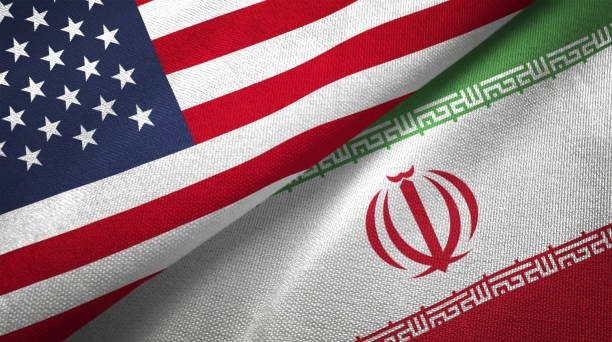
The Trump administration is boasting about pending plans to conclude its war with Iran, having achieved none of the original objectives laid out by President Donald Trump.

With a commitment to a ceasefire and the scheduled signing of a “framework” later this week, Iran is expected to agree to reopen the Strait of Hormuz within 30 days. Negotiations over an agreement regarding Iran’s nuclear program are expected to take place in the 60 days following Friday’s signing ceremony.

If the deal is signed on this week, it will mark a return to the status quo antebellum when the Strait of Hormuz was open and no nuclear deal with Iran was in place. Aside from killing top regime leaders, thousands of civilians — including more than 150, most of them children, on a strike on an elementary school — and damaging almost 149,000 civilian infrastructures, the United States has functionally achieved nothing. The same regime is in power and it maintains missile capabilities, still has a navy, and still supports regional proxies.

Trump also teased the prospect of a U.S. protection racket under which Middle Eastern nations would be forced to pay monetary tribute to America if the U.S. and Iran do not finalize a nuclear accord.

On Monday, Iran’s government declared victory and appeared to vow revenge on the U.S. for the war.

“The Deal with the Islamic Republic of Iran is now complete,” Trump wrote on Truth Social on Sunday, his 80th birthday. “I hereby fully authorize the toll free opening of the Strait of Hormuz.” An hour later, Trump offered a caveat, stating the strait would only be opened “upon the signing of the Deal on Friday.”

“This victory was achieved through absolute national cohesion, under the wise guidance of the Supreme National Security Council and all state pillars,” Iran’s Foreign Ministry spokesperson Esmail Baghaei announced on Monday, claiming that the conflict “cost the aggressors heavily.”

“Moving toward diplomacy does not mean we will ever forgive or forget the crimes against the Iranian nation; the pursuit of justice for our martyrs is permanent,” said Baghaei.

The White House did not reply to a request by The Intercept for comment on Iran’s declaration of victory and apparent vow of revenge for its dead.

The new “deal” is a complete capitulation for Trump who claimed, on March 6: “There will be no deal with Iran except UNCONDITIONAL SURRENDER!” No such surrender occurred.

Nor is it the first ceasefire Trump has claimed would result in a reopening of the Strait of Hormuz.

“Iran has now agreed to a ceasefire and reopening the Strait of Hormuz,” the White House announced on April 8, essentially the same agreement publicized on Sunday.  That original ceasefire collapsed months ago, but the fiction was observed by the administration and mainstream news media outlets alike, until the new agreement was rolled out.

Pakistan says it will oversee a formal signing of a memorandum of understanding on Friday in Geneva, Switzerland. Prime Minister Shehbaz Sharif told the National Assembly session in Islamabad “the immediate and permanent cessation of military operations has been announced across all fronts, including Iran, America, and Lebanon.”  

Self-styled War Secretary Pete Hegseth claimed on Sunday that the agreement guarantees “Iran will never have a nuclear weapon, won’t seek one, won’t buy one, won’t have one.” Iran previously agreed to those terms when it first ratified the Nuclear Nonproliferation Treaty in 1970, and reaffirmed that agreement on the first page of the 2015 Joint Comprehensive Plan of Action, or JCPOA, negotiated by former President Barack Obama’s administration. Trump unilaterally withdrew from that pact during his first term.

Trump indicated Hegseth was lying or uniformed in an interview with the New York Times on Sunday. The president said the U.S. was still negotiating whether Iran would suspend its enrichment for 20 years but hinted that he might settle for a 15-year suspension.

Trump has consistently criticized the JCPOA. “Barack Hussein Obama gave them 1.7 Billion Dollars in ‘Green” Cash,’” he wrote during a social media rant in April. Iran’s Mehr news agency reported that the U.S. would release $12 billion in frozen assets to Iran before the start of nuclear negotiations. “The accord secures the unfreezing of all Iranian assets and addresses compensation for wartime damages,” said Baghaei.

Trump said that if the U.S. does not sign a final nuclear agreement with Iran, the United States might assume the role of “the guardian of the Middle East” in return for 20 percent of the region’s revenues. The proposed extortion scheme appears akin to the 19th-century Barbary States, which practiced state-supported piracy to exact tribute from other nations. The United States fought two separate wars against two of these North African states: Tripoli from 1801 to 1805, and Algiers from 1815 to 1816.

A recent Intercept analysis of Trump’s claims about the Iran war, his stated objectives, and supposed American achievements found the U.S. has fallen short or flamed out on all counts. The public record shows an administration that has consistently scaled back its goals and downgraded its claimed successes, without nearing anything resembling the victory Trump has touted.

On the first day of the conflict, Trump laid out his most ambitious objectives. “The heavy and pinpoint bombing … will continue, uninterrupted … as long as necessary to achieve our objective of PEACE THROUGHOUT THE MIDDLE EAST AND, INDEED, THE WORLD!” Trump wrote on Truth Social on February 28.

Since April, the White House has not replied to requests for further information about Trump’s inability to achieve world peace. Trump has also failed to accomplish even his more modest goal, as the region remains mired in conflict. Israel continued its war on Lebanon on Sunday and said it was not involved in the new pact. “Trump’s agreement does not bind us. … We are not party to this agreement,” Israeli National Security Minister Itamar Ben-Gvir wrote on Telegram on Sunday.

“He’s a very difficult guy,” Trump said of Israeli Prime Minister Benjamin Netanyahu on Sunday. “He should be very thankful to us for doing this,” he said of the war, lapsing into typical hyperbole. “Because if Iran had a nuclear weapon, Israel wouldn’t be around for two hours.”

Trump’s US-Iran ceasefire deal is a costly return to prewar conditions – and resolving nuclear questions will run into the ‘indivisibility problem’

0
trump’s-us-iran-ceasefire-deal-is-a-costly-return-to-prewar-conditions-–-and-resolving-nuclear-questions-will-run-into-the-‘indivisibility-problem’
Trump’s US-Iran ceasefire deal is a costly return to prewar conditions – and resolving nuclear questions will run into the ‘indivisibility problem’

Shehbaz Sharif, the prime minister of Pakistan, which served as the key negotiator between the U.S. and Iran, announced on June 14, 2026, that the two sides had agreed on a deal to end the war. It will be officially signed on June 19 in Switzerland.

President Donald Trump announced it on Truth Social as a triumph, claiming that the Strait of Hormuz is open for everyone, the U.S. blockade has been lifted, and the oil is flowing again. What Trump did not mention was Iran’s nuclear program and what happens to its enriched uranium stockpile, one of the main reasons cited for starting the war.

The nuclear issue – along with core issues such as ballistic missiles and Iran’s proxies – has been deferred for 60 days.

This raises two important questions: What was the war actually for? And what did the U.S. achieve?

As an international and nuclear security expert, I believe the answer is nothing – and in the process the U.S. lost credibility as a negotiating partner.

Why the nuclear question is the hardest

The “rationalist theory of war,” as developed by political scientist James Fearon in 1995, identifies three problems that drive states to war when they would prefer to reach a deal: incomplete information about each other’s resolve; the inability to credibly promise a deal or commitment; and what international relations scholars call the indivisibility problem – when the thing in dispute cannot be split or shared, because it leaves no middle ground to settle on.

The war clarified the first reason. Each side saw what the other would actually do – how much force the U.S. was willing to use and what Iran could absorb while still staying in the fight.

What the war could not solve was the nuclear commitment problem. And this goes far back between the U.S. and Iran.

Iran adhered to the 2015 Joint Comprehensive Plan of Action, the landmark nuclear deal that restricted Tehran’s nuclear program. The International Atomic Energy Agency verified that Tehran kept uranium enrichment to 3.67% and its stockpile under 300 kilograms – a concentration used to fuel a power reactor but far too low for a weapons program.

But the U.S. walked away in 2018, and Trump later called it “the worst deal ever” over its sunset clauses and on its silence on Iran’s ballistic missiles.

A woman waves a flag in a city square.

A woman waves an Iranian flag in Islamic Revolution Square in Tehran, Iran, on June 14, 2026. AP Photo/Vahid Salemi

Iran returned to negotiations in 2025, and the U.S. and Israel bombed Iran while those talks were still taking place. Similarly, in February 2026 the negotiations were ongoing and a deal was within reach when Israel and the U.S. struck Iran – killing Supreme Leader Ali Khamenei and lead negotiator Ali Larijani.

The U.S. has demonstrated a record of reneging on its deals and breaking the negotiating process. Which is why Iran now insists on guarantees and demands sanctions relief before signing a deal, and not just good faith.

A state that previously kept its commitments and was still bombed has little reason to accept promises of relief in the future. For this reason, I believe the 60-day deferral is a window for Tehran to watch whether the U.S. and Israel will hold the ceasefire on all fronts, including Lebanon.

The third problem of indivisibility – when the thing or issue in dispute can’t be split or shared – is why the nuclear question is the hardest.

Most disputes can be split. Sanctions, for example, can be lifted by degrees. Even a nuclear program can be split, which the world saw in the Joint Comprehensive Plan of Action deal, with centrifuges counted, enrichment capped and a stockpile metered.

What cannot be split is the U.S. demand for zero uranium enrichment and Tehran calling uranium enrichment a sovereign right.

A deal, a war and a ceasefire

The 2015 nuclear deal also limited Iran’s centrifuges – the machines that do the enriching – and placed Iran’s nuclear program under the most intrusive inspections, all in exchange for sanctions relief.

The nuclear question was not part of the 2015 deal – it was the actual deal.

During the June 2025 negotiations with Iran, and again in February 2026, the U.S. position was about the nuclear program, but in the opposite direction from the Joint Comprehensive Plan of Action. It was not about limits but the total elimination of Iran’s nuclear program.

In both rounds of talks in 2025 and 2026, Washington’s envoy, Steve Witkoff, demanded zero enrichment and the dismantling of Natanz, Fordow and Isfahan – Iran’s three most important nuclear sites. Iran called enrichment a sovereign right and refused.

Both rounds of negotiations ended in bombings.

A man points at a screen with a map of the Strait of Hormuz.

A man points toward the positions of ships in the Strait of Hormuz on a screen at the Maritime Information and Cooperation and Awareness Center in Brest, France, on April 27, 2026. Fred Tanneau/AFP via Getty Images

The current deal to be signed on June 19 does not put a cap on Iran’s enrichment, nor does it discuss the elimination of its nuclear program. It ends the fighting, reopens the Strait of Hormuz and consigns enrichment, the stockpile, missiles and Iran’s regional proxies to 60-day negotiations.

In a recent New York Times interview, Trump said he was in no rush to remove the near-bomb-grade fuel still buried under the bombed sites. He claimed Iran would suspend enrichment for 15 or 20 years and enrich only for nonmilitary purposes.

In the Joint Comprehensive Plan of Action deal under President Barack Obama, the nuclear question was addressed where 97% of Iran’s stockpile was shipped out of the country and the cap was a verified fact.

Because it doesn’t address any of these issues, the Trump deal is a ceasefire agreement, not a nuclear agreement.

A costly return to the status quo

Going back to the bargaining theory, we know the war settled the information problem – it revealed what each side would endure.

The commitment problem remains. Neither side can yet make a promise the other believes, least of all an Iran whose negotiators were killed.

And I believe the indivisibility problem is now worse. The question of zero enrichment versus a sovereign right cannot be split. The current 60-day deferral is not a resolution. It is the same unsolved problem with a clock attached.

The one thing that could change is American restraint. If Washington holds Israel from striking Iran and Lebanon, it can slowly rebuild its credibility that was destroyed by the two wars. And that is a real challenge for the Trump administration.

Even as the deal was being finalized, Israel struck Beirut, the kind of action that can derail any talks.

In my view, the 60-day window should be read not as the path to a settlement but as the interval or pause before the next one fails.

I argued in April that this conflict would not end in a clean settlement but in a series of contested pauses. The deal to be signed on June 19 is the first of them.

Iran emerges with its enrichment knowledge intact, its stockpile buried and fresh reason to believe that only a nuclear weapon would have deterred the U.S.-Israel attack.

But Iran also knows that it stood its ground and was able to strike U.S. bases and allies in the region. It has discovered leverage it did not previously know it held. The Strait of Hormuz has proved a better deterrent than the nuclear bomb.

The strait is open, the oil is flowing, and the question the war was fought over sits exactly where it began. Thousands of lives were lost to arrive back to square one. Nobody has won, though both sides will say they did.

Heart protection from COVID shots remains amid updates, study finds

0
heart-protection-from-covid-shots-remains-amid-updates,-study-finds
Heart protection from COVID shots remains amid updates, study finds

Although most Americans have eschewed seasonal COVID-19 vaccines, the updated shots continue to show significant protection against cardiovascular disease, especially for those over age 75 and those with underlying medical conditions. That’s according to a new study that pulled data from more than 1 million patients in a US Department of Veterans Affairs (VA) health system.

The finding builds on previous data showing that the vaccines significantly lower the risk of COVID-19-associated cardiovascular risks, particularly heart attacks and strokes. But it wasn’t a given that the benefit would hold up over time—as the virus evolved, the vaccines were updated, population-level immunity increased from previous infection and vaccination, and risk of severe outcomes fell.

The new study, published in JAMA Internal Medicine, found that the 2024–2025 COVID-19 vaccine continued to protect against COVID-19-associated “major adverse cardiovascular events” (MACE), which include cardiovascular death, heart attack, stroke, and hospitalization for heart failure.

The study included electronic medical record data from 1,039,659 patients in the VA’s St. Louis Health Care System. All of the patients received a seasonal flu shot between September 3, 2024, and December 31, 2024, with some also getting a COVID-19 vaccine at the same time. Of the 1,039,659 patients, 349,085 received both shots, while 690,574 got just the flu shot. The latter group acted as the control group for the study.

After eight months of follow-up, the researchers looked for documented COVID-19 cases and compared MACE events among the two groups. Overall, the COVID shots’ vaccine effectiveness against MACE events was 38 percent. In terms of absolute numbers, the benefit is modest. The study estimated that the shots dropped the rate of COVID-19-associated MACE events from about 5 in 10,000 to 3 in 10,000. Looking across subgroups, the benefits were strongest among those aged 75 and older and those with underlying health conditions.

Neglected benefits

The researchers, led by epidemiologist Ziyad Al-Aly at the St. Louis VA, also looked at MACE and deaths without documented COVID-19 cases. Here, the benefits of COVID-19 vaccines were stronger, suggesting COVID-19 cases may have been missed or undiagnosed. The shots appeared to drop the rate of MACE from 382 per 10,000 to 358, and the rate of death from 223 to 207.

“Extrapolating these estimates to a population of 1 million people, vaccination could plausibly be associated with averting approximately 2,370 MACE events and 1,580 deaths over an 8-month period,” the researchers note, though they urge caution in interpreting the finding.

The study has limitations, including that most of the US veteran population is older, White, and male, making it likely that the findings can’t be generalized to the whole population. Still, the findings indicate that the vaccines continue to offer cardiovascular protection against COVID-19, which should factor into people’s decisions on whether to get an annual COVID-19 booster. An accompanying study also published in JAMA Internal Medicine on Monday found the vaccines still directly protect against COVID-19, reducing the risk of hospitalization and critical illness by 35 percent and 41 percent, respectively.

In an accompanying editorial, Robert Califf, a cardiologist and former Food and Drug Administration commissioner, wrote that the data from the two studies “provide strong evidence of a favorable balance of benefit to risk for updated COVID-19 vaccine boosters across the population.” But, he lamented that despite that strong evidence, national views are being swayed by the “general antivaccination statements from the US Department of Health and Human Services,” which is run by anti-vaccine Health Secretary Robert F. Kennedy Jr.

Only 17.5 percent of adults and 22.6 percent of people over age 65 in the US have gotten the 2025–2026 COVID shot, according to federal data.

“The politicization of COVID-19 vaccination and messenger RNA vaccines in general has taken a toll on the longevity and functional status of those in the US,” Califf wrote. He called for researchers to collect more data on the vaccine’s benefits and engage with the public about the findings, particularly on social media, to combat anti-vaccine rhetoric.

US-Iran peace deal rattles China’s energy strategy, geopolitics

0

Beijing officially welcomed the United States-Iran peace deal announced over the weekend, hoping the reopening of the Strait of Hormuz will ease a months-long oil supply disruption that has rattled China’s fuel markets and battered its refining sector.

However, the unofficial response, from the Chinese commentariat, is not so uniformly positive.

Chinese commentators do say approvingly that the reopening of the Strait of Hormuz should allow Beijing to replenish its strategic crude reserves and benefit from softening oil prices, with some sanctioned “teapot” refiners potentially finding relief in the diplomatic thaw.

However, with Western governments unfreezing Iranian assets and allowing Tehran to legally sell crude, China will lose the discounts it enjoyed by importing Iranian oil through a shadow fleet that bypassed sanctions.

“International oil prices will likely fall after the US-Iran reconciliation, which is a double-edged sword for China,” a Sichuan-based columnist using the pseudonym Fanyuzhi says. “In the short term, lower oil prices will reduce logistics costs and ease inflation. But over the long term, cheap oil will slow the push for new energy, and China stands to lose the privileged position it built with Iran during the sanctions years.”

He says that once Tehran reopens to the world, European, Japanese, and South Korean companies will rush back in to compete for the crude oil that China once had to itself.

“That said, a more stable Middle East is good for China’s Belt and Road Initiative (BRI),” he says. “Beijing helped broker the Saudi-Iranian reconciliation and played a behind-the-scenes role in the US-Iran talks as well. China’s influence in the region is clearly rising, and Middle Eastern countries will increasingly look eastward when weighing their relationships with the major powers.”

But he cautions against putting too much faith in the peace deal – saying it resembles two exhausted boxers catching their breath after the referee calls a stop, with another round still possible once their strength returns.

Since the US-Iran war broke out on February 28, it has strained China’s gasoline supply on two fronts, according to media reports. Disruptions to crude flows through the Strait of Hormuz drove up global oil price expectations, squeezing margins for Chinese refiners.

At the same time, as fuel prices remained volatile, many Chinese consumers turned to purchase electric vehicles, eroding domestic demand for gasoline and leaving the country’s independent “teapot” refiners under mounting pressure to cut output.

While US sanctions on some teapot refiners added to the pressure, the blow was less severe than expected. China’s large strategic crude reserves gave Beijing room to maintain domestic fuel supply without relying on sanctioned imports.

China’s crude oil imports fell 20% year-on-year in April to 9.25 million barrels per day, the lowest level since July 2022, according to customs data. The decline deepened in May, when imports dropped to around 7.8 million barrels per day, down 29% year-on-year.

For the first five months of 2026, total crude imports fell 4.8% from the same period of last year. Refined fuel imports fell even more sharply, with May figures dropping 58% from a year earlier.

“When crude shipments through the Strait of Hormuz were first cut off in March, Chinese authorities ordered the independent refiners to maintain high output of gasoline and diesel even at a loss, warning that cutting utilization rates could result in their crude import quotas being slashed,” says a Beijing-based writer using the pen name All About Energy.

He says some of the loss-making “teapot” refiners were allowed to reduce output only after Beijing saw a slowdown in domestic gasoline demand.

“China’s gasoline demand has been declining since the Iran war disrupted crude shipments through the Hormuz Strait,” he says. “Rising fuel prices have discouraged driving of combustion engine vehicles, particularly in cities where electric vehicles are more convenient and cheaper to run. This year’s drop in gasoline demand is expected to exceed earlier forecasts.”

“April 2026 was a turning point,” says Xie Duiren, a Shandong-based columnist. “New energy vehicles accounted for more than 60% of domestic passenger car retail sales for the first time, with domestic brands crossing 80%. As more people choose electric vehicles, combustion-engine cars lose their residual-value protection in the second-hand market.”

He says fewer buyers and more sellers mean used car prices can only go one way, and the downward spiral has begun.

“Electric vehicles are now improving in technology and holding their value better, steadily squeezing out used combustion-engine cars, “ he says. “When a combustion-engine car goes from being an asset to a liability, who would still want to own one?”

Reuters reported on June 2 that China’s National Development and Reform Commission (NDRC) allowed some independent refiners in Shandong province to cut output from June to no lower than 80% of last year’s monthly average.

US presence in Indo-Pacific

Washington has gained significant leverage over the global energy market through two major developments this year.

In January, US special forces arrested Venezuelan President Nicolas Maduro in Caracas and flew him to New York to face drug trafficking and narco-terrorism charges. Trump said the US would run Venezuela for an unspecified period, giving Washington significant leverage over the country’s vast crude oil reserves. The end of the Iran war further extends that reach, with the Strait of Hormuz set to reopen under terms heavily shaped by Washington.

Together, the two developments give the Trump administration far greater bargaining power in the global fossil fuel market and leave it with more bandwidth to focus on the Indo-Pacific, both politically and militarily, say some Chinese analysts. 

“While global attention was fixed on the Iran negotiations, reports emerged that the Trump administration was considering purchasing the Chagos Islands in the Indian Ocean from Mauritius, bypassing the United Kingdom to secure direct control of the Diego Garcia naval base,” a military affairs commentator writes in an article on Sina.com. “Diego Garcia forms the southwestern anchor of Washington’s Indo-Pacific strategy, working alongside the island chain system and India to form a multi-layered encirclement of China’s sea lanes.”

He stresses that the base, which hosts about 2,400 military and civilian personnel and supports strategic bombers and naval operations, has served as a critical logistics hub for US operations across the Indo-Pacific for decades, most recently during the Iran war. 

He says China needs to stay alert and watch every move Washington makes now that the war in Iran is drawing to a close.

Official response in more detail

Chinese Foreign Ministry spokesman Lin Jian said Monday that Beijing welcomes the agreement between the US and Iran on the first-stage memorandum of understanding (MOU) and commends Pakistan’s mediation efforts. He called on both sides to sign it as scheduled on June 19, and said China is willing to work with the international community to help restore peace in the Middle East and Gulf region.

“The Strait of Hormuz is an important strait for international navigation. Restoring stability in the Strait serves the common interests of regional countries and the international community,” Lin said. “We hope the Strait will become safe again for free passage at an early date. China stands ready to maintain communication with regional countries and the international community on relevant issues.”

US President Donald Trump announced the deal after more than 100 days of military conflict with Iran, saying that the agreement with Tehran was “now complete” and authorizing the immediate removal of the US naval blockade. Pakistan and Qatar mediated the talks, and the formal signing ceremony is scheduled to take place in Geneva on June 19.

The 14-point MOU includes a permanent cessation of hostilities on all fronts, including Lebanon, the full lifting of the naval blockade within 30 days, the reopening of the Strait of Hormuz, and a suspension of sanctions on Iranian oil sales. It also calls for the release of US$24 billion in frozen Iranian assets during a 60-day negotiation period, after which a final agreement on nuclear issues is to be reached.

Read: Trump-Xi summit to weigh US energy sales amid Hormuz crisis

Follow Jeff Pao on X at @jeffpao3

Iran and US agree deal to end war as Trump says Strait of Hormuz will be reopened

0
iran-and-us-agree-deal-to-end-war-as-trump-says-strait-of-hormuz-will-be-reopened
Iran and US agree deal to end war as Trump says Strait of Hormuz will be reopened


U.S. and ​Iranian officials said they had reached an agreement to end their war and reopen the Strait of Hormuz, a preliminary pact that sent oil prices falling but leaves the fate of Tehran’s ‌nuclear program to further negotiations.

While still a framework, the deal marked the biggest breakthrough towards resolving the conflict that has killed thousands and upended energy markets since it began with joint U.S.-Israeli strikes on Iran in February.

“The Deal with the Islamic Republic of Iran is now complete,” U.S. President Donald Trump wrote on his Truth Social platform at around 5:30 p.m. in Washington (2130 GMT) on Sunday. His post came shortly after Pakistani Prime Minister Shehbaz Sharif, whose country has served as a mediator, announced a deal had been struck early on Monday ​local time.

The memorandum of understanding is scheduled to be officially signed on Friday in Switzerland.

This is what the U.S. and Iran, along with mediator Pakistan, have said about what is in the preliminary deal they have announced to end the war.

HOW THE DEAL WILL BE PHASED AND WHAT HAPPENS WHEN
  • Pakistan’s Prime Minister Shehbaz Sharif said both ​sides had declared an immediate and permanent end of all military operations.
  • All sides have said the memorandum of understanding on an ‌end to the war will be signed in Switzerland on Friday. Iran’s Deputy Foreign Minister Kazem Gharibabadi said the memorandum would then be published.
  • Iran and the U.S. have both said the Strait of Hormuz would start to reopen and the U.S. blockade on Iranian ports start to lift as soon as the memorandum is signed.
  • Both sides have said negotiations on more difficult ​further areas of dispute – notably Iran’s nuclear issue and U.S. sanctions on Iran – will be conducted over the following 60 days.
STRAIT OF HORMUZ ​AND BLOCKADE OF IRANIAN PORTS
  • U.S. President Donald Trump said the Strait of Hormuz would be reopened on Friday and he ⁠had ordered a lifting of the blockade on Iranian ports.
  • A senior Iranian official said the strait would be reopened “to all commercial vessels” once the memorandum ​was signed.
  • Iran’s semi-official Fars news agency reported that under the memorandum, marine traffic through the strait would be regulated by Iran in coordination with Oman.
IRAN’S NUCLEAR ​PROGRAMME
  • Both sides have said that Iran agrees that it will neither produce nor acquire nuclear weapons – a promise Tehran has been making repeatedly for decades.
  • The senior Iranian official said pending a final agreement Iran would freeze its nuclear activity, refraining from further uranium enrichment or the expansion of nuclear facilities.
  • The senior Iranian official said the U.S. had agreed that Iran ​could dilute its stockpile of highly enriched uranium inside Iran under a future comprehensive agreement.
  • Trump said on Saturday there was no urgency to extract Iran’s stockpile ​of nuclear material, and that the U.S. would retrieve it “when all is calm”.
  • Trump said there would be a strong inspections regime for Iran under any deal, but he did not ‌give specifics.
  • U.S. ⁠Senator Lindsey Graham said any final deal on Iran’s nuclear programme would have to be reviewed and approved by Congress.
SANCTIONS AND FINANCIAL IMPACT
  • The senior Iranian official said the U.S. had agreed not to impose any new sanctions on Iran until a final deal was reached.
  • They added the U.S. would waive oil sanctions on Iran for a specified period and that after the final agreement all U.S. and U.N. sanctions would be lifted to an agreed timetable.
  • The senior Iranian official ​said the U.S. had agreed to release $25 ​billion of Iran’s frozen assets, ⁠including via direct cash transfers, cooperation among regional countries, and financial credit lines.
  • Washington, in coordination with its regional allies, would prepare a reconstruction and development plan for Iran, to be negotiated and agreed with Tehran within 60 days, they added.
  • Trump ​said Iran would not be provided with cash but that sanctions could potentially be lifted.
LEBANON
  • Sharif said the immediate ​and permanent end of ⁠all military operations would include Lebanon.
  • The Secretariat of Iran’s Supreme National Security Council said military operations would stop permanently on Monday night including in Lebanon.
  • Iran’s Foreign Minister Abbas Araqchi said there must be a complete halt to Israeli attacks against Lebanon and the U.S. bears responsibility for implementing the framework deal.
  • Israel’s Defence Minister Israel Katz ⁠said the Israeli ​military would remain in security zones it has captured in Lebanon, Syria and Gaza and ​that Prime Minister Benjamin Netanyahu had made this clear to Trump.
  • Before the memorandum was announced, Trump said he would bring peace to the region, including Lebanon. He said there should be no ​more Israeli attacks on Lebanon and no more attacks by the Iran-backed Lebanese group Hezbollah on Israel.

Source:  Reuters

Cowboy Ranch Seasoning

0
cowboy-ranch-seasoning
Cowboy Ranch Seasoning

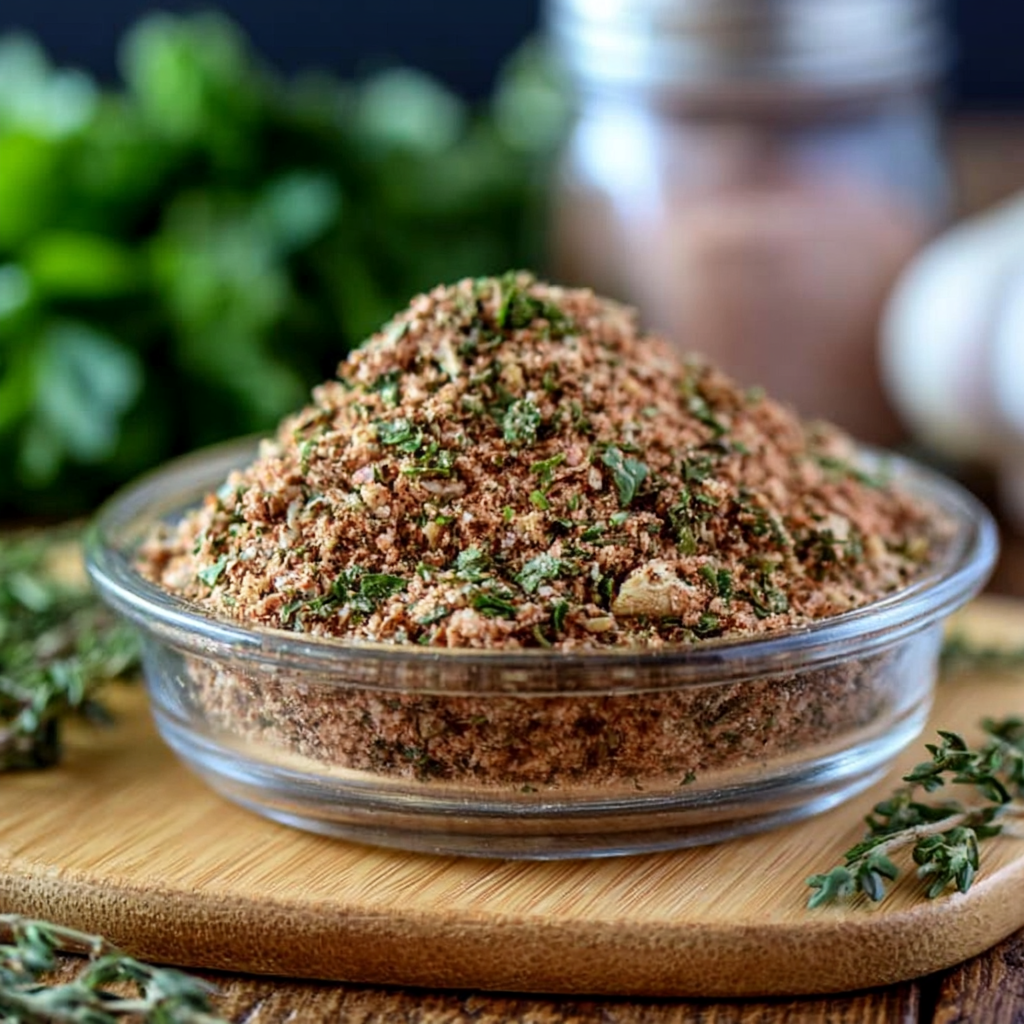
This Cowboy Ranch Seasoning is smoky, savory, creamy, herby, and just a little spicy. It takes classic ranch seasoning and gives it a bold cowboy-style twist with smoked paprika, cayenne pepper, cumin, brown sugar, dried herbs, garlic, onion, and powdered buttermilk.

Use it as a dry seasoning for chicken, pork, potatoes, vegetables, popcorn, eggs, roasted nuts, or fries. You can also turn it into a creamy cowboy ranch dip or dressing with mayonnaise, sour cream, apple cider vinegar, Worcestershire sauce, and a touch of liquid smoke.

It is easy to make in just 5 minutes and perfect to keep in your spice cabinet for quick flavor anytime.

Why You’ll Love This Cowboy Ranch Seasoning

This seasoning blend is bold, easy, and versatile.

You’ll love it because it is:

  • Ready in 5 minutes
  • Smoky, tangy, savory, and slightly spicy
  • Great as a dry rub
  • Easy to turn into dip or dressing
  • Perfect for chicken, pork, potatoes, and vegetables
  • Made with pantry spices
  • Better than store-bought seasoning
  • Great for meal prep and snack seasoning

Cowboy ranch seasoning is a smoky ranch-style dry seasoning mix made with dried herbs, garlic, onion, buttermilk powder, smoked paprika, mustard, cumin, cayenne, and a little brown sugar.

It has the creamy tang of ranch seasoning with deeper smoky flavor and a small kick of heat. It works as a seasoning blend, dry rub, dip mix, or dressing base.

Recipe Summary

Prep Time: 5 minutes
Total Time: 5 minutes
Yield: About ¾ cup seasoning
Course: Seasoning, Dressing, Dip
Cuisine: American / Ranch-Inspired

Ingredients

Cowboy Ranch Seasoning Mix

  • ⅓ cup dry powdered buttermilk
  • 2 tablespoons dried parsley
  • 1 tablespoon smoked paprika
  • 2 teaspoons garlic powder
  • 2 teaspoons onion powder
  • 2 teaspoons dried onion flakes
  • 2 teaspoons dried dill weed
  • 1 tablespoon brown sugar
  • 1 teaspoon kosher salt
  • ½ teaspoon black pepper
  • ½ teaspoon cayenne pepper
  • ½ teaspoon ground mustard
  • ½ teaspoon cumin

Cowboy Ranch Dip

  • 1 cup mayonnaise
  • ½ cup sour cream
  • 2 tablespoons cowboy ranch seasoning
  • 1 tablespoon apple cider vinegar
  • 1 teaspoon Worcestershire sauce
  • ¼ teaspoon liquid smoke

Cowboy Ranch Dressing

  • Prepared cowboy ranch dip
  • 1–2 tablespoons whole milk, or enough to thin to your desired consistency

Ingredient Notes

Dry Powdered Buttermilk

Dry powdered buttermilk gives the seasoning its classic ranch-style tang and creamy flavor. It is usually found in the baking aisle.

Smoked Paprika

Smoked paprika gives this seasoning its signature smoky flavor. Regular paprika can be used, but the seasoning will taste less smoky.

Dried Parsley

Dried parsley adds classic ranch flavor and a little herb freshness.

Garlic Powder and Onion Powder

These two ingredients create the savory base of the seasoning.

Dried Onion Flakes

Dried onion flakes add extra texture and a stronger onion flavor. If you do not have them, add a little more onion powder.

Dried Dill Weed

Dill gives the seasoning that familiar ranch flavor. Dried dill seed can be used, but the flavor and texture will be slightly different.

Brown Sugar

Brown sugar adds a small touch of sweetness and helps balance the smoky and spicy flavors.

Cayenne Pepper

Cayenne gives this seasoning a little heat. Use less for a mild blend or more for a spicier version.

Ground Mustard

Ground mustard adds tang and depth. It helps balance the creamy buttermilk flavor.

Cumin

Cumin adds warm, earthy flavor and gives the seasoning a cowboy-style twist.

How to Make Cowboy Ranch Seasoning

Step 1: Combine the Ingredients

Add the dry powdered buttermilk, parsley, smoked paprika, garlic powder, onion powder, dried onion flakes, dill, brown sugar, salt, black pepper, cayenne pepper, ground mustard, and cumin to a small bowl.

Step 2: Mix Well

Whisk everything together until evenly combined.

Make sure the buttermilk powder and spices are fully blended.

Step 3: Make It Finer, Optional

For a smoother seasoning, pulse the mixture a few times in a food processor.

This is helpful if you want a finer texture for dressings, dips, or popcorn.

Step 4: Store

Transfer the seasoning to an airtight container or glass jar.

Store in a cool, dry place.

How to Make Cowboy Ranch Dip

In a medium bowl, combine mayonnaise, sour cream, cowboy ranch seasoning, apple cider vinegar, Worcestershire sauce, and liquid smoke.

Whisk until smooth and creamy.

Cover and refrigerate until ready to serve.

This makes about 1 ¾ cups of dip.

How to Make Cowboy Ranch Dressing

To turn the dip into dressing, add 1–2 tablespoons whole milk.

Whisk until smooth.

Add more milk as needed until it reaches your preferred dressing consistency.

This makes about 1 ¾ to 2 cups of dressing.

How to Use Cowboy Ranch Seasoning

This seasoning blend can be used in many different ways.

Try it on:

  • Chicken
  • Pork chops
  • Steak
  • Burgers
  • Roasted potatoes
  • Mashed potatoes
  • French fries
  • Popcorn
  • Roasted nuts
  • Scrambled eggs
  • Roasted carrots
  • Broccoli
  • Cauliflower
  • Green beans
  • Wings
  • Chips
  • Crackers
  • Pasta salad

Cowboy Ranch Dry Rub

To use this seasoning as a dry rub, sprinkle it directly over chicken, pork, or beef.

For a simple marinade, mix the seasoning with olive oil and rub it over the meat.

Let it sit for at least 30 minutes before grilling, baking, or roasting.

Best Foods to Serve with Cowboy Ranch Dip

This dip is creamy, smoky, and perfect for snacking.

Serve it with:

  • Carrot sticks
  • Celery sticks
  • Bell pepper strips
  • Tortilla chips
  • Potato chips
  • Pretzels
  • Chicken wings
  • French fries
  • Potato wedges
  • Fried pickles
  • Onion rings
  • Crackers
  • Fresh broccoli
  • Cauliflower florets

Tips for the Best Seasoning Blend

Use fresh spices for the best flavor.

Store the mix in a glass jar if possible.

Keep it away from heat, light, and moisture.

Pulse in a food processor for a finer texture.

Adjust the cayenne to control the heat.

Use smoked paprika for the best smoky flavor.

Shake the jar before each use.

Easy Variations

Extra Smoky Cowboy Ranch

Add a little extra smoked paprika or a pinch of chipotle powder.

Spicy Cowboy Ranch

Increase the cayenne pepper or add crushed red pepper flakes.

Herb Ranch Blend

Add dried chives or extra parsley.

Garlic Ranch Seasoning

Add an extra teaspoon of garlic powder.

Sweet Smoky Ranch

Add another teaspoon of brown sugar.

No-Buttermilk Version

Leave out the buttermilk powder for a dairy-free dry seasoning mix. The flavor will be less creamy and tangy.

Storage Instructions for the Seasoning

Store cowboy ranch seasoning in an airtight container in a cool, dry place.

A glass jar works best because it seals tightly and helps protect the spices from air and moisture.

Keep the seasoning away from direct sunlight and heat.

For the best flavor, use within 3 months. It may last up to 5–6 months, but the flavor will slowly become weaker over time.

Storage Instructions for Dip and Dressing

Store cowboy ranch dip or dressing in an airtight container in the refrigerator.

Use within 1 week.

Stir before serving.

Frequently Asked Questions

Can I make this seasoning without buttermilk powder?

Yes. You can leave it out for a dairy-free version, but the seasoning will taste less creamy and tangy.

Can I use regular paprika?

Yes. Regular paprika works, but smoked paprika gives the seasoning its smoky flavor.

Is cowboy ranch seasoning spicy?

It has a mild kick from cayenne pepper. You can reduce or increase the cayenne to taste.

Can I use this as a meat rub?

Yes. It works well as a dry rub for chicken, pork, beef, and even roasted vegetables.

Can I make ranch dressing with this mix?

Yes. Mix it with mayonnaise, sour cream, vinegar, Worcestershire sauce, liquid smoke, and milk for a creamy dressing.

How long does the seasoning last?

For the best flavor, use it within 3 months. Store it properly and it may last up to 5–6 months.

Can I make the dip ahead of time?

Yes. The dip can be made ahead and refrigerated for up to 1 week.

Recipe Card

Cowboy Ranch Seasoning

A smoky, savory ranch-style seasoning blend made with buttermilk powder, herbs, smoked paprika, garlic, onion, cayenne, mustard, cumin, and brown sugar. Use it as a dry rub, dip mix, dressing base, or all-purpose seasoning.

Prep Time: 5 minutes
Total Time: 5 minutes
Yield: About ¾ cup seasoning

Ingredients

Seasoning Mix

  • ⅓ cup dry powdered buttermilk
  • 2 tablespoons dried parsley
  • 1 tablespoon smoked paprika
  • 2 teaspoons garlic powder
  • 2 teaspoons onion powder
  • 2 teaspoons dried onion flakes
  • 2 teaspoons dried dill weed
  • 1 tablespoon brown sugar
  • 1 teaspoon kosher salt
  • ½ teaspoon black pepper
  • ½ teaspoon cayenne pepper
  • ½ teaspoon ground mustard
  • ½ teaspoon cumin

Cowboy Ranch Dip

  • 1 cup mayonnaise
  • ½ cup sour cream
  • 2 tablespoons cowboy ranch seasoning
  • 1 tablespoon apple cider vinegar
  • 1 teaspoon Worcestershire sauce
  • ¼ teaspoon liquid smoke

Cowboy Ranch Dressing

  • Prepared cowboy ranch dip
  • 1–2 tablespoons whole milk, or as needed

Instructions

To Make the Seasoning

  1. Add all seasoning ingredients to a small bowl.
  2. Whisk until evenly combined.
  3. For a finer texture, pulse the mixture in a food processor.
  4. Transfer to an airtight container.
  5. Store in a cool, dry place.

To Make the Dip

  1. In a medium bowl, combine mayonnaise, sour cream, cowboy ranch seasoning, apple cider vinegar, Worcestershire sauce, and liquid smoke.
  2. Whisk until smooth.
  3. Cover and refrigerate until ready to serve.

To Make the Dressing

  1. Start with the prepared cowboy ranch dip.
  2. Add 1–2 tablespoons whole milk.
  3. Whisk until it reaches your desired dressing consistency.
  4. Add more milk if needed.

Notes

Use smoked paprika for the best flavor.

Adjust cayenne pepper for more or less heat.

Store dry seasoning in a glass jar if possible.

Store dip or dressing in the refrigerator for up to 1 week.

Shake or stir before using.

Nutrition Estimate

Per tablespoon of seasoning:

  • Calories: 25
  • Carbohydrates: 4g
  • Protein: 1g
  • Fat: 1g
  • Sugar: 2g
  • Sodium: varies by salt and buttermilk powder

Nutrition values are approximate and may vary depending on ingredients used.

Final Thoughts

Cowboy Ranch Seasoning is a bold, smoky twist on classic ranch seasoning. It is easy to make, full of flavor, and useful in so many ways.

Sprinkle it on meats, vegetables, potatoes, eggs, popcorn, or snacks, or turn it into a creamy dip or dressing for parties, game day, cookouts, and everyday meals.

UK to ban social media for kids under 16, may impose overnight curfews

0
uk-to-ban-social-media-for-kids-under-16,-may-impose-overnight-curfews
UK to ban social media for kids under 16, may impose overnight curfews

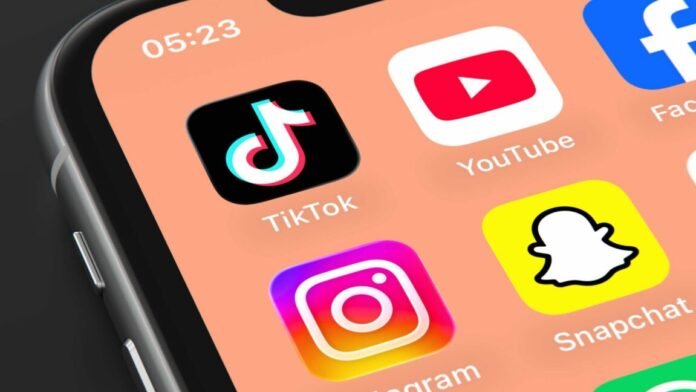
The UK government announced today that it will ban social media for all kids under the age of 16 in rules expected to take effect in spring 2027. The ban will apply to platforms including Snapchat, TikTok, YouTube, Instagram, Facebook, and X.

“We’re going further than any country in the world by banning social media for under-16s and putting wider protections in place to give kids their childhood back,” Prime Minister Keir Starmer said in the announcement.

In addition to the ban on social media, Starmer’s government said it will impose “world-leading blocks on harmful functions such as livestreaming and stranger communication with children for under-16s… Restrictions on these functionalities will also be on by default for 16- and 17-year-olds to prevent a cliff-edge at 16.” The livestreaming and stranger-contact rules would apply to a range of services, such as online gaming.

“The government will also be looking in more detail at overnight curfews and breaks in infinite scrolling for under-18-year-olds and will set out more detail in July,” the announcement said. The planned social media ban will not apply to messaging services like WhatsApp and Signal.

Another planned change is that “so-called AI ‘romantic companion’ chatbots—designed to simulate sexual relationships or roleplay with users—will have to enforce a minimum age of 18. Similar intimate functionalities will be restricted for under-18s on AI chatbots more widely,” the UK government said.

Age checks

Platforms will be ordered to verify users’ ages. Communications regulator Ofcom will be tasked with determining what kinds of age-verification systems will be required to comply with the rules. The ban decision was made after a consultation that drew responses from 116,000 people.

“Ofcom will set out in the coming months different options for effective forms of age assurance for proving whether someone is over 16 that are accurate, robust, reliable, and fair,” the government said in a fact sheet on the rules, noting that facial recognition may be part of the age-check scheme. Adults can avoid the new age check on their existing social media accounts if they’ve already proven their age in another way.

The UK Online Safety Act already requires age checks for porn and other sensitive content. When it took effect last year, it appeared that many people in the UK used VPNs (virtual private networks) to circumvent the age verification.

VPNs themselves can create privacy and security problems. “The VPNs that children are incentivized to use pose privacy and security risks. Bad actors in the VPN space often trade in the sensitive browsing data that these tools can gather,” said the Center for European Policy Analysis, a research group whose funders include Google and Meta.

UK modeled rule on Australia ban

The UK government today said the social media ban will use the same model as Australia, where online platforms must pay financial penalties if they fail to block underage users. Social media companies criticized the Australian rules but agreed to comply.

YouTube said in a statement to media outlets today that “blanket bans push kids out of such curated, supervised, beneficial experiences and towards anonymous, less-safe services.” Meta said the similar rule in Australia showed that “bans risk isolating teens from online communities and information, and driving them to unregulated alternatives that lack built-in protections and parental controls.”

The Electronic Frontier Foundation has said that age-verification requirements harm privacy by requiring more collection of personal information from users of all ages. Banning social media also prevents kids from accessing useful content, the group said.

“Beyond being spaces where people can share funny videos and engage with enjoyable content, social media enables young people to engage with the world in a way that transcends their in-person realm, as well as find information they may not feel safe to access offline, such as about family abuse or their sexuality,” the EFF said in March as the UK discussions were progressing. “In severing this connection to people and information by banning social media, politicians are forcing millions of young people into a dark and censored world.”

Liberal Democrats prefer age-rating system

MP Victoria Collins of the Liberal Democrats party said the proposal is “woefully inadequate.” The UK should instead force tech companies to address addictive algorithms and harmful content, she said.

“That’s why the Liberal Democrats put forward a social media age-rating system that, instead of a blanket ban, puts the onus on the social media giants to clean up their act and have safety by design for all of us,” she said.

MP Nigel Farage, leader of the right-wing Reform UK party, said “the social media ban is well-intentioned” but is “unlikely to work given the mass adoption of VPNs. It will also mean the introduction of Digital ID via the back door. The real answer here is handsets for children with limited features.”

Conservative Party leader Kemi Badenoch took credit for Starmer’s Labour Party deciding on an under-16 ban. “It is fantastic news that the government has finally woken up to the dangers of social media for young people… Huge credit goes to MP Laura Trott and my Shadow Cabinet for relentlessly fighting for this. Conservatives welcome this latest Labour U-turn, and will continue to work for the best implementation of the policy,” Badenoch said.

0FansLike
0FollowersFollow
0FollowersFollow
0SubscribersSubscribe
- Advertisement -
Google search engine

Recent Posts