15 C
London
Tuesday, June 16, 2026
Home Blog

A Chinese rocket breaks apart dangerously close to the Starlink constellation

0
a-chinese-rocket-breaks-apart-dangerously-close-to-the-starlink-constellation
A Chinese rocket breaks apart dangerously close to the Starlink constellation

The upper stage from a commercial Chinese rocket that launched last week has broken apart in space, spreading debris in a heavily trafficked part of low-Earth orbit home to the International Space Station and a significant portion of SpaceX’s Starlink broadband network.

The breakup occurred shortly after the Zhuque-2E rocket reached orbit on June 9 with two satellites providing direct-to-cell communications, perhaps around the time the upper stage was expected to perform a disposal burn. The US Space Force confirmed the breakup event in a post on space-track.org, a website used by the military to distribute orbit data to the public.

“The tracked pieces are being incorporated into routine conjunction assessment to support spaceflight safety,” the Space Force wrote in an advisory. “There are currently no threats to human spaceflight. Analysis is ongoing.”

Counting the pieces

So far, the Space Force has not added any of the debris fragments to the official catalog of human-made space objects. Darren McKnight, a senior technical fellow at the orbital intelligence company LeoLabs, told Ars the fragmentation event likely generated 100 to 150 pieces of debris.

In one piece, the second stage of the Zhuque-2E rocket, made by a Chinese company called LandSpace, measured between 25 and 30 feet (about 8 meters) long and 11 feet (3.35 meters) in diameter. The main body of the rocket’s upper stage is now orbiting between 208 miles and 263 miles (335-by-424 kilometers) at an inclination of 54.5 degrees to the equator.

The uppermost part of this orbit crosses the orbit of the International Space Station, but aerodynamic drag will quickly pull all the debris fragments below the ISS. The debris could pose a greater threat to hundreds of Starlink satellites, particularly those providing direct-to-device connectivity and newly launched satellites, which fly at lower altitudes than the bulk of the Starlink constellation.

The good news is that this altitude is low enough for aerodynamic drag to cause most of the Zhuque-2E debris to reenter the atmosphere within a matter of months. Most of the material will burn up during reentry. The worst-case scenario is a debris-generating event over 400 miles (650 kilometers), where it will take decades or longer for an object to naturally fall back into the atmosphere.

The bad news is that the Zhuque-2E’s breakup is the latest chapter in China’s growing contribution to the space junk problem. After decades of leaving spent rocket bodies in orbit, launch operators in most countries now reserve enough fuel to steer their upper stages back to Earth for controlled reentries. Rocket bodies attributed to Russia and the former Soviet Union account for the bulk of the launch-related debris in long-lived orbits, followed by China and the United States.

But the Russian and American numbers are declining or holding steady, while the mass of Chinese rocket bodies in these long-lived orbits has grown by more than 150 percent in the past five years, according to a new analysis by Space Domain Awareness expert Jim Shell. The increase comes as China ramps up launches of its own megaconstellations designed to compete with SpaceX’s Starlink. Ars reported on these numbers last month.

Rocket bodies are the most concerning sources of space debris because they are typically fairly large in size and mass, often with residual propellant and high-pressure gases that can trigger an explosion. There is no way to maneuver or dispose of them if left abandoned in orbit after releasing their payloads.

McKnight characterized the recent breakup of the Zhuque-2E rocket as a “slight space safety issue,” but the trend is not good. China’s Long March 6A rocket has an especially bad track record, including two explosions that littered a higher-altitude low-Earth orbit with more than 1,000 debris fragments, where they will remain for decades or centuries.

“Three of the top four breakup events in LEO are of Chinese origin, with two of these events being from Chinese (rocket body) explosions in the last four years,” McKnight said.

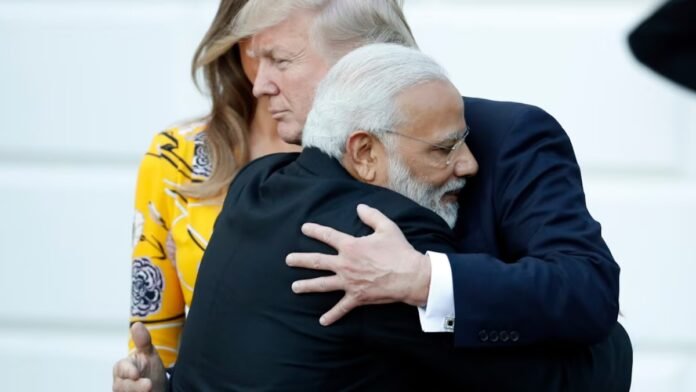
US-India relations aren’t as abysmal as they seem

0
us-india-relations-aren’t-as-abysmal-as-they-seem
US-India relations aren’t as abysmal as they seem

I’ve read that the Indian commentariat and foreign policy establishment are more wary of the United States than at any time this century.

Maybe so. But 26 years is not a particularly long time, and it often seems that there’s a “manic” aspect on the Indian side when considering the bilateral relationship.

Perhaps people get a little too excited when things are going well, and a little too depressed when the occasional hiccups happen. But is the India-US relationship really off track? Even if it’s currently in a “down” moment, look back 40 years, and things still look pretty good. Here are a few things to consider:

First, the US ambassador to India is a lot better than his predecessor. Ambassador Sergio Gor chose India out of any number of possible postings — or positions within the Trump administration. He’s not in India for a three-year holiday. Even more, Ambassador Gor can call the White House and President Trump will answer. Very few ambassadors can do this.

Second, it’s not as if the US has forgotten about India or is giving it the cold shoulder. Notice Secretary of State Marco Rubio visited last month. He didn’t choose India at random.

And Rubio is not only the most consequential Secretary of State since George Schultz, but he’s also the National Security Advisor. His visit is a gauge of the importance the Trump administration assigns to India.

Third, the India-US military-to-military prelateship is stronger than ever. The two forces conduct frequent exercises, India has become a maintenance and logistics hub for the US Navy and arms sales are robust.

India also gets a degree of special treatment regarding technology exports — although there is room for improvement.

As for trade? A bilateral trade deal is in the works, which might assuage the shock felt by many countries of having blanket tariffs imposed on them.

Yes, it would have been nice if tariffs had been applied more carefully, but the Trump administration was dealing with a problem that had built up over many decades, and felt a sledgehammer was needed to shift things in the right direction.

India’s resentment is understandable, but it’s not unique. Indeed, Japan could feel even more aggrieved — given its 70 years as a loyal treaty ally and the deep military and economic ties with America — and the consistent political support it has provided.

Instead, Tokyo bit its tongue, ensuring that resentment didn’t get the better of strategic interests. “Biting one’s tongue” is perhaps sometimes the better part of statesmanship —provided one reckons the relationship is valuable enough.

And at the end of the day, Indian and American strategic interests align — as the world enters a struggle between free, consensually governed nations and expansionist totalitarian ones.

Yes, it’s China that I’m mostly talking about. India, in fact, recognized the “China threat” far earlier than did the US, which has belatedly woken up. Regardless, by their very existence, India and the United States are a rebuttal of China’s dictatorship and repression.

However, from some Indian quarters its claimed Trump doesn’t see China as a threat and is aiming to “sell out” to Beijing.

Trump’s maneuvering room is constrained by US dependence on China for critical minerals, pharmaceuticals and manufactured goods. But the president has no illusions about the People’s Republic of China as a rival, if not an enemy, and Xi Jinping is clearly unhappy about US policies towards the PRC.

But isn’t Trump “transactional”— as often said as an insult? I should hope so. And Trump isn’t unique in this regard.

Every president, and one might suggest every world leader, including Prime Minister Narendra Modi, is “transactional.” They all expect some benefit for whatever they do, and their citizens do as well.

What about the US and Pakistan?

I understand why India is irked — though this issue has existed in the India-US relationship for many years, even while it improved over the last couple of decades.

The Pakistanis played a double game against the United States from the beginning of its time in Afghanistan. And Pakistan is too close to China for comfort, and indeed is effectively a PRC proxy state.

Even more, the evidence is conclusive that Pakistan has and does sponsor and direct terrorism against India. Perhaps keep in mind that while it’s not a perfect comparison, in some respects India’s ties with Russia are similarly exasperating to the United States.

Is the US challenging India’s ‘strategic autonomy’?

This expression is used a lot, and all nations want to have “strategic autonomy”, but sometimes it seems more an excuse for India to avoid doing anything it doesn’t want to do — even if it should do it.

The Japanese use “the Constitution” in a similar fashion to beg off complying with US requests when it suits themselves.

A few suggestions

Make yourself “useful” — and distinguish yourself from the crowd.

Do this no matter who is in the White House. Trump is just more likely than his predecessors to openly ask what a particular country has done for the US.

India already has one huge selling point for the Trump administration: It is serious about its defense and is willing to fight — indeed, it is fighting — to defend itself.

This is almost a litmus test with the Trump administration and India has passed it. Few other countries have. Remind the Americans of this — repeatedly.

India might also help out in the Indian Ocean. The US is finally paying closer attention to the region, having woken up in recent months when the British attempted to hand over Diego Garcia and its strategic military base (America’s only one in the region) to Mauritius.

The US has few good options from a basing and access perspective in the region. Give it some. India might even get the Americans to pay for it, including Indian port refurbishments.

And keep the Quad going. This writer doesn’t believe that head-of-state Quad meetings are essential. Rather, solid continuous ties at lower and working levels and actually accomplishing things matter more than get-togethers between the Quad’s top dogs.

India’s recent agreement with Australia on maritime security is a good one, as are deepening Indian defense ties with Japan. Not everything has to be a “four-way” effort. Perhaps consider moving ahead with increased Quad use of the Andaman Islands for maritime patrol and security, and anti-submarine warfare operations.

The Americans would also appreciate India’s help in the Pacific Islands that are currently facing sustained Chinese political warfare. India can make useful contributions in areas such as medical, tourism, education, scholarships and investment.

And help the US break the Chinese stranglehold on rare earth minerals and pharmaceuticals, while diversifying energy sources. In other words, buy more US oil and gas — and less from Russia.

If you want to get noticed by the Trump administration, explain yourself — and not just to the DC think-tank crowd. Have the ambassador and his staff regularly head out to “flyover country” outside Washington and explain why India matters to Americans.

This advice applies just as much to more longstanding allies such as Japan, Great Briain, and Australia, though they seldom follow it.

A few final notes

This piece is written as a US perspective of what India ought to do to improve the India-US relationship. This is, of course, a two-way street.

The writer believes most Indians in the commentariat and official class can rattle off a dozen things America must do to fix the relationship. The American side’s perspective may not get heard so often.

And some final advice to any foreigner (and even other Americans) when it comes to Trump: Always remember that Trump is a New Yorker, on top of being a real estate man.

I am from Virginia. And even we have to brace ourselves when dealing with New Yorkers. Grow an extra layer of skin. It’s nothing personal on their part. Remember this and you can avoid getting wrapped up in resentments — even if not entirely avoiding them.

Grant Newsham is a retired US Marine officer and former US diplomat. He was the first Marine liaison officer to the Japan Self Defense Force, and is a fellow at the Center for Security Policy and the Yorktown Institute. He is the author of the book, “When China Attacks: A Warning To America.”

This article first appeared on The Sunday Guardian and is republished here with the author’s kind permission

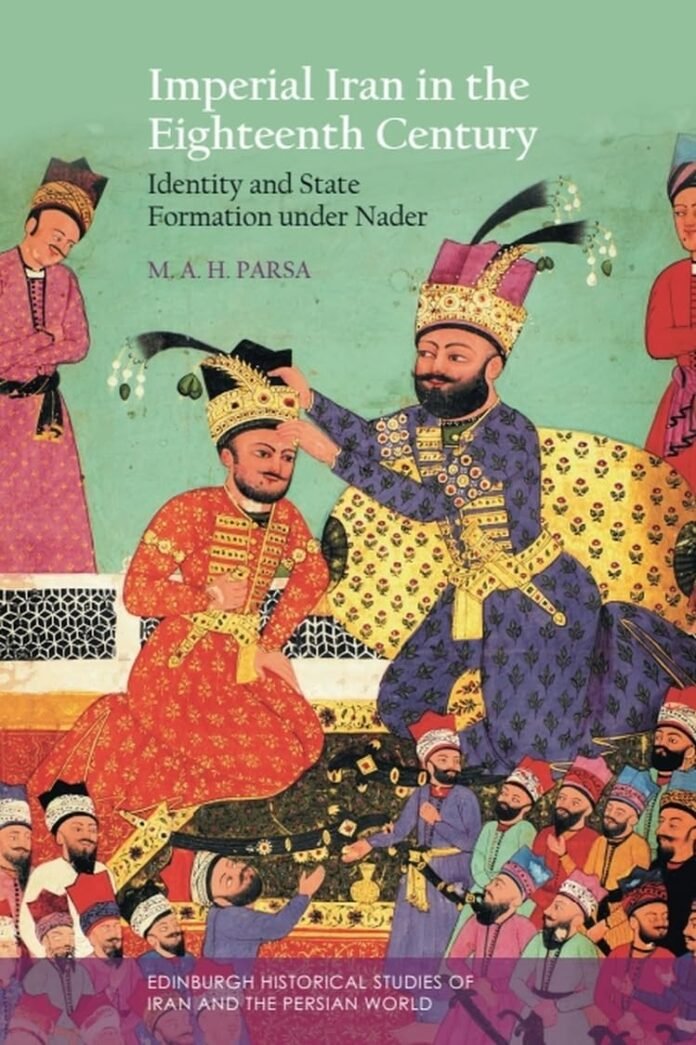
Imperial Iran in the Eighteenth Century: Identity and State Formation under Nader

0
imperial-iran-in-the-eighteenth-century:-identity-and-state-formation-under-nader
Imperial Iran in the Eighteenth Century: Identity and State Formation under Nader

In July 1732, Nader Shah Afsharid, established a religious endowment in the Afghan city of Herat shortly after conquering it. In the preface to the deed, it was written that Nader was a ‘loyal servant of Ali’s household and…the defender of Shi’i lands (belad) and of the Shi’a, Nader-Qoli Khan, viceroy of Khorasan and ruler of the realm of Iran.’ What is striking about the passage is who it doesn’t mention, the Safavid ruler Tahmasp is missing from the excerpt and more brazenly, the text asserts that the lands of Iran belong to Nader himself. Nader Shah had no rightful claim to the throne when viewed through the lens of classical kingship, he had no royal bloodline and was born a commoner, who climbed the ranks of the Safavid military and found himself in an increasingly powerful position. The fateful Afghan invasion of Isfahan in 1722, not only proved pivotal in bringing Nader Shah to power, but also triggered a general existential crisis among Safavid elites who began to think about what Iran is and what Iranianness meant. This new book by Mohammad Amir Hakimi Parsa Imperial Iran in the Eighteenth Century: Identity and State Formation under Nader tells the story of how a new idea of Iran came to be. 

The Afghan Hutakids, who had sacked the Safavid capital in Iran, sought to subdue much of the empire and emphasised the shared Iranianness of both Sunni Afghans and Shia Iranians. The Hutakids also sought to govern in much the same way as the Safavids before them and create a continuity in rulership. Crucially, they seceded certain Safavid territories to the Ottomans, which would anger the elites whom the Hutakids wanted to control. The reaction of the elites created a number of intellectual camps who would go on to define what Iran ought to be. One discourse that emerged called for the restoration of a Shia state in Iran with some even calling for the removal of the Safavids altogether. One work produced in 1726, the Mokafatnameh, mourned the loss of Iran’s honour and blamed the Safavids for its demise. ‘The Mokafatnameh strove to ideologically dismantle it [the Safavid state] and those identities loyal to it.’ A core concept of the work was the restoration of Shiism and the guidance of the prophetic household as the key component of Iranianness. The author prayed for the Prophetic Imams to place a legitimate ruler to govern Iran. Mirza Zaki Mashhadi, a poet, went much further than this and wrote that Imam Ali should be the legitimate sovereign himself. The Safavid supporters had to respond by producing their own tracks, where they emphasised the Shia identity of Iran and their right to rule. 

BOOK REVIEW: A Daring Enterprise: A US-Egyptian Partnership and the Case for Soft Power

Nader Shah appeared during this timeframe initially as a servant of the Safavids and whose conquests temporarily restored Safavid rule. But Nader also gained power himself, and his supporters began to build the base for his legitimacy. As a commoner, his rise to prominence bore a resemblance to Timur’s rise as a vassal to the Mongol Chaghatayid Chinggisid line. He was keen to utilise Mongol traditions and connections to Timur for his own ends. Much like Nader Shah, Timur gained legitimacy through his conquests, which was seen as divine favour. The reporting of dreams that connected Nader Shah to Timur was also used to help cement his legitimisation. In one dream, Nader discovered Timur’s hidden treasure in Kalat Fortress, after a light emanating from the foot of a hill appeared leading Nader to confronting a dragon stationed near a well. Upon killing the dragon, Nader found the well was full of treasure and an inscription left by Timur himself, which read that whoever entered this location would be his prodigy and a world conquer. Timur as well as the Shia Imams fused together as part of Nader Shah’s legitimising claims.  

When Nader Shah finally ended Safavid control and established himself the ruler of Iran, his coronation ceremony wielded new concepts of Iranianness. The ceremony made clear, ‘Nader’s kingship would save Iran by restoring its faith through the non-sectarian Ja’fari creed, reconciling Shi’i and Sunni, and thus achieving a lasting peace with fellow Muslims.’ This move established himself as a legitimate Shia ruler to satisfy the old religious elites, but also enabled him to appear a legitimate ruler in the eyes of the Sunnis in his domain and also positioned them as part of the new Iran too. The most interesting aspect of the ceremony was the signing of the mochalga, a document that binds the signatories to loyalty to Nader Shah. The document uses the first-person plurals and uses words like ‘we’ and the people of Iran. The document was signed during a public ceremony, where both nobles and commoners gathered to elect Nader as the new shah. What was significant is that the attendees got to debate what was in the document and for the first time in Iranian history, sovereignty was given a popular mandate. ‘The result was the election of a low-born man to imperial sovereignty.’ 

Imperial Iran in the Eighteenth Century offers a fascinating view on the pivotal moment in Iranian history, where the old notion of right to rule breaks down and a new idea of Iranianness emerges. As today’s Iran reflects on the relationship between the government and its people, war and legitimacy, looking back at a previous existential crisis that altered the way the country identifies itself offers us a sense of where Iran has been in the past. Those interested to understand Iran’s past and how it emerged as a nation will find this book insightful and worth a read. 

BOOK REVIEW: Private Sins, Public Crimes: Policing, Punishment, and Authority in Iran

Chipmaker Nvidia seeks to raise over $25B in first bond deal since 2021

0
chipmaker-nvidia-seeks-to-raise-over-$25b-in-first-bond-deal-since-2021
Chipmaker Nvidia seeks to raise over $25B in first bond deal since 2021

Chipmaker Nvidia is planning to sell $25 billion of investment-grade debt in the US on Monday, its first bond sale in five years, in a test of investor appetite for further exposure to the AI sector.

In a marquee seven-part bond offering, the company will issue a wide range of maturities from two years to 30 years, according to a term sheet seen by the FT.

The issuance was upsized from $20 billion after receiving more than $85 billion in orders by early afternoon in New York, according to people familiar with the deal.

Thanks to robust demand, the 10-year portion of the bond was expected to yield 0.5 percentage points above US Treasuries, down from 0.75 percentage points during initial discussions, one of the people said.

Favorable market conditions after the US-Iran deal are allowing Nvidia to raise debt at a relatively low cost, said Lauren Wagandt, a portfolio manager at T Rowe Price.

“It’s a very high-quality company at the end of the day,” said Wagandt. “And it doesn’t come to the market as often as the other tech names.”

The issuance by the semiconductor group, the biggest beneficiary of Big Tech’s trillion-dollar spending spree on AI infrastructure, comes as tech groups race to secure funding amid an intensifying AI arms race, but also as Wall Street faces a torrent of new equity and debt issuance, including SpaceX’s record $75 billion initial public offering.

“We intend to use the net proceeds from this offering for general corporate purposes, including repayment and refinancing of outstanding notes,” Nvidia said.

Monday’s offering is at least three times larger than Nvidia’s previous bond sale in 2021 during the coronavirus pandemic, when it raised about $5 billion. When completed, it will more than triple Nvidia’s debt outstanding to about $30 billion from the current level of $8.5 billion.

Early signs of market fatigue have prompted some tech companies to find alternative avenues for financing.

Anthropic has turned to private credit investors to seal a $35 billion deal backed by Broadcom. Google’s parent Alphabet decided to issue equity for the first time in more than two decades, bringing in $85 billion in fresh capital earlier this month.

Nvidia’s position as the AI industry’s go-to supplier of the powerful chips needed to build large language models such as OpenAI’s GPT has proven extremely lucrative for the Silicon Valley company, with its free cash flow in the year to January leaping 59 percent to $96.6 billion.

However, after its valuation peaked at about $5.7 trillion in May, its shares have fallen alongside the wider semiconductor market in recent weeks, with its market capitalization dropping below $5 trillion at the end of last week.

While reaping huge profits from AI spending, Nvidia has also become a significant investor in AI companies, committing a total of more than $90 billion to developers, including OpenAI, Anthropic, and xAI, and suppliers, including Coherent, Marvell, Lumentum, and Corning. In some cases, it has also agreed to act as a backstop or financial guarantor to customers building cloud computing services using its chips, including CoreWeave and Nscale.

The increasing use of financial guarantees and the interdependence of AI companies have raised concerns about concentrated risks among bond investors, said Tom Murphy, global head of investment-grade credit at Columbia Threadneedle Investments.

“The market has started to get worried about these circular financings, because if somebody in that ecosystem is having a problem, then the whole thing could be a problem,” Murphy said.

Nvidia has a double-A credit rating, the third-highest score. More indebted AI player Oracle sits just two notches above a junk rating.

Goldman Sachs, JPMorgan, and Morgan Stanley are active bookrunners of the transaction.

© 2026 The Financial Times Ltd. All rights reserved. Please do not copy and paste FT articles and redistribute by email or post to the web.

Epstein ‘Bribed’ Jail Officers with Cash and Disneyland Tickets

0
epstein-‘bribed’-jail-officers-with-cash-and-disneyland-tickets
Epstein ‘Bribed’ Jail Officers with Cash and Disneyland Tickets


Jeffrey Epstein’s former assistant has dropped a bombshell new claim about the sick predator’s time behind bars, alleging he bought special treatment in jail with cash and Disneyland tickets.

Sarah Kellen, who worked for Epstein for nearly 20 years, told the House Oversight Committee the disgraced financier allegedly arranged for gifts to be delivered to a Palm Beach sheriff’s deputy while he was locked up in Florida.

And according to Kellen, those alleged favors may have helped Epstein get access to a computer — which she claimed he then used to continue tormenting her from jail.

Kellen made the stunning allegation after Rep. Maxwell Frost, a Florida Democrat, asked if she knew of any ways Epstein received special treatment while in custody.

“I know that he arranged to have cash and, like, Disneyland tickets, taken to one of the officers in the jail and I’m not sure what he received with that,” Kellen testified.

Kellen said she first learned about the alleged payoff from Epstein’s paralegal, Story Cowles, who allegedly complained about having to drive a long distance to personally deliver the cash and tickets.

The claim adds even more fuel to years of outrage over Epstein’s 2008 Florida jail sentence, which critics have long blasted as a disgracefully soft deal for a convicted sex offender.

Kellen also gave chilling testimony about what she says Epstein did to her behind closed doors.

She said the wealthy predator groomed, manipulated and psychologically controlled her for years after hiring her in the early 2000s.

“He groomed me, sexually and psychologically abused me, controlled me, manipulated me, dominated me, and gaslit me until I could no longer tell which thoughts were mine and which were his,” Kellen testified.

She compared the experience to “living with a permanent virtual-reality headset on.”

Kellen, now 46, was granted immunity from prosecution in Florida as part of Epstein’s controversial non-prosecution agreement, the same deal that has outraged victims and watchdogs for years.

Kellen claimed Epstein’s abuse did not stop when he was finally put behind bars.

In one of the most disturbing parts of her testimony, she said Epstein allegedly used a computer inside the Palm Beach County Stockade to contact her.

“He even Skyped me from a computer inside the Palm Beach County Stockade and ordered me to undress for him on camera,” she told lawmakers.

Kellen said years of abuse, sleep deprivation and coercive control left her emotionally damaged and unable to fully separate her own reality from the one Epstein allegedly created around her.

She also placed blame on Ghislaine Maxwell, Epstein’s longtime associate, saying the psychological conditions caused by both Epstein and Maxwell “crippled” her ability to make decisions or assert herself when it mattered most.

Kellen identified the Palm Beach sheriff’s deputy as Michael Fox.

But the Palm Beach County Sheriff’s Office has denied the claims. A spokeswoman told the Miami Herald that Fox retired from the agency in 2020 and said the allegations did not come up during the Epstein investigation.

“The Epstein investigation did not reveal these allegations, and they were never investigated in connection with that case,” spokeswoman Therese Barbera said.

Barbera also said a 2021 investigation by the Florida Department of Law Enforcement found no inappropriate or criminal activity by sheriff’s office members connected to Epstein’s work release or permit detail.

Still, Kellen’s testimony is already raising fresh questions about how Epstein, one of the most infamous predators in America, allegedly managed to keep getting perks even after he was locked up.

The world agreed to protect 30% of the ocean by 2030 – but marine protection can’t be judged by area alone

0
the-world-agreed-to-protect-30%-of-the-ocean-by-2030-–-but-marine-protection-can’t-be-judged-by-area-alone
The world agreed to protect 30% of the ocean by 2030 – but marine protection can’t be judged by area alone

The ocean is home to some of the richest biodiversity on Earth. From coral reefs and mangrove forests to the deep sea, marine ecosystems sustain countless species, support coastal communities, regulate the climate and underpin global food security.

But these systems face growing pressure from overfishing, habitat loss, pollution and climate change.

In response, nations have adopted an ambitious global goal to conserve at least 30% of the world’s ocean by 2030 – known as 30×30. This target has expanded marine protection worldwide, particularly through marine protected areas.

But what happens after protection is announced?

Decades of experience have shown that effective marine protection requires consistent rules, regulations and oversight, along with financing and meaningful collaboration with local governments, industries and communities. Without it, these areas risk becoming paper parks: lines on a map without real-world impact, where marine life may continue to face overfishing and other threats.

A sea turtle swimming underwater

A sea turtle swims in Bunaken National Park, one of Indonesia’s first protected marine areas. Claus Giering/Unsplash, CC BY

Two new reports we led, one from Oregon State University and the other from the Smithsonian Tropical Research Institute, offer an important reality check on where marine conservation stands today and what must be done to achieve the goal of protecting 30% of the ocean.

Together they argue that the primary barrier to realizing the 30×30 ocean conservation goal is no longer ambition to protect the ocean, but effective action that can make it real.

A decade of commitments

The 30×30 goal is often promoted at global ocean meetings, including the 11th Our Ocean Conference, being held in Kenya on June 16-18, 2026.

According to the Oregon State analysis, the conservation commitments announced at past Our Ocean Conferences have helped establish more than 3.88 million square miles (10 million square kilometers) of marine protected areas, or about 2.8% of the global ocean.

In all, marine protected areas now cover nearly 10% of the global ocean. But only about 3.5% of that is fully or highly protected.

The reach of protected areas shows that voluntary pledges can translate into tangible conservation gains when progress is consistently tracked and publicly reported. However, the findings also point to a key challenge: the growing difference between the extent of protection and its effectiveness.

In other words, ocean protection cannot be judged by area alone.

The implementation gap

The Smithsonian report takes a closer look at what is needed to turn such commitments into effective conservation.

Since the Kunming-Montreal Global Biodiversity Framework was approved in 2022, with almost every country agreeing to protect at least 30% of Earth’s land and waters, marine protection has expanded considerably. However, global numbers show that at least half of existing marine protected areas remain unimplemented or inoperable, with rules and regulations not in place or even allowing destructive activities like bottom trawling.

Achieving the 30×30 goal still requires protecting an additional 20% of the ocean over the next four years. The challenge is twofold: expanding coverage, while also ensuring that the areas are actually benefiting marine life and people.

A map showing lots of marine protected areas scattered largely around islands

The World Database on Protected Areas maps both land and marine protected areas around the world. Marine protected areas are in blue. World Database on Protected Areas

Effective, long-lasting conservation depends on management plans, trained personnel, monitoring systems, enforcement capacity, sustainable financing and community participation. Without these elements, legal designation alone does not lead to biodiversity protection, thriving ecosystems and benefits to people.

Yet, across regions, the Smithsonian report found a troubling pattern: Countries’ ambition to create protected areas is outpacing their capacity to help those areas succeed.

We found two key constraints: lack of coordination around capacity development – the strengthening of skills and tools needed to effectively achieve a goal – and applying a one-size-fits-all approach to distinctly different regional contexts.

Divers with a measuring tape on a reef

Divers from the Mayotte Marine Natural Park between Madagascar and mainland Africa check the health of a protected coral reef. Alexis Rosenfeld/Getty Images

Many countries and communities are committed to marine protection, but they often need better continuous governance and policy, stakeholder engagement and inclusion, data and technology, socio-ecological integration, and communication for effective implementation of marine protected areas over time.

Similarly, securing funding for marine conservation remains a persistent challenge. When we spoke with groups and communities involved in marine conservation, they often cited complex application processes and funding structures that often do not match their local realities or priorities. This creates a mismatch between how conservation is funded and how it is implemented.

There are efforts to close this gap. The Bali-based Coral Triangle Center’s Coral Triangle Initiative on Coral Reefs, Fisheries and Food Security Capacity Building Roadmap works to conserve ocean areas in a region that harbors the richest marine biodiversity on the planet. Through regional training hubs, leadership programs, internships and digital platforms, it has trained over 8,200 government officials, community leaders and private-sector representatives in science-based marine conservation practices.

The Sustainable Finance Coalition, a group of nonprofits and international organizations, is using its expertise in another way: finding creative ways to secure money for projects in Africa and the South West Indian Ocean to protect key habitats on land and sea. To date, the coalition has tapped into more than US$43 million to protect nature and support the effective management of 170,500 acres (69,000 hectares).

Beyond lines on a map

The two reports found that political momentum for ocean protection is strong. Governments, Indigenous peoples, local communities, scientists and conservation organizations have rallied around the 30×30 target, creating a global movement of support.

The challenge now is delivering on this momentum.

Achieving the conservation goals behind the 30×30 plan will depend less on announcing new protected areas and more on investing in the capacity, finance, enforcement and long-term institutional support needed to help these protected areas function as planned.

As 2030 approaches, the central question is becoming sharper. It is no longer simply how much of the ocean can be protected — but whether that protection can be made real, durable and effective.

Britain announces sweeping social media ban for under-16s

0
britain-announces-sweeping-social-media-ban-for-under-16s
Britain announces sweeping social media ban for under-16s


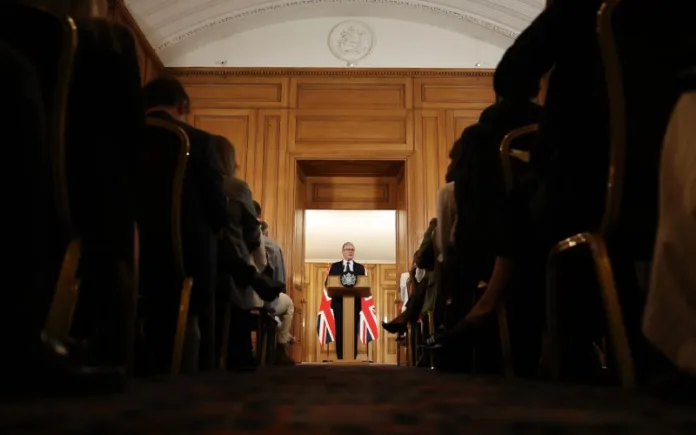
British Prime Minister Keir Starmer said on Monday he would ban social media ‌sites for under-16s and impose restrictions on gaming and live-streaming platforms, in a fightback against big tech that goes further than any other country.

The sweeping changes will “give kids their childhood back”, Starmer said, outlining measures against platforms including Snapchat, TikTok and Instagram, as well as gaming sites that allow strangers to communicate with children.

“It is ​clear to me a full ban is the right choice,” he told a press conference.

“It will make a huge difference, ​it will make our children safer, it will make our children happier, it will give them more time, ⁠more security, more freedom to grow up, more opportunity”.

Britain will use a similar model to Australia, which enacted a ban last December, ​the government said.

It will cover platforms that also include YouTube, Facebook and X, but messaging services such as WhatsApp and Signal will ​not be included in the ban.

Britain will also introduce “world-leading blocks” on harmful functions such as livestreaming and stranger communication with children for under-16s.

“Is there a situation in the offline world where you would just let your child pair up with a stranger, an adult that you don’t know anything about? No, so we’re taking action ​on that,” Starmer said.

BAN IN PLACE BY NEXT SPRING?

The government already has the powers to take the first steps in any ban, he ​said, with regulation to follow by the end of the year and a prohibition in place around next spring.

Britain has increasingly toughened its approach to tech companies ‌in recent ⁠years, urging or forcing them to impose age verification, adapt their algorithms and, most recently, prevent children from circulating nude images taken on mobile phones.

But with a growing awareness of the mental health risks posed by children spending too much time online, Starmer has decided to go further after speaking to parents and considering the evidence from Australia.

Starmer, who is likely to face a leadership challenge in the coming weeks, said people rightly ​expected action.

Australia was the first country ​to ban social media for ⁠children under 16, blocking them last December from platforms including TikTok, Alphabet’s YouTube and Meta’s Instagram and Facebook.

Since then a raft of countries have said they are looking to regulate access to social media amid mounting ​concerns over the impact on children’s health and safety.

EXTENSIVE CONSULTATIONS

Britain has consulted teachers, parents and young ​people on new restrictions, ⁠including a possible ban for under-16s, as well as curfews, app time limits and curbs on what the government has described as addictive design features.

It received more than 116,000 responses from parents, industry and young people. More than 83% of parents who responded said risks from social media outweighed ⁠benefits, while ​90% backed a minimum age of 16 to access social media platforms.

While many parents ​and politicians back a ban, some psychologists and researchers have said there is no proof that it would work, and a group of school children in London told ​Reuters they had a conflicted relationship with the technology.

Source:  Reuters

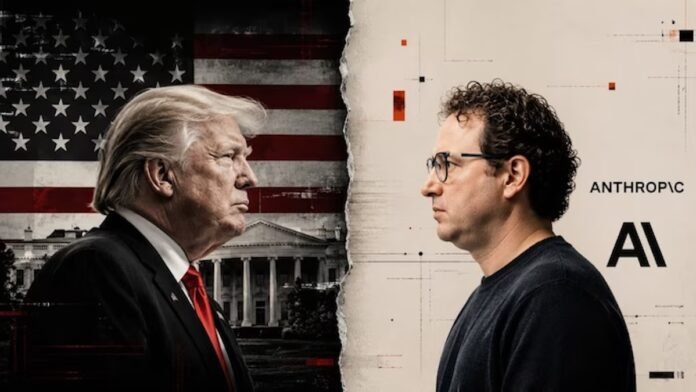
Why the US government shut down Anthropic’s latest Claude AI model

0
why-the-us-government-shut-down-anthropic’s-latest-claude-ai model
Why the US government shut down Anthropic’s latest Claude AI model

On June 12, artificial intelligence (AI) lab Anthropic suspended access to its latest Claude models, Fable 5 and Mythos 5, which had been released three days earlier.

The move came in response to an “export control directive” from the US government prohibiting use of the models by anyone who is not a US national.

Mythos is Anthropic’s most powerful, or “frontier,” model. When first announcing the model in April, the company said it was too good at hacking to release immediately. Instead, Mythos was made available to a handful of organizations (mostly US tech corporations) to use to patch weaknesses in essential digital systems.

Fable is the same basic model, but with added safeguards meant to stop it from being used for cybersecurity purposes. This is what was released to the public last week – and almost immediately shut down.

Anthropic and the Trump administration at loggerheads

Since early 2025, Anthropic and the Trump administration have been in escalating conflict. The administration has accused Anthropic of making “woke AI” and called chief executive Dario Amodei an “ideological lunatic”.

Early disagreements concerned AI regulation and semiconductor export policy. The dispute sharpened when Anthropic declined to let the Pentagon use its models for domestic surveillance and fully autonomous weapons systems.

The Department of Defense responded by threatening to designate Anthropic a “supply chain risk,” a classification that would have required military contractors to sever ties.

Jailbreaks

The US government has not yet publicly stated the reason for last week’s directive, but Anthropic it says it believes the government became aware of a jailbreak: a method for circumventing the safeguards in Fable that prevent using its most powerful features for nefarious purposes.

These safeguards classify user requests as safe or unsafe before passing them to the AI model. When triggered, the safeguards redirect the request to a less powerful model.

The government’s concern, according to Anthropic, was that the safeguards could be bypassed to extract information useful for cyberattacks.

Guardrails for large language models aren’t bulletproof. They mostly depend on the model’s own capacity to interpret the user’s intentions in making a request.

Beyond the inherent difficulty of this task, a large online community (which my colleagues and I call the Undersphere) is working hard to circumvent AI guardrails. Anthropic acknowledges that “perfect jailbreak resistance is not achievable for any current model provider.”

Anthropic says the research behind the government directive appears to have been produced by engineers at Amazon, which is both a rival to Anthropic and a significant investor.

But this was not the only relevant jailbreak. Within 48 hours of Fable’s release, a researcher using the pseudonym “Pliny the Liberator” published what the researcher identified as Fable 5’s full system prompt to X and GitHub repository.

The system prompt is a hidden set of instructions that helps determine an AI model’s behavior. It’s unclear exactly how knowledge of Fable’s system prompt could be used in practice, but it has drawn attention in the Undersphere.

A surprise – and an ongoing mystery

The deepest problem of making large language models such as Fable secure is that we don’t fully know how they work. According to Oxford University economist and machine learning expert Maximilian Kasy, they work much better than they “should..

Large language models have billions of internal parameters and are trained on unimaginably vast piles of data using machine learning methods. According to Kasy, we would expect such systems to be “overfitted”: good at reproducing patterns in their training data, but bad at generalizing to new situations.

However, modern systems such as Claude and ChatGPT do seem to be able to generalize. Kasy likens modern AI development to alchemy: successful through trial and error, not yet grounded in systematic theory.

As a result, the behavior of AI models is partly opaque even to their builders.

Hard to regulate

The opacity of the technology is one key reason it’s so hard to regulate. Governments lack independent access to the data, infrastructure and expertise they would need to evaluate proprietary frontier models.

The US administration’s recent executive order on AI security, published two weeks ago, reflects this realization. As the administration has realized the power of frontier AI models, it has moved from an initial hands-off posture to asking developers to share their models for review before release.

That demand is an implicit admission that the administration does not trust the companies to evaluate, fully and comprehensively, what their own models can do and how they might be misused. The public sees even less, and the consequence is measurable: a survey taken across 25 countries last year found people are, on balance, more than twice as concerned about AI as they are excited about it.

The future of AI safety

AI is a hugely hyped technology. But there is no doubt it is also extremely powerful and unpredictable. Understandably, this combination is very dangerous.

We cannot rely on regulations, as technology will develop more quickly than they can adapt. Nor can we rely on guardrails, as they will be bypassed.

We need a governance framework built for that eventuality: one that can predict and address the consequences of failure.

Such a framework must be global, participatory and founded on reciprocal trust. These are things the current US administration has shown little capacity to generate.

Francesco Bailo is a senior lecturer in data analytics in the social sciences and deputy director of the Centre for AI, Trust and Governance, University of Sydney.

This article is republished from The Conversation under a Creative Commons license. Read the original article.

‘Thanks to Your Content, I Don’t Hate Israelis Anymore’: Herut Davidson on Arabic, Social Media and Bridge-Building 

0
‘thanks-to-your-content,-i-don’t-hate-israelis-anymore’:-herut-davidson-on-arabic,-social media and-bridge-building 
‘Thanks to Your Content, I Don’t Hate Israelis Anymore’: Herut Davidson on Arabic, Social Media and Bridge-Building 


For Herut Davidson, social media has become both a battleground and an opportunity. She said traditional media often leaves citizens dependent on official or dominant narratives, while social platforms allow individuals to speak directly. 

When Herut Davidson posts in Arabic, she knows some viewers will curse her or accuse her of propaganda. Others, sometimes quietly and sometimes from countries where contact with Israelis remains taboo, tell her that hearing an Israeli Jewish woman speak their language has changed the way they see Israelis. 

Davidson, an Israeli content creator, has built an audience of more than 90,000 followers across TikTok, where she posts as hurriya.it.is.me, and Instagram, where she posts as hurriya.its_my_name. Her mission is unusual and increasingly sensitive: speaking directly to Arab audiences in Arabic at a time when war, polarization, and competing narratives have deepened mistrust across the region. 

Her videos are part of a fragile experiment in direct regional engagement that grew after the Abraham Accords and has been tested by the Hamas-led attack of October 7, 2023, and the Gaza war that followed. For Davidson, Arabic is not only a language skill. It is a way to challenge assumptions, reduce fear, and speak across a divide that formal diplomacy alone cannot close. 

The path to that mission began long before social media, in the environment where Davidson grew up. 

“I think everything started when I grew up in a small village, actually in the West Bank, in the Shomron area,” Davidson told The Media Line. “And there I had no choice to understand what is going on around me, but I really experienced it every single day.” 

I had no choice to understand what is going on around me, but I really experienced it every single day

She described growing up exposed to tension, trauma, and complexity, saying those early experiences pushed her to learn more about the society around her. Raised in a religious environment, Davidson chose to do national service after high school rather than military service, as is common for some religious Israeli women. 

Her first year of national service took her to Jaffa, a mixed city where she encountered a social reality different from the one she had known. She said the experience gave her a first real opportunity to know Arab society in Israel from closer range. 

That encounter led her to Arabic. Davidson came to see the language not only as a means of communication but as a doorway into culture, religion, family life, and society. 

Davidson later studied Middle Eastern studies and Islam at Shalem College in Jerusalem, where she learned both spoken and literary Arabic from Palestinian and Jewish teachers. She said the experience changed the way she lived in Israel. 

It’s really changed my life in Israel, knowing Arabic

“It was an amazing experience for me,” she said. “And it’s really changed my life in Israel, knowing Arabic.” 

Arabic has a complicated place in Israel. It is widely used by Arab citizens, Palestinians in east Jerusalem, and Palestinians in the West Bank and Gaza, but many Jewish Israelis do not learn it as a practical spoken language. Davidson said that gap feeds suspicion in ordinary encounters, from public transportation to shops and pharmacies. 

“Before I learned Arabic, when I was like, for example, in a public transportation, whatever it will be, and I heard Arabic, I was afraid,” she said. “Like, I thought they talk about me, and they want to do something bad. Because this is the trauma experience that we have as Israelis in Israel.” 

I thought they talk about me, and they want to do something bad. Because this is the trauma experience that we have as Israelis in Israel

Understanding Arabic, she said, made the language less threatening and more human. She recalled speaking Arabic with an Arab worker in a pharmacy and seeing him become more comfortable and curious. 

For Davidson, that is the practical meaning of bridge-building. She does not present Arabic as a solution to the Israeli-Palestinian conflict, but as a tool that can reduce fear and build trust. 

“I think it can change the situation,” she said. “It can improve so many things. It won’t solve big problems, but it will be like, so, so, so different.” 

Although Davidson’s engagement with Arabic began before October 7, she said the Hamas-led attack and the war that followed transformed her language skills into a public mission. Hamas-led attackers killed about 1,200 people in Israel and abducted 251 people to Gaza that day, according to Israeli tallies. Israel’s ensuing war against Hamas has caused vast destruction in Gaza, where Gaza health officials say nearly 73,000 people have been killed. 

“My way started before October 7, but October 7 really shaped it into social media actions,” she said. “I had the language before, because this is what I believe in.” 

After the attack, Davidson said she felt a responsibility to use Arabic to present her own perspective directly to Arab-speaking audiences. She said she became increasingly troubled by what she saw as a narrow representation of Israel in regional and international media. 

As a young Jewish woman, I must use my Arabic to share my point of view and my perspective about what is going on

“As a young Jewish woman, I must use my Arabic to share my point of view and my perspective about what is going on,” she said. 

Davidson said the turning point came when she saw how Israel was being discussed abroad, especially in parts of the Arab media environment. 

“What really was the point that I decided that I must do something, it was after October 7, when I saw the whole world hate Israel, blame Israel about everything, and especially in the Arab world,” she said. 
She argued that many audiences were seeing only one side of the conflict and not the daily fear experienced by Israelis under rocket fire. 

I saw the whole world hate Israel, blame Israel about everything, and especially in the Arab world

“I wanted to bring an authentic point of view about what is going on, like, hey guys, I’m getting down to the shelter because there are rockets,” Davidson said. “This is such a simple situation that we, as Israelis, experience so much.” 

For Davidson, one of the most troubling elements was what she described as the disappearance of October 7 from parts of the public conversation. 

“I think the fact that October 7 really doesn’t exist in the world, but October 8 is what matters,” she said. “People really, a day after, maybe a few hours after the attack itself, that happened on the morning of October 7, they already started to share that Israel is attacking, that Israel attacks Gaza, or Israel does this and that, and, like, ignoring simple facts about what happened.” 

She said many people she encountered online did not understand the context of the war or the impact of the attack on Israeli society. 

“People don’t really understand, they just see the war that came after, but they didn’t see the context, they didn’t see what is going on,” she said. 

Davidson also pointed to the hostages taken into Gaza and said some viewers told her they had not previously heard about the killings, abductions, and sexual violence reported after October 7. 

“I posted a video about the sexual, brutal actions that Hamas did back then, and some of them wrote to me, this is the first time that I hear what Hamas did that day,” she said. 

Her online name, “Hurriya,” has also drawn attention. In Arabic, “hurriya” means freedom. Davidson explained that the name is not a political slogan but a translation of her Hebrew name, Herut—a word also associated in Israel with Menachem Begin’s right-wing Herut party, a precursor to Likud. 

“My name in Hebrew is Herut,” she said. “It has no politics connections. My name is Herut because my parents gave me that name, because I was born in Pesach.” 

Passover is also known in Hebrew as Hag HaHerut, the festival of freedom, because of the biblical story of the Israelites’ liberation from slavery in Egypt. Davidson said the Arabic version of her name carries the same meaning. 

One of Davidson’s main messages is that more Israelis should learn Arabic, not only as a formal subject but as a practical language of daily life. She said this was one of the reasons she began posting videos online. 

“One of the reasons that I started to post videos on social media was also to bring the message and awareness for Israelis, how important and possible it is to learn Arabic,” she said. 

Her message is not aimed only at Arab audiences. She also wants Jewish Israelis to recognize Arabic as a regional language that can make daily life less alienating and less fearful. 

Davidson said language can build trust, especially in a country where Jewish and Arab citizens often live near one another but remain socially distant. Israelis need Arabic, she said, not only because of Israel’s Arab minority but also because Israel is part of the Middle East. 

A recent visit to the United Arab Emirates gave Davidson a glimpse of how far regional relationships can go when public contact is possible. She traveled to Abu Dhabi to take part in the third International Dialogue of Civilizations and Tolerance Conference, convened by Women Champions for Change, and said she was struck by the ability to say openly that she was from Israel while visiting a Muslim country. 

Davidson said she was excited by the prospect of real partnership with people in a Muslim country where she could openly identify as Israeli. 

“I was super excited about it,” she said. 

She said the UAE gave her a sense of possibility for the broader region. 

I felt that the UAE really gave me hope about the Arab world, and about the Muslim world

“I felt that the UAE really gave me hope about the Arab world, and about the Muslim world,” she said. “That it is possible to have connection with Israel. And it is possible to build something together.” 

Davidson contrasted that openness with the barriers still present in other countries. Lebanon’s anti-normalization framework is not a single simple “no talking” statute; it is rooted in several legal provisions, including the 1955 boycott law, and can make public contact or dealings with Israelis legally risky for Lebanese citizens. 

Davidson described those restrictions in blunt terms. 

“You know, in Lebanon, there is a law that it’s forbidden to talk to Israelis,” she said. “Just the talking. Not even do something. Not even go somewhere.” 

Her interactions online, she said, reflect both realities: hostility and quiet support. Some Lebanese users, she said, privately expressed appreciation for her comments about peace but could not publicly collaborate with her or tag her. 

“We saw your video, and we are super excited about it, and thank you for sharing that, thank you for saying your opinion, and your wish for peace,” she recalled them saying. “We also want the same thing, just to know that we cannot allow this tag or this collab, because it’s just forbidden. But we really support it.” 

Davidson said she tries to communicate not only through language but also through cultural and religious respect. She pointed to a recent video from a mosque visit as an example, saying she wanted to show respect for Islam and invite others to learn about Jewish religion and culture in return. 

During her visit to Abu Dhabi, Davidson also met creators from the UAE and Bahrain. She said she admired those willing to appear publicly with her despite the backlash they may face in the Arab world. 

“I really appreciate that they’re brave to share their point of view against so much, against, I would say the mainstream in the Arab world,” she said. “I super appreciate when a Muslim talked to me, and also agreed to be on my social media page, and be tagged.” 

Such interactions, she said, would have seemed almost impossible before the Abraham Accords. 

“I think it’s so new for all of us, like it couldn’t happen six years ago,” she said. 

For Davidson, social media has become both a battleground and an opportunity. She said traditional media often leaves citizens dependent on official or dominant narratives, while social platforms allow individuals to speak directly. 

That access comes with a cost. Producing content during war has taken an emotional toll, Davidson said, especially when videos force her to process violent material while deciding how to frame her message publicly. 

“Wow, it is very hard,” she said. “Sometimes I’m like, I’m so overwhelmed, and I’m so like, I cannot, what, like making a video about what is going on right now, like I don’t have any energies to do it. I need to deal with my, you know, with my own stress.” 

One of the most difficult videos she posted, she said, was about sexual violence committed by Hamas on October 7. She said she had to watch difficult material while editing the post and sometimes had to step back to protect herself emotionally. 

Speaking about war also means being forced into political categories, she said, even when she is trying to speak from personal experience. 

“Bringing something about the war, it’s always politic,” she said. “It’s always like, you cannot really separate it between your opinion about war and politics.” 

Davidson emphasized that she does not claim to represent all Israelis. 

“I’m not presenting the Israelis, I’m presenting myself,” she said. “Like bringing my voice.” 

The backlash has been severe. Davidson said some of the worst responses included Holocaust-related abuse. 

“One is ‘Hitler was right,’ and comments about the Holocaust,” she said. “My grandmother and my grandfather, they ran away from Europe back then, this is how they survived, all their families were killed, and I think this kind of comments really, really hurts me.” 

She also recalled a message from a Palestinian user who justified violence against Israelis. 

“A Palestinian wrote me, ‘You stole our land, so everything is … allowed to do, including rape, it is justified, because you stole our land,’” Davidson said. “So, … I don’t think I need to explain more.” 

Other messages, Davidson said, have convinced her that her work can shift perceptions, even if only gradually. 

“I got a comment from, actually it was from a few different countries, … ‘Thanks to your content, I now know more about Judaism and about Israelis, and I don’t hate them anymore,’” she said. 

For Davidson, that is the point. She said she is not trying to make Arab viewers love Israel or Israelis, but to make room for reconsideration. 

I don’t look for their love. But I do look for their flexibility of, like, changing their mind about what is going on.

“I don’t look for their love,” she said. “But I do look for their flexibility of, like, changing their mind about what is going on, or, like, open their mind, you know, and to make them understand that there is more than what they have told you.” 

That may not be diplomacy in the grand, treaty-signing sense. But for Davidson, a message from someone who says they no longer hate Israelis is enough to keep speaking. 



Key mission for Europe’s commercial space enterprise scrubbed again

0
key-mission-for-europe’s-commercial-space-enterprise-scrubbed-again
Key mission for Europe’s commercial space enterprise scrubbed again

Isar Aerospace still commands top position among a new generation of European rocket startups, but the company’s efforts to launch a critical test flight of its Spectrum rocket continue to encounter roadblocks.

The latest delay came Monday, when Isar scrubbed a launch attempt after “detecting off nominal behavior in the vehicle’s fluid systems,” according to a social media post. “The teams are analyzing the new data to isolate the root cause.”

The two-stage, 92-foot-tall (28-meter) Spectrum rocket was awaiting liftoff from Andøya Spaceport in northern Norway. It was the fourth time in five months that Isar Aerospace, headquartered near Munich, Germany, had reached a target launch date for the second test flight of the Spectrum launch vehicle.

Andøya Space, the company that owns the launch site, said on its website that the current launch window runs through June 21. Isar did not immediately announce a new schedule for launching the second Spectrum test flight.

Gravity still winning

The Spectrum rocket has missed three launch windows so far this year. Isar called off a launch attempt on January 21 due to an issue with a pressurization valve, and then halted a countdown on March 25, moments before liftoff, when engineers detected rising temperatures in the rocket’s liquid propane fuel. Isar officials attributed the problem to a delay earlier in the countdown caused by an unauthorized boat in restricted waters along the rocket’s flight path.

Managers stood down from another launch attempt on April 9 to evaluate a suspected leak in a composite overwrapped pressure vessel. That led to Isar’s latest try to launch the Spectrum rocket on Monday.

“Scrubs are part of the business,” Isar founder and CEO Daniel Metzler said in April. “Each attempt gives us valuable experience and lessons learned.”

This statement will ring true for anyone with a casual interest in rocket launches. But launch availability is proving to be a headache at Andøya Spaceport. The remote site is often used as a military testing range. That was the case last month, when missile testing took priority at the base inside the Arctic Circle, according to local media reports.

Andøya’s location near a rich offshore fishery has also generated tension. The skipper of the longline fishing boat within the launch hazard area during Isar’s March launch attempt told local media he stayed in the keep-out zone to retrieve tangled gear. He also refused to leave the area where a German bombing exercise was set to occur last October, but rejected any accusation of sabotage.

The test range is an important part of Norway’s military partnership with Germany. Olafur Einarsson, captain of the fishing vessel, argued for local interests in an interview with the newspaper Kyst og Fjord: “For us fishermen, this is our workplace, and then they come here and want to use the same area. We have gotten a bad neighbor, you could say.”

Friction between the launch and fishing industries is nothing new. In the early years of Japan’s space program, launches from the country’s primary spaceport were limited to certain months based on fishing seasons near Tanegashima Island. The restrictions remained for decades until an agreement in 2010 opened the way for year-round launches.

Isar Aerospace is at the head of a pack of emerging European rocket companies seeking to make the continent’s once-strong commercial launch industry competitive again. Several other companies—Germany’s Rocket Factory Augsburg, France’s MaiaSpace, and Spain’s PLD Space, among others—are developing their own small satellite launchers to provide a lower-cost alternative to Arianespace and Avio, Europe’s incumbent launch providers.

Isar’s Spectrum rocket is the only one that has launched on a test flight. The rocket’s first launch in March 2025 lasted less than a minute before crashing near the launch pad. Engineers identified the unintentional opening of a vent valve and a loss of attitude control as the cause of the failure.

There were no customer payloads onboard the failed Spectrum launch last year. This time, Isar has placed five small CubeSats and a non-separating technology experiment into the Spectrum rocket’s payload fairing. The second test flight is supported by the European Space Agency’s “Boost!” program and the German Aerospace Center’s Microlauncher Competition, which provide funding for commercial space transport initiatives.

Isar Aerospace is set to receive up to 205 million euros ($238 million) from ESA through the European Launcher Challenge program, augmenting the company’s private fundraising and financing rounds worth more than 800 million euros (nearly $1 billion), including 270 million euros ($313 million) announced just last week. This makes Isar, by far, the most well-capitalized private launch company in Europe.

Isar is not hurting for money, but it is sorely lacking in the currency of flight experience. When it finally happens, the next launch will seek to remedy that problem.

0FansLike
0FollowersFollow
0FollowersFollow
0SubscribersSubscribe
- Advertisement -
Google search engine

Recent Posts