11.7 C
London
Tuesday, October 20, 2026
Home Blog

Trump’s Saudi-Israel Push Faces the Realities of Yemen, Elections, and Palestinian Statehood

0


As Houthi attacks intensify pressure on Riyadh, Israeli and US elections complicate Washington’s normalization ambitions, while Saudi public opinion and demands for Palestinian statehood remain major obstacles

US President Donald Trump’s renewed call for Saudi Arabia to accept Israeli assistance against Yemen’s Houthis has revived questions about whether shared security threats could bring Riyadh and Jerusalem closer to normalization. But mounting attacks on Saudi infrastructure, Israel’s approaching election, and unresolved disagreements over Palestinian statehood continue to complicate the prospect of formal relations.

Asked on October 16 whether Saudi Arabia should accept Israeli help, President Trump replied: “I do, I think they will. Israel’s been very helpful to Saudi Arabia.” He also suggested that Saudi-Israeli normalization could be back on the table, “maybe more than ever.”

His comments did not establish whether Riyadh had requested Israeli military assistance or agreed to any overt security partnership.

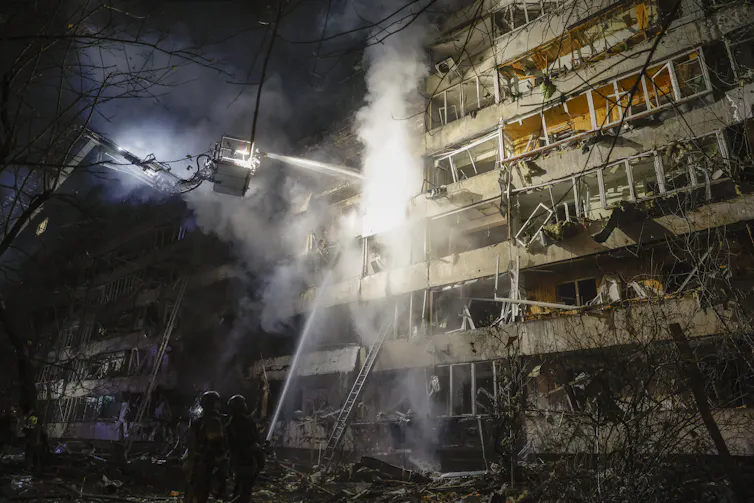
Saudi Arabia is confronting an intensified campaign by the Iran-backed Houthis, whose missiles and drones have targeted airports, oil facilities, and shipping. An attack on Riyadh’s King Khalid International Airport killed 13 people, while repeated strikes have disrupted aviation and raised concerns about the kingdom’s ability to protect infrastructure central to its economic development plans.

For Riyadh, however, accepting Israeli military assistance would carry political consequences at home and throughout an Arab region deeply affected by the wars since October 7, 2023.

“Since the Yemen war, there have been contacts with Israel. Israel wanted to assist with the Houthis, but the Saudis, because of public opinion, did not guarantee any open contact,” Dr. Yoel Guzansky, senior researcher and head of the Gulf Program at Israel’s Institute for National Security Studies (INSS), told The Media Line.

A September 30 incident illustrated the limits of cooperation. Following the emergency landing in Saudi Arabia of a Flydubai aircraft bound for Israel after an attack in its cockpit, Riyadh refused an Israeli request to allow military aircraft to retrieve the Israeli passengers, according to Reuters. The passengers instead returned on another Flydubai plane.

“Saudi Arabia did the minimum and didn’t want any normalization,” Guzansky said, referring to the refusal to permit Israeli aircraft to land.

Before the Hamas-led attacks of October 7, 2023, Saudi Arabia and Israel had been moving toward a possible US-brokered normalization agreement. The subsequent wars and destruction in Gaza have made formal recognition considerably more contentious.

Riyadh has maintained that any agreement must include a credible pathway toward an independent Palestinian state, a condition Israel’s current government has resisted.

“Since October 7, the Arab world is very much against Israel. The Palestinian issue is formally at the center because it helps maintain a form of stability for Arab governments,” Guzansky said.

He argued that public opposition to Israel would remain a substantial obstacle even if the two governments identified additional areas of cooperation.

There is no common ground between Israel and Saudi Arabia in terms of societies. Public opinion is against Israel in Saudi Arabia, and it will be hard to shift that.

“There is no common ground between Israel and Saudi Arabia in terms of societies. Public opinion is against Israel in Saudi Arabia, and it will be hard to shift that.”

For Dr. Cyril Widdershoven, senior advisor at Blue Water Strategy, the security crisis also presents an economic and political challenge for Saudi Crown Prince Mohammed bin Salman.

Saudi Arabia’s Vision 2030 development program depends heavily on foreign investment, infrastructure expansion, and the kingdom’s reputation as a stable destination for international business. Continued attacks on airports, ports, and energy facilities threaten those ambitions while increasing defense and reconstruction costs.

Widdershoven warned that mounting expenses and persistent insecurity could fuel domestic criticism of the crown prince, making an openly acknowledged relationship with Israel even more politically sensitive.

The economic consequences of the conflict are already apparent. On October 19, organizers announced that Saudi Arabia’s flagship Future Investment Initiative conference, originally scheduled for October 26–29, would be postponed until 2027. The decision followed deadly Houthi attacks and growing security concerns, although organizers did not explicitly cite the attacks as the reason.

Military considerations present another obstacle. Saudi Arabia has fought the Houthis for more than a decade, yet repeated air campaigns have failed to eliminate the group’s ability to strike across the border or threaten shipping through the Red Sea.

“I don’t think that Saudi is militarily able to crush the Houthis. Hurt them, yes. But to go inside Yemen is something else,” Widdershoven said. “I would say it’s like a potential Afghanistan or Vietnam scenario.”

He also warned that direct Israeli military involvement could expand the confrontation by provoking responses from Iran and allied armed groups elsewhere in the region.

I would say to the Israelis, I would offer my help, but I would keep my soldiers out. Let’s have the Arabs deal with the Arabs.

“I would say to the Israelis, I would offer my help, but I would keep my soldiers out. Let’s have the Arabs deal with the Arabs.”

Saudi Arabia is meanwhile seeking assistance from regional partners whose involvement may be more politically acceptable.

On October 18, Egypt’s National Defense Council, chaired by President Abdel Fattah el-Sisi, agreed to support Saudi Arabia in defending itself against Houthi attacks. The Saudi defense minister also met the president of the United Arab Emirates as the two governments sought closer coordination despite longstanding differences over Yemen.

Turkey submitted the Mecca Joint Defense Agreement with Saudi Arabia and Pakistan to its parliament for ratification on October 20.

Signed in August, the three-country pact provides for mutual defense if a signatory comes under armed attack. Turkish officials have indicated that assistance to Riyadh could include military equipment and intelligence sharing, while any Turkish troop deployment abroad would require parliamentary approval.

Britain also announced Tuesday that Royal Air Force Typhoon jets would conduct defensive patrols over Saudi territory, expanding British military support against Houthi missile and drone attacks.

“The Saudis need the Emiratis now in terms of Yemen. It is temporary, not fixing their competition,” Guzansky said, distinguishing immediate security needs from the continuing rivalry between Riyadh and Abu Dhabi.

Widdershoven similarly identified Egypt and the Emirates as potential partners while questioning how far arrangements involving Turkey and Pakistan would translate into operational commitments.

He also distinguished official diplomatic relations from informal contacts, suggesting that discussions between Saudi and Israeli representatives might continue without public acknowledgment.

“So to expect that officially there will be a discussion between Riyadh and Jerusalem, I think that will not happen officially,” he said.

Israel’s October 27 election introduces another uncertainty.

The vote, the first national election since the October 7 attacks, will determine whether Prime Minister Benjamin Netanyahu can assemble another governing coalition or whether opposition parties can form an alternative government.

Guzansky believes a change in leadership could improve prospects for renewed contacts with Riyadh.

“The elections are crucial in this situation, since a new government, the current opposition, would help a lot in terms of rapprochement,” he said.

Netanyahu, Guzansky added, “is not well seen in the Arab world.”

Widdershoven offered a similar assessment, suggesting that Saudi opposition to closer relations with Israel is tied partly to Netanyahu personally.

The current feeling in Saudi is not that they are anti-Israeli. I think that they are anti-Bibi Netanyahu.

“I don’t expect that as long as Bibi Netanyahu is in power, that this will happen,” he said. “The current feeling in Saudi is not that they are anti-Israeli. I think that they are anti-Bibi Netanyahu.”

Yet a change of government would not necessarily remove Riyadh’s principal diplomatic condition.

Gadi Eisenkot, a prominent opposition contender, has avoided endorsing a two-state formula, while other parties seeking to replace Netanyahu hold substantially different positions on Palestinian statehood, settlements, and negotiations.

An opposition coalition united around replacing the prime minister would therefore not automatically agree on a policy capable of satisfying Saudi demands.

Washington faces its own political pressures ahead of the November 3 congressional midterm elections.

A Reuters/Ipsos poll published October 20 placed President Trump’s approval rating at 31%, the lowest of either of his presidential terms, as Americans expressed growing frustration over high gasoline prices and the economic consequences of the war with Iran.

President Trump endorsed Netanyahu’s reelection campaign on October 18, even as both experts interviewed by The Media Line suggested that a different Israeli government might be better positioned to improve relations with Saudi Arabia.

The endorsement highlights a potential conflict between Washington’s immediate political alliances and its longer-term ambition to expand the Abraham Accords.

“Trump may keep pushing rhetorically for normalization with Saudi, but in practice it is very different,” Guzansky said.

The approaching US elections are also influencing calculations in Tehran. Senior Iranian officials told Reuters that Iran had deliberately prolonged negotiations with Washington partly to deny President Trump a political success before the midterms.

Widdershoven argued that Iran could continue pressuring its adversaries through threats to shipping, rising insurance premiums, and regional instability without necessarily launching another major military offensive.

Iran can play this for another two, three, five years. We cannot.

“They are playing the long game,” he said. “Iran can play this for another two, three, five years. We cannot.”

For Saudi Arabia, continued instability increases the incentive to strengthen regional security arrangements. But neither common threats nor a possible change of leadership in Israel would necessarily overcome the diplomatic barriers to normalization.

“A new government in Israel may push new talks with Saudi, but still the opposition won’t guarantee a Palestinian state,” Guzansky said.

Microsoft reportedly projects $1,200 to $1,800 price for 2028 Project Helix

0
microsoft-reportedly-projects-$1,200-to-$1,800-price-for-2028-project-helix
Microsoft reportedly projects $1,200 to $1,800 price for 2028 Project Helix

We haven’t heard many details about Microsoft’s upcoming “Project Helix” gaming hardware since the company announced it in March as a device that will “play your Xbox and PC games.” In a new wide-ranging profile of Xbox CEO Asha Sharma, though, Fortune alludes to a dual release strategy for upcoming Microsoft gaming hardware, with “a next-generation handheld device” planned by the end of next year and a 2028 holiday season console release that could cost between $1,200 and $1,800.

That future console price range is based on what has “internally been projected” at the company, according to Fortune. But the price for consumers could come down if “Microsoft decides to subsidize the cost,” the outlet says, as many console makers have done in the past.

While a $1,200 starting price would be historically high for the game console market, even accounting for inflation, it also reflects a new normal: The slowdown in Moore’s Law and AI-driven component shortages mean cutting-edge gaming hardware just isn’t as cheap as it used to be. This year, the Steam Machine broke the $1,000 starting price, while the 2-year-old technology in the PlayStation 5 Pro is now going for $900, and the 6-year-old Xbox Series X now starts at $750.

Internal clashes and sell-off rumors

Fortune also reports that Microsoft is beset by internal clashes over whether its upcoming Helix handheld will run a “trimmed-down version of Windows Home”—akin to last year’s ROG Xbox Ally—or a bespoke operating system built and controlled by the Xbox group. Fortune cites “people briefed on the clash” in reporting that one high-level executive threatened to cancel the handheld altogether if they were forced to use Windows.

That threat seemingly helped lead to the current situation with the Xbox team “now largely controlling the direction of the operating system for the project, Fortune writes, though Sharma said the two groups are still working closely together. Fortune also reports that Microsoft has pressured the hardware team to move up the timelines for Project Helix hardware “by at least several months,” in part by using AI tools where applicable.

The profile also cites “people familiar with the strategy” in reporting that Xbox Game Pass will soon shift to a heavily tiered “a la carte” structure that lets subscribers pick and choose “add-ons for console-only games, cloud gaming, and multiplayer.” That would be an interesting shift from the current Game Pass plans, which all include some level of cloud-based gaming, console exclusives, and console multiplayer even for players who don’t make use of them.

Elsewhere in the wide-ranging profile, Fortune addresses concerns from “several current and former staff members” that Sharma was put in place merely to enact painful cuts before an impending sale of a spinoff of the Xbox group. But the piece also quotes Microsoft executive Judson Althoff pushing back against that idea, saying, “We would not have put [Sharma] on a business we intend to sell. There’s going to be a ton of speculation about all this. Time will tell.”

Trump vowed to stop an ‘energy emergency.’ Then he created a real one.

0
trump-vowed-to-stop-an-‘energy-emergency’-then-he-created-a-real-one.
Trump vowed to stop an ‘energy emergency.’ Then he created a real one.
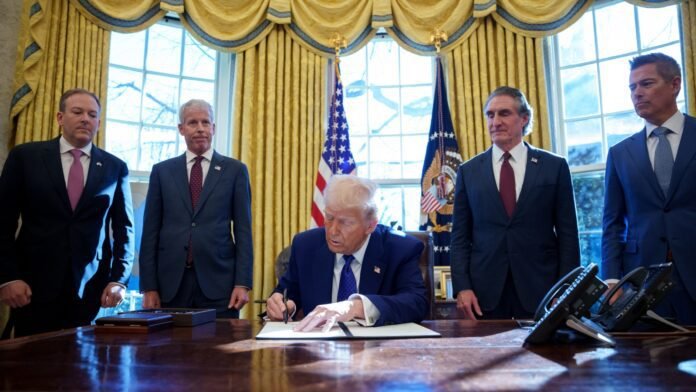
On the first day of his second term, President Donald Trump declared that the United States was experiencing a “national energy emergency.” The “harmful and shortsighted policies of the previous administration,” he wrote in an executive order, had left the nation’s energy resources “far too inadequate,” a situation that “causes and makes worse the high energy prices that devastate Americans.” Since then, Trump has attempted to use the emergency declaration to speed up permits for fossil fuel development and bolster the nation’s power grid with more fossil fuel resources.

Almost two years later, as Trump stares down a midterm election, his claim of an emergency has an ironic ring. The United States is experiencing a kind of energy emergency characterized by high fuel prices, but it is not the one he described when he took office. Not only that, but the executive powers he unlocked with his emergency order have proven useless for mitigating the current crisis and for lowering the high prices he decried upon taking office.

“The genesis of the problem is the war in Iran,” said Gbenga Ajilore, the chief economist at the Center on Budget and Policy Priorities, a nonpartisan economic think tank, who has analyzed Trump’s energy policy. Trump’s attack on the country has led to the closure of the Strait of Hormuz and the destruction of refineries and oil fields, which has reduced the global supply of refined fuels like gasoline and diesel. The supply crunch for these refined fuels has been even worse than for crude oil, and has hit wallets harder.

This irony points to a hard truth about how the fossil fuel system works. Even with all the powers available to the executive branch, Trump has not been able to tamp down prices either for petroleum fuels or for electricity. He has been able to muscle through specific oil projects and keep certain power plants open, but the markets for oil and power are so large and complex that these interventions have made no difference in consumer prices. Whether these high prices constitute an emergency or not, there isn’t much he can do about it — short of ending the war in Iran. 

“If you reverse that, it may not drop like a rock, but it’s going to start going down,” said Ajilore. “Outside of that, there really isn’t much to do.”

Electricity: Keeping coal plants running

The practical impacts of Trump’s energy emergency declaration have affected two key parts of the energy system, the areas where the president had the biggest disagreements with the Biden administration. The first was the power grid, where former president Joe Biden sought to deploy large new amounts of solar and wind power even as data centers drove up electricity demand. Trump promised on the campaign trail that he would cut energy bills in half, and he directed federal agencies to “identify and exercise any lawful emergency authorities available to them” to facilitate power generation. 

The Energy Department took the order and ran with it. Secretary Chris Wright, a noted champion of fossil fuels, has issued several emergency orders to prevent the scheduled retirement of coal plants around the country. The secretary argued in these orders that strained grid conditions made it necessary to preserve all available power capacity, even though the utilities that ran the plants were trying to shut them down. 

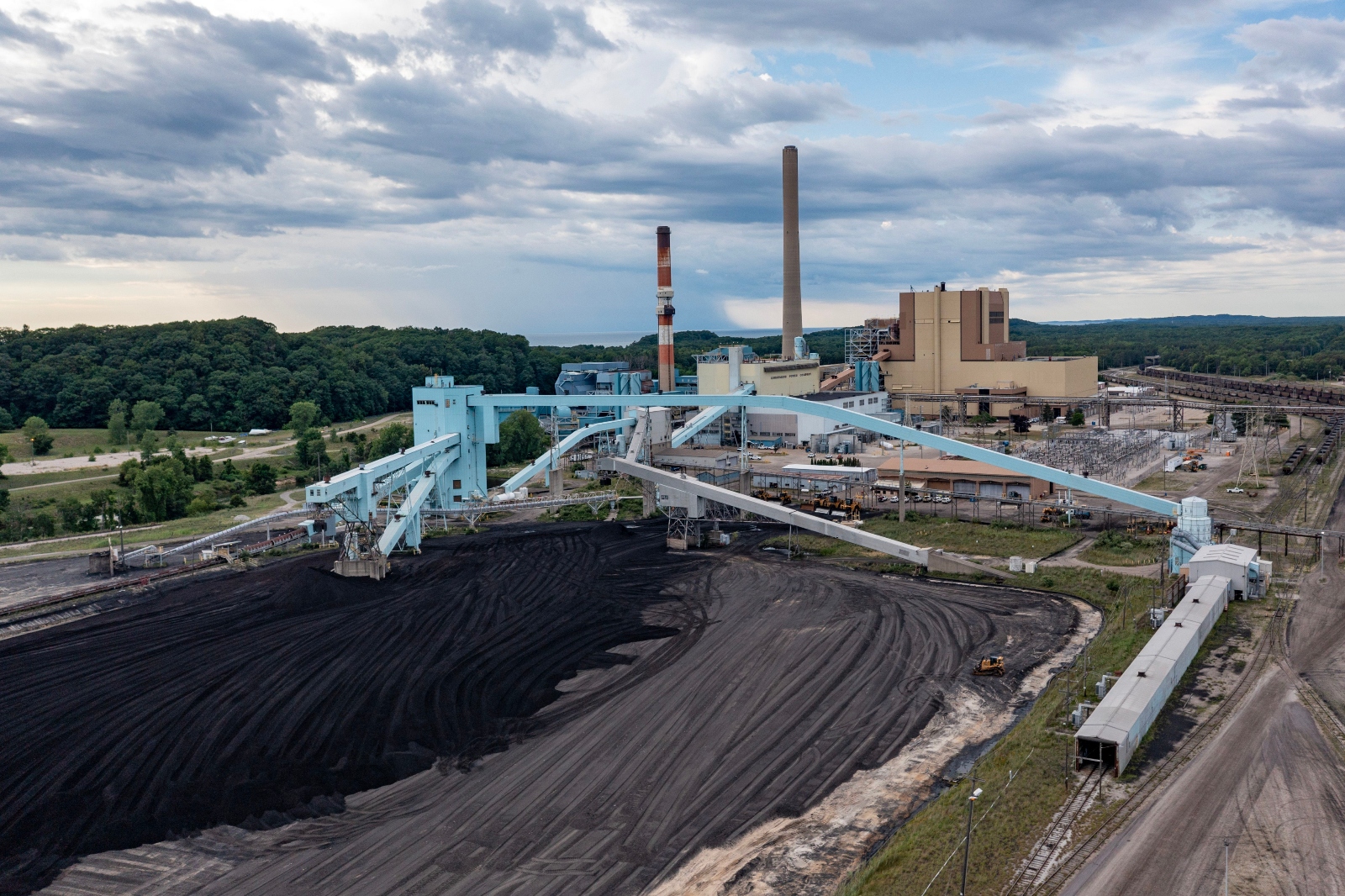
Instead of reducing energy prices, these orders have come at significant costs. In Michigan, keeping the J.H. Campbell plant open has cost ratepayers in the Midwest almost $300 million on net, even though the plant is generating far less power than it did before the order. In Colorado, a utility has had to continue operating a coal plant it was about to retire even though the plant is broken and needs serious maintenance. In many cases, the retiring plants were among the oldest and least efficient facilities in their regions, so keeping them on doesn’t save consumers money even if they do add power to the grid.

The J.H. Campbell coal-fired power plant in West Olive, Michigan. The Department of Energy ordered the operator of the plant, Consumers Energy, to keep the plant open past its planned retirement date.

The J.H. Campbell coal-fired power plant in West Olive, Michigan. The Department of Energy ordered the operator of the plant, Consumers Energy, to keep the plant open past its planned retirement date. Jim West / UCG / Universal Images Group via Getty Images

It took a while, but the courts have started to question these interventions. In September, after Michigan sued over the coal plant mandate at Campbell, an appellate court blocked the Department of Energy’s order, rejecting the administration’s reading of federal law. The judge in the case also took issue with the administration’s claims of an energy emergency in the region’s grid, writing that Wright’s assertion of an emergency was “unpersuasive” and that his policy “invites frequent federal interventions that … threaten the stability of the energy market.”

“We saw in the Michigan case that the facts just don’t match up with the claims and with the law, and I suspect that in some of these other cases, if not all of them, we’ll see similar decisions,” said Melissa Birchard, the mitigation program director at the Georgetown Climate Center, a research institute based at Georgetown Law School. The state’s utility commission and the regional grid operator both rejected the idea that there was an energy shortage in the region around the Campbell plant.

Crude oil: Drill, baby, drill

The other area where the administration used the emergency declaration to reverse Biden-era policy was in the oil and gas sector. Here, too, there was no critical shortage, as U.S. oil and natural gas production were both near all-time highs. While Biden approved some large drilling projects such as the Willow effort in Alaska, he attempted to block oil leases in the Gulf of Mexico and canceled the Keystone XL oil pipeline. Trump’s executive order attempts to steamroll the environmental and procedural permits that have slowed down energy development in the past — the order directs agencies to use “all relevant lawful emergency and other authorities” to “expedite” the construction of oil wells, pipelines, and other energy facilities. It also seeks to waive the Clean Water Act and the Endangered Species Act wherever possible.

The order has produced a few notable wins for the fossil fuel industry. Earlier this year the Trump administration convened what is known as the “God Squad,” a committee of Cabinet secretaries with the power to override the Endangered Species Act. In a meeting that lasted only a few minutes, the committee waived all species protections for oil and gas drilling in the Gulf of Mexico, a measure that will enable BP to pursue a deepwater rig project known as Kaskida. 

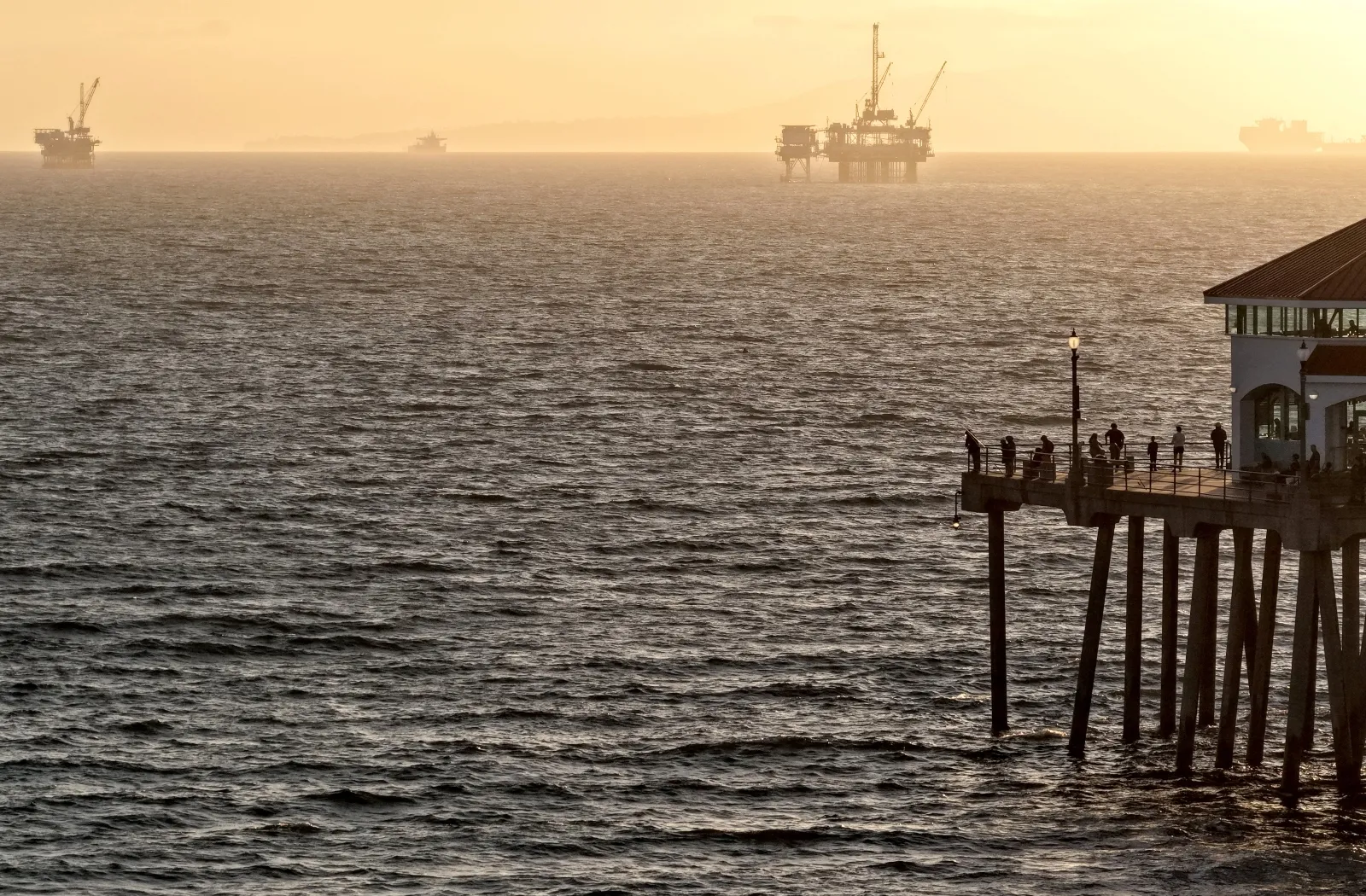
People stand above the Pacific Ocean on Huntington Beach pier, with the offshore oil and gas platform Eva in the distance. President Trump has sought to use his energy emergency declaration to enable more offshore oil drilling in the Gulf of Mexico.

People stand above the Pacific Ocean on Huntington Beach pier, with the offshore oil and gas platform Eva in the distance. President Trump has sought to use his “energy emergency” declaration to enable more offshore oil drilling in the Gulf of Mexico. Mario Tama / Getty Images

The order also directed the U.S. Army Corps of Engineers to speed through permitting for pipelines and other infrastructure under the Clean Water Act, and the Corps last year identified a list of around 600 projects eligible for fast-tracking. It later withdrew that list, but some projects on its permitting database are still tagged with “energy emergency,” such as Enbridge’s Line 5 oil pipeline replacement, a mineral sands mine owned by Chemours, and a natural gas pipeline in Florida. It’s unclear whether and when these projects would have moved forward absent the order, but expediting them won’t do anything to bring down the high prices Trump mentioned in his emergency declaration. The largest of them, Kaskida, is years away from producing oil, and would only produce a small fraction of the oil that moves through the Strait of Hormuz in a normal month.

In addition to Michigan’s Campbell lawsuit, around a dozen states have sued the Trump administration over his original executive order, arguing that there is no energy emergency in the United States. The oral argument in that case is scheduled for October 20, and Birchard expects that the courts will view the “emergency” declaration with the same skepticism as in the Campbell case.

“We see this accumulated effort to declare emergencies,” Birchard said. The question is “whether the courts are going to start saying, ‘Hey, one emergency we might have believed, two emergencies we might’ve believed, but now we’re seeing a pattern of many, many emergencies. How do we set up, you know, a set of facts that really supports that many emergencies?”

Meanwhile, a separate crisis has unfolded in a segment of the energy system where Trump’s order has had almost no effect. The United States and the rest of the world are experiencing a shortage of refined fuels like gasoline and diesel, which has driven up prices not only at the gas pump but also for major goods that are hauled on diesel trucks. The price of gasoline remains well above $4 a gallon, and the price of diesel is at a historic high of over $6 a gallon. The so-called “crack spread,” or difference in price between refined and crude oil, reached a multiyear high over the summer as well.

The primary cause of this shortage is the war in Iran, which has closed the Strait of Hormuz and destroyed numerous Middle Eastern refineries, but Ukraine’s attacks on Russia have also destroyed several oil refineries. The flow of crude oil through the Strait of Hormuz has recovered over the eight months of the war thanks in part to American military escorts for tankers, and countries like Saudi Arabia have also managed to export their oil through other channels, which has prevented a global crude shortage. The problem is that consumers don’t buy crude oil. They buy gasoline and diesel, products that are produced at massive refineries. 

There is little Trump can do to mitigate this rise in prices. Refineries in the U.S. are already operating at maximum capacity to take advantage of high profit margins, and many large refineries have delayed scheduled maintenance so they can keep producing as much fuel as possible while high prices last.

“Refiners are running close to flat out,” said Abhi Rajendran, the head of research at Energy Intelligence, a firm that analyzes developments in the oil and gas sector. “They’re making money, but there’s not really any kind of slack to ramp things up.”

A Shell gas station near the Marathon oil refinery in Carson, California. Despite President Trump's energy emergency declaration, the Trump administration has not been able to add refining capacity for either gasoline or diesel.

A Shell gas station near the Marathon oil refinery in Carson, California. Despite President Trump’s “energy emergency” declaration, the Trump administration has not been able to add refining capacity for either gasoline or diesel. Patrick T. Fallon / AFP via Getty Images

The only solution to high prices would be to produce more gasoline and diesel, but the refinery system isn’t flexible enough to do that. There are only a few dozen major refineries in the country, as opposed to many thousands of oil wells, and each refinery can only produce so much before it needs maintenance. Refineries cost many billions of dollars to build, they break or shut down all the time, and companies like Marathon and Chevron see no reason to construct new ones in the United States. Overall demand for refined products has declined over the past few years as cars grow more fuel-efficient and consumers embrace electric vehicles.

“Refined product demand has actually been in decline for a long time,” said Rajendran. “In normal times, [refinery capacity] is more than adequate. There’s no real economic case for new refineries, because if these wars end, then it’s just wasted money.”

Trump’s original executive order mentions refining, but it did not do anything to expand refinery capacity, which has left the president with few good options. He considered a diesel export ban, which would prevent companies from selling American diesel overseas, but backed off after opposition from the oil and gas industry. In any case, it would only have caused a marginal decrease in prices, and might have caused prices to rise further as refiners cut back their production. 

The president’s other efforts, like buying Russian diesel and encouraging states to expand diesel subsidies, will likely have an even smaller impact. The total amount of diesel that Russia has promised to deliver “immediately” as part of Trump’s recent deal is equivalent to less than one day of U.S. diesel consumption.

The upshot is that, absent a breakthrough in Iran, high fuel prices will likely last through the year. While the states that sued Trump over the emergency order argue that steep energy prices themselves don’t constitute an emergency, it seems clear that many Americans feel strained by their gasoline and power bills. A recent Fox News poll found that more than 8 in 10 Americans are concerned about gas prices, while the University of Michigan’s consumer sentiment index fell this summer to its lowest level on record. Another recent poll, from the Associated Press, found that two-thirds of Americans blame Trump for high costs, while only one-third blamed “factors outside Trump’s control.”


Yemenis Unable to Reach Hospital Are Part of the Iran War Death Toll

0
yemenis-unable-to-reach-hospital-are-part-of-the-iran-war-death-toll
Yemenis Unable to Reach Hospital Are Part of the Iran War Death Toll


SANA’A, Yemen — For more than two weeks, Abdullah laid at home in al-Silw district, in Yemen’s besieged southwestern governorate of Taiz, as his body slowly failed.

The 58-year-old had lived with kidney failure for two years, and his doctor had prescribed dialysis twice a week.

Since the siege, however, the fighting stood between al-Eissi and the dialysis center in Taiz city that kept him alive. Al-Eissi wouldn’t let his family risk their lives to take him to the center.

“My father’s condition deteriorated badly,” said his son, Muadh, 38. “We couldn’t move him to Taiz because the fighting had intensified.”

About a week ago, al-Eissi died at home in his bed.

“When I saw my mother weeping for her husband, I felt helpless,” Muadh said. “It might have been avoided if my father had reached his dialysis sessions on time.”

Abdullah is one of at least 10 dialysis patients who have died since the siege on Taiz began because they could not reach treatment, according to Dr. Issam Mahyoub, director of the kidney dialysis center at al-Jumhuri Hospital in Taiz. Doctors warn that many more could follow.

“About 60 percent of kidney failure patients in Taiz face the risk of death because they cannot reach the dialysis center.”

“About 60 percent of kidney failure patients in Taiz face the risk of death because they cannot reach the dialysis center,” said Dr. Fouad al-Haddad, the hospital’s director. “Behind every number is a human being and a family living in anxiety, waiting for a chance to continue treatment that may never come.”

The kidney-failure deaths are part of the toll of a wider regional war set off by an unprovoked February attack against Iran by Israel and the United States. Estimates hold that 10,000 or more people have died during the war, including both military and civilian deaths across the region. Since the regional war reignited in Yemen this summer, according to the World Health Organization, at least 800 people have been killed, with thousands wounded and tens of thousands displaced.

“The plight of dialysis patients in Taiz illustrates how geopolitical struggles over deterrence, energy security, and regional leverage translate into blocked transit, disrupted medical care, and preventable deaths,” said Sina Toossi, a senior non-resident fellow at the Center for International Policy. “Yemen’s population has already endured more than a decade of devastating war, and the tragedy is that this wider regional conflict is now threatening to plunge it back into another humanitarian catastrophe.”

Yemen in the Iran War

Yemen entered the war in March, when the Iran-aligned Ansarallah armed group, more commonly known as the Houthis, began firing missiles into Israel in retaliation for its attacks on Iran. The Houthis, who gained control of various portions of Yemen during a two-decade-long insurgency, including the capital of Sana’a, saw their prominence in the Iran war grow with attacks against shipping channels surrounding the Arabian Peninsula.

The Yemeni civil war itself had been a long-simmering conflict when the Iran war broke out, straining a 2022 truce signed by the Houthis and their rivals, including Saudi Arabia, which was broken this July when the Houthis attacked a regional Saudi airport. Throughout August, the Houthis launched missile, drone, and ground attacks across the front lines against the internationally recognized, Saudi-backed Yemeni government.

In September, the Houthis seized strategic areas on Yemen’s coast and imposed a naval blockade that cut off the Bab al-Mandeb Strait, while firing missiles deeper into Saudi Arabia.

In early October, Yemeni government forces backed by the Saudi-led coalition launched an operation aimed at retaking the coast and pushing into Sana’a.

As they moved inland to consolidate their coastal gains, Houthi forces pushed into the highlands around Taiz, a strategically located city controlled by the government. In short order, the insurgents severed the main mountain road linking Taiz to Aden, another city also controlled by the government.

The blockade trapped more than 600,000 residents and sent food and fuel prices soaring. The U.N. World Food Program warned that Taiz’s wheat and flour stocks are close to running out.

“We have confirmed cases of death and cases of severe impact,” said Tawfiq al-Humaidi, head of the SAM Organization for Rights and Liberties, a Geneva-based international body monitoring violence in Yemen, who said fighting on roads near Taiz has cut off medical supplies from the city. “Those who are dying and suffering are among the victims of the Iranian war, which drove the Houthis to expand toward Taiz and Bab al-Mandeb.”

On October 14, the Yemeni government formally petitioned the U.N. Security Council for immediate, practical intervention to lift the “suffocating siege.”

Any action would be too late for families like the al-Eissis.

Cut Off From Care

Taiz is Yemen’s cultural capital and its third-largest city. Healthcare facilities there serve a huge geographical area. Al-Haddad, the head of the al-Jumhuri Hospital, said patients hail from across the governorate.

“They come from the West Coast, al-Mawasit, Jabal Habashi, al-Shamayatayn, Sama, al-Silw, al-Misrakh, and al-Maafer areas,” he said, “where distances are long and the hardship of travel is multiplied by rough roads and security conditions.”

The kidney dialysis center has 270 registered patients.

“That doesn’t count the patients from outside the city who haven’t been able to reach us,” said Mahyoub, the head of the dialysis center. “Patients from al-Misrakh, al-Aqroud, al-Shamayatayn, al-Hujariya, al-Turba, and Jabal Habashi localities used to come to us. Now getting here has become extremely difficult, with the fighting and the restrictions on movement into the city.”

Ahlam Ali Abdo, 33, walks about 30 kilometers from her village in Jabal Habashi to reach the center, crossing rough roads and areas where gunfire and shelling ring out. The walk, extremely risky for a kidney failure patient, takes between 5 to 9 hours. After treatment, she faces the same distance back, uphill, to her three children. Some days the road is too dangerous, and Abdo waits for hours in the city.

“I cry constantly of pain and exhaustion and worry that I wouldn’t be able to see my children again. My condition is miserable,” she said.

Her husband stays home with the children. Bringing any of them with her, she said, would put the whole family in danger.

Mahyoub’s center tried and failed to find her housing in the city. Yesterday, on Friday, another dialysis patient took her in, for fear she would be killed on the road.

Reaching the center doesn’t guarantee treatment.

“The shortage of diesel needed to run the generators forced us to cut dialysis sessions from 4 hours to 2,” said Mahyoub. Supplies from the Ministry of Health in Aden “no longer arrive regularly, and the remaining stock is nearly gone.”

“Dialysis is a lifeline for these patients,” he said.

Haddad, the hospital director, said of the dialysis center doctors: “They are expected to save patients, but the means available are not always enough.”

The Office of Public Health and Population in Aden has warned of an imminent health and humanitarian catastrophe in Taiz caused by the continuing siege and the obstruction of supplies.

In a statement, it said “medicines, solutions, medical supplies and fuel in the city’s health facilities were close to running out. That threatens emergency services, surgery, intensive care, dialysis and neonatal incubators.”

No Road to Aden

For patients who can no longer reach Taiz’s center, Aden is the fallback, whether for treatment or for its airport to travel abroad. The Taiz–Aden road, however, is unusable, according to patients and Mahyoub. The detours wind through mountain bends and rough terrain, add hours and transport costs, and in places run through active clashes.

The crisis extends beyond Taiz.

Dr. Anis al-Asbahi, spokesperson for the Health Ministry in Sana’a, said that “more than 8,000 kidney failure patients in Houthi-controlled governorates are suffering because hemodialysis machines and dialysis medicines can’t get in.”

He blamed the blockade and the closure of Sana’a airport.

“Kidney failure knows no political barriers,” Mahyoub said. “Patients cannot wait for disputes to be settled or for circumstances to change before they get treatment.”

For Muadh al-Eissi, whose father died from kidney failure, the question is simpler.

“How can the parties using heavy weapons in populated areas ignore what the fighting does to patients,” he asked, “to the children, women and elderly people who need medicine and treatment? People, like my father, are losing their lives for what?”

JD Vance-founded, Korea-tied firm now influencing Brazil election

0
jd-vance-founded,-korea-tied-firm-now-influencing-brazil election
JD Vance-founded, Korea-tied firm now influencing Brazil election

<

article id=”post-951514″>

In the first round of Brazil’s elections on Oct. 4, 2026, Flávio Bolsonaro, of the right wing Liberal Party (PL), came in first with 47.03% of the valid votes, compared with 45.16% for the current leftist president and Workers’ Party (PT) candidate, Luiz Inácio Lula da Silva.

The margin was just over 2.2 million votes, and the first polls for the runoff on October 25 indicate a virtual tie. In a race like this, factors that would be marginal in a lopsided election become decisive. One of them comes from Washington and was little known in Brazil until September 2026, on the eve of the first round: Rockbridge Network.

Rockbridge was founded in 2019 by the current US vice president, JD Vance — then a Silicon Valley investor — and Chris Buskirk, editor of the pro-Trump website American Greatness.

In a 2021 brochure distributed to donors and circulated by the New York Times the following year, the network described itself as “a kind of political venture capital firm.” The idea was to bring together donors dissatisfied with the traditional Republican Party and invest their money in a portfolio of projects: its own media outlets, training personnel for a future US administration, and voter mobilization in US states.

A political venture capital firm

The formula worked. In 2024, according to Reuters, the network had a budget of about US$75 million for the election cycle, focused on right-wing journalism, polling and voter mobilization in states critical to the US presidential election. A significant portion of its structure consists of entities that are not required to disclose their donors.

Among the reported funders are Peter Thiel, co-founder and chairman of the technology company Palantir and Rebekah Mercer, one of the owners of the far-right American news site Breitbart.

Donald Trump participated by phone in a meeting of the network in April 2024, and months later chose Vance as his running mate. Since the Republican victory in the 2024 election, Rockbridge has served as a bridge between donors and the government: Senior administration officials have begun giving presentations to its members.

The South Korean connection

Donald Trump Jr. with his South Korean pal Chung Yong-jin and Chung’s wife. Photo: Chosun Ilbo

Brazil is not the first foreign destination for Rockbridge’s activities. In September 2025, the network launched a branch in South Korea, chaired by Kim Hae-young, a former lawmaker from the center-left Democratic Party of Korea.

The board includes former Prime Minister Kim Boo-kyum, of the same party; former Finance Minister Bahk Jae-wan, from a conservative administration; and Chung Yong-jin, chairman of the Shinsegae Group.

In Seoul, Rockbridge positioned itself as a channel for elites on both sides of the political spectrum to gain access to the Trump administration. In Brazil, the approach would be different.

What Is known about Rockbridge in Brazil

On September. 25, 2026, the Brazilian newspaper Folha de S.Paulo revealed that Rockbridge had begun setting up operations in the country. Documents obtained by Intercept Brasil detail the project.

A business plan from April 2026, marked as “not for public release” and signed with the “Rockbridge Network Brasil” logo, described the operation as a “political venture capital fund” – an echo of the US parent company’s self-definition. Members’ annual dues would finance projects on three fronts considered “out of balance”: the press, universities, and the legislature.

A second document, confidential and unsigned, was addressed to Flávio Bolsonaro – son of the former president, Jair Bolsonaro, who is now jailed for attempting a coup after losing the 2022 presidential election.

t proposed a Technology Council of 23 business leaders, 19 of whom were foreign, to directly advise the Liberal Party’s presidential candidate and bring American investors closer to a potential administration of his in sectors such as defense, energy, data centers and rare earth metals. The text presented the council as useful “as a campaign tool” and “as a platform for government,” and hinted at investment commitments even before the inauguration.

There is no evidence that the material reached the candidate, and several of the listed companies deny having been consulted. The individuals involved, however, are close to Flávio Bolsonaro’s campaign.

Businessman Pedro Sang, identified in the document as the executive director of the Brazilian operation, told The Intercept that the council “was just an idea that never took off or moved forward.” Sang was introduced to Rockbridge through André Marinho, of the right wing Novo party, a candidate for governor of Rio and son of businessman Paulo Marinho, Flávio’s alternate in the Senate.

Marinho wrote a memo about a Brazil-US partnership on rare earths under a potential Flávio administration, which he now describes as a “hypothetical exercise.” Nine days after the file was created, Flávio said at CPAC, in Dallas, that Brazil was the solution for the United States to break free from its dependence on China for critical minerals.

Tallis Gomes, founder of Easy Taxi, stated in April, on the Os Sócios podcast, that he was part of Rockbridge and that Flávio had asked him for written proposals for his government plan. Afterward he told The Intercept that he is merely part of a networking group. On October 1, allies of the Liberal Party’s candidate told Folha that businesspeople linked to the network produced reports and provided consulting services to the campaign.

Rockbridge denied for weeks that it had plans for Brazil, until it admitted that it had opened a company in the United States, Rockbridge Brazil LLC, registered in Wyoming in May. It claims that the initiative did not move forward, that the company never received funds or operated, and that Brazilians produced documents bearing its name without its consent. Flávio Bolsonaro’s campaign denies having received foreign funds.

The legal dispute and the limits of evidence

The accusation of foreign campaign financing came from Renan Santos, then a presidential candidate for the Missão party, who claimed, without presenting evidence, that Flávio Bolsonaro’s campaign was receiving money from the network indirectly. Based on this, Workers’ Party Congressman Lindbergh Farias filed a petition with the STF on Sept. 11. The Workers’ Party asked Justice Flávio Dino to order a Federal Police investigation, and Lula’s campaign took the case to Brazil’s Electoral Supreme Court (TSE), requesting records of meetings, contracts and expenses.

Brazilian election law prohibits donations from foreign entities to campaigns. So far, however, there is no public evidence that money from Rockbridge reached Flávio Bolsonaro’s campaign, and it is unlikely that the courts will conclude any investigation before October 25, the date of the presidential election’s runoff.

How to influence the election without making a donation

The debate focused on money, however, asks the wrong question. Rockbridge does not need to have transferred a single dollar to have influence in this election. It can do so through a number of other means.

The first is programmatic. The network offers Flávio Bolsonaro something no other candidate has: a direct channel to the inner circle surrounding the US vice president, who leads most polls for the likely Republican nomination in the 2028 U.S. presidential election. Rockbridge Brazil LLC was registered by Chris Applegate, who is in charge of Vance’s relationship with donors.

With part of Brazil’s exports subject to tariffs of up to 37.5% since July — as part of the second round of trade sanctions following the U.S. Supreme Court’s overturning of the 2025 tariff hike — the promise to repair relations with Washington holds electoral value, especially among business leaders and exporters.

The proposal for cooperation on rare earths — a resource in which Brazil holds the world’s second-largest reserves, second only to China — gives concrete substance to this promise. And it aligns with the priority of Trump’s economic diplomacy in the competition with China over supply chains. The candidate can present himself not only as Trump’s ideological ally but also as his preferred interlocutor.

The second is organizational. What Rockbridge sells in the United States is a method. Its 2021 brochure outlined plans for its own media outlets, influencer programs and a “shadow government” to train staff, and the network funded voter mobilization in key states in 2024.

The Brazilian plan replicated this model. Even though the organization never formally operated in the country, knowledge circulates among people, and some of them, according to Flávio Bolsonaro’s own allies, have already worked on his campaign. In a runoff decided by just a few points, the ability to mobilize business leaders, fund campaign content, and get voters to the polls through legal and domestic channels may be worth more than any international transfer.

The third factor is the boomerang effect. Rockbridge could also prove decisive against Flávio Bolsonaro. Lula’s campaign has already incorporated this issue into its messaging, accusing Trump of wanting to “colonize” Brazil. In 2025, the US tariff hike boosted the president’s popularity by turning a trade dispute into a matter of sovereignty. The presence of a network linked to the US vice president surrounding a candidate offers the government the same narrative. The asset that brings Flávio Bolsonaro closer to business leaders is the same one that exposes him to nationalist voters.

What lies ahead after October 25

Whatever the election results may be, this episode reveals a shift in how the American right projects its influence in Brazil.

The Atlas Network, for example, supported a network of liberal think tanks in the country that promoted the neoliberal agenda and whose leaders rose to high-ranking positions in the Bolsonaro administration.

Rockbridge, for its part, exports something else: a model of organized political capital that links donors, candidates and access to the US government, with a specific economic agenda focused on critical minerals and technology, aligned with the rivalry with China. And the plan for Brazil does not end with the election: it calls for permanent councils for the press, universities, and the legislature, funded by members’ annual dues.

Different from the Korea case

A comparison with South Korea highlights what is unique about the Brazilian case. In Seoul, the network brought together elites from both sides of the political spectrum around an alliance with Washington. In Brazil, it backed a single candidate. This is a form of private, partisan economic diplomacy that operates outside official channels and benefits one side of the political contest.

In 2019, Chris Buskirk spoke at Brazil’s Foreign Relations Ministry about how globalism would threaten national sovereignty. Seven years later, the network he heads listed 19 foreign executives to directly advise a presidential candidate.

The election law prohibits campaigns from receiving cash donations or donations valued in cash from foreign entities. Reports and consulting services, if proven, may fall under this category. But the promise of access to Washington and future investments has no declarable price, and that is precisely what Rockbridge offers. In a country split down the middle, this loophole could decide the next administration.

Filipe Mendonça is an associate professor of international relations, Universidade Federal de Uberlândia (UFU).

This article is republished from The Conversation under a Creative Commons license. Read the original article.

Beloved Musician Dies Suddenly at 53 While on Tour

0
beloved-musician-dies-suddenly-at-53-while-on-tour
Beloved Musician Dies Suddenly at 53 While on Tour


The music world is mourning the sudden death of Joey Stuckey, a beloved rock and blues musician who died at just 53 while on tour, days before the release of one of the biggest projects of his career.

Stuckey died Saturday, October 17, in Madison, Wisconsin. His death was reportedly caused by a heart attack, with a report citing his publicist, Robert Evanoff. His family confirmed his passing in a statement released Tuesday.

The unexpected loss comes at an especially heartbreaking moment. Stuckey was preparing to release his new six-song EP, King of Strings, on October 23, following a milestone recording session at the legendary Les Paul Recording Studio in Hollywood.

The University of Wisconsin–Madison had also scheduled the musician to perform as part of its Guest Artist Series on the same day he died.

For more than three decades, Stuckey built a remarkable career as a guitarist, singer, songwriter, recording engineer and producer. He shared stages with legendary performers including James Brown, the B-52s and Bad Company.

Behind the scenes, he worked with some of rock music’s most recognizable names, including R.E.M.’s Mike Mills, Collective Soul’s Ed Roland and Allman Brothers collaborator Chuck Leavell. Legendary producer Alan Parsons once praised Stuckey as having “the best ears in the business.”

His accomplishments were particularly extraordinary considering the challenges he faced from an early age.

Stuckey had been blind since he was 2 years old and survived a childhood brain tumor. Rather than allowing those experiences to define his future, he devoted his life to music, education and helping other artists succeed.

He eventually became the official Music Ambassador of Macon, Georgia, where he owned Shadow Sound Studio. The recording facility celebrated its 30th anniversary in September, just weeks before his death.

Stuckey also taught music technology, advocated for accessibility and regularly shared his experiences with audiences around the world.

In 2017, Macon officials honored him by declaring September 29 “Joey Stuckey Alive Day.” The recognition inspired an annual community music festival celebrating life and the musician’s survival of his childhood illness.

His final recording project was another remarkable achievement. In June, Stuckey became the first artist to record a new project at the historic Les Paul Recording Studio, using vintage recording equipment associated with the guitar pioneer.

The resulting EP includes the single “Temple in the Wind” and a rendition of Cream’s classic “Sunshine of Your Love.” The release remained scheduled for October 23 following the announcement of his death.

In an emotional tribute, Stuckey’s wife, Jennifer, described her husband as the best man she had ever known.

“He would want us to smile, tell a bad joke, and laugh,” she said.

She also expressed gratitude for the support the family has received, saying his music, happiness and joyful approach to life would continue to inspire her.

Just weeks before his death, Stuckey spoke about his belief that music could bring people together and make the world better, one connection at a time.

Now, as his family, friends and fellow musicians remember his extraordinary life, his upcoming release will serve as a final reminder of the passion that defined his career.

How buying weapons can harm a country’s economy

0
how-buying-weapons-can-harm-a-country’s-economy
How buying weapons can harm a country’s economy

Some wars are predictable. There are conflicts past and present which have been more or less expected because of economic and social conditions, a country’s history or that of its neighbours.

In today’s geopolitical landscape, one warning sign that really stands out is the buying and selling of weapons. There is good evidence that a surge in arms imports tends to increase the risk and intensity of future wars.

Building up military power does not merely prepare a country for war. It can also fuel the geopolitical tensions that make war more likely.

And there are economic effects too.

Our research shows that when a country starts buying more weapons, its stock market tends to fall. We found that increases in a country’s arms imports are associated with statistically and economically significant declines in its financial markets.

Weapons procurement also serves as a strong predictor of market movements – stronger even than the actual outbreak of a military conflict. This may be because markets are driven by surprises. And by the time a war begins, investors may already have expected it and priced it in.

Perhaps surprisingly, a large amount of information on international arms deals is openly monitored and recorded by organisations such as the UN and the Stockholm International Peace Research Institute.

Using the data they provide, investors can make gradual and proactive portfolio adjustments rather than waiting for the shock of war to send markets tumbling.

And we used the same information to examine the weapons imports and stock markets of over 72 countries (including the US, the UK, China and India) over a period of more than 50 years, from 1970 to 2023.

The conflicts we looked at included the 1982 Falklands War between the UK and Argentina, clashes between India and Pakistan in the 1990s, the invasion of Iraq and the ongoing war in Ukraine. We also accounted for a wide range of factors that could influence stock markets, including the broader economic environment.

Our evidence points to a definitive link between a country’s military build-up and the fortunes of its financial markets.

Economic power

The negative effect of arms imports on stock market valuations is not the same everywhere though. Less harm is done, for example, in autocratic countries.

This is probably because autocratic leaders are expected to fight for regime survival and to guard against the risks of a coup. As a result, any military build-up may be viewed by investors as an expected policy response in autocratic regimes.

Buying weapons is linked to a stronger negative response in stock returns in countries with a robust rule of law – like the UK or Germany – where government arms procurement tends to be more transparent and subject to greater oversight.

The relationship between acquiring weapons and a hit to the stock market is also stronger in non-Nato countries. This makes sense when you consider that Nato is a defensive alliance, so military spending among its members may raise fewer concerns.

So buying weapons carries costs that go well beyond the price paid for tanks and missiles, with a detrimental effect on a whole national economy.

This can affect the wealth of people who invest directly in stock markets or indirectly through mutual funds. Pensioners may also be exposed, since pension funds commonly invest in the stock market, meaning that decisions made in government procurement offices can ultimately affect people’s savings and retirement.

War economy

When weapons end up being used, apart from the devastating human cost, armed conflict can leave economies struggling for years after the fighting begins. One study estimates that ten years after a conflict starts, the GDP in countries involved in war is, on average, 28% lower than it would have been.

A bombed building.

The ruinous effects of war in Ukraine. EPA/SERGEY DOLZHENKO

Trade links become significantly disrupted and sometimes severed altogether. Global supply chains that took decades to build can disintegrate overnight. Foreign investment dries up amid all of the uncertainty war brings.

The economic shock can reach far beyond the countries at war. As the invasion of Ukraine in 2022 and the war in Iran have shown, conflict can send energy prices soaring, adding to inflation and widespread economic pain. Buying weapons and using them is an expensive process from start to finish.

TP-Link tries to appease Trump admin with pledge to assemble routers in US

0
tp-link-tries-to-appease-trump-admin-with-pledge-to-assemble-routers-in-us
TP-Link tries to appease Trump admin with pledge to assemble routers in US

TP-Link yesterday announced plans to assemble Wi-Fi routers in the US, as the company attempts to get the Trump administration’s approval to sell its newest routers to American consumers.

The timing is uncertain, as TP-Link’s press release said it expects US-based assembly to begin “as early as” 2027. TP-Link’s application to sell new routers in the US could be rejected by the Trump administration or remain pending long enough to push the US-based assembly to 2028.

“Pending US regulatory approval, TP-Link expects domestic assembly of its groundbreaking Wi-Fi 8 home networking product line to begin as early as next year,” the company said. TP-Link said it signed a Letter of Intent with US company Keytronic, which agreed “to become a primary domestic manufacturing partner for TP-Link, supporting assembly of the company’s advanced networking portfolio in Corinth, Mississippi.”

TP-Link can’t sell its Wi-Fi 8 routers in the US because of the Federal Communications Commission ban on consumer-grade routers produced wholly or partly in other countries. Previous TP-Link routers that were already approved for import and sale are still available.

What counts as a US router is unclear

The FCC has given exemptions to a number of prominent router makers, but TP-Link’s history as a Chinese company is making it difficult to obtain FCC clearance. Founded in China in 1996, TP-Link moved its headquarters to California in October 2024. It says that “TP-Link Systems devices sold in the US are manufactured in Vietnam and TP-Link Systems is an independent, US company that is not owned or controlled by any foreign government.”

While TP-Link assembles routers in Vietnam, most of the components are reportedly imported from China. TP-Link’s plan to assemble routers in the US will still require it to import components, but the company hopes investment in the US will help it gain the Trump administration’s favor.

While the FCC is urging router makers to move more of their operations to the US, a TP-Link official said the government has provided no clear guidance on how much US manufacturing is enough to obtain an exemption from the foreign router ban.

“There are no published guidelines that say, ‘Well, it could be 25 percent US, or it could be 15 percent US,’” TP-Link corporate affairs officer Steve Kovsky told PCMag. Kovsky said that many components “are just not available from a domestic source, and this is not a TP-Link issue. This is an issue for all manufacturers that are trying to onshore manufacturing.”

In a letter to FCC Chairman Brendan Carr and the agency’s commissioners last week, Kovsky said TP-Link is proposing “a nearly $1 billion investment in America that would result in equipping existing US factories, and ultimately building new, highly automated manufacturing facilities, to start assembling next-generation Wi-Fi 8 routers in the United States as soon as next year, creating hundreds of new jobs.”

TP-Link struggles to convince Trump admin

TP-Link’s letter said it will make the proposed investment if it receives approval to sell Wi-Fi 8 routers in the US. “This investment would build upon TP-Link’s existing US footprint, which includes a global headquarters in Irvine, Calif., and more than 700 US employees,” TP-Link told the FCC. “As part of this investment, TP-Link would begin assembling these Wi-Fi 8 devices in the United States by next year, and the devices will incorporate software and firmware developed, written, and stored in the United States by TP-Link’s US engineering organization.”

The FCC isn’t the only agency that TP-Link has to convince. The FCC process for issuing exemptions from the ban requires each router maker to first obtain a determination from the Department of Defense or Department of Homeland Security that its devices do not pose national security risks.

Router makers that received exemptions so far include Netgear, Asus, Adtran, Amazon and its Eero subsidiary, Calix, Nokia, SpaceX’s Starlink division, and others. TP-Link urged the Trump administration to ensure that its “reviewers fairly apply the same consistent review standards to TP-Link as have been applied to all other applicants.”

TP-Link’s 2024 move to the US came amid investigations into high-profile attacks linked to the Chinese government, including a botnet composed mostly of TP-Link routers. The Russian GRU also compromised TP-Link routers to steal information, US intelligence agencies said in April 2026.

TP-Link is far from the only router maker with security problems. For example, so-called AirSnitch attacks described in research this year were reported to work on routers made by Netgear, D-Link, Ubiquiti, Cisco, and those running DD-WRT and OpenWrt.

Republican AGs urge FCC to stand firm

TP-Link’s letter to the FCC last week said its application for an exemption provides “complete responses” to questions about its corporate structure and manufacturing and supply chain.

“TP-Link prioritizes the security of US consumer networking data; user data processed by TP-Link’s US products is encrypted and housed on Amazon Web Services infrastructure in Virginia,” the company said. “And of course, TP-Link does not, and will not, share customer network data with foreign governments or unauthorized third parties.”

TP-Link also faces opposition from Republican state attorneys general. The AGs from Florida, Montana, Iowa, and Nebraska sued TP-Link this month, alleging that it lied to consumers about its connections to China and the risks of its routers being exploited by Chinese state hackers.

A group of 21 Republican state AGs then sent a letter to the FCC questioning TP-Link’s claims regarding router security and the company’s independence from China. The letter urged the FCC to require remedies for “past and ongoing state-law violations” in its review of TP-Link’s application and to protect router users “from exploitation by the Chinese Communist Party.”

Michael O’Leary hits out at EU leadership, calling von der Leyen “useless”

0
michael-o’leary-hits-out-at-eu-leadership,-calling-von-der-leyen-“useless”
Michael O’Leary hits out at EU leadership, calling von der Leyen “useless”


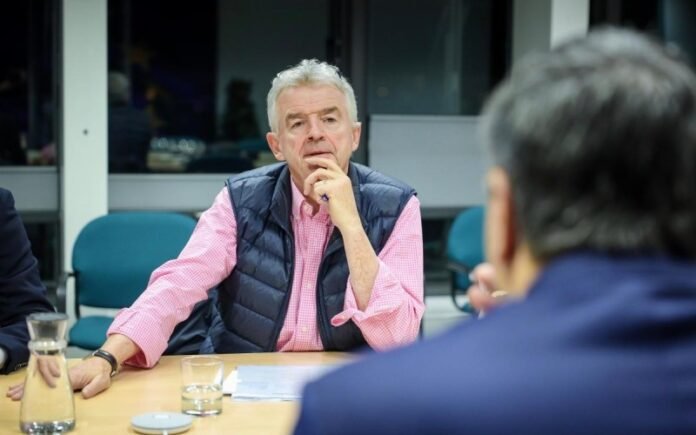
Ryanair chief executive Michael O’Leary has called European Commission President Ursula von der Leyen “useless”, accusing her of talking about competitiveness while doing nothing to deliver it.

In an interview with Euronews, O’Leary said “You have that ship of fools in the European parliament, redesigning more regulations designed to increase the cost of air travel when consumers want lower fares.”

O’Leary attacked EU environmental taxes that apply only to flights within the bloc. American, Asian and Chinese carriers are exempt, even though he says they produce more than half of Europe’s aviation emissions.

‘Tax the Americans’

“Nobody would design a stupid system like this, other than the European Parliament and Ursula von der Leyen. If you’re serious about competitiveness, tax the Americans when they land here in Europe.”

Long-haul routes, flown by European as well as American, Asian and Chinese airlines, fall under a lower UN carbon-offsetting scheme. According to air traffic body Eurocontrol, these flights make up just 6% of departures but more than half of European aviation’s CO2 emissions.

In July, the Commission proposed extending the EU’s levy to some flights leaving Europe from 2029.

Routes such as Frankfurt–Dubai and Frankfurt–Istanbul will be brought into the carbon market while longer sectors such as Frankfurt–Tokyo will be excluded, according to the Commission proposal. Landing flights from the United States and China will be exempt.

“Ursula von der Leyen’s afraid to do anything except talk. You know, she’s useless,” O’Leary told the Europe Today programme. “Europe has a road map for being more competitive, it’s called the Draghi Report. Two years later, not one of its recommendations has been implemented and Ursula von der Leyen hides in the Berlaymont doing nothing except giving speeches.”

He called for a “fair and reasonable” levy on every flight landing in or taking off from Europe.

Former Italian prime minister Mario Draghi published the report in September 2024. It warned the EU faced a “slow agony” without radical reform and called for up to €800 billion a year in extra investment.

Last month a report by the Joint European Disruptive Initiative said the bloc has implemented 26% of the recommendations outlined by Draghi and claimed “progress is real, but it is not in sync with the pace of the world.”

‘Belgium, France and Germany are not competitive’

O’Leary was in Brussels to announce Ryanair’s winter schedule. The airline is cutting a million seats and 20 routes from Belgium after Bart De Wever’s government raised its air travel tax by €2 to €7 per ticket. That was scaled back from the initial proposal to raise it to €10 after industry pressure but it has not been enough to satisfy Ryanair.

“We’re moving aircraft to those countries who are competitive,” O’Leary said. “Belgium is not competitive. France is not competitive. Germany is hopelessly uncompetitive.”

Belgium’s new levy is still lower than in neighbouring countries. The Netherlands already charges €30.25 per departing passenger, and Germany charges €13.03 for most European flights.

The trimming of Ryanair’s winter routes follows similar strategies by Sweden’s SAS and Easyjet who have both reduced flights this year.

O’Leary warned passengers to expect higher fares. Ryanair has locked in this year’s fuel at about $67 a barrel by agreeing the price in advance, which protects it from rising oil costs. He expects that price to double next year as the protection runs out.

“We guarantee no fuel surcharges,” O’Leary said, “but there is no doubt that airfares are going to rise significantly in 2027 because of much higher oil prices.”

His warning comes as war in the Middle East pushes oil prices sharply higher. Brent crude, the international benchmark, closed at $109.86 a barrel on Friday, its highest level since May, and has since topped $110 as tanker attacks threaten supplies from the Persian Gulf.

Via Euronews

China-Russia backing lets Pyongyang tune out Seoul’s old song

0
china-russia-backing-lets-pyongyang-tune-out-seoul’s-old-song
China-Russia backing lets Pyongyang tune out Seoul’s old song

<

article id=”post-951451″>

Recent incidents involving the explosion of a North Korean landmine in the Demilitarized Zone (DMZ) and the repatriation of North Korean POWs held in Ukraine have led to a dramatic increase in North Korea-related coverage by South Korean media outlets, which had shown little interest in the North for some time.

The reason is that the South Korean government’s consistently passive and defensive responses to these issues have provoked dissatisfaction not only among conservatives but also among political moderates. Of course, there is some logic behind the ROK government’s approach.

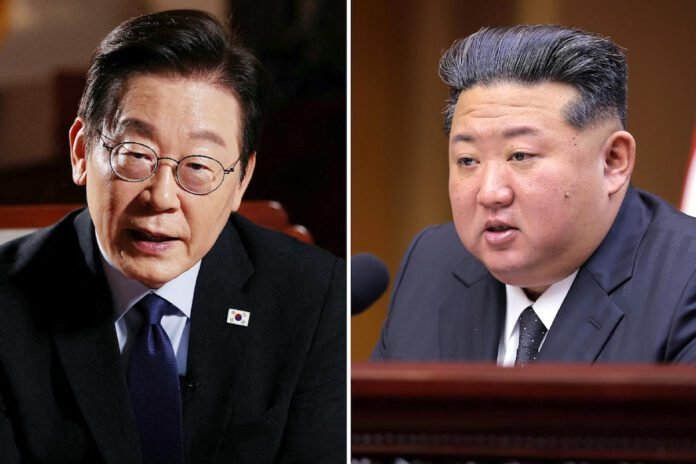
What might that logic be? Senior officials in the Lee Jae-myung administration and South Korean progressives seem to retain a strong nostalgia for the foreign policy of the Roh Moo-hyun era (2003-08), particularly the Sunshine Policy, and apparently still hope to revive a similar approach in the near future.

The so-called “Korean Peninsula Spring” of 2018-2019, in the days of the Moon Jae-in administration, can also be seen, to some extent, as an attempt to revive the Sunshine Policy. That attempt, however, ended in failure. What followed the Korean Peninsula Spring was not summer, but winter. This was no coincidence.

The reactions of progressives and the Lee Jae-myung administration to the landmine incident and the issue of North Korean prisoners of war demonstrate that they have yet to fully grasp just how much the world has changed.

Even if the South Korean government exercises patience and responds passively to North Korea’s actions, there is virtually no chance that such restraint will have a positive impact on inter-Korean relations.

I generally supported the Sunshine Policy. However, I am well aware that reviving it is no longer possible. What has changed? First and foremost, there is the growing confrontation between the United States and China, accompanied by the accelerating division of the world into rival blocs.

In the early 2000s, US-China relations were so amicable that terms such as “Chimerica” and “G2” became fashionable. Today, however, the two countries are locked in a new cold war, which is likely to continue for decades.

Since the 1950s, during the original Cold War, North Korean diplomacy has been remarkably adept at exploiting rivalries and tensions among great powers to advance its own interests.

Having once skillfully exploited the Sino-Soviet split to secure enormous amounts of foreign assistance, Pyongyang now finds itself once again in the geopolitical environment that is most familiar and advantageous to it.

During the Sunshine Policy era, however, Pyongyang faced a very different international environment. Although rivalries between states certainly existed, they were relatively mild, and neither China nor Russia saw much reason to provide North Korea with substantial support.

Having lost its reliable patrons, North Korea made considerable efforts to obtain assistance from South Korea. In particular, when progressive administrations that placed great hopes in inter-Korean national cooperation came to power in Seoul, Pyongyang could obtain massive amounts of aid with relative ease.

Of course, even at that time, inter-Korean contacts were dangerous from Pyongyang’s perspective. The North Korean authorities were particularly concerned that such contacts might expose ordinary North Koreans to South Korea’s economic prosperity, thereby generating dissatisfaction with their own political system.

Nevertheless, in the early 21st century, North Korea had few alternatives and was therefore compelled to actively pursue contacts with South Korea and seek economic assistance from the South.

Today, however, China and Russia are actively supporting North Korea, while the North Korean regime has firmly shut its doors to the outside world. Last year, North Korea admitted only Russian citizens. Even then, the number of Russian tourists who visited the country was a mere 5,100.

Foreign organizations and NGOs that left North Korea during the Covid-19 pandemic have virtually no prospect of being allowed to return.

From Pyongyang’s perspective, this approach is perfectly rational. After all, any foreigner represents a potential danger to the North Korean regime, and South Koreans are particularly dangerous.

In the past, North Korea had little choice but to tolerate the presence of South Koreans and Westerners in order to secure foreign assistance. Now, thanks to Chinese and Russian support, that necessity has disappeared.

Over the past three years, the Kim Jong Un regime has earned more than US$20 billion from arms exports to Russia. It is also receiving support from China.

Under these circumstances, it would be unwise to expect Pyongyang to respond positively to the same old tune, which has long since become outdated.

Andrei Lankov is a professor at Kookmin University whose published books include “The Real North Korea: Life and Politics in the Failed Stalinist Utopia.”

This article was originally published in Korean by the Seoul newspaper Maeil Kyongje Daily Economy. The English translation is republished with permission.

0FansLike
0FollowersFollow
0FollowersFollow
0SubscribersSubscribe
- Advertisement -
Google search engine

Recent Posts