The European Union (EU), along with the other major countries in Europe, should be a geopolitical force to be reckoned with. In 2024, the EU was the second-largest economy in the world after the US and before China.
There is also nothing comparable to the trading links between these three players. In 2025, bilateral trade in goods between the US and China was US$414 billion (£307 billion). The EU and US, meanwhile, constitute a staggering third of global trade – with trade between them coming in at €1.77 trillion (£1.53 trillion) that same year.
These figures show that, far from the often-floated idea of a “Group of Two” (G2) where the US and China act as the joint steering committee for the planet, there really needs to be talk of a G3 that includes Europe.
My research has dealt with the relationship between China, Europe and the US for over 30 years. These three powers tend to silo and segregate their relations, which almost always comes at the expense of Europe. This is a phenomenon that has intensified under the US president, Donald Trump, in his two terms in office.
When the US and China meet, the Europeans tend to be outside the room with everyone else, trying to listen in. There is dialogue between China and the EU. There was even, briefly under President Joe Biden, an EU-US dialogue to coordinate their approach to China and the Indo-Pacific. This was mothballed when Trump returned to office in 2025.
However, what there has never been is a proper high-level Europe, China and US trilateral summit. And that situation is unlikely to change. When the British prime minister, Keir Starmer, visited China in January 2026, Trump criticised the trip. He said it was “very dangerous” for the UK to do business with Beijing.
Despite this, when Trump himself visited China in May, the sizeable technology delegation that accompanied him and the agreement for Beijing to buy 200 Boeing aircraft showed dealmaking was absolutely fine for the US. The mindset is clear enough. China and the US as superpowers have the right to deal with each other however they feel fit. No one else gets a look in.
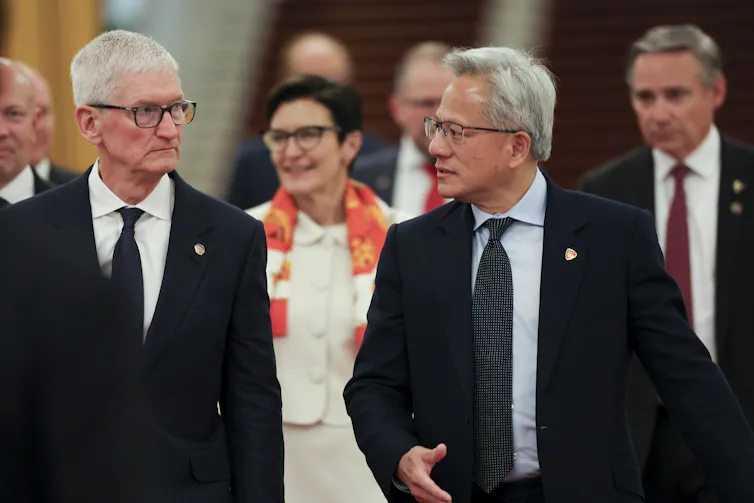
Apple CEO Tim Cook (left) and Nvidia CEO Jensen Huang (right) accompanied Donald Trump on his recent visit to Beijing.Go Nakamura / EPA
Europe’s default position has been to accept this situation and sit between its two most important relationships, trying to balance. This has been demonstrated by the EU’s various high-level iterations of a policy approach towards China over the past 15 years. The most recent, in 2019, ended up balancing China between collaborator, adversary and competitor – illustrating Europe’s ruminative and indecisive mindset.
In terms of collaboration, Europe’s most obvious area of recent engagement with China has been in trade and investment. There has been technology transfer in automotives and manufacturing, and acceptance of Chinese tech company Huawei in European telecoms systems. But here, too, Europe has been cautious, with Huawei’s access to European markets heavily restricted from 2020 after American pressure.
The ways in which Trump has turned on his friends – demanding control of Greenland early in 2026 and criticising Nato and defence spending levels by longstanding allies – has created solid grounds for a rethink. Europe needs to acknowledge that working out its own policy on China means producing not just detailed plans (Europe is pretty good at that), but politically committed ones that place its own interests first.
Europe’s interests first
Brussels and other European capitals are dealing with a harsh emerging reality. Their key security relationship with the US is undergoing profound change and China is becoming a totally different kind of potential partner as it emerges as an innovator and a technology and research powerhouse.
Both phenomenon change the fundamental paradigm in which the EU now sits, and call for a different policy response – one that recognises more overtly that, for many areas and for many reasons, China is a partner and not a straightforward, unambiguous threat.
If we look at vastly consequential global issues, we can see this clearly. Europe is more aligned with China than the US on the threat of global warming from human activity and the need to use alternatives to fossil fuels.
Beijing and Brussels are also on the same page about the benefits and threats from AI, where China is now overtly stipulating the need to manage the effects of this new technology on jobs. And China, like Europe, views Trump’s attack on Iran with misgivings.
At the same time, Europe also worries about the real depth of Trump’s commitments – not just to Nato where his scepticism is well established, but in terms of standing by Taiwan were it ever to be attacked.
Realignment will not happen overnight, nor is there an easy destination. Trump’s White House successor, for example, may well be more into multilateralism. Even the current administration is talking about expanding its nuclear commitments in Europe. But the central reality is clear enough.
At a fifth of global GDP, and with a population of almost half a billion, Europe cannot continue to have a deferential, largely passive posture – and certainly not one where its largest and second-largest economic partners, the US and China, are involved.
At the very least, next time these two superpowers sneak into a room to continue their conversations, Europe should work out good arguments to join them, and not sit outside anxiously eavesdropping alongside everyone else.
The phrase is everywhere in international relations circles, but the explanation is almost nowhere. So what does strategic autonomy actually mean? And why are analysts reaching for it now?
Leverage more than self-sufficiency
The first thing to note is that autonomy does not imply withdrawal from the international order or a severing or reduction of ties with Washington.
India still participates in the Quad strategic alliance alongside the U.S., Australia and Japan, but it conducts an independent foreign policy when its interests don’t align with Washington’s. Canada is diversifying its partnerships but not decoupling.
You can argue with the particulars of each case. But from Germany to India to Canada, the basic instinct driving these countries’ foreign policies is the same: seeking to increase their maneuvering room while remaining broadly aligned with the United States.
All remain embedded in the existing U.S.-led global security and economic orders. Only now they are renegotiating the terms of their participation in those orders.
Taken as such, strategic autonomy is best seen as leverage and flexibility rather than self-sufficiency. More specifically, it is the credible ability to say “no” to great-power patrons, such as the U.S.
A strategically autonomous nation can take diplomatic positions that the superpowers of the day dislike. It can field military force without depending entirely on another country’s hardware or authorization. And it can maintain enough control over critical supply chains to blunt coercion from rivals.
The phrase itself is newer than many people realize, even if the underlying logic is not.
France’s postwar leader, Charles de Gaulle, spent much of the 1960s institutionalizing what later became known as strategic autonomy. In 1966 he withdrew France from NATO’s integrated military command, while keeping the country within the alliance itself. What de Gaulle objected to was de facto American authorization on matters of French security.
His reasoning was straightforward: A state dependent on another power for its security is not fully sovereign.
While de Gaulle never used the phrase “strategic autonomy,” it became embedded in official French doctrine in the nation’s 1994 White Paper on Defense.
By 1998, the concept had migrated to wider European politics through the Saint-Malo Declaration between then-U.K. and French leaders Tony Blair and Jacques Chirac. They argued that Europe required “the capacity for autonomous action, backed up by credible military forces.” The European Union formalized the policy in its 2016 Global Strategy.
While de Gaulle was pursuing his policies, a parallel tradition through the Non-Aligned Movement saw India, Indonesia, Yugoslavia and many others chart a Cold War course between the U.S. and the Soviet Union.
Same logic, different crises
The resurgence of interest in strategic autonomy has a common source: A U.S.-led order that for an increasing number of nations has started to feel less like a public good and more like a burden.
While some leaders have been ahead of the curve – France’s Emmanuel Macron argued for European strategic autonomy years before his European peers – it is President Donald Trump’s second term that has changed the political arithmetic.
Governments that once assumed that American security guarantees were unconditional have discovered otherwise. European leaders are no longer asking whether independent military capacity is necessary; they are asking how quickly they can build it.
India’s version of strategic autonomy is, perhaps, the most developed and instructive.
The government of Narendra Modi buys Russian oil despite Western sanctions. It abstains on United Nations votes over Ukraine while deepening defense cooperation with Washington. And it engages multilateral forums that include Beijing while strengthening ties with the Quad.
Viewed through the lens of traditional alliance politics, the behavior appears incoherent. But seen through the lens of strategic autonomy, it becomes more intelligible. India is maximizing leverage across competing relationships while refusing permanent dependence on any of them.
Canada is seemingly arriving at a similar place, albeit through a different route.
These are hedging strategies adapted to today’s more fragmented international order, while the older divide separated aligned states from nonaligned states.
A different divide is now emerging. Some governments accept deep patron dependence, whereas others are determined to preserve flexibility even inside formal alliances and partnerships.
And that distinction – between those striving for strategic autonomy and those who are not – is increasingly shaping world politics.
Russia’s Afghan pivot risks entanglement in old traps
As Russia deepens cooperation with Afghanistan’s rulers, it faces a growing tension between regional influence, connectivity ambitions and its own security concerns.
Few countries have warned more consistently about the dangers emanating from Taliban-ruled Afghanistan than Russia. Yet Moscow is now deepening military cooperation with the Taliban government that controls the territory in which many of those threats lie.
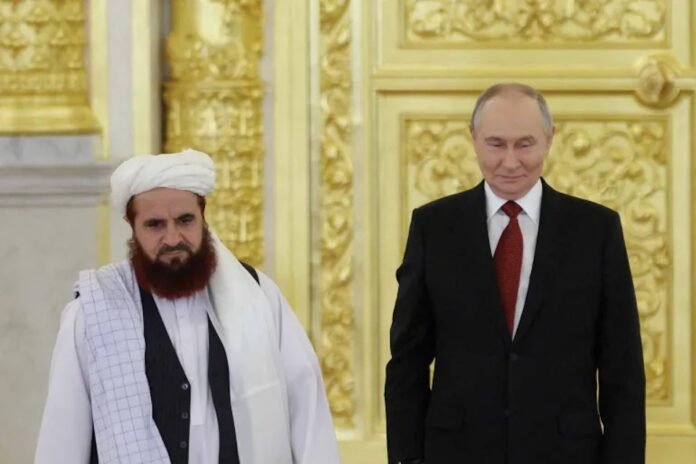
The military-technical cooperation agreement signed in Moscow between Russian Security Council Secretary Sergei Shoigu and Taliban Defense Minister Mohammad Yaqoob marked another milestone in the rapid transformation of relations between the two sides.
Although the contents of the agreement were not publicly disclosed, its symbolism is clear. It follows Russia’s decision to remove the Taliban from its list of banned terrorist organizations and its subsequent recognition of the Taliban government in 2025.
Taken together, these steps show that Moscow is no longer merely engaging the Taliban as a political reality. Rather, it is gradually incorporating Afghanistan into a broader framework of Russian regional strategy.
The question for Moscow is whether its strategy can simultaneously deliver influence and stability.
Touchy engagement
Russia’s engagement with the Taliban is driven by considerations that extend far beyond counterterrorism.
The withdrawal of the United States from Afghanistan created a geopolitical vacuum that regional powers have been competing to fill. For Moscow, Afghanistan occupies a strategically important position linking Central Asia, South Asia and the wider Middle East. Influence in Kabul thus provides leverage across multiple theaters simultaneously.
Economic considerations are equally important. Bilateral trade exceeded US$530 million in 2025 and continued to expand during the first months of 2026, while discussions surrounding infrastructure, energy cooperation, transport connectivity and mineral development have accelerated.
Russian policymakers increasingly view Afghanistan not as a peripheral security problem but as a potential component of their wider Eurasian integration strategy.
Particularly significant is the Trans-Afghan Corridor, which could connect Central Asia to Pakistan’s ports through Afghan territory. Russian and regional planners view the project as a potential extension of broader Eurasian transport networks, with projected freight volumes eventually reaching several million tonnes annually.
Such routes complement Moscow’s efforts to diversify trade networks and reduce dependence on Western-controlled economic corridors. In an era of sanctions and geopolitical fragmentation, alternative transport routes have acquired growing strategic value.
Afghanistan’s considerable untapped reserves of copper, lithium and other critical minerals also boost its geopolitical relevance. While Russia possesses substantial mineral resources of its own, securing influence over future extraction projects offers both economic opportunities and strategic advantages in an increasingly competitive global environment.
Maintaining influence in Afghanistan is also important because Moscow does not want post-American Afghanistan to become exclusively dependent on Chinese economic power. While Beijing’s investments, mining interests and connectivity initiatives continue to expand in Afghanistan, Russia seeks to ensure that it remains an indispensable political and security actor in the country’s future.
Moscow’s objective is not necessarily to compete with Beijing, but to ensure it remains a consequential player. More broadly, maintaining relevance in Afghanistan is one way for Russia to ensure that influence across the heart of Eurasia is not monopolized by any single external actor, including China.
Russia’s Afghan policy is therefore not simply about Afghanistan. It is about Moscow’s wider ambition to remain a decisive actor in the evolving Eurasian order.
Security paradox
Yet the deeper Russia becomes involved in Afghanistan, the more difficult it becomes to reconcile engagement with its own security assessments.
Only days before the military agreement was signed, senior Russian officials publicly warned about the deteriorating terrorist landscape in Afghanistan. Federal Security Service Director Alexander Bortnikov warned that Islamic State-Khorasan was actively recruiting across Central Asia and among migrant communities linked to Russia.
Shoigu separately stated that between 18,000 and 23,000 militants affiliated with more than 20 extremist organizations remain active inside Afghanistan.
These quantified warnings are consistent with repeated assessments by the United Nations and regional security organizations documenting the continued presence of ISIS-K, al-Qaeda, Tehreek-e-Taliban Pakistan, the Islamic Movement of Uzbekistan and other militant groups operating from Afghan territory.
Moscow apparently believes that engagement offers the most practical means of managing and mitigating these threats. In the Kremlin’s view, the Taliban remains the only force capable of preventing a complete security vacuum and limiting the expansion of ISIS-K.
Indeed, international isolation has produced few positive results, while the collapse of Taliban authority could generate even greater instability across Central Asia.
Yet Russia’s strategy rests on an uncomfortable assumption: that the Taliban can simultaneously serve as a partner in countering extremism while governing a territory that continues to host a broad ecosystem of militant organizations.
While the Taliban has demonstrated determination in confronting ISIS-K, it has been far less successful and seemingly committed to addressing wider militant networks that continue to concern many neighboring states, including China.
Moscow’s engagement also grants the Taliban greater international legitimacy despite persistent concerns over militant activity in Afghanistan. The Kremlin appears to believe engagement offers leverage, but critics argue recognition may be advancing faster than meaningful security improvements.
For Moscow, this is the central strategic gamble.
Pakistani test
The most immediate test of Russia’s Afghan strategy may ultimately come not from Kabul but Islamabad.
Over the past decade, Moscow has steadily expanded relations with Pakistan through energy cooperation, defense contacts and regional diplomacy. At the same time, many of Russia’s long-term connectivity ambitions depend upon stable transport routes linking Central Asia, Afghanistan and Pakistan.
Pakistan’s security concerns present perhaps the greatest external challenge to Russia’s Afghan strategy. Moscow increasingly views Pakistan as an important partner in regional connectivity and energy cooperation, yet many of those ambitions depend upon stability in exactly those border regions where Islamabad continues to accuse Afghan-based militant groups of operating.
This creates a delicate balancing challenge for Moscow. On one hand, Russia seeks deeper engagement with the Taliban to advance connectivity, trade and regional influence. On the other hand, its broader Eurasian ambitions require constructive relations with Pakistan, whose security concerns in Afghanistan are far from resolved.
The contradiction is unlikely to disappear anytime soon. If stability improves, Russia could emerge as one of the principal beneficiaries of a new network of transport and economic corridors linking Central and South Asia. If insecurity persists, Moscow may find itself increasingly entangled in the very security challenges it hopes engagement will mitigate.
The military cooperation agreement, therefore, represents far more than a bilateral understanding between Russia and Afghanistan. It reflects Moscow’s broader attempt to shape the geopolitical landscape of post-American Eurasia.
Whether that effort succeeds will depend on a crucial unanswered question. Can the Taliban evolve into a reliable partner for regional stability while continuing to govern a territory that remains a focal point for transnational militant activity?
In betting on engagement, Moscow is wagering that the Taliban can become a stabilizing force before Afghanistan’s militant landscape overwhelms the state’s capacity to control it. If that assumption proves correct, Russia could emerge as one of the principal architects of a new Eurasian connectivity framework stretching from Central Asia to South Asia.
If it proves wrong, Moscow may find that engaging Afghanistan brings more liabilities than opportunities. The outcome will shape not only Russia’s position in post-American Afghanistan but also the future balance of power across Eurasia.
Saima Afzal is a researcher specializing in South Asian security, counterterrorism, and broader geopolitical dynamics across the Middle East, Afghanistan and the Indo-Pacific. She is currently a research scholar at Justus Liebig University, Germany.
EU Parliament to switch to French search engine from Google in tech sovereignty push
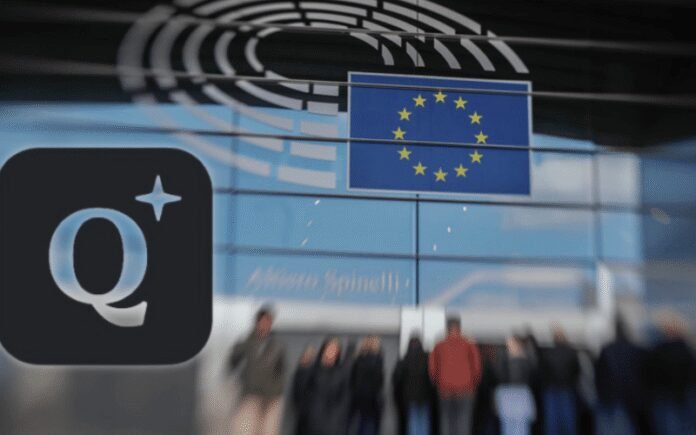
The European Parliament will switch to French search engine Qwant from Google, it said on Wednesday, underscoring Europe’s push to reduce its reliance on U.S. technology in favour of local alternatives.
The European Commission will later on Wednesday announce measures on chips, cloud computing services and AI as part of its “Buy and Use European” drive.
“From 4 June 2026, Qwant will become the default search engine on the European Parliament’s Microsoft Edge and Mozilla Firefox browsers,” a Parliament spokesperson said in an email.
The change will be applied automatically, though users will still be able to select alternative search engines.
“It is part of a larger framework of actions aimed at reducing EP reliance on non-EU digital tools and promoting European-based, privacy-focused services,” the spokesperson said.
The Parliament has 720 lawmakers, along with thousands of assistants and administrative staff. Euractiv first reported the switch.
Antisemitic Hate Crimes in New York City Jump 71% Since Last Year
Antisemitic violence continued to dominate New York City’s hate crime statistics, with the New York Police Department reporting a sharp increase in anti-Jewish offenses both month-over-month and over the longer term.
According to NYPD figures, antisemitic hate crimes climbed 71% in May compared with May 2025 and were up 46% from the average recorded during the previous three months.
The data showed that Jewish victims accounted for 60% of all confirmed hate crimes in the city despite Jews representing only about 10% of New York City’s population.
Police statistics further indicated that anti-Jewish offenses exceeded the combined total of hate crimes directed at every other demographic group during the reporting period.
Authorities recorded 41 antisemitic hate crimes in May, making Jews the most frequently targeted group in the city’s hate crime data.
Other reported incidents included three crimes targeting Asians, five targeting Muslims, five based on sexual orientation, one targeting a Hispanic individual, one targeting a white person, one based on gender, one targeting an unspecified ethnicity and 10 targeting unspecified religious groups.
The figures illustrate the disproportionate concentration of anti-Jewish hate crimes within New York City’s broader hate crime landscape.
The latest statistics also come amid wider concerns about antisemitism across the United States. Recent records cited in the report showed that assaults against Jews nationwide have reached a 46-year high.
Experts cautioned that the actual scope of the problem may be larger than official numbers suggest, noting that many incidents are never reported to law enforcement.
China’s sailless submarine takes warfare to the seabed
China’s newly revealed sailless submarine may be designed not only to evade detection but also to threaten the undersea infrastructure underpinning Indo-Pacific military and economic power.
This month, Naval News reported that China has covertly launched a highly advanced, “sailless” submarine class from the Jiangnan Shipyard in Shanghai, marking a major technological leap in its rapid naval expansion.
Discovered via satellite imagery, the approximately 120-meter-long vessel features a distinctive streamlined hull, X-form rudders, and a radically minimized superstructure designed to reduce underwater drag.
China may have launched two vessels at the Huludao shipyard in the Bohai Sea, a facility specializing in nuclear-powered submarine construction. The parallel rollouts underscore how China is outpacing Western navies, having produced roughly 15 to 20 submarines across eight distinct classes over the past five years.
While the People’s Liberation Army Navy (PLAN) has maintained strict official silence, the submarine’s massive dimensions suggest traditional nuclear propulsion rather than standard air-independent power.
The sudden emergence of this class complicates intelligence assessments and disrupts initial assumptions about China’s next-generation Type-095 attack submarine program.
Noting the pros and cons of sailless submarine design, Joseph Trevithick, in an article this month for The War Zone (TWZ), mentions that omitting a large structure from the top of the hull enhances streamlining, boosting speed, maneuverability and quietness while submerged—making the submarine harder to detect, even at high speeds.
Trevithick says that a sailless design is especially advantageous when rapidly approaching distant threats, noting that while traditional sails house periscopes, sensors, antennas, and snorkels, removing them frees space for other equipment like countermeasure launchers and storage. He also notes that a sailless design may focus on seabed operations, where mast deployment is less critical, or on optimizing transit speed during blue-water missions.
Building on Trevithick’s perspectives, a sailless submarine may offer enhanced stealth for penetrating US and allied anti-submarine defenses in the First Island Chain. Such a capability would be particularly valuable against the US “Fish Hook” underwater sensor network stretching across Japan, Taiwan, the Philippines and Indonesia.
Noting the stealth limitations of Chinese submarines, Ryan Martinson, in a June 2025 article for the Center for International Maritime Security (CIMSEC), cites Chinese military journal articles stating that the PLAN cannot guarantee submarine stealth due to a pervasive US undersea surveillance network.
According to Chinese journals cited by Martinson, China’s Near Seas – the First Island Chain, has become highly transparent. He notes that the US military uses a comprehensive network of satellites, fixed seabed sonar arrays, and maritime patrol aircraft, creating an “extremely high” probability that Chinese submarines are detected immediately upon leaving port, thereby severely undermining their operational utility and compromising China’s sea-based nuclear deterrent.
While China could attempt a mass breakout using nuclear submarines – having 32 such vessels in January 2026 – such an attempt may create predictable “fatal funnels” that concentrate US and allied anti-submarine efforts at critical chokepoints such as the Miyako Strait and the Bashi Channel.
Regarding submarine fleet numbers, while the US has an all-nuclear fleet of 71 submarines in January 2026, James Eanell notes in a May 2026 Proceedings article that China may have up to 70 submarines by 2027 and 80 by 2035, with half of them nuclear-powered.
However, Roy Wood mentions in a February 2026 Proceedings article that the US submarine fleet will hit a low point of 46 units in 2030 as Los Angeles–class retirements outpace Virginia–class deliveries. Wood says the US fleet’s trajectory projects a recovery to the low-50s by 2040, but it will not achieve its long-term objective of 66 hulls until the mid-2050s.
Should China’s nuclear submarines penetrate US and allied anti-submarine defenses in the First Island Chain, they could be employed as a forward screen to provide intelligence, surveillance, and reconnaissance (ISR) of US and allied vessels, escort China’s carrier strike groups headed toward the open Pacific or be directed to attack high-value US targets, such as carriers.
China’s new sailless submarine could be optimized for prolonged seabed operations, with its apparent nuclear propulsion and large size offering the endurance required for extended missions on the ocean floor.
Such characteristics align with a growing focus among major powers on undersea infrastructure competition, including the ability to monitor, tap or sever critical communications cables.
Highlighting the vulnerability of undersea internet cables, Niklas Swanstrom mentions in a January 2025 policy brief for the Institute for Security and Development Policy (ISDP) that they carry up to 99% of international internet traffic, making them critical yet highly vulnerable infrastructure. Swanstrom notes that these cables, mostly in international waters, face physical threats, including state-sponsored sabotage.
Notably, the US and Russia operate special mission nuclear-powered submarines, such as the USS Jimmy Carter and Losharik, both allegedly capable of tapping or severing undersea internet cables. If optimized for seabed warfare, the submarine would place China among a small group of powers fielding platforms capable of conducting undersea infrastructure operations.
If so, China’s new sailless submarine poses a threat to Taiwan’s undersea internet cable infrastructure. Jason Hsu mentions in a March 2026 testimony before the US-China Economic and Security Review Commission (USCC) that Taiwan’s heavy reliance on just 24 undersea fiber-optic cables that land at eight highly concentrated landing stations creates severe geographic chokepoints vulnerable to targeted Chinese gray-zone sabotage.
Hsu details how Chinese civilian vessels systematically sever these links using anchor-dragging techniques to evade military attribution. He also warns that Chinese repair ships could physically tap the cables to intercept allied military data. He points out that cutting three major cable clusters near the Bashi Channel could immediately eliminate 99% of Taiwan’s digital bandwidth.
He warns that such a digital blockade would paralyze global semiconductor supply chains, disrupt international financial markets, freeze government operations, and sever vital allied military coordination during the opening hours of a cross-strait conflict.
Beyond Taiwan, the undersea internet cable infrastructure connecting East Asia to the US may be similarly vulnerable. In a September 2025 policy paper for the Center for Irregular Warfare and Armed Groups (CIWAG), Jahara Matisek and other writers note that the vulnerability of trans-Pacific undersea infrastructure centers on highly exposed geographic chokepoints.
Matisek and others specifically point out that Hawaii, Guam, and the US West Coast serve as the critical landing nodes for all data and energy cables connecting the US to East Asia.
They stress that this extreme concentration poses severe strategic risks, warning that disruptions at these nodes during a crisis would directly paralyze commercial networks, degrade operational tempo, and sever critical military command-and-control capabilities — thereby specifically undermining the US Indo-Pacific Command’s (INDOPACOM) ability to maintain strategic communication lines.
By combining enhanced stealth with potential seabed warfare capabilities, China’s new sailless submarine may shift undersea competition from penetrating the First Island Chain to contesting the digital infrastructure that underpins US power in the Pacific.
Used Waymo robotaxi batteries become backup storage for power grids
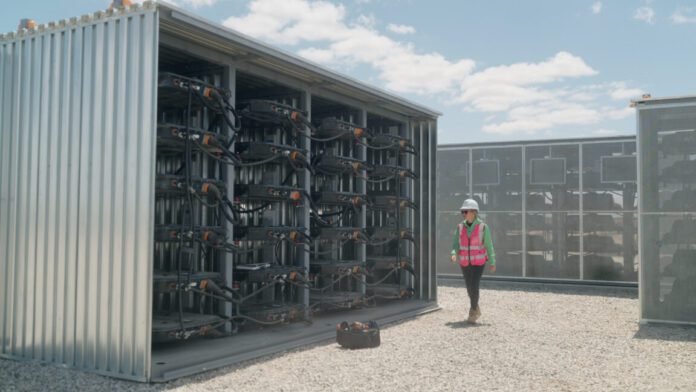
Thousands of electric vehicles in Waymo’s autonomous robotaxi fleet may eventually give up their used batteries for a very different purpose—contributing up to hundreds of megawatt-hours of stationary energy storage to local power grids.
That prospect comes from a “strategic supply agreement” announced by Waymo and B2U Storage Solutions on June 4. B2U has been repurposing thousands of used batteries from various electric vehicles by installing them in large stationary energy storage projects. Such energy storage facilities can capture excess renewable energy during low demand periods and release such energy when local power grids are experiencing peak demand periods.
“Our business is getting the full residual value out of electric vehicle batteries after they’re no longer suitable for automotive use,” Freeman Hall, CEO of B2U Storage Solution, told Ars. “Waymo puts a lot of miles on EVs and their model is expanding rapidly, and so we’re just very pleased and honored to be able to work with them.”
The agreement would allow B2U to repurpose Waymo batteries that become available at the end of a vehicle’s lifespan, along with obtaining used batteries that are being swapped out from operational vehicles. Waymo’s “proactive maintenance” for its autonomous vehicles includes identifying opportunities to “refresh the battery to improve efficiency overall for our fleet,” Adam Lenz, head of sustainability and environment at Waymo, told Ars. “That’s when we look to these second-life applications, because there’s still a lot of life left in the battery,” he said.
Waymo did not specify the average mileage at which it swaps out batteries or retires vehicles from service. But Waymo robotaxis drive around much more each day than the typical EV, which means the Waymo fleet is likely to experience faster usage-related degradation of battery capacity over time. The company confirmed to Ars that “some of these vehicles have now been serving riders for years and have mileage beyond what a normal consumer drives.”
A 2025 analysis of over 22,700 electric vehicles across 21 models found that average battery capacity loss was about 2.3 percent per year, according to the telematics company Geotab. That translates to such batteries still having more than 81 percent of their original capacity after eight years.
Waymo’s current fleet of nearly 4,000 vehicles mainly consists of Jaguar I-Pace electric vehicles that have a 90 kWh lithium-ion battery. The company has also begun rolling out the Ojai robotaxi made by the Chinese automotive brand Zeekr with a 93 kWh battery.
“Put a little haircut on that in terms of degradation and the effective capacity that would be left in those batteries when they’re suitable for repurposing, and we’re still talking about pretty significant capacity per battery,” Hall said.
The growing Waymo robotaxi fleet could lead to “pretty large numbers in terms of megawatt hours of capacity that can be deployed pretty quickly” for stationary energy storage supporting power grids, he suggested.
The agreement gives Waymo discretion over when and how many used batteries will be turned over to B2U. But the companies confirmed that B2U has “already started receiving smaller initial quantities of batteries” from the Waymo fleet. Over time, the agreement could give B2U “hundreds of megawatt-hours” of additional storage capacity from Waymo’s thousands of electric vehicles, Lenz said.
Local grid synergy
The B2U grid storage solution could do more than simply extend the usefulness of lithium-ion batteries from Waymo’s fleet by several years. The new partnership is intended to support B2U projects in regions where Waymo’s autonomous robotaxis operate—meaning the used Waymo batteries could bolster the local power grids that Waymo vehicles rely upon for charging.
“What we think is really cool and unique about this opportunity is that these are the batteries that are helping serve our riders in these communities, and then they’re actually going to BTU to then be deployed in local grids that are near communities that we serve as well,” Lenz told Ars. “So there’s a nice circularity here for our commitment to clean technology and supporting renewable energy on the grids.”
Used Waymo batteries will be received at B2U’s Lancaster facility in Los Angeles County, which already houses more than 1,300 repurposed electric vehicle batteries. From there, the batteries will also be deployed to other B2U energy storage projects at sites across California and Texas, including a 24 megawatt-hour energy storage project in Bexar County, Texas, that could support Waymo’s growing deployment in San Antonio.
The all-electric fleet of Waymo robotaxis prevents 530 tons of CO2 emissions with every 500,000 weekly trips, according to company estimates. Waymo has typically sourced the electricity required for charging its vehicles from local wind and solar power generation projects, and by sometimes purchasing renewable energy certificates to cover any gaps.
One exception to that clean energy prioritization has been Waymo’s partnership with ride-hailing giant Uber in Austin, Texas. Uber installed a “temporary charging solution” for Waymo vehicles serving Austin riders that involved mobile L-Charge generators running on natural gas, which subsequently drew local attention and complaints because of the generator noises.
In any case, Waymo’s agreement with B2U fits with a more promising and broader trend of the United States installing record amounts of battery energy storage. A report by the Solar Energy Industries Association showed that US battery energy stationary storage installations reached 9.7 gigawatt hours in the first quarter of the 2026 fiscal year—the “largest Q1 in history” and a 32 percent year-over-year increase.
B2U is already managing more than 4,000 EV battery packs across its energy storage projects, including used Nissan Leaf batteries that were first installed in 2020 and are still going strong after approximately 2,500 cycles. The company currently has a “nice supply of batteries, but it’s great to add to this supply because the demand for storage is very high,” Hall said.
In This Church, Child Sexual Abuse Has Gone Unchecked for So Long That It Spans Generations
Reporting Highlights
A National Problem: Old Apostolic Lutheran Church congregations around the U.S. have been forced to deal with child sex abuse. In many cases, they haven’t reported allegations to police.
Across Generations: In some OALC families, the victims include mothers, daughters and granddaughters, showing just how persistent child sex abuse has been in the church.
Raising Awareness: With church elders from Sweden scheduled to visit U.S. congregations this summer, victims and advocates hope to bring attention to the issue and force reform.
These highlights were written by the reporters and editors who worked on this story.
They were pillars of their church, congregants in a little-known denomination that sets itself apart from the world and teaches that even the most unconscionable acts can be wiped away — not just forgiven, but forgotten and never spoken of again.
So it went in a rural Wyoming church, where a man was accused of sexually abusing young girls hundreds of times in the pews during Sunday services. Though the preacher knew of the abuse, he never reported it to police, local prosecutors said. Instead, he told the man to seek therapy.
In Minnesota, a man from the same faith admitted that he began entering the bedrooms of his daughter and son at night around the time each of them turned 12. He and his siblings grew up in the church and were sexually abused themselves, and then he repeated the abuse with his own children.
And in Washington state, preachers knew a member of their congregation had sexually abused several young boys. Instead of reporting him to police, they allowed him to ask for forgiveness, according to a family member, and he continued to sexually abuse children. He was later found guilty of raping the 9-year-old son of a church member and sentenced to life in prison.
The abusers and victims all belonged to the Old Apostolic Lutheran Church, or the OALC, a Scandinavian-rooted revivalist church that teaches its followers that heaven is reserved just for them. To get there, according to current and former members, they must follow a strict doctrine, which emphasizes asking for forgiveness for their sins and says that being forgiven by a fellow church member washes away those sins.
What’s more, the church teaches that once a perpetrator is forgiven, anyone who speaks about the wrongdoing — including the victim — can be accused of harboring an unforgiving heart. Those who have left the church, as well as some who are still with it, say this means the burden of sin shifts from the person who committed the act to the person who refuses to let the matter rest.
Sexual abuse survivors say these rituals have created a culture where allegations of abuse are resolved outside of the criminal justice system and the victims must bear their pain alone or risk going to hell. In some families, sexual abuse stretches across generations, ensnaring a parent, child and grandchild.
“This is what I would call institutionalism of abuse of young women and children,” said DaNece Day, the prosecuting attorney for Crook County in Wyoming, whose office has charged two OALC members in the past two years.
In Wyoming, Crook County Attorney DaNece Day’s office has brought charges against members of the Old Apostolic Lutheran Church.
Day and other prosecutors said one of the biggest obstacles to breaking the cycle is the way church members move among congregations spread across the U.S. and Canada, often hundreds of miles apart but tightly bound by large, multigenerational family networks.
Last fall, ProPublica and the Minnesota Star Tribune reported that preachers in Minnesota had known for years about allegations that one of its members, a man named Clint Massie, had sexually abused young girls in the congregation. But instead of reporting it to police, church leaders urged some of the victims to take part in sessions where they were brought face-to-face with Massie and encouraged to forgive the abuse.
Now, new reporting by the two news organizations shows how the sexual abuse of children in the OALC, as well as the failure by church leaders to report it to authorities, is a persistent and national problem.
Some current and former OALC members are calling on elders from what the church regards as its mother congregation in Sweden — where the church originated — to intervene. In fact, those elders, who don’t have authority over the American church but wield considerable influence, are coming to the U.S. and Canada this summer to meet with congregations. What they’ll find are a growing number of criminal cases against church members and increasing legal scrutiny of leaders for failing to report allegations of sexual abuse to police.
In a statement, representatives from the Swedish church said the cases are isolated incidents and they didn’t “observe any pattern” among the tens of thousands of members in 34 OALC congregations in the U.S. and Canada. They said sexual abuse should be reported to authorities and that it was possible “some matters have been handled improperly or without sufficient knowledge.” And they acknowledged that church guidelines “are being reviewed with the American missionary pastors in order to ensure compliance.”
Representatives of the OALC in the U.S. and Canada said in an email that they also “do not perceive there to be a general pattern of behavior,” describing sexual abuse as a serious and persistent problem across society. They acknowledged that bringing a victim to face their abuser, as a pastor for the OALC church did with Massie, can be traumatic. But they defended the church’s doctrine of forgiveness, saying it was not a means to conceal wrongdoing or to shield offenders from legal consequences, and no one is coerced to forgive or to ask for forgiveness. If those teachings had been misapplied or misunderstood in some cases, they said, it “does not reflect an error in our doctrine.”
ProPublica and the Star Tribune interviewed 20 people who said they were sexually abused, almost all as children, in OALC communities, along with parents of victims as young as 3. Reporters also traveled to OALC churches around the country and reviewed court and police documents from at least eight cases, along with victims’ statements to local authorities.
Their abusers were family members, other children or men who were trusted to be alone with children because they are part of the same insular faith community. Some victims spoke anonymously for fear of retribution from the church or their own families. Others identified themselves as well as their abusers publicly, unafraid of the repercussions.
Many of those victims said church leaders pressured them to keep quiet. In Minnesota, police records describe a woman telling a young girl that her abuse, which began when she was around 5 or 6 years old, was not a big deal and she “needed to get over it.” In Washington state, a police report notes a woman told law enforcement that her preacher had, for “spiritual reasons,” discouraged her from contacting authorities after her daughter told her she’d been raped by three men from church.
“We’re always told that what the preachers tell us, that’s coming from God,” explained one woman, who said she, too, was told not to speak of her abuse. “Who’s going to argue with that?”
The Old Apostolic Lutheran Church in Moorcroft
Sexual abuse in the OALC has sometimes been a legacy passed from one generation to the next — hidden, quietly endured, repeated. Lorie Peldo was sexually abused for eight years by her older brother, starting when she was only 2, she said in an interview. A quarter century later, after the memories began to resurface during therapy, Peldo’s mother told her that she’d known about the abuse. But on the advice of her preacher in Battle Ground, Washington, her parents didn’t report the crimes to the police. Instead, they took her brother to a doctor, she said.
Peldo said she eventually confronted her brother, who said that it had haunted him his entire life. She tried to forgive him, she said, but the weight of what he’d done did not lift. She fell into such deep despair that she tried to commit suicide. She said she ended up in a psychiatric hospital. Her brother later died; her parents are also deceased.
It didn’t stop there. On a church road trip, Clint Massie — who was sentenced for child abuse in Duluth, Minnesota, last year — sexually abused Peldo’s daughter, Tonya, when she was 11 and he was a teenager, according to Tonya Peldo’s statements to law enforcement. Peldo’s case was included in the police file involving Massie, but it wasn’t charged criminally, according to a prosecutor, because the statute of limitations had run out. Massie has not responded to repeated requests for comment.
Tonya Peldo told investigators from the St. Louis County Sheriff’s Office in Duluth that she didn’t see Massie again until some two decades later, after she moved to the city and recognized him passing out candy to kids at the church.
She said she told the pastors about what he’d done to her, yet one of the preachers told her to ask Massie for forgiveness, as if she had wronged him. “I was like, ‘No. No!’” she said in an interview. It would be more than a decade before Massie was charged with sexual abuse crimes.
In 2019, Tonya’s daughter was also sexually abused, making her the third generation of Peldo girls to be victims. The daughter was 14 when a 25-year-old relative, Blake Nelson, bought her a pack of cigarettes and then invited her into his trailer in Clark County, Washington, so that he could teach her how to give a massage, according to court records.
Tonya Peldo, her mother and her daughter all say they were abused by members of the OALC.
Nelson pleaded guilty to charges of communication with a minor for immoral purposes and fourth-degree assault in the case involving Tonya Peldo’s daughter. At his sentencing, Tonya told the judge how church leaders had tried to keep her daughter from reporting the abuse to police. Nelson’s own lawyer, Michele Michalek, said the pastors repeatedly called her law office to insist the case should be handled internally.
“They think that law enforcement shouldn’t be involved,” Michalek said.
A judge in Minnesota commented on the cyclical nature of abuse in 2023, when a man from an OALC family turned himself in to police after repeatedly abusing his son and daughter. At his sentencing, the judge took into account that the man and his siblings, who grew up in the church, had also been victims of child sexual abuse. She said she found it “almost incomprehensible” that the adults in his life didn’t know about the abuse he and his siblings had suffered as children.
“All I can see are the ripples of consequences for you and all of your siblings, who were abused or abusers, and then for your children,” the judge said.
A clipping from a 1951 newspaper showing Eija Marttinen, seen second from right and then called Tanninen, and her family after arriving in Nova Scotia from Finland, shortly before her father started the first OALC church in Canada.Courtesy of the Marttinen/Tanninen family
The OALC church is a branch of a broader faith called Laestadianism, a conservative Christian revival movement that began in the mid-1800s in northern Scandinavia. In the 19th and early 20th centuries, as millions of Scandinavians migrated to the U.S., some followers of the Laestadian movement brought with them more than language, traditions and religious devotion.
Alongside the faith came a deeply insular church culture shaped by strict obedience and a doctrine of forgiveness that critics and former members say enabled the concealment of wrongdoing.
One of them was Eija Marttinen. A photo in a newspaper in 1951 shows Marttinen as a little girl wearing a Finnish sailor suit and braids, standing alongside 14 family members and several large suitcases. Her family had just arrived in Nova Scotia from Finland, and they would soon launch Canada’s first Old Apostolic Lutheran Church. In the photo, Marttinen is smiling brightly toward the horizon, as if spellbound by the endless possibilities of a new world.
But even then, at age 9, Marttinen harbored a secret that would be the source of a lifetime of emotional pain. Now 84 and living in Sault Ste. Marie, Ontario, she said in an interview that her older brother sexually assaulted her starting when she was 5. Another brother soon started abusing her, too, she said. Both brothers are now dead.
Years later, Marttinen said she came to learn that there were other predators in the church. She kept silent about her abuse for most of her life, fearing she would be forced to forgive and still live with the stigma if she came forward. She only told her own daughter about the extent of the abuse in recent months, after reading the ProPublica and Star Tribune stories.
“They can do whatever they want and you have to forgive them. That’s not right. But you go along because you were brought up in it.
“I wish I wasn’t,” she added.
The Laestadian churches in Scandinavia have faced their own reckonings. From 2009 to 2011, a Finnish child welfare scholar, Johanna Hurtig, documented widespread sexual abuse cases among Finnish church members and found that the concept of forgiveness of sins had been warped into a tool to silence victims.
At first, church leaders were defensive, according to news reports. But they later acknowledged “serious mistakes” in how the church handled sexual abuse, including pressuring victims to forgive offenders instead of reporting them. They urged members to report abuse to police and child welfare authorities.
Several men were convicted in Finnish courts and sentenced to long prison terms.
In 2017, Norwegian police documented 151 cases of rape and abuse, many with child victims, in a remote northern village of some 2,000 people. Following a newspaper investigation, the police said they tied many of the cases to members of Laestadianism, with some incidents dating to 1953. The police found the practice of forgiving and forgetting often led to abuse being considered “settled” internally, effectively silencing victims and protecting perpetrators.
Moorcroft is small but home to a thriving OALC congregation.
The church’s emphasis on large families has created booms in places like Minnesota, Wyoming and southern Washington. Families rely heavily on one another socially, financially and spiritually while keeping their distance from what members often call “the world” — outsiders and secular influences viewed as dangerous or corrupting. Even ordinary activities like watching TV and dancing are treated as transgressions that must be confessed. One abuse victim said she felt anxious every time she turned on her car radio, fearing that if she listened to a pop song and died in a crash before asking forgiveness, she could go to hell.
Some church members hope the Swedish elders address sexual abuse during their visit, including the mother of a 15-year-old girl who revealed in May 2025 that her father had been abusing her for years. It happened both in Minnesota and after they moved to Washington, according to court records. The mother, according to child protection services reports, said she told her preacher about the abuse.
Authorities did not learn of the allegations until August, when her daughter saw a therapist after weeks of her mother trying to get help through church channels, according to the reports. That visit triggered an investigation by child protection authorities in Washington, who substantiated the complaint. Prosecutors in Minnesota charged the father with criminal sexual conduct, but he hasn’t been charged in Washington. The father has asked the court for a public defender and has not yet entered a plea. He did not respond to voice and text messages seeking comment.
Asked why church officials did not immediately contact law enforcement, a spokesperson for the church declined to answer, saying the case was “complex” and in authorities’ hands. However, he said that, in general, spiritual advisers need to use counselors and other professionals “to determine if there is a reasonable cause to report as dictated by law.”
But the mother said it was she — not the church — who set up the therapy session.
“Their job is to pick up the phone and say, ‘Hi, I’ve got some confusing, conflicting information but I’m concerned for the safety of this person,’” she said. “They don’t have to be investigators, all they need to do is tell somebody.”
The mother said she plans to raise the church’s failure to notify police with elders when they visit this summer. Nonetheless, she plans to remain in the church. Asked why, she said, “Because I want to go to heaven.”
An Old Apostolic Lutheran Church in Brush Prairie, Washington
Last summer, in the rural expanse of eastern Wyoming, Moorcroft police drove up the long dirt road leading to the OALC church, a large brick building on the edge of town with a white cross emblazoned under the eaves.
The investigators were looking for records that could verify the membership of a man who several children said had abused them during services. His name was Charles Massie — the brother of Clint Massie, who had pleaded guilty to similar crimes in Minnesota months earlier.
Over 10 years, authorities alleged, Charles Massie had sexually abused at least seven girls. Some of the abuse occurred at his house and some at his businesses, where young girls worked part time. But the vast majority of the abuse occurred at church, according to court documents. Investigators tallied 832 incidents where Massie sat near the girls’ parents, allegedly fondling the girls’ genitals and breasts. One victim, who told the police she was 5 or 6 years old when she was abused by Massie, said that he “raped me with his fingers.”
Wyoming has charged Charles Massie with nine counts of sexual abuse and sexual battery. He is being held in jail in Nebraska, where prosecutors also have charged him in connection with sexual assaults. He has pleaded not guilty in both states. He could not be reached for comment.
When investigators in Moorcroft contacted families of the victims, they learned that the families already knew about the abuse. One had learned of it three years earlier, according to charges. But according to court records, none of them had told the police. Instead, the charges say, the father of some of the victims had told their preacher, David Lindberg, about the abuse in 2024. Charles Massie would later turn himself in, but not for another year.
Day, the top prosecutor in Crook County, Wyoming, said there was “no support” for victims and the church did nothing to punish Charles Massie. “There are no consequences for him,” she said. “He’s allowed to sit in church with them every Sunday, even after they’ve come forward and said, ‘This man has been hurting us.’” She said Charles Massie turned himself in to the Moorcroft police after he admitted to a mental health provider that he had abused children; the provider told him that they would report Massie if he didn’t go to police.
Lindberg disputed the characterization that he did not act when Charles Massie confessed to him. “All I can say is, when I first heard about it, he came to me and he had a problem, so I told him he needs to go get therapy and turn himself in to the police,” Lindberg said. “And he did.”
He referred additional questions to a church spokesperson, Troy Massie, who is a relative of Charles and Clint Massie. In written responses, Troy Massie said the church told Charles to stop attending services after he confessed to Lindberg, though he could listen to services on the phone.
“We continue to improve our efforts as needed to protect all children,” he wrote.
OALC Member Speaks During His Sentencing for Rape
During his sentencing hearing in 2017, Carsie Tikka, who had been convicted of raping a child, lashed out at his lawyer, the judge and his accusers.Obtained by ProPublica and the Minnesota Star Tribune
The Wyoming church isn’t the only one to face accusations that it failed to report abusers. In southwestern Washington in 2017, a jury convicted church member Carsie Tikka of raping a 9-year-old boy. But one woman, who was a member of the church at the time, said that years before he was charged, Tikka had assaulted her stepchildren and the leaders had done nothing to stop him. Instead, Tikka asked her family for forgiveness.
After Tikka was convicted at trial, a court-ordered psychiatrist wrote in a report that Tikka had “a history of offending 29 males,” an allegation that Tikka denied in court. At his sentencing, Tikka said his conscience was clean. He said he had already “received the testimony of sins forgiven” by one of God’s disciples.
“You clearly by your statement here are not remorseful,” the judge remarked before sentencing him to life in prison without parole. “You put the blame on everyone else.”
Then Tikka illustrated the central problem facing prosecutors and victims alike — a powerful religious culture that prioritizes spiritual absolution over secular justice — with his final, defiant words:
“My sins have been forgiven,” Tikka told the judge. “Have yours?”
Former Tunisia intel chief accuses Saied’s government of spying on opponents, fabricating cases
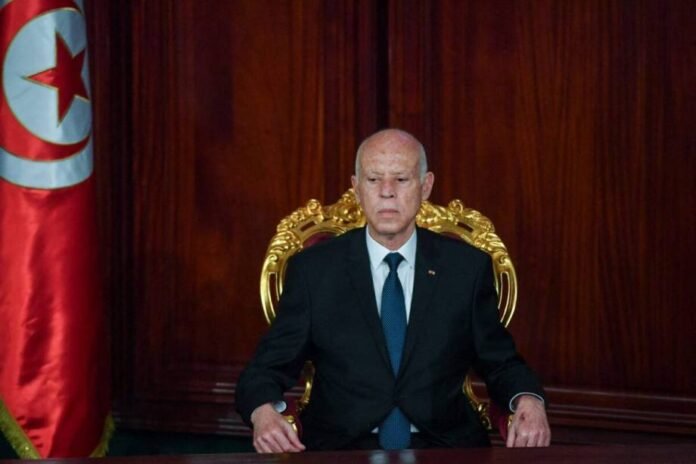
Former Tunisian intelligence chief Kamel Guizani has accused relatives of President Kais Saied and senior officials in Tunisia’s government of spying on opposition leaders and fabricating court cases to imprison them.
Speaking on Al Jazeera’s Maghareb Podcast, Guizani alleged that members of Saied’s family and the president’s security chief were involved in surveillance operations and the unlawful use of state institutions. He said the case was the real reason behind the prosecution of judge Bashir Akremi and the dismissal of dozens of judges.
Guizani also accused former Interior Minister Taoufik Charfeddine of overseeing the fabrication of security-related cases, in cooperation with the Justice Ministry, to target political and human rights opponents and strengthen the ruling system.
He said that “some officers were forced to write reports lacking credibility in terms of time and place”, describing the actions as “state crimes” targeting anyone who stood in the way of President Kais Saied’s agenda since early 2022.
Guizani said investigations carried out by security agencies under his supervision “proved the existence of a close connection in the wiretapping case between the Director-General of Presidential Security, Khaled Yahiawi, and individuals from the president’s very close family circle”.
Kyrgyzstan’s UN upset signals Eurasia’s quiet rise
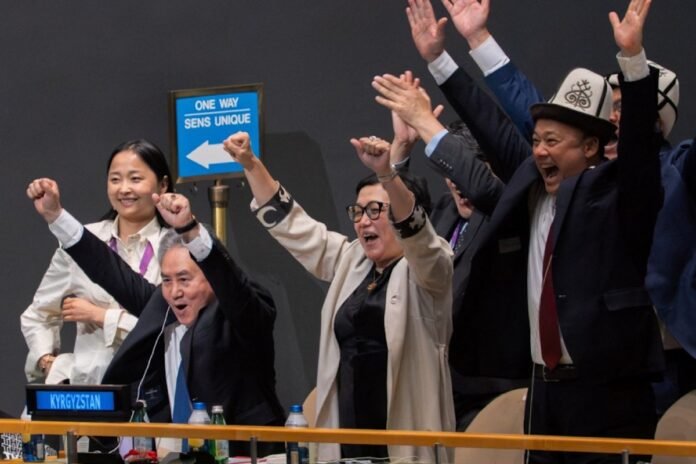
Kyrgyzstan representatives cheer after winning vote to become a rotational UN Security Council member. Image: X Screengrab
On Wednesday (June 3), Kyrgyzstan secured an upset victory over the Philippines to win a seat on the United Nations Security Council for the 2027-2028 term.
After taking a surprising 105-85 lead in the first ballot, the Central Asian nation went on to win decisively, 142-49, in a fourth round of voting. Kyrgyzstan was one of 59 countries that had never served on the Council. Its election marks only the second time a Central Asian country has held a seat, following Kazakhstan in 2017-2018.
An elated Kyrgyz delegation – some wearing traditional ak-kalpak hats – celebrated in the General Assembly Hall, exchanging handshakes and smiles with a long line of well-wishers.
The scale of the final vote was striking. That such a decisive margin favored a Central Asian candidate over a US-aligned Indo-Pacific one challenges conventional assumptions about where the center of global geopolitical gravity is shifting.
On paper, the Philippines appeared the obvious choice. A US treaty ally and founding member of ASEAN, it has deep diplomatic ties across the Global South and has served on the Security Council four times. Its strategic location — on the front lines of tensions with China and near Taiwan — only reinforced its relevance.
At the Shangri-La Dialogue in Singapore on May 30, US Secretary of Defense Pete Hegseth praised President Ferdinand Marcos Jr for boosting defense spending by 12% this year, highlighting Manila’s push to build a “modern, technologically advanced and interoperable force” capable of operating alongside US forces.
Yet, Wednesday’s vote suggested that many countries in the Global South gave a collective shrug to this US-centric narrative. Rather than lining up behind alliance structures or strategic alignments, many countries in the General Assembly appeared willing to back a different kind of candidate.
Kyrgyzstan’s campaign leaned into that contrast. Its messaging — “The voice of Central Asia,” “Mountain nation, global vision,” and “Landlocked, ocean-minded” — emphasized representation and perspective over power politics.
Ahead of the vote, a senior Philippine diplomat had expressed confidence that countries such as the US and Japan would support Manila’s bid. The diplomat noted Kyrgyzstan’s backing from China and Russia, and argued it was clear which candidate stood on “the right side of history.”
The outcome, however, suggests that framing did not resonate. For years, the dominant narrative in global strategy has been the rise of the Indo-Pacific – a framework centered on maritime trade, naval power and US-China competition at sea.
By that logic, a country like the Philippines should have been the natural choice. But the General Assembly chose differently. Kyrgyzstan’s victory suggests that another map is beginning to matter: the Eurasian interior.
This region is increasingly a theater of strategic competition. Russia’s influence in Central Asia and South Caucasus is waning as it remains consumed by the war in Ukraine.
China, meanwhile, is expanding overland energy and infrastructure networks across Eurasia, as it seeks to reduce reliance on maritime routes vulnerable to disruption, particularly in the event of an armed conflict with the US.
At the same time, countries such as Kazakhstan, Uzbekistan and Azerbaijan have pursued multivector foreign policies, avoiding overdependence on any single power and a balancing act that has kept them engaged with multiple partners, including the US.
Washington has always struggled to categorize Central Asia – variously grouping it with Europe, the Middle East or Asia. Often treated as a space between more important regions, it is now emerging as a geopolitical arena in its own right — defined not by sea lanes, but by corridors, energy routes and common Turkic heritage.
None of this means that countries are necessarily siding with Russia and China over the US. Nor does it diminish the importance of the Indo-Pacific. And the Philippines will obviously remain central to US strategy vis-à-vis China.
But the vote does suggest something more subtle: a growing appetite for new narratives and a recognition that military buildup may not be the only path to credible deterrence. It also reflects an emerging new geopolitical map with Eurasia increasingly at its center.
Ken Moriyasu, a former correspondent for the Japanese newspaper Nikkei, is a senior fellow at Hudson Institute.