13.7 C
London
Thursday, June 4, 2026
Home Blog

Flesh-eating screwworm infection confirmed in South Texas, USDA says

0
flesh-eating-screwworm-infection-confirmed-in-south-texas,-usda-says
Flesh-eating screwworm infection confirmed in South Texas, USDA says

A case of New World screwworm has been confirmed in South Texas, the US Department of Agriculture announced Wednesday night. It marks the first detected breach of the US-Mexico border by the ravenous flesh-eating flies, which have been making their way up through Central America for the past several years.

In a social media post Wednesday afternoon, the USDA revealed that a sample from Texas had been sent to the National Veterinary Services Laboratories (NVSL) in Ames, lowa for confirmatory testing of a screwworm infection. Agriculture Secretary Brooke Rollins later posted that the testing had confirmed the infection, which was found in a 3-week-old calf in Zavala County, Texas.

Chatter of a screwworm detection had already been building this week, rattling the US cattle industry.

Although many animals, including humans, can be victims of the parasite, the screwworm is especially dangerous to livestock. Female screwworms lay hundreds of eggs in the wounds and openings of warm-blooded creatures, allowing their larvae to feast on the living animals, causing deep, festering, life-threatening wounds. Although the screwworm was once endemic to the US, it was eradicated amid a yearslong control effort in the 1960s. The USDA estimates that keeping screwworms out of the US has saved the livestock industry $900 million each year.

But the fly has broken through control efforts in Central America and has been inching closer. On May 28, a case was found 25 miles from the border in a 5-year-old goat in Coahuila, Mexico, according to the USDA. The case was one of many detected in recent days, including a case in a calf just 39 miles from the border, also in Coahuila.

Disputed detections

In a media call on Tuesday, Agriculture Secretary Brooke Rollins said, “There is no doubt that this is a very, very serious threat to our livestock.” But she also disputed claims that the fly is closer or even already in the US.

On Monday, state Rep. Don McLaughlin (R-Texas) claimed on social media that a screwworm case was found just one mile from the Texas border, which Rollins and the USDA denied.

“When that false information gets out, it causes significant panic,” Rollins said Tuesday, according to the Texas Tribune. “And rightly so, especially if it’s coming from elected officials and the media.”

On Wednesday, Reuters reported that McLaughlin suspected the fly was now here. He said samples taken Tuesday from two calves on a ranch in La Pryor, Texas—which is in Zavala County, where the screwworm infection was confirmed—were being tested as possible screwworm infections. One infection was said to be in an umbilical cord wound of one of the calves. McLaughlin said he had seen images and videos of the animals and that the larvae seen in them looked like screwworm larvae.

Reuters was shown one of the photos, which it reported as showing “multiple larvae resembling the screwworm inside a bloody circular wound on an animal,” but said it “could not immediately verify the photo.”

“At this point, it’s unconfirmed that it’s the New World screwworm,” McLaughlin told the outlet earlier Wednesday. “It ​looks like it, but it’s unconfirmed.”

With the finding now confirmed, the USDA said in a press release Wednesday night that it is setting up a “unified Incident Command Team” with the Texas Animal Health Commission, and sending response personnel to the area. It is also setting up a 20 km (12.4 mile) zone around the detected infection for quarantine, movement restrictions, and increased surveillance and fly trapping.

Screwworm comeback

Screwworms were once endemic to the US, but were eradicated in the 1960s amid a concerted effort to annihilate their population. This is done with aerial bombings of sterile male flies, which is the most effective weapon against the parasites. The mass release of dud studs elbows out fertile males, preventing them from mating with females, which generally only mate once.

With this method, called Sterile Insect Technique, the flies were eradicated not just from the US, but from all of Central America. They were declared eradicated from Panama in 2006.

Until recently, the screwworm population was kept at bay via a biological barrier along the Darién Gap at the border of Panama and Colombia. The USDA partnered with authorities in Panama to build a sterile fly production facility at the gap to regularly release sterile flies and hold the line. But in 2022, the barrier was breached, and the flies have been relentlessly buzzing northward since.

In response, the US has expanded surveillance and trapping efforts in Texas. It is also constructing a $750 million sterile fly production facility in South Texas. USDA says it is currently dispersing 100 million sterile insects per week in Mexico and along the US-Mexico border to prevent the flies from advancing further.

In the press release Wednesday night, the USDA said it will be releasing sterile flies via ground release chambers in the area around the detection. That’s in addition to the 4 million flies already being released in the area by air this week.

“The United States has defeated this pest before, and we will do it again,” Dudley Hoskins, Under Secretary for Marketing and Regulatory Programs at the USDA said in the press release.

This post was updated at 10:45 pm ET to reflect that the USDA confirmed an infection of NW screwworm. 

Expats’ Iran war reactions show how Gulf states instill loyalty

0
expats’-iran-war-reactions-show-how-gulf-states-instill-loyalty
Expats’ Iran war reactions show how Gulf states instill loyalty

When the US and Israel launched their strikes on Iran on February 28 and Iran retaliated by targeting the Gulf Arab states, I was closely monitoring social media accounts from the region. I research Middle East politics, with a focus on the Gulf, and the social media platforms I use are full of people living in the region – including Western migrants, or as they tend to style themselves, expats.

To my surprise, from many of them I saw the same message: “It is safe and normal here.”

This was not a trivial claim – these messages were sent as the countries they live in came under attack. But the attitudes they exhibited reflect a broad strategy long cultivated by Gulf Arab regimes. This aims to instill in the people that opt to live there a sense of security, as well as aspiration for the lifestyle on offer and loyalty towards the country for making that lifestyle available.

More importantly, the expats’ reactions exposed the role that foreign residents and influencers have played in advancing a particular understanding of “normality.” Not only do they accept authoritarian rule in the Gulf, they have been pushing out messages about insecurity elsewhere.

To be clear, a lot of foreign workers did leave the Gulf, reportedly in the tens of thousands, when the conflict began. But even so, many of the initial reactions on social media, whether people stayed or opted to leave, projected this sense of security.

Part of the US security hub

These regimes have developed an image designed to attract global connectivity, foreign capital and flows of people and goods.

  • The UAE, especially Dubai, has become a symbol of tax-free residency and luxury tourism.
  • Qatar has established itself as reliable gas exporter and world-class mediator.
  • Saudi Arabia has launched a sweeping reform project recasting national identity and the kingdom’s global role in championing “moderate Islam.”
  • Bahrain has worked early since independence to become a regional banking hub.

These state-building processes thrived under the security umbrella of US and other western military bases across the Middle East. Firmly embedded in the US sphere of influence, Gulf monarchies have benefited from precious diplomatic cover and access to global markets.

Other regional regimes, meanwhile – notably Iran – were excluded. This was more often due to their hostility towards the US than for their brutal repression and disastrous governance at home.

By directing global attention to threats such as Iran, Gulf regimes forged a strong sense of domestic normality.

But in recent years, a less reliable US regional policy has made the security arrangement increasingly uncertain, prompting Gulf regimes to explore alternatives. Without renouncing deeper engagement with the US, they welcomed cooperation with other powers outside the region, such as China, as well as the possibility of closer relations with Israel and even a modus vivendi with Iran.

Despite ongoing rivalries – including within the regional forum, the Gulf Cooperation Council (GCC) – regional conflict de-escalation and management appeared to be the preferred means to continue insulating the Gulf normality. Yet the ongoing destruction in Gaza, closer US-Israeli alignment in the latter’s pursuit of regional dominance and the ensuing pressure on Iran’s network of proxies have undermined this delicate balance.

Expats get political

The attack on Iran exposed foreign residents’ role in sustaining the image of “normality.” Until then, expats and influencers embodied this normality by displaying safe, privileged and apolitical lives.

I saw posts attempting to divert attention from the threat of war in the Gulf by people claiming to feel safer under missile attacks in Dubai and Doha than “after 9 pm” in London or Manchester. Other posts preferred the prospect of missile attacks to being “bombed by 50% taxes.

These sorts of comments tend to mimic narratives pushed by far-right movements in the West around crime, taxation and immigration.

A viral trend concentrated in the UAE but replicated across other Gulf countries featured influencers responding to the question “Aren’t you scared?” with imagery of members of the ruling families and messages such as: “No, because I know who protects us.” A much-publicized walk in Dubai Mall by the UAE president followed this paternalistic framing of security.

After the initial shock, many influencers returned to the old form of messaging, not posting about the war and focusing on showing their privileged “everyday” lives.

Controlling the message

It’s important to remember that Gulf Arab regimes possess robust censorship apparatuses and broad national security and anti-cybercrime laws that penalize content deemed to “cause panic” or “disturb public order.”

Authorities in Saudi Arabia were swift to remind residents that “photography serves the enemy,” banning unofficial sharing of damage caused by the war. The UAE threatened severe sentences for people posting negative messages. There have been reports of people detained for posting the wrong content – more than 300 in Qatar alone.

Heightened security concerns exposed Western expats to coercive practices typically reserved to political dissidents.

Having invested efforts in insulating their domestic projects from external threats through seeking political accommodation with neighbors, including Iran, Gulf leaders may now pursue a different strategy.

In fact, we’re already seeing some different approaches as various Gulf countries work out their own best approach to the changing situation in their region. Some, like Bahrain, remain hostile to Iran. Others, including Saudi Arabia, are more nuanced in their approach, looking overall to ensure security in the region.

But for regimes and expats alike, this is a time of reckoning for the parameters sustaining “normality” in the Gulf. Most certainly, the region will never be the same.

Javier Bordón is a PhD researcher in international relations, Lancaster University.

This article is republished from The Conversation under a Creative Commons license. Read the original article.

Beyond Sanctions: The Hard Economics of Syria’s Recovery

0
beyond-sanctions:-the-hard-economics-of-syria’s-recovery
Beyond Sanctions: The Hard Economics of Syria’s Recovery


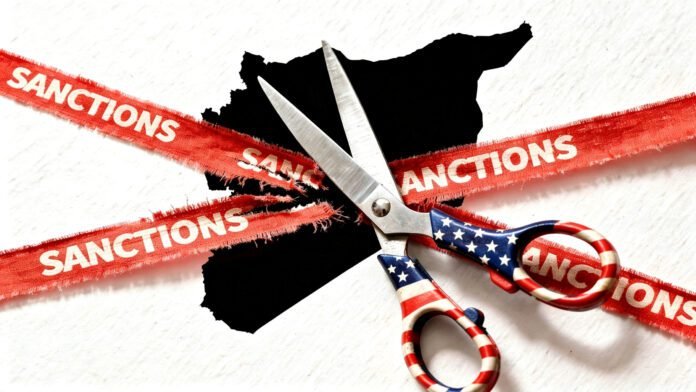
The al-Sharaa–Trump conversation revived hopes of a wider US opening, but the path to growth still runs through damaged infrastructure, weak banking channels, investor doubts, and immense humanitarian need

[DAMASCUS] When Syrian President Ahmed al-Sharaa spoke by phone with US President Donald Trump, the issue of US sanctions was not a passing item in a broader discussion of regional developments and Syria’s recovery. The Syrian president’s office said al-Sharaa stressed that lifting the remaining sanctions represents an essential step toward enabling the Syrian economy to regain momentum and improve citizens’ living conditions. He also emphasized the importance of continued international support during the reconstruction phase and the need to encourage investment across vital sectors.

The focus on sanctions was not unexpected considering Syria’s economic situation. For Damascus, the sanctions file is not simply one diplomatic question among many, but a central element in the country’s effort to emerge from years of economic isolation, war, and institutional strain. Syrian officials increasingly present sanctions relief as a gateway to reconstruction, the return of investment, and the gradual reintegration of Syria into the regional and international economy.

Yet this discussion raises a more complex question than whether sanctions should remain in place or be removed. Have US sanctions truly become the primary obstacle preventing Syria’s economic recovery? Would their complete removal lead to a significant influx of investment, the return of foreign companies, and tangible improvements in living conditions? Or is Syria’s economy now facing deeper structural challenges that extend beyond the sanctions themselves?

For years, US sanctions have constituted one of the most significant sources of economic pressure on Syria. They targeted various sectors, institutions, and individuals while imposing broad restrictions on financial and commercial transactions, prompting many investors and international banks to avoid the Syrian market.

The policy picture has already changed in important ways. In May 2025, the Trump administration moved to ease sanctions by issuing General License 25 and a Caesar Act waiver meant to facilitate new investment, essential services, and broader economic activity in Syria. Trump himself framed the move in sweeping terms, saying, “I will be ordering the cessation of sanctions against Syria in order to give them a chance at greatness.”

The debate is no longer simply about whether Washington is willing to ease pressure on Syria. To an important degree, it already has. The more difficult question is whether additional relief would, by itself, restore investor confidence, normalize banking relations, and produce visible improvements in an economy that has been deeply damaged by war and decline.

Sanctions have undoubtedly harmed the Syrian economy, particularly in the banking sector, financial transfers, and foreign investment

Samir Tawil, a Syrian economist who closely follows developments in the local economy, captured that distinction directly. “Sanctions have undoubtedly harmed the Syrian economy, particularly in the banking sector, financial transfers, and foreign investment,” he told The Media Line. “However, they are not the sole cause of the current crisis.”

He added that Syria’s economy has suffered enormous losses over more than a decade in infrastructure, productive sectors, and human capital, making recovery far more complex than simply removing US restrictions.

The scale of Syria’s economic crisis helps explain why the sanctions issue carries such weight. A recent United Nations Development Program (UNDP) assessment found that years of conflict have erased decades of economic and social progress, while poverty and unemployment have reached devastating levels. The report said that, at the average growth rate recorded between 2018 and 2024, Syria’s economy would need 55 years to return to its pre-conflict GDP level.

Even under conditions of political opening, economic recovery in Syria will not be a short-term process. According to the UNDP, bringing recovery within 10 years would require annual growth to increase sixfold, while a 15-year recovery path would still demand much stronger performance than the country has achieved in recent years.

The World Bank has offered similarly stark figures. In October 2025, it estimated Syria’s reconstruction costs at $216 billion, with a range of $140 billion to $345 billion. It also reported that nominal GDP had fallen from $67.5 billion in 2011 to an estimated $21.4 billion in 2024, while real GDP declined by nearly 53 percent between 2010 and 2022.

Syria’s economy has suffered enormous losses over more than a decade in infrastructure, productive sectors, and human capital, making recovery far more complex than simply removing US restrictions. Even if those sanctions were completely lifted, the country would still face structural challenges ranging from weak infrastructure and chronic energy shortages to declining domestic production, high unemployment, and deteriorating purchasing power.

The banking sector remains among the areas most severely affected by sanctions. Over the years, Syrian banks have faced significant difficulties accessing the global financial system, while financial transfers have become increasingly complex and costly. Even after the partial easing of some restrictions, many international financial institutions continue to avoid dealing with Syria because of legal risks and reputational concerns associated with the market.

Financial institutions fear compliance mistakes or complicated legal reviews, which means caution frequently continues even after sanctions are officially lifted

Loui al-Hassani, a lawyer specializing in financial crimes, explained why. “Even when US regulations permit certain forms of investment or financial activity, major banks often prefer to stay away from markets that have been subject to strict sanctions for long periods,” he told The Media Line. “Financial institutions fear compliance mistakes or complicated legal reviews, which means caution frequently continues even after sanctions are officially lifted.”

This is one reason Syrian officials insist that the goal is not only to remove the remaining sanctions, but to restore Syria’s position within the international financial system. Adel al-Shammari, an investor support official at Syria’s Ministry of Foreign Affairs, told The Media Line that Damascus views the sanctions file as a gateway to restoring normal relations with international financial institutions and encouraging foreign banks to gradually return to the Syrian market. “The country needs stable and reliable banking channels if it wants to attract investment and finance reconstruction projects in the coming years,” he said.

US sanctions have also affected remittances, financial transfers, trade, and investment, with consequences that have often extended beyond their formal legal language. They have contributed to a climate of caution in which many foreign companies and financial institutions have avoided the Syrian market.

In this context, the Syrian government sees sanctions relief as a necessary step toward attracting Gulf, Arab, and international capital. The country’s reconstruction needs are vast, ranging from electricity grids and water networks to roads, airports, seaports, industrial zones, housing, and productive sectors capable of generating employment. For Damascus, easing the remaining restrictions is therefore tied not only to diplomatic symbolism, but to the hope of unlocking the large-scale financing that reconstruction will require.

But are Arab investors simply waiting for sanctions to be lifted before entering Syria?

Mohammad Zaidan, a Syrian businessman studying investment opportunities in Damascus after spending many years working in China, told The Media Line that sanctions have indeed been one of the main factors causing investors to delay entering the Syrian market. However, he emphasized that sanctions are far from the only consideration.

Removing sanctions would send a positive signal to markets, but it would not by itself be enough to justify investment decisions worth billions of dollars

“Investors also look at the stability of the legal environment, the clarity of economic legislation, the ease of transferring profits, the efficiency of the banking sector, and the long-term consistency of government policies,” he said. “Removing sanctions would send a positive signal to markets, but it would not by itself be enough to justify investment decisions worth billions of dollars.”

Zaidan noted that investors view Syria as a market with significant opportunities in energy, infrastructure, real estate, agriculture, and manufacturing.

Yet he stressed that the extent to which these opportunities can be realized will depend on the Syrian government’s success in creating an attractive business environment capable of protecting investments and facilitating economic procedures.

The humanitarian dimension makes the limits of a sanctions-only approach even clearer. In March 2025, UN officials said 16.5 million people in Syria were in need of assistance, and that more than two-thirds of the population required humanitarian support. They also described severe pressure on public services and warned of funding shortages that threatened aid operations at a time when the needs remained immense.

In Washington, sanctions are viewed through a broader lens than economics alone. Mustafa al-Nuaimi, a Syrian affairs analyst and researcher, told The Media Line that sanctions also serve as a political tool used by successive US administrations to pursue foreign policy and regional security objectives.

He noted that any additional steps toward lifting sanctions could be tied to broader political and security discussions involving multiple regional files. The positions of Congress and other US government institutions, he added, will continue to influence the limits of any future American opening toward Syria.

“The Trump administration may view the sanctions issue as an opportunity to redefine relations with Damascus within a broader framework of regional understandings,” al-Nuaimi said. “However, I do not expect sanctions relief to be automatic or free of political and security conditions.”

Against this backdrop, the phone call between al-Sharaa and Trump has revived one of the most pressing questions facing Syria today: what does the Syrian economy actually need in order to emerge from its prolonged crisis?

While the Syrian government is betting that the removal of the remaining sanctions will pave the way for investment, reconstruction, and improved living conditions, many experts argue that sanctions represent only one part of a much larger challenge. The success of any future economic opening, they say, will ultimately depend on Syria’s ability to address the internal problems that have accumulated over years of conflict and economic decline.

Between the optimism expressed by Syrian officials and the caution voiced by investors and economists, one conclusion appears clear: if sanctions are fully lifted, the move would represent an important milestone on the path toward recovery.

Yet the question left unanswered by the al-Sharaa–Trump conversation—and one that continues to dominate economic discussions in Syria—is whether sanctions relief alone can restore sustained growth or whether it will merely mark the beginning of a long process of reforms, challenges, and economic adjustments.


Jill Biden ‘Screamed’ at Priest Administering Joe Biden’s Last Rites During Health Scare

0
jill-biden-‘screamed’-at-priest-administering-joe-biden’s-last-rites-during-health-scare
Jill Biden ‘Screamed’ at Priest Administering Joe Biden’s Last Rites During Health Scare


Jill Biden is opening up about one of the most terrifying moments of her life — the day she thought her husband, Joe Biden, might not survive.

The former First Lady revealed that she screamed at a Catholic priest to leave Joe’s hospital room during his near-fatal health scare in 1988, after doctors discovered he had suffered a life-threatening brain aneurysm.

The emotional scene is described in Jill’s memoir, View From the East Wing, where she recalled the fear and panic that gripped her as the then-senator’s life hung in the balance.

At the time, Biden was just 46 years old and had recently ended his first presidential campaign. What first seemed like a frightening medical emergency quickly turned into a nightmare.

Doctors found blood in his spinal fluid, a sign of a ruptured aneurysm. He needed immediate surgery, and the risks were enormous.

When Jill rushed into the hospital room in Wilmington, Delaware, she was horrified by what she saw.

A priest was either preparing to administer last rites or had already begun reading them.

For Jill, that was too much.

“I rushed to his side and learned he’d had an aneurysm,” she wrote.

Then panic took over.

“Get out! Get out! My husband is not going to die!” Jill screamed at the priest, according to her account.

The moment was so intense that even Jill was stunned by her own reaction.

She later admitted she almost never yells, but in that terrifying instant, she was overcome by fear, anger, and sheer determination. To her, the sight of a priest preparing for the possibility of death felt like surrender — and she was not ready to accept it.

Biden’s condition was so serious that doctors decided he was too unstable to be flown to Washington, D.C.

Instead, he was rushed by ambulance to Walter Reed Army Medical Center, where he underwent emergency brain surgery.

The operation saved his life.

Even in the middle of the chaos, Jill said she eventually tried to bring a little humor into the dark moment. After the worst of the panic eased, she joked to Joe, “Way to ruin the holiday.”

But decades later, the Bidens are facing another devastating health battle.

Joe Biden, now a former president, has been diagnosed with stage 4 metastatic prostate cancer. Jill has described the diagnosis as “just shocking.”

The cancer was discovered in May 2025, after Biden had left the White House. According to Jill, the couple had been preparing for a different kind of life after politics, including retirement plans and travel.

Instead, everything changed.

“Our whole life has changed now,” she said, describing the emotional toll of the diagnosis.

Jill has also said she was stunned that the cancer had not been detected earlier. She explained that White House doctors had followed standard guidelines from the American Urological Association, which discourage routine PSA screenings for men over age 70.

Because of that, she said, the disease was not found until it had reached an advanced stage.

The cancer has reportedly spread to Biden’s bones, meaning it is no longer considered curable. Still, Jill said it remains treatable.

“I think Joe will live with cancer for the rest of his life,” she said.

The former First Lady has since urged older men to pay close attention to their bodies and speak with their doctors about testing, even if routine screenings are not recommended.

Jill was also asked on The View whether she still believed her husband could have served another four years had he remained in the 2024 presidential race.

Her answer was blunt.

“Not from what I know now,” she said.

Still, Jill also insisted that she believed Joe Biden could have beaten Donald Trump if he had stayed in the race.

Her memoir has sparked mixed reactions, especially as it revisits deeply personal moments from the Bidens’ marriage, political life, and health struggles.

But one thing is clear from Jill’s account: when Joe Biden’s life was on the line, she refused to give up.

Even when a priest entered the room for last rites, Jill Biden made it known she was not ready to say goodbye.

Google ordered to put clearer links in AI search and let UK publishers opt out

0
google-ordered-to-put-clearer-links-in-ai-search-and-let-uk-publishers-opt-out
Google ordered to put clearer links in AI search and let UK publishers opt out

UK regulators today ordered Google to put clearer attributions and links to publishers’ content in its AI-generated search features. The UK’s Competition and Markets Authority (CMA) also said Google must give publishers a way to opt out of AI features in search.

“In a world first, publishers will now have effective tools to prevent their content being used to power AI features in search, such as AI Overviews,” the CMA said today. “This will put publishers, like news organizations, in a stronger position to negotiate content deals with Google. To boost consumer trust, Google is also now required to make sure that publisher content is properly attributed, using clear links, in AI‑generated search results.”

The CMA ruled that Google may not penalize publishers for opting out of AI, meaning that Google can’t downrank opted-out publishers in general search results. The CMA said Google will have nine months to comply with all requirements but that the agency “expects important parts of the controls to become available to publishers well before that deadline. Google will also be required to submit and publish compliance reports, supported by key data and metrics, explaining changes it has made and how it has complied.”

Google’s AI Overviews tend to give confident-sounding responses to search queries, but the links to sources in the AI Overviews may or may not support those confident responses. Clearer attribution and links could make it easier for searchers to determine the accuracy of AI Overview summaries.

The CMA applied the rules to Google after determining that it has “strategic market status” in general search services, and has ongoing investigations into Apple and Microsoft. Google today said it will comply with the CMA decision.

Google opposed “excessive attribution”

Google said last month that it would add more links to websites in AI Overviews, but it opposed the attribution requirement in its formal response to the CMA proceeding in February. Google said it is “already motivated to strike the right balance between attribution and usability.”

“Excessive attribution of lots of sources may worsen the user experience and lead to fewer clicks; not more,” Google told the CMA. “But too little attribution and publishers may decide to opt out, depriving Google of their content for grounding Search genAI features.”

Google also objected to the CMA’s opt-out rule. But now that the proceeding is over, Google today announced new controls for website owners in response to the UK directive.

“Today, we’re beginning to test a new control that lets website owners manage how their links and content appear in generative AI Search features,” Google said. “With this new toggle in Search Console, website owners can decide if they want their site to appear in and help ground responses in our generative AI Search features (like AI Overviews, AI Mode or AI Overviews in Discover). Sites that opt out will not receive traffic or impressions from our generative AI features. This control will not be used as a ranking signal for search results outside of these generative AI Search features.”

Google also said it is giving website owners more data through the Search Console, including “impressions metrics and information about which pages appear in AI responses and in what countries.” It said the Search Console changes are now being provided “to a subset of website owners in the UK, allowing for thorough testing before rolling them out to website owners globally.”

Google says it will comply

While Google said the Search Console changes will eventually roll out globally, it didn’t say in the blog post whether the UK-mandated changes to attributions and links will be available everywhere. Google also didn’t answer that question when contacted by Ars today.

Google told Ars that it will fully comply with the CMA’s new conduct requirements, and said its recent announcements of additional links to web content in AI search results apply globally. Google’s blog post didn’t say what changes it will make to comply with the requirement for clearer attribution and links to publishers in AI results, but said the firm is “continuing to experiment with a range of new link designs in our AI experiences to make them more useful.”

A notice published by the CMA said Google must “take reasonable steps to ensure that Search Content in search generative AI features is attributed clearly, accurately, and that end users are provided with a clear means to access that Search Content.” The CMA’s decision noted that some “stakeholders said there are instances where attribution in search generative AI features has been inaccurate and that the clarity of such attribution could be improved.”

The CMA required Google to publish explanatory information detailing how it meets the new attribution requirement and how it ensures and measures “the factuality of search generative AI features.”

“As set out in consultation, we consider that transparency over attribution is important so that publishers can trust that, where Google uses Search Content in search generative AI features, it is sufficiently and accurately attributed,” the CMA said. “This, in turn, helps publishers make properly informed and meaningful decisions about whether and how they interact with Google in respect of general search services. Transparency measures also bring benefits to end users as they help them understand how Google has attributed responses and therefore help them to trust the responses they receive.”

Opt-out dispute

As for opt-outs, the CMA notice said “Google shall provide publishers with effective controls to withhold their Search Content from being used in generative AI services and features.” The opt-outs must cover the training and grounding of Google’s broader generative AI services and its AI search features, the CMA said. For Google’s AI search features, the CMA said opt-outs must be available to publishers at both the directory and page levels.

Google’s February response to the CMA proposal argued that the company’s “current opt-outs are sufficient and effective.” The firm told the CMA that it would “be disproportionate to require Google to offer page-level opt-outs. Constantly crawling and re-crawling content that is constantly being opted in and out will increase costs for Google, and thereafter increase crawl costs for publishers. It may lead to user confusion and a fragmented and inconsistent user experience.”

Today’s CMA’s decision rejected this argument, saying that regulators “have not seen evidence suggesting that enabling publishers to exercise page-level controls would require increased crawling activity.” It said Google eventually conceded to the CMA that it would be possible to introduce page-level controls if given enough time.

The CMA said the nine-month deadline should provide “sufficient time to carry out additional technical work to design and implement these aspects of the control effectively.” Google must provide an implementation plan within one month, the decision said.

The News Media Association, a trade group in the UK, said that “the legally enforceable Conduct Requirements for Google Search published today are a significant step towards leveling the playing field and building a fair, transparent digital economy where premium content is properly respected and fairly compensated.” The group called on the UK to implement “robust enforcement.”

Spain registers record high sea temperatures for May

0
spain-registers-record-high-sea-temperatures-for-may
Spain registers record high sea temperatures for May


Spain registered record sea temperatures for the month of May along much ​of its coastline, the country’s port ‌authority said on Tuesday, as the UN forecast a moderate or possibly strong El Nino, ​which could drive up global temperatures ​in coming months.

Twelve out of 15 ⁠deep-water buoys recorded their highest-ever temperatures ​for the month of May, as well ​as six out of 14 buoys along the coast, according to the Spanish port authority.

Human-caused ​climate change was behind the phenomenon, ​said Ruben del Campo, spokesperson for Spanish weather agency ‌AEMET.

“Over ⁠the last decade, there have been just seven record-breaking cold days, whereas we have had 221 record-breaking hot days,” ​del Campo ​said, adding ⁠that this reflected a constant rise in global average temperatures.

However, ​del Campo added, May’s record ​sea ⁠temperatures were unrelated to El Nino, which will potentially begin to emerge in ⁠the ​Pacific in the coming ​months and reach its peak in October and November.

Nvidia GPU crackdown hits China-linked Southeast Asia data centers

0
nvidia-gpu-crackdown-hits-china-linked-southeast-asia-data-centers
Nvidia GPU crackdown hits China-linked Southeast Asia data centers

Washington has moved to close a one-year-old loophole that allowed Chinese technology companies to acquire banned high-end Nvidia graphics processing units (GPUs) by routing purchases through subsidiaries based in Singapore and Malaysia.

The US Commerce Department’s Bureau of Industry and Security (BIS) issued guidance on May 31 clarifying that export licenses are required for advanced computing chips destined for any entity whose ultimate parent company is headquartered in China or Macau, regardless of where that entity is situated. It stressed that the rule has technically been in force since November 2023.

The loophole emerged after the Trump administration announced in May 2025 that the AI Diffusion Rule, which was drafted by the Biden administration to impose stricter worldwide limits on the export of advanced AI chips based on destination tiers, would not take effect. Many Chinese firms grabbed the opportunity, rushing to build data center racks in Singapore and Malaysia and purchase Nvidia chips in large quantities.

Hundreds of thousands of banned Nvidia chips may have already reached Chinese-owned subsidiaries through this channel, according to industry estimates cited by Reuters. 

BIS is now making clear that the parent-company requirement was never suspended. Some observers noted that by framing this as a clarification rather than a new rule, the Trump administration stops short of acknowledging that a loophole ever existed, casting the problem instead as one of compliance and enforcement.

BIS also said it would not require data centers already operating with the banned chips to cease using them, a carve-out that sidesteps potential liability and compensation claims against chip suppliers.

Regardless of how Washington frames the measure, the practical effect is clear. Chinese-owned entities operating overseas will no longer be able to freely purchase Nvidia chips that are banned, ending an arrangement that had gone largely unchallenged for a full year.

The enforcement shift comes as Beijing has been pressing its domestic technology firms to prioritize homegrown artificial intelligence (AI) chips over foreign alternatives, such as Nvidia’s H200 and H20 chips. Huawei Technologies’ Ascend 920 has been at the center of those efforts, with Chinese authorities encouraging companies to adopt domestic AI processors rather than rely on Nvidia’s products.

Some Chinese commentators say the tightened enforcement will have a significant impact on Chinese firms’ data center operations in Southeast Asia in the short run. But they add that Chinese firms will find alternative ways to access the banned processors.

“Chinese firms’ overseas subsidiaries had previously exploited the ambiguity in the rules, procuring Nvidia’s Blackwell-architecture chips in full compliance and without any export licenses. The new guidance will tighten the regulatory grip and raise compliance costs and legal risks for these companies,” says a Liaoning-based columnist using the pen name “Little Chunping.”

“But enforcement remains challenging. Proving that an overseas chip buyer is ultimately Chinese-owned is far harder than it sounds. Corporate structures can span multiple jurisdictions, and foreign governments are under no obligation to help Washington trace them,” he says.

He adds that possible countermeasures include deploying more intermediaries and financial instruments to obscure transaction chains, shifting toward technology licensing or purchasing cloud computing services that bundle access to advanced chips, and establishing more substantive research and production partnerships in less regulated jurisdictions to gain indirect access to the technology.

“Do not be fooled by the word ‘clarification.’ In export control language, a clarification often hits harder than a new rule. BIS has now made explicit that any entity whose ultimate parent is headquartered in China or Macau needs an export license, regardless of whether it is registered in Singapore, Malaysia, the Middle East or anywhere else,” says a Tianjin-based writer using the pseudonym “Ling Gen.”

“This is less about discovering a loophole and more about admitting one was created,” he says. “Washington’s own regulatory zigzagging over the past year opened a grey channel for these chips to flow through. Now the political narrative needs to reframe that policy mismanagement as an urgent national security gap that must be plugged.”

He says the move works like a slow squeeze with two immediate consequences:

• Existing chips in data center racks are untouched, but every future purchase order becomes a license application stuck in permanent review. AI companies may be able to cope with existing stockpiles for now, but will hit a bottleneck when upgrading to more powerful next-generation models.

• Projects already mid-stream face immediate uncertainty. The guidance covers future exports but says nothing about chips already at sea or orders signed but not yet shipped. With no transition period offered, contracts are left in legal limbo and suppliers have already begun to hit the brakes. Affected data centers may pivot to Nvidia’s H200 chips, which remain outside the scope of the current restrictions.

AI Diffusion Rule

When Donald Trump returned to the White House in January 2025, one of his early moves in the technology arena was to shelve the AI Diffusion Rule, a sweeping export control framework that the Biden administration had pushed through in its final days in office. 

The rule would have imposed tiered restrictions on the worldwide export of advanced AI chips, dividing countries into three categories based on their perceived security risk to the US and capping the total volume of chips that could be shipped to most destinations. Its suspension left a regulatory vacuum that Chinese firms were quick to exploit.

Last July, media reports indicated that Washington was planning to tighten export controls on Nvidia’s AI chips, specifically targeting Malaysia and Thailand, to prevent Chinese firms from using them to train AI models. But the May 31 guidance could only be launched a full year after the loophole was created.

“The reason they had to issue this statement is that BIS’s non-enforcement of certain export controls has potentially inadvertently allowed Chinese companies to both buy Nvidia Blackwell chips and make AI chips at TSMC, all legally and without a license,” Chris McGuire, a former US State Department official specializing in technology and national security, says in a social media post on June 1. “This is a huge problem.”

He adds: “This statement does not say that BIS will enforce the parts of US regulations requiring TSMC to do enhanced due diligence on AI chip orders. This is a massive loophole that still needs to be closed. If Chinese companies can make chips at TSMC, including by using third-country cutouts to receive them, there is no point to restricting China’s access to AI chips or advanced chip-making tools.”

McGuire says BIS created the problem by announcing it would stop enforcing certain regulations without clearly stating which rules were affected or updating its policies to reflect what it was still enforcing. He says the resulting confusion left companies and regulators uncertain about what was and was not permitted, opening gaps that some firms were quick to exploit.

A Shandong-based writer says Trump’s shifting approach to chip export controls over the past year reveals a broader strategic playbook. He says Washington’s strategy operates on three tracks:

  • Containing China at the core while keeping the H200 chip available as a revenue stream and to prevent China from becoming fully self-sufficient;
  • Pressuring allies such as Taiwan Semiconductor Manufacturing Company (TSMC) and Samsung to build factories on US soil;
  • Selectively expanding chip access to Middle Eastern countries to draw them into Washington’s technology orbit.

He says China is now at a disadvantage as Huawei’s best AI chip, Ascend 920, can only match Nvidia’s H20, which is even slower than the H200 chips approved for export to China.

In fact, Washington had been aware of the grey-market chip flow in Southeast Asia long before the May 31 guidance. 

Last October, the New York Times reported that the US Commerce Department was investigating Megaspeed, a Singapore-based company spun off from a Chinese gaming firm in 2023, over suspicions that it had helped Chinese companies circumvent US export restrictions to obtain banned Nvidia chips. 

The investigation revealed that Megaspeed had purchased through its Malaysian subsidiary nearly US$2 billion worth of advanced Nvidia chips, which were then shipped to data centers in Malaysia and Indonesia that appeared to be remotely serving Chinese clients. US officials were also examining whether some of those chips had been transhipped directly to China in violation of US law. 

In April this year, Bain Capital’s Bridge Data Centers removed Megaspeed from their Malaysian computing hub. Since Megaspeed was probed by both US and Singaporean authorities, its office has gone dark.

Read: China’s H200 hunger drives Nvidia chip smugglers to Japan route

Follow Jeff Pao on X at @jeffpao3

Microsoft, Atom Computing, EeroQ update their quantum computing progress

0
microsoft,-atom-computing,-eeroq-update-their-quantum-computing-progress
Microsoft, Atom Computing, EeroQ update their quantum computing progress

With dozens of companies, from small startups to tech giants, pursuing quantum computing, there’s a steady flow of results as they try to find a path to utility. We typically focus on new technologies and major landmarks, which can obscure the fact that any big success will inevitably have been built on a lot of incremental progress.

The past few weeks have seen a number of companies release progress reports on how they’re trying to get the technologies closer to general use. None of these represents a major breakthrough, but all are absolutely necessary for the technology to advance. The idea here is to convey the hard work required to move us closer to something useful.

Microsoft does material science

Microsoft is one of the few companies working on topological qubits, based on the distinct physics that occurs when particles are confined. Microsoft’s system relies on a thin superconducting wire placed on top of a semiconductor. In superconductors, groups of two electrons form Cooper pairs. But if the wire contains an odd number of conducting electrons—meaning there’s a single unpaired electron—it will end up delocalized to both ends of the wire. (Because quantum mechanics is weird.)

That’s the behavior that theorists had described, at least. Before the company could build qubits based on the behavior, it had to confirm that the behavior actually occurred as theorists predicted. It was not smooth sailing. Some of the early work in the area was later retracted, and Microsoft’s attempts to show the physics were solid were met with some skepticism, as the system it was showing off was very noisy. Despite that, the company laid out a roadmap based on building qubits out of pairs of these nanowires.

This week, the company released an update reporting much better performance by changing the materials it used to make its qubits. In its earlier version of its hardware, it used aluminum as a superconductor (the devices are kept near absolute zero). That’s been replaced with lead. The underlying semiconductor was also reformulated to include some tin, which improved the spin-orbit coupling between its electrons and those in the lead.

The devices Microsoft is using have two parallel wires and rely on measuring the parity of the pair (both with one extra electron, both without, or a mixed state) using quantum dots. As mentioned, the original system was very noisy and would often spontaneously change parity state every 10 milliseconds or less. With the new materials, a parity state could sometimes exceed 20 seconds. This sort of stability was always the promise of topological qubits, and why Microsoft originally committed to the system.

That said, the company still has a long road ahead. It still needs to demonstrate the ability to manipulate the parity in a way that allows it to perform computational manipulations on individual qubits and pairs of them. Long term, there will be decisions to be made regarding how to link the individual qubits in a way that enables error correction. But if this manuscript holds up during peer review, it seems the hardware bet Microsoft made was a solid one.

Any atom will do

Atom Computing is both a Microsoft competitor and a partner, as its hardware is accessible through Microsoft’s Azure Quantum Cloud service. The companies have also worked together to develop the software and protocols needed to perform error correction on Atom’s hardware.

That’s not “hardware” in the typical computing sense. Most of the solid material involves lasers and optical guides; the computation is done using the nuclear spins of atoms held suspended by an array of laser light. Still, Atom is developing something akin to an architecture in which there’s a storage region, an operations zone, and a collection of backup atoms that can be brought in if one of the others is lost. A configuration of lasers called “optical tweezers” is used to shuffle atoms among these locations.

In a new manuscript, the company shows just how essential having that reserve of spare atoms can be. To hold their state and keep them in the traps, lasers must be used to cool the atoms, which tend to warm up during operations. The cooling is a slow process, but failure to do so tends to leave the hot atoms able to hop out of the laser traps that hold them in a grid, which obviously introduces errors.

So, Atom had a bit of a catch-22: it needed to perform operations to do error correction, but those operations made errors more probable.

Its solution was identifying that it could do the measurements needed for error correction in a way that would swap a spare, pre-cooled atom in to a logical qubit. Doing tests by repeatedly measuring the state of a logical qubit (a linked collection of data-storing and error-detection qubits) showed this made a big difference. Performing error correction on the logical qubit without swapping in cold atoms caused the probability of an error to rise with each successive measurement. Doing the swap kept the probability roughly constant over time.

That doesn’t mean the error-corrected qubit was fully stable. Eventually, one of the errors that inevitably occurred couldn’t be recovered from because too many of its individual atoms changed state at once. But performing normal error correction could keep some of these logical qubits stable for up to 90 rounds.

Again, that’s not good enough for any sort of sophisticated calculation. But it’s a lot closer than the company was before working out this technique.

Resonating

EeroQ is a startup with a distinct approach to qubits. A number of companies are looking into using the spin of electrons as their qubits, typically because it’s easy to fabricate chips that can manipulate electrons held in quantum dots. EeroQ is making its chips with lots of tiny pools that can hold a drop of liquid helium. When an electron is placed on that drop, it has nowhere to go because helium hates to carry an extra electron. So, the lone electron just floats on the surface.

Which is great, but it was already well-established physics long before the company launched. The problem was that nobody had figured out a method to interact with the electron in useful ways.

Recently, the company released a manuscript describing a new version of its chip, one with a small resonator next to the helium-filled pool. They showed that this resonator could couple with the movement of the electron, which is kept from hitting the walls of the pool by an electrical field. Since the electron’s motional states are quantized, the resonator adopts one or two states during the experimental procedure, which is the potential building block of a qubit.

Again, that’s nowhere near having functional computing hardware. But again, it’s this sort of incremental work that’s needed if any of these technologies is going to live up to its promise.

Stop Calling It a Ceasefire

0
stop-calling-it-a-ceasefire
Stop Calling It a Ceasefire


To any reasonable person, a ceasefire is exactly what it sounds like: It is the total cessation of military attacks to end a war. But to the mainstream American media outlets covering the U.S.–Israel war with Iran, what constitutes a “ceasefire” is a rhetorical exercise.

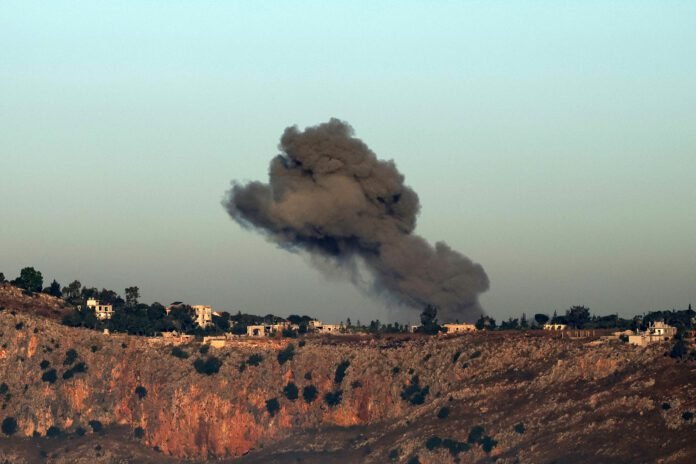
Today, Iran launched missiles at the international airport in Kuwait. As the New York Times reported: “The barrage was one of the biggest attacks on a Gulf nation since the U.S.-Iran cease-fire took effect in April.” ABC News’s live update coverage ran with the breaking news headline “Iran targets US forces, Kuwait airport amid ceasefire.” Over at CNN, the headline was “Kuwait’s airport attacked as fresh Iran-US strikes strain ceasefire.”

Of course, Iran’s latest campaign didn’t come out of nowhere: It comes two days after the U.S. announced that it had bombed radar and drone sites in the country, and one day after Israel bombarded south Lebanon with airstrikes and artillery yet again, reportedly killing at least four people across two towns.

All that bombing, and all of its attendant death and suffering, sure doesn’t feel like a “ceasefire” in any real sense. Still, the Times, along with other national news outlets, continues to spin the fantasy that the ceasefire is intact — only now it’s increasingly “fragile” or “tested.” The paper of record has gone so far as to say that it “hangs in balance.” 

In a piece of news analysis in the Times last week — on the heels of the U.S. bombing Iran for the second time in three days — the paper made the case that “a truce isn’t necessarily doomed if the missiles are still flying.” It also argued that while a ceasefire might sound like an end to the bombing, the geopolitical definition hinges on whether both sides agree that a “ceasefire” remains in effect.

If government officials call it a ceasefire, who is The New York Times to question it?

If government officials call it a ceasefire, who is the New York Times to question it?

For many months, another ceasefire in name only has been touted in Gaza. What that’s looked like in practice is Israel relentlessly bombing the Palestinians on a near-daily basis. Al Jazeera reported that since the “ceasefire” in Gaza was announced in October 2025, Israel has killed at least 922 people and injured 2,786.

To the people of Gaza and of south Lebanon, there is no ceasefire. Continuing to carry water for the idea that we’re no longer at war, or that there’s been any meaningful progress made to end this war, is to provide cover for the U.S. and Israel, the countries that launched this war of aggression and continue to execute it. It also provides President Donald Trump with the political cover he so desperately desires as he realizes that he’s powerless to end the deeply unpopular war he started with Israel, and that no number of testy phone calls will move the needle if our ally won’t agree to a true ceasefire.

The mainstream media is perfectly comfortable spinning the fiction that we’re currently in a gray zone somewhere between war and peace because the stakes are an abstraction. To them, blindly supporting American imperialism and Israeli aggression are baked-in ideological assumptions, not matters of life or death. It’s no coincidence that the New York Times has done more than any other media organization to massage the language around Israel, Gaza, and Iran to an extreme degree.

But words like “ceasefire” matter a great deal, which is why it’s critically important for the media to call out acts of war for exactly what they are. In this way, the brutal fact of war is black and white: Your country is either killing people with the bombs it’s dropping, or it’s not. Failing to acknowledge that reality is worse than dishonest — it is to irrevocably deprive those paying the highest price of their humanity.

US House approves measure to restrain Trump action in Iran

0
us-house-approves-measure-to-restrain-trump-action-in-iran
US House approves measure to restrain Trump action in Iran

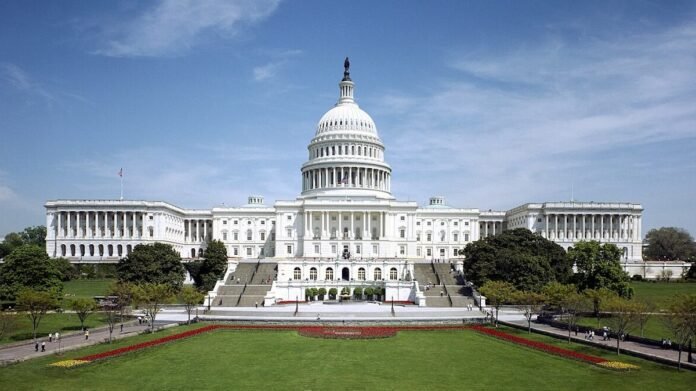
United States Capitol. Photo: Wikimedia Commons

WASHINGTON — The U.S. House passed a resolution Wednesday to force President Donald Trump to withdraw from the war with Iran and require congressional approval for further military action in the country.

The 215-208 vote, in which four Republicans voted with all Democrats to adopt the resolution, is the strongest rebuke to date against Trump’s handling of the months-long war that has left more than a dozen military troops dead, killed thousands of Iranian civilians and disrupted global supply chains of fertilizer and oil with the blockage of the Strait of Hormuz. 

The War Powers Resolution nearly passed the House last month, but failed on a 212-212 tie. The measure is a tool for Congress to limit the president’s ability to initiate or escalate military actions.

Several similar efforts in the Senate have failed. However, following the Republican primary loss of Sen. Bill Cassidy, the Louisianan joined with Democrats and several GOP senators in a vote to move the measure forward. A vote on final passage on the Senate measure has not been scheduled.

Rep. Gregory Meeks of New York, the top Democrat on the House Foreign Affairs Committee, sponsored the resolution in that chamber.

Michigan Democratic Rep. Rashida Tlaib has a separate War Powers Resolution that would force the president to withdraw troops from Lebanon. Israel, with weapons and funding from the United States, has launched an assault on that nation.

The passage of the resolution in the GOP-controlled House was the latest sign of growing dissent against Trump among congressional Republicans. 

Senate Republicans balked at Trump’s effort to create a nearly $1.8 billion fund to pay people who believe they were wrongly prosecuted by the Justice Department, including those who were convicted and later pardoned by the president for attacking the U.S. Capitol in January 2021. 

The Trump administration backed away from the fund after disputes over it halted work on legislation to fund immigration and deportation activities for the rest of the president’s second term.

-States Newsroom

0FansLike
0FollowersFollow
0FollowersFollow
0SubscribersSubscribe
- Advertisement -
Google search engine

Recent Posts