13.6 C
London
Wednesday, June 3, 2026
Home Blog

The mirage of Israel-Lebanon rapprochement

0
the-mirage-of-israel-lebanon-rapprochement
The mirage of Israel-Lebanon rapprochement

Those of us who have spent years chronicling the long, tragicomic history of American diplomacy in the Middle East could be forgiven a certain weary déjà vu watching Secretary of State Marco Rubio convene Israeli and Lebanese officials at the State Department in April.

The optics were arresting — the first direct Israel-Lebanon talks in decades, hosted in Washington — and the atmospherics, as always in such affairs, were carefully managed. Optimism was performed. Expectations were dutifully “tempered.” History, as usual, was not invited to the room.

And yet history has a way of showing up uninvited. For the first time since the failure of the May 17 Agreement of 1983, Israel and the Lebanese government have announced the opening of direct negotiations with the goal of reaching a peace agreement and disarming Hezbollah.

That the 1983 agreement — reached, it bears remembering, in the aftermath of another Israeli invasion of Lebanon — collapsed within a year under Syrian pressure and domestic Lebanese opposition should give even the most ardent optimist pause.

History doesn’t always repeat itself, but in the Levant, it has a particular fondness for doing so.

The structural problem nobody wants to name

The fundamental obstacle to any durable Israel-Lebanon arrangement is not a lack of goodwill in Beirut or a shortage of American diplomatic energy. It is the continuing reality of a Lebanese state that does not fully control its own territory, its own military decisions or its own foreign policy.

Lebanon’s new government, which came to power in January 2025, adopted the “National Shield” plan — a five-phase roadmap to disarm Hezbollah — backed by a US$230 million US investment in the Lebanese Armed Forces.

Phase one, we were told, was completed. Then, on March 2nd of this year, Hezbollah resumed strikes against Israel from southern Lebanon, undermining that claim entirely. This is the Lebanese state in microcosm: willing in Beirut, unable in the south.

When Israeli ground forces crossed the Blue Line in mid-March 2026, the Lebanese Armed Forces withdrew rather than engage, with commanders citing operational limitations and the absence of orders from Beirut. This was not a failure of nerve. It was an accurate reflection of institutional reality.

The LAF is modest in size, ill-equipped to defend the borders, and unauthorized to confront invading forces unless specifically ordered to do so by the government. That $230 million, it turns out, does not buy sovereign control over a militia with 30 years of entrenched infrastructure, Iranian patronage, and armed constituencies.

The 1983 ghost

Washington’s enthusiasm for the current talks echoes, uncomfortably, that surrounding the May 17 Agreement four decades ago. Then, as now, an Israeli military campaign had devastated Lebanese territory and weakened Hezbollah’s predecessor forces.

Then, as now, a US administration believed it had created a diplomatic opening. Then, as now, the agreement that emerged was contingent on the Lebanese government’s ability to impose its will on forces that did not recognize its authority.

The 1983 agreement lasted less than a year. It collapsed due to internal opposition and the pressure of Ba’athist Syria, backed militarily by the Soviet Union. Syria is weaker today than it was in 1983. Iran is not. And Hezbollah, though battered, has survived the killing of its leadership before.

It would be intellectually dishonest to dismiss the current moment entirely. Something genuinely new has occurred. Lebanon’s current government came to power on a reformist platform that included disarming non-state actors, and officials were openly angered by Hezbollah’s decision to enter a new war.

This is not nothing. For years, Lebanese governments maintained studied ambiguity about Hezbollah’s armed wing, treating it as a kind of permanent, awkward houseguest that paid no rent but wielded enormous leverage. The current Aoun-Salam government has dispensed with that pretense — at least rhetorically.

Moreover, Iran itself is in an unprecedented moment of strategic disarray. The killing of Iranian Supreme Leader Ayatollah Ali Khamenei has removed the ideological anchor of the Islamic Republic’s regional project.

Hezbollah without a confident Iranian patron is a different entity than Hezbollah with one, though it remains to be seen how different.

Limits of American brokerage

Here, the realist must issue a familiar warning. American diplomacy in the Middle East has a long and undistinguished history of mistaking process for progress, and of assuming that summoning parties to Washington is itself a form of statecraft. It is not.

US-brokered talks in April 2026 offer an opportunity for peace, as the Council on Foreign Relations carefully put it — an opportunity, nothing more. Opportunities in the Levant have a long tradition of expiring unused.

The deeper question is whether Washington has the sustained attention and leverage to see a complex, multi-year disarmament and normalization process through — particularly when the Trump administration’s instincts run toward dramatic announcements rather than grinding, unglamorous institution-building.

A peace agreement between Israel and Lebanon that lacks a credible enforcement mechanism for Hezbollah disarmament is not a peace agreement. It is a press release.

None of this is an argument for fatalism. The case for genuine rapprochement rests on one under-appreciated fact: both Lebanon and Israel have strong material incentives to end a conflict that has cost them enormously.

Lebanon’s economy has been in freefall for years; another war accelerates the collapse. Israel, for its part, has no strategic interest in permanently occupying southern Lebanon — an enterprise that historically produces insurgency, not security.

If there is a path forward, it runs through practical security arrangements on the ground rather than grand declarations in Washington. The 2022 maritime border agreement — quiet, technical, interest-driven — offers a better model than the 1983 May 17 Agreement. Small deals that work are worth more than large deals that collapse.

The cynics will note that we have been here before, and they are not wrong. The optimists will note that conditions have rarely aligned this favorably, and they are not entirely wrong either.

The honest analyst simply observes that in the Middle East, windows of opportunity have a habit of closing faster than anyone expects — and that American diplomatic enthusiasm, however genuine, is not a substitute for the hard structural work of state-building, disarmament and regional reordering that any durable peace requires.

Washington can open a door. Lebanon will have to decide whether it can walk through it.
This article was originally published on Leon Hadar’s Global Zeitgeist and is republished with kind permission. Become a subscriber here.

Hamas denies refusing to hand over governance in Gaza

0
hamas-denies-refusing-to-hand-over-governance-in-gaza
Hamas denies refusing to hand over governance in Gaza

Hamas on Tuesday denied allegations that it is refusing to relinquish control of the Gaza Strip, describing claims by some on the Board of Peace as “misleading lies intended to provide cover for the occupation to continue its aggression,” Anadolu Agency reports.

Spokesperson Hazem Qassem reiterated Hamas’ full readiness to transfer all governing responsibilities, including security matters, to the National Committee for Gaza Administration based in Cairo, which he said had been agreed upon by the parties.

He argued that the main obstacle to the committee’s work was Israel, along with Nikolay Mladenov, executive director of the Board of Peace, accusing them of linking all tracks of negotiations to a single issue in a manner that diverges from US President Donald Trump’s vision for peace in Gaza.

READ: EU considers sanctions on Israeli ministers over Gaza aid flotilla treatment: Report

Qassem also accused the Board of Peace of failing to pressure Israel to allow the committee to enter Gaza or provide it with the resources needed to operate.

The White House announced Jan. 16 the adoption of transitional governance structures for Gaza, including the Board of Peace, the National Committee for Gaza Administration and the International Stabilization Force.

Qassem’s remarks come amid difficulties in advancing to the second phase of an agreement that took effect Oct. 10, and as Hamas accuses Israel of escalating field violations and breaching the accord.

READ: Hamas accuses Mladenov of inciting against Gaza, urges adherence to war-ending plan

Microsoft plans Linux tools and an RTX Spark desktop for Windows developers

0
microsoft-plans-linux-tools-and-an-rtx-spark-desktop-for-windows-developers
Microsoft plans Linux tools and an RTX Spark desktop for Windows developers

Microsoft’s Build developer conference kicked off today, and as with almost everything the company has done in the last few years, Microsoft’s opening keynote focused overwhelmingly on AI and other closely related technologies. There’s Microsoft Scout, an OpenClaw-based “Autopilot” agent that can hook into Microsoft 365 data to perform tasks for users; several new AI models; an expanded preview of “Codename MDASH,” which is a “multi-model agentic scanning system” meant to detect and fix software vulnerabilities.

A few of those announcements stood out to us as particularly interesting, either for esoteric technical reasons or because they seem like they may have some utility for those who aren’t spending their every waking moment using generative AI tools. (Microsoft’s recent efforts to make its flagship operating system faster, more reliable, more useful, and less annoying didn’t really come up, but there have been plenty of other announcements on that front lately.)

On the hardware front, we didn’t get any updates for existing Surface devices (not counting yesterday’s Surface Laptop Ultra announcement), but we did get something new: the Surface RTX Spark Dev Box is “a compact developer PC” built around Nvidia’s new RTX Spark chip with up to 128GB of built-in memory.

The Dev Box looks a little like a cartoon anvil or piano fell onto an Xbox Series X and flattened it. Its aluminum casing was designed “to double as a heatsink,” and its preloaded version of Windows 11 Pro will include a “purposeful” set of developer-centric default settings and preinstalled tools.

This is a follow-up of sorts to the Windows Dev Kit 2023, also known as “Project Volterra.” This Qualcomm Snapdragon 8cx Gen 3-powered PC was essentially the system board from a Surface Pro tablet stuffed into a plastic box, and it was introduced alongside Arm-native versions of several Microsoft developer tools. It helped to set the stage for the Arm-based flagship Surface devices that launched the next year, which benefitted from a better and faster x86-to-Arm code translation technology called Prism and a greater number of Arm-native third-party apps that didn’t need to be translated in the first place.

Microsoft didn’t announce pricing or specific specs for the RTX Spark Dev Box, but you can probably expect it to cost quite a bit more than the $600 that Project Volterra did. Hopefully, Microsoft can keep the price at least somewhat lower than the $4,699 asking price for Nvidia’s similarly specced DGX Spark box.

Linux tools and AI guardrails

On the software side, several developer-centric changes are coming to Windows 11, particularly for users of the Windows Subsystem for Linux (WSL). Microsoft is introducing a Windows-native version of the coreutils command line tools, so that commands or scripts made for Linux work within Windows and the other way around; the ability to run WSL inside of containers, said to be arriving in “the coming months”; and something called Windows Developer Configurations that uses the WinGet tool to quickly set up “a distraction-free dev environment with VS Code, GitHub Copilot, WSL, PowerShell 7 and developer-optimized settings with one command on any Windows 11 device.”

Finally, for people who are curious about AI agents like OpenClaw but nervous about giving them free rein on your system (and access to all of your personal data), Microsoft is introducing Microsoft Execution Containers (MXC). These are “enterprise-grade sandboxed environments” for AI agents like OpenClaw on Windows. Specific agents can be given specific instructions, and Windows will continuously enforce those restrictions. In theory, this could be used to prevent OpenClaw from accessing personal accounts on a work computer, or vice versa, or from deleting things without asking.

The GitHub repo for MXC also mentions that it provides “multiple containment backends” that can be used to contain other kinds of plugins and tools. So if the concept sounds interesting to you but you don’t care about AI agents, they could still be worth learning about.

Jill Biden’s Brutally ‘Awkward’ Limo Ride with Melania Trump

0
jill-biden’s-brutally-‘awkward’-limo-ride-with-melania-trump
Jill Biden’s Brutally ‘Awkward’ Limo Ride with Melania Trump


Jill Biden is pulling back the curtain on what she says was a brutally awkward encounter with Melania Trump just moments before Donald Trump was sworn in for his second term.

The former first lady claims the chilly exchange happened on January 20, 2025, the morning Joe Biden handed the White House back to Trump after a bruising political season that ended with Biden being pushed out of the race.

On the outside, the two political families smiled for the cameras. Behind the scenes, however, Jill says the mood was anything but warm.

In her new memoir, A View from the East Wing, Jill describes riding in a limousine with Melania on the way to the inauguration ceremony. And according to Jill, there was very little sisterhood between the outgoing and incoming first ladies.

“The presidents’ car was likely frosty too,” Jill writes, “but at least they’d spent considerable time in each other’s company.”

She added that her ride with Melania was one of the only real interactions the two women had ever shared.

Jill, now 74, said she tried to make polite conversation during the ride. Another person in the limo reportedly asked Melania where her son Barron Trump was attending school.

Melania’s answer was short.

“NYU,” she reportedly said, before turning her attention toward the window.

According to Jill, Melania seemed far more interested in discussing the weather than making any meaningful conversation.

Jill wrote that Melania “kept trying to switch the topic to the weather,” forcing her to play along with what she described as Melania’s “weather-only program.”

At one point, Jill said she tried to keep things moving by talking about the military dogs that were out in the cold for the ceremony. That may have been the closest thing to a bonding moment the two women had all day.

But the frost between them may go much deeper than one uncomfortable car ride.

Jill suggested in her book that Melania may still resent the Bidens over the FBI search of Donald Trump’s Mar-a-Lago estate in August 2022, when agents searched the Palm Beach property as part of the classified documents investigation.

Melania previously said the raid left her angry and called it an invasion of privacy.

Jill wrote that she had “compassion” for Melania because she understood how disturbing it could feel to have federal agents going through a private home.

“I knew how distressing it was to have agents rummage through your underwear drawer,” Jill wrote.

Still, the bad blood has reportedly gone both ways for years.

Jill is said to have been furious after Melania refused to host her for the traditional White House tea and tour before Biden’s 2021 inauguration. The gesture had been a long-standing custom between outgoing and incoming first ladies, but Melania skipped it after Trump refused to concede in the usual fashion.

According to one insider, Jill was “livid” over the snub and never forgot it.

“She pointed to it as another example of Melania’s bad manners,” the source claimed.

Jill also reportedly took it personally when Donald and Melania skipped Joe Biden’s 2021 swearing-in ceremony. Trump became the first outgoing president in roughly 150 years not to attend his successor’s inauguration after losing an election.

One source said Jill viewed the no-show as “downright disrespectful” and felt it violated another major American tradition.

“She said it was hard not to take the freeze-out personally,” the insider claimed.

While Jill and Melania have both spent years in the public eye, their relationship appears to have remained distant, tense, and deeply uncomfortable.

And if Jill’s memoir is any indication, that frosty limousine ride may have only confirmed what many political insiders already believed.

These two first ladies were never going to be friends.

Desert shield: China hardening nuclear forces for a Taiwan war

0
desert-shield:-china-hardening-nuclear-forces-for-a-taiwan-war
Desert shield: China hardening nuclear forces for a Taiwan war

China’s buildup at its remote Hami nuclear silo field reflects a broader effort to transform a historically vulnerable nuclear force into a resilient deterrent capable of surviving attack, constraining US intervention and reinforcing its position in a Taiwan contingency.

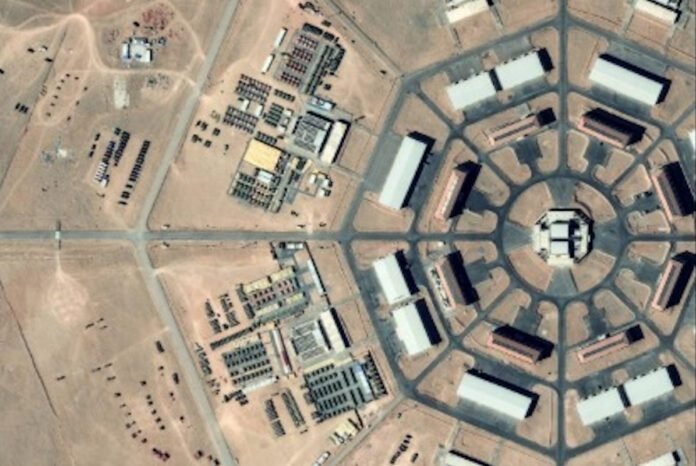
Last month, Reuters reported that China is constructing a massive, defensive military network of over 80 concrete launch pads and three distinct, octagon-shaped installations near its remote Hami nuclear silo fields in the northwestern Xinjiang desert.

This previously unreported expansion — intensifying amid rising geopolitical tensions over Taiwan’s sovereignty — is strategically designed to harden China’s land-based nuclear forces, diversify its strategic deterrent, and firmly secure its second-strike capability against potential US preemptive attacks.

The sweeping project features two major octagonal command, control and communications hubs built over the past six years, linked via dirt roads and fiber-optic conduits to versatile desert pads optimized for road-mobile intercontinental ballistic missile (ICBM) launchers, electronic warfare, and air-defense batteries.

While a less developed third octagon serves as a target range for mock Western aircraft, recent exercises at the active installations highlight an unprecedented, rapid modernization effort.

This vast defensive network sets China apart from traditional nuclear powers like the US and Russia, which historically rely on sheer numbers and silo isolation rather than localized infrastructure.

As China fields roughly 100 ICBMs across its primary silo fields, the Department of Defense (DoD) estimates that China remains on track to field 1,000 nuclear warheads by 2030.

Hami exemplifies China’s broader effort to make its nuclear deterrent more resilient, able to survive attacks and guarantee retaliation in increasingly contested conditions.

Sajjad Ahamed mentions in a May 2026 article in the peer-reviewed Journal of Current Chinese Affairs that China is building a more survivable nuclear arsenal not to support routine nuclear coercion, but to serve as a strategic “backstop” for conventional and gray-zone competition, particularly over Taiwan.

A more survivable deterrent could also expand China’s options for nuclear signaling during a Taiwan crisis. Matthew Kroenig notes in a September 2023 Atlantic Council report that China could use its nuclear arsenal to signal to the US and its allies not to interfere in a conflict over Taiwan.

Kroenig suggests China could perform an ICBM test or test a nuclear weapon at one of its test sites, such as at Lop Nur, or more provocatively, in the waters surrounding Taiwan or near a US base in the Pacific.

He adds that China could use nuclear weapons against US and allied forces, if it deems using such weapons would confer a significant advantage, is necessary to stave off impending conventional military defeat, or if the Chinese leadership is threatened.

Ahamed says that as China strengthens its second-strike capability through new missile silos, submarines, and mobile missiles, China may believe that US leaders will face greater risks and uncertainty in any Taiwan crisis.

He notes that this nuclear backstop helps limit US escalation options, reinforces mutual restraint at the nuclear level, and supports sustained Chinese pressure through military exercises, air incursions, and other coercive activities directed at Taiwan and US regional allies.

However, Emily Gill mentions in an October 2025 article for the China Aerospace Studies Institute (CASI) that Chinese leaders increasingly fear that advances in US missile defenses, precision-strike weapons, and intelligence, surveillance, and reconnaissance (ISR) systems could locate and destroy China’s relatively small nuclear force before it can retaliate.

Data from the Stockholm International Peace Research Institute (SIPRI) show that as of January 2025, China has an estimated 600 nuclear warheads, which is relatively few compared with the US’s estimated 5,177 and Russia’s 5,459.

Gill argues that concerns about a potential US conventional or nuclear first strike have led China to expand silo fields, deploy more road-mobile missiles, harden infrastructure, and improve concealment and survivability measures.

The Hami network appears tailored to address precisely those vulnerabilities by dispersing launch assets, hardening support infrastructure and complicating efforts to locate, track and destroy Chinese nuclear forces.

Hami’s expansion also reflects a broader nuclear buildup that the Institute for Defense Analyses (IDA) describes as unprecedented since the late Cold War in an October 2023 report.

It states that China is rapidly increasing both strategic and theater nuclear forces, developing a full nuclear triad, launch-on-warning capabilities, and low-yield nuclear options.

It projects China could field more than 1,500 deployed warheads by 2035 and concludes that, if current trends continue, China will achieve rough quantitative parity with the US in deployed nuclear warheads by the mid-2030s, with capacity for further growth thereafter.

Such efforts, Gill notes, aim to preserve a credible second-strike capability and maintain deterrence despite perceived growing threats to China’s land-based nuclear forces.

From a US perspective, John Harvey argues in a May 2025 report for the Center for Global Security Research (CGSR) that counterforce capabilities remain important as China transitions from a small, vulnerable deterrent to a large, silo-based ICBM force.

He contends that the ability to hold at risk at least part of China’s nuclear arsenal strengthens deterrence, supports escalation control and reassures allies that US extended deterrence remains credible.

However, Dahlia Anne Goldfeld and other writers note in a November 2024 RAND report that China’s nuclear modernization increasingly constrains US counterforce options against China.

Goldfield and others argue that while some analysts once believed that the US might have been capable of an “exquisite counterforce campaign” against China’s relatively small and vulnerable nuclear force, China’s rapid buildup has significantly reduced that possibility.

They note China’s deployment of road-mobile DF-41 ICBMs, near-continuous nuclear ballistic missile submarine (SSBN) patrols, and other survivability measures have strengthened its second-strike capability, forcing US planners to assume China can absorb an initial attack and still retaliate.

Goldfield and others state that the US can no longer rely on the prospect of a disarming counterforce strike and must instead operate under conditions of mutual nuclear vulnerability and heightened escalation risk.

Facilities such as Hami suggest China is actively engineering that outcome by making its land-based nuclear forces harder to find, harder to target and harder to neutralize.

As China’s growing survivability increasingly undermines the feasibility of damage-limitation strategies, Tyler Bown argues in a May 2026 War on the Rocks article that China’s nuclear expansion should not be met with a large US warhead buildup aimed at preserving damage-limitation or counterforce strategies.

Bown contends that China’s construction of hundreds of new missile silos and growth toward roughly 1,000 warheads complicate any US effort to target and destroy China’s nuclear forces, while mobile missiles and survivability measures further reduce the feasibility of damage limitation.

Instead of expanding the deployed arsenal, Bowen recommends deemphasizing damage limitation, accepting mutual vulnerability, pursuing trilateral arms control with China and Russia, and strengthening the US nuclear industrial base as a hedge should China continue expanding after 2030.

More than a missile-field expansion, Hami signals China’s determination to ensure that any future Taiwan crisis unfolds under the protection of a nuclear deterrent that can survive attack, retaliate decisively and constrain US intervention.

Israeli Source Denies President Trump Insulted Netanyahu

0
israeli-source-denies-president-trump-insulted-netanyahu
Israeli Source Denies President Trump Insulted Netanyahu


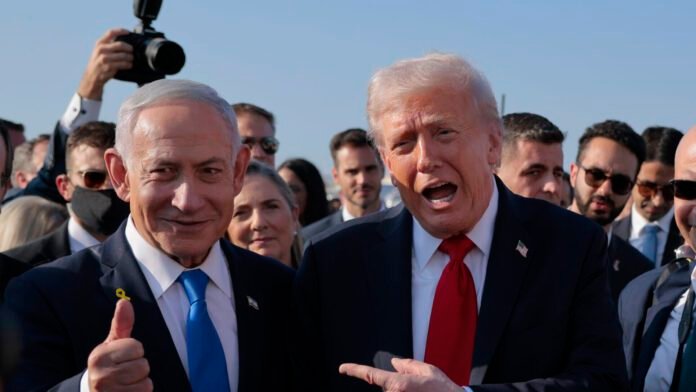
An Israeli source denies that US President Donald Trump used vulgarities and insulted Israeli Prime Minister Benjamin Netanyahu on Monday over the Lebanon conflict, contrary to an Axios report.

“Trump did not get into personal insults with Netanyahu,” the Israeli source familiar with the matter said, adding that the tense exchange focused on “the statements by each side” after the conversation.

Axios reported Monday that a phone conversation between President Trump and Prime Minister Benjamin Netanyahu became increasingly confrontational over Israel’s military campaign in Lebanon and the proposed ceasefire arrangement.

Citing two administration officials and another source, Axios said President Trump objected to plans to demolish buildings in Beirut in an effort to target Hezbollah commanders, asking Netanyahu: “What the f*ck are you doing?”

According to the report, President Trump also invoked the support he had given Netanyahu in connection with the prime minister’s legal troubles in Israel. Axios reported that President Trump told Netanyahu: “You’re f*cking crazy. You’d be in jail if it weren’t for me. I’m saving your ass. Everyone hates you now, and everyone hates Israel because of this.”

Axios said tensions inside the White House grew after Iran threatened to abandon negotiations with Washington over Israeli military actions in Lebanon. The report noted that US and Iranian officials are discussing a broad memorandum of understanding that includes provisions related to ending the fighting in Lebanon.

The report said US officials back Israel’s right to defend itself from Hezbollah attacks but have concerns about the scope of Israeli operations in Lebanon. According to Axios, a senior US official said Netanyahu replied to President Trump: “Okay, okay, just make sure everything is handled.”

The Prime Minister’s Office declined to comment on the specifics of the Axios report.

Netanyahu later described the conversation differently, saying he had made clear to President Trump that Israel would carry out strikes in Beirut if Hezbollah continued firing into Israeli territory. He also said military operations in southern Lebanon would proceed and that Israel’s policy had not changed.

The decision to halt the planned Beirut strikes drew criticism from several Israeli political figures. Former Israel Defense Forces chief of staff and Yashar! Party leader Gadi Eisenkot described President Trump’s intervention as “a humiliating demand, one that is blatantly unreasonable.” Eisenkot also said Netanyahu “is the man who preached morals to everyone about the basic need to be a prime minister and know how to say ‘no’ to the President of the United States.”

Opposition leader Yair Lapid criticized Netanyahu for, in his view, treating Israel as though it were a US protectorate. Lapid also called for a “powerful response” to rocket fire from Lebanon, writing that “the responsibility for the security of Israeli citizens lies solely with the Israeli government.”

Takeover speculation grows around EasyJet

0
takeover-speculation-grows-around-easyjet
Takeover speculation grows around EasyJet


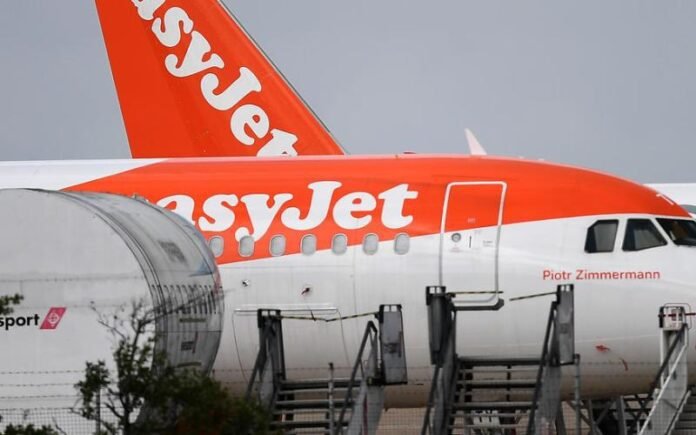
EasyJet has emerged as a potential takeover target as investors and industry observers increasingly view the low-cost carrier as undervalued despite its strong market position and improving financial performance.

The airline has attracted renewed attention from investors who believe its share price does not fully reflect the strength of its operations, extensive European network and growing holiday business.

Market analysts have pointed to EasyJet’s relatively modest valuation compared with some competitors, making it an attractive prospect for strategic buyers or private equity investors seeking opportunities in the aviation sector.

The carrier has benefited from strong demand for leisure travel across Europe, while efforts to diversify revenue streams through its package holiday division have helped strengthen its business model. The company has also continued to focus on operational efficiency and profitability following the disruption caused by the COVID-19 pandemic.

Any potential takeover approach would likely face significant regulatory scrutiny given EasyJet’s prominent role in European aviation and its importance to the UK travel market. Industry experts note that cross-border ownership rules and competition concerns could complicate any transaction.

Despite the speculation, no formal bid has been announced, and there is no indication that takeover discussions are currently underway. However, the airline’s valuation and strategic position continue to make it a subject of interest among investors monitoring consolidation trends within the aviation industry.

EasyJet remains one of Europe’s largest low-cost carriers, serving hundreds of routes across the continent and carrying millions of passengers annually.

Male bowerbirds hope to dazzle females with bright human-made items

0
male-bowerbirds-hope-to-dazzle-females-with-bright-human-made-items
Male bowerbirds hope to dazzle females with bright human-made items

Male bowerbirds are notorious for their complex mating rituals. They build intricate tunnels out of twigs—the bowers from which they get their name—and then decorate them with random colorful items gleaned from the environment. When a female of the species shows up to check out a male’s fancy digs, the male tosses his shiniest objects in her direction and shows off his plumage in hopes of impressing her.

According to a new paper published in the journal Royal Society Open Science by University of Exeter scientists, urbanization and the associated growing availability of brightly colored human-made items have had a significant impact on courtship display behavior in Australian male bowerbirds. There are marked differences in the choice of decorations for bowerbirds in urban versus rural environments. This might be because urban birds simply have greater access to the items than their rural counterparts, since birds in both environments show a marked preference for human items.

The University of Exeter researchers monitored the bowers of 61 male great bowerbirds in two sites in Australia’s northern Queensland—the rural Dreghorn Cattle Station and the urban Townsville City—during the prime breeding season (September–December 2023). Then they photographed the bower decorations in situ from above in both visible and UV light (bowerbirds can see in the UV range), using an umbrella to create diffuse lighting.

Next, they selected the 10 decorations closest to the bower entrance, since these were the most likely to be used by the male bird for his displays. These were also photographed and marked to identify the original source. Then the team removed all existing decorations from each bower and created a mixed slush pile of 10 randomly selected urban bowers and 10 randomly selected rural bowers, and they left the site alone for three days. Males were never offered any items from their own bower.

When the team returned to the sites, they determined which decorations had been selected from the slush pile and moved to a bower, and whether it came from an urban or rural source. After recording the data, all the original decorations were returned to their bowers.

Green glass and red wire

A male great bowerbird in a rural environment displaying to a female great bowerbird. Credit: Caitlin Evans

The subsequent analysis revealed that rural bowerbirds most often used green glass and green leaves or seeds for decoration, while urban birds preferred green glass and red wire. Plastic items were also popular, although “we also found items including a pair of handcuffs, medicine jars at bowers near a hospital, and fluorescent mouth guards from a site near an Australian Rules football ground,” said University of Exeter co-author Caitlin Evans.

Urban bower decorations were more than 10 times more likely to be human-made than those of rural bowers, which had more natural items, such as fruit, seeds, leaves, and sticks. Urban bowers also had nearly five times as many decorations as rural ones, averaging 90 items per bower compared to 20 for the rural birds. One overachieving urban male gathered 300 items to decorate his bower. Both urban and rural male bowerbirds showed a strong preference for human items when given a choice of items sourced from each environment. And red decorations in urban bowers were more vivid, and the green items duller, than in rural bowers.

“Our results suggest that display produced by urban males may represent an adaptive change to a more attractive display and that rural males are restricted in their displays by the materials in their environment,” the authors wrote. Further, the ready availability of human items to urban birds “may reduce energetic costs and risks associated with leaving the bower unguarded.” Even rural birds manage to find some human items, most likely by raiding farm bins or garages.

A male great bowerbird in an urban environment displaying to a female great bowerbird. Credit: Caitlin Evans

The fact that urbanization appears to be altering the display traits of the great bowerbird might affect sexual selection, for example, by altering how females assess bowers when selecting a mate.  The current study did not measure differences in male mating success relative to the use of human-made materials, although prior research has indicated that there are higher male display and mating rates in urban versus rural environments. This may be due to other factors, such as higher population density. Nor is it clear if urban female bowerbirds have different preferences for courtship traits than rural females.

“Our study demonstrates that availability of human items—often glass and plastic—is affecting the behavior of bowerbirds,” said co-author Laura Kelley, also from the University of Exeter. “We don’t yet know whether this has any negative or positive impact on them, but it’s a reminder of how human activity is changing the natural world in unanticipated ways.”

Royal Society Open Science, 2026. DOI: 10.1098/rsos.260109 (About DOIs).

CPEC 2.0: new green hope or new China debt trap for Pakistan?

0
cpec-2.0:-new-green-hope-or-new-china-debt-trap-for-pakistan?
CPEC 2.0: new green hope or new China debt trap for Pakistan?

Walk into any mid-sized factory in Lahore, Pakistan, on a summer afternoon, and you’ll hear the same sound: loud, diesel-fueled power generators running because the electricity grid is down.

For factory workers and owners, the heavy hum of the backup unit is a constant audible reminder of lost hours and profits.

Pakistan spent a decade and borrowed tens of billions of dollars building power plants under the China-Pakistan Economic Corridor (CPEC). It now has more generation capacity than it can use, and yet it still can’t keep the lights on.

It’s an energy crisis cum financial crunch that is getting worse, not better. And it could deteriorate further if the CPEC’s second phase, dressed in the language of green corridors and industrial revival, is carried out as proposed.  

Pakistan’s power sector circular debt stood at 1.89 trillion rupees (US$6.7 billion) as of February, up nearly 200 billion rupees in just two months. Of that total, 543 billion rupees trace directly to CPEC power projects, marking an all-time high.

The International Monetary Fund has closely monitored Islamabad’s payments to Chinese power producers, and bluntly said that the debt poses a serious threat to economic stability. The circular debt, which requires Pakistan to pay for Chinese-built capacity on a take-or-pay basis, works like a slow drain on national coffers.

Consumers don’t pay their power bills in full, distribution companies can’t afford to pay the generators, generators can’t buy fuel, fuel stops arriving, plants slow down and outages happen. And the punishing cycle repeats.

Before CPEC’s power plants came online, annual power capacity charges were around 384 billion rupees. They are now 2.1 trillion rupees because Pakistan signed contracts guaranteeing payments to Chinese independent power producers, whether the electricity was used or not. That means the country pays whether the lights are on or off.

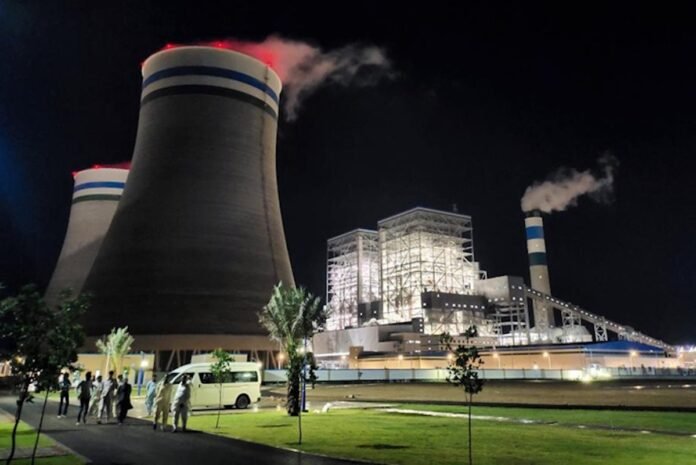
Three of the flagship coal plants at Sahiwal, Port Qasim and Hub burn coal shipped in from Indonesia, South Africa and Australia. So when global coal prices spike, Pakistani electricity tariffs do as well.

Industries that can’t absorb those costs shut down production lines. Consumers who can’t afford the bills don’t pay. And the unpaid bills pile up, creating a debt trap from the inside.

Islamabad has tried to negotiate a way out with Beijing. The government raised 1.23 trillion rupees and earmarked 565 billion rupees to clear overdue payments to seven Chinese coal plants and 49 renewable projects.

It has asked Chinese operators to waive 170 billion rupees in late-payment charges, the same deal that domestic power producers had accepted, writing off 377 billion rupees between them.

However, the Chinese IPPs said no. Their position, relayed through back channels, was that any concession to Pakistan would open the door to renegotiations across the entire Belt and Road infrastructure network worldwide.

Meanwhile, the IMF objected when Pakistan tried to quietly funnel 50 billion rupees to Chinese power producers without renegotiating first. Islamabad is thus caught between two creditors pulling in opposite directions. Meanwhile, a $23.5 billion trade deficit in the first nine months of this fiscal year has left Islamabad with almost no bargaining power.

CPEC 2.0 is supposed to change the narrative. While Phase One allocated nearly 75% of its energy investment to coal, the new Phase Two framework will pivot toward greener solar, wind, hydropower and storage.

The completed projects have added 9,504 megawatts to the national power grid. Meanwhile, BYD is set to assemble electric vehicles (EVs) in Pakistan by mid-2026, a sign that Chinese capital allocated to Pakistan is, at least on paper, moving beyond concrete and coal.

But the credibility of these ambitions runs smack into Phase One’s unlearned lessons. Pakistan sidelined the Diamer-Bhasha, Dasu and Bunji hydropower projects, which could have delivered over 15,000 megawatts of cheap, domestic energy, and opted for imported coal instead.

Nobody has explained why, at least not publicly. And two of the new Special Economic Zones under CPEC 2.0 sit in documented flood-risk areas, one in a Sindh district devastated by the 2022 floods. If the infrastructure gets washed out every few years, the returns will never arrive.

Then there is Balochistan. Since 2021, at least 20 Chinese nationals have been killed and 34 injured in attacks claimed by the Baloch Liberation Army and allied groups.

The BLA does not hide its motive: it wants China out of Balochistan, and the CPEC shut down entirely. In January 2026, its operations killed 48 people in a single month.

Days before Prime Minister Shehbaz Sharif flew to Beijing in May to celebrate 75 years of bilateral diplomatic ties, a suicide car bomb tore through a train in Quetta. The timing was not accidental, and Beijing noticed.

By September 2025, China had stepped back from solely financing the Ml-1 railway upgrade, causing Pakistan to turn to a consortium of the Asian Development Bank (ADB), Asian Infrastructure Investment Bank (AIIB) and other Chinese lenders to keep the CPEC’s single largest project alive.

The fixes are well-known. Independent audits of CPEC power contracts, not political negotiations, must be the basis for any renegotiation of terms. Coal plant retirements need to go on the formal bilateral agenda before Phase Two embeds more stranded assets into the grid.

Balochistan needs jobs and revenue, not just army deployments to protect projects imposed from above and often without local consultation. The BLA is known to recruit from communities negatively affected by Chinese investments in their homelands.

Finally, Pakistan needs to stop financing past debt with new debt, a pattern that has quietly consumed the fiscal bounty that industrialization and export growth were supposed to generate.

CPEC 2.0 carries real ambition. But Pakistan’s problem is rooted in what have proven to be the fanciful projections and lop-sided terms of Phase One. Until China and Pakistan resolve their phase one debt imbroglio, Islamabad would be wise to temper the implementation of Phase Two.

Amna Asif is affiliated with the Pakistan College of Law. The views expressed here are the author’s own.

Microsoft’s Project Solara is an Android OS designed for agents instead of apps

0
microsoft’s-project-solara-is-an-android-os-designed-for-agents-instead-of-apps
Microsoft’s Project Solara is an Android OS designed for agents instead of apps

Microsoft has been deeply committed to the growth of generative AI technology in recent years through its now-fragmented partnership with OpenAI. At Build 2026, the company remains all-in on AI, and it’s looking toward the future with a new software platform. The new Android-based OS is called Project Solara, and Microsoft says Solara is designed to run agents instead of apps.

Project Solara is not something you’ll have to worry about killing your apps anytime soon. It’s limited to a few pieces of concept hardware and software that are awaiting the magical agents of the future. The vision is for Solara to run on myriad specialized devices with interfaces generated on the spot, and it’s all powered by the explosive intelligence of models that Microsoft and others insist will soon exist.

According to Microsoft, Solara is a chip-to-cloud platform intended to free agents from reliance on single interfaces. Much of Microsoft’s messaging around AI is speculative and self-serving, but the company rightly points out that new computing form factors have always required specialization, and that process is complex and expensive. The shift to mobile computing, for example, tripped Microsoft up multiple times as it fell behind on app availability, security, and long-term support.

But imagine none of that mattered because you have a gaggle of AI agents that build what you need based on context. That’s Project Solara, which is based on an open source build of Google’s Android software (AOSP). Microsoft can’t really call it Android as it’s not a licensed package—the underlying OS is called the Microsoft Device Ecosystem Platform. It includes various Microsoft enterprise technologies, along with a shell that can interact with multiple AI agents.

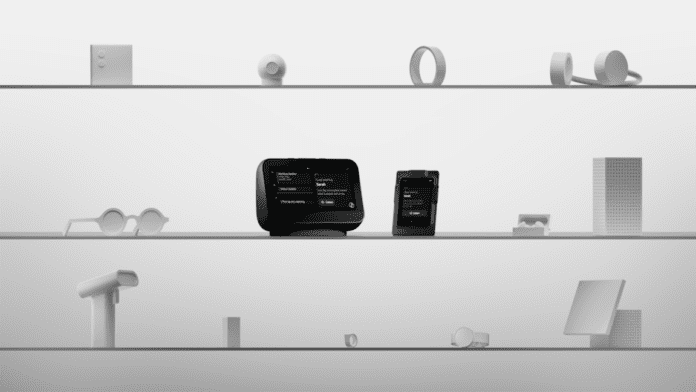
Microsoft says Solara is being designed around a concept called just-in-time UI. Rather than manually designing interfaces and content for a watch, a desktop monitor, or smart glasses, Solara would use agents to create interfaces that make sense in the moment. So your work badge, which runs a full Android OS for some reason, could display a minimal interface with one or two functions, but the same functions on a smart display would include more data and features.

However, Microsoft is clear that this is still just a concept. None of it works, but the company is committed to spending money on it as part of its massive AI expansion plans.

Agentic concepts

Microsoft has shown off two concept devices that illustrate where it hopes to go with Project Solara. The more conventional is the Desk Concept, which looks like a typical smart display. It’s got a touchscreen, microphones, and a camera. While you sit at your desk, this gadget would keep you apprised of what your theoretical AI agents are doing on your behalf. It can act as a secondary monitor or become a standalone Windows PC with Windows 365 cloud computing. This concept is built around MediaTek IoT chips.

The other Solara concept skews weirder. What if the work badge at the end of your lanyard had a touchscreen, 5G connectivity, a camera, microphones, and a fingerprint scanner? That’s the Badge Concept. It would have the same Solara software, piping in generative interfaces from your preferred AI agent. Microsoft envisions this Qualcomm-based device providing biometric-authenticated access to your agents—just tap the sensor and start telling your personal robot what to do. It could also record and summarize meetings and use the camera to “take action on the environment,” whatever that means.

You can’t even get in line to buy either of these devices. Microsoft’s next step is to demo its agent-first devices with industry partners, including AccuWeather, Best Buy, CVS Health, Levi’s, and Target.

Microsoft has struggled to branch out beyond traditional computing and enterprise services, having tried and failed on numerous occasions to gain a foothold in mobile computing. With AI, Microsoft was uncharacteristically at the forefront of change. With its OpenAI deal sputtering, the company is now looking to the future, and this is it: agents instead of apps.

This is an interesting pitch for how we might actually use AI agents, and it’s not coming totally out of left field. Google is also pursuing agentic interfaces in its search products. At I/O, Google previewed new agent-first search tools that can instantly build dashboards and mini-apps based on your search queries.

As vague and pie-in-the-sky as Project Solara may be, Microsoft is pretty in tune with the rest of big tech’s AI plans. If any of it works, we can only hope it doesn’t lead to a new generation of touchscreen millstones around our necks.

0FansLike
0FollowersFollow
0FollowersFollow
0SubscribersSubscribe
- Advertisement -
Google search engine

Recent Posts