14.5 C
London
Tuesday, June 2, 2026
Home Blog

How Pacific islands can gain from Australia-Japan ties

0
how-pacific-islands-can-gain-from-australia-japan-ties
How Pacific islands can gain from Australia-Japan ties

In their meeting on May 4 in Canberra, Australian Prime Minister Anthony Albanese and his Japanese counterpart, Prime Minister Sanae Takaichi, agreed to prioritize a range of issues including supply chains, energy, critical minerals, trade and security.

Under the framework of the Joint Declaration on Economic Security Cooperation, the leaders also pledged to support Pacific island countries (PICs) to combat money laundering through capacity-building initiatives. This should be seen by PICs as a positive development, as the crime remains one of the key challenges in the region.

However, climate change, which is recognised by the Pacific’s small island states as their single largest security threat, was not on the agenda.

The implicit identification of China as a threat to regional stability will displease some Pacific Island nations and perhaps encourage others. In all, however, strengthening Australia-Japan ties is overwhelmingly positive for a disparate region.

Multilateralism is central to the diplomatic and economic functioning of the island nations. In light of the US’s repudiation of international institutions and China’s increasingly aggressive acts, its decline is cause for alarm. North Korean missiles flying over Japan and Chinese aircraft buzzing foreign planes may feel far from, say, Port Moresby. But Pacific island governments notice, register and are planning for this more disputatious era.

Chinese influence in the Pacific Island countries is well documented; its economic and security cooperation initiatives in the region have surged in recent decades. Solomon Islands is closely aligned with China. Kiribati has welcomed Chinese funding for airstrip upgrades, seen by some analysts as evidence of grey-zone military tactics. Luganville Wharf on Vanuatu may soon serve a similar “dual-use” purpose — for Chinese commercial and military vessels alike.

The Australian government is well aware of these investments (or encroachments, depending on who you ask). For its part, Japan’s Takaichi government is pushing itself to step up across the islands, adding hard capabilities to its energetic diplomatic efforts.

In February this year, Defence Minister Shinjiro Koizumi welcomed 28 countries to Tokyo for the third Japan-Pacific Islands Defense Dialogue. Agreements were made with Papua New Guinea, Tonga and Fiji covering maritime security and disaster relief. Koizumi has been clear that the global and regional security environment is deteriorating and that Japan is sharpening its military capabilities and partnerships in response.

Under Koizumi, Japan’s defense budget will now exceed 9 trillion yen (around US$56 billion), closing in on the 2% of GDP target well ahead of schedule. Self-defense is the priority, but self-defense will come, in part, in the form of stronger alliances across the Indo-Pacific.

Koizumi’s call for the “autonomy” of the Pacific island countries aligns with this approach and serves as a clear rebuke to China. Japan’s alternative pitch is the preservation of national sovereignty with Tokyo serving as a long-term security partner. This is the Free and Open Indo-Pacific (FOIP) way, as it were. Now in its tenth year but updated for the current circumstances, Japan’s FOIP vision is based on freedom of navigation and trade, and the preservation of national sovereignty.

The Albanese government has faced diplomatic setbacks in the Pacific islands, not least the failure of a security and climate pact with Vanuatu in 2025. (A revised version of the Nakamal Agreement was approved by Vanuatu’s cabinet in May 2026, but only after explicit language limiting China’s security and investment role in the country was stripped out.)

Australia is sometimes seen as “other” on the islands or too close a partner of the United States. Japan’s renewed focus on the islands, therefore, will be welcome.

As Japan-Australia collaboration on global challenges intensifies, this will have positive knock-on effects on Pacific security.

For example, on April 18, Australia signed contracts for 11 of Japan’s Mogami-class frigates in a deal worth A$10 billion (US$7 billion). This acquisition will bolster the Royal Australian Navy. The frigates, to be built by Mitsubishi Heavy Industries, will have a range of up to 10,000 nautical miles — a gamechanger for Australia’s efforts to protect the Pacific islands’ maritime sovereignty.

The deal was followed by Prime Minister Takaichi’s overhauling of defence export regulations. Now, Japan’s firms will be able to sell lethal weaponry to countries with which it holds defense equipment and technology transfer agreements, including Australia and New Zealand. Increased exports and improved interoperability with Japan’s Self-Defense Forces will be a plus for regional security and stability.

In tandem with defense export reform, Japan’s official security assistance (OSA) budget for 2026 has been doubled to 18.1 billion yen (A$175 million). PNG and Tonga were named priority recipients for the 2025-2026 period. Dual-use assets for disaster response and maritime infrastructure building have already been provided to PNG.

Australian policy in the Pacific island countries has tended to focus on economic support. A record A$2.2 billion worth of Official Development Assistance (ODA) was committed to the Pacific in the 2026-2027 budget. Climate funding has been generous for some island nations. But tools to preserve national sovereignty have been constabulary- and maritime policing-oriented. For example, Australia’s Pacific Maritime Security Program, under which 12 Pacific island countries plus Timor-Leste have been gifted Guardian-class patrol boats, is a notable success. In terms of hardware, Japan is now well placed to add lethal weapons to the foundations of regional security.

Pacific island countries are too small — economically, militarily and diplomatically, with very limited resources and capacity — to explicitly take sides in the superpower rivalry. They should be cautious about middle power alignment, too. That said, external interests that act in good faith to preserve, not erode, national sovereignty should be welcomed. To that end, Australian economic aid and Japan’s more defense-edged approach are opportunities to be exploited.

The concept of rowing between the reefs — finding a path through choppy geopolitical waters without cleaving to one side of a conflict — has become somewhat of a cliché in international affairs. But it is surely the best way for Pacific island countries to preserve national sovereignty and secure prosperity in an era of escalating confrontation.

Moses Sakai is resident Vasey fellow at the Pacific Forum, a foreign policy think tank based in Hawai’i. He was previously a research dellow at PNG National Research Institute and a visiting scholar on US foreign policy at the University of Delaware.

Originally published by the Development Policy Centre housed in the Crawford School of Public Policy at The Australian National University, this article is republished with permission.

Mathematicians warn of AI threats to profession as industry encroaches

0
mathematicians-warn-of-ai-threats-to-profession-as-industry-encroaches
Mathematicians warn of AI threats to profession as industry encroaches

Mathematicians warned against rising tech industry influence in a declaration describing the many challenges that AI poses to mathematics research. The timing of the declaration comes two weeks after OpenAI publicized one of its AI models as having disproved an 80-year-old mathematical conjecture in geometry.

The declaration was developed by a working group of 16 researchers over eight months following a conference held at Leiden University in the Netherlands in September 2025. Published on June 2, 2026, the resulting Leiden Declaration on Artificial Intelligence and Mathematics has been endorsed by the International Mathematical Union—the international non-governmental organization that hosts conferences and oversees the most prestigious prizes in mathematics such as the Fields Medal.

“Mathematicians should find it quite striking that tech companies are suddenly interested in their work,” said Kevin Buzzard, a mathematician at Imperial College London, in a statement. “The Leiden Declaration is a well-thought-through response to what is currently happening, as AI continues to disrupt this space.”

The Leiden Declaration, which has already drawn hundreds of signatories, warns that recent AI developments are threatening “characteristic values” of mathematical research, “often in ways that disproportionately affect students and early-career mathematicians, and hence the long term future of the discipline.”

First, it points out how AI models can “produce plausible but unreliable (or even incorrect) arguments which are difficult to distinguish from correct mathematical proofs.” Such developments put reviewers under increasing pressure and are “jeopardizing our ability to implement traditional standards for the correctness, transparency, and independent verifiability of proof,” the declaration warns.

“Inaccurate AI-generated drafts are cheap to produce, and there is a risk of cluttering the literature with claimed results that are simply wrong,” said Leslie Ann Goldberg, head of computer science at the University of Oxford, in a statement. “Once that happens, the errors are likely to propagate as new results are built on faulty foundations.”

Second, the declaration highlights how “models trained on published works frequently return outputs that do not properly cite the human works they synthesize,” while also pointing out that many current AI models were trained on data obtained through “exploiting licenses and access arrangements” or “simply violating copyright protections.”

Third, the declaration describes how the use of AI “may become incentivized for its own sake, disrupting our mechanisms for hiring, funding and recognition” while leaving out researchers who lack access or are “unwilling to use technologies controlled by organizations whose values they do not share.”

Fourth, the declaration warns against mathematics research “communicated through informal channels such as press releases or blog posts, often without any research paper or other disclosure of information necessary for scientific evaluation.” Such communication strategies can lead to “oversimplification” in media reporting that overemphasizes AI tools’ significance at the expense of prior human contributions, and “misleadingly uses specific mathematical tasks as metrics for the general reasoning capacities of commercial products.”

Fifth, the declaration describes “increasing involvement of technology companies in mathematical research” as threatening the “autonomy of mathematics,” especially as university budgets are under pressure and researchers may feel greater professional incentive to collaborate with technology companies on “asymmetric terms.” This also raises the risk that mathematics research questions amenable to AI-driven techniques may be prioritized.

The OpenAI example

Many of the Leiden Declaration’s warnings seem especially relevant to how OpenAI announced its model’s mathematical achievement on the same day that news publications reported the company was preparing to offer stock shares to the general public. The declaration pointedly described corporate press releases highlighting AI mathematical achievements as operating on “market timelines before the accepted processes of community evaluation in mathematics can take place.”

“The tech industry proceeds in accordance with commercial logic, which is antithetical to the values of mathematics,” said Michael Harris, a mathematician at Columbia University and an author of the declaration, in a New York Times interview. He also spoke of the declaration attempting to “recover control of the narrative about the values and goals of mathematics from the AI industry.”

OpenAI uploaded a research paper describing its AI model’s mathematical proof along with commentary from independent mathematicians. But the company did not disclose information about prompts, AI training data, and the amount of computational resources used to solve the mathematics problems in question, said Rodrigo Ochigame, a historian and anthropologist of computing and artificial intelligence at Leiden University and another author of the declaration.

“The AI model is proprietary and unavailable to anyone outside the company,” Ochigame told The New York Times. “We get a flashy promotional video, while basic information needed to assess the scientific meaning of the result is kept secret.”

The OpenAI achievement was “remarkable” but likely involved substantial compute resources, said Ursula Martin, a mathematician and computer scientist at Oxford University and an author of the declaration, in The New York Times interview. She suggested that similar quantities of equivalent effort from human mathematicians would have probably solved the problems in the same way—and she cautioned that mathematics is also about the “cultivation of ideas, understanding, judgment and human insight” beyond solving problems.

Similar expressions of support for human intellectual efforts in mathematics appear in endorsements published on the Leiden Declaration website.

“In my experience, mathematical ideas, like children, must be nurtured and grow over the years,” said Peter Scholze, director of the Max Planck Institute for Mathematics, in a statement. “Just like I do not want my children to be educated by AI, I am pondering my mathematical ideas without use of AI, and generally avoid reading AI-generated text as best as I can.”

Recommendations for humans

So what is a human mathematician to do during the AI boom? The Leiden Declaration recommends that individual mathematicians transparently disclose their use of AI tools, retain responsibility for the correctness of their mathematical work, continue crediting human authors while properly attributing work even if AI tools make that difficult, and consider using only AI tools that align with the values articulated in the declaration

The declaration also reminds mathematicians that mathematics has “applications in the development of technology for use in warfare, oppression, mass surveillance, and the undermining of democracy,” and so mathematicians should make ethical decisions accordingly when choosing external partnerships with tech companies.

Professional mathematical organizations can develop guidelines for the use of AI and other automated tools in publication and review, protect the rights of researchers as authors through licensing agreements that prevent their work from being used as training data without consent, and support the role of peer-reviewed publications. The declaration also suggests such organizations “actively prepare to become involved if major mathematical results are claimed using unconventional means.”

The authors of the declaration also offer straightforward recommendations for policymakers, including “protect the rights of authors,” “regulate the artificial intelligence industry,” and “invest in public computational infrastructure.” Under “don’t believe the hype,” the declaration warns about how “there is currently a strong commercial incentive on the part of the technology industry to overstate the capabilities of their products.”

Lastly, the declaration acknowledges that the tech industry “has offered lucrative jobs, monetary rewards, computing resources, and intellectually stimulating opportunities that some mathematicians have found attractive… in an era of underfunding of higher education and precarious academic employment.” It calls on such collaborations between mathematicians and the tech industry to abide by the standards laid out in the declaration.

“By endorsing the declaration, the IMU affirms that the future of mathematical research must be guided by human judgment, fair and transparent practices, and the shared values of the global mathematical community,” said Ulrike Tillmann, vice president of the International Mathematical Union, in a statement. “Mathematics is, and should always remain, a profoundly human endeavor.”

Growing Drone Threat Raises Concerns Over UK Energy Infrastructure

0
growing-drone-threat-raises-concerns-over-uk-energy-infrastructure
Growing Drone Threat Raises Concerns Over UK Energy Infrastructure


Britain is considering tighter restrictions on airspace above critical energy infrastructure amid growing concerns that hostile drones could be used to disrupt the country’s electricity network and potentially trigger widespread power outages.

The debate follows an investigation highlighting vulnerabilities across the UK’s network of substations, transmission lines and power facilities, which form the backbone of the national electricity grid. Security experts, lawmakers and campaigners have warned that advances in drone technology have created new risks for infrastructure that was not originally designed with aerial threats in mind.

Officials are examining whether designated no-fly zones should be introduced over sensitive energy sites to deter unauthorized drone activity and provide additional legal tools for enforcement. The proposal comes as governments across Europe reassess critical infrastructure security in response to evolving threats from both state and non-state actors.

The concerns reflect broader changes in modern warfare and sabotage tactics. Low-cost drones have become increasingly prominent in conflicts around the world, demonstrating an ability to strike military, industrial and energy targets with precision while remaining relatively inexpensive and difficult to detect. Experts say the same technologies could be adapted to target civilian infrastructure.

Britain has already experienced a sharp increase in drone-related incidents around sensitive sites. Government figures released earlier this year showed reported drone incursions near UK military bases more than doubled in 2025 compared with the previous year, prompting authorities to expand powers for the armed forces to counter unmanned aerial threats.

Security specialists argue that energy facilities are particularly attractive targets because even limited disruptions can have cascading effects across electricity networks. They have called for a layered approach that combines airspace monitoring, drone detection systems, physical security measures and closer coordination between government agencies and infrastructure operators.

The UK government and National Grid have faced increasing pressure to strengthen protections around key assets as geopolitical tensions and technological developments continue to reshape the threat landscape. Supporters of stronger safeguards say the country must move quickly to address vulnerabilities before they can be exploited.

Read more via Sky News

The Pentagon Is Running an AI Propaganda Mill Targeting Latin America

0
the-pentagon-is-running-an-ai-propaganda-mill-targeting-latin-america
The Pentagon Is Running an AI Propaganda Mill Targeting Latin America


The United States is feeding Pentagon propaganda to internet users in Latin American countries using a new AI-laden content mill, an investigation by The Intercept has found.

La Tilde quietly began development early this year and appears to still be a work in progress, pitching itself as a modern media brand for Latin American audiences with articles published in both Spanish and English. Its name references the accent mark emphasizing vowels in Spanish; “news with an accent” is the site’s catchphrase.

“The tilde is not an ornament. It is a millennial arrow designed to provide direction, save space, and turn up the volume,” a narrator states in a promotional video for the site bearing telltale signs it was AI-generated, such as a newspaper whose sloppily rendered headline reads “SO THEE HOUTIERRER TO TO GHAHOBATEE,” followed by imagery of two medieval monks. “That is why we place the accent on what matters. From the regional pulse and your well-being, to the big ideas and the global context.”

So far, La Tilde’s coverage amounts to an unusual blend of personal finance tips (“Why instant payments matter so much for your business and your wallet”) and articles extolling the value of U.S. military operations in Latin America (“Operation Absolute Resolve: The mission that captured Nicolás Maduro and set a new standard for precision and coordination”).

Its article on the U.S. abduction of the Venezuelan president praises the mission in Trumpian prose, calling it “The Perfect Operation – Coordination, Timing and Precision at an Unprecedented Scale,” and “a military operation of coordination and accuracy never seen before.” Citing “information obtained exclusively by La Tilde,” it describes the operation’s tactical brilliance, flawless execution, and incredibly precise coordination of military assets in the air and on the ground.

If this reads like Pentagon a press release, that’s because it is. An explanation for its glowing coverage of the U.S. military can be found after clicking a small link tucked at the bottom of the site. “La Tilde is a product of an international media organization publicly funded from the budget of the United States Government,” its About page reads.

This easily missed disclosure language is identical to two other Pentagon-sponsored propaganda sites recently revealed by The Intercept.

Targeting audiences, foreign or domestic, with state-run information campaigns remains a politically sensitive topic, and a token disclosure that La Tilde is a U.S.-funded platform allows the American government to say it technically informed readers about the actual source of the information.

According to a defense official familiar with U.S. information operations, La Tilde is operated as a military messaging platform for U.S. Special Operations Command South, or SOCSOUTH, which executes special forces missions throughout South and Central America as well as the Caribbean. When asked about SOCSOUTH’s role behind La Tilde, spokesperson Trevor Wild replied with the text of the site’s About page noting that it’s a government operation, but declined to comment further.

U.S. Southern Command, or SOUTHCOM, which is broadly responsible for coordinating military assets in the countries La Tilde targets, denied involvement. SOUTHCOM “does not fund, operate, or have any official association with La Tilde,” according to spokesperson Steven McLoud, who did not respond to further questions.

Unlike most news websites, La Tilde carries no bylines, masthead, or mention of actual staff of any kind. Although the site claims it employs “dozens of freelance reporters and content creators,” at least some of the site appears to have been generated by a large language model. Running articles through Pangram, an AI-text detection service, produced multiple hits for both English and Spanish writing either partially or entirely written by machines (though such tools are known to deliver false positives).

Emerson Brooking, a fellow with the Atlantic Council’s Digital Forensic Research Lab and former Pentagon cyber-policy adviser, told The Intercept he was struck by site’s shoddiness, describing it as “AI all the way down.”

Despite the low quality of AI-generated articles, this approach could help the Pentagon spin up propaganda efforts faster than in the past. “If you can generate new content and even news fronts at the flip of a switch, your influence operations can shift target and focus much more quickly,” Brooking said. “That seems to be the thinking behind recent AI-powered Russian and Chinese networks, for instance.”

An analysis of subdomains hosted on LaTilde.co reveals the site plans to launch bespoke versions for readers in Ecuador, El Salvador, Guyana, Honduras, Jamaica, Panama, and Peru.

Some pro-U.S. content is clearly tailored to these national audiences. An article filed to the site’s “In Good Hands” section highlights the benefits of U.S.–Panamanian joint jungle warfare training exercises, regaling readers with how “temperatures and heart rates climb at the Cristóbal Colón Naval Air Base as Panamanian security forces push forward through the ‘Green Mile,’ the demanding final test of the Combined Jungle Operations Course.” Such joint initiatives are, according to La Tilde, a bulwark against China’s efforts to engage in similar joint exercises in Latin America. Rather than engage with “Beijing’s predatory practices,” the article suggests countries should follow Panama’s lead and “seek training opportunities closer to home or with longstanding partners such as the United States.”

The article makes no mention of the controversy surrounding PANAMAX, a joint military exercise between SOUTHCOM and the Panamanian forces that has sparked increased protest on the grounds it violates national sovereignty. Permanent U.S. military installations in Panama were shuttered in 1999 as part of a 1977 treaty between the two countries; Panamanian opposition parties decried the reestablishment of an American military presence under the guise of joint exercises as a “camouflaged invasion.” Participants in the 2025 PANAMAX exercise La Tilde is pushing include the Western Hemisphere Institute for Security Cooperation, previously known as the School of the Americas, a Pentagon training institute whose graduates included thousands of Latin American death squad gunmen and dictator Manuel Noriega.

The importance of military and intelligence-sharing compacts with the U.S. is a recurring theme. “Far from weakening sovereignty, this kind of cooperation can strengthen it,” one article says.

Other stories from La Tilde argue the American side of Latin American controversies, similarly downplaying issues of national sovereignty. One piece describes how the U.S. abduction of Maduro “has reawakened a long-contained hope among millions of Venezuelans inside and outside the country.” Another alleges Ecuador is a nexus of the international cocaine trade, echoing claims the Trump administration has used to expand Operation Southern Spear, SOUTHCOM’s Caribbean airstrike campaign that has killed more than 200 civilians to date.

It’s unclear who exactly is operating the site on a day-to-day basis. A similar network of military propaganda pages, descendants of an Obama-era information warfare program called the Trans-Regional Web Initiative, appears to be administered by military contractor General Dynamics Information Technology. Renée DiResta, who co-authored a 2022 report on online propaganda efforts backed by U.S. Central Command, told The Intercept that the TRWI successor websites share a common Google Ads identifier code owned by General Dynamics, according to a recent comprehensive analysis of the network she conducted. La Tilde also runs a legal disclosure with identical language as those sites.

General Dynamics did not respond to multiple requests for comment about La Tilde.

Halcyon Group International, another information warfare contractor that operates Diálogo Américas, a similar pseudo-news site backed by the Pentagon, told The Intercept it was not involved with La Tilde.

Design of the La Tilde website was subcontracted to Antpack, a Colombian digital marketing firm. Multiple files hosted on the site created by the AI image-generation service Midjourney contain the word “Antpack” in their name. The Intercept signed up for a user account on La Tilde, part of planned functionality that will let readers comment and save articles for later. Once registered, The Intercept was able to view comments left on a non-public version of the site used by its developers, who posted under names corresponding to LinkedIn profiles of Antpack employees. Antpack did not respond to multiple requests for comment.

U.S. Special Operations has a long record of leading the American internet propaganda efforts, ranging from high-tech efforts to less-sophisticated projects like phony online newsrooms. SOCOM has since 2018 operated the Joint Military Information Support Operations Web Operations Center, which coordinates information warfare and online psychological operations.

The Intercept reported in 2023 that SOCOM was working on acquiring state-of-the-art “deepfake” video fabrication technologies to “generate messages and influence operations via non-traditional channels,” according to procurement documents. La Tilde appears to be using low-effort AI tools rather than anything cutting-edge. Art accompanying its stories often includes portion of the prompt used to quickly generate the image in the file name, and shows mixed results, such as a rendering of the White House portico missing several of its columns or a diploma with garbled text. Photographs illustrating pro-SOUTHCOM messaging, however, are drawn from the Defense Visual Information Distribution Service, an official Pentagon media library.

“The intent is probably to fill these sites with generic material, build an audience base, and then slip in more pieces of explicit propaganda, like that rather fulsome recounting of the U.S. attack on Venezuela,” Brooking said. “This is how you build these sorts of networks. But the content is lazy, the AI is bad, and the required disclosures make the whole thing a farce.”

The Lockheed-Tanaka bagman

0
the-lockheed-tanaka-bagman
The Lockheed-Tanaka bagman

‘In every trouble spot I have cautiously visited, there has always been one watering hole where, as if by secret rite, hacks, spies, aid workers and carpetbaggers converge.

John le carre

That observation by the British spy fiction master is one with which I wholeheartedly agree. And for me, that particular watering hole was the Foreign Correspondents’ Club in Hong Kong.

On the slightly humid Friday afternoon of November 9, 2012, I happened to be visiting Hong Kong and went to the main bar at the FCC in Central. The ceiling fan slowly rotated, and the television was showing CNN’s report of President Barack Obama’s re-election. Sipping a beer at the counter, I struck up a conversation with an American perched on a nearby stool. 

He was in his late sixties, spoke in a gentle manner, and seemed to have lived in Asia for many years. When I introduced myself as being from Japan, he casually said, holding his beer glass:

You remember the Lockheed scandal in your country, right? At that time, Deak & Company was the outfit that transported Lockheed’s money to Japan. And I worked for Deak, smuggling cash into Tokyo.

That was my first encounter with Bruce Aitken, one of the world’s most successful money launderers, who transported bribes for former Prime Minister Kakuei Tanaka and other government officials in the Lockheed scandal.

Bruce Aitken. Photo: China Speakers Agency

In February 1976, the U.S. Senate Subcommittee on Multinational Corporations, chaired by Senator Frank Church, under the Foreign Relations Committee, revealed that Lockheed Aircraft Corporation had channeled over three billion yen in secret funds to sell planes to Japan.

It was revealed that bribes were distributed to high-ranking Japanese government officials and right-wing fixer Yoshio Kodama to sell the Lockheed TriStar (L-1011) passenger jet to All Nippon Airways. 

It was further revealed that Marubeni, a major trading company representing Lockheed sales, issued receipts for these illegal funds using the code name “Peanuts.” At a Church Committee meeting, Lockheed’s vice chairman, A. Carl Kotchian, testified that approximately 600 million yen had been transferred to several high-ranking government officials via Marubeni.

In July of the same year, the Tokyo District Public Prosecutors Office arrested Tanaka on suspicion of receiving payoffs. Lockheed’s treasurer and Tanaka’s driver committed suicide.

Given its scale and the diverse cast of characters, Lockheed truly warrants the title of the greatest scandal of postwar Japan. And in this case, the American foreign exchange dealer Deak & Co. played the role of an underground bank.

Money sent from Lockheed’s headquarters in California was transferred to Deak & Co. through a subsidiary. Deak & Co. operated a branch in Hong Kong, where Japanese yen prepared locally was smuggled into Tokyo. The system used double and triple layers of cushioning to erase any connection to Lockheed. 

Aitken, the American who transported the funds for this operation, was born in 1945 in New Jersey. He loved baseball from a young age and during his college years in Florida even aspired to become a professional player. However, a knee injury forced him to abandon that ambition.

In 1969, a disheartened Aitken happened to read a newspaper article about a subsidiary of American Express, advertising for a position in Vietnam. He applied. At the time, the Vietnam War was in full swing, with the United States deploying over half a million troops. Aitken was posted to US military facilities in Saigon and elsewhere, where he handled deposit and foreign exchange operations.

In 1972, Aitken moved to Deak & Company. The founder and president, Nicholas Deak, was Hungarian-born and had established the company in New York in the 1930s. During World War II, he served in the U.S. Army and was assigned to the OSS (Office of Strategic Services, a predecessor of the CIA). After the war, he returned to business and became one of the leading foreign exchange brokers in the United States. He was called by some “the James Bond of the world of money.”

Aitken’s first assignment for Deak was on Guam in the Western Pacific. The following year, in 1973, he received an urgent phone call from the Hong Kong branch manager.

“He ordered me, ‘Come here immediately,’ so I rushed over, and was told, ‘Go to Japan. There’s a lot of urgent business with Japanese yen payment orders piling up.’”

Aitken immediately returned to Guam and, at the branch in Agana, Guam’s capital city, he began filling a golf bag with cash late at night. Using a screwdriver, he removed the rivets at the bottom of the bag, revealing a compartment for banknotes. This was where he would stuff 100-million-yen worth of 10,000-yen banknotes. He then headed straight to the airport and checked in for a Japan Airlines flight to Tokyo’s Haneda Airport. 

Later, Aitken, reviewing company records, learned the order came from Lockheed, and the contact person was a senior official of Lockheed’s Tokyo office.

“One hundred million yen in cash is quite heavy,” he told me. “That was the maximum amount I could carry hidden in a golf bag. Also, while most golf bags can accommodate 10 or more clubs, ours only held three. To keep the weight down.”

And so, he repeatedly flew into Tokyo carrying this golf bag. Nowadays, he would almost certainly be intercepted by airport X-ray screening. 

The smuggled money was not handed directly to Lockheed’s representatives. When delivering cash to clients, Deak always utilized multiple local agents. One was a foreign priest who had lived in Japan for many years. Aitken met the priest at a Spanish restaurant in Tokyo and handed him a shoulder bag containing the cash.

What’s crucial here is the timing of the Hong Kong branch manager’s instruction to smuggle the cash. In the summer of 1972, Lockheed’s Kotchian stayed in Tokyo for over two months, taking the lead in promoting the TriStar aircraft. In October, All Nippon Airways (ANA) made the decision to purchase them.

The following year, Lockheed received an international phone call from Marubeni’s managing director, Toshiharu Okubo. Kotchian later stated this in his memoir:

Mr. Okubo suddenly said, “Now is the time to fulfill that pledge (promise).” For a moment, I wondered what he meant. But then I realized that Mr. Okubo had used the English word “pledge,” and I understood he was referring to the “500 million yen” for Prime Minister Tanaka’s office that was promised the previous August.”

About three days later, Mr. Okubo called again. “That matter is extremely important, and I absolutely need you to fulfill your pledge.” Mr. Okubo’s tone was very serious and tense.

Ultimately, Kotchian arranged the budget at headquarters and instructed the accounting department to transfer the money, which was the money Aitken had carried in his golf bag. However, according to Aitken, Deak & Co. was not informed that the money would be used for bribes in Japan.

Another important question is why the cash was transported from Guam, and how hundreds of millions of yen happened to be on the island. When asked this, Aitken replied as if it were perfectly natural.

“Back then, Guam was a popular destination for Japanese honeymooners. Every day, planeloads of newlywed couples from Japan would arrive. They would bring Japanese yen, which they exchanged at their hotel. We bought the yen from the hotels and as a result, we ended up with a lot of Japanese yen.”

So, it seems the bribes that wound up in the pockets of former Prime Minister Tanaka, the right-wing fixer and other government officials ultimately originated from money exchanged by Japanese newlyweds.

Eventually, in January 1978, Aitken became independent and founded First Financial Services. However, his work remained in cash smuggling, and his clients were famous drug dealers. His business continued to grow steadily until his fate took a dark turn.

In 1989 he was arrested in Thailand by US authorities pursuing drug trafficking connections. Repatriated to the US, Aitken faced charges of money laundering, and could have faced life imprisonment. Desperate for an out, he consulted with lawyers and investigators in prison and proposed a plea bargain to the prosecutors, offering to share what he knew about the Lockheed scandal in exchange for a lighter sentence. The prosecution’s initial response was reportedly not favorable.

“They said it was ancient history,” said Aitken. “They just wanted to keep me in prison for a long time. But then they apparently contacted other departments in the US government, probably the State Department and intelligence agencies. Then, within a week or so, I got a response. My information must have hit a nerve. Negotiations began, and my 20-year sentence was reduced to eight years, and finally to 10 months. So, the Lockheed scandal saved my life.”

It’s unclear exactly what discussions took place within the US government at that time. However, according to Aitken, the information he provided included payments in Japan, as well as large sums of US dollars to a high-ranking South Korean military official. It’s likely these were related to sales of military aircraft.

You can imagine the panic at the State Department and CIA when they learned this. The man they thought was just part of a drug trafficking ring was involved with Deak, and specifically, the Lockheed scandal. If he were to stand trial and confess to illegal activities in Japan and South Korea, a disaster, perhaps even an international incident, might ensue. It probably was deemed better to release Aitken and have him stay out of trouble. 

Tanaka was arrested and convicted in the Lockheed scandal, but Bruce Aitken, bagman for the bribes, was released from prison thanks to the same scandal. It’s nothing short of a historical irony.

Aitken still lives in Hong Kong with his family. This year marks exactly 50 years since the Lockheed scandal, and he tells me he wants to visit Japan again. I wonder whether he’ll carry his golf bag this time.  

Eiichiro Tokumoto is a writer living in Tokyo.

This article was originally published by Number 1 Shimbun, the magazine of the Foreign Correspondents’ Club of Japan. It is republished with permission.

Why a Neo Geo port of Doom is functionally impossible

0
why-a-neo-geo-port-of-doom-is-functionally-impossible
Why a Neo Geo port of Doom is functionally impossible

Here at Ars, we’ve taken pleasure in reporting on versions of Doom that run on everything from wireless earbuds and printers to Windows’ notepad.exe and even inside Doom itself. So when we hear that a piece of game-playing hardware from the ’90s (or later) can’t run Doom, our ears perk up.

That hardware is the Neo Geo, an early ’90s game console that players of a certain age will remember for its eye-watering launch price and its relatively strong pixel-pushing power for the time. Despite that relative power, though, a fascinating new video from Modern Vintage Gamer argues that the Neo Geo’s architecture makes it particularly ill-suited for a port of id’s famously easy-to-port game.

At first glance, the Neo Geo seems like it should be up to the task of running Doom. The Motorola 68000 CPU inside the console is the same one powering the Commodore Amiga, which has seen quite a few homebrew Doom ports over the years.

But aside from a lack of memory, the Neo Geo was designed specifically and exclusively to handle sprite-based 2D graphics stored on a cartridge. The CPU simply writes tile numbers, positions, and “shrink values” (for scaling) into VRAM, then lets the video processor fetch the appropriate sprites from the character ROM for display. That character ROM isn’t even addressable by the 68000 CPU’s bus, meaning the system can’t sample textures or read specific sprite pixels for post-processing, either.

Unfortunately for potential Doom porters, the Neo Geo also lacks the kind of bitmap graphics mode that helps get around these sprite-based limitations. The system doesn’t have any frame buffers or Amiga-style bitplanes that would allow for unrestricted drawing of pixels to any part of the screen. That means even an entirely software-based Doom renderer on the Neo Geo would have no direct way to draw its results to the screen.

Neo Wolfenstein

While those limitations might hold back a Neo Geo Doom port, the system may still be able to handle a simpler FPS like Wolfenstein 3D. Modern Vintage Gamer put together a simple Neo Geo raycasting demo for a video that approximates that game’s 90-degree walls, flat floors, and ceilings.

The “walls” in this raycasting demo are simply 4-pixel-wide sprites that have been scaled up by the Neo Geo hardware.

The “walls” in this raycasting demo are simply 4-pixel-wide sprites that have been scaled up by the Neo Geo hardware. Credit: Modern Vintage Gamer

The raycaster works by sending out rays from the player’s position to detect the distance to the first wall the player can see in that line. That data then determines the heights and colors for each of a set of 80 4-pixel-wide sprites arranged horizontally across the display, which act as pieces of wall. Since the Neo Geo’s scaling hardware can efficiently stretch those sprites vertically without much overhead, the raycasting data can be quickly converted into a chunky approximation of a first-person view.

MVG’s simple, unoptimized Neo Geo raycaster currently runs at just eight frames per second via emulation without any of Wolfenstein 3D‘s enemies or game logic. And the raycasting system would still be wildly insufficient for Doom elements like raised platforms, staircases, elevators, textured walls and ceilings, etc.

For all those reasons, MVG believes the only practical way to get Doom running on a Neo Geo is to pack additional hardware into the cartridge, much like the Super FX2 chip that powered the limited SNES port of the game. Failing that kind of extra processing power, he wagers that the system will likely remain Doom-free for the foreseeable future.

“I don’t want to say it’s impossible because as soon as you say that something is impossible, the gauntlet has been thrown down,” MVG added.

Toxic Ground: How Oil Field Pollution Is Threatening Oklahoma

0
toxic-ground:-how-oil-field-pollution-is-threatening-oklahoma
Toxic Ground: How Oil Field Pollution Is Threatening Oklahoma

Kara Meredith can tell you the exact day her life turned upside down: Aug. 23, 2025.

She was at her home in Fort Gibson, Oklahoma, caring for her 5-week-old son, when one of her daughters ran to tell her there was water all over the bathroom floor. Her husband, Mitch Meredith, wasn’t worried — until he saw the dark liquid bubbling up around the base of the bathtub. Mitch and his relatives worked all night trying to contain it. It was near dawn when his uncle said, “This is oil.”

Read more

The United States is the largest oil and gas producer in the world. All of that drilling produces hundreds of billions of gallons of toxic wastewater each year. For decades, energy companies have disposed of that briny fluid by shooting it back underground using high-pressure injection wells. But across Oklahoma, the fluid is spreading uncontrollably belowground, blasting out of old, unplugged wells, polluting land and contaminating drinking water.

In a new documentary from The Frontier and ProPublica, reporter Nick Bowlin investigates a scourge of oil field wastewater seeping into the lives of Oklahomans, about half of whom live within a mile of an oil and gas operation.

His reporting takes him to the headquarters of the Oklahoma Corporation Commission, the state agency tasked with regulating oil and gas. The agency told Bowlin that it is committed to “doing the right thing, holding operators accountable, protecting Oklahoma and its resources, and providing fair and balanced regulation.” But as Bowlin continues to dig, he discovers he is far from the first one to raise the alarm about what’s happening in Oklahoma.

Watch the documentary here.

Support Independent Journalism:

As a nonprofit newsroom, we rely on donations from individuals like you to fuel our work. Your support today will directly fund investigations that shine a light on urgent issues: corporations prioritizing profits over public safety, health insurers denying coverage to patients, unintended consequences of new laws and more.

Bahrain Prohibits Citizen Travel to Iraq and Iran Until Further Notice

0
bahrain-prohibits-citizen-travel-to-iraq-and-iran-until-further-notice
Bahrain Prohibits Citizen Travel to Iraq and Iran Until Further Notice


Bahrain has forbidden its citizens from traveling to Iraq and Iran effective immediately, citing ongoing security concerns linked to recent regional tensions.

The decision was announced by Bahrain’s Ministry of Interior. According to a statement carried by the state news agency BNA, the measure was adopted to protect national security and the safety of Bahraini citizens.

“Due to the continued tense security situation resulting from the repercussions of the sinful Iranian aggression, and in order to safeguard national security and the safety of all citizens, the Ministry of Interior announces the decision to ban citizens from traveling” to Iraq and Iran, the ministry said.

Restrictions will remain in force “until further notice,” the ministry said and warned that authorities would take action against anyone who violates the travel ban. Bahraini authorities will undertake the necessary measures against “violators” of the directive.

The announcement follows a period of heightened tensions across the Middle East and comes after Iranian strikes targeted Bahrain during the recent regional conflict.

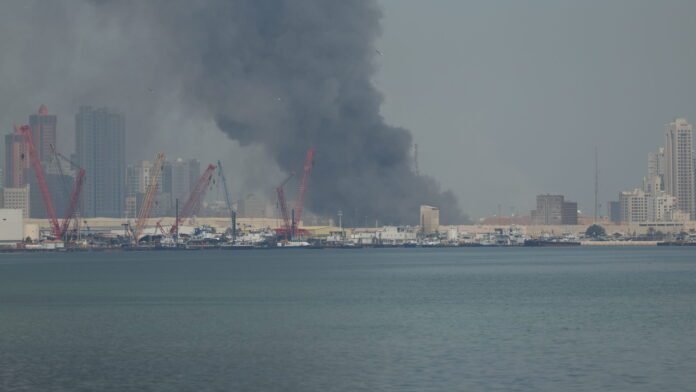
Iranian missiles and drones struck critical infrastructure across the kingdom, including major fires at a fuel depot in Muharraq Governorate and at the country’s largest oil refinery on Sitra Island.

Sites associated with US military assets were also targeted during the attacks. Bahraini officials said locations hosting American forces, including the headquarters of the US Navy’s Fifth Fleet and Sheikh Isa Air Base, were among the locations struck during the initial wave of attacks.

The strikes also affected residential areas, according to Bahraini officials. The attacks resulted in fatalities and displaced thousands of people.

AUKUS sub shift a front for US access to Australian bases

0
aukus-sub-shift-a-front-for-us-access-to-australian-bases
AUKUS sub shift a front for US access to Australian bases

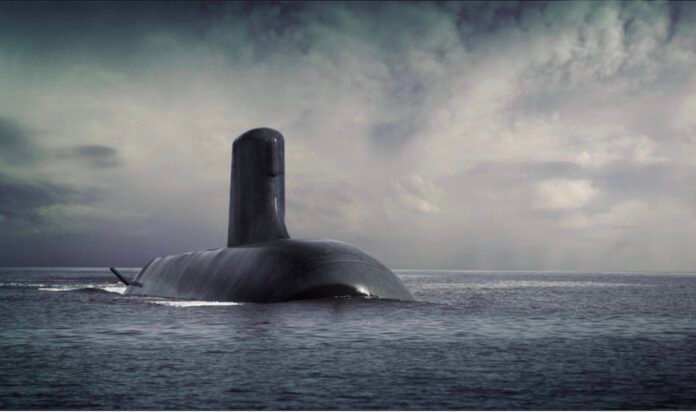
The US decision to transfer three in-service Virginia-class nuclear attack submarines to Australia instead of the previously planned mix of one new Block VII boat and two used Block IV vessels marks a major shift in the AUKUS program, one that raises questions not only about capability and cost but also about the partnership’s deeper strategic purpose.

The announcement was made last week on the sidelines of the International Institute of Strategic Studies (IISS) Shangri-La Dialogue in Singapore, with US Defense Secretary Pete Hegseth, Australian Defense Minister Richard Marles and UK Defense Secretary John Healey announcing the major revision to the AUKUS acquisition plan.

This strategic pivot aims to streamline Australia’s naval transition by simplifying supply chain management, operational logistics and maintenance requirements while maximizing cost efficiencies.

By avoiding the complexities of simultaneously managing four distinct submarine classes, including their existing Collins-class and the upcoming joint SSN-AUKUS design, Australia intends to establish a more manageable fleet.

The decision comes amid scrutiny of US domestic shipbuilding capacity, which currently produces 1.3 attack submarines annually, well below the target rate of 2.33. To mitigate these industrial strains, Australia is financially contributing to the US industrial base and deploying hundreds of personnel for maintenance training at Pearl Harbor.

The ministers also launched a complementary program for uncrewed undersea vehicles under AUKUS Pillar II to co-develop interchangeable payloads and surveillance technologies, beginning in 2027. More broadly, the revised deal raises questions about whether AUKUS is ultimately about submarines or strategic access.

The transfer of in-service Virginia-class submarines to Australia raises several issues. As noted by Peter Jennings in an article this month in The Australian, acquiring in-service Block IV Virginia-class submarines rather than new variants creates severe financial and operational uncertainties for Australia.

Jennings notes that these submarines, engineered for a 33-year lifespan, will have significantly shorter service lives upon delivery in the 2030s, with the first unit likely retaining only 21 years of service.

Crucially, he adds that Block IV submarines require three major overhauls during their operational cycle, leaving Australia facing tens of billions of dollars in potential costs and extensive downtime, depending on whether the US completes these scheduled refits before transfer.

There’s also the issue of just how much control Australia has over its nuclear submarine project with the US. Albert Palazzo, in an article this month for The Conversation, notes that the revised AUKUS deal exposes deep strategic inequalities, rendering Australia a victim of a “bait and switch.”

Palazzo notes that by substituting a promised new Block VI vessel with a third second-hand Block IV submarine, the US significantly reduces Australia’s anticipated naval firepower. He also points out that the agreement gives the US unilateral authority to modify or cancel the transfer, pocketing Australia’s non-refundable US$2 billion manufacturing contribution.

He stresses that the AUKUS arrangement underscores the alliance’s commitment to US strategic interests — specifically securing a submarine base at HMAS Stirling — while forcing Australia to absorb structural risks with minimal leverage.

If so, China’s expanding undersea reach may help explain why such access has become increasingly valuable to the US. In a March 2026 statement for the US-China Economic and Security Review Commission (USCC), Andrew Erickson detailed a massive expansion of the People’s Liberation Army Navy (PLAN) submarine force, driven by President Xi Jinping to counter US undersea advantages.

According to Erickson, China is leveraging massive naval industrial capacity and Russian technology transfers to shift toward an all-nuclear-powered fleet.

He notes key developments such as the Type 093B nuclear-powered guided-missile submarine (SSGN) with land-attack capabilities, the construction of advanced Type 095 SSNs and Type 096 nuclear ballistic-missile submarines (SSGNs) and the fielding of the JL-3 submarine-launched ballistic missile (SLBM), capable of reaching the continental US from bastions in the South China Sea.

Regarding submarine production, Henry Boyd and Tom Waldwyn note in a February 2026 report for the International Institute for Strategic Studies (IISS) that China significantly accelerated its production of nuclear-powered submarines at the Bohai Shipbuilding Heavy Industry Co. shipyard in Huludao between 2021 and 2025.

Boyd and Waldwyn note that following a major facility expansion, China surpassed the US in both launch numbers and combined tonnage during this period. They point out that, driven by an estimated “1+2” annual output, China launched its seventh and eighth Type-094 SSBNs alongside up to nine Type-093B SSGNs equipped with advanced anti-ship missiles.

In terms of sheer numbers, Defense Security Asia reported in January 2026 that China operates 32 nuclear-powered submarines, surpassing Russia’s fleet of 25-28 units, while still lagging behind the US’s 71-strong fleet.

More important than fleet size, however, may be China’s growing ability to operate farther from home waters. In parallel with ramping up nuclear submarine production, China may be mapping the undersea battlespace for future submarine operations.

A detailed Reuters investigation from March 2026 mentions that China’s extensive undersea mapping across the Pacific, Indian, and Arctic oceans prepares the battlespace for submarine warfare, directly enabling force projection beyond the First Island Chain.

Reuters notes that China uses dozens of civilian research vessels under its “civil-military fusion” policy and deploys advanced acoustic sensors, buoys, and subsea arrays to collect critical real-time hydrographic data, including salinity, temperature, and currents.

The report states that by masterfully charting underwater topography near US and allied hubs such as Guam and Taiwan, China provides its fleet with precise navigation, optimized sonar, and the concealment necessary to evade detection and project strategic power across the wider ocean. Those trends increase Australia’s strategic value as a hub for US and allied undersea operations.

Those capabilities may have been vividly demonstrated during China’s February 2025 live-fire exercises in the Tasman Sea, with a high likelihood that a nuclear-powered submarine was part of the three-ship flotilla for at least part of its journey.

Placing China’s nuclear submarine fleet within a broader strategy, US Vice Admiral Richard Seif, in a March 2026 USCC testimony, notes that China’s strategy has shifted from coastal defense to regional denial and control.

Seif says that to protect its strategic interests, China employs an anti-access/area denial (A2/AD) approach, aiming to restrict US freedom of movement and raise the costs of intervention during a crisis.

He says this strategy challenges US undersea advantages by fielding a modernized fleet of SSGNs capable of launching long-range, submerged land-attack cruise missiles. He notes that these submarines are complemented by an “Underwater Great Wall” of seabed sensors, automated networks, and anti-submarine warfare assets, narrowing the US stealth margin at critical regional chokepoints.

Viewed through a geopolitical rather than procurement lens, AUKUS may not primarily be about providing Australia with nuclear-powered submarines, but about securing US access to Australian bases and anchoring a strategic bridge between the Second and Third Island Chains.

Trump’s DOE restarts energy rebate program with dumb conditions

0
trump’s-doe-restarts-energy-rebate-program-with-dumb-conditions
Trump’s DOE restarts energy rebate program with dumb conditions

Federal energy efficiency rebate programs will no longer cover a switch from fossil fuels to electricity for heating, according to long-awaited guidance from the Department of Energy.

The department published an update on how it will implement consumer programs with $8.8 billion in funding. The new provisions include eliminating use of diversity, equity and inclusion considerations, among other changes.

This follows legal challenges after President Donald Trump issued an executive order last year, upon returning to office, canceling the release of funds from Biden’s Inflation Reduction Act, including rebates for home energy efficiency. A coalition of states successfully sued to restore the funding, obtaining an injunction in March 2025.

States have been waiting for the Department of Energy to reopen funding, a process that begins with this latest publication.

Clean energy and environmental advocates said the guidance was overdue and severely flawed.

Tony Sirna, deputy policy director for Evergreen Action, said it’s “flatly illegal” to eliminate funding for electrification, which was a part of Congress’ intent. “This is a deliberate effort to deny relief to millions of families at the exact moment they need it the most,” he said in a statement.

The guidance, dated May 29 and announced in a news release on June 1, covers the $4.3 billion Home Owner Managing Energy Savings, or HOMES, program and the $4.5 billion High-Efficiency Electric Home Rebate, or HEEHR, program, with additional guidance for Indian tribes participating in HEEHR.

The HOMES program provides up to $8,000 for households to make energy-efficient upgrades, including insulation, air sealing, heating and cooling equipment, water heaters, duct sealing, appliances and lighting, according to the Department of Energy. The upgrades must reduce energy use by at least 20 percent to be eligible.

The HEEHR program provides up to $14,000 in rebates per household, which retailers and contractors can offer at the point of sale, and can be used for qualifying efficient electric equipment and appliances.

Congress and the Biden administration designed the programs to ensure that low-income and other disadvantaged households received a significant share of the benefits. The new guidance is changing this focus, citing the Trump administration’s opposition to considering diversity, equity and inclusion in federal spending and the elimination of Biden’s Justice40 environmental justice initiative.

The guidance also eliminates the programs’ support for shifting from oil, gas or other fossil fuels to electricity for home heating. Now, households can only get funding for heat pumps for new construction or if they already have electric heat, as opposed to the previous rules that encouraged people to switch away from fossil fuels.

Another change is that the Department of Energy now requires households to upgrade their insulation and air sealing before using rebates for new appliances.

Reaction was mostly negative from groups that push for improvements in energy efficiency.

“It’s a very standard playbook to incentivize fossil fuel companies and provide a lifeline to them,” said Srinidhi Sampath Kumar, director of the Sierra Club’s clean heat campaign, about the limits on fuel switching. “It’s absolutely been done in bad faith.”

Mark Kresowik, senior policy director for the American Council for an Energy-Efficient Economy, said in a statement that the programs “will help families make energy-saving improvements that lower their utility bills,” but he lamented the new limits on the programs.

The guidance is “a fundamental departure” from the intent of the programs, said Sam Friesen, managing director for buildings at Fresh Energy, a Minnesota-based environmental advocacy group. He added that the changes will muddy the waters for consumers who were making plans under the old rules and now need to follow the new ones.

Robin Yochum, buildings program director for the Southwest Energy Efficiency Project, a regional nonprofit based in Colorado, said she is pleased to see this step to implement the programs but is concerned about limits on fuel shifting.

“While there are certainly many electrically heated homes that deserve efficiency upgrades, helping households transition from propane, fuel oil, and natural gas to highly efficient electric technologies was one of the most transformative aspects of the original program design,” she said in an email.

Asked for a response, a Department of Energy spokesperson had this comment: “​The Department of Energy has released common-sense revisions to program guidance to align requirements more closely with statutory requirements, advance affordability, ensure good stewardship of taxpayer dollars, and empower grantees to tailor their programs to local contexts and residents’ needs.”

State programs administer the money but the federal government must approve the state plans before the funds are released. Most states plus the District of Columbia have had at least some of their plans approved, as shown in a May 18 update from Atlas Public Policy.

Some already paid rebates based on the initial rules under the Biden administration. Those states now have three months to modify their programs to comply with the new guidance going forward.

South Dakota has declined to participate and Idaho’s legislature has taken action to stop participating.

Consumers can contact their state energy offices to get more information about program availability.

Dan Gearino covers the business and policy of renewable energy and utilities, often with an emphasis on the midwestern United States. He is the main author of ICN’s Inside Clean Energy newsletter. He came to ICN in 2018 after a nine-year tenure at The Columbus Dispatch, where he covered the business of energy. Before that, he covered politics and business in Iowa and in New Hampshire. He grew up in Warren County, Iowa, just south of Des Moines, and lives in Columbus, Ohio.

This story originally appeared on Inside Climate News.

0FansLike
0FollowersFollow
0FollowersFollow
0SubscribersSubscribe
- Advertisement -
Google search engine

Recent Posts