Picture this: you have spent decades building a career. You have a master’s degree. You have taught hundreds of students. You walk into work every morning with a sense of purpose. Then, almost overnight, the gates close. You are told you cannot come back. Not because of anything you did, but simply because you are a woman.
This is what happened to female academics across Afghanistan after the Taliban returned to power in August 2021.
We conducted interviews with 12 Afghan female academics via Telegram and WhatsApp, eight of whom were in Afghanistan and four of whom had recently left the country. Of those who were in Afghanistan, only one has since managed to leave – the rest remain there. What they told us was devastating.
When the Taliban first ruled Afghanistan between 1996 and 2001, women were barred from education and most forms of employment. After the US-led intervention, things slowly improved. Female participation in higher education in Afghanistan increased dramatically, expanding from 5,000 students in 2001 to over 100,000 in 2021. Women made up 28% of university students and 14% of academic staff. Progress was real, even if fragile. Then it was reversed almost entirely.
By December 2022, all universities had closed their doors to women. Girls’ education was banned beyond the age of 12. Women were banned from most jobs, required to have a male guardian to travel and forced to wear a black hijab in public. Afghanistan now ranks at 181 out of 193 countries on the Human Development Index.
The women we interviewed did not describe their situation in abstract political terms. They described it in deeply personal ones.
One participant, a lecturer with more than 20 years of experience, told us: “Living under the power of the Taliban as a woman is a gradual death. I feel like I’m dying every day. I’ve lost everything – neither my knowledge nor my education is valuable anymore.”
Another, who had taught for three decades, said the happiest moments of her life were spent in the classroom: “I like to go out of the house, teach, and see my students. This situation is like a gradual death for me.”
These are not just expressions of sadness. Ten of our 12 participants described significant psychological distress. All 12 reported feelings of disappointment and despair. One of the women described losing her entire sense of self: “I lost my job, position, honour, credibility, and societal personality.”
Losing work is hard anywhere, often cutting a family’s income in half. But in Afghanistan, the consequences go much further than a lost income. One participant put it plainly: “Women’s presence in society decreased, and their social interactions and connections with society became almost non-existent.”
The Taliban also banned online education: private universities that had offered remote classes were told to stop. For academics who had hoped to keep teaching digitally, even that door was shut.
Since the 1990s, researchers have studied Muslim societies to understand why gender inequality exists, which led to the development of “Islamic feminism”, a movement that supports women’s rights and gender equality within an Islamic framework.
As Afghanistan is a Muslim country, this movement offers a powerful framework for gender justice there, challenging both patriarchal religious interpretations and western feminist views that are often seen as culturally alien. It might seem strange to discuss feminism within an Islamic framework when the Taliban claim to be enforcing Islamic law — but this is precisely the point.
Based on the arguments of feminist scholars on Islamic feminism, we can argue that the Taliban’s restrictions on women have noting to do with genuine Islamic teachings and are instead linked to political control. These scholars argue that the Quran supports women’s rights to education, economic participation and engagement in public life. Therefore, the restrictions can be understood as a distortion and misuse of religious texts to justify patriarchal power.
This is the position of Islamic feminism: that the problem is not Islam, but the way certain men have interpreted it to serve their own interests. For Afghan women, this matters enormously. A framework that is rooted in their own faith, rather than imported from the west, gives them a way to resist that feels authentic and grounded.
The women we spoke to have not given up. Some are finding quiet ways to keep teaching. Some are using social media to stay connected. Some are hoping that international pressure will eventually force change.
“It’s like we’re at a crossroads; all the paths are dark,” one participant said. “One path is concrete, another is muddy, and one has pitfalls. We can’t discern the paths; all of them are dark and uncertain. So, I can’t make a specific plan because it’s unpredictable.”
The international community could help by funding alternative education programmes, supporting Afghan women in exile who are keeping academic networks alive, and by maintaining sustained pressure on the Taliban.
Japan’s Terra Drone gaining battlefield experience in Ukraine
Japanese Prime Minister Sanae Takaichi set the tone for the debate over Japan’s rearmament with her remark that a Chinese move against Taiwan could threaten Japan’s survival and warrant a military response.
But the first casualties of her military buildup might be in Ukraine, where the Japanese venture Terra Drone has teamed up with the Ukrainian drone builder Amazing Drones.
The Ministry of Defense (MOD) and the Japan Self-Defense Forces (JSDF) have decided to dispatch four JSDF personnel to the headquarters of the NATO Security Assistance and Training for Ukraine (NSATU), located in Germany.
This dispatch follows the offer conveyed in April last year by former Minister Nakatani to Secretary General Rutte of NATO, expressing Japan’s intention to proceed with arrangements for participation in NSATU. Coordination with the NATO side has now been finalized, which leads to this announcement.
This dispatch will contribute to strengthening Japan’s own defense capabilities by gaining the lessons-learned in Ukraine, including the “new-way of warfare.” It will also deepen Japan–NATO cooperation in the context of the inseparability of security between the Euro-Atlantic and Indo-Pacific regions.
MOD/JSDF will continue to advance security and defense cooperation between Japan and NATO.
In March 2026, Terra Drone announced its “full-scale entry” into the defense equipment market and a strategic investment in Amazing Drones, which develops and manufactures interceptor drones in Ukraine.
In April, Terra Drone announced the operational deployment of the short-range “Terra A1” interceptor drone, which was developed in partnership with Amazing Drones. The first successful interception of a “long-range unmanned aerial threat” was announced at the end of the month.
Also in April, Terra Drone announced a second strategic investment, this one in WinnyLab, a Ukrainian defense technology company that manufactures fixed-wing interceptor drones and integrates related software. That fixed-wing capability was used in the longer-range Terra A2 drone deployed in May.
Terra A1 is a high-mobility interceptor designed for rapid deployment, instant launch, and high-speed short-range interception. It accelerates to 200 kilometers per hour within 10 seconds after launch, flies at a maximum speed of 302 km/h and has an operational range up to 32km.
Terra A2 has a maximum speed of 310 km/h, a maximum flight time of 40 minutes, and an operational range up to 75 km. To see more specs and watch videos of these drones being launched, click here.
Speaking at a joint press conference with Amazing Drones in Kyiv on March 31, Terra Drone CEO Toru Tokushige said, “If you build a large factory in the normal way, it becomes a target. Ukrainian engineers already have know-how – how to decentralize production and operate under constant threat. We are learning from that.”
Tokushige’s point was reinforced by Russia’s Ministry of Defense and Dmitry Medvedev, deputy chair of Russia’s Security Council, in mid-April, after the German government announced a 4 billion euro aid package to support Ukraine’s air defense and drones, and when Ukrainian President Volodymyr Zelensky and Italian Prime Minister Giorgia Meloni announced that they were exploring joint drone production.
Russia’s MOD responded that joint production of drones would be a “step towards escalation” and published a list of European drone manufacturers and their addresses, writing on Telegram: “We consider this decision to be a deliberate step leading to a sharp escalation of the military and political situation on the entire European continent and creeping transformation of these countries into a strategic rear for Ukraine.”
The list includes companies in the UK, Germany, the Netherlands, Denmark, Latvia, Lithuania, Poland, Czechia, Spain, Italy, Turkey and Israel. In case someone missed the point, Russia’s MOD added that, “The European public should not only clearly understand the underlying causes of the threats to their safety, but also know the addresses, as well as the location of ‘Ukrainian’ and ‘joint’ companies producing UAVs.”
Former Russian president Medvedev wrote on X that: “Russian Defense Ministry’s statement must be taken literally: the list of European facilities which make drones & other equipment is a list of potential targets for the Russian armed forces. When strikes become a reality depends on what comes next. Sleep well, European partners!”
Against this, as with its Ukrainian partner, Terra Drone favors distributed small-scale production, which would also reduce the risk of casualties among the Japanese engineers and productions specialists Tokushige plans to send to Ukraine.
But, “Right now,” he continued, “the most important thing is real combat deployment. That is what we are working on.”
According to Amazing Drones CEO Maksym Klymenko, “The main challenge is scaling in a full-scale war—constant threats, strikes, and security risks. There is also a shortage of personnel, but we believe these challenges can be overcome.”
“Ukraine has its advantages: speed of development and low cost. But there are also challenges – lack of experience in mass production and operating in global markets, as well as shortages of key technologies. Many processes are still manual, which complicates scaling, especially beyond the country. That’s why the development of autonomous systems is critically important, and that is exactly what is expected from us.”
On April 28, Terra Drone also announced that a Terra AI drone jointly developed with Amazing Drones had “demonstrated its capability to respond to long-range unmanned aerial threats under actual operational conditions… a significant milestone … [that] represents an important step in validating the effectiveness of Terra A1 in real-world operating environments.”
Or, as Tokushige put it, “One of our A1 drones has already successfully intercepted a ‘Shahed.’ This is critical because in the military field, what matters most is not certifications but proven performance in combat. Without that, it is impossible to sell.”
Shahed drones are unmanned combat aerial vehicles designed by Iran’s Shahed Aviation Industries. They are manufactured both in Iran and Russia, the Russian version having been upgraded. By shooting down a Shahed, Tokushige got his selling point.
Terra Drone has developed a layered defense concept combining interceptor drones with complementary capabilities. According to Tokushige, “It is impossible to defend using just one type of system. You need multiple layers – short, medium, and long range, with different speeds. Our A1 is one layer, and the new A2 is the middle layer. Another type is also under development.”
Terra Drone also plans to introduce jet-powered drones capable of flying up to 440 km/h with a range of up to 140km.
“In Ukraine,” said Tokushige, “such solutions are already being developed – drones or low-cost missiles. The pace of development here is not 10 – 20 years like in traditional defense industries, but literally six months. That’s why startups are critically important.”
Terra Drone also aims to build AI-enabled drone systems that detect and engage targets autonomously, reducing dependence on humans in dangerous or depopulated areas.
More than 10 Japanese companies participated in the event, including Terra Drone. Japanese military equipment makers have had their eyes on Turkish drone technology for several years now and are reportedly in talks with military contractor Baykar, maker of the Bayraktar TB2 drone used by Azerbaijan, Ukraine and Qatar, and also with Turkish Aerospace Industries.
Speaking from Istanbul, Tokushige told Nikkei Asia that he is looking for partners to integrate interceptor drones into bigger systems capable of detection, identification, tracking, and command and control. With this in mind, he is talking with leading Turkish defense contractor Aselsan.
Japan seeks to replicate South Korea’s success in selling defense equipment to Turkey, while Turkey aims to diversify and expand both its access to defense technology and its own exports of defense equipment.
Tokushige also hopes to sell interceptor drones to Persian Gulf states targeted by Iran, or may have already done so, if MilitaryNewsUA@front_ukrainian on X can be believed. The price advantage is very great: About $2,500 for a Terra A1 and $3,000 for a Terra A2 vs. $4 million for a Patriot missile. A Shahed drone reportedly costs around $35,000.
In any case, Terra Drone is targeting international markets beyond Ukraine, hoping to build economies of scale and its reputation. “Specific financial figures are not yet available,” said Tokushige,“but the potential is hundreds of millions of dollars…”
In April 2025, Terra Drone was selected to receive Japanese government subsidies to promote sales of commercial drones to the UAE and Saudi Arabia.
Japan’s leading drone maker
The ultimate goal, however, is mass production of advanced military drones in Japan. And it seems likely to be reached sooner rather than later.
On May 8, Terra Drone announced that it had secured an order through a public competitive tender conducted by Japan’s Acquisition, Technology & Logistics Agency (ATLA) and entered into a manufacturing contract for 300 units of its domestically produced “Modular UAV (General-Purpose), Training Model.”
According to Terra Drone, this “represents a significant order achievement for the Company’s defense business… We believe this order reflects recognition of Terra Drone’s capabilities in developing, supplying, and fielding domestically produced drone systems amid these broader market and policy trends.”
Established in 2016, Terra Drone is headquartered in Tokyo. Overseas, in addition to its partnerships in Ukraine, it is active in Europe, the US and Canada, Latin America, the Middle East, India, Southeast Asia and Australia.
Terra Drone’s original target markets were agriculture, inspection of industrial facilities, surveying for construction and engineering projects, and unmanned aircraft traffic management.
Now, with its defense business key to Japan’s military build-up and its interceptor drones in demand overseas, the company’s sales growth should accelerate and its need for subsidies decline until it becomes a profitable enterprise by the end of the decade.
Jordan and UAE Connect Stock Exchanges Through New Trading Platform
Jordan and the United Arab Emirates officially launched an electronic trading link on June 1, 2026, allowing investors to trade directly between the Amman Stock Exchange and the Abu Dhabi Securities Exchange through the Tabadul digital platform.
The launch took place in Amman and was announced by Jordan’s capital market institutions and the Abu Dhabi Securities Exchange (ADX). According to a statement from the Amman Stock Exchange (ASE), the initiative is part of a broader strategic partnership between Jordan and the UAE aimed at expanding investment opportunities and improving connectivity between the two financial markets.
The new link enables investors to execute cross-border trades through registered brokerage firms in both countries. The system operates through Tabadul, a regional capital market network designed to facilitate mutual market access.
According to the ASE statement, the initiative is intended to broaden the investor base in both countries, improve market efficiency, enhance liquidity, and modernize regional digital infrastructure for capital markets.
Jordan Securities Commission Chairman Emad Abu Haltam described the launch as a significant strategic development for Arab financial markets. He said the connection would strengthen integration among regional exchanges, increase liquidity, improve efficiency, and provide investors with wider opportunities.
ADX Group CEO Abdulla Alnuaimi said the Tabadul platform represents an advanced model for cooperation among regional financial markets. He said the system offers a secure trading environment designed to enhance the attractiveness of the region’s financial sector.
ASE CEO Mazen Wathaifi said the electronic link reflects broader economic cooperation between Jordan and the UAE. He said the initiative would help the Amman Stock Exchange expand its access to regional and international financial markets while supporting efforts to attract Arab and foreign investment.
The cross-border trading arrangement forms part of a wider partnership between the two countries that also includes major infrastructure projects, including the $2.3 billion UAE-Jordan railway project launched earlier this year.
Tabadul was originally launched by ADX in 2022 as a platform intended to provide mutual market access under an integrated regulatory framework and promote greater connectivity among regional capital markets.
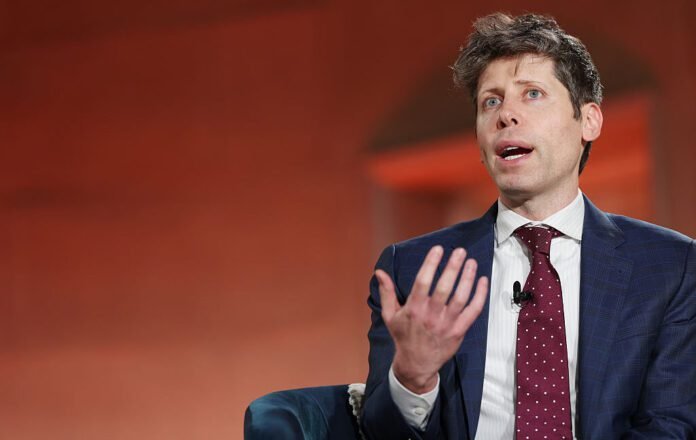
Florida sues OpenAI, Sam Altman after multiple ChatGPT-linked murders
On Monday, Florida became the first state to sue OpenAI over ChatGPT’s allegedly dangerous design.
In a complaint filed in state court, Florida Attorney General James Uthmeier accused OpenAI and its CEO, Sam Altman, of prioritizing profits over the safety of Floridians.
The civil lawsuit comes after Florida opened an unrelated criminal probe into OpenAI, following a ChatGPT-linked mass shooting where two people were killed at Florida State University. In statements, OpenAI has insisted that ChatGPT isn’t responsible for the FSU shooting, merely providing factual information, but Uthmeier does not seem to agree. In his complaint, Uthmeier noted that Florida has now been blindsided by two violent events where suspects used ChatGPT to assist in planning.
“Horrifically, ChatGPT has aided and abetted in more than one multiple murder in the State of Florida,” Uthmeier’s complaint said. “The 2026 deaths of University of South Florida graduate students Nahida Bristy and Zamil Limon were also plotted using ChatGPT, which advised Hisham Abugharbieh on how to dispose of bodies, change VIN numbers on a car, and whether cars were checked at the crime scene.”
Uthmeier then went on to list all the ways ChatGPT has allegedly fueled violence. In 2025, ChatGPT was blamed for encouraging several users to commit suicide, including teenager Adam Raine and a 56-year-old bodybuilder who murdered his mother based on a ChatGPT-hallucinated conspiracy.
More recently, in February, a man with mental health struggles killed his wife and attacked his mother “after talking with ChatGPT several hours a day and coming to believe robots were taking over the world, ” Uthmeier said. And a small mining town in Canada was shocked by a school shooting that claimed nine lives the same month. Altman later apologized for not alerting law enforcement about the shooter’s ChatGPT logs, which some believe could have averted the shooting.
The real-world violence isn’t the only reason why Florida wants ChatGPT enjoined from causing harm to users while being marketed as safe. The state’s complaint also accuses OpenAI of designing the chatbot to be addictive and destructive to children and adults. Beyond the chatbot’s sycophancy feeding into users’ delusions, ChatGPT is advertised as safe to use, but studies show it can cause loss of cognitive functions, Florida’s complaint alleged. Chatbots posing as medical professionals or therapists are also problematic, the complaint said, citing a recent wrongful death lawsuit alleging that ChatGPT encouraged a 19-year-old to mix Kratom with Xanax.
Florida points to all these harms and more, while seeking maximum civil damages for alleged violations of unfair trade laws.
“As these examples show, ChatGPT proactively aids, abets, and promotes dangerous activities and is a threat to the public safety of Floridians,” the lawsuit said. Meanwhile, “defendants make money through ChatGPT, affirming whatever users tell it and drawing them deeper into delusions.”
In a statement, OpenAI did not mention the attorney general and instead focused on recent child safety updates.
“Losing a child is the most devastating tragedy that can happen to a family and we know that no words can come close to addressing the pain of such a loss,” OpenAI’s spokesperson said. “AI is a new and powerful technology, and we believe minors need significant protection, which is why we have put in place industry leading protections and policies. In particular we built safety for minors directly into our products, including a more protective experience specifically for minors, an age prediction tool, defaulting users whose age we are not confident into our more protective experience, and giving parents tools to monitor their kids’ use of AI. We know pointing to this work will not bring a child back, but we’re committed to getting this right.”
Altman accused of making ChatGPT unsafe
The lawsuit joins prior suits accusing Altman of callously deploying AI systems without regard for user safety.
In his complaint, Uthmeier recalled how Altman told TED2025 attendees that right now “the stakes are relatively low” for OpenAI to safety-test its products on real users, which he claimed is the only way to iteratively improve them.
“But the stakes aren’t low,” Uthmeier said. “Floridians—including our vulnerable children—have suffered monetary loss, mental health harms, cognitive decline, and physical harm from Defendants’ deceptive, unethical, and recklessly dangerous conduct. Defendants must be held accountable for the harm they have caused and the dangers they and ChatGPT continue to pose to Floridians.”
In a press release, Uthmeier claimed that in rushing products like ChatGPT model 4o to market, OpenAI “ignored internal and external safety warnings, put children at great risk, and allowed a dangerous product to reach millions of Floridians.”
Similarly, the complaint said that Altman must be held “personally liable for the harm he has caused Floridians through his reckless and willful conduct as founder and CEO of OpenAI, including his utter disregard for the risk to human life caused by his firm’s conduct.”
In a loss, OpenAI could face pressure to implement remedies like age-gating free ChatGPT accounts to protect kids, shutting down conversations that discuss violence and suicide, and removing features that the state says deceptively make ChatGPT feel like talking to a human.
Without more parental controls, the state could push for a ban on teens accessing ChatGPT.
“ChatGPT is not safe for teenagers in Florida to use; its use can lead to self-harm, cognitive decline, and behavioral addiction,” the complaint said.
At a press conference live-streamed on X, Uthmeier vowed to work with other states that want to protect kids to hold OpenAI accountable and fielded questions from reporters. When asked if the state planned to pursue all AI companies—not just OpenAI—Uthmeier said Florida is “certainly” looking at other platforms, but “ChatGPT appears to be the most egregious,” with Altman “central” to pushing features that are dangerous to kids.
“Get ready for a fight, and there’s not one more important than this right now,” Uthmeier said.
After the Trump DOJ Halted Police Reform, This City Stepped In. Then Officers Shot and Killed Katelyn Hall.
Reporting Highlights
City Commitment: Louisville, Kentucky, adopted its own police reform plan last year after the Justice Department walked away from a consent decree that mandated changes.
A Test Case in the Trump Era: The local initiative is being watched as a test for how effectively a city can overhaul its police department without federal oversight.
Slow Progress on Mental Health: A panel is reviewing how police approach mental health calls, but some activists are criticizing the pace of reform after officers killed a young woman in crisis.
These highlights were written by the reporters and editors who worked on this story.
Last May, as President Donald Trump settled into his second term, the Justice Department walked away from federal efforts to reform troubled police departments across the country.
Officials announced their decision to not only drop lawsuits against two cities for unconstitutional policing but also retract findings of abuse in a half dozen other places.
Some of those jurisdictions celebrated the news. But not Louisville, Kentucky, a blue city in a red state whose elected leaders used the occasion to make their own announcement.
After the federal withdrawal, Mayor Craig Greenberg said Louisville would be “moving ahead rapidly” with reforms to its police department, which had been found to have a pattern of unconstitutional policing. In fact, the city would be adopting a version of the reform agreement Louisville had previously negotiated with the Biden administration and hiring an outside monitor to oversee its progress.
“I made a promise to our community,” the mayor said, “and we are keeping that promise.”
There was much to do. In 2023, federal investigators had found that the city’s police routinely discriminated against Black residents, inappropriately used police dogs against people, and failed to properly respond to people facing mental health challenges.
The mayor said the local reform plan would allow city leaders to correct these problems and accomplish key goals, perhaps even faster than he outlined.
But police records obtained by ProPublica show just how entrenched the issues were. Two years after the DOJ revealed its initial findings, while the Greenberg administration was charting its path to reform in early 2025, officers were still engaging in the problematic policing practices called out by federal investigators, according to the records. Most notably, police officials were failing to thoroughly review officers’ use of force.
Today, one year into the city’s reform effort, community leaders and civil rights advocates say the results have been mixed.
For example, the city has expanded a pilot program to direct some mental health calls away from police and send them instead to mental health specialists. Yet a panel created to review the department’s mental health practices overall only met for the first time in March, almost a year after it was announced, and it isn’t scheduled to issue recommendations for another year.
“What we do as a city, we make things look good on paper, but then in the application of it, it plays out so differently,” said Shameka Parrish-Wright, a Louisville city council member and a candidate for mayor looking to unseat Greenberg later this year. “And what plays out on the ground in day-to-day interactions is different.”
Underscoring the stakes for Louisville residents is the March fatal shooting of a 28-year-old woman named Katelyn Hall, who was experiencing a mental health crisis when police gunned her down in her own apartment.
Experts in mental health told ProPublica that the incident is emblematic of practices flagged by the Justice Department more than three years ago. Louisville Metro Police Department Chief Paul Humphrey, however, said the department should not be judged by one shooting given that it responded to 3,200 mental health calls last year and “only about eight resulted in any injury to anyone.” The incident is still under investigation.
Louisville police killed 28-year-old Katelyn Hall after responding to a call at her apartment, where she was experiencing a mental health crisis.Louisville Metro Police Department
In the aftermath of the killing, Greenberg’s office is exploring ways to pair mental health professionals with police in such situations — an idea that, critics note, was explicitly recommended in 2023 by the Justice Department. Today, the city sends either mental health professionals or police to calls, but does not have them respond together on critical incidents, including when a weapon is present.
Greenberg declined multiple requests for interviews, but his press secretary, Matt Mudd, defended the reform work, which he said was now being overseen by an independent monitor. “The Louisville Metro Police Department is in a much better place than it was three years ago,” he told ProPublica in an email. “That work is ongoing, and we are partnering closely with the community to ensure progress continues.”
Humphrey, the police chief, noted that police reform can often take years to achieve under federal oversight. By comparison, Humphrey told ProPublica, “I think we’re going at a really good clip.”
Today, the city stands as a test case for how effectively a community can implement police reform without a court order and the accountability that comes with federal intervention.
“There’s no enforceability by law,” said Ed Harness, Louisville’s first-ever inspector general. He is charged with investigating misconduct in the police department. “Now whether reform can happen voluntarily, with compliance and supervision by elected leaders, kind of is the question that will be answered in Louisville.”
Louisville’s inspector general, Ed Harness, is charged with investigating misconduct in the police department.Jon Cherry for ProPublica
The Path to Reform
Policing in Louisville has been under a national microscope since March 2020, when plainclothes officers broke down the door of Breonna Taylor’s apartment serving a no-knock search warrant. Her boyfriend thought they were robbers and fired a single shot at them. Taylor, a 26-year-old Black medical worker, was killed as police returned fire. Her case, along with that of George Floyd in Minneapolis, helped spark a national reckoning over race and policing, and attracted the scrutiny of the Justice Department.
In 2023, just months after Greenberg took office, the DOJ published a scathing report on the police department’s pattern of misconduct and constitutional violations. By December 2024, the city and the DOJ announced the details of a court agreement, known as a consent decree, that would set requirements for improvements and be overseen by an outside monitor and a judge. Greenberg touted the city’s commitment to “aggressively implement police reform.”
In the following months, however, the questionable police behavior continued. Police records first obtained by the American Civil Liberties Union and later by ProPublica through a public records request detail nearly 50 use-of-force incidents from December 2024 through April 2025. In more than half of them, officers engaged in actions that the Justice Department had noted in 2023 were either violations of people’s rights, like using choke holds and allowing police dogs to continue biting people who no longer posed a threat, or otherwise needed improvement, like how supervisors reviewed such incidents.
In one case, a suspect spit on an officer, who then performed a “takedown” of the man while he was already in handcuffs. In another, multiple witnesses said an officer put his knee on a man’s back while he lay on the ground, a tactic that has been widely condemned since George Floyd was murdered by a Minneapolis police officer who pressed his knee on Floyd’s neck in 2020. In both those instances, as well as others, the department’s internal review unit found the uses of force to be appropriate. According to the records, the review unit failed to discuss alternative approaches or completely review all uses of force by the officers involved.
Jenn Rolnick Borchetta, the deputy project director for the ACLU’s Criminal Law Reform Project, said her team requested the records in Louisville and six other jurisdictions to assess whether they corrected the problems flagged by the DOJ in its investigations.
In Louisville, she said her organization expected oversight to be extra diligent given the DOJ’s criticism of what it called “biased” internal investigations.
“We were troubled by a review process that seemed more concerned with protecting the agency from liability than with protecting the public from further abuse,” she said.
The Louisville police department did not respond to ProPublica’s inquiry about the records and the use-of-force review process.
Last May, just five months after the consent decree was signed, Harmeet Dhillon, head of the DOJ’s Civil Rights Division, announced the department was dropping the case against Louisville, ending what she called the “failed experiment of handcuffing local leaders and police departments with factually unjustified consent decrees.”
The Hall of Justice in LouisvilleJon Cherry for ProPublica
Questions Over City’s Commitment
The same day, Greenberg unveiled his administration’s reform plan, dubbed the Community Commitment, and pledged to hire an independent monitor to oversee the police department’s progress. The document carried over much of the federal reform plan, but civil rights advocates and community leaders noticed it differed in key ways. Most notably, it had no mechanism for enforcement in the event of a disagreement between the monitor and the police department. Under a federal consent decree, a federal judge makes the final decisions on such disputes and can force departments to implement corrective actions. Louisville’s plan simply calls for the parties to have continued talks.
That makes the policy initiative vulnerable to the vagaries of politics or local budgeting, critics say.
“That’s the biggest risk here, that it will just prove to be too difficult, too expensive, not politically advantageous for this or subsequent administrations to continue this effort,” said Christy Lopez, a professor at Georgetown Law who spent years investigating police misconduct for the Justice Department’s Civil Rights Division. “That is one advantage that consent decrees offer, that they have the oversight and threat of a federal judge, who can make contempt findings if people are not doing what they said they would do. You don’t have that here.”
Because of that, several community leaders want to enshrine key parts of the agreement in local law. “We need an ordinance that makes sure the reforms from the consent decree are done regardless of administration,” said Kungu Njuguna, a lifelong resident of Louisville and a policy strategist for the Kentucky ACLU.
Louisville resident and Kentucky ACLU policy strategist Kungu Njuguna believes the city needs an ordinance to enshrine police reforms.Jon Cherry for ProPublica
Ericka Seward, a community activist who has been campaigning for police accountability since Taylor’s killing in 2020, said the current reform plan requires residents to trust the police to make change — a difficult task, she said, given the department’s history of discriminatory policing.
Seward, who is Black, said she watched officers manhandle her 21-year-old son in the parking lot of his apartment complex in 2022. He had called her during a traffic stop for what police said was erratic driving, and she drove to the location. After patting him down, officers were about to let him go with a warning when he argued that the stop was dubious and told the officers he would be complaining to members of the department’s leadership who his mother knew through her work as an activist, Seward said. The officers then physically pulled him back to their car and told him they were now going to issue him tickets, she said. Her son was cited for careless driving and failure to signal.
“It was scary to me, it was scary to him,” Seward said. “Because we know what they’re capable of.”
Seward filed a complaint with the city inspector general’s office. According to its report, the lead officer defended his actions, telling investigators that, because Seward’s son was accusing him of not having a valid reason for the stop, he “became concerned and wanted to document the stop to show that he did have probable cause.”
While Harness’ office found no wrongdoing on that count, it did note that the officer couldn’t say how fast Seward’s son was driving. It also found that the department did not have a policy prohibiting retaliation and recommended that one be adopted, according to records. The department has since done so, though that too has drawn criticism from Harness’ office, which said its recommendation was “largely ignored.” The revised policy only applies to retaliation after a complaint has been filed, the inspector general’s report said, meaning it does not cover retaliatory policing in response to “citizens’ words, actions or demeanor.”
In its 2023 investigation, the Justice Department found that Louisville police officers had “threatened and retaliated against civilian complainants.” It also found that Black drivers were nearly twice as likely as white drivers to be cited by police for minor violations — part of a pattern of discriminatory policing that investigators said often led to unnecessary and tense interactions between police and the public, sometimes resulting in arrest. The DOJ noted racial disparities in enforcement for loitering, littering and having dark window tinting.
The federal consent decree dictated that those kinds of offenses receive warnings unless an officer could articulate why that approach was “insufficient” to deal with the issue. That change, however, is not in the city’s reform plan.
Humphrey said that leaders determined the measure wasn’t in the best interest of the city or its officers. He also said police are trained on how to best determine the right course of action on those low-level infractions.
Rebecca Hall, mother of Katelyn Hall, who was killed by police, with Dash, Katelyn’s emotional support dogJon Cherry for ProPublica
A Mental Health Crisis, a Deadly Encounter
The city did incorporate into its plan many of the DOJ’s recommendations for handling people with mental health issues. Such incidents made up nearly a quarter of the use-of-force cases investigators reviewed, according to the federal report, “and a large share of those incidents involved at least one unreasonable use of force.”
The city’s plan included a number of measures, starting with the formation of a behavioral health council to review incidents and recommend changes to policies and practices with the goal of “reducing the number of police encounters with people with behavioral health disabilities involving unnecessary use of force and reducing the severity of the force when force is required.”
The council, however, didn’t have its first meeting until March — about 10 months after the mayor’s announcement. Police officials told ProPublica that city leaders decided to first hire the independent monitor and develop an implementation plan before putting the behavioral council to work.
Four days after the group had its first meeting, Louisville police responded to a 911 call about Katelyn Hall, the 28-year-old woman in mental health crisis. She had locked herself in the bathroom and, according to her roommate, had cut her wrists and ingested cleaning fluids, and was behaving erratically. She had been diagnosed with bipolar disorder and had previously attempted suicide.
Within 13 minutes of their arrival, police shot and killed her.
Rebecca Hall shows the last text messages she received from her daughter before Katelyn was killed by Louisville police.Jon Cherry for ProPublica
“No one wants to see an outcome like this,” Humphrey said in early April during a press conference. “We have already begun to use this incident to work on improving how we handle these situations. We owe that to everyone involved and to the city.”
But mental health and law enforcement experts who reviewed police body camera footage of the incident told ProPublica that officers demonstrated some of the same problematic behaviors first identified by the Justice Department more than three years ago.
The federal investigators found Louisville officers “frequently fail to give people experiencing crisis time or space” and “do not engage in verbal de-escalation for enough time to be successful.” In fact, officers often made the situation more tense and confrontational, which would lead to “increased safety risks to themselves and the person in crisis and increased the likelihood of the use of force.”
In Hall’s case, the officers started out asking questions like, “What’s going on?” and, “Can you talk to me?” while Hall screamed at them to let her die.
Police spent about six minutes talking with her before a member of the Emergency Medical Services unit, worried that Hall had cut her wrists, suggested forcing the door open. The team spent the next three minutes breaking the door’s lock and popping one of its hinges, during which time the officers pushed themselves against the door attempting to get into the bathroom.
Sharon Gandarilla-Javier, an assistant professor of police science at John Jay College of Criminal Justice, called it a “damned if you do, damned if you don’t” situation, but stressed that the six minutes of discussion wasn’t enough time and the police should have considered alternatives to forcing the door open.
For example, Hall’s mother, Rebecca, was on scene and identified herself to first responders, assuming they would ask her to help talk with her daughter. They never did.
Mariela Ruiz-Angel, the director of alternative response initiatives for Georgetown Law’s Center for Innovations in Community Safety, said Hall’s mother could have been a “game changer.”
“We’ve used that tactic multiple times to try to find the loved one that makes the most sense, to be like, ‘Hey, I’m here, Mama’s here,’” she said.
At one point, an officer tells Hall, “I want you to live,” and that her friends and family are worried about her.
The responders designated which officers would use their hands, a Taser and a firearm in preparation for Hall’s exit from the locked room. But Gandarilla-Javier, who spent more than 10 years as a New York Police Department officer and teaches classes on trauma-informed policing and crisis intervention, told ProPublica that the plan overheard on the video needed to be more detailed, with an explicit discussion about how to safely subdue Hall if she were to advance on them.
When Hall ultimately opened the door and walked toward the officers, she was holding a broken piece of toilet. Within five seconds, she was shot by two officers, including the one who minutes before had told her he wanted her to live. Had the officers planned better, the outcome may have been different, Gandarilla-Javier said.
Louisville Metro Police Deputy Chief Emily McKinley told reporters in April that “each encounter poses a unique and often chaotic challenge,” and that in the Hall case, “If you look at the porcelain, I think it could be an extremely lethal situation” for the officers. Asked whether officers could have instead tackled Hall, she declined to answer, saying such questions would be part of the investigation into the shooting.
Hall’s mother said police could have done more.
“My daughter deserved more than eight minutes of their time,” Rebecca Hall said through tears in an interview. “She needed kindness and she needed somebody back there” to let her know that they cared. Hall continued: “She didn’t get that in that moment. I know she definitely didn’t need bullets. … She just needed help.”
Mental health advocates like Khalilah Collins have been pushing for years for the department to allow mental health professionals to lead the response to such calls. In fact, she was part of a group of professionals who, at the city’s request, researched alternative responses in 2021. The study was part of the reforms that the city pledged to undertake in a lawsuit settlement after Taylor’s killing, but a nonpolice response failed to win the support of city leaders and wasn’t adopted.
“We refuse to build what we need for people,” Collins said. “We don’t want the police there. The police don’t want to be there. They’re not trained to be there, but we refuse to do anything else.”
To be sure, the department did create a program to divert some calls to mental health professionals, but that did not happen in this case because police determined Hall was “armed with glass.” Louisville police policy dictates that if a weapon is present, mental health professionals cannot respond to the calls.
In the wake of Hall’s death, though, Greenberg and Humphrey say they are now exploring whether police and mental health professionals should be allowed to respond together. According to Mudd, the mayor’s spokesperson, one option being discussed involves using “new technology, like cameras, to add behavioral health providers to situations that require their expertise without potentially sacrificing their safety.”
When ProPublica asked Mudd if there was a timeline for making a decision, he said only that the city and the police department were “moving with urgency.”
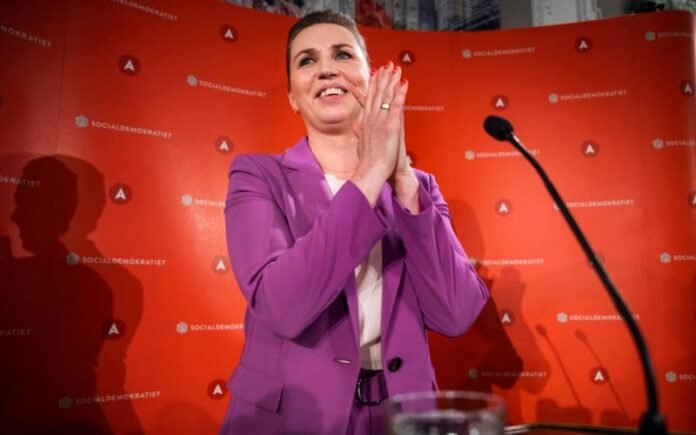
Denmark’s Frederiksen secures third term as prime minister
Denmark’s Social Democratic leader Mette Frederiksen said on Monday she has agreed to form a centre-left coalition government, maintaining her grip on power amid a crisis in ties with U.S. President Donald Trump over the future of Greenland. The deal to form a minority cabinet gives Frederiksen a third consecutive term as prime minister, ending months of uncertainty after a March election in which 12 parties won seats in the Danish parliament. “I have been to see His Majesty the King and announced that a government can be formed after long negotiations,” Frederiksen told reporters. Her centrist coalition lost its majority in the March 24 vote as Danes revolted over a cost-of-living crisis, although the Social Democratic Party remained the biggest group in parliament with 38 out of 179 seats, down from 50. After more than two months of haggling, where the Social Democrats and the right-wing Liberals each sought to lead a new government, it was the 48-year-old Frederiksen who secured the necessary backing from parties in parliament. “It is a government platform for the people who are in Denmark and for the generations to come and also for the animals,” she said. Animal welfare was one of several major topics debated in the election campaign. The goverment’s overall priorities will be presented on Tuesday while ministers will be named on Wednesday, Frederiksen said. The government’s immediate to-do list includes diplomatic talks over Greenland, which Trump has threatened to annex, and a rapid build-up of Denmark’s military as security in Europe deteriorates amid Russia’s war in Ukraine. In addition to the Social Democrats, the new government will consist of the Social Liberals, the Left Greens and the centrist Moderates, relying primarily on the far-left Red-Green Alliance for a parliamentary majority, though it can also seek backing from other parties on individual votes. The new government marks a shift to the left for Frederiksen, who in the past four years headed an unusual coalition across the left-right divide with her Social Democrats, the Moderates and the Liberals.
New Trump vaccine order based on “no credible scientific evidence,” doctors say
The American Medical Association came out swinging this weekend at an executive order President Trump signed Friday that reaffirms intentions to model US childhood vaccine recommendations after those of Denmark—a country with universal healthcare, less diversity, and a population about the size of Maryland’s.
“There is no credible scientific evidence to support,” such a change, AMA President Bobby Mukkamala said in a statement. The current vaccine schedule “is built on decades of rigorous research and real-world data, and it is designed to protect children in the US when they are most vulnerable based on our nation’s disease burden,” he said.
The plan to align federal childhood vaccine recommendations with Denmark’s was first revealed by anti-vaccine Health Secretary Robert F. Kennedy Jr. in January. The overhaul would see the total number of recommended immunizations drop from 17 to 11, walking back recommendations for shots against rotavirus, COVID-19, influenza, meningococcal disease, hepatitis A, and hepatitis B. It stemmed from a December executive order by Trump to align US vaccine recommendations with the “best practices from peer, developed countries.”
From that order, Trump administration officials carried out a “comprehensive scientific assessment,” which concluded the US should emulate Denmark. The work was carried out by two Trump administration political employees, Tracy Beth Høeg, a sports medicine doctor, and Martin Kulldorff, a biostatistician, neither of whom has expertise in vaccine policy, but both are anti-vaccine allies of Kennedy.
The acting director of the Centers for Disease Control and Prevention at the time—Jim O’Neill, a technology investor—signed off on the changes. But in March, a federal judge issued a temporary injunction that reversed the changes, finding that Kennedy violated federal regulations in implementing them.
“Crazier and crazier”
While the federal government is appealing that injunction, the new executive order on Friday reaffirms Kennedy’s plans to adopt Denmark’s strategy, calling for “realigning” US vaccine policy with “best practices from peer, developed countries.”It states that the scientific assessment written by Høeg and Kulldorff is a “guiding resource for the Federal Government” and that the CDC shall ” take any appropriate steps to update the United States childhood and adolescent vaccine schedule.”
As before, the AMA is strongly against the unilateral change made without backing from scientific evidence.
“Altering [the vaccine schedule] without clear, evidence-based justification risks continued confusion for parents and patients, undermining trust in vaccines, and ultimately lowering vaccination rates,” Mukkamala said. “That would put more children and communities at risk of preventable illness.”
On Monday, the American College of Physicians also released a statement, saying it was “deeply concerned” by Trump’s order. “This is the second time the administration has attempted to unilaterally substitute vaccine guidance from other countries to replace the US vaccine schedule which was developed for the specific needs of the US population,” ACP President Jan Carney said. “The changes that this executive order directs cannot be allowed to move forward.”
Even researchers in Denmark find the move bizarre. Anders Hviid, who leads research on vaccine safety and effectiveness at the Statens Serum Institut, Denmark’s equivalent of the CDC, told The New York Times in December that it did not make sense to compare the US to Denmark. “It’s not at all fair to say look at Denmark unless you can match the other characteristics of Denmark,” he said.
Hviid also told the Times that the US public health policies under Kennedy “get crazier and crazier” by the month. “It is surreal, and it is difficult, from a Danish perspective, to understand what’s going on.”
As for whether Denmark even represents the best practices of “peer countries,” as Trump’s executive orders direct, an analysis in January by Stat News found that this is not the case. First, the outlet found that the US has not been recommending a wildly larger number of vaccines compared with other affluent countries and was in line with countries such as South Korea and Brazil. Denmark, however, is an extreme outlier on the other end of the spectrum, having the fewest recommended vaccines (10) among 20 peer countries. All other countries in the comparison recommended between 13 and 16 vaccines.
Young NBA Fan Declared Brain Dead After Tragic Celebration Accident
What should have been a night of pure joy for San Antonio Spurs fans has turned into a heartbreaking tragedy.
A 17-year-old NBA fan has been declared brain dead after suffering catastrophic head injuries while celebrating the Spurs’ dramatic playoff victory over the Oklahoma City Thunder, according to local reports.
The teen, whose name has not been publicly released, was reportedly celebrating Thursday night’s Game 6 win when he fell from a moving vehicle and struck his head.
Relatives said the young fan had been taking part in the wild celebrations that erupted after San Antonio’s victory forced a decisive Game 7 in the Western Conference Finals.
Instead, the celebration ended in horror.
The teenager was first rushed to an emergency room before being transferred to another local hospital because of the severity of his injuries.
A police source told the San Antonio Express-News that the boy is brain dead and is not expected to survive.
The exact details of how the teen fell from the vehicle remain under investigation.
The San Antonio Police Department issued a somber warning after the devastating incident, calling it both tragic and preventable.
“The San Antonio Police Department extends our sympathy to the family, friends and loved ones affected by this tragic and preventable incident,” the department said in a statement.
Police also urged fans to think twice before turning celebrations into dangerous street scenes.
“This serves as an important reminder that public safety is a shared responsibility,” SAPD continued. “We encourage everyone celebrating to follow traffic laws, stay inside of your vehicles and follow directions from the officers who are there to keep everyone safe.”
The accident happened amid emotional scenes across San Antonio as Spurs fans flooded the streets, honking horns, waving flags and celebrating the team’s stunning playoff run.
The Spurs later defeated the Thunder on Saturday night to advance to the NBA Finals, where they are set to face the New York Knicks.
But for one family, the historic win will forever be tied to unimaginable grief.
A night meant to celebrate basketball glory has now become a painful warning about how quickly a moment of excitement can turn deadly.
Houthis and Al-Shabaab conspiring to choke Red Sea routes
In a region crucial to global trade, ideological rivals may now be working together. United Nations and American intelligence reports suggest that Yemen’s Houthi insurgents and the Somali group Al-Shabaab — considered Al-Qaeda’s strongest affiliate — are exchanging logistical and military resources, despite having no formal alliance.
These reported exchanges involve military technology, potentially expanding Al-Shabaab’s operational reach beyond Somalia and further destabilizing an already fragile region.
The Ansar Allah movement (whose supporters are known as the “Houthis”) controls part of northern Yemen and has the military capacity to disrupt shipping in the Red Sea. Al-Shabaab controls large swaths of Somali territory and continues to wage an armed insurgency against the central government.
As part of my doctoral research in political science at the University of Montréel, I have focused on security dynamics in the Horn of Africa and, more broadly, the Red Sea basin, one of the world’s most important maritime trade corridors linking Asia and Europe through the Suez Canal.
Opportunistic ties
The first reports of cooperation between the two groups emerged in 2024. The UN Panel of Experts on Yemen was the first to warn about growing arms trafficking between the coasts of Somalia and Yemen, both of which have been affected by conflict since 1991 and 2014 respectively.
Somali security officers on patrol near the SYL Hotel, which was targeted in March 2024 by Islamist rebels from the Al-Shabaab group, in Mogadishu, Somalia. Photo: AP via The Conversation / Farah Abdi Warsameh
Houthi leaders are believed to have travelled to Somalia to establish direct ties with Al-Shabaab. It’s also possible that intermediaries linked to criminal networks connected to both groups have facilitated these contacts. Smuggling — including arms trafficking — has long flourished along the coasts of the Horn of Africa and Yemen.
At first glance, cooperation between the two groups may appear counterintuitive. The Houthis are affiliated with Zaydi Shiism, whereas Al-Shabaab adheres to a hard-line Sunni ideology that is strongly anti-Shia.
Yet shared material interests between ideologically opposed forces are nothing new. The Houthi movement seeks to expand its regional influence and diversify its sources of revenue, while Al-Shabaab aims to strengthen its military arsenal.
Al-Shabaab’s search for drones
According to the UN, Al-Shabaab militants have reportedly received training in Yemen in drone operations and the manufacture of sophisticated explosive devices. The group hopes these capabilities will make its attacks against Somali government forces and their international backers more effective and deadly.
The Houthis are also believed to have supplied armed drones to Al-Shabaab militants, who have reportedly requested guided missiles as well. Widely used in Houthi attacks on ships in the Red Sea and Gulf of Aden between 2023 and 2025, such weapons would significantly expand Al-Shabaab’s operational capabilities both inside Somalia and beyond.
So far, the organization has used drones mainly for surveillance and intelligence gathering. The acquisition of offensive drones would provide a major advantage against a Somali army already struggling to contain the insurgency.
An Israeli warship deployed to counter maritime threats from Yemen’s Houthi rebels is seen in the waters off Eilat in the Red Sea in April 2024. The Houthis have been carrying out attacks on commercial and military vessels in the Red Sea and the Gulf of Aden, launching drones and missiles from areas of Yemen under their control. Photo: AP via The Conversation / Ohad Zwigenberg
Steady territorial expansion
Since emerging in the mid-2000s, Al-Shabaab has become the most powerful Al-Qaeda affiliate in the world. It now controls large swaths of territory across central and southern Somalia. Its resilience stems largely from the military, political and economic failures of the Somali government and its foreign backers.
Al-Shabaab has thrived amid the faltering effort to rebuild the Somali state along federal lines. In particular, the group exploits often-violent rivalries between the federal army and regional forces seeking greater autonomy. Its militants have capitalized on these deepening divisions as the central government in Mogadishu attempts to consolidate political and economic power.
International forces deployed alongside the Somali army since the mid-2000s — particularly those of the African Union — have also struggled to contain the group.
The United States has faced similar difficulties. In 2025, the number of American airstrikes in Somalia reached a record high. While these strikes have weakened the Islamic State group in northern Somalia — which is also suspected of maintaining links to the Houthis — they have had little effect on Al-Shabaab’s territorial hold.
Risks of growing regional instability
Following Operation Hilaac (“Lightning”) — carried out with American support against the Islamic State in the autonomous northern region of Puntland — a new offensive, Operation Onkod (“Thunder”), is being prepared against Al-Shabaab in a coastal area west of Puntland.
The group’s militants are therefore reinforcing their presence there. Although still limited for now, their activities could eventually spill over into the Gulf of Aden, a corridor through which nearly 30% of global container traffic passes.
Between 2023 and 2025, this maritime route had already experienced severe instability due to Houthi attacks in the Red Sea carried out in support of Palestinians.
Israeli court approves appointment of Roman Gofman as next Mossad chief
Roman Gofman [Wikipedia]
Israel’s Supreme Court approved the appointment of Maj. Gen. Roman Gofman as the next head of the Mossad intelligence agency, according to Hebrew media reports Monday, Anadolu reports.
The court rejected two petitions challenging Gofman’s appointment in a majority decision by Justices Ofer Grosskopf and Alex Stein. Justice Daphne Barak-Erez dissented, saying additional examination was needed regarding issues she considered unresolved.
According to Israeli media reports, the petitions were linked to allegations concerning Gofman’s conduct in the so-called Ori Elmakayes affair.
In the majority opinion, Grosskopf said the evidence before the court, including classified material, did not indicate ethical misconduct that would disqualify Gofman from serving as Mossad chief.
“The existing evidence shows that the Elmakayes affair does not place an ethical stain on Maj. Gen. Gofman’s impressive career,” Grosskopf wrote, according to The Jerusalem Post.
The ruling came a day before Gofman’s planned transition ceremony.
Gofman is expected to assume the post Tuesday, replacing outgoing Mossad Director David Barnea, who has led Israel’s foreign intelligence agency since 2021.
Prime Minister Benjamin Netanyahu nominated Gofman for the position despite objections from Attorney General Gali Baharav-Miara and former Supreme Court President Asher Grunis, who chairs the committee responsible for reviewing senior appointments, according to Maariv.
The Mossad is Israel’s primary foreign intelligence agency and plays a central role in intelligence gathering, covert operations and national security policy.













![Roman Gofman [Wikipedia]](https://i0.wp.com/www.middleeastmonitor.com/wp-content/uploads/2026/06/Roman_Gofman_2017.jpg?fit=640%2C360&ssl=1)






