18.9 C
London
Sunday, May 31, 2026
Home Blog

A Gay Palestinian Fled to Israel’s “Safe Haven.” Israel Tried to Exploit Him for Intelligence.

0
a-gay-palestinian-fled-to-israel’s-“safe-haven”-israel-tried-to-exploit-him-for-intelligence.
A Gay Palestinian Fled to Israel’s “Safe Haven.” Israel Tried to Exploit Him for Intelligence.


Kareem’s father was furious when he heard the rumors circulating in Ramallah about the sexuality of his 22-year-old son. “My dad aimed his gun towards me,” Kareem recalled, “and said that if he ever finds out that I’m gay, he would ‘rest a bullet between my eyes.’”

Kareem, whose name has been changed to protect his safety, had lived in the close-knit West Bank city for years, but he’d long known he would one day need to leave. It was March 2024, and the Tel Aviv Court for Administrative Affairs had recently ruled that LGBTQ+ Palestinians can petition for asylum in Israel — upending years of precedent that considered them ineligible. The following month, Kareem crossed into Israel, a country that has occupied the West Bank for more than twice as long as he’d been alive.

Supporters of Israel have long pointed to the “only democracy in the Middle East” as a purported safe haven for the LGBTQ+ community. While detractors say the argument amounts to “pinkwashing,” the use of LGBTQ+ inclusion to distract from moral and legal violations in other spheres, the Israeli government has doubled down on the concept, invoking it often to distract from violations of international law. In a speech before the United States Congress on July 24, 2024, for example, Israeli Prime Minister Benjamin Netanyahu mocked protesters holding “Gays for Gaza” signs, saying they “might as well hold up signs saying ‘Chickens for KFC.’”

As Netanyahu spoke, Kareem was living legally in Israel, believing his status secure while an administrative storm was brewing behind the scenes. Palestinians like Kareem might be safer by virtue of the distance from their families, but the bureaucratic process of seeking asylum imposes its own dangers. In interviews with The Intercept, Kareem and multiple advocates and lawyers for Palestinian asylum-seekers described how Israeli authorities put asylum-seekers through permit revocations, instability, and, in many cases, coerce them into sharing information with Israel’s internal intelligence agency.

Kareem felt this pressure, he told The Intercept.

At a processing facility at Sha’ar Ephraim, a crossing point in the separation wall west of Tulkarm in the northern West Bank, Kareem recalled, Israeli authorities repeatedly pressed him for information on friends and family still living in the West Bank, anything that might be of use. The implication was a quid pro quo: intelligence in exchange for an easier permit approval process.

“When you are in such a fragile situation, you cannot be in the territories [the West Bank], and you don’t have status in Israel, the security bodies like the police … use this weakness and they try to get information or get someone’s cooperation from those people,” Kareem’s attorney, Tamir Blank, told The Intercept. “They promise them that they will not deport them or put them in jail.”

Kareem didn’t have the kind of information necessary to secure such a process. He found himself, like so many Palestinian asylum-seekers in Israel, in a series of cascading double binds. After they flee, they find themselves trapped: Leaving the West Bank for Israel carries with it the stigma, true or not, of having collaborated with Israeli authorities, making it even more difficult to return, and leaving nowhere else to go.

Home to about 30,000 Palestinians, Ramallah is small and insular, but it contains a space for queer Palestinians to hold conversations that aren’t always possible elsewhere in the West Bank. A loose network of activists hosts weekly community meetings that range from knitting circles to conversations dissecting the Eurocentricity of LGBTQ+ identity terminology in Arabic. During Ramadan this year, as rockets flew overhead during the Israel–U.S. war on Iran, they hosted a queer iftar in the city.

Kareem was active with the group for a year before rumors made their way to his parents. They had long suspected “there was something off with me,” Kareem recalled.

It also did not help that the family, as is typical of Ramallah’s upper class, is conservative and politically involved.

His father works for the Palestinian Authority, just as his father before him, who was involved with the Palestine Liberation Organization before the 1993 Oslo Accords. The family home in Al-Bireh is an old stone building, “colder inside in the winter than it is outside,” according to Kareem, and adorned with a classic Palestinian metal gate.

Aside from occasional Israeli military raids, Al-Bireh feels like the only true bubble inside of Israel’s occupation of the West Bank. There are upscale cafes, flower shops, and a concerted effort by all who live there to pretend they enjoy more freedom than they do. Despite the idyllic atmosphere, there are only a handful of checkpoints by which to exit the city, all manned by Israeli soldiers.

Kareem worked in his cousin’s welding shop in the Jalazone refugee camp, where, as he would later recount to Israeli authorities, he faced years of abuse — both sexual and physical — from his cousins, who taunted him for his feminine presentation. After Kareem’s father confronted him, he recalled, “My father was sending my cousins after me to stalk my friends and me.”

At first, Kareem thought he should flee to a different city in the West Bank, possibly Bethlehem. Israel had stopped issuing permits for most West Bank Palestinians after October 7, citing “security concerns,” and Kareem worried that his family’s associations with the Palestinian Authority would count against him. But the West Bank is small, so small that without checkpoints blocking the way, one could drive from Jenin at the top of the West Bank to Hebron at the bottom in about an hour and a half. As the crow flies, it is only 22 kilometers from Ramallah to Bethlehem. Families know each other, and word spreads fast.

So Kareem tried to fashion a life for himself in Israel. Not only would his family follow him to Israel after he fled, but so too would Israel’s occupation. His life would turn into a series of military court hearings and attempts to solicit intelligence from him by Shin Bet, Israeli domestic intelligence, with the specter of returning home meaning likely death.
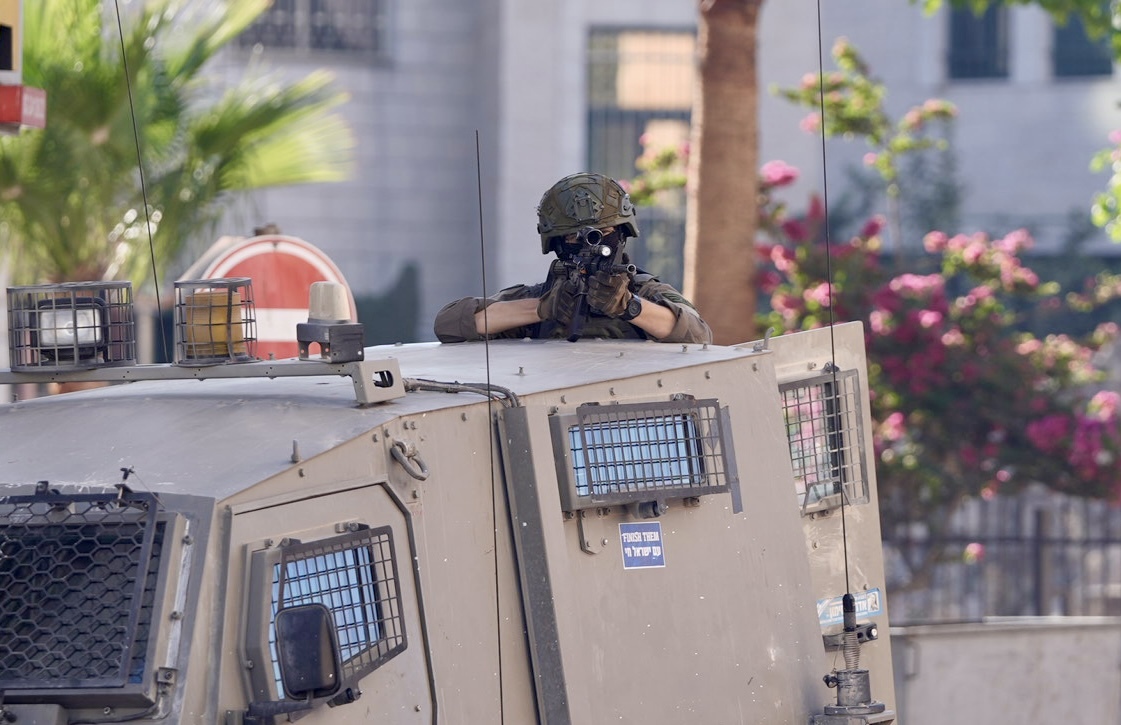
AL-BIREH, WEST BANK - OCTOBER 07: Israeli forces are seen patrolling around during a raid on Al-Bireh, West Bank on October 07, 2025. (Photo by Rimawi Issam/Anadolu via Getty Images)
Israeli forces patrol during a raid on Al-Bireh in the West Bank on Oct. 7, 2025.  Photo: Rimawi Issam/Anadolu via Getty Images

Kareem secured a welfare permit by April 2024 with the help of pro bono lawyers from HIAS, a Jewish humanitarian organization that provides legal support to asylum-seekers in Israel, including a small number of Palestinians fleeing persecution. He spent months sleeping on benches and couch surfing before finally moving into an emergency LGBTQ+ youth shelter in Tel Aviv called HaGag HaVarod (“The Pink Roof” in Hebrew), where he went from never having met an Israeli who wasn’t holding a rifle to living together in shared housing. 

“I was so confused. They had just given me the permit, so why would they take it away?”

In October 2024, just six months after leaving the West Bank, Kareem woke up to an alert on his phone that his permit to stay in Israel had been invalidated. His lawyers advised him to leave the shelter immediately. It was operated under the Israeli Ministry of Welfare, putting him at risk of deportation without a permit.

“I was so confused. They had just given me the permit, so why would they take it away?” Kareem recounted.

His family appeared to have worked to sabotage his legal status through multiple channels. In June, they had filed a report with Israeli social services claiming Kareem was a Hamas member planning to attack civilians. When a security flag appeared in his file, triggering the revocation of his welfare permit, his lawyers raised the possibility in court that it too had been planted by his family to engineer his deportation. The Intercept attempted to reach Kareem’s father for comment but was unable to get in touch.

“I had a security block on my application,” Kareem said. “There was no way to get it back without petitioning the military commander for reconsideration.”

Nimrod Avigal, deputy director of HIAS Israel, has been tracking LGBTQ+ Palestinian asylum claims for more than a decade. He worked on Kareem’s case at the outset. “Everything became much more difficult after October 7,” he said. “Many more people were refused because of security issues, mostly related to a family member.”

Back in his hometown, rumors were circulating that Kareem was collaborating with Israeli authorities, according to testimony submitted to the Jerusalem District Court, a justification not only for his family to track him down, but also for others to help them.

His family began posting notices in Facebook groups offering a cash reward for any information leading to his whereabouts, declaring him a “missing person.” One such post appeared in a public Jerusalem Facebook group with more than 450,000 members.

His phone was flooded with calls, 60 to 80 a day, mostly from unknown numbers. Eventually, as Kareem recounted to The Intercept, he threw his phone into the Mediterranean Sea in the hopes it would solve the problem.

It did not. The family hired men in Ramallah to track Kareem down on the other side of the separation wall. “They said that they were hired by my family to look for me and bring me back ‘after I tarnished the family’s reputation,’” Kareem recalled, “and that they need to ‘wash their honor as soon as possible.’”

A childhood friend now living in Spain sent Kareem a voice memo with a warning: “Your family has placed a bounty of 35,000 shekels on your head. It is absolutely clear that this will not end well and that your family is truly determined to catch you.”

The only thing standing between Kareem and deportation back to the West Bank was his welfare permit, and now it was gone.

In a court filing, Kareem’s attorney wrote that his family members wished “to obtain information about his whereabouts and bring him to the territories, dead or alive, in order to settle accounts with him, that is, to ensure he does not remain alive.”

Israel contended in court that Palestinians in Kareem’s position were motivated not by genuine fear but by a desire to “enjoy the more liberal lifestyle in Israel, rather than facing an actual threat,” language drawn from a 2013 Israeli Inter-Ministerial Committee report on Palestinians claiming persecution based on sexual orientation.

Israel contended that queer Palestinians were motivated by a desire to “enjoy the more liberal lifestyle in Israel, rather than facing an actual threat.”

In response to a request for comment from The Intercept, COGAT, the Israeli military body that oversees civilian affairs in the occupied territories, said that permits of this kind are granted “first and foremost for the purpose of saving lives, and allow the applicant to remain in Israel until a permanent solution is found in a receiving country.”

As Kareem’s lawyers and other human rights organizations in Israel have long argued, rather than being welcomed, gay Palestinians are frequently subject to blackmail by Israeli authorities, who pressure them to provide intelligence in exchange for protection, turning their vulnerability into a tool of coercion.

In the 10 Years Tamir Blank has been working with Palestinians from the West Bank filing asylum claims in Israel, he has accepted that many of his clients will either willingly choose to collaborate with Israeli intelligence or be coerced into it.

Many asylum-seekers feel pressured to offer intelligence to Israeli authorities in the hope that it might help them obtain a humanitarian stay permit, which entitles them to the right to work. (Even that is a relatively recent development: The permits only began allowing legal employment in 2022, after extensive litigation, before which Palestinians were often forced into grey industries like the sex trade.) In one case, a transgender Palestinian woman named Zehava who fled the West Bank in 2021 died by suicide after Israeli authorities revoked her permit.

“The Israeli policy is to minimize the presence of Palestinians within its borders, in the West Bank and within the 48 borders,” referring to Israel’s pre-1967 territory, said Anat Matar, an Israeli academic and head of the Israeli Committee for Palestinian Prisoners. Israeli authorities deter Palestinians from fleeing to Israel with bureaucratic hurdles, she told The Intercept, as they seek to maintain a Jewish demographic majority.

Blank’s clients are often so desperate to hold onto their status, feeling pressured to offer intelligence is “not something that is unique,” he said. The authorities “use every weakness they can.”

Kareem, however, was out of luck. He had no such intelligence to offer, as is often the case with LGBTQ+ Palestinians forced to flee. According to Blank, the very fact of their social exclusion means they are rarely privy to intelligence of value to Israeli authorities, regardless of who their family members might be.

Because he was born in the West Bank and holds a Palestinian Authority-issued ID, Kareem is unable to ever obtain residency or citizenship in Israel. Doing so, Israeli authorities fear, would set a precedent for a broader right of return for Palestinians displaced in the 1948 Arab–Israeli War. The original welfare permit Israel issued required Kareem to pursue resettlement in a third country; there was no path for him to remain in Israel.

Reut Ahdut, of the Aguda Israel, which until 2025 ran a program offering assistance to LGBTQ+ Palestinians fleeing the West Bank, said permits that used to be relatively stable are now often granted for only one to three months, with applicants required to regularly provide evidence that they are at risk across all Palestinian Authority territories, including the West Bank.

Despite the 2024 ruling, Israel’s Population and Immigration Authority maintains that Palestinians are not subject to the United Nations Refugee Convention and therefore that it is not obligated to provide them asylum on the grounds that UNRWA, the U.N. agency mandated to provide assistance to Palestinian refugees, bears that responsibility instead. After banning UNRWA from operating on its territory in 2025, Israel demolished UNRWA’s East Jerusalem headquarters in January. 

After a court battle at the Jerusalem District Court, Kareem’s permit was reinstated in December 2024, and he has since been able to renew it with the permission of the military commander. In its ruling, the court acknowledged that the security intelligence used to revoke his permit may have been “based on false allegations that his family has made against him, in order to bring about his deportation.”

For now, Kareem has no path out of Israel — his life suspended, renewed six months at a time.

At one point, Kareem hoped he could be resettled to Canada through the U.N. High Commissioner for Refugees resettlement program, but amid rising anti-immigrant sentiment even in Canada, that option has vanished.

His time living in the shelter is over. With the help of the Tel Aviv Municipality, Kareem has moved into transitional housing in the Tel Aviv area.

He keeps his lightheartedness, switching seamlessly from referencing TikToks he found hilarious, to drama at work, to decrying how life as a Palestinian in Israel has become all but impossible since October 7th.

With the Port of Jaffa to the left and the Tel Aviv skyline looming off to the right, Kareem stared out at the Mediterranean, reflecting on the past year.

“I hate the sea, I really do, and I am supposed to say at least I got to see it because of my permit. But really what I miss is my home, the West Bank,” Kareem said. “That is where I am from, but for now, the sea will do.”


22 Dead, 36 Injured in Crash Involving Afghan Returnees From Pakistan

0
22-dead,-36-injured-in-crash-involving-afghan-returnees-from-pakistan
22 Dead, 36 Injured in Crash Involving Afghan Returnees From Pakistan


At least 22 people were killed, and 36 others injured after a truck carrying Afghan refugees returning from Pakistan lost control and plunged into a ravine in Afghanistan’s eastern Laghman province on Saturday.

Abdul Malik Niazi, a Taliban official, told The Media Line that “the accident occurred on the main highway linking Kabul with Nangarhar province.

He confirmed that the victims included 10 children and five women, while the 36 injured were transferred to various hospitals for treatment.

The Taliban official further said that all of the victims were Afghan migrants who had recently returned from Pakistan. The passengers had been temporarily settled in Kunar province and were being transported to Kabul when the vehicle overturned.

Provincial health department chief Amanullah Sharif confirmed the death and injury toll, stating that according to preliminary investigations, the truck met with the accident after the driver fell asleep.

The passengers involved in the accident were among thousands of Afghan refugees who have returned to Afghanistan from Pakistan in recent months.

Pakistan launched a crackdown against undocumented migrants in 2023, after which a large number of Afghan nationals were either forced to leave the country or deported.

Meanwhile, Iran had also stepped up its campaign to expel Afghan refugees during the same period.

The accident also comes as Afghanistan continues to receive large numbers of returnees from neighboring countries, particularly Pakistan, which has intensified efforts to deport undocumented Afghan migrants.

Over the past week, at least 4,000 migrants have been deported from Pakistan daily, according to figures provided by the Taliban commission for refugees.

International aid agencies have repeatedly warned that the mass return of migrants is placing additional strain on transportation networks and public services, especially in eastern provinces that serve as key entry points into the country.

As thousands of returnees cross back into Afghanistan daily, often under difficult condition and chaotic schedules, local infrastructure and services in already fragile regions are coming under mounting pressure. Transportation routes are becoming riskier, and communities are struggling to absorb the sudden influx of people.

Without stronger regional coordination and support mechanisms for returnees, the situation risks escalating into a wider human catastrophe marked by preventable deaths, repeated accidents, and significant humanitarian risks across affected provinces.

They call it stupid hot for a reason: Heat muddles animal brains

0
they-call-it-stupid-hot-for-a-reason:-heat-muddles-animal-brains
They call it stupid hot for a reason: Heat muddles animal brains

On a blazing hot day in South Africa, female southern pied babblers can’t think straight. The medium-sized black-and-white birds are trying to get at tasty mealworms behind a see-through barrier. On cooler days, the birds can quickly figure out that all they have to do is go around the small wall of plastic. But when the mercury goes up, the birds just keep stubbornly pecking at the barrier.

That experiment is part of a growing body of research showing that animals get their minds muddled during heat waves. When it’s hot outside, birds struggle to learn, dogs bite more often, goat-like chamois pick fights. This is bad news not just for those who get on Fido’s toasted nerves. If the animals can’t stay alert enough to find food or avoid predators, their chances of survival go downhill, says Amanda Ridley, a behavioral ecologist at the University of Western Australia who coauthored the pied babbler study.

With climate change making heat waves more common, such cognitive impairments across the animal kingdom could ripple through entire ecosystems, putting already fragile species at greater risk. If pollinators forget which flowers to visit, crops and wild plants may fail. If birds can’t find food as easily, their young may not survive. And on a warming planet, a sharp mind is particularly vital. “A changing climate means that your ability to behaviorally adapt is even more important,” Ridley says.

Hotheaded

There is plenty of evidence that animals are affected by heat. Birds, for example, spend less time looking for food and feeding their young; they even sing less. Instead, they’ll sit around for hours with wings spread to dissipate the heat, and pant with their beaks wide open. Some animals retreat to shade or hide in cool burrows—again, skipping meals. Bees, meanwhile, splash their faces with droplets of water midflight when the weather is sizzling. This way, “they get convective cooling for their brain,” says Emily Baird, a neuroscientist at Stockholm University.

Some of the first hints that hot temperatures can mess up minds, however, came from studies on humans. Back in the 1800s, Belgian astronomer Adolphe Quetelet noticed that violent crime in France peaked in the summer. Later studies linked high temperatures with gun violence, mental-health-related hospital admissions, suicide, and gambling. When it’s hot, people have trouble making decisions, and their memory suffers. For students at schools without air conditioning, a school year just one degree Fahrenheit hotter reduces test scores by 1 percent, a study found.

Increasingly, there’s evidence that other species may also be more aggressive when mercury shoots up. A 2023 study that combed through nearly 70,000 reports of dogs biting people across eight US cities, from Chicago to Baltimore, found that such incidents were more likely to happen on hot, sunny, and smoggy days. The risk was 10 percent higher on a 90° F day than on a 60° F day—and not only because people are more apt to venture out for walks when the sun is shining (the researchers controlled for seasonal effects in their data).

Still, the scientists were unable to determine whether dogs get more aggressive as it gets hot, or if cranky humans provoke more attacks. “It’s likely that both humans and dogs get stressed and more irate at higher temperatures,” said Clas Linnman, a neuroscientist at the University of Miami and a coauthor on the study.

And it’s not only dogs: A 2025 study out of China showed that many animals, including snakes and cats, are more inclined to bite people when it gets hot.

Animals also seem to lose their cool with each other, especially if there is food involved. Scientists used binoculars and spotting scopes to spy on wild goat-like chamois that feed on protein-rich plants on the slopes of the Italian Apennine Mountains. More than 1,600 hours of observations over two summers revealed that when temperatures rose from 54° to 64° F, vegetation grew scarcer, and chamois aggression in turn shot up. The animals became territorial over patches of food, they assumed threatening postures, chased each other—attacks that, at times, escalated. The study authors predict that chamois aggression will go up 50 percent by 2080 due to climate change.

When temps climb and greens become scarcer, chamois become more aggresive with each other, as shown in this video.
CREDIT: N. FATTORINI ET AL / SCIENCE OF THE TOTAL ENVIRONMENT 2023

The small tropical fish called a golden julie also gets confrontational in the heat. Ordinarily, when a golden julie is placed in front of a mirror, it sees its reflected image as a stranger and shows some hostility, raising its fin, for example. But if the normally 78° water is raised to a hot 84°, the fish is more likely to get aggressive, and may bite and slap its tail against the mirror, as it tries to scare or attack the reflected image.

Cognitive problems

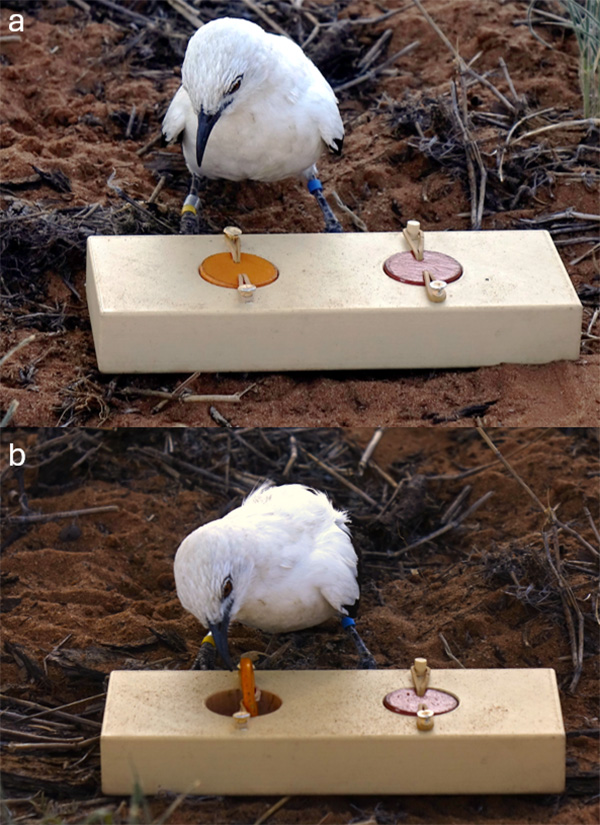
Heat waves can also hamper the ability of animals to learn, as Ridley and her colleagues observed with the southern pied babblers. In one of their experiments, the birds were presented with a simple wooden block with two holes drilled in it, each covered with a lid. If the bird pecked at the lid, it would rotate, revealing either an empty hole or a tasty mealworm (the babblers, Ridley says, “are highly motivated by mealworms”). One lid was dark, and the other a lighter shade of the same color. During heat waves, the birds needed twice as many trials to learn that the mealworm was always hidden under the lid of the same shade.

Two photos: a bird looks at a piece of wood with two holes covered by plastic lids; the bird has pecked and opened one lid.

A wild pied babbler investigates a contraption that holds a tasty mealworm beneath one of two lids. The birds can learn to associate a lid of a particular color shade with the mealworm treat, but when it’s very hot, it takes the birds much longer to do so.

A wild pied babbler investigates a contraption that holds a tasty mealworm beneath one of two lids. The birds can learn to associate a lid of a particular color shade with the mealworm treat, but when it’s very hot, it takes the birds much longer to do so. Credit: Royal Society Open Science

Another group of scientists tested zebra finches, pretty Australian songbirds, and discovered that if temperatures are high, they too have cognitive problems. When figuring out how to get a mealworm out of a see-through tube with an opening at one end, they would just keep pecking on the tube, says study coauthor Elizabeth Derryberry, an evolutionary biologist at the University of Tennessee, Knoxville. It’s the bird equivalent of “banging your head against a brick wall,” she says.

Adding to the tally, several years ago researchers showed that when the heat is on, mice have trouble finding their way around a maze and forget objects they’ve seen the day before. More recently, researchers found that male guppies, popular aquarium fish, also have trouble getting through a maze after spending several days in heat-wave-like 90° water, even if the prize for getting it right is a virgin female—which they tend to find particularly attractive.

For animals such as fish and insects that can’t control their body temperature, heat waves could be particularly detrimental. “Changes in air temperature will affect brain temperature,” says Baird. A hotter brain could hinder the functioning of nerves, and that, she says, “might affect sensing, memory, and learning.”

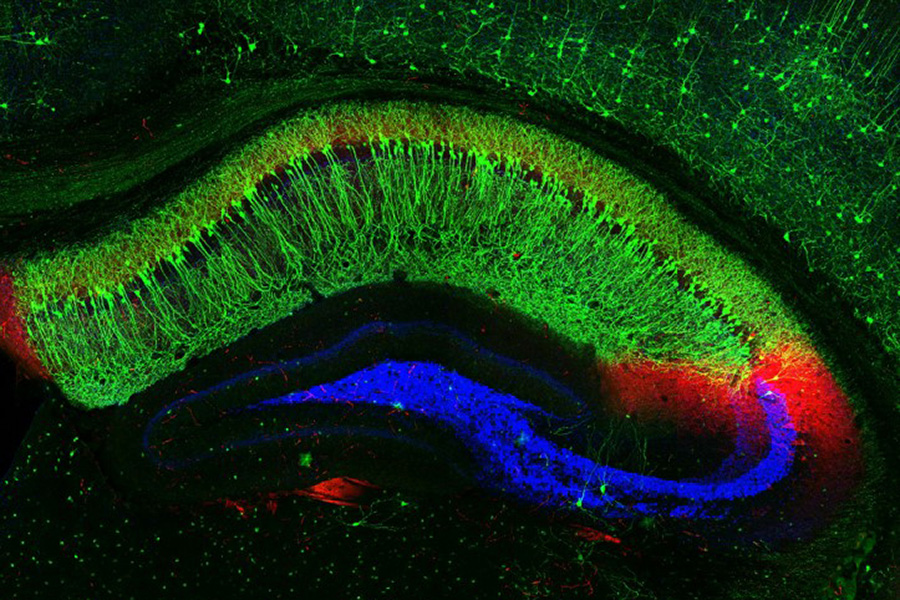
Cross section shows band of cells in the mouse hippocampus.

Cross section shows band of cells in the mouse hippocampus.

Cross section shows band of cells in the mouse hippocampus. Credit: RAUNAK BASU / UNIVERSITY OF UTAH, SALT LAKE CITY

When Baird and colleagues tried to teach bumblebees to associate sweet sucrose with the color blue and bitter quinine with yellow, most of the bumblebees learned the trick at 77°, but fewer than half managed to do so at 90°. Such impaired cognition could spell trouble in the field: If the insects forget which flowers they should pollinate (in the case of bumblebees, these include tomatoes and blueberries) or how to get back home with nectar, not only will the pollinators suffer, but human agriculture too, Baird says.

Heat appears to dangerously diminish animal vigilance as well. In Ridley’s recent experiments, once mercury in the Kalahari Desert reached 96° F, pied babblers lost their ability to properly respond to predators. In their studies, researchers lured birds toward a mystery shape covered in a sandy-colored blanket, using worms as bait. Once a babbler approached, the scientists would reveal what was hidden underneath: either a taxidermied cat-like carnivore called a genet, or a similarly sized and colored wooden box. The birds got scared of the genet in cooler temperatures—they’d call out, scan their surroundings, or simply flee. But once it got hot, they behaved similarly whether they were facing the carnivore or the box. Ridley suggests that this could translate into higher chances of fatal predator attacks as heat rises, which could harm populations of babblers and other prey species.

These studies are not just abstractions. In the Kalahari, where southern pied babblers use their wits to search for worms, temperatures are rising twice as fast as the global average. In tropical rivers, where male guppies seek mates, heat waves are growing longer and more intense. It’s the same story across much of the planet—temperatures climb, and animal thinking becomes strained, potentially putting species at risk. The effects may be magnified in certain areas such as cities, which often exhibit even warmer temperatures than non-urban areas. If anything, Ridley says, “We are probably underestimating the impacts of increased heat on animal minds.”

This story originally appeared on Knowable Magazine

India reports first suspected Ebola case

0
india-reports-first-suspected-ebola-case
India reports first suspected Ebola case


Authorities in India say a woman with a suspected Ebola infection has been placed in quarantine at a hospital in the southern city of Bengaluru.

The union health ministry has said that the individual is stable and that the samples have been sent to the National Institute of Virology for testing.

It, however, stressed that no confirmed Ebola case has been reported so far.

“The government of India is closely monitoring the evolving Ebola Virus Disease situation in view of recent outbreaks reported in parts of Africa,” the ministry said in a statement.

Officials said surveillance and screening measures are being intensified in coordination with Karnataka authorities and in line with WHO guidelines and urged the public not to panic or spread misinformation.

According to reports, the case concerns a traveller with recent travel history from Uganda.

Canada, Bahamas imposes Ebola-related travel bans

Meanwhile, Canada and the Bahamas said on Tuesday they will ​temporarily ban residents from the Democratic Republic of the Congo, Uganda ‌and South Sudan amid an Ebola outbreak.

Residents from those countries will be banned from entering Canada for 90 days starting Wednesday, the Canadian government said. It said ​the temporary border measure aimed to reduce the risk of ​Ebola entering and spreading within Canada.

The Bahamian government added that ⁠its entry restrictions would take immediate effect and remain in place ​for a period of 30 days, subject to review by the Caribbean ​country’s health ministry.

What is Ebola Virus Disease?

Ebola virus disease (EVD) is a severe viral illness that spreads through direct contact with infected blood, bodily fluids, or contaminated surfaces.

Ebola virus disease is one of the world’s deadliest infectious illnesses, with outbreaks mainly occurring in parts of Central and East Africa. The current outbreak involving the Bundibugyo strain has raised concern because no fully approved vaccine or targeted treatment currently exists for this rare variant.

It is not considered an airborne disease like COVID-19. Early symptoms may include:

  • Fever
  • Severe headache
  • Muscle pain
  • Weakness
  • Vomiting
  • Diarrhoea
  • Unexplained bleeding in severe cases

The WHO warns that Ebola outbreaks can have high fatality rates if not contained quickly through isolation, contact tracing, and medical care.

Doctors say travellers returning from affected African countries should immediately report symptoms such as fever or severe body pain and disclose their travel history to healthcare providers.

Martin Scorsese Reportedly Fuming Over ‘Family Rumors’

0
martin-scorsese-reportedly-fuming-over-‘family-rumors’
Martin Scorsese Reportedly Fuming Over ‘Family Rumors’


Martin Scorsese may be one of Hollywood’s most celebrated directors, but even he is not immune from a family drama playing out in the public eye.

The legendary filmmaker’s 26-year-old daughter, Francesca Scorsese, has found herself at the center of a fresh “nepo baby” firestorm after landing a role in the second season of Prime Video’s Mr. and Mrs. Smith.

Now, insiders claim the Goodfellas and Taxi Driver director is privately frustrated by the situation — not because he does not love his daughter, but because he reportedly believes she should let her work speak for itself.

Francesca recently took to TikTok after social media critics slammed her casting and accused her of benefiting from her famous last name. The backlash grew fast, with users dragging her into the never-ending Hollywood nepotism debate.

Francesca did not deny that her family name has opened doors.

“I understand. I know I have doors opened for me,” she said while addressing the online attacks.

But she also pushed back against the cruelty, insisting she is still working hard to build her own career.

“I’m still trying to do the work, I’m still going hard and being passionate and creating and doing the work,” she said.

According to RadarOnline.com, sources close to the family say Martin Scorsese, 83, is not thrilled with the public back-and-forth.

One insider claimed the Oscar-winning director is “old school” and has little patience for what he sees as complaints about criticism.

“Martin is very old school and doesn’t have much patience for all this whining,” the source said. “He believes Francesca has had one of the biggest leg-ups in the business simply because of her surname. In his mind, actors should toughen up, do the work and let the career speak for itself.”

Another industry insider said Scorsese loves his daughter deeply, but comes from a different era of show business.

“Martin adores Francesca, but he comes from a completely different generation of filmmaking,” the source said. “He fought his way through Hollywood and thinks public complaints about trolls can sometimes feed the negativity even more.”

Francesca’s casting in Mr. and Mrs. Smith comes after the Prime Video series became a buzzy hit in its first season. But instead of celebrating the career move, the young actress was hit with waves of online criticism.

She said the comments were among the nastiest she had ever seen.

“It has been some of the worst comments I have ever seen about me,” she said.

The criticism did not stop at her career. Francesca also revealed that many trolls attacked her appearance.

“I get it — I’m not the most beautiful girl in the world. I’m not the skinniest girl in the whole world. I’m chubby, I know it,” she said. “But like, what the f— does it matter?”

She then warned that online cruelty can have serious consequences.

“There’s so many trolls and so many bots and people that just go on to just try to ruin somebody’s day or make somebody feel like s—,” she said.

“This is the kind of thing that causes people to lose their lives — like, your words have power behind them.”

Francesca also said she had already left X because of similar abuse and fears TikTok is becoming just as toxic.

“Come on, guys. I just want TikTok to be a better place like I feel like it used to be,” she said.

The controversy comes as Hollywood continues to wrestle with the “nepo baby” label, a term used for actors, models, musicians and entertainers who are the children of famous stars or industry power players.

For Francesca, that label is nearly impossible to avoid. Her father is one of the most influential directors in American movie history, with classics including Raging Bull, The Irishman, The Wolf of Wall Street, Goodfellas and Taxi Driver.

Still, Martin Scorsese has often spoken warmly about fatherhood and the joy Francesca brought into his life.

During a 2024 appearance on SiriusXM’s This Life of Mine with James Corden, the director said becoming a father later in life gave him a new perspective.

“It was extraordinary and by that point, I was 56 and it was a different perspective on life,” Scorsese said.

He added that Francesca’s birth felt like “some special blessing of some kind.”

But now, that blessing has been dragged into one of Hollywood’s messiest modern debates — whether famous children deserve sympathy for online backlash when their famous names may have helped them get through the door in the first place.

For Francesca, the message is simple: yes, she knows her last name matters. But she says the cruelty has gone too far.

For her father, according to insiders, the message may be even simpler: stop feeding the trolls and prove them wrong on screen.

Iran’s parliament set to vote on Hormuz Strait management bill

0
iran’s-parliament-set-to-vote-on-hormuz-strait-management-bill
Iran’s parliament set to vote on Hormuz Strait management bill

Iran’s parliament is set to vote on a bill that would formalize the country’s management of the Strait of Hormuz, a senior lawmaker said Saturday.

Alaeddin Salimi, a member of the parliament’s presiding board, said lawmakers had made a “definitive decision” to codify the management of the strategic waterway.

“The parliament’s decision to legislate the management of the Strait of Hormuz is final, and this plan will become law,” Salimi told Iran’s semi-official Tasnim News Agency.

He said the parliament would not allow foreign powers to dictate policy regarding the strait.

“Those who say the Strait of Hormuz must remain open should know that this issue concerns us. We will not allow others to decide for us,” he said.

READ: Iranian state TV: US aircraft destroyed near Bushehr

Salimi said all aspects of the proposed legislation would be reviewed and approved by the parliament before taking effect.

According to the lawmaker, the bill will soon be presented in a public parliamentary session for debate and a vote.

The Strait of Hormuz, located between Iran and Oman, is one of the world’s most important energy transit routes, handling a significant share of global oil and gas shipments.

Regional tensions have escalated since the US and Israel launched strikes against Iran in February. Tehran retaliated with attacks targeting Israel and US allies in the Gulf, as well as by closing the Strait of Hormuz.

A ceasefire took effect on April 8 through Pakistani mediation and was later extended indefinitely by US President Donald Trump.

Following stalled negotiations mediated by Islamabad, the US imposed a blockade on Iranian ports on April 13, including those located along the strategic Strait of Hormuz.

Mediation efforts are ongoing to end the conflict and reach a broader agreement between the parties.

READ: US blockade of Strait of Hormuz remains in place, says Pentagon chief

Judge Orders Trump Name Removed From Kennedy Center, Blocks Closure for Repairs 

0
judge-orders-trump-name-removed-from-kennedy-center,-blocks-closure-for-repairs 
Judge Orders Trump Name Removed From Kennedy Center, Blocks Closure for Repairs 


A federal judge has temporarily blocked the Trump administration from closing the Kennedy Center for repairs and ordered President Donald Trump’s name removed from both the building and its website, ruling that the facility cannot be formally renamed without congressional approval. 

The order, issued by US District Judge Christopher Cooper on Friday, requires the administration to eliminate references to Trump from the center and its online presence within 14 days. In a 94-page opinion released on President John F. Kennedy’s birthday, Cooper concluded that the authority to change the institution’s name rests with Congress, not the center’s board. 

“Congress gave the Kennedy Center its name, and only Congress can change it,” Cooper wrote. 

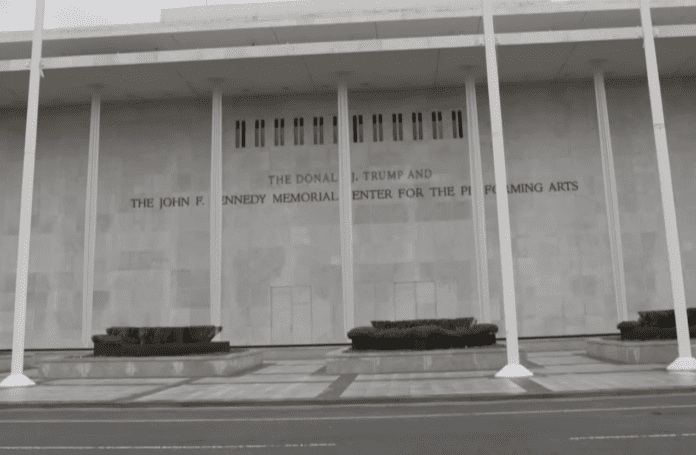
Branding the facility as the “Trump Kennedy Center,” was a move Cooper said went beyond a simple alternative title. He pointed to signage identifying the venue as “The Donald J. Trump and John F. Kennedy Memorial Center for the Performing Arts” and argued that the change altered the institution’s formal identity. 

“The ‘Trump Kennedy Center’ label adds an entirely new name to the Center’s formal title and relegates President Kennedy’s name to second place. If that is not a renaming, what is?” Cooper wrote. 

The judge also dismissed the administration’s argument that no actual renaming had taken place. 

“They instead submit that everything is not what it seems,” Cooper wrote. 

“The rechristening is not, as Defendants suggest, like calling the ‘Bureau of Consumer Financial Protection’ the ‘Consumer Financial Protection Bureau,’ which is merely a clerical rearrangement,” he added. 

President Trump responded by defending plans to overhaul the facility, describing the proposed work as necessary to address serious structural and safety concerns. He also criticized Cooper, accusing him of political bias and conflicts of interest. 

“I cannot be involved with a situation where danger to the Public is allowed to flourish in plain and open sight. Unless I am free to do what I do better than anyone else, bring this Institution back, physically, financially, and artistically, I have no interest in continuing what could only be a hopeless journey into ‘NEVER NEVER LAND,’” President Trump wrote. 

The president said he would seek congressional involvement in the center’s future, adding that he would work with lawmakers “to transfer this failing Institution back to them so they can make a determination as to what to do with it.” 


Oil surges after Iran targets US airbase in retaliation

0
oil-surges-after-iran-targets-us-airbase-in-retaliation
Oil surges after Iran targets US airbase in retaliation


Oil prices jumped more than 3% on Thursday after Iran’s ​Revolutionary Guards said they targeted a U.S. airbase in response ‌to a U.S. attack near Bandar Abbas airport.

Brent crude futures rose $3.51, or 3.72%, to $97.8 a barrel by 0344 GMT, while the more active August contract gained $3.35 or ​3.63%, to $95.6. The July contract is set to expire on Friday.

The ​U.S. West Texas Intermediate futures were up $3.31, or 3.73%, at $91.99.

Both ⁠benchmarks slipped more than 5% to touch their lowest in a ​month in the previous session on the possibility of a U.S.-Iran ​deal to end their war and reopen the Strait of Hormuz.

Iran’s Revolutionary Guards said on Thursday they targeted a U.S. airbase after what they described as an ​early morning U.S. attack near Bandar Abbas airport, Tasnim news agency ​reported.

They warned that any repeat of what they called aggression would draw a “more decisive”.

The ‌U.S. ⁠military launched new strikes in Iran targeting a military site that officials believed posed a threat to U.S. forces and commercial maritime traffic in the strait, a U.S. official told Reuters.

“Oil supply remains constrained, and ​key sticking points ​have yet ⁠to be resolved,” ANZ commodity strategist Daniel Hynes said in a note.

In the U.S., crude oil stockpiles ​fell by 2.8 million barrels last week, the sixth ​straight ⁠week of declines, according to American Petroleum Institute data.

Official inventory data from the U.S. Energy Information Administration are due on Thursday, a day later ⁠than ​usual due to the Memorial Day holiday ​on Monday.

Source:  Reuters

Ceasefires by other means

0
ceasefires-by-other-means
Ceasefires by other means

The week began with the ceasefire in Iran seeming more a negotiation over what the meaning of the war was in the first place, rather than a straightforward attempt at peace. It ended in a similarly surreal position.

In between, Iran accused the US of continuing strikes. Washington described its actions as purely defensive. Reports of a possible 60-day extension moved alongside denials, counterclaims and arguments over Hormuz, the blockade of Iranian ports and the conditions under which commercial shipping might return to something like normal.

As the fighting has slowed, the politics of the war have become more visible.

Ceasefires are often treated simply as pauses in violence. However, their real impact is that they reveal the point at which violence has started to run into political limits. Clausewitz’s formulation was that war is a continuation of political intercourse, with other means added. A ceasefire sits inside this continued political intercourse. It is the moment when leaders begin to question whether force is still helping them get what they want, or whether continued force now threatens something they need more.

That question is unusually difficult in the current war because the American objective has never been especially clear. At different moments, the conflict has looked like a campaign of deterrence, a punishment operation, a nuclear pressure campaign and a maritime crisis over Hormuz.

Those aims overlap, but they do not imply the same kind of war nor a clear fundamental political aim. More importantly, they do not imply the same kind of ceasefire. A ceasefire after punishment requires a claim of restored deterrence. A ceasefire after a maritime crisis requires arrangements that shipowners and insurers believe. A ceasefire after nuclear pressure requires a diplomatic sequence. A ceasefire after regime pressure requires something much larger, and much harder to sustain.

History suggests that a ceasefire generally comes from one of three conditions:

  • The parties have reached a military gridlockl
  • The fighting has opened a diplomatic path.
  • The continuation of war has begun to threaten the political project it was meant to serve.

The 1950s Korean War, the 1973 Arab-Israeli Yom Kippur War and the 1980s Iran-Iraq War show how conflicts only stop when force no longer gives politics what it wants.

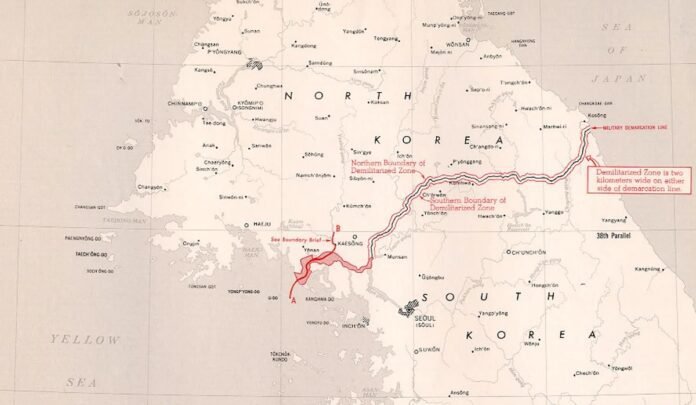
Korea was a ceasefire born from the exhaustion of ambition. The war began with North Korea’s attempt to reunify the peninsula by force, expanded when the US and its allies moved from repelling the invasion to rolling back communist control in the North, and changed again when China entered to prevent that outcome. By 1953, after three years of enormous loss, the front had settled close to where the war had begun, leaving the armistice to formalise a truth that the battlefield had already made plain: neither side could impose reunification at a price it was prepared to keep paying.

The armistice signed in July 1953 ended the fighting without producing a peace treaty. That was its great limitation, but also the source of its durability. It reduced the violence by accepting that the political question would remain unresolved. The Korean peninsula became a place where the war had stopped but the conflict had continued, managed through a line, a zone, forces on alert, and the grim discipline of deterrence. The ceasefire has survived because it asked less of politics than the war had asked of force.

A similar dynamic exists within the current ceasefire between Iran, Israel and the US. They can all still inflict damage, yet none appears able to turn that damage into a settled political result. Israel can strike and degrade Iranian capabilities. Iran can retaliate, disrupt shipping and raise the cost of regional instability. The US can bring enormous force to bear from the air and sea. But the question is no longer whether each side can hurt the other. It is whether additional hurt improves the political position of the side inflicting it.

This is where the American position becomes difficult. Air and naval power are politically available to Washington in a way that a ground war with Iran is not. That does not mean a ground war is imminent, or even likely. It means that the next major rung on the escalation ladder is politically far harder to climb. If the aim is deterrence, strikes may be enough. If the aim is to compel lasting changes in Iranian behaviour, secure the Strait on terms Iran accepts, or force a durable nuclear bargain, the available instruments start to look less decisive. The US has military capacity, but the politically usable portion of that capacity narrows as the objective expands.

The Yom Kippur War gives a different lesson. Egypt and Syria attacked Israel in October 1973, breaking the confidence that had settled over Israel after 1967 and restoring a degree of Arab agency through force. Israel recovered militarily, but the early shock of the war changed the political atmosphere around the conflict. It created danger, including the risk of superpower escalation, but also opened a path for diplomacy. The ceasefire called for by UN Security Council Resolution 338 quickly led to negotiations, disengagement agreements and American mediation.

In this case, the structure of the ceasefire agreement allowed diplomatic escape for all parties. Egypt could present the war as the restoration of honour and the crossing of the Canal. Israel could present the outcome as survival and military recovery. The US could turn a dangerous regional war into a diplomatic opening. The ceasefire became more than a pause because it gave each side a way to describe the political meaning of restraint. It did not resolve the more pernicious Arab-Israeli conflict, but it created movement where the previous order had hardened.

That is the more hopeful reading of the current 60-day proposal. The timeframe itself is less important than what the parties try to put inside it. If the extension begins to connect Hormuz, port access, shipping safety, sanctions, oil sales and nuclear talks into a sequence, then the ceasefire may become politically useful. If those issues remain separate bargaining chips, the pause will struggle to carry much weight. The region has already had enough moments where violence stopped long enough for each side to reload its argument. A serious ceasefire needs to do more than lower the intensity of conflict.

Iran-Iraq gives the third lesson, and perhaps the most useful one for understanding Tehran. Iraq invaded Iran in 1980, expecting the revolutionary state to be weak and disorganised. The war became a brutal struggle of survival, nationalism and ideology. Iran framed endurance as part of the revolution, which made the eventual acceptance of a ceasefire in 1988 politically painful. Khomeini’s famous phrase about drinking from a poisoned chalice captured the humiliation of stopping a war that had been sanctified through sacrifice.

Yet Iran did stop eventually. The regime did not abandon its ideology, but it accepted that continuing the war threatened the state and the revolution more than ending it did. That remains a useful corrective to lazy assumptions about Tehran. Ideological regimes can be highly pragmatic when survival is at stake, though they will usually translate pragmatism into the language of dignity, endurance and resistance. This is an emerging issue as the ultra-conservative branch of Iranian politics, the Paydari faction, continues to push for maximalist demands in negotiations. However, it seems that despite conflicting internal politics, the pragmatic considerations may just win out. A ceasefire can therefore be both humiliating and necessary, both publicly defiant and privately realistic.

That lesson applies to Iran now, although the circumstances are different. Tehran can use Hormuz, proxies, missiles, drones and attrition to make the war expensive for others. It can survive punishment better than its enemies may wish to admit. But it also must protect the regime, preserve its economic oxygen, and avoid a conflict that brings about a wider coalition against it. The more the war spreads into shipping, oil, sanctions and domestic strain, the more Tehran has to ask whether continued confrontation is strengthening the regime or trapping it inside a contest it can no longer control.

Israel faces a different version of the same question. It can keep striking Iranian assets and preserve freedom of action across several theatres, especially where Iranian-linked forces are present. It can claim tactical success with some justification. But tactical success still has to be converted into a strategic condition that can be maintained. If the aim is to restore deterrence, the ceasefire gives Israel a way to say that the message has been sent. If the aim is to force a deeper change in Iranian conduct, Israel needs a longer campaign and heavier American commitment.

The US is the most exposed to that problem because its role in the conflict has been the hardest to explain cleanly. Trump can claim that force brought Iran toward a deal, and that may be true in part. But if the ceasefire depends on reopening Hormuz, relaxing pressure on ports, allowing some oil to move and returning to nuclear talks, then the result starts to look less like coercion producing surrender and more like coercion producing a bargain. That may still be a good outcome. It is simply a different one from the language of overwhelming punishment.

This is where a recent piece on Gallipoli by Michael Feller and myself is relevant. The danger in Hormuz has never been confined to whether the US can strike targets around the Strait. The harder question is whether it can restore commercial confidence, protect shipping, contain Iran, reassure Gulf partners and avoid being pulled into a larger war on terms set partly by geography. As we argued in the Gallipoli piece, access is not the same as control. In Hormuz, that distinction is now shaping the ceasefire.

The proposed 60-day extension therefore has to be judged by what it clarifies. If it clarifies the American objective, restores credible movement through Hormuz, and creates a path back to nuclear diplomacy, then the ceasefire may become a serious political instrument. If it leaves the objective blurred, while Iran and the US continue trading accusations and Israel preserves a separate tempo of action, then the pause will look more like an accommodation with risk than a path out of the war.

The history of ceasefires is helpful here because it keeps us from asking the wrong question. The issue is not whether the parties trust one another. They do not. Korea endured without reconciliation. The 1973 ceasefire worked because diplomacy quickly gave the pause direction. Iran accepted a ceasefire with Iraq because continuing had become more dangerous than stopping. In each case, the ceasefire emerged when force had reached the edge of its political usefulness.

For business, the immediate problem is the lack of clarity around the political objective behind the ceasefire. Energy prices, freight, insurance, sanctions exposure and Gulf investment all become harder to judge when the conflict moves between deterrence, nuclear pressure, maritime access and regime pressure without settling into one clear frame. Markets can adjust to bad outcomes when an end-state is visible. They struggle when the objective keeps shifting, especially in a conflict centred on Hormuz, where a narrow maritime corridor carries consequences for oil, inflation, aviation, insurance and confidence well beyond the Gulf.

Signals will be difficult to track as political objectives continue to change, but there are some important practicalities to track. A real extension should begin to show up in shipping behaviour, insurance pricing, port access, sanctions language and the tone of nuclear diplomacy. Washington’s language will matter because companies need to know whether the ceasefire is attached to a narrower bargain or a wider campaign of pressure. Iran’s behaviour around Hormuz will matter because commercial confidence depends on more than formal access to the Strait. Israel’s actions across Iranian-linked theatres will matter because a ceasefire in one channel can be undermined by escalation in another. Behind all of this sits the question of whether the US has restored order, or merely demonstrated again that the region’s commercial future depends on a security system that keeps producing crises.

Originally published by GeopoliticalDisptatch, this article is republished with kind permission.

Jamie Lee Curtis Reveals Heartbreaking News

0
jamie-lee-curtis-reveals-heartbreaking-news
Jamie Lee Curtis Reveals Heartbreaking News


Jamie Lee Curtis is mourning a devastating family loss.

The Oscar-winning actress revealed Saturday that her older sister, Kelly Lee Curtis, has died at the age of 69.

In an emotional Instagram tribute, the Halloween and Freaky Friday star shared a black-and-white photo of Kelly Lee smoking a cigarette while getting her hair styled. Alongside the striking image, Jamie wrote a farewell that was filled with love, memories, and heartbreak.

“A warm aloha to my older sister, Kelly Lee Curtis,” Jamie wrote.

She said Kelly Lee died “this morning” at her home, surrounded by nature and “at peace.”

The loss marks a painful goodbye for Jamie, 67, who described her sister as much more than family. Kelly Lee, she wrote, was her “first friend and lifelong confidant.”

Jamie also remembered her sister as “jaw droppingly beautiful” and a talented actress with a bold personality, deep passions, and a memorable sense of style.

Kelly Lee, the daughter of Hollywood legends Tony Curtis and Janet Leigh, grew up in the glare of old-school movie fame. But according to Jamie’s tribute, she was also a woman with simple joys and strong opinions.

“She played a mean game of hearts, collected turtles, loved her family, nature, music, thrifting, travel, Facebook, and Pokémon Go,” Jamie wrote.

The actress also said her sister was proud of her Danish roots and Hungarian Jewish ancestry, calling her “a devoted American patriot.”

Jamie painted a vivid picture of a woman who loved fiercely, spoke her mind, and left her own mark on everyone around her.

She said Kelly Lee will be remembered for her “loving generosity, fierce opinions, endless curiosity, unique style,” and her famous powdered almond crescent cookies at Christmas. The holiday treats were so beloved that they earned her the family nickname “Auntie Cookie.”

Jamie also shared that Kelly Lee often ended her messages with a Hungarian blessing: “Isten Veled,” meaning “God is with you.”

The True Lies star ended her tribute with one final goodbye.

“Isten Veled to my sister of the sun and the moon, my Tai,” Jamie wrote. “I’ll see you on down the line.”

Kelly Lee Curtis was born in 1956, the first daughter of Tony Curtis and Janet Leigh, two of Hollywood’s biggest stars. Tony and Janet married in 1951 and divorced in 1962 after 11 years together.

Kelly Lee and Jamie were raised in Los Angeles, surrounded by the movie business that made their parents famous. Both sisters eventually followed the family path into acting.

Kelly Lee appeared alongside Jamie in the 1983 comedy Trading Places. She also worked as a production assistant on Jamie’s 2003 remake of Freaky Friday.

Her television credits included appearances on Judging Amy, Star Trek: Deep Space Nine, The Equalizer, and other shows.

Kelly Lee married playwright Scott Morfee in 1989.

She is survived by her husband and her siblings, including Jamie Lee Curtis, Alexandra Curtis, Allegra Curtis, and Benjamin Curtis. Another brother, Nicholas Curtis, died in 1994.

For fans of classic Hollywood, Kelly Lee Curtis was part of one of the industry’s most famous families. But for Jamie Lee Curtis, she was something far more personal: a sister, a confidant, and a lifelong friend.

Now, Jamie is saying goodbye with the same blessing Kelly Lee carried through life.

God is with you.

0FansLike
0FollowersFollow
0FollowersFollow
0SubscribersSubscribe
- Advertisement -
Google search engine

Recent Posts