The week began with the ceasefire in Iran seeming more a negotiation over what the meaning of the war was in the first place, rather than a straightforward attempt at peace. It ended in a similarly surreal position.
In between, Iran accused the US of continuing strikes. Washington described its actions as purely defensive. Reports of a possible 60-day extension moved alongside denials, counterclaims and arguments over Hormuz, the blockade of Iranian ports and the conditions under which commercial shipping might return to something like normal.
As the fighting has slowed, the politics of the war have become more visible.
Ceasefires are often treated simply as pauses in violence. However, their real impact is that they reveal the point at which violence has started to run into political limits. Clausewitz’s formulation was that war is a continuation of political intercourse, with other means added. A ceasefire sits inside this continued political intercourse. It is the moment when leaders begin to question whether force is still helping them get what they want, or whether continued force now threatens something they need more.
That question is unusually difficult in the current war because the American objective has never been especially clear. At different moments, the conflict has looked like a campaign of deterrence, a punishment operation, a nuclear pressure campaign and a maritime crisis over Hormuz.
Those aims overlap, but they do not imply the same kind of war nor a clear fundamental political aim. More importantly, they do not imply the same kind of ceasefire. A ceasefire after punishment requires a claim of restored deterrence. A ceasefire after a maritime crisis requires arrangements that shipowners and insurers believe. A ceasefire after nuclear pressure requires a diplomatic sequence. A ceasefire after regime pressure requires something much larger, and much harder to sustain.
History suggests that a ceasefire generally comes from one of three conditions:
- The parties have reached a military gridlockl
- The fighting has opened a diplomatic path.
- The continuation of war has begun to threaten the political project it was meant to serve.
The 1950s Korean War, the 1973 Arab-Israeli Yom Kippur War and the 1980s Iran-Iraq War show how conflicts only stop when force no longer gives politics what it wants.
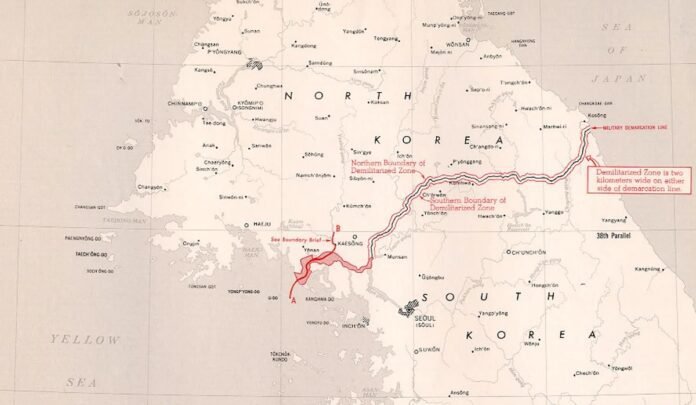
Korea was a ceasefire born from the exhaustion of ambition. The war began with North Korea’s attempt to reunify the peninsula by force, expanded when the US and its allies moved from repelling the invasion to rolling back communist control in the North, and changed again when China entered to prevent that outcome. By 1953, after three years of enormous loss, the front had settled close to where the war had begun, leaving the armistice to formalise a truth that the battlefield had already made plain: neither side could impose reunification at a price it was prepared to keep paying.
The armistice signed in July 1953 ended the fighting without producing a peace treaty. That was its great limitation, but also the source of its durability. It reduced the violence by accepting that the political question would remain unresolved. The Korean peninsula became a place where the war had stopped but the conflict had continued, managed through a line, a zone, forces on alert, and the grim discipline of deterrence. The ceasefire has survived because it asked less of politics than the war had asked of force.
A similar dynamic exists within the current ceasefire between Iran, Israel and the US. They can all still inflict damage, yet none appears able to turn that damage into a settled political result. Israel can strike and degrade Iranian capabilities. Iran can retaliate, disrupt shipping and raise the cost of regional instability. The US can bring enormous force to bear from the air and sea. But the question is no longer whether each side can hurt the other. It is whether additional hurt improves the political position of the side inflicting it.
This is where the American position becomes difficult. Air and naval power are politically available to Washington in a way that a ground war with Iran is not. That does not mean a ground war is imminent, or even likely. It means that the next major rung on the escalation ladder is politically far harder to climb. If the aim is deterrence, strikes may be enough. If the aim is to compel lasting changes in Iranian behaviour, secure the Strait on terms Iran accepts, or force a durable nuclear bargain, the available instruments start to look less decisive. The US has military capacity, but the politically usable portion of that capacity narrows as the objective expands.
The Yom Kippur War gives a different lesson. Egypt and Syria attacked Israel in October 1973, breaking the confidence that had settled over Israel after 1967 and restoring a degree of Arab agency through force. Israel recovered militarily, but the early shock of the war changed the political atmosphere around the conflict. It created danger, including the risk of superpower escalation, but also opened a path for diplomacy. The ceasefire called for by UN Security Council Resolution 338 quickly led to negotiations, disengagement agreements and American mediation.
In this case, the structure of the ceasefire agreement allowed diplomatic escape for all parties. Egypt could present the war as the restoration of honour and the crossing of the Canal. Israel could present the outcome as survival and military recovery. The US could turn a dangerous regional war into a diplomatic opening. The ceasefire became more than a pause because it gave each side a way to describe the political meaning of restraint. It did not resolve the more pernicious Arab-Israeli conflict, but it created movement where the previous order had hardened.
That is the more hopeful reading of the current 60-day proposal. The timeframe itself is less important than what the parties try to put inside it. If the extension begins to connect Hormuz, port access, shipping safety, sanctions, oil sales and nuclear talks into a sequence, then the ceasefire may become politically useful. If those issues remain separate bargaining chips, the pause will struggle to carry much weight. The region has already had enough moments where violence stopped long enough for each side to reload its argument. A serious ceasefire needs to do more than lower the intensity of conflict.
Iran-Iraq gives the third lesson, and perhaps the most useful one for understanding Tehran. Iraq invaded Iran in 1980, expecting the revolutionary state to be weak and disorganised. The war became a brutal struggle of survival, nationalism and ideology. Iran framed endurance as part of the revolution, which made the eventual acceptance of a ceasefire in 1988 politically painful. Khomeini’s famous phrase about drinking from a poisoned chalice captured the humiliation of stopping a war that had been sanctified through sacrifice.
Yet Iran did stop eventually. The regime did not abandon its ideology, but it accepted that continuing the war threatened the state and the revolution more than ending it did. That remains a useful corrective to lazy assumptions about Tehran. Ideological regimes can be highly pragmatic when survival is at stake, though they will usually translate pragmatism into the language of dignity, endurance and resistance. This is an emerging issue as the ultra-conservative branch of Iranian politics, the Paydari faction, continues to push for maximalist demands in negotiations. However, it seems that despite conflicting internal politics, the pragmatic considerations may just win out. A ceasefire can therefore be both humiliating and necessary, both publicly defiant and privately realistic.
That lesson applies to Iran now, although the circumstances are different. Tehran can use Hormuz, proxies, missiles, drones and attrition to make the war expensive for others. It can survive punishment better than its enemies may wish to admit. But it also must protect the regime, preserve its economic oxygen, and avoid a conflict that brings about a wider coalition against it. The more the war spreads into shipping, oil, sanctions and domestic strain, the more Tehran has to ask whether continued confrontation is strengthening the regime or trapping it inside a contest it can no longer control.
Israel faces a different version of the same question. It can keep striking Iranian assets and preserve freedom of action across several theatres, especially where Iranian-linked forces are present. It can claim tactical success with some justification. But tactical success still has to be converted into a strategic condition that can be maintained. If the aim is to restore deterrence, the ceasefire gives Israel a way to say that the message has been sent. If the aim is to force a deeper change in Iranian conduct, Israel needs a longer campaign and heavier American commitment.
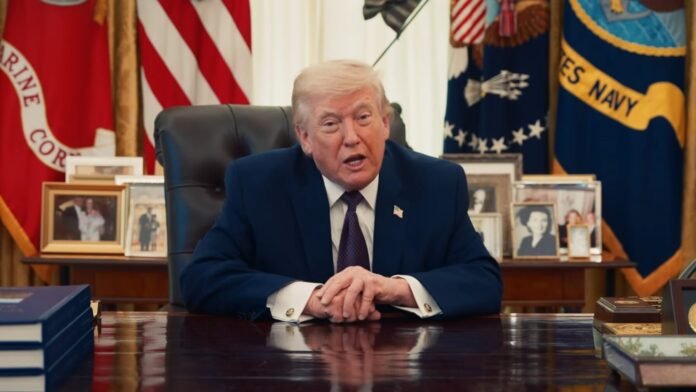
The US is the most exposed to that problem because its role in the conflict has been the hardest to explain cleanly. Trump can claim that force brought Iran toward a deal, and that may be true in part. But if the ceasefire depends on reopening Hormuz, relaxing pressure on ports, allowing some oil to move and returning to nuclear talks, then the result starts to look less like coercion producing surrender and more like coercion producing a bargain. That may still be a good outcome. It is simply a different one from the language of overwhelming punishment.
This is where a recent piece on Gallipoli by Michael Feller and myself is relevant. The danger in Hormuz has never been confined to whether the US can strike targets around the Strait. The harder question is whether it can restore commercial confidence, protect shipping, contain Iran, reassure Gulf partners and avoid being pulled into a larger war on terms set partly by geography. As we argued in the Gallipoli piece, access is not the same as control. In Hormuz, that distinction is now shaping the ceasefire.
The proposed 60-day extension therefore has to be judged by what it clarifies. If it clarifies the American objective, restores credible movement through Hormuz, and creates a path back to nuclear diplomacy, then the ceasefire may become a serious political instrument. If it leaves the objective blurred, while Iran and the US continue trading accusations and Israel preserves a separate tempo of action, then the pause will look more like an accommodation with risk than a path out of the war.
The history of ceasefires is helpful here because it keeps us from asking the wrong question. The issue is not whether the parties trust one another. They do not. Korea endured without reconciliation. The 1973 ceasefire worked because diplomacy quickly gave the pause direction. Iran accepted a ceasefire with Iraq because continuing had become more dangerous than stopping. In each case, the ceasefire emerged when force had reached the edge of its political usefulness.
For business, the immediate problem is the lack of clarity around the political objective behind the ceasefire. Energy prices, freight, insurance, sanctions exposure and Gulf investment all become harder to judge when the conflict moves between deterrence, nuclear pressure, maritime access and regime pressure without settling into one clear frame. Markets can adjust to bad outcomes when an end-state is visible. They struggle when the objective keeps shifting, especially in a conflict centred on Hormuz, where a narrow maritime corridor carries consequences for oil, inflation, aviation, insurance and confidence well beyond the Gulf.
Signals will be difficult to track as political objectives continue to change, but there are some important practicalities to track. A real extension should begin to show up in shipping behaviour, insurance pricing, port access, sanctions language and the tone of nuclear diplomacy. Washington’s language will matter because companies need to know whether the ceasefire is attached to a narrower bargain or a wider campaign of pressure. Iran’s behaviour around Hormuz will matter because commercial confidence depends on more than formal access to the Strait. Israel’s actions across Iranian-linked theatres will matter because a ceasefire in one channel can be undermined by escalation in another. Behind all of this sits the question of whether the US has restored order, or merely demonstrated again that the region’s commercial future depends on a security system that keeps producing crises.
Originally published by GeopoliticalDisptatch, this article is republished with kind permission.