Taiwan’s more relaxed than most of us about Trumpian deal-making
The most common worry expressed around the world concerning the summit meeting in Beijing on May 14-15 was the fear that the future of Taiwan and its 23 million residents might be traded off in a deal between the men leading the world’s two true superpowers, Xi Jinping and Donald Trump.
The American president might soften his country’s support for Taiwan in return for Chinese help in ending the war in Iran. He might get such spectacular promises from Xi of Chinese purchases of soybeans or Boeing aircraft that he would agree to reduce US sales of weapons to Taiwan.
As far as we can tell from this secretive summit from which few public statements emerged, no such deal was done.
The call between Prime Minister Sanae Takaichi and President Donald Trump that took place immediately after he had left Beijing would have been mostly to reassure her and the Japanese government that nothing had changed, especially given the tension between China and Japan since Takaichi’s remarks in the Diet last October concerning how Japan would respond to a military confrontation between China and Taiwan.
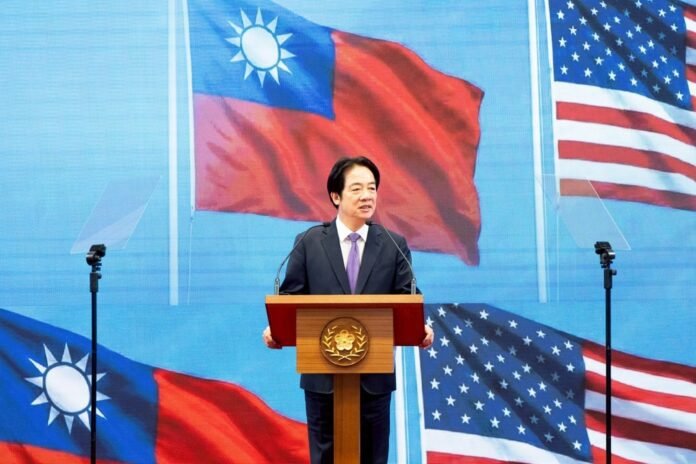
This won’t bring the worrying to an end, especially as Trump and Xi have agreed to meet again on September 24, this time in Washington, DC. What is notable, however, is that one place in Asia where the whole theatre of the Trump-Xi dialogue appeared to be taken calmly, without serious worries, was Taiwan itself.
Even Trump’s statement, made during his flight back to Washington, that he had not yet decided whether to give his approval to a proposed US$14 billion package of weapons sales to Taiwan seemed to cause few waves in Taipei. (Trump later also described the arms sales decision as “a good negotiating chip” with China as well as renewing old – and false – accusations that Taiwan had “stolen” the semiconductor business from America.)
There is no doubt that Taiwan ranks number one among all the potential flashpoints capable of causing a catastrophic conflict between the world’s nuclear superpowers and of creating an economic crisis that would make the current pain caused by the closure of the Straits of Hormuz look trivial.
Those are powerful reasons to do everything possible, diplomatically and militarily, to make such a conflict less likely to break out. The stakes in any conflict over Taiwan in terms of strategic control over the western Pacific and, arguably, in terms of global leadership would be so high as to make it terrifyingly likely that nuclear weapons would be used in such a war for the first time since the Hiroshima and Nagasaki bombs of 1945.
So it is worth asking why Taiwan itself seems comparatively relaxed about the potential implications of the Trump-Xi summits. This may help us separate the noise that inevitably surrounds these summits from the true strategic signals that both sides are conveying.
One reason why Taiwan is less concerned than others is a simple one: it has had to learn to live with its geopolitically anomalous status for nearly 80 years now. If it got nervous every time the Chinese and American leaders talked, even ones like Xi and Trump, it would soon have a nervous breakdown.
Moreover, while certainly the People’s Republic of China has become vastly stronger in economic, military and political terms, especially over the past two decades, so has Taiwan. The Taiwanese know that they could not defeat China in a head-on conflict but they also know that they are strong enough to impose huge costs and pose high risks for China.
Ukraine’s success in resisting Russia’s invasion since February 2022 serves as an inspiration for Taiwan but most of all as a warning to China.
What matters to Taiwan is that it can keep on strengthening its defenses sufficiently to help deter an invasion.
Taiwan’s government – led by President Lai Ching-te of the Democratic People’s Party (DPP), which has run the island since 2016 – has been trying to persuade the Legislative Yuan, Taiwan’s Parliament, to approve a big expansion in the defense budget, to be used both to buy more American weapons and to expand the island’s own defense production.
This has been a struggle as the DPP has not enjoyed a majority in the Yuan since a general election in January 2024. On May 8 the Yuan finally approved extra defense spending of US$25 billion, but that expansion was a lot smaller than the US$40 billion that the DPP government had asked for.
Among challenges to Taiwan and the deterrence it can present against Chinese forces, domestic politics have been more importan than Trump’s diplomacy with Xi over arms sales.
In any case, the impact of America’s war in Iran on US stockpiles and delivery schedules for the most advanced weapons and defense systems means that, whatever Trump decides about the US$14 billion package, it will be a long time before the weapons arrive.
Meanwhile, efforts are likely to be concentrated on expanding domestic manufacturing, especially of drones.
Taiwan certainly would be concerned if an American president were to pledge to end arms sales to the island or to drastically reduce them. But the Taiwanese also know two important things:
In the US Congress there is a clear and consistent majority in favor of supplying weapons to Taiwan, one that will probably become stronger after the midterm congressional elections in November; and
America will have a new president in 2029. The planning horizon for defense spending and investment is far longer than the American electoral cycle.
What will have been noted closely in Taipei will not have been the speculation and other noise surrounding the Beijing summit but rather the consistency of the lines taken by both leaders.
Xi sounded his usual warnings against foreign interference over the Taiwan question, warnings that are highly familiar to Takaichi and Japan, but he gave no indication of extra urgency.
Trump is not famous for sticking to official scripts, but he did appear to do so over Taiwan. He even emphasized America’s longstanding policy of “strategic ambiguity” over whether it would intervene militarily to protect Taiwan.
He will have felt politically pleased thereby to diverge from the relative clarity that his predecessor President Joe Biden had expressed in 2021-22 about his willingness to fight. But that period, during Russia’s invasion of Ukraine, was one of special uncertainty about the intentions of both Russia and China. A return to strategic ambiguity does not count in Taiwan’s eyes as a change of American policy.
The ultimate lesson is that the status of Taiwan is a long-term concern, not one that is liable to be affected by the kabuki drama of presidential summits.
China knows that its best hope lies not in presidential deals with Trump but in getting a president into office in Taiwan, after the next elections there in early 2028, who is more favorable towards China than Lai Ching-te. If that can be done, then the effort to cajole and if necessary coerce Taiwan towards absorption into China can begin.
It still won’t be easy, as Taiwanese public opinion remains strongly opposed to absorption. But that is the real strategic timetable, and it is not one that will be centered on the man in the White House, much though Trump likes to think he should be the center of everything.
This English original of an article published in Japanese and English by the Mainichi Shimbun is republished with kind permission. Along with many other articles it can also be found on Bill Emmott’s Global View.
Shangri-La Dialogue opens as Asia seeks alternatives to US shield
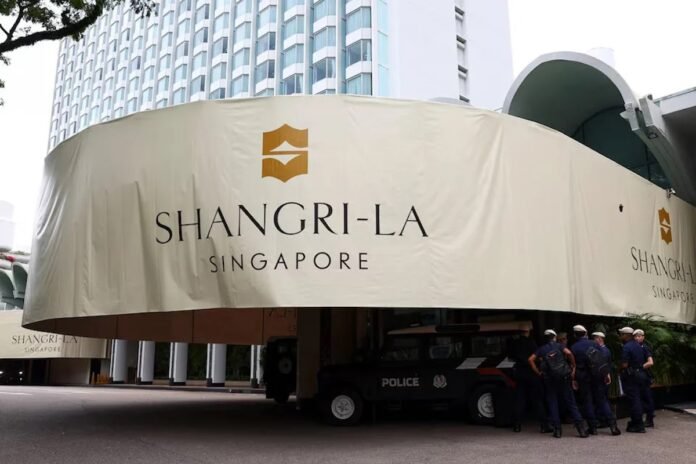
As Asia’s premier defense forum opens in Singapore on May 29, the annual Shangri-La Dialogue is morphing from a venue of superpower posturing into a high-stakes market for strategic hedging.
Driven by cascading conflicts in the Middle East, intensifying great-power friction and a corrosive skepticism over the longevity of the US-led security umbrella, Indo-Pacific nations are rewriting their defense playbooks.
Formally organized by the International Institute for Strategic Studies (IISS), the three-day summit has long been the region’s premier security clearinghouse. But this year’s gathering arrives at a precarious inflection point.
While formal speeches by visiting defense chiefs will command the podium, the true currency of the forum is moving to the hotel corridors and closed-door lounges.
It is here that regional players, increasingly wary of Washington’s overextended global commitments, are looking to diversify their security portfolios.
The primary anxiety animating this year’s dialogue is whether a distracted Washington can simultaneously underwrite security in Europe, the Middle East and Asia.
The inconclusive fallout from the recent Iran conflict has only sharpened those doubts, leaving both traditional allies and non-aligned states questioning the reliability of American security guarantees.
Speaking to Asia Times, defense analysts point out that this credibility deficit is forcing a fundamental reassessment of traditional alliances.
Jaglul Ahmed, a retired brigadier general and security analyst from Bangladesh, noted that the current global architecture is failing to provide the ironclad reassurance that US allies increasingly demand.
In his view, the strategic fallout from the Middle East will compel both major and minor powers to pivot, pushing the “Indo-Pacific toward a regional approach anchored in strategic autonomy rather than overreliance on a singular superpower.”
This calculus is notably shifting European perspectives as well. According to Ahmed, European delegates at Shangri-La are likely to hedge their bets, viewing China with an eye toward securing maritime commerce given Beijing’s significant diplomatic leverage over Tehran.
For secondary powers, the objective is no longer choosing a side, but managing exposure.
Nitin Gokhle, editor of the Indian defense portal Bharatshakti.in, told Asia Times that this year’s iteration will be defined by countries protecting their positions in an increasingly volatile climate.
With top-level ministerial gaps from giants like India and China, Gokhle expects the US to “dominate the public stage,” yet he emphasizes that the critical matchmaking will occur out of camera range.
Close attention will be paid to the bilateral itinerary of high-level officials, including US “figures like Pete Hegseth,” though decoding the quiet signals sent from those private rooms will be complex.
Ironically, the most urgent concern hummed among Southeast Asian diplomats isn’t the sheer scale of China’s military expansion, but the erratic nature of American foreign policy. Washington routinely brands the Indo-Pacific as its primary theater, yet its actions tell a more fractured story.
The issue is less about the inherent friction between Washington and Beijing and more about the dizzying policy shifts coming from the US, Eric Olander, editor-in-chief of the China Global South Project, explained to Asia Times.
He pointed to glaring structural contradictions: the US insists the region is its top priority, yet it simultaneously “pulls vital resources from South Korea to stabilize the Middle East and wavers on hardware deliveries to Taiwan.”
Furthermore, while Washington pays lip service to minilateral groupings like the Quad, a looming undercurrent remains: President Donald Trump’s historic indifference to traditional multilateral frameworks.
This perceived vacillation is accelerating a quiet revolution in regional arms procurement. Rather than waiting on delayed or politically conditioned American hardware, Southeast Asian nations are aggressively diversifying their arsenals.
The deployment of Indo-Russian BrahMos supersonic cruise missiles to the Philippines —with Indonesia and Vietnam poised to follow — alongside Hanoi’s recent defense procurement deals with South Korea, underscores a rapid pivot toward alternative security partnerships, said Olander.
This fluid landscape is also shifting Beijing’s anxiety. While China remains the focal point of Western rhetoric at the forum, Olander suggested its deepest strategic headache at Shangri-La may “actually be Tokyo.”
There is a palpable, rising concern in Beijing that Japan is moving “aggressively to occupy the geopolitical vacuum” left by an inconsistent US, positioning itself as the new, assertive anchor of a post-American security architecture in the Asia-Pacific, Olander pointed out.
Ultimately, the 2026 Shangri-La Dialogue will serve as an early look at a more fragmented region — one where nations are discovering that in a world of unreliable superpowers, self-reliance is the only durable currency, as experts envisaged.
Here’s why the failure of Blue Origin’s New Glenn rocket is so catastrophic
Thursday night’s detonation of Blue Origin’s New Glenn rocket during a static-fire test produced a spectacular fireball over Florida, sending shards of the rocket flying far and wide, into the sea and across the coastal scrubland nearby.
With sunrise on Friday teams from Blue Origin, the US Space Force, and NASA will be able to begin more thoroughly assessing the damage to Blue Origin’s facilities and begin picking up pieces of the rocket.
Metaphorically, the effort to pick up pieces will extend far beyond Blue Origin. This launch failure will be devastating not just for Blue Origin but also NASA and broad segments of the US space industry. Here’s a look at some of the major issues that will stem from the explosion.
No launch pad
There’s a reason why, before the very first launch of the Falcon Heavy rocket in 2018, SpaceX founder Elon Musk defined success as the vehicle clearing the launch pad. “I hope that it makes it far enough away from the pad that it does not cause pad damage,” he said. “I would consider even that a win to be honest.” Musk had similar thoughts about the first Starship launch, saying he would consider anything that did not destroy the launch mount a “win.”
Big rockets produce big explosions. And ground infrastructure is a challenging and underrated component of a rocket launch.
Multiple sources have confirmed that there is significant damage to Blue Origin’s launch site in Florida, LC-36A. The company invested years and at least hundreds of millions of dollars in this facility. The scale of the massive lightning towers is difficult to comprehend unless one has climbed one of them.
The company does not have another launch site for New Glenn. It has begun preliminary work on a nearby pad, LC-36B, and has plans to develop another site at Vandenberg Space Force Base in California. But these projects are just getting started.
Rebuilding the company’s pad, or finishing a new one, will likely take at least a year, even with a major effort by Blue Origin, and drawing upon Jeff Bezos’ nearly infinite resources. One source familiar with pad rebuilds estimated that 15 months was a “best case” scenario.
A maturing design
You might wonder what the big deal is. SpaceX has been blowing up Starship rockets left and right, and the space nerds seem to be cheering them on.
The reality is that Blue Origin took a more traditional design route with New Glenn, as opposed to SpaceX’s iterative design, which seeks to test, fly, fail, and fix hardware. The New Glenn first stage had performed nearly flawlessly during its first three flights. It is a mature design.
Because of this, Blue Origin had reached the point where it was poised to begin near-monthly launches of the vehicle during the second half of the year, serving a variety of customers, from NASA to Amazon, AST SpaceMobile, and its own internal payloads.
With the Vulcan rocket also currently offline due to an anomaly, it once again places all of the US medium- and heavy-lift launch capacity in SpaceX’s basket, with its Falcon 9 and Falcon Heavy rockets.
Speaking of Vulcan, if this is a problem with the BE-4 engine—and early indications are that the anomaly leading to Thursday night’s failure originated in the central engine of the booster—it would further compound United Launch Alliance’s difficulties in getting the large rocket back into service.
Blue Moon Mark 1
Blue Origin’s cargo lander has emerged as the supreme workhorse of the early stages of NASA’s Artemis program and Moon Base. It has a capacity to deliver up to 3 tons to the lunar surface and would serve as a pathfinder for a larger version of a lander to take humans to the Moon.
This week, NASA announced that its Moon Base I mission would fly on Blue Moon Mark 1, and it awarded Blue Origin $280.4 million to deliver two lunar rovers in 2028. Multiple other missions are planned on the lander, which was designed to be sent to the Moon on a single New Glenn vehicle.
Could Blue Moon Mark 1 launch on other rockets? SpaceX’s Falcon Heavy and United Launch Alliance’s Vulcan vehicles both likely have the lift capacity to push the vehicle to the Moon. But Vulcan is also sidelined at present and has a long line of Space Force payloads in the queue. So what of Falcon Heavy?
The Mark 1 lander is powered by the BE-7 engine, which runs on liquid hydrogen and liquid oxygen. There may be compatibility issues related to the Falcon rocket’s kerosene-powered upper stage, although this has not been confirmed. Also, it is unlikely that Blue Origin would partner with a direct rival, SpaceX, in this manner.
Artemis program
Due to the Mark 1 issues outlined above, there will either be significant delays to, or the need to restructure the early phases of, the Moon Base program. The lunar rovers under development by Astrolab and Lunar Outpost, for example, have a mass of about 1 ton. Only Mark 1 and SpaceX’s Starship have that kind of delivery capacity.
There are also major implications for the main Artemis crewed missions.
NASA recently changed Artemis III to become a mission that will see the Orion spacecraft rendezvous with one or both of the Human Landing Systems under development by Blue Origin (Blue Moon) and SpaceX (Starship) in low-Earth orbit. NASA appears determined to launch this mission in 2027 and plans to announce its four crew members in a couple of weeks.
But it’s now all but certain that a Blue Moon lander will not be ready for such a mission within the next 18 months. NASA will need to decide whether to wait on Blue Origin or press ahead solely with a Starship mission.
As for Artemis IV, the lunar landing mission, this failure further complicates that plan. It is difficult to imagine a scenario in which a crew-rated Blue Moon lander is ready at any point in 2028 now. Even if the hardware is far along, Blue Origin still needs to fly test missions with Blue Moon Mark 1, which are on hold indefinitely.
A number of senior NASA officials had come to view Blue Origin’s plan to use a slimmed down version of the Mark 2 lander, which would not require in-space refueling, as the prime option for Artemis IV. Now, like much of the US space industry, NASA finds itself highly dependent on SpaceX’s ability to deliver with Starship.
Note: This article has been edited to clarify interoperability issues between the Blue Moon Mark 1 lander and the Falcon Heavy rocket.
Epstein Spy Network Wants to ‘Silence’ Former Prince Andrew
Andrew Windsor is reportedly terrified he could become the next name in the long, dark shadow of Jeffrey Epstein’s world.
The disgraced former royal, 66, is said to be begging for stronger security after a masked intruder allegedly confronted him near his new home while he was walking Queen Elizabeth’s beloved corgis.
Now, sources claim the scare has set off a chilling new fear behind palace walls: that Andrew could be targeted because of what he may know about Epstein’s powerful inner circle.
“Given the suspicious deaths linked to Epstein, it’s possible that Andrew is a target,” private investigator Ed Opperman said, according to RadarOnline.com.
Opperman added that Andrew may be viewed as someone who could “flip” if he ever faced serious prison time, claiming the former royal “wouldn’t last 30 minutes in prison.”
The fear comes after years of questions surrounding Epstein, the convicted sex offender who was found dead in a New York jail cell in 2019 in what authorities ruled an apparent suicide.
Still, Epstein’s death has fueled endless speculation, especially among those who believe he knew damaging secrets about some of the world’s most powerful people.
At least 23 people with ties to Epstein have reportedly died over the years, including financier Steven Hoffenberg, former Palm Beach detective Joe Recarey, and Epstein’s ex-butler Alfredo Rodriguez.
Rodriguez once took Epstein’s infamous little black book and allegedly tried to sell it to an undercover FBI agent.
Now, insiders claim Andrew’s past connection to Epstein may have put him in a frightening position.
Andrew has long denied knowing about Epstein’s criminal activities. But his association with the late pedophile destroyed his public life, led to his royal disgrace, and left him more isolated than ever.
The former prince was stripped of his titles, pushed out of Royal Lodge, and left to live under far less protection than he once enjoyed as a senior royal.
Then came the alleged intruder scare.
On May 6, Andrew was reportedly walking his late mother’s corgis near his new home at Sandringham when a masked man allegedly approached him.
The suspect, identified as 39-year-old Alex Jenkinson, was arrested by Andrew’s private security team and charged with two counts of harassment.
Jenkinson later denied using threatening or abusive words or threatening violence. He has pleaded not guilty.
Still, the encounter reportedly rattled Andrew badly.
According to insiders, he is now demanding the return of the 24/7 taxpayer-funded Metropolitan Police protection team he once had. That security operation reportedly included 10 officers and cost around $1.3 million a year.
But King Charles is said to have little interest in restoring the publicly funded protection.
The king reportedly ordered royal officials to cut off the annual security payments for his younger brother after Andrew’s fall from grace.
That has allegedly left Andrew feeling exposed.
“Even though Andrew is no longer a working member of the royal family, the threat to his personal safety is greater than ever,” one source claimed.
The insider argued that Andrew may now be even more vulnerable because of the intense media coverage surrounding his Epstein links.
“He is actually more at risk from individuals who have become fixated due to all of the coverage he has attracted,” the source said.
Another insider made an even darker claim, suggesting that if Epstein’s alleged hidden network could get to him inside a New York jail, then Andrew’s current living arrangements would not be enough to stop a determined attacker.
“If this bloodthirsty spy network could penetrate the NYC prison system, a 12-foot-high wall in central London or a fence at his Sandringham estate is no trouble at all for trained assassins,” the source claimed.
The same insider ominously predicted that if Andrew were targeted, “his death will look like a suicide.”
There is no official evidence that Andrew is being hunted by assassins, and no charges have been filed against him in connection with Epstein.
Still, the former royal’s name remains tied to one of the most notorious scandals in modern history.
Epstein’s former girlfriend and convicted accomplice Ghislaine Maxwell is currently serving a 20-year prison sentence in Texas for helping Epstein sexually abuse young women.
Opperman claimed Andrew may know even more than Maxwell.
“Andrew probably has more dirt on other people than Ghislaine Maxwell,” he said.
For Andrew, the masked intruder scare may have been more than just an alarming security incident.
According to those close to the situation, it may have convinced him that his royal blood no longer guarantees his safety — and that his Epstein past may still come with deadly consequences.
Campus Israel Launched as Alternative for Jewish Students Facing Antisemitism
Fleur Hassan-Nahoum says the new platform connects students abroad with English-language degree programs, application support, internships, and community life in Israel
Fleur Hassan-Nahoum speaks with the urgency of someone who sees several crises at once: hostile campuses, regional realignment, war with Iran, the future of Gaza, the stubborn persistence of antisemitism, and the need for stronger women’s leadership. Her answer to all of it is impacted by the same instinct—build something practical and build it now.
An Israeli politician and former deputy mayor of Jerusalem, Hassan-Nahoum is currently special envoy for trade innovation for the Ministry of Foreign Affairs. When asked why she is pouring her energy into a new platform called Campus Israel, she does not start with technology or tuition tables. She starts with a question: “Why aren’t more Jewish students [from abroad] studying in college in Israel in the many degrees in full English language that we have here?” she recalls wondering.
Her experience with the Abraham Accords sharpened that question. Traveling to the UAE, she saw how natural it was for young Emiratis to look outward for education, and a couple of her friends from the UAE even chose Israel as their destination. Meanwhile, Israel was offering English‑language degrees, a buzzing culture of creativity and problem‑solving, and campuses where “everybody feels like they want to save the world in one way or another.” Yet Jewish students under pressure abroad were rarely seeing Israel as a full college option.
In Israel, she notes, “you can essentially get a full degree here for less than the price of one year of tuition in America,” and the country’s small size can make internships at top companies more accessible. The problem, as she diagnosed it, was not the quality or affordability of Israeli universities; it was access. “There wasn’t one place where you could find out everything available,” she explains—no central site where degrees were aggregated, explained, and made “clickable” for foreign students. While serving as deputy mayor of Jerusalem, she wrote a position paper sketching a solution. Then municipal life swept her back into its demands, and the idea sat, waiting.
After October 7th, the idea no longer felt optional. When asked what changed for her, Hassan‑Nahoum returns immediately to the images and testimonies coming not from Gaza but from Western campuses. She saw “the bile, the poison, the indoctrination” spilling out of universities “not just in America, but around the world.” In that environment, Jewish students faced an impossible choice: “either give up their identity or hide.”
Let’s give these kids an alternative
That was the moment, she says, to finally build Campus Israel. “Let’s give these kids an alternative.” It would not be for everyone. It would be for the “curious, adventurous kids,” and for those who had “had enough of having to pretend as something they’re not, hide or fight.” What had been an intellectual project now felt like a lifeline.
When she and her co‑founder, Lisa Barkan, turned the position paper into a concrete plan, they imagined a digital platform plus a human support system—a “solution” that would make Israeli universities feel as accessible as any American or British campus. But it was still theory until she went back to the source: the students themselves.
In response to a question about how students reacted, Hassan‑Nahoum describes a recent trip to the United States. She visited five college fairs at Jewish schools, and her team was “bombarded by questions, by interest, by kids wanting to make appointments.” She says simply, “My vision had been validated.”
Campus Israel, still in its early stages, already functions like a bespoke college counseling service—for Israel. Students can go to the website, book a half‑hour session with a director of education, and begin mapping out programs. The digital platform, which she says is launching “any day,” will guide students through their choices online while backing that up with a “real concierge”—a person on the other end who helps with applications, advocates for them with universities, and stays involved once they land.
“When they land, we help them to acclimatize,” she says. “We will find internships if that’s what they want. We will build a community of students, and we will make sure that they have meaningful relationships with Israelis.” It is, as she puts it, “soup to nuts, the whole thing.”
On the institutional side, “all the ones that have an international school” are already on board, because Campus Israel is essentially marketing their English‑language programs. Some universities offer only postgraduate degrees in English, and for them, the team is designing campaigns aimed at undergraduates abroad who are already thinking about where to study next. In the American system, Hassan-Nahoum notes, a postgrad degree might cost “a quarter of a million dollars”; in Israel, many can be done for “$10,000, $20,000”—“pennies compared” to US prices.
A natural worry follows: If Campus Israel succeeds, does it risk draining Jewish communities abroad of their brightest young people? When challenged to look ahead five years and imagine “tens of thousands” of alumni, Hassan‑Nahoum reaches for numbers. In the United States alone, she says, there are about 80,000 to 100,000 Jewish kids who go to college every year. If Campus Israel attracts 5%, that is “four to five thousand a year”—a “critical mass,” but still a small minority.
“We’re not taking all the kids,” she insists. “It’s not for all the kids. Not everybody’s going to travel and live in Israel for three years, even for a semester abroad.” But even that 5%, she argues, would be “a game changer in a number of ways.”
Those who return after three or four years would not just hold degrees; they would carry what she calls the “start‑up nation mentality.” In her vision, they become “ambassadors for that relationship,” for Israel and “its ecosystem,” and eventually “the future Jewish leaders of the Diaspora.” Some will never go back at all, having fallen in love, found good jobs, and chosen to stay. That, she says, is a “net brain game”—a brain gain—for Israel.
“There’ll be still plenty of Jewish kids in colleges around the world,” she says. “But the critical mass of 5% is going to make all the difference.” They will be “Israel‑anchored, innovation‑anchored, problem‑solving‑anchored,” and that mindset shift, she believes, will redefine Israel‑Diaspora ties for a generation.
For now, Campus Israel is rooted in the Jewish community. When asked if that is the whole vision, Hassan‑Nahoum describes a phased strategy. She is “starting [by] creating the infrastructure in the Jewish community”—not only for affiliated Jews, but also “non‑affiliated Jews” who may be disconnected from organized Jewish life. The first outreach has been to Jewish schools; next come more pluralistic schools, public schools with high Jewish populations, and the many “touch points of Jewish life” like summer camps
But she does not intend to stop there. Eventually, she wants to design academic opportunities for Christian students as well—particularly programs that bring them to the Holy Land for a semester to study archaeology, Bible, biblical Hebrew, and other disciplines that “anchor them in their Christianity here in the Holy Land.” In her view, the same infrastructure that protects and empowers Jewish students could also deepen Christian engagement with the region’s history and text.
The conversation then zooms out, from classrooms to geopolitics. When asked whether the recent regional confrontation involving Iran and its proxies was “worth it,” especially with a possible deal between Iran and the United States looming, Hassan‑Nahoum does not hesitate. “I definitely think it was worth it,” she replies. Whatever happens next, she believes the conflict has set the Iranian regime back “very significantly in every way,” citing its rocket launchers, its ballistic capabilities, and its economy, which she describes as “struggling right now.”
She is skeptical of diplomatic optimism. People are “very pessimistic” about the deal, she acknowledges, but she goes a step further: “I’m not sure there’s going to be a deal in the end because the IRGC, … a scorpion is always a scorpion. They will show their faces soon enough.”
President Trump is no sucker
Her view of American leadership centers on President Donald Trump. “President Trump is no sucker,” she says. “He understands who he’s dealing with.” She cites recent information that Iranian actors were targeting his daughter, asking rhetorically whether he is “just going to let all this go through.” Her answer is no. She wants to “give President Trump the benefit of the doubt,” arguing that he has “come through the right side of history up until now,” and she hopes that “that’s going to continue to happen.”
For her, the objective cannot simply be containment. “There’s no other way,” she insists, than to “create the conditions so the people of Iran can get their freedom back and can bring down this toxic, murderous regime, and they can live with prosperity and peace in their future.”
The war also raised urgent questions closer to home: what happens to the people of Gaza? In response to a question about her support for a Peace Board tied to the relocation of Gazans, Hassan‑Nahoum sketches a picture that challenges the official numbers.
Before the war, she says, many Gazans had already concluded that life in the Strip offered no future. She cites what she describes as Gazan media accounts placing the prewar exodus at roughly a quarter of a million people. That figure is broadly consistent with secondary estimates cited before and after October 7, which suggested that about 250,000 young Gazans may have left the Strip since Hamas took power in 2007, driven largely by unemployment, economic hardship, restrictions on movement, and despair over Gaza’s future.
During the war, she says, escape became possible mainly for those who had money or connections. It was “the worst-kept secret,” she claims, that if you had $10,000, “you could get out of Gaza” by paying Egyptian authorities or intermediaries at the Rafah crossing. Multiple international reports have described Palestinians paying thousands of dollars—often $5,000 to $10,000 per adult—to brokers or Egyptian-linked agencies to secure passage into Egypt. She estimates that perhaps 100,000 to 150,000 people left that way; a more cautious published figure, cited in late 2024 by the Palestinian ambassador to Egypt, put the number of Palestinians who had fled Gaza for Egypt at about 105,000.
“What’s left,” she says, “are the people who couldn’t afford it.” A recent poll, she adds, found that 80% would leave if they could. The question is not desire but destination: “Who could take them in?” Not Egypt, in her view, which is “building more and more and more walls to keep the Gazans out.”
Her answer blends humanitarian concern with strategic calculation. She believes Israel and its partners should “give the Gazans the chance to be free from the Islamists that rule their lives, that abuse them, that steal from them, that kill them.” That might mean helping them overthrow Hamas, or helping them leave for places like Qatar, Saudi Arabia, or sympathetic European countries. She seizes on a symbolic gesture from abroad: “I just heard that the mayor of Paris wants to give honorary citizenship to the Gazans. Well, why doesn’t he give them real citizenship and see if they want to go to Paris?”
Ultimately, she argues, Israel must “plan, along with the Americans,” what will happen to Gazans after the war: “Either we help them get rid of their very toxic Hamas that is ruining their lives, or we help them leave.”
From Gaza, the discussion turns to the Gulf. Many observers feared that the Abraham Accords would not survive a prolonged regional war; Hassan‑Nahoum sees the opposite. “What’s really incredible and surprising and promising,” she says, is that even through this “really terrible and long regional war,” the accords “are still standing.”
Trade tells the story. In 2024, the first full year overshadowed entirely by conflict, trade between Israel and the UAE went up “in double digits”—around 20%. In 2025, she adds, it rose even more. Much of that increase has been in defense technology, with Israel “very hands‑on” in helping the Emiratis protect themselves from Iranian missiles. “They’ve received three times the missiles that we’ve received from Iran,” she notes. “They’ve needed our help.” The alliance with Bahrain, she adds, has been similarly solid.
Saudi Arabia is a more complicated story. Crown Prince Mohammed bin Salman governs a society with “very traditional anti‑Israel sentiment,” and Israel and Saudi Arabia were “on the precipice of making peace” when October 7th happened. “If you ask me, arguably, that’s why October 7th happened, when it happened,” she says. “The Iranians knew this, and they wanted to stop this by any means. They derailed that.”
After the attack, she watched the Saudis distance themselves. But “since the Iran war,” she believes “there’s a different story in action.” She imagines a “new region and a new world” emerging “when the Islamic Republic of Iran falls,” with a free Iran trading with Israel as one of its “best friends,” grateful that Israel helped “get rid of the noose around their necks.” In that scenario, she cannot see Saudi Arabia joining any alliance that excludes Israel. A regional bloc linking Israel, a free Iran, Saudi Arabia, and the Gulf states, she argues, would be the natural outcome.
She points to ongoing US efforts to build what she calls IMEC—the Israel‑Middle East Corridor—involving India and Saudi Arabia, with India as a “wonderful, honest broker.” The region’s old alignments, in her view, are already shifting.
It is here that Pakistan enters the story as a broker in the current peace negotiations, even though Pakistan and India are archenemies. Hassan‑Nahoum remembers her reaction on Indian television: “I said, ‘Why is Pakistan the honest broker here? They’re not honest.’” The clip went viral, she recalls, spawning AI‑generated videos of her saying “all sorts of things about people that I didn’t even know from Pakistan.” It was, she says, “a funny, funny story”—and a reminder of how fast words can spin in today’s information wars. “It’s not over till the fat lady sings,” she adds of the broader diplomatic process. “We’re not there yet.”
The conversation circles back to October 7 and whether the dynamics for women in the region have changed since then, in terms of the army or innovation as examples. In reply to the question, Hassan-Nahoum says she does not see a formal change in “status,” but she does see women “in the forefront of the voices of this war.” She points to a recent “horrific account and report” documenting the sexual crimes committed that day against both women and men, with 10,000 pieces of evidence.
“You know me,” she says. “I believe that a brighter future is when 50% of decision‑makers are women.” She says she has always encouraged women into politics, business, and innovation, and she “truly believe[s] that if we want a warm regional peace, women have to lead.” She notes that this is not a distant dream: the Saudi ambassador to Washington is a woman, as are key foreign envoys from the UAE—“all incredibly talented women.”
“The future looks more slanted towards female leadership,” she says, and she is determined to “make sure that we’re pushing that forward.” In a region where, in her view, Iran has tried to crush women, “the antidote of that is to empower women.”
Antisemitism threads quietly through all these themes—campus life, mayors’ decisions, regional propaganda. When asked about the case of New York’s mayor, who will be the first in a long time not to attend the Israel Day Parade, Hassan‑Nahoum is blunt. “Everybody knew who this mayor was,” she says, “and unfortunately, he won.” In her view, “He is not just unfit to govern. He’s also a bully, and an Islamist sympathizer, a terrorist sympathizer, and a communist in the most important economic city in the world.”
“New York is going to suffer from this guy,” she predicts. “The Jews are, of course, in the forefront of that suffering, but everybody’s going to suffer.” She adds that about a third of Jews voted for him. Whether they have “woken up” or remain “so indoctrinated in this anti‑Zionist cult that they can’t see black from white anymore,” she cannot say. But this, she emphasizes, “is what people voted for.” As for the parade itself, she concludes that she “wouldn’t want him there”; if he marched, “he would be a hypocrite. So, it’s best that he’s not.”
Asked what she would say to young people living through this moment, she takes a breath. “It’s very daunting,” she admits. “When you think about it too much, it’s very depressing.” But then she pulls back to a wider horizon. Antisemitism, she says, is “not a new hatred.” Quoting Rabbi Jonathan Sacks, she calls it “a mutating virus.” Over time, it has targeted Jews as a nation, a race, a religion, and as the supposed authors of both communism and capitalism. “We’ve been blamed for everything,” she says.
Be proud of your Judaism
“It’s one of those recurring hatreds,” she explains, “… it’s like a parasite, it finds where to grab itself to that will be the gripe of the day. It’ll be the scapegoatism of today.” Her advice to young Jews is clear: “People respect people who respect themselves. Be proud of your Judaism.” If they do not know much about it yet, she urges them to “go into a deep dive” and discover “what an incredible heritage and legacy we have, what an incredible people we are.”
“We’re not perfect. Nobody is,” she concedes. “But we’re an incredible people that has been resilient to so many different types of persecution. And it’s only made us stronger. And it’s only made us sharper. And it’s only made us smarter. So, keep going. And that’s where we’re going to go.”
Europe-wide probe dismantles mafia financial network linked to Sicilian boss Messina Denaro
Italian anti-mafia prosecutors and financial police have seized assets worth more than €200 million in an international operation targeting a financial network linked to late Sicilian mafia boss Matteo Messina Denaro.
The operation, coordinated by the Anti-Mafia District Directorate in Palermo and carried out by Italy’s Guardia di Finanza, led to the arrest of three people accused of laundering illicit funds with mafia aggravating circumstances.
Investigators said the assets were tied to profits generated through drug trafficking operations dating back to the 1980s under the leadership of Messina Denaro, the former head of the Sicilian mafia group Cosa Nostra.
Authorities said the investigation uncovered what prosecutors described as a vast criminal fortune reinvested through offshore companies and financial structures spread across multiple jurisdictions.
The inquiry involved cooperation between law enforcement and judicial authorities in several countries, including Andorra, Gibraltar, the Cayman Islands, Luxembourg, Switzerland, Lebanon, Monaco and Spain.
According to prosecutors, the investigation began after authorities in Andorra flagged a woman originally from Campobello di Mazara in Sicily who held substantial financial assets in the country. Subsequent investigations linked her to a convicted narcotics trafficker with close ties to Cosa Nostra.
Palermo prosecutor Maurizio de Lucia said investigators believed they had identified “an important part” of investments accumulated by the Sicilian mafia over several decades.
He added that the total value of the seized assets remained provisional pending full assessments by foreign judicial authorities involved in the operation.
National anti-mafia prosecutor Giovanni Melillo described the operation as strategically significant, arguing that it went beyond confiscating criminal wealth and struck at attempts by Cosa Nostra to rebuild a unified organisational structure.
Melillo said the hidden financial reserves served as a guarantee holding together different factions within the mafia network. Removing those resources, he argued, was necessary to prevent the emergence of a renewed criminal structure capable of exerting economic and social influence on a global scale.
The operation forms part of continuing investigations into the network surrounding Messina Denaro, who was arrested in January 2023 after spending three decades as a fugitive and later died from cancer while in custody.
Palermo mayor Roberto Lagalla praised prosecutors and financial police for what he called an extraordinary operation against mafia-linked assets and international money laundering networks. He said the seizure demonstrated that anti-mafia investigations had continued with determination even after the arrest of the Sicilian boss.
Lebanese president, premier meet to discuss military talks with Israel
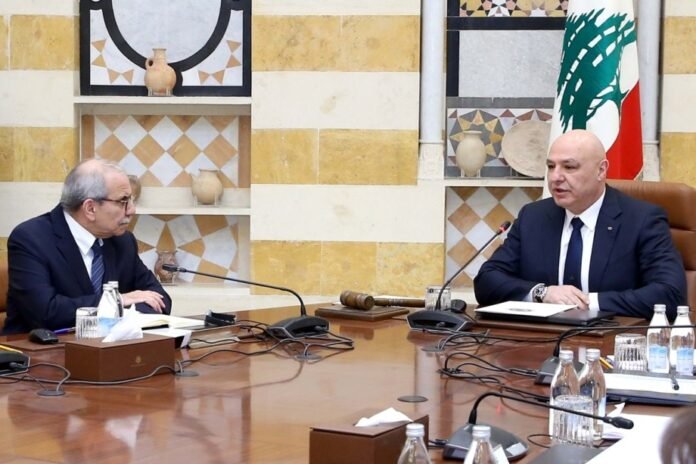
Lebanese President Joseph Aoun and Prime Minister Nawaf Salam met on Saturday to discuss US-hosted military talks with Israel, according to the Lebanese Presidency, Anadolu reports.
The Lebanese delegation “reaffirmed its commitment to prioritizing a ceasefire,” the presidency said on US media company X.
Aoun and Salam also addressed preparations for the next round of US-mediated negotiations with Israel scheduled for next Tuesday and Wednesday, it added.
“The meeting further addressed the security situation in the country and the daily monitoring of the situation of people forcibly displaced from their homes and properties,” said the presidency.
On Friday, the Pentagon hosted military delegations from Israel and Lebanon to support peace negotiations between the two nations.
Earlier, Beirut and Tel Aviv held three rounds of direct talks since mid-April.
The meetings come as Israel continues its attacks on Lebanon despite a ceasefire that took effect on April 17 and was later extended through early July following the talks.
According to the Lebanese Health Ministry, Israeli attacks since March 2 have killed over 3,350 people across the country.
READ: Israel rejects Lebanese demand to withdraw from southern Lebanon: Report
Grifters, cynics, and true believers: The family tree of vaccine opponents
Stanley Plotkin, 93, was instrumental in developing a number of vaccines over the course of his career. He recently said that he’s “beginning to regret having lived so long—because we’re going downhill.” How could we possibly have gotten here?
Maybe we’ve always been here. It turns out that the anti-vaccine arguments currently flooding the Internet have been around for as long as vaccines have. In his new book A Pox on Fools, Thomas Levenson breaks them down into three categories, as made clear in the book’s subtitle: “The True Believers, Grifters, and Cynics Who Convinced Us to Reject Vaccines.” The accusations these people levy against vaccines can just as easily be used to categorize the arguments themselves: They are wrong, they are bad, and they are intolerable.
Wrong
As Levenson tells it, in the early 18th century, a couple of forward-thinking Westerners learned about inoculations against smallpox from Ottoman women and an enslaved African. At that point, infectious disease was by far the leading cause of death, as it had been forever. In the 19th century, roughly 40 percent of babies died of infection before they turned 5.
(This is why the average lifespan back then was so low. It wasn’t that people didn’t live past their 30s; if they survived childhood, they largely did. It’s just that so, so many small children died that they dragged the average way down.)
When smallpox epidemics broke out in London and Boston in 1721, Lady Mary Wortley Montagu and Cotton Mather initiated inoculation campaigns in their respective cities. Inoculation involved taking pus from a pock of someone with a not-very-severe case of smallpox, making a cut in the arm of the person to be inoculated, and rubbing the pus into the cut.
There was an immediate backlash. It was morally wrong, some claimed, to interfere with the divine ordination of who would sicken and die and who would not. Only God had that ability, and to thwart it was to defy God’s will. It was hubris and blasphemy. Levenson highlights how the subtext of this attitude was that contracting a highly infectious disease was divine punishment for sin and that the only way to avoid disease was to live a virtuous life.
The Transcendentalists and Romantics substituted “nature” for “God” in the mid-19th century, but the argument has remained basically the same: vaccines are an affront to the “natural” world, and clean living is all you need to stay healthy. The implicit moral judgment remains, even without God: if you get sick, it must be because you ate/drank/breathed/wore something that wasn’t pure enough.
The immense strides in public hygiene and sanitation that preceded the heyday of vaccine development certainly did curb the spread of infection and increase lifespans, but clean living will not help you fight off an infection if you’re exposed to a pathogen as effectively as a vaccine will.
The argument that it would ignore most of human history and what we know about microbiology and immunology. But it sounds quite compelling, especially when the modern world around us is so scary and hard to understand. And especially when almost no one alive today still remembers just how many child-sized coffins were involved in the halcyon pre-vaccine days when nature got to take its course.
Bad
Vaccines are unnecessary because our bodies can cure themselves, Robert F. Kennedy Jr. and his cronies claim. But they go beyond that and say they are actively harmful–and certainly more harmful than the diseases they are designed to prevent. This is an alluring argument to many, since the negative effects of vaccines are apparent (shots hurt for a moment, and you might get a sore arm or fever). In contrast, the lack of many small children dying from infectious diseases is harder to notice. Because of the spectacular success of vaccines, we take the lack of those deaths for granted.
This argument, too, has been there since the outset, when there was no data yet to refute it. And in the intervening years, there definitely were some tragic missteps during vaccine development and administration. But 300 years later, it’s eminently clear that vaccines are safe. They are not completely risk-free, of course; nothing in life, certainly nothing valuable, is risk-free.
Vaccines can and have caused serious adverse effects (but not autism) in specific populations. And certain vaccines are not safe for certain subsets of people—infants, the elderly, or the immunocompromised. But this is not an argument that healthy people shouldn’t get them; rather, it’s an argument precisely for why healthy people should get them. They keep circulating levels of pathogens low enough to protect those who cannot get vaccinated themselves, which brings us to the final argument.
Intolerable
This last thread has nothing to do with whether or not vaccines are effective, necessary, or safe. It is not a biological argument but a visceral, philosophical one. Because it is not anti-vaccine; it is anti-vaccine mandates. It is about the responsibilities that our governments have to us and that we have to each other, and about the inevitable clash between an individual’s needs and wants and the good of society as a whole.
The Supreme Court case of Jacobson v. Massachusetts lays out the two schools of thought. Boston and Cambridge enacted vaccine mandates during the smallpox epidemic of 1901, and Jacobson refused. He argued that “a compulsory vaccination law is… hostile to the inherent right of every freeman to care for his own body and health in such way as to him seems best.”
But the majority ruled that our liberties are not absolute. The Constitution does not allow us to do whatever we want—it is there to protect everyone’s rights and freedoms, and that entails sometimes curtailing each person’s rights and freedoms. Associate Justice John Marshall Harlan summarized: “Liberty itself, the greatest of all rights, is not unrestricted license to act according to one’s own will. It is only freedom from restraint under conditions essential to the equal enjoyment of the same right by others.”
The concept of herd immunity hadn’t been developed yet, but the court’s decision still relied on germ theory; refusing vaccination endangers those around you, and your liberty of bodily autonomy must be limited because insisting upon it infringes on everyone else’s right to health—and possibly life itself.
Facts and figures can demonstrate how many lives have been saved by vaccines. But they will never be an effective counterargument to “the government can’t tell me what to inject into my kid.” The only potential argument to sway someone who fervently believes that is appealing to their sense of solidarity—to the obligations that every member of society has to every other, to the sacrifices that everyone must make to ensure that society is safe for all. Alas, that sense of solidarity… does not seem to be at its peak in the US right now.
As Levenson makes clear, these three arguments have been plied for as long as vaccines have. But there are a couple of key differences now. The first is that 300 years ago, people who claimed that vaccines were either ineffective or harmful could be forgiven for thinking they had a point. But we now have germ theory to explain exactly how vaccines work and centuries of data showing how infection and death rates from every disease have plummeted once a vaccine was introduced to counter it. We know better.
The second is that now, arguments against vaccines tend to be touted by only one particular subgroup of people: Republicans. And that has come with predictable consequences. “In the US from 2021 onward,” Levenson writes, “being a Republican has become a measurable risk factor for illness and death.”
Levenson teaches in and has directed the Graduate Program in Science Writing at MIT, so you might expect his writing to be clear, concise, engaging, and informative, with an effective mix of statistics and anecdotes. You’d be right. And despite the incendiary nature of his topic, his tone remains measured throughout; he never descends into anger or ranting.
What does come through is his anguish that Robert F. Kennedy Jr.’s lies and policies will cause kids to needlessly be sickened by and die from diseases we have the tools to prevent.
Richard Glossip on Life After Decades on Death Row
For three decades, Richard Glossip lived on concrete. First at the Oklahoma County jail, after his arrest for murder in 1997, and then in the underground bunker housing death row inmates at the Oklahoma State Penitentiary. As with the rest of his surroundings, he eventually got used to the hard, unforgiving floors, although recently he’d developed painful swelling in his legs.
It was only when he stepped onto the carpeted courtroom at the Oklahoma County Courthouse last June that Glossip, now 63, realized how unaccustomed his body had become to anything other than concrete. He almost fell over — one of his lawyers had to catch him. “You’re not balanced for that,” Glossip said. “You’re balanced for walking on very hard floors. It’s just really weird to, like, walk on carpet and stuff again.”
Now, sitting on a mint green loveseat next to his wife, Lea, Glossip was getting used to softer surfaces, including a new pair of black moccasin-style sherpa-lined slippers.
“My leg hasn’t been swollen since I got out.”
Just five days earlier, Glossip was still locked up at the county jail with no idea when — if ever — he would be released. Even though the U.S. Supreme Court vacated his conviction in 2025, he had been held indefinitely as Oklahoma prepared to try him again. Months earlier, his lawyers had asked Oklahoma County Judge Natalie Mai to grant bond, and Mai had finally said she would issue an order on May 14. That morning, just after 10 a.m., she handed down her decision: Glossip’s bond was set at $500,000.
After that, everything happened quickly — faster than anyone expected. Lea, an attorney herself, started making calls to secure the 10 percent in cash needed for his release. The bail money ultimately came from Kim Kardashian, a longtime supporter and prison reform advocate. Meanwhile, reporters rushed to set up cameras in front of the jail; within a few hours, local ABC affiliate KOCO had established a live feed of the jail entrance, which, just after 5 p.m., captured the moment Glossip walked out.
“It’s overwhelming but it’s amazing at the same time,” he said before walking to Lea’s SUV. In a surreal scene, KOCO’s helicopter hovered above the parking lot, with reporters excitedly narrating a play-by-play of the couple’s movements as they drove away.
They eventually made their way to a quiet Italian restaurant in Lea’s central Oklahoma City neighborhood, where they sat outside under a canopy of trees. Glossip ate spaghetti and meatballs. Over the years, Lea had talked to Glossip on the phone while eating dinner there alone, which made the place feel oddly familiar. “It’s kind of weird listening to her describe these restaurants,” he said. “Now I’m sitting at them.”
The two first began corresponding after Lea watched the 2017 documentary series “Killing Richard Glossip,” and eventually married in March 2022. Glossip would spend hours on the phone with Lea as she went about her daily routine, keeping her company as she got ready for her law school classes, ran errands, and had dinner. They’d end the evening watching TV together. Over time, the daily ritual established a structure that would provide a lifeline to Glossip — and eventually ease his transition to life outside prison walls.
Sitting in the light-filled living room in their studio apartment, Glossip described how those interactions have so far helped him feel less bewildered by a world he hasn’t experienced for nearly 30 years. Still, since his release, there have been constant, small reminders of his decades of incarceration.
On his first night, he barely slept. There was the adrenaline, of course, but more than that was the silence — it was way too quiet compared to the constant chaos and noise at the county jail. And then there was the water: In prison, the sink would only run for seconds at a time and would turn off automatically. “I keep waiting for the water to go off,” Glossip said. “I’ve even walked out of that bathroom and the water was still going, and I keep forgetting I have to turn it off.”
“I always think that ‘Nah, none of that stuff’s gonna bother me,’” he continued. “But when it really actually happens, it does bother you more than you think. You start remembering things. Or something will trigger something that will bring you back to when this all happened, when it all began.”
It’s those small things — the carpet, the water, the quiet — that have a way of reminding him how much he survived.
“Once you’re out here and you see all the things that was taken away from you — and all the times they almost took everything away from me, my life and everything — you see all of it now,” he said. “And it kind of still makes me angry at times because none of this should have ever happened. And this should have never been taken from me in the first place.”
Glossip was twice convicted and sentenced to death for the murder of his boss, motel owner Barry Van Treese, who was brutally killed at the Best Budget Inn on the outskirts of Oklahoma City in January 1997. A 19-year-old handyman named Justin Sneed admitted to fatally beating Van Treese with a baseball bat, but insisted that Glossip bullied him into doing it. Sneed’s account became the basis for the state’s case against Glossip — and for a plea deal that allowed Sneed to avoid the death penalty. Sneed is serving a life sentence.
Glossip always maintained his innocence, and his conviction was overturned twice. In 2001, the Oklahoma Court of Criminal Appeals ruled that Glossip’s lawyers had been ineffective for failing to present key evidence that undermined Sneed’s account of the crime. But in 2004, a second jury convicted Glossip and resentenced him to death.
More than 20 years later, in February 2025, the Supreme Court again vacated Glossip’s conviction, finding that Sneed had lied on the stand during Glossip’s retrial and that prosecutors had failed to correct Sneed’s testimony. This misconduct, combined with “additional conduct by the prosecutor further undermines confidence in the verdict,” the justices wrote.
Glossip came close to execution numerous times, as Oklahoma authorities aggressively defended their conviction despite mounting evidence pointing to his innocence. Oklahoma Attorney General Gentner Drummond, who came into office in 2023, broke with his predecessors, taking unprecedented steps to block Glossip’s execution and to appeal his conviction to the Supreme Court. After Glossip’s high court victory, many expected Drummond to quickly resolve the case and free Glossip; Lea even bought Glossip new clothes in anticipation of his release. Instead, Drummond, who by then was running for governor, announced that he would retry Glossip for first-degree murder.
Drummond’s office insisted Glossip should remain in jail — while simultaneously confirming that the state had no new evidence to support his guilt. In July 2025, a judge denied defense lawyers’ request to have Glossip released on bond, only to recuse herself from the case after she was revealed to have close ties to the same district attorney’s office that originally sent Glossip to death row. Mai, a civil judge, was ultimately appointed to the case after a string of judges stepped down for the same reason.
With Mai set to preside over Glossip’s retrial, his legal team again asked for his release on bond. On May 14, she agreed. In her order, Mai quoted a letter Drummond wrote to the parole board in 2023, expressing his view that the record didn’t support a first-degree murder conviction.
“The Court fully expects that the State will rigorously prosecute its case going forward and the defense will provide robust and effective presentation for Glossip,” Mai wrote. “The Court hopes that a new trial, free of error, will provide all interested parties, and the citizens of Oklahoma, the closure they deserve.”
Drummond did not release a statement regarding Glossip’s release. Instead, he posted a video to Facebook from the White House where he spent the day with FBI Director Kash Patel and Acting Attorney General Todd Blanche.
On his first night home, Glossip decided he wanted to see a store. He hadn’t used a real razor in years, and he wanted some ice cream. The couple ended up at Target, which he found peaceful, especially the music. “It was like elevator music,” Lea said laughing.
The following days were a whirlwind of errands: a haircut, a grocery store, and the DMV. Did anybody recognize him, we asked. Yes, they said. Everybody, everywhere seemed to know who he was. At the barbershop, the man who cut Glossip’s hair refused to accept any payment. “He said, ‘No, it’s an honor,’” Lea recalled. “He was really happy to be the one to do that.” At Whole Foods, people glanced at them with knowing smiles, while others took surreptitious photos as Glossip marveled over purple potatoes and dragonfruit — two foods he’d never seen before.
At the DMV, when a woman called out the name “Richard,” Glossip and another man stood up at the same time. “Glossip?” he asked. Yes, the woman replied. “You’re Richard Glossip?!” the other Richard replied — and asked for a photo, which they took outside by the man’s purple car.
At Walmart, a lady simply beamed at them and said, “Welcome.”
“It kind of threw him,” Lea said. But the attention had been overwhelmingly supportive. “I think it’s nice for Rich to receive that after everything, to walk back into the world after everything he survived, and have people greet him positively.”
On Monday morning, Lea had to go back to work. Before heading out, she left Glossip keys and some cash. “Has money always been this size?” he asked. Yes, she told him. He hadn’t used cash in decades and recalled the bills being smaller. That day he didn’t venture out. Instead, he stayed at home and did chores. But the next day, he went out on his own for the first time, walking to a corner store for a Coke. “It’s you!” the clerk said.
Glossip is looking forward to exploring more on his own — he wants to walk barefoot in summer grass, stargaze, and go fishing — all provided he is home by his court-ordered curfew of 10 p.m. And he wants to renew his vows with Lea, in a ceremony outside prison walls.
“I tried never to let myself become institutionalized,” he said. “But I mean it’s hard. You go through all these horrible things and all these different dates … and last meals and everything. And then it doesn’t look like this day will ever get here. But you always hope that it will.”
Back in 2014, when he was facing his first execution date, Glossip reached out to famed anti-death penalty nun Sister Helen Prejean, asking if she could help him. Prejean reached out to attorney Don Knight, who had significant experience representing people facing the death penalty, asking if he could take on Glossip’s case; he agreed. In the decade that followed, Knight would find new witnesses and expose hidden evidence that undercut the state’s case against Glossip — and led to the Supreme Court’s decision. Knight’s zealous advocacy is responsible for saving Glossip’s life.
Discussing this, Glossip returned to some of the darkest and most traumatic moments of his incarceration — including the time he came closest to execution in 2015. Officials halted the lethal injection at the last second after realizing that they were about to use the wrong drug to kill him. That was more than 10 years ago. He would face execution again and again: a total of nine times. “They used to call me the cat man on death row,” he said.
“I’ve lived this case for so long. I don’t want to live it anymore.”
The weekend after Glossip was released, he met up with Knight in a local park. The two sat in the sun and talked. “It was nice just to sit in that park and watch people go by,” Glossip said. “Him and I just having a conversation with each other.” He remembered what he told Knight when they first met. “‘I just want people to know the truth,’” Glossip said. “And he’s been able to do that. And that’s been pretty amazing for me because that’s what I wanted more than anything.”
A week after his release, Glossip sent Knight an update: He’d been to the park, an art fair, and brunch with two of Lea’s co-workers. It was the best week of his life, he said.
“I’ve lived this case for so long,” he told us. “I don’t want to live it anymore.” He knows the case isn’t over, but he trusts Knight and his legal team to handle what comes next.
“They’ll make the right decisions. I know they will. I wouldn’t be out here today if they wasn’t,” he said. “So I’m just going to let them handle it. … I’m just gonna enjoy life.”
For a quarter-century, the price of computer software and accessories fell by roughly 5% annually. It was the modern economy’s most reliable disinflationary anchor. In late 2025, that anchor snapped.
Last week, a technical note by three US Federal Reserve economists, including a serving Governor until the day before the note’s publication, revealed that this category just posted a 73% annualized spike over four months. Its contribution to core inflation? Nine standard deviations above the historical mean.
A 1.2% sliver of the basket was adding roughly two-thirds of a percentage point to the Fed’s preferred gauge. The authors were careful, but their caution is the real charge. A quarter to well over half of the contribution may be measurement error: flash-memory prices leaking into a software index; CPI and PCE baskets that no longer match; subscription software and AI upgrades that old matched-model methods cannot see.
The old disinflationary line has not merely turned – it has lost definition. The index is no longer cleanly measuring software. It is measuring a collision between memory, billing architecture, unpriced AI quality and statistical plumbing. That is not a footnote to the inflation story. It is the story.
Halfway across the world, this exact force is violently reshaping current accounts. Japan, the nation that taught the world how to export electronics, just posted a record 7 trillion-yen digital deficit for fiscal 2024, tripling over a decade. It now bleeds over 10 trillion yen annually to foreign cloud and AI platforms, backed by a meager 4 trillion in digital exports.
The Trade Ministry projects this gap will hit 18 trillion yen (US$113 billion) by 2035. In their worst-case scenario, it hits 28 trillion yen, eclipsing Japan’s entire oil and gas import bill. The country that once sold the world its technology now rents it back, and the premium is engineered to rival the cost of fossil fuels.
These are not two stories. They are one shock, seen through two accounting systems. Technology, which economists trained themselves to file under productivity, progress, and deflation, is starting to behave like energy: a strategic input, a price shock, a balance-of-payments channel, a geopolitical exposure.
We call the investment-side expression Silicon Shock. But no one needs to use the term or own a chip stock to be exposed to it. Own a currency. Price a bond. Forecast a central bank. Manage a current account. Think about industrial sovereignty. The shock is already in the plumbing.
For half a century, the global economy’s most critical chokepoint was the Strait of Hormuz. Energy was the price that mattered most. Today, that map is obsolete. Today’s bottlenecks are not just physical straits and pipelines; they are memory packaging lines in Gyeonggi, logic fabs in Hsinchu, opaque cloud regions, and software billing gateways.
These new chokepoints do not flash on petrol station signs, nor do they offer politicians an easy villain or markets a clean ticker. Their frictionless, invisible nature is precisely what makes them so dangerous.
Macroeconomists may continually rework their models to argue that technology suppresses inflation, but the reality is the exact opposite. Through compute shrinkflation, capacity dilution, time dilation, and tiered API access, technology platforms are extracting significantly more capital for the same or less utility. Traditional inflation indices are entirely unequipped to capture this stealth pricing power.
Yet these measurement failures must not obscure the fundamental structural shift: AI is an inherently expensive, highly inflationary technology, regardless of how long it takes legacy policymakers to realize it.
Invisible six trillion dollar segment
Size is where this shift must be anchored, precisely because it is the variable most easily waved away. The legacy intuition assumes energy is the heavy, serious geopolitical input, while technology remains a consumer category adjacent to entertainment. That framing is now obsolete by a wide margin.
According to Gartner, the world will spend $6.31 trillion on information technology in 2026, compounding at 13.5% in a single year. Compare this to the physical world. The International Energy Agency expects total global investment across all energy sectors (oil, gas, coal, nuclear, renewables, grids, and storage) to reach roughly $3.4 trillion. Within that total, less than $500 billion is allocated to oil supply, marking a third consecutive year of decline.
The line that should stop the reader is artificial intelligence alone. Gartner puts worldwide AI spending in 2026 at about $2.5 trillion, up roughly 44%. AI, one subcategory of technology barely visible in national accounts a decade ago, is now being built out at a scale comparable to the entire global clean-energy investment machine and several times larger than annual oil-supply investment. The old hierarchy has inverted.
For 50 years, energy was the input technology on which the technology depended. Now, technology is becoming one of the forces deciding how energy itself gets built.
The necessary caveat for the hostile reader is that IT spending represents a broad market aggregate, whereas the IEA figure measures capital investment. The caveat matters, but it does not rescue the old worldview. This is not an accounting identity. It is a map of economic attention.
Technology compounds at double-digit rates; oil investment shrinks; data centers call for power plants; memory prices drive device cycles; cloud bills enter current accounts; AI capex changes electricity forecasts.
Even if one refuses to crown technology as the single largest input in the world economy, the weaker claim is already enormous: technology has become one of the largest, fastest-growing, and least-observed macro inputs on earth.
The bill that arrives in 12 envelopes
Scale at the level of the world economy is one thing. The more telling place to look is the household, because that is where the invisibility turns almost comic.
We will use US data to illustrate this dynamic, as it remains the most comprehensive and readily available. However, the structural arguments hold true globally, albeit with different absolute numbers and scales.
Energy, for all its political weight, is a shrinking share of the consumer wallet. The American Petroleum Institute, using official data, puts US consumer spending on all energy combined at about 5.7% of disposable income in 2024.
That is down from 10% in 1984 and represents the lowest level in at least four decades. The Energy Information Administration has gasoline alone below 2% of disposable income in 2025, the lowest since 2005. The thing politicians fear most is, by share of income, near a generational low.
Now, try to add the technology bill. The phone plan. The home broadband line. Cloud storage. Streaming. Gaming. Security. Productivity software. App subscriptions. Device insurance. The amortized phone, laptop, tablet, and watch. And all of these arrive before factoring in the AI subscriptions that are rapidly becoming the single biggest household software expense.
Deloitte’s most recent Connected Consumer survey found US households spent an average of $896 on connected devices in 2025, up 17% in a single year, plus $183 a month on digital services. That is roughly $3,100 a year. It already covers the gasoline bill of about $2,150, even before accounting for software inflation and the backend metering that the survey fails to capture.
The exact all-in figure is genuinely hard to state, and that difficulty is the point, not a footnote. No statistical agency publishes a fully loaded household technology bill. The absence is itself evidence.
Energy arrives as one large, salient line item that lands on the same day every month, which is exactly why it provokes. Technology arrives as a dozen small bills on a dozen different dates, none individually large enough to make anyone angry. A household paying $400 a month across eight technology line items feels nothing. The same household paying $200 once at the pump feels robbed. The dispersion is the disguise.
The poor-world version is sharper, because there the phone is not a convenience. It is infrastructure. GSMA estimates that more than 3 billion people already live within mobile-broadband coverage and still remain offline; coverage is no longer the binding constraint, affordability is.
For much of the developing world, the handset is the bank branch, the classroom, the shopfront, the job board, the remittance rail and the state portal. GSMA says even a $30 smartphone could bring 1.6 billion more people online. That tells you how close the margin is.
Now connect that razor-thin margin to the hardware squeeze. The rising cost of memory is systematically making $30 budget phones and sub-$500 PCs obsolete, pricing the cheapest devices out of existence.
The true macroeconomic impact of this might only be felt years later, as the entry ticket to the digital economy silently slips out of reach for hundreds of millions. As we explored in our recent work on token inequality, physical constraints on semiconductor supply will dictate who gets access to the future and who gets locked out.
That is why technology inflation is regressive in a different and colder way than oil. Oil makes transport and heat more expensive. Technology can decide whether you enter the economy at all. It prices the poorest away from the most important productive asset they may ever own, at exactly the moment that asset becomes mandatory.
The 40-year free lunch
AI is systematically rendering multi-decade trends obsolete, which is precisely why we maintain that history is the worst possible guide for the AI era. Consider the casualties. The software layer is no longer capturing the lion’s share of economic value.
Technology has lost its privileged status as a sector where companies could expect to print money without heavy capital expenditure. But the most profound trend to break is a macroeconomic one: technology has lost its deflationary privilege.
To understand why nobody is prepared for this shift, you have to understand the belief that formed during the long, quiet decades when technology only ever fell in price.
For most of the past forty years, the information-technology line in the consumer price index ran negative year on year. Computers and phones got better and cheaper simultaneously, and the statisticians, doing their job correctly, recorded that as deflation. Technology was the obliging member of the basket, the one line reliably pulling the headline number down.
A central banker watching inflation had no reason to fear a category that was helping. The instinct that formed was not neutral. It was affectionate. That affection hardened into doctrine, eventually codified as the Amazon effect, the idea that digital competition structurally suppressed prices. It became near-consensus that technology would always be disinflationary, as naturally as water flows downhill.
This is the time to introduce the reverse-symmetry argument. If a category falls by roughly 5% a year for decades, it is not neutral. It is a subsidy to the measured price level. It gives central banks room. It offsets pressure elsewhere. It teaches policymakers that technology is a friend.
But when that same line stops falling, the tailwind disappears. When it rises, the tailwind becomes a headwind. One does not need an elaborate model to see the arithmetic. A force that subtracted from inflation for a generation no longer does.
The doctrine of ever-cheapening technology rested on two subsidies mistaken for laws of nature. The first was cheap physics. Moore’s Law delivered more computing per dollar every cycle, making deflation look like an engineering inevitability. The second was cheap capital. The entire web era was financed by investors willing to subsidize growth, allowing services to be given away to capture users.
Free became the default expectation for an enormous range of digital goods. More for less, forever, felt like a fundamental property of the technology. In reality, it was a property of the financing.
Both subsidies have expired, and they expired together. The physics got harder and, more critically, the wafers were rerouted toward a new and ravenous use case. The capital got expensive when rates rose, and the give-it-away model died with it. More importantly, and as we have written numerous times before, the entities at the world’s biggest chokepoints – we are talking about semiconductor manufacturers – realized the pricing power they have.
Effectively, technology has begun to behave like any other input. It costs what it costs.
Then came the use case that broke the pattern. Artificial intelligence is not Moore’s Law. It does not get cheaper per unit of work the way a faster chip made an old task cheaper. Inference, the act of running a model, carries a real and recurring cost in compute and power that does not vanish with scale and, in many workloads, rises with use. AI is the first major technology in two generations that is fundamentally expensive and inflationary by its very nature.
This conclusion sits downstream of three arguments we have made previously. The cause is the Silicon Shock, highly concentrated and upstream. The mechanism is the tollbooth, defined by the metering and bundling in the middle. The consequence is token inequality, the per-unit economics that dictate who can afford intelligence and who is ultimately rationed.
This inflation metric is where all three forces surface at once as a unified macroeconomic event.
A dozen disguises
The mistake would be to hunt for this inflation where oil inflation appears, arriving as a single rising sticker. Technology inflation does not work that way. It arrives first where buyers are fragmented, bills are metered, and quality is hard to benchmark, which is precisely why it has stayed below the radar.
It shows up as a mandatory AI bundle, a usage cap, a token meter, a thinner tier, or a degraded free plan long before it shows up as one clean price label in a shop.
Software inflation is not new. SaaS prices have outrun general inflation for years. What is new is not the number but the disguise. The Vertice index, tracking actual renewal prices across more than $30 billion in spend, has software inflation at 12% to 13%, about four and a half times the G7 rate and accelerating. Per-employee software spend reached roughly $9,100 by the end of 2025, surpassing employers’ healthcare spending for the first time.
But the headline rate only captures the prices honest enough to still appear as prices. Underneath, vendors fold in AI nobody asked for, convert flat features into exhaustible credits, and thin what each tier contains.
Vertice found 28% of late-2025 renewals delivered less for the same money. An index can only count the dishonesty that still carries a price tag; the rest hides in shrinking value, and shrinking value never shows up in an inflation series.
The cleanest tell is the gap between cost and price. The raw input to AI collapsed: the cost of a million tokens fell roughly 280-fold in two years. Yet enterprise AI bills rose 320%, and software list prices climbed 12% to 15%.
Some of that is genuine usage, but the list-price piece is rent, plain and simple. The efficiency gain did not reach the customer. It became a margin, if not for the model-makers then for the silicon bottleneck behind them.
The metering is starkest where intelligence is sold directly. Modelmakers are finding creative ways to charge for speed, priority, the newest model, and the number of questions you may ask.
Intelligence is sold the way electricity is, by grade and quantity. The enterprise version runs on a harsher mechanism: AI is destroying the seat count software was priced on, because one augmented worker does the job of several, so vendors re-meter on consumption to recapture the lost seats.
Salesforce launched its agents at $2 a conversation; a mid-size firm running 50,000 interactions a month now faces $100,000 a month on top of its seat fees, a line absent from last year’s budget. GitHub is moving its coding assistant to usage billing because the flat model, in its own words, is no longer sustainable.
So software inflation is not merely a price increase. It is a mutation in the unit of sale. The old economy trained the customer to think in terms of seats and licenses. The AI economy trains the customer to think in rations: how many credits, which model, how much context, how fast, how many calls, how much to avoid the degraded version. A price rise says the same good costs more. This says something colder, that the good you thought you were buying is no longer the same good.
And it is not only new tech. For the entire history of the games console, hardware got cheaper as it aged. In 2026 a five-year-old PlayStation 5 costs more than at launch. The most dependable deflation curve in consumer electronics has inverted, which is the tell that this reaches everything, old and new.
This is why the official series keeps under-reading the shock. A statistics office sees a sticker price, not that the same laptop is a worse bargain because memory became unaffordable. It sees a subscription price, not the feature that became a credit, nor the AI bundle the customer cannot meaningfully decline, nor the tax of paying extra to strip ads from a product already bought.
The point is not that every firm is gouging. Some cost pressure is real: memory is scarce, inference is expensive, data centres need power. The macro question is who captures the efficiency gain and who pays the scarcity rent, and so far the answer is plain. The bottleneck takes the rent, the platform redesigns the bill, the customer gets the meter.
That is why this is more dangerous than a normal price shock. Oil tells you when it hurts. Technology lets you discover it only at the renewal, the overage, the missing feature, the slower model, and the bill that somehow doubled without ever arriving in one place.
The two proofs
Arguments about hidden inflation can always be dismissed as mere complaints. So the case ends on two facts that are exceptionally hard to wave away, because they show the inflation biting the buyers best placed to escape it.
The first is that the richest corporations on earth have started rationing their AI consumption because it has become too expensive. Uber’s chief technology officer disclosed that the company burned through its entire $3.4 billion AI budget for 2026 in just four months. Microsoft began canceling most of the internal licenses for the third-party coding assistant.
A recent survey found 85% of companies missed their AI cost forecasts by more than 10%, and 84% saw gross margins fall by more than six points. Meanwhile, the share of corporate finance teams created specifically to police AI spending doubled in a single year. There is a profound economic point hiding in these anecdotes.
These are the most price-insensitive buyers in the world. When even they start rationing, the price has cleared past what the entire demand curve will bear. You do not build a cost-control department around an input that is getting cheaper.
The second proof is subtler and, for a macro reader, far more damning. It is nominal growth on top of shrinking real volume, the textbook signature of inflation. TrendForce cut its 2026 notebook forecast from growth of 1.7% to a decline of 2.6% because rising memory costs are being passed into prices and choking demand.
Yet revenue keeps climbing. HP shipped 4.9% fewer machines in a recent quarter, by Gartner’s count, but still grew revenue. Its own chief executive blamed rising memory prices for the input-cost pressure. Fewer units, more dollars. The entire difference is price.
This trend is not unique to one company: every volume growth number for technology gadget segments is in deep negative territory in recent months, while most of the major manufacturers continue to report healthy top- and bottom-line growth.
When a company sells less volume but books more revenue, that is not a growth story. It is inflation wearing a growth story’s clothes, and it is now visible across the entire hardware industry.
The fork in the world’s accounts
This is no longer only a story about prices. A bill rising this fast, on a good this essential, behaves like a terms-of-trade shock, the kind oil delivered in the 1970s.
It moves money across borders, bends current accounts, pushes currencies, and reorders who is rich. Oil did it through one visible price. Silicon now does the same, less visibly, through a thousand invoices, and with a far shorter list of winners.
The winners are few enough to name in a breath. Korea’s current account is heading toward 15% of GDP, of course, an all-time high. Taiwan’s own statisticians have lifted 2026 growth to 9.64%, the fastest in a while. Both economies have the negatives from the ongoing oil shock, but the semi-gains dwarf any losses from the oil accounts.
The payers are everyone else, and the bill is starting to rival the one line every finance ministry already watches. China’s largest single import is no longer oil. It is chips, and that too from 2024, before the current round of inflation. We discussed Japan’s plight at the beginning. And, these two are economies with large technology segments of their own.
In March 2026, Australia tipped into its first goods trade deficit since 2017, the single largest cause of a $2.9 billion surge in imported data-processing machines. Europe’s apparent surplus is an Irish mirage, since 94% of the value booked in Dublin belongs to the foreign platforms routing the continent’s revenue through it; strip that out, and Europe runs a structural deficit. The tech bill has quietly become a primary entry in the national accounts.
The United States is not exempt simply because it owns the platforms. Its software giants collect global rents, but its AI build-out imports astonishing amounts of physical infrastructure.
A Minneapolis Fed analysis cited by the Wall Street Journal found AI-related imports surged 73% from 2023 to 2025, while non-AI imports rose only 3%; it estimated that without the AI-import surge, the 2025 US goods deficit could have been almost $200 billion smaller.
The macro danger is that the silicon shock hits both sides of the balance of payments. The goods account pays for chips, servers, memory, and data-center equipment. The services account pays for cloud, software, model access, app stores, cybersecurity, enterprise subscriptions, and platform tolls.
The income account then leaks profits, royalties, and licensing payments back to the firms that own the intellectual property. Oil was mostly a trade shock. Technology is a trade shock, a services shock, and an income shock at once.
That makes the currency channel nastier. A rising tech bill widens the external deficit. A wider external deficit weakens the currency. A weaker currency raises the local-currency cost of imported chips, cloud contracts, software licenses, devices, and energy. The country then imports inflation through the very exchange-rate move that was supposed to restore competitiveness. The adjustment does not stay politely inside “technology.” It leaks into every imported price.
It also changes the central-bank problem. If oil rises, a central bank can at least identify the shock. It knows the barrel price, the pass-through, the pump price, and the politics. With technology, the signal is fragmented.
One part appears as hardware inflation. One part appears as software inflation. One part appears as a larger services deficit. One part appears as a capex import boom. One part appears as weaker real consumption because households are paying for more subscriptions and replacing devices less often. The central bank sees pieces of a shock and may mistake each one for noise.
The pressure is cumulative and accumulative, landing on a dozen different ledgers at once, and few showing signs of a reversion from falling demand. The winners, being few and highly content, have absolutely no reason to flag the imbalance. The payers, being many and each feeling the extraction individually across fragmented corporate and consumer bills, fail to raise a common alarm.
The burden simply builds in the dark, effectively acting as an unvoted sovereign tax. That invisibility is exactly how the largest economic shocks invariably arrive.
The oxymoron and the desk it lands on
Until recently, the phrase “tech inflation” was a macroeconomic oxymoron. Technology was the engine that reliably made the future cheaper. That is precisely why the reversal is so dangerous.
There is no instrument pointed at it, no political reflex trained on it, and no vocabulary ready to define it. For forty years, technology was the obliging friend, and you do not build alarms to watch a friend. Soon, this oxymoron will become a global preoccupation.
For a while, the establishment reflex will be to dismiss the data as a measurement error or an unsustainable cyclical blip. Macro analysts and policymakers are notoriously resistant to accepting a break from history until it becomes a monster in the rearview mirror. We saw this exact denial when government bond yields bottomed out a few years ago.
Half a decade later, plenty of economists still mistakenly tether long-bond yields to stock market valuations. When market commentators get these novel forces wrong, they simply miss out on returns. When policymakers get them wrong, the societal costs are treacherous.
We maintain that the Silicon Shock is the defining economic event of this decade. Combined with the compounding force of AI, it will drive structural divergences that will be nearly impossible to reverse for those who arrive late.
If the largest and richest corporations on earth are already feeling the pinch of AI costs, sovereign nations are inevitably hurting as well. The fact that so few have begun complaining in policy circles, regardless of whether they have solutions, perfectly illustrates the stealth, insidious nature of the shock.
And even seen clearly, the shock runs into a genuinely new bind. This has the profile of a supply shock from a concentrated foreign source, the same shape as oil, and central bankers have always refused to fight supply shocks with rates, which is why they strip food and energy out and watch core.
By that logic, they should strip memory-driven tech inflation out, too. So here is the question nobody wants to answer out loud: should the cost of high-bandwidth memory be excluded from the core the way a barrel of oil is? The trouble is that you cannot strip out what you cannot isolate.
Energy is one clean line you can lift from the index. Technology is smeared across devices, software, services, and the quality adjustments buried inside dozens of other categories, with no clean line to remove. And the rate lever barely reaches it because the capex doing the pushing sits on hyperscaler balance sheets that higher rates do little to slow, while costs land now and productivity, if it comes, lands later.
A supply shock with the volatility of energy, the persistence of services, the reach of nothing they have excluded before, and a tool that does not quite touch it. That is the desk it lands on.
An uncomfortable aside belongs here, and it is worth stating plainly. For the companies at the centre of this bottleneck, falling volume matters strangely little because aggressive price hikes entirely subsume it. Their input costs rise, they pass the increase through, they add a margin on top, their unit shipments fall, and their profits still climb.
It is neither ethically nor politically defensible to celebrate an industry that grows its earnings by selling less product at a higher price to a captive world. But it is the reality, and it explains why these equities keep climbing even as the underlying commodity becomes scarcer and dearer.
The world spent half a century learning to recognize an oil shock. It is now entering a technology shock with no equivalent dashboard, no political vocabulary, and no accepted policy reflex. The danger is not merely that prices rise. It is that the gains accrue to a localized handful, the costs travel diffusely, and the watchmen are still staring at the oil markets.
The next great macroeconomic shock does not arrive in a barrel. It arrives in a server rack, in a degraded specification, in a metered token and in a current-account balance bending under the weight of imported silicon. Technology is no longer just a tool sitting inside the economy. It has quietly become the price-setting infrastructure of the economy itself, and we are about to spend a long time learning exactly what that costs.
Nilesh Jasani is the founder and CEO of GenInnov Pte Ltd Singapore. This article first appeared on www.geninnov.ai and is republished with permission. Read the original here.Read more at www.geninnov.ai/blog