16.1 C
London
Saturday, May 30, 2026
Home Blog

Cuba is next — and everyone in Washington knows it

0
cuba-is-next-—-and-everyone-in-washington-knows-it
Cuba is next — and everyone in Washington knows it

The hemisphere’s longest-running standoff may finally be reaching its breaking point — but not necessarily in the way anyone expects. Cuba, in the spring of 2026, feels exactly like that.

After 67 years of communist rule, sustained by a rotating cast of foreign patrons — Soviet subsidies, Venezuelan oil, Chinese credit lines — the island has finally run out of lifelines. And Washington, never one to let a crisis go unexploited, is watching with barely concealed intent.

Donald Trump said it himself, characteristically blunt and characteristically vague: “We may stop by Cuba after we’re finished with this.” Strip away the performative nonchalance and what remains is a serious policy signal.

The maximum pressure campaign against Havana, which escalated sharply in January 2026 following the capture of Venezuela’s President Nicolas Maduro, has pushed Cuba closer to genuine collapse than at any point since the Soviet Union disappeared and took its subsidies with it.

The question is no longer whether Washington will act. The question is what acting actually looks like — and whether anyone in Havana understands the stakes clearly enough to respond in time.

60-year policy failure

American presidents have been fumbling the Cuba question since Dwight Eisenhower. The Bay of Pigs humiliated John Kennedy. The embargo outlasted the Cold War by three decades without producing regime change.

Bill Clinton tightened sanctions. Barack Obama tried engagement, but Donald Trump reversed it. None of it worked — not the coercion, not the olive branches, not the creative legal architectures like the Helms-Burton Act, which tied embargo removal to conditions Havana was never remotely inclined to meet.

What changed now is not American strategy, which has always oscillated between strangulation and negotiation. What changed is Cuba’s material position. The island requires roughly 100,000 barrels of oil per day to keep basic civil functions running.

It produces barely 40,000 domestically. Historically, the rest came from Venezuela, Russia, Mexico and Algeria. Nearly all of that external supply has now stopped — partly because Trump’s executive order slaps 30% tariffs on any country delivering oil to Cuba, partly because Cuba simply cannot pay its bills.

The consequences are not abstract. Power outages are routine. Surgeries are being canceled in power-starved hospitals. Schools have suspended classes. Garbage trucks sit idle because there is no fuel to run them.

This is not a government managing austerity – it is a government losing its basic capacity to function. Cuba’s current trajectory resembles nothing so much as the ‘período especial‘ of the early 1990s — that catastrophic economic contraction following Soviet collapse — except this time, there is no comparable patron waiting in the wings to step in.

Rubio’s personal war

Here is where analysis gets genuinely complicated. Trump’s foreign policy motivations are, as always, a mixture of strategic calculation and domestic political theatre. Cuba matters to him because South Florida matters to him.

A Miami Herald poll from April 16 found that 79% of Cuban-Americans in South Florida support some form of American military intervention in Cuba. That number concentrates the mind of any politician who understands the electoral arithmetic of Florida.

But the more compelling driver may actually be Marco Rubio. The Secretary of State is the son of Cuban immigrants, and for him, this is not a portfolio issue — it is a generational grievance.

He was among the harshest critics of Obama’s normalization experiment, correctly identifying, in retrospect, that Havana used the diplomatic opening to consolidate rather than reform.

He has spent his entire political career arguing that the Cuban government will only move under genuine, sustained pressure. Now, for the first time in his career, he controls the pressure.

That personal investment cuts both ways. Rubio brings credibility that no other Washington figure possesses — he can negotiate with Cuban exile communities in Miami, lobby skeptical senators on Capitol Hill, and potentially engage Havana in ways that career diplomats cannot.

But personal investment also distorts judgment. History is littered with statesmen who mistook emotional commitment for strategic clarity. Rubio needs to be both the man who can make a deal and the man who can walk away from one that doesn’t deliver real change. Whether he can maintain that balance remains genuinely uncertain.

Maduro precedent limits

Washington appears to be hoping for a repeat of the Venezuela operation — a swift decapitation of leadership, a compliant successor, a political win packaged for domestic consumption before the November midterms. The logic is seductive and almost certainly flawed.

Venezuela, for all its dysfunction, retained identifiable political opposition — figures with international profiles and at least nominal democratic credentials. Cuba, after nearly seven decades of totalitarian consolidation, has produced no such figure. The dissident community is brave but fragmented.

The exile leadership in Miami commands emotional loyalty but limited operational influence inside the island. If Diaz-Canel were removed tomorrow, the institutional question — who governs, under what framework, with what popular legitimacy — has no obvious answer.

Military options are being drawn up at the Pentagon. Unlike Venezuela, Cuba could be reached directly from bases inside the United States, meaning any intervention could materialize with far less warning than the Maduro operation.

Raids targeting senior leadership, airstrikes against military infrastructure or even a full-scale invasion remain theoretically on the table. The last scenario is almost certainly too costly to be seriously entertained. The first two are not.

Diplomacy with a gun in the room

A US State Department delegation visited Havana in April — the first American government aircraft to land in Cuba since the brief Obama-era thaw. They brought a list of demands: compensation for properties confiscated after 1959, release of political prisoners and expanded political freedoms.

Cuba has made some gestures — 2,000 political prisoners released in April, new regulations permitting expatriates to own businesses. Concessions, yes, but calibrated concessions, the kind designed to buy time rather than signal genuine transformation.

The compensation demand alone is potentially deal-breaking. The Assembly of Cuban Resistance estimates total claims at $9 to $10 billion. A government that cannot keep the lights on cannot write that check.

What remains true, and what history repeatedly confirms, is that autocracies under maximum pressure rarely transform gracefully. They collapse suddenly or they dig in ferociously.

Cuba’s leadership has survived everything Washington has thrown at it since 1959 — assassination plots, economic warfare, diplomatic isolation. The instinct will be to survive this, too.

But the material conditions in 2026 are different from anything Havana has previously navigated. No Soviet Union. No Venezuelan petrodollars. No credible external patron is prepared to absorb the cost of keeping the Castro system alive.

The hemisphere’s longest standoff may be ending — not with a negotiated peace, but with an exhaustion so complete that both sides finally have no alternative but to deal.

Whether that moment produces genuine Cuban freedom or merely a new form of managed dependency will depend entirely on whether Washington wants a democratic Cuba or simply a compliant one.

Those are very different objectives. And so far, the evidence suggests Washington hasn’t quite decided which it’s actually after.

M A Hossain is a senior journalist and international affairs analyst.
Russian Drone Slams Into Apartment Block in Romania, Two Injured

0
russian-drone-slams-into-apartment-block-in-romania,-two-injured
Russian Drone Slams Into Apartment Block in Romania, Two Injured


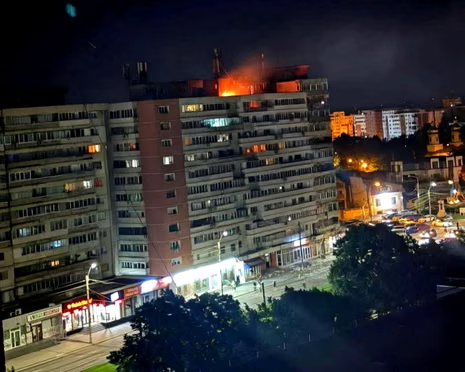
A drone crashed onto the roof of a 10-storey ​block of flats in the southeastern city of Galati during a Russian overnight attack on neighbouring Ukraine on Friday, causing an ‌explosion and a fire that injured two people, Romanian authorities said.

Romania, a member of both NATO and the European Union, shares a 650-km (400-mile) land border with Ukraine and has seen Russian drones breach its airspace 28 times since Moscow began attacking Kyiv’s ports across the Danube river, Romania’s defence ministry said ​on Friday.

Friday’s incident was the first time a drone had hit a densely populated area in Romania and caused ​injuries, and was likely to increase tensions on NATO’s eastern flank at a time when Ukraine’s allies are ⁠worried about the war spilling over its borders.

The ministry added it had recovered drone fragments that fell in Romania 47 times.

​Romania’s emergency response agency said on Friday a fire broke out in a 10th floor apartment after the drone struck the building’s roof ​and exploded. Two people were receiving medical treatment on site, it said, adding 70 people had evacuated.

It said the drone’s entire explosive payload detonated. The fire has since been extinguished.

State news agency Agerpres cited Galati’s emergency response agency saying a woman and her child had been taken to hospital with ​minor injuries while two others had been treated on site for panic attacks.

Deputy Interior Minister Raed Arafat, who is in charge ​of the emergency response agency, told private broadcaster Digi24 the drone affected two building stairwells and damaged five cars.

ANOTHER DRONE REPORTEDLY FOUND

In a separate incident, a ‌drone without ⁠an explosive charge was found around Basesti in Maramures county in northwestern Romania and the area was secured, state TVR broadcaster said late on Thursday, citing local authorities.

The authorities were investigating the origin of the drone, which the report said had a wingspan of about 3 metres (9.84 feet), and how it happened to be in the area, TVR added.

Local authorities in southern Ukraine, meanwhile, said the Izmail port in the ​Odesa region came under attack from ​several drones in the early ⁠hours of Friday morning.

Izmail, close to the Romanian border, is home to the largest Ukrainian port on the Danube River and is a frequently targeted strategic location.

FIGHTER JETS, HELICOPTERS DEPLOYED

Galati was hit previously in ​April when a drone damaged an electricity pole and a household annex and officials temporarily evacuated people ​nearby. They retrieved ⁠the drone to detonate its unexploded payload at a remote location.

On Friday, the defence ministry said it scrambled two F-16 fighter jets and a military helicopter to monitor the attack, adding the pilots were authorised to shoot down any drones. The residents of border counties Braila, Galati and ⁠Tulcea were ​warned to take cover.

Romanian law allows it to shoot down drones during peacetime ​if lives or property are at risk, but it has not yet done so.

Ukrainian drones have strayed into Baltic countries’ airspace in recent weeks, sowing confusion and raising ​tensions with Russia.

Mayak Eggs (Korean Soy-Marinated Eggs)

0
mayak-eggs-(korean-soy-marinated-eggs)
Mayak Eggs (Korean Soy-Marinated Eggs)

If you’re looking for an easy Korean side dish that’s packed with flavor, Mayak Eggs are about to become your new obsession. These soft-boiled eggs are marinated in a savory soy sauce mixture infused with garlic, onions, sesame seeds, and green onions, creating a rich, sweet, and umami-packed bite that’s impossible to resist.

In Korean, “Mayak Gyeran” literally translates to “drug eggs”—not because of any unusual ingredients, but because they’re famously addictive! One bite of these jammy eggs over a bowl of warm rice, drizzled with the flavorful marinade, and you’ll understand exactly why they’ve earned their nickname.

What Are Mayak Eggs?

Mayak Eggs are a popular Korean banchan (side dish) made by marinating soft-boiled eggs in a seasoned soy sauce mixture. As the eggs soak, they absorb all the savory, sweet, and aromatic flavors of the marinade.

The egg whites develop a beautiful light brown color, while the yolks become rich, creamy, and intensely flavorful. They’re commonly served alongside steamed rice, noodles, or as part of a Korean meal spread.

Why You’ll Love This Recipe

  • Easy to make with simple pantry ingredients
  • Perfect balance of sweet and savory flavors
  • Soft, jammy yolks with incredible texture
  • Great for meal prep
  • Ready with minimal hands-on work
  • Delicious as a snack, side dish, or rice topper

Ingredients

For the Eggs

  • 6 large eggs
  • 2 tablespoons vinegar (optional)

For the Marinade

  • ¼ medium yellow onion, finely chopped
  • 3 garlic cloves, minced
  • 1 green onion, thinly sliced
  • 1 chili pepper, finely chopped (optional)
  • 1 tablespoon toasted sesame seeds
  • 10 tablespoons low-sodium soy sauce
  • 5 tablespoons honey
  • ¼ cup water

How to Make Mayak Eggs

Step 1: Boil the Eggs

Bring a pot of water to a gentle boil.

Carefully lower the eggs into the water and cook for exactly 6 minutes for perfectly jammy yolks.

If desired, add vinegar to the water to help make peeling easier.

Step 2: Prepare an Ice Bath

While the eggs cook, fill a bowl with ice and cold water.

Immediately transfer the cooked eggs into the ice bath and allow them to cool completely.

This stops the cooking process and helps the shells peel off more easily.

Step 3: Make the Marinade

In a mixing bowl, combine:

  • Soy sauce
  • Honey
  • Water
  • Onion
  • Garlic
  • Green onion
  • Chili pepper
  • Sesame seeds

Stir until well combined.

Step 4: Peel and Marinate

Carefully peel the cooled eggs.

Place them in a deep airtight container and pour the marinade over the eggs.

Ensure the eggs are fully submerged.

Cover and refrigerate for at least 6 hours, preferably overnight.

Step 5: Serve

Once marinated, the eggs will have absorbed the rich soy flavor and developed their signature brown exterior.

Serve over hot rice with a spoonful of marinade for the ultimate Korean comfort meal.

Tips for Perfect Mayak Eggs

Use Cold Eggs

For the most consistent results, use eggs straight from the refrigerator.

Don’t Overcook

Six minutes creates the ideal jammy center. If you prefer firmer yolks, increase the cooking time.

Marinate Overnight

The longer the eggs sit in the marinade, the deeper the flavor becomes.

Use a Deep Container

A narrow, deep container helps keep the eggs fully submerged without needing extra marinade.

How to Eat Mayak Eggs

These eggs are incredibly versatile and can be enjoyed in many ways:

  • Over steamed white rice
  • With a drizzle of sesame oil
  • As a Korean side dish (banchan)
  • Sliced over ramen
  • In rice bowls
  • With seaweed snacks
  • As a high-protein snack

One of the most popular ways to enjoy them is simply over warm rice with extra marinade spooned on top.

Storage

Store the eggs in their marinade inside an airtight container in the refrigerator.

They stay fresh for up to 1 week, although they’re at their best within the first 3 to 4 days.

Frequently Asked Questions

Can I Make Hard-Boiled Mayak Eggs?

Yes. Simply boil the eggs for 11 to 12 minutes instead of 6 minutes.

Are Mayak Eggs Spicy?

Not necessarily. The chili peppers are optional and can be omitted for a mild version.

Can I Reuse the Marinade?

Yes, but the flavor will be weaker after the first batch. Many people prefer using leftover marinade over rice or in stir-fries.

Why Are They Called “Drug Eggs”?

The name comes from how addictive they are—not from any special ingredient. Their sweet, savory, umami-rich flavor keeps people coming back for more.

Final Thoughts

Mayak Eggs are one of the easiest and most rewarding Korean recipes you can make at home. With creamy yolks, a rich soy-based marinade, and endless serving possibilities, they’re perfect for meal prep, quick lunches, snacks, or traditional Korean-inspired meals.

Make a batch today and discover why these famous Korean marinated eggs have become a favorite around the world.

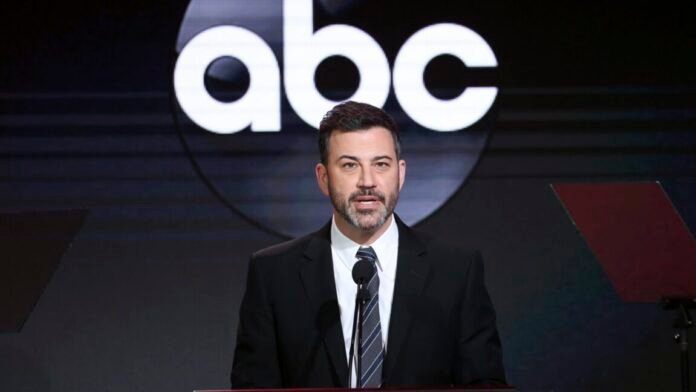
Trump FCC warns all broadcasters to follow orders or be punished like ABC

0
trump-fcc-warns-all-broadcasters-to-follow-orders-or-be-punished-like-abc
Trump FCC warns all broadcasters to follow orders or be punished like ABC

The eight broadcast TV stations owned by ABC filed applications for early license renewals under protest yesterday, accusing the Federal Communications Commission of trying to suppress speech as part of “an unprecedented attack on a single company’s entire portfolio of broadcast licenses.”

FCC Chairman Brendan Carr has repeatedly threatened to revoke broadcast licenses from President Trump’s least favorite networks. He recently ordered the Disney-owned ABC to file early license renewal applications for all of its TV stations over allegations that its diversity, equity, and inclusion (DEI) practices violate anti-discrimination rules.

“The only plausible reason to issue the Order is to punish the Station for speech the government does not like,” ABC said in its filings. The FCC is “using the license process renewal to punish a broadcaster for its editorial choices” in “an extraordinary demonstration of power and coercion directed at disfavored editorial voices,” it said.

ABC said the order it received “sends a clear warning to every broadcaster in America.” If that warning wasn’t clear enough, the FCC yesterday issued a public notice to “remind” all broadcasters of “their public interest obligations.” The public notice was issued on the same day as the deadline the FCC set for ABC to submit its early license renewal applications, and urged all broadcasters to “review and modify their operations to ensure compliance.”

Warning that other broadcasters could face threats to their licenses, the public notice said the FCC “will not hesitate to exercise its statutory authority to ensure that broadcasters either fulfill their public interest obligation or provide the privilege of being a broadcast licensee to someone that will fulfill that duty.” The FCC said it may order early license reviews or other punitive measures when it “finds that a broadcaster has failed to serve the public interest.” The notice said broadcasters have an “obligation to offer programming responsive to the needs and interests of the local communities they are licensed to serve.”

ABC: FCC order “has no legitimate purpose”

ABC submitted individual filings for WABC-TV in New York; WPVI-TV in Philadelphia; WTVD in Durham, North Carolina; WLS-TV in Chicago; KGO-TV in San Francisco; KFSN-TV in Fresno, California; KTRK-TV in Houston; and KABC-TV in Los Angeles.

The station “submits this license renewal application under protest in response to an unlawful, arbitrary, and unconstitutional Order issued on April 28, 2026, by the Media Bureau,” ABC’s filings said. “The Commission had not demanded early renewal in over five decades. And it has never before demanded simultaneous license renewal applications from a group of stations commonly owned with a network as it has here. The Order has no legitimate purpose.”

ABC said it was filing the applications without waiving any rights and called on the FCC to rescind the order.

“There is no information that the application will reveal that the Commission could not obtain through other means,” ABC wrote. “The Order is inconsistent with a legitimate exercise of investigative authority and is plainly incompatible with the First Amendment. Worse, the Order opens the door to an assault on the Station’s license, while the Commission searches for a legal pretext to achieve its desired goal. This effort to suppress speech under the guise of bureaucratic process must not prevail.”

Carr calls Disney responses “disingenuous”

Carr wrote in an X post yesterday that the “FCC has been investigating Disney for over a year now after reports surfaced alleging that it had been discriminating against people based on race, gender, or other protected characteristics in violation of federal nondiscrimination laws,” and that “Disney only filed these applications to renew their ABC broadcast licenses after the FCC informed the company that their responses to the agency’s investigation had been disingenuous, deficient, and improper.”

ABC said in its filings that the company produced over 11,000 pages of documents in response to a series of FCC requests. ABC said the order to file early license renewals “purports to investigate ‘possible violations’ of the ‘prohibition on unlawful discrimination,’ but never identifies what violation it had in mind.”

“It is not credible to now declare the early renewal process ‘essential’ to the same investigation, particularly when after releasing the Order, the Enforcement Bureau issued yet another request for information to which the Company is required to respond less than 24 hours after [this] filing,” ABC said. “The early renewal procedure is not an investigative tool and adds nothing to the Commission’s investigative capacity.”

Arguing that the order serves as a threat to all broadcasters, ABC said:

When a broadcaster must weigh regulatory retaliation before making editorial decisions, the public loses access to journalism that is free from government influence. The Order—both on its own terms and as a signal to other broadcasters—advances exactly that result. A press that edits itself to avoid government displeasure is not a free press. The Commission should not be the instrument of that outcome.

Legal experts say law on ABC’s side

As we’ve previously written, legal experts say the law is on ABC’s side in its fight against the unusual broadcast license review. Under a 1996 change to communications law, the FCC faces what has been described as “an almost insurmountable burden” for denying a broadcast license renewal. ABC’s eight TV stations are scheduled for renewals between 2028 and 2031, and the FCC order to start the renewal process early doesn’t change those expiration dates.

Carr previously threatened ABC station licenses in September 2025, alleging at the time that airing Jimmy Kimmel’s show might violate the rarely enforced news distortion policy. Carr later opened an equal-time rule investigation into ABC’s The View, even though the interview portions of talk shows have historically been exempt from the rule. Last week, Carr’s FCC opened a proceeding that seeks public comment on whether The View qualifies for the bona fide news exemption to the equal-time rule.

Anna Gomez, the only Democratic commissioner on the FCC, wrote that ABC’s filings “expose the FCC’s actions as nothing more than naked political retribution and an unlawful assault on free speech and a free press.” Gomez also criticized the public notice that warned broadcasters about their public interest obligations.

“The ‘public interest’ does not mean this administration’s interests,” Gomez wrote. “Broadcasters should ignore these latest threats and stiffen their spine. Pushing back is the only thing that will stop this FCC from abusing its power to silence speech and punish independent reporting.”

The deep, dark roots of unending US-Russia rivalry

0
the-deep,-dark-roots-of-unending-us-russia-rivalry
The deep, dark roots of unending US-Russia rivalry

Washington’s relationship with Russia appears likely to continue its decades-long decline, with US Secretary of State Marco Rubio saying on May 22 that formal diplomatic talks over the Ukraine war are effectively frozen.

US President Donald Trump’s last meeting with Russian President Vladimir Putin took place in August 2025 in Alaska. While the meeting was free from overt hostility, the restrained press conference that followed reflected the cold and distant relationship between the countries, with little meaningful engagement since. No American president has visited Russia since Barack Obama in 2013.

Russia is the only great power with which Washington has an openly adversarial relationship, as Trump’s visit to China in May 2026 and emphasis on his friendship with President Xi Jinping reflect a desire for amicable relations with Beijing, even if it masks greater tensions.

The decaying relationship between Russia and the US has all but erased the international affairs model they built over the second half of the 20th century. Cold War confrontations forced Washington and Moscow to de-escalate through agreements on arms control and maritime encounters, stabilizing relations and setting global standards.

Many of those agreements, along with post-Cold War arrangements and treaties, have since collapsed, and America’s advantage over a weakened post-Soviet Russia has left the balance uneven, reducing once well-defined spheres of influence.

Russia’s struggle to control Ukraine and the uncertainty surrounding Washington’s role in global leadership have been reinforced by each side complicating the other’s position. Yet much of the talk about their antagonism ignores their deeper history of failing to gain traction.

US perceptions of Russia rarely go back before 1945 and the beginning of Cold War tensions, while Russians increasingly refer to the US intervention in the Russian Civil War roughly two decades prior as the starting point of souring relations between them.

However, both countries need to understand that distrust and cooperation have been ebbing and flowing for more than two and a half centuries and require stabilization for their own interests and global well-being.

Early contact

The first official Russian expedition to sight the Alaskan mainland came in 1741, led by Danish navigator Vitus Bering, in search of animals for the lucrative fur trade.

After years of incursions, the first permanent Russian settlement in Alaska was established on Kodiak Island in 1784, and dozens of Russian merchants, explorers, and missionaries began to settle in the region.

American merchants had already established a transatlantic trade relationship with Russia before the US War of Independence, in violation of Britain’s Navigation Act. The Russian Empire’s neutral stance during the war helped build trust that would fuel commerce after, with American traders beginning Arctic trade by the 1790s.

Russia established the Russian-American Company (RAC) as a state-sponsored colonial trading monopoly in 1799 to consolidate Russian commercial interests in North America, basing political administration in Novo-Arkhangelsk (now Sitka, Alaska).

Fort Ross, established in northern California in 1812, became the company’s southernmost outpost. Spain and later independent Mexico both claimed the area, but neither had sufficient presence to deter Russian development, which also unsettled Washington.

In 1821, Russia officially laid claim to much of the Pacific west coast down to the modern US-Canadian border, before American and British objections pushed its claim back to the present southern border of Alaska.

The overlap between expanding Russian and U.S. activity was also felt in Hawaii. The RAC briefly established a foothold at Waimea Bay after a shipwreck in 1815 and had limited success in trade and building relations with different native Hawaiian groups. However, the Russians were forced to withdraw in 1817 after pressure from native groups and Americans.

Still, ongoing Russian development in the Pacific Northwest kept concerns elevated in Washington. In 1823, then-Secretary of State John Quincy Adams told the Russian envoy that the US would “contest the right of Russia to any territorial establishment on… [American continents].”

The Monroe Doctrine, revealed later that year and strongly shaped by Adams, explicitly warned Russia and several other European powers against further expansion in the Americas.

Russia nonetheless continued its efforts to expand its American holdings, and the signing of the Russo-American Treaty for Oregon in 1824 established boundaries between the two powers on the West Coast.

By the late 1830s, the Russian population (which included Russians and other ethnic groups within the empire) peaked at just 823 documented colonists in its American territories.

Contemporary estimates suggest that the Indigenous population was a little more than 10,000, with a further 12,500 known through contract but not formally registered, and approximately 17,000 more living beyond Russian administrative reach.

Continental powers

In “Democracy in America”, published in 1835 and 1840, French political thinker Alexis de Tocqueville refers to Russia and the US as emerging continental powers shaped by Europe but expanding across different frontier regions and following sharply contrasting political trajectories.

The US appeared centered on freedom for settlers, with Russian society based on general servitude. American expansion was often through individual initiatives within a loose democratic system, while Russia advanced under centralized autocracy. Yet both appeared destined to “sway the destinies of half the globe,” stated Tocqueville.

Within decades, they were increasingly crossing paths in the Pacific, and Russia’s decision to abandon its American holdings was a practical one. The 7,500 miles from Alaska across barren Siberia to the centralized leadership in St Petersburg complicated administration.

“On March 30, 1867, US Secretary of State William H. Seward and Russian envoy Baron Edouard de Stoeckl signed the Treaty of Cession. With a stroke of a pen, Tsar Alexander II had ceded Alaska, his country’s last remaining foothold in North America, to the United States for… $7.2 million,” according to an article in The Conversation.

Combined with bankruptcy after wars in Europe, Russia viewed its American territories as increasingly peripheral and under threat from the British, and accepted transferring those regions to Washington. Russia sold Fort Ross in 1841 and Alaska in 1867, ending more than a century of Russian America, as it eyed Central Asia for expansion.

Even before the sale of Russia’s American territories, Moscow and the US had entered a more cooperative phase. Russia offered strong support to the Union during the Civil War, including sending its Baltic and Pacific fleets to winter in New York and San Francisco in 1863.

Tsar Alexander II and US President Abraham Lincoln tied the latter’s emancipation proclamation to the Tsar’s emancipation of Russia’s serfs two years earlier. After the war, parts of the American and Russian elite also explored the idea of longer-term alignment.

But they never found a solid footing. Russia’s push into Manchuria in 1900 conflicted with America’s Open Door Policy in China, and the termination of the Russian-US trade agreement in 1911 pointed further to how fragile their relationship remained.

Russian revolution, US Civil War

The two countries briefly aligned on the same side in World War I. Russia exited the war after the 1917 Revolution, and while the November 1918 armistice ended fighting with Germany, the US forces were still deployed on wartime operations.

“Russia had begun World War I as an ally of England and France. But the Bolshevik Revolution of 1917, led by Vladimir Lenin and Leon Trotsky, installed a communist government in Moscow and St. Petersburg that pulled Russia out of the conflict and into peace with Germany,” stated the Smithsonian magazine.

The US public saw the war in Europe draw to a close while troops remained in Russia, still engaged in a mission that had begun under the wider conflict and now continued into the country’s civil war.

The US first sent about 5,000 troops to Arkhangelsk in northern Russia in September 1918 under British command as part of a larger allied intervention. This action was originally intended to prevent any German advances and attempts to access Western weapons stockpiled in Russia, but soon expanded into Western efforts to defeat the Bolsheviks.

In Siberia, US forces led by General William S. Graves arrived in 1918, also part of a larger international deployment. Their instructions were to similarly protect Western munitions stockpiles and control the Trans-Siberian railway to help evacuate the Czechoslovak legion.

There was vague support in Washington for Russians experimenting with self-government in the region, but this support was less ambitious than British, French, and Japanese efforts against the Bolsheviks.

Graves kept his distance from allying with White Russian units, unsettled by reports of atrocities and unwilling to be drawn fully into the civil war. As Bolshevik forces advanced in early 1919, rising American casualties gave the Wilson administration an exit from a campaign few in the country supported, and American forces left by August 1919 from Northern Russia and in April the next year from Siberia.

The US intervention did not, however, end relations with the Soviet state. The Siberian expedition was also about reining in Japanese expansion in the region, which unsettled both Moscow and Washington.

Though Japanese military activity surged after American departure, they left in 1922 following discussions with the consolidated Soviet government and after facing sustained US pressure.

The relationship between the Soviet Union and the US was also aided by Washington’s reluctance to explicitly support either side in the civil war. Notable US figures and politicians from the Progressive movement even expressed favoritism for the Bolsheviks as more democratic than the Tsar.

That’s not to say there wasn’t fear on both sides; the first Red Scare intensified concerns in the US about communism’s impact on culture, politics, and commerce, while the US featured heavily in Soviet political rhetoric.

But while the US didn’t recognize the Soviet state until 1933, the decision opened the way for another brief alliance during World War II.

Modern troubled relations

Much of the rest of US-Russian history is well-known. The Cold War that began after the end of World War II saw Washington and Moscow engaged in a global competition for ideological and military supremacy for almost 50 years, before the Soviet collapse and the emergence of the US-led order.

The short-lived post-Cold War stability didn’t take long to break down. Even amid some earnest instances of cooperation, proxy conflicts in Yugoslavia in the 1990s, Georgia in 2008, Ukraine and Syria in the 2010s, and the full-fledged Russian war in Ukraine since 2022 mark a steady deterioration in relations.

Rising friction in the Caucasus, Libya, Central Asia, and the Arctic further signifies a steady bilateral breakdown that rivals the worst days of the Cold War.

But Russian-American history has shown periods of cooperation and balance that required restraint and concessions from both sides at sensitive moments. Russia and the US remain neighbors, and relations have recovered from lows comparable to the present day.

Stabilizing a great power rivalry that never found its footing would require both countries to reconsider their global and regional roles, rather than continuing to aggravate each other and leading to international tensions alike.

Without building a more stable foundation, the rivalry between the two countries will continue to reassemble itself in new, destructive forms.

John P. Ruehl is an Australian-American journalist living in Washington, D.C., and a world affairs correspondent for the Independent Media Institute. He is a contributor to several foreign affairs publications, and his book, Budget Superpower: How Russia Challenges the West With an Economy Smaller Than Texas’, was published in December 2022. Follow him on X @john_ruehl.

This article was produced by Economy for All, a project of the Independent Media Institute, and is republished with permission

US Brokers Pentagon Talks Between Israel and Lebanon as Hezbollah Disarmament Remains Central Issue

0
us-brokers-pentagon-talks-between-israel-and-lebanon-as-hezbollah-disarmament-remains-central-issue
US Brokers Pentagon Talks Between Israel and Lebanon as Hezbollah Disarmament Remains Central Issue


Israeli and Lebanese military officials are set to hold direct US-mediated security talks at the Pentagon on Friday focused on border security, Hezbollah’s disarmament, and a timeline for an Israeli withdrawal from southern Lebanon, as Washington seeks to move operational discussions forward through military channels.

Military issues, including border arrangements, security coordination, and the mechanics of implementing any future steps will be the focus of the session. Separate political discussions are expected to continue next week at the State Department.

Talks are taking place against the backdrop of continued fighting and ceasefire violations along the Israel-Lebanon front.

The Lebanese Armed Forces are prioritizing a clear ceasefire framework and a timeline for Israel’s withdrawal from southern Lebanon. Israel is demanding steps to disarm Hezbollah and secure the shared border, citing continued drone and rocket fire.

Military-to-military discussions are intended to build on the 45-day ceasefire extension agreed to in mid-May.

On Thursday, Israel carried out a targeted strike in Beirut against Ali al-Husni, identified as the missile commander in the Imam Hussein Division, a force linked to Iran’s Quds Force. The Israel Defence Forces (IDF) has not said whether al-Husni was killed.

The strike followed the IDF’s expansion of military activity in Lebanon beyond the Yellow Line and marked a change in Israeli operations after previous indications that Israel would avoid military action in Beirut.

Israel’s military action followed repeated Hezbollah attacks in recent weeks that caused a number of IDF casualties, as well as drone fire into Israel.

House of the Dragon S3 trailer revels in dragons, fire, and blood

0
house-of-the-dragon-s3-trailer-revels-in-dragons,-fire,-and-blood
House of the Dragon S3 trailer revels in dragons, fire, and blood

Some viewers were disappointed that the second season of House of the Dragon ended not with a bang, but a whimper. But the big battle sequence that season 2 set up will open season 3 with a bang, judging by the latest trailer, which has all the dragons, fire, and blood Westeros is known for.

(Spoilers for first two seasons below.)

As previously reported, the series is set nearly 200 years before the events of Game of Thrones, when dragons were still a fixture of Westeros, and chronicles the beginning of the end of House Targaryen’s reign. The primary source material is Fire and Blood, a fictional history of the Targaryen kings written by George R.R. Martin. As book readers know, those events culminated in a civil war and the extinction of the dragons—at least until Daenerys Targaryen came along.

The second season had plenty of politicking and conniving subterfuge, but we didn’t get to see the spectacularly brutal Battle of the Gullet, because HBO trimmed S2’s episode count from 10 to eight. Still, the S2 finale teed it up perfectly, as Rhaenyra (Emma D’Arcy) finally declared outright dragon war following Aemond’s (Ewan Mitchell) reckless destruction of Sharp Point. As for Aegon II (Tom Glynn-Carney), after his brother took over the throne—which, remember, Aegon usurped from the rightful named heir, Rhaenyra—he went into hiding in Braavos, intending to wait out the war.

Much of the main cast—those whose characters survived S2—are returning, including D’Arcy, Glynn-Carney, and Mitchell. Also returning: Olivia Cooke Alicent; Rhys Ifans as Otto Hightower; and Matt Smith as Daemon. Also returning: Steve Toussaint as Corlys; Sonoya Mizuno as Mysaria; Fabien Frankel as Criston Cole; Matthew Needham as Larys; Jefferson Hall as Jason and Tyland Lannister; Harry Collett as Jacaerys; Bethany Antonia as Baela; Phoebe Campbell as Rhaena; Phia Saban as Helaena; Kurt Egyiawan as Orwyle; Kieran Bew as Hugh Hammer; Abubakar Salim as Alyn of Hull; Clinton Liberty as Addam of Hull; Tom Bennett as Ulf White; Freddie Fox as Gwayne Hightower; and Gayle Rankin as Alys Rivers.

Joining the cast for S3 are James Norton as Ormund Hightower; Tommy Flanagan as Roderick Dustin; Dan Fogler as Torrhen Manderly; Tom Cullen as Luthor Largent; Joplin Sibtain as Jon Roxton; Barry Sloane as Adrian Redford; and Annie Shapero as Alysanne Blackwood.

The new trailer opens mid-battle, as we see Daemon thrashing away at an opponent while a dragon lights up the war-torn landscape. “These are turbulent times,” the High Septon says, which seems to be an understatement. Alicent understands the stakes much more clearly when she tells her throne-usurping son, Aemond, “Rhaenyra is coming [to King’s Landing]. You are no longer safe here.”

Yet even as Rhaenyra reclaims her rightful throne, backed up by lots of dragons, there is a whisper campaign underway to convince her subjects that she is “weak and unsuited to rule.” Aemond, of course, is convinced she will fail and is determined to “raise our own throne.” Rhaenyra isn’t helping her cause when she accuses her own council of betraying her and demands they bring the usurper Aegon to her. From her tone, her intentions are far from honorable.

The third season of House of the Dragon premieres on HBO on June 21, 2026. A fourth and final season is already in the works.

Whoopi ‘Snaps’ At Joy Behar On The View Over Weight Comment

0
whoopi-‘snaps’-at-joy-behar-on-the-view-over-weight-comment
Whoopi ‘Snaps’ At Joy Behar On The View Over Weight Comment


Whoopi Goldberg did not let Joy Behar rewrite her own history.

The longtime View moderator appeared visibly irritated during a tense on-air moment Wednesday after Behar questioned Goldberg’s claim that she once weighed around 300 pounds.

The awkward exchange unfolded during an interview with Mindy Kaling, who opened up about her own weight-loss journey and the complicated way fans react when celebrities dramatically change their appearance.

Kaling admitted that some people can feel “betrayed” when a star they have watched for years suddenly looks different.

That sparked a wider conversation at the Hot Topics table about fame, bodies, public judgment and the strange ownership fans sometimes feel over celebrities.

Behar suggested that fans may “want you to stay the way they loved you,” as the panel discussed the infamous 1988 Oprah Winfrey moment when Winfrey wheeled out a wagon of animal fat to represent the weight she had lost.

Goldberg said Winfrey later felt the stunt came off as mocking.

That was when Goldberg tried to make a personal point about her own body.

The Oscar-winning Ghost star said there was a time when she “weighed 300” pounds.

Behar immediately seemed doubtful.

Goldberg pushed back, saying, “Yes I did.”

But Behar continued to question it, prompting Goldberg to grow noticeably exasperated.

“Joy, I did!” Goldberg snapped.

The moment briefly froze the table as Behar tried to figure out when Goldberg could have weighed that much.

“When was that? Since I’ve known you?” Behar asked.

Goldberg then brought up her work in the 2022 film Till, saying she weighed 279 pounds at the time.

“And I looked like five people,” Goldberg said.

Behar tried to turn the uncomfortable moment into a joke, telling Goldberg that she still looked good and quipping about the phrase “Black don’t crack.”

Goldberg fired back with her own joke, saying, “It’s hanging, you just don’t see it!”

The tension then eased, and Goldberg steered the conversation back to the larger point.

She said people often get angry at celebrities who lose weight because they may want to do the same thing themselves, but do not yet have the motivation, resources or knowledge to make it happen.

Kaling then shared the deeply personal reason behind her own health journey.

“I’m 46, I’m a single mom of three kids,” Kaling said. “My mom died young of cancer, both of my parents have diabetes. I need to live. I need to live, and my kids need me.”

Goldberg has been outspoken about her weight before.

In 2022, she called out a movie critic who suggested she wore a fat suit in Till.

Goldberg made it clear at the time that there was no costume trickery involved.

“That was not a fat suit, that was me,” she said on The View.

She also told critics to focus on the acting instead of taking shots at people’s bodies.

The latest exchange proved once again that Goldberg is not afraid to shut down even her own cohosts when the conversation gets too personal.

The View airs weekdays on ABC.

Iceland’s parliament votes to hold referendum on EU accession talks in August

0
iceland’s-parliament-votes-to-hold-referendum-on-eu-accession-talks-in-august
Iceland’s parliament votes to hold referendum on EU accession talks in August


Iceland’s parliament on Thursday voted in favour of holding an August 29 referendum to begin European Union accession talks, supporting the government’s two-step plan that could lead ​to membership in the 27-nation bloc later this decade.

Reykjavik in 2013 abandoned ‌negotiations after four years of talks when a Eurosceptic government took power, but a rise in the cost of living and the war in Ukraine have since rekindled interest in ​joining the union, opinion polls have shown.

If voters back the resumption of ​talks, the final terms of EU membership will require approval ⁠in a second referendum, while a “no” vote would end attempts to restart ​negotiations, the government has said.

Many voters are uncertain of whether to support EU ​membership or not, and may therefore take comfort in the two-step process, said Olafur Thordur Hardarson, a professor of political science at the University of Iceland.

“The large proportion that has ​not finally decided if they want to join or not, many of ​them, of course, want the (first)referendum because they want to see exactly what terms would be ‌in ⁠a potential agreement,” he said.

Membership for the nation of some 400,000 people would extend the EU’s reach far into the North Atlantic Ocean at a time when U.S. President Donald Trump seeks to control Greenland, an island between Iceland and ​the United States.

“Even ​though Iceland of ⁠course is a very small country, putting Iceland on the EU map would sort of have a symbolic advantage,” ​Hardarson said.

In the 63-seat national parliament of Iceland, Althingi, 34 voted ​for the ⁠referendum, while 8 rejected it. 14 members abstained, while 7 were absent, according to the secretary general of the parliament.

Foreign Minister Thorgerdur Katrin Gunnarsdottir in March told ⁠Reuters she ​was optimistic that Iceland could join the EU ​as early as 2028, and that she expected fisheries and agriculture to be the toughest points ​of negotiation.

Source:  Reuters

ICE Pepper-Sprayed, Beat Detainees for Protesting “Horrific Conditions” In Delaney Hall Jail

0
ice-pepper-sprayed,-beat-detainees-for-protesting-“horrific-conditions”-in-delaney-hall-jail
ICE Pepper-Sprayed, Beat Detainees for Protesting “Horrific Conditions” In Delaney Hall Jail


Guards at a New Jersey immigrant detention center are retaliating against detainees for nonviolent protests over poor conditions, including a hunger and labor strike, according to relatives and members of Congress.

Staff at U.S. Immigration and Customs Enforcement’s Delaney Hall Detention Facility — a Newark immigration jail operated by the private prison giant GEO Group — took steps to crack down on the strikes, including attacking immigration detainees with pepper spray and batons, transferring protest leaders to other facilities, and shutting down family visitation, advocates and relatives of detainees told The Intercept.

“Detainees told me about scalding hot showers that have led to burns and blisters; worms in food; and being denied medical care.”

One woman who spoke with her nephew inside Delaney Hall told The Intercept that she was told negotiations were set to take place between guards and striking inmates — but instead, her nephew reported, guards attacked the detainees with pepper spray.

“My nephew can’t see right now because he was hit on the head with a baton,” said the woman, who requested anonymity for fear of further retaliation against her nephew. “Prison operators told my nephew and the others on the hunger strike that ICE was going to negotiate on Thursday. They got hit instead.”

Members of Congress from New Jersey and New York made repeated visits to inspect the facility this week. On Wednesday, New York Democratic Reps. Dan Goldman and Jerry Nadler emerged from Delaney Hall looking deeply shaken and spoke of hearing about miserable conditions inside with no doctor onsite.

“Detainees told me about scalding hot showers that have led to burns and blisters; worms in food; and being denied medical care, visitation rights, and time outdoors,” Goldman told The Intercept. “Many of them believed that this treatment is in retribution for the ongoing hunger strike, which they have initiated to bring attention to the horrific conditions they are enduring despite having committed no serious crimes.”

The alleged retaliation against detainees matches a long-standing pattern, according to a 2021 report from the American Civil Liberties Union, which detailed systematic abuses carried out against hunger strikers at dozens of facilities across 24 states.

In a post to X on Thursday, Rep. Frank Pallone, D-N.J., said he was barred from visiting the unit on which the physical abuses were alleged to have taken place, but said he spoke with detainees on another unit who reported several of their fellows being taken to the hospital for injuries sustained in attacks by guards.

In a statement to The Intercept, GEO Group spokesperson Christopher Ferreira confirmed the use of chemical agents against detainees on Thursday as part of a “physical altercation involving detainees at Delaney Hall,” but did not address questions about the attacks on detainees coming as retaliation.

“In accordance with established policies and protocols approved by U.S. Immigration and Customs Enforcement,” Ferreira said, “staff implemented appropriate response and control measures to safely resolve the situation, including the limited use of chemical agents.”

The accusations came amid ongoing protests outside the facility, at which federal agents have repeatedly attacked demonstrators, including family members of those inside, with pepper spray and batons. (ICE referred a request for comment its parent agency, the Department of Homeland Security, which did not immediately respond.)

For nearly a week, family members have been denied visitation, and protesters have set up a tent outside Delaney Hall to provide support for those who had hoped to visit their loved ones inside.

“Relatives of detainees haven’t been let in since Saturday,” said Ana Paola Pazmino, the director of Resistencia en Acción NJ, a local grassroots group. “This is despite the fact that DHS has said there has been no hunger strike. They are liars.”

Protesting Poor Conditions

The hunger and labor strikes began last week when detainees began refusing food and stopped showing up for their jobs to protest their poor conditions inside the facility. Among their demands are the release of elderly and very young detainees and those with serious medical conditions.

In response to a call from one detainee leader’s wife for solidarity demonstrations, protests began gathering outside the facility on May 21, with demonstrators showing up virtually around the clock every day since, despite attacks by armed ICE agents.

Andre Beresford Burger, an organizer with the group Movimiento Cosecha, told The Intercept on Thursday that he had been pepper-sprayed by ICE agents but remained undeterred.

“If ICE agents are willing to storm into a crowd and brutalize people on camera and in front of the press,” he said, “what does this say about what they’re doing to people inside immigration detention, away from the cameras?”

“If ICE agents are willing to storm into a crowd and brutalize people on camera, what does this say about what they’re doing to people inside?”

Deploring the conditions, members of Congress called for Delaney Hall to be closed.

“The situation here just gets worse every day,” Pallone, the House member from New Jersey, said in a video after visiting the facility. “This place needs to be closed down. The conditions are horrible. You can’t get due process, you can’t see a doctor on any kind of regular basis. The reality is that ICE and the Department of Homeland Security … are trying to ship people out that are trying to tell the stories.”

Ferreira, the GEO Group spokesperson, denied reports of poor conditions at the facility, which he labeled a “coordinated, politically motivated campaign by outside groups to dismantle ICE and federal immigration detention.”

On Thursday evening, New Jersey state troopers and Newark police shut down traffic on Doremus Avenue, the industrial thoroughfare on which Delaney Hall sits, but protests continued well into the night. Long standoffs between demonstrators and ICE agents were punctuated by bursts of violent aggression from federal officers, who swung at protesters with batons, doused them in pepper spray, and fired pepper balls into the crowd.

From outside Delaney Hall, detainees could be seen in windows raising their fists and lights could be seen flickering periodically, a signal from those inside that they heard their supporters on the outside.

0FansLike
0FollowersFollow
0FollowersFollow
0SubscribersSubscribe
- Advertisement -
Google search engine

Recent Posts