Home Blog

Frontier isn’t the finish line in US-China AI rivalry

0

For the better part of three years, the global conversation about artificial intelligence has been framed as a horse race, with the projected winners having the biggest models, largest data centers and fastest chips.

By those measures, the United States is clearly ahead. American hyperscalers — Alphabet, Amazon, Meta and Microsoft — are on pace to spend roughly US$650 billion on AI capital expenditures this year alone, while Alibaba, China’s most ambitious AI investor, has committed about $53 billion over three years.

American frontier models still outperform their Chinese counterparts on most industry benchmarks, from reasoning to long-horizon agentic tasks. Yet a quieter story is unfolding alongside the headline race, one that may matter more than the leaderboard suggests: America is building AI; China is deploying it.

That distinction — between invention and diffusion — is becoming the defining axis of the next AI era. It deserves to be understood on its own terms, rather than through the familiar binary of who is “winning.”

It is tempting to read the contrast as a values contest, but it isn’t. It is closer to two different industrial logics responding to two different sets of constraints.

The American logic is frontier-maximizing. With abundant private capital, deep semiconductor partnerships and a venture ecosystem that rewards moonshots, US firms have organized themselves around the pursuit of ever-larger, ever-more-capable foundation models — many explicitly oriented toward artificial general intelligence, or AGI.

The payoff structure favors closed, proprietary systems monetized through APIs and subscriptions, which has made American labs commercially dominant in direct revenue terms.

The Chinese logic is constraint-driven. Cut off from the most advanced Nvidia chips and operating with a fraction of American compute capital, Chinese labs have had little choice but to optimize.

The result is a portfolio of architectural innovations — mixture-of-experts designs, sparse attention mechanisms, aggressive 4-bit quantization — that squeeze more performance out of less silicon.

Where Americans buy their way to scale, Chinese engineers compress their way to efficiency. National programs like “AI Plus” then push those models into manufacturing, health care, drug discovery and government services.

Neither approach is inherently superior. Rather, they are answers to different questions.

The deeper insight buried in these contrasting strategies is that frontier capability and societal benefit are not the same thing. A model that scores higher on a math benchmark is not automatically a model that lowers the cost of a clinic visit, improves a factory line or makes a small business more productive.

Translating capability into utility is the last-mile problem of AI — and it is where China’s diffusion-first posture is paying unexpected dividends.

Consider the open-source channel. Many Chinese labs release model weights freely, along with detailed technical reports, allowing developers anywhere to download, fine-tune and deploy them on their own infrastructure.

On Hugging Face, Chinese models now lead in total downloads, and derivative models built on Chinese foundations have surpassed those built on American ones. Airbnb’s chief executive has publicly described relying on Alibaba’s Qwen for customer service because it is fast, capable and inexpensive.

Adoption, not benchmark supremacy, is what builds the rails on which an AI economy actually runs. The same pattern shows up in the physical world.

China is integrating AI into vehicles, drones, wearables and especially robotics, leaning on its existing electronics and electric-vehicle supply chains. Unitree has already manufactured more than 5,000 humanoid robots, and major Chinese automakers are piloting them on assembly lines.

American firms such as Waymo and Physical Intelligence remain best-in-class technically but may face greater scaling challenges without a comparable industrial base.

There is a feedback loop here that deserves more attention than it gets. Export controls, designed to slow China’s frontier progress, have indeed done so in the near term.

But they have also catalyzed a whole-of-nation push toward semiconductor self-sufficiency, with domestic chips capturing roughly 41% of China’s AI chip market in 2025 — up from a market once dominated 90% or more by Nvidia.

Slowing a competitor at the frontier and hardening that competitor’s domestic stack are, in this case, the same policy. Acknowledging that trade-off honestly is not pro- or anti-China; it is simply good strategic accounting.

The most original lesson from this contrast may be that each system is partially blind to its own weakness.

The American ecosystem under-invests in the connective tissue — open weights, energy infrastructure, academic compute and adoption pathways for small and mid-sized firms — that turns brilliant models into broad prosperity.

US data center power demand is projected to roughly double by 2030, to about 9% of national electricity, while China added 540 gigawatts of new capacity in 2025 alone. Capability without kilowatts is a brittle advantage.

The Chinese ecosystem, conversely, risks settling for a permanent second-best on the frontier. Distillation and clever engineering can close gaps, but they cannot, on their own, produce the next paradigm. Adoption matters enormously, but it is adoption of something — and the something still has to be invented.

For much of Asia, the smartest response to this divide is to refuse the binary altogether. Most economies in the region have little interest in pledging allegiance to an American or a Chinese AI ecosystem. They want affordable tools, reliable infrastructure, local-language capability and protection against lock-in.

That argues for building national capacity to use, audit and adapt both. Chinese open-weight models are inexpensive and easily customized; American systems often sit closer to the frontier and arrive wrapped in mature cloud and enterprise support.

The countries that can run multiple systems, evaluate them independently and avoid dependence on any single supplier will hold the strongest hand — and the leverage that optionality brings.

Rather than asking who is winning, policymakers, businesses and publics across Asia and beyond would do well to ask a different question: which parts of the AI stack — frontier research, efficient deployment, physical integration, open diffusion, energy and safety — does my country actually need to participate in and on what terms?

The US-China contrast is not a morality play. It is a natural experiment in how two large economies allocate scarce resources under different constraints.

The countries that learn fastest from both models — borrowing American ambition at the frontier and Chinese discipline in diffusion — will likely be the quiet winners of an era everyone else is busy and mistakenly calling a race.

Y. Tony Yang is an Endowed Professor at the George Washington University in Washington, D.C.
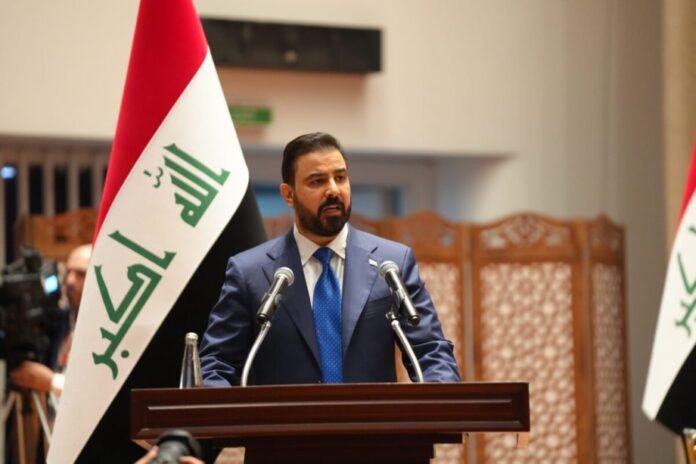
The illusion of a political solution in Ali al-Zaidi and the Green Zone

0
the-illusion-of-a-political-solution-in-ali-al-zaidi-and-the-green-zone
The illusion of a political solution in Ali al-Zaidi and the Green Zone

There is a familiar analytical noise that rises with every new government in Iraq, a noise that feels like replaying an old recording at a higher volume, nothing more. What is happening today with Ali al-Zaidi’s government is no exception; it is a pale repetition of what we saw with Mohammed Shia al-Sudani, and with those before him, and with those who will follow, so long as every prime minister is born from the same equation and bound by the same conditions that have governed the political process since 2003.

All this noise manufactured on television screens—by commentators who hang their university degrees on the wall behind them—does not produce a single fruitful paragraph capable of convincing Iraqis that anything real is changing. Because what is required, at its core, is not understanding but justification; not critique, but the conferral of political legitimacy on state thieves and on a sectarian party–militia class that believes Iraq has become the private property of the sect, and that the concept of a nation is no longer usable after they succeeded in dividing Iraqis against themselves.

Iraq today, when it wants to define itself, does not say: I am Iraqi. It says: I am Shia, Sunni, loyal to this party or that leader. This is not a passing identity crisis; it is the greatest moral collapse Iraq has lived through in its modern history.

In the midst of this collapse, we are asked to believe that Ali al-Zaidi can be the “political solution” who will return Iraq to the Iraqis, rescue it from militias and uncontrolled weapons, recover stolen funds, and put an end to political and financial corruption. What kind of illusion is this, and what fantasy do they want us to inhabit?

What truly delights that ruling class is not reform, but the debate about reform. It thrives on this heated media and popular argument that grows more hollow with every exclusion, every show trial, every theatrical election. The higher the volume of the debate, the more entrenched their fake legitimacy becomes. They climb out of the swamp, wipe the mud from their faces, and say to the world: look, we are a democratic country where disagreement and debate are allowed!

Yet a single glance at Iraq’s position on global corruption indices, or at the latest Reporters Without Borders assessment of press freedom, is enough to see that we are trading in illusions the moment we trust that al-Zaidi is any kind of “solution”. Leave aside his political illiteracy and his glaring ignorance of how the world works; the problem is not in the man alone, but in the stage he has stepped onto, and in the script written for him in advance.

READ: The Gulf Cooperation Council is shooting itself in the foot

We can see political failure laid bare simply by recalling what happened during the war with Iran and beyond, and how militias backed by Tehran crushed the very idea of the state under their boots, as they directed drones and missiles at targets inside Iraq and the Gulf according to Iranian instructions, while the government in the Green Zone claimed— with a brazenness rarely matched—that it was not a party to this war. What kind of state fires from its own soil, then swears it does not know who pulled the trigger?

This is what Nicholas Pelham, The Economist’s senior Middle East correspondent, calls a “gangster’s paradise”—a disgraceful counter-image to the “Land of the Two Rivers”. He writes about the ongoing farce in a country that was meant to become a “democratic oasis” in the region, only to turn into a fully fledged model of a spoils economy and gangster politics.

On paper, the scene looks reassuring: a Federal Integrity Commission, a Supreme Judicial Council, a parliamentary ethics committee, an electoral commission—institutions that are supposed to protect accountability and guarantee transparency. But these institutions, as Pelham describes them, are often used to destabilize society rather than protect it; to eliminate rivals rather than prosecute the corrupt; to beautify the face of the system, not to cleanse it.

In this context, betting on a “solution from within the political process” becomes either naivety or complicity. We cannot sympathize with those who lived comfortably inside the swamp of this process—however sincere some of their intentions may have been—and then, once they are pushed out or choose to flee, begin to reveal the theft and criminality they coexisted with, as if they have just discovered corruption. These facts have been obvious to Iraqis for years; they know them by instinct and experience. They do not need a latecomer at the banquet to certify what they already live.

Take Suha al-Najjar, for example, who worked at the National Investment Commission before resigning and fleeing. She says threats forced her to leave Iraq. She recounts how pro-Iran MPs would come to her office and openly threaten her with prison and death in front of employees. She also says: “Your life will be threatened anyway, so you have to be corrupt and make money. That’s why everyone is corrupt.”

But the question she does not answer is this: where did the trust that was granted to her originally come from, when she was working alongside state thieves in a cash-swollen commission, surrounded by dense networks of interests? What prevents her from being part of that oligarchic class while working among them and under their protection, even if she ultimately left with “clean hands”, as she claims? Why are we asked to sympathize with her resignation, but not asked to interrogate her earlier participation in a system she knows better than anyone is rotten to the core?

She is not the only example. Many have lived inside the swamp of the political process and, once they stepped out, wanted to condemn it without first condemning themselves.

The latest of them is former prime minister Mustafa al-Kadhimi, who has now confessed to the decay and political failure in Iraq as a living witness who promoted, supported, and participated in the political process since 2003. He wrote:

“The Iraqi predicament has never been obscure; it is embarrassingly clear, matched only by a chronic inability to decide. We are not living a crisis of understanding or approach, but a crisis of will. Unfortunately, the political elites have failed to answer a simple question in form and phrasing, but profound in its consequences: what do we want? To build a state, or to perpetuate power? The state—here—means monopolizing arms, the rule of law, and institutions that are not reduced to individuals. It also means a serious fight against corruption as the ‘red line’ that must not be crossed. What is actually happening, however, is the management of fragile balances, where mistakes are used instead of being corrected.”

The crisis of leadership in the West: From the charisma of ideas to the tyranny of public relations

Despite their contradictions, these testimonies offer a truthful picture of what is happening in Iraq: a system that cannot be reformed from within, because the “inside” itself is part of the machinery of corruption. At this point, every attempt at “patchwork” or “gradual reform” dissolves, and talk of a “zero-sum equation” ceases to be theoretical luxury and becomes a condition for any real change: either a state, or no state; either one law, or an open jungle.

American journalist Robert Worth, who wrote one of the most important reports on corruption in Iraq for The New York Times, goes beyond blaming corrupt politicians. Failure, in his view, is not merely the product of individuals, but of “the political framework of this country”.

The system put in place during the American occupation—marketed as one that would enhance political competition and power-sharing—has in practice become a mechanism for dividing oil revenues through ministries among state thieves.

This framework, built on sectarian apportionment, consensus, and the division of spoils, does not produce a state; it produces an open market for loyalties. Ministries are not public service institutions, but small oil fields distributed among parties and militias. In such a system, any prime minister, whatever his intentions, becomes part of the game, not its breaker. Ali al-Zaidi, in this context, is not an exception but a continuation.

Worth does not absolve the United States of responsibility. Washington is not merely a witness to corruption; it is a partner in it. Its invasion destroyed the state, then left behind a fragile political system built on distributing power among competing factions, and fed by oil money flowing through the Federal Reserve in New York, where Iraq still receives billions of dollars annually in hard currency. Instead of building a state, this money is recycled through the same corrupt networks, under the gaze of the international community and with the tacit blessing of major powers that care more about the stability of the equation than the integrity of justice.

In light of all this, “Ali al-Zaidi and the Green Zone” is not just a provocative headline designed to attract readers; it is a condensed summary of a bitter truth: no political solution can be born from an equation originally designed to produce failure, and no prime minister can turn into a savior while he is bound by rules written by parties and militias and facilitated by foreign capitals. The illusion does not lie in al-Zaidi as a person alone, but in the very idea that the system can reform itself, that the swamp can wash itself with its own stagnant water.

Iraqis do not need more faces; they need to shatter the mirror that reproduces the same image every time. And if there is ever to be a genuine “political solution”, it will not come from the Green Zone, but from the moment Iraqis decide that this zone is not the heart of the state, but the heart of the illusion.

The views expressed in this article belong to the author and do not necessarily reflect the editorial policy of Middle East Monitor.

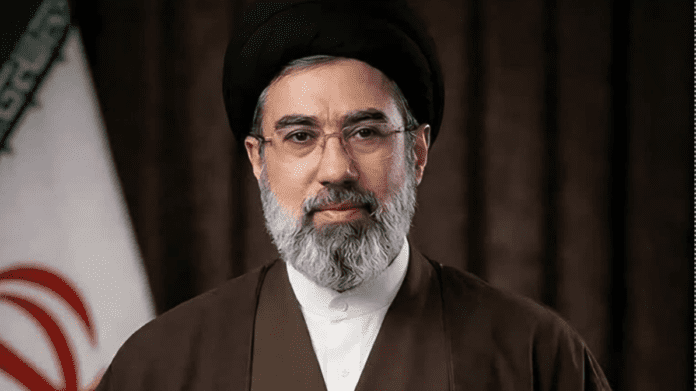
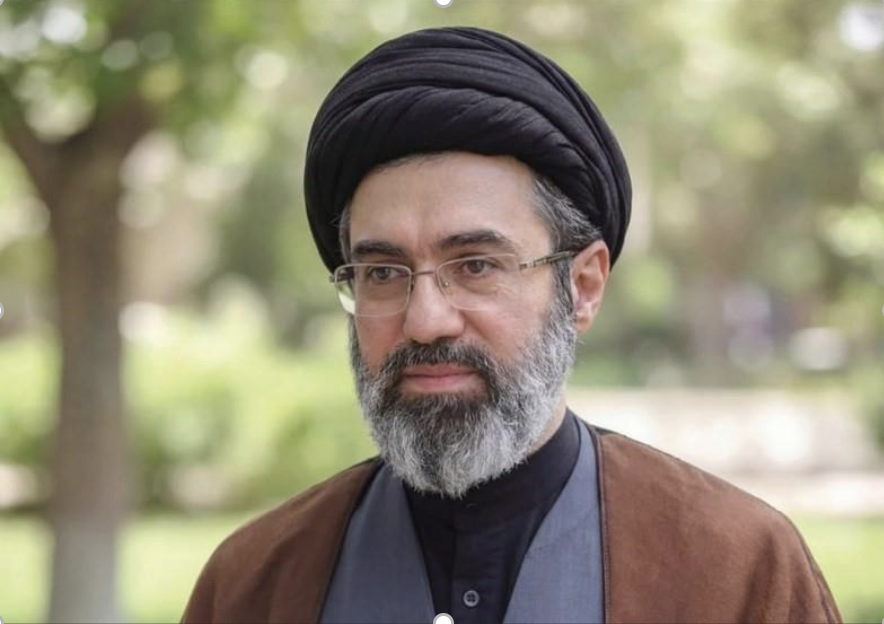
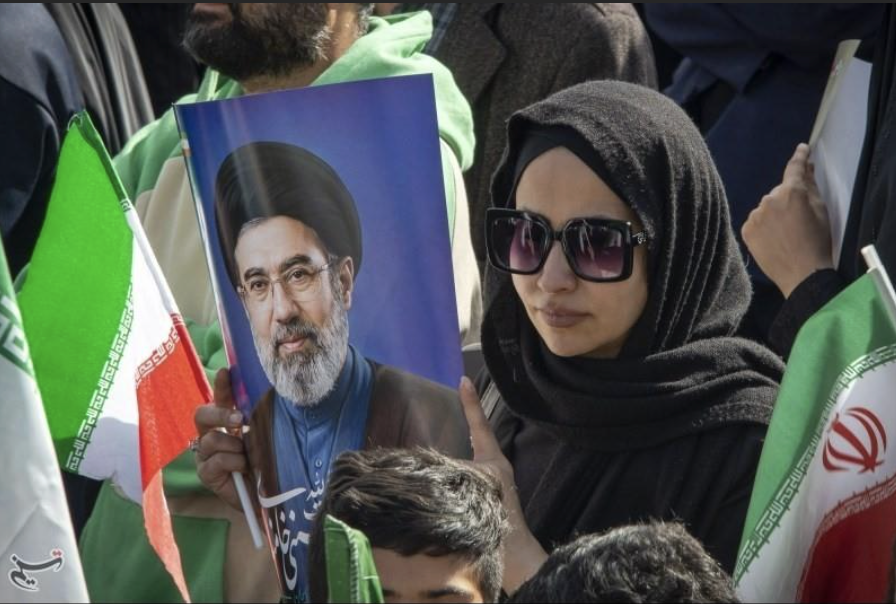
Does Mojtaba Khamenei’s Leadership Have a Future?

0
does-mojtaba-khamenei’s-leadership-have-a-future?
Does Mojtaba Khamenei’s Leadership Have a Future?


Verified information within Iran suggests that Mojtaba Khamenei effectively has no role in the leadership structure of the Islamic Republic

With each passing day, doubts and speculation surrounding the existence of a leadership under Mojtaba Khamenei continue to intensify. While earlier information published by The Media Line indicated that he had been severely injured and hospitalized in the intensive care unit of a secret Islamic Revolutionary Guard Corps compound, new information that has been verified after several days, despite the complete internet blackout in Iran, suggests that Khamenei effectively has no role in the leadership structure of the Islamic Republic.

Verified information within Iran suggests that Mojtaba Khamenei effectively has no role in the leadership structure of the Islamic Republic. (Tasnim)

In addition, an informed source at Sina Hospital, the initial location to which he was transferred after the attack on the leadership compound on Feb. 28, told The Media Line that the possibility of Khamenei surviving missile strikes that “reduced everyone present in the leadership compound to ashes” resembles more of a miracle than reality.

Nevertheless, multiple accounts exist regarding his transfer to Sina Hospital, major surgery, and even a missile strike on that hospital itself, followed by his relocation to another secret hospital. Combined with intelligence released by the United States and Israel, these accounts suggest that Khamenei at least survived the first days following the attack on the leadership compound.

However, in recent days, numerous rumors have once again spread in Tehran claiming that he is dying. Some even say the regime is preparing its supporters for the announcement of his death. Reports published by various sources, including the director of Sina Hospital and surviving officials from the leadership compound, which described his injuries as superficial wounds, appear so unrealistic, particularly given that no image or even voice of the absent leader has been released, that they have fueled further doubts about whether Khamenei is actually alive.

Unlike his father, Mojtaba Khamenei has no executive background, and his influence within the Revolutionary Guards and the security apparatus has declined in recent years. He also lacks any real understanding of Iran’s contemporary, diverse, and at the same time deeply hypocritical society, having spent virtually his entire life within religious seminaries. (ATTA KENARE/AFP via Getty Images)

But even assuming Khamenei is alive and physically present in the leadership arena, the nature of his views is completely different from—and even more reactionary than—those of his father. This difference in outlook became so significant that it even drew the attention of American lawmakers during a congressional questioning session with the commander of CENTCOM, Brad Cooper.

Unlike Ali Khamenei, who, during his youth and middle age, associated with intellectuals, artists, and literary figures and claimed expertise in Persian literature, Mojtaba Khamenei is deeply dogmatic, closed-minded, and backward-looking. He represents the continuation of the clerical tradition that, after the establishment of the Islamic Republic, produced a generation of clerics fundamentally different from the first generation of clerics who rode the wave of the 1979 revolution, seized the leadership of the new regime from others, and consolidated their rule through deception, manipulation, repression, and mass killings.

Ali Khamenei, unlike the well-known clerics of 1979, was known only in his birthplace and hometown, Mashhad, within religious circles opposed to the Shah’s government. However, his longtime associate Ali Akbar Rafsanjani, who was close to Khomeini, brought him to Tehran and into the Revolutionary Council to leverage both his oratory skills and his connections with various political groups. For years, Khamenei maintained ties with the Tudeh Party and the Fadaian (Majority) Organization, both of which provided him with reports about opposition activities until the Islamic Regime eventually decided to suppress these pro-Soviet groups as well.

He was also a more effective speaker than many other clerics, yet deeply vindictive and inflexible. His appointment as leader—considering his executive background, his influence within the Revolutionary Guards, and efforts led by Rafsanjani to unify the regime’s competing factions—was a move that secured the survival of the government after Khomeini’s death.

Mojtaba Khamenei is an entirely different figure. While Ali Khamenei claimed education in Iranian literature and contemporary poetry, and although many people and intellectuals considered Khomeini’s speeches incomprehensible, after Khomeini’s death, the regime published a volume of poetry and claimed he had written the poems. Khomeini’s unfamiliarity with poetry and literature was so obvious that few believed it, but the episode demonstrated how regime propaganda attempts to portray the leader of the Islamic Republic as a cultured intellectual.

Throughout his life, Mojtaba Khamenei has had no association with artists or intellectuals. Even the literary style of the few surviving speeches or writings attributed to him from earlier years is entirely clerical in tone. He is fundamentally alien to Iran’s social culture and has grown up inside a religious bubble. Moreover, despite his previous influence within the security, intelligence, and Revolutionary Guard apparatuses, he has in recent years been pushed to the margins and occupied with religious seminary activities.

Unlike his father, he lacks speaking skills, is extremely shy and socially withdrawn, and some domestic and foreign sources have claimed that he also has homosexual tendencies—something that is not uncommon among clerics in Iran.

These striking differences from his father make it highly advantageous for the Revolutionary Guards, assuming Mojtaba Khamenei remains alive, to exploit the absence of a leader. Unlike his father, he has no executive experience or command over current affairs and can easily reproduce whatever directives the Revolutionary Guards dictate. Nevertheless, very few people believe he actually writes his own statements.

An informed source told The Media Line that, in reality, no individual leader exists, and that a five-member council, in coordination with the heads of the three branches of government, makes the principal decisions, while Khamenei’s office writes texts and statements attributed to him in place of an actual leader. (Amir Sadghian/Tasnim)

The Media Line previously published a report about Mojtaba Khamenei’s first statement following his appointment to leadership and exposed its bizarre mistakes, showing first that the statement was clearly not written by a single person, and second, that it contained glaring textual and spelling errors, indicating that its authors did not even have time to proofread it.

See related story: Errors in Mojtaba Khamenei’s First Message Dictated by IRGC Raise Questions About His Condition

We also know that the Assembly of Experts played no meaningful role in elevating Mojtaba Khamenei to leadership, and evidence of Ali Khamenei’s opposition to his son succeeding him and to the hereditary transfer of leadership had already been released by individuals close to the former leader of the Islamic Republic.

An informed source who until recently maintained close ties with the regime’s military apparatus, but has since distanced himself from it, told The Media Line, despite the difficulties of communicating with Iran: “Mojtaba Khamenei is a fabricated leader created by the Revolutionary Guards. In reality, there is no such thing as a leader in the political or religious sense. The Revolutionary Guards are the ones running the country.”

According to this source, all decisions related to leadership are made by a five-member council within the Revolutionary Guards, composed of Ahmad Vahidi, the commander of the Revolutionary Guards, and four other commanders and officials representing the military structure: intelligence (the three-member deputies’ council), the Quds Force (Qaani), the ideological-political division (Shahroudi), and the commander of the Khatam al-Anbiya Headquarters (Abdollahi Aliabadi).

The new leadership office, headed by Mehdi Khamoushi, a former official in Ali Khamenei’s office, is responsible for attributing the decisions of this five-member council to the leader while consulting with some of the regime’s principal figures, such as Parliament Speaker Mohammad-Bagher Ghalibaf and Chief Justice Gholam-Hossein Mohseni-Eje’i, and in a limited number of cases, President Mahmoud Pezeshkian or his deputy Mohammad Reza Aref.

However, according to this source, the regime, as a religious government, cannot sustain this situation in the medium term. Yet the continuation of wartime conditions allows it, for now, to continue governing under an absent leader.

The concept of an absent leader or hidden imam is not unfamiliar within Shiite culture. Even in contemporary history, Massoud Rajavi, the leader of the religious organization rivaling the Khomeini-Khamenei faction, has also been absent for more than two decades. Although many believe he has been killed or has died, supporters of the Mujahedin-e Khalq still cite his statements, declarations, and even audio messages. Nevertheless, for some who were familiar with his voice in the early 1980s, both his voice and his language now sound entirely different.

The Islamic Republic likewise appears to have copied this method from its rivals.

Even assuming Mojtaba Khamenei emerges from the shadows in the coming months and the government, after several months, manages to bury ashes presented as the remains of its deceased leader, he will never become a leader like his father.

He has no influence within the government, the religious establishment, or, above all, the Revolutionary Guards, which have effectively seized complete military control of the state. Rather, he is merely a puppet of the Revolutionary Guards.

As a result, his leadership in a government that claims to represent Shiism carries neither religious nor political legitimacy.

15 Killed After Overloaded Truck Flips into Ditch

0
15-killed-after-overloaded-truck-flips-into-ditch
15 Killed After Overloaded Truck Flips into Ditch


At least 15 people were killed in a horrifying highway crash in Bangladesh after an overloaded truck carrying iron rods and hitchhikers overturned into a roadside ditch before dawn.

The deadly accident happened around 5:00 a.m. local time Monday, May 25, on a major highway in central Bangladesh, near the eastern end of the Jamuna Bridge.

Authorities said the truck had been traveling along the Dhaka-Tangail highway when the driver lost control near Tangail, a city more than 50 miles northwest of the capital, Dhaka.

The vehicle was reportedly packed with iron rods and extra passengers, many of whom were hitchhikers trying to get home for the Eid al-Adha holiday.

Police said the passengers were traveling from the southern part of the country toward the northwest to reunite with their families for the major Islamic festival, which begins Tuesday, May 26.

What should have been a holiday journey home turned into a nightmare.

Local police chief Fuad Hossain told the Associated Press that the truck was carrying hitchhikers when the driver lost control. Officials later said the vehicle overturned into a ditch near the Jamuna Bridge, Bangladesh’s second-longest bridge.

Another officer, Muhammad Shamsul Alam Sarkar, told The Daily Star that many of the victims were hawkers who sold plastic goods and worked in the town of Chowmuhani.

They were reportedly heading home to celebrate Eid with loved ones when disaster struck.

Syed Riaz Uddin, an executive engineer at the Jamuna Bridge site office of the Bangladesh Bridge Authority, told the outlet that officials believe the driver may have fallen asleep at the wheel.

Emergency crews initially found four bodies at the crash scene. Nine survivors were pulled from the wreckage and rushed to Tangail General Hospital.

But the true horror was revealed only after a police wrecker lifted the overturned truck.

Authorities found 11 more bodies crushed underneath the heavy iron rods.

Locals joined rescue workers in a desperate effort to remove the rods and recover the victims, a process that reportedly took more than an hour.

At least 10 people were injured in the crash.

The tragedy is the latest deadly road disaster in Bangladesh, where thousands are killed in traffic accidents each year. Officials and safety groups have long blamed dangerous roads, reckless or untrained drivers, overloaded vehicles and weak enforcement of traffic rules.

According to the Asian Transport Observatory, the World Health Organization estimated that road crashes killed 32,000 people in Bangladesh in 2021 alone.

The country was also rocked by another major tragedy in March, when at least 26 people, including five children, died after a bus crashed into the Padma River while approaching a ferry.

For the families of the victims in Monday’s crash, a holiday week meant for celebration has now become a time of unimaginable grief.

Can the Pentagon beat China if it struggles with Iran?

0

The US-China summit ended without any discernible progress on the twin urgent security issues dividing the two superpowers: Iran and Taiwan.

Some speculated that a deal was in the offing that would trade the island for Chinese pressure on Iran to open the Strait of Hormuz. That did not materialize, but such a hypothetical deal is not the only plausible connection between these two volatile security issues.

Washington’s military campaign against Tehran, a middle power, is raising critical questions of just how successful the US would be in a war against China, our only near-peer rival.  

This conversation has also been prompted by America’s massive expenditures on high-tech munitions – an arsenal thought needed to defeat a hypothetical Chinese invasion of Taiwan. As my colleague Jennifer Kavanagh wrote recently in the New York Times, “the United States finds itself facing strategic defeat by a weaker adversary” in Iran.

She also made the astute observation that the Pentagon is conducting the Iran war similarly to how it would against China, relying heavily on air and naval power while keeping its surface fleet well back from the adversary’s coast, deploying large numbers of drones and stand-off, stealthy missiles.

In fact, the war in Iran has many parallels to a hypothetical conflict with China, and America’s performance so far does not instill confidence.

Iran has proven to be a much more formidable opponent than many Washington strategists anticipated. No doubt this misunderstanding is partly attributable to Tehran’s lack of major response to the American strikes against its nuclear facilities in June 2025.

This evident strategy of feigning weakness could be traced back to the legendary Chinese strategist Sun Tzu. So it’s quite conceivable that the same phenomenon — namely, the US underestimating the strengths of a possible adversary — is at work in the Asia-Pacific.

A core plank of Iran’s strategic success has been its ability to employ large numbers of mobile, accurate, short-range ballistic missiles. It’s likely not a coincidence that China constructed the world’s largest conventional, short-range missile force two decades ago.

Tehran’s missiles are supplemented by myriad drone designs, as well as satellite intelligence to guide them. And many suspect that Tehran obtained drone technology from China and is getting crucial satellite targeting data from Beijing in the present conflict.

China today has a large, sufficiently advanced satellite constellation that can track all major US military platforms, including aircraft carriers, in real time.

One of the key lessons of the US-Iran war is that US bases on allied territory represent prime targets and can be hit hard, with major impacts on US military effectiveness.

A variety of high-value systems, including expensive radars, early warning aircraft, and refueling aircraft, have been hit on the ground by Iranian missile and drone attacks. This has worrying implications for the utility of our bases scattered throughout East Asia.

True, Japan is better defended than the Gulf states, but US bases in Japan are not really hardened against missile and drone attacks with concrete revetments, for example. Moreover, as Iran has likewise done, Beijing could undertake coercion by attacking undefended civilian infrastructure sites, such as power stations or ports.

A related point concerns low US munitions stocks. Even before the Iran conflict, many American strategists believed the US was short on weapons that would be required for a hypothetical war against China.

It’s true that some key munitions, like torpedoes, have not been substantially used against Iran. But others, especially Patriot missile interceptors and both the LRASM and JASSM air-launched cruise missiles, are assessed to be severely depleted.

Another troubling parallel concerns the possibilities for blockades and counter-blockades. Many experts believe a Chinese blockade could be successful against Taiwan because the island imports much of its food and most of its energy.

A US counter-blockade would then be likely, in part because Washington lacks other low-risk options. However, unlike Iran, China has a world-leading navy that wields not only modern destroyers and submarines but weapons that exceed US. Navy capabilities, for example, in the key domain of anti-ship cruise missiles.

Yet, wars are not just won with better weapons, but by people inspired to sacrifice and even die in large numbers. On this score, the US military has been forced to yield to such highly motivated opponents as the Vietcong in Vietnam and, more recently, to the Taliban and even the Houthis.

The “balance of fervor” in the present conflict also distinctly favors Iran, since the Trump administration has put Tehran on “death ground,” a situation wherein its very survival is threatened.

In a Taiwan conflict, similar logic is likely to prevail since Taiwan is viewed as a core interest by Beijing, whereas most Americans have little or no knowledge of the self-governing island.

Therefore, simple common sense dictates that Washington should be ultra-cautious about a possible war with China. Unlike Iran, which could charitably be termed as an aspiring “middle power,” China today is a genuine superpower and Americans need to realize this.

Beijing possesses not only advanced nuclear systems and very formidable conventional forces but also a strong economy that features the world’s leading manufacturing base. When combined with the favorable geography and “balance of fervor,” a Taiwan scenario genuinely appears untenable from the US perspective.

Some will argue that Taiwan is much more important to global security than Iran, but that is mainly specious reasoning. In fact, no US vital interests are at stake in the Taiwan Strait.

President Trump’s recent remarks on this matter, which have sent a shock wave through the foreign policy elite in Washington, suggest he realizes this. It’s indeed logical for the US to try to de-escalate this most volatile powder keg, particularly as it plays an increasingly weak hand.

Lyle Goldstein is director of Asia engagement at Defense Priorities. Goldstein serves concurrently as director of the China Initiative and senior fellow at the Watson Institute for International and Public Affairs at Brown University.

Creamy Seafood Pasta Bake

0
creamy-seafood-pasta-bake
Creamy Seafood Pasta Bake

This Seafood Pasta Bake is the ultimate comfort food for seafood lovers! Tender shrimp, flaky imitation crab, perfectly cooked pasta, and a rich Monterey Jack cheese sauce come together in one bubbling, golden baked casserole that tastes like something straight from a cozy seafood restaurant.

Even though the recipe has a few steps, it’s surprisingly easy to make. Everything comes together quickly before heading into the oven to bake until hot, creamy, and irresistibly cheesy. It’s the perfect dinner for busy weeknights, family gatherings, or anytime you want a comforting homemade meal with a little extra flavor.

If you love creamy seafood recipes, this baked pasta dish is guaranteed to become a new favorite.


Why You’ll Love This Seafood Pasta Bake

  • Ultra creamy and cheesy
  • Loaded with shrimp and crab
  • Easy make-ahead dinner
  • Family-friendly comfort food
  • Perfect for seafood lovers
  • Great for leftovers
  • Bakes up bubbly and golden

Ingredients You’ll Need

  • Penne pasta
  • Shrimp
  • Imitation crab meat
  • Yellow onion
  • Garlic
  • Monterey Jack cheese
  • Cilantro
  • Butter
  • Chili powder
  • Ground cumin
  • Black pepper

Creamy Cheese Sauce

  • Butter
  • All-purpose flour
  • Whole milk
  • Sour cream
  • Jalapeño
  • Monterey Jack cheese
  • Salt
  • Black pepper
  • Ground cumin

Optional Garnishes

  • Fresh cilantro
  • Diced tomatoes
  • Sour cream

These fresh toppings help balance the richness of the creamy baked pasta.


Ingredient Notes & Substitutions

Pasta

Penne works perfectly because the tubes hold onto all the creamy sauce. You can also use:

  • Rigatoni
  • Rotini
  • Ziti
  • Shells

Be sure to cook the pasta just until al dente since it will continue baking in the oven.


Shrimp

Medium shrimp are ideal for this recipe. Peel, devein, and remove the tails before cooking.

You can:

  • Leave shrimp whole
  • Or chop into bite-sized pieces

Imitation Crab

Imitation crab adds a mild seafood flavor while keeping the recipe budget-friendly.

You can substitute:

  • Fresh crab meat
  • Lump crab
  • Canned crab

for a richer flavor.


Monterey Jack Cheese

Monterey Jack melts beautifully and creates a creamy, mild cheese sauce.

Other great options include:

  • Mozzarella
  • Pepper Jack
  • Mexican blend cheese

Jalapeño

The jalapeño adds a mild kick to the sauce without making it overly spicy.

For less heat:

  • Remove seeds completely
  • Or leave it out entirely

For extra spice:

  • Add more jalapeño
  • Or leave some seeds in

How to Make Seafood Pasta Bake

Step 1: Cook the Pasta

Cook the pasta in salted boiling water until just al dente.

Drain and set aside.


Step 2: Make the Seafood Mixture

In a large skillet, melt butter over medium heat.

Add:

  • Onion
  • Garlic

Cook until softened and fragrant.

Stir in:

  • Shrimp
  • Imitation crab
  • Chili powder
  • Cumin
  • Black pepper

Cook for 2–3 minutes until the shrimp just begin turning pink.

Do not fully cook the shrimp yet—they will finish baking in the oven.

Remove from heat and stir in:

  • Monterey Jack cheese
  • Cilantro

Set aside.


Step 3: Make the Creamy Sauce

In a saucepan, melt butter and whisk in flour to create a roux.

Cook for 1–2 minutes.

Slowly whisk in:

  • Milk
  • Sour cream
  • Jalapeño
  • Salt
  • Pepper
  • Cumin

Cook until slightly thickened.

Remove from heat and stir in shredded Monterey Jack cheese until smooth and creamy.


Step 4: Assemble the Pasta Bake

In a large bowl, combine:

  • Cooked pasta
  • Seafood mixture
  • Most of the creamy sauce

Reserve a little sauce for the top.

Transfer everything to a greased baking dish.

Spread the remaining sauce over the top and sprinkle with more cheese.


Step 5: Bake

Bake uncovered at 375°F for 20–25 minutes until:

  • Hot and bubbly
  • Golden on top
  • Shrimp fully cooked

Let rest for about 5 minutes before serving.


Tips for the Best Seafood Pasta Bake

Don’t Overcook the Pasta

Slightly undercook the pasta so it doesn’t become mushy after baking.


Use Freshly Shredded Cheese

Freshly shredded cheese melts smoother than pre-packaged cheese.


Keep the Shrimp Slightly Undercooked

The shrimp will continue cooking in the oven.


Let It Rest Before Serving

Allowing the casserole to rest helps the sauce thicken slightly.


Make Ahead Instructions

This pasta bake is perfect for preparing ahead of time.

To Make Ahead:

  • Assemble the casserole completely
  • Cover tightly
  • Refrigerate up to 24 hours before baking

If baking straight from the refrigerator, add a few extra minutes to the bake time.


What to Serve with Seafood Pasta Bake

This creamy seafood casserole pairs perfectly with:

  • Garlic bread
  • Dinner rolls
  • Caesar salad
  • Roasted asparagus
  • Parmesan green beans
  • Roasted broccoli
  • Fresh lemon wedges

The fresh lemon juice brightens the rich creamy sauce beautifully.


Storage Instructions

Refrigerator

Store leftovers in an airtight container for up to 3 days.


Freezer

Freeze for up to 2 months in a tightly sealed container.

Thaw overnight in the refrigerator before reheating.


Reheating Tips

For best results:

  • Reheat in the oven at 350°F
  • Cover with foil to prevent drying out

You can also microwave individual portions.

Add a splash of milk if the sauce thickens too much.


Frequently Asked Questions

Can I use real crab instead of imitation crab?

Absolutely! Fresh or canned crab meat works wonderfully.


Can I make it spicier?

Yes! Add:

  • Extra jalapeño
  • Cayenne pepper
  • Red pepper flakes

for more heat.


Can I use different seafood?

Definitely. Try:

  • Scallops
  • Lobster
  • Crawfish
  • Cooked fish

Can I make it without shrimp?

Yes! Double the crab or use another seafood instead.


Delicious Variations

Cajun Seafood Pasta Bake

Add Cajun seasoning for bold Southern flavor.


Lobster Seafood Pasta Bake

Swap imitation crab for lobster meat for a luxurious version.


Spicy Tex-Mex Version

Add diced green chilies, taco seasoning, and pepper jack cheese.


Extra Cheesy Version

Top with mozzarella and parmesan before baking.


Final Thoughts

This Creamy Seafood Pasta Bake is rich, cheesy, comforting, and packed with seafood flavor in every bite. The creamy homemade sauce, tender shrimp, flaky crab, and melted Monterey Jack cheese create a baked pasta dish that feels comforting enough for family dinner while still impressive enough for guests.

Whether you’re serving it for a cozy weeknight meal or a special gathering, this seafood pasta bake is guaranteed to have everyone asking for seconds.

Seafood Pasta Bake

Prep Time

25 minutes

Cook Time

25 minutes

Total Time

50 minutes

Servings

8 servings


Ingredients

Pasta & Seafood

  • 12 ounces penne pasta
  • 2 tablespoons unsalted butter
  • 1 medium yellow onion, finely diced
  • 2 teaspoons garlic, minced
  • 1 pound medium shrimp, peeled, deveined, tails removed
  • 16 ounces imitation crab, drained and flaked
  • 1 teaspoon chili powder
  • ½ teaspoon ground cumin
  • ¼ teaspoon black pepper
  • 1 cup Monterey Jack cheese, shredded
  • ¼ cup fresh cilantro, chopped

Creamy Sauce

  • ¼ cup unsalted butter
  • 2 tablespoons all-purpose flour
  • 1½ cups whole milk
  • ½ cup sour cream
  • 1 teaspoon jalapeño, seeded and diced
  • 1 teaspoon kosher salt
  • ¼ teaspoon black pepper
  • ¼ teaspoon ground cumin
  • 1½ cups Monterey Jack cheese, shredded and divided

Optional Garnishes

  • Fresh cilantro
  • Diced tomatoes
  • Sour cream

Instructions

  1. Preheat oven to 375°F. Grease a 9×13-inch baking dish and set aside.
  2. Cook the penne pasta according to package instructions until al dente. Drain and set aside.
  3. In a large skillet over medium heat, melt 2 tablespoons butter. Add onion and cook for 3-5 minutes until softened. Stir in garlic and cook for 1 minute.
  4. Add shrimp, imitation crab, chili powder, cumin, and black pepper. Cook for 2-3 minutes until shrimp just begin turning pink.
  5. Remove skillet from heat. Stir in 1 cup Monterey Jack cheese and chopped cilantro. Set aside.
  6. In a medium saucepan over medium heat, melt ¼ cup butter. Whisk in flour and cook for 1-2 minutes.
  7. Slowly whisk in milk, sour cream, jalapeño, salt, black pepper, and cumin. Cook until slightly thickened, stirring constantly.
  8. Remove sauce from heat and stir in 1 cup shredded Monterey Jack cheese until melted and smooth.
  9. In a large bowl, combine cooked pasta, seafood mixture, and most of the sauce, reserving about ½ cup sauce for the top. Toss gently to combine.
  10. Transfer mixture to prepared baking dish. Spread reserved sauce over the top and sprinkle with remaining ½ cup Monterey Jack cheese.
  11. Bake uncovered for 20-25 minutes, or until hot, bubbly, and golden on top.
  12. Let rest for 5 minutes before serving. Garnish with cilantro, diced tomatoes, and sour cream if desired.

Notes

  • Do not overcook the pasta; it will continue cooking while baking.
  • Fresh crab meat can be substituted for imitation crab.
  • For a spicier version, leave jalapeño seeds in or add extra jalapeño.
  • Store leftovers in the refrigerator for up to 3 days.

Zelenskyy rejects Merz proposal for associate EU membership

0
zelenskyy-rejects-merz-proposal-for-associate-eu-membership
Zelenskyy rejects Merz proposal for associate EU membership


Volodymyr Zelenskyy has rejected a German proposal to grant Ukraine “associate member” status in the European Union, arguing it would leave Kyiv without a proper voice in EU decision-making.

In a post on X, Zelenskyy said there can be “no complete European project without Ukraine” and insisted the country’s place in the bloc must be “full and equal”. He stressed the need to advance EU accession talks by opening negotiation clusters and pushing forward reforms aimed at securing full membership.

The proposal, put forward by German Chancellor Friedrich Merz, suggested an intermediate status that would allow Ukraine to participate in certain EU meetings and benefit from selected institutions while falling short of full membership.

European Parliament President Roberta Metsola has also supported a gradual approach, arguing that candidate countries could be integrated step-by-step into the single market, customs union and EU programmes such as Erasmus and Horizon before full accession.

Zelenskyy, however, reiterated in a letter to EU leaders that Ukraine is already contributing to European security by resisting Russian aggression and should not be given partial or symbolic inclusion.

The letter, addressed to senior EU officials including European Council President António Costa and European Commission President Ursula von der Leyen, stressed that Ukraine is implementing rapid reforms while defending the wider continent.

Ukraine applied for EU membership shortly after Russia’s full-scale invasion in 2022, gained candidate status later that year, and formally began accession negotiations in 2024.

via Politico

US, China escalate quantum race with rival investment drives

0
us,-china-escalate-quantum-race-with-rival-investment-drives
US, China escalate quantum race with rival investment drives

Shares of key Chinese quantum computing companies have surged about 20% over two trading days after Washington announced a US$2 billion funding package for nine US firms, as investors bet that Beijing would respond with its own push to keep pace in the global race for quantum supremacy.

Quantum CTEK surged 19% to 641.08 yuan (US$88.70) in just two trading days on May 22 and 25. GuoChuang Software gained nearly 18% to 40.24 yuan, while Koal Software rose 9.5% to 20.97 yuan. The rally mirrored a sharp move in US quantum stocks as Infleqtion soared more than 30%, Rigetti Computing jumped over 63%, D-Wave surged roughly 53% and IBM gained around 13% in the two trading days after Washington announced the funding package.

China’s quantum sector had already been building momentum this month. Origin Quantum launched Origin Wukong-180, its fourth-generation superconducting quantum computer. The Chinese Academy of Sciences’ Cold Atom Technology (CASCA) unveiled what it described as the world’s first dual-core quantum computer. The University of Science and Technology of China (USTC) released Jiuzhang 4.0, a photonic quantum computer.
 
Analysts said the flurry of breakthroughs, combined with the US funding push, was likely to accelerate Beijing’s timetable for state-backed investment in the sector.

On May 21, the US Department of Commerce announced the letters of intent to frame the initiative as a matter of national security as much as economic competitiveness. The funds, totaling US$2.013 billion, were distributed under the CHIPS and Science Act to support both domestic quantum foundries and computing companies, with the government taking a minority equity stake in each recipient.

The two foundry recipients are GlobalFoundries, which will receive US$375 million to establish a domestic quantum foundry spanning multiple hardware approaches, and IBM, which will receive US$1 billion to build a new subsidiary for quantum-grade superconducting wafers.

The remaining US$538 million is split across seven companies, with Atom Computing, D-Wave, Infleqtion, PsiQuantum, Quantinuum, and Rigetti each receiving up to US$100 million to address specific unresolved engineering problems across different quantum modalities. Silicon spin specialist Diraq will receive up to US$38 million.

“With today’s CHIPS Research and Development investments in quantum computing, the Trump administration is leading the world into a new era of American innovation,” said US Secretary of Commerce Howard Lutnick. “These strategic quantum technology investments will build on our domestic industry, creating thousands of high-paying American jobs while advancing American quantum capabilities.”

As a condition of the awards, the Department will receive a minority, non-controlling equity stake in each recipient company, a structure designed to enhance returns for US taxpayers. The CHIPS Research and Development Office said it continues to solicit proposals from eligible applicants for research, prototyping and commercial solutions that advance microelectronics technology in the US.

The May 21 announcement marks the first time Washington has taken direct equity stakes in quantum computing firms, a significant shift from its traditional approach of providing research grants. 

“The Trump administration’s decision to pump more than US$2 billion into nine US quantum computing firms has set off a frenzy in capital markets,” says a columnist at the National Business Daily. “In fact, Beijing had already moved early, placing quantum technology at the top of its list of six priority future industries in the 15th Five-Year Plan (2026-2030) last year.”

He says the other five technology sectors are biomedical, hydrogen and nuclear fusion energy, brain-computer interfaces, embodied artificial intelligence (AI) and 6G telecommunications.

He adds that quantum technology deserves to be a priority battleground for every major power, citing three reasons:

  • National security: quantum computing and communications will have a profound impact on defense and information security.
  • Underpinning other industries: quantum computing’s exceptional processing power could dramatically accelerate drug development and materials design.
  • Technological dominance: whoever moves fastest will gain the power to set the rules of the game, injecting new energy into both defense and the economy.

“The US move represents the first time a national government has directly taken equity stakes in quantum technology companies, marking a formal escalation from a laboratory race to a state-level industrial war,” says an Anhui-based writer. “Nearly 70% of Washington’s strategic equity investment is concentrated in quantum wafer manufacturing, essentially replicating the playbook used to build up semiconductor fabs and staking out the manufacturing foundation for the next generation of computing power.”

The writer says China remains one of the few countries capable of keeping pace with the US in quantum technology, with a domestic industry chain taking shape. He outlines three of China’s core advantages:

  • Quantum communications: China holds an absolute global lead, with Quantum CTEK’s quantum cryptography communications technology already commercially deployed nationwide.
  • Superconducting quantum computing: Origin Quantum operates China’s only 6-inch quantum chip production line, with a daily capacity exceeding 100 wafers, a yield rate of 92% and its 180-qubit superconducting quantum computer already available as an online service.
  • Policy support: Quantum technology tops Beijing’s 15th Five-Year Plan list of six future industries.

“China’s core weaknesses lie in dedicated quantum wafer fabrication and high-end control and measurement equipment, precisely the areas Washington is targeting with its latest funding push,” he says. “Domestic quantum chips still partly rely on conventional foundries for production, while purpose-built quantum wafer facilities remain under construction.”

China and the US are competing across three main quantum computing approaches:

  • Superconducting quantum computing, which uses supercooled electrical circuits as qubits: Origin Quantum and Quantum CTEK are China’s main players, competing with IBM, Google and Rigetti.
  • Photonic quantum computing, which uses particles of light to perform calculations: USTC’s Jiuzhang series leads in China, rivaling US firm PsiQuantum.
  • Trapped-ion quantum computing, which manipulates individual charged atoms as qubits: Beijing-based Qudoor is China’s main contender, going up against Quantinuum and IonQ.
  • Neutral atom quantum computing, which uses individual atoms held in place by laser beams as qubits: CAS Cold Atom Technology is China’s leading player, competing with US firms Atom Computing and Infleqtion.

US export controls

During the Biden administration, the White House had already moved to choke off China’s access to quantum technology, introducing export controls on quantum computers, critical components and related software in September 2024, followed by a ban on most US investments in China’s quantum sector that took effect in January 2025.

In March 2025, the Trump administration added about 80 companies to its export blacklist, more than 50 of which were Chinese. Among the sanctioned, six subsidiaries of Inspur Group, China’s leading cloud computing and big data provider, were accused of acquiring US technologies to develop AI and quantum technologies and build exascale supercomputers for the Chinese military.

As of now, sanctioned Chinese quantum firms and institutions include Quantum CTEK, Origin Quantum, USTC, the Jinan Institute of Quantum Technology, the Hefei National Laboratory, the Center for Excellence in Quantum Information and Quantum Physics and the Institute of Physics.

Despite US export controls, Chinese firms have continued to make progress by sourcing equipment from non-American suppliers. In footage aired by state broadcaster CCTV in January 2023, Origin Quantum revealed it was using a mask aligner made by Germany’s SÜSS MicroTec to produce its superconducting quantum chips, showing that Washington’s controls had not fully closed off China’s access to key fabrication equipment.

The effort paid off when Origin Quantum launched Origin Wukong-72, its third-generation 72-qubit superconducting quantum computer, in January 2024. Named after the Monkey King of Chinese mythology, the Wukong series uses qubits, which, unlike the binary bits in conventional computers, can exist in multiple states simultaneously, allowing quantum computers to process vastly more complex calculations.

On May 9 this year, Origin Wukong-180, the fourth-generation model, went online and began accepting quantum computing tasks from users worldwide. It carries 180 computational qubits on a single chip and achieves an accuracy rate of around 99% across its core operations.
 
Chinese scientists are also working around US export controls by developing quantum technologies that do not rely on dilution refrigerators, a cooling device whose sensitive components are tightly controlled by the West. Photonic and neutral-atom quantum computing are two such approaches.

On May 7, CASCA unveiled what it described as the world’s first dual-core neutral-atom quantum computer, the Hanyuan-2.

Ge Guiguo, a senior solutions expert at CASCA, said the machine is built on domestically developed neutral-atom array technology and features a dual-core collaborative computing system with a total of 200 qubits. He said the machine marks the first time globally that a quantum processor has moved from a single-core to a dual-core architecture, representing a breakthrough in the core design of quantum computing.

USTC published results for Jiuzhang 4.0 in the journal Nature on May 13, showing that the photonic quantum computer solved a benchmark computational problem at a speed more than 10^54 times faster than the world’s most powerful supercomputer. The machine manipulated and detected quantum states of up to 3,050 photons, compared with 255 photons in its predecessor, Jiuzhang 3.0. 

Citing McKinsey data, a Liaoning-based columnist said that China invested US$15 billion in its quantum sector in 2024, more than double the US$7 billion committed by American firms and the government combined. He said it’s possible that Chinese firms will catch up with their US rivals one day.

However, some observers cautioned that China’s figures include substantial infrastructure costs, and that a significant portion of its research and development spending has gone toward quantum communication rather than quantum computing, where the US maintains a clear lead.

Read: New Trump sanctions on Chinese firms: leverage on Xi or overkill?

Follow Jeff Pao on X at @jeffpao3

Russia’s military satellite moves signal new Ukraine war surge

0
russia’s-military-satellite-moves-signal-new-ukraine-war-surge
Russia’s military satellite moves signal new Ukraine war surge

​Between May 14 and 20, Russia repositioned five of six recently launched Cosmos military satellites from an orbital inclination of 97 degrees to 97.8 degrees, putting the Cosmos satellites on the same orbital plane as a satellite known as ICEYE-X36.

ICEYE is a Finnish-American aerospace and data company that designs, builds and operates the world’s largest constellation of Synthetic Aperature Radar (SAR) satellites. Russia’s repositioning of five Cosmos satellites, specifically Cosmos 2610, 2611, 2612, 2613 and 2614, is an unprecedented move.

According to Integrity ISR, ICEYE-X36 was launched March 4, 2024 from Vandenberg on a SpaceX Falcon 9. It’s registered under ICEYE US, has a mass of ~90 kilograms and is one node in a 44+ satellite constellation that Ukraine can task. However, it is clearly the most important satellite for Ukraine.

According to reports, ICEYE-X36 has been a game-changer for Ukraine. It is a SAR satellite that has all but revolutionized the battlefield, enabling the identification of enemy equipment, tracking of troop movements and detection of even camouflaged equipment and command-and-control assets under virtually any weather conditions.

ICEYE-X36 has a ground resolution of 16 centimeters, so even a footprint is visible from space.

ICEYE-X36 is owned by Ukraine and Kyiv operates it with significant help from NATO and from NATO companies, helping Ukrainian analysts to sort out the received imagery. According to the most recent report, ICEYE-X36 has produced 4,100 images, located 238 air defense and signals intelligence units, successfully targeted 153 fuel depots, and 17 Russian naval bases.

This is a capability the Russians cannot match, although Russia has a SAR satellite of its own, though only one. The Russian satellite, known as Obzur-R (Survey) and weighing 3,629 kilograms, was launched in late December 2025.

It was developed by Roscosmos and TsSKB-Progress and features a Kasatka-R X-band Synthetic Aperture Radar with a claimed resolution of one meter. However, it is not a microsatellite like ICEYE-X36. It is supposed to operate for five to eight years, and Russia claims it will eventually produce three more Obzur-class SAR satellites.

Russia has been tracking and occasionally challenging NATO surveillance space and aircraft systems, including manned aircraft and drones.

The UK Ministry of Defense released information on May 20 about an encounter between a British surveillance platform, the RC-135W Rivet Joint signals intelligence aircraft, and Su-35 Flanker-E and Su-27 Flanker Russian fighter jets over the Black Sea in mid-April.

The Su-35 closed the distance to the Rivet Joint so aggressively that the wake turbulence or proximity sensors triggered the British aircraft’s onboard emergency defense systems, automatically disabling its autopilot.

The Su-27 performed six separate close-range passes directly across the nose of the Rivet Joint. At its closest point, the Russian fighter cut within six meters of the unarmed reconnaissance plane. Rivet Joint intercepts and analyzes electronic signals to provide real-time battlefield intelligence.

The RAF Rivet Joint

Most experts believe that the Russian Cosmos satellites, now very close to ICEYE-X36, are likely positioned for what the trade calls a Rendezvous and Proximity Operation (RPO).

Technically, the Russians could threaten ICEYE-X36 in a number of ways, ranging from actually destroying it, blanking out its solar panels that power the SAR system, to jamming the ICEYE radar using microwaves, lasers or other methods. Exactly why the Russians committed five Cosmos satellites to shadowing ICEYE-X36 is unclear.

There have been intelligence reports that Russia may be planning a major offensive in Ukraine, perhaps even an invasion aimed at Kyiv that could possibly involve Russian ally Belarus. Such an offensive would emulate the invasion route that began on February 24, 2022, but would somehow succeed this time in taking Kyiv after being rebuffed previously.

Despite the reports, at present there is no hard evidence to support the claim, although the ICEYE-X36 encounter sounds as if it is preparatory to something big.

The Russians have been largely bogged down on the battlefield for some time. Over the past year or longer, a key focus for Russia has been to force concessions from Ukraine by crushing its civilian infrastructure, especially power generation, transmission systems and other critical infrastructure elements.

To do this, Russia has launched missiles and Shahed drones in large quantities. Yet despite destroying a significant part of the Ukrainian energy infrastructure, especially in the east, Ukraine has not been willing to actually negotiate with Russia and, in particular, offer any land for peace proposals.

It is fair to say that the Russian campaign has failed to move the Ukrainian political needle in the direction of a deal, and in fact probably moved Ukraine to take a very hard line – sometimes frustrating Washington, which has been anxious to broker a deal. In fact, bombing campaigns have generally failed to lead to settlements.

Meanwhile, the Russian army has been stymied by Ukraine’s massive tactical drone capabilities and its increasing ability – with ICEYE-X36 and NATO operational and planning help – to cause serious damage in western Russia, including in Moscow and St. Petersburg.

Russian President Putin faces a significant dilemma because his war strategy is failing. A palm reading of the Russian president’s hand would suggest he faces a near existential challenge to his government’s survival, something that would not have been predicted a year ago.

While Russia certainly has some tactical options to restore its army’s battlefield initiative and a sizable reserve force to commit, the outcome is likely to be both bloody and uncertain. Blinding Ukraine’s ICEYE-X36, should Russia decide to do it in the context of a large-scale military operation, is now on the table, but doing so probably won’t change the algebra of the war.

Stephen Bryen is a former US deputy undersecretary of defense and special correspondent at Asia Times. This article was first published on his newsletter Weapons and Strategy and is republished with permission.

Sa’ar Criticizes Lebanese Government for ‘Failing To Implement’ Hezbollah Withdrawal 

0
sa’ar-criticizes-lebanese-government-for-‘failing-to-implement’-hezbollah-withdrawal 
Sa’ar Criticizes Lebanese Government for ‘Failing To Implement’ Hezbollah Withdrawal 


Israeli Foreign Minister Gideon Sa’ar, in an X post on Monday, criticized the Lebanese government for failing to enforce UN Security Council Resolution 1701, as negotiations continued over a proposed agreement that would end the Iran conflict and include a halt to fighting in Lebanon. 

Sa’ar made the remarks in response to comments by Lebanese President Joseph Aoun marking the anniversary of Israel’s withdrawal from southern Lebanon in 2000. 

“UN Security Council Resolution 1701 stipulates that Hezbollah terrorists must not be present south of the Litani River-and it is the Lebanese government that is failing to implement this resolution,” Sa’ar wrote. 

He said Israel “has no territorial ambitions in Lebanon” and argued that Hezbollah, which he described as controlled by Iran, had repeatedly attacked Israel from Lebanese territory since Israel’s withdrawal in 2000. 

“Israel’s activities in southern Lebanon are solely intended to protect its citizens from Hezbollah attacks and to dismantle the terror kingdom it built there,” Sa’ar said. “This is the result of the Lebanese government’s total failure to uphold its commitments.” 

Aoun had accused Israel of violating international resolutions and said Lebanon would continue seeking a “complete Israeli withdrawal” through negotiations. 

In his statement on X, Aoun wrote “Israeli aggressions have not ceased” and described parts of southern Lebanon as being under a “renewed occupation.” He also said Lebanon would not “accept this reality nor reconcile with it,” while stressing that responsibility for national security should remain with the Lebanese state and army. 

Lebanon is also included in the proposed diplomatic framework currently under discussion. 

A US official told Al Jazeera that Hezbollah had rejected repeated requests for a ceasefire with Israel. 

“Hezbollah ignored repeated requests for a ceasefire with Israel. Israel will respond to attacks targeting its soldiers and civilians. This is not the Biden administration,” the official said. 

Meanwhile, IDF Chief of Staff Lt. Gen. Eyal Zamir told Israel’s security cabinet that operations against Hezbollah must continue amid ongoing attacks on Israeli forces and mounting casualties, according to sources cited by The Jerusalem Post. 

Israeli Finance Minister Bezalel Smotrich also called on Prime Minister Benjamin Netanyahu to renew strikes on Hezbollah following increased explosive drone attacks targeting Israeli troops and northern Israeli communities. 

Repeated ceasefire efforts have collapsed amid continued cross-border fighting between Israel and Hezbollah. 


0FansLike
0FollowersFollow
0FollowersFollow
0SubscribersSubscribe
- Advertisement -
Google search engine

Recent Posts