Corporate Interests Paid for Haley Stevens’s Trip to Portugal — and Her Campaign Ads
Rep. Haley Stevens, D-Mich., flashed a smile alongside her mother, Maria Marcotte, as the pair took a selfie from an international terminal of the Detroit Metropolitan Airport.
“Lisbon, here we come!” Marcotte, a retired advertising executive, captioned her Instagram post on June 16, 2024.
Stevens and her mother then boarded a plane, seated in business class, according to a congressional ethics disclosure form. The following day, the pair checked into The Ivens, a luxury hotel where Stevens and other members of Congress spent the next four days attending a conference with panels that included a cryptocurrency industry executive, bankers and other corporate leaders. The conference was hosted by the centrist, pro-corporate think tank Center Forward, which has received donations to its nonprofit arm from major pharmaceutical companies and has a super PAC funded by big oil companies.
Center Forward covered the full $27,779.86 trip for Stevens and her mother — a drop in the bucket compared to what the group’s political funding arm would later spend supporting her run for U.S. Senate.
Now, as Stevens is embroiled in a contested three-way race for a vacant United States Senate seat, Center Forward and its super PAC have spent $2.4 million on television advertisements in Michigan, where the only campaign the group is known to be backing is hers, The Intercept found in a review of advertising data accessed from AdImpact. The group’s first round of ad purchases supporting Stevens, totaling $855,000, was reported last week by State Affairs. Center Forward Committee has also bought at least $50,000 in online ads for Stevens over the past two weeks, according to Google’s ad transparency tracker.
One of the commercials, which ran on broadcast, cable and streaming services across Michigan starting May 12, shows Stevens “standing up to Trump” and “standing up for Michigan,” pointing toward her bills calling for accountability for ICE agent misconduct and seeking to prevent the Trump administration from deploying the U.S. military domestically. “I answer,” Stevens says in a clip from the House floor, “to the people of Michigan.”
A Stevens campaign spokesperson repeated a similar statement in response to queries from The Intercept.
“Haley fights for Michigan and only Michigan,” said her spokesperson Arik Wolk. “She’s spent her time in Congress working to bolster Michigan’s manufacturing economy, Michigan innovation and Michigan jobs — and as Michigan’s most effective Democrat in Congress, she has a track record of doing just that.”
Stevens’s campaign has been dogged by criticism for her corporate backing. Both of her opponents – Michigan state Sen. Mallory McMorrow and Dr. Abdul El-Sayed – have sworn off corporate contributions.
The Lisbon conference in 2024 sponsored by Center Forward featured panels led by executives from banks and holdings companies, such as Bison Bank and Bay Street Capital Holdings. One panel, titled “Blockchain Regulation in Portugal (EU),” included the CEO of crypto company Q Blockchain, in addition to bank executives and other boosters of the crypto industry. Prior to the panel, a business school professor gave a lecture on “what the EU’s approach to digital asset and blockchain regulation looks like” and “how the U.S. may be falling behind comparatively.”
At the time, Portugal boasted one of the most tax-friendly systems for cryptocurrency investments and the European Union installed its newly approved crypto regulatory system known as MiCA.
A supplement to the congressional disclosure form described the trip as intended to “bring a bipartisan group of pragmatic policymakers and influencers from various industries and organizations to focus on common-sense solutions” by discussing “foreign direct investment, healthcare, renewable energy, data privacy” and economic ties between the U.S. and Portugal.
The group said its overall mission is “to provide centrists” the information needed to “craft common-sense solutions and provide support in turning those ideas into results.”
“The travel and the campaign finance expenditure in tandem are worse together than on their own.”
It’s common for congressional delegations to go on international trips paid for by third parties. But Stevens attending a trip sponsored by a pro-corporate group and then receiving significant campaign support from the group two years later raises concerns, said Jeffrey Hauser, a critic of corporate political influence.
“I am worried about what it says, that an institution that has been created to look after corporate interest in Washington had their staff spend a ton of time with the congresswoman, and they came away convinced that she would be loyal to their funders,” said Hauser, director of the Revolving Door Project. “The travel and the campaign finance expenditure in tandem are worse together than on their own.”
Center Forward also covered additional travel expenses for Stevens’s staff, including $10,844.33 for Stevens’s legislative director to go on the Lisbon trip and $7,198 for her staffers to attend other Center Forward conferences, including one in Mexico where attendees met with executives with Meta, Walmart, Amazon, 3M and General Motors Mexico, according to further disclosure forms.
Stevens was joined at the Lisbon conference by conservative lawmakers who have supported pro-crypto legislation, such as Rep. Earl “Buddy” Carter, R-Ga., a member of the Blockchain Caucus, and Rep. Andrew Garbarino, R-N.Y., who chairs the House Homeland Security committee, according to the congressional disclosure form. The delegation also included prominent Democrats, such as Rep. Linda Sanchez, D-Calif., and then-Rep. Eric Swalwell, also a California Democrat who has since resigned amid sexual assault allegations.
Congressional delegation trips are designed to form relationships between advocacy groups and lawmakers with the goal of “persuading a politician of a worldview,” Hauser said. He noted that the American Israel Public Affairs Committee had fine-tuned the model with its annual congressional visits to Israel, which Stevens also attended with her mother in 2019. Rapport is easier to build in an international travel setting than a visit to a member’s office, Hauser added.
“I think this trip should be seen more as a cultivation method that Stevens agreed to undertake,” he said, “and the independent expenditure in 2026 as an indication that the 2024 travel was well executed.”
Since 2022, Center Forward Committee has received $400,000 from Chevron, including $100,000 from the big oil giant during the current election cycle; an additional $300,000 from the oil corporation ConocoPhilips in 2023; $500,000 in 2022 from former New York City Mayor and billionaire Michael Bloomberg; $100,000 from big tobacco company Philip Morris last July; and in March, Center Forward Committee and its related PAC, Center Forward Initiative Inc., together received $31,000 from United Health Group.
Center Forward’s nonprofit arm was also at the heart of battling Congressional efforts to lower drug prices under the Biden administration. The group received $7.8 million in donations from the pharmaceutical lobby from 2016 to 2023, according to Sludge, the bulk of which arrived during the Biden era. Center Forward spent those years also pouring money into candidates who were opponents to drug pricing reform.
Stevens, for her part, introduced a 2019 bill that attempted to lower prescription drug prices. She currently supports the expansion of Obamacare and the creation of a public option, but she does not support a Medicare for All policy, marking a contrast with her opponent El-Sayed, who has made the policy a core tenet of his platform.
Center Forward’s ad spending in Michigan arrived as a separate dark money group, the Center for Democratic Priorities, which uses the same consulting firm as AIPAC does for other “pop-up” super PACs, bought $5 million in TV ads for Stevens this month.
Marcotte and Center Forward did not respond to The Intercept’s requests for comment on the relationship between the campaign and the organization.
Stevens’s opponents, who are polling neck-and-neck with her ahead of the August primary, criticized the representative’s support from the group.
“Big Pharma, Big Tobacco, Big Oil, and Big Insurance are spending millions to save Haley Stevens from her own record on ICE,” said Jackson Boaz, spokesperson for the McMorrow campaign. “That tells you everything about who she’ll work for in the Senate – and everything about how her campaign is going.”
El-Sayed offered a more terse indictment: “Corporate candidate takes money from corporate lobbies to take corporate trips and do corporate dirty work in Congress.”
Drone warfare has been a fascination of mine for a very long time. When I read Daphne du Maurier’s “The Birds” as a kid, I imagined what would happen if the attacking swarms were mechanical birds, controlled with artificial intelligence (AI).
When I read about Japanese kamikazes in WWII, I reasoned that someday we’d have drones do the same. In 2013, I wrote a post about the advent of drone warfare that’s still probably the most prophetic thing I’ve ever written.
It simply made sense that if we could create AI-controlled swarms of exploding artificial insects, then as long as they had enough battery power to sustain themselves over long flights, they’d be an unstoppable weapon.
Thirteen years later, my imagination has mostly become reality. Batteries have gotten good and cheap enough to sustain long drone flights, and AI has gotten good enough to guide drones to their targets (and, often, to select the targets in the first place). All we need now to fulfill my vision is for AI to start autonomously directing large numbers of drones in concert. That’s coming very soon.
The Ukraine war isn’t the first war in which drones are proving decisive — that would be the Second Nagorno-Karabakh War in 2020 — but it’s the war in which drones have truly come into their own.
Ukraine’s intensive use of drones has allowed them to inflict casualty rates as high as 5 to 1 on the Russian army in recent months, while giving up little or no territory. Around 96% of those casualties are estimated to be caused by drones. In just the past year, Ukraine went from using just a few thousand FPV drones per day to using around 60,000.
You can read lots of stories about how drones represent a revolution in military affairs; the recent Carnegie Endowment piece is a good one, as is the slightly older one by the Army University Press. But to really viscerally understand how deeply things have changed, you have to watch videos from the war.
Here is a montage of drone strikes in Ukraine, including a terrifying final sequence where a drone flies into a Russian barracks and destroys it. It’s difficult stuff to watch, but if you want to understand the changes that have come to modern warfare, you have to see it.
The age of the human infantryman is rapidly drawing to a close. Simply surviving an FPV drone attack has become an almost impossible task for soldiers on the battlefield.
The drone cordon has not yet become so airtight that territory can be held without humans, but these humans’ job is to hide out in dugouts for months at a time alone or in tiny groups, terrified of emerging above ground lest they be instantly droned. And ground robots are developing very quickly, to the point where assaults can sometimes be conducted without humans on the front line at all.
Drones are also slowly replacing bombers and missiles as a modern military’s primary tool for conducting long-range strikes. Russia has been pounding Ukrainian cities with Iranian-made “Shahed” drones for years, but Ukraine is now fighting back. Ukrainian drones regularly destroy Russia’s oil infrastructure and military supply lines.
To understand the changes that drones are bringing to modern warfare, I went on the Latent Space podcast with Yaroslav Azhnyuk, founder and CEO of The Fourth Law, one of Ukraine’s most important drone startups. Here’s the video, transcript and Youtube clip:
My interview with Azhnyuk clarified exactly why drones are in the ascendant as the universal modern weapon of war. The reason is cost. Drones are simply so cheap to produce in huge numbers that they can overwhelm any more expensive system.
Here’s Azhnyuk:
The CEO of Rheinmetall, recently sort of ridiculed [the] Ukrainian drone industry, saying that…there is nothing interesting there, no real innovation…One of the best quotes I heard on this topic is from my friend Alexey Babenko, who’s the head of and founder of VIARI Drone, which is one of the largest manufacturers of FPV drones. They’re our partner. They’re using our autonomy.
So he said that the drones we manufacture in one day will be more than enough to destroy all the tanks Rheinmetall manufactures in a year…Cost-wise, of course, a drone is like, $500 and a Rheinmetall tank is what, probably 5 million-ish or maybe more…
An artillery shell for 155 caliber…is about $4,000 per piece. So compare that to say, $400 per drone. That’s 10 times more expensive. Account for the amortization of the artillery gun and for how vulnerable it is and what is the sort of tactical capabilities it gives you as compared to a drone.
You’ll figure out that an FPV drone is maybe three orders of magnitude, more versatile, more useful, more capable than artillery…Basically, I think a good way to think about an FPV drone is like an iPhone of warfare. [emphasis mine]
People also don’t seem to understand how much AI is now controlling these drones. Azhnyuk and his company have been instrumental in this shift:
Instead of actually [having] a trained pilot who has this complex remote controller device which requires a couple months of training to actually pilot the drone, and then having to pilot it for 30 minutes, flying towards the target, etc., etc., now you…have a drone, you pick [up] your smartphone, you say, “We are here. The bad guys are here. Go and get them.”
And the drone goes up, flies in a given direction, localizes itself on the map, finds the dedicated area where they, the bad guys are supposed to be, sees the bad guys, bombs them, return…watches…does a damage assessment, returns back, sits down, and then you can pick it up and watch the video[.]
In my experience, a lot of people — especially in America — still tend to dismiss the power of drones. Until recently, people would insist that electronic warfare would blast drones out of the sky. That excuse has mostly disappeared now that drone technology has found ways around EW (autonomy, fiber-optics, etc.). Now, you see people insisting that soldiers can shoot drones out of the sky with shotguns:
In fact, shotguns are probably a soldier’s best defense against drone attack. But “best” doesn’t mean “good.” Even if you have a shotgun, a drone will probably get you. Here’s Azhnyuk:
[A shotgun is] the main weapon that people use against [drones]…there are…hundreds, maybe thousands of cases of drones being shot down with shotguns…both by Ukrainians and Russians…I was talking to some Ukraine pilot group, and they told me like there was this Russian guy. He was just like Rambo…He shot down like seven FPV drones. They couldn’t…get him. They finally got him, but it was like nothing they’ve seen before, right?…Average non-Rambo will just die.
In case you have any doubt, here’s a video of people trying to shoot down attacking FPV drones with shotguns. It doesn’t go well.
What about lasers? A lot of people think that in the near future, laser weapons will operate as a sort of bug zapper, clearing the sky of drones and returning us to the age of maneuver warfare. That might happen, but Azhnyuk is highly skeptical. He recounted a conversation he had with the maker of an anti-drone laser:
I’m like, “Okay, 10 kilowatt laser, tell me about it…Okay, cool. How much time does it take to take down an FPV drone?” And [the manufacturers are] like, “Well, maybe three seconds.” I’m like, “three seconds. That’s like a lot of time. But okay, maybe fine. And what if [the] FPV drone tries to evade, right?” And he’s like, “Well, we will retarget it again.” And it’s like, “And then three seconds start again?” “Yeah.” “Okay. Well, can it take down like a dozen FPV drones?”
They’re like, “Yeah, for sure.” I’m like, “Okay, a dozen FPV drones, 30 seconds? Maybe, yes. Two kilometers? Maybe yes, maybe no.” And I’m like, “Okay, how much does it cost?” And he said something like $3 million or something like that. I’m like, “Okay, $3 million. So that is 6,000 FPV drones…I doubt this thing will be able to handle 6,000 FPV drones or even 600 FPV drones coming at it at the same time.” So you have this kind of economic.
Lasers will probably be part of a layered defense that guards strong points against drones, alongside nets, various types of guns, etc. But essentially everything other than drones costs lots of money.
This is why the drone is the supreme weapon of the modern battlefield. It’s simply an incredibly cheap smart bullet.
As of today, every military that is not centered around drones is obsolete. Here’s a story from February about NATO realizing that its militaries are obsolete:
Russia and Ukraine have shown the world the future of warfare—and America and its allies aren’t ready for it. That’s the lesson of a major exercise that North Atlantic Treaty Organization members conducted in Estonia last May…The exercise, known as Hedgehog 2025, involved more than 16,000 troops from 12 NATO countries who drilled alongside Ukrainian drone experts, including soldiers borrowed from the front line…
During one scenario, a battle group of several thousand troops, including a British brigade and an Estonian division, sought to conduct an attack. As they advanced, they failed to account for how drones have made the battlefield more transparent, several sources say…The NATO battle group was “just walking around, not using any kind of disguise, parking tents and armored vehicles,” recalls one participant, who played an enemy role. “It was all destroyed.”…
A single team of some 10 Ukrainians, acting as the adversary, counterattacked the NATO forces. In about half a day they mock-destroyed 17 armored vehicles and conducted 30 “strikes” on other targets…
Overall, the results were “horrible” for NATO forces, says [Aivar] Hanniotti, who now works in the private sector as an unmanned systems expert. The adversary forces were “able to eliminate two battalions in a day,” so that “in an exercise sense, basically, they were not able to fight anymore after that.” The NATO side “didn’t even get our drone teams.”…
[T]oo many NATO members continue to show “a fundamental lack of understanding of the modern battlefield” and train their soldiers “based on doctrines and manuals that are not adapted to today’s realities,” says Maria Lemberg of the Ukrainian nonprofit Aerorozvidka…Multiple sources told the story of one commander, who observed the drill and concluded, “We are f—.”
Two years ago, it was clear that in a direct confrontation, the U.S. military would walk all over Russia’s clumsy, outdated post-Soviet army. Now, the reverse is probably true; the Ukraine War has forced the Russian army to learn how to fight with drones, while America is still mostly inexperienced with the new kind of warfare.
Russia may not be quite as good at drone war as the Ukrainians, but the U.S. has so far made only incremental changes to how it fights. If the U.S. were to fight Russia today, it would be in for a rude surprise.
Of course, the same is true of China. Its military, like America’s, is still focused mainly on expensive high-performance platforms — aircraft carriers, hypersonic missiles, submarines, and so on.
But there’s one big difference between China and the US here — China’s peerless industrial base would give it the ability to construct an overwhelming drone-based force very quickly, while America’s withered industrial base would make it impossible to adapt in time. I wrote about this last year here.
In our interview, Azhnyuk said something very similar:
Last year, Ukraine produced 4 million FPV drones. Ukraine is not the most industrious nation in the world. China can produce 4 billion of these FPV drones…China can [also] make…fixed-wing drones, which go not forty kilometers far, but maybe two to three hundred kilometers inland…
They can also make them all fully autonomous. They have DJI, the world’s most advanced drone company. They can make them fully autonomous without GPS, without anything. Then they can put those drones on maybe tens of thousands of fully autonomous underwater submarines, or maybe not even that just on shipping containers and barges that ship goods or freight ships.
And then they show up with millions of drones packed onto those sea vessels. They show up to any coastline in the world, be it Taiwan or be it California, and they have millions of long-range impactors targeted at a piece of land.
Here’s a quick snapshot of which countries make drones:
Interestingly, the US is still #2 here — albeit a distant second. But worryingly, the US’ traditional allies — Germany, Japan, France, Korea, etc. — make very few drones at all.
Even if they want to, the US and its allies will have an incredibly hard time scaling up indigenous drone production. The reason is that drones are built using a set of technologies that the US and its allies have mostly decided to forfeit to China.
Drones use lithium-ion batteries and rare-earth electric motors, both of which are almost entirely manufactured in China. I warned about this in a post last September.
With its control of lithium-ion battery production, rare earth refining, and electric motor manufacturing, China has nearly monopolized the physical technologies that are at the core of the supreme weapons of the modern battlefield.
And because China has also monopolized the manufacturing of EVs and electronics — the main commercial downstream technologies that use batteries and electric motors at scale in peacetime — they will be able to outbuild any country whose main demand for drone components comes from the peacetime military.
This should terrify everyone in the US government, and the governments of India, Germany, France, Japan, Korea, Poland, the UK, Australia, and so on. Thanks to its control of electric components, China is now capable of manufacturing a drone armada that can easily outmatch that of every other country on the planet combined, if it wants to.
And except for Ukraine, Russia is now the only country on Earth that has first-hand experience of how to fight a modern drone war. The democratic countries are laid bare and helpless before the armies of the autocratic powers, if the latter should choose to attack.
Realizing the truth — that we are in the Drone Era — is only the first step in correcting this fatal vulnerability. We must build an indigenous independent supply chain for the manufacture not just of drones, but of everything that goes into a drone. If we don’t do that, then the NATO commander from the recent military exercise is right: “We are f—.”
This article was first published on Noah Smith’s Noahpinion Substack and is republished with kind permission. Become a Noahopinion subscriber here.
Pakistan, Qatar Deliver US-Iran Deal Before Hajj, World Cup
“It’s an ideal time for Saudi Arabia because of the Hajj season, and an ideal time for the United States because of the FIFA World Cup,” Mahdi Ghuloom, a Bahraini analyst, told TML
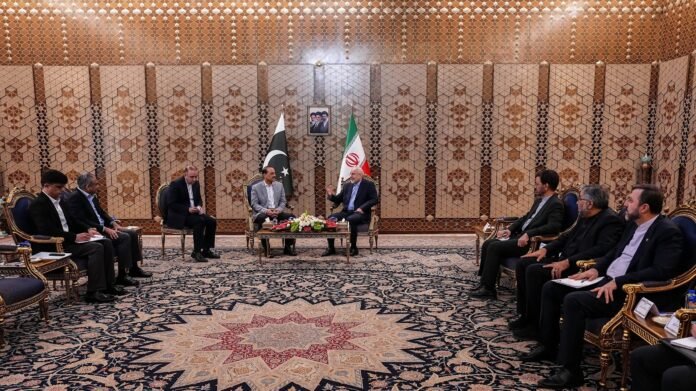
[ISTANBUL] A 60-day ceasefire extension and a framework deal between the United States and Iran are nearly complete. The agreement would restore the number of ships transiting the Strait of Hormuz to prewar volumes within 30 days, require Washington to lift its naval blockade of Iranian ports within the same period, and release part of Iran’s frozen funds in the first phase, according to Iran’s semiofficial Tasnim news agency.
Iran would continue to exercise sovereignty over the strait “in various ways,” Tasnim said, and any reopening would depend on Washington meeting other commitments in the proposed memorandum of understanding. Tehran’s position on its stockpile of highly enriched uranium remained unresolved Sunday. Iranian outlets said the nuclear issue fell outside the initial framework. Tasnim, citing an informed source, said Pakistani mediators warned that the memorandum of understanding could fail if Washington continued to obstruct.
President Donald Trump posted on Truth Social Sunday that “final aspects and details of the deal are currently being discussed, and will be announced shortly,” and said the agreement was “largely negotiated.” Qatari Emir Tamim bin Hamad Al Thani publicly endorsed Pakistan’s mediation in a Saturday phone call with Trump. Pakistan’s Defense Minister Khawaja Asif told Geo News the effort was “moving towards a positive outcome.” Turkish President Recep Tayyip Erdoğan said Ankara was ready to support a deal.
The Gulf has not been a stakeholder in the deal negotiations
“It’s an ideal time for Saudi Arabia because of the Hajj season, and an ideal time for the United States because of the FIFA World Cup,” Mahdi Ghuloom, a Bahraini analyst at the Observer Research Foundation Middle East in Dubai, told The Media Line. “But the concern is that the interests of the Gulf have never really been in the full picture of the Trump administration, and not just in terms of starting the war, but the way that the Gulf has not been a stakeholder in the deal negotiations.”
He continued, “Iran has been experimenting with testing what threshold it can push in attacking the Gulf without breaking down the ceasefire. Iran has, unfortunately, played its cards very well in leveraging the Hormuz Strait. It’s not very clear that the strait will return to prewar levels in terms of free flow of goods.”
Prime Minister Shehbaz Sharif of Pakistan posted on X Sunday that his country hoped to host the next round of talks “very soon,” before arriving in Beijing with Foreign Minister Ishaq Dar for a four-day visit. Pakistan’s army chief Field Marshal Asim Munir met Iran’s Foreign Minister Abbas Araghchi in Tehran on Friday, with a Qatari delegation arriving the same day in coordination with Washington.
Iranian hard-liners pushed back. The commander of the Basij Mohammad Rasulullah Corps in Tehran, the paramilitary force under Iran’s Islamic Revolutionary Guard Corps (IRGC), warned in a televised interview that if the enemy “makes a mistake,” the armed forces would respond “harder, more painfully, and more decisively than before.”
[The Strait of Hormuz] will not return to its previous state
An IRGC statement Saturday again named “the destruction of Israel” among its forthcoming objectives. Iranian parliamentarian Ali Khazaei said the Strait of Hormuz “will not return to its previous state.” Hossein Shariatmadari, editor of the hard-line Iranian daily Kayhan, said Tehran retained “the right to charge tolls on ships in the Strait of Hormuz.” Iranian President Masoud Pezeshkian said Sunday that Iran would take no major decision outside the Supreme National Security Council or without the approval of Supreme Leader Mojtaba Khamenei. US and Israeli strikes killed his father, Ali Khamenei, on February 28; Mojtaba succeeded him on March 8.
On May 5, Iran launched the Persian Gulf Strait Authority, which requires ships to submit a 40-question permit form and pay fees of up to $2 million before transit, according to an analysis by Frédéric Schneider on Wednesday for the Middle East Council on Global Affairs in Doha. Iran’s parliament is advancing a Hormuz sovereignty bill to write the permit system into domestic law. The US Treasury Department has warned that submitting the form may expose shipping companies to sanctions. Forty-five ships have crossed the strait since the April 8 ceasefire, roughly 3.6% of the prewar monthly average, Schneider wrote.
Araghchi has spoken of reopening “with technical constraints,” a reference to the naval mines Tehran laid in the strait during the war. US assessments put the number between 10,000 and 12,000; Iranian figures suggest about 5,000. Iran itself does not know where all the mines sit. Britain’s Armed Forces Minister Al Carns boarded the RFA Lyme Bay in Gibraltar this week, where Royal Navy sailors are loading mine-hunting sea drones equipped with sonar for an international clearance operation led by the United Kingdom and France. The mission cannot deploy until a peace agreement is reached.
Pakistan, Qatar, Saudi Arabia, Egypt, and Turkey have signed on as guarantors of the deal. Saudi Arabia and Qatar have publicly endorsed Pakistan’s role; the United Arab Emirates has not. Abu Dhabi said this week that the drones striking its Barakah nuclear power plant last Sunday flew from Iraqi territory, with Iranian-backed militias the likely perpetrators.
Qatar took a public role despite Iran’s March strike on Doha. “Iran’s attack violates the core principles of stability within the region,” Prof. Steven M. Wright of the Qatar Leadership Centre in Doha told The Media Line. A UAE security source said on background that Qatar’s vulnerability to Iran and lost gas revenue drove its push to mediate.
The UAE defense ministry said Iran fired more than 550 missiles and 2,200 drones at Emirati territory during the war. On May 7, the ministry disclosed an Egyptian Air Force Rafale detachment based in the UAE, where UAE President Mohammed bin Zayed Al Nahyan and Egyptian President Abdel Fattah el-Sisi inspected Egyptian pilots in an Abu Dhabi hangar. Cairo rarely stations fighter aircraft abroad. Days later, Netanyahu’s office announced that the Israeli prime minister had paid a secret wartime visit to the UAE and met Al Nahyan, calling the trip a “historic breakthrough.” The UAE called the report “entirely unfounded.”
Saudi Arabia and Iran kept coordinating on the Hajj. Saudi Interior Minister Prince Abdulaziz bin Saud, who chairs the kingdom’s Supreme Hajj Committee, met Iran’s Hajj head Alireza Rashidian in Jeddah on May 20. Iran will send about 30,000 pilgrims on direct flights this season, a third of its 87,550 quota. The Saudi Ministry of Hajj said Iranian pilgrims would be “generously welcomed.” Hajj begins in mid-June. Iran’s national team will also play at the FIFA World Cup, which opens the same week across the United States, Mexico, and Canada and runs through July 19. Twelve Muslim-majority countries qualified, including Iran, Saudi Arabia, Qatar, Egypt, Morocco, Algeria, Tunisia, Jordan, Iraq, Senegal, Turkey, and Bosnia and Herzegovina. Iran plays Egypt in the group stage.
Egypt’s Foreign Minister Badr Abdelatty spoke with Araghchi on Friday and Saudi Foreign Minister Prince Faisal bin Farhan on Saturday. Both warned against “uncalculated escalation,” the Egyptian foreign ministry said. The White House said Friday that President Trump would return to Washington after his New York speech rather than spend the weekend at Bedminster.
“The leadership you are now dealing with is the direct cost of an attempted and failed regime change,” retired Lt. Gen. Muhammad Saeed, the Pakistan Army’s chief of general staff until 2023, told The Media Line. “New people are taking the decisions. Earlier, the leadership had decades of experience in statecraft. In a highly centralized system, the consultations are not that wide.”
Tehran’s new leadership “has hardly any experience of statecraft and difficult foreign policy decisions,” Saeed said. “If the IRGC is dictating them, given that special forces worldwide and particularly the IRGC have a particular mindset, they are not going to back down from new demands.” Any settlement, he added, “has to be structured in a manner that does not constitute total surrender for the Iranian state.”
“Pakistan will be mediating as of today and in the future also,” Saeed said. “But on the guarantees the Iranians are seeking, no war in the future, no coercion, no sanctions, China would be in a better place to seek those guarantees for Iranians.” On the nuclear question, he added, “China might be persuading Iranians to come to some understanding on the future of their nuclear program, perhaps on US and Western terms.”
The Saudi daily Okaz reported Friday that Pakistan is counting on Beijing to push the agreement and that Iran’s highly enriched uranium remains the central question. A Pakistani source quoted in the report described the framework as “a phased agreement between the two parties” and said, “reducing the gaps is not easy because both parties have a high ceiling of demands.”
“Iran has very difficult relations with every state in the Middle East,” Saeed said. “They will take a long time to reset every country in the region. Whatever they had through China’s intervention with the Saudis is now out of the window.”
Ajay Bisaria, former Indian High Commissioner to Pakistan, wrote in The Tribune on May 15 that Pakistan’s army claims Munir has “skillfully made Pakistan relevant again to its three principal benefactors: the US, China, and Saudi Arabia.” Bisaria added that Munir now accumulates roles “military supremo, chief economic planner, chief regional peacemaker that in a functioning state would be distributed across accountable institutions.” Israeli officials have questioned Pakistan’s credibility. In April, after Asif called Israel “cancerous” and “a curse for humanity” on X, Israeli Foreign Minister Gideon Sa’ar called the comments “blatantly antisemitic.”
Sen. Lindsey Graham of South Carolina, a Trump ally and longtime Iran hawk, told the Senate Appropriations subcommittee on May 12 he did not “trust Pakistan as far as I can throw them” and called for replacing Islamabad as mediator. Graham warned on X last Sunday that any deal perceived as strengthening Tehran could embolden Hezbollah in Lebanon and Shia militias in Iraq and leave Gulf oil infrastructure vulnerable.
Harsh V. Pant, head of foreign policy at the Observer Research Foundation in New Delhi, told The Media Line that the Pakistani military’s role as a mediator serves its domestic political needs. “There is a defense policy problem wherein the military wants to rule in Pakistan, and for that, they need to always make India the bogeyman.” Pakistan’s role as a mediator would not last beyond President Trump, Pant said, and US-India ties would eventually return to form.
Pakistan, which buys 90% of its fuel from the Middle East, is running through its emergency cash reserves. The reserves will fall to $6.8 billion by year-end, and the war could collapse the $7 billion International Monetary Fund loan that has kept Pakistan afloat. Pakistani economist Kaiser Bengali told Al Jazeera the country is “in a state of absolute dependency.”
No one has really come out of this as a winner
“No one has really come out of this as a winner,” Ghuloom concludes. “Iran has suffered many losses politically, including its supreme leader, many commanders and political figures, and now has to focus domestically to ensure that people are at least appeased to a certain extent and not risk another uprising. For the US, its objectives have not been achieved in the way it wants to. For Israel, I wouldn’t rule out a continuation of war in the near future or some distant future.”
This Vegan Spring Roll Bowl is everything you love about fresh spring rolls — crisp vegetables, chewy rice noodles, fresh herbs, and creamy peanut sauce — transformed into an easy, satisfying bowl meal. Fresh, colorful, healthy, and packed with texture, this recipe delivers all the delicious flavor of spring rolls without the extra work of rolling wrappers.
Loaded with crunchy vegetables, tender rice noodles, and a rich peanut sauce that ties everything together, this bowl is perfect for quick lunches, easy dinners, meal prep, or warm-weather meals. Best of all, it’s naturally vegan, gluten-free, oil-free, and ready in just 30 minutes.
Whether served warm, cold, or at room temperature, this fresh spring roll bowl is endlessly customizable and guaranteed to become a regular in your weekly meal rotation.
Why You’ll Love This Spring Roll Bowl
Fresh, colorful, and packed with flavor
Easy alternative to traditional spring rolls
Naturally vegan and gluten-free
Oil-free and meal-prep friendly
Loaded with crunchy vegetables
Creamy homemade peanut sauce
Ready in about 30 minutes
Perfect warm or cold
Ingredients
For the Bowl
8 ounces thin rice noodles
1 large carrot, thinly sliced
1 small cucumber, sliced
2 cups red cabbage, shredded
3 green onions, sliced
1/3 cup fresh cilantro or basil
Optional toppings:
Chopped peanuts
Sesame seeds
Fresh mint
Bean sprouts
Sriracha
Creamy Peanut Sauce
1/2 cup natural peanut butter
2 tablespoons maple syrup or brown sugar
1 1/2 tablespoons tamari or soy sauce
2 tablespoons fresh lemon or lime juice
1–2 garlic cloves, minced
1 teaspoon fresh grated ginger
Hot water, as needed
Why This Bowl Works So Well
This bowl is all about freshness, balance, and texture:
Tender rice noodles
Crunchy raw vegetables
Fresh herbs
Creamy savory peanut sauce
Bright citrus flavor
Sweet and salty balance
Every bite tastes light, refreshing, and deeply satisfying.
Ingredient Notes & Swaps
Rice Noodles
Thin rice noodles work best, but you can also use:
Vermicelli
Ramen noodles
Angel hair pasta
Peanut Butter
Creamy natural peanut butter creates the smoothest sauce.
Vegetables
Use any crunchy vegetables you enjoy, such as:
Bell peppers
Snap peas
Green cabbage
Lettuce
Radishes
Herbs
Fresh cilantro, basil, or mint all work beautifully.
How to Make Spring Roll Bowls
Step 1: Prepare the Vegetables
Thinly slice the carrot, cucumber, cabbage, and green onions.
Roughly chop the cilantro or herbs.
Set everything aside.
Step 2: Cook the Noodles
Cook the rice noodles according to package instructions.
Be careful not to overcook them — they should stay slightly firm.
Drain and rinse briefly if needed.
Step 3: Make the Peanut Sauce
In a medium bowl, combine:
Peanut butter
Maple syrup
Tamari
Lime juice
Garlic
Ginger
Slowly whisk in hot water a little at a time until the sauce becomes smooth and creamy.
Adjust thickness to your preference.
Step 4: Assemble the Bowls
Divide the noodles among serving bowls.
Top with the sliced vegetables and fresh herbs.
Drizzle generously with peanut sauce.
Add any optional toppings you like.
Step 5: Serve
Serve immediately warm, cold, or at room temperature.
Tips for the Best Spring Roll Bowls
Slice Vegetables Thinly
Thin slices create the best texture and mimic fresh spring rolls.
Don’t Overcook the Noodles
Soft mushy noodles can ruin the texture.
Thin the Sauce Gradually
Add water slowly until the peanut sauce reaches the perfect consistency.
Use Fresh Herbs
Fresh herbs add brightness and authentic spring roll flavor.
Variations
Add Protein
Boost protein with:
Tofu
Tempeh
Edamame
Chickpeas
Make it Spicy
Add:
Sriracha
Chili flakes
Jalapeños
Change the Sauce
Try almond butter or sunflower seed butter instead of peanut butter.
Add Extra Crunch
Top with roasted peanuts or crispy onions.
Storage Tips
Store leftovers separately for best freshness:
Noodles in one container
Vegetables in another
Peanut sauce separately
Refrigerate for up to 3 days.
Rice noodles may firm up slightly after chilling, so gently reheat them if desired.
Frequently Asked Questions
Can I make this ahead of time?
Yes! It’s perfect for meal prep when stored separately.
Can I make this nut-free?
Absolutely. Use sunflower seed butter or tahini instead of peanut butter.
Is this recipe gluten-free?
Yes, as long as you use gluten-free noodles and tamari.
Can I serve this cold?
Definitely! It tastes delicious chilled or at room temperature.
Final Thoughts
This Vegan Spring Roll Bowl with Peanut Sauce is fresh, healthy, colorful, and incredibly satisfying. With crunchy vegetables, chewy noodles, fresh herbs, and creamy peanut sauce, it delivers all the flavor of traditional spring rolls in a much easier bowl format.
Perfect for busy weeknights, meal prep, or refreshing Summer meals, this recipe proves healthy eating can still be bold, comforting, and completely crave-worthy.
How Iran’s drone-making machine keeps flying under fire
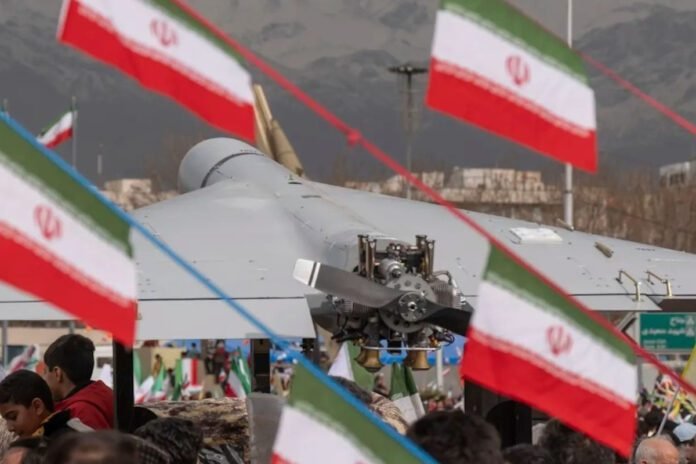
Iran’s drones may have survived not because US and Israeli strikes failed, but because Iran built a war machine designed from the start to keep fighting after the bombs fell.
According to recently disclosed US intelligence assessments, Iran is rapidly rebuilding its military industrial base during an ongoing six-week ceasefire that began in early April, defying previous US and Israeli degradation estimates, CNN reported.
Intelligence officials report that Iran has already restarted production of its signature Shahed attack drones while rebuilding missile sites, launchers and other weapon systems damaged during recent combat operations.
Four sources familiar with the data told CNN that Iran’s military is recovering much faster than the US intelligence community anticipated, with some estimates suggesting its drone strike capabilities could be fully restored in as little as six months.
This rapid mobilization is reportedly facilitated by a combination of factors: resilient underground infrastructure that left two-thirds of its missile launchers intact, incomplete damage from initial US-led coalition airstrikes and resilient supply chains for components manufacturing, with alleged support from China and Russia.
While the US and its regional allies will view Iran’s drone-making resilience as a direct, long-term threat to Gulf security, the US Department of Defense (DoD) maintains that US forces retain deep strategic superiority.
However, the acceleration complicates diplomatic dynamics as US President Donald Trump warns of a potential resumption of bombing if the final terms of a peace deal are not met. The US and Iran were closing in on a deal on Monday that would reopen the blockaded Strait of Hormuz but gaps on Iran’s nuclear program and US sanctions remained.
The intelligence assessments suggest Iran’s drone ecosystem was built for efficiency and survivability, enabling it to absorb losses, regenerate production and sustain operations in the face of sustained US and Israeli military pressure.
That apparent recovery stands in tension with earlier US claims about the destruction of Iran’s drone capabilities. In April 2026, the US DoD claimed that the US destroyed 80% of Iran’s air defense systems, 800 one-way attack drone storage facilities, every factory that produced Shahed one-way attack drones and their guidance systems.
Despite overwhelming US firepower, Iran’s drone production base may have survived due to a combination of dispersion, concealment and hardening of facilities.
In a February 2026 report for the Jewish Institute for National Security of America (JINSA), Jonathan Ruhe and Ari Cicurel note that Iran disperses its missile and drone infrastructure across numerous sites, including underground “missile cities.”
Ruhe and Cicurel pinpoint at least 24 missile sites in western Iran before the 12-Day War, including key clusters around Kermanshah, the Konesh Canyon tunnel complex, Lorestan and the Zagros region.
They also note that Iran’s drone infrastructure consists of underground bases, airfields and production facilities spread across central, western and southern Iran. The writers add that missile cities are better protected and concealed than road-mobile systems, but they are less flexible due to fixed locations and narrow firing apertures.
Bobby Yadav mentions in an April 2026 article for Drone Federation India (DFI) that Iran designed its drone ecosystem around deliberate dispersal rather than centralized facilities, distributing manufacturing nodes, procurement channels, assembly facilities and operational decision-making across dozens of independent and semi-independent layers.
Yadav says that the destruction of any single node does not cascade into systemic failure, as adjacent nodes absorb functions and alternative procurement channels activate. He notes that Iran built parallel but interconnected production lines between state entities and the Islamic Revolutionary Guards Corps (IRGC), intentionally creating institutional redundancy.
He also adds that private firms, universities, procurement networks, reverse engineering, front companies and global commercial sourcing collectively ensure that no single intervention, including a targeted airstrike or new sanctions designation, can sever the entire system simultaneously.
Support from Iran’s strategic partners, Russia and China, may also be instrumental in keeping its drone program running while under fire. Iran may have also reverse-imported its Shahed drones from Russia after the establishment of a production base there amid the Ukraine war.
In a March 2026 CNN interview, Ukrainian President Volodymyr Zelensky stated that Russia has already given Iran Shahed drones to strike back at the US and its Middle Eastern allies, citing intelligence reports confirming Russian details in those Iranian drones.
Furthermore, Joseph Bermudez Jr and other writers mention in a March 2026 Beyond Parallel report that Iran helped establish the Alabuga factory in Russia to manufacture those systems, providing advisors, training, production equipment, production technology and initial component supplies. They also state that Iranian-supplied technology enabled Russia to localize production of the Shahed-131 and Shahed-136 at Alabuga, enabling mass production.
China may also be supporting Iran’s drone production. Christopher Nye and Charles Sun mention in a March 2026 Jamestown Foundation report that China’s support for Iran’s drone program operates through a decentralized civilian manufacturing ecosystem that supplies dual-use propulsion technology, manufacturing equipment, machine tools, electronics and aerospace components.
Nye and Sun state that Chinese firms acquired and reverse-engineered the German Limbach L550E engine technology that underpins Iran’s Shahed drones, while other Chinese companies supplied computer numerical control (CNC) machine tools, integrated circuits, servos, radiofrequency (RF) connectors and testing equipment.
They say these transfers occurred through shell companies, Hong Kong intermediaries, false declarations and ambiguities in dual-use trade. They also note that China’s ongoing lack of enforcement against known proliferators created a strategic environment that has allowed Iran’s drone industry to survive sanctions pressures.
Noting the three-way dynamic between Iran, Russia and China, Kimberly Donovan and Emilly Ezratty state in a March 2026 Atlantic Council report that Iran retains the technical expertise, established production lines and ongoing access to dual-use components needed to replenish its drone stockpiles.
Additionally, Donovan and Ezratty note that collaboration with Russia and China enhances these capabilities by diversifying supply chains and protecting production from Western pressure.
They assert that not confronting the Iran-Russia-China “Axis of Evasion” across its networks permits it to keep facilitating the transfer of dual-use technologies among its members. They also stress that ongoing support will enable Iran to rebuild and enlarge its drone and missile arsenals during the current conflict and possibly after it.
If Iran can regenerate drone production under sustained attack through interlocking industrial, technological and logistics ties with Russia and China, any future US or Israeli campaign may shift from a regional air war into a broader global multi-domain systems confrontation aimed at disrupting the transnational financial, manufacturing and logistics networks that bind the Iran-Russia-China axis together.
Irregular border crossings into the European Union fell by 40 per cent during the first four months of 2026, according to preliminary figures published by Frontex.
Between January and April, just over 28,500 irregular crossings were detected at the EU’s external borders, continuing a downward trend already observed throughout 2025. The European Commission’s latest State of Schengen report had previously recorded a 26 per cent decline in illegal crossings last year compared with 2024.
The reduction comes as the EU introduces major reforms to strengthen border management and monitoring systems. Earlier this year, the bloc officially launched its new digital Entry/Exit System, designed to electronically register non-EU travellers entering and leaving the Schengen area. A second scheme, known as the European Travel Information and Authorisation System (ETIAS), is expected to begin later this year.
Frontex attributed the decline to stronger cooperation with countries of origin and transit, preventive measures introduced in key departure states and difficult weather conditions during the early months of the year.
The Central Mediterranean route remained the busiest migration corridor into Europe, although arrivals there still fell by 46 per cent to around 8,500 detections. Libya continued to serve as the main departure point, with most migrants originating from Bangladesh, Somalia and Sudan.
The Eastern Mediterranean route recorded a 32 per cent drop, while the Western African route registered the steepest decline of all, falling by 78 per cent following increased cooperation between Spain, the EU, Mauritania, Senegal and The Gambia.
The only major route to record an increase was the Western Mediterranean, where crossings rose by 50 per cent, largely linked to departures from Algeria after tighter controls elsewhere redirected smuggling activity.
Meghan Markle’s glamorous new image is raising eyebrows again — but this time, the concern is not just about royal drama or designer labels.
Sources say the Duchess of Sussex may be taking a major risk by repeatedly stepping out, posing online, and promoting her brand while wearing jaw-dropping jewelry and luxury fashion worth a fortune.
The former actress, 44, recently appeared in a glossy promotional campaign for her lifestyle brand As Ever, showing off a relaxed California look while surrounded by jams, teas, candles, honey, and chocolates.
But many viewers were not focused on the products.
They were staring at the jewels.
According to RadarOnline.com, Meghan’s campaign featured nearly $110,000 worth of clothing, jewelry, and accessories. Now, security insiders are warning that all that sparkle could bring the wrong kind of attention.
One celebrity protection consultant told the outlet that when someone as famous as Meghan repeatedly displays pricey jewelry, watches, and designer pieces in public and online, it naturally raises red flags.
“High-profile figures are already targets for obsessive attention, and visible wealth can intensify those concerns,” the consultant said.
The source added that some people around the situation fear Meghan is “unintentionally putting a target on her back” by leaning so heavily into a public image built around exclusivity, glamour, and visible wealth.
The warning comes as Meghan continues trying to build As Ever into a luxury lifestyle brand from her Montecito, California home.
In the promotional video, the duchess appeared in breezy white shirts, soft sweaters, designer jeans, tailored pants, and polished accessories while sipping tea, arranging flowers, and showing off the brand’s products.
In one scene, Meghan wore $406 “Upper Village” jeans from California designer Tracy James while standing inside a pantry stocked with As Ever items.
In another clip, she wore pearl-drop earrings while eating raspberries. Later, she appeared in a white dress and blue cardigan with some of her favorite high-end accessories, including a Cartier Love bracelet said to be worth $9,482 and a Cartier Tank Française watch reportedly valued at $23,940.
She also appeared to wear pieces she has shown off before, including a Logan Holloway diamond tennis necklace estimated at more than $63,000 and a custom Oscar de la Renta gown.
The look was polished, expensive, and unmistakably Meghan.
But critics say that may be the problem.
Instead of viewers talking about jam, tea, and candles, the conversation quickly turned to the duchess’s wardrobe and jewelry box. Online, many questioned how the “simple living” message of As Ever lined up with the very expensive pieces Meghan wore in the video.
The brand has already faced plenty of public scrutiny, and the latest campaign only added more fuel.
Speculation heated up even more after sizing charts suddenly appeared on the As Ever website, even though the company does not officially sell clothing.
The charts included adult sizes up to 5XL, along with children’s sizes. Fans quickly wondered if Meghan was preparing to launch a fashion line under the As Ever name.
The pages later vanished and were replaced with a notice reading, “We can’t find what you’re looking for.”
A spokesperson for Meghan declined to comment, while reports suggested the sizing charts may have appeared because of a technical mistake by the website’s developers.
The As Ever rollout comes after Meghan and Netflix ended their partnership agreement earlier this year. Netflix had previously helped support the brand after commissioning a second season of Meghan’s lifestyle and cooking series, With Love, Meghan.
At the time, As Ever said the company had seen “meaningful and rapid growth” and was ready to stand on its own.
Netflix also praised Meghan’s brand, saying her passion for “elevating everyday moments” helped inspire As Ever.
Still, the latest attention surrounding Meghan’s image comes at a sensitive time for the Sussexes.
Prince Harry, 41, has spent years fighting for security protection for himself, Meghan, and their children when they travel to Britain. The couple has often said safety was one of their biggest concerns after stepping back from royal duties in 2020.
Meghan also recently shared private family photos from Frogmore Cottage while marking Prince Archie’s seventh birthday. One photo showed newborn Archie sleeping on Harry’s chest shortly after the family moved into the Windsor home in 2019.
Royal biographer Omid Scobie has previously claimed Archie played a major role in Harry and Meghan’s decision to leave royal life behind. He said the couple had been afraid of the consequences of challenging the royal system before relocating to California with Archie and their daughter, Princess Lilibet.
Now, as Meghan builds her post-royal empire, the same issue keeps following the couple: security.
Only this time, insiders say the danger may not be coming from palace politics or old royal battles.
It may be coming from the duchess’s own glittering public image.
Israeli strikes kill 14, wound several in southern Lebanon in latest ceasefire violation
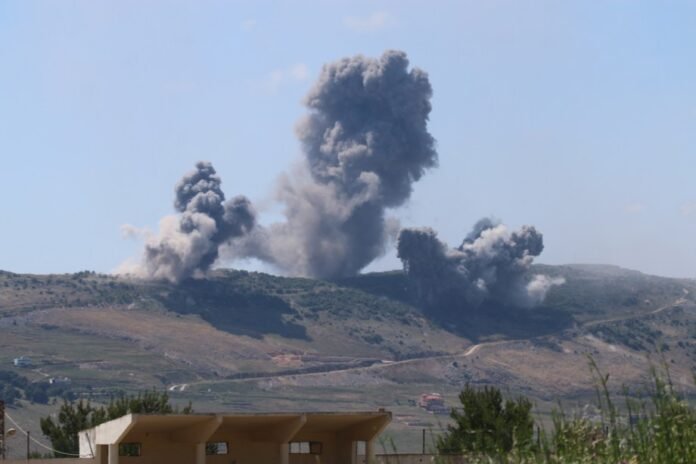
At least 14 people were killed and several others wounded in Israeli airstrikes in southern Lebanon on Sunday amid continued violations of an ongoing ceasefire, Anadolu reports.
The Lebanese Health Ministry said 11 people were killed and nine others injured in an Israeli strike on the town of Seir al-Gharbiyeh in Nabatieh province in southern Lebanon.
A fighter jet struck the town of Bazouriyeh in the Tyre district, killing one person and injuring two others, the state news agency NNA reported.
An Israeli drone strike also killed a young man in the town of Arabsalim in Nabatieh district, the outlet said.
A house was also hit in an Israeli strike in the town of Toura in Tyre, killing a woman and injuring two people.
The Israeli attacks came despite a US-mediated ceasefire that is supposed to remain in effect until early July.
More than 3,100 people have been killed, over 9,500 injured, and 1.6 million displaced by Israeli bombardment in Lebanon since March 2 amid cross-border attacks with Hezbollah, according to Lebanese officials.
READ: Israel pounds Gaza, Lebanon in daily breaches of ceasefires
2 Former Israeli Air Force Officers Killed in Light Plane Crash in Jezreel Valley
Two former Israeli Air Force officers were killed Sunday after a light aircraft crashed in an open area near moshav Tel Adashim in the Jezreel Valley, according to Israeli emergency responders and media reports.
The victims were identified as Lt. Col. (res.) Yuval (Eyal) Inbar, 50, a former squadron commander, and retired Lt. Col. Itai Talmi, 70, who also served as an Air Force officer and later worked as a captain for El Al.
The crash occurred on the morning of May 24, 2026, in agricultural fields near Tel Adashim in northern Israel.
Magen David Adom said two men around the age of 50 suffered critical injuries in the crash of the light aircraft. Medics and paramedics evacuated the two men to HaEmek Medical Center in Afula while carrying out resuscitation efforts, but doctors later pronounced them dead.
The incident was reported at 9:06 a.m. to Magen David Adom’s 101 emergency dispatch center in the Gilboa region.
Emergency responders said teams arriving at the scene found the aircraft heavily damaged in an open field near the moshav.
Magen David Adom motorcycle unit paramedic Maor Atadgi told Ynet about the response at the scene.
“This is a difficult incident. We arrived at the scene with ambulances, intensive care units, and motorcycles as an immediate response. They led us through the area to the crashed plane, which had severe metal damage, and nearby were 2 men who were unconscious, without a pulse, and not breathing.”
He added, “We immediately began advanced resuscitation efforts and evacuated them in MDA intensive care units to the hospital while their condition was critical.”
Reports on the circumstances surrounding the crash and the investigation were continuing on Sunday.
AIPAC, AI, Crypto, and Gambling Are Hiding Their Big Election Spends
Republican Rep. Thomas Massie was decisively ousted on Tuesday night in his Kentucky primary, a win for President Donald Trump, who had launched an all-out attack on the congressman for his role in pushing for the release of the Epstein files. But in Pennsylvania, the left had a lot to celebrate. Chris Rabb won by nearly 15 points in Philadelphia in a major win for progressives. And Bob Brooks, a retired firefighter and union head, sailed to victory with the support of both the left and moderates.
Mysterious super PACs with ties to Republican donors poured millions into influencing the election results in both states with varying degrees of success. In Kentucky, AIPAC’s super political action committee and two other groups backed by pro-Israel donors spent more than $15 million in opposition to Massie or in support of his opponent, according to Federal Election Commission reports released through Tuesday.
In Pennsylvania, advertisements from Lead Left — a super PAC that reportedly has ties to Republican donors — dropped ads attacking two of the candidates as not progressive enough, leading to speculation that Republicans were trying to prop up a weaker candidate for the general election.
This week on The Intercept Briefing, host Jessica Washington and politics reporter Matt Sledge break down the contentious primary races, the record-level campaign spending and how obscure groups funding the midterm elections are hiding donors’ tracks.
“Groups can kind of game campaign finance deadlines and create super PACs to funnel money to other super PACs so that reporting deadlines are missed and use these ‘pop-up super PACs’ to ensure that ordinary voters never find out who is funding ads before a campaign happens,” says Sledge. “Sometimes there’s even a second layer of pop-up super PACness where those bland-sounding groups send money to other bland-sounding groups. God help you if you’re an ordinary voter trying to track all this money.”
The consequential U.S. Supreme Court decision in Citizens United 16 years ago has allowed courts to chip away at campaign financing restrictions. “Now here we are where any industry that’s facing regulation or any donors who support an unpopular cause can really just open the spigots and try to throw primaries their way,” adds Sledge.
Certain industries have gotten smart about how to hide where the money is coming from. “Ordinary voters don’t generally like crypto, AI or gambling. They may tolerate it at a maximum, but they’re not motivated by the idea of electing pro-crypto, pro-AI, pro-gambling people,” notes Sledge. “But all of these industries have realized, ‘OK, we can use super PACs that run ads that have nothing to do with our industry and get our friends elected to Congress, and they are going to remember that we spent a lot of money on their races.’”
For more, listen to the full conversation of The Intercept Briefing on Apple Podcasts, Spotify, YouTube or wherever you listen.
Transcript
Jessica Washington: Welcome to The Intercept Briefing. I’m Jessica Washington, politics reporter at The Intercept.
Matt Sledge: And I’m Matt Sledge, another politics reporter at The Intercept.
JW: Today, we’re going to dive right in because I know we’re both exhausted. We were both up late covering the Kentucky and Pennsylvania primaries. Matt, we’re speaking Wednesday morning, fresh off of that Kentucky primary election, where President Donald Trump endorsed Republican Rep. Thomas Massie’s opponent.
Massie decisively lost his race. Is this proof that despite inflation, gas prices, the war in Iran, Trump is still a kingmaker, or I guess in Massie’s case, a hangman?
MS: Certainly when it comes to the Republican Party and intraparty politics, some people thought Massie might pull this out, and instead it was a pretty humiliating defeat for a long-term incumbent in the House.
“This is a party-on-party fight. Trump took out a guy who votes conservative nearly all the time.”
But you do have to step back a little bit and remember, this is a party-on-party fight. Trump took out a guy who votes conservative nearly all the time, and it’s a safe Republican district. So he spent a lot of political capital taking out one Republican to replace with another Republican, essentially because he was mad about the Epstein files.
JW: The Epstein files is an interesting part of all of this because Thomas Massie fought so hard to get the Epstein files released. We talked about it on the podcast with one of the attorneys for some of Epstein’s survivors, and it did seem like an issue that was breaking out politically.
Democrats have been speaking about it. I actually heard at the Center for American Progress’s event on Tuesday, House Minority Leader Hakeem Jeffries actually spoke about the Epstein files and talked about it as a top issue for Democrats. So we know this is something that they are trying to make an election issue, but it doesn’t seem like it worked for Massie. Why do you think that is?
MS: I think it’s because it cut against the president so much and, just in the larger picture, enraged the president and turned him decisively against Massie. They had their problems before. I think it was hard for Thomas Massie to argue in his district that getting the Epstein files released was a great coup but also that it didn’t harm the president, because it clearly did harm the president politically. Ultimately, the voters in his district decided that helping the president was more important than anything else.
JW: We also know that pro-Israel groups poured money into this race as well to try and defeat Thomas Massie. Is there anything that you can say about that?
MS: Yeah, it was a lot of money. It was over $15 million from two explicitly pro-Israel groups, super PAC affiliated with AIPAC and then a Republican pro-Israel group. Then also there was a kind of special purpose-created super PAC that was funded in large part by pro-Israel donors. So this was the most expensive House race in history. A huge percentage of that spending came from donors who were motivated by the issue of Israel.
Massie has always opposed foreign aid in general, but I will say he has seemed to take special delight in tweaking supporters of Israel. Obviously that is a minority position within the Republican Party, so these groups came for him, and they were successfully able to help the president oust him.
JW: We’re going to talk a little bit more about how super PACs are hiding where their money is going in this election. But before we do that, I wanted to touch a little bit more on Democratic primaries from last night. So Pennsylvania had some big primaries. Are there any top lines from that race you want to share?
MS: I wasn’t following Pennsylvania as much, but of course, everybody was watching that race in Philadelphia, where Chris Rabb was able to pull out a victory. That’s a huge win for the Democratic Socialist wing of the party. He was up against a more establishment Democrat, and it shows that there is this really energized cohort within the Democratic Party that’s really excited to elect progressives.
JW: As I mentioned at the beginning of this podcast, I was up covering that race. One really interesting thing, aside from the Philadelphia primary, was in Pennsylvania 7, the Pennsylvania governor, Josh Shapiro, ended up backing — really heavily backing — Bob Brooks, one of the more progressive candidates in that race. We also saw Bernie Sanders backing him and the Working Families Party. So we saw this coalition effort between more mainstream center-left and progressives which is obviously different than what we saw in Philadelphia, but it’s interesting to see how those two coalitions could work together in Congress.
And Matt, I want to talk a little bit more about how super PACs are operating in this race. You have a new piece out this week that gets into all of that. So it’s about groups that are funding the 2026 midterm races. You looked at a dizzying array of players who are throwing money into this election cycle.
Before we get into some of those players and the issues they’re pushing, can you set the stage for us? How would you describe the current campaign finance landscape?
MS: It’s just kinda anything goes, and we’ve seen this gradual and then not so gradual evolution from the Citizens United decision in 2010, which opened the doors for allegedly independent spending on elections. The courts have just chipped away at whatever protections there are. Then the Federal Election Commission (FEC) has refused to get in the way of some pretty questionable behavior.
Now here we are where any industry that’s facing regulation or any donors who support an unpopular cause can really just open the spigots and try to throw primaries their way. A lot of time, they’re doing it in ways that cover their tracks a little bit, and they’re running ads that have nothing to do with their chosen issues.
JW: I want to get into the history of this, how we even got there. Citizens United is, I would argue, a boogeyman, not just for the left, but anyone who cares about democracy at all. Can you remind us how that SCOTUS decision really changed the landscape for how campaigns are funded and how we’re seeing that evolve in this election cycle?
MS: It is a boogeyman on the left and elsewhere, but I would say a boogeyman for good reason. A truly significant Supreme Court decision that basically said, individual candidates running for office, we can still limit, how much they’re raising and through that, how much they’re spending on elections, but these allegedly independent spenders, groups like super PACs, can spend as much money as they want on a race because they have no connection to the candidates.
There is no danger of corruption, and that’s really what we’re interested in policing here. We don’t want to police free speech. It essentially equated political spending with free speech, which a lot of people would take issue with.
One of the things that has been really interesting, I say interesting with some chagrin, as this system has evolved, is that we are now in this place, and I wrote about this in my recent article, where groups can kind of game campaign finance deadlines and create super PACs to funnel money to other super PACs so that reporting deadlines are missed and use these “pop-up super PACs” to ensure that ordinary voters never find out who is funding ads before a campaign happens.
Some of these newer industries that are getting in on the campaign spending game, like crypto and artificial intelligence, are also setting up entire networks of super PACs, sometimes a mama or a papa super PAC, and then a Democratic-affiliated super PAC and a Republican-affiliated super PAC so that both donors can channel their money to one party affiliate and to make it a little harder for voters to track where all the money is coming from.
JW: I really recommend that people go check out your piece. I think it’s an amazing glossary on what’s happening in our elections and the aftermath of Citizens United 16 years later.
This isn’t just about AI or crypto, as you’ve mentioned. There’s also AIPAC. The Intercept has reported extensively on the American Israel Public Affairs Committee, which has been spending directly on campaigns for a little while now.
In 2024, our colleague Akela Lacy wrote, “AIPAC embraced a new strategy. It would use its vast funds to oust progressive members of Congress who criticized human rights abuses by Israel and the country’s receipt of billions of U.S. dollars in military funding.” Matt, how is AIPAC operating this election cycle?
Given that there’s growing opposition on both the left and the right to Israel’s genocide in Gaza and influence in U.S. politics, is the group changing its tactics?
“AIPAC’s brand is in the dumps. Israel’s brand is in the dumps with Democrats as well. ”
MS: AIPAC’s brand is in the dumps. Israel’s brand is in the dumps with Democrats as well. You see even very pro-Israel Democratic politicians saying, “I’m not taking AIPAC money.” What the group has done is really make use of these pop-up super PACs. So it’s no longer the United Democracy Project, which is AIPAC’s primary super PAC affiliate spending money in these races. It’s groups with very bland, friendly-sounding names, and AIPAC’s super PAC affiliate sends money to them.
Sometimes there’s even a second layer of pop-up super PACness where those bland-sounding groups send money to other bland-sounding groups. God help you if you’re an ordinary voter trying to track all this money. All you see are negative ads attacking candidates on issues that have nothing to do with AIPAC or Israel.
JW: You just teased it a bit, but I know you poked around some FEC, — Federal Election Commission — reports, for a recent Chicago race and found some interesting information about how AIPAC donors were operating in the race. First, can you tell us what happened in Chicago, and what did you find in the reports?
MS: In Chicago, there was a newly created group called Elect Chicago Women, which sounds great. Who doesn’t want to elect Chicago women? They received money from the United Democracy Project, which is AIPAC’s super PAC affiliate. Then they turned around and handed a million dollars to another newly created group called the Chicago Progressive Partnership. It’s a little surprising they didn’t add “and apple pie” at the end of that.
“It tweaked things so that under the FEC’s campaign finance rules, the donors for that money did not have to be disclosed until after the race. ”
So basically what that did is it tweaked things so that under the FEC’s campaign finance rules, the donors for that money did not have to be disclosed until after the race. In, for instance, the 9th Congressional District primary, there was this really hotly contested race between a progressive and an even more progressive candidate, both of whom were not favored by AIPAC.
AIPAC attempted to, through these super PACs, play the spoiler and boost an entirely different super left progressive candidate to hurt Kat Abughazaleh, the influencer. You could argue it worked because she didn’t lose by that much, and they may have successfully employed this tactic. They didn’t ultimately get their chosen candidate over the line, but they did help a candidate they really disliked lose.
JW: We saw this in Pennsylvania on Tuesday night as well. There’s this group, Lead Left, and the New York Times had reported, as well as Punchbowl, on some interesting ties that they had to Republican groups while also trying to sandbag the progressive candidates in the race by arguing that they weren’t really progressive or that Ryan Croswell, who no one would really argue is a progressive, is, just hiding and is really a Republican.
So we’ve seen this in other races, but I wanted to ask, what other races you’ve seen this happen in and what might be of interest to people here?
MS: Yeah, there’s something that’s really interesting happening in Michigan right now where there’s another one of these newly created groups spending a lot of money to boost Haley Stevens, who’s AIPAC’s preferred candidate in the race.
They are using a consulting firm that AIPAC’s super PAC has used in the past to buy television ads. But AIPAC came out and said, it’s not us. We’re not spending this money. As far as I can tell, nobody has gotten to the bottom of this, of where this money is coming from. I think there are several different ways where AIPAC could say it’s not us and for it to be technically true.
But perhaps there really is some other mystery group behind all of this spending. But it’s really telling. This is a super high profile Senate race, a lot of journalists on it, a lot of eyes on it. Whoever is behind this money has so far been able to successfully conceal its origin.
I think it’s really hard to argue that it is good for voters to not know where this huge amount of money in the race is coming from.
[Break]
JW: For those who don’t know, you’re effectively our crypto, gambling, AI lobby reporter on top of everything else you do. Obviously there’s been a lot of crypto, gambling, and AI money flooding the system right now. Where are you seeing that money going this season?
MS: A lot of it so far is being spent in these primaries, and a lot of it in the Democratic primaries is being spent to elect flexible centrist candidates.
The thing with all of these industries is ordinary voters don’t generally like crypto, AI, or gambling. They may tolerate it at a maximum, but they’re not motivated by the idea of electing pro-crypto, pro-AI, pro-gambling people. More often the contrary within the Democratic Party. But all of these industries have realized, “OK, we can use super PACs that run ads that have nothing to do with our industry and get our friends elected to Congress, and they are going to remember that we spent a lot of money on their races.”
The likelihood of backlash from voters who have a million other things to keep track of is pretty small. Politicians are just going to decide, “Let’s keep our head down and not piss off crypto, AI, and gambling,” even though those are pretty unpopular industries.
JW: I have to say, when I was at the Center for American Progress event on Tuesday listening to Gavin Newsom, Hakeem Jeffries, the whole Democratic establishment try to figure out how to plot a lane in the AI fight, I kept thinking Matt would find this hilarious.
A lot of saying a lot without saying anything.
MS: Yes, they would like to protect our children without actually doing anything.
JW: Yeah. It did, It was giving a little bit of that.
On that note, The New York Times reported that the Silicon Valley venture capital firm Andreessen Horowitz is the biggest donor this midterm cycle by a long stretch.
The firm’s co-founders, Marc Andreessen and Ben Horowitz, have dumped more than $115 million into the cycle so far. For context, Democratic mega-donor George Soros has put in about $102 million, Elon Musk $85 million, and Wall Street financier Jeff Yass $81 million. Is this kind of spending standard for midterm elections?
What are the priorities being pushed here, in particular by these tech billionaires who are pouring a ton of money into these elections?
MS: Andreessen Horowitz is a really fascinating case study in all of this. They have major investments in crypto and AI. They created this massive crypto super PAC network in the last election cycle. They saw that it was a success, and they are just repeating the pattern for artificial intelligence this cycle, and they’ve gotten some of their friends in the AI industry to spend a bunch of money as well.
As you pointed out, it’s a lot of money even in comparison to other billionaires. I think the explanation for that is that they are in highly regulated industries, or at least industries that should be highly regulated, and we’re at a moment where the rules are being set, and they have recognized an opportunity to have their friends set the rules.
“They have recognized an opportunity to have their friends set the rules.”
JW: Following the money a little bit further down the road, former MAGA influencer Ashley St. Clair has been gaining a lot of attention on social media for posting videos where she alleges — in detail — how the White House and powerful figures on the right coordinate messaging with paid influencers.
Here’s a clip of her in a recent interview on Zeteo.
[Clip]
Ashley St. Clair: There’s multiple chats that they operate in, and these chats also have— Some are just sequestered to large MAGA influencers in which they send these paid campaigns. Others have members of the administration. Others have the Trump children. And they coordinate this messaging and react to things in real time: Here’s how we respond or don’t respond to any given issue at any given time.
They also have the paid campaigns in which messaging is pushed out, and it is very much coordinated through both paid messaging and just wanting to be in the club and not be ostracized.
[End of clip]
JW: Democratic California gubernatorial candidate Tom Steyer is being accused of not properly disclosing that his campaign paid influencers $10,000 each to promote him.
What is known about how influencers and messaging are factoring in elections today? What do you make of all this, Matt?
MS: Yeah, I think we definitely have to take anything Ashley St. Clair says with a huge grain of salt, but—
JW: Good point.
MS: At the same time, I think she’s also probably getting at something. We all saw after the latest assassination attempt how all these influencers immediately argued that we needed to build Trump’s big, beautiful ballroom, and then a lot of people were questioning how they were able to all land on the same message so quickly.
It’s clear when you watch any influencers online that half of them are being paid off, so it’s the most natural thing in the world in one way for politicians and campaigns to get in on it. What is really missing here, what’s really missing in this conversation is the question of regulation and disclosure.
If we had a functioning FEC, they might step in and say, “Whoa, you need to disclose when you’re paying off influencers because that should be something the public knows about.” Instead, we don’t have a functioning FEC or a functioning Congress, so nobody is stepping in to make sure that disclosures are happening.
“Disclosure should be a bare minimum.”
Disclosure should be a bare minimum. Maybe this should be banned outright as well. But we, at the very least, should have clarity on when this is happening, and not just within the context of campaigns but also in the context of politics more broadly.
JW: Those are all really good points.
The lack of any kind of regulation about this is troubling. We’ve obviously been talking about money and where it’s going and how it’s going to influencers, into campaigns, into shady super PACs, but what issues do voters actually care about this election cycle? You and I have covered campaign finance. We’ve covered ICE. But what issues are actually breaking through to voters?
MS: Yeah, I think it’s going to be the economy first and foremost, and then the war on Iran as an extension of the economy, because it dovetails with these concerns about affordability so strongly.
Some of the centrist Dem messaging around affordability is super cringe. But it’s also true that it’s a very important issue for voters. I think it has been rightly identified as a major issue that is just going to dominate everything over the next few months.
I don’t know how much ICE and the crackdowns will really play into the elections. My guess is that’ll be more of a primary issue. Democrats who voted for the Laken Riley Act, for instance, will have problems in primaries over that. But when you look at the polls in the general election, immigration is still one of Trump’s best issues. His numbers have definitely eroded there, but it’s better than everything else by about 10 points.
So I don’t know if that’ll be as much of an issue that candidates are highlighting in the general elections.
JW: On immigration, I do keep thinking that if the elections had been held earlier when everything that was happening in Minnesota that was enraging people. I think that was an issue about immigration, but it was also really an issue about democracy, about people’s right to protest, about the rights that they assumed they held as American citizens to protest against their government.
I want to pivot a little bit to talk about an issue that we’ve been discussing on the show quite frequently, which is the fallout from the SCOTUS decision. So the Supreme Court ruled in favor of essentially gutting the Voting Rights Act, which unleashed a new wave of redistricting wars that have been sparked particularly in the South to eliminate minority-majority districts.
Meanwhile, last week, the Virginia State Supreme Court rejected a voter-approved gerrymandering effort that would have boosted Democrats’ chances of gaining four seats in the House. How are you seeing the redistricting wars take shape? Are there any places you’re keeping a particularly close eye on?
But, I think in a week or two, we might have hit a wall on the redistricting wars just for practical reasons, because primaries are coming so fast and early voting has opened in so many places. Mississippi, for instance, the governor there has said he’s not going to push redistricting this year, I think essentially just because of the timing.
So we may finally be settling in the place we’re going to be for the elections, and it looks like a net loss of a few seats for the Democrats, which could be really significant if the outcome of the House elections is that close. On major votes in the House right now, it’s only a few votes either way could shift them.
JW: Speaking at the Center for American Progress event, House Minority Leader Hakeem Jeffries had mentioned that they expect to lose about three or four seats as a result of these redistricting efforts in the South, but they have obviously expressed some confidence in being able to overcome those odds.
Are there other midterms races or themes this cycle that you wanted to talk about?
MS: I think that Michigan Senate race is going to be a huge one. It just gets at so many issues, both of style and substance, of where Democratic voters want to go. That, to me, is really high on the list. This California governor’s race is also fascinating in its own kind of train wreck way. So we’ll see how things go there. Really makes you think how important electoral rules are because we could see some crazy outcome that ordinary voters don’t particularly want.
JW: California is the mess that keeps on messing.
MS: OK. Jess, I gotta turn the tables on you. Any other races that you’re watching, no matter how obscure they are?
JW: I am a DC native, and I also live in DC, so I am following the DC mayoral race, which I know is probably not on most people’s radar who do not live in DC, but it’s fascinating. It’s become this debate really around youth crime and these efforts to restart mass incarceration, I would argue, in DC.
So that’s become a really interesting electoral issue between the two more progressive candidates, Janeese Lewis George, who has really fought against these teen curfews, and Kenyan McDuffie, who has been really pushing for these curfews even though he’s tried to paint himself as more of a progressive. So I think that race, although it’s a mayoral race and might not have much impact outside of DC, has been fascinating to watch for me personally.
And with that little tidbit from me, I am going to leave it because I know we are both exhausted. Matt, thank you so much for joining us on the Intercept Briefing.
We’ll add a link to Matt’s story in the show notes.
MS: Thanks for having me on.
JW: That does it for this episode.
This episode was produced by Laura Flynn. Ben Muessig is our editor-in-chief. Maia Hibbett is our Managing Editor. Chelsey B. Coombs is our social and video producer. Fei Liu is our product and design manager. Nara Shin is our copy-editor. William Stanton mixed our show. Legal review by David Bralow.
Slip Stream provided our theme music.
This show and our reporting at The Intercept doesn’t exist without you. Your donation, no matter the amount, makes a real difference. Keep our investigations free and fearless at theintercept.com/join.
And if you haven’t already, please subscribe to The Intercept Briefing wherever you listen to podcasts. Do leave us a rating or a review, it helps other listeners to find us.
Let us know what you think of this episode, or If you want to send us a general message, email us at podcasts@theintercept.com.