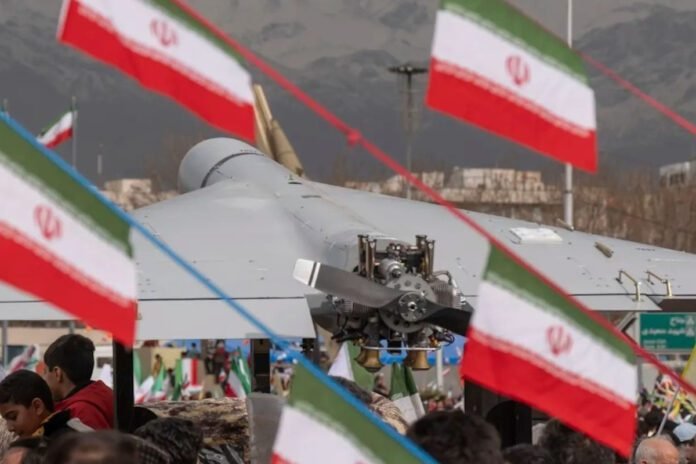
How Iran’s drone-making machine keeps flying under fire
Iran’s drones may have survived not because US and Israeli strikes failed, but because Iran built a war machine designed from the start to keep fighting after the bombs fell.
According to recently disclosed US intelligence assessments, Iran is rapidly rebuilding its military industrial base during an ongoing six-week ceasefire that began in early April, defying previous US and Israeli degradation estimates, CNN reported.
Intelligence officials report that Iran has already restarted production of its signature Shahed attack drones while rebuilding missile sites, launchers and other weapon systems damaged during recent combat operations.
Four sources familiar with the data told CNN that Iran’s military is recovering much faster than the US intelligence community anticipated, with some estimates suggesting its drone strike capabilities could be fully restored in as little as six months.
This rapid mobilization is reportedly facilitated by a combination of factors: resilient underground infrastructure that left two-thirds of its missile launchers intact, incomplete damage from initial US-led coalition airstrikes and resilient supply chains for components manufacturing, with alleged support from China and Russia.
While the US and its regional allies will view Iran’s drone-making resilience as a direct, long-term threat to Gulf security, the US Department of Defense (DoD) maintains that US forces retain deep strategic superiority.
However, the acceleration complicates diplomatic dynamics as US President Donald Trump warns of a potential resumption of bombing if the final terms of a peace deal are not met. The US and Iran were closing in on a deal on Monday that would reopen the blockaded Strait of Hormuz but gaps on Iran’s nuclear program and US sanctions remained.
The intelligence assessments suggest Iran’s drone ecosystem was built for efficiency and survivability, enabling it to absorb losses, regenerate production and sustain operations in the face of sustained US and Israeli military pressure.
That apparent recovery stands in tension with earlier US claims about the destruction of Iran’s drone capabilities. In April 2026, the US DoD claimed that the US destroyed 80% of Iran’s air defense systems, 800 one-way attack drone storage facilities, every factory that produced Shahed one-way attack drones and their guidance systems.
Despite overwhelming US firepower, Iran’s drone production base may have survived due to a combination of dispersion, concealment and hardening of facilities.
In a February 2026 report for the Jewish Institute for National Security of America (JINSA), Jonathan Ruhe and Ari Cicurel note that Iran disperses its missile and drone infrastructure across numerous sites, including underground “missile cities.”
Ruhe and Cicurel pinpoint at least 24 missile sites in western Iran before the 12-Day War, including key clusters around Kermanshah, the Konesh Canyon tunnel complex, Lorestan and the Zagros region.
They also note that Iran’s drone infrastructure consists of underground bases, airfields and production facilities spread across central, western and southern Iran. The writers add that missile cities are better protected and concealed than road-mobile systems, but they are less flexible due to fixed locations and narrow firing apertures.
Bobby Yadav mentions in an April 2026 article for Drone Federation India (DFI) that Iran designed its drone ecosystem around deliberate dispersal rather than centralized facilities, distributing manufacturing nodes, procurement channels, assembly facilities and operational decision-making across dozens of independent and semi-independent layers.
Yadav says that the destruction of any single node does not cascade into systemic failure, as adjacent nodes absorb functions and alternative procurement channels activate. He notes that Iran built parallel but interconnected production lines between state entities and the Islamic Revolutionary Guards Corps (IRGC), intentionally creating institutional redundancy.
He also adds that private firms, universities, procurement networks, reverse engineering, front companies and global commercial sourcing collectively ensure that no single intervention, including a targeted airstrike or new sanctions designation, can sever the entire system simultaneously.
Support from Iran’s strategic partners, Russia and China, may also be instrumental in keeping its drone program running while under fire. Iran may have also reverse-imported its Shahed drones from Russia after the establishment of a production base there amid the Ukraine war.
In a March 2026 CNN interview, Ukrainian President Volodymyr Zelensky stated that Russia has already given Iran Shahed drones to strike back at the US and its Middle Eastern allies, citing intelligence reports confirming Russian details in those Iranian drones.
Furthermore, Joseph Bermudez Jr and other writers mention in a March 2026 Beyond Parallel report that Iran helped establish the Alabuga factory in Russia to manufacture those systems, providing advisors, training, production equipment, production technology and initial component supplies. They also state that Iranian-supplied technology enabled Russia to localize production of the Shahed-131 and Shahed-136 at Alabuga, enabling mass production.
China may also be supporting Iran’s drone production. Christopher Nye and Charles Sun mention in a March 2026 Jamestown Foundation report that China’s support for Iran’s drone program operates through a decentralized civilian manufacturing ecosystem that supplies dual-use propulsion technology, manufacturing equipment, machine tools, electronics and aerospace components.
Nye and Sun state that Chinese firms acquired and reverse-engineered the German Limbach L550E engine technology that underpins Iran’s Shahed drones, while other Chinese companies supplied computer numerical control (CNC) machine tools, integrated circuits, servos, radiofrequency (RF) connectors and testing equipment.
They say these transfers occurred through shell companies, Hong Kong intermediaries, false declarations and ambiguities in dual-use trade. They also note that China’s ongoing lack of enforcement against known proliferators created a strategic environment that has allowed Iran’s drone industry to survive sanctions pressures.
Noting the three-way dynamic between Iran, Russia and China, Kimberly Donovan and Emilly Ezratty state in a March 2026 Atlantic Council report that Iran retains the technical expertise, established production lines and ongoing access to dual-use components needed to replenish its drone stockpiles.
Additionally, Donovan and Ezratty note that collaboration with Russia and China enhances these capabilities by diversifying supply chains and protecting production from Western pressure.
They assert that not confronting the Iran-Russia-China “Axis of Evasion” across its networks permits it to keep facilitating the transfer of dual-use technologies among its members. They also stress that ongoing support will enable Iran to rebuild and enlarge its drone and missile arsenals during the current conflict and possibly after it.
If Iran can regenerate drone production under sustained attack through interlocking industrial, technological and logistics ties with Russia and China, any future US or Israeli campaign may shift from a regional air war into a broader global multi-domain systems confrontation aimed at disrupting the transnational financial, manufacturing and logistics networks that bind the Iran-Russia-China axis together.
Irregular border crossings into the European Union fell by 40 per cent during the first four months of 2026, according to preliminary figures published by Frontex.
Between January and April, just over 28,500 irregular crossings were detected at the EU’s external borders, continuing a downward trend already observed throughout 2025. The European Commission’s latest State of Schengen report had previously recorded a 26 per cent decline in illegal crossings last year compared with 2024.
The reduction comes as the EU introduces major reforms to strengthen border management and monitoring systems. Earlier this year, the bloc officially launched its new digital Entry/Exit System, designed to electronically register non-EU travellers entering and leaving the Schengen area. A second scheme, known as the European Travel Information and Authorisation System (ETIAS), is expected to begin later this year.
Frontex attributed the decline to stronger cooperation with countries of origin and transit, preventive measures introduced in key departure states and difficult weather conditions during the early months of the year.
The Central Mediterranean route remained the busiest migration corridor into Europe, although arrivals there still fell by 46 per cent to around 8,500 detections. Libya continued to serve as the main departure point, with most migrants originating from Bangladesh, Somalia and Sudan.
The Eastern Mediterranean route recorded a 32 per cent drop, while the Western African route registered the steepest decline of all, falling by 78 per cent following increased cooperation between Spain, the EU, Mauritania, Senegal and The Gambia.
The only major route to record an increase was the Western Mediterranean, where crossings rose by 50 per cent, largely linked to departures from Algeria after tighter controls elsewhere redirected smuggling activity.
Meghan Markle’s glamorous new image is raising eyebrows again — but this time, the concern is not just about royal drama or designer labels.
Sources say the Duchess of Sussex may be taking a major risk by repeatedly stepping out, posing online, and promoting her brand while wearing jaw-dropping jewelry and luxury fashion worth a fortune.
The former actress, 44, recently appeared in a glossy promotional campaign for her lifestyle brand As Ever, showing off a relaxed California look while surrounded by jams, teas, candles, honey, and chocolates.
But many viewers were not focused on the products.
They were staring at the jewels.
According to RadarOnline.com, Meghan’s campaign featured nearly $110,000 worth of clothing, jewelry, and accessories. Now, security insiders are warning that all that sparkle could bring the wrong kind of attention.
One celebrity protection consultant told the outlet that when someone as famous as Meghan repeatedly displays pricey jewelry, watches, and designer pieces in public and online, it naturally raises red flags.
“High-profile figures are already targets for obsessive attention, and visible wealth can intensify those concerns,” the consultant said.
The source added that some people around the situation fear Meghan is “unintentionally putting a target on her back” by leaning so heavily into a public image built around exclusivity, glamour, and visible wealth.
The warning comes as Meghan continues trying to build As Ever into a luxury lifestyle brand from her Montecito, California home.
In the promotional video, the duchess appeared in breezy white shirts, soft sweaters, designer jeans, tailored pants, and polished accessories while sipping tea, arranging flowers, and showing off the brand’s products.
In one scene, Meghan wore $406 “Upper Village” jeans from California designer Tracy James while standing inside a pantry stocked with As Ever items.
In another clip, she wore pearl-drop earrings while eating raspberries. Later, she appeared in a white dress and blue cardigan with some of her favorite high-end accessories, including a Cartier Love bracelet said to be worth $9,482 and a Cartier Tank Française watch reportedly valued at $23,940.
She also appeared to wear pieces she has shown off before, including a Logan Holloway diamond tennis necklace estimated at more than $63,000 and a custom Oscar de la Renta gown.
The look was polished, expensive, and unmistakably Meghan.
But critics say that may be the problem.
Instead of viewers talking about jam, tea, and candles, the conversation quickly turned to the duchess’s wardrobe and jewelry box. Online, many questioned how the “simple living” message of As Ever lined up with the very expensive pieces Meghan wore in the video.
The brand has already faced plenty of public scrutiny, and the latest campaign only added more fuel.
Speculation heated up even more after sizing charts suddenly appeared on the As Ever website, even though the company does not officially sell clothing.
The charts included adult sizes up to 5XL, along with children’s sizes. Fans quickly wondered if Meghan was preparing to launch a fashion line under the As Ever name.
The pages later vanished and were replaced with a notice reading, “We can’t find what you’re looking for.”
A spokesperson for Meghan declined to comment, while reports suggested the sizing charts may have appeared because of a technical mistake by the website’s developers.
The As Ever rollout comes after Meghan and Netflix ended their partnership agreement earlier this year. Netflix had previously helped support the brand after commissioning a second season of Meghan’s lifestyle and cooking series, With Love, Meghan.
At the time, As Ever said the company had seen “meaningful and rapid growth” and was ready to stand on its own.
Netflix also praised Meghan’s brand, saying her passion for “elevating everyday moments” helped inspire As Ever.
Still, the latest attention surrounding Meghan’s image comes at a sensitive time for the Sussexes.
Prince Harry, 41, has spent years fighting for security protection for himself, Meghan, and their children when they travel to Britain. The couple has often said safety was one of their biggest concerns after stepping back from royal duties in 2020.
Meghan also recently shared private family photos from Frogmore Cottage while marking Prince Archie’s seventh birthday. One photo showed newborn Archie sleeping on Harry’s chest shortly after the family moved into the Windsor home in 2019.
Royal biographer Omid Scobie has previously claimed Archie played a major role in Harry and Meghan’s decision to leave royal life behind. He said the couple had been afraid of the consequences of challenging the royal system before relocating to California with Archie and their daughter, Princess Lilibet.
Now, as Meghan builds her post-royal empire, the same issue keeps following the couple: security.
Only this time, insiders say the danger may not be coming from palace politics or old royal battles.
It may be coming from the duchess’s own glittering public image.
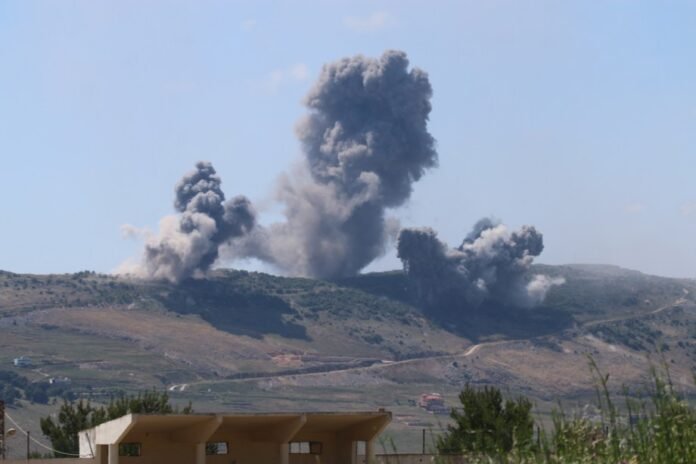
Israeli strikes kill 14, wound several in southern Lebanon in latest ceasefire violation
At least 14 people were killed and several others wounded in Israeli airstrikes in southern Lebanon on Sunday amid continued violations of an ongoing ceasefire, Anadolu reports.
The Lebanese Health Ministry said 11 people were killed and nine others injured in an Israeli strike on the town of Seir al-Gharbiyeh in Nabatieh province in southern Lebanon.
A fighter jet struck the town of Bazouriyeh in the Tyre district, killing one person and injuring two others, the state news agency NNA reported.
An Israeli drone strike also killed a young man in the town of Arabsalim in Nabatieh district, the outlet said.
A house was also hit in an Israeli strike in the town of Toura in Tyre, killing a woman and injuring two people.
The Israeli attacks came despite a US-mediated ceasefire that is supposed to remain in effect until early July.
More than 3,100 people have been killed, over 9,500 injured, and 1.6 million displaced by Israeli bombardment in Lebanon since March 2 amid cross-border attacks with Hezbollah, according to Lebanese officials.
READ: Israel pounds Gaza, Lebanon in daily breaches of ceasefires
2 Former Israeli Air Force Officers Killed in Light Plane Crash in Jezreel Valley
Two former Israeli Air Force officers were killed Sunday after a light aircraft crashed in an open area near moshav Tel Adashim in the Jezreel Valley, according to Israeli emergency responders and media reports.
The victims were identified as Lt. Col. (res.) Yuval (Eyal) Inbar, 50, a former squadron commander, and retired Lt. Col. Itai Talmi, 70, who also served as an Air Force officer and later worked as a captain for El Al.
The crash occurred on the morning of May 24, 2026, in agricultural fields near Tel Adashim in northern Israel.
Magen David Adom said two men around the age of 50 suffered critical injuries in the crash of the light aircraft. Medics and paramedics evacuated the two men to HaEmek Medical Center in Afula while carrying out resuscitation efforts, but doctors later pronounced them dead.
The incident was reported at 9:06 a.m. to Magen David Adom’s 101 emergency dispatch center in the Gilboa region.
Emergency responders said teams arriving at the scene found the aircraft heavily damaged in an open field near the moshav.
Magen David Adom motorcycle unit paramedic Maor Atadgi told Ynet about the response at the scene.
“This is a difficult incident. We arrived at the scene with ambulances, intensive care units, and motorcycles as an immediate response. They led us through the area to the crashed plane, which had severe metal damage, and nearby were 2 men who were unconscious, without a pulse, and not breathing.”
He added, “We immediately began advanced resuscitation efforts and evacuated them in MDA intensive care units to the hospital while their condition was critical.”
Reports on the circumstances surrounding the crash and the investigation were continuing on Sunday.
AIPAC, AI, Crypto, and Gambling Are Hiding Their Big Election Spends
Republican Rep. Thomas Massie was decisively ousted on Tuesday night in his Kentucky primary, a win for President Donald Trump, who had launched an all-out attack on the congressman for his role in pushing for the release of the Epstein files. But in Pennsylvania, the left had a lot to celebrate. Chris Rabb won by nearly 15 points in Philadelphia in a major win for progressives. And Bob Brooks, a retired firefighter and union head, sailed to victory with the support of both the left and moderates.
Mysterious super PACs with ties to Republican donors poured millions into influencing the election results in both states with varying degrees of success. In Kentucky, AIPAC’s super political action committee and two other groups backed by pro-Israel donors spent more than $15 million in opposition to Massie or in support of his opponent, according to Federal Election Commission reports released through Tuesday.
In Pennsylvania, advertisements from Lead Left — a super PAC that reportedly has ties to Republican donors — dropped ads attacking two of the candidates as not progressive enough, leading to speculation that Republicans were trying to prop up a weaker candidate for the general election.
This week on The Intercept Briefing, host Jessica Washington and politics reporter Matt Sledge break down the contentious primary races, the record-level campaign spending and how obscure groups funding the midterm elections are hiding donors’ tracks.
“Groups can kind of game campaign finance deadlines and create super PACs to funnel money to other super PACs so that reporting deadlines are missed and use these ‘pop-up super PACs’ to ensure that ordinary voters never find out who is funding ads before a campaign happens,” says Sledge. “Sometimes there’s even a second layer of pop-up super PACness where those bland-sounding groups send money to other bland-sounding groups. God help you if you’re an ordinary voter trying to track all this money.”
The consequential U.S. Supreme Court decision in Citizens United 16 years ago has allowed courts to chip away at campaign financing restrictions. “Now here we are where any industry that’s facing regulation or any donors who support an unpopular cause can really just open the spigots and try to throw primaries their way,” adds Sledge.
Certain industries have gotten smart about how to hide where the money is coming from. “Ordinary voters don’t generally like crypto, AI or gambling. They may tolerate it at a maximum, but they’re not motivated by the idea of electing pro-crypto, pro-AI, pro-gambling people,” notes Sledge. “But all of these industries have realized, ‘OK, we can use super PACs that run ads that have nothing to do with our industry and get our friends elected to Congress, and they are going to remember that we spent a lot of money on their races.’”
For more, listen to the full conversation of The Intercept Briefing on Apple Podcasts, Spotify, YouTube or wherever you listen.
Transcript
Jessica Washington: Welcome to The Intercept Briefing. I’m Jessica Washington, politics reporter at The Intercept.
Matt Sledge: And I’m Matt Sledge, another politics reporter at The Intercept.
JW: Today, we’re going to dive right in because I know we’re both exhausted. We were both up late covering the Kentucky and Pennsylvania primaries. Matt, we’re speaking Wednesday morning, fresh off of that Kentucky primary election, where President Donald Trump endorsed Republican Rep. Thomas Massie’s opponent.
Massie decisively lost his race. Is this proof that despite inflation, gas prices, the war in Iran, Trump is still a kingmaker, or I guess in Massie’s case, a hangman?
MS: Certainly when it comes to the Republican Party and intraparty politics, some people thought Massie might pull this out, and instead it was a pretty humiliating defeat for a long-term incumbent in the House.
“This is a party-on-party fight. Trump took out a guy who votes conservative nearly all the time.”
But you do have to step back a little bit and remember, this is a party-on-party fight. Trump took out a guy who votes conservative nearly all the time, and it’s a safe Republican district. So he spent a lot of political capital taking out one Republican to replace with another Republican, essentially because he was mad about the Epstein files.
JW: The Epstein files is an interesting part of all of this because Thomas Massie fought so hard to get the Epstein files released. We talked about it on the podcast with one of the attorneys for some of Epstein’s survivors, and it did seem like an issue that was breaking out politically.
Democrats have been speaking about it. I actually heard at the Center for American Progress’s event on Tuesday, House Minority Leader Hakeem Jeffries actually spoke about the Epstein files and talked about it as a top issue for Democrats. So we know this is something that they are trying to make an election issue, but it doesn’t seem like it worked for Massie. Why do you think that is?
MS: I think it’s because it cut against the president so much and, just in the larger picture, enraged the president and turned him decisively against Massie. They had their problems before. I think it was hard for Thomas Massie to argue in his district that getting the Epstein files released was a great coup but also that it didn’t harm the president, because it clearly did harm the president politically. Ultimately, the voters in his district decided that helping the president was more important than anything else.
JW: We also know that pro-Israel groups poured money into this race as well to try and defeat Thomas Massie. Is there anything that you can say about that?
MS: Yeah, it was a lot of money. It was over $15 million from two explicitly pro-Israel groups, super PAC affiliated with AIPAC and then a Republican pro-Israel group. Then also there was a kind of special purpose-created super PAC that was funded in large part by pro-Israel donors. So this was the most expensive House race in history. A huge percentage of that spending came from donors who were motivated by the issue of Israel.
Massie has always opposed foreign aid in general, but I will say he has seemed to take special delight in tweaking supporters of Israel. Obviously that is a minority position within the Republican Party, so these groups came for him, and they were successfully able to help the president oust him.
JW: We’re going to talk a little bit more about how super PACs are hiding where their money is going in this election. But before we do that, I wanted to touch a little bit more on Democratic primaries from last night. So Pennsylvania had some big primaries. Are there any top lines from that race you want to share?
MS: I wasn’t following Pennsylvania as much, but of course, everybody was watching that race in Philadelphia, where Chris Rabb was able to pull out a victory. That’s a huge win for the Democratic Socialist wing of the party. He was up against a more establishment Democrat, and it shows that there is this really energized cohort within the Democratic Party that’s really excited to elect progressives.
JW: As I mentioned at the beginning of this podcast, I was up covering that race. One really interesting thing, aside from the Philadelphia primary, was in Pennsylvania 7, the Pennsylvania governor, Josh Shapiro, ended up backing — really heavily backing — Bob Brooks, one of the more progressive candidates in that race. We also saw Bernie Sanders backing him and the Working Families Party. So we saw this coalition effort between more mainstream center-left and progressives which is obviously different than what we saw in Philadelphia, but it’s interesting to see how those two coalitions could work together in Congress.
And Matt, I want to talk a little bit more about how super PACs are operating in this race. You have a new piece out this week that gets into all of that. So it’s about groups that are funding the 2026 midterm races. You looked at a dizzying array of players who are throwing money into this election cycle.
Before we get into some of those players and the issues they’re pushing, can you set the stage for us? How would you describe the current campaign finance landscape?
MS: It’s just kinda anything goes, and we’ve seen this gradual and then not so gradual evolution from the Citizens United decision in 2010, which opened the doors for allegedly independent spending on elections. The courts have just chipped away at whatever protections there are. Then the Federal Election Commission (FEC) has refused to get in the way of some pretty questionable behavior.
Now here we are where any industry that’s facing regulation or any donors who support an unpopular cause can really just open the spigots and try to throw primaries their way. A lot of time, they’re doing it in ways that cover their tracks a little bit, and they’re running ads that have nothing to do with their chosen issues.
JW: I want to get into the history of this, how we even got there. Citizens United is, I would argue, a boogeyman, not just for the left, but anyone who cares about democracy at all. Can you remind us how that SCOTUS decision really changed the landscape for how campaigns are funded and how we’re seeing that evolve in this election cycle?
MS: It is a boogeyman on the left and elsewhere, but I would say a boogeyman for good reason. A truly significant Supreme Court decision that basically said, individual candidates running for office, we can still limit, how much they’re raising and through that, how much they’re spending on elections, but these allegedly independent spenders, groups like super PACs, can spend as much money as they want on a race because they have no connection to the candidates.
There is no danger of corruption, and that’s really what we’re interested in policing here. We don’t want to police free speech. It essentially equated political spending with free speech, which a lot of people would take issue with.
One of the things that has been really interesting, I say interesting with some chagrin, as this system has evolved, is that we are now in this place, and I wrote about this in my recent article, where groups can kind of game campaign finance deadlines and create super PACs to funnel money to other super PACs so that reporting deadlines are missed and use these “pop-up super PACs” to ensure that ordinary voters never find out who is funding ads before a campaign happens.
Some of these newer industries that are getting in on the campaign spending game, like crypto and artificial intelligence, are also setting up entire networks of super PACs, sometimes a mama or a papa super PAC, and then a Democratic-affiliated super PAC and a Republican-affiliated super PAC so that both donors can channel their money to one party affiliate and to make it a little harder for voters to track where all the money is coming from.
JW: I really recommend that people go check out your piece. I think it’s an amazing glossary on what’s happening in our elections and the aftermath of Citizens United 16 years later.
This isn’t just about AI or crypto, as you’ve mentioned. There’s also AIPAC. The Intercept has reported extensively on the American Israel Public Affairs Committee, which has been spending directly on campaigns for a little while now.
In 2024, our colleague Akela Lacy wrote, “AIPAC embraced a new strategy. It would use its vast funds to oust progressive members of Congress who criticized human rights abuses by Israel and the country’s receipt of billions of U.S. dollars in military funding.” Matt, how is AIPAC operating this election cycle?
Given that there’s growing opposition on both the left and the right to Israel’s genocide in Gaza and influence in U.S. politics, is the group changing its tactics?
“AIPAC’s brand is in the dumps. Israel’s brand is in the dumps with Democrats as well. ”
MS: AIPAC’s brand is in the dumps. Israel’s brand is in the dumps with Democrats as well. You see even very pro-Israel Democratic politicians saying, “I’m not taking AIPAC money.” What the group has done is really make use of these pop-up super PACs. So it’s no longer the United Democracy Project, which is AIPAC’s primary super PAC affiliate spending money in these races. It’s groups with very bland, friendly-sounding names, and AIPAC’s super PAC affiliate sends money to them.
Sometimes there’s even a second layer of pop-up super PACness where those bland-sounding groups send money to other bland-sounding groups. God help you if you’re an ordinary voter trying to track all this money. All you see are negative ads attacking candidates on issues that have nothing to do with AIPAC or Israel.
JW: You just teased it a bit, but I know you poked around some FEC, — Federal Election Commission — reports, for a recent Chicago race and found some interesting information about how AIPAC donors were operating in the race. First, can you tell us what happened in Chicago, and what did you find in the reports?
MS: In Chicago, there was a newly created group called Elect Chicago Women, which sounds great. Who doesn’t want to elect Chicago women? They received money from the United Democracy Project, which is AIPAC’s super PAC affiliate. Then they turned around and handed a million dollars to another newly created group called the Chicago Progressive Partnership. It’s a little surprising they didn’t add “and apple pie” at the end of that.
“It tweaked things so that under the FEC’s campaign finance rules, the donors for that money did not have to be disclosed until after the race. ”
So basically what that did is it tweaked things so that under the FEC’s campaign finance rules, the donors for that money did not have to be disclosed until after the race. In, for instance, the 9th Congressional District primary, there was this really hotly contested race between a progressive and an even more progressive candidate, both of whom were not favored by AIPAC.
AIPAC attempted to, through these super PACs, play the spoiler and boost an entirely different super left progressive candidate to hurt Kat Abughazaleh, the influencer. You could argue it worked because she didn’t lose by that much, and they may have successfully employed this tactic. They didn’t ultimately get their chosen candidate over the line, but they did help a candidate they really disliked lose.
JW: We saw this in Pennsylvania on Tuesday night as well. There’s this group, Lead Left, and the New York Times had reported, as well as Punchbowl, on some interesting ties that they had to Republican groups while also trying to sandbag the progressive candidates in the race by arguing that they weren’t really progressive or that Ryan Croswell, who no one would really argue is a progressive, is, just hiding and is really a Republican.
So we’ve seen this in other races, but I wanted to ask, what other races you’ve seen this happen in and what might be of interest to people here?
MS: Yeah, there’s something that’s really interesting happening in Michigan right now where there’s another one of these newly created groups spending a lot of money to boost Haley Stevens, who’s AIPAC’s preferred candidate in the race.
They are using a consulting firm that AIPAC’s super PAC has used in the past to buy television ads. But AIPAC came out and said, it’s not us. We’re not spending this money. As far as I can tell, nobody has gotten to the bottom of this, of where this money is coming from. I think there are several different ways where AIPAC could say it’s not us and for it to be technically true.
But perhaps there really is some other mystery group behind all of this spending. But it’s really telling. This is a super high profile Senate race, a lot of journalists on it, a lot of eyes on it. Whoever is behind this money has so far been able to successfully conceal its origin.
I think it’s really hard to argue that it is good for voters to not know where this huge amount of money in the race is coming from.
[Break]
JW: For those who don’t know, you’re effectively our crypto, gambling, AI lobby reporter on top of everything else you do. Obviously there’s been a lot of crypto, gambling, and AI money flooding the system right now. Where are you seeing that money going this season?
MS: A lot of it so far is being spent in these primaries, and a lot of it in the Democratic primaries is being spent to elect flexible centrist candidates.
The thing with all of these industries is ordinary voters don’t generally like crypto, AI, or gambling. They may tolerate it at a maximum, but they’re not motivated by the idea of electing pro-crypto, pro-AI, pro-gambling people. More often the contrary within the Democratic Party. But all of these industries have realized, “OK, we can use super PACs that run ads that have nothing to do with our industry and get our friends elected to Congress, and they are going to remember that we spent a lot of money on their races.”
The likelihood of backlash from voters who have a million other things to keep track of is pretty small. Politicians are just going to decide, “Let’s keep our head down and not piss off crypto, AI, and gambling,” even though those are pretty unpopular industries.
JW: I have to say, when I was at the Center for American Progress event on Tuesday listening to Gavin Newsom, Hakeem Jeffries, the whole Democratic establishment try to figure out how to plot a lane in the AI fight, I kept thinking Matt would find this hilarious.
A lot of saying a lot without saying anything.
MS: Yes, they would like to protect our children without actually doing anything.
JW: Yeah. It did, It was giving a little bit of that.
On that note, The New York Times reported that the Silicon Valley venture capital firm Andreessen Horowitz is the biggest donor this midterm cycle by a long stretch.
The firm’s co-founders, Marc Andreessen and Ben Horowitz, have dumped more than $115 million into the cycle so far. For context, Democratic mega-donor George Soros has put in about $102 million, Elon Musk $85 million, and Wall Street financier Jeff Yass $81 million. Is this kind of spending standard for midterm elections?
What are the priorities being pushed here, in particular by these tech billionaires who are pouring a ton of money into these elections?
MS: Andreessen Horowitz is a really fascinating case study in all of this. They have major investments in crypto and AI. They created this massive crypto super PAC network in the last election cycle. They saw that it was a success, and they are just repeating the pattern for artificial intelligence this cycle, and they’ve gotten some of their friends in the AI industry to spend a bunch of money as well.
As you pointed out, it’s a lot of money even in comparison to other billionaires. I think the explanation for that is that they are in highly regulated industries, or at least industries that should be highly regulated, and we’re at a moment where the rules are being set, and they have recognized an opportunity to have their friends set the rules.
“They have recognized an opportunity to have their friends set the rules.”
JW: Following the money a little bit further down the road, former MAGA influencer Ashley St. Clair has been gaining a lot of attention on social media for posting videos where she alleges — in detail — how the White House and powerful figures on the right coordinate messaging with paid influencers.
Here’s a clip of her in a recent interview on Zeteo.
[Clip]
Ashley St. Clair: There’s multiple chats that they operate in, and these chats also have— Some are just sequestered to large MAGA influencers in which they send these paid campaigns. Others have members of the administration. Others have the Trump children. And they coordinate this messaging and react to things in real time: Here’s how we respond or don’t respond to any given issue at any given time.
They also have the paid campaigns in which messaging is pushed out, and it is very much coordinated through both paid messaging and just wanting to be in the club and not be ostracized.
[End of clip]
JW: Democratic California gubernatorial candidate Tom Steyer is being accused of not properly disclosing that his campaign paid influencers $10,000 each to promote him.
What is known about how influencers and messaging are factoring in elections today? What do you make of all this, Matt?
MS: Yeah, I think we definitely have to take anything Ashley St. Clair says with a huge grain of salt, but—
JW: Good point.
MS: At the same time, I think she’s also probably getting at something. We all saw after the latest assassination attempt how all these influencers immediately argued that we needed to build Trump’s big, beautiful ballroom, and then a lot of people were questioning how they were able to all land on the same message so quickly.
It’s clear when you watch any influencers online that half of them are being paid off, so it’s the most natural thing in the world in one way for politicians and campaigns to get in on it. What is really missing here, what’s really missing in this conversation is the question of regulation and disclosure.
If we had a functioning FEC, they might step in and say, “Whoa, you need to disclose when you’re paying off influencers because that should be something the public knows about.” Instead, we don’t have a functioning FEC or a functioning Congress, so nobody is stepping in to make sure that disclosures are happening.
“Disclosure should be a bare minimum.”
Disclosure should be a bare minimum. Maybe this should be banned outright as well. But we, at the very least, should have clarity on when this is happening, and not just within the context of campaigns but also in the context of politics more broadly.
JW: Those are all really good points.
The lack of any kind of regulation about this is troubling. We’ve obviously been talking about money and where it’s going and how it’s going to influencers, into campaigns, into shady super PACs, but what issues do voters actually care about this election cycle? You and I have covered campaign finance. We’ve covered ICE. But what issues are actually breaking through to voters?
MS: Yeah, I think it’s going to be the economy first and foremost, and then the war on Iran as an extension of the economy, because it dovetails with these concerns about affordability so strongly.
Some of the centrist Dem messaging around affordability is super cringe. But it’s also true that it’s a very important issue for voters. I think it has been rightly identified as a major issue that is just going to dominate everything over the next few months.
I don’t know how much ICE and the crackdowns will really play into the elections. My guess is that’ll be more of a primary issue. Democrats who voted for the Laken Riley Act, for instance, will have problems in primaries over that. But when you look at the polls in the general election, immigration is still one of Trump’s best issues. His numbers have definitely eroded there, but it’s better than everything else by about 10 points.
So I don’t know if that’ll be as much of an issue that candidates are highlighting in the general elections.
JW: On immigration, I do keep thinking that if the elections had been held earlier when everything that was happening in Minnesota that was enraging people. I think that was an issue about immigration, but it was also really an issue about democracy, about people’s right to protest, about the rights that they assumed they held as American citizens to protest against their government.
I want to pivot a little bit to talk about an issue that we’ve been discussing on the show quite frequently, which is the fallout from the SCOTUS decision. So the Supreme Court ruled in favor of essentially gutting the Voting Rights Act, which unleashed a new wave of redistricting wars that have been sparked particularly in the South to eliminate minority-majority districts.
Meanwhile, last week, the Virginia State Supreme Court rejected a voter-approved gerrymandering effort that would have boosted Democrats’ chances of gaining four seats in the House. How are you seeing the redistricting wars take shape? Are there any places you’re keeping a particularly close eye on?
But, I think in a week or two, we might have hit a wall on the redistricting wars just for practical reasons, because primaries are coming so fast and early voting has opened in so many places. Mississippi, for instance, the governor there has said he’s not going to push redistricting this year, I think essentially just because of the timing.
So we may finally be settling in the place we’re going to be for the elections, and it looks like a net loss of a few seats for the Democrats, which could be really significant if the outcome of the House elections is that close. On major votes in the House right now, it’s only a few votes either way could shift them.
JW: Speaking at the Center for American Progress event, House Minority Leader Hakeem Jeffries had mentioned that they expect to lose about three or four seats as a result of these redistricting efforts in the South, but they have obviously expressed some confidence in being able to overcome those odds.
Are there other midterms races or themes this cycle that you wanted to talk about?
MS: I think that Michigan Senate race is going to be a huge one. It just gets at so many issues, both of style and substance, of where Democratic voters want to go. That, to me, is really high on the list. This California governor’s race is also fascinating in its own kind of train wreck way. So we’ll see how things go there. Really makes you think how important electoral rules are because we could see some crazy outcome that ordinary voters don’t particularly want.
JW: California is the mess that keeps on messing.
MS: OK. Jess, I gotta turn the tables on you. Any other races that you’re watching, no matter how obscure they are?
JW: I am a DC native, and I also live in DC, so I am following the DC mayoral race, which I know is probably not on most people’s radar who do not live in DC, but it’s fascinating. It’s become this debate really around youth crime and these efforts to restart mass incarceration, I would argue, in DC.
So that’s become a really interesting electoral issue between the two more progressive candidates, Janeese Lewis George, who has really fought against these teen curfews, and Kenyan McDuffie, who has been really pushing for these curfews even though he’s tried to paint himself as more of a progressive. So I think that race, although it’s a mayoral race and might not have much impact outside of DC, has been fascinating to watch for me personally.
And with that little tidbit from me, I am going to leave it because I know we are both exhausted. Matt, thank you so much for joining us on the Intercept Briefing.
We’ll add a link to Matt’s story in the show notes.
MS: Thanks for having me on.
JW: That does it for this episode.
This episode was produced by Laura Flynn. Ben Muessig is our editor-in-chief. Maia Hibbett is our Managing Editor. Chelsey B. Coombs is our social and video producer. Fei Liu is our product and design manager. Nara Shin is our copy-editor. William Stanton mixed our show. Legal review by David Bralow.
Slip Stream provided our theme music.
This show and our reporting at The Intercept doesn’t exist without you. Your donation, no matter the amount, makes a real difference. Keep our investigations free and fearless at theintercept.com/join.
And if you haven’t already, please subscribe to The Intercept Briefing wherever you listen to podcasts. Do leave us a rating or a review, it helps other listeners to find us.
Let us know what you think of this episode, or If you want to send us a general message, email us at podcasts@theintercept.com.
Europe needs to assume it’s on its own – and plan accordingly
If anyone still needed proof that the United States is an unreliable military partner, Donald Trump’s dizzying changes of mind about American troop deployments to Europe have gold-plated the evidence.
Within just one week, the United States first said it was canceling the deployment of a 4,700-strong “Brigade Combat Team” to Poland; Washington then said that it was withdrawing 5,000 troops from Germany; and then, suddenly, to the apparent surprise of America’s own defense officials, Trump announced America would be sending 5,000 soldiers to Poland, after all, because he likes the Polish president.
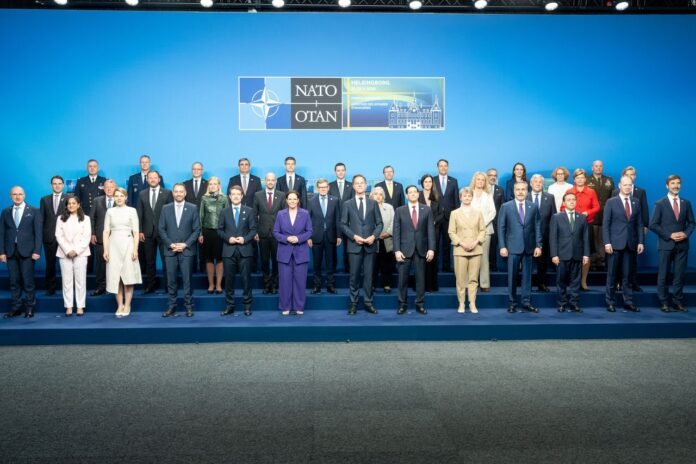
Friday’s meeting of NATO foreign ministers in Helsingborg, Sweden, will have been entertaining, if only for the enjoyment of hearing America’s Marco Rubio, who combines the jobs of Secretary of State and National Security Adviser, trying to explain what is going on.
The reality is that he doesn’t know, because he cannot read Trump’s mind. But the deeper reality is that everyone now knows that for as long as Trump is president American security policy will be capricious, volatile and subject to the personal whims of Trump himself.
This means that as they look ahead to NATO’s next summit of government leaders on July 7-8 in Turkey the European members of this 77-year-old military alliance will have to treat NATO not as being central to their defense and security, as in the past, but as peripheral.
They will all want to stop Trump’s tantrums from endangering the alliance because they want to keep NATO alive in hopes that whoever occupies the White House after 2028 will be a lot more reliable and more devoted to America’s traditional alliances. But, for the time being, the real work of protecting Europe’s safety is having to take place outside NATO.
On a superficial level, this is exactly what Trump, his vice president J.D. Vance and other advocates of “America First” wanted to achieve. They have argued, like many previous US administrations did, that Europe needs to take more responsibility for its own security. The fact that it is now doing so owes more to Vladimir Putin’s invasion of Ukraine four years ago than to American lectures, but nonetheless it is happening.
Yet the deeper problem is not one of American pressure but of American disruption.
During all its long and successful life, NATO has been based on shared long-term planning, shared work to ensure that members’ forces can operate easily together, and a shared system of command-and-control.
The United States has sought to direct all those three aspects, partly because it has the largest and most technologically advanced armed forces, but mainly because it is the most powerful country in the world and does not feel it needs to follow anyone else’s lead.
European NATO members lack some important military capabilities, including in satellite communications, missile defense and heavy-lift transport, not simply because they have spent too little money on defense but because America chose to provide those capabilities itself.
Abrupt changes of policy in Washington, such as last week’s announcement that a planned deployment of long-range Tomahawk missiles to Germany was being canceled, make a nonsense of supposedly shared planning and raise doubts about the reliability of other capabilities provided by the United States.
NATO’s secretary-general, the former Dutch prime minister Mark Rutte, likes to shake up the organization’s European members by warning them not to fantasize about operating without the Americans: Their annual defense budgets will have to increase not just to 5% of GDP, as is now planned, but to 10%, he says, if Europe is to replace what America currently provides.
No one, except perhaps the Baltic States of Latvia, Lithuania and Estonia, would be willing or able to make the sacrifices necessary in other public spending to make budgets of 10% of GDP affordable.
Yet Europe would not really need to spend 10% of its GDP on defense to be able to defend itself without American help, at least not in the foreseeable future.
The European members of NATO, which include the United Kingdom and Norway, face just one serious military threat, namely Russia. And Ukraine, which is not a member of NATO, has shown during its four years of war how Russia can be resisted.
In early June the length of Russia’s war in Ukraine, which Vladimir Putin claimed was “a special military operation” that would last just three or four days, will have surpassed the 1,569 days of the First World War from 1914-18.
But they have an embryonic organization that could provide those key ingredients: the Joint Expeditionary Force, which was set up independently of NATO in 2014 by the United Kingdom, the three Baltic States, the Netherlands and five Scandinavian countries (Denmark, Finland, Iceland, Norway and Sweden), in anticipation of a growing Russian threat to northern Europe.
The most important way to transform the Joint Expeditionary Force from theory into reality would be to widen its membership to include Europe’s most successful military, Ukraine, as well as its two biggest militaries, in Germany and Poland.
A danger with defense planning is that a beautiful long-term program of defense procurement and reorganization can become disconnected from immediate and real threats.
Russia’s army and its economy have become too weakened by the Ukraine war to make a full-frontal attack on another European country likely in the near future. However, that is not Putin’s only option: he could use smaller attacks and increase his existing provocations to try to distract European countries from supporting Ukraine or to try to exploit or widen the existing divisions within NATO.
It is those sorts of distractions and provocations that Europe needs to be ready for. It needs to put in place a rapid process for political decision-making on how to respond and a clear and robust command-and-control structure to carry out whatever orders the politicians provide.
Europe has these on paper, but not in practice; and, like a NATO saddled with an unreliable America, the 27-member European Union is a difficult forum through which to make speedy decisions. A wider version of the Joint Expeditionary Force could be a better vehicle for Europe than either NATO or the EU.
Appeasing and cajoling Trump may be unavoidable but it is no longer the main issue. In fact, perhaps the best way of dealing with Trump during the run-up to NATO’s July 7-8 summit might be to make this clear to the Americans both privately and publicly: Sorry, Donald, they could say, but you are no longer the most important task on our agenda.
This English original of an article first published in Italian translation by La Stampa is republished with kind permission. The article and many more can also be found on Bill Emmott’s Global View.
How Hate Crimes and Political Assassinations Reflect America’s Polarization Crisis
‘What makes the current period unique is the interaction between technology and politics,” John King, a technology strategist and former US government communications engineer, told TML
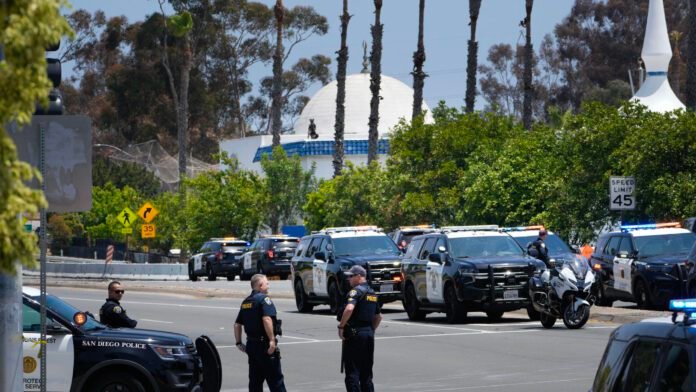
The deadly shooting at the Islamic Center of San Diego has added another case to a widening American debate over political violence, hate crimes, and radicalization in a country already shaken by antisemitic attacks, threats against public officials, the assassination of conservative activist Charlie Kirk, and repeated attempts to target President Donald Trump.
The San Diego attack, carried out on May 18, 2026, killed three people at the mosque, including security guard Amin Abdullah, who authorities and community members said helped prevent a larger massacre by confronting the attackers and triggering a lockdown that protected children inside the compound. The two attackers, identified in reporting as teenagers Cain Clark, 17, and Caleb Vazquez, 18, later died from apparent self-inflicted gunshot wounds. Investigators said they were examining the shooting as a hate crime and looking at evidence of online radicalization and white supremacist ideology.
The case came less than a year after a series of attacks that have sharpened concerns about whether political and ideological violence is becoming more frequent, more visible, or simply more difficult to contain in an era of fragmented media, online extremism, and declining trust in institutions.
In May 2025, two Israeli Embassy staff members, Yaron Lischinsky and Sarah Milgrim, were shot dead outside the Capital Jewish Museum in Washington, DC. In June 2025, a man attacked participants in a Boulder, Colorado, walk calling for the release of Israeli hostages held in Gaza, injuring several people in what the FBI described as a targeted act of terrorism and possible hate crime.
Those attacks were followed in September 2025 by the killing of Charlie Kirk, the founder of Turning Point USA and one of the most visible conservative activists in the United States. Kirk was shot dead while speaking at Utah Valley University, in what Utah Gov. Spencer Cox called a political assassination. Prosecutors later charged Tyler Robinson with aggravated murder and other offenses, saying sentencing could be enhanced because Kirk was allegedly targeted for his political expression.
The pressure on American institutions intensified again in April 2026, when Cole Tomas Allen was indicted on federal charges, including attempted assassination of President Trump after an armed incident at the White House Correspondents’ Dinner in Washington. The episode followed the July 13, 2024, assassination attempt in Butler, Pennsylvania, when Trump was wounded, one rally attendee was killed, and others were injured.
The accumulation of these cases does not mean that all of them belong to one coordinated movement. The motives, ideological references, and operational patterns differ. Some incidents have targeted Jews or Israelis. Others have targeted Muslims. Others have involved politicians, public figures, or state institutions. But the recurrence of violence across ideological and communal lines has created a broader sense of national vulnerability.
John King, a technology strategist and former US government communications engineer who worked on mission-critical command-and-control communications systems supporting senior national leadership, said the current climate reflects several overlapping pressures, including declining institutional trust, fragmented media ecosystems, economic and cultural anxieties, and the speed at which digital platforms circulate information.
“What makes the current period unique is the interaction between technology and politics,” King said to The Media Line. “Artificial intelligence, deepfakes, automated influence campaigns, and algorithmically amplified misinformation can accelerate polarization by making it more difficult for citizens to distinguish fact from manipulation. While political disagreement has always been part of American democracy, the velocity and scale of modern information systems can intensify tensions and shorten the time available for reflection and verification,” he added.
The velocity and scale of modern information systems can intensify tensions and shorten the time available for reflection and verification
The latest cases also come amid high levels of reported hostility toward religious minorities. Jewish and Muslim communities have both reported rising fear, threats, and attacks since the war in Gaza began, while civil rights organizations have warned that hate crimes and bias incidents are increasingly tied to global conflicts, domestic political rhetoric, and online radicalization. These cases also have methodological limits: advocacy groups track reported incidents and complaints, while official hate-crime data depend on law-enforcement reporting, which remains incomplete and voluntary.
For Joe Young, director of the Patterson School of Diplomacy at the University of Kentucky, the recent violence is serious but should also be placed in a historical context.
These violent events are disturbing. And I think connected to larger polarization processes in the country.
“These violent events are disturbing,” Young said to The Media Line. “And I think connected to larger polarization processes in the country. With that said, the amount of violence we are witnessing is not as bad as the 1960s and 1860s. So not historically large numbers of events,” he added.
That historical qualification is important. The United States has gone through periods of far more sustained political violence, including the Civil War era, Reconstruction, the assassinations and racial violence of the 1960s, and earlier waves of extremist activity. But the current period is distinct in the way domestic anger is filtered through digital platforms, partisan identities, and global conflicts that are rapidly imported into American public life.
King said antisemitic attacks, anti-Muslim violence, and politically motivated violence often emerge from different ideologies and grievances, but can still operate within a shared environment of polarization, distrust, and radicalization. He pointed to social media platforms as a key part of that environment because they can expose individuals to grievance-driven content that reinforces existing beliefs and isolates them from competing perspectives.
“Whether the underlying ideology is political, religious, ethnic, or conspiratorial, the mechanisms of radicalization often follow similar patterns: the creation of in-group and out-group identities, the amplification of perceived threats, and the gradual dehumanization of others,” King said.
Young made a similar point in more direct terms, saying perpetrators of political violence often construct an enemy responsible for their grievances.
“Most perpetrators of political violence identify some other for why their current situation is bad,” Young said. “For some people in the US, it could be Jews. For some, Muslims. Or maybe even ICE or members of the current administration. Unfortunately, there are lots of people in the country that someone blames for the challenges we face,” he added.
Unfortunately, there are lots of people in the country that someone blames for the challenges we face
The war in Gaza has become one of the clearest examples of how international conflict can affect domestic tensions. The killing of the two Israeli Embassy staffers in Washington and the Boulder attack against a group advocating for hostages showed how events in the Middle East can be translated into violence against civilians or community members in the United States who are not directly connected to the war. At the same time, the San Diego mosque attack emphasized that Muslims are also targets of radicalized violence, particularly from far-right or white supremacist networks.
“Events in the Middle East can also have a direct impact on domestic tensions within the United States,” King said. “Conflicts involving Israel, Gaza, Iran, or other regional actors frequently generate strong emotional reactions that can spill into local communities far removed from the conflict itself. Unfortunately, this can increase hostility toward Jewish, Muslim, Arab, or other communities who have no connection to acts of violence overseas,” he added.
King said the greater danger is that different forms of extremism can begin to reinforce one another, with each incident deepening fear and mistrust and creating a cycle in which one act of violence is used to justify another. For democratic societies, he said, the challenge is preserving the distinction between legitimate political or religious disagreement and intimidation or violence.
Young also linked the Gaza war to radicalization, while distinguishing between different ideological sources of violence.
“The war in Gaza has certainly radicalized some on the left,” Young said. “We have seen attacks in the US and abroad on civilians unconnected to the war. It’s not clear why this mosque in particular was targeted in San Diego. But it seems the teens were flirting with far-right/Nazi propaganda,” he added.
The San Diego case has drawn particular attention because of the alleged role of online spaces. According to reporting based on law enforcement accounts, the attackers met online, left writings expressing hatred toward several groups, and referenced white supremacist and neo-Nazi ideas. The case fits a broader pattern in which young attackers absorb ideological material, tactical inspiration, and performative models of violence from digital subcultures.
Young said the internet has made it easier for isolated individuals to find one another, but he cautioned against portraying online radicalization as an entirely new phenomenon.
“In the San Diego case, these teens met online and planned their violence online,” Young said. “With that said, we saw similar violent events in the US before these online spaces existed. I think what’s different is that it is easier to find like-minded individuals. But as I said, it still happened before these online spaces, the internet, and social media,” he added.
In the San Diego case, these teens met online and planned their violence online
King framed the same issue as a question of speed and scale, rather than direct causation. He said digital platforms accelerate the spread of emotionally charged content and can immerse users in simplified narratives of heroes, villains, victims, and enemies. Most people exposed to such material never become violent, he said, but vulnerable individuals may be repeatedly exposed to extreme messaging, conspiracy theories, dehumanizing language, or calls for retaliation.
“The danger is not that technology directly causes violence, but that it can accelerate radicalization, reinforce grievances, and lower the barriers between online hostility and real-world action,” King said.
The attacks on Trump and the killing of Kirk have added another layer to the debate because they directly target political leadership and political expression. For many Americans, Kirk’s assassination symbolized a breakdown in the boundary between political hostility and physical violence. But Young argued that assassination attempts against presidents and public figures, however alarming, are not without precedent in American history.
I don’t think these are particularly unique or different from the past
“I don’t think these are particularly unique or different from the past,” Young said. “These types of assassinations are horrible, but almost every modern us president has been a target, and some have been killed. Four US presidents have been killed in office, and Reagan, Trump, and Teddy Roosevelt were shot and injured but survived,” he added.
That view does not minimize the danger, but it complicates the narrative that the United States is entering an entirely unprecedented era. What appears different is not only the violence itself, but the surrounding ecosystem: the immediate circulation of images, conspiracies, and accusations; the use of attacks to mobilize supporters; and the speed with which one incident becomes absorbed into broader partisan narratives.
The institutional challenge is therefore twofold. Authorities must prevent attacks by lone actors or small cells that may radicalize quickly and leave few traditional warning signs. At the same time, political leaders, media platforms, schools, religious institutions, and civil society organizations must address the conditions that make violence appear legitimate to a small minority.
King said American institutions have become more aware of threats linked to political violence, hate crimes, and domestic extremism, and that attacks are sometimes disrupted before they occur. But he also warned that traditional security models were largely designed to identify organized groups and coordinated plots, while modern radicalization can develop quickly, often online, and involve individuals with little or no connection to formal extremist organizations.
“The challenge going forward is developing approaches that address not only physical security threats but also the social and technological conditions that can contribute to extremism,” King said. “The long-term objective is not merely to stop individual attacks, but to strengthen societal resilience before violence becomes an option for vulnerable individuals,” he added.
The question of political responsibility is more divisive. Both experts argued that rhetoric from leaders matters, though Young placed particular responsibility on the current president.
“Elites could certainly tone down the rhetoric,” Young said. “Political opponents aren’t enemies. We are all Americans. We all want what’s best for the country, but offer different ways to get there. Unfortunately, our current president is the one who could be the most effective at lowering the political temperature but has not shown a willingness or ability to do so,” he added.
King, without focusing on one political figure, said public language can either contain or intensify a volatile environment.
“Political restraint from public figures is also urgent,” King said. “Leaders cannot control every unstable individual, but they can either lower the temperature or inflame it. Language that dehumanizes opponents, religious communities, immigrants, or political adversaries creates a permissive environment for intimidation and violence. Responsible leadership requires making clear that disagreement is legitimate, but violence and collective blame are not,” he added.
The policy responses are difficult because they touch some of the most polarized areas of American life: guns, speech, policing, online surveillance, hate-crime enforcement, and civil liberties.
King argued that immediate security measures are necessary, but insufficient without longer-term social repair.
“Realistic solutions need to operate on several levels at the same time,” King said. “There is no single policy lever that will solve political violence, antisemitism, anti-Muslim hatred, or extremist radicalization,” he added.
In the near term, King said stronger security for vulnerable religious and community institutions is essential, including better threat reporting channels, closer coordination with law enforcement and practical security support for synagogues, mosques, schools and public venues. But he also emphasized that such measures must remain within constitutional limits and respect free speech and civil liberties.
He pointed to education and community engagement as longer-term tools to rebuild trust before the next crisis.
“Once violence happens, everyone becomes reactive,” King said. “The harder but more effective work is creating relationships in advance so that communities can respond together rather than retreat into fear and suspicion,” he added.
The harder but more effective work is creating relationships in advance so that communities can respond together
King also identified gun policy as one of the most politically difficult issues in any discussion of violence prevention, given the reality of widespread firearm access and deep constitutional, cultural, and partisan divisions in the United States. Measures such as stronger background checks, red-flag laws, and restrictions on access for individuals who present credible threats may be practical from a prevention standpoint, he said, but remain politically difficult.
The United States is not witnessing political violence on the scale of its most violent historical periods. But the current wave has exposed a dangerous convergence: heavily armed individuals, online radicalization, global conflicts imported into domestic identity politics, and public rhetoric that often treats opponents not as rivals but as existential threats.
The San Diego mosque shooting, the antisemitic attacks connected to the Israel-Gaza war, the assassination of Kirk, and the attempted attacks on Trump do not form one single story. They are different events with different victims, ideologies, and perpetrators. But together, they point to the same national vulnerability: a society struggling to maintain democratic disagreement without allowing grievance, identity, and political fear to become a pathway to violence.
Gunman Opens Fire Near White House While Trump is Inside: Chilling New Details Emerge
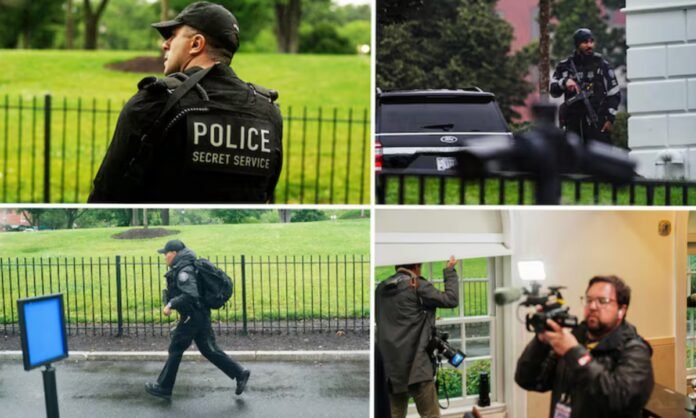
A terrifying scene erupted outside the White House Saturday evening after a Maryland man who was reportedly already known to the Secret Service allegedly pulled a gun from a bag and opened fire near a security checkpoint.
The suspect, identified as 21-year-old Nasire Best, had allegedly been barred from returning to the White House complex before the deadly confrontation, according to The New York Times.
Authorities say Best walked up to a Secret Service checkpoint near 17th Street and Pennsylvania Avenue NW shortly after 6 p.m. and suddenly began firing at officers.
Within moments, chaos broke out near one of the most heavily guarded buildings in the world.
People on the White House grounds scrambled for cover as gunfire rang out. Secret Service officers returned fire, striking Best. He later died at the hospital.
A bystander was also hit during the terrifying exchange, though officials said it was not immediately clear whether the person was struck by the suspect’s gunfire or during the shootout with officers.
Now, disturbing details about Best’s past encounters near the White House are beginning to surface.
Court records reportedly show Best was arrested last July after entering a restricted area near the White House and ignoring commands to stop. An affidavit cited by The Times claimed he had already caught the attention of the Secret Service after repeatedly walking around the White House complex and asking how to get inside at different entry points.
Best had also allegedly been involuntarily held after blocking a vehicle entrance near the White House. During that encounter, he reportedly told officers he was “Jesus Christ” and said he “wanted to get arrested.”
A bench warrant was later issued after he failed to appear at a court hearing, according to the report.
The shooting unfolded while President Donald Trump was inside the White House. He was not injured.
The White House was placed on lockdown for roughly 30 minutes, though law enforcement remained heavily stationed in the area long after the immediate threat was over.
The incident comes just one month after another alarming security scare involving a man allegedly armed with a shotgun, handgun and multiple knives who pushed past a checkpoint at the White House Correspondents’ Association Dinner. Trump and first lady Melania Trump were evacuated during that incident.
After Saturday’s shooting, Trump praised the Secret Service and law enforcement in a Truth Social post, calling their response “swift and professional.”
The president also appeared to connect the latest scare to his push for a new White House ballroom project, saying the shooting showed the need for what he described as “the most safe and secure space of its kind ever built in Washington, D.C.”
“The National Security of our Country demands it!” Trump wrote.
The White House did not immediately respond to a request for comment.
GOP hawks alarmed as Trump mulls deal to end his Iran war
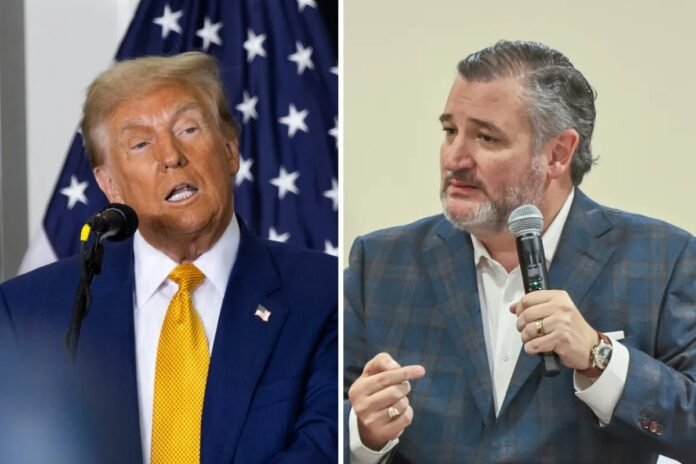
Donald Trump and Ted Cruz. Photos: Texas Tribune
President Donald Trump revealed over the weekend that he is mulling a deal that would end his war with Iran, and some hawks within the Republican Party are expressing alarm.
According to a Sunday report in The New York Times, many details of the agreement to end the war remain murky, with the fate of Iran’s enriched uranium up in the air. US and Iranian officials have also given contradictory messages about the proposed deal’s contents, suggesting there is much work still to be done before any agreement is finalized.
Regardless, three hawkish GOP senators on Saturday raised major concerns about the contents of the deal, warning against accepting any agreement that will leave Iran in a stronger position than before Trump launched a war against it in late February.
“If it is perceived in the region that a deal with Iran allows the regime to survive and become more powerful over time, we will have poured gasoline on the conflicts in Lebanon and Iraq,” wrote Sen. Lindsey Graham (R-SC), who lobbied Trump to attack Iran repeatedly before the start of the war. “A deal that is perceived to allow Iran to survive and possess the ability to control the [Strait of Hormuz] in the future will put Hezbollah in Lebanon and the Shia militias in Iraq on steroids.
Sen. Ted Cruz (R-Texas), another longtime Iran hawk, said he was “deeply concerned” about what he’s been hearing about the deal and expressed particular worry about Iran getting relief from US sanctions while still maintaining the ability to shut down the Strait of Hormuz.
“If the result of all that is to be an Iranian regime – still run by Islamists who chant ‘death to America’ – now receiving billions of dollars,” Cruz wrote, “being able to enrich uranium and develop nuclear weapons, and having effective control over the Strait of Hormuz, then that outcome would be a disastrous mistake.”
Sen. Roger Wicker (R-Miss.) was even blunter in his condemnation of the reported agreement.
“The rumored 60-day ceasefire – with the belief that Iran will ever engage in good faith – would be a disaster,” Wicker wrote. “Everything accomplished by Operation Epic Fury would be for naught!”
Ben Rhodes, a former deputy national security adviser for President Barack Obama, challenged Wicker’s claims that Trump’s war had achieved anything of value.
“Nothing was accomplished by Operation Epic Fury,” Rhodes wrote, “except putting the Islamic Revolutionary Guard Corps in charge of Iran and the Strait of Hormuz.”
Rhodes’ criticism was echoed by Stephen Wertheim, senior fellow at the Carnegie Endowment for International Peace, who wrote that “everything accomplished by Operation Epic Fury is already for naught.”
Ali Vaez, director of the Iran Project at the International Crisis Group, accused the Iran hawks of being delusional for thinking further bombing would force Iran to capitulate.
“DC’s Iran hawks got two wars, nearly every conceivable sanction designation, a blockade, threw a wrench in global economy,” Vaez wrote, “and will still claim that just a little more pressure and a touch more bombing will magically yield the concessions they still won’t be satisfied with.”