21.4 C
London
Tuesday, May 26, 2026
Home Blog

Zelenskyy rejects Merz proposal for associate EU membership

0
zelenskyy-rejects-merz-proposal-for-associate-eu-membership
Zelenskyy rejects Merz proposal for associate EU membership


Volodymyr Zelenskyy has rejected a German proposal to grant Ukraine “associate member” status in the European Union, arguing it would leave Kyiv without a proper voice in EU decision-making.

In a post on X, Zelenskyy said there can be “no complete European project without Ukraine” and insisted the country’s place in the bloc must be “full and equal”. He stressed the need to advance EU accession talks by opening negotiation clusters and pushing forward reforms aimed at securing full membership.

The proposal, put forward by German Chancellor Friedrich Merz, suggested an intermediate status that would allow Ukraine to participate in certain EU meetings and benefit from selected institutions while falling short of full membership.

European Parliament President Roberta Metsola has also supported a gradual approach, arguing that candidate countries could be integrated step-by-step into the single market, customs union and EU programmes such as Erasmus and Horizon before full accession.

Zelenskyy, however, reiterated in a letter to EU leaders that Ukraine is already contributing to European security by resisting Russian aggression and should not be given partial or symbolic inclusion.

The letter, addressed to senior EU officials including European Council President António Costa and European Commission President Ursula von der Leyen, stressed that Ukraine is implementing rapid reforms while defending the wider continent.

Ukraine applied for EU membership shortly after Russia’s full-scale invasion in 2022, gained candidate status later that year, and formally began accession negotiations in 2024.

via Politico

US, China escalate quantum race with rival investment drives

0
us,-china-escalate-quantum-race-with-rival-investment-drives
US, China escalate quantum race with rival investment drives

Shares of key Chinese quantum computing companies have surged about 20% over two trading days after Washington announced a US$2 billion funding package for nine US firms, as investors bet that Beijing would respond with its own push to keep pace in the global race for quantum supremacy.

Quantum CTEK surged 19% to 641.08 yuan (US$88.70) in just two trading days on May 22 and 25. GuoChuang Software gained nearly 18% to 40.24 yuan, while Koal Software rose 9.5% to 20.97 yuan. The rally mirrored a sharp move in US quantum stocks as Infleqtion soared more than 30%, Rigetti Computing jumped over 63%, D-Wave surged roughly 53% and IBM gained around 13% in the two trading days after Washington announced the funding package.

China’s quantum sector had already been building momentum this month. Origin Quantum launched Origin Wukong-180, its fourth-generation superconducting quantum computer. The Chinese Academy of Sciences’ Cold Atom Technology (CASCA) unveiled what it described as the world’s first dual-core quantum computer. The University of Science and Technology of China (USTC) released Jiuzhang 4.0, a photonic quantum computer.
 
Analysts said the flurry of breakthroughs, combined with the US funding push, was likely to accelerate Beijing’s timetable for state-backed investment in the sector.

On May 21, the US Department of Commerce announced the letters of intent to frame the initiative as a matter of national security as much as economic competitiveness. The funds, totaling US$2.013 billion, were distributed under the CHIPS and Science Act to support both domestic quantum foundries and computing companies, with the government taking a minority equity stake in each recipient.

The two foundry recipients are GlobalFoundries, which will receive US$375 million to establish a domestic quantum foundry spanning multiple hardware approaches, and IBM, which will receive US$1 billion to build a new subsidiary for quantum-grade superconducting wafers.

The remaining US$538 million is split across seven companies, with Atom Computing, D-Wave, Infleqtion, PsiQuantum, Quantinuum, and Rigetti each receiving up to US$100 million to address specific unresolved engineering problems across different quantum modalities. Silicon spin specialist Diraq will receive up to US$38 million.

“With today’s CHIPS Research and Development investments in quantum computing, the Trump administration is leading the world into a new era of American innovation,” said US Secretary of Commerce Howard Lutnick. “These strategic quantum technology investments will build on our domestic industry, creating thousands of high-paying American jobs while advancing American quantum capabilities.”

As a condition of the awards, the Department will receive a minority, non-controlling equity stake in each recipient company, a structure designed to enhance returns for US taxpayers. The CHIPS Research and Development Office said it continues to solicit proposals from eligible applicants for research, prototyping and commercial solutions that advance microelectronics technology in the US.

The May 21 announcement marks the first time Washington has taken direct equity stakes in quantum computing firms, a significant shift from its traditional approach of providing research grants. 

“The Trump administration’s decision to pump more than US$2 billion into nine US quantum computing firms has set off a frenzy in capital markets,” says a columnist at the National Business Daily. “In fact, Beijing had already moved early, placing quantum technology at the top of its list of six priority future industries in the 15th Five-Year Plan (2026-2030) last year.”

He says the other five technology sectors are biomedical, hydrogen and nuclear fusion energy, brain-computer interfaces, embodied artificial intelligence (AI) and 6G telecommunications.

He adds that quantum technology deserves to be a priority battleground for every major power, citing three reasons:

  • National security: quantum computing and communications will have a profound impact on defense and information security.
  • Underpinning other industries: quantum computing’s exceptional processing power could dramatically accelerate drug development and materials design.
  • Technological dominance: whoever moves fastest will gain the power to set the rules of the game, injecting new energy into both defense and the economy.

“The US move represents the first time a national government has directly taken equity stakes in quantum technology companies, marking a formal escalation from a laboratory race to a state-level industrial war,” says an Anhui-based writer. “Nearly 70% of Washington’s strategic equity investment is concentrated in quantum wafer manufacturing, essentially replicating the playbook used to build up semiconductor fabs and staking out the manufacturing foundation for the next generation of computing power.”

The writer says China remains one of the few countries capable of keeping pace with the US in quantum technology, with a domestic industry chain taking shape. He outlines three of China’s core advantages:

  • Quantum communications: China holds an absolute global lead, with Quantum CTEK’s quantum cryptography communications technology already commercially deployed nationwide.
  • Superconducting quantum computing: Origin Quantum operates China’s only 6-inch quantum chip production line, with a daily capacity exceeding 100 wafers, a yield rate of 92% and its 180-qubit superconducting quantum computer already available as an online service.
  • Policy support: Quantum technology tops Beijing’s 15th Five-Year Plan list of six future industries.

“China’s core weaknesses lie in dedicated quantum wafer fabrication and high-end control and measurement equipment, precisely the areas Washington is targeting with its latest funding push,” he says. “Domestic quantum chips still partly rely on conventional foundries for production, while purpose-built quantum wafer facilities remain under construction.”

China and the US are competing across three main quantum computing approaches:

  • Superconducting quantum computing, which uses supercooled electrical circuits as qubits: Origin Quantum and Quantum CTEK are China’s main players, competing with IBM, Google and Rigetti.
  • Photonic quantum computing, which uses particles of light to perform calculations: USTC’s Jiuzhang series leads in China, rivaling US firm PsiQuantum.
  • Trapped-ion quantum computing, which manipulates individual charged atoms as qubits: Beijing-based Qudoor is China’s main contender, going up against Quantinuum and IonQ.
  • Neutral atom quantum computing, which uses individual atoms held in place by laser beams as qubits: CAS Cold Atom Technology is China’s leading player, competing with US firms Atom Computing and Infleqtion.

US export controls

During the Biden administration, the White House had already moved to choke off China’s access to quantum technology, introducing export controls on quantum computers, critical components and related software in September 2024, followed by a ban on most US investments in China’s quantum sector that took effect in January 2025.

In March 2025, the Trump administration added about 80 companies to its export blacklist, more than 50 of which were Chinese. Among the sanctioned, six subsidiaries of Inspur Group, China’s leading cloud computing and big data provider, were accused of acquiring US technologies to develop AI and quantum technologies and build exascale supercomputers for the Chinese military.

As of now, sanctioned Chinese quantum firms and institutions include Quantum CTEK, Origin Quantum, USTC, the Jinan Institute of Quantum Technology, the Hefei National Laboratory, the Center for Excellence in Quantum Information and Quantum Physics and the Institute of Physics.

Despite US export controls, Chinese firms have continued to make progress by sourcing equipment from non-American suppliers. In footage aired by state broadcaster CCTV in January 2023, Origin Quantum revealed it was using a mask aligner made by Germany’s SÜSS MicroTec to produce its superconducting quantum chips, showing that Washington’s controls had not fully closed off China’s access to key fabrication equipment.

The effort paid off when Origin Quantum launched Origin Wukong-72, its third-generation 72-qubit superconducting quantum computer, in January 2024. Named after the Monkey King of Chinese mythology, the Wukong series uses qubits, which, unlike the binary bits in conventional computers, can exist in multiple states simultaneously, allowing quantum computers to process vastly more complex calculations.

On May 9 this year, Origin Wukong-180, the fourth-generation model, went online and began accepting quantum computing tasks from users worldwide. It carries 180 computational qubits on a single chip and achieves an accuracy rate of around 99% across its core operations.
 
Chinese scientists are also working around US export controls by developing quantum technologies that do not rely on dilution refrigerators, a cooling device whose sensitive components are tightly controlled by the West. Photonic and neutral-atom quantum computing are two such approaches.

On May 7, CASCA unveiled what it described as the world’s first dual-core neutral-atom quantum computer, the Hanyuan-2.

Ge Guiguo, a senior solutions expert at CASCA, said the machine is built on domestically developed neutral-atom array technology and features a dual-core collaborative computing system with a total of 200 qubits. He said the machine marks the first time globally that a quantum processor has moved from a single-core to a dual-core architecture, representing a breakthrough in the core design of quantum computing.

USTC published results for Jiuzhang 4.0 in the journal Nature on May 13, showing that the photonic quantum computer solved a benchmark computational problem at a speed more than 10^54 times faster than the world’s most powerful supercomputer. The machine manipulated and detected quantum states of up to 3,050 photons, compared with 255 photons in its predecessor, Jiuzhang 3.0. 

Citing McKinsey data, a Liaoning-based columnist said that China invested US$15 billion in its quantum sector in 2024, more than double the US$7 billion committed by American firms and the government combined. He said it’s possible that Chinese firms will catch up with their US rivals one day.

However, some observers cautioned that China’s figures include substantial infrastructure costs, and that a significant portion of its research and development spending has gone toward quantum communication rather than quantum computing, where the US maintains a clear lead.

Read: New Trump sanctions on Chinese firms: leverage on Xi or overkill?

Follow Jeff Pao on X at @jeffpao3

Russia’s military satellite moves signal new Ukraine war surge

0
russia’s-military-satellite-moves-signal-new-ukraine-war-surge
Russia’s military satellite moves signal new Ukraine war surge

​Between May 14 and 20, Russia repositioned five of six recently launched Cosmos military satellites from an orbital inclination of 97 degrees to 97.8 degrees, putting the Cosmos satellites on the same orbital plane as a satellite known as ICEYE-X36.

ICEYE is a Finnish-American aerospace and data company that designs, builds and operates the world’s largest constellation of Synthetic Aperature Radar (SAR) satellites. Russia’s repositioning of five Cosmos satellites, specifically Cosmos 2610, 2611, 2612, 2613 and 2614, is an unprecedented move.

According to Integrity ISR, ICEYE-X36 was launched March 4, 2024 from Vandenberg on a SpaceX Falcon 9. It’s registered under ICEYE US, has a mass of ~90 kilograms and is one node in a 44+ satellite constellation that Ukraine can task. However, it is clearly the most important satellite for Ukraine.

According to reports, ICEYE-X36 has been a game-changer for Ukraine. It is a SAR satellite that has all but revolutionized the battlefield, enabling the identification of enemy equipment, tracking of troop movements and detection of even camouflaged equipment and command-and-control assets under virtually any weather conditions.

ICEYE-X36 has a ground resolution of 16 centimeters, so even a footprint is visible from space.

ICEYE-X36 is owned by Ukraine and Kyiv operates it with significant help from NATO and from NATO companies, helping Ukrainian analysts to sort out the received imagery. According to the most recent report, ICEYE-X36 has produced 4,100 images, located 238 air defense and signals intelligence units, successfully targeted 153 fuel depots, and 17 Russian naval bases.

This is a capability the Russians cannot match, although Russia has a SAR satellite of its own, though only one. The Russian satellite, known as Obzur-R (Survey) and weighing 3,629 kilograms, was launched in late December 2025.

It was developed by Roscosmos and TsSKB-Progress and features a Kasatka-R X-band Synthetic Aperture Radar with a claimed resolution of one meter. However, it is not a microsatellite like ICEYE-X36. It is supposed to operate for five to eight years, and Russia claims it will eventually produce three more Obzur-class SAR satellites.

Russia has been tracking and occasionally challenging NATO surveillance space and aircraft systems, including manned aircraft and drones.

The UK Ministry of Defense released information on May 20 about an encounter between a British surveillance platform, the RC-135W Rivet Joint signals intelligence aircraft, and Su-35 Flanker-E and Su-27 Flanker Russian fighter jets over the Black Sea in mid-April.

The Su-35 closed the distance to the Rivet Joint so aggressively that the wake turbulence or proximity sensors triggered the British aircraft’s onboard emergency defense systems, automatically disabling its autopilot.

The Su-27 performed six separate close-range passes directly across the nose of the Rivet Joint. At its closest point, the Russian fighter cut within six meters of the unarmed reconnaissance plane. Rivet Joint intercepts and analyzes electronic signals to provide real-time battlefield intelligence.

The RAF Rivet Joint

Most experts believe that the Russian Cosmos satellites, now very close to ICEYE-X36, are likely positioned for what the trade calls a Rendezvous and Proximity Operation (RPO).

Technically, the Russians could threaten ICEYE-X36 in a number of ways, ranging from actually destroying it, blanking out its solar panels that power the SAR system, to jamming the ICEYE radar using microwaves, lasers or other methods. Exactly why the Russians committed five Cosmos satellites to shadowing ICEYE-X36 is unclear.

There have been intelligence reports that Russia may be planning a major offensive in Ukraine, perhaps even an invasion aimed at Kyiv that could possibly involve Russian ally Belarus. Such an offensive would emulate the invasion route that began on February 24, 2022, but would somehow succeed this time in taking Kyiv after being rebuffed previously.

Despite the reports, at present there is no hard evidence to support the claim, although the ICEYE-X36 encounter sounds as if it is preparatory to something big.

The Russians have been largely bogged down on the battlefield for some time. Over the past year or longer, a key focus for Russia has been to force concessions from Ukraine by crushing its civilian infrastructure, especially power generation, transmission systems and other critical infrastructure elements.

To do this, Russia has launched missiles and Shahed drones in large quantities. Yet despite destroying a significant part of the Ukrainian energy infrastructure, especially in the east, Ukraine has not been willing to actually negotiate with Russia and, in particular, offer any land for peace proposals.

It is fair to say that the Russian campaign has failed to move the Ukrainian political needle in the direction of a deal, and in fact probably moved Ukraine to take a very hard line – sometimes frustrating Washington, which has been anxious to broker a deal. In fact, bombing campaigns have generally failed to lead to settlements.

Meanwhile, the Russian army has been stymied by Ukraine’s massive tactical drone capabilities and its increasing ability – with ICEYE-X36 and NATO operational and planning help – to cause serious damage in western Russia, including in Moscow and St. Petersburg.

Russian President Putin faces a significant dilemma because his war strategy is failing. A palm reading of the Russian president’s hand would suggest he faces a near existential challenge to his government’s survival, something that would not have been predicted a year ago.

While Russia certainly has some tactical options to restore its army’s battlefield initiative and a sizable reserve force to commit, the outcome is likely to be both bloody and uncertain. Blinding Ukraine’s ICEYE-X36, should Russia decide to do it in the context of a large-scale military operation, is now on the table, but doing so probably won’t change the algebra of the war.

Stephen Bryen is a former US deputy undersecretary of defense and special correspondent at Asia Times. This article was first published on his newsletter Weapons and Strategy and is republished with permission.

Sa’ar Criticizes Lebanese Government for ‘Failing To Implement’ Hezbollah Withdrawal 

0
sa’ar-criticizes-lebanese-government-for-‘failing-to-implement’-hezbollah-withdrawal 
Sa’ar Criticizes Lebanese Government for ‘Failing To Implement’ Hezbollah Withdrawal 


Israeli Foreign Minister Gideon Sa’ar, in an X post on Monday, criticized the Lebanese government for failing to enforce UN Security Council Resolution 1701, as negotiations continued over a proposed agreement that would end the Iran conflict and include a halt to fighting in Lebanon. 

Sa’ar made the remarks in response to comments by Lebanese President Joseph Aoun marking the anniversary of Israel’s withdrawal from southern Lebanon in 2000. 

“UN Security Council Resolution 1701 stipulates that Hezbollah terrorists must not be present south of the Litani River-and it is the Lebanese government that is failing to implement this resolution,” Sa’ar wrote. 

He said Israel “has no territorial ambitions in Lebanon” and argued that Hezbollah, which he described as controlled by Iran, had repeatedly attacked Israel from Lebanese territory since Israel’s withdrawal in 2000. 

“Israel’s activities in southern Lebanon are solely intended to protect its citizens from Hezbollah attacks and to dismantle the terror kingdom it built there,” Sa’ar said. “This is the result of the Lebanese government’s total failure to uphold its commitments.” 

Aoun had accused Israel of violating international resolutions and said Lebanon would continue seeking a “complete Israeli withdrawal” through negotiations. 

In his statement on X, Aoun wrote “Israeli aggressions have not ceased” and described parts of southern Lebanon as being under a “renewed occupation.” He also said Lebanon would not “accept this reality nor reconcile with it,” while stressing that responsibility for national security should remain with the Lebanese state and army. 

Lebanon is also included in the proposed diplomatic framework currently under discussion. 

A US official told Al Jazeera that Hezbollah had rejected repeated requests for a ceasefire with Israel. 

“Hezbollah ignored repeated requests for a ceasefire with Israel. Israel will respond to attacks targeting its soldiers and civilians. This is not the Biden administration,” the official said. 

Meanwhile, IDF Chief of Staff Lt. Gen. Eyal Zamir told Israel’s security cabinet that operations against Hezbollah must continue amid ongoing attacks on Israeli forces and mounting casualties, according to sources cited by The Jerusalem Post. 

Israeli Finance Minister Bezalel Smotrich also called on Prime Minister Benjamin Netanyahu to renew strikes on Hezbollah following increased explosive drone attacks targeting Israeli troops and northern Israeli communities. 

Repeated ceasefire efforts have collapsed amid continued cross-border fighting between Israel and Hezbollah. 


Citing Gandalf, Pope Leo says we must “disarm” AI

0
citing-gandalf,-pope-leo-says-we-must-“disarm”-ai
Citing Gandalf, Pope Leo says we must “disarm” AI

With the co-founder of Anthropic at his side today in Rome, Pope Leo XIV released a major new encyclical—his first—called “Magnifica Humanitas” (“Magnificent Humanity”). It calls for AI to be “disarmed” in service of the common good.

“The word is strong,” Leo admits, but he chose the language of “disarmament” deliberately “because this moment needs words capable of attracting attention, awakening consciences, and indicating paths forward for humanity.” AI today must be “freed from logics that turn it into an instrument of domination, exclusion, and death.”

The 40,000-word encyclical contains uncompromising critiques of AI-powered autonomous weapons, neo-colonial attitudes towards data collection, and the hoarding of “new forms of property, such as patents, algorithms, digital platforms, technological infrastructure, and data.”

But the letter goes far beyond critique, updating Catholic social teaching in a way that calls on everyone to “build”—a favorite term of the Silicon Valley elite. (See venture capitalist Marc Andreessen’s well-known 2020 essay, “It’s Time to Build.”)

In Leo’s vision, though, this “building” extends beyond code or startups or factories or housing. He calls for nothing less than the creation of a “civilization of love” in which everyone works for the common good within their own sphere of life and in which technology does not dominate, exclude, or bypass humanity, but instead serves and augments it.

That is why, despite releasing it today, Leo actually signed the encyclical on May 15, the anniversary of a famous 1891 encyclical called “Rerum Novarum” (“New Things”). That older document set out Catholic social teaching during an era of capitalist upheaval, largely taking the side of workers and labor unions. Today, Leo updates the church’s social teaching for the age of AI, which he sees as the “res novae of our time.”

That new thing

As his predecessor did 135 years ago, Leo warns that individual humans and humanity itself must not be left behind by technological advancements or by new forms of power. He is clear-eyed about the sway that technological elites hold today, comparing them to colonial conquerors.

Entire regions, especially those marked by structural fragility and limited geopolitical relevance, are currently subjected to a new mindset of extraction: that of health data, epidemiological profiles, genetic maps and demographic information. These have become the new “rare earths” of power: vital data which, once aggregated and analyzed, can be used to train predictive models, guide investment strategies, anticipate crises and, above all, determine who and what is deemed to matter.

Those who control the health data of entire peoples—often collected under the pretext of aid, research or innovation—possess a structural leverage over the future, for they can shape needs and markets. They can also decide, before others, to whom medicines, investments and protections will be allocated. Here lies one of the most urgent moral challenges of our time: to ensure that shared knowledge becomes a true common good rather than an instrument of dominance.

If we don’t figure this out, Leo says, “the digital age will not be post-colonial, but colonial in another form.”

Still, the Vatican is not opposed to AI as a tool. Indeed, this spring it rolled out an AI-powered system that will translate services at St. Peter’s into 60 languages on people’s smartphones.

But Magnifica Humanitas argues that AI must be kept in perspective, since “these systems merely imitate certain functions of human intelligence.” While they may be faster thinkers, AI tools “do not undergo experiences, do not possess a body, do not feel joy or pain, do not mature through relationships, and do not know from within what love, work, friendship, or responsibility mean. Nor do they have a moral conscience.”

That is why, Leo argues, we should not be led astray by AI’s focus on “intelligence.” Elevating one quality of the human person in this way can overshadow “other essential dimensions of life, such as affection, the will, commitment, and relationships.” If you give humans mere technical power apart from wisdom, emotion, and relationships, Leo says, it “does not make us more capable; it makes us more isolated and more vulnerable to being dominated and excluded.”

Because of this reality, AI must be “disarmed,” Leo concludes, freeing it “from monopolistic control and opening it to discussion and debate, therefore making it human-friendly and restoring it to the plurality of human cultures and ways of life.” Mere regulation is “insufficient.”

The disarmament thus takes place as an ecological project, one that situates AI within the broad sweep of human culture and that orients it towards human flourishing, not toward warfare, monopolistic power, or new inequalities. It calls upon us simultaneously to resist technological domination and to build through “small and steadfast acts of fidelity that serve as a bulwark against dehumanization.”

To adopt the mindset needed to build this new “civilization of love,” Leo suggests five pathways that individuals and institutions can each embrace: the need to disarm words, building peace through justice, adopting the perspective of victims, cultivating a healthy realism, and reviving dialogue and multilateralism.

Paging Gandalf

In sounding this call to both disarm and to build, Leo turns to “twentieth-century Catholic author” JRR Tolkien. Though he can’t quite bring himself to say that he’s quoting Gandalf from Lord of the Rings, that’s exactly what’s happening.

(The encyclical says only that the quote comes from “the words of a protagonist in one of [Tolkien’s] novels.” Though Pope Francis previously spoke of Tolkien’s work, this appears to be the first time that Tolkien has ever been quoted in the highest levels of the church’s official doctrinal publications.)

Gandalf says, in what is very much a theme of the entire Lord of the Rings:

It is not our part to master all the tides of the world, but to do what is in us for the succour of those years wherein we are set, uprooting the evil in the fields that we know, so that those who live after may have clean earth to till.

The moral and local action envisioned here, along with Tolkien’s suspicion of the dehumanizing effects of technology, clearly appealed to Leo.

Still, the Church knows its place, Leo says, and does not wish to dictate. Religion does not possess “technical answers, nor do we seek to displace those with expertise,” he writes. “But we bring a wisdom concerning the human that our present time desperately needs: every person is unique and irreplaceable, a free and intelligent subject with a conscience, capable of seeking God, serving one another, caring for our common home.”

Leo asks everyone who reads the document to make a commitment to “stay awake and, as ‘artisans of hope,’ to keep on building the worksite of our time.”

Anthropic co-founder Christopher Olah speaking at the Vatican.

Anthropic co-founder Christopher Olah speaking at the Vatican. Credit: Getty Images

Walking together

Anthropic co-founder Chris Olah called the document “timely,” pointing to three questions that he most wants religious and moral leaders to help the AI industry think through.

The first is our duty to the global poor. There is a real possibility that AI will displace human labor at very large scale. If that happens, supporting those displaced will be a moral imperative of historic proportions. This task will be difficult enough, but I worry most dialogue misses an even harder challenge. AI development is concentrated in a handful of wealthy nations. How can we ensure the gains of AI are shared globally? We do not have a mechanism for this. It is an unsolved problem, and it is the kind of problem the Church has historically refused to let the world ignore.

The second is the need for moral imagination and ambition regarding human flourishing. If AI models are going to be widespread, what does it look like for humans, families, and the world to flourish?…

The third is the need for discernment on the nature of AI models. I am a scientist. I lead a research team that studies the internal structure of these models—what is actually happening inside them. And I will be honest: we keep finding things that are mysterious, even unsettling. We find structures that mirror results from human neuroscience. We find evidence of introspection. We find internal states that functionally mirror joy, satisfaction, fear, grief, and unease. I don’t know what that means, but I think it warrants ongoing discernment.

When releasing Magnifica Humanitas today, Pope Leo thanked Olah for attending and added that they would keep in touch.

“I accept your invitation to walk together,” the Pope said, “to listen and to speak and together to find the way for humanity, in this time of artificial intelligence.”

The rise of China in Middle East politics

0
the-rise-of-china-in-middle-east-politics
The rise of China in Middle East politics

The Middle East is no longer shaped solely by the influence of Western powers. For decades, countries such as the United States, Britain and France dominated the political and strategic landscape of the region through military alliances, oil politics and diplomatic interventions. Today, however, a new global actor has steadily emerged with growing influence across the Middle East: China.

China’s rise in Middle East politics represents one of the most significant geopolitical transformations of the 21st century.

Unlike Western powers that historically relied heavily on military presence and political intervention, China has adopted a different strategy based on economic cooperation, infrastructure investment, energy diplomacy and political non-interference.

This approach has enabled Beijing to build strong relations with rival states simultaneously, including Saudi Arabia and Iran, while also expanding partnerships with United Arab Emirates, Turkey and Egypt.

At the centre of China’s Middle East strategy lies energy security. As the world’s largest energy importer and one of the fastest-growing industrial economies, China depends heavily on oil and gas imports from the Gulf region. The Middle East possesses nearly half of the world’s proven oil reserves, making the region strategically indispensable for China’s long-term economic development.

Beijing understands that maintaining stable relations with Middle Eastern energy producers is essential not only for sustaining industrial growth but also for protecting its global economic ambitions.

Another major factor behind China’s growing regional influence is the Belt and Road Initiative (BRI), introduced by Chinese President Xi Jinping. The initiative seeks to connect Asia, Africa and Europe through trade routes, infrastructure networks, railways, ports, and digital connectivity. The Middle East occupies a central geographical position within this grand strategy because it serves as a bridge linking continents and international markets. Chinese investments in ports in the UAE, industrial zones in Egypt and technological cooperation with Saudi Arabia illustrate how Beijing is transforming economic engagement into geopolitical influence.

China’s economic footprint in the region continues to expand rapidly. Chinese companies now participate in telecommunications, artificial intelligence, renewable energy, transportation and construction projects throughout the Middle East. In several countries, China has become one of the largest trading partners and investors. Unlike traditional Western engagement, which is often accompanied by political conditions relating to democracy or human rights, China emphasises respect for sovereignty and non-interference in domestic affairs. For many Middle Eastern governments, especially authoritarian regimes, this policy is highly attractive.

Perhaps the most remarkable sign of China’s growing political influence was its mediation role in the 2023 diplomatic rapprochement between Saudi Arabia and Iran. This development demonstrated that China is no longer merely an economic actor but an emerging diplomatic power capable of influencing regional politics.

Beijing increasingly presents itself as a neutral mediator that prioritises dialogue, stability and economic cooperation over military confrontation. Such diplomatic achievements have strengthened China’s soft power across the region and enhanced its international reputation as an alternative global partner.

Nevertheless, China’s rise in the Middle East is not without challenges. The region remains politically unstable due to ongoing conflicts in Syria, Yemen, Iraq and the Gaza Strip. These conflicts threaten trade routes, infrastructure projects, and long-term investments. Additionally, China faces growing strategic competition with the United States, which still maintains extensive military and political influence in the region. Washington increasingly views Beijing’s expanding presence as a challenge to American dominance and global leadership.

China must also carefully balance relations among rival regional powers. Maintaining strong partnerships simultaneously with Saudi Arabia, Iran and other competing states requires delicate diplomacy. Unlike the United States, China currently possesses limited military presence in the Middle East, making the protection of its investments and citizens more difficult during periods of instability.

From a broader international perspective, China’s rise in Middle East politics reflects the gradual emergence of a multipolar world order. The global system is no longer exclusively dominated by one superpower. Instead, multiple powers are competing for influence through economics, diplomacy, technology, and strategic partnerships. China’s growing role in the Middle East demonstrates how global power is increasingly shifting from the West toward Asia.

What makes China’s approach particularly significant is its reliance on economic statecraft rather than direct military intervention. Beijing understands that influence in the modern world can be achieved not only through force but also through trade, infrastructure, technology and diplomacy. This strategy has allowed China to expand its regional influence while avoiding many of the political costs associated with military involvement.

The future of Middle East politics will therefore be shaped not only by regional actors but also by the evolving competition and cooperation between major global powers.

China’s expanding engagement in the region may contribute to economic development and diplomatic alternatives, but it may also intensify strategic rivalry with the United States and other Western powers.

Ultimately, the rise of China in Middle East politics is not merely an economic phenomenon; it is a profound geopolitical transformation with long-term implications for global power relations, regional stability and the future structure of international politics. The Middle East is gradually becoming one of the principal arenas where the future balance of global power will be negotiated and contested.

The views expressed in this article belong to the author and do not necessarily reflect the editorial policy of Middle East Monitor.

Lithuania warns mass data leak was work of foreign country

0
lithuania-warns-mass-data-leak-was-work-of-foreign-country
Lithuania warns mass data leak was work of foreign country


Lithuanian authorities have stepped up cybersecurity measures following a major data breach involving more than 600,000 entries from national databases, amid suspicions that a foreign state may be behind the incident.

The Lithuanian general prosecutor’s office announced on Friday that the leaked information was mainly extracted from real estate and legal entity registers by exploiting login credentials belonging to institutions authorised to access the data. Officials described the breach as a serious security incident and confirmed that an investigation is underway.

In the wake of the leak, Adrijus Jusas, head of the State Enterprise Centre of Registers, resigned from his post on Monday. Authorities have since introduced additional cybersecurity safeguards, including blocking suspicious user accounts and tightening access procedures by requiring institutions to update their credentials.

While prosecutors have not officially identified any country as responsible, they stated that investigators suspect the involvement of a foreign state actor. The incident has fuelled concerns in Lithuania over ongoing hybrid threats targeting the Baltic region.

Opposition politician Laurynas Kasčiūnas claimed on social media that the cyber attack was believed to be linked to Russian intelligence operations, although he did not provide evidence to support the allegation. According to Kasčiūnas, the leaked data could potentially include the addresses and personal information of intelligence officers, military personnel, diplomats and politicians, raising fears that the information could be used for surveillance, intimidation or influence operations.

Lithuania, along with neighbouring Baltic states, has repeatedly warned about what it describes as Russia’s “hybrid warfare” tactics against Europe. These operations are said to include cyber attacks, sabotage, disinformation campaigns, vandalism and attempts to destabilise critical infrastructure and government systems without engaging in direct military confrontation.

The latest cyber incident comes at a time of heightened security tensions in the region. Lithuanian authorities have recently reported a growing number of drone sightings near the country’s borders, particularly close to Belarus. Last week, residents in parts of the capital Vilnius were advised to seek shelter following reports of drone activity near the frontier.

Speaking after the incident, Lithuanian Defence Minister Robertas Kaunas described such events as part of a “new reality” facing the Baltic states. He warned that similar incidents were likely to continue and stressed the need for governments to adapt to increasingly complex security threats.

Security analysts have increasingly pointed to the Baltic region as one of the most exposed areas in Europe to hybrid operations due to its geographical proximity to Russia and Belarus, as well as its strong political and military support for Ukraine since the start of Russia’s full-scale invasion in 2022.

European leaders are also paying closer attention to the situation. European Commission President Ursula von der Leyen is expected to travel to Vilnius for meetings with Baltic leaders focused on coordinating a response to the recent drone incursions and broader regional security concerns.

The data leak has renewed debate in Lithuania over the resilience of state digital infrastructure and the need for stronger protections against cyber espionage and foreign interference. Authorities say investigations into the source of the breach are ongoing.

via Euronews

Terrifying Mid-Air Drop Injures 10: People ‘Hit the Roof’

0
terrifying-mid-air-drop-injures-10:-people-‘hit-the-roof’
Terrifying Mid-Air Drop Injures 10: People ‘Hit the Roof’


A packed passenger jet turned into a scene of chaos after severe turbulence sent people, food, drinks and phones flying through the cabin — leaving 10 people injured.

The frightening incident happened Sunday, May 24, aboard Cathay Pacific flight CX156, which was traveling from Brisbane, Australia, to Hong Kong.

The airline confirmed that four passengers and six crew members were hurt after the aircraft was suddenly rocked by brutal turbulence. Eight of the injured were taken for hospital treatment after the Airbus A350-900 landed at Hong Kong International Airport around 6:45 a.m. local time.

Cathay Pacific said medical crews were ready when the plane arrived and that the injuries were considered minor. But passengers described the ordeal as anything but minor.

One traveler told the South China Morning Post the sudden plunge felt like “falling through a drop tower.”

Another passenger, businessman Nicholas Stevenson, told the Australian Broadcasting Corporation that the cabin erupted in panic when the plane suddenly dropped without warning.

“The plane just dropped,” Stevenson said, adding that for a horrifying moment, he thought it was “going down.”

He described a terrifying scene inside the aircraft.

“There were phones flying, coffees smashed into the roof, food absolutely everywhere,” he said. “People were screaming. There was a lot of people really freaking out.”

According to Stevenson, the turbulence struck just as flight attendants had begun serving breakfast. He said there was no warning, and the seatbelt sign had not come on before the plane suddenly dropped.

Then, just seconds later, it happened again.

“The first one caught everyone completely off guard, and then probably 15 or 20 seconds later it happened again,” Stevenson said. “People who’d just managed to get back into their seats or grab onto something got thrown around again.”

He added the most chilling detail of all: “Anyone who didn’t have their belts on hit the roof.”

Photos said to be from the flight, shared by A Fly Guy’s Cabin Crew on Facebook, showed the aftermath inside the cabin. Meals, containers, drinks and service items appeared scattered across the plane after the violent shake-up.

Stevenson said the flight attendants seemed to suffer the worst of it because they were standing in the aisle with service carts when the turbulence hit.

Passengers realized how serious the situation had become when the crew asked if there were any doctors on board. Four doctors reportedly stepped in to help the injured passengers and crew as the flight continued toward Hong Kong.

“There wasn’t really anywhere else to land,” Stevenson said. “They just treated people at the back of the plane while we kept flying.”

He said the pilot later told passengers the aircraft may have hit some kind of thunder or lightning cell.

“He said they didn’t really see it on the radar until the last minute because it was dark,” Stevenson recalled.

Airport Authority Hong Kong said it received a report about the flight at around 6 a.m. local time and immediately asked fire and ambulance crews to stand by.

The plane eventually landed safely, but for those on board, the final stretch of the flight was anything but calm.

What began as a routine overnight trip turned into a mid-air nightmare — one that passengers say left people screaming, injured and shaken as breakfast service turned into total chaos.

Resource dominance reshaping Trump’s rivalry with China

0
resource-dominance-reshaping-trump’s-rivalry-with-china
Resource dominance reshaping Trump’s rivalry with China

The recent Trump-Xi summit in Beijing revealed how deeply commodities have become embedded in 21st-century geopolitics. Far beyond a conventional trade negotiation, the summit effectively showcased the emergence of resource diplomacy as a central organizing principle of great-power competition.

According to White House statements, China agreed to purchase at least US$17 billion annually in US agricultural products through 2028, supplementing earlier soybean agreements concluded in 2025. Beijing also reportedly committed to restoring market access for American beef and poultry.

Separately, US officials earlier claimed that Beijing had agreed to increase purchases of US oil in response to the ongoing instability around the Strait of Hormuz. In turn, China is expected to address US concerns over shortages of rare earth and critical minerals.

The summit underscored a major strategic evolution in Washington’s worldview. Commodities are no longer treated merely as instruments of commerce; they are increasingly viewed as tools of geopolitical leverage, industrial resilience and strategic coercion.

Agricultural exports, oil flows, rare earth minerals, shipping corridors and critical resource supply chains now occupy the center of statecraft. The Trump administration appears to view resource dependency itself as vulnerability, while resource dominance constitutes geopolitical advantage.

This framework is especially visible in the administration’s handling of China. For years, Beijing’s dominance over critical mineral supply chains has alarmed American strategists.

China controls large shares of global refining and processing for rare earths, graphite, cobalt and battery materials essential for semiconductors, electric vehicles, advanced weapons systems, renewable infrastructure and artificial intelligence hardware.

The US administration increasingly sees this dominance not simply as an economic challenge but as a strategic threat that could undermine American military and industrial capacity in a crisis.

As a result, Washington has moved aggressively toward a policy of critical mineral securitization. Recent executive actions invoke emergency powers to accelerate domestic mining, expand refining capacity, support deep-sea extraction projects, and create strategic stockpiles. The objective is not merely self-sufficiency but strategic insulation from Chinese coercive power.

The US administration’s focus extends beyond extraction itself. Policymakers increasingly recognize that China’s true advantage lies not in raw resource ownership alone but in processing and industrial integration. Rare earths mined outside China are often still refined inside China before entering global manufacturing chains.

Consequently, the administration’s strategy increasingly resembles a Cold War-style industrial mobilization effort aimed at reconstructing entire domestic supply ecosystems from mine to magnet to military application.

This represents a profound shift from earlier assumptions about globalization. During the post-Cold War era, economic interdependence was widely viewed as stabilizing and mutually beneficial. The emerging Trump doctrine instead treats interdependence as a liability when rival powers control strategic chokepoints.

Washington, therefore, favors tariffs, industrial subsidies, domestic extraction mandates, friend-shoring, and strategic decoupling in sectors tied to national security.

The geopolitical importance of rare earths today parallels the strategic role of oil in the twentieth century. Rare earth magnets are embedded in fighter aircraft, missile guidance systems, drones, radar systems and advanced computing technologies.

Semiconductor manufacturing depends on multiple critical minerals vulnerable to supply disruption. In Washington’s strategic imagination, Chinese export restrictions now resemble a potential energy embargo capable of crippling the industrial foundations of American power.

The administration’s embrace of deep-sea mining reflects this mindset. Offshore polymetallic nodules rich in nickel, cobalt, manganese, and rare earth elements are increasingly viewed as strategic assets in the competition with Beijing.

White House language on seabed extraction explicitly frames offshore minerals as instruments to reduce dependence on Chinese-controlled supply chains. The resource frontier is thus expanding from land-based mining to the ocean floor itself.

At the same time, hydrocarbons remain central to the administration’s geopolitical doctrine. Unlike many European governments that increasingly frame climate transition as the organizing principle of economic policy, the Trump administration continues to treat oil and natural gas dominance as enduring strategic advantages. Cheap domestic energy supports industrial competitiveness, strengthens export capacity, and gives Washington leverage over energy-dependent rivals.

Here, China’s vulnerabilities are particularly significant. Beijing remains heavily dependent on imported hydrocarbons, especially from the Middle East. Much of this energy supply passes through the Strait of Hormuz, one of the world’s most critical maritime chokepoints.

The Trump administration increasingly appears to view American naval dominance and energy export capacity as interconnected strategic tools that can constrain Chinese freedom of action.

This explains Iran’s centrality within the administration’s broader commodity strategy. Iran is not merely a regional adversary; it sits astride global energy routes essential to Asian economies. The 2026 Strait of Hormuz crisis has dramatically reinforced this reality.

Iranian disruptions to shipping routes have sent shockwaves through global oil markets and exposed the fragility of Asian energy security, especially for China and India, as the two principal rising superpowers capable of rivaling the US.

Against this backdrop, the Trump-Xi summit’s oil discussions became highly significant. According to US officials, Xi expressed interest in increasing purchases of American oil partly to reduce China’s exposure to Hormuz-related instability.

This reflects a remarkable geopolitical irony: the US is simultaneously positioning itself as China’s principal strategic rival while also seeking to become a stabilizing supplier of the very energy resources China requires to sustain economic growth.

This transactional flexibility is characteristic of Trumpian geopolitics. The administration does not necessarily seek full economic disengagement from China. Instead, it aims to restructure interdependence on terms more favorable to American leverage.

Commodity flows become bargaining instruments within broader strategic negotiations involving tariffs, sanctions, military tensions, and technological competition.

Iran remains central to this architecture because of its growing relationship with China. Chinese refiners persisted in purchasing Iranian oil despite Western sanctions, effectively providing Tehran with an economic lifeline.

Washington’s sanctions pressure on Chinese entities linked to Iranian crude, therefore, served multiple objectives simultaneously: constraining Iran, increasing costs for Beijing, and reinforcing US dominance over global financial and energy systems.

The summit also highlighted the continued geopolitical importance of agricultural commodities. American agriculture has long been one of Washington’s most underappreciated strategic assets. Food dependency creates political leverage, particularly during periods of supply disruption or inflation.

China’s renewed commitment to large-scale agricultural purchases, therefore, carries strategic significance beyond simple trade balances. It stabilizes politically important American farming constituencies while reinforcing Washington’s role as a critical supplier of global food security.

India occupies a more ambiguous position within this emerging resource order. Washington increasingly views India as a key balancing power against China, yet also recognizes that India’s economic rise will intensify global competition for hydrocarbons, minerals, fertilizers, and industrial inputs.

India remains deeply dependent on imported energy and has resisted fully aligning with Western sanctions regimes against Russia and Iran. From Washington’s perspective, integrating India into non-Chinese supply chains while preserving leverage over its resource dependencies represents a long-term strategic objective.

The administration’s broader resource strategy also has military implications. Resource-rich regions are increasingly becoming theatres of geopolitical competition. Access to lithium in Latin America, cobalt in Africa, rare earths in Central Asia and Greenland, amid vital Arctic shipping lanes, are now viewed through a strategic lens.

Ultimately, the Trump administration’s commodity resource strategy reflects the return of classical geopolitics in the face of a technologically advanced age. Energy, food, minerals, shipping routes, and industrial supply chains are being reconceived as instruments of national power comparable to military bases or naval fleets.

The May 2026 Trump-Xi summit vividly illustrated this transformation. Agricultural trade, oil security, Hormuz stability, sanctions policy and critical minerals were all folded into a single integrated geopolitical negotiation.

The US administration appears to believe that the balance of power in the coming decades will depend less on abstract globalization and more on who controls the material foundations of modern civilization: energy flows, strategic minerals, industrial supply chains, and maritime chokepoints.

In this emerging world order, commodities are no longer simply traded goods. They are strategic weapons in an increasingly resource-focused era of great-power rivalry.

In a rare show of global unity, countries adopt landmark climate ruling

0
in-a-rare-show-of-global-unity,-countries-adopt-landmark-climate-ruling
In a rare show of global unity, countries adopt landmark climate ruling

About six years ago, law students at the University of the South Pacific convinced the government of the small island nation of Vanuatu to take the harms wrought by climate change all the way to the International Court of Justice, the world’s highest legal authority. Vanuatu, along with the students, waged a campaign to convince the court that climate change was a human rights issue and that countries have a legal duty to protect the planet for future generations. In 2025, the court sided with them unanimously. In a legally nonbinding advisory opinion, it ruled that the failure of countries to tackle climate change is a “wrongful act” and that other nations harmed by a warming planet may seek reparations. 

Now, the effort has notched another win. On Wednesday, an overwhelming majority of countries in the United Nations voted to adopt a resolution backing the court’s ruling. The historic decision signals the political support behind the court’s finding that countries have a legal responsibility to address climate change, reduce its impact, and offer reparations to those it has harmed. More than 140 countries voted in favor of the resolution. Just eight  — including the United States, Iran, Israel, Saudi Arabia, and Russia — voted against (28 countries abstained from the vote).

“This must be a turning point in accountability for damaging the climate,” said Vishal Prasad, director of the Pacific Islands Students Fighting Climate Change and one of the law students who campaigned to take the case to the International Court of Justice, or ICJ. “The journey of this idea from classrooms in the Pacific to The Hague and the United Nations gives us continued hope that when people organize, the world can be moved to act.”

The near-unanimous decision is a strong signal that multilateral cooperation on climate change has not completely unraveled. Over the past year, global unity on reducing greenhouse gas emissions has proven shaky. After Donald Trump’s administration announced it would withdraw from the Paris Agreement, the United States has actively opposed climate action. Last year, it derailed countries that were close to setting a carbon tax on the shipping industry, which is responsible for about 3 percent of the world’s carbon emissions. A deal to regulate the industry’s emissions now seems uncertain. The U.S. has also helped kill a cap on plastics production and berated the International Energy Agency into projecting future energy demand under a scenario that climate action will stall out. 

“The unity and clarity expressed by the vote was striking,” said Nikki Reisch, director of the Center for International Environmental Law’s climate and energy program. Reisch said the resolution puts “political weight behind legal norms” and will help translate the international court’s conclusions into practical action. “It will become another pillar and proof of political backing for action and accountability.”

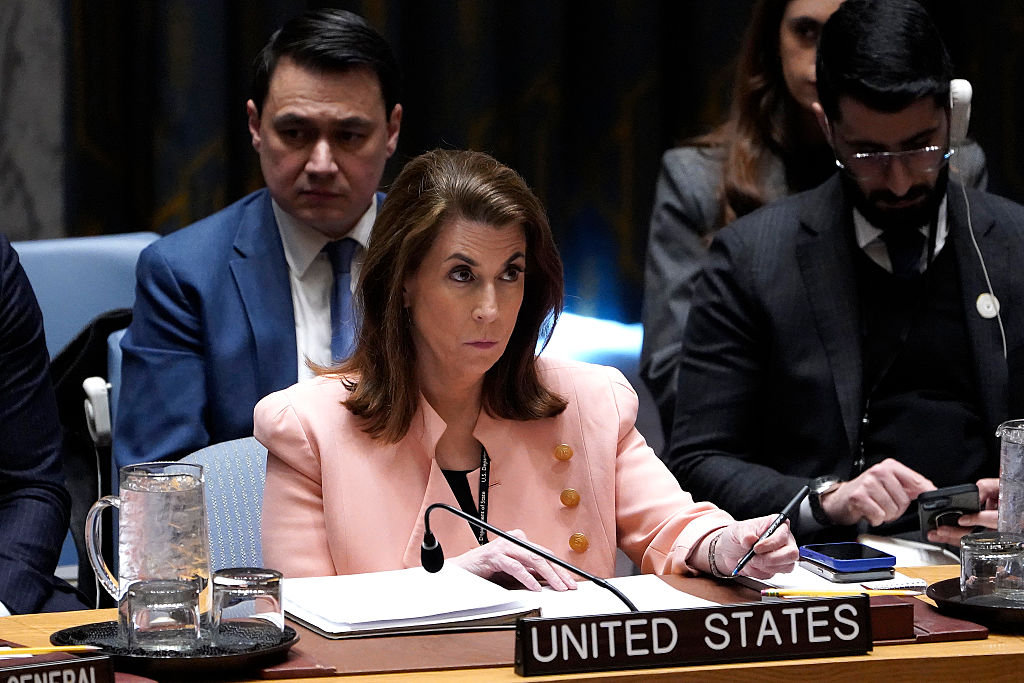
The Trump administration also mounted a campaign to block the United Nations from adopting the landmark international court ruling. In February, the State Department sent a missive to all consulates and embassies noting that it “strongly opposed” the U.N. resolution and that its adoption “could pose a major threat to U.S. industry.” In remarks ahead of the vote, Tammy Bruce, a former conservative radio host and now deputy representative to the U.N. in New York, said that the resolution is “problematic” and that “the United States continues to have serious legal and policy concerns” about it. 

“The resolution singles out certain groups for preferential treatment and makes alarmist political statements, such as the idea that climate change is an unprecedented challenge of civilizational proportions,” Bruce said. “Such hyperbolic statements are not appropriate in a resolution on an ICJ advisory opinion.” 

A woman in pink jacket with

Tammy Bruce, deputy representative of the United States to the U.N. in New York, said the resolution is “problematic” and “makes alarmist political statements.” John Lamparski / Getty Images

The resolution reiterates the International Court of Justice’s core findings and calls on countries to implement measures to keep global temperature rise to 1.5 degrees Celsius (2.7 degrees Fahrenheit) while transitioning away from fossil fuels. It also affirms that nations must fulfill their climate obligations and that those countries harmed by others’ inaction are entitled to seek redress. Finally, the resolution calls on the United Nations’ secretary-general to submit a report next year on ways to comply with the international court’s findings. The resolution, like most U.N. resolutions, is not legally binding; rather, it’s intended to signal political priorities or views.

The U.N. vote comes as countries are cracking down on climate activism and litigation. In Aotearoa New Zealand, the government moved to amend climate laws to limit civil court proceedings against major greenhouse gas emitters for climate-related harm. 

Māori climate advocate Mike Smith is among those whose cases could be affected. Recent reports have found that land theft and colonization have exacerbated the effects of climate change on the Indigenous Māori people, who are more likely to be affected by extreme weather events. Smith is currently pursuing high court proceedings against six of Aotearoa New Zealand’s largest greenhouse gas emitters, and he describes the U.N. vote as a “major shift,” arguing it reflects a changing understanding of climate change not just as environmental damage, but as something with legal consequences. 

“We know as Māori that the islands are part of our journey across the Pacific that’s led us here to Aotearoa,” he said. “New Zealand has a responsibility to stand with Pacific countries like Vanuatu, Kiribati, Tonga, and Tokelau. Not just symbolically, but in supporting stronger legal and international action on climate harm.” 

Although the U.N. vote is a victory for Indigenous activists from the Pacific and beyond, they believe that many countries still must be pushed to uphold their climate obligations. 

“The law is clear that climate action cannot sit on the shelf, it must be turned into action,” Prasad said.

The Indigenous News Alliance contributed reporting to this story.


0FansLike
0FollowersFollow
0FollowersFollow
0SubscribersSubscribe
- Advertisement -
Google search engine

Recent Posts