EU Commission chief welcomes progress toward US-Iran deal
European Commission President Ursula von der Leyen on Sunday welcomed progress toward a possible agreement between the US and Iran, stressing the need for a deal that would reduce tensions and prevent further escalation in the region, Anadolu reports.
“I welcome the progress towards an agreement between the US and Iran. We need a deal that truly de-escalates the conflict, reopens the Strait of Hormuz and guarantees toll free full freedom of navigation,” von der Leyen said through the US social media company X.
She reiterated that Iran “must not be allowed to develop a nuclear weapon” and called on Tehran to end actions she described as “destabilizing in the region, directly or through proxies, as well as its unjustified and repeated attacks on its neighbours.”
“Europe will continue working with international partners to seize this moment for a lasting diplomatic solution. And to contain the spillover of this conflict, notably on supply chains and energy prices,” von der Leyen wrote.
After a call with regional leaders, US President Donald Trump on Saturday said an agreement with Iran to end the war that began on Feb. 28 and led to the de facto closure of the strait was “largely negotiated” and awaited finalization.
READ: US, Iran near 60-day ceasefire deal to reopen Strait of Hormuz
Whatever the mirror test tells us, beluga whales pass it
In hours of underwater video footage from a New York aquarium, a beluga whale named Natasha stretches her neck, pirouettes, nods, and shakes her head in front of a two-way mirror. Her daughter Maris does much the same. According to a new study published in PLOS One, both animals show the behavioral hallmarks of mirror self-recognition—a cognitive ability long considered a marker of self-awareness, and one that had never before been documented in beluga whales.
If the result holds up, belugas join a remarkably short list. The mirror self-recognition test (MSR) has been passed, with varying degrees of confidence, by humans (starting around age two), a handful of great apes (chimps, bonobos, orangutans, and—somewhat contentiously—gorillas), Asian elephants, bottlenose dolphins, probably magpies, possibly orcas, and, if you can believe it, a cleaner wrasse. That’s it. No dogs, no cats, no monkeys. Plenty of species we had assumed were self-aware have been tested and failed.
Looking at the mirror
So what is this test, exactly, and what is it supposed to tell us?
The procedure is this: While the animal isn’t looking, researchers place a mark on a spot it can only see via a reflection. A mirror is then put in front of the animal while the researchers watch. If the animal touches or examines the mark while looking at its reflection, it comprehends that the figure in the mirror is itself. The test is intuitive and easy to perform—and almost no species passes.
Why is this a test of self-awareness in the first place? The logic, going back to the psychologist Gordon Gallup (who invented the test in 1970), is that to use a mirror as a tool for inspecting your own body, you need a mental representation of yourself as a distinct entity. A piece of silvered glass, in this telling, can pry open a lot of cognitive doors.
Gallup himself is a tough grader. Plenty of positive results have been announced over the decades, and he’s pushed back on most of them. If an animal doesn’t show clear self-directed behavior—actively trying to touch or examine the mark—the test, in his view, fails. On that score, the beluga results sit right at the edge.
Revisiting old data
The footage is more than two decades old. “After the initial study we were hoping to conduct more studies with additional belugas over the next years but that was not possible,” senior author Diana Reiss said in an email. “Inspired by the numerous studies over the past years reporting on different aspects of beluga whale cognition and behavior, we decided to revisit and digitize the original videotapes and conduct a rigorous analysis.” Some tapes had degraded in the meantime, and portions of the original data were lost.
The original experiment exposed four belugas to the mirror together, in their usual social housing. Only Natasha and Maris showed sustained interest, so only they advanced to the experimental phase, where they were marked with waterproof lipstick during feeding sessions. Because the animals were awake and could feel the application, the researchers ran sham-mark controls: the same procedure, but without the pigment. The whales only showed self-recognition-like behaviors after being actually marked.
“The two beluga whales showed the same progression of behavioral stages reported for other species that show evidence of MSR,” first author Alexander Mildener said in an email. “The whales did not exhibit self-directed behaviors in the absence of the mirror or in the control condition. One of the whales also passed the mark test by demonstrating mark-directed behavior by orienting the area of her body that was temporarily marked toward the mirror.”
The sample is tiny, but that’s not unusual—if even a single animal can do something, the species is in principle capable of it. The harder question is whether what Natasha and Maris did really counts. Some of the most-cited behaviors—bubble bite play, barrel rolls—are documented forms of solo play that belugas engage in even without a mirror nearby. Their increased time spent at the reflective surface is suggestive, but doesn’t rule out the possibility that the mirror was just a novel source of stimulation.
The one genuinely mark-directed behavior came from Natasha, who repeatedly pressed the marked area—behind her right ear—against the mirror. Without arms, she couldn’t point. It’s the strongest data point in the study, but a softer kind of evidence than a chimp or an elephant typically delivers.
Even granting that belugas pass—and given that dolphins do, and orcas plausibly do too, it wouldn’t be a shock—the more interesting question is what a result like this tells us. Or, conversely: What does failing actually mean? One of the most persistent criticisms is that many animals fail simply because mirrors carry little relevance in their perceptual world. Anil Seth, a neuroscientist at the University of Sussex, told Ars in an email that “the MSR is not a test of consciousness itself, but a test of a particular kind of the ability to recognize one’s own body (or face). Failure to reliably pass the MSR does not mean that an animal lacks consciousness, or any form of selfhood.”
The test, he added, is motivated by what feels natural to humans. “It may well not feel natural to other species, even if they have the same kind of ability,” He said. “This raises various other reasons why animals might ‘fail’ the test: they may not like making eye contact, they might not like mirrors, or they simply just might not care enough about a very strange task.”
Seth has argued that consciousness may be something like an integrated experience of our perceptions, broadly construed—a view consistent with the increasingly mainstream idea that consciousness exists in degrees and forms across many species. If perceptions are central to the sense of self, that sense will look different depending on how each animal perceives the world. Humans are heavily visual; bats lean on echolocation; for dogs, smell is everything. That’s why researchers like Alexandra Horowitz, who heads the Dog Cognition Lab at Barnard College, have been working on an olfactory version of the test.
From the opposite direction come critics who argue the test fails to measure self-awareness even when an animal passes it. That’s the position of Alex Jordan, an evolutionary biologist at the Max Planck Institute of Animal Behavior in Germany and co-author of the PLOS Biology studies on the cleaner wrasse. The wrasse passes the mirror test, Jordan says—but that doesn’t necessarily mean the fish is self-aware. The test was designed around us, and suffers from both anthropocentrism (treating humans as the yardstick) and anthropomorphism (projecting human traits onto other animals).
The mirror test, then, has problems from every angle. As Seth put it in his email: “When looking for evidence of consciousness or selfhood, it’s important to complement tests like the MSR with other tests”—ones that take into account what might be salient in a particular animal’s own perceptual world. And yet the MSR remains one of the few tools we have for trying to glimpse inside the minds of other animals—and, perhaps, our own. The trick is knowing exactly what it can, and can’t, tell us.
Judge Sanctioned Private Prison Giant for Destroying Evidence in ICE Death Suit
A judge Issued what appears to be the first-ever sanction against the private prison giant CoreCivic for destroying video evidence in a case alleging wrongful death of a man who died by suicide in U.S. Immigration and Customs Enforcement custody.
The sanction came shortly before a trial was slated to begin in January, but it never got underway. Instead, in March, the company reached an undisclosed settlement with the family of the detainee.
The judge ordered what is known as an adverse inference against the company in a December hearing. That means the jury could have presumed the missing evidence was unfavorable in an eventual trial and therefore effectively imposed a penalty against CoreCivic.
“CoreCivic is essentially used to getting away with it — to not getting called on it.”
The previously unreported sanction is the first known incident of a private prison corporation being held responsible in a wrongful death lawsuit for destroying video or other evidence related to immigration detainees dying in custody — despite there being cases of such behavior stretching back nearly a decade, experts said. (Neither CoreCivic nor ICE responded to requests for comment.)
Rebecca Sheff, senior staff attorney of ACLU New Mexico and part of plaintiffs’ legal team, told The Intercept that the judge’s sanction was an important response to prison companies’ propensity for overwriting video evidence. In court, destroying evidence is considered “spoliation,” the legal term for destroying, altering or failing to preserve evidence.
“It’s a practice we documented and unearthed: CoreCivic routinely lets video evidence be overwritten,” Sheff said, “even in this case, where they’ve been put on notice.”
“CoreCivic is essentially used to getting away with it — to not getting called on it,” Sheff added.
Immigration attorney Laboni Hoq, who was not involved in the CoreCivic case but has pursued similar sanctions in a wrongful death case involving the prison corporation GEO Group, said, “There has to be accountability when there are knowable consequences and prison corporations flout their responsibilities to preserve evidence.”
14 of 15 Cameras
The CoreCivic case revolved around the detention of Kesley Vial, a 23-year-old Brazilian asylum-seeker who died in a hospital on August 24, 2022, seven days after attempting suicide at the CoreCivic-owned Torrance County Detention Facility in Estancia, New Mexico.
Attorneys for Vial’s family sent CoreCivic a letter on the day he died, demanding preservation of all records relevant to his suicide attempt, including video footage taken in Vial’s cell, adjacent areas, rooms, and anywhere relevant to the incident. (Vial’s family declined to comment for this story.)
In the weeks that followed, a CoreCivic investigator produced a report featuring 49 stills taken from video footage, laying out a timeline supporting the company’s contention that it bore no responsibility for Vial’s death.
CoreCivic, however, never produced the actual video footage underlying 37 of the 49 photos, according to Sheff’s courtroom testimony. In fact, the company destroyed footage from 14 of 15 cameras in use that day, Sheff testified. The company claimed to have taped over the material.
“CoreCivic says that their staff had no way of knowing that Kesley Vial was on the verge of taking his own life on August 17th of 2022,” Sheff told Judge Francis J. Mathew during a December pre-trial hearing. “And when CoreCivic destroyed hours of video footage from that day, fully aware of the likelihood of litigation, they deprived the jury and all of us of the chance to see for ourselves.”
“More than three years later, we still have no convincing explanation for this destruction of evidence,” Sheff added.
The company pointed the judge to its 49-page timeline.
“More than three years later, we still have no convincing explanation for this destruction of evidence.”
“I know of no situation where opposing parties get to tell the opposed that what they have is the important information,” Mathew replied, according to an audio recording of the proceedings obtained by The Intercept.
The company’s attorney responded, “The jury will have all the evidence they need to determine whether or not CoreCivic fell below their duty.”
The judge said, “That’s a question I’m not sure we can answer without that video.”
In slightly less than an hour, Mathew made up his mind.
“I do believe that the spoliation of this evidence merits a sanction,” he said, “an adverse inference instruction to the jury.”
Within weeks of the judge’s decision, CoreCivic began settlement discussions with Vial’s family for an undisclosed amount. ACLU New Mexico announced the settlement March 19.
The judge’s order may have factored into the company’s decision to forgo a trial, which was set to start in January, said Eunice Cho, an immigration attorney with expertise in detention conditions.
“The fact defendants settled in the 11th hour made it clear they potentially didn’t want relevant facts to be tried – including the adverse inference,” Cho told The Intercept. “An adverse finding could lead the court to instruct the jury that the evidence contained unfavorable information and may damage the witness’s credibility.”
Hours Before the Suicide
In Vial’s case, the missing footage would have shown key events in the hours before he attempted to take his own life — “including him crying so hard that he was having trouble walking, punching the wall and collapsing to the floor,” according to a September plaintiff’s motion seeking sanctions against CoreCivic.
“There’s no substitute for seeing how he was behaving, how medical staff and officers were behaving, at Mental Health, in the hallway, in the cell – all these consequential, pivotal moments – and what could’ve been done to protect him,” Sheff told The Intercept.
Whereas Vial’s case came to a relatively quick end, lawsuits in which judges don’t intervene can become drawn out. Many families of loved ones who have died in immigration detention are stymied by the lack of video evidence and by the amount of time it can take to resolve a wrongful death lawsuit against an immigration detention corporation, said Jeremy Jong, immigration attorney for Al Otro Lado, a legal rights organization.
“They begin thinking, ‘We want justice,’” Jong said. “Years later, it’s more like, ‘We just want to give up.’”
Even when private prison firms are forced to pay out, the sums pale in comparison with the companies’ government contracts. Jong said the disparity creates “perverse incentives” to let poor detention conditions persist, with the settlements acting as “just part of their operating expenses.”
CoreCivic — which, alongside GEO Group, is one of the two largest prison corporations in the U.S. — received $2.2 billion in revenue last year, up from $2 billion the year before.
The issue will only become more important as the Trump administration pursues its mass deportation push, leading to more deaths in detention: 18 this year as of May 1, on track to reach a record high.
With the rising number of deaths, Hoq finds herself advising attorneys and families who contact her regarding wrongful death claims.
“The first piece of advice I give them is to send a letter to the corporation requesting them to immediately stop overwriting video,” she said. “The issue is more important than ever — to scrutinize whether ICE and prison corporations are following through on their obligation to preserve evidence.”
Prime Minister Benjamin Netanyahu will convene a limited security cabinet meeting Sunday evening to discuss the emerging US-Iran agreement, amid Israeli concerns over provisions in the proposed memorandum of understanding that would halt fighting with Hezbollah and delay detailed nuclear negotiations.
An aide to one of the ministers attending the meeting confirmed the gathering to The Times of Israel, adding that a time had not yet been set.
According to Kan, Netanyahu is concerned about at least two elements of the proposed arrangement: a requirement to end military operations against Lebanon and the postponement of substantive discussions regarding Iran’s nuclear program until a second phase of negotiations.
The memorandum of understanding under discussion would extend the ceasefire for 60 days and require Iran to reopen the Strait of Hormuz, while the United States would end its naval blockade. During the 60-day period, the US would discuss lifting sanctions against Iran, while American troops would remain in the region until negotiations conclude.
Fighting between Israel and Hezbollah would be halted according to the agreement, although Israel would retain the ability to respond militarily if Hezbollah launches attacks.
Israel was not included in Saturday’s “phone summit” involving the United States and leaders from Saudi Arabia, Qatar, the UAE, Bahrain, Kuwait, Oman, Egypt, Jordan, and Turkey regarding the updated memorandum of understanding. Reuters reported that Pakistan also participated in the call.
Israeli broadcaster N12 reported that Netanyahu believes the proposal could be unfavorable to Israel. An Israeli official cited in the report said US special envoy Steve Witkoff strongly supported the agreement and “wants a deal at almost any price, and is placing immense pressure on Trump not to resume the war.”
Two American officials told The New York Times that Iran had agreed as part of the developing arrangement to relinquish its stockpile of highly enriched uranium.
According to the report, the proposal does not specify how Tehran would surrender the material, and discussions on implementation were postponed to the next round of nuclear talks.
The report said Iran initially resisted including uranium provisions in the first stage of the agreement, but American officials conveyed through intermediaries that military operations would resume without such an understanding.
AI put “synthetic quotes” in his book. But this author wants to keep using it.
Journalist and author Steven Rosenbaum has more reasons than most to distrust AI.
His new book, The Future of Truth: How AI Reshapes Reality, is all about “how Truth is being bent, blurred, and synthesized” thanks to the “pressure of fast-moving, profit-driven AI.” Yet a New York Times investigation this week found what Rosenbaum now acknowledges are “a handful of improperly attributed or synthetic quotes” linked to his use of AI tools while researching the book.
These quotes include one that tech reporter Kara Swisher told the Times she “never said” and another that Northeastern University professor Lisa Feldman Barrett said “don’t appear in [my] book, and they are also wrong.” Rosenbaum is now working with editors on what he says is a full “citation audit” that will correct future editions.
Speaking to Ars in the wake of the controversy, Rosenbaum says he “learned a lesson” and is “going to be much more suspicious” and “reticent to trust” AI outputs going forward.
But he also can’t tear himself away from the tools. Rather amazingly, Rosenbaum is not interested in going back to the AI-free research process he used to write previous books.
“The idea of taking X years off [from AI] while it sorts itself out, and going back to, like, Microsoft Word … it’s just not in my nature,” he told Ars. “[AI] is magical. Because it connects, it knits together ideas and gives you pathways to think about things that you’re not going to come up with on your own.”
It’s also magical in another way: Like J.R.R. Tolkien’s One Ring, AI convinces many of those who use it that they can control its power properly. But can they?
Slipping through the cracks
Rosenbaum used AI tools during his writing process, he told me, “to surface ideas, locate articles, summarize themes, identify people or papers I might want to look into.” He draws a hard line between this kind of research and the “actual reporting, narrative structure, interviews, arguments, and conclusions in the book,” which he says are “entirely mine… There was never a time when AI was writing the book.”
In addition to chapters based on transcribed interviews that Rosenbaum says he conducted himself, The Future of Truth also includes more research-based chapters in which Rosenbaum said, “We’re pulling facts and then knitting them together into a narrative.” Tools like OpenAI’s ChatGPT and Anthropic’s Claude were used heavily to gather information, he said, with any nuggets mined by those tools tagged with a “this came from AI” warning in his notes.
It’s strangely creative and crafty and unusual in all these ways … and then it betrays you in ways that are just really quite horrible.
Steven Rosenbaum
Those tagged AI-generated notes were then passed on to a fact-checker and two copy editors provided by the publisher, Rosenbaum said. Of the 285 outside citations in the book, six have been identified by the Times as problematic, including three so-called “synthetic quotes” that have no apparent source. (More examples could turn up as the book undergoes further review. And it’s worth noting that most writers manage to include zero made-up quotes when they write a book.)
“I think we did that [double-checking] incredibly effectively, but not a hundred percent,” Rosenbaum told Ars. “We’re doing the work, we’re doing the best we can. We look at it, it looks right. We double-check it, and then we made a mistake.”
But the significant failure here highlights how the traditional fact-checking process might be ill-equipped to handle AI-assisted research. In the past, a fact-checker could be reasonably confident that any author quoting cited written works had simply copied down those quotes directly. These quotes would need to be checked, of course, but the fact that they’re so easy to verify makes them less inherently suspicious. If AI tools are involved anywhere in the pipeline, though, that assumption goes out the window, and there needs to be an extra layer of skepticism that those quotes had been copied correctly or that they even exist at all.
The widespread adoption of AI tools among writers of all stripes also comes at a time when financially pressured newsrooms and publishers are increasingly cutting copy editors and fact-checkers from their workflows. We’ve seen how AI-generated errors like this can make it into a published book even with a fact-checking layer. The risk of using those tools only increases for the many books that never go through any fact-checking before publication.
Rosenbaum, for his part, agreed that “publishers are going to need new verification workflows designed specifically for AI-era research. That probably includes mandatory source tracing for quotations, better provenance tracking, clearer standards around AI-assisted research, and potentially (more irony here) AI tools that audit citations against primary materials.”
“I didn’t set out to fabricate anything,” Rosenbaum continued. “What happened is what increasingly happens to journalists, students, researchers, lawyers, and authors working with these systems every day: [There was] AI-generated information that looked authoritative, and some of it made its way too far downstream before being caught.”
Ars itself is not immune to this problem. Earlier this year, we retracted an article after a former reporter used an AI tool designed to extract verbatim quotes from a source’s blog post—but the tool instead generated fabricated versions of what the source actually wrote. (The latest version of our AI policy can be found here.)
The irony of an author incorporating AI-generated falsehoods into a book on AI’s reality-skewing effects is not lost on Rosenbaum. “I appreciate the book getting some attention, but this would not have been my choice about how to get it,” he said.
While that irony is “uncomfortable,” he’s quick to spin it as “also instructive. The fact that someone writing critically about AI and verification could still encounter these failures tells you how pervasive and persuasive these systems have become.” Rosenbaum’s own issue with AI “demonstrates the problem more vividly than any abstract argument could,” he said.
Perhaps. But if we accept this take, every avoidably obvious mess in the world might be a disguised good because it really helps illuminate the huge mistake. And that can’t be right; sometimes “negligence” is just that.
When asked directly how he could succumb to some of the AI-related problems his own book warns about, Rosenbaum described what sounds like a dysfunctional relationship with a charming charlatan.
“As a writer, AI is often a delightful writing companion,” Rosenbaum told me. “When I say ‘writing companion,’ I don’t use that lightly. It’s strangely creative and crafty and unusual in all these ways… and then it betrays you in ways that are just really quite horrible.”
Throughout our conversation, Rosenbaum frequently cited examples in which obvious AI errors left him enraged and literally cursing at the machine. Those date back to 2022, when Rosenbaum said he started experimenting with AI tools for “little research projects.” At the time, he found AI answers “spectacularly useful” about 8 out of 10 times, with the remainder being confabulations that were “just not true.”
Despite these errors, he kept using the tools in his life and work. When we talked on Tuesday, Rosenbaum said he had recently asked an AI tool to extract his “no changes, verbatim” speaker’s notes out of a slide deck so he could use them for an upcoming presentation. He was about to print those extracted notes when he realized that the LLM had actually rewritten his words despite his “very clear instructions for the robot.”
“And I say to it, ‘Did you rewrite the words?’ And it says, ‘Well, I just made the language a little stronger.’ Well, pardon me, but like, fuck you!” he said.
Even in the face of these kinds of profanity-inducing errors, though, Rosenbaum still believes that AI tools are too efficient not to use.
“The deck was 100 pages,” Rosenbaum said. “To cut and paste page by page, the text from each page would have been an hour’s worth of work, of mindless cutting and pasting. ChatGPT did it in about four seconds.”
To which the obvious retort might be: Yes, it was fast.
But it was also wrong.
Getting off the motorcycle
The efficiency gains might be worth it when the only stakes are personal presentation notes. But The Future of Truth shows how the balance between AI’s reliability and apparent speed should be weighed very differently when it comes to research that ends up in a published book.
As we continued our conversation, I kept coming back to that accuracy/efficiency trade-off, which Rosenbaum seemed to recognize as a problem at some level. Even as he called AI’s research help “magical” and “delightful,” he described dealing with AI’s confabulations and ignored directives as a “pernicious and exhausting” struggle.
“It leaves you… uncomfortable almost any time you’re using it,” he said of its tendency to ignore clear instructions.
“I’ve never fought with tech before this, honestly,” he said at another point. “And I use it extensively.”
I’ve never been in a place where I thought the tech that I was using was both intoxicating and dangerous…
Steven Rosenbaum
Given the issues with his new book, I asked if the risk of introducing inaccuracies that you might not catch was really worth the perceived benefits.
“I don’t do drugs, and I don’t drink, but I presume that that’s kind of the question an addict asks when they’re having one drink too many and they know they are,” Rosenbaum said. “I’ve never been in a place where I thought the tech that I was using was both intoxicating and dangerous. And I wrote the book specifically to raise that concern, so if I end up being the poster child of not being aware of the guardrails, so be it.”
At one point, when discussing the relative risks and rewards of using AI, Rosenbaum noted that he rides a bicycle but wouldn’t ride a motorcycle. “I know a motorcycle gets me places faster. I think it’s dangerous and I might die. And that’s why I don’t own a motorcycle,” he said.
Rosenbaum made it clear that using AI was the relatively safe “bicycle” option in this analogy. I responded that the supercharged efficiency and catastrophic risk inherent in using AI made it feel a bit more like the motorcycle. Rosenbaum said “that might be fair” and thanked me for “sharpening” his analogy.
I then asked the obvious question: Are you going to keep riding the motorcycle?
These Healthy Chocolate Zucchini Muffins are soft, rich, ultra moist, and packed with deep chocolate flavor — all while being made with wholesome ingredients you can feel good about. Loaded with grated zucchini, naturally sweetened with maple syrup and applesauce, and made with whole wheat flour, these muffins are the perfect balance of indulgent and nourishing.
The best part? You’d never guess there’s zucchini hiding inside. The zucchini melts beautifully into the batter, creating incredibly moist muffins without adding any noticeable vegetable flavor. Combined with cocoa powder and melty chocolate chips, every bite tastes like a bakery-style chocolate muffin with a healthier twist.
Perfect for breakfast, snacks, lunchboxes, or dessert, these easy one-bowl muffins come together quickly and bake in under 20 minutes.
Why You’ll Love These Chocolate Zucchini Muffins
Super moist and fluffy texture
Made in just one bowl
Naturally sweetened with maple syrup
Packed with hidden zucchini
Less refined sugar than traditional muffins
Great for breakfast, snacks, or dessert
Freezer-friendly and meal prep approved
Ready in under 30 minutes
Ingredients
For the Muffins
1 1/2 cups grated zucchini
2 large eggs
1/4 cup avocado oil or olive oil
1/3 cup maple syrup
2 teaspoons vanilla extract
2/3 cup unsweetened applesauce
1 1/4 cups whole wheat flour
1/4 cup unsweetened cocoa powder
1/2 teaspoon baking soda
1 teaspoon baking powder
1 teaspoon cinnamon
1/2 teaspoon salt
1/3 cup chocolate chips, plus extra for topping
How to Make Chocolate Zucchini Muffins
Step 1: Prepare the Zucchini
Preheat your oven to 375°F (190°C) and line a 12-cup muffin tin with paper liners.
Place the grated zucchini in a clean kitchen towel or paper towel and squeeze out the excess moisture.
This step helps prevent soggy muffins while keeping them perfectly moist.
Step 2: Mix the Wet Ingredients
In a large mixing bowl, combine:
Zucchini
Eggs
Oil
Maple syrup
Vanilla extract
Applesauce
Whisk until smooth and well combined.
Step 3: Add the Dry Ingredients
Add the whole wheat flour, cocoa powder, baking soda, baking powder, cinnamon, and salt directly into the same bowl.
Stir gently until just combined.
Be careful not to overmix the batter, as this can make the muffins dense instead of soft and fluffy.
Step 4: Fold in the Chocolate Chips
Fold the chocolate chips into the batter until evenly distributed.
The chocolate chips melt beautifully while baking and create extra pockets of rich chocolate flavor.
Step 5: Fill the Muffin Tin
Divide the batter evenly between the muffin cups, filling each about 3/4 full.
Top with additional chocolate chips if desired.
Step 6: Bake
Bake for 18–20 minutes, or until a toothpick inserted into the center comes out mostly clean.
Allow the muffins to cool for about 10 minutes before transferring them to a wire rack.
Tips for Perfect Muffins
Squeeze the Zucchini Well
Removing excess moisture prevents overly wet muffins while still keeping them soft.
Don’t Overmix
Mix until just combined for the fluffiest texture.
Use Fresh Zucchini
Fresh zucchini gives the best moisture and texture.
Add Extra Chocolate Chips
Because extra chocolate is always a good idea.
Check Early
Ovens vary, so begin checking the muffins around 18 minutes.
Variations
Banana Swap
Replace applesauce with mashed banana for a slightly sweeter flavor.
Make Them Dairy-Free
Use dairy-free chocolate chips.
Add Nuts
Walnuts or pecans add delicious crunch.
Extra Chocolatey
Add dark chocolate chunks or a drizzle of melted chocolate on top.
Storage Tips
Store muffins in an airtight container in the refrigerator for up to 5 days.
Freeze for up to 1 month in a freezer-safe bag or container.
To enjoy later, simply thaw or warm slightly in the microwave.
Frequently Asked Questions
Can you taste the zucchini?
Not at all! The zucchini simply adds moisture and softness.
Can I use all-purpose flour?
Yes, all-purpose flour works well if you prefer a lighter texture.
Do I need to peel the zucchini?
No. The peel softens while baking and blends perfectly into the muffins.
Can I make mini muffins?
Absolutely! Just reduce the baking time to about 10–12 minutes.
Serving Suggestions
These Chocolate Zucchini Muffins are delicious served with:
Coffee or tea
Greek yogurt
Fresh berries
Peanut butter
A drizzle of almond butter
A glass of cold milk
Final Thoughts
These Healthy Chocolate Zucchini Muffins are proof that wholesome ingredients and rich chocolate flavor can absolutely go hand in hand. Moist, fluffy, naturally sweetened, and packed with hidden veggies, they’re the kind of snack you’ll want to make on repeat.
Whether you enjoy them for breakfast, dessert, or an afternoon chocolate craving, these muffins deliver comfort, nutrition, and bakery-style flavor all in one bite.
A strong earthquake struck the Naples area shortly after dawn on Thursday, triggering concern among residents across the city and surrounding areas.
The tremor was felt in several parts of Naples and nearby communities, prompting many residents to leave their homes and move into the streets as authorities monitored the situation. Initial reports focused on the intensity of the shaking and the widespread reaction among the local population.
The Naples area, particularly the volcanic and seismic zone of the Phlegraean Fields, has experienced repeated earthquake activity in recent years. The region has seen a succession of tremors linked to ongoing ground uplift, a geological process known as bradyseism.
Authorities continued to assess the situation following the quake, while emergency and civil protection services monitored developments.
No additional details on damage or casualties were immediately available.
Mother and Son Killed in Horrific Fire After ‘Loud Argument’
An elderly Brooklyn woman and the devoted son who spent years caring for her were killed Saturday morning when a terrifying fire tore through their Flatbush apartment, leaving neighbors shaken and searching for answers.
The deadly blaze broke out early Saturday inside a second-floor apartment on Nostrand Avenue near Cortelyou Road, officials said.
Police said the victims were an 86-year-old woman and her 65-year-old son. Their names had not been officially released pending family notification, but devastated neighbors identified them as Maria and Jose, a mother and son who had been part of the neighborhood for more than 40 years.
Two other women, ages 82 and 40, were seriously injured and rushed to University Hospital at Downstate. Officials said both were expected to survive.
The fire was brought under control by 7:38 a.m., but by then, the damage had already been done.
And one neighbor says the morning turned frightening even before the smoke and flames appeared.
Edwin Savaille, 48, who lives next door and shares a wall with the apartment where the fire broke out, told The New York Post that he was jolted awake around 5:45 a.m. by loud arguing.
“It was in Spanish, so I couldn’t understand what they were saying,” Savaille said. “But you heard the loud voices for sure. So it was definitely an argument going on.”
He went back to sleep, but about 30 minutes later, he woke up again — this time to screams outside.
“I heard someone on the block screaming, ‘There’s a fire out here,’” he said.
When Savaille looked out his window, he saw a horrifying sight.
“Big flames coming out,” he recalled.
He immediately got his family and pets out of the building.
“So it’s been a crazy Saturday morning,” he said.
Savaille praised firefighters for their fast response, saying they saved two people who might not have made it out alive.
The FDNY said the cause of the fire remains under investigation. A fire marshal will determine how the blaze started.
For longtime residents, the tragedy cut deep.
Neighbors said Maria had been bedridden for nearly 20 years, and Jose had devoted his life to caring for her.
Maria had once worked as a tailor, while Jose was remembered as a familiar and beloved face in the neighborhood. Locals said he had coached a little league baseball team called the Bonnies and regularly stopped by a corner store to buy food for himself and his mother.
Jonathan Ortiz, 47, who works at the store, said Jose came in almost every day.
“He would come in every day to buy lunch for him and his mother,” Ortiz told The Post. “He’d buy soups and whatever she could eat. He took care of her.”
Ortiz said the entire neighborhood was heartbroken.
“Everyone in the neighborhood loved them,” he said. “Everybody is devastated. Everybody is sad. The whole neighborhood is down.”
The family had already endured another brutal tragedy decades earlier.
According to past reports, Maria’s other son, who owned a small clothing company and worked as a party promoter, was killed in December 1996 inside his Garment District office on West 38th Street in Manhattan.
Now, the same family is grieving again after a quiet Saturday morning turned into a nightmare.
The fatal Brooklyn fire came just one day after another devastating incident in New York City, when an explosion at a Staten Island dry dock killed at least one man, seriously injured two firefighters, and left about 30 others hurt.
Authorities were still investigating the cause of that explosion Saturday, as fire officials in Brooklyn worked to determine what sparked the blaze that killed Maria and Jose.
Iran says 25 ships passed through Strait of Hormuz in past 24 hours
Twenty-five ships passed through the Strait of Hormuz in the past 24 hours in coordination with Iranian authorities, Iran’s Islamic Revolutionary Guards Corps (IRGC) Navy said Saturday, Anadolu reports.
The vessels included oil tankers, container ships, and other commercial ships that transited the strategic waterway “after obtaining permission with the coordination and security of the IRGC Navy,” the navy’s public relations department said in a statement carried by state-run broadcaster IRIB.
Regional tensions have remained high since the US and Israel launched strikes against Iran in late February.
Tehran later retaliated with attacks targeting Israel and US allies in the Gulf, along with the closure of the Strait of Hormuz, one of the world’s most important energy transit routes.
A ceasefire took effect on April 8 through Pakistani mediation, but talks in Islamabad failed to produce a lasting agreement.
US President Donald Trump later extended the truce indefinitely while maintaining a blockade on vessels traveling to or from Iranian ports through the Strait of Hormuz. Stepped-up efforts for a permanent end to the conflict continue, with the Pakistani army chief currently in Tehran to prevent a resumption of the war.
Before the conflict started, the strategic waterway handled nearly one-fifth of global energy supplies. Disruptions to Gulf shipping have continued to raise concerns over global energy markets despite diplomatic efforts aimed at easing tensions.
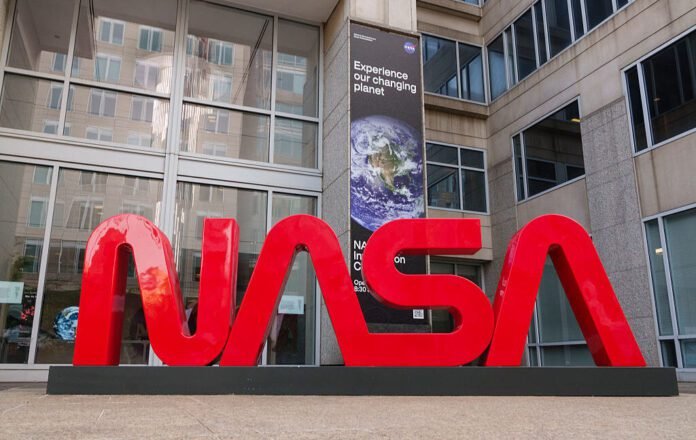
NASA undertakes major reorganization to reduce bureaucracy and move faster
NASA Administrator Jared Isaacman sent a long email to employees on Friday morning outlining several structural changes that are intended to make the sprawling agency more efficient and allow it to better accomplish major goals, such as returning to the Moon and building a base there.
“I believe it is imperative to concentrate resources towards the highest priority objectives in the National Space Policy and liberate the best and brightest from needless bureaucracy and obstacles that impede progress,” Isaacman wrote in his 3,000-word letter.
Isaacman’s message stressed that no one at NASA will lose their jobs, and no field centers will be closed as part of these changes. Rather, the overall intent is to improve operational efficiency and focus on the agency’s core missions. Isaacman laid these out as: execute on the Artemis Program to return humans to the Moon; build an enduring Moon Base; develop a “Space Reactor Office” to get America underway on nuclear power in space; ignite an economy in low-Earth orbit; and build more X-planes and launch more science missions.
The changes appear to be an effort to reduce overhead and top-down management within NASA and return more power and decision-making to field centers. They attempt to reverse a decades-long trend at NASA toward bureaucracy and fiefdom building within the organization.
Two sources who previously worked at NASA and are familiar with its structural inefficiencies told Ars that these changes are, on balance, very positive for the agency. “I was concerned there was going to be more of a consolidation of authority at headquarters,” one of the people told Ars. “Instead this all appears to be broadly helpful to the mission.”
Consolidation of mission leadership
Previously, NASA had six main “Mission Directorates” that oversee its core areas, such as human exploration, science, and aeronautics. These are being combined into four directorates.
Why the change? According to NASA officials, it’s to simplify things for program leaders. Instead of needing to go to several different directorates for resources and major decisions, they will have to navigate fewer channels.
The leaders of the Mission Directorates below will also now report directly to Isaacman instead of Associate Administrator Amit Kshatriya, the agency’s top civil servant. This is to allow Kshatriya to take more technical ownership of projects within the agency. Widely respected among his peers, Kshatriya will accordingly also become chief engineer of NASA.
The consolidations are:
Combine Space Operations and Exploration Systems Development into a single Human Spaceflight Mission Directorate. The goal is to unify the strengths of NASA’s Exploration and Space Operations communities into a streamlined organization, built to deliver on the next era of human spaceflight.
Lori Glaze as Associate Administrator, with Joel Montalbano and Kelvin Manning as Deputies.
Within the directorate, the primary divisions will be:
Low Earth Orbit, Dana Weigel as Program Manager (to include Commercial Crew, ISS, Commercial space stations)
Moon Base, Carlos Garcia-Galan as Program Manager
Artemis, Jeremy Parsons as Program Manager (renamed from Moon to Mars)
Aeronautics Research and Space Technology Mission Directorate will combine into a single Research and Technology Mission Directorate. This will unify NASA’s aeronautics, space technology, and nuclear power and propulsion capabilities into a single, fast-moving organization focused on delivering the breakthrough technologies our missions and the Nation require.
Dr. James Kenyon as Associate Administrator, with Wanda Peters as Deputy.
Within the directorate, the primary divisions will be:
Aeronautics, Laurie Grindle as Director
Advanced Research and Technology, Greg Stover as Director
Space Reactor Office, Steve Sinacore as Acting Director
Space Communications and Navigation, Kevin Coggins as Director
The Science Mission Directorate, under Nicky Fox, and Mission Support Directorate, under John Bailey, will be unchanged. However NASA will seek to streamline functions within Mission Support that overlap between headquarters and shift those responsibilities back to field centers.
Empowering field centers
A major theme in the letter is giving field centers more opportunities to focus on their core capabilities instead of competing in a cutthroat environment for resources.
Although NASA’s internal budgeting is not well understood outside the agency, field centers—including the main ones, such as the Johnson Space Center in Houston and the Kennedy Space Center in Florida—do not receive much direct funding. Instead, they largely “compete” for funding from the Mission Directorates. In the words of one Houston-based source, “it has been an absolute disaster.”
Under the proposed changes, each field center will now receive a basic level of funding for its operations, allowing them to focus on their particular specialties rather than chasing funding across various Mission Directorate priorities.
After arriving at NASA HQ as administrator five months ago, Jared Isaacman is seeking to revamp the agency.
Credit: Bill Ingalls/NASA via Getty Images
After arriving at NASA HQ as administrator five months ago, Jared Isaacman is seeking to revamp the agency. Credit: Bill Ingalls/NASA via Getty Images
“We will adjust the funding distribution so Centers have the financial support needed to sustain the baseline critical capabilities independent of near-term mission assignment,” Isaacman said in his letter. “In parallel, Centers will reduce the overhead burden applied to missions wherever applicable. This shift will allow Center Directors to focus on maintaining the infrastructure, workforce, and capabilities required for current and future missions.”
Isaacman has also kept most of the field center leadership in place (there had been some concern among long-time employees of a Red Wedding-like purge of center directors). This should provide stability at a time when the agency needs to focus on delivering major programs like Artemis.
One notable change is that Brian Hughes has been named director at Kennedy Space Center in Florida, where Janet Petro recently retired. Hughes, a Florida public administrator and political operator who advised President Trump’s 2024 campaign, later served as NASA’s chief of staff in 2025. Two weeks ago, NASA announced he would become the agency’s first senior launch operations director, overseeing launch operations at Kennedy Space Center and the agency’s Wallops Flight Facility in Virginia. This raised some eyebrows. Now, somewhat surprisingly, he’s ascending to lead Kennedy itself.
What to make of this? Is it reflective of political shenanigans? Hughes was abrasive during this stint as chief of staff last year, rubbing some NASA employees the wrong way. However, a NASA source said the agency needed someone with political chops to lead Kennedy. There is constant infighting there among users, such as SpaceX, Blue Origin, and other launch companies, in addition to conflicts with the Space Force and Federal Aviation Administration. When one spaceport user does something another user does not like, they call the White House.
“Now, when someone tells Hughes ‘give me what I want or I will call POTUS,’ Hughes can say, ‘So can I,’” this source told Ars.
Seeking fiscal efficiency
A main theme of the letter and proposed changes is increasing efficiency and achieving cost savings where possible.
“When you step back, it is worth considering how many additional missions we could have undertaken with the resources lost to program cancellations and cost overruns over the years,” Isaacman wrote. “That is the problem we must fix, so the American taxpayer and space-loving community can receive the highest scientific return on every dollar we spend at NASA.”
One notable area where NASA will seek efficiencies is at the famed Jet Propulsion Laboratory in California. This planetary research center is not operated by NASA but is instead a federally funded research and development center managed by the California Institute of Technology. This California-based university has operated the Jet Propulsion Laboratory, essentially without competition, since the 1950s. Its contract expires in 2028. Isaacman said the Department of Energy has had success with opening up competition to run its federally funded research and development centers, and he believes NASA can do the same.
To that end, NASA will open a competition through the Request for Proposals mechanism for other universities to come in and operate the NASA Laboratory. Institutions like Purdue University and Texas A&M University are likely to be interested, with NASA’s goal to maximize the amount of science done per dollar invested.