23.5 C
London
Sunday, May 24, 2026
Home Blog

Europe needs to assume it’s on its own – and plan accordingly

0
europe-needs-to-assume-it’s-on-its-own-–-and-plan-accordingly
Europe needs to assume it’s on its own – and plan accordingly

If anyone still needed proof that the United States is an unreliable military partner, Donald Trump’s dizzying changes of mind about American troop deployments to Europe have gold-plated the evidence.

Within just one week, the United States first said it was canceling the deployment of a 4,700-strong “Brigade Combat Team” to Poland; Washington then said that it was withdrawing 5,000 troops from Germany; and then, suddenly, to the apparent surprise of America’s own defense officials, Trump announced America would be sending 5,000 soldiers to Poland, after all, because he likes the Polish president.

Friday’s meeting of NATO foreign ministers in Helsingborg, Sweden, will have been entertaining, if only for the enjoyment of hearing America’s Marco Rubio, who combines the jobs of Secretary of State and National Security Adviser, trying to explain what is going on.

The reality is that he doesn’t know, because he cannot read Trump’s mind. But the deeper reality is that everyone now knows that for as long as Trump is president American security policy will be capricious, volatile and subject to the personal whims of Trump himself.

This means that as they look ahead to NATO’s next summit of government leaders on July 7-8 in Turkey the European members of this 77-year-old military alliance will have to treat NATO not as being central to their defense and security, as in the past, but as peripheral.

They will all want to stop Trump’s tantrums from endangering the alliance because they want to keep NATO alive in hopes that whoever occupies the White House after 2028 will be a lot more reliable and more devoted to America’s traditional alliances. But, for the time being, the real work of protecting Europe’s safety is having to take place outside NATO.

On a superficial level, this is exactly what Trump, his vice president J.D. Vance and other advocates of “America First” wanted to achieve. They have argued, like many previous US administrations did, that Europe needs to take more responsibility for its own security. The fact that it is now doing so owes more to Vladimir Putin’s invasion of Ukraine four years ago than to American lectures, but nonetheless it is happening.

Yet the deeper problem is not one of American pressure but of American disruption.

During all its long and successful life, NATO has been based on shared long-term planning, shared work to ensure that members’ forces can operate easily together, and a shared system of command-and-control.

The United States has sought to direct all those three aspects, partly because it has the largest and most technologically advanced armed forces, but mainly because it is the most powerful country in the world and does not feel it needs to follow anyone else’s lead.

European NATO members lack some important military capabilities, including in satellite communications, missile defense and heavy-lift transport, not simply because they have spent too little money on defense but because America chose to provide those capabilities itself.

Abrupt changes of policy in Washington, such as last week’s announcement that a planned deployment of long-range Tomahawk missiles to Germany was being canceled, make a nonsense of supposedly shared planning and raise doubts about the reliability of other capabilities provided by the United States.

NATO’s secretary-general, the former Dutch prime minister Mark Rutte, likes to shake up the organization’s European members by warning them not to fantasize about operating without the Americans: Their annual defense budgets will have to increase not just to 5% of GDP, as is now planned, but to 10%, he says, if Europe is to replace what America currently provides.

No one, except perhaps the Baltic States of Latvia, Lithuania and Estonia, would be willing or able to make the sacrifices necessary in other public spending to make budgets of 10% of GDP affordable.

Yet Europe would not really need to spend 10% of its GDP on defense to be able to defend itself without American help, at least not in the foreseeable future.

The European members of NATO, which include the United Kingdom and Norway, face just one serious military threat, namely Russia. And Ukraine, which is not a member of NATO, has shown during its four years of war how Russia can be resisted.

In early June the length of Russia’s war in Ukraine, which Vladimir Putin claimed was “a special military operation” that would last just three or four days, will have surpassed the 1,569 days of the First World War from 1914-18.

Europe’s military forces are already more capable than Ukraine’s military was in February 2022. What they lack is the three aspects that NATO has provided: shared planning, full inter-operability and shared command-and-control.

But they have an embryonic organization that could provide those key ingredients: the Joint Expeditionary Force, which was set up independently of NATO in 2014 by the United Kingdom, the three Baltic States, the Netherlands and five Scandinavian countries (Denmark, Finland, Iceland, Norway and Sweden), in anticipation of a growing Russian threat to northern Europe.

At present, the Joint Expeditionary Force is a rather hollow, empty organization, albeit one with a command headquarters in the UK. But it could become more real quite quickly, especially if it were to start holding regular military exercises and if this operational structure could be tied together with new entities geared to the joint funding of defense procurement, notably the “SAFE” fund (Security Action for Europe) being set up by the European Commission.

The most important way to transform the Joint Expeditionary Force from theory into reality would be to widen its membership to include Europe’s most successful military, Ukraine, as well as its two biggest militaries, in Germany and Poland.

A danger with defense planning is that a beautiful long-term program of defense procurement and reorganization can become disconnected from immediate and real threats.

Russia’s army and its economy have become too weakened by the Ukraine war to make a full-frontal attack on another European country likely in the near future. However, that is not Putin’s only option: he could use smaller attacks and increase his existing provocations to try to distract European countries from supporting Ukraine or to try to exploit or widen the existing divisions within NATO.

It is those sorts of distractions and provocations that Europe needs to be ready for. It needs to put in place a rapid process for political decision-making on how to respond and a clear and robust command-and-control structure to carry out whatever orders the politicians provide.

Europe has these on paper, but not in practice; and, like a NATO saddled with an unreliable America, the 27-member European Union is a difficult forum through which to make speedy decisions. A wider version of the Joint Expeditionary Force could be a better vehicle for Europe than either NATO or the EU.

Appeasing and cajoling Trump may be unavoidable but it is no longer the main issue. In fact, perhaps the best way of dealing with Trump during the run-up to NATO’s July 7-8 summit might be to make this clear to the Americans both privately and publicly: Sorry, Donald, they could say, but you are no longer the most important task on our agenda.

This English original of an article first published in Italian translation by La Stampa is republished with kind permission. The article and many more can also be found on Bill Emmott’s Global View.

How Hate Crimes and Political Assassinations Reflect America’s Polarization Crisis  

0
how-hate-crimes-and-political-assassinations-reflect-america’s-polarization-crisis  
How Hate Crimes and Political Assassinations Reflect America’s Polarization Crisis  


‘What makes the current period unique is the interaction between technology and politics,” John King, a technology strategist and former US government communications engineer, told TML  

The deadly shooting at the Islamic Center of San Diego has added another case to a widening American debate over political violence, hate crimes, and radicalization in a country already shaken by antisemitic attacks, threats against public officials, the assassination of conservative activist Charlie Kirk, and repeated attempts to target President Donald Trump. 

The San Diego attack, carried out on May 18, 2026, killed three people at the mosque, including security guard Amin Abdullah, who authorities and community members said helped prevent a larger massacre by confronting the attackers and triggering a lockdown that protected children inside the compound. The two attackers, identified in reporting as teenagers Cain Clark, 17, and Caleb Vazquez, 18, later died from apparent self-inflicted gunshot wounds. Investigators said they were examining the shooting as a hate crime and looking at evidence of online radicalization and white supremacist ideology.

The case came less than a year after a series of attacks that have sharpened concerns about whether political and ideological violence is becoming more frequent, more visible, or simply more difficult to contain in an era of fragmented media, online extremism, and declining trust in institutions.  

In May 2025, two Israeli Embassy staff members, Yaron Lischinsky and Sarah Milgrim, were shot dead outside the Capital Jewish Museum in Washington, DC. In June 2025, a man attacked participants in a Boulder, Colorado, walk calling for the release of Israeli hostages held in Gaza, injuring several people in what the FBI described as a targeted act of terrorism and possible hate crime. 

Those attacks were followed in September 2025 by the killing of Charlie Kirk, the founder of Turning Point USA and one of the most visible conservative activists in the United States. Kirk was shot dead while speaking at Utah Valley University, in what Utah Gov. Spencer Cox called a political assassination. Prosecutors later charged Tyler Robinson with aggravated murder and other offenses, saying sentencing could be enhanced because Kirk was allegedly targeted for his political expression. 

The pressure on American institutions intensified again in April 2026, when Cole Tomas Allen was indicted on federal charges, including attempted assassination of President Trump after an armed incident at the White House Correspondents’ Dinner in Washington. The episode followed the July 13, 2024, assassination attempt in Butler, Pennsylvania, when Trump was wounded, one rally attendee was killed, and others were injured. 

The accumulation of these cases does not mean that all of them belong to one coordinated movement. The motives, ideological references, and operational patterns differ. Some incidents have targeted Jews or Israelis. Others have targeted Muslims. Others have involved politicians, public figures, or state institutions. But the recurrence of violence across ideological and communal lines has created a broader sense of national vulnerability. 

John King, a technology strategist and former US government communications engineer who worked on mission-critical command-and-control communications systems supporting senior national leadership, said the current climate reflects several overlapping pressures, including declining institutional trust, fragmented media ecosystems, economic and cultural anxieties, and the speed at which digital platforms circulate information. 

“What makes the current period unique is the interaction between technology and politics,” King said to The Media Line. “Artificial intelligence, deepfakes, automated influence campaigns, and algorithmically amplified misinformation can accelerate polarization by making it more difficult for citizens to distinguish fact from manipulation. While political disagreement has always been part of American democracy, the velocity and scale of modern information systems can intensify tensions and shorten the time available for reflection and verification,” he added. 

The velocity and scale of modern information systems can intensify tensions and shorten the time available for reflection and verification

The latest cases also come amid high levels of reported hostility toward religious minorities. Jewish and Muslim communities have both reported rising fear, threats, and attacks since the war in Gaza began, while civil rights organizations have warned that hate crimes and bias incidents are increasingly tied to global conflicts, domestic political rhetoric, and online radicalization. These cases also have methodological limits: advocacy groups track reported incidents and complaints, while official hate-crime data depend on law-enforcement reporting, which remains incomplete and voluntary. 

For Joe Young, director of the Patterson School of Diplomacy at the University of Kentucky, the recent violence is serious but should also be placed in a historical context. 

These violent events are disturbing. And I think connected to larger polarization processes in the country.

“These violent events are disturbing,” Young said to The Media Line. “And I think connected to larger polarization processes in the country. With that said, the amount of violence we are witnessing is not as bad as the 1960s and 1860s. So not historically large numbers of events,” he added. 

That historical qualification is important. The United States has gone through periods of far more sustained political violence, including the Civil War era, Reconstruction, the assassinations and racial violence of the 1960s, and earlier waves of extremist activity. But the current period is distinct in the way domestic anger is filtered through digital platforms, partisan identities, and global conflicts that are rapidly imported into American public life. 

King said antisemitic attacks, anti-Muslim violence, and politically motivated violence often emerge from different ideologies and grievances, but can still operate within a shared environment of polarization, distrust, and radicalization. He pointed to social media platforms as a key part of that environment because they can expose individuals to grievance-driven content that reinforces existing beliefs and isolates them from competing perspectives. 

“Whether the underlying ideology is political, religious, ethnic, or conspiratorial, the mechanisms of radicalization often follow similar patterns: the creation of in-group and out-group identities, the amplification of perceived threats, and the gradual dehumanization of others,” King said. 

Young made a similar point in more direct terms, saying perpetrators of political violence often construct an enemy responsible for their grievances. 

“Most perpetrators of political violence identify some other for why their current situation is bad,” Young said. “For some people in the US, it could be Jews. For some, Muslims. Or maybe even ICE or members of the current administration. Unfortunately, there are lots of people in the country that someone blames for the challenges we face,” he added. 

Unfortunately, there are lots of people in the country that someone blames for the challenges we face

The war in Gaza has become one of the clearest examples of how international conflict can affect domestic tensions. The killing of the two Israeli Embassy staffers in Washington and the Boulder attack against a group advocating for hostages showed how events in the Middle East can be translated into violence against civilians or community members in the United States who are not directly connected to the war. At the same time, the San Diego mosque attack emphasized that Muslims are also targets of radicalized violence, particularly from far-right or white supremacist networks. 

“Events in the Middle East can also have a direct impact on domestic tensions within the United States,” King said. “Conflicts involving Israel, Gaza, Iran, or other regional actors frequently generate strong emotional reactions that can spill into local communities far removed from the conflict itself. Unfortunately, this can increase hostility toward Jewish, Muslim, Arab, or other communities who have no connection to acts of violence overseas,” he added. 

King said the greater danger is that different forms of extremism can begin to reinforce one another, with each incident deepening fear and mistrust and creating a cycle in which one act of violence is used to justify another. For democratic societies, he said, the challenge is preserving the distinction between legitimate political or religious disagreement and intimidation or violence. 

Young also linked the Gaza war to radicalization, while distinguishing between different ideological sources of violence. 

“The war in Gaza has certainly radicalized some on the left,” Young said. “We have seen attacks in the US and abroad on civilians unconnected to the war. It’s not clear why this mosque in particular was targeted in San Diego. But it seems the teens were flirting with far-right/Nazi propaganda,” he added. 

The San Diego case has drawn particular attention because of the alleged role of online spaces. According to reporting based on law enforcement accounts, the attackers met online, left writings expressing hatred toward several groups, and referenced white supremacist and neo-Nazi ideas. The case fits a broader pattern in which young attackers absorb ideological material, tactical inspiration, and performative models of violence from digital subcultures. 

Young said the internet has made it easier for isolated individuals to find one another, but he cautioned against portraying online radicalization as an entirely new phenomenon. 

“In the San Diego case, these teens met online and planned their violence online,” Young said. “With that said, we saw similar violent events in the US before these online spaces existed. I think what’s different is that it is easier to find like-minded individuals. But as I said, it still happened before these online spaces, the internet, and social media,” he added. 

In the San Diego case, these teens met online and planned their violence online

King framed the same issue as a question of speed and scale, rather than direct causation. He said digital platforms accelerate the spread of emotionally charged content and can immerse users in simplified narratives of heroes, villains, victims, and enemies. Most people exposed to such material never become violent, he said, but vulnerable individuals may be repeatedly exposed to extreme messaging, conspiracy theories, dehumanizing language, or calls for retaliation. 

“The danger is not that technology directly causes violence, but that it can accelerate radicalization, reinforce grievances, and lower the barriers between online hostility and real-world action,” King said. 

The attacks on Trump and the killing of Kirk have added another layer to the debate because they directly target political leadership and political expression. For many Americans, Kirk’s assassination symbolized a breakdown in the boundary between political hostility and physical violence. But Young argued that assassination attempts against presidents and public figures, however alarming, are not without precedent in American history. 

I don’t think these are particularly unique or different from the past

“I don’t think these are particularly unique or different from the past,” Young said. “These types of assassinations are horrible, but almost every modern us president has been a target, and some have been killed. Four US presidents have been killed in office, and Reagan, Trump, and Teddy Roosevelt were shot and injured but survived,” he added. 

That view does not minimize the danger, but it complicates the narrative that the United States is entering an entirely unprecedented era. What appears different is not only the violence itself, but the surrounding ecosystem: the immediate circulation of images, conspiracies, and accusations; the use of attacks to mobilize supporters; and the speed with which one incident becomes absorbed into broader partisan narratives. 

The institutional challenge is therefore twofold. Authorities must prevent attacks by lone actors or small cells that may radicalize quickly and leave few traditional warning signs. At the same time, political leaders, media platforms, schools, religious institutions, and civil society organizations must address the conditions that make violence appear legitimate to a small minority. 

King said American institutions have become more aware of threats linked to political violence, hate crimes, and domestic extremism, and that attacks are sometimes disrupted before they occur. But he also warned that traditional security models were largely designed to identify organized groups and coordinated plots, while modern radicalization can develop quickly, often online, and involve individuals with little or no connection to formal extremist organizations. 

“The challenge going forward is developing approaches that address not only physical security threats but also the social and technological conditions that can contribute to extremism,” King said. “The long-term objective is not merely to stop individual attacks, but to strengthen societal resilience before violence becomes an option for vulnerable individuals,” he added. 

The question of political responsibility is more divisive. Both experts argued that rhetoric from leaders matters, though Young placed particular responsibility on the current president. 

“Elites could certainly tone down the rhetoric,” Young said. “Political opponents aren’t enemies. We are all Americans. We all want what’s best for the country, but offer different ways to get there. Unfortunately, our current president is the one who could be the most effective at lowering the political temperature but has not shown a willingness or ability to do so,” he added. 

King, without focusing on one political figure, said public language can either contain or intensify a volatile environment. 

“Political restraint from public figures is also urgent,” King said. “Leaders cannot control every unstable individual, but they can either lower the temperature or inflame it. Language that dehumanizes opponents, religious communities, immigrants, or political adversaries creates a permissive environment for intimidation and violence. Responsible leadership requires making clear that disagreement is legitimate, but violence and collective blame are not,” he added. 

The policy responses are difficult because they touch some of the most polarized areas of American life: guns, speech, policing, online surveillance, hate-crime enforcement, and civil liberties. 

King argued that immediate security measures are necessary, but insufficient without longer-term social repair. 

“Realistic solutions need to operate on several levels at the same time,” King said. “There is no single policy lever that will solve political violence, antisemitism, anti-Muslim hatred, or extremist radicalization,” he added. 

In the near term, King said stronger security for vulnerable religious and community institutions is essential, including better threat reporting channels, closer coordination with law enforcement and practical security support for synagogues, mosques, schools and public venues. But he also emphasized that such measures must remain within constitutional limits and respect free speech and civil liberties. 

He pointed to education and community engagement as longer-term tools to rebuild trust before the next crisis. 

“Once violence happens, everyone becomes reactive,” King said. “The harder but more effective work is creating relationships in advance so that communities can respond together rather than retreat into fear and suspicion,” he added. 

The harder but more effective work is creating relationships in advance so that communities can respond together

King also identified gun policy as one of the most politically difficult issues in any discussion of violence prevention, given the reality of widespread firearm access and deep constitutional, cultural, and partisan divisions in the United States. Measures such as stronger background checks, red-flag laws, and restrictions on access for individuals who present credible threats may be practical from a prevention standpoint, he said, but remain politically difficult. 

The United States is not witnessing political violence on the scale of its most violent historical periods. But the current wave has exposed a dangerous convergence: heavily armed individuals, online radicalization, global conflicts imported into domestic identity politics, and public rhetoric that often treats opponents not as rivals but as existential threats. 

The San Diego mosque shooting, the antisemitic attacks connected to the Israel-Gaza war, the assassination of Kirk, and the attempted attacks on Trump do not form one single story. They are different events with different victims, ideologies, and perpetrators. But together, they point to the same national vulnerability: a society struggling to maintain democratic disagreement without allowing grievance, identity, and political fear to become a pathway to violence.
Gunman Opens Fire Near White House While Trump is Inside: Chilling New Details Emerge

0
gunman-opens-fire-near-white-house-while-trump-is-inside:-chilling-new-details-emerge
Gunman Opens Fire Near White House While Trump is Inside: Chilling New Details Emerge


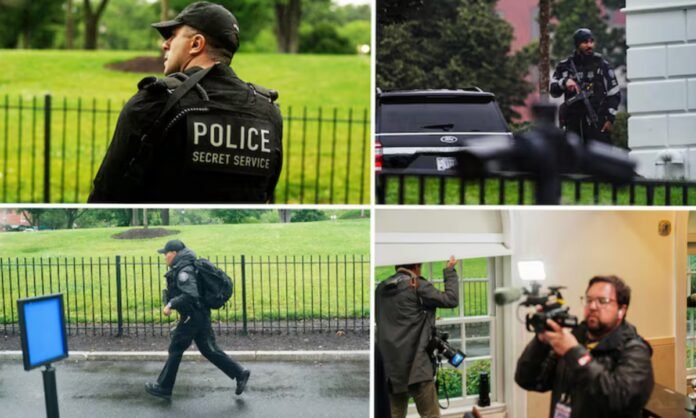
A terrifying scene erupted outside the White House Saturday evening after a Maryland man who was reportedly already known to the Secret Service allegedly pulled a gun from a bag and opened fire near a security checkpoint.

The suspect, identified as 21-year-old Nasire Best, had allegedly been barred from returning to the White House complex before the deadly confrontation, according to The New York Times.

Authorities say Best walked up to a Secret Service checkpoint near 17th Street and Pennsylvania Avenue NW shortly after 6 p.m. and suddenly began firing at officers.

Within moments, chaos broke out near one of the most heavily guarded buildings in the world.

People on the White House grounds scrambled for cover as gunfire rang out. Secret Service officers returned fire, striking Best. He later died at the hospital.

A bystander was also hit during the terrifying exchange, though officials said it was not immediately clear whether the person was struck by the suspect’s gunfire or during the shootout with officers.

Now, disturbing details about Best’s past encounters near the White House are beginning to surface.

Court records reportedly show Best was arrested last July after entering a restricted area near the White House and ignoring commands to stop. An affidavit cited by The Times claimed he had already caught the attention of the Secret Service after repeatedly walking around the White House complex and asking how to get inside at different entry points.

Best had also allegedly been involuntarily held after blocking a vehicle entrance near the White House. During that encounter, he reportedly told officers he was “Jesus Christ” and said he “wanted to get arrested.”

A bench warrant was later issued after he failed to appear at a court hearing, according to the report.

The shooting unfolded while President Donald Trump was inside the White House. He was not injured.

The White House was placed on lockdown for roughly 30 minutes, though law enforcement remained heavily stationed in the area long after the immediate threat was over.

The incident comes just one month after another alarming security scare involving a man allegedly armed with a shotgun, handgun and multiple knives who pushed past a checkpoint at the White House Correspondents’ Association Dinner. Trump and first lady Melania Trump were evacuated during that incident.

After Saturday’s shooting, Trump praised the Secret Service and law enforcement in a Truth Social post, calling their response “swift and professional.”

The president also appeared to connect the latest scare to his push for a new White House ballroom project, saying the shooting showed the need for what he described as “the most safe and secure space of its kind ever built in Washington, D.C.”

“The National Security of our Country demands it!” Trump wrote.

The White House did not immediately respond to a request for comment.

GOP hawks alarmed as Trump mulls deal to end his Iran war

0
gop-hawks-alarmed-as-trump-mulls-deal-to-end-his-iran-war
GOP hawks alarmed as Trump mulls deal to end his Iran war

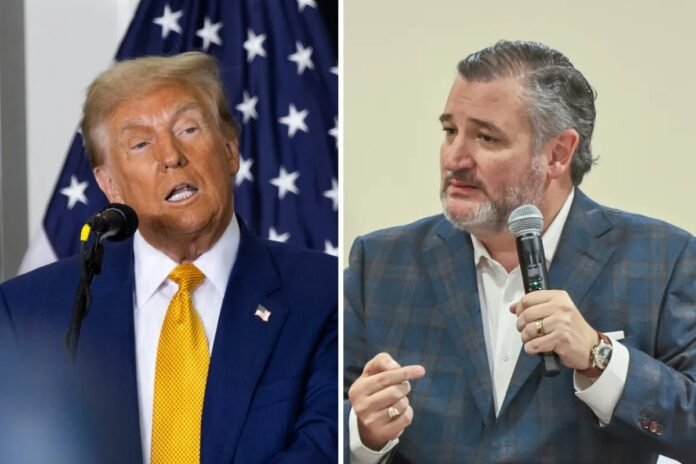
Donald Trump and Ted Cruz. Photos: Texas Tribune

President Donald Trump revealed over the weekend that he is mulling a deal that would end his war with Iran, and some hawks within the Republican Party are expressing alarm.

According to a Sunday report in The New York Times, many details of the agreement to end the war remain murky, with the fate of Iran’s enriched uranium up in the air. US and Iranian officials have also given contradictory messages about the proposed deal’s contents, suggesting there is much work still to be done before any agreement is finalized.

Regardless, three hawkish GOP senators on Saturday raised major concerns about the contents of the deal, warning against accepting any agreement that will leave Iran in a stronger position than before Trump launched a war against it in late February.

“If it is perceived in the region that a deal with Iran allows the regime to survive and become more powerful over time, we will have poured gasoline on the conflicts in Lebanon and Iraq,” wrote Sen. Lindsey Graham (R-SC), who lobbied Trump to attack Iran repeatedly before the start of the war. “A deal that is perceived to allow Iran to survive and possess the ability to control the [Strait of Hormuz] in the future will put Hezbollah in Lebanon and the Shia militias in Iraq on steroids.

Sen. Ted Cruz (R-Texas), another longtime Iran hawk, said he was “deeply concerned” about what he’s been hearing about the deal and expressed particular worry about Iran getting relief from US sanctions while still maintaining the ability to shut down the Strait of Hormuz.

“If the result of all that is to be an Iranian regime – still run by Islamists who chant ‘death to America’ – now receiving billions of dollars,” Cruz wrote, “being able to enrich uranium and develop nuclear weapons, and having effective control over the Strait of Hormuz, then that outcome would be a disastrous mistake.”

Sen. Roger Wicker (R-Miss.) was even blunter in his condemnation of the reported agreement.

“The rumored 60-day ceasefire – with the belief that Iran will ever engage in good faith – would be a disaster,” Wicker wrote. “Everything accomplished by Operation Epic Fury would be for naught!”

Ben Rhodes, a former deputy national security adviser for President Barack Obama, challenged Wicker’s claims that Trump’s war had achieved anything of value.

“Nothing was accomplished by Operation Epic Fury,” Rhodes wrote, “except putting the Islamic Revolutionary Guard Corps in charge of Iran and the Strait of Hormuz.”

Rhodes’ criticism was echoed by Stephen Wertheim, senior fellow at the Carnegie Endowment for International Peace, who wrote that “everything accomplished by Operation Epic Fury is already for naught.”

Ali Vaez, director of the Iran Project at the International Crisis Group, accused the Iran hawks of being delusional for thinking further bombing would force Iran to capitulate.

“DC’s Iran hawks got two wars, nearly every conceivable sanction designation, a blockade, threw a wrench in global economy,” Vaez wrote, “and will still claim that just a little more pressure and a touch more bombing will magically yield the concessions they still won’t be satisfied with.”

-Common Dreams

FACTBOX – Iranian, US versions of potential agreement proposals

0
factbox-–-iranian,-us-versions-of-potential-agreement-proposals
FACTBOX – Iranian, US versions of potential agreement proposals

Both the US and Iran have recently signaled progress on efforts to reach a deal to end their conflict, though their accounts of its terms differ on some issues across respective media narratives, Anadolu reports.

US President Donald Trump on Saturday said an agreement with Iran to end the war was “largely negotiated” and awaited finalization.

On Sunday morning, Iran’s semi-official Tasnim news agency also published a report on the details of a potential agreement. However, certain aspects of what has been agreed seem to diverge.

Here is a comparison of the US and Iranian versions of the deal by key issues.

Strait of Hormuz

Citing a US official, Axios said the deal that Washington and Tehran are close to signing would extend a ceasefire by 60 days, during which the Strait of Hormuz would be reopened.

During the 60-day period, the Strait of Hormuz would be opened without any tolls, and Iran would remove the mines it has placed there to ensure unrestricted maritime passage.

In return, Washington would lift its blockade on Iranian ports, added the report.

The New York Times also said it was informed by three senior Iranian officials that Tehran had agreed to a memorandum of understanding to halt fighting and reopen the Strait of Hormuz.

US Secretary of State Marco Rubio also said on Sunday that the agreement could, if successful, result in a “completely open” Strait of Hormuz, with no tolls or restrictions on passage.

“They don’t own it. It’s an international waterway,” Rubio told reporters of the strait, in remarks that came during his visit to India.

A report by Iran’s semi-official news agency Tasnim, however, said that the Strait of Hormuz will not fully return to its pre-war status if the agreement is reached.

Instead, the number of ships allowed to pass would be restored to pre-war levels within 30 days, the outlet added.

Tehran also demands an end to the US blockade on its ports, arguing that no changes will be made in the strait if the blockade remains in place.

For its part, the US argues that the quicker Iran removes the mines and allows shipping to resume, the sooner the blockade will be lifted.

READ: Iran ready to reassure world it is not pursuing nuclear weapons, president says

Sanctions relief and release of frozen Iranian assets

Iran was seeking the immediate unfreezing of funds and a permanent lifting of sanctions, but the US position indicates these measures would only be granted after Iran made concrete concessions, according to the Axios report.

As part of the proposed 60-day agreement, the US is offering temporary sanctions waivers that would allow Iran to sell its oil freely. These waivers are explicitly linked to Iran reopening the Strait of Hormuz, removing mines, and ending restrictions on maritime traffic. Once these steps are taken, Washington would also lift its naval blockade on Iranian ports.

Tehran, however, says no agreement will be reached unless at least a portion of the frozen Iranian assets is released immediately. Iranian media confirmed the discussion of temporary oil sanctions waivers in the latest US proposal but insisted on broader and more permanent sanctions relief.

Nuclear file

The Axios report said the draft deal includes commitments from Iran not to pursue nuclear weapons, along with provisions to negotiate a suspension of uranium enrichment and the removal of its stockpile of highly enriched uranium.

The Iranian media reports, however, indicate that Tehran has not yet accepted anything on its nuclear program.

A potential deal would involve a 60-day negotiation window on Iran’s nuclear program, according to Tasnim.

Extent of ceasefire

Both US and Iranian media reports suggest that the cessation of hostilities would mean a halt to fighting on all fronts, including Lebanon.

This was also highlighted by Iranian Foreign Ministry spokesman Esmaeil Baqaei on Saturday, when he said Tehran was prioritizing an end to hostilities across all fronts, including Lebanon.

Context

Regional tensions have escalated since the US and Israel launched strikes against Iran in February. Tehran retaliated with strikes targeting Israel, as well as US allies in the Gulf, along with the closure of the Strait of Hormuz.

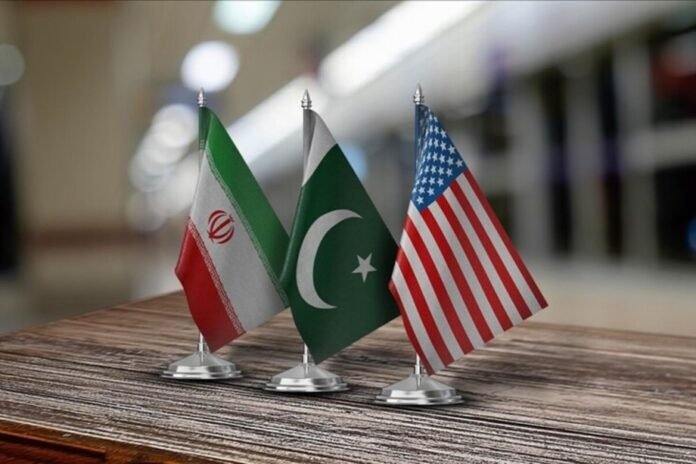
A ceasefire took effect on April 8 through Pakistani mediation and was later extended by Trump indefinitely. Washington and Tehran also held rare direct talks in the Pakistani capital Islamabad on April 11-12, but have failed to reach an agreement.

Trump’s Saturday remarks came after Pakistani army chief Asim Munir’s visit to Tehran. The visit was the second of its kind in recent weeks, as Munir is directly involved in Islamabad’s mediation efforts.

READ: Trump says Iran talks ‘constructive’ but blockade will remain until final deal is reached

The EPA just walked back Hawai‘i’s plan to retire its dinosaur power plants

0
the-epa-just-walked-back-hawai‘i’s-plan-to-retire-its-dinosaur-power-plants
The EPA just walked back Hawai‘i’s plan to retire its dinosaur power plants

This story was originally published by Honolulu Civil Beat.

Hawaiʻi has some of the freshest air in the nation, but in some parts of the state hazy skies can impact tourism and public health. 

Now, the U.S. Environmental Protection Agency has pumped the brakes on a multi-decade effort to improve visibility and reduce fine particulates and other man-made pollutants.

On May 15, the agency announced it had partially denied Hawaiʻi’s 2024 Regional Haze State Implementation Plan, a detailed proposal that lays out the state’s intention to comply with the federal Clean Air Act. The plan was designed specifically to reduce haze in two iconic places: Hawaiʻi Volcanoes National Park on the Big Island and Haleakalā National Park on Maui.

Because the two parks are designated as Class I under the Clean Air Act, their air quality is legally entitled to the highest level of protection. 

Although the EPA is leaving some aspects of the haze plan intact, it is jettisoning its main thrust: the state’s long-term strategy, which included shutting down at least two of Hawaiian Electric Co.’s oil-fired electricity generating units in the Kanoelehua-Hill and Kahului power plants by 2028. The units are the dinosaurs of the industry; the Kahului unit was commissioned in 1948

The agency referred to the closures as “unconsented” and said in a press release that they could make Hawaiʻi’s grid less reliable and “violate the Takings Clause of the U.S. Constitution for the taking of private property without just compensation.” 

Two dirty industrial towers

Determining to what degree natural and man-made emissions contribute to the overall air quality in the region requires a series of complex, evolving math equations. Erin Nolan / Civil Beat

The decision isn’t the first of its kind for the agency; in Colorado, it rejected a similar plan that involved closing a coal plant. But it is one of the first from the current EPA to impact Hawaiʻi, and part of a larger plan by EPA Administrator Lee Zeldin to execute on President Donald Trump’s executive orders to promote what he calls “energy dominance.” 

“This is one of the biggest bombs to drop in Hawaiʻi so far from the EPA,” Isaac Moriwake, managing attorney of Earthjustice’s mid-Pacific office, told Civil Beat. 

Earthjustice is part of a group of 10 national environmental advocacy groups, which also includes the National Parks Conservation Association, Natural Resources Defense Council, and Center for Biological Diversity, to respond to the decision, saying it will harm Hawaiʻi communities and result in dirtier air in the parks. 

Mike DeCaprio, vice president of power supply at HECO, describes the situation as a trade-off. He said the company still plans to retire the aging plants. But to do so by the end of 2028, DiCaprio said more biofuel plants and more solar farms and battery storage have to first come online.

“We felt that having a contingency to run these units longer if needed was in our interest, and in our customers’ interest, so that we don’t end up in a grid reliability issue,” he said. 

“Reliability on an island grid is a really tough issue, right? They’re very small grids. With size comes stability, and they don’t have size,” DeCaprio said. “Making sure that the lights stay on is the most important part.”

Regulation or ‘total regulatory taking’?

In a detailed 67-page comment on an earlier draft of the EPA’s decision, the environmental advocates accused HECO of exploiting the Trump administration’s fossil fuel agenda. 

The advocates asserted that the Clean Air Act was written in such a way that it already allowed for contingency plans if renewable energy wasn’t available. They also said that HECO had previously agreed to retire three of its oldest oil-fired generating units in the Hill, Kahului, and Māʻalaea plants after it was asked by the health department to submit a plan to upgrade the technology to improve air quality.  

“HECO was the one coming to Department of Health and saying, ‘Hey, we will commit to shutting down these plants in lieu of having to spend all kinds of money, which the ratepayers are going to pay for at the end of the day, to upgrade these plants to try to clean them up. It’s cheaper, it’s more reliable, it’s more affordable for our ratepayers to just shut them down,’” Moriwake said. 

Then, last August, Karin Kimura, director of the environmental division at HECO, sent a letter to the EPA’s regional administrator saying the company had been “forced under the SIP to accept enforceable retirement deadlines.” 

Read Next

Kimura said the retirement deadlines were no longer viable because of “actual or potential cancellations and delays” in renewable energy sources coming online to replace the power plants. Those projects had slowed down due to permitting challenges, changes in tax incentives and supply chain changes, she added. 

“Following this notification, Hawaii … needed to provide assurances that EPA’s approval of the unconsented source closure would not amount to a taking without just compensation under the Takings Clause of the U.S. Constitution,” the EPA press office told Civil Beat in an emailed statement. “Hawaii did not provide such assurances, and EPA was therefore required to partially disapprove the state’s long-term strategy.” 

The haze plan process had been overseen by the Department of Health, but HECO sent the letter without the Department of Health’s involvement.  

The health department did not respond to a request for comment from Civil Beat but it noted this omission in its own letter to the EPA in April — once it was clear that the EPA was responding to HECOs request by shutting down the plan. In it, the state’s director of health, Kenneth Fink, said the EPA’s response was “not consistent with the purpose of Clean Air Act Section 169A which was enacted to protect visibility in national parks and wilderness areas” and “directly conflicts with EPA’s previous guidance” for developing such plans. 

The company also has already signaled it is raising its customers’ rates, in part to compensate for the plant closures, Moriwake noted. 

“HECO has a pending request right now,” he said. “It’s sitting in front of the PUC to increase customer rates by $45 million a year for this purpose.” 

Read Next

Jeff Mikulina, executive director of Climate Hawai‘i, acknowledged that renewable energy in Hawaiʻi is facing headwinds, thanks in large part to the Trump administration’s tariffs and choice to cut tax credits and other federal support. But he believes Hawaiʻi will continue to lead on renewables. And he’s particularly optimistic about what’s happening on Kauaʻi, where local lawmakers just approved two new solar-and-storage projects that could get them to 90 percent renewable energy by 2030.

“It’s important to look at the long-term signal as opposed to the near-term noise, and that long-term signal tells us that this technology is getting cheaper by the day, particularly energy storage, which is really that secret sauce that’s going to allow us to achieve our 100 percent renewable energy future.”

In its email, the EPA press office said it is “committed to working with the state of Hawaii to revise the SIP, in order to both follow the law and achieve clean air for all in the state.”

And yet the legal argument that the agency is using to justify its move away from a haze rule with teeth concerns the environmental advocates as much, if not more, than this one decision. In its legal rationale, the federal agency argued that the haze plan would unfairly restrict HECO’s use of its private property, in what it called “a total regulatory taking.”

“By asserting that the retirement deadlines in the 2024 SIP are now ‘forced,’ EPA opens a massive loophole in the Act’s requirements, allowing facilities to entirely evade compliance with the Regional Haze Program,” they wrote in their comments in April. They say they are concerned  that the agency could dismantle other parts of the Clean Air Act, such as the National Ambient Air Quality Standards Program.

“They are signaling that they want to overhaul this entire regulatory scheme,” Moriwake said.

Not to be confused with vog

When the Kīlauea volcano is erupting, vog — volcanic smog — adds sulfur dioxide and fine particulate matter to the air, particularly on the southern side of Hawaiʻi island. The Hawaiʻi Department of Health warns that even brief exposure can cause shortness of breath, chest tightness, and other respiratory problems.

Power plants and other industrial facilities — such as the Mauna Loa processing facility named in the state’s 2024 SIP — also emit sulfur dioxide as well as nitrogen oxides, which has been shown to aggravate lung and heart conditions. 

Determining to what degree these natural and man-made emissions contribute to the overall air quality in the region requires a series of complex, evolving math equations. EPAs under previous administrations have used specific tools to calculate the region’s “natural visibility conditions” while accounting for episodic volcanic events. 

But when the current EPA proposed its disapproval of the haze rule in February, it asserted that no methodology “has been developed that is able to fully screen out the volcanic impacts and thus isolate the visibility impairment caused by anthropogenic air pollution.”

The environmental groups disagree. In their comments they called the agency’s assertions “arbitrary and capricious.”

Civil Beat’s coverage of climate change and the environment is supported by The Healy Foundation, the Marisla Fund of the Hawai‘i Community Foundation, and the Frost Family Foundation.


Pakistan’s Federal Shariat Court Rules Decriminalization of Attempted Suicide Contrary to Islamic Law 

0
pakistan’s-federal-shariat-court-rules-decriminalization-of-attempted-suicide-contrary-to-islamic-law 
Pakistan’s Federal Shariat Court Rules Decriminalization of Attempted Suicide Contrary to Islamic Law 


Pakistan’s Federal Shariat Court has declared the legislation decriminalizing attempted suicide is contrary to Islamic principles and has struck it down. 

The Federal Shariat Court issued the ruling in response to the various petitions filed against the legislation passed by Parliament. 

In 2022, the National Assembly amended the Pakistan Penal Code, removing attempted suicide from the list of criminal offenses. Under the legislation, no legal action was to be taken against a person attempting suicide. 

In its ruling, the Federal Shariat Court said it is the state’s responsibility to protect the lives of citizens and noted that attempted suicide had previously been treated as a criminal offense in order to discourage people from taking such a step and to deter them through the fear of legal action. 

According to the court, there is no justification for repealing this law solely on the basis of mental illness. 

During the hearing, the government presented data from the World Health Organization, according to which millions of people worldwide die by suicide every year, and the primary cause is mental illness. 

The federal government took the position that the primary objective of the legislation concerning attempted suicide was to acknowledge that individuals who attempt suicide are often suffering from psychological distress or mental illness. 

The federal government further stated that since a person attempting suicide is themselves a victim, the issue should be treated as a health matter rather than a legal one, and no criminal action should be taken against them. 

It was further argued that individuals in such situations are often under mental, financial, and social pressure, and should therefore receive treatment rather than punishment. 

By contrast, the Federal Shariat Court argued that the causes of suicide or attempted suicide are not limited to mental illness or psychological stress alone. 

They may also include suicide attempts carried out for the purpose of terrorism, hunger strikes for political or financial gain, setting oneself on fire in public by dousing oneself with kerosene oil, and in some cases, suicide attempts influenced by the internet or mobile applications. 

According to the court, the circumstances of each person who attempts suicide are different; however, it is not appropriate to decriminalize all suicide attempts regardless of the cause. 

The court stated that the Constitution of Pakistan already provides a mechanism for relief for individuals who suffer from mental impairments. 

The Federal Shariat Court also sought a reference from the Council of Islamic Ideology, which stated that suicide is a severe sin and must be discouraged. 

Tanzeela Javed, an Islamabad-based clinical psychiatrist, told The Media Line, “In most cases, attempted suicide is associated with treatable mental health conditions such as depression, anxiety disorders, trauma-related disorders, or acute psychosocial stressors like financial hardship or relationship breakdown.” 

She further said, “Prevention strategies are never purely medical; they also require social support systems, crisis services, and responsible public policy. The most effective frameworks internationally tend to treat suicide prevention as a public health priority while still ensuring appropriate safeguards in exceptional contexts”. 

Javed stressed, “Ultimately, the clinical goal is not punishment, but risk reduction, treatment access, and preservation of life through early and non-judgmental intervention.” 

Mom Plunges 2,000 Feet to Her Death on Birthday

0
mom-plunges-2,000-feet-to-her-death-on-birthday
Mom Plunges 2,000 Feet to Her Death on Birthday


A mother-of-two’s dream birthday climb turned into a nightmare when she plunged 2,000 feet down one of Chile’s most feared volcanoes after posting a haunting final message about her “uncertainty” over what was about to happen.

Ingrid Daniela Vera Figueroa was celebrating her 42nd birthday with a daring climb up the Llaima volcano in Chile’s Conguillío National Park when disaster struck.

What began as a once-in-a-lifetime birthday adventure ended with her friends watching in horror as she lost her balance and fell down a steep ravine.

According to reports, Figueroa had been taking photos during the climb when she let go of her ice pick, slipped, and vanished down the mountainside.

The fall was catastrophic.

Her friends immediately called for help, but the rescue mission quickly turned into a desperate race against brutal mountain weather.

Strong winds reportedly stopped a rescue helicopter from reaching the scene, leaving crews unable to recover her body until the next morning.

By Sunday evening, the devastating news was confirmed.

Figueroa, a school governor and devoted mother of two, was dead.

Just hours earlier, she had posted a birthday message that now reads like a chilling farewell.

“It’s three in the morning, and we’re finishing packing our backpacks to ascend Llaima,” she wrote on social media.

“I hope God accompanies me on this wonderful day, on which I’m turning 42 and am super happy.”

Then came the eerie line that has left so many people shaken.

“Yes, I have a little uncertainty about what’s going to happen,” she admitted.

Those words would become tragically prophetic.

The experienced climber had set out with friends for what should have been a joyful birthday challenge. Instead, the celebration ended in horror on the slopes of one of Chile’s most active and dangerous volcanoes.

Emergency crews, police, firefighters, volunteers, and officials from Chile’s National Forest Corporation, known as Conaf, later joined together to recover her remains.

The mission was made even more difficult by freezing temperatures and punishing high-altitude conditions.

Conaf director Héctor Tillería said the group had not registered with park authorities before beginning the climb, which went against safety protocol.

Officials are now warning other hikers not to take the mountain lightly.

The Llaima volcano towers more than 9,800 feet and is considered one of the toughest climbing challenges in southern Chile. The route usually begins at the Las Araucarias ski resort and can take seven to eight grueling hours to complete.

It is beautiful, but unforgiving.

For Figueroa’s loved ones, the tragedy has been crushing.

At Alexander Graham Bell School in Villarrica City, where she served as a school governor, she was remembered as a “responsible, kind, committed” mother.

The school community offered condolences to her husband, her two children, her family, and her friends as grief spread through the area.

Figueroa was no stranger to the mountains. She had climbed several peaks in the region and was known for her love of adventure.

But on her 42nd birthday, the mountain she hoped to conquer became the place where her life came to a sudden and terrifying end.

Authorities are still investigating the exact circumstances of the deadly fall.

The horror on Llaima comes after a string of terrifying volcano tragedies.

Last year, an Argentinian tourist went missing for several hours while trying to climb the same Chilean mountain in extreme conditions before being rescued.

Another haunting case involved Brazilian traveler Juliana Marins, 26, who fell nearly 2,000 feet from Mount Rinjani, an active volcano in Indonesia, and was trapped for days before dying.

Her body was later found beside a crater after rescue crews used a thermal drone during a brutal search through dangerous terrain.

Now, Figueroa’s final birthday post has become the heartbreaking detail her loved ones may never forget.

She began the day “super happy.”

Hours later, she was gone.

EU Commission chief welcomes progress toward US-Iran deal

0
eu-commission-chief-welcomes-progress-toward-us-iran-deal
EU Commission chief welcomes progress toward US-Iran deal

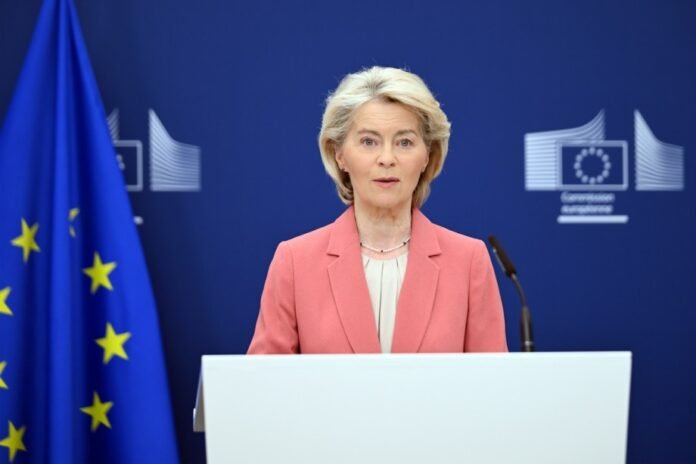
European Commission President Ursula von der Leyen on Sunday welcomed progress toward a possible agreement between the US and Iran, stressing the need for a deal that would reduce tensions and prevent further escalation in the region, Anadolu reports.

“I welcome the progress towards an agreement between the US and Iran. We need a deal that truly de-escalates the conflict, reopens the Strait of Hormuz and guarantees toll free full freedom of navigation,” von der Leyen said through the US social media company X.

She reiterated that Iran “must not be allowed to develop a nuclear weapon” and called on Tehran to end actions she described as “destabilizing in the region, directly or through proxies, as well as its unjustified and repeated attacks on its neighbours.”

“Europe will continue working with international partners to seize this moment for a lasting diplomatic solution. And to contain the spillover of this conflict, notably on supply chains and energy prices,” von der Leyen wrote.

After a call with regional leaders, US President Donald Trump on Saturday said an agreement with Iran to end the war that began on Feb. 28 and led to the de facto closure of the strait was “largely negotiated” and awaited finalization.

READ: US, Iran near 60-day ceasefire deal to reopen Strait of Hormuz

Whatever the mirror test tells us, beluga whales pass it

0
whatever-the-mirror-test-tells-us,-beluga-whales-pass-it
Whatever the mirror test tells us, beluga whales pass it

In hours of underwater video footage from a New York aquarium, a beluga whale named Natasha stretches her neck, pirouettes, nods, and shakes her head in front of a two-way mirror. Her daughter Maris does much the same. According to a new study published in PLOS One, both animals show the behavioral hallmarks of mirror self-recognition—a cognitive ability long considered a marker of self-awareness, and one that had never before been documented in beluga whales.

If the result holds up, belugas join a remarkably short list. The mirror self-recognition test (MSR) has been passed, with varying degrees of confidence, by humans (starting around age two), a handful of great apes (chimps, bonobos, orangutans, and—somewhat contentiously—gorillas), Asian elephants, bottlenose dolphins, probably magpies, possibly orcas, and, if you can believe it, a cleaner wrasse. That’s it. No dogs, no cats, no monkeys. Plenty of species we had assumed were self-aware have been tested and failed.

Looking at the mirror

So what is this test, exactly, and what is it supposed to tell us?

The procedure is this: While the animal isn’t looking, researchers place a mark on a spot it can only see via a reflection. A mirror is then put in front of the animal while the researchers watch. If the animal touches or examines the mark while looking at its reflection, it comprehends that the figure in the mirror is itself. The test is intuitive and easy to perform—and almost no species passes.

Why is this a test of self-awareness in the first place? The logic, going back to the psychologist Gordon Gallup (who invented the test in 1970), is that to use a mirror as a tool for inspecting your own body, you need a mental representation of yourself as a distinct entity. A piece of silvered glass, in this telling, can pry open a lot of cognitive doors.

Gallup himself is a tough grader. Plenty of positive results have been announced over the decades, and he’s pushed back on most of them. If an animal doesn’t show clear self-directed behavior—actively trying to touch or examine the mark—the test, in his view, fails. On that score, the beluga results sit right at the edge.

Revisiting old data

The footage is more than two decades old. “After the initial study we were hoping to conduct more studies with additional belugas over the next years but that was not possible,” senior author Diana Reiss said in an email. “Inspired by the numerous studies over the past years reporting on different aspects of beluga whale cognition and behavior, we decided to revisit and digitize the original videotapes and conduct a rigorous analysis.” Some tapes had degraded in the meantime, and portions of the original data were lost.

The original experiment exposed four belugas to the mirror together, in their usual social housing. Only Natasha and Maris showed sustained interest, so only they advanced to the experimental phase, where they were marked with waterproof lipstick during feeding sessions. Because the animals were awake and could feel the application, the researchers ran sham-mark controls: the same procedure, but without the pigment. The whales only showed self-recognition-like behaviors after being actually marked.

“The two beluga whales showed the same progression of behavioral stages reported for other species that show evidence of MSR,” first author Alexander Mildener said in an email. “The whales did not exhibit self-directed behaviors in the absence of the mirror or in the control condition. One of the whales also passed the mark test by demonstrating mark-directed behavior by orienting the area of her body that was temporarily marked toward the mirror.”

The sample is tiny, but that’s not unusual—if even a single animal can do something, the species is in principle capable of it. The harder question is whether what Natasha and Maris did really counts. Some of the most-cited behaviors—bubble bite play, barrel rolls—are documented forms of solo play that belugas engage in even without a mirror nearby. Their increased time spent at the reflective surface is suggestive, but doesn’t rule out the possibility that the mirror was just a novel source of stimulation.

The one genuinely mark-directed behavior came from Natasha, who repeatedly pressed the marked area—behind her right ear—against the mirror. Without arms, she couldn’t point. It’s the strongest data point in the study, but a softer kind of evidence than a chimp or an elephant typically delivers.

Even granting that belugas pass—and given that dolphins do, and orcas plausibly do too, it wouldn’t be a shock—the more interesting question is what a result like this tells us. Or, conversely: What does failing actually mean? One of the most persistent criticisms is that many animals fail simply because mirrors carry little relevance in their perceptual world. Anil Seth, a neuroscientist at the University of Sussex, told Ars in an email that “the MSR is not a test of consciousness itself, but a test of a particular kind of the ability to recognize one’s own body (or face). Failure to reliably pass the MSR does not mean that an animal lacks consciousness, or any form of selfhood.”

The test, he added, is motivated by what feels natural to humans. “It may well not feel natural to other species, even if they have the same kind of ability,” He said. “This raises various other reasons why animals might ‘fail’ the test: they may not like making eye contact, they might not like mirrors, or they simply just might not care enough about a very strange task.”

Seth has argued that consciousness may be something like an integrated experience of our perceptions, broadly construed—a view consistent with the increasingly mainstream idea that consciousness exists in degrees and forms across many species. If perceptions are central to the sense of self, that sense will look different depending on how each animal perceives the world. Humans are heavily visual; bats lean on echolocation; for dogs, smell is everything. That’s why researchers like Alexandra Horowitz, who heads the Dog Cognition Lab at Barnard College, have been working on an olfactory version of the test.

From the opposite direction come critics who argue the test fails to measure self-awareness even when an animal passes it. That’s the position of Alex Jordan, an evolutionary biologist at the Max Planck Institute of Animal Behavior in Germany and co-author of the PLOS Biology studies on the cleaner wrasse. The wrasse passes the mirror test, Jordan says—but that doesn’t necessarily mean the fish is self-aware. The test was designed around us, and suffers from both anthropocentrism (treating humans as the yardstick) and anthropomorphism (projecting human traits onto other animals).

The mirror test, then, has problems from every angle. As Seth put it in his email: “When looking for evidence of consciousness or selfhood, it’s important to complement tests like the MSR with other tests”—ones that take into account what might be salient in a particular animal’s own perceptual world. And yet the MSR remains one of the few tools we have for trying to glimpse inside the minds of other animals—and, perhaps, our own. The trick is knowing exactly what it can, and can’t, tell us.

PLOS One, 2026. DOI: 10.1371/journal.pone.0348287

Federica Sgorbissa is a science journalist; she writes about neuroscience and cognitive science for Italian and international outlets.

0FansLike
0FollowersFollow
0FollowersFollow
0SubscribersSubscribe
- Advertisement -
Google search engine

Recent Posts