15.8 C
London
Sunday, May 24, 2026
Home Blog

Hezbollah Drone Strike Kills IDF Soldier Noam Hamburger Near Lebanon Border

0
hezbollah-drone-strike-kills-idf-soldier-noam-hamburger-near-lebanon-border
Hezbollah Drone Strike Kills IDF Soldier Noam Hamburger Near Lebanon Border


Staff Sgt. Noam Hamburger, 23, of Atlit, was killed Friday after a Hezbollah drone launched from Lebanon struck Israeli troops operating near the northern border inside Israeli territory, the Israel Defense Forces said.

Hamburger served as a combat soldier specializing in technology and maintenance in the 9th Battalion of the 401st Brigade.

The military said one soldier was seriously wounded in the attack and a noncommissioned officer sustained light injuries. Both were evacuated for medical treatment, and their families were notified.

According to the IDF, a second explosive drone landed in the same area about 25 minutes later. No injuries were reported in that incident.

Hamburger’s mother, Liat Hamburger, described her son in remarks to Ynet; “Noam was pleasant and kind, he was simply a great gift to any mother. He always had a big smile, was an excellent student and loved to learn.”

She said the family had spoken with him shortly before the attack: “He managed to speak with us the day before the tragedy, he wished us a happy Shavuot holiday. We planned to come to him the next day with treats he loved, but then he didn’t answer us and it was very strange, we had a feeling that something happened,” she said.

Liat Hamburger said her son had been preparing for civilian life following his expected discharge from military service; “He was about to be discharged soon with many plans. It’s simply incomprehensible that our Noam with his big heart, his heart of gold, won’t return anymore,” she said.

EU Commission Considers Sweeping Overhaul of Departments Managing Funds

0
eu-commission-considers-sweeping-overhaul-of-departments-managing-funds
EU Commission Considers Sweeping Overhaul of Departments Managing Funds


Every European Commission department that handles EU cash could be in the firing line as part of President Ursula von der Leyen’s restructuring plans, according to five officials familiar with the discussions.

Earlier this month, POLITICO Brussels Playbook reported that the Commission is considering a major restructuring of one of its oldest departments, the Directorate-General for Regional and Urban Policy, known as DG REGIO, which oversees almost a third of EU spending through the bloc’s cohesion policy. 

Those restructuring plans could be extended to other departments, according to the officials, granted anonymity to speak about the sensitive discussions. They include the Directorate-General for Agriculture and Rural Development (DG AGRI), which manages Common Agricultural Policy money; the Directorate-General for Employment, Social Affairs and Inclusion (DG EMPL), which oversees the European Social Fund; the Directorate-General for Maritime Affairs and Fisheries (DG MARE), which deals with fisheries funding; and the Directorate-General for Research and Innovation (DG RTD), which manages Horizon research cash.

One Commission official described the process as part of von der Leyen’s “absolute centralization” drive. However, another official said it was an extension of the Brussels’ plans to change how the long-term budget is distributed, with spending programs merged into two main funds.

The officials said they believe the plan is to have a single centralized service manage EU funds. One senior official said the model is the recovery fund that was set up after Covid (handled by the Directorate-General for Structural Reform Support): with national governments submitting spending plans, cash disbursed based on hitting milestones, and centralized oversight.

“If everything moves to this system, it’s logical to create a service that does exactly that,” the official said of plans for a future DG INVEST.

Commission Executive Vice President Raffaele Fitto last week publicly hinted at the restructuring plans, saying: “Inside DG REGIO we are reflecting on the opportunity and possibility of creating a more efficient DG and identifying the right model.”

The restructuring process is advancing. On the Commission intranet, seen by Playbook, a dedicated “workstream” has been set up, tasked with examining how to “review directorates-general structures and better align them with Commission priorities and the future EU budget.”

The lead on the review is Valère Moutarlier, deputy director-general at the Directorate-General for Internal Market, Industry, Entrepreneurship and SMEs. Moutarlier and her team’s recommendations will go to former Commission secretary-general Catherine Day in mid-July, according to two officials.

Budget Commissioner Piotr Serafin will present the final restructuring suggestions to von der Leyen and the College by the end of 2026, a Commission spokesperson said. “We are reflecting on how to make DGs more efficient and ensure the best model for delivering our objectives,” the spokesperson said.

Officials inside DG AGRI told Playbook they had “definitely followed with interest” reports about DG REGIO’s possible dismantling. These concerns prompted a February “town hall” with DG HR boss Stephen Quest to discuss the broader structural review.

Concern is also growing in DG MARE. “Simplification must not lead to excessive centralization of power in Brussels,” said European Parliament fisheries committee Vice Chair Stéphanie Yon-Courtin.

Via Politico

Trump abruptly cancels EO signing event after top AI firm CEOs declined to go

0
trump-abruptly-cancels-eo-signing-event-after-top-ai-firm-ceos-declined-to-go
Trump abruptly cancels EO signing event after top AI firm CEOs declined to go

President Donald Trump abruptly canceled an event on Thursday just hours before he was scheduled to sign an executive order granting the government the power to test frontier AI models before their public release.

As The New York Times explained, Trump had been hoping that top executives from leading AI firms would attend the signing. He decided to pull the plug after learning that some CEOs couldn’t make the event. That made Trump unhappy, even though he’d only given them 24 hours’ notice. Other AI executives who quickly rearranged their schedules to go “were midair on their way to the Oval Office” when they found out that the trip was for nothing.

Reporting from Semafor indicated that OpenAI “supported” the signing. However, xAI founder Elon Musk and Meta CEO Mark Zuckerberg reportedly helped “derail” the executive order, supposedly urging Trump to “call it off.” Additionally, Trump’s former AI advisor David Sacks—whose special government employee designation expired in March, The Information noted—joined the push to delay the signing, Semafor reported.

According to Reuters, the tech industry lobbied against the order, fearing that safety testing could delay model launches or require changes that set back model development. Musk has denied having a hand in Trump’s cancellation of the signing event, Reuters noted, writing on X that “this is false” and claiming that he doesn’t “know what was in that EO.”

Trump has taken a hands-off approach to regulating AI since retaking office, but members of his administration got spooked and began recommending safety testing after Anthropic flagged cybersecurity risks with its latest model, Mythos. Their plan was to get Trump to expand the number of firms submitting to voluntary government testing and vetting of frontier models.

Inside sources and AI firms briefed on the executive order told The Information that one tension between the Trump administration and the tech industry is the timeline for government testing. The government sought to evaluate models up to 90 days prior to release, while AI labs pushed for a much shorter timeline of only 14 days.

The EO’s goal, the NYT reported, was “for the government to identify any security vulnerabilities revealed by AI models and to patch problems in its systems to help protect banks, utilities, and other sensitive industries from cyberattacks.”

Officially, Trump told reporters that he decided against signing the order because he “didn’t like certain aspects of it.” He offered no further details but stressed that government safety testing could set the US back in the AI race with China, claiming that “I really thought [the order] could have been a blocker.”

“I think it gets in the way of—you know, we’re leading China, we’re leading everybody, and I don’t want to do anything that’s going to get in the way of that lead,” Trump said.

US lags behind in AI safety race

It’s unclear whether Trump plans to reschedule the event or what changes might be required to ensure he signs it.

Lizzi C. Lee, a fellow at the Asia Society Policy Institute’s Center for China Analysis, told the South China Morning Post that Trump appears to be navigating the same AI safety dilemma as China: how to guard against national security risks without slowing the development of frontier models.

Lee suggested that the impact of Trump’s order depends on how “heavy the review process becomes.” If Trump’s safety testing focuses narrowly on national security, “it probably won’t slow leading US labs much,” Lee said.

According to Lee, parallel to the AI race is “a separate, potentially more important race” to figure out how “who can govern powerful AI without choking off innovation.”

China may be slightly edging ahead of the US in that race.

SCMP’s report claimed that while the US has been hesitant to regulate AI, “China’s regulatory process is accelerating significantly” in recent months. In April, Beijing issued a new regulation requiring domestic AI firms to establish internal “artificial intelligence ethics review committees.” In May, the State Council, China’s cabinet, outlined a legislative work plan for 2026 to “improve AI governance and accelerate comprehensive legislation for the sound development of AI.”

In the US, discord exists not just between political parties but among Trump’s team, The Information reported. The tensions reportedly started after the abrupt end of Sacks’ tenure as AI advisor, creating a “power vacuum” within the White House’s AI leadership structure. Still, Sacks continues to visit the White House weekly, The Information reported.

As Trump reportedly faces pressure from the Commerce Department and the Office of Science and Technology Policy to maintain a light-touch approach to AI regulation, more security-focused agencies, like the Office of the National Cyber Director, think the time for governance is now.

Trump’s next moves on AI safety in the US won’t just be closely watched by officials within his administration concerned about national security risks—which apparently includes Vice President JD Vance, who said on Wednesday that the administration was prioritizing “protecting people’s data” and “people’s privacy” after concerns about Mythos were raised. Apparently, China will also be expecting regular AI safety updates from Trump.

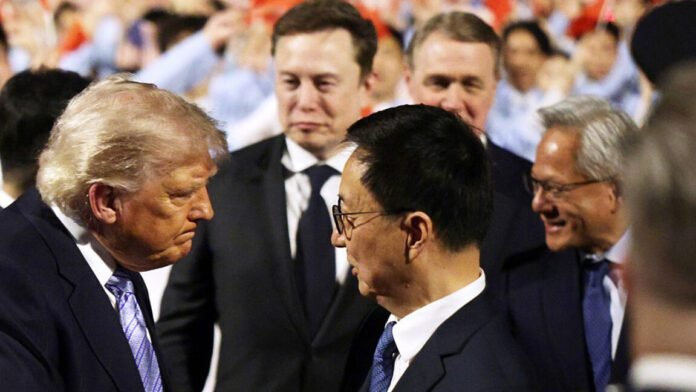
At the recent summit with China’s president, Xi Jinping, Trump agreed “to launch an intergovernmental dialogue on AI” to mutually navigate emerging national security risks as AI technology advances, the Chinese Foreign Ministry confirmed.

Sylvester Stallone Sparks New Health Fears in Anniversary Photo

0
sylvester-stallone-sparks-new-health-fears-in-anniversary-photo
Sylvester Stallone Sparks New Health Fears in Anniversary Photo


Sylvester Stallone has spent decades playing some of the toughest men ever put on screen. But a new photo of the Hollywood legend has fans doing a double take — and not for the reason he may have expected.

The Rocky and Rambo icon, 79, sparked fresh concern after posting a sweet anniversary tribute to his wife, Jennifer Flavin, as the couple celebrated 29 years of marriage. But while the message was full of love, many fans could not stop staring at one detail in the picture: the cane.

Stallone, who turns 80 in July, was seen seated in a leather chair while wearing a black tracksuit and leaning on a cane. Flavin, 57, stood beside him holding a champagne flute while dressed in a white skirt and matching long-sleeve top.

The photo was shared on Sunday, May 17, while the couple appeared to be celebrating in London.

“Happy anniversary, you give my life meaning!” Stallone wrote.

Flavin responded publicly with a loving message of her own: “I love you, you are my everything!”

But the romantic post quickly took a more emotional turn as fans began discussing the action star’s appearance. For many longtime admirers, seeing Stallone with a cane was a jarring reminder that the man who once defined movie-star toughness is no longer the indestructible figure they grew up watching.

For decades, Stallone’s body was part of his brand. He threw punches as Rocky Balboa, blasted through danger as John Rambo and built an entire career around grit, muscle and pain.

But those roles came at a cost.

Over the years, Stallone has been open about the brutal physical toll of his career, including serious injuries and surgeries connected to his action-packed movie work. Now, the sight of him leaning on a cane has reignited concern that those years may finally be catching up with him.

One source close to the actor claimed the image rattled some people around him.

“People know Sylvester has put his body through absolute hell over the years filming action movies, but seeing him relying so heavily on the cane really shocked some fans,” the insider said. “There are genuine fears among those close to him that the years of injuries and surgeries are finally catching up in a very visible way.”

The source added that the photo hit hard because Stallone has always represented strength.

“For decades, he’s been the face of toughness,” the insider said. “So seeing him seated, looking tired and leaning on a cane made people realize he isn’t invincible.”

Stallone’s upcoming 80th birthday has already made fans reflective about his extraordinary career and the physical punishment he endured along the way.

From the Rocky franchise to Rambo, The Expendables and countless other action roles, Stallone became famous for pushing his body to extremes. Unlike many stars who relied heavily on doubles, Stallone often threw himself into demanding fight scenes, stunts and punishing training routines.

That image made him a global icon.

But it also made the anniversary photo feel even more startling to fans who remember him as the ripped, relentless fighter sprinting through Philadelphia or surviving impossible battles in the jungle.

The sweet tribute was supposed to celebrate his marriage. Instead, it turned into a reminder that even Hollywood’s toughest heroes grow older.

Stallone and Flavin’s relationship has had its own dramatic twists.

The couple first met in 1988 at a restaurant in West Hollywood. At the time, Flavin was 19 and Stallone was 42. They later married in 1997 and went on to have three daughters together: Sophia, 29, Sistine, 27, and Scarlet, 23.

Stallone was previously married to Sasha Czack from 1974 to 1985 and to actress Brigitte Nielsen from 1985 to 1987.

He also shares son Seargeoh, 44, with Czack. His eldest son, Sage, tragically died in 2012 at the age of 36.

In recent years, fans got a closer look at Stallone’s home life through the reality series The Family Stallone, which aired in 2023 and 2024. The show gave viewers a rare peek at the actor as a husband and father, far away from the explosive movie roles that made him famous.

But it also showed the strain behind the scenes.

Flavin filed for divorce in 2022, shocking fans who had long viewed the couple as one of Hollywood’s more enduring marriages. The split did not last. The pair reconciled one month later and later opened up about the difficult period.

Stallone called it “a very tumultuous time” and said the crisis forced him to realize what mattered most.

“There was a reawakening of what was more valuable than anything, which is my love for my family,” he said.

Despite their troubles, Stallone has spoken warmly about the first time he met Flavin.

“I remember vividly the first time I met Jennifer,” he recalled during the series. “I was in this dark restaurant, a few people. She came in and, whoa! Something happened. I just felt, like, this jolt, like — ‘Oh, did we just have a minor earthquake or something?’”

Flavin remembered the moment just as fondly.

“We just hit it off; it was crazy,” she said. “We were inseparable all night.”

Now, nearly three decades into their marriage, the couple appears to be standing strong together.

Still, the latest photo has left some fans shaken. For many, Stallone is not just another aging celebrity. He is Rocky. He is Rambo. He is the fighter who always got back up.

That is why seeing him with a cane struck such an emotional nerve.

The man who built a career on refusing to go down is now facing the one battle no action hero can outrun: time.

Inflation, instability and escalation

0
inflation,-instability-and-escalation
Inflation, instability and escalation

Subscribe now with a one-month trial for only $1, then enjoy the first year at an exclusive rate of just $99.

Japan faces a long, hot summer of inflation and tightening
Scott Foster reports that Japan is entering a difficult period of inflation, rising bond yields and monetary tightening as the Iran war drives energy disruptions, forcing Sanae Takaichi’s government toward subsidies and emergency spending to cushion mounting economic stress.

Germany’s political risk premium is rising fast
Diego Faßnacht argues that Germany’s weakening industrial base, falling manufacturing employment and political fragmentation are turning Europe’s largest economy into a growing political-risk story as support for the AfD surges amid deepening economic stagnation.

Russia and NATO drift closer to confrontation over Ukraine
James Davis reports that intensified fighting in Ukraine, rising drone incidents over NATO territory and growing European military rhetoric are heightening the risk of direct Russia-NATO confrontation as both sides prepare for a potentially decisive summer campaign.

Has the Flotilla finally exposed the West’s moral double standard?

0
has-the-flotilla-finally-exposed-the-west’s-moral-double-standard?
Has the Flotilla finally exposed the West’s moral double standard?

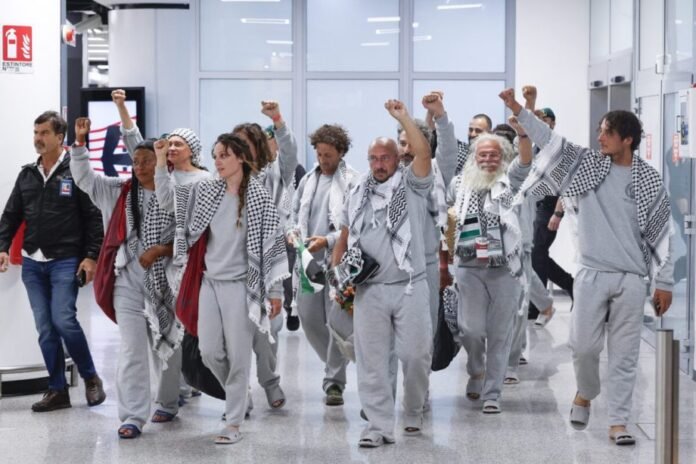
The image that ricocheted across the world was not a missile strike, nor another skyline collapsing into Gaza’s dust. It was far quieter than that. Dozens of civilians — aid workers, doctors, parliamentarians, students and activists from 44 countries — kneeling on the deck of a seized flotilla in the eastern Mediterranean, hands bound behind their backs, surrounded by armed Israeli personnel.

Then came the video posted by Israeli National Security Minister Itamar Ben-Gvir himself: taunting detainees, waving a flag, reducing human vulnerability into spectacle. For many watching from Canberra to Ottawa, something fundamental appeared to rupture.

The interception of the Global Sumud flotilla in May may ultimately be remembered not simply as another Gaza confrontation, but as a geopolitical inflection point — the moment the language of humanitarianism collided irreversibly with the realities of strategic impunity.

The flotilla carried approximately 400 activists and 128 tonnes of humanitarian supplies destined for Gaza, where more than two million Palestinians remain trapped inside what humanitarian agencies increasingly describe as a zone of engineered deprivation. According to WHO assessments, all of Gaza’s population now faces acute food insecurity, with more than one million people approaching famine conditions. Malnutrition rates among children have surged to levels unseen in the territory’s modern history.

Before the current war even began, over 80 per cent of Gazans already depended on humanitarian aid for survival. After nineteen years of blockade, repeated bombardment, and systematic destruction of civilian infrastructure, Gaza’s economy no longer resembles a functioning society so much as a permanently suspended emergency.

Yet it was not starvation statistics that triggered global diplomatic outrage. It was the humiliation of internationally recognisable bodies.

Italy summoned Israel’s ambassador within hours, condemning the treatment of detainees as a ‘violation of human dignity’. France, Spain, the Netherlands and Britain followed with formal protests. Even Washington, whose strategic protection of Israel has remained largely unshakeable throughout the Gaza war, publicly expressed concern and urged compliance with international law. Turkey denounced the ‘inhumane treatment’ of activists, while Indonesia and Pakistan condemned the abuse of their nationals as ‘totally unacceptable’.

This was more than diplomatic choreography. It exposed a deeply uncomfortable truth at the heart of the international system: the world often reacts not when suffering becomes intolerable, but when suffering becomes familiar.

For nearly two decades, Gaza’s civilians have endured conditions repeatedly condemned by human rights organisations as collective punishment. Amnesty International, Human Rights Watch, UN rapporteurs, and legal scholars have all argued that the blockade regime violates foundational principles of international humanitarian law. South Africa’s genocide case before the International Court of Justice — deemed ‘plausible’ by the ICJ in 2024 — intensified those allegations further.

Still, much of the liberal democratic world remained strategically cautious, unwilling to disrupt alliances, trade ties, intelligence cooperation, or domestic political calculations.

Then came the flotilla. Suddenly, the victims were Europeans, Australians, Canadians and Asians whose images pierced Western political consciousness in ways Palestinian suffering often had not. The uncomfortable implication is unavoidable. International empathy still operates through hierarchies of visibility.

This is no longer merely a Middle Eastern crisis. It is becoming a crisis of the Western liberal order itself.

For decades, liberal democracies positioned themselves as custodians of a rules-based international system built upon universal human rights, freedom of navigation, civilian protection and accountability under law. Those principles formed the moral architecture underpinning Western legitimacy after 1945. But Gaza has become the arena in which many in the Global South increasingly believe those principles are selectively applied.

When Russia bombed Ukrainian infrastructure, the West mobilised sanctions, legal mechanisms and moral outrage with extraordinary speed. When China was accused of abuses in Xinjiang, Western capitals invoked crimes against humanity. Yet in Gaza — despite mounting civilian casualties, widespread destruction, and starvation warnings from international agencies — many governments continued military cooperation and diplomatic shielding of Israel.

That inconsistency is no longer viewed merely as hypocrisy. Across much of Asia, Africa and Latin America, it is increasingly interpreted as evidence that international law itself remains subordinate to geopolitical hierarchy.

The Sumud flotilla intensified this perception because it transformed Gaza from an abstract humanitarian tragedy into a direct confrontation over international norms. Israel defended the interception as a necessary measure to enforce its naval blockade. Critics countered that intercepting civilian vessels in international waters while imposing starvation conditions on an occupied population cannot be reconciled with humanitarian law.

Strategically, Israel may have won the operation. Politically, it may have accelerated its isolation.

The comparisons now surfacing are historically significant. South African anti-apartheid veterans increasingly describe parallels between Gaza and the apartheid era’s architecture of segregation and control.

Civil society campaigns advocating boycotts and sanctions against Israel have gained momentum across European universities, labour movements and cultural institutions. Ireland, Norway, Belgium and Spain have all moved toward harder positions on settlements, trade restrictions or Palestinian recognition.

The symbolism matters because legitimacy matters. Modern conflicts are no longer won solely through military dominance. They are fought in legal forums, digital ecosystems, university campuses, corporate boardrooms and public narratives. Israel retains overwhelming military superiority, but reputational attrition is reshaping the strategic environment around it. Every viral image from Gaza erodes diplomatic capital accumulated over decades.

The greater danger lies beyond Israel itself. The Gaza crisis is accelerating fragmentation within the international order at precisely the moment global cooperation is already fraying under pressure from climate instability, great-power rivalry and economic insecurity. Trust in Western leadership has diminished sharply across the Global South. Younger generations, particularly in democratic societies, increasingly interpret foreign policy through moral coherence rather than Cold War loyalties.

This generational rupture is profound. Social media has dissolved traditional gatekeepers of wartime imagery.

Palestinians no longer depend exclusively on foreign correspondents to narrate their suffering. The visual immediacy of Gaza — hospitals collapsing, children starving, civilians kneeling on flotilla decks — now travels instantly into the political bloodstream of democracies.

Governments are struggling to adapt. Australia sits uncomfortably within this transformation. Canberra’s longstanding alignment with US strategic settings has often produced cautious language on Gaza, balancing support for Israel’s security with humanitarian concern. But middle powers face mounting pressure to demonstrate that commitment to international law applies universally, not selectively. The challenge is no longer rhetorical. It is essential for the credibility of rules-based diplomacy itself.

The word sumud in Arabic means steadfastness — the refusal to surrender dignity despite overwhelming force. That idea now extends beyond Gaza’s shores.

The flotilla was never militarily significant. Its true power was symbolic. It exposed the widening gap between the values the international community claims to defend and the realities it permits to endure. It forced uncomfortable questions into diplomatic chambers that have long preferred ambiguity.

How many civilians must starve before humanitarian law becomes enforceable? How many violations can the liberal order absorb before its moral authority collapses entirely? And what happens when entire generations conclude that international rules exist only for the weak?

Those questions now drift far beyond the Mediterranean. They are haunting the future of the international system itself.

The views expressed in this article belong to the author and do not necessarily reflect the editorial policy of Middle East Monitor.

Marketer that claimed it could tap devices for ad targeting will pay $880K settlement

0
marketer-that-claimed-it-could-tap-devices-for-ad-targeting-will-pay-$880k-settlement
Marketer that claimed it could tap devices for ad targeting will pay $880K settlement

In November 2023, we reported on dubious claims made by marketing firm Cox Media Group (CMG) Local Solutions. The company advertised a service called Active Listening on a website that said, “It’s true. Your devices are listening to you” and claimed it could use “voice data” to help advertisers target ads to specific people.

Naturally, panic ensued. 404 Media, which initially spotted the website, for instance, wrote that the idea of smartphones listening to people to sell products “may finally be a reality.”

CMG Local Solutions screenshot

A screenshot taken in 2023 from a webpage that CMG has since removed.

A screenshot taken in 2023 from a webpage that CMG has since removed. Credit: Ars Technica via CMG Local Solutions

The idea of a marketing firm using AI to “detect relevant conversations via smartphones, smart TVs, and other devices” in real time—according to a since-deleted CMG blog post from November 2023 (still viewable via the Internet Archive’s Wayback Machine)—has raised alarms.

But it was also apparent that CMG’s claims were unlikely to be true. The company never explained how it could remotely extract enough computing and networking power from users’ devices to clandestinely capture and send voice recordings in “real-time” or obtain more intimate access to people’s homes than law enforcement can without a warrant.

This week, the Federal Trade Commission (FTC) announced that CMG will pay $880,000 to settle the FTC’s allegations that CMG “falsely” claimed “to offer an AI-powered service that could target localized ads based on conversations captured from consumers’ smart devices and that consumers had opted into such targeting.”

The money will go to affected customers, the FTC said.

The FTC’s announcement reads:

According to the [FTC-filed] complaints, this service did not, in fact, listen in on consumers’ conversations or use voice data at all—nor did the service accurately place ads in customers’ desired locations. Instead, the service the companies provided consisted of reselling—at a significant markup—email lists obtained from other data brokers.

After working with CMG, two marketing firms, Wisconsin-based 1010 Digital Works LLC and New Hampshire-based MindSift LLC, will each pay $25,000 settlements.

In its since-deleted blog from 2023, CMG claimed that Active Listening relied on an unnamed CMG partner that had a “growing ability to access microphone data on devices.” But when we first covered Active Listening, a company spokesperson admitted to Ars that CMG did not “listen to any conversations or have access to anything beyond a third-party aggregated, anonymized, and fully encrypted data set that can be used for ad placement.”

The FTC said that CMG, 1010 Digital Works, and MindSift marketed Active Listening to small businesses and falsely claimed that the service would help the businesses target customers in specific geographies.

“It is a basic rule of business that you need to be honest with your customers, and these companies failed to do that,” said Christopher Mufarrige, director of the FTC’s Bureau of Consumer Protection, in an accompanying statement.

If it worked, it would be a problem, too

According to the FTC, the marketing companies also claimed that advertising targets opted into Active Listening by agreeing to third-party apps’ terms of service but that this was also not true.

Even if Active Listening worked as CMG, 1010 Digital Works, and MindSift claimed, the FTC would still take issue with it, the government agency said:

If the Active Listening service had functioned as advertised, this collection and use of consumers’ voice data without adequate consent would itself violate Section 5 of the FTC Act.

The FTC had accused the three companies of violating the FTC Act and also accused 1010 Digital Works and MindSift of a second violation by giving CMG the “‘means and instrumentalities’ to deceive customers through marketing materials, sales pitches, and responses to customer questions that misled small businesses” about Active Listening.

Under the settlement terms, the three companies are also prohibited from misrepresenting their services’ capabilities and their collection and use of voice data.

“We are pleased to have this matter resolved,” a CMG spokesperson said in a statement to Wired. “Our local marketing team relied on marketing materials provided to us by a third-party vendor about their product. We withdrew the materials expeditiously and stopped further use of the product.”

Active Listening may not have been real, but smart devices can still capture data in less obvious ways. More realistic risks include Meta smart glasses sharing intimate recordings, smart TVs tracking viewing habits, Ring cameras spying on users, and voice assistants listening without a proper prompt.

German leader Merz pushes associate EU membership model for Ukraine

0
german-leader-merz-pushes-associate-eu-membership-model-for-ukraine
German leader Merz pushes associate EU membership model for Ukraine


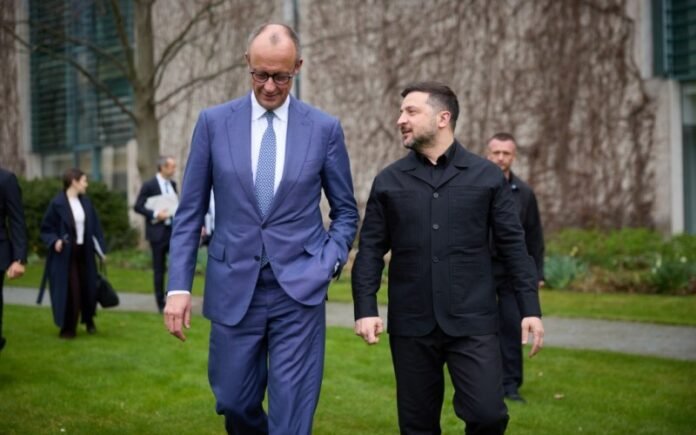
German Chancellor Friedrich Merz has suggested making Ukraine an “associate member” of the European Union to bring it closer to the bloc before it completes the process of qualifying for full membership.

Ukraine is keen to join the bloc as a measure to bolster its security and prosperity as it fights against invading Russian forces, especially as the US has so far rejected the idea of its becoming a NATO member.

In a letter to EU chiefs Ursula von der Leyen and Antonio Costa seen by news agencies on Thursday, the German leader proposed allowing Ukrainian officials to take part in EU summits and ministerial meetings but without voting rights.

“It is obvious that we will not be able to complete the accession process shortly, given the countless hurdles as well as the political complexities of ratification processes,” Merz wrote.

“What I envisage is a political solution that brings Ukraine substantially closer to the European Union and its core institutions immediately,” he wrote.

Under Merz’s proposal, Ukraine would be covered by the bloc’s mutual assistance clause, and it would also be eligible for funding from parts of the EU’s budget.

Merz insisted that he still wanted Ukraine to eventually become a “full member” and urged the launch of all necessary negotations.

“It would not be a membership light,” he wrote.

In a letter to EU chiefs Ursula von der Leyen and Antonio Costa seen by news agencies on Thursday, the German leader proposed allowing Ukrainian officials to take part in EU summits and ministerial meetings but without voting rights.

“It is obvious that we will not be able to complete the accession process shortly, given the countless hurdles as well as the political complexities of ratification processes,” Merz wrote.

“What I envisage is a political solution that brings Ukraine substantially closer to the European Union and its core institutions immediately,” he wrote.

Under Merz’s proposal, Ukraine would be covered by the bloc’s mutual assistance clause, and it would also be eligible for funding from parts of the EU’s budget.

Merz insisted that he still wanted Ukraine to eventually become a “full member” and urged the launch of all necessary negotations.

“It would not be a membership light,” he wrote.

Although 2027 was put forward as a possible date for Ukraine’s EU accession in a 20-point peace plan discussed by the US, Ukraine and Russia, European officials believe the country’s full membership is unlikely in the next few years.

Accession procedures are usually long and entail a great deal of bureaucracy, with candidate countries required to meet several democratic and economic standards.

Each of the bloc’s 27 member states must also approve and ratify any accession, adding to the possible obstacles.

Kyiv’s progress on EU accession was considerably hampered by Hungary’s former Prime Minister Viktor Orban, but his successor, Peter Magyar, has raised some hopes of the process moving forward. raised some hopes of the process moving forward.

Blowing up the world

0
blowing-up-the-world
Blowing up the world

The blockade of the Strait of Hormuz is not an isolated episode but the latest in a series of blows to the global trade and economic order that was established after the Soviet Union’s fall in the early 1990s. Hormuz should probably be unblocked one way or another – and (update alert) Donald Trump claimed in a social media post Saturday afternoon US time that this was about to happen:

I am in the Oval Office at the White House where we just had a very good call with President Mohammed bin Salman Al Saud, of Saudi Arabia, Mohammed bin Zayed Al Nahyan, of The United Arab Emirates, Emir Tamim bin Hamad bin Khalifa Al Thani, Prime Minister Mohammed bin Abdulrahman bin Jassim bin Jaber Al Thani, and Minister Ali al-Thawadi, of Qatar, Field Marshal Syed Asim Munir Ahmed Shah, of Pakistan, President Recep Tayyip Erdoğan, of Türkiye, President Abdel Fattah El-Sisi, of Egypt, King Abdullah II, of Jordan, and King Hamad bin Isa Al Khalifa, of Bahrain, concerning the Islamic Republic of Iran, and all things related to a Memorandum of Understanding pertaining to PEACE. An Agreement has been largely negotiated, subject to finalization between the United States of America, the Islamic Republic of Iran, and the various other Countries, as listed. Separately, I had a call with Prime Minister Bibi Netanyahu, of Israel, which, likewise, went very well. Final aspects and details of the Deal are currently being discussed, and will be announced shortly. In addition to many other elements of the Agreement, the Strait of Hormuz will be opened. Thank you for your attention to this matter! President DONALD J. TRUMP

Hormuz has made it inevitable that a new world order definitively enters the scene. It is one in which seamless globalization no longer properly functions; trade must be guaranteed by military force, as in the 19th century; and bilateral or multilateral exchanges are, in any case, risky. 

Not even during the Cold War did such a situation exist. The two empires had specific codes of conduct that did not significantly impede the general trade flow within their respective blocs. Although the two blocs were separated, occasional exchanges still occurred, such as Western countries’ purchases of oil from Russia during the 1970s OPEC crisis. Today, by contrast, the chaos is not governed by bilateral or multilateral gentlemen’s agreements. Everything seems left to chance, events, and occasional bargaining and haggling.

Four blows

The first two blows to the order were a medium-term event and a response that sought to be equally medium-term in character. The first is the closure of the Chinese market and the non-full convertibility of the RMB. In practice, this has selectively separated China, the world’s largest industrial power and second commercial power, from the free circulation of goods and services in the rest of the world.

China also has a growing trade surplus and a currency considered undervalued, as Mark Sobel and Brad Setser have recently argued.

The second element is the American response, marked by the imposition of 19th-century tariffs that have affected global trade, not just China. For President Donald Trump’s America, the problem, in general, is its commercial and financial imbalance.

Many are responsible for it, including allies that have trade surpluses with America, thereby contributing to it. For China, the tariffs demonstrate that the problem is not Chinese isolation but rather the unsustainable American system of excess consumption, excessive imports, and de-industrialization — that is, the excess financialization of the economic system. 

According to economist Wang Jian, who identified this over 20 years ago, before the 2008 financial crisis[2], America was a paper economy that could not hold. It needs a relationship with other parts of the world. But these are slipping from its grasp, and the whole thing is curdling like mayonnaise gone bad. China had no other option but to escape this American unraveling and create its own alternative system. The 2008 financial crisis in China seemed to confirm the thesis.

The third element is the closure of Hormuz, which raises the prospect of closing any of the world’s straits and would therefore impose some level of militarization of those straits. It’d be something that multiplies costs and entropy for America and the world. According to China, the one large country that has long prepared to stand out against the fallout from US-led globalization, this would be a new fault line for the US.

Four. The migration pressure sweeping through the Western world carries more than people. It’s a different phase of modernity, in which the white man no longer roams the world and settles it as he did for the past five centuries. Western white men often feel out of place and out of step with the past and without a new role in the present.

The automatic reaction can be: if we are not settling it, we are being settled by new waves of people we had colonized. They have very different worldviews and are changing our way of life and the way we ought to see things. The reaction can be: We are not adapting but opposing it. It then increases friction and entropy.

It all becomes hard to understand.

It’s epistemology, not trade.

It’s true: There is a deep epistemological challenge. The old world is gone, and China seems to feel that in its bones.

Beijing recognizes the crisis facing the Western world and responds systematically. It organized a congress on the proposition that “Theoretical elaboration refers to the process of elevating China’s diplomatic practices and theoretical understandings into academic theories, professional principles, and public knowledge.”

“China has its own distinct characteristics,” reportedly argued Liu Qing, vice president of the China Institute of International Studies. “Western theories of international relations are fundamentally shaped by Western centrism. By contrast, in China’s independent knowledge system of international relations, the concept of a community with a shared future for humanity occupies a central position.”

He emphasized that the first essence of building China’s independent knowledge system of international relations lies in “China.”

Western knowledge spread organically alongside Western power over the centuries, shaping modernity. China is now organizing an “independent” worldview to shape the future world through a centralized effort. Will it work? To what extent?

Something that is “China-centered” may seem to work for China, but how can it work for the rest of the world? Will the world be subjected to blackmail, forced to be tributary vassals of the Chinese system, or starved and marginalized? Some Chinese may think that the US operates just such a mechanism and thus Beijing can too. 

There may be significant confusion and superficiality surrounding this diagnosis. Yet this effort deserves serious consideration because it goes to the heart of an anthropological crisis.

Mistrusts of the West

The Chinese position is grounded in deep mistrust of the Western world and is intended to defend the Chinese political status quo, but it’s not just that. There is a continuation of the old anticapitalist mistrust and difficulty in rationally understanding how a capitalist system works.

As philosopher Lorenzo Infantino long argued, socialist theory was refuted twice a century ago. In 1920, the Austrian economist Ludwig von Mises published a forty-page text, “Economic Calculation in the Socialist Commonwealth, which demonstrated that a socialist economy is impossible. His thesis boils down to a few lines: Without private property in the means of production, there are no market prices. 

In a market economy, prices for capital goods and the means of production emerge from the interaction of supply and demand. These prices convey crucial information about relative scarcity and consumer preferences. Under socialism, the state owns the means of production, and there is no genuine market for them.

Without a market, there are no real prices for goods. Without real prices, economic planners have no way to calculate whether a given use of resources is efficient or wasteful. Therefore, socialist planners are essentially flying blind — they cannot allocate resources rationally. You can nationalize an economy. You cannot calculate it.

Friedrich Hayek later extended Mises’s argument, emphasizing the role of dispersed knowledge in his 1945 essay “The Use of Knowledge in Society.” He had an even deeper intuition.

The knowledge relevant to an economy is not concentrated in an office. It is dispersed across millions of minds, tied to local contexts, hands-on skills, on-the-ground intuitions and preferences that change every day.

No planner, even with the world’s most powerful computer, can aggregate that information. The market is not merely an efficiency mechanism. It is a cognitive mechanism. It is the only device ever invented that knows how to coordinate knowledge that no one possesses in full.

Rational but unconvincing?

The reasonable arguments were far more convincing than the vague “invisible hand” (possibly inspired by the Taoist wuwei, non-action) that Adam Smith intuited as the true engine of free markets in the 18th century, at the beginning of the capitalist revolution. 

The failures of communist countries during the short 20th century proved the theory in practice and led to the eventual meltdown of the Soviet experiment.

Still, there might be something more, and more rational, against capitalism: the concern about its endemic instability and the sweeping financial-social crisis that brings everything to the verge of collapse now and then.

In his biography of Stalin, Stephen Kotkin describes the USSR’s critical juncture in the late 1920s. Trotsky was expelled from the party in his power struggle with Stalin, and the Soviet economic experiment was producing starvation and utter poverty. The socialist trial was going very badly. But Kotkin notes that just then, the unprecedented 1929 financial crisis re-convinced the socialists that Marx was right and that capitalism was about to die of its own liabilities.

Something similar, and perhaps deeper, happened in China between 2005 and 2009. The Chinese leadership was half-convinced that its political system didn’t work and that some political reform was necessary. It was about 90% certain that its economic structure didn’t work and that broader changes were needed.

Yet the US failures to export democracy in Iraq and Afghanistan, followed by the 2008 financial crisis, without a massive readjustment of the financial mistakes that led to it, reshaped many priorities.

The new consensus in Beijing was that the political system shouldn’t be democratized and that the economy could be tweaked but not overhauled, because the West was about to succumb.

Moreover, the Chinese economy was not flying completely blind. Its industry, geared toward exports, piggybacked on the US capitalist price assessment. Therefore, its currency and prices, although not fully aligned with a market-oriented valuation, are not completely out of whack like Soviet prices. Periodic price misalignments can be adjusted through international bargaining, which gives Chinese authorities extra leverage with their Western frenemies.

This gives China time and room to maneuver, assess the international situation, and respond accordingly. Any other option is less appealing, especially as chaos is growing elsewhere in the world. For instance, its relationship with Russia, though uneasy, remains important.

China knows that wuwei is hard to pin down and gauge. Moreover, giving political power to the market means taking it away from the leadership.

This might be acceptable if the market is fair and square, but if greedy capitalists and other forces rig it, wise leadership might be better overall.

Moreover, new AI technology provides wise leadership with previously unknown tools for knowledge that might outsmart a free market that has grown too dispersed and is thus often manipulated. Hayek’s argument no longer holds. Or does it?

What to do

We’re back to Lenin’s old revolutionary question: What is to be done?

Then it’s not just Hormuz or the war in Ukraine. Either China is brought back into the fold (but how and why should China accept it when, from China’s perspective, there are many downsides)?, or the US needs to develop its own separate system that might selectively include some countries of its choice.

The countries left out of the US system, which risk being taxed exorbitantly (through tariffs or demands for higher military spending), should be persuaded to join the common effort, or the unity will be broken, endangering the US itself and pushing everyone towards a China-centered world.

Or the US can pursue its own lonely “salvation.” But if it does, the rest of the world could gang up against it, openly or secretly.

Trump’s America may not yet have decided how to proceed. He is clearly right to ride the wave rather than wait for the water to crush the US on the sand.

In the meantime, Chinese intelligence argued that US-China ties are stabilizing, and now it’s about managing sticky issues-Taiwan. The report has no mention of Russia, Iran or North Korea. Will the outcomes of wars and the global arms race not change China’s or the US’s positions? Is Beijing offering a major trade deal to the US?

Possibly, the report aims to reassure both domestic and foreign audiences that the US-China relationship is under control and that the environment is conducive to investment and business.

The reality, however, may be different: It would be difficult for the US to agree to sell out Taiwan and all of Asia to China. If that happened, what would the US trade for? Would the rest of Asia accept this without reacting? Would India or Japan agree to become China’s vassals? Furthermore, would China abandon Russia and risk being surrounded? Is China ready to rein in North Korea, and how?

Perhaps, instead, a precarious yet precious equilibrium has been reached between the US and China. It may hold until the Midterms — and then we’ll see. Meanwhile, without a genuine Western effort, China’s worldview will drift farther from that of the US, to an even greater degree tearing the world asunder.

Francesco Sisci is the director of the Appia Institute, which originally published this article. It is republished with permission.

Iran Deal ‘Largely Negotiated’ President Trump Says; Senior Republicans Voice Alarm

0
iran-deal-‘largely-negotiated’-president-trump-says;-senior-republicans-voice-alarm
Iran Deal ‘Largely Negotiated’ President Trump Says; Senior Republicans Voice Alarm


President Donald Trump said Saturday that an agreement involving the United States, Iran, and several regional countries had been “largely negotiated.” However, several Republican lawmakers raised concerns about the proposed terms under discussion.

In a Truth Social post, President Trump said he had spoken from the Oval Office with leaders from Saudi Arabia, the United Arab Emirates, Qatar, Pakistan, Turkey, Egypt, Jordan, and Bahrain regarding “all things related to a Memorandum of Understanding pertaining to PEACE.”

“An Agreement has been largely negotiated, subject to finalization between the United States of America, the Islamic Republic of Iran, and the various other Countries, as listed,” President Trump wrote. He added that he had separately spoken with Netanyahu and said the conversation “went very well.”

“Final aspects and details of the Deal are currently being discussed, and will be announced shortly,” adding that “the Strait of Hormuz will be opened,” he concluded.

Mississippi Sen. Roger Wicker and South Carolina Sen. Lindsey Graham also expressed caution regarding a possible agreement. “This combination of Iran being perceived as having the ability to terrorize the Strait in perpetuity and the ability the inflict massive damage to Gulf oil infrastructure is a major shift of the balance of power in the region and over time will be a nightmare for Israel,” Graham wrote on X Saturday.

Wicker, the chairman of the Senate Armed Services Committee, said the talks could shape President Trump’s legacy and urged him to “finish what we started.”

Earlier Saturday, President Trump told Axios reporter Barak Ravid there was a “solid 50/50” chance the United States would either resume strikes against Iran or secure what he described as a “good” agreement.

“I think one of two things will happen: either I hit them harder than they have ever been hit, or we are going to sign a deal that is good,” he said.

The president added that the proposed arrangement should address uranium enrichment and Iran’s stockpile of enriched uranium, although Axios reported those issues were unlikely to be resolved immediately under the memorandum currently being discussed.

Israeli broadcaster N12 reported that Netanyahu convened a meeting of his security cabinet over concerns the proposal would be unfavorable to Israel.

The reported terms would involve Iran reopening the Strait of Hormuz in exchange for financial benefits, while discussions regarding Tehran’s nuclear program and enriched uranium stockpile would take place later. Iran’s ballistic missile program reportedly was not included in the talks.

0FansLike
0FollowersFollow
0FollowersFollow
0SubscribersSubscribe
- Advertisement -
Google search engine

Recent Posts