Netanyahu Reportedly ‘Concerned’ About Proposed Framework To End Iran Conflict
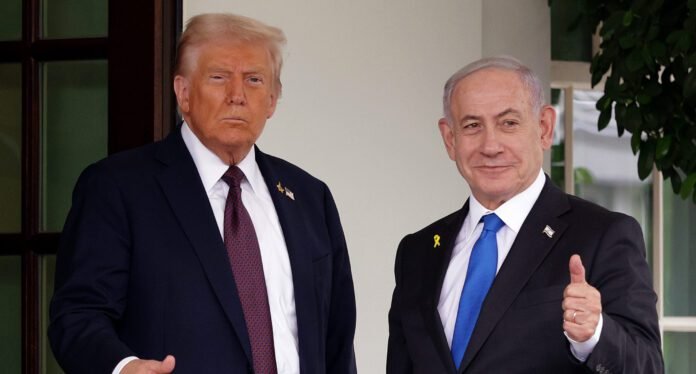
President Donald Trump and Prime Minister Benjamin Netanyahu held a tense conversation Tuesday over efforts by Arab and Muslim mediators to advance a proposed framework intended to prevent renewed conflict between the United States and Iran and reopen negotiations with Tehran.
According to three sources familiar with the discussion cited by Channel 12, President Trump briefed Netanyahu on a proposed “letter of intent” that mediators are seeking to secure between Washington and Tehran. The proposal would begin with a 30-day negotiation period covering issues including the Strait of Hormuz and Iran’s nuclear program.
Two Israeli sources familiar with the call said Netanyahu questioned the initiative and supported maintaining US military pressure on Iran in an effort to weaken the regime.
The discussions took place as Qatar, Pakistan, Saudi Arabia, Turkey, and Egypt continued mediation efforts related to the dispute.
One US source briefed on the call told Axios that “Bibi’s hair was on fire after the call.” The same report said Netanyahu had expressed concern during earlier stages of negotiations as well. “Bibi is always concerned,” the source said.
Asked on Wednesday about his conversation with Netanyahu, President Trump told reporters he believed the Israeli leader would follow his direction.
“He’s a very good man, he’ll do whatever I want him to do. And he’s a great guy … Don’t forget he was a wartime prime minister,” he said.
Sources close to Iran’s negotiating team told the Iranian semi-official news agency Tasnim that Tehran’s mediators were reviewing the document, although no agreement had been finalized.
President Trump said Wednesday that the United States and Iran remained close to either renewed conflict or a diplomatic agreement.
“Iran and the US are right on the borderline,” he told reporters.
“If we don’t get the right answer, it could happen very quickly. We have not got the right answer. It will have to be 100% good answers,” he said, adding that he would allow a “few days” for talks.
The Prime Minister’s Office declined to comment. A spokeswoman for the Israeli Embassy denied that Ambassador Leiter told US lawmakers that Netanyahu was worried following the call. The White House did not respond.
Google publishes exploit code threatening millions of Chromium users
Google on Wednesday published exploit code for an unfixed vulnerability in its Chromium browser codebase that threatens millions of people using Chrome, Microsoft Edge, and virtually all other Chromium-based browsers.
The proof-of-concept code exploits the Browser Fetch programming interface, a standard that allows long videos and other large files to be downloaded in the background. An attacker can use the exploit to create a connection for monitoring some aspects of a user’s browser usage and as a proxy for viewing sites and launching denial-of-service attacks. Depending on the browser, the connections either reopen or remain open even after it or the device running it has rebooted.
Unfixed for 29 months (and counting)
The unfixed vulnerability can be exploited by any website a user visits. In effect, a compromise amounts to a limited backdoor that makes a device part of a limited botnet. The capabilities are limited to the same things a browser can do, such as visit malicious sites, provide anonymous proxy browsing by others, enable proxied DDoS attacks, and monitor user activity. Nonetheless, the exploit could allow an attacker to wrangle thousands, possibly millions, of devices into a network. Once a separate vulnerability becomes available, the attacker could use it to then compromise all those devices.
“The dangerous part here is that you can just have a lot of different browsers together that you can in the future run something on that you figure out,” said Lyra Rebane, the independent researcher who discovered the vulnerability and privately reported it to Google in late 2022 in an interview. She said using the exploit code Google prematurely published would be “pretty easy,” although scaling it to wrangle large numbers of devices into a single network would require more work. In the thread of Rebane’s disclosure to Google, two developers said in separate responses that it was a “serious vulnerability.” Its severity was rated S1, the second-highest classification.
Since its reporting 29 months ago, the vulnerability remained unknown except to Chromium developers. Then on Wednesday morning, it was published to the Chromium bug tracker. Rebane initially assumed the vulnerability was finally fixed. Shortly thereafter, she learned that, in fact, it remained unpatched. While Google removed the post, it remains available on archival sites, along with the exploit code.
Google representatives didn’t immediately respond to an email asking how and why it published the vulnerability and if or when a fix would become available.
Long delays are common
Rebane said she has reported multiple other Chrome or Chromium vulnerabilities that have resulted in patches. She said long delays in fixing them are common, although this instance was the longest.
“I think what happened is sort of nonstandard in that it does not get past any defined security boundaries,” she said. “So this does not let an attacker, for example, access your emails or your computer or something like that. I guess that led to [Google’s] own people getting assigned, or the people who were assigned not understanding it, and then that’s how it took such a long time.”
By exploiting the browser fetch API, the code opens a service worker that remains persistently active. The connection is invoked by JavaScript running on a malicious site. Exploits are particularly hard to detect when run on Edge. The JavaScript “might” open a downloads dropdown window, but it doesn’t add any items to it. On later browser launches, the window will no longer appear. On Chrome, the download dropdown is more persistent. In either case, less experienced users are likely to consider the behavior the result of a nuisance bug and have no idea their device is compromised.
In the private bug disclosure thread, a developer said that logs indicate that use of the background fetch feature is extremely limited on Chrome, with on average “~17 completed files per user per day.” “That’s pretty solid confirmation that nothing awful is happening at scale,” the developer wrote. It’s not known how widely used the feature is for browsers other than Chrome. Rebane said she doubts the vulnerability is being actively exploited against other browsers.
Nonetheless, the vulnerability poses a risk. Users of Chromium browsers should be suspicious of download dropdowns that appear for no reason. Drilling into the cause and discovering they’re the result of the vulnerability being exploited remains more complicated. Other browsers Rebans confirmed as vulnerable include Brave, Opera, Vivaldi, and Arc. Both Firefox and Safari are unaffected because they don’t support the browser-fetching feature.
Princess Diana’s Brutal Snub of JFK Jr. Left Camelot Heir Reeling
Princess Diana and John F. Kennedy Jr. seemed like a perfect match for the glossy pages of George magazine.
She was the rebel royal.
He was America’s Camelot prince.
But when JFK Jr. tried to put Diana on the cover of his political celebrity magazine, the princess reportedly gave him a polite but crushing no.
According to Caroline Hallemann’s book The Kennedys and the Windsors, JFK Jr. was determined to land Diana after launching George in 1995. He believed she was the ultimate mix of fame, power, politics, beauty, and humanitarian star power.
Diana, however, was not so easily won over.
The two met at New York’s famed Carlyle Hotel, where JFK Jr. hoped to seal the deal. Instead, Diana reportedly shut the conversation down almost before it began.
“Well, you know, this is all very nice, John. Thank you,” she allegedly told him, before saying she would pass “this time” and maybe consider it for a future issue.
It was elegant.
It was icy.
And it reportedly left JFK Jr. deeply frustrated.
Insiders said John could not believe Diana kept turning him down. He saw the cover as a historic meeting of two global dynasties: Britain’s royals and America’s Kennedys.
But Diana, who had spent years being hounded by the press, was not about to hand her image over to a new magazine still trying to prove itself.
Even after the snub, JFK Jr. reportedly kept trying.
In February 1997, just six months before Diana died in Paris, she sent him another letter declining an invitation. In it, she referenced the paparazzi nightmare that haunted both of them.
“I hope the media are leaving both you and Carolyn alone,” Diana wrote, referring to JFK Jr. and his wife, Carolyn Bessette Kennedy. “I know how difficult it is, but believe it or not, the worst paparazzi are here in Europe!”
The words now read like a chilling warning.
Diana died later that year after a Paris car crash while being pursued by photographers. Less than two years later, JFK Jr. and Carolyn were killed in a plane crash off Martha’s Vineyard.
Bond tremors from Washington to London to Tokyo upend Asia
TOKYO — Bond markets are cracking around the globe as geopolitical, technological and demographic trends simultaneously upend everything investors thought they knew about 2026.
The turmoil is propelling borrowing costs to multi-year highs from Washington to London to Tokyo. It’s altering the economic and political calculus in real time. And debt yields, it seems clear, will remain elevated everywhere all at once.
“Rates will stay higher for longer and investors should plan accordingly,” warns Apollo Management economist Torsten Slok.
Nowhere is that truer than here in Japan. The global bond sell‑off is putting Tokyo in an uncomfortable spotlight – raising the specter of a dreaded economic refrain, “This time is different,” becoming reality.
Yields on 30-year Japanese government bonds are the highest since 1999, when the maturity was first sold. The $31 trillion US Treasury market, of course, is garnering even more attention. On Tuesday, the 30-year US yield jumped basis points to 5.18%, the highest since 2007, as surging oil prices fanned inflation fears.
In recent years, the 5% level has been seen as a “line in the sand,” notes Ed Al-Hussainy, a portfolio manager at Columbia Threadneedle. Now that it’s above that, investors in the premier debt market are pivoting away from longer-term debt.
“With debt rising faster than growth, worsening inflation profiles and no political will for fiscal reform, there is little reason to reach for the long end,” says Ajay Rajadhyaksha, Barclays Banks’s global chairman of research.
The UK is also in the spotlight in unenviable ways. Markets are increasingly worried about London’s political and, by extension, fiscal direction. Concerns about future spending plans are colliding with leadership turmoil and fears of a repeat of the Liz Truss-style fiscal shock. That’s pushed gilt yields to the highest in the Group of Seven, as investors demand more compensation for holding UK debt.
“The recent repricing has pushed the Gilt curve to its highest level since 1998,” write economists Fatih Yilmaz and Neil Staines at Eurizon SLJ Capital in a report. “The timing is also unhelpful. Fiscal and political uncertainty are coinciding with the Iran conflict, while ongoing pressure on living standards continues to weigh on the economy.”
Yilmaz and Staines warn that a “further sustained increase above 7% could trigger a deep recession and a full-blown fiscal credibility crisis. Such a scenario might combine elements of a severe UK housing downturn, the Eurozone sovereign crisis and a much harsher version of the post-Liz Truss market disruptions.”
Robin Brooks, economist at the Brookings Institution, notes that “Japan has been in a slow-motion blow-up of exactly this kind for two years.” He notes that “the bottom line is that ‘Liz Truss’ bond market selloffs are becoming more common across the G10 as debt levels rise and institutional integrity declines. The distinction between the G10 and emerging markets is becoming blurred, which is one driver behind the rapid pace of appreciation of EM currencies against the G10.”
Yet tremors in Japan could matter more in the short run. At the moment, Japanese yields are skyrocketing while a weak yen is testing the 160 level to the dollar. The surge in 10-year JGB yields to 2.77% is all the more troubling considering Japan is managing the globe’s biggest debt burden with a shrinking population.
The plot thickens when the fourth-biggest economy’s role as the world’s top creditor nation is factored in. Twenty-seven years of the Bank of Japan holding rates at, or near, zero turned Tokyo into global markets’ ATM.
For decades, investment funds borrowed cheaply in yen to bet on higher-yielding assets around the globe. As such, sudden yen moves disrupt markets worldwide. The so-called “yen-carry trade” is one most crowded anywhere. And it’s prone to sharp correction — now perhaps more than ever.
“The Middle East conflict has prompted a revision of our growth and inflation forecasts for Japan,” notes Deborah Tan, an analyst at Moody’s Ratings. Tan adds that “higher inflation and prospects of additional fiscal support are putting pressure on JGB yields.”
One reason is Prime Minister Sanae Takaichi tempting fate with her fiscal plans. In the months before she rose to the premiership last October, Takaichi rattled debt markets with talk of tax cuts and increased stimulus spending. This was after her predecessor Shigeru Ishiba in May 2025 warned Tokyo’s deteriorating finances are “worse than Greece.” Ishiba’s point was that with a debt-to-GDP of 260% and the fastest-shrinking population in the developed world, a tax cut seems reckless.
There are unique reasons why the often-predicted JGB crash never seems to arrive. For one thing, 90% of JGBs are held domestically. That significantly reduces the risk of a large-scale capital flight. Meanwhile, banks, insurance companies, pension funds, endowments, the postal system and the growing ranks of retirees would suffer painful losses. So, the collective incentive is to hold onto debt issues rather than selling.
Yet even inwardly focused debt markets like Japan’s can’t avoid the shockwaves coursing through the global financial system. Hence fears of a “Liz Truss moment” in Tokyo. In late 2022, then-UK Prime Minister Truss destabilized the debt market by attempting to sneak an unfunded tax cut past bond traders. The extreme market turmoil remains a cautionary tale for Takaichi as her party mulls fiscal loosening.
This risk burst back into the headlines this week. In recent weeks, Takaichi held that Japan’s economy didn’t need an extra budget financed with fresh borrowing. Now, Takaichi is directing Finance Minister Satsuki Katayama to race an extra budget into existence as rising commodity prices slam consumer confidence. This about-face is adding to strains on the JGB market.
“Any extra budget would come amid renewed concerns over Japan’s fiscal sustainability and would reduce the Takaichi’s administration’s ability to deliver structural changes, such as lifting constitutional limits on defense spending, that could meaningfully alter the balance of power in Asia,” says Carlos Casanova, economist at Union Bancaire Privee.
As added wrinkle, though, is that the so-called “bond vigilantes” are watching Tokyo’s every move. It’s complicated, of course. Because there is so little trading in ultralong JGBs, notes economist Richard Katz, author of the Japan Economy Watch newsletter, “tiny events can send their rates reeling.”
Ultralong JGBs, Katz observes, were created at the behest of life insurers and similar institutional investors so they could match maturities between their assets and liabilities. They practice “buy and hold,” so there’s little trading in them, as opposed to the ¥1.0 quadrillion ($6.3 trillion) in trades in the 10-year JGB in 2025.
“Such thin trading means the yield on 30- and 40-year JGBs can be tossed around by a relatively small burst of buying or selling,” Katz notes. “Hence, it is a mistake to take such gyrations as a sign of financial fundamentals.”
Japan also has long relied on a mutually-assured destruction dynamic. Because JGBs are still the main financial asset held by, well, everyone, there are few incentives to sell. The dark side is that fears of roiling the bond market have had the BOJ pulling its monetary punches for decades now. Fears of triggering a bond market meltdown have long dissuaded policymakers from hiking rates.
Perhaps it’s just a coincidence but 1999 was both the year when Tokyo first introduced the 30-year bond and the year when the BOJ first cut rates to zero, a first for a G7 economy. Since then, the BOJ has rarely missed a chance to push the envelope to add even more liquidity to the economy. The most extreme example was in 2013, when then-BOJ Governor Haruhiko Kuroda supersized the central bank’s holdings.
By 2018, Kuroda’s aggressive hoarding of JGBs and stocks via exchange-traded funds saw the BOJ’s balance sheet top the size of Japan’s $4.2 trillion economy. Since taking the BOJ controls in April 2023, Governor Kazuo Ueda has been trying to taper Kuroda’s titanically large purchases. And often struggling – especially now as Japan grapples with stagflation.
The Ueda BOJ is expected to hike rates next month from 0.75% to 1%. With the BOJ forecasting inflation to 2.8% this year, well above the 2% target, Ueda has ample justification to tighten. The BOJ is, of course, hemmed in by slowing growth; it expects a roughly 0.5.% rate in 2026.
The BOJ is also hemmed in by an unruly bond market. It’s an Asia-wide challenge, particularly among emerging economies.
The region doesn’t tend to fare well during episodes of runaway dollar strength. In 1997, its surge made it impossible to maintain Asia’s currency pegs. First, Thailand devalued. Next Indonesia. Then South Korea. All three went hat-in-hand to the International Monetary Fund and other agencies for giant bailouts totaling US$118 billion. Though neither sought bailouts, the turmoil pushed Malaysia and the Philippines to the brink.
Since then, the emerging markets have been very sensitive to the specter of the Fed hiking rates. Case in point: the 2013 Fed “taper tantrum.” Market jitters over mere hints that the Fed might be hitting the brakes prompted Morgan Stanley to publish a “fragile five” list on which no emerging economy wanted to be. The original group: Brazil, India, Indonesia, South Africa, and Turkey.
Now, a surging dollar is complicating Asia’s development plans anew. History’s greatest magnet is luring capital from every corner of the globe, hogging wealth needed to finance developing nations’ budget deficits, keep bond yields stable and support equity markets.
The Iran war has the dollar’s wrecking-ball tendencies bursting back onto the scene. Despite the US national debt nearing US$40 trillion, high inflation, and US President Donald Trump’s tariffs, profligate spending and policy volatility, the dollar is rising — against all odds. It’s outshining gold and Bitcoin even as Trump’s Iran war goes sideways. It’s even overpowering the artificial intelligence trade.
Economist Carol Kong at Commonwealth Bank of Australia speaks for many when she says “the dollar is king while this conflict lasts. If we’re right about this conflict being protracted, I think oil prices will just keep rising and it will push the dollar higher, at the expense of net energy importers like the Japanese yen and the euro.”
All this could be a clear and present danger for Asia in 2026. For Asia, having commodity prices “go up when their exchange rates are already weak is doubly painful,” said Harvard economist Kenneth Rogoff.
These stains will intensify as bond markets quake around the globe. The surge in yields from the US to the UK to Japan is altering the calculus far 2026 economic growth and market stability faster than Asia can keep up.
Russia delivers nuclear munitions in Belarus as part of nuclear drills
Russia delivered nuclear munitions to field storage facilities in Belarus as part of major nuclear drills, the Russian Defence Ministry said on Thursday.
The three-day nuclear exercise, which started on Tuesday and is taking place across Russia and Belarus, comes at a time when Moscow is locked in what it says is an existential struggle with the West over Ukraine.
“As part of the nuclear forces exercise, nuclear munitions were delivered to the field storage facilities of the missile brigade’s position area in the Republic of Belarus,” the ministry said.
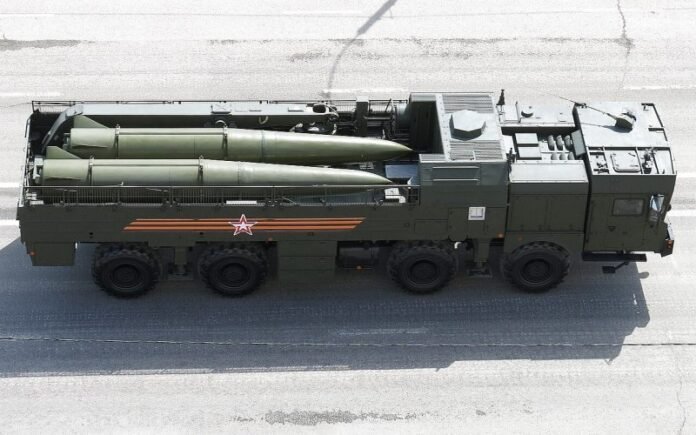
Russia said the missile unit in Belarus was carrying out training to receive special munitions for the mobile Iskander-M tactical missile system, including loading munitions onto launch vehicles and secretly moving to a designated area for launch preparation.
Footage released by the Defence Ministry showed a truck driving through a forest amid lightning and unloading an item. It was not immediately clear what they were unloading.
The Iskander-M, a mobile guided missile system code-named “SS-26 Stone” by NATO, replaced the Soviet “Scud”. Its guided missiles have a range of up to 500 km (300 miles) and can carry conventional or nuclear warheads.
Throughout the war in Ukraine, President Vladimir Putin has issued reminders of Russia’s nuclear might as a warning to the West not to go too far in its support of Kyiv.
The Kremlin slammed remarks by Lithuania’s top diplomat as “verging on insanity” on Wednesday after Foreign Minister Kestutis Budrys said NATO had to show Moscow it was capable of penetrating the Russian exclave of Kaliningrad.
Kaliningrad is sandwiched between NATO members Lithuania and Poland on the Baltic coast. It has a population of around 1 million and is heavily militarised, serving as the headquarters of Russia’s Baltic Fleet.
Maps of a vanished world: The myth of containing Iran
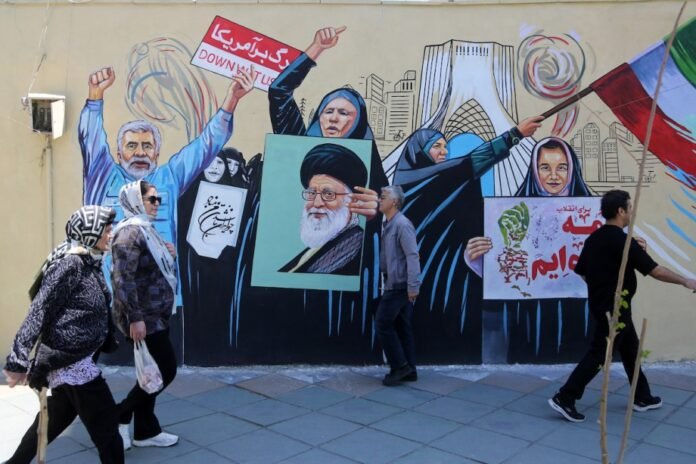
Despite decades of maximum pressure, crippling sanctions, and diplomatic isolation, the geopolitical reality of the Middle East suggests a profound paradox: the more the West and its regional allies speak of “containing” Iran, the more central Tehran becomes to the regional order. From the Levant to the Gulf of Aden, the Islamic Republic has moved beyond being a mere “disruptor” to becoming a structural pillar of the Middle East’s political and security landscape.
The Western-led strategy of containment has largely operated on the assumption that Iran could be boxed in until it either capitulated or collapsed. However, this approach has failed to account for Tehran’s “strategic depth”—a sophisticated blend of asymmetric alliances, ideological soft power, and a resilient, albeit battered, domestic defence industry. Far from being sidelined, Iran’s influence is now woven into the very fabric of the region’s most critical flashpoints despite its major setbacks over the last three years.
To understand the current Middle East is to acknowledge that no sustainable security arrangement or political resolution can be achieved by ignoring the Iranian factor; it is not just a player in the game, but increasingly, one of its primary architects.
If anything, the current US-Israeli war on Iran has revealed that the Islamic Republic is capable of reinventing itself under enormous pressure.
The geographic simple factor should also be accounted for; Iran, simply, will not go anywhere and it is there to stay as it has been for centuries.
Historically, Iran’s Arab neighbours have lacked an independent strategy toward Tehran, opting instead to subscribe to the Western containment model. During the Shah’s reign, when Tehran served as a pivotal Western ally, its neighbours remained as accommodating as possible—an alignment that persisted despite the fundamental divergence between the long-term goals of the United States and those of the Gulf. While Washington’s priorities are often tethered to global power competitions or the whims of domestic political cycles, the Gulf States are bound to a permanent, unchangeable reality: Iranian geography. By outsourcing their security posture to the West, these states have frequently found their regional interests colliding with the very global strategies meant to protect them.
The barometer of volatility: How the world became a hostage to Trump’s mood
Furthermore, a critical blind spot in this alignment remains the US commitment to Israel’s security and its “Qualitative Military Edge”. For Washington, maintaining Israel’s regional supremacy is a paramount doctrine that frequently contravenes the security requirements of the Gulf States themselves—a reality that has only been reinforced over the last few months. The naive assumption that Western or Israeli interests are inherently synonymous with Gulf security has proven to be a significant strategic failure. By outsourcing their security posture to external powers, Gulf nations have inadvertently turned their own backyard into a frontline for a conflict they can neither fully control nor survive without catastrophic economic cost. The current “on-off” war serves as a grim reminder: when the dust settles, external powers may pivot to new global theatres, but the region is left to manage the ruins.
A more sustainable and wiser security alternative would have been a home-grown regional arrangement—one in which Iran plays a role rather than being treated as a permanent outcast.
Indeed, after the immediate success of the February Revolution of 1979, Iran emerged as a disruptive regional force, fuelled by the grand rhetoric of “exporting the revolution.” In its early years, the Islamic Republic sought to challenge the legitimacy of neighbouring monarchies positioning itself as the vanguard of a Pan-Islamic awakening. However, the turning point came in September 1980, when Iraq launched a full-scale war against Iran, hoping to capitalise on Tehran’s internal post-revolutionary turmoil. Instead of attempting to broker a ceasefire or maintain neutrality, the neighbouring Gulf states—most notably Saudi Arabia, Kuwait and the UAE—chose to provide massive financial and logistical support to Baghdad.
This collective regional backing for Iraq transformed a bilateral border dispute into a foundational existential threat for the new Republic. It was this trauma of isolation and invasion that fundamentally reshaped Iranian statecraft. Over the following decades, the initial ideological fervour was tempered—or perhaps perfected—into a pragmatic and highly effective military doctrine known as “forward defence.”
Tehran realised that to survive in a hostile neighbourhood, it could not wait for the next war to reach its borders; it had to cultivate a strategic depth that pushed the frontlines far beyond its own soil.
From the mobilisation of the Popular Mobilization Forces (PMF) in Iraq to the strategic endurance of Hezbollah in Lebanon and the Houthis in Yemen, what began as a revolutionary ambition has matured into a structural reality. While these allies integrated themselves into their respective local politics, Iran has ensured that any attempt to strike at the center will inevitably cause the entire regional periphery to ignite. This is no longer merely about ideology; it is about a calculated, asymmetric insurance policy that has rendered the old maps of Middle Eastern power obsolete.
Ultimately, the regional landscape has moved beyond the reach of traditional containment. The prevailing Western policy, characterised by a mixture of economic strangulation and tactical strikes, continues to view Iran as a temporary anomaly that can be corrected through sufficient pressure. Yet, as the last four decades have demonstrated, pressure has served only to harden the cement of this regional architecture.
By integrating itself into the social and political marrow of the Levant and the Gulf, Tehran has created a reality where the cost of its removal far exceeds the regional appetite for total war.
We are, therefore, witnessing the birth of a multipolar Middle East where the old zero-sum games no longer apply. The “insurance policy” Iran has spent forty years building is now being cashed in, not through a single decisive battle, but through the slow, institutional entrenchment of its allies from Baghdad to Sana’a. To continue ignoring this structural anchor is to chase a geopolitical mirage. It is, therefore, to conclude that the real challenge for the coming decade is not how to “contain” a revolutionary state, but how to navigate a regional order where the lines between state power and non-state influence have blurred permanently, leaving the old architects of Middle Eastern policy holding maps of a world that no longer exists.
Greater Israel: Coming soon to a neighbour near you; lines may change without notice
The views expressed in this article belong to the author and do not necessarily reflect the editorial policy of Middle East Monitor.
“Ryzen 5800X3D 10th Anniversary Edition” may help you avoid paying for a new PC
It’s not an ideal time to be buying a new PC or doing a major upgrade. Price crunches for RAM and storage chips are making all kinds of components more expensive, and the shift to DDR5 in modern Intel and AMD CPUs means that a lot of people would need to pay money to replace their current DDR4 kits if they wanted to step up to a significantly newer, faster CPU and motherboard.
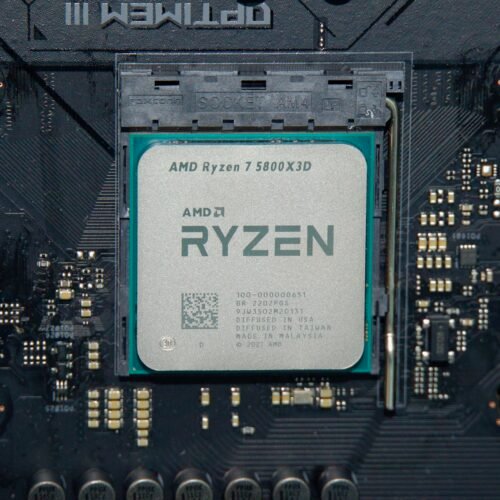
AMD may have something on the horizon for people who are looking to stretch their current PC (and its DDR4 RAM kit) just a little further. Leaks spotted by Tom’s Hardware point to the existence of an “AMD Ryzen 7 5800X3D 10th Anniversary Edition,” a re-release of a 4-year-old out-of-circulation CPU that might nevertheless be an upgrade for people with older Ryzen CPUs in Socket AM4 motherboards.
The “X3D” in the chip’s name signifies that it comes with 64MB of extra L3 cache stacked on top of the main CPU die, bringing the total amount of L3 cache to 96MB. Workloads that benefit from extra cache—including most games—will perform much better on the 5800X3D than they do on the vanilla Ryzen 7 5800X.
The “10th Anniversary” being celebrated isn’t for the 5800X3D itself, but the AM4 processor socket, which first launched in September 2016. The socket was succeeded by AM5 nearly four years ago, but AMD kept the AM4 socket around to continue to address the budget market. Higher prices for DDR5 RAM kits and AM5 motherboards themselves have helped keep the AM4 socket around since then, and while AMD hasn’t released any new architectures for AM4 boards since late 2020, it has been remarkably persistent in releasing and re-releasing remixed Ryzen 5000-series CPUs for the socket.
The 5800X3D was the first of AMD’s X3D releases, and it comes with the most compromises compared to standard Ryzen chips. It doesn’t support most forms of overclocking, and its base and boosted clock speeds are each a few hundred MHz lower than the regular Ryzen 5800X. If you’re not planning to pair the chip with a fairly fast, recent GPU from Nvidia’s GeForce RTX 40- or 50-series or AMD’s Radeon 9070 XT, a regular eight-core Ryzen 7 chip from the 5700 or 5800 series may get you better value for your money.
But for people with a high-end GPU who don’t want to pay today’s inflated prices for a good kit of DDR5 memory, a re-release of the 5800X3D could help stretch that old Socket AM4 system for just a few more years.
AMD hasn’t officially announced pricing or availability for this chip yet, but the apparent existence of retail packaging suggests its launch may be imminent. An Indian retailer listed the chip for about $310, though we’d take this with a grain of salt given ongoing disruption from tariffs, fuel costs, chip shortages, and other factors. Used versions of the 5800X3D start between $450 and $500 on eBay as of this writing, so anything lower would be a relative bargain, provided AMD can keep the chip stocked.
Indonesia’s dangerous return to state-controlled trade
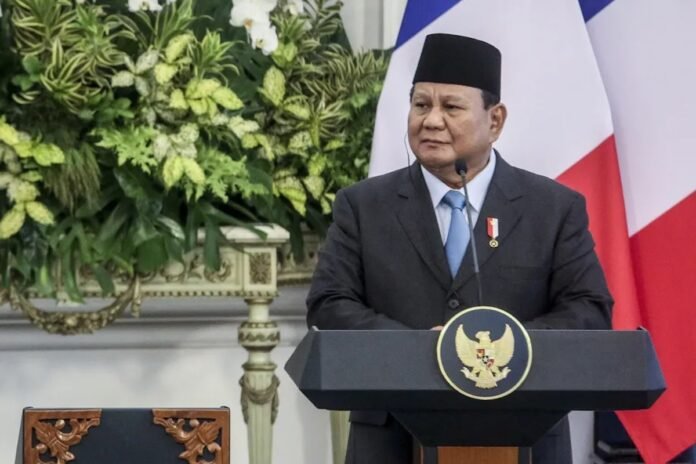
Indonesia’s President Prabowo Subianto has unveiled one of the most consequential economic interventions since the fall of Suharto: a plan to centralize exports of strategic commodities — including palm oil, coal and ferroalloys — through a state-controlled structure linked to the sovereign fund Danantara.
The official justification is seductive. Indonesia, the government says, has lost hundreds of billions of dollars through under-invoicing, transfer pricing and opaque offshore trading schemes.
The problem is real. Commodity exporters across the developing world have long shifted profits to Singapore, Hong Kong or Dubai while reporting artificially low prices at home. Governments lose taxes. Foreign exchange earnings disappear offshore. National wealth leaks outward.
But the cure proposed by Prabowo may prove more dangerous than the disease.
Rather than strengthening Indonesia’s existing institutions — the tax office, customs authority, financial intelligence agencies and anti-corruption bodies — the administration is building an entirely new layer of state control over trade. According to reports, the mechanism will operate through a newly established entity, PT Danantara Sumberdaya Indonesia, registered only shortly before the president’s parliamentary speech.
This is not merely bureaucratic reform. It is a structural shift in how Southeast Asia’s largest economy intends to govern capital, exports and political power.
Prabowo frames the move as economic patriotism. Indonesia, the world’s largest exporter of palm oil and thermal coal, should no longer allow foreign intermediaries to determine prices for its resources. He wants exporters to route transactions through a centralized platform under state supervision.
Yet behind the nationalist rhetoric lies a deeper reality: fiscal pressure.
Indonesia faces mounting budgetary demands from energy subsidies, food programs, industrial policy and ambitious welfare spending. At the same time, the rupiah has weakened sharply against the dollar, prompting authorities to tighten foreign-exchange rules and require export earnings to remain longer in domestic banks.
The export gateway is therefore not just about combating fraud. It is about capturing liquidity, securing state revenue and asserting greater control over strategic commodities at a moment of economic anxiety.
There is also a political logic hiding beneath the economic one.
By controlling export flows, the state gains leverage over domestic supply. Indonesia’s biodiesel expansion program — particularly the push toward B50 fuel blending — requires enormous volumes of crude palm oil. State electricity utility PLN depends heavily on reliable coal supply. A centralized export mechanism gives the government indirect power to prioritize domestic allocation over exports without formally imposing bans.
For companies, the signal is unmistakable: exporting will become more complicated, more political and more dependent on administrative approval.
The transition period reportedly gives firms barely days before implementation begins. In commodity markets, where contracts, shipping schedules and financing are planned months ahead, such abrupt intervention creates uncertainty that investors punish immediately.
And history offers Indonesia a warning.
During the Suharto era, the government created the Clove Support and Trading Board (BPPC), the state-backed clove trading monopoly controlled by Suharto’s son Tommy. The official goal was to stabilize prices and protect farmers. The result was cronyism, distorted markets and widespread suffering among small producers. Political insiders captured rents while farmers lost bargaining power.
Today’s Indonesia is not Suharto’s Indonesia. Its institutions are stronger, its press freer and its economy more integrated globally. But the political temptation remains the same: When states control trade flows, access to power becomes economically priceless.
That is why many businesses fear selective enforcement. Companies with strong political connections or alignment with the administration may face lighter scrutiny and smoother approvals. Others may encounter regulatory bottlenecks, delayed permits or opaque compliance hurdles. Even if no formal favoritism exists, the perception alone damages investor confidence.
Markets do not merely evaluate economic fundamentals. They evaluate predictability.
Indonesia has spent two decades persuading global investors that it is a stable democratic economy governed by rules rather than patronage. This new export regime risks undermining that progress. Reuters reported growing investor concern about policy unpredictability and expanding state intervention, amid capital outflows and pressure on Indonesian assets.
The irony is painful. A policy intended to strengthen the rupiah could weaken it over time.
Currencies depend not only on foreign-exchange reserves but also on trust. Investors need confidence that contracts will be honored, regulations applied fairly and commercial decisions insulated from politics. When governments abruptly centralize commodity trade, investors begin pricing in political risk premiums. Capital becomes more cautious. Financing costs rise.
Most troubling, corruption rarely disappears when states centralize power. It simply relocates.
Under-invoicing by private firms is unquestionably a serious problem. But replacing decentralized opacity with centralized discretion can create something worse: institutionalized rent-seeking inside the state itself. The opportunities for favoritism, hidden commissions and political patronage may expand rather than shrink.
Indonesia deserves better than choosing between private leakage and state monopoly.
The country’s challenge is not a lack of control. It is a lack of institutional credibility. Stronger customs enforcement, digital trade transparency, automatic tax-information exchange and judicial independence would address commodity fraud without concentrating enormous commercial power in politically connected entities.
Prabowo is betting that more state control will produce national strength. But history — in Indonesia and elsewhere — suggests that when governments begin controlling who can sell, who can export and who can access markets, economic nationalism often drifts toward oligarchy.
Once trust erodes, rebuilding it is far harder than tightening control.
Bhima Yudhistira Adhinegara is the executive director of the Center of Economic and Law Studies (CELIOS). Muhammad Zulfikar Rakhmat is the director of the China-Indonesia and MENA-Indonesia desks at CELIOS.
False Testimony Sent Tony Carruthers to Death Row. Tennessee Is About to Kill Him.
Earley Story will never forget the name Alfredo Shaw.
As a longtime employee at the Shelby County Jail in downtown Memphis, Story had seen the young man come in and out of the detention facility known as 201 Poplar since the 1980s. Shaw acted cocky, but there was fear in his eyes. Story, a devout Christian, occasionally had conversations with him about God.
In 1994, Shaw became a witness in a grisly triple homicide. A local drug dealer, along with his mother and a teenage friend, had been abducted, murdered, and buried in a freshly dug grave at a cemetery in South Memphis. Prosecutors arrested 25-year-old Tony Carruthers, who had recently gotten out of prison. There was nothing directly tying him to the crime — and he swore that he had nothing to do with it. But Shaw claimed that Carruthers confessed to him. In 1996, a jury sentenced Carruthers to die.
Like most people, Story assumed Carruthers was guilty. But in January 1997, Story himself was accused of a crime he swore he did not commit. He was arrested and charged with selling drugs to an undercover officer. There was no evidence against Story — in fact, the presiding judge initially threw out his case for lack of probable cause. But in 1999, he was tried, convicted, and given probation. The main witness against him was Shaw.
Story was convinced he’d been framed. Over the previous decade he’d become known as a whistleblower, documenting violence and abuse at the jail. This made him a target for retaliation. “I had some enemies within the sheriff’s department,” he said.
“We’re not the only ones he’s done this to.”
Story lost his job and his pension as a result of his conviction. He had been fighting to clear his name for 20 years when, one week before Christmas 2017, he got an envelope in the mail from Riverbend Maximum Security Institution in Nashville. That return address was written in elaborate script below the name “Tony Von Carruthers.”
The envelope contained records confirming what Story had long known to be true: Shaw had been a paid confidential informant. Although this had been an open secret in Memphis for decades, the Shelby County District Attorney’s Office repeatedly denied it. “I have talked to the prosecutors who tried your client and neither is aware of any situation where Alfredo Shaw acted as a paid informant for anybody,” the office had written to Carruthers’s post-conviction attorneys.
The enclosed documents chronicled drug buys Shaw made on behalf of the sheriff’s department between 1991 and 1997. Conspicuously absent was the date when Story supposedly sold drugs to Shaw. Story believed that this should exonerate him. But the courts disagreed.
Story did not know precisely why Carruthers mailed him the records. Nor did he know the truth behind Carruthers’s innocence claim. But when he heard that Tennessee had set an execution date for Carruthers, he was deeply disturbed. No one, he says, should be executed based on the testimony of Alfredo Shaw.
“I’d hate to see him murdered, put to death, when there’s so many open ends,” he said.
Tony Carruthers is scheduled to die by lethal injection on Thursday morning at 10 a.m.
He has maintained his innocence for 32 years.
On Monday, Carruthers’s supporters, including family members and advocates from the American Civil Liberties Union, delivered a stack of petitions to the office of Tennessee Gov. Bill Lee at the state Capitol in Nashville. Despite mounting calls for Lee to stop the execution, on Tuesday he announced that he would not intervene.
In a clemency petition, his attorneys describe Carruthers’s case as a travesty of justice: a death sentence based on lies and a flimsy narrative that was bankrupt from the start. Among those who have spoken out against the execution is Story, now 72. He is joined by another ex-jailer, Bernard Kimmons, who also says he was wrongfully convicted of selling drugs based on Shaw’s testimony. Wearing “Save Tony Carruthers” T-shirts, the men told a Memphis news station that Shaw has a track record of putting innocent people in prison. “We’re not the only ones he’s done this to,” Kimmons said.
False testimony by jailhouse informants is a leading cause of wrongful convictions, often used to fill the gaps in cases where the state’s evidence is weak. The Innocence Project has found that roughly a quarter of death row exonerations are in cases involving a jailhouse snitch.
In Carruthers’s case, no physical evidence implicated him in the murders. Fingerprints from the crime scene have never been linked to anyone, and a blanket found buried with the victims has been shown to have an unknown male DNA profile. Some of the most horrifying details of the crime have also been discredited in the decades since Carruthers’s trial. The case remains infamous in Memphis because of the ubiquitous claim that the victims were buried alive. But this has long been debunked. Although a medical examiner said at trial that the victims suffocated to death, he later retracted his testimony — and other experts have said there was never anything to support it.
These red flags — a lack of physical evidence, unreliable witnesses, and bogus forensic testimony — are all-too familiar features of wrongful convictions. But Carruthers’s case is uniquely shocking in another way: He was sent to death row after acting as his own lawyer at trial. Carruthers’s attorneys have long argued that this doomed Carruthers from the start. They write in his clemency petition that he has a long history of undiagnosed mental illness and “was not competent to stand for trial, much less competent to represent himself.”
Carruthers’s self-representation was especially self-sabotaging where Shaw, the jailhouse snitch, was concerned. By the time Carruthers went to trial in 1996, Shaw had recanted his statements implicating Carruthers in an explosive TV interview, and prosecutors decided against calling Shaw as a witness. But in a perverse irony, Shaw ended up testifying anyway — not for the state, but for the defense. “In an effort to show that the prosecution had secured the indictment with an untrue story,” the clemency petition explained. “Mr. Carruthers believed he had to call Alfredo Shaw to the stand.”
The result was so disastrous that a judge later reversed the conviction of Carruthers’s co-defendant, concluding that Carruthers’s self-representation had violated his co-defendant’s right to a fair trial. That man, James Montgomery, got out of prison in 2015.
To Carruthers’s sister, Tonya, who joined the petition delivery in Nashville — and who said she plans to witness her brother’s execution — the past 32 years have been a living nightmare. She argues that her brother’s conviction was a case of guilt by association — and that his own record made it easy for him to take the fall for a crime he did not commit.
For decades, she said, the press adopted the state’s narrative of the case without examining the obvious problems with the case. “He was already portrayed as a monster in the media before his trial ever started.”
The triple murder that sent Carruthers to death row began as a missing persons case. Forty-three-year-old Delois Anderson lived in North Memphis with her son Marcellos Anderson, her niece Laventhia, and Laventhia’s two young daughters. She worked at a bank during the day and took classes at night.
On the evening of February 24, 1994, Laventhia would later testify, she came home to an empty house. It looked like Delois had been home. “Her car was there. Her purse was there. Her keys were there,” Laventhia said. In Delois’s bedroom, a pack of cigarettes and lighter were in their usual spot, and she had apparently served herself a plate of greens for dinner.
Laventhia figured her aunt had stepped out and would return soon. But that didn’t happen; Laventhia never saw her again.
Around 2:40 a.m. the next morning, a sheriff’s deputy in Mississippi responded to a call about a car on fire just south of the Tennessee state line. The vehicle, a white Jeep Cherokee with gold trim, was traced to a Memphis man who said he had lent it to Marcellos Anderson, nicknamed Cello.
Within a week, news broke that a suspect had led police to a grave of a woman who had been recently buried at the Rose Hill cemetery in South Memphis. Authorities got permission to exhume the body. Under the casket, beneath some wooden planks, were the remains of Anderson, his mother, and 17-year-old Frederick Tucker. Their hands were bound together; Delois Anderson had a pair of socks wrapped around her neck. Tucker and Marcellos Anderson had been shot.
The murders were front-page news in Memphis, where frenzied media coverage soon turned into bad press for law enforcement officials. Police had two main suspects in custody: Carruthers and a man named James Montgomery — the brother of the man who led authorities to the bodies. But Montgomery’s brother had since fled the state, leaving prosecutors without a key witness. With no other evidence against the two defendants, a judge threw out the first-degree murder charges.
Prosecutors scrambled, urging police to “get out and beat the bushes,” as one assistant district attorney would later testify. Before long, a new witness came forward: 28-year-old Alfredo Shaw.
On March 27, Shaw gave a tape-recorded statement to a pair of sergeants with the Memphis Police Department. He said that Carruthers carried out the murders on behalf of a pair of drug dealers who had been robbed by Anderson and Tucker. In fact, he said, Carruthers had tried to enlist him in the crime. “I stated to Tony that I did not want to be involved in that,” Shaw said.
Shaw claimed that he and Carruthers were in the back of the jail’s law library when Carruthers divulged how it went down: He and Montgomery had gone to Anderson’s house in search of the stolen money but only encountered his mother, Delois. They demanded she call her son, who returned to the home with the teenage Tucker. “Carruthers told me they put the gun to Marcellos and made them all go get in the Cherokee,” Shaw said. Carruthers and Montgomery then drove the three victims to Mississippi, where Carruthers shot Anderson and Tucker and set the jeep on fire. They then drove Delois, who was still alive, to the cemetery along with the two bodies, which they threw into the grave. Delois was screaming, Shaw said. So Montgomery pushed her into the grave, too.
Two days later, Shaw repeated the story to a grand jury.
In the two years between the indictment and the trial, however, Shaw began to have second thoughts. In February 1996, he contacted a local TV reporter and, with his identity concealed, recanted his statements on Memphis’s Channel 13. He said that he had been coerced and coached by Shelby County Assistant District Attorney Gerald Harris, who offered him money and promised to dismiss pending criminal charges against him.
Harris appeared in the TV segment too. He told the news station that Shaw was not credible. “I’m not gonna put that kind of witness on,” he said. Like all criminal defendants, Carruthers “has got a right to a fair trial.”
Carruthers and Montgomery were tried together in April 1996. Rather than the murder-for-hire plot Shaw described, prosecutors argued that the men wanted to take over the local drug trade. The theory was constructed entirely from circumstantial evidence, with witnesses testifying that said they saw the men with the victims at some point on February 24, 1994.
“It was all just stories,” Carruthers’s sister Tonya recalled. She attended the trial every day with their mother, describing it as a media circus and a hostile atmosphere. “Our family name became the scourge of the community,” she said. “We were not treated well at all in court.”
Tonya had spoken to her brother shortly after the murders. She remembers him being extremely upset. Although he ran in the same circles as Anderson and did not get along with him, he would never have killed him, she said — and he certainly would not have done anything to hurt his mother. Carruthers’s own daughter was related to the Anderson family through his ex-girlfriend. “If I knew that was gonna happen,” Tonya remembers him saying, “I would’ve done anything I could to stop it.”
Presiding over the trial was Shelby County Criminal Court Judge Joseph Dailey. Case records show that Dailey became convinced that his life was in danger due to reported death threats that swirled around the case from the start. He imposed a gag order on the press to prevent reporters from printing witnesses’ names, as well as unprecedented security measures in the courtroom and at his home.
Dailey was also fed up with Carruthers before the trial began. One by one, defense attorneys appointed to the case told the judge that their client was erratic and abusive and asked to be removed. Dailey ultimately refused to appoint any more attorneys, leaving Carruthers to represent himself. “He is the person who put himself in this position,” Dailey later said while denying Carruthers a retrial.
Several of the state’s witnesses knew Carruthers from prison. One man testified that he had worked with Carruthers on a work detail that included doing shifts in a cemetery — and that Carruthers remarked that hiding a body in a grave would be a good way to get away with a murder. “If you ain’t got no body, you don’t have a case,” he said. Another witness testified about a pair of letters Carruthers sent from prison, in which he boasted ominously about a “master plan” to settle scores on the streets. “Everything I do from now on will be well organized and extremely violent,” he wrote.
Carruthers pointed out that the letters did not actually implicate him in the killings. “He can’t say if I was just in prison just bragging or just running off at the mouth,” he told Dailey. But the judge allowed the letters as evidence.
The state had already rested its case on April 24, 1996, when Carruthers called Alfredo Shaw to the stand. His goal was to show that, as a jailhouse snitch, Shaw falsely implicated him in the murders in exchange for money and favors. But Dailey blocked Carruthers from questioning Shaw about being a confidential informant. The resulting testimony was a disaster for Carruthers.
Shaw testified that he contacted homicide detectives through a Crime Stoppers hotline after hearing about the murders on the news. Carruthers then presented him with his previous statements to police and to the grand jury, creating the impression that Shaw had been consistent in his accounts. When he tried to pivot to show that Shaw had disavowed his previous statements, it backfired. Shaw explained that he only wavered in his accounts because he’d been afraid for his life.
Carruthers and Montgomery were swiftly convicted. In his closing argument urging jurors to sentence the men to die, Harris emphasized the suffering of the victims as they slowly suffocated. “This woman, Delois Anderson, is in a grave, in a pit, alive,” he said. “The tragedy of it is that as she actually breathed in her last breath she was in effect killing herself, bringing things into her body, dirt being on top of her.” It was hard to imagine a more horrifying scene.
After a few hours, the jury came back with a death sentence.
Carruthers had been on death row for well over a decade when an investigator with his federal lawyers in Nashville did a deep dive into his life and background. Such investigations are a critical step in modern capital defense: One of the first things a lawyer is supposed to do to uncover any evidence of trauma, abuse, or mental illness — the kind of mitigating factors that can persuade a jury to spare a client’s life.
None of the attorneys originally appointed to represent Carruthers had undertaken such an investigation. And Carruthers was not able to do such work on his own behalf.
“Perhaps the most prominent issue affecting Tony’s family is that of severe mental illness,” the investigator later wrote in a report. Relatives across generations had schizophrenia and bipolar disorder and Carruthers displayed symptoms of both. When he was 14, his mother, Jane Carruthers, admitted him to a local hospital for a psychiatric evaluation. He stayed for five days.
Before long, Carruthers was in and out of juvenile jails. Staff at one facility recommended that he be placed “in a structured therapeutic environment,” but this was easier said than done. His mother was a single parent raising four children; while she worked hard all her life, she struggled to afford the family’s basic needs, let alone cover the kind of care her son might have needed.
“She was extremely hard-working,” Tonya said about her mother, who died a few years ago. “Oftentimes she worked two jobs.” For years she did overnight shifts at the Sheraton hotel in downtown Memphis, where Tonya remembered having occasional meals. Although Tonya described many challenges throughout their childhood, she went on to thrive in a way that her brother never did. Carruthers had anger issues, his sister told the investigator, which worsened as he got older.
After Carruthers turned 20 — an age where mental illness commonly manifests — he became increasingly manic and volatile. On one occasion, according to the report, Carruthers was accused of setting a fire at a house where he was staying. After being restrained and placed in a police car, Carruthers “ate the vinyl off the left rear passenger door, spitting chunks of it on the floor,” according to a police report. A Memphis officer still remembered the episode years later, describing it as a kind of “psychosis.”
At the time, such episodes were attributed to drugs or alcohol. But Carruthers’s legal team was certain that undiagnosed mental illness played a role. Although he repeatedly refused to cooperate with evaluations that could have yielded more specific diagnoses, defense experts nonetheless concluded that he had a type of schizoaffective disorder, whose symptoms included “pervasive delusions and paranoia.”
This was consistent with Carruthers’s behavior at trial, which jurors found off-putting, as well as his ongoing hostility toward his defense attorneys. To date, his case records are filled with declarations, transcripts, and countless letters documenting the fraught relationship with lawyers who were ill-equipped to represent Carruthers — and who Carruthers believed were conspiring against him.
After he was sent to death row, Carruthers became fixated on a belief that he was going to win a lucrative lawsuit against his lawyers. One state post-conviction lawyer memorialized a meeting in which Carruthers showed him a photograph of a green 2006 Jaguar; Carruthers said he planned to buy it with the proceeds from his civil litigation. “He was totally serious about this,” the lawyer wrote. “Tony also told me that it would be okay if the staff poisons him to death, because then his daughter will get a lot of money from the state, and that is his biggest concern.”
Carruthers has always rejected the suggestion that he was not competent to stand trial. While Tonya does not deny that he has shown symptoms of mental illness, she also points out that his paranoia is, in fact, well-founded given what happened in his case.
Decades after Carruthers was sentenced to die, both James Montgomery and Alfredo Shaw gave statements to his defense investigators saying that Carruthers did not participate in the crime. Montgomery pointed at a different man, who died in 2002, as the person who helped kidnap and kill the victims. But the courts refused to allow testing that might confirm this claim.
Shaw, meanwhile, met with a defense investigator on three different occasions while in federal prison in 2011. According to the investigator, he repeated what he had told the TV reporter in 1996, adding that, after the interview aired, police and prosecutors threatened to go after him if he did not revert to his original account. Shaw became visibly tense and upset as he spoke, the investigator wrote.
“I testified falsely at trial because I was fearful that the District Attorney’s Office would retaliate against me.”
The investigator summarized Shaw’s account in a declaration. “I testified falsely at trial because I was fearful that the District Attorney’s Office would retaliate against me,” it read. But Shaw said he was too scared to sign it.
It would take another six years for Carruthers’s attorneys to obtain the first batch of records confirming that Shaw was a paid informant — the same ones that Earley Story later received in the mail. And it was not until 2024 that they obtained additional records casting light on Shaw’s history as a confidential informant, not only for the sheriff’s department, but also for the Memphis Police Department as well. The records showed once again that Shaw was a paid snitch, with every incentive to lie on the stand. By then, Carruthers’s appeals had long been exhausted.
On the eve of his execution, the full story behind Carruthers’s case now stands to be buried with him. The state may put Carruthers to death, Tonya said, but families on both sides still deserve to know the truth of what happened in 1994.
In the meantime, she wants the public to know that he is not the killer who was portrayed in the press. “Please let people know that my brother is not a monster.”
Leaving the V8 in the past: The all-electric Mercedes-AMG GT 4-Door
At a star-studded event that closed downtown Los Angeles’ Sixth Street Viaduct last night, Mercedes and AMG unveiled the next generation of performance electric vehicles. The new four-door GT Coupe arrives in the midst of a pivotal period, the result of an almost experimental process that seems to take two steps forward and one step back quite regularly. In many ways, the all-electric AMG leaves previous plans in the past by effectively bringing the record-setting Concept AMG GT XX to series production, with many firsts for Mercedes supporting the abandonment of internal combustion power, including new axial motors from YASA and F1-derived battery cells.
Fittingly, then, Mercedes brought out its F1 team’s personnel, as George Russell presented the new car while Toto Wolff and Kimi Antonelli watched from the makeshift grandstands. Hollywood celebs ran the gamut, from Brad Pitt—who drove one GT onto the bridge—to Jacob Elordi and Kevin Hart, while Blink 182 played a surprisingly sarcastic mini set. All of the above may mean less to potential GT buyers than performance metrics and pricing when the 2027 model year comes along, but it only serves to prove just how big a deal Mercedes-AMG believes this will be.
The new AMG GT 4-Door brings to production a lot of technology we saw in the GT XX concept a few years ago.
Mercedes-AMG
The new AMG GT 4-Door brings to production a lot of technology we saw in the GT XX concept a few years ago. Mercedes-AMG
Part sports car, part limo, the GT 63 4-Door is ridiculously quick.
Mercedes-AMG
Part sports car, part limo, the GT 63 4-Door is ridiculously quick. Mercedes-AMG
The new AMG GT 4-Door brings to production a lot of technology we saw in the GT XX concept a few years ago. Mercedes-AMG
Part sports car, part limo, the GT 63 4-Door is ridiculously quick. Mercedes-AMG
A new look
In person, the new GT bears almost no resemblance to any of Benz’s prior EVs. No more bulbous, nautical EQS shapes or minorly smoothed over boxy G-Wagen aesthetic. The new design is more aided by digital renderings and iterative algorithms, especially the jutting front grille, reclined headlights, and Kamm-tail rear end—a bit of Aston Martin fore and aft. From the profile view, the proportions fit somewhere between a Porsche Panamera or Taycan, low-slung and slippery for ideal aerodynamic efficiency.
Specs on paper support that impression, as the new GT measures 1.7 inches (43 mm) shorter in height and 1.4 inches (35.5 mm) longer overall, with the wheelbase stretched by 3.5 inches (89 mm) versus the outgoing model. Inside, the increasingly digital cockpit continues to evolve, with a new dash layout and canted touchscreens. The event afforded nobody but the stars a chance to actually sit in the passenger compartment, but diagrams shared with the media in advance revealed a typical EV skateboard chassis, albeit with a center spine similar to a transmission tunnel on an internal-combustion engine car to house critical EV components, as well as “foot garages” dropped in between battery modules that improve ergonomics. The large hatchback trunk behind the second-row seats complements a minuscule 1.4-cubic-foot (40L) frunk.
Axial flux motors
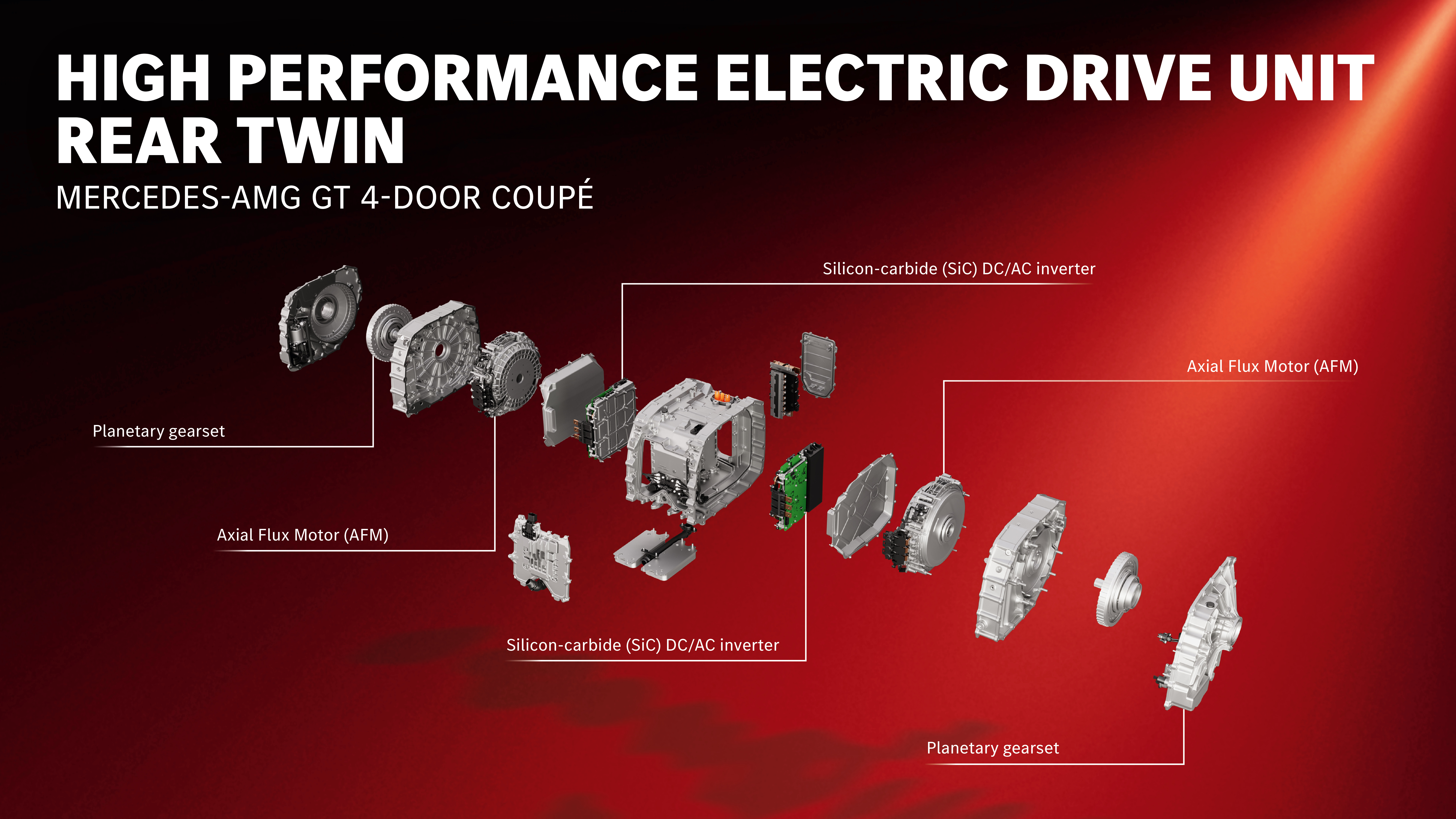
The four-door hatchback will launch in two variants, as usual a 55 and a 63. Both share the same hardware, though the former restricts output to “just” 805 hp (592 kW) and 1,328 lb-ft (1,800 Nm) of torque, while the latter bumps up to 1,153 hp (848 kW) and 1,475 lb-ft (2,000 Nm). All that shove comes courtesy of Mercedes-Benz’s wholly owned subsidiary, YASA, which last year announced a new world record for the most power-dense electric motor ever built. YASA’s axial e-motors can be found in McLarens, Lamborghinis, and Ferrari hybrids and in this application promise a 67 percent reduction in weight and physical length versus a more traditional radial-flux motor—with double the torque density and triple the power density, no less.
The GTs house two of the YASA motors at the rear, with dual water-cooled DC/AC converters and a planetary gearset to each side. Up front, a single motor mates to a spur-gear transmission with an integrated disconnect unit to allow for less drag while freewheeling. The motor sizes truly boggle comprehension, at just 3.5 inches (89 mm) wide for the front and 3.2 inches (81 mm) wide for each rear. YASA eventually believes that these units with a custom planetary gearset can effectively replace wheel hubs and brake rotors entirely, but apparently that solution wasn’t ready for mass-market production quite yet.
Mercedes-AMG
Mercedes-AMG
Mercedes-AMG
Mercedes-AMG
Mercedes-AMG
Mercedes-AMG
Mercedes-AMG
Mercedes-AMG
600 kW charging
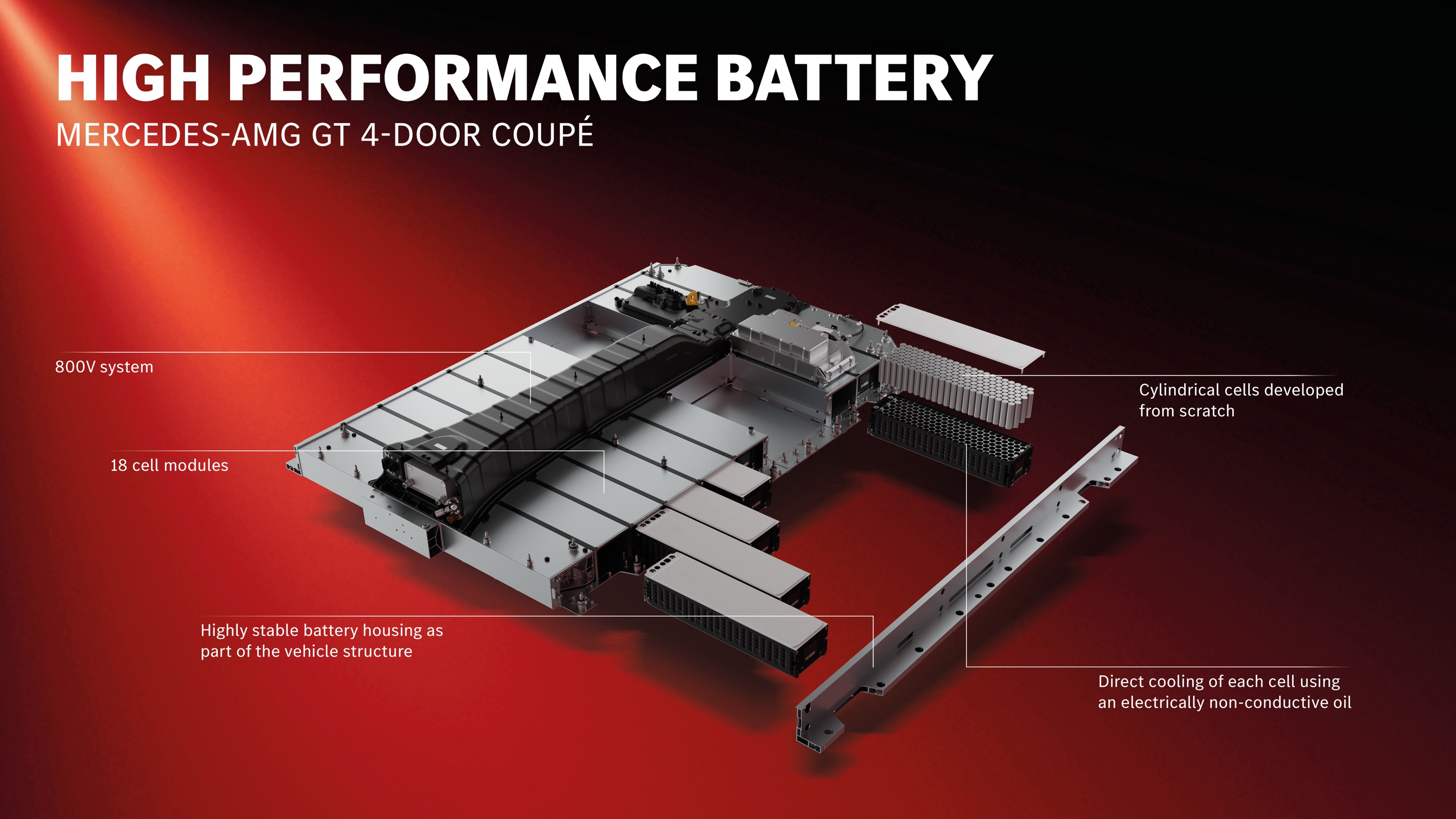
The motors save space and mass, but Mercedes-AMG also put serious work into the battery tech. The load-bearing structure houses 106 kilowatt-hours of usable capacity, good enough for up to 474 miles (764 km) of range on the WLTP standard for the 63 or 478 miles (770 km) for the 55. A total of 2,660 new cylindrical cells each measures 4.1 inches (104 mm) tall and 1 inch (25 mm) in diameter, allowing for improved cooling by a non-conductive oil within 18 laser-welded plastic modules.
With 800 V architecture, the battery can charge at 800 A and up to more than 600 kW, which allows for a claimed 70 kWh or the equivalent of 287 miles (462 km) of WLTP range added in just 10 minutes. A 10–80 percent charge takes as little as 11 minutes, or a quick stopover can top up 41 kWh in just five minutes. Of course, in the US, that would require plugging in to something like ChargePoint’s new 600 kW fast charger, which will feature the necessary NACS plug required to recharge a North American-spec GT.
The slippery aero design also includes venturi flow elements built into the underbody, as well as an active rear diffuser and active front louvers to direct air into the large front fascia. A set of optional 21-inch aero wheels can contribute up to 8.7 miles (14 km) of range, and choosing the right tires can add another 18.6 miles (30 km). In the ideal configuration, the GT’s drag coefficient is an impressively low 0.22—which contributes to the 4.5 miles/kWh (13.8 kWh/100km), or just shy of a Lucid Air Pure’s 5.0 mi/kWh (12.4 kWh/100 km) despite well more than double the Lucid’s power output.
Credit: Mercedes-AMG
Credit: Mercedes-AMG
However, that battery pack adds up to a curb weight of around 5,400 pounds (2,460 kg). Straightline acceleration will not be a problem, given the output of YASA’s motors, and Mercedes claims a 0–60 mph time of just 2.0 seconds, a 0–124 mph (0-200 km/h) of 6.4 seconds, and when equipped with the optional AMG Performance Package, a 186 mph (300 km/h) limited top speed. At that high end, the axial motors spin at 15,000 and 13,000 rpm for the front and rear, respectively. And the powertrain hasn’t even reached full bore yet, apparently—a future variant will likely eclipse 1,300 hp (956 kW) and even more range.
Make it loud?
Still, the GT needs to live up to luxurious highway cruising as well, now a legit possibility given the range and charging capabilities. Two air suspension setups include Active Ride Control standard on the 63, which uses a 2.1-gallon (8.2L) pressure reservoir for speed-dependent ride height adjustment, along with a fully linked hydraulic roll control system. Previous heavy AMGs handled quite well, so presumably the fully electric GT will live up to the nameplate. Whether the silly AMGFORCE Sport+ fake V8 sounds, including haptic seat exciters and simulated gearshifts (which can all switch off, thankfully), will accentuate the driving experience remains a question that only true seat time will play out. Amid the booming speakers and crowd noise, the faux engine noises barely registered.
Of course, it’s hard to escape the irony of setting off a massive pyrotechnic display—not to mention flying radiant influencers in from all across the globe—while promoting the next step toward supposedly cleaner performance. And Mercedes declined to confirm whether a gasoline or hybrid GT four-door will join the lineup, other than to promise that a Euro 7 inline-six and a new V8 are in development. Regardless, will AMG buyers want to live without the wonderful wellspring of V8 torque at the heart of prior models? In comparison to other top-spec EVs, including the Lucid Air Sapphire, Tesla Plaids, Porsche Taycan Turbo GT, and Audi RS e-tron GT, presumably the new GT will wind up pricing somewhere in the middle of the pack, or well into six figures.
There’s plenty of carbon fiber for the interior.
Mercedes-AMG
There’s plenty of carbon fiber for the interior. Mercedes-AMG
The back seat is strictly for two.
Mercedes-AMG
The back seat is strictly for two. Mercedes-AMG
There’s plenty of carbon fiber for the interior. Mercedes-AMG
The back seat is strictly for two. Mercedes-AMG
The rear cargo hatch is pretty spacious.
Mercedes-AMG
The rear cargo hatch is pretty spacious. Mercedes-AMG
The frunk is good for keeping a charger adapter.
Mercedes-AMG
The frunk is good for keeping a charger adapter. Mercedes-AMG
The rear cargo hatch is pretty spacious. Mercedes-AMG
The frunk is good for keeping a charger adapter. Mercedes-AMG
Moving more GT units may matter less than the perceived halo effect or trickle-down appeal for the entry-level electric CLA, for example, which starts at a surprisingly attainable price point below $50,000. Which perhaps explains why, in a similar fashion to the CLA, the GT drops all nomenclature specifically signifying the electric powertrain—no more “EQ” or “with EQ Technology” or “AMG E-Performance” badging. In short, it would appear that for Mercedes and AMG, the time has finally come when cars are just cars, regardless of the means of propulsion.