16.3 C
London
Thursday, May 21, 2026
Home Blog

This Sheriff’s Office Says Racial Profiling Reforms Are Too Costly. Auditors Found It Misused $163 Million.

0
this-sheriff’s-office-says-racial-profiling-reforms-are-too-costly-auditors-found-it-misused-$163-million.
This Sheriff’s Office Says Racial Profiling Reforms Are Too Costly. Auditors Found It Misused $163 Million.

More than $7,000 in cable TV subscriptions.

An $11,000 golf cart.

$1.5 million in renovations to office space in a swanky Phoenix high-rise.

And another $1.7 million for Tasers.

Those were among more than $200 million in expenses that the Maricopa County Sheriff’s Office billed to a class-action settlement aimed at rooting out racial profiling in the department.

A federal judge in 2013 found the department under then-Sheriff Joe Arpaio had violated the constitutional rights of Latino drivers, and the court has required sweeping reforms. These include documenting all traffic stops to detect patterns of racial bias, employing additional investigators to probe reports of deputy misconduct and appointing a monitor to oversee the settlement.

Since Sheriff Jerry Sheridan took office last year, he and Republicans on the county’s Board of Supervisors have cited the cost of complying with these orders to call for an end to the settlement of the case known as Melendres v. Arpaio — even as reviews of the department’s traffic stops continue to show racial disparities affecting Latino residents. The lingering disparities amplified Latino leaders and community members’ concerns as the second Trump administration has boosted local law enforcement’s involvement in its mass deportation campaign.

Maricopa County, home to more than half of Arizona’s population, has approved $353 million in spending related to the settlement since 2013. But an audit of the sheriff’s office spending ordered by the court and a review of the public ledger by Arizona Luminaria and ProPublica show millions of dollars went to expenses that had little or nothing to do with the settlement. (The audit focused on $226 million that the sheriff’s office charged to the settlement over a 10-year period; it didn’t examine legal and monitoring costs or the two most recent department budgets.)

The auditors, who were hired by the monitor, found that nearly 72% of the sheriff’s office spending was misattributed or misappropriated. For example, the full cost of some services and salaries was assigned to the settlement when those jobs were completely unrelated or only partially related to court orders. Only $63 million was appropriately charged to the settlement, they said.

Upon releasing its findings late last year, the two-member auditing team, led by an individual with decades of experience in public finance, noted that overstating the cost of the reforms undermines the court’s credibility. “This mischaracterization misleads the public on the cost of reform efforts and calls into question MCSO’s credibility, transparency, and truthfulness of its reporting,” they stated.

The financial ledgers detail many of these expenses, including more than $310,000 for travel and professional development. Among them are $1,261 for travel in 2020 to research buying a boat and swift-water rescue training — for deputies who work in the desert, $4,070 to train and test whether to buy a horse for the mounted unit in 2021 and $5,077 to attend National Police Week in Washington, D.C., in 2023.

An illustration of a red inflatable raft with yellow accents floating on water.
The Maricopa County Sheriff’s Office billed $1,261 to train and research buying a rescue boat as part of a racial profiling settlement.

The audit concluded that the county Board of Supervisors, which approves the sheriff’s annual budgets, provided no “meaningful” oversight of its spending and had no process to verify if funds were being used appropriately to comply with court orders.

Indeed, as costs ballooned, the Board of Supervisors rarely questioned the expenses, Arizona Luminaria and ProPublica found based on a review of nearly a decade of public budget hearings.

The supervisors responded to the audit by telling U.S. District Judge G. Murray Snow that the reforms, and in particular the audit’s scrutiny of county spending, had far exceeded the original racial profiling complaints. 

“Hispanic residents of Maricopa County concerned with racial profiling are unaffected by how the County and MCSO allocate costs,” the filing read. “Nor does any member of the Class experience a constitutional violation because MCSO purchased a golf cart.”

Snow’s 2013 ruling found deputies had relied on race to pull over Latino drivers during immigration actions, violating their rights to equal protection and against unreasonable seizures.

Attorneys for the county have filed a motion to end court oversight. That motion is pending.

“Digging into county finances and trying to minimize the cost of Melendres compliance is not just an insult to taxpayers, it’s beyond the federal court’s jurisdiction,” Republican supervisors Thomas Galvin and Kate Brophy McGee said in a November statement. “Nothing about our budgeting or accounting practices violates federal or state law. This is why we decline to participate in further arguments over compliance costs.”

Sheridan, whose tenure was not covered by the audit period, dismissed the findings and defended his department’s spending practices. The sheriff’s attorneys joined the motion to end court oversight.

The past two years, the Board of Supervisors have approved Sheridan’s budget request, billing an additional $72 million to the settlement.

The auditors, William Ansbrow and Eric Melancon, are barred by Snow from speaking publicly about their work.

Steve Gallardo, the lone Democrat on the five-member Board of Supervisors, has opposed ending court oversight of the sheriff’s office. He said the focus should remain on eliminating biased policing.

The sheriff’s office is above 90% compliance with the two major court orders, but Snow has yet to clear the department in two key areas: racial disparities in traffic stops and a backlog of uninvestigated misconduct claims against deputies.

“We should be having benchmarks in terms of, how do we get in full compliance,” Gallardo told Arizona Luminaria and ProPublica in April. “Others are going to say, ‘Well, they keep moving the goalpost.’ Well, let’s continue to move forward. I mean, that should be our overall goals: How do we get in full compliance with the Melendres case?”

The sheriff’s office did not respond to Arizona Luminaria and ProPublica’s questions about the spending.

An illustration of the Washington Monument obelisk standing on a patch of green grass, surrounded by small American flags at its base against a plain white background.
The Maricopa County Sheriff’s Office expensed $5,077 to attend National Police Week in Washington, D.C., as part of a racial profiling settlement. An audit determined it had nothing to do with the settlement. 

While the audit and county ledger showed spending that appeared unrelated to the court’s orders, they also showed spending spiraling on things the court had ordered.

In 2013, Snow required the sheriff’s office to purchase body cameras for patrol deputies and sergeants who conduct traffic stops. The audit found that the number of employees required to wear the cameras ranged from 434 in fiscal year 2023 to 513 in fiscal year 2021. Yet the department had purchased 950 cameras from Axon, a Scottsdale company, at a cost of $8.6 million. About $2.9 million of the spending “exceeded the Court’s requirements,” the audit found.

The sheriff’s office also purchased Tasers from Axon, bundled with the body cameras, and charged them to the settlement. The court had not required deputies to carry Tasers.

The sheriff’s office contended that buying the cameras separately would have been more costly. Even so, the audit found, the cost for Tasers — roughly $1.7 million — should have been charged to the department’s general fund instead of the settlement.

To operate body camera docking stations, the department purchased high-speed internet. But monthly invoices revealed that from fiscal years 2020 to 2024, the charges included cable television subscriptions, which were unrelated to the settlement, totaling $7,670.

An illustration of a black Taser weapon.
The Maricopa County Sheriff’s Office expensed Tasers to a racial profiling settlement. An audit determined the purchase should have been charged to general funds instead.

Since 2016, Snow has required the sheriff’s office to house the Professional Standards Bureau, its internal disciplinary body, separately from its downtown Phoenix headquarters. The order was intended to encourage residents to report deputy misconduct after Snow found department leadership had routinely interfered in discipline of deputies. (Sheridan was Arpaio’s chief deputy at the time.)

To shuttle employees between headquarters and the standards bureau, the sheriff’s office purchased in June 2019 a golf cart valued at $11,800. At the same time, the department was also paying an average of $34,000 a year for additional parking at the bureau building to accommodate visitors and employees, according to the audit and county ledgers.

The sheriff’s office added to these costs in July 2024 by moving the bureau for a second time in less than a decade, the audit shows. The bureau now occupies two floors inside a premium midtown Phoenix high-rise, the court’s auditing team found, citing public real estate listings.

The department spent $1.5 million refurbishing the new offices, which auditors found was inappropriately charged to the settlement. The bureau had already been housed separately from department leadership, they noted. During a visit to the offices last year, a member of the audit team found that some of the space was empty and noted that the bureau could have been housed in “various unused publicly owned properties.”

An illustration of a white golf cart with blue seats, a red flashing siren on the roof and “MCSO” markings on the side.
The Professional Standards Bureau, the disciplinary body for the Maricopa County Sheriff’s Office, bought an $11,000 golf cart to ferry employees from their office to headquarters. The expense was unjustified, according to a court-mandated audit of spending on racial profiling reforms.

Sheridan says the bulk of spending on the settlement goes toward staffing. Snow called for the creation of two divisions that enforce the court’s orders: the Court Implementation Division and the Bureau of Internal Oversight. The sheriff’s office also hired additional investigators for the Professional Standards Bureau, as it works to clear a backlog of 433 pending investigations.

“We went from having an internal investigation division with maybe 15 people to well over 50,” Sheridan told Arizona Luminaria and ProPublica. “You can see those costs right away.”

During a February town hall meeting, Sheridan criticized the audit and said the court had required the sheriff’s office to hire 25 sergeants. His chief financial officer said those positions cost about $3 million a year.

But the audit determined the sheriff’s office misused funds by charging unrelated or partially related staffing expenses to the settlement. It found that starting in fiscal year 2016, the department shifted the cost of the sergeant positions from general county funds to the settlement.

The audit determined that of the 209 positions charged to the settlement at the start of the 2025 fiscal year, only 55 could be reasonably attributed to Snow’s orders. Another 84 were “inappropriately attributed to Melendres,” while an additional 70 were partially related and should have been prorated to reflect the share of the work related to the settlement versus other duties.

Expenses related to these employees further exaggerated the cost of the settlement. The sheriff’s office charged $1.3 million to purchase 42 patrol vehicles for positions that the audit found were inappropriately attributed to court orders, including six vehicles for employees whose jobs had no connection to the case.

In May 2022, the sheriff’s office began to charge car washes to the Melendres fund for vehicles it purchased for new patrol supervisors. Deputies expensed $3,259 in car washes that were not justified under the court’s orders, according to the audit.

In all, the sheriff’s office misattributed to the settlement or inappropriately expensed about $144 million in personnel costs from 2014 to 2024, the audit determined.

The auditors concluded that the department continues to misattribute funds, citing accounting practices that remain in place. As a result, they warned, taxpayers could be on the hook for millions of dollars more that have nothing to do with rooting out racial profiling.

Galvin and Brophy McGee, two of the Republican supervisors, defended the county’s handling of its finances. “We stand by our budgeting practices and the 209 positions we created as a direct result of the Melendres Orders,” they said in November. “It would be a complete waste of taxpayer money to engage the federal courts in a back-and-forth over what is clearly an issue of local jurisdiction.”

An illustration of a black remote control with various buttons, including a prominent circular directional pad and a red power button at the top right.
The Maricopa County Sheriff’s Office charged $7,669 in cable television subscriptions to a racial profiling settlement. An audit determined those charged were not justified.

Before the audit was released in October, Republican supervisors were calling for an end to judicial oversight to protect the rights of Latino residents, claiming it had become too costly.

“It’s a huge expense to the Maricopa County taxpayers,” Supervisor Debbie Lesko told Arizona Luminaria and ProPublica in July. “It seems like it’s never-ending because the judge just changes; they put out a new order. They move the goalposts, and so we need to resolve this.”

Their attorneys argued in court that the Melendres lawsuit has been a success and the settlement was no longer needed.

The American Civil Liberties Union of Arizona, which joined the lawsuit in 2008, opposes ending oversight until the sheriff’s office is in full compliance with Snow’s orders. But it signaled a willingness to reduce monitoring of a few requirements that the department has complied with for at least three years.

At a January hearing, Snow said he was reluctant to allow the county to “use cost orders both as a sword and a shield and make statements to the public which may, in fact, be completely inaccurate.” He doesn’t intend to police supervisors’ speech, Snow said, but he could require the county to justify the costs.

Attorneys for the county and the sheriff’s office asked the judge for an opportunity to challenge the findings, which Snow approved. But they soon dropped it, citing the “unnecessary” cost of examining department spending.

Public finance experts said county boards have an obligation to taxpayers to ensure they can account for how each dollar is spent.

Zach Mohr, an associate professor at the University of Kansas who teaches public budgeting, accounting and financial management, reviewed the audit for Arizona Luminaria and ProPublica. He said that if the board disagrees with the findings, “the way to solve that would be to get another audit.”

Arizona Luminaria and ProPublica attempted to contact all current and former Maricopa County supervisors who had approved sheriff’s office spending during the case. Only Gallardo and one former supervisor agreed to comment.

An illustration of a brown horse’s head and neck, wearing a bridle with reins, against a plain white background.
The Maricopa County Sheriff’s Office inappropriately charged $4,070 to train and research buying a horse as a part of a racial profiling settlement, a court-required audit determined.

The news organizations’ review of past budget hearings showed supervisors had been more likely to probe spending during the early years of the settlement, as the county created infrastructure to implement reforms. In 2016, for example, Sheridan — then the department’s second-in-command — responded to a question about the court’s requirement to purchase body cameras for deputies, saying it was the sheriff’s office’s idea. “They’re more cutting-edge, and they’re more flexible. They travel with the deputies everywhere. And so it was our desire to do the body cameras,” he said at the time.

In later years, however, supervisors rarely questioned publicly how the sheriff’s office spent the money.

This year was different. Galvin asked the sheriff’s chief financial officer if their Melendres budget request for $36.5 million had been vetted. The officer said yes, adding that requests for the past 13 years were also vetted by the county budget office and state auditor.

Supervisor Mary Rose Wilcox, who served on the board from 1993 to 2014, was the lone Latina and Democrat during most of her tenure. She told Arizona Luminaria and ProPublica she objected to Arpaio’s spending and focus on immigration enforcement — which led to racial profiling, lawsuits and the settlement that continues today.

“The others really didn’t, and they found Melendres was way over the top. But they knew they had to comply.”

She recalled previous allegations of misspending by the sheriff’s office. In 2011, a county audit found the department used $100 million from jail funds to pay patrol deputies. At the time, Sheridan chalked it up to a bookkeeping error, referring to it as a “systems issue.”

The board approved an oversight resolution, adopting rules to prevent the problem from happening again. “Hopefully, this is a chapter in Maricopa County’s history that we close and we never see such an abuse of funds again,” Wilcox told The Arizona Republic in 2011.

Trump wants $1B to protect White House ballroom from drones and other threats

0
trump-wants-$1b-to-protect-white-house-ballroom-from-drones-and-other-threats
Trump wants $1B to protect White House ballroom from drones and other threats

President Donald Trump’s latest pitch for using taxpayer dollars to secure his White House ballroom featured a militarized building—including a rooftop hardened against drone strikes and a “drone port” that could potentially house military drones.

The remarks came on May 19 as Trump gave reporters a personal tour of the ballroom project that has already involved the demolition of the White House mansion’s East Wing. The president spoke of installing a rooftop drone base “for unlimited numbers of drones” operated by the US military as a “drone port that would protect all of Washington,” according to Reuters. He also highlighted a ballroom roof made from “impenetrable steel” that would supposedly be “drone-proof” against potential drone strikes.

To pay for such measures, Trump has been urging Republican lawmakers in the US Congress to approve $1 billion in taxpayer funding to provide a wide variety of “security adjustments and upgrades” for his ballroom project. The taxpayer-backed security enhancements would be separate from the $400 million construction cost for the ballroom project that has been funded by private donors, including companies such as Amazon, Apple, Coinbase, Comcast, Google, HP Inc., Lockheed Martin, Meta, Micron Technology, Microsoft, Palantir, Ripple, and T-Mobile.

It’s unclear whether the anti-drone security measures and rooftop drone port will actually be incorporated into the ballroom building design. But Trump’s comments coincide with the US government’s new efforts to protect buildings and crowd events against potential threats posed by drones.

In January 2026, the Pentagon issued a “Guide for Physical Protection of Critical Infrastructure” that recommends “hardening” security measures for physically blocking drone access to facilities or events. Such physical obstacles could include “concrete walls, enclosures or hardened roofs” designed to protect against drone surveillance or drone strikes, along with overhead netting and cables. The recommendations for more passive physical protection represent a “notable shift” in the US military’s stance toward anti-drone defenses, The War Zone reported.

Passive physical defenses are commonly used in the Russo-Ukrainian war, as both Ukraine and Russia have used a wide array of drones to attack critical infrastructure in cities and supply routes far behind the battlefield frontlines. Armored vehicles, trucks, and even Russian nuclear submarines have metal mesh “cope cages” installed to protect against small drone strikes. These are complemented by more active drone countermeasures, including interceptor missiles and drones designed to destroy drones or jam their navigation systems.

Similar physical defenses against drones have arisen during the 2026 Iran war and Strait of Hormuz crisis. The War Zone reported that the United Arab Emirates has been building huge metal cope cages to protect fuel tanks and energy facilities against Iranian drone strikes—although Trump may not be so keen on installing such unsightly measures on top of his ballroom.

Drones are already generally prohibited from flying in the airspace over Washington, DC, under “national defense airspace” rules implemented after the terrorist attacks targeting New York City and DC on September 11, 2001. China has gone even further by banning drone sales in its capital, Beijing.

But on May 6, the US Federal Aviation Administration published a proposed rule that would enable additional drone no-fly zones around “critical infrastructure” sites such as oil refineries and chemical facilities, bridges, dams, nuclear reactors, prisons, and even amusement parks. The rule would also allow companies to apply for no-fly zones around corporate headquarters or data centers.

Netanyahu Reportedly ‘Concerned’ About Proposed Framework To End Iran Conflict

0
netanyahu-reportedly-‘concerned’-about-proposed-framework-to-end-iran-conflict
Netanyahu Reportedly ‘Concerned’ About Proposed Framework To End Iran Conflict


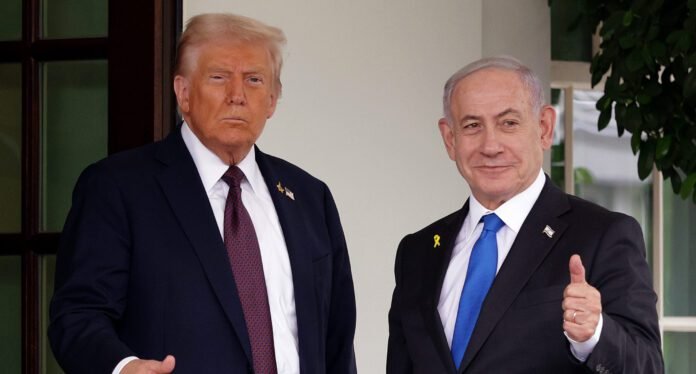
President Donald Trump and Prime Minister Benjamin Netanyahu held a tense conversation Tuesday over efforts by Arab and Muslim mediators to advance a proposed framework intended to prevent renewed conflict between the United States and Iran and reopen negotiations with Tehran.

According to three sources familiar with the discussion cited by Channel 12, President Trump briefed Netanyahu on a proposed “letter of intent” that mediators are seeking to secure between Washington and Tehran. The proposal would begin with a 30-day negotiation period covering issues including the Strait of Hormuz and Iran’s nuclear program.

Two Israeli sources familiar with the call said Netanyahu questioned the initiative and supported maintaining US military pressure on Iran in an effort to weaken the regime.

The discussions took place as Qatar, Pakistan, Saudi Arabia, Turkey, and Egypt continued mediation efforts related to the dispute.

One US source briefed on the call told Axios that “Bibi’s hair was on fire after the call.” The same report said Netanyahu had expressed concern during earlier stages of negotiations as well. “Bibi is always concerned,” the source said.

Asked on Wednesday about his conversation with Netanyahu, President Trump told reporters he believed the Israeli leader would follow his direction.

“He’s a very good man, he’ll do whatever I want him to do. And he’s a great guy … Don’t forget he was a wartime prime minister,” he said.

Sources close to Iran’s negotiating team told the Iranian semi-official news agency Tasnim that Tehran’s mediators were reviewing the document, although no agreement had been finalized.

President Trump said Wednesday that the United States and Iran remained close to either renewed conflict or a diplomatic agreement.

“Iran and the US are right on the borderline,” he told reporters.

“If we don’t get the right answer, it could happen very quickly. We have not got the right answer. It will have to be 100% good answers,” he said, adding that he would allow a “few days” for talks.

The Prime Minister’s Office declined to comment. A spokeswoman for the Israeli Embassy denied that Ambassador Leiter told US lawmakers that Netanyahu was worried following the call. The White House did not respond.

Google publishes exploit code threatening millions of Chromium users

0
google-publishes-exploit-code-threatening-millions-of-chromium-users
Google publishes exploit code threatening millions of Chromium users

Google on Wednesday published exploit code for an unfixed vulnerability in its Chromium browser codebase that threatens millions of people using Chrome, Microsoft Edge, and virtually all other Chromium-based browsers.

The proof-of-concept code exploits the Browser Fetch programming interface, a standard that allows long videos and other large files to be downloaded in the background. An attacker can use the exploit to create a connection for monitoring some aspects of a user’s browser usage and as a proxy for viewing sites and launching denial-of-service attacks. Depending on the browser, the connections either reopen or remain open even after it or the device running it has rebooted.

Unfixed for 29 months (and counting)

The unfixed vulnerability can be exploited by any website a user visits. In effect, a compromise amounts to a limited backdoor that makes a device part of a limited botnet. The capabilities are limited to the same things a browser can do, such as visit malicious sites, provide anonymous proxy browsing by others, enable proxied DDoS attacks, and monitor user activity. Nonetheless, the exploit could allow an attacker to wrangle thousands, possibly millions, of devices into a network. Once a separate vulnerability becomes available, the attacker could use it to then compromise all those devices.

“The dangerous part here is that you can just have a lot of different browsers together that you can in the future run something on that you figure out,” said Lyra Rebane, the independent researcher who discovered the vulnerability and privately reported it to Google in late 2022 in an interview. She said using the exploit code Google prematurely published would be “pretty easy,” although scaling it to wrangle large numbers of devices into a single network would require more work. In the thread of Rebane’s disclosure to Google, two developers said in separate responses that it was a “serious vulnerability.” Its severity was rated S1, the second-highest classification.

Since its reporting 29 months ago, the vulnerability remained unknown except to Chromium developers. Then on Wednesday morning, it was published to the Chromium bug tracker. Rebane initially assumed the vulnerability was finally fixed. Shortly thereafter, she learned that, in fact, it remained unpatched. While Google removed the post, it remains available on archival sites, along with the exploit code.

Google representatives didn’t immediately respond to an email asking how and why it published the vulnerability and if or when a fix would become available.

Long delays are common

Rebane said she has reported multiple other Chrome or Chromium vulnerabilities that have resulted in patches. She said long delays in fixing them are common, although this instance was the longest.

“I think what happened is sort of nonstandard in that it does not get past any defined security boundaries,” she said. “So this does not let an attacker, for example, access your emails or your computer or something like that. I guess that led to [Google’s] own people getting assigned, or the people who were assigned not understanding it, and then that’s how it took such a long time.”

By exploiting the browser fetch API, the code opens a service worker that remains persistently active. The connection is invoked by JavaScript running on a malicious site. Exploits are particularly hard to detect when run on Edge. The JavaScript “might” open a downloads dropdown window, but it doesn’t add any items to it. On later browser launches, the window will no longer appear. On Chrome, the download dropdown is more persistent. In either case, less experienced users are likely to consider the behavior the result of a nuisance bug and have no idea their device is compromised.

In the private bug disclosure thread, a developer said that logs indicate that use of the background fetch feature is extremely limited on Chrome, with on average “~17 completed files per user per day.” “That’s pretty solid confirmation that nothing awful is happening at scale,” the developer wrote. It’s not known how widely used the feature is for browsers other than Chrome. Rebane said she doubts the vulnerability is being actively exploited against other browsers.

Nonetheless, the vulnerability poses a risk. Users of Chromium browsers should be suspicious of download dropdowns that appear for no reason. Drilling into the cause and discovering they’re the result of the vulnerability being exploited remains more complicated. Other browsers Rebans confirmed as vulnerable include Brave, Opera, Vivaldi, and Arc. Both Firefox and Safari are unaffected because they don’t support the browser-fetching feature.

Princess Diana’s Brutal Snub of JFK Jr. Left Camelot Heir Reeling

0
princess-diana’s-brutal-snub-of-jfk-jr.-left-camelot-heir-reeling
Princess Diana’s Brutal Snub of JFK Jr. Left Camelot Heir Reeling


Princess Diana and John F. Kennedy Jr. seemed like a perfect match for the glossy pages of George magazine.

She was the rebel royal.

He was America’s Camelot prince.

But when JFK Jr. tried to put Diana on the cover of his political celebrity magazine, the princess reportedly gave him a polite but crushing no.

According to Caroline Hallemann’s book The Kennedys and the Windsors, JFK Jr. was determined to land Diana after launching George in 1995. He believed she was the ultimate mix of fame, power, politics, beauty, and humanitarian star power.

Diana, however, was not so easily won over.

The two met at New York’s famed Carlyle Hotel, where JFK Jr. hoped to seal the deal. Instead, Diana reportedly shut the conversation down almost before it began.

“Well, you know, this is all very nice, John. Thank you,” she allegedly told him, before saying she would pass “this time” and maybe consider it for a future issue.

It was elegant.

It was icy.

And it reportedly left JFK Jr. deeply frustrated.

Insiders said John could not believe Diana kept turning him down. He saw the cover as a historic meeting of two global dynasties: Britain’s royals and America’s Kennedys.

But Diana, who had spent years being hounded by the press, was not about to hand her image over to a new magazine still trying to prove itself.

Even after the snub, JFK Jr. reportedly kept trying.

In February 1997, just six months before Diana died in Paris, she sent him another letter declining an invitation. In it, she referenced the paparazzi nightmare that haunted both of them.

“I hope the media are leaving both you and Carolyn alone,” Diana wrote, referring to JFK Jr. and his wife, Carolyn Bessette Kennedy. “I know how difficult it is, but believe it or not, the worst paparazzi are here in Europe!”

The words now read like a chilling warning.

Diana died later that year after a Paris car crash while being pursued by photographers. Less than two years later, JFK Jr. and Carolyn were killed in a plane crash off Martha’s Vineyard.

Two glamorous icons.

Two doomed dynasties.

And one magazine cover that never happened.

Bond tremors from Washington to London to Tokyo upend Asia

0
bond-tremors-from-washington-to-london-to-tokyo-upend-asia
Bond tremors from Washington to London to Tokyo upend Asia

TOKYO — Bond markets are cracking around the globe as geopolitical, technological and demographic trends simultaneously upend everything investors thought they knew about 2026.

The turmoil is propelling borrowing costs to multi-year highs from Washington to London to Tokyo. It’s altering the economic and political calculus in real time. And debt yields, it seems clear, will remain elevated everywhere all at once.

“Rates will stay higher for longer and investors should plan accordingly,” warns Apollo Management economist Torsten Slok.

Nowhere is that truer than here in Japan. The global bond sell‑off is putting Tokyo in an uncomfortable spotlight – raising the specter of a dreaded economic refrain, “This time is different,” becoming reality.

Yields on 30-year Japanese government bonds are the highest since 1999, when the maturity was first sold. The $31 trillion US Treasury market, of course, is garnering even more attention. On Tuesday, the 30-year US yield jumped basis points to 5.18%, the highest since 2007, as surging oil prices fanned inflation fears.

In recent years, the 5% level has been seen as a “line in the sand,” notes Ed Al-Hussainy, a portfolio manager at Columbia Threadneedle. Now that it’s above that, investors in the premier debt market are pivoting away from longer-term debt.

“With debt rising faster than growth, worsening inflation profiles and no political will for fiscal reform, there is little reason to reach for the long end,” says Ajay Rajadhyaksha, Barclays Banks’s global chairman of research.

The UK is also in the spotlight in unenviable ways. Markets are increasingly worried about London’s political and, by extension, fiscal direction. Concerns about future spending plans are colliding with leadership turmoil and fears of a repeat of the Liz Truss-style fiscal shock. That’s pushed gilt yields to the highest in the Group of Seven, as investors demand more compensation for holding UK debt.

“The recent repricing has pushed the Gilt curve to its highest level since 1998,” write economists Fatih Yilmaz and Neil Staines at Eurizon SLJ Capital in a report. “The timing is also unhelpful. Fiscal and political uncertainty are coinciding with the Iran conflict, while ongoing pressure on living standards continues to weigh on the economy.”

Yilmaz and Staines warn that a “further sustained increase above 7% could trigger a deep recession and a full-blown fiscal credibility crisis. Such a scenario might combine elements of a severe UK housing downturn, the Eurozone sovereign crisis and a much harsher version of the post-Liz Truss market disruptions.”

Robin Brooks, economist at the Brookings Institution, notes that “Japan has been in a slow-motion blow-up of exactly this kind for two years.” He notes that “the bottom line is that ‘Liz Truss’ bond market selloffs are becoming more common across the G10 as debt levels rise and institutional integrity declines. The distinction between the G10 and emerging markets is becoming blurred, which is one driver behind the rapid pace of appreciation of EM currencies against the G10.”

Yet tremors in Japan could matter more in the short run. At the moment, Japanese yields are skyrocketing while a weak yen is testing the 160 level to the dollar. The surge in 10-year JGB yields to 2.77% is all the more troubling considering Japan is managing the globe’s biggest debt burden with a shrinking population.

The plot thickens when the fourth-biggest economy’s role as the world’s top creditor nation is factored in. Twenty-seven years of the Bank of Japan holding rates at, or near, zero turned Tokyo into global markets’ ATM.

For decades, investment funds borrowed cheaply in yen to bet on higher-yielding assets around the globe. As such, sudden yen moves disrupt markets worldwide. The so-called “yen-carry trade” is one most crowded anywhere. And it’s prone to sharp correction — now perhaps more than ever.

“The Middle East conflict has prompted a revision of our growth and inflation forecasts for Japan,” notes Deborah Tan, an analyst at Moody’s Ratings. Tan adds that “higher inflation and prospects of additional fiscal support are putting pressure on JGB yields.”

One reason is Prime Minister Sanae Takaichi tempting fate with her fiscal plans. In the months before she rose to the premiership last October, Takaichi rattled debt markets with talk of tax cuts and increased stimulus spending. This was after her predecessor Shigeru Ishiba in May 2025 warned Tokyo’s deteriorating finances are “worse than Greece.” Ishiba’s point was that with a debt-to-GDP of 260% and the fastest-shrinking population in the developed world, a tax cut seems reckless.

There are unique reasons why the often-predicted JGB crash never seems to arrive. For one thing, 90% of JGBs are held domestically. That significantly reduces the risk of a large-scale capital flight. Meanwhile, banks, insurance companies, pension funds, endowments, the postal system and the growing ranks of retirees would suffer painful losses. So, the collective incentive is to hold onto debt issues rather than selling.

Yet even inwardly focused debt markets like Japan’s can’t avoid the shockwaves coursing through the global financial system. Hence fears of a “Liz Truss moment” in Tokyo. In late 2022, then-UK Prime Minister Truss destabilized the debt market by attempting to sneak an unfunded tax cut past bond traders. The extreme market turmoil remains a cautionary tale for Takaichi as her party mulls fiscal loosening.

This risk burst back into the headlines this week. In recent weeks, Takaichi held that Japan’s economy didn’t need an extra budget financed with fresh borrowing. Now, Takaichi is directing Finance Minister Satsuki Katayama to race an extra budget into existence as rising commodity prices slam consumer confidence. This about-face is adding to strains on the JGB market.

“Any extra budget would come amid renewed concerns over Japan’s fiscal sustainability and would reduce the Takaichi’s administration’s ability to deliver structural changes, such as lifting constitutional limits on defense spending, that could meaningfully alter the balance of power in Asia,” says Carlos Casanova, economist at Union Bancaire Privee.

As added wrinkle, though, is that the so-called “bond vigilantes” are watching Tokyo’s every move. It’s complicated, of course. Because there is so little trading in ultralong JGBs, notes economist Richard Katz, author of the Japan Economy Watch newsletter, “tiny events can send their rates reeling.”

Ultralong JGBs, Katz observes, were created at the behest of life insurers and similar institutional investors so they could match maturities between their assets and liabilities. They practice “buy and hold,” so there’s little trading in them, as opposed to the ¥1.0 quadrillion ($6.3 trillion) in trades in the 10-year JGB in 2025.

“Such thin trading means the yield on 30- and 40-year JGBs can be tossed around by a relatively small burst of buying or selling,” Katz notes. “Hence, it is a mistake to take such gyrations as a sign of financial fundamentals.”

Japan also has long relied on a mutually-assured destruction dynamic. Because JGBs are still the main financial asset held by, well, everyone, there are few incentives to sell. The dark side is that fears of roiling the bond market have had the BOJ pulling its monetary punches for decades now. Fears of triggering a bond market meltdown have long dissuaded policymakers from hiking rates.

Perhaps it’s just a coincidence but 1999 was both the year when Tokyo first introduced the 30-year bond and the year when the BOJ first cut rates to zero, a first for a G7 economy. Since then, the BOJ has rarely missed a chance to push the envelope to add even more liquidity to the economy. The most extreme example was in 2013, when then-BOJ Governor Haruhiko Kuroda supersized the central bank’s holdings.

By 2018, Kuroda’s aggressive hoarding of JGBs and stocks via exchange-traded funds saw the BOJ’s balance sheet top the size of Japan’s $4.2 trillion economy. Since taking the BOJ controls in April 2023, Governor Kazuo Ueda has been trying to taper Kuroda’s titanically large purchases. And often struggling – especially now as Japan grapples with stagflation.

The Ueda BOJ is expected to hike rates next month from 0.75% to 1%. With the BOJ forecasting inflation to 2.8% this year, well above the 2% target, Ueda has ample justification to tighten. The BOJ is, of course, hemmed in by slowing growth; it expects a roughly 0.5.% rate in 2026.

The BOJ is also hemmed in by an unruly bond market. It’s an Asia-wide challenge, particularly among emerging economies.

The region doesn’t tend to fare well during episodes of runaway dollar strength. In 1997, its surge made it impossible to maintain Asia’s currency pegs. First, Thailand devalued. Next Indonesia. Then South Korea. All three went hat-in-hand to the International Monetary Fund and other agencies for giant bailouts totaling US$118 billion. Though neither sought bailouts, the turmoil pushed Malaysia and the Philippines to the brink.

Since then, the emerging markets have been very sensitive to the specter of the Fed hiking rates. Case in point: the 2013 Fed “taper tantrum.” Market jitters over mere hints that the Fed might be hitting the brakes prompted Morgan Stanley to publish a “fragile five” list on which no emerging economy wanted to be. The original group: Brazil, India, Indonesia, South Africa, and Turkey. 

Now, a surging dollar is complicating Asia’s development plans anew. History’s greatest magnet is luring capital from every corner of the globe, hogging wealth needed to finance developing nations’ budget deficits, keep bond yields stable and support equity markets.

The Iran war has the dollar’s wrecking-ball tendencies bursting back onto the scene. Despite the US national debt nearing US$40 trillion, high inflation, and US President Donald Trump’s tariffs, profligate spending and policy volatility, the dollar is rising — against all odds. It’s outshining gold and Bitcoin even as Trump’s Iran war goes sideways. It’s even overpowering the artificial intelligence trade.

Economist Carol Kong at Commonwealth Bank of Australia speaks for many when she says “the dollar is king while this conflict lasts. If we’re right about this conflict being protracted, I think oil prices will just keep rising and it will push the dollar higher, at the expense of net energy importers like the Japanese yen and the euro.”

All this could be a clear and present danger for Asia in 2026. For Asia, having commodity prices “go up when their exchange rates are already weak is doubly painful,” said Harvard economist Kenneth Rogoff.

These stains will intensify as bond markets quake around the globe. The surge in yields from the US to the UK to Japan is altering the calculus far 2026 economic growth and market stability faster than Asia can keep up.

Russia delivers nuclear munitions in Belarus as part of nuclear drills

0
russia-delivers-nuclear-munitions-in-belarus-as-part-of-nuclear-drills
Russia delivers nuclear munitions in Belarus as part of nuclear drills


Russia delivered nuclear munitions ‌to field storage facilities in Belarus as part of major nuclear drills, the Russian Defence Ministry said on Thursday.

The three-day nuclear exercise, which started on Tuesday and is taking place ​across Russia and Belarus, comes at a time when Moscow is ​locked in what it says is an existential struggle with the ⁠West over Ukraine.

“As part of the nuclear forces exercise, nuclear munitions were delivered ​to the field storage facilities of the missile brigade’s position area in the ​Republic of Belarus,” the ministry said.

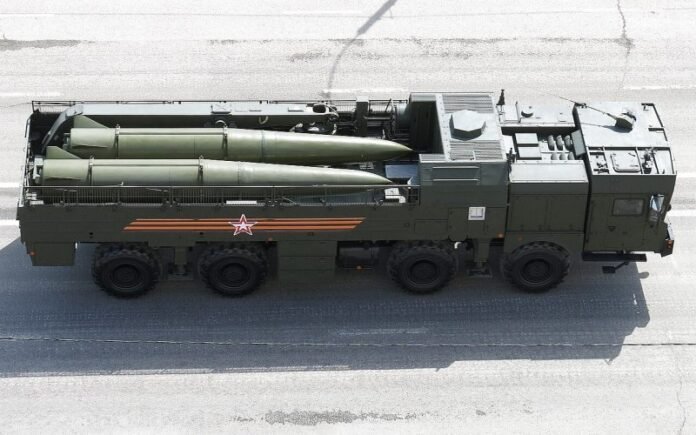
Russia said the missile unit in Belarus was carrying out training to receive special munitions for the mobile Iskander-M tactical missile system, including loading munitions onto ​launch vehicles and secretly moving to a designated area for launch preparation.

Footage released ​by the Defence Ministry showed a truck driving through a forest amid lightning and unloading ‌an ⁠item. It was not immediately clear what they were unloading.

The Iskander-M, a mobile guided missile system code-named “SS-26 Stone” by NATO, replaced the Soviet “Scud”. Its guided missiles have a range of up to 500 km (300 miles) and can carry conventional or ​nuclear warheads.

Throughout the war ​in Ukraine, President ⁠Vladimir Putin has issued reminders of Russia’s nuclear might as a warning to the West not to go too far ​in its support of Kyiv.

The Kremlin slammed remarks by Lithuania’s ​top diplomat ⁠as “verging on insanity” on Wednesday after Foreign Minister Kestutis Budrys said NATO had to show Moscow it was capable of penetrating the Russian exclave of Kaliningrad.

Kaliningrad is ⁠sandwiched between ​NATO members Lithuania and Poland on the ​Baltic coast. It has a population of around 1 million and is heavily militarised, serving as the ​headquarters of Russia’s Baltic Fleet.

Source:  Reuters

Maps of a vanished world: The myth of containing Iran

0
maps-of-a-vanished-world:-the-myth-of-containing-iran
Maps of a vanished world: The myth of containing Iran

Despite decades of maximum pressure, crippling sanctions, and diplomatic isolation, the geopolitical reality of the Middle East suggests a profound paradox: the more the West and its regional allies speak of “containing” Iran, the more central Tehran becomes to the regional order. From the Levant to the Gulf of Aden, the Islamic Republic has moved beyond being a mere “disruptor” to becoming a structural pillar of the Middle East’s political and security landscape.

The Western-led strategy of containment has largely operated on the assumption that Iran could be boxed in until it either capitulated or collapsed. However, this approach has failed to account for Tehran’s “strategic depth”—a sophisticated blend of asymmetric alliances, ideological soft power, and a resilient, albeit battered, domestic defence industry. Far from being sidelined, Iran’s influence is now woven into the very fabric of the region’s most critical flashpoints despite its major setbacks over the last three years.

To understand the current Middle East is to acknowledge that no sustainable security arrangement or political resolution can be achieved by ignoring the Iranian factor; it is not just a player in the game, but increasingly, one of its primary architects.

If anything, the current US-Israeli war on Iran has revealed that the Islamic Republic is capable of reinventing itself under enormous pressure.

The geographic simple factor should also be accounted for; Iran, simply, will not go anywhere and it is there to stay as it has been for centuries.

Historically, Iran’s Arab neighbours have lacked an independent strategy toward Tehran, opting instead to subscribe to the Western containment model. During the Shah’s reign, when Tehran served as a pivotal Western ally, its neighbours remained as accommodating as possible—an alignment that persisted despite the fundamental divergence between the long-term goals of the United States and those of the Gulf. While Washington’s priorities are often tethered to global power competitions or the whims of domestic political cycles, the Gulf States are bound to a permanent, unchangeable reality: Iranian geography. By outsourcing their security posture to the West, these states have frequently found their regional interests colliding with the very global strategies meant to protect them.

The barometer of volatility: How the world became a hostage to Trump’s mood

Furthermore, a critical blind spot in this alignment remains the US commitment to Israel’s security and its “Qualitative Military Edge”. For Washington, maintaining Israel’s regional supremacy is a paramount doctrine that frequently contravenes the security requirements of the Gulf States themselves—a reality that has only been reinforced over the last few months. The naive assumption that Western or Israeli interests are inherently synonymous with Gulf security has proven to be a significant strategic failure. By outsourcing their security posture to external powers, Gulf nations have inadvertently turned their own backyard into a frontline for a conflict they can neither fully control nor survive without catastrophic economic cost. The current “on-off” war serves as a grim reminder: when the dust settles, external powers may pivot to new global theatres, but the region is left to manage the ruins.

A more sustainable and wiser security alternative would have been a home-grown regional arrangement—one in which Iran plays a role rather than being treated as a permanent outcast.

Indeed, after the immediate success of the February Revolution of 1979, Iran emerged as a disruptive regional force, fuelled by the grand rhetoric of “exporting the revolution.” In its early years, the Islamic Republic sought to challenge the legitimacy of neighbouring monarchies positioning itself as the vanguard of a Pan-Islamic awakening. However, the turning point came in September 1980, when Iraq launched a full-scale war against Iran, hoping to capitalise on Tehran’s internal post-revolutionary turmoil. Instead of attempting to broker a ceasefire or maintain neutrality, the neighbouring Gulf states—most notably Saudi Arabia, Kuwait and the UAE—chose to provide massive financial and logistical support to Baghdad.

This collective regional backing for Iraq transformed a bilateral border dispute into a foundational existential threat for the new Republic. It was this trauma of isolation and invasion that fundamentally reshaped Iranian statecraft. Over the following decades, the initial ideological fervour was tempered—or perhaps perfected—into a pragmatic and highly effective military doctrine known as “forward defence.”

Tehran realised that to survive in a hostile neighbourhood, it could not wait for the next war to reach its borders; it had to cultivate a strategic depth that pushed the frontlines far beyond its own soil.

From the mobilisation of the Popular Mobilization Forces (PMF) in Iraq to the strategic endurance of Hezbollah in Lebanon and the Houthis in Yemen, what began as a revolutionary ambition has matured into a structural reality. While these allies integrated themselves into their respective local politics, Iran has ensured that any attempt to strike at the center will inevitably cause the entire regional periphery to ignite. This is no longer merely about ideology; it is about a calculated, asymmetric insurance policy that has rendered the old maps of Middle Eastern power obsolete.

Ultimately, the regional landscape has moved beyond the reach of traditional containment. The prevailing Western policy, characterised by a mixture of economic strangulation and tactical strikes, continues to view Iran as a temporary anomaly that can be corrected through sufficient pressure. Yet, as the last four decades have demonstrated, pressure has served only to harden the cement of this regional architecture.

By integrating itself into the social and political marrow of the Levant and the Gulf, Tehran has created a reality where the cost of its removal far exceeds the regional appetite for total war.

We are, therefore, witnessing the birth of a multipolar Middle East where the old zero-sum games no longer apply. The “insurance policy” Iran has spent forty years building is now being cashed in, not through a single decisive battle, but through the slow, institutional entrenchment of its allies from Baghdad to Sana’a. To continue ignoring this structural anchor is to chase a geopolitical mirage. It is, therefore, to conclude that the real challenge for the coming decade is not how to “contain” a revolutionary state, but how to navigate a regional order where the lines between state power and non-state influence have blurred permanently, leaving the old architects of Middle Eastern policy holding maps of a world that no longer exists.

Greater Israel: Coming soon to a neighbour near you; lines may change without notice

The views expressed in this article belong to the author and do not necessarily reflect the editorial policy of Middle East Monitor.

“Ryzen 5800X3D 10th Anniversary Edition” may help you avoid paying for a new PC

0
“ryzen-5800x3d-10th-anniversary-edition”-may-help-you-avoid-paying-for-a-new-pc
“Ryzen 5800X3D 10th Anniversary Edition” may help you avoid paying for a new PC

It’s not an ideal time to be buying a new PC or doing a major upgrade. Price crunches for RAM and storage chips are making all kinds of components more expensive, and the shift to DDR5 in modern Intel and AMD CPUs means that a lot of people would need to pay money to replace their current DDR4 kits if they wanted to step up to a significantly newer, faster CPU and motherboard.

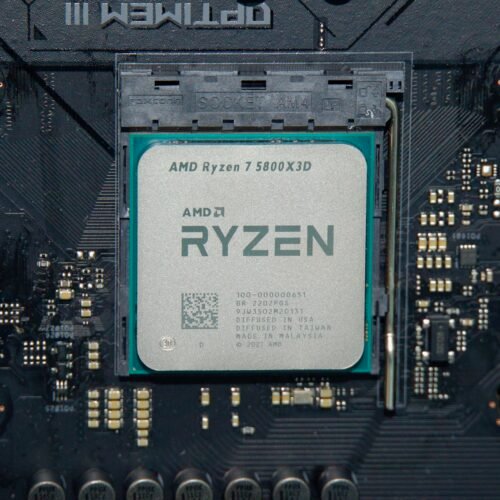
AMD may have something on the horizon for people who are looking to stretch their current PC (and its DDR4 RAM kit) just a little further. Leaks spotted by Tom’s Hardware point to the existence of an “AMD Ryzen 7 5800X3D 10th Anniversary Edition,” a re-release of a 4-year-old out-of-circulation CPU that might nevertheless be an upgrade for people with older Ryzen CPUs in Socket AM4 motherboards.

The “X3D” in the chip’s name signifies that it comes with 64MB of extra L3 cache stacked on top of the main CPU die, bringing the total amount of L3 cache to 96MB. Workloads that benefit from extra cache—including most games—will perform much better on the 5800X3D than they do on the vanilla Ryzen 7 5800X.

The “10th Anniversary” being celebrated isn’t for the 5800X3D itself, but the AM4 processor socket, which first launched in September 2016. The socket was succeeded by AM5 nearly four years ago, but AMD kept the AM4 socket around to continue to address the budget market. Higher prices for DDR5 RAM kits and AM5 motherboards themselves have helped keep the AM4 socket around since then, and while AMD hasn’t released any new architectures for AM4 boards since late 2020, it has been remarkably persistent in releasing and re-releasing remixed Ryzen 5000-series CPUs for the socket.

The 5800X3D was the first of AMD’s X3D releases, and it comes with the most compromises compared to standard Ryzen chips. It doesn’t support most forms of overclocking, and its base and boosted clock speeds are each a few hundred MHz lower than the regular Ryzen 5800X. If you’re not planning to pair the chip with a fairly fast, recent GPU from Nvidia’s GeForce RTX 40- or 50-series or AMD’s Radeon 9070 XT, a regular eight-core Ryzen 7 chip from the 5700 or 5800 series may get you better value for your money.

But for people with a high-end GPU who don’t want to pay today’s inflated prices for a good kit of DDR5 memory, a re-release of the 5800X3D could help stretch that old Socket AM4 system for just a few more years.

AMD hasn’t officially announced pricing or availability for this chip yet, but the apparent existence of retail packaging suggests its launch may be imminent. An Indian retailer listed the chip for about $310, though we’d take this with a grain of salt given ongoing disruption from tariffs, fuel costs, chip shortages, and other factors. Used versions of the 5800X3D start between $450 and $500 on eBay as of this writing, so anything lower would be a relative bargain, provided AMD can keep the chip stocked.

Indonesia’s dangerous return to state-controlled trade

0
indonesia’s-dangerous-return-to-state-controlled-trade
Indonesia’s dangerous return to state-controlled trade

Indonesia’s President Prabowo Subianto has unveiled one of the most consequential
economic interventions since the fall of Suharto: a plan to centralize exports of strategic
commodities — including palm oil, coal and ferroalloys — through a state-controlled
structure linked to the sovereign fund Danantara.

The official justification is seductive. Indonesia, the government says, has lost hundreds of billions of dollars through under-invoicing, transfer pricing and opaque offshore trading schemes.

The problem is real. Commodity exporters across the developing world have long shifted profits to Singapore, Hong Kong or Dubai while reporting artificially low prices at home. Governments lose taxes. Foreign exchange earnings disappear offshore. National wealth leaks outward.

But the cure proposed by Prabowo may prove more dangerous than the disease.

Rather than strengthening Indonesia’s existing institutions — the tax office, customs authority, financial intelligence agencies and anti-corruption bodies — the administration is building an entirely new layer of state control over trade. According to reports, the mechanism will operate through a newly established entity, PT Danantara Sumberdaya Indonesia, registered only shortly before the president’s parliamentary speech.

This is not merely bureaucratic reform. It is a structural shift in how Southeast Asia’s largest economy intends to govern capital, exports and political power.

Prabowo frames the move as economic patriotism. Indonesia, the world’s largest exporter of palm oil and thermal coal, should no longer allow foreign intermediaries to determine prices for its resources. He wants exporters to route transactions through a centralized platform under state supervision.

Yet behind the nationalist rhetoric lies a deeper reality: fiscal pressure.

Indonesia faces mounting budgetary demands from energy subsidies, food programs, industrial policy and ambitious welfare spending. At the same time, the rupiah has weakened sharply against the dollar, prompting authorities to tighten foreign-exchange rules and require export earnings to remain longer in domestic banks.

The export gateway is therefore not just about combating fraud. It is about capturing liquidity, securing state revenue and asserting greater control over strategic commodities at a moment of economic anxiety.

There is also a political logic hiding beneath the economic one.

By controlling export flows, the state gains leverage over domestic supply. Indonesia’s biodiesel expansion program — particularly the push toward B50 fuel blending — requires enormous volumes of crude palm oil. State electricity utility PLN depends heavily on reliable coal supply. A centralized export mechanism gives the government indirect power to prioritize domestic allocation over exports without formally imposing bans.

For companies, the signal is unmistakable: exporting will become more complicated, more political and more dependent on administrative approval.

The transition period reportedly gives firms barely days before implementation begins. In commodity markets, where contracts, shipping schedules and financing are planned months ahead, such abrupt intervention creates uncertainty that investors punish immediately.

And history offers Indonesia a warning.

During the Suharto era, the government created the Clove Support and Trading Board (BPPC), the state-backed clove trading monopoly controlled by Suharto’s son Tommy. The official goal was to stabilize prices and protect farmers. The result was cronyism, distorted markets and widespread suffering among small producers. Political insiders captured rents while farmers lost bargaining power.

Today’s Indonesia is not Suharto’s Indonesia. Its institutions are stronger, its press freer and its economy more integrated globally. But the political temptation remains the same: When states control trade flows, access to power becomes economically priceless.

That is why many businesses fear selective enforcement. Companies with strong political connections or alignment with the administration may face lighter scrutiny and smoother approvals. Others may encounter regulatory bottlenecks, delayed permits or opaque compliance hurdles. Even if no formal favoritism exists, the perception alone damages investor confidence.

Markets do not merely evaluate economic fundamentals. They evaluate predictability.

Indonesia has spent two decades persuading global investors that it is a stable democratic economy governed by rules rather than patronage. This new export regime risks undermining that progress. Reuters reported growing investor concern about policy unpredictability and expanding state intervention, amid capital outflows and pressure on Indonesian assets.

The irony is painful. A policy intended to strengthen the rupiah could weaken it over time.

Currencies depend not only on foreign-exchange reserves but also on trust. Investors need confidence that contracts will be honored, regulations applied fairly and commercial decisions insulated from politics. When governments abruptly centralize commodity trade, investors begin pricing in political risk premiums. Capital becomes more cautious. Financing costs rise.

Most troubling, corruption rarely disappears when states centralize power. It simply relocates.

Under-invoicing by private firms is unquestionably a serious problem. But replacing decentralized opacity with centralized discretion can create something worse: institutionalized rent-seeking inside the state itself. The opportunities for favoritism, hidden commissions and political patronage may expand rather than shrink.

Indonesia deserves better than choosing between private leakage and state monopoly.

The country’s challenge is not a lack of control. It is a lack of institutional credibility. Stronger customs enforcement, digital trade transparency, automatic tax-information exchange and judicial independence would address commodity fraud without concentrating enormous commercial power in politically connected entities.

Prabowo is betting that more state control will produce national strength. But history — in Indonesia and elsewhere — suggests that when governments begin controlling who can sell, who can export and who can access markets, economic nationalism often drifts toward oligarchy.

Once trust erodes, rebuilding it is far harder than tightening control.

Bhima Yudhistira Adhinegara is the executive director of the Center of Economic and Law Studies (CELIOS). Muhammad Zulfikar Rakhmat is the director of the China-Indonesia and MENA-Indonesia desks at CELIOS.

0FansLike
0FollowersFollow
0FollowersFollow
0SubscribersSubscribe
- Advertisement -
Google search engine

Recent Posts