Environmentalists turn out in force to oppose Trump coal ash rollbacks
At a virtual public comment hearing hosted by the US Environmental Protection Agency on Thursday, a long line of environmental advocates voiced strong opposition to proposed new regulations weakening requirements that utilities must follow in cleaning up toxic coal ash residue at hundreds of sites across the country at which coal was burned to produce electricity.
“The Trump administration has jeopardized the nation’s drinking water supplies as a favor to polluters,” Lisa Evans, senior counsel at Earthjustice and a former EPA attorney, said in a statement. “It’s just not right.”
The Trump administration announced in April that it would repeal a rule put in place in 2024 by the Biden administration’s EPA that required utilities to monitor coal ash sites at inactive coal plants. The Trump EPA also said it would loosen requirements for protecting groundwater near those sites. Now the Trump administration wants to rely on states for coal ash monitoring and enforcement and enable them to bypass national standards in some cases.
In announcing the new proposed regulations in April, EPA Administrator Lee Zeldin called them “commonsense changes” and said they “reflect EPA’s commitment to restoring American energy dominance, strengthening cooperative federalism, and accommodating unique circumstances at certain [coal ash] facilities.”
The proposed rule would exempt sites where coal ash is stored from regulation and permit coal-fired power plant owners to minimize, delay, or avoid dealing with the coal ash at their facilities.
Coal ash, or coal combustion residuals, is the mineral residue left after burning coal to generate electricity. It contains potentially toxic levels of substances like mercury, arsenic, and lead, all of which are associated with human health problems, including cancer.
More than half of the fine, gray, powdery residue is used each year to create concrete, drywall, or other industry applications. This is often called “beneficial use” by the coal industry.
A 2022 study by Earthjustice and other environmental groups found that more than 90 percent of coal power plants across America were contaminating groundwater via coal ash residues.
At Thursday’s virtual public comment session, required by law, a spokesman for the American Coal Ash Association lauded the Trump rollbacks as the right move forward.
John Ward, whose trade group focuses on advancing the management of materials made from coal ash, said the association is in support of the EPA’s move to eliminate criteria defining “beneficial use” for coal ash. He called coal ash an underutilized domestic mineral resource. Coal ash can be useful in the production of cement, wallboard, agriculture, and potentially critical minerals, he said.
Coal ash can improve concrete strength and durability, while supporting the supply chain for critical construction materials, said Leah Pilconis, vice president of government affairs and general counsel at the American Cement Association.
That trade group also supports the EPA’s proposed provision changes. Among them: redefining coal ash for cement manufacturing not as an industrial waste but instead as a part of the cement production process. The proposed changes come as supply of coal ash declines, Pilconis said, and could improve access to legacy coal combustion residue.
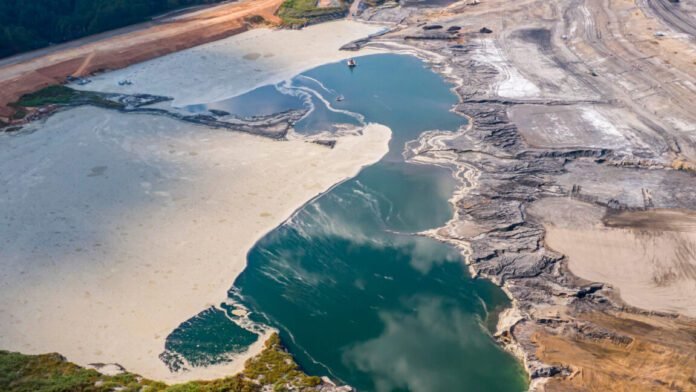
But beyond the coal ash used to make cement and other materials, vast quantities of the toxic residue are kept on-site at both active and retired coal plants, where it’s often covered with water or soil to prevent it from contaminating the air or waterways. The EPA has long had concerns about these sites: In 2002, the agency reported that improper lining on these coal ash ponds and landfills allow toxins to leach into the groundwater.
That threatened nearby water supplies, the agency found, by contaminating groundwaters above federal safety standards.
In their comments on Thursday, environmental groups said the EPA’s proposed rule guts protections against the dangers of burning coal and puts the nation’s groundwater at risk. Existing rules were built upon years of science, litigation, and documented harm, they said.
Jennifer Cassel, another attorney with Earthjustice, said water near coal ash becomes thick with pollution, like a tea that is steeped for too long.
Cassel has been working on protecting communities from coal ash pollution for 15 years and said rain and hurricanes amplified by climate change have exacerbated these threats. And those who live near coal ash dumps, she said, continue to discover cancer at a rate that makes them think, “This cannot be normal.”
“EPA, you know the record,” Cassel said. “You made the record.”
Kristina Zierold, a professor at the University of Mississippi, said she has found that children exposed to coal ash are more likely to suffer from depression and have poorer school performance than children who aren’t exposed.
Zierold said she has been researching the health impacts of coal ash on children since 2011 and was awarded a National Institutes of Health grant in 2015 to investigate coal ash and neurobiological health in children 6 to 14 years old.
She and her research team utilized air pollution and dust sampling in the homes of children to collect coal ash and tested children for neurobehavioral and mental health conditions in multiple ways.
If a child performs poorly in school, that can have cascading effects through adulthood, Zierold said. Depression in children can lead to poor social interaction, lack of learning, and in some cases suicide, she said.
“Do you want your children playing on coal ash in parks and playgrounds?” Zierold asked. “Do you want them breathing it in and ingesting it? I don’t.”
Brianna Knisley, the director of public power campaigns at Appalachian Voices, said the 2008 Kingston Fossil Plant coal ash spill was one of the worst industrial disasters in US history. It’s an example of what happens when the EPA leaves coal ash management up to state regulators and utilities, she said.
The 900 workers who cleaned up the spill were denied protective gear and told the coal ash they were working to remove was clean enough to eat. Hundreds of workers became sick and dozens are dead, Knisley said.
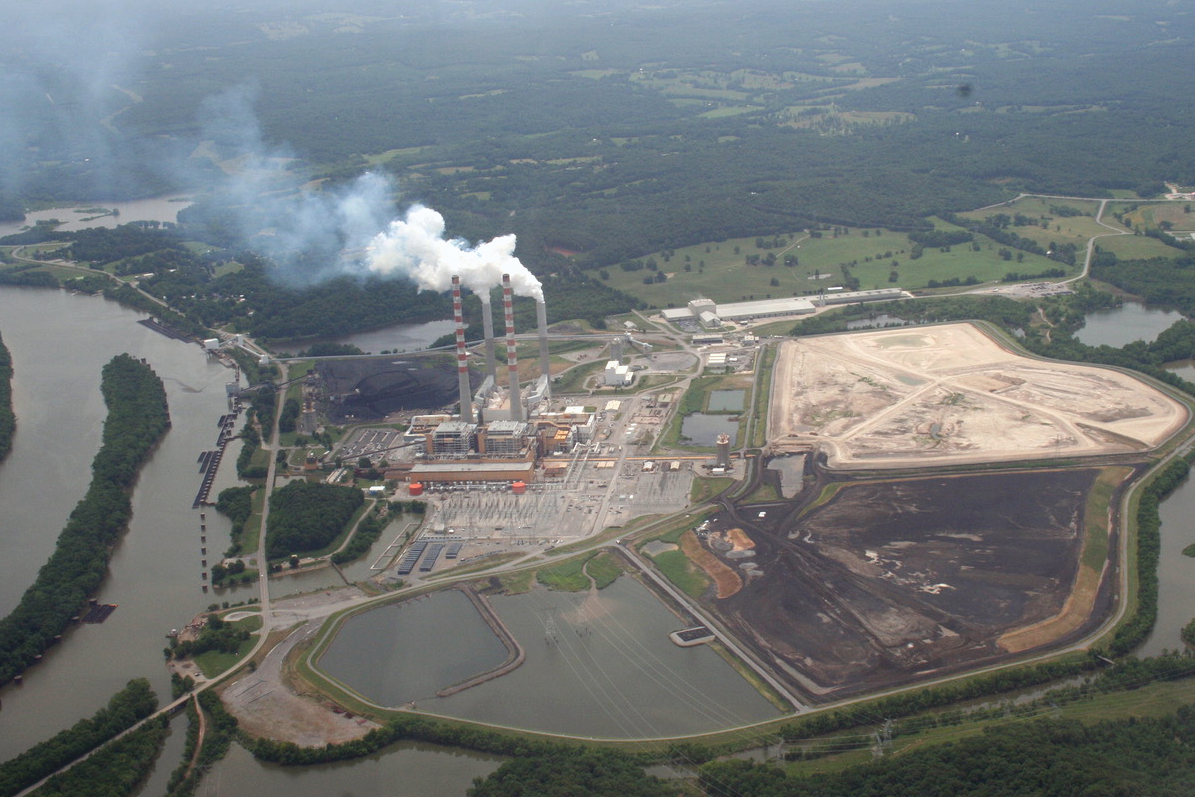
Aerial view of the Tennessee Valley Authority’s Cumberland Fossil Plant in Cumberland City, Tenn.
Angie Mummaw, an organizer with Appalachian Voices who lives near the Cumberland Fossil Plant in Tennessee, said she’s tired of communities like hers being treated as sacrifice zones while the coal industry asks for permanent loopholes instead of cleaning up the messes they’ve created.
Knisley has worked with communities where coal ash was used to fill children’s ball fields and seen Tennessee Valley Authority waste piles of the toxic ash piled up behind a public playground, open to the wind. The Tennessee Valley Authority did not immediately respond to questions from Inside Climate News.
“This is coal ash management without strong federal regulation and enforcement,” Knisley said. “States and utilities are not going to keep communities safe.”
This article originally appeared on Inside Climate News, a nonprofit, non-partisan news organization that covers climate, energy, and the environment. Sign up for their newsletter here.
UN Security Council race turns Indo-Pacific vs Eurasia clash
A quiet diplomatic battle is taking shape between the Philippines and Kyrgyzstan over the United Nations Security Council’s sole Asia-Pacific non-permanent seat for the 2027-2028 term. The General Assembly will elect new members on June 3.
Long seen as the clear favorite, the Philippines now faces an unexpectedly forceful late push from Kyrgyzstan, turning what was expected to be a routine contest into a competitive race.
The Security Council has 15 members, five of them permanent – the United States, China, Russia, the United Kingdom and France. Kyrgyzstan is one of 59 countries that have never served on the Council, according to the UN website.
The last time Kyrgyzstan sought a seat, in 2011, it lost to Pakistan. It came a year after the bloody 2010 revolution and Kyrgyzstan did not have the consolidated support of its closest Central Asian neighbors. But Bishkek believes this time is different.
After settling long-standing border disputes with its neighbors, it now has the backing of all its Central Asian neighbors – Kazakhstan, Uzbekistan, Tajikistan and Turkmenistan – and the strong support of fellow Turkic nations, Turkey and Azerbaijan.
Kyrgyzstan is also betting that growing global interest in the Eurasian interior – from Washington’s focus on critical minerals to Beijing’s push for overland energy routes that bypass maritime choke points – will translate into calls for greater representation from the region.
“The UNSC elections are becoming much more competitive than many expected,” a Kyrgyz diplomat said.
If successful, Kyrgyzstan will become only the second Central Asian nation to serve on the Security Council, following Kazakhstan’s term in 2017-2018.
The Philippines, by contrast, has served four times – in 1957, 1963, 1980-1981 and 2004-2005. A founding member of ASEAN and a U.S. treaty ally, its strategic location near Taiwan has made it central to Washington’s efforts to strengthen deterrence against China.
While permanent members traditionally avoid publicly declaring preferences, a Philippine diplomat said it was only natural for Washington to back Manila. “The other side is supported by China and Russia,” the diplomat said, adding that countries should be on “the right side of history.”
Kyrgyzstan, however, has been working to shift that perception. Last month, it appointed Deputy Prime Minister Edil Baisalov as ambassador to Washington – an unusually high-profile move that underscores the importance Bishkek attaches to the race.
Meanwhile, in New York, Foreign Minister Zheenbek Kulubaev has been actively engaging counterparts from Uruguay, Cuba, Nicaragua, Costa Rica, Serbia, Bahrain and China as part of an intensified diplomatic push.
In mid-May, Kyrgyz President Sadyr Japarov set out his case in a lengthy Facebook post, arguing that the country’s candidacy addresses a broader imbalance within the UN system.
“The continued existence of imbalances in the Council, especially the insufficient participation of small, developing, and landlocked states, undermines the stability of the entire architecture of collective security,” he wrote.
Pointing to Central Asia’s recent progress in resolving border disputes “exclusively through peaceful means,” Japarov said the region offers a model showing that “even the most sensitive security issues can be resolved through negotiations and mutual consideration of interests.”
Winning a Security Council seat requires a two-thirds majority in the General Assembly — typically around 125 votes. Kyrgyzstan’s strategy is to block a first-round victory and push the contest into multiple ballots, where positions can shift and diplomatic trade-offs intensify.
It has secured the endorsement of the Organization of Islamic Cooperation and most of its 57 members, with the notable exception of Indonesia, Malaysia and Brunei, which have pledged support to their fellow ASEAN member.
Bishkek has also invested heavily in outreach to African states, promising alignment with African Union priorities and broader Global South concerns.
Ultimately, the Philippines-Kyrgyzstan contest is not simply about qualifications measured by traditional metrics. It is about what kind of world the United Nations believes it represents — and where it sees the center of geopolitical gravity: the Indo-Pacific or the Eurasian heartland.
The geopolitical map is shifting. The vast Eurasian landmass — stretching from Eastern Europe through Central Asia to Western China — is no longer a passive space between great powers.
It is increasingly a central arena where influence is contested, borders are negotiated and new forms of cooperation are taking shape.
Ken Moriyasu, a former correspondent for the Japanese newspaper Nikkei, is a senior fellow for greater Asia at the Hudson Institute.
Ukraine’s parliament ratified loan agreement with EU
Ukraine’s parliament ratified on Thursday a €90 billion ($104 billion) loan agreement with the European Union with 298 votes, well ahead of the 226 votes required for a majority.
The loan, critical for supporting Ukraine’s finances, had been blocked until last month, when Hungary’s new government lifted its veto.
Under the deal, 8.35 billion euros in funds for general budget support this year are to be distributed in three instalments tied to Ukraine adopting tax changes that had already been demanded by the International Monetary Fund, although parliament has balked at some of the legislation.
One piece of legislation on raising taxes on parcels sent from abroad failed to pass parliament earlier this week.
The legislation also includes the introduction of a tax on income earned through digital platforms.
The IMF’s monitoring mission arrived in Kyiv on Wednesday for the first review of its $8.1 billion lending programme to Ukraine, approved in February.
Ukraine, now in its fifth year of fighting against a full-scale Russian invasion, channels the bulk of its domestic revenue to defence and relies on foreign financial aid to cover its social and humanitarian spending.
Parliament is also expected to vote on changes to the budget that would increase military spending thanks to the EU loan.
IRGC Fires on Ships in Strait of Hormuz as Peace Proposal Under Consideration
Iran’s Islamic Revolutionary Guard Corps (IRGC) navy fired warning shots at four vessels near the Strait of Hormuz after the ships attempted to pass through the waterway without authorization, according to a post published on an IRGC-affiliated Telegram channel, as discussions continued over a proposed ceasefire extension and nuclear negotiations between Washington and Tehran.
The Telegram post said the vessels sought to transit the strait “without prior coordination or authorization.” The report did not identify the ships or provide additional details about the encounter.
US and Iranian representatives reached preliminary understandings Thursday night on a proposed 60-day memorandum designed to extend the ceasefire and open negotiations on Tehran’s nuclear program, according to CNN. The network reported that President Donald Trump has not yet approved the arrangement.
CNN said the proposal would temporarily extend the ceasefire, reopen the Strait of Hormuz to unrestricted shipping traffic, and establish a negotiating process focused on Iran’s nuclear activities.
According to Axios, the framework would also include an Iranian declaration that it would not pursue nuclear weapons, while future negotiations would address sanctions relief and access to frozen Iranian assets.
At the same time, Iran’s semi-official Fars News Agency reported Friday that Iranian armed forces launched missiles from southern Iran toward “designated targets.” Fars said the targets had not been identified and provided no additional details regarding the operation.
It remained unclear whether the missile launches reported by Fars were related to the maritime incident reported by the IRGC-affiliated account.
The developments came amid growing attention to shipping through the Strait of Hormuz. US Treasury Secretary Scott Bessent said Thursday that the Treasury Department could take action against Oman if the country helped Iran collect tolls from vessels using the waterway. Oman borders the Strait of Hormuz.
The comments followed remarks made Wednesday by President Trump, who warned Oman against interfering with maritime traffic through the strait.
“Oman will behave just like everybody else or we’ll have to blow them up,” President Trump said.
After years of stability, F1 reliability can no longer be taken for granted
First off, apologies for the lack of a Canadian Grand Prix report at the beginning of this week; Ferrari chose last weekend to show us its new electric vehicle, and between that and Memorial Day, one thing led to another, and here we are.
Canada was yet another sprint weekend, meaning limited practice time for teams desperate for it to collect data on their various upgrade packages. The race, held on an artificial island built for Expo 67, is often one of the season’s highlights, and 2026 did not disappoint, with some excellent duals among the field.
The 19-year-old Italian sophomore Kimi Antonelli now leads his Mercedes teammate George Russell by 43 points in the championship after four straight wins in a row. With 25 points for a win, that means Russell could soon be two whole race wins behind his young in-house rival; never a comfortable spot when competing against someone with identical equipment.
Then again, one need only look at last year’s championship to realize it’s far too soon to be declarative; we’re only five races in. Last year, Oscar Piastri led Max Verstappen by more than 100 points at the Dutch Grand Prix—race 15 out of 24 that year—yet finished the year 11 points in arrears.
It’s not that Russell doesn’t have the measure of Antonelli; he’d been in control of the race—just barely—when his battery suffered a catastrophic failure, ending his day on lap 30. As the late, great British F1 commentator Murray Walker was fond of saying, “To finish first, first you have to finish,” which sounds obvious but contains an important point, as the best Murray quotes always do.
Reliability is historically unusual
The fragility of the current cars might strike some as odd, but if anything, it was the hyper-reliable hybrids that raced between 2017 and 2025 that are the real outliers. The last few seasons have been the most reliable in the sport’s history, and by some margin. Even in the 2000s, a driver went into each race knowing there was at least a 40 percent chance their car would fail before the checkered flag.
Russell’s exit from Canada surely stung; that much was clear from the way he threw his neck surround out of the car and onto the track in disgust. But reliability has robbed drivers in other races much closer to the flag.
Felipe Massa dominated the 2008 Hungarian Grand Prix, cementing the fact that it would be he and not Kimi Raikonnen who would be Ferrari’s title contender that year. But three laps before the end, a conrod failure destroyed his engine. Mika Hakkinen’s hydraulics failure at the 2001 Spanish Grand Prix happened on the final lap, handing the win to his arch rival and that year’s eventual champion, Michael Schumacher.
Felipe Massa, distraught after an engine failure at Hungary in 2008. His 2009 Hungarian GP had an even worse outcome.
Credit: ATTILA KISBENEDEK / AFP via Getty Images
Felipe Massa, distraught after an engine failure at Hungary in 2008. His 2009 Hungarian GP had an even worse outcome. Credit: ATTILA KISBENEDEK / AFP via Getty Images
Perhaps the most heartbreaking was Damon Hill’s 1997 Hungarian race. That year’s defending champion, Hill had been unceremoniously dismissed from Williams by the unsentimental team boss after Frank Williams decided that Heinz-Harald Frentzen was the driver his team needed to beat Schumacher. History proved Williams catastrophically wrong; the move was the final straw for head designer Adrian Newey, causing him to leave the team, and although Williams won the 1997 championship with Jacques Villeneuve, that was the last time it did so and marked the beginning of that team’s decline.
Hill, jettisoned too late in the season to find a competitive seat, was stuck with the underfunded Arrows team. But 1997 was the start of a tire war between Goodyear and Bridgestone, and Arrows had the Bridgestone tires, which proved to be the preferred rubber on that hot day in Hungary. After a season of failures and abject results, Hill qualified third but eventually took the lead after the Goodyears on Schumacher’s car blistered.
With three laps to go, Hill led by more than half a minute until a hydraulic leak slowed his car to the point that Villeneuve was able to close him down and steal what would have been a well-deserved and much-needed victory for Hill and the winless Arrows team.
Some practices of those days helped contribute to the problems. Taking each car apart and putting it back together every night almost certainly led to retirements when something didn’t go back together entirely right. Now the cars are left parked overnight, and the mechanics are sent home to rest.
The rules played a huge part, too, requiring that engines and their components last multiple race weekends rather than using multiple engines in a single weekend. Indeed, retirements were so common that we used to joke that F1 engines ran on magic smoke because when you let the smoke out, the cars stopped working.
For most of the year, the Arrows A18 was an uncompetitive dog of a car. But on Bridgestone tires, in Hungary, it came alive. Until it died.
Credit: Michael Coopern/Getty Images
For most of the year, the Arrows A18 was an uncompetitive dog of a car. But on Bridgestone tires, in Hungary, it came alive. Until it died. Credit: Michael Coopern/Getty Images
This year’s power unit reliability issues are due to the fact that these really are all-new power units, even if the 1.6 L capacity and the V6 layout sound nearly identical to those of 2017–2025. These engines had to be designed to work with conventional turbochargers and not the electronic MGU-H turbochargers of the previous generation.
Instead of a fuel flow restriction of 100 kg/hour, the engines are now limited to 3,000 MJ/hour. And the electric motor—properly called an MGU-K—and lithium-ion battery pack are all new designs for 2026, with more power and energy than last year’s cars. And lest we forget, the hybrids didn’t start with great reliability. They were introduced in 2014, and that year saw plenty of retirements with power unit problems.
That engine deal? Not happening
The sport currently has a different power unit problem. As readers are now no doubt aware, the 2026 regulations have painted the sport into a bit of a corner. An F1 car’s battery only has enough energy to power the MGU-K for a fraction of a lap, and the cars can’t make up that difference by regenerative braking alone; they have to divert power from the V6 to the battery. The fastest way to complete a lap, particularly in qualifying, is no longer to just go flat out the whole way.
A few weeks ago, it looked like we had a solution to the problem: rejiggering the balance between V6 and MGU-K, from the current 53:47 to 60:40. Mercedes liked this plan, as did Red Bull, which is desperate to keep its star driver Verstappen engaged in the sport. But to force through the change in rules for next year, at least four of the engine manufacturers have to be on board, and the rest—Audi, Cadillac, Honda, and Ferrari—aren’t in a hurry to do so.
Ferrari has its hopes pinned on the Additional Development and Upgrade Opportunities, or ADUO, a process that allows engines more than 2 percent behind the competition to make performance upgrades to catch up. ADUO, it hopes, will let it catch up to Mercedes, but if everyone gets to tweak their power units for 2026 to make their V6s more powerful, the gap to Mercedes will remain.
So Ferrari thinks it’s in its interest to keep things as they are, even if it means shorter races next season or no more Verstappen. Consequently, Audi and Honda are key to making this happen, according to veteran paddock journalist Jon Noble.
“It feels like somebody doesn’t want me to fight or compete for this championship,” said George Russell after he failed to finish the Canadian Grand Prix.
Credit: Mark Sutton – Formula 1/Formula 1 via Getty Images
“It feels like somebody doesn’t want me to fight or compete for this championship,” said George Russell after he failed to finish the Canadian Grand Prix. Credit: Mark Sutton – Formula 1/Formula 1 via Getty Images
Next up on the calendar is Monaco, which swapped places with Canada on the schedule to try to group some of the North American rounds closer together. With plenty of braking zones and not that many straights, Monaco should flatter the new cars, which are also smaller and more nimble than the machines we’ve seen race around the Principality for the last decade or more.
John Barrowman has been hit with a heartbreaking family tragedy.
The beloved Doctor Who and Torchwood star has canceled upcoming appearances and tour dates after the death of his mother, Marion Barrowman.
The 59-year-old performer shared the emotional news with fans in a deeply personal social media post, revealing that his mother died peacefully at home on Sunday evening, surrounded by family.
“It is with a very heavy and broken heart that I share with you all that my beautiful mum Marion Barrowman, passed away peacefully at home on Sunday evening, surrounded by love, exactly the way she wanted,” Barrowman wrote.
The actor and singer said he and his husband, Scott Gill, were on a plane when they received the devastating news.
After landing, Barrowman returned home and was able to spend time beside his mother.
“While our hearts are shattered, we are grateful she left this world in her own bed, in comfort, with people she loved around her,” he wrote.
The heartbreaking loss has forced Barrowman to step away from the spotlight for now.
He announced that several upcoming appearances and shows would be canceled while he remains with his family during the difficult time.
“Because of this loss, and so I can be with my family during this incredibly difficult time, I have had to cancel upcoming appearances and shows,” he explained.
According to Stoke-on-Trent Live, the rest of the spring leg of Barrowman’s My Life in Musicals tour has been canceled and is expected to be rescheduled for autumn dates later this year.
Barrowman’s tribute to his mother painted a picture of a glamorous, funny and loving woman who played a huge role in shaping the entertainer fans know today.
“My mum was truly one of a kind — full of love, laughter, glamour, and kindness,” he wrote.
He also credited Marion with giving him his love of performing.
“I always say I am my mother’s son because she gave me my voice, my love of performing, my sense of humour, and my joy for life,” Barrowman said.
Fans immediately flooded the comments section with prayers, condolences and emotional messages of support.
One grieving fan wrote that they had also recently lost their mother after a battle with cancer, adding that they knew how “earth shattering” the pain could be.
“My heartfelt love, thoughts and prayers go to You and All Your Family at this very Sad time,” the fan wrote.
Another supporter was moved by Barrowman’s words about losing a parent.
“‘Losing your mum changes the world completely’ went straight to my heart because it surely does,” the fan commented.
A third simply added, “Prayers for your mother from Rutherglen.”
Barrowman is best known to television fans for playing Captain Jack Harkness in Doctor Who and Torchwood.
He has also enjoyed a long career on stage, appearing in major productions including Anything Goes, Sunset Boulevard and The Phantom of the Opera.
For now, the performer is putting his career on hold as he mourns the woman he called the source of his voice, humor and joy.
The Race to Build AI Data Centers — Before the People Can Protest
Shark Tank’s Kevin O’Leary has been making the media rounds defending the 40,000-acre data center project he’s backing in northern Utah. Dismissing residents’ concerns over the environmental impacts and water demands of the proposed project in the drought-stricken Great Salt Lake region, O’Leary has claimed protesters are “bused in,” “misinformed,” and alleged that China has had a hand in orchestrating the public push back.
“The Stratos project in Utah is an example of data center largesse,” says Jim Walsh, the policy director of Food and Water Watch, an organization leading a campaign to stop the rapid development of data centers across the country. As proposed, the project would be more than double the size of Manhattan. Walsh adds, “It’s important to recognize that the impacts of this data center go beyond the water and energy concerns that impact the residents of Salt Lake. They’re going to be pulling gas from the Ruby Pipeline, and this project is going to perpetuate more fracking in the Western U.S., a practice for extracting natural gas that uses extreme amounts of water.”
This week on The Intercept Briefing, host Jordan Uhl speaks to Walsh about the massive Utah project, the environmental and economic impact of data centers on communities especially where water is already scarce, and the Trump administration’s push to cut regulations at the federal and local level to accelerate the build-out of data centers and AI infrastructure.
In response to O’Leary claiming data center development is a national security priority to beat out China in the AI race, Walsh says, “National security isn’t just about having technological and military superiority.” We’re not safe if we don’t have clean air and clean water to drink and breathe. We’re not safe if our communities have massive data centers that are extracting our natural resources. Our entire economy functions on access to water.”
For more, listen to the full conversation of The Intercept Briefing on Apple Podcasts, Spotify, YouTube or wherever you listen.
Transcript
Jordan Uhl: Welcome to The Intercept Briefing, I’m Jordan Uhl, your host today.
Jessica Washington: I’m Jessica Washington, politics reporter at The Intercept.
Jonah Valdez: And I’m Jonah Valdez, another politics reporter here at The Intercept.
JU: So Jess, Jonah, we’re talking to you both today because the California primary is days away: June 2. While there are a few notable races that have captured national attention, one here where I live in Los Angeles is the mayoral primary.
We’ve got a few contenders. It is looking tight at the top with a few candidates jockeying for one of these top two positions. Jess, could you give us an overview of this race?
JW: As the only non-Angeleno on the podcast, I’m going to try and do a good job. So something important to keep in mind before we even get into the candidates is because of how California’s primary system works, if no candidate gets a majority of the vote — so over 50 percent — the top two are going to go off to a runoff election in November.
The candidates in this race are the incumbent mayor, Karen Bass. She has been leading in every poll, but it should have been really a slam-dunk election, and yet it isn’t. We can get into more of why in a minute. But her opponent is really interesting; two opponents are interesting. So first, there’s reality star Spencer Pratt, who has been consistently polling in second place, although in more recent polling he’s looking to lose a little bit of steam. Then the other candidate is council member Nithya Raman, a Democratic socialist who’s not endorsed by DSA LA, but is recommended by them. So that’s the mix that’s happening in this election right now.
JU: Jonah, there are a few other contenders that could be potentially pulling votes from Nithya Raman or might be waiting to decide till last minute. What is this looking like on the ground? Who have you talked to and what are you hearing?
JV: My focus has been on LA’s left, if you will, and how there might be what people are calling some vote-splitting among the left. And that’s because not only is there Nithya Raman who, as Jessie said, is a Democratic socialist, but there’s also Rev. Rae Huang, who is a housing advocate.
She’s a Presbyterian minister. She actually was in the race before Nithya and was the only DSA candidate, Democratic Socialist candidate, in the race at the time. She launched two weeks after Mamdani’s win in New York, so she has all this buzz going into it. The LA Times was asking, is she LA’s Mamdani?
So that’s the framing that she entered the race in, and it excited a lot of progressives here in the left in Los Angeles. But as soon as Nithya joined the race, very last minute, and the rise of Spencer Pratt, you have this threat of this right-wing figure. Sure, this is a nonpartisan election, but the things he’s saying, demonizing homelessness and really getting on Karen Bass around her record and the fires. There’s this tangible threat now that Spencer Pratt could be in the runoff with Karen Bass, which is a pretty worst-case scenario for LA’s left that is trying to push LA’s politics in a different direction.
Right now, the contention for a lot of voters in LA’s left is between, do I vote for Nithya Raman, someone who I at least agree with, but have to hold my nose on some issues, like police accountability, where she has fallen short in the eyes of some of her opponents? Or Rae Huang, who has a bolder vision? Some members of DSA LA have said that she has the true socialist platform amongst the two Democratic Socialist members. I should say that Rae Huang is only polling at about 5 percent. That’s nowhere near the second place spot to get into the runoff.
JU: We’re seeing a wide array of polling in this race, and there was a new poll that dropped on Thursday morning from Berkeley IGS, which had Bass, unsurprisingly, in the top spot with 26 percent. But in second place, this I think caught many people off guard, Nithya Raman at 25 percent, Spencer Pratt at 22, and Rae Huang at 9 percent, with 10 percent undecided. That presents a totally different outlook going into the general in this runoff.
But Jess, I want to bring you back in here. Spencer Pratt was widely considered to have a guaranteed spot in the runoff because he had a ton of press, a ton of buzz, especially from outside LA. He had Trump’s endorsement. He’s been getting featured in national press.
One of the things that he really rose to prominence on was his criticism of Karen Bass, like Jonah said, for her, “handling of the fire.” But I think many people who live here felt that some of it was disingenuous because those fires were exacerbated by the Santa Ana winds. You can only do so much as mayor.
You can’t get helicopters up in the air in 80-mile-an-hour winds to fight those fires. So I think some of it came off as very disingenuous to people here in LA. But what are you hearing? What are you seeing from Spencer Pratt that puts him even in contention?
JW: For anyone who doesn’t know who Spencer Pratt is, he’s this former reality star from “The Hills.” He’s the guy who told People Magazine that he blew, I think, about $1 million on crystals, blowing through his $10 million reality television fortune on other lavish purchases. So that’s just a little bit of who Spencer Pratt is, the guy who yelled at women on television for about a decade.
But the reason he’s catching steam, I think, is twofold. I think, one, the fires are a very visceral moment. The mayor obviously has no control over the fires, but the fact that she was in Ghana during the Palisades fire did really anger a lot of people. The fact that she didn’t come home until the following day is a large part of that narrative.
Spencer Pratt is not looking to tackle those issues. He is looking to move people out of spaces where he and his friends can see them. It’s also worth noting that his plans of mass arrest also aren’t going to even fix that problem. But what you’re looking at in Los Angeles is frustration over Karen Bass’s handling of these fires and this kind of visible problem of homelessness that frustrates people on both sides of this issue.
That’s what Spencer Pratt has really honed in on. I think it’s important to note that none of his solutions are going to fix any of those problems, but he is tapping into a real anger and a real frustration in the electorate.
JU: Yeah I think what’s interesting to watch is the national support for Spencer Pratt. But that comes at a cost for him because 80 percent of his donors don’t live in Los Angeles, according to analysis that I saw from one Gabe Sanchez. And sure, you can run ads, you can get press, but that doesn’t necessarily mean that people within the city, within your jurisdiction, would vote for you.
What I found so interesting and Jonah, I want to bring you back in here, people dug up some of his old appearances or guest appearances on Infowars with Alex Jones, and during one of those interviews, he talked about his belief that climate change was a hoax.
What I found so ironic is that this is somebody who made losing his home in the Palisades fire a centerpiece of his campaign, but we know that worsening climate change leads to more frequent and more severe wildfires. So on the one hand, you have somebody who believes it’s a hoax. At the same time, he’s making a byproduct of climate change the centerpiece of his campaign.
Jonah, what stood out to you?
JV: I think to Jessie’s point as far as demonizing the homeless population in LA, his rhetoric around that is concerning, not just on the level of, this is going to hurt a lot of the gains that housing advocates have fought for in LA County for years, but even just on the level of basic humanity.
He’s referred to unhoused people as fentanyl-addictedzombies. Like a constant refrain for him is telling people to go outside and go to your freeway underpass, talk to a homeless person, and ask them. He’s assuming they don’t want housing, that’s not what they want, they just want their next high. They just want to be on drugs.
This is all in the face of studies showing that most people who do have drug addiction or in substance use addiction on the streets is a result of being unhoused — and not the other way around. And so I think he does exist in this bubble of distorted reality.
LA is still seen as this liberal bastion along with California as a whole, but there are a lot of folks here who voted just a couple years ago for someone like Rick Caruso, who preyed on a lot of these similar fears of course from a different standpoint of crime and safety. So these fearmongering tactics are being recycled again and again.
I was talking to sources yesterday, other voters, and there is some reality to what [Pratt is] saying, which is like LA is struggling. Angelenos are struggling. A lot of the nation is struggling economically, but how you diagnose that matters.
JU: So why has this mayoral election captured the national interest? Jess, I want to start with you, and then we’ll go to you, Jonah.
JW: It’s captured the national interest partially because it feels like this perfect allegory for the 2016 election. You have this Trumpian figure, you have liberal-left infighting, so I think that’s part of it. But I also think for someone like me, who cares a lot about policy around housing and homelessness, this is about the spread of very dangerous ideas about people, about the idea that we can call people zombies, we can mass arrest them, and these ideas around homelessness are spreading all across the country.
JV: For me, it’s a lot of the same questions that the left in LA is facing could be amplified to a national level as well, and a lot of this infighting, a lot of it is just lack of organization. And I think one example of that is for listeners who don’t know, there are actually four DSA members on city council, one of which is Nithya Raman, who is running.
However, three of those DSA members didn’t endorse their fellow DSA member for mayor. They actually endorsed the incumbent Mayor Bass. So a lot of that back and forth and mixed messaging to the public could really hurt movements and coalition-building. DSA LA has told me that’s one of the things they hope to fix, which is more organization within city council to increase their influence there, and that starts with being on the same page.
That messaging here and a lot of these lessons could be amplified on the national stage as well.
JW: We’ve also seen similar signals from the Trump administration with executive orders targeting the homeless population. The Supreme Court has also moved to weaken protections for unhoused people living on the streets.
These are policies and rhetoric that are truly taking root at the highest levels, and we need to be paying attention to them.
JU: And these hollow pandering overtures to different demographics, I think, are just jarring. Maybe it’s a byproduct of the Trump era, but just don’t garner the raised eyebrows that they typically would.
The headline I saw on Wednesday in TMZ that “Spencer Pratt loves Mexican food and Eats it More Than Any White Person in Los Angeles” made me laugh, but also I found myself feeling very confused. Like, why is this news? But it fits within a broader pattern from that campaign where he’s just trying to pander to the sizable Latino community in Los Angeles.
We see that also with his AI ads. Latinos for Pratt doesn’t seem to have an actual real or tangible base in the electorate. Maybe he does, but those AI ads have been widely mocked or parodied and some have gone viral, even those not made by his campaign.
The proliferation of AI ads in this cycle, I think, segues us into our next conversation with Jim Walsh, the policy director of Food and Water Watch, where we talked about the proliferation of AI data centers across the country.
JW: Let’s listen to that conversation.
JU: Jim Walsh, welcome to The Intercept Briefing.
Jim Walsh: Thanks for having me here, Jordan. I appreciate it.
JU: Jim, there are over 3,000 operational data centers across the country and more than 1,500 in development, according to Pew Research. Data centers aren’t new, but let’s start with the basics. What do they do, and how is the growing demand for AI transforming the energy needs of facilities?
JW: I think most people hear about data centers, they think about clouds and streaming and maybe searching or AI. But data centers themselves are these massive rows of servers that require large amounts of water infrastructure, electricity, cooling, land, and also backup power. The scale of these is really hard to grasp because most people don’t think in terawatt hours — but that’s exactly what we’re talking about for energy demand.
The Lawrence Berkeley National Lab found that U.S. data centers used about 176 terawatts of electricity in 2023. This is about how much electricity it takes to power 16 million homes for an entire year. And that number is expected to grow to 580 terawatts annually; it’s roughly equivalent to 50 million homes.
Data centers also use immense quantities of water. We’re talking hundreds of billions of gallons of water annually with projections that they’ll use as much as 18.5 million households by 2028. Nearly 60 percent of this coming from drinking water supplies. It’s really important to note that a lot of this is coming from drought-stressed areas that are compounding existing water scarcity concerns.
Beyond that, we’re also seeing that data centers can create significant pollution burdens for communities. When data centers use fossil fuels, they’re polluting our air and water to meet their energy needs, but the chemicals also used in cooling data centers can pollute our water. Even when chemicals aren’t used, evaporative cooling systems can concentrate pollution already in water.
We saw this happen in Oregon, where an Amazon data center was implicated and agreed to pay out $20 million due to elevated nitrate levels in water that coincided with the development of the data center. Now, Amazon never added nitrates to their water systems, but the water that came out of their facilities seemed to have increased the concentration of nitrates in the water because of water evaporation through their cooling systems.
JU: Now, in early May, a quasi-governmentalagency in Utah approved a massive AI data center project. Known as the Stratos project, it is expected to cover more than 40,000 acres in northwestern Utah. For context, that’s more than twice the size of Manhattan.
The project, which is backed by the venture capitalist and “Shark Tank” regular Kevin O’Leary, has sparked local outrage. Could you tell us about this data center project and why community members are concerned?
JW: The Stratos project in Utah is an example of data center largesse. You talked about 40,000 acres, double the size of Manhattan. It also would double the state’s energy demand. It would also be located near the Great Salt Lake, which is already facing record droughts, like much of the United States. So it’s really no surprise that this and other projects in Utah are facing tremendous public opposition.
In response to the backlash, communities in Utah are putting the brakes on data centers, and the Utah legislature is actually gearing up to potentially require more reporting and studies on data center impacts. It’s important to recognize that the impacts of this data center go beyond the water and energy concerns that impact the residents of Salt Lake.
They’re going to be pulling gas from the Ruby Pipeline, and this project is going to perpetuate more fracking in the Western U.S., a practice for extracting natural gas that uses extreme amounts of water. That practice also has a track record of contaminating surface water and spreading radioactive waste generated from fracking operations.
And because of the segmented permitting process and the segmented evaluative process, nobody’s actually looking at the full impacts of this project or any data center projects, including the sources of energy. Which — if they’re going to be gas plants in the United States — probably means more fracking and more water pollution before you even get to the impacts of the data center themselves.
JU: Now, we should note, we invited Kevin O’Leary on this show to share his point of view. As of this recording, we have not heard back, but here he is on “Fox & Friends”talking about the project recently.
Kevin O’Leary: Utah stepped up and said, “Look, we can compete. Not only do we have the land, 40,000 acres, we’ve got a pipeline running through the land, and we have this designation that can accelerate permitting.”
It’s really about how do we catch up with the Chinese are doing because most people don’t like data centers for good reason. You tap it to the grid, and all of a sudden the electrical costs for their church and the community and the residents all go up, and that’s why there’s been a lot of pushback.
Not in this case. We’re building power from scratch from the pipeline.
JU: Jim, what do you make of O’Leary’s argument there?
JW: Posing this as a national security issue and a race with China really misses the real issue — that national security isn’t just about having technological and military superiority.
We’re not safe if we don’t have clean air and clean water to drink and breathe. We’re not safe if our communities have massive data centers that are extracting our natural resources. Our entire economy functions on access to water. Data centers are jeopardizing that access to water.
So it’s really easy for the ultrawealthy investor from Canada to come in and say, “Hey, we need to have these projects.” But for people that are directly impacted by these projects, it’s not helping them, and it’s not helping their communities.
“We’re not safe if our communities have massive data centers that are extracting our natural resources. Our entire economy functions on access to water.”
JU: That’s a good segue to where I wanted to take this next. The Salt Lake Tribune writes, “The full water demands of this project remain unknown, although its developers have said they’re working to secure a 13,000 acre-feet in Hansel Valley and the surrounding area, which is mostly agricultural. That’s enough water to meet the needs of more than 20,000 Utah households.”
One of the biggest concerns about data centers is the amount of water usage they demand. You touched on this a bit already, but why are AI data centers in particular such water-intensive facilities, and why are we seeing more pop-up in areas where water is already scarce?
JW: Data centers use tremendous amounts of water for cooling their servers. That’s only part of the picture. They also use tremendous amounts of water for their energy needs. As we are facing significant amounts of water scarcity, we’re seeing data centers move into water-scarce regions, and it’s because water isn’t the only concern for data centers. Their biggest price point is actually energy.
“Their biggest price point is actually energy.”
The Stratos Project is being targeted for that area specifically because they were able to get expedited permits, but they also are able to pull from the Ruby Pipeline. And they have a significant flow of inexpensive energy that they’ll be able to pull from.
Now, these project developers don’t care about the larger impacts on communities any more than communities are going to force them to recognize those concerns. They’re trying to brush all of these things under the rug and pretend like they can build these projects and get more water as though it’s an unlimited resource, ignoring the fact that residents in Utah are facing unprecedented amounts of drought, and ignoring the fact that these data centers are going to do more to use up what limited resources are available to the people of Utah than they will to provide any meaningful benefit.
What good is any benefit if you don’t actually have the water that’s necessary for life?
[Break]
JU: In Fayette County, Georgia, for instance, another data center has captured national public attention after it came to light that the facility had drained 30 million gallons of water. Residents were experiencing low water pressure and had been told to cut their own water usage. The state is home to more than 200 data centers.
Last week, while questioning the EPA in a committee hearing, Rep. Alexandria Ocasio-Cortez held up jars full of brown water from residents near a large Meta data center in a different county in the state. Here is a clip of Ocasio-Cortez.
Rep. Alexandria Ocasio-Cortez: I visited Morgan County, Georgia, where Meta is building a massive data center campus.
They are clear-cutting forests and began heavy construction, including explosive blasting. And families in the area are starting to see not only their water pressure decrease, to your point about water availability, but their appliances have all stopped working because it is decimating their water quality.
They now rely on bottled water to drink and prepare meals, and nearby residents’ water bills are expected to increase by 33 percent.
JU: Jim, in addition to the impact on local watersheds and wells, what impact do data centers have on the communities they exist in?
JW: I want to speak to that clip because I think that clip shows that communities not only lack resources to evaluate the effects of data centers, but also lack resources to effectively regulate and oversee these projects.
And the federal government is asleep at the wheel. We should not have to have a member of Congress in an open congressional hearing raising concerns that EPA is unaware of, that EPA then commits to investigating after the fact. We need to make sure that these data centers are actually out there to protect the public.
We’ve seen the impacts go well beyond just the water impacts, as you talked about. But it’s all these impacts are driving the concerns that are pushing Georgia and communities like Augusta Council and others to actively consider moratoriums on data centers, to put the brakes on these projects.
“Communities not only lack resources to evaluate the effects of data centers, but also lack resources to effectively regulate and oversee these projects.”
But even if you create the regulatory structure that we need to protect communities from data centers and determine if they’re even appropriate for certain areas and certain communities, you need to have the resources to actually oversee and regulate and hold these data centers accountable.
These data centers in Georgia, in Morgan County, was also, implicated for muddied water. The investigation shouldn’t have to come from members of Congress. It should really be found out before these projects are going to come online. If the project developers are over-pumping, extending their permit, or setting up systems behind the meter, which we saw happen in Georgia, to extract more water than they’re supposed to take, we should have regulators in place to oversee these projects and make sure they’re following the rules.
But these also go significantly beyond water impacts, and that’s what you asked about. For instance, in Memphis, communities there are raising significant concerns about the air pollution from data centers. And the data center there actually committed to use gas turbines only as backup generation, but then started pivoting to using those turbines around the clock. That means around-the-clock pollution and around-the-clock harms to the communities around those data centers.
We need to make sure that we not only have the rules in place to ensure that data centers aren’t harming communities, but make sure that we have the resources in place to hold them accountable to these laws and standards once they’re enacted. And we don’t have that right now.
JU: In addition to the EPA having a reactive approach, seemingly in that hearing being caught off-guard or maybe surprised by the environmental impacts in Georgia that Congresswoman Ocasio-Cortez was pointing out, the Trump administration is also trying to fast-track the development of even more data centers. How are they enabling that?
JW: The Trump administration is explicitly [prioritizing] rapid data center build-outs. In their memo of July of last year, the executive order rather, it says that they’re going to “facilitate the rapid and efficient buildout” of AI data centers and related infrastructure by easing regulatory burdens and using federally owned land and resources for development, as well as working to curtail the development of local rules and regulations focused on AI and associated infrastructure with an executive order that came out in December.
So the Trump administration is really putting their foot on the gas with these projects and really throwing caution to the wind about all the significant impacts that these data centers will have. We’re seeing recent proposals to allow energy projects to move forward with construction before gaining federal approvals. This means that communities will see infrastructure built that may never get used.
And even worse is that the infrastructure will be used, but because once you build a power plant, there’s not much else you can do with that land, so regulators may be under immense pressure to grant variances or waivers for projects, which could increase localized pollution for communities.
The administration really treats environmental reviews and public transportation and community safeguards as red tape instead of actual protections. These projects are shaping our water systems, our electric grids, our air quality and land use — and those impacts will be felt for decades. This is exactly why we need more scrutiny and not less that the Trump administration is pushing forward.
JU: Yeah, you see how the industry responds to that scrutiny, how they peddle misinformation, how they go after activists and organizations. Even with the Congresswoman Ocasio-Cortez moment — mocking them. I saw Marc Andreessen spending his time on Twitter that day mocking her, that she would even suggest that data centers could make your water brown.
How else are you seeing supporters of these data centers pushing back to the growing scrutiny and opposition to these development projects?
JW: Supporters usually point to tax revenue, construction jobs, digital infrastructure, national security, and competitiveness, like we heard earlier. Some of those benefits might be real, but the reality is, is we’re not looking at these projects in a comprehensive manner. And that’s what the industry wants us to do — is forget about the broader impacts of data centers by pointing out small, unique potential things that could be seen as benefits to communities.
These benefits are often overstated compared with long-term public costs. And we saw that in Virginia, studies on the data center boom found that economic benefits mostly come from construction jobs and not ongoing operations. So these short-term construction jobs aren’t providing long-term benefit to communities and usually are actually done by people not in the community, so you’re not even creating local jobs for people in the communities where data centers are being constructed and put together.
We’re also seeing that data center developers are trying to point to things like “bring your own power” as a way to say they support an affordability agenda, as they hear more and more consumers talk about affordability. They talk about bringing renewable energy to projects. But the reality is these “bring your own power” projects and renewable energy don’t actually do anything to address the massive demand.
Requiring renewable energy at data centers may actually make things worse for the rest of us, because you’re going to shift the energy transition ability in communities that are looking to do more electrification to replace fossil fuel infrastructure are going to be stuck using fossil fuels, which feeds the data center narrative.
They can say, “Look, we’re using all renewable energy. Aren’t we great?” But in reality, they’re taking all the renewable energy supplies for themselves while the rest of us are stuck with dirty energy that tends to be more expensive and costly. So when we look at these projects, it’s important that we look at them in a comprehensive way and not just the industry sound bites that they’re putting forward to cite narrow perceived benefits of these projects.
JU: Sen. Bernie Sanders and Rep. Ocasio-Cortez introduced a bill to halt the development of new data centers. On one, I want to hear what you could tell us about that bill, but then you also speak to lawmakers across the country, across the political spectrum. What are you hearing from them, and are they receptive to the adverse impacts of data centers?
JW: Data center development is moving along way too fast, and communities are being asked to sacrifice water, affordability, their health for the benefits of billionaire tech industries. The Sanders–Ocasio-Cortez AI Data Center Moratorium Act is important because it shows that these concerns have moved from local zoning fights into national politics.
This legislation is exactly what we need a federal moratorium on data centers until national safeguards are in place. That moratorium will give policymakers an opportunity to better understand the impacts of data centers and protect the public from the significant harms from using millions of gallons of water in drought-stricken regions. The Stratos data center in Utah is going to be using tremendous amounts of water. That project should be put on hold, along with the rest of them, to make sure that the public is actually protected, not just the benefit of these big tech industries.
“ We all know rivers and streams and groundwater don’t stop at municipal boundaries.”
It’s important to note that many of the decisions relating to data center developments are made by municipal and county governments who often lack resources to do the kind of analysis necessary to make informed decisions about the impacts of data centers. Many of the impacts of data centers go beyond their local boundaries. We all know rivers and streams and groundwater don’t stop at municipal boundaries, and pulling water from one place can impact communities miles away.
As hundreds of people are turning up to city council meetings across the country demanding moratoriums on data centers, that is creating more pushback from communities. We’re seeing communities, dozens of communities around the country have actually enacted moratoriums on data centers so they can better understand these impacts, create more comprehensive rules to protect communities from these profit-hungry tech companies. But we also need the federal government to step in and provide support to those communities to help with the environmental reviews, to help provide expertise to better understand the impacts of these projects, so that you’re not dealing with municipal elected officials who are really sitting there with limited resources and limited knowledge about the full impacts of these projects.
In order to get that more comprehensive review, we need to have more federal engagement in understanding these data center impacts, and that starts with putting the brakes on these projects through a moratorium.
JU: We will continue to look to your organization, Food & Water Watch, for more analysis, more insight.
Jim, I want to thank you for joining us on the Intercept Briefing.
JW: Thank you very much for having me. I appreciate it.
JU: This episode was produced by Laura Flynn. Ben Muessig is our editor-in-chief. Maia Hibbett is our managing editor. Chelsey B. Coombs is our social and video producer. Fei Liu is our product and design manager. Nara Shin is our copy editor. William Stanton mixed our show. Legal review by David Bralow.
Slip Stream provided our theme music.
This show and our reporting at The Intercept doesn’t exist without you. Your donation, no matter the amount, makes a real difference. Keep our investigations free and fearless at theintercept.com/join.
And if you haven’t already, please subscribe to The Intercept Briefing wherever you listen to podcasts. Do leave us a rating or a review, it helps other listeners to find us.
Let us know what you think of this episode, or if you want to send us a general message, email us at podcasts@theintercept.com. And if you are concerned about a data center project near you send us an email or leave us a voice mail at 530-POD-CAST that’s 530-763-2278
When China reduced its holdings of US Treasury securities in the spring of 2026, mainstream Washington commentators reflexively reached for the word “routine.” They should not have. What is unfolding is the culmination of a decade-long strategy, methodically engineered to give China the option to weaponize US borrowing costs at a moment of geopolitical maximum pressure.
The numbers are striking. China’s Treasury holdings, which topped $1.3 trillion in 2013, had fallen to $693.3 billion by February 2026, and slid further to $652.3 billion the following month. In March 2026 alone, overall foreign holdings of US. Treasuries fell by $138.4 billion, with seven of the top ten foreign holders, including Japan, China, Belgium, Canada, and France, trimming their exposure simultaneously. Acclaimed economist Mohamed El-Erian flagged the structural shift bluntly: China’s share of the total US Treasury market has dropped to just 7 percent, “a quarter of the 28 percent peak reached 15 years ago,” a decline made even more pronounced, he noted, against “the steady issuance of new securities by the US government.”
The US fiscal model depends on a continuous supply of willing buyers. Washington runs persistent deficits to fund the military, Social Security, federal salaries, and overseas commitments, through perpetual debt issuance. When a creditor of China’s scale steps back, the arithmetic is punishing, leading to higher yields, steeper rollover costs, and a softer dollar amid reduced foreign demand. Economist Peter Schiff was characteristically direct after China advised its banks to reduce Treasury exposure in February 2026:
“Soon, foreign governments and many private investors will be selling US Treasuries. The main buyer will be the Fed, creating inflation that will send consumer prices soaring.”
According to Brad Setser, a former U.S. Treasury official currently with the Council on Foreign Relations, if China completely liquidated its portfolio, long-term interest rates would jump by roughly 30 basis points. Crucially, this estimate only covers the direct market impact, without factoring in the panic it could trigger among other global creditors.
For years, China has been quietly setting up a backup plan. They want to make sure that if they ever decide to walk away from the US dollar, their own economy won’t crash and burn.
Think of it like building a whole new financial neighbourhood so they don’t have to live in America’s house anymore. Here is how they are doing it:
The Ultimate Global Road Trip: China started a massive project called the Belt and Road Initiative. It spans over 140 countries. They have poured roughly $1 trillion into building roads, ports, and bridges worldwide. Why? To make sure these countries can trade directly with China without ever needing to use a single U.S. dollar.
Their Own Version of Venmo: China built its own digital banking highway, CIPS, to move money across borders. In 2024, this system processed a mind-boggling $24.47 trillion worth of Chinese currency (the yuan). That is a massive 42.6 percent jump from the year before. On top of that, China has set up special currency swap lines with more than 40 central banks worldwide.
Ditching the Dollar with Friends: This isn’t just a theory. It’s happening right now. China and Russia now do about 95 percent of their trade using their own local currencies. In Brazil, nearly half of all trade with China was done in yuan in 2024.
Building a Rival Club: The BRICS, a club of powerful developing economies. China helped expand it to include major oil and economic players such as Saudi Arabia, Iran, the UAE, Egypt, and Ethiopia.
By bringing all these countries together, China is building the structural scaffolding for a completely parallel financial world. If the US system ever goes down, or if China decides to cut ties, they will already have a brand-new global economy ready to run.
These are not incidental developments. They form a sequenced architecture: first build the exits, then reduce dollar exposure, then create the conditions under which a concentrated move in Treasuries has maximal signalling power without catastrophic self-harm. As the People’s Bank of China pivoted its reserves toward gold, now at a record 2,308 tonnes after 15 consecutive months of accumulation, analysts noted that the strategy is explicitly designed to “sanction-proof” the Chinese economy, a direct response to the freezing of Russian assets in 2022.
The contagion risk lies not merely in the flows themselves but in the permission the move grants to others. Japan has been watching nervously; Gulf producers have been quietly diversifying; and the Global South, long wary of dollar-centric finance, is increasingly seeking institutional distance from Washington’s monetary dominance. The IMF’s own data show the dollar’s share of global foreign exchange reserves fell to 57.8 percent in Q4 2024, down from a peak of 72 percent in 2001, while central banks purchased more than 1,000 tonnes of gold in each of the last three years. The real question isn’t whether the US dollar will lose its crown overnight. It won’t. The real question is whether China’s moves will convince everyone else to jump ship at the same time. Right now, other countries are hesitant. But the second they see that it is safe to ditch the dollar, it becomes a self-fulfilling prophecy. Once the first few dominoes fall, the rest will follow.
READ: The rise of China in Middle East politics
Washington’s retaliatory options are narrower than the rhetoric suggests. Broad financial sanctions on China would cascade through U.S. consumer prices, corporate margins, and supply chains: Apple, Nike, and Tesla remain deeply embedded in Chinese manufacturing networks, and the US-China Commission has documented Beijing’s growing capacity to weaponise those dependencies in return. Compelling China to resume buying or halt selling would require either market incentives Washington cannot currently offer or coercive tools whose costs fall hardest on American consumers.
The massive market sell-off in the spring of 2026 might not be the single explosion that destroys the US dollar. But it is a massive warning sign. This is a trend that anyone paying attention could see coming for years. Moving forward, the real wild card isn’t what China does next. The real question is whether other major players—like Japan, Saudi Arabia, and developing countries across the Global South—look at this moment and decide it’s time to make their own move.
The views expressed in this article belong to the author and do not necessarily reflect the editorial policy of Middle East Monitor.
DOJ sues states that rejected ICE requests for undercover license plates
The Trump administration continues to claim in lawsuits that ICE monitoring sites are doxing agents, without showing evidence that’s happening.
Most recently, the Department of Justice pointed to sites like ICEList.info and ICESpy.org in lawsuits it filed in an attempt to force four states to reverse policies blocking ICE agents from registering undercover license plates.
The DOJ alleged that the states’ policies are unconstitutional, unlawfully requiring federal officers to abide by different rules than state officers who can easily obtain undercover plates. Among risks to ICE agents denied undercover plates, the DOJ counted alleged threats of increased harassment and invasive tracking of officers, as well as the possibility that targets of ICE enforcement may more easily evade arrest.
In all the complaints, the DOJ claimed that confidential registrations also protect officers by making sure that no one can submit a public records request to access vehicle registration information. That is supposedly crucial since protesters and ICE watchers across the US keep photographing and filming ICE activity and posting that content online. Blocking license plate lookups would thwart additional risks of doxing, the DOJ claimed.
But the only support for claims of increased doxing that the DOJ provided was naming two ICE monitoring websites that prohibit doxing, and advocates have argued the websites are protected under the First Amendment.
ICESpy.org uses facial recognition to compare uploaded photos of ICE agents to public LinkedIn profile photos, only ever linking users to content that ICE agents themselves post online. The website explicitly warns that “threatening federal employees is a felony” and explains that it can’t be used to harass ICE employees, since “there is no additional useful information beyond what is self-reported on LinkedIn.”
Similarly, ICEList.info is designed to act as a sort of wiki, collecting updates on ICE enforcement activity and cataloging detentions, arrests, and deportations. Individual agents are listed “where sufficient evidence exists” to link them to enforcement events, the About page said, and any attempts to post information that could be used to dox agents violate site rules and are deleted.
“False submissions, harassment, or attempts to misuse the platform will be removed,” the About page said.
Dominick Skinner, who owns ICE List, told Wired that “he does not believe that what ICE List does is doxing,” primarily because “ICE List doesn’t post the home addresses of identified agents.”
In a press release, the DOJ said that it considers doxing to be the sharing of “a victim’s Social Security number, home address, home phone number, mobile phone number, and personal email address.” An incomplete Ars review spot checking 100 profiles of ICE agents on ICE List showed only publicly posted professional contact information.
But there’s a notable lack of arrests to back up those claims.
As recently as January, the DOJ has insisted that ICE officers are facing an 8,000 percent increase in death threats. But that press release did not specify where that statistic comes from.
Instead, the agency shared the transcript of a single voicemail that was left for an ICE officer in Minnesota on January 24. In it, the caller doesn’t directly threaten violence, but appears try to intimidate the officer by saying that they “hope” that his wife and mom die and that “everything wrong that could go in your life happens.” They tell the officer that they “hope” the officer gets “hit by a bus” and “paralyzed.” And they end by calling the officer a “traitor to the American people” and urging that the officer “should kill yourself.”
In that press release, then-Department of Homeland Security Secretary Kristi Noem said that intimidation tactics like the voicemail and allegedly increased doxing attempts would not be tolerated. Threatening felony charges, she warned that “if you lay a hand on a law enforcement officer or dox our officers, you will be prosecuted to the fullest extent of the law.”
However, in the lawsuits over the undercover plates, the DOJ only pointed to one person charged with doxing an ICE agent. And notably, that suspect didn’t actually dox an ICE agent, but an ICE attorney whose family the suspect apparently had been harassing for quite some time prior to Donald Trump re-taking office.
In a press release last September, the DOJ announced that a 68-year-old Santa Monica man, Gregory John Curcio, was charged with doxing and harassing an ICE lawyer. Curcio allegedly posted the lawyer’s home address on Facebook and encouraged viewers to “swat” the target by placing a false emergency call at the residence that would incite police to respond with force.
As the DOJ spins it in the state complaints, this incident is part of a pattern of harassment where social media posts documenting ICE activity make it easier to target ICE agents at their homes. However, the press release noted that the address that Curcio posted was not the lawyer’s address, but her mother’s address. It further clarified that Curcio had allegedly harassed her mother “for years,” making false statements and engaging in a harassment campaign beginning in January 2024.
Other evidence that the DOJ relies on to suggest that agents need more protections in states blocking undercover plates include an October press release where the DOJ alleged that “credible intelligence” indicated that “Mexican criminals” were conspiring with “street gangs in Chicago” to “monitor, harass, and assassinate federal agents.” However, the state lawsuits did not suggest that any arrests had been made since the DOJ got that tip, nor did the DOJ share any evidence of attempted doxing, kidnapping, or assassinations linked to the intelligence.
States block plates to fight “lawless” ICE
It remains unclear whether the DOJ must prove that doxing occurred to make its case that states are unlawfully endangering federal officers while supposedly violating the Constitution’s supremacy clause, which mandates that federal law take precedence over state law.
The Trump administration is hoping that the court will agree that any policy that blocks federal officers from undercover plates that are available for state officers is unconstitutional. In a win, they want states permanently enjoined from blocking ICE from concealing their vehicle registrations.
But it might matter that the state’s intentions are to block allegedly “lawless” civil immigration actions that state officers play no role in.
In the Maine complaint, the DOJ acknowledged that states would have no reason to block state officers since “civil immigration enforcement is an exclusively federal function.”
At least one state will likely argue that ICE arrests based on alleged racial profiling violate the state’s law. In Washington, the state has alleged that some ICE activity runs afoul of the “Keep Washington Working Act,” the DOJ’s complaint said.
That law mandates that “no state agency, including law enforcement, may use agency funds, facilities, property, equipment, or personnel to investigate, enforce, cooperate with, or assist in the investigation or enforcement of any federal registration or surveillance programs or any other laws, rules, or policies that target Washington residents solely on the basis of race, religion, immigration, or citizenship status, or national or ethnic origin.” Essentially, the state claims it may be banned from providing confidential plates that could enable federal government surveillance programs targeting Washington residents by race, immigration, or citizenship status.
States seem confident that their policies are valid. They refused to rescind laws after the assistant attorney general sent demand letters to do so by May 22.
Maine’s secretary of state, Shenna Bellows, said that her state stopped issuing undercover plates to ICE for civil investigations due to “rumors of ICE deployment to Maine and abuses of power in Minnesota and elsewhere” that “raise concerns.”
“We want to be assured that Maine plates will not be used for lawless purposes,” Bellows said.
The DOJ’s complaint against Massachusetts cited that state’s governor, Maura Healey, as providing a similar rationale.
Any “federal, state or local agency engaging in legitimate criminal law enforcement work can receive a confidential plate,” Healey said. However, “we all know that’s not what ICE is doing. This is an agency that can’t and won’t even tell us who they are arresting and why. We are not going to enable their tactics.”
Each state’s undercover plates policies slightly differ.
Washington simply stopped issuing and renewing confidential plates in October 2025, and Massachusetts did the same, cutting off ICE and Customs and Border Patrol agencies from privileges in early 2026. Oregon followed suit in April, temporarily pausing confidential plate registrations for any federal agencies. If that state resumes issuing plates, it plans to avoid granting confidentiality for civil immigration investigations, the DOJ said.
Maine requires that the government jump through a single hoop. It will grant any confidential registrations, but only if the head of the federal agency seeking it will attest that any vehicles granted undercover plates “would not be used for federal civil immigration enforcement.” Violators risk “criminal penalties,” the DOJ emphasized, including a $2,000 perjury fine or up to a year in jail.
Cuba is next — and everyone in Washington knows it
The hemisphere’s longest-running standoff may finally be reaching its breaking point — but not necessarily in the way anyone expects. Cuba, in the spring of 2026, feels exactly like that.
After 67 years of communist rule, sustained by a rotating cast of foreign patrons — Soviet subsidies, Venezuelan oil, Chinese credit lines — the island has finally run out of lifelines. And Washington, never one to let a crisis go unexploited, is watching with barely concealed intent.
Donald Trump said it himself, characteristically blunt and characteristically vague: “We may stop by Cuba after we’re finished with this.” Strip away the performative nonchalance and what remains is a serious policy signal.
The maximum pressure campaign against Havana, which escalated sharply in January 2026 following the capture of Venezuela’s President Nicolas Maduro, has pushed Cuba closer to genuine collapse than at any point since the Soviet Union disappeared and took its subsidies with it.
The question is no longer whether Washington will act. The question is what acting actually looks like — and whether anyone in Havana understands the stakes clearly enough to respond in time.
60-year policy failure
American presidents have been fumbling the Cuba question since Dwight Eisenhower. The Bay of Pigs humiliated John Kennedy. The embargo outlasted the Cold War by three decades without producing regime change.
Bill Clinton tightened sanctions. Barack Obama tried engagement, but Donald Trump reversed it. None of it worked — not the coercion, not the olive branches, not the creative legal architectures like the Helms-Burton Act, which tied embargo removal to conditions Havana was never remotely inclined to meet.
What changed now is not American strategy, which has always oscillated between strangulation and negotiation. What changed is Cuba’s material position. The island requires roughly100,000 barrels of oil per day to keep basic civil functions running.
It produces barely 40,000 domestically. Historically, the rest came from Venezuela, Russia, Mexico and Algeria. Nearly all of that external supply has now stopped — partly because Trump’s executive order slaps 30% tariffs on any country delivering oil to Cuba, partly because Cuba simply cannot pay its bills.
The consequences are not abstract. Power outages are routine. Surgeries are being canceled in power-starved hospitals. Schools have suspended classes. Garbage trucks sit idle because there is no fuel to run them.
This is not a government managing austerity – it is a government losing its basic capacity to function. Cuba’s current trajectory resembles nothing so much as the ‘período especial‘ of the early 1990s — that catastrophic economic contraction following Soviet collapse — except this time, there is no comparable patron waiting in the wings to step in.
Rubio’s personal war
Here is where analysis gets genuinely complicated. Trump’s foreign policy motivations are, as always, a mixture of strategic calculation and domestic political theatre. Cuba matters to him because South Florida matters to him.
A Miami Herald poll from April 16 found that 79% of Cuban-Americans in South Florida support some form of American military intervention in Cuba. That number concentrates the mind of any politician who understands the electoral arithmetic of Florida.
But the more compelling driver may actually be Marco Rubio. The Secretary of State is the son of Cuban immigrants, and for him, this is not a portfolio issue — it is a generational grievance.
He was among the harshest critics of Obama’s normalization experiment, correctly identifying, in retrospect, that Havana used the diplomatic opening to consolidate rather than reform.
He has spent his entire political career arguing that the Cuban government will only move under genuine, sustained pressure. Now, for the first time in his career, he controls the pressure.
That personal investment cuts both ways. Rubio brings credibility that no other Washington figure possesses — he can negotiate with Cuban exile communities in Miami, lobby skeptical senators on Capitol Hill, and potentially engage Havana in ways that career diplomats cannot.
But personal investment also distorts judgment. History is littered with statesmen who mistook emotional commitment for strategic clarity. Rubio needs to be both the man who can make a deal and the man who can walk away from one that doesn’t deliver real change. Whether he can maintain that balance remains genuinely uncertain.
Maduro precedent limits
Washington appears to be hoping for a repeat of the Venezuela operation — a swift decapitation of leadership, a compliant successor, a political win packaged for domestic consumption before the November midterms. The logic is seductive and almost certainly flawed.
Venezuela, for all its dysfunction, retained identifiable political opposition — figures with international profiles and at least nominal democratic credentials. Cuba, after nearly seven decades of totalitarian consolidation, has produced no such figure. The dissident community is brave but fragmented.
The exile leadership in Miami commands emotional loyalty but limited operational influence inside the island. If Diaz-Canel were removed tomorrow, the institutional question — who governs, under what framework, with what popular legitimacy — has no obvious answer.
Military options are being drawn up at the Pentagon. Unlike Venezuela, Cuba could be reached directly from bases inside the United States, meaning any intervention could materialize with far less warning than the Maduro operation.
Raids targeting senior leadership, airstrikes against military infrastructure or even a full-scale invasion remain theoretically on the table. The last scenario is almost certainly too costly to be seriously entertained. The first two are not.
Diplomacy with a gun in the room
A US State Department delegation visited Havana in April — the first American government aircraft to land in Cuba since the brief Obama-era thaw. They brought a list of demands: compensation for properties confiscated after 1959, release of political prisoners and expanded political freedoms.
Cuba has made some gestures — 2,000 political prisoners released in April, new regulations permitting expatriates to own businesses. Concessions, yes, but calibrated concessions, the kind designed to buy time rather than signal genuine transformation.
The compensation demand alone is potentially deal-breaking. The Assembly of Cuban Resistance estimates total claims at $9 to $10 billion. A government that cannot keep the lights on cannot write that check.
What remains true, and what history repeatedly confirms, is that autocracies under maximum pressure rarely transform gracefully. They collapse suddenly or they dig in ferociously.
Cuba’s leadership has survived everything Washington has thrown at it since 1959 — assassination plots, economic warfare, diplomatic isolation. The instinct will be to survive this, too.
But the material conditions in 2026 are different from anything Havana has previously navigated. No Soviet Union. No Venezuelan petrodollars. No credible external patron is prepared to absorb the cost of keeping the Castro system alive.
The hemisphere’s longest standoff may be ending — not with a negotiated peace, but with an exhaustion so complete that both sides finally have no alternative but to deal.
Whether that moment produces genuine Cuban freedom or merely a new form of managed dependency will depend entirely on whether Washington wants a democratic Cuba or simply a compliant one.
Those are very different objectives. And so far, the evidence suggests Washington hasn’t quite decided which it’s actually after.
M A Hossain is a senior journalist and international affairs analyst.