Home Blog

Who’s Spending in Your Congressional Election? We Tracked the Front Groups Fueling the 2026 Midterms.

0
who’s-spending-in-your-congressional-election?-we-tracked-the-front-groups-fueling-the-2026-midterms.
Who’s Spending in Your Congressional Election? We Tracked the Front Groups Fueling the 2026 Midterms.


The bitter Michigan Senate primary was heating up earlier this month when a mystery group bought $5 million in TV ads boosting the American Israel Public Affairs Committee’s preferred candidate in the Democratic race, Haley Stevens.

The group had an anodyne name — the Center for Democratic Priorities — and no track record in Michigan politics. It was incorporated in Delaware seven months ago under a shroud of secrecy.

Online sleuths soon discovered, however, that whoever was behind the group had used the same consulting firm employed by a super PAC affiliated with AIPACs to buy the ads. Suspicions fell on the pro-Israel lobbying shop or its super PAC affiliate, which has repeatedly created so-called “pop-up” super PACs to influence elections elsewhere. AIPAC issued a denial that it was funding the ads.

Thanks to Federal Election Commission rules, voters may not know the true source of the ad campaign for months.

With the Supreme Court’s Citizens United decision 16 years ago, special interest groups began using a raft of loopholes to pour money into elections without disclosing who was doing the spending. Super PACs can take in unlimited donations and spend unlimited amounts — as long as they do not coordinate directly with candidates. Now, big money forces in politics are growing ever more sophisticated about exploiting legal loopholes to obscure their identity.

Today, groups are setting up pop-up affiliates, gaming disclosure deadlines, and using party-specific conduits — akin to a sub-political action committee — to help deflect attention away from the origins of their cash.

“All their spending on election ads immediately before a primary or general election is anonymous to voters — particularly when they use names that have no meaning.”

“All their spending on election ads immediately before a primary or general election is anonymous to voters — particularly when they use names that have no meaning and have no indication of the broader groups they are tied to,” said Shanna Ports, senior legal counsel at the Campaign Legal Center and a former attorney in the Federal Election Commission’s enforcement division. “They are very damaging to transparency for that reason.”

In the 2026 election cycle, front groups are proliferating, with cryptocurrency and artificial intelligence industries getting in on AIPAC’s game.

Groups aligned with the two tech industries have split their operations into Democratic- and Republican-aligned affiliates. The benefit can be twofold: obscuring the ultimate source of the donations, while also attracting from the large pool of partisan funders who want to give donations solely to one party.

The “pop-up” super PACs and party-affiliate PACs are not always “dark money” — a loosely defined term that generally refers to political operations that don’t disclose their donors’ identities. Nevertheless, the way they are set up can make it much more difficult for voters to follow the lavish campaign spending.

Campaign finance experts say the trend is poised to continue unless Congress and the FEC decide to act. Until then, here is a guide to who is funding the groups, what they are called and how they work.

Pop-Up Politics

AIPAC used a complicated web of political committees to influence the Illinois primary elections in March. Whether or not it is using the same tactics in Michigan — the group did not respond to a request for comment — observers expect it to continue to hide its campaign spending in the months to come, as primary candidates battle over AIPAC’s influence.

AIPAC itself is a tax-exempt nonprofit, which prohibits direct engagement with electoral politics. But the group is publicly affiliated with a traditional political action committee that can take donations of up to $5,000 per year; AIPAC PAC can donate directly to candidate campaigns.

AIPAC’s supporters can also give to United Democracy Project, a so-called “super PAC.” United Democracy Project is openly affiliated with AIPAC, an increasingly toxic brand among Democrats.

As AIPAC weighed involvement in the recent Illinois primaries, three new “pop-up” super PACs took advantage of campaign finance reporting loopholes to hide their donors’ identities. The groups — Elect Chicago Women, Affordable Chicago Now, and Chicago Progressive Partnership — were created so late in the campaign that they were only required to disclose their donors after voting in the primary was over.

The groups were created so late in the campaign that they were only required to disclose their donors after voting in the primary was over.

The groups’ donors were finally revealed after the election. They included two wealthy Chicago political donors: Michael Sacks, the CEO of an asset management firm, and Anthony “Tony” Davis, the co-founder of a private equity firm.

Before those groups filed official campaign finance reports, journalists had built a circumstantial case linking them to AIPAC through the use of campaign vendors linked to the pro-Israel lobby group.

Eventually, the hard truth emerged. FEC reports filed after the election revealed that Elect Chicago Women and Affordable Chicago Now got funds from United Democracy Project. Then Elect Chicago Women turned around and handed $1 million to the third group, Chicago Progressive Partnership.

That complicated two-step helped Chicago Progressive Partnership conceal its donors as it was running ads that many observers said were misleading. In Illinois’s 9th Congressional District, the group attempted to boost one pro-Palestinian candidate in an apparent attempt to harm another, the influencer Kat Abughazaleh. Abughazaleh ultimately lost.

In the same congressional race, Elect Chicago Women spent money to support state Sen. Laura Fine and oppose progressive Evanston Mayor Daniel Biss, who won.

In other races, it was easier for voters to track how AIPAC-aligned groups were spending their money. In some of the contests, the pop-up super PACs never popped up. Instead, United Democracy Project spent directly.

In Michigan, the new group Center for Democratic Priorities has yet to file any registration documents with the FEC. If it is classifying itself as a super PAC, it will not have to file disclosures revealing its donors until July 15, according to Ports.

Gambling on Races

With AI and crypto becoming increasingly ubiquitous, Washington is trying to sort out the regulations that could have huge impacts on these industries. In turn, crypto and AI businesses are making huge investments in electoral politics. So far, however, crypto and AI have taken a different approach to influencing elections than AIPAC. Rather than using “pop-up” super PACs, they have divided their influence operations into Republican and Democratic affiliates.

The biggest crypto super PAC is called Fairshake. The group is funded by Silicon Valley venture capital firm Andreessen Horowitz, as well as two crypto companies the firm has invested in, Coinbase and Ripple Labs.

The venture capital firm’s co-founder Marc Andreessen rose to fame in the 1990s for co-founding the web browser Netscape. More recently he has become notable as one of Donald Trump’s biggest defenders in the tech world and a frequent visitor to Trump’s Florida estate Mar-a-Lago.

Fairshake spends money on Republican primaries through its GOP affiliate, Defend American Jobs, and Democratic races through an outfit called Protect Progress. Fairshake has portrayed itself as an equal-opportunity shop, but the group’s extraordinary spending in favor of Republican candidate Bernie Moreno in 2024, when he ousted former Democratic Sen. Sherrod Brown in Ohio, opened it up to accusations of partisanship.

Brown is now running to return to the Senate against JD Vance’s Republican replacement, Jon Husted. His rhetoric this time around has been notably more muted when it comes to crypto.

Fairshake’s split personality allows donors to pick a single-party affiliate for its campaign giving. Democratic megadonor and angel investor Ron Conway donated to Protect Progress in 2024, for instance, only to announce later that year that he was breaking from the network over its support of Moreno.

The model of using party-specific affiliates may be less deceptive than “pop-up” super PACs, Ports said, but it is still misleading.

“They know that a Republican voter doesn’t want to hear from a super PAC that supports Democratic candidates. [Republican voters] are not going to trust that messaging as much, or vice versa,” she said. “They are dividing this money up to try to present their message as persuasively as possible to their target audiences.”

Fairshake’s spending on Republicans has not gone far enough for some figures in the fractious crypto world. The Winklevoss twins — the brothers behind a top Coinbase competitor, a cryptocurrency exchange called Gemini, which is distinct from Google’s AI assistant — have given millions’ worth of bitcoin to the Digital Freedom Fund PAC, which is explicitly opposed to the Democratic Party. The Digital Freedom Fund has also drawn donations from crypto exchange Kraken, another Coinbase competitor. So far the PAC has not spent heavily on political campaigns, but that could change as the midterm election season heats up.

Yet another crypto political action committee, The Fellowship PAC, is chaired by an executive at the domestic affiliate of the international stablecoin company Tether, which has recently begun mounting a push into the U.S. market. The company is backed by $10 million in donations from Cantor Fitzgerald, the bank that holds the U.S. Treasury notes backing Tether’s stablecoins. Former Cantor Fitzgerald chief Howard Lutnick serves as Trump’s commerce secretary. The PAC has endorsed only Republican candidates thus far.

Artificial Interference

Two of the artificial intelligence industry’s biggest players are backing rival political influence operations. OpenAI and Anthropic have picked their fighters in a battle over how much of a role the government should play in regulating AI.

On one side, OpenAI President Greg Brockman and his wife have donated to Leading the Future, a super PAC that aims to be an umbrella organization for the industry along the lines of Fairshake.

Perplexity AI and Andreessen Horowitz — which was an early investor in OpenAI — have also given money to the umbrella super PAC.

Leading the Future has a Democratic affiliate, Think Big, as well as a Republican arm, American Mission. Conway, the Democratic megadonor, has given only to Think Big, while Joe Lonsdale, the voluble right-wing venture capitalist, has given to American Mission.

If that structure sounds eerily similar to Fairshake, that is no accident. One of Leading the Future’s shot-callers is Josh Vlasto, a political operative who once worked for two powerful New York Democrats: former Gov. Andrew Cuomo and Senate Minority Leader Chuck Schumer.

OpenAI has generally favored a more relaxed approach to AI regulation. One of its top competitors, Anthropic, has staked out a position — at least rhetorically — in favor of stricter rules.

To pursue that aim, Anthropic recently created a traditional corporate political action committee, AnthroPAC, that can donate directly to politicians.

The $380 billion company has also made a major donation to a political nonprofit called Public First Action. That group sits at the heart of a network of affiliated super PACs: the bipartisan Public First PAC, the Democratic-aligned Jobs and Democracy PAC, and the Defending Our Values PAC for Republican causes.

The Republican and Democratic affiliates are led respectively by former Reps. Chris Stewart, R-Utah, and Brad Carson, D-Okla.

Public First Action has donated to all three super PACs. In a statement to The Intercept, a spokesperson called the three PACs “aligned” but said they all operate independently and that Anthropic does not play a role in directing any of the groups’ political spending.

“Public First Action did not establish Jobs and Democracy PAC, Public First PAC, or Defending Our Values PAC, all of which are independent from Public First Action and were established separately,” said the spokesperson, Anthony Rivera-Rodriguez.

In a recent North Carolina primary, Public First Action’s Democratic affiliate spent $1.6 million boosting incumbent Rep. Valerie Foushee over her opponent Nida Allam, a Durham County commissioner who has supported a moratorium on AI data center construction.

Allam told The Intercept that she believes the Anthropic-backed super PAC network has split its spending arms into Democratic and Republican affiliates to blunt attacks like those that have dogged United Democracy Project. AIPAC’s super PAC has long faced criticism in Democratic primaries for drawing donations from Trump-supporting billionaires.

Anthropic and its backers “are trying to confuse folks to say, ‘we’re not the same,’ so that their spending is not on the same FEC reports,” she said.

Anthropic voluntarily disclosed its donation to Public First Action. But since the group is set up as a nonprofit rather than a campaign committee, voters may never know who Public First Action’s other donors are. And the group does not intend to disclose them, Rivera-Rodriguez said.

“We’d welcome a broader conversation about transparency in political spending, starting with the hundreds of millions Big Tech companies are spending to prevent any regulation of AI whatsoever,” he said. “That said, Public First Action, Jobs and Democracy PAC, Public First PAC, and Defending Our Values PAC make all public disclosures required by law either to the FEC or the IRS, and those filings are publicly available online. Additionally, all advertisements by those groups include the required disclaimers identifying who is paying for the advertisement.”

Allam is convinced that spending from AIPAC and the Anthropic-backed groups helped tip her race. She claimed 48.2 percent of the vote compared to Foushee’s 49.2 percent.

“For the incumbent to not receive more than 50 percent of her district’s support, that shows you that working families want change, they want something different,” she said. “We can build a progressive grassroots movement without being aligned with the same people who gave us Trump and MAGA Republicans.”


Italy Minister Says Sicily Airports Could Become Mediterranean Hub

0
italy-minister-says-sicily-airports-could-become-mediterranean-hub
Italy Minister Says Sicily Airports Could Become Mediterranean Hub


The privatization process for SAC, the company that manages the airports of Catania and Comiso, has reached a critical stage, with the outcome of expressions of interest expected in early June, Italian officials said Monday.

Italian Industry Minister Adolfo Urso said the process could mark a turning point for Sicily and described the current period as the right moment for the island to strengthen its role in Mediterranean air traffic.

Speaking after a meeting at Catania’s Fontanarossa Airport with local and airport officials, Urso said he had supported the privatization process from the beginning and expressed confidence that major international operators would participate with large-scale investment plans. He said Sicily’s geographic position and the current geopolitical situation in the Middle East could strengthen its role in major intercontinental air routes.

According to the report, expressions of interest were published in recent weeks and results are expected on June 3. Forecasts cited in the article indicate that large international operators may be interested in managing traffic that exceeded 12.5 million passengers in 2025.

Urso described the airports of Catania and Comiso as strategic assets for Sicily’s development and said they could help position the island as an international Mediterranean platform serving tourism, industry, agriculture and logistics.

SAC Chairwoman Anna Quattrone and Chief Executive Nico Torrisi said the process represented more than a technical step and could strengthen service quality while attracting expertise and investment to support future development.

The report said the goal is to sell at least 51% of the company, while the Chamber of Commerce currently holds a majority stake of more than 60%.

Via La Sicilia

Oily Sludge Is Flooding Their Dream Home. Oklahoma Regulators Say They Can’t Help.

0
oily-sludge-is-flooding-their-dream-home-oklahoma-regulators-say-they-can’t-help.
Oily Sludge Is Flooding Their Dream Home. Oklahoma Regulators Say They Can’t Help.

It was their dream home, a newly built, 2,500-square-foot modern farmhouse with a playroom that Mitch and Kara Meredith had saved for 12 years to buy for their growing family. During construction, family members had written their favorite Bible verses on studs throughout the house. For four idyllic years on Darlene Lane, the couple hosted birthday parties for their two young daughters, who became fast friends with the other children in the recently built subdivision in Fort Gibson.

Then one evening last summer, five weeks after the couple’s third child was born, their bathroom flooded.

When their 7-year-old ran into the garage to report that water was all over the floor, Mitch assumed a pipe had burst, or perhaps the toilet was backed up.  

Then he entered the bathroom. A thick, black fluid with an oily sheen covered the floor. Kara yelled from their bedroom for him to come quickly; the same substance was flowing out of the floor next to their bed.

Mitch, along with several family members, fought the flood all night, vacuuming up the sludge and emptying buckets out the window. Black goo covered their arms. Shiny rainbow patterns covered their shoes. After pulling the bathtub away from the wall, Mitch saw that the substance was gushing through the house’s foundation. It was clear this wasn’t a plumbing problem.

Last August, dark, oily fluid came up through the floors of the Merediths’ house and flooded their bathroom, bedroom and closet. Video collage by ProPublica. Photographs and videos courtesy of the Meredith family.

Around 5 a.m., Mitch’s uncle turned to him. “I think this is oil,” he said. The family called the fire department, and Kara rushed their three children, including their infant, to her grandmother’s house.  

“And that’s the last time we got to be in our home,” Mitch said.

A man, a woman holding a young girl, and another girl stand together in the snow, posing for a photo in front of a large house that is being built.
Mitch, Kara and their two daughters, Tennessee and Lakely, as their house was being built. “We assumed we were getting a perfect house,” Mitch said.
A wooden stud in a house has the words written on it: “When you pass through deep waters, I will be with you. When you pass through the rivers, they will not sweep over you. When you walk through the fire, you will not be burned, the flames will not set you ablaze.”
The Merediths invited family members to write Bible verses on the studs of the house. “Our faith is what’s most important to us, and we wanted to put that into the bones of the house,” Kara said.
A man, a woman holding a young girl, and another girl stand together in the snow, posing for a photo in front of a large house that is being built.
Mitch, Kara and their two daughters, Tennessee and Lakely, as their house was being built. “We assumed we were getting a perfect house,” Mitch said. Courtesy of the Meredith family
A wooden stud in a house has the words written on it: “When you pass through deep waters, I will be with you. When you pass through the rivers, they will not sweep over you. When you walk through the fire, you will not be burned, the flames will not set you ablaze.”
The Merediths invited family members to write Bible verses on the studs of the house. “Our faith is what’s most important to us, and we wanted to put that into the bones of the house,” Kara said. Courtesy of the Meredith family
A pregnant woman takes a photo of herself with her phone in the mirror of her bedroom, with one hand holding her belly.
A man sitting in a large chair sleeps with a baby boy on his chest. A deer head is mounted on the wall above him.
The couple’s third child, Fletcher, was born in July 2025. Forty days later dark, oily water surged through the foundation of their home. Courtesy of the Meredith family
A pregnant woman takes a photo of herself with her phone in the mirror of her bedroom, with one hand holding her belly.
A man sitting in a large chair sleeps with a baby boy on his chest. A deer head is mounted on the wall above him.
The couple’s third child, Fletcher, was born in July 2025. Forty days later dark, oily water surged through the foundation of their home. Courtesy of the Meredith family

The Frontier and ProPublica’s reporting on oil and gas pollution in Oklahoma over the last year has shown how old oil wells abandoned by the industry pose severe public and environmental health risks. Officially, the state lists 19,000 orphan wells that state regulators are responsible for cleaning up, but the true figure is likely over 300,000, according to federal researchers. 

State records suggest that the Merediths’ house may have been built on top of an improperly plugged oil well drilled in the 1940s. And on that fateful Saturday last August, something woke it up. 

Mitch drilled a hole into his home’s concrete foundation in hopes of diverting the sludge out of the house and into the yard. It worked: The foul-smelling water began to pour out of the cavity, filling a deep trench they had dug. 

Many of their possessions were ruined. A strong smell of gas hung throughout the house, permeating clothes, sheets and mattresses. 

After leaving Darlene Lane, the family moved four times in four months — at times paying their mortgage and rent simultaneously. 

At the outset of the crisis, the family had pinned most of their hopes on the Oklahoma Corporation Commission, the regulatory agency responsible for overseeing oil and gas — including pollution from the industry and plugging old wells. They wanted the agency to figure out what happened — and help them clean it up. 

It did not take long for their hopes to transform into anger.

In a September call, Mitch argued with the Oklahoma Corporation Commission about his case. Courtesy of the Meredith family

State regulators, according to the family, have done little to help them. 

“They wanted to act like it would go away,” Mitch said. 

In October, more than a month after the flooding began, Jeremy Hodges, the director of the commission’s oil and gas division, met with Mitch and Kara at the house. 

He told them that when his team stuck a gas reader into the hole in their bathroom floor, where the oily water continued to flow, it showed gas concentrations at explosive levels, according to a recording that the Merediths provided to The Frontier and ProPublica. 

The local public works authority had also brought out a gas reader. It found gas levels that constituted a “serious and immediate hazard,” according to a report. 

Old, unplugged wells — like the one that state records indicate is near or possibly under the Merediths’ house — are known to leak gas and toxic fluids. 

Hodges also told the couple that the agency would likely have to tear down the house to look for the well and plug it. Subsequent sampling conducted by the commission showed salt readings that suggested the presence of wastewater resulting from the production of oil and gas. Other testing by the state’s environmental quality department found elevated levels of heavy metals commonly found in oil field wastewater including barium and bromide. Mitch took his own samples and paid an environmental lab to test them. The results also pointed to oil and gas pollution.

Mitch didn’t realize when his family rushed out of their house last August that they wouldn’t be able to return. Katie Campbell/ProPublica

But as the months wore on, the agency never stated explicitly that the mysterious substance contaminating the Merediths’ home was the byproduct of oil and gas production. It simply referred to the pollution as “water” in public statements. 

In a packed town hall in March convened after the family began criticizing the agency on social media, community members grilled Hodges and several other high-ranking agency representatives about the Merediths’ situation for two hours, pressing them about the environmental risks and demanding action. About half of Oklahomans live within 1 mile of oil and gas wells. 

“Would you live there?” a woman in the audience asked Hodges.

“I’m not going to answer that,” he responded, prompting jeers from the crowd.

“So you’re saying that you don’t want to answer the question of whether you would actually live in that house?” asked Mitch’s brother, Matt Meredith.

“That’s a hypothetical,” Hodges said. “I’m not going to answer that.”

“God, we just continue to pray that you will put a heavy conviction on these people’s hearts, and that they would do the right thing,” Kara prayed before a town hall meeting held by the Oklahoma Corporation Commission to discuss the pollution on the family’s property. Katie Campbell/ProPublica

Homeowners facing such an event should file damages with their insurance companies, Jim Marshall, an administrator with the Oklahoma Corporation Commission, said from the front of the community center conference room. But the family’s insurance company had denied their claim last fall — citing exclusions for pollution and water damage — without ever inspecting the damage, according to the Merediths’ attorney. The Merediths have sued American Mercury, their insurance company, which did not answer questions about the case because of pending litigation, as well as their developers, who did not respond to requests for comment.  

At the public meeting, Marshall suggested underground water sources could be pushing fluid into the home, noting that the Merediths’ neighborhood once contained several ponds. If the culprit is not oil and gas, that would shift the responsibility for cleanup to other state agencies. Marshall, Hodges and an agency attorney repeatedly told the crowd that with the house likely blocking access to the well, the agency had reached the end of its legal ability to help the Merediths. 

Jack Damrill, a spokesperson for the Oklahoma Corporation Commission, did not answer questions about what the agency thinks is causing the pollution but said it “recognizes the seriousness of the concerns raised regarding the Meredith family matter, as well as the broader public interest.” The agency, he said in a statement, has “devoted significant investigative time, technical expertise, and regulatory resources to reviewing the situation and will continue to evaluate any new, relevant information as it becomes available.”

Last week, Oklahoma lawmakers passed a bill introduced by the Merediths’ state senator, Avery Frix, that would create a fund to compensate homeowners whose houses have been damaged by oil and gas pollution. While hopeful that the legislation will help them, Mitch noted that it requires the commission to confirm the presence of an old well, something the agency has yet to do at the Merediths’ home.

On Darlene Lane, the flow of contamination increased in late April and continues to seep into their neighbor’s yard. 

“What I’ve begged for from the beginning is for them to help me contain it,” Mitch said. “They have refused to do anything.” 

Nine months after they were forced to flee their dream home, the family of five is crammed into a 900-square-foot, two-bedroom bungalow on Mitch’s parents’ farm where the couple had lived as newlyweds. The girls share a bunk bed. The baby sleeps in Mitch and Kara’s room.

The Merediths are staying in a house that’s less than half the size of their Darlene Lane house. “It’s been tough on them,” Kara said of her daughters. “They don’t understand how we can’t just go buy a new house. We have a mortgage on a house that’s uninhabitable.” Katie Campbell/ProPublica

The girls often ask to play with the neighbors they had to leave behind, along with many of their possessions. Their toys still line the shelves of their bedrooms in the house on Darlene Lane, awaiting their return. Wet clothes sat in the washer for months. Half-packed boxes are scattered around the floor, evidence of the family’s panicked retreat last August. 

The house is stuck in time, like a museum of the Merediths’ old life.

A dark bedroom, dimly lit by light from the windows. Sheets and pillows are on the bed, disheveled, and water is pooled on the floor.
A pair of cowboy boots.
Kara and the children avoid visiting the house on Darlene Lane because of the methane fumes and the emotional toll.
A dark bedroom, dimly lit by light from the windows. Sheets and pillows are on the bed, disheveled, and water is pooled on the floor.
A pair of cowboy boots.
Kara and the children avoid visiting the house on Darlene Lane because of the methane fumes and the emotional toll. Katie Campbell/ProPublica
A doll lies in a doll bed, lit by a window behind it, with several household items around it.
A deer head mounted on a wall, with a wilted houseplant on the furniture beneath it.
“We’re in a position where we can’t move on,” Mitch said. “We know we’re going to lose the house. Everything we worked for is gone.”
A doll lies in a doll bed, lit by a window behind it, with several household items around it.
A deer head mounted on a wall, with a wilted houseplant on the furniture beneath it.
“We’re in a position where we can’t move on,” Mitch said. “We know we’re going to lose the house. Everything we worked for is gone.” Katie Campbell/ProPublica
Mitch took matters into his own hands, drilling a hole in the side of the house to drain the fluid. He dug a pit and installed a sump pump to divert the flow into an aerobic septic tank. As of late April, the cloudy contamination was still flowing out of the house. Katie Campbell/ProPublica

Jerusalem Governorate warns of Israeli plan to seize Palestinian properties near Al-Aqsa Mosque

0
jerusalem-governorate-warns-of-israeli-plan-to-seize-palestinian-properties-near-al-aqsa-mosque
Jerusalem Governorate warns of Israeli plan to seize Palestinian properties near Al-Aqsa Mosque

The Jerusalem Governorate called for urgent international intervention after Israeli authorities approved a plan to seize Palestinian properties in the Bab al-Silsila area near the Al-Aqsa Mosque compound.

In a statement issued on Sunday, the governorate described the move as a “dangerous colonial escalation” aimed at displacing Palestinian residents and tightening Israeli control over areas surrounding Al-Aqsa Mosque in the occupied Old City of Jerusalem.

According to the statement, the decision implements an earlier recommendation approved by a former Israeli minister responsible for Jerusalem affairs and heritage, reactivating a confiscation order dating back to 1968 under the stated pretext of enhancing Jewish control and security in the area.

The governorate said the plan targets between 15 and 20 historic Palestinian properties along the Bab al-Silsila route belonging to Jerusalemite families.

It added that the targeted sites include historic buildings and Islamic endowments dating to the Ayyubid, Mamluk and Ottoman periods.

The governorate stressed that Bab al-Silsila is one of the main historic routes leading to Al-Aqsa Mosque and argued that the move forms part of a broader Israeli policy aimed at altering the demographic and historical character of the area surrounding the mosque compound.

READ: Israeli military to implement death penalty against Palestinian attackers in West Bank

Trump-Xi summit reset cause for concern in Indonesia

0
trump-xi-summit-reset-cause-for-concern-in-indonesia
Trump-Xi summit reset cause for concern in Indonesia

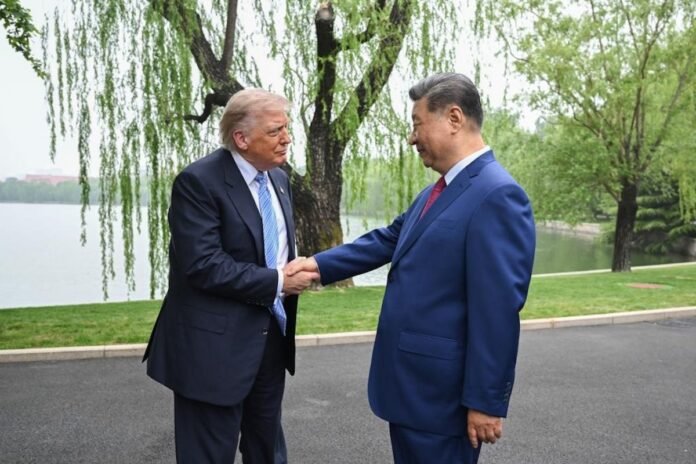
The Trump-Xi summit in Beijing was supposed to signal a new phase of calmer US-China relations. Instead, it exposed a deeper reality that should concern Indonesia and much of Southeast Asia, as stability between great powers can sometimes come at the expense of middle powers.

Donald Trump left Beijing with warm words but very few concrete achievements. Xi Jinping, by contrast, appeared to secure several strategic victories. Reuters described the summit as producing “stability and stalemate” — a diplomatic reset heavy on symbolism but light on substance.

Behind closed doors, Xi reportedly warned Trump that mishandling Taiwan could push the relationship into a “dangerous” conflict. Trump notably declined to publicly comment on the issue afterward.

Meanwhile, Xi introduced a new phrase to define the bilateral relationship, “constructive strategic stability,” replacing the Biden-era language of “strategic competition.”

That semantic shift, which reports indicate Trump agreed to in principle, matters more than it appears.

For Indonesia, the summit suggests that Washington and Beijing are increasingly interested not in resolving their rivalry, but in managing it on terms favorable to themselves.

The danger for Southeast Asia is that regional concerns — especially maritime security and the South China Sea — may become secondary to broader great-power stabilization.

Indonesia has long resisted being trapped between China and the US. Jakarta’s foreign policy tradition is rooted in strategic autonomy, ASEAN centrality and nonalignment.

But that balancing strategy becomes harder when great powers seek to reduce tensions through elite diplomacy while unresolved regional disputes go unaddressed. The South China Sea is the clearest example.

Officially, Indonesia insists it is not a claimant state. Yet China’s “nine-dash line” overlaps with Indonesia’s exclusive economic zone around the Natuna Islands, making Jakarta an unwilling stakeholder in the dispute, along with the Philippines, Malaysia and Vietnam.

Over the last decade, Indonesia has responded cautiously but firmly through maritime patrols, fisheries enforcement and military modernization near Natuna.

What worries Jakarta is not the possibility of a secret US-China deal over the South China Sea. Indeed, Trump is unlikely to formally concede Chinese claims.

The concern is more subtle. A calmer US-China relationship could reduce international scrutiny of Chinese maritime pressure precisely as ASEAN negotiations over the South China Sea Code of Conduct enter a sensitive phase.

China has consistently pushed for a weaker and more flexible Code of Conduct that limits external military involvement, particularly by the US and its allies. Several ASEAN states want stronger legal guarantees grounded in international law and the 2016 arbitral ruling at The Hague that rejected Beijing’s expansive claims over the sea in favor of the Philippines.

If Washington now prioritizes “constructive strategic stability” over maritime pushback, Beijing may feel emboldened to push harder for a softer and less enforceable agreement. That could directly weaken Indonesia’s strategic environment.

The just-concluded summit also carries major economic implications for Jakarta.

Trump arrived in Beijing searching for quick economic wins. He was accompanied by prominent US business executives and focused heavily on Boeing aircraft sales, exports and investment opportunities. But despite the business-heavy delegation, Trump left without any reported major breakthroughs.

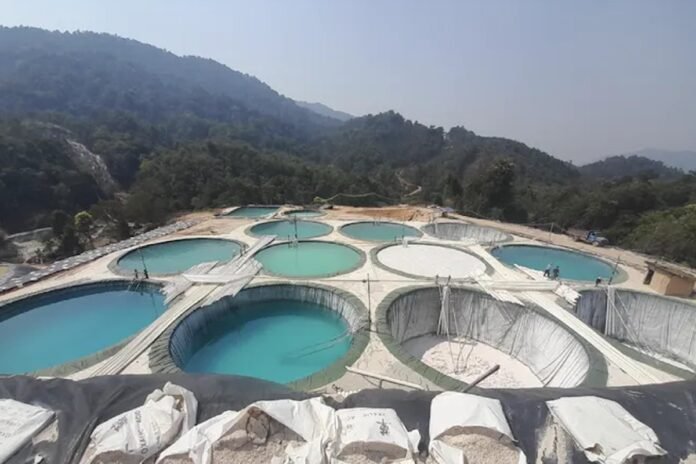
There was no official solution to the growing problem of rare earth supply disruptions, which remain crucial for global manufacturing, semiconductors and defense industries. China’s export controls on strategic rare earth materials remain largely intact.

Likewise, there was no meaningful breakthrough on advanced Nvidia H200 chip sales to China. Although Nvidia CEO Jensen Huang reportedly joined the trip at the last minute, Beijing showed little interest in depending on American semiconductor technology.

For Indonesia, this matters because Southeast Asia is increasingly caught in the middle of technological fragmentation between the US and China. Indonesia hopes to attract investment into electric vehicles, battery processing, digital infrastructure and AI-related industries.

But if technological rivalry continues beneath the surface of diplomatic stability, Jakarta may face growing pressure to navigate incompatible supply chains and competing technology ecosystems.

The summit also revealed limits to Trump’s leverage. Xi appeared focused on long-term strategic positioning, while Trump pursued short-term transactional gains.

Beijing framed the summit as the beginning of a stable framework for managing competition over many years. Trump, meanwhile, emphasized commercial deals and public optics.

That asymmetry matters for Indonesia because it reinforces fears that US policy under Trump remains highly personalized and unpredictable.

Southeast Asian governments can adapt to rivalry. What they fear is volatility, sudden policy reversals, transactional diplomacy and the possibility that regional interests become bargaining chips in wider negotiations over Taiwan, trade or Iran.

Notably, Xi offered no meaningful indication that China would pressure Tehran or reduce its broader strategic partnerships. Despite speculation before the summit, there was no clear Chinese concession on Iran. This further reinforced perceptions that Beijing entered the summit from a position of patience and confidence.

For Indonesia, the likely response will be deeper defensive nonalignment.

Jakarta will continue strengthening maritime security around Natuna while avoiding overtly anti-China rhetoric. It will quietly expand security cooperation with Japan, Australia and the US without formally joining containment efforts against Beijing.

At the same time, Indonesia will continue emphasizing ASEAN centrality and international law as safeguards against domination by larger powers. Ironically, then, the Trump-Xi summit may intensify Southeast Asia’s hedging behavior rather than reduce it.

The summit produced calmer headlines but resolved none of the structural tensions driving US-China rivalry. Taiwan remains explosive. Technological competition continues. Military distrust persists. The South China Sea remains crowded with coast guards, naval patrols and overlapping claims.

For Indonesia, the lesson is increasingly clear: when great powers talk about “strategic stability,” smaller states often hear something else — a warning that their interests may once again be managed from distant capitals rather than protected on their own terms.

Muhammad Zulfikar Rakhmat is director of the China-Indonesia Desk at the Jakarta-based Center of Economic and Law Studies (CELIOS) independent research institute. Yeta Purnama is a researcher at CELIOS.

‘War of the Worlds’ Star Dies at 96

0
‘war-of-the-worlds’-star-dies-at-96
‘War of the Worlds’ Star Dies at 96


Hollywood is saying goodbye to one of sci-fi’s most unforgettable stars.

Ann Robinson, the fiery redhead best known for battling terrifying Martians in the 1953 cult classic The War of the Worlds, has died at the age of 96. The veteran actress quietly passed away Sept. 26 at her Los Angeles home, but news of her death was only just revealed by family members.

For generations of movie fans, Robinson became permanently linked to the iconic alien thriller that left audiences stunned during the golden age of Hollywood sci-fi.

Playing brave schoolteacher Sylvia Van Buren opposite actor Gene Barry, Robinson starred in the Oscar-winning alien invasion blockbuster based on H.G. Wells’ legendary novel. The film featured giant war machines, deadly heat rays and horrifying Martian creatures attacking Earth in scenes that terrified audiences in the 1950s.

One of the movie’s most chilling moments came when a Martian crept up behind Robinson’s character and placed its long, bony fingers on her shoulder before chaos erupted.

Years later, Robinson joked she actually felt sorry for the alien.

“I always thought maybe this Martian was the nice one,” she once laughed during an interview. “Maybe Gene Barry ruined a chance for peace by hitting him with a hatchet!”

The movie became such a beloved classic that legendary director Steven Spielberg personally invited Robinson back for a cameo in his 2005 remake starring Tom Cruise.

Robinson never forgot the experience.

“They treated me like royalty,” she said years later. “I waited 60 years to get that treatment!”

Before becoming a sci-fi icon, Robinson worked as a stuntwoman in Hollywood and admitted she exaggerated her experience just to land dangerous jobs.

In one early film, she became trapped on a 15-foot barbed-wire fence while filming an escape scene at a prison.

“I thought, ‘What have I gotten myself into?’” she later admitted.

Despite the fame War of the Worlds brought her, Robinson’s Hollywood career took an unexpected turn when she walked away from acting in the late 1950s to marry famous Mexican matador Jaime Bravo.

That decision, she later confessed, changed everything.

“When I got back home, Hollywood had passed me by,” she said. “I blew it.”

Still, Robinson remained a familiar face on television throughout the 1960s, appearing on classics including Perry Mason, Peter Gunn, Dragnet and 77 Sunset Strip.

And while many stars faded into obscurity, Robinson proudly embraced her sci-fi legacy for decades.

“I’ve gotten more mileage out of War of the Worlds than Vivien Leigh did on Gone With the Wind,” she once joked.

Robinson is survived by her son, Jaime Bravo Jr., grandson Sammy and granddaughter Tori Bravo.

For countless classic movie lovers, she’ll forever remain the woman who stared down the Martians — and lived to tell the story.

Myanmar’s resource curse fueling its forever war

0
myanmar’s-resource-curse-fueling-its-forever-war
Myanmar’s resource curse fueling its forever war

Myanmar’s war is often described as a clash of ideologies, ethnic identities and competing visions of the state. That is true, but incomplete. At its core, Myanmar’s crisis is also a resource-driven conflict, intensified by geography.

The generals did not cling to power for the symbolism of uniform and flag alone. They did so because Myanmar sits on jade, gas, oil, timber, minerals, rare earths, and hydropower potential, while occupying corridors that connect China and India to the Indian Ocean.

Natural wealth should have helped Myanmar build a modern state. Instead, it has helped to finance a permanent war economy.

In resource-dependent states, rulers who can survive on oil, gas, minerals, or timber rents often feel less pressure to tax citizens fairly, deliver services, or build accountable institutions. Wealth flows upward through monopolies, concessions and military-linked companies. Citizens become subjects to be managed, not stakeholders to be served.

The contrast with resource-poor success stories is striking. Japan, South Korea, and Singapore had no comparable mineral cushion. They were forced to treat human beings as their primary national asset.

The World Bank has described Singapore’s rise as a case of integrating human capital into national development planning. Myanmar, during many of the same decades, repeatedly closed universities, suppressed independent thought, and pushed educated citizens to leave.

The tragedy is not that Myanmar lacked wealth. It is that the state treated land, minerals, and border corridors as prizes to be controlled, while treating people as threats.

The Military’s Rentier State

Since Ne Win’s 1962 coup, Myanmar’s military has behaved like a rentier elite. Rather than building legitimacy through public service, it captured revenue streams from state-owned enterprises, military conglomerates, gas exports, jade, timber, mining and cross-border trade.

Myanma Economic Holdings Limited and Myanmar Economic Corporation have long given the armed forces autonomy from civilian oversight. A UN fact-finding mission found extensive military business interests across gems, manufacturing, tourism, banking, and natural resources, and concluded that these revenues helped sustain the Tatmadaw’s independence from elected authority.

Oil and gas remain central. The US Treasury has described Myanma Oil and Gas Enterprise as the military regime’s largest single source of foreign revenue, providing hundreds of millions of dollars each year. Human Rights Watch has estimated that MOGE’s natural-gas projects generate more than US$1 billion annually for the junta.

Jade and rare earths show the same pattern in borderland form. Hpakant’s jade mines have enriched military-linked companies, armed groups, cronies, and smugglers for decades. 

Global Witness has documented how jade money has helped fund conflict and corruption, while its reporting on rare earths shows Myanmar’s growing role in conflict-linked supply chains for China’s clean-energy and high-tech industries.

The result is not simply corruption. It is a political economy in which violence protects revenue, and revenue sustains violence.

Corridors and fragmentation

Myanmar is rich not only in natural resources but also in strategic routes. For China, Kyaukphyu provides access to the Bay of Bengal and the Indian Ocean through oil and gas pipelines to Yunnan. The CSIS think tank describes Kyaukphyu as the endpoint of China’s pipelines to Kunming and a key part of Beijing’s strategy to diversify energy routes.

For India, Myanmar is the land bridge to Southeast Asia and a buffer against China. India’s Act East policy depends on connectivity projects such as the India-Myanmar-Thailand Trilateral Highway and the Kaladan Multi-Modal Transit Transport Project, both constrained by Myanmar’s instability, as regional analysts have noted in the Lowy Institute.

For Thailand, Myanmar is an energy source, a border-security concern, and a major source of migrant labor. More than two million Myanmar nationals are formally registered as migrant workers in Thailand, while many more remain undocumented, according to an IOM figure cited by DVB. They help staff farms, fisheries, factories, construction sites, and households.

This combination of commodities and corridors gives external actors incentives to deal with whoever can provide access, regardless of domestic legitimacy. Myanmar’s crisis is also a regional economy of access, extraction and risk management.

That is why the Tatmadaw has always needed a divided Myanmar more than a united one. Ethnic diversity did not cause the war. It became the raw material for a divide-and-rule strategy that helped secure resource zones and strategic routes.

Many of the country’s richest assets lie in ethnic areas: jade and rare earths in Kachin and northern Shan; ports and offshore gas near Rakhine; cross-border routes through Karen, Mon, and Shan areas; and hydropower potential across upland regions.

Instead of treating these communities as partners in a federal union, successive military regimes treated them as obstacles to be pacified, fragmented, or co-opted.

Ceasefire deals allowed some armed actors to profit from timber, mining, and border trade. Counterinsurgency campaigns depopulated strategic zones and opened land for military-linked business. Propaganda framed ethnic demands for federalism as secessionism. From the standpoint of extraction, semi-governed space was not a failure – it was useful.

The post-junta danger

The post-2021 revolution has changed the military balance, but not the material incentives. As territory falls out of junta control, resistance forces and local authorities face the same hard question: how to fund administration, welfare, and war?

The easiest answers are also the most dangerous: taxing checkpoints, controlling border trade, tapping timber or mining, seeking shares of jade or rare-earth revenue, or tolerating criminal economies. These may seem necessary in wartime. If they become permanent, the revolution risks reproducing the system it set out to destroy.

That is the danger of warlordism. Once commanders, local elites, or armed organizations depend on resource rents without civilian oversight, their incentives begin to resemble those of the old order. A post-junta order must therefore be more than an anti-military coalition. It must become a new social contract.

If Myanmar’s war is partly fueled by resource rents, then resource governance cannot be postponed until after victory. It must be built into the political settlement from the beginning.

Natural resources should be treated as a shared national trust, not the spoils of war. Extraction, taxation, and concessions must require civilian authorization, transparent accounting, environmental safeguards and community consent. Ethnic states and regions must have meaningful authority over local resources within a democratic federal framework. Federalism cannot be symbolic.

Armed organizations, including resistance forces, must also move away from direct control of resource revenue. Security actors may be necessary in wartime, but they cannot become permanent gatekeepers of mines, forests, checkpoints, and ports.

Most importantly, Myanmar must elevate human resources from rhetoric to strategy. Even during war, opposition bodies, civil society, ethnic administrations, and the diaspora can support community schools, digital education, health networks, professional mentoring and training for displaced youth. These efforts are the foundation of a country that does not return to rentier politics.

Regional and global actors also face a choice. They can keep treating Myanmar as a problem to be managed at the lowest possible cost, or they can stop feeding the structures that make the conflict profitable.

Reducing support for junta-controlled resource sectors would weaken the regime’s capacity to wage war indefinitely. Supporting civilian-led governance in non-junta areas would shift the balance toward people and institutions.

Myanmar’s future turns on a simple choice. Will it remain a resource state, where armed men fight over what can be dug, cut, pumped, taxed, or smuggled? Or will it become a people-centered federal republic, where natural wealth serves human development instead of financing domination?

Myanmar’s people have already shown extraordinary courage. But courage alone cannot defeat the resource curse. The revolution must also build rules, institutions and safeguards before victory, not after. Otherwise, the old war economy may survive under new flags.

James Shwe is a Myanmar American professional engineer and advocate for democracy in Myanmar, affiliated with the Los Angeles Myanmar Movement.

Netanyahu Meets With Security Cabinet Ahead of Turkish Flotilla’s Arrival

0
netanyahu-meets-with-security-cabinet-ahead-of-turkish-flotilla’s-arrival
Netanyahu Meets With Security Cabinet Ahead of Turkish Flotilla’s Arrival


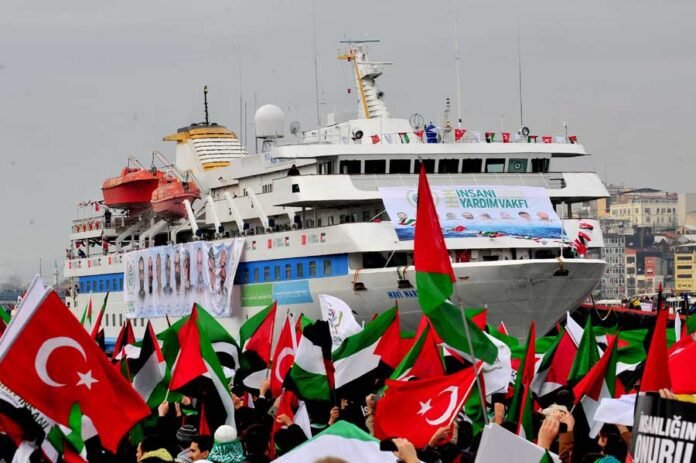
Prime Minister Benjamin Netanyahu held a preliminary security consultation Sunday ahead of the expected arrival of a Turkish flotilla carrying hundreds of pro-Palestinian activists seeking to reach the Gaza Strip and challenge Israel’s naval blockade.

The flotilla, consisting of 53 vessels carrying about 400 activists, is expected to arrive near Israel within less than two days. The convoy departed from Turkey as part of the Global Sumud Flotilla’s second blockade run to Gaza.

The flotilla was temporarily delayed after docking at a Greek island because of weather conditions. Netanyahu met with Israel’s security cabinet ahead of the flotilla’s anticipated arrival, the Jerusalem Post reported.

The current voyage follows a previous Global Sumud flotilla attempt in April, when 20 vessels were intercepted by the Israeli Navy.

Israeli officials have focused particular attention on the involvement of the Turkish IHH organization, which presents itself as a humanitarian group but is designated by Israel as a terrorist organization because of its ties to Hamas. Activists participating in the flotilla are connected to IHH and affiliated groups.

IHH was also involved in organizing the 2010 Mavi Marmara flotilla, when pro-Palestinian activists attempted to breach the naval blockade on Gaza. During the Israeli Navy takeover of the vessel, Shayetet 13 commandos encountered violent resistance and Israeli soldiers were injured after being attacked with iron rods, knives, and other objects.

The flotilla set to arrive as the October 2025 ceasefire agreement between Israel and Hamas remains stalled before implementation of its second phase. The dispute centers on Hamas disarmament, which is required under the agreement but has been rejected by Hamas.

The US-backed 20-point Gaza plan called for an immediate ceasefire, the release of all Israeli hostages, increased humanitarian aid, and a phased Israeli withdrawal linked to security arrangements and Hamas disarmament.

The proposal also included an internationally supervised reconstruction and governance framework for Gaza, with Hamas excluded from future governance and longer-term discussions aimed at stabilization and eventual Palestinian self-governance.

Two tragedies, one grieving nation: Italy confronts deaths in Maldives and Modena horror

0
two-tragedies,-one-grieving-nation:-italy-confronts-deaths-in-maldives-and-modena-horror
Two tragedies, one grieving nation: Italy confronts deaths in Maldives and Modena horror


Italy is confronting a period of national grief after two separate tragedies — a deadly cave-diving disaster in the Maldives and a car-ramming incident in Modena — left the country mourning lives lost and others fighting for survival.

As recovery teams in the Maldives struggled against severe weather conditions to retrieve the bodies of four Italian divers trapped deep inside an underwater cave system, authorities in northern Italy continued investigating a vehicle attack in Modena that injured eight people and left several victims in critical condition.

Italian Foreign Minister Antonio Tajani said search operations in the Maldives had been temporarily suspended because of rough seas, but stressed that every effort would continue to bring the victims home.

“Unfortunately, the searches are suspended due to bad weather, but we will do everything possible to recover the bodies of our compatriots,” Tajani said.

The five victims of the Maldives incident were identified as Monica Montefalcone, an associate ecology professor at the University of Genoa; her daughter Giorgia Sommacal; marine biologist Federico Gualtieri; researcher Muriel Oddenino; and diving instructor Gianluca Benedetti.

Benedetti’s body was recovered earlier, while authorities believe the remaining four entered deeper sections of the cave system in the Vaavu Atoll during an exploration dive at around 50 metres below the surface.

The deaths remain under investigation.

Officials said the cave system consists of three large chambers connected by narrow passages, with rescue teams having so far explored two sections before oxygen and decompression limits forced them to halt operations. Additional specialist divers from Italy, including a cave-diving expert and a deep-sea rescue specialist, are expected to join the mission.

Monica Montefalcone’s husband, Carlo Sommacal, rejected suggestions of recklessness, describing his wife as an experienced diver who carefully assessed every risk.

“Something must have happened,” he said, recalling her extensive experience underwater.

He also said Montefalcone had survived the 2004 Indian Ocean tsunami while diving off Kenya and later returned to diving despite major health complications.

Environmental groups and scientific institutions paid tribute to Montefalcone, praising her work in marine research and conservation.

The tragedy has also renewed attention on the risks associated with cave diving, one of the most technically demanding forms of diving. Experts note that overhead environments, limited visibility and extreme depth can rapidly increase danger levels. Depths beyond 40 metres are generally considered technical diving and require specialised training and equipment, while recreational diving limits in the Maldives are set at 30 metres.

Meanwhile in Italy, investigators ruled out terrorism in the Modena attack after a 31-year-old Italian man of Moroccan heritage drove into pedestrians before crashing into a shop window.

Authorities said eight people were injured, with four initially reported in critical condition.

Among the most seriously injured was a 55-year-old woman who was crushed against a shopfront and underwent leg amputations. Other victims also suffered severe injuries.

Interior Minister Matteo Piantedosi said the suspect was not believed to have acted for terrorist motives and had previously received treatment for psychological problems.

Modena mayor Massimo Mezzetti said the suspect had previously been treated in mental health facilities in 2022 for schizoid-related conditions before dropping out of care.

After the collision, the suspect allegedly attempted to flee on foot but was chased and restrained by passers-by despite reportedly producing a knife and injuring one person during the struggle.

Prosecutors have arrested the suspect on charges including massacre and causing injuries aggravated by the use of a weapon.

Italian Prime Minister Giorgia Meloni and President Sergio Mattarella visited Modena following the incident.

While some political figures used the attack to renew debates over immigration policy, local officials urged restraint.

Mezzetti called for unity, noting that among those who helped stop the suspect were members of immigrant communities.

“At the moment I see so much looting on social media and elsewhere,” he said, warning against attempts to generalise or spread division.

As Italy awaits renewed recovery operations in the Maldives and follows the condition of victims in Modena hospitals, the two events have combined to cast a shadow over the country, with families confronting loss and uncertainty on two very different fronts.

Like Suez for the Brits, Hormuz spells doom for US empire

0
like-suez-for-the-brits,-hormuz-spells-doom-for-us-empire
Like Suez for the Brits, Hormuz spells doom for US empire

Empires rise and fall. They do not last forever. Imperial declines follow a gradual shifting of the economic tides, but are also punctuated and defined by critical tipping points.

There are many differences between the Suez Crisis in 1956 and the US war on Iran today, but similarities in the larger context suggest that the United States is facing the same kind of “end of empire” moment that the British Empire faced in that historic crisis.

In 1956, the British Empire was still resisting independence movements in many of its colonies. The horrors of British Mau Mau concentration camps in Kenya and Britain’s brutal guerrilla war in Malaya continued throughout the 1950s, and, like the US today, Britain still had military bases all over the world.

Britain’s imperial domination of Egypt began with its purchase of Egypt’s 44% share in the French-built Suez Canal in 1875. Seven years later, the British invaded Egypt, took over the management of the Canal and controlled access to it for 70 years.

After the Egyptian Revolution overthrew the British-controlled monarchy in 1952, the British agreed to withdraw and close their bases in Egypt by 1956, and to return control of the Suez Canal to Egypt by 1968.

But Egypt was increasingly threatened by Britain, France, and Israel. Through the 1955 Baghdad Pact, the British recruited Turkey, Iraq, Iran, and Pakistan to form the Central Treaty Organization, an anti-Soviet, anti-Egyptian alliance modeled on NATO in Europe. At the same time, Israel was attacking Egyptian forces in the Gaza Strip, and France was threatening Egypt for supporting Algeria’s war of independence.

Egypt’s President Nasser responded by forging new alliances with Saudi ArabiaSyria, and other countries in the region, and, after failing to secure weapons from the US or USSR, Egypt bought large shipments of Soviet weapons from Czechoslovakia.

Upset with Egypt’s new alliances, the United States, Great Britain, and the World Bank withdrew their financing from Egypt’s Aswan Dam project on the Nile. In response, Nasser stunned the world by nationalizing the Suez Canal Company and pledging to compensate its British and French shareholders.

British leaders saw the loss of the Suez Canal as unacceptable. Chancellor Harold Macmillan wrote in his diary, “If Nasser ‘gets away with it’, we are done for. The whole Arab world will despise us… and our friends will fall. It may well be the end of British influence and strength forever. So, in the last resort, we must use force and defy opinion, here and overseas.”

British Prime Minister Anthony Eden hatched a secret plan with France and Israel to invade Egypt, seize the Canal and try to overthrow Nasser. The US rejected military action against Egypt, and President Dwight Eisenhower told a press conference, on September 5, 1956, “We are committed to a peaceful settlement of this dispute, nothing else.” But the British assumed that the US would ultimately support them once combat began.

Israel invaded the Gaza Strip and the Sinai Peninsula, and then Britain and France landed forces in Port Said at the north end of the Suez Canal, under the pretense of protecting the Canal from both Israel and Egypt.

But before Britain and France could fully seize control of the Canal, the US government intervened to stop them. The US began selling off its British currency reserves and blocked an emergency IMF loan to Britain, triggering a financial crisis. At the same time, the USSR threatened to send forces to defend Egypt and even hinted at the possible use of nuclear weapons against Britain, France, and Israel.

The UN Security Council used a procedural vote—which Britain and France could not veto—to convene an Emergency Special Session of the General Assembly under the “Uniting for Peace” process. Resolution 997 called for a ceasefire, a withdrawal to armistice lines and the reopening of the Canal, and was approved by a vote of 64 to 5.

Four days later, Prime Minister Eden declared a ceasefire. British and French forces withdrew six weeks later, and the Canal was cleared and reopened within five months. Egypt subsequently managed the Canal effectively, and did not block British or French ships from using it.

The Suez Crisis was the pivotal moment when the British government finally learned that it could no longer use military force to impose its will on less powerful countries. Like Americans today on Iran, the British public was way ahead of its government: opinion polls found that 44% opposed the use of force against Egypt, while only 37% approved. As Prime Minister Eden dithered over the UN’s ceasefire order, 30,000 people gathered at an anti-war rally in Trafalgar Square.

Eden was forced to resign, and was replaced by Harold Macmillan, who withdrew British forces from bases in Asia, expedited independence for British colonies around the world, and repositioned Britain as a junior partner to the US.

That new role included arming British submarines with US nuclear missiles, which is now a violation of the Nuclear Non-Proliferation Treaty (NPT). But Macmillan’s successor, the Labour Party leader Harold Wilson, would later keep Britain out of Vietnam.

Britain charted a successful transition to a post-imperial future through its relationships with the United States and the British Commonwealth–an association of independent states that preserved British influence in its former colonies.

On the domestic front, there was broad political support for a mixed capitalist-socialist economy that included free education and healthcare, publicly owned housing and utilities, nationalized industries, and strong trade unions.

Macmillan was reelected in 1959 with the slogan, “You’ve never had it so good.” When a cartoonist mockingly dubbed him “Supermac,” the nickname stuck.

Britain’s Tories were dyed-in-the-wool imperialists, much like Trump and his motley crew today. But they did not let their imperial world view blind them to the lessons of the Suez Crisis. They could see that the world was changing, and that Britain had to find a new role in a world it could no longer dominate by force.

Most Americans today have learned similar lessons from failed, disastrous US wars in Vietnam, Iraq and Afghanistan. But like the British people who opposed Eden’s invasion of Egypt, Americans have been repeatedly dragged into war by the secret scheming of leaders blinded by anachronistic, racist, imperial assumptions.

Trump is now encountering the same kind of international pressure that forced Britain and France to abandon the Suez invasion. Another Emergency Special Session of the UN General Assembly and a new “Uniting for Peace” resolution might also be helpful.

But ultimately, the resolution of this crisis, and the future of the US in today’s emerging multipolar world, will depend on whether US politicians are capable of making the kind of historic policy shift that Macmillan and his colleagues made in 1956 and the years that followed.

Macmillan was not an opposition politician, but a senior member of Britain’s Conservative government, up to his neck in the Suez fiasco. The secret plot with the Israelis was his idea. President Eisenhower personally warned him at the White House that the US would not support a British invasion of Egypt.

But unlike the British Ambassador who sat in on the same meeting, Macmillan assumed that, when the chips were down, Eisenhower would stand by his old World War II allies. Maybe it was the shock of getting it all so wrong that persuaded Macmillan and his colleagues to take a fresh look at the world and radically rethink British foreign and colonial policy.

The crisis with Iran is at least as catastrophic for US imperialism as the Suez Crisis was for the British Empire. The question is whether anyone in Washington today is capable of grasping the gravity of the crisis and making the required policy shift.

To follow Britain’s Suez example would mean closing US military bases around the world; renouncing the illegal threat and use of military force as the main tool of US foreign policy; and relying instead on multilateral diplomacy and UN action to resolve international disputes.

But where is the Macmillan in the Trump administration or the Republican Party? Or the Harold Wilson in the Democratic Party, whose leaders have never even tried to formulate a progressive foreign policy since the end of the Cold War? Obama’s belated outreach to Cuba and Iran in his second term were their only flirtation with a new way forward.

The only silver lining in the current crisis is that it may mark the final collapse of the neoconservative imperial project that has dominated US foreign policy since the 1990s and now cornered Trump into a “damned if you do, damned if you don’t” choice between an unwinnable war with Iran and a historic diplomatic defeat.

Americans must insist that this crisis spark the radical rethink of US politics, economics and international relations that neocons in both parties have prevented for decades.

Trump’s dead end in the Persian Gulf must also be the final end of this ugly, criminal neoconservative era, and the beginning of a transition to a more peaceful future for Americans and all our neighbors.

Medea Benjamin is co-founder of Global Exchange and CODEPINK: Women for Peace. She is the co-author, with Nicolas J.S. Davies, of “War in Ukraine: Making Sense of a Senseless Conflict,” available from OR Books in November 2022. 

Nicolas J. S. Davies is an independent journalist and a researcher with CODEPINK. He is the co-author, with Medea Benjamin, of “War in Ukraine: Making Sense of a Senseless Conflict,” available from OR Books in November 2022, and the author of “Blood On Our Hands: the American Invasion and Destruction of Iraq.

-Common Dreams

0FansLike
0FollowersFollow
0FollowersFollow
0SubscribersSubscribe
- Advertisement -
Google search engine

Recent Posts