14.5 C
London
Sunday, May 17, 2026
Home Blog

Pecan Pie Cake

0
pecan-pie-cake
Pecan Pie Cake

If you love the rich, caramelized flavor of pecan pie but want something easier and quicker to make, this Pecan Pie Cake is about to become your new favorite dessert. It’s soft, dense, slightly chewy, and packed with toasted pecans—basically everything you love about pecan pie, transformed into a simple, no-fuss snack cake.


A Recipe Worth Perfecting

This cake didn’t start out perfect. The first attempt turned into a gooey, underbaked center—but the flavor? Absolutely incredible. That rich, buttery, caramel-like taste was too good to ignore.

After a few tweaks—less oil, a bit more flour, and the addition of vanilla and salt—the result was spot on:
✔ perfectly baked
✔ rich and chewy
✔ deeply flavorful

Sometimes the best recipes come from a little trial and error!


Why You’ll Love This Pecan Pie Cake

  • No cake mix needed – made with simple pantry ingredients
  • Rich & caramel-like flavor thanks to brown sugar
  • Loaded with pecans for crunch and nuttiness
  • Easy to make in one bowl
  • Perfect texture – dense, soft, and slightly chewy

Ingredients

  • 2 cups chopped pecans
  • 1 ¼ cups all-purpose flour
  • 4 eggs
  • 2 cups packed brown sugar
  • 1 tablespoon vanilla extract
  • ¾ cup vegetable oil
  • ¾–1 teaspoon salt (to taste)
  • Powdered sugar (optional, for serving)

Instructions

1. Preheat & Prepare
Preheat oven to 350°F (175°C).
Grease a 9×13-inch baking dish.


2. Mix Wet Ingredients
In a large bowl, whisk together eggs, brown sugar, and vanilla for about 2 minutes, until smooth and slightly foamy.


3. Add Oil & Dry Ingredients
Mix in oil and salt, then stir in flour until fully combined.


4. Fold in Pecans
Gently fold in chopped pecans until evenly distributed.


5. Bake
Pour batter into prepared pan.
Bake for 30–40 minutes, until the edges are golden and the center is set.


6. Cool & Serve
Let cool completely before slicing into squares.
Dust with powdered sugar if desired.


Tips for Success

  • Don’t overbake—this cake should stay moist and slightly dense
  • Let it cool fully for clean slices
  • Use good-quality pecans for the best flavor
  • Adjust salt slightly depending on your preference

Variations

  • Walnut version: swap pecans and add a touch of walnut extract
  • Almond twist: use almonds + a bit of almond extract
  • Bundt cake: bake in a bundt pan for a more elegant presentation

Storage

  • Store in an airtight container at room temperature for up to 3–4 days
  • Can be refrigerated or frozen for longer storage

Final Thoughts

This Pecan Pie Cake is proof that simple ingredients can create something truly special. It’s rich, comforting, and perfect for holidays, potlucks, or anytime you’re craving that classic pecan pie flavor—without all the effort.

Iran: China’s quiet hedging strategy in the Middle East

0
iran:-china’s-quiet-hedging-strategy-in-the-middle-east
Iran: China’s quiet hedging strategy in the Middle East

China’s growing engagement with Iran increasingly reveals that Tehran is no longer merely a regional issue confined to Middle Eastern politics. Iran has become part of Beijing’s wider geopolitical calculation in an era shaped by intensifying great-power rivalry and a rapidly shifting global order.

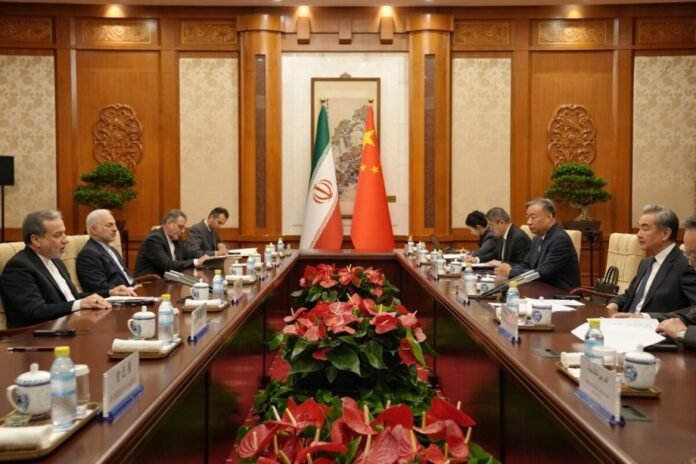
Recent meetings between Iranian Foreign Minister Abbas Araghchi and Chinese Foreign Minister Wang Yi in Beijing reflected more than routine bilateral diplomacy. China once again emphasised the importance of regional stability, the security of global energy routes, and the need to keep the Strait of Hormuz open for international trade. At the same time, discussions involving Iran and the broader Middle East have become deeply intertwined with strategic conversations between China and the United States over trade competition, maritime security, Taiwan, technological rivalry, and the future balance of power.

The Middle East is therefore no longer simply a theatre of regional conflict; it has evolved into an increasingly important geopolitical arena where global powers compete not only for influence but also for legitimacy and strategic narrative.

Most international commentary still interprets China’s Middle East diplomacy largely through economic pragmatism: energy security, oil imports, and the protection of trade routes essential to China’s economy. While these explanations are important, they are insufficient to explain why Beijing has become increasingly active in Middle Eastern diplomacy precisely when pressure from Washington continues to intensify over Taiwan, semiconductor restrictions, the South China Sea, and trade disputes.

There is a deeper strategic logic behind China’s behaviour — one that can be understood through the concepts of hedging and indirect geopolitical competition.

READ: Iranian parliament speaker appointed as special envoy to China: Report

In international relations, hedging refers to a strategy whereby states avoid fully aligning with one side while simultaneously refraining from outright neutrality. Instead, they maintain relationships with multiple actors in order to preserve strategic flexibility and minimise long-term geopolitical risks. Traditionally, hedging has been associated with middle powers navigating competition between larger states. Yet China has transformed hedging into an instrument of global power projection.

Beijing appears fully aware that direct confrontation with the United States would be extraordinarily costly, both economically and militarily. Consequently, China does not always challenge Washington directly. Rather, it seeks to shift the arena of global competition toward regions where it can accumulate diplomatic legitimacy, economic influence, and political goodwill without triggering open military confrontation.

This strategic ambiguity echoes the classical realist tradition in international relations. Hans Morgenthau argued that states ultimately pursue survival and influence within an anarchic international system. However, unlike the overt military balancing associated with Cold War geopolitics, China’s contemporary strategy reflects a more adaptive and indirect form of realism. Beijing expands influence gradually through diplomacy, connectivity, and economic interdependence rather than direct coercion.

In many ways, China’s behaviour also reflects the logic of classical Chinese strategic thought. Sun Tzu’s The Art of War famously argues that “the supreme art of war is to subdue the enemy without fighting.” Although often quoted superficially, this principle remains highly relevant in understanding China’s geopolitical conduct today. Beijing’s approach in the Middle East reflects not a desire for immediate domination, but a long-term effort to shape geopolitical environments indirectly and patiently.

This differs sharply from the interventionist logic that shaped much of American foreign policy after the Cold War.

Since the invasions of Afghanistan and Iraq, Washington’s Middle East strategy has often relied heavily on military projection and security architecture. China, by contrast, seeks influence through connectivity, infrastructure, diplomacy, and economic integration.

In this sense, Beijing is not attempting to replace the United States through identical methods; it is attempting to redefine the methods themselves.

Historically, great powers have often sought alternative geopolitical theatres whenever direct confrontation became too costly. During the nineteenth century, the British Empire expanded its influence through maritime trade networks rather than permanent continental warfare in Europe. During the Cold War, the Soviet Union and the United States competed indirectly through proxy arenas across Asia, Africa, and Latin America. China’s current strategy in the Middle East reflects a different version of this historical pattern — one based less on ideological export or military alliances and more on economic corridors and diplomatic brokerage.

READ: Trump claims China’s Xi told him Beijing will not provide military equipment to Iran

Iran occupies a central place in this broader strategic calculation.

Beyond being one of China’s major energy suppliers, Iran also holds enormous geopolitical value within the Belt and Road Initiative (BRI). Geographically, Iran functions as a strategic connector linking Central Asia, the Persian Gulf, the Middle East, and routes extending toward Europe.

Any prolonged instability within Iran would therefore threaten not only regional stability but also China’s long-term connectivity ambitions across Eurasia.

The importance of Iran can also be understood through Halford Mackinder’s classical geopolitical theory of the “Heartland.” Although developed more than a century ago, Mackinder’s argument that control over Eurasian connectivity shapes global power remains surprisingly relevant today. China’s interest in Iran reflects not only energy calculations, but also the strategic importance of Eurasian corridors connecting Asia to Europe and the Middle East.

For this reason, Beijing has little interest in seeing Iran collapse into permanent conflict or strategic isolation. At the same time, China also does not wish to become trapped in direct confrontation with the United States or fully alienate Gulf Arab states and Western economies. As a result, Beijing maintains a deliberately ambiguous position: preserving economic and energy ties with Tehran while continuing dialogue with Washington, Europe, Saudi Arabia, and the Gulf monarchies.

This ambiguity is precisely what makes China’s hedging strategy effective.

Unlike Cold War-style ideological alliances, China’s relationship with Iran is rooted less in ideological solidarity than in calculated geopolitical flexibility.

Beijing does not openly endorse Iran’s regional posture, nor does it fully comply with Western pressure campaigns and sanctions. Instead, China carefully balances competing relationships in ways that minimise strategic costs while maximising diplomatic leverage.

What is particularly notable is that China’s growing role in the Middle East does not rely primarily on military expansion. Beijing has not attempted to establish itself as a new hegemonic security power in the same way the United States historically did in the region. Rather, China advances through the language of stability, trade, infrastructure, and development.

READ: Beijing extends support to Iran amid conflict with US ahead of Trump’s China trip

This reflects a broader transformation in global power competition. In today’s increasingly multipolar order, legitimacy matters almost as much as military capability. States capable of presenting themselves as mediators, stabilisers, and development partners can accumulate influence without incurring the enormous political and financial costs associated with direct military intervention.

Chinese scholar Yan Xuetong has argued that future global competition will increasingly depend not only on economic or military strength, but also on “humane authority” — the ability of states to generate political trust and international legitimacy. Whether one fully accepts this argument or not, China’s diplomacy in the Middle East clearly reflects an attempt to cultivate precisely this type of legitimacy.

This does not mean China is acting altruistically. Beijing’s Middle East strategy remains deeply intertwined with concerns over energy security, investment protection, manufacturing supply chains, and global trade stability. Yet the sophistication of China’s strategy lies precisely in how it packages these interests. Rather than presenting its ambitions overtly, Beijing frames them within narratives of mutual development, peaceful cooperation, and regional stability.

Ultimately, Iran’s place within China’s hedging strategy is about far more than oil. Iran represents a geopolitical instrument through which Beijing can expand global influence while avoiding direct confrontation with the United States. China is effectively playing a long geopolitical game: not confronting Washington head-on, but gradually shifting the centre of global strategic attention toward arenas where Beijing holds greater diplomatic and economic advantages.

Perhaps this is the emerging face of Chinese foreign policy in the twenty-first century — winning geopolitical competition not through open war, but through the ability to shape legitimacy, manage international attention, and position itself as an indispensable actor in maintaining stability within an increasingly fragmented world order.

OPINION: Fragile ceasefire: The illusion of war’s end

The views expressed in this article belong to the author and do not necessarily reflect the editorial policy of Middle East Monitor.


IAEA Director Grossi Calls Strikes on UAE Nuclear Power Plant ‘Unacceptable’ 

0
iaea-director-grossi-calls-strikes-on-uae-nuclear-power-plant-‘unacceptable’ 
IAEA Director Grossi Calls Strikes on UAE Nuclear Power Plant ‘Unacceptable’ 


The International Atomic Energy Agency (IAEA) said Sunday that a drone strike near the United Arab Emirates’ Barakah nuclear power plant that caused a fire was a matter of “grave concern.”  

In a statement posted on X, “The IAEA has been informed by the UAE that radiation levels at the Barakah Nuclear Power Plant ( NPP) remain normal and no injuries were reported after a drone strike this morning caused a fire in an electrical generator located outside the inner site perimeter of the NPP,” the agency said. 

The IAEA added, “Emergency diesel generators are currently providing power to the NPP’s unit 3. The IAEA is following the situation closely and is in constant contact with the UAE authorities, ready to provide assistance if needed.”  

IAEA Director General Rafael Grossi expressed “grave concern” over the incident and said military activity that threatens nuclear safety is unacceptable. “The DG reiterates the call for maximum military restraint near any NPP to avoid the danger of a nuclear accident,” the post continued.  

The incident came after Iran launched thousands of ballistic missiles, cruise missiles, and drones against the United Arab Emirates during the recent conflict, targeting Al Dhafra Air Base as well as civilian and energy infrastructure. 

Meanwhile, President Donald Trump was reportedly considering renewed military action against Iran following his return from meetings with Chinese President Xi Jinping in Beijing and was expected to speak Sunday with Israeli Prime Minister Benjamin Netanyahu. 

“Our eyes are also open regarding Iran,” Netanyahu said Sunday morning. “I will speak today, as I do every few days, with our friend President Trump.” 

“I will certainly hear impressions from his trip to China, and perhaps other matters as well. There are certainly many possibilities, and we are prepared for every scenario.” 


Prince Harry’s ‘Secret Alliance’ with King Charles Revealed

0
prince-harry’s-‘secret-alliance’-with-king-charles-revealed
Prince Harry’s ‘Secret Alliance’ with King Charles Revealed


Prince Harry may be thousands of miles away in California, but insiders believe the runaway royal is quietly inching his way back into the heart of the monarchy — with King Charles allegedly helping behind the scenes.

Rumors of a secret “Project Thaw” operation aimed at repairing Harry’s shattered royal image were once laughed off as wild gossip. But now, a string of eerily coordinated public appearances and political statements from both Harry and the King have royal watchers convinced something major is happening behind palace walls.

The latest eyebrow-raising moment came after King Charles delivered a speech during the State Opening of Parliament pledging urgent action against antisemitism in Britain.

Just days later, Harry suddenly released his own lengthy opinion piece warning about the rise of antisemitism in the U.K. — despite rarely speaking publicly on the issue before.

The timing immediately triggered speculation that father and son may be secretly working in sync.

Even Harry’s critics were stunned by the unusual overlap.

After all, this is the same prince who famously wore a Nazi costume to a party years ago — a scandal that still haunts his reputation today.

Then came another suspicious coincidence.

Charles recently visited victims of a horrific antisemitic stabbing attack in London, meeting Jewish community leaders and praising emergency responders. Meanwhile, Harry’s office denied any coordination between the Duke and the King, calling the overlap “pure coincidence.”

But many royal insiders aren’t buying it.

Behind the scenes, whispers are growing louder that Charles has been quietly helping Harry re-enter public life after years of exile, family feuds, bombshell interviews, and attacks on the monarchy.

And it’s not just about antisemitism.

Observers are also revisiting Harry’s controversial comments on Ukraine earlier this year — remarks that sounded strikingly similar to statements later made by Charles during his high-profile visit to America.

Some insiders now believe Harry may be acting as an unofficial royal “test balloon,” floating sensitive political messaging without directly tying the monarchy to the fallout.

If the public reaction turns ugly? Palace officials can simply distance themselves from him.

But if the response is positive, Harry suddenly looks useful again.

The biggest shock of all may be what comes next.

Sources close to royal circles reportedly believe Harry fully intends to return to Britain in some form after his California dream failed to live up to expectations.

While Meghan Markle continues building her lifestyle empire and pushing her celebrity brand, Harry is said to be deeply unhappy and increasingly homesick.

Everything he talks about now reportedly revolves around the United Kingdom — despite spending the last six years insisting he was happier away from royal life.

And without King Charles’ support, a comeback would likely be impossible.

Harry has long believed his father controls the keys to restoring royal security protections and rebuilding his public role inside the U.K.

That has sparked fresh questions about how much communication is really happening between them behind closed doors.

Charles has reportedly always wanted reconciliation with his youngest son, despite the explosive damage caused by Harry’s memoir Spare, the Netflix series, and repeated attacks on the royal family.

But many believe bringing Harry back into the fold could backfire spectacularly.

Large portions of the British public still view Harry as a traitor to the monarchy after years of public criticism aimed at the institution, Prince William, Princess Catherine, and even Queen Camilla.

Critics fear Charles risks looking weak if he openly welcomes Harry back after everything that has happened.

And behind palace walls, insiders say Prince William remains far less forgiving than his father.

Many believe the future king has no interest in allowing Harry anywhere near the monarchy again after what they see as years of betrayal, embarrassment, and chaos.

Now royal watchers are left asking one explosive question:

Is King Charles quietly preparing the biggest royal comeback in modern history — or setting the stage for a full-blown palace disaster?

A revolutionary cancer treatment could transform autoimmune disease

0
a-revolutionary-cancer-treatment-could-transform-autoimmune-disease
A revolutionary cancer treatment could transform autoimmune disease

At age 49, Jan Janisch-Hanzlik’s multiple sclerosis was destroying her freedom to live the life she wanted. She gave up her active nursing job for a desk role. Frequent falls made her afraid to carry her grandchildren. She had to move to a bigger house to make room for the wheelchair she feared she might end up needing full-time.

Even the best available medication wasn’t improving Janisch-Hanzlik’s symptoms, and she worried they’d only get worse. So when she learned about a trial of CAR T cell therapy at the University of Nebraska Medical Center in Omaha, close to the city of Blair where she lives, she phoned the clinic every other month until they were ready to enroll her as the first patient.

Originally designed to target and wipe out cancer by reprogramming the patient’s immune cells, CAR T is now being offered to patients in hundreds of clinical trials for autoimmune conditions like multiple sclerosis, lupus, Graves’ disease, vasculitis, and many others. The hope is that CAR T can duplicate the success it has demonstrated in a range of blood cancers by hunting down and eliminating cells that target the self in autoimmune diseases. This would essentially reset the body’s defenses to a state like the one that existed before the disease took hold.

But along with CAR T’s promise come risks, questions, and challenges. There’s uncertainty about how well it will work for autoimmunity and how long any benefits might last, as well as what long-term side effects might arise. Janisch-Hanzlik knew this when she sat down to receive the experimental treatment on June 9, 2025; she felt a mix of hope and fear knowing that she would be spending the next week being monitored for side effects including dangerous inflammation.

In addition to her clinical expertise and desire to pioneer a new treatment, Janisch-Hanzlik’s two young grandchildren helped inspire her pursuit of a treatment with known risks and uncertain benefits. Because multiple sclerosis has a genetic component, Janisch-Hanzlik knew that they have an elevated chance of going through the same struggle she has. “I would want to be able to say I did everything that I possibly could to prevent them, or anyone else, from having something like this,” she says.

From cancer to autoimmunity

The first CAR T cancer treatment was approved by the Food and Drug Administration in 2017 for an aggressive form of leukemia. Since then, the powerful and intensive treatment has resulted in long-term remission for many cancer patients.

The basic premise of CAR T is to activate the power of key immune cells called T cells. T cells normally recognize other cells that have been infected by a virus or bacterium, or are otherwise abnormal, and either destroy them or recruit other parts of the immune system to do so.

In CAR T for cancer, scientists engineer those T cells to specifically hunt and destroy malignant cells. The technology got its start when cancer researchers figured out how to take out a patient’s own T cells, insert DNA instructions for a “chimeric antigen receptor,” or CAR, and put them back into the person’s circulation. The CAR, which sits on the T cell’s surface and latches on to a specific molecular partner on the surface of cancerous cells, activates the T cell to attack.

Today CAR T cells are most commonly programmed to attack B cells, another key immune player. B cells are normally responsible for making antibodies, but in certain blood cancers, they proliferate out of control. By giving T cells a CAR that recognizes one of a couple of molecules unique to the B cell surface, the cells are reprogrammed to find and eliminate those cancerous cells.

B cells also are the central problem in many autoimmune conditions: They mistakenly make antibodies against normal tissues instead of against invading pathogens. So as CAR T began to succeed against B cell cancers, it didn’t take long for doctors to reason that CAR T therapy might also be able to wipe out bad B cells in people with autoimmunity.

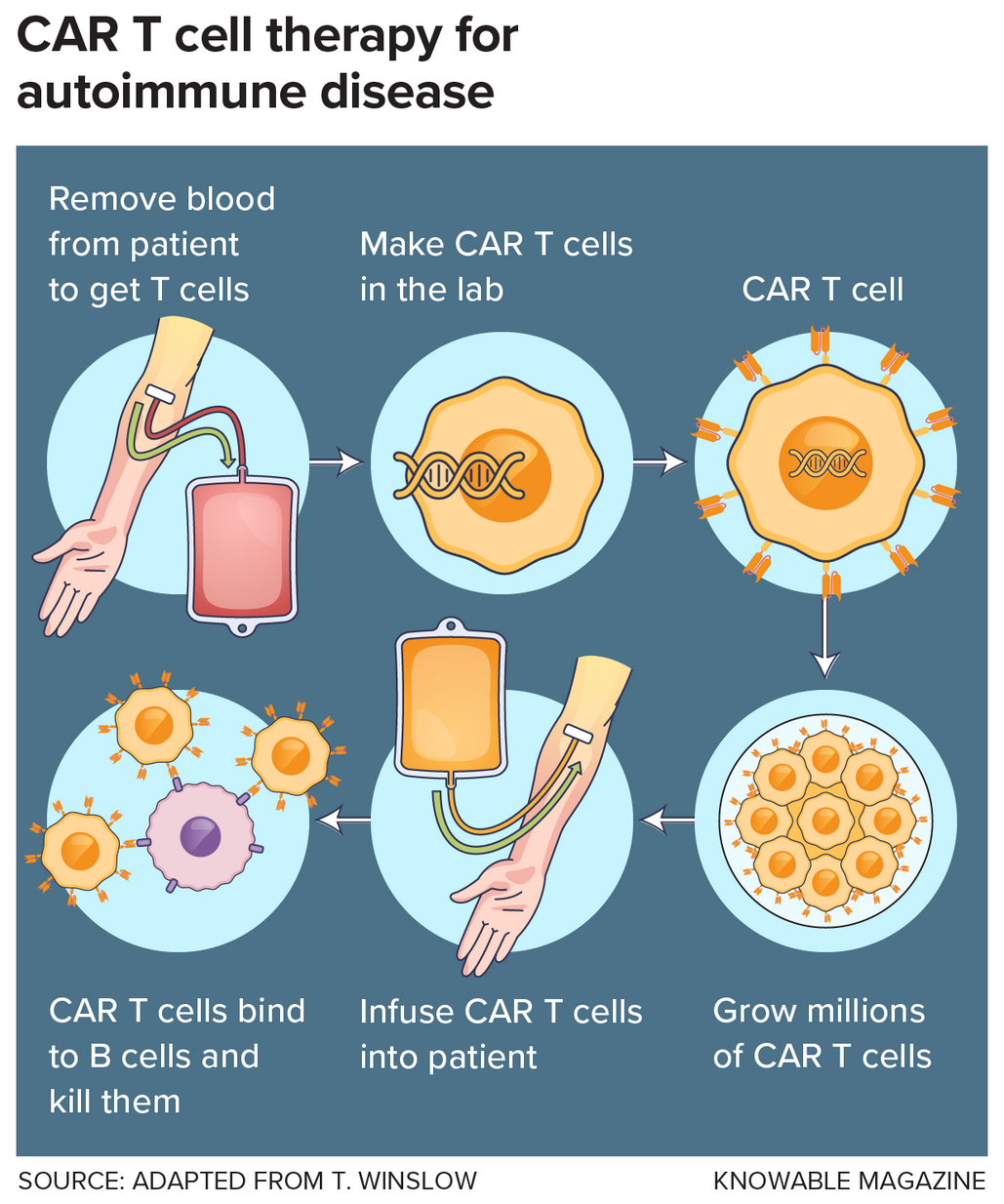
There are many variations on CAR T procedures, but the basic process involves removing, modifying, and reinfusing patient T cells so they can attack their target, which is B cells in the case of autoimmune disease.

There are many variations on CAR T procedures, but the basic process involves removing, modifying, and reinfusing patient T cells so they can attack their target, which is B cells in the case of autoimmune disease. Credit: Knowable Magazine

A German team pioneered autoimmune CAR T in a woman with lupus, reporting positive results in 2021. Since then, that team and others have worked to translate the oncology success of CAR T to tackle a broad spectrum of autoimmune diseases.

“I think it’s a game changer,” says Amanda Piquet, an autoimmune neurologist at the University of Colorado Anschutz in Aurora. Piquet is evaluating CAR T therapy for a rare and poorly understood autoimmune condition called stiff person syndrome, with symptoms including muscle stiffness and painful spasms. There is no FDA-approved treatment. When she heard about a company called Kyverna that was testing CAR T cell therapy in the syndrome, she thought it was “a perfect opportunity.”

The study she led, which reported preliminary results in December 2025, tested a single dose of CAR T in 26 people. Before the treatment, many participants struggled with a slow, mechanical gait, and 12 used assistive devices such as walkers and canes. Most patients were able to walk faster by 16 weeks post-treatment, and eight no longer needed their assistive devices for short distances. In April, the company reported that all 26 patients, as of their last follow-up appointment four to 12 months out from the therapy, were no longer using any other immunotherapies.

Risks and uncertainties

Despite such striking results, reprogramming the immune system is no simple matter. In early treatment of cancer patients, CAR T cells produced life-threatening side effects, as outlined in a 2026 article in the Annual Review of Medicine. As CAR T cells attack their targets, the associated inflammation can cause symptoms like high fevers and low blood pressure. If that inflammation reaches the brain, it can cause additional problems such as confusion and drowsiness.

Fortunately, physicians now have a decade’s worth of experience recognizing and treating these problems. “They’re certainly reversible and don’t cause long-term damage most of the time,” says Emily Littlejohn, a rheumatologist at the Cleveland Clinic.

Physicians and patients also must contend with decreased immunity as both a side effect of the treatment and its desired outcome. In CAR T treatment, doctors typically use powerful chemotherapy drugs to temporarily reduce the body’s immune cell population to make room for the new, engineered cells, leaving patients temporarily immunosuppressed. And if the treatment works, it will decimate B cell populations. Patients can be vulnerable to infections for up to a year after treatment, says Littlejohn.

These effects are manageable with preventive antibiotics, antivirals and vaccines. Patients also retain antibodies that their B cells made before the treatment, which provide residual protection for a few months. And for reasons that are not yet fully understood, CAR T seems to leave older B cells, which provide immune memory of past infections, intact in some cases. One study found that autoimmune patients treated with CAR T still made antibodies for diseases they’d been previously vaccinated against, like chicken pox and measles. These are signs that the treatment did not completely return the immune system to its factory settings.

When evaluating CAR T risk, it’s important to consider that many existing treatments for autoimmune disease also suppress the immune system for as long as a person takes them, experts note.

But there are other possible CAR T risks for autoimmune patients. In February, FDA officials published a paper endorsing CAR T’s potential in autoimmunity but warning of “unpredictable long-term toxicity.” CAR T treatment for cancer, the authors noted, has been linked to diverse long-term issues such as Parkinson’s disease. There have also been cases where the bioengineered cells themselves turned malignant, causing new, T cell-based cancers.

Causing a secondary cancer may be an acceptable risk when treating a life-threatening cancer, but probably not for autoimmunity, says Matt Lunning, medical director for gene and cellular therapy at Nebraska Medicine in Omaha. How to balance the risk between the impacts of an autoimmune disease, which can range widely in severity, and the difficult-to-quantify risk of future side effects or cancers remains a major open question.

Researchers are already working on second- and third-generation versions of CAR T that they expect to be safer for both cancer and autoimmunity. For example, James Howard, a neuromuscular neurologist at the University of North Carolina at Chapel Hill, is testing a technology from a company called Cartesian Therapeutics that encodes the CAR using molecules of mRNA, the short-lived genetic messenger used in Covid-19 vaccines, instead of long-lasting DNA. The CAR T cells should wipe out B cells for only as long as the mRNA persists, then lose their B cell-targeting abilities. With no chance for genetically modified T cells to hang around long-term, there should be no cancer risk.

Another plus of Cartesian’s approach: Physicians infuse these T cells in sufficient numbers that they don’t need to reproduce in the patient’s body, which Howard thinks reduces risk for inflammation. In a recent trial, 15 people with autoimmune diseases received the Cartesian CAR T treatment; two-thirds saw their symptoms improve, and none suffered long-term serious side effects.

Treating CAR T sticker shock

Beyond side effects, the other major challenge facing CAR T therapy is its price tag, which reaches hundreds of thousands of dollars including hospital stays, cell engineering, and other expenses.

The treatment would likely be cheaper, and simpler, if scientists could eliminate the need for personalized engineering of each patient’s own cells and instead use donor cells, or if they could cut out the step of engineering and growing the cells in a laboratory. Lunning says he is eyeing up-and-coming procedures that would modify a person’s T cells within their own body ­instead of doing the genetic engineering in a lab.

Researchers are even further along with a version of CAR T that uses healthy donors as a source of T cells. These could then be used by many patients in an “off-the-shelf” approach. It’s a method that has its own challenges, because of the immune mismatch between donor and patient cells that would lead them to attack each other. This problem can be overcome with additional genetic modifications to the donated T cells that prevent recipient and donor systems from recognizing each other as foreign, says Bing Du, an immunologist at East China Normal University in Shanghai who’s among many researchers working on this approach. Du estimates a lab could make CAR T cells for more than 1,000 patients from a single donor’s blood cells, at significant cost savings.

This kind of off-the-shelf CAR T therapy is what Janisch-Hanzlik of Nebraska received, under Lunning’s care, in 2025. The study organizers at TG Therapeutics expect to complete their research in early 2029.

Janisch-Hanzlik ended up sailing through the follow-up without side effects. A couple of months after the infusion, she was watching TV when she noticed she no longer needed special glasses to correct double vision. She started forgetting to bring her cane when moving about her house or going grocery shopping; she didn’t need it. Now, nearly a year since the treatment, she rarely falls and no longer requires a daily, three-hour nap. She recently enjoyed a trip to the Grand Canyon and looks forward to spending more time with her grandchildren.

She does still have symptoms, including weakness in her right leg, numbness and tingling in her feet, and difficulty finding the right word when speaking. She asks her doctors if they think she’s going to get better, stay the same, or get worse again.

“I have been told so many times, ‘We don’t know, you’re the first. We’re just going to have to wait and see,’” she says. “I definitely am thankful for every day I have.”

This article originally appeared in Knowable Magazine, a nonprofit publication dedicated to making scientific knowledge accessible to all. Sign up for Knowable Magazine’s newsletter.

European Parliament announces winners of 2026 Charlemagne Youth Prize

0
european-parliament-announces-winners-of-2026-charlemagne-youth-prize
European Parliament announces winners of 2026 Charlemagne Youth Prize


Projects from Estonia, France and Spain were awarded the 2026 European Charlemagne Youth Prize during a ceremony held on Tuesday in Aachen.

The prize is jointly organised each year by the European Parliament and the Foundation for the International Charlemagne Prize of Aachen. It recognises youth-led initiatives that promote democracy, active citizenship and cooperation across Europe.

The first prize was awarded to Estonia’s “ATHENA – Advancing Women’s Leadership in Inclusive Democracy”. The project supports the democratic participation and leadership of young women aged between 16 and 26 by helping them develop skills, confidence and professional networks for involvement in civic and political life. The initiative also addresses barriers to participation, including limited access to mentorship and institutional spaces. The project received €7,500.

France’s “Pol – Combating misinformation and strengthening citizen participation through an app!” received second prize and €5,000. The political engagement app allows citizens to vote on bills being examined by the French National Assembly and participate in opinion polls. The project seeks to make legislative processes more accessible to young people and aims to counter democratic disengagement and disinformation through fact-based information.

Third prize went to Spain’s “European Guanxi”, which received €2,500. The network was founded to strengthen European analysis on China and relations between the EU and China. Created by young Europeans, the initiative aims to encourage European cohesion on China-related issues and support democratic participation in international affairs.

The European Charlemagne Youth Prize is open to projects led by people aged 16 to 30 with a strong European Union dimension. Since its launch in 2008, more than 7,600 projects have competed for the award.

National juries select one project from each EU member state before a European jury chooses the final three laureates. The award ceremony takes place ahead of the International Charlemagne Prize presentation event scheduled for 14 May.

Qatari, Saudi Arabia discuss efforts to ease tension in Middle East

0
qatari,-saudi-arabia-discuss-efforts-to-ease-tension-in-middle-east
Qatari, Saudi Arabia discuss efforts to ease tension in Middle East

Qatar’s Foreign Minister Sheikh Mohammed bin Abdulrahman Al Thani and his Saudi Arabian counterpart Foreign Minister Prince Faisal bin Farhan discussed the situation in the Middle East, including those related to the US-Iran war, Anadolu reports.

In a Sunday statement on US social media company X, the Qatari Foreign Ministry said the discussions over the phone call also addressed efforts to ease tensions and promote stability and security across the region.

Sheikh Mohammed stressed the “importance of all parties responding positively to the ongoing mediation efforts, which would pave the way for addressing the root causes of the crisis through peaceful means and dialogue, leading to a sustainable agreement that prevents renewed escalation,” the ministry said.

READ: US officials pushing UAE to seize Iranian island: Report

The officials also reviewed bilateral ties and ways to strengthen them, it added.

Late Saturday, the Saudi Foreign Ministry also said Sheikh Mohammed and bin Farhan held a phone and discussed efforts to maintain stability and security.

Regional tensions have escalated since the US and Israel launched strikes against Iran on Feb. 28. In response.

Tehran retaliated with strikes targeting Israel as well as US allies in the Gulf, along with the closure of the Strait of Hormuz.

A ceasefire took effect on April 8 through Pakistani mediation, but talks in Islamabad failed to produce a lasting agreement. US President Donald Trump later extended the truce indefinitely.

OPINION: How Washington profits from Iran’s pain

Pakistan High Court Upholds Rizwan Habib’s Death Sentence in Murder of American Ex-Wife

0
pakistan-high-court-upholds-rizwan-habib’s-death-sentence-in-murder-of-american-ex-wife
Pakistan High Court Upholds Rizwan Habib’s Death Sentence in Murder of American Ex-Wife


A division bench of the Lahore High Court at Rawalpindi dismissed the appeal and upheld the death sentence of Rizwan Habib, who was convicted of the brutal murder of his former wife, US citizen Wajiha Swati, in a case involving a property dispute over assets worth around Rs1 billion that took place in Rawalpindi.

The High Court remarked that the convict perpetrated a vile crime, thus justifying the death sentence.

The division bench of the Lahore High Court included Justice Sadaqat Ali Khan and Justice Tanveer Sheikh.

In April 2025, Rawalpindi District and Sessions Judge Majid Hussain Gadi sentenced Rizwan Habib to death for the brutal murder of his American ex-wife. The accused subsequently challenged the verdict before the High Court, which ordered a retrial on merits.

Following reconsideration, Additional Sessions Judge Afzal Majoka again gave the death sentence. The decision was once more challenged in the High Court, where the Rawalpindi Bench ultimately dismissed the appeal and upheld the conviction.

According to the case details, Rizwan Habib contracted a second marriage with 47-year-old US citizen Wajiha Swati after persuading her with assurances of a lucrative business venture. The relationship deteriorated within months, leading to a divorce.

During her stay in the United States, the accused took control of her luxury cottage in Rawalpindi and initiated the transfer of other properties into his own name. Police investigations further revealed that Swati had been seeking the recovery of property worth millions of rupees that she had previously transferred to him prior to the divorce.

When she initiated legal proceedings, Habib persuaded her to return to Pakistan under the pretext of a reconciliation agreement and the return of her assets.

Swati arrived from the United States via the United Kingdom on October 16, 2021. Just a day later, she was murdered by her ex-husband.

Her prolonged disappearance prompted her son, Abdullah, based in the United States, to involve the FBI and the US Embassy in Islamabad, while also filing an online complaint with Rawalpindi Police.

Given the sensitivity of the matter and diplomatic involvement, police launched a priority investigation and arrested the victim’s ex-husband, who confessed to the brutal murder of Swati.

During interrogation, he stated that Swati’s body was wrapped in a carpet, transported from Rawalpindi to a remote village in Khyber Pakhtunkhwa, and buried in a pit within the courtyard of a house.

Sixty-three days after the murder, Rawalpindi Police recovered the remains and transported them to the city for legal formalities.

A forensic report from a US laboratory confirmed that Swati had died as a result of torture, corroborating the prosecution’s case.

The case remained under close observation by US authorities, with three American diplomats and an FBI officer present in court when the verdict was announced.

The perfect commuter bike? Velotric’s Discover M makes its case.

0
the-perfect-commuter-bike?-velotric’s-discover-m-makes-its-case.
The perfect commuter bike? Velotric’s Discover M makes its case.

Commuter bikes don’t come with the same constraints many other bikes do. Mountain bikes must glide gracefully through all sorts of abusive terrain; road bikes need to mix high performance with enough comfort to let riders stay in the saddle for hours on end. All a commuter bike needs to do is comfortably and reliably get you from A to B on typical roads with minimal fuss.

So it’s been surprising how rarely the commuter bikes I’ve tested have gotten it right. At the low end of the price scale, as you’d expect, the required compromises have a big impact on the experience. The high end addresses those shortcomings, but at prices comparable to high-end bikes from specialized categories. I’ve never encountered something in the middle of the two: affordable, with no compromises.

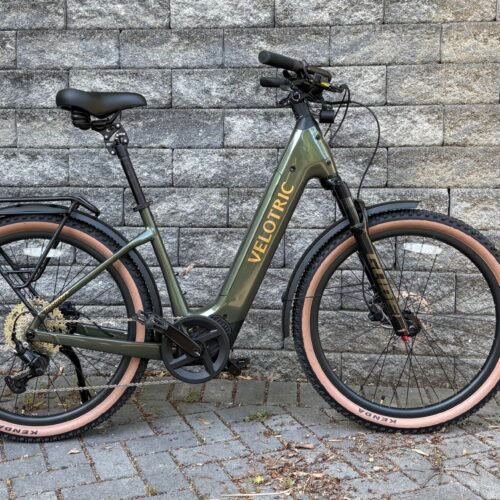
But I may have just found my ideal commuter bike: the Velotric Discover M. It’s comfortable, it has a great combination of components, and it comes in at just under $2,500.

Upgrades all around

Velotric’s first entry in this line, the Discover 1, marked a promising start for the company. While it was definitely in the “compromises needed” category, the shortcomings were relatively minor and carefully chosen. Since then, the company has expanded considerably, introduced many new models, started working with local dealers in the US, and moved a bit upmarket.

The latest iteration of the Discover illustrates the upmarket move. It costs nearly twice as much as the original Discover, but you get a lot for that price. The hub motor is gone, replaced by a mid-frame motor produced under contract for Velotric.

While it still has a cadence sensor you can select through a menu, the Discover uses a torque sensor by default, providing far more integration with your pedaling. Cadence sensors simply register when the pedals are spinning; a torque sensor registers how much force you’re applying to the cranks. The latter makes the electric assist feel more like just that: an assist for your legs rather than a replacement for effort.

Switching to the cadence sensor triggers a warning that it will drain the battery faster, which makes sense: You can gently spin the pedals in a gear meant for climbing hills while the electric motor does all the work. I quickly switched back to the torque sensor for pleasant spring-time riding, but I can see where the cadence sensor might make sense once the full heat of summer starts.

Of course, you could always just use the throttle. More on that below.

Another big upgrade comes in the drivetrain, provided by Shimano. After years spent diversifying its low-end components and moving electronics down from the high end to the middle of its range, Shimano has finally decided to rationalize everything. All the models in its upper range, both road and mountain bikes, will have dedicated electronic groupsets. The entire low end will be occupied by items from the Cues groupsets, which will all be completely interoperable.

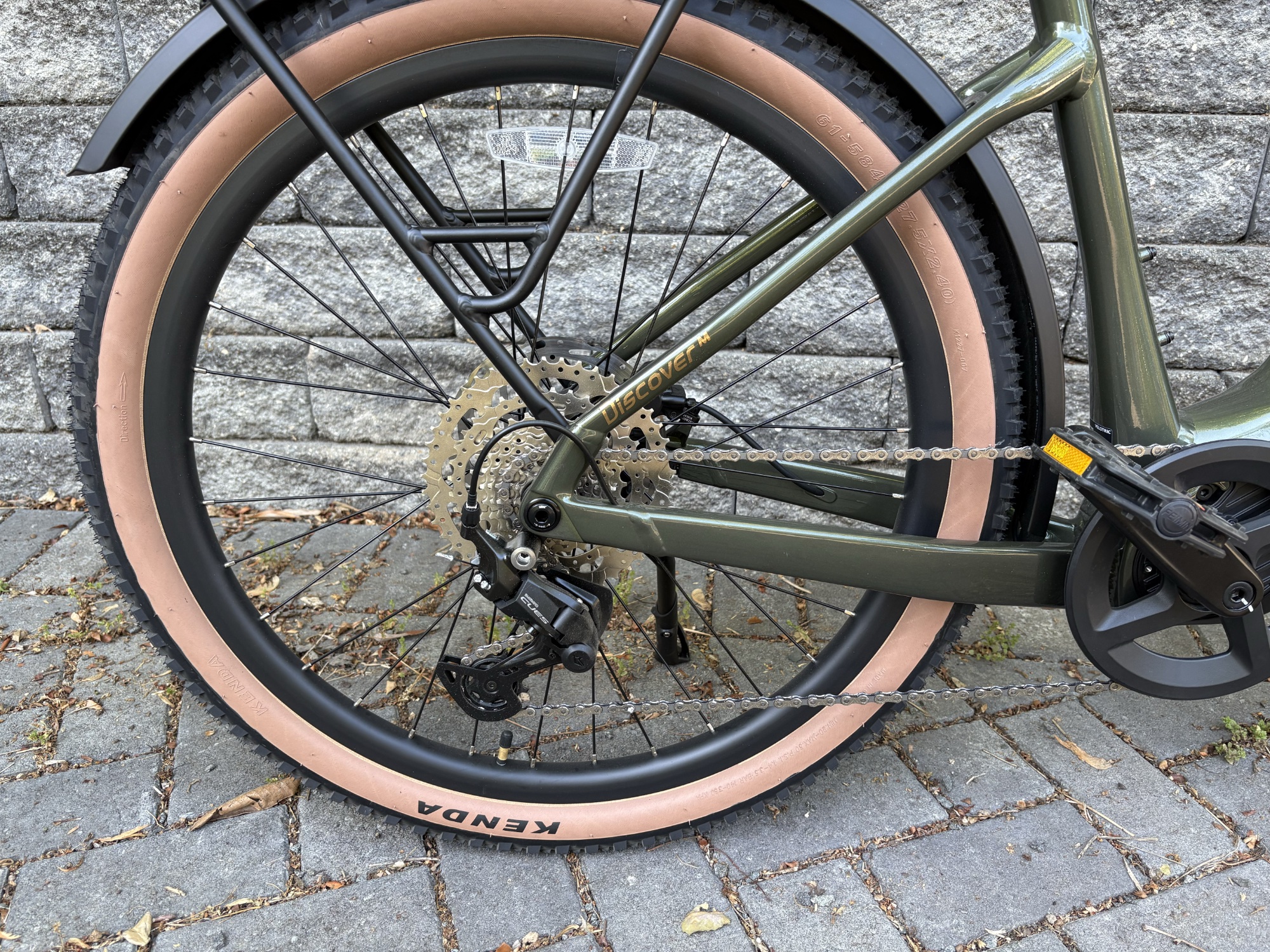
Image of the rear wheel of a bicycle, showing its gears and the derailleur.

Look at that nicely spaced set of gears. Shimano’s new Cues components seem great.

Look at that nicely spaced set of gears. Shimano’s new Cues components seem great. Credit: John Timmer

In theory, this means a mountain bike rear derailleur could be paired with a road-style shifter and work without a fuss (the road shifter hasn’t been released yet, so nobody knows). This seems to be a recipe for even more chaos, as bike manufacturers can potentially mix and match quality and intended use at random.

In practice, though, using a Cues system has allowed Velotric to avoid the worst features of some of Shimano’s previous low-end hardware: cheap plastic shifters and a gear range so narrow it was nearly impossible to pedal fast enough to reach the full rated speed. The Discover M has decent-feeling thumb trigger shifting that runs you through eight useful gears in back, with a range typical of a low-end mountain bike. It is an enormous step up from some previous budget hardware.

True class

US law defines three classes of e-bike. Class 1 provides an assist for up to 20 miles an hour (32 km/hr), but you must be pedaling to activate it. Class 2 is similar but adds a throttle that also cuts out at the same maximum speed. Class 3 e-bikes offer an assist to 28 mph (45 km/hr) but do not allow a throttle. The accepted classes are a patchwork, making it difficult to design a single bike for the US market.

Nearly every manufacturer focused on the US market has settled on a compromise that’s probably not technically legal: They enable switching to Class 3 in software but still provide a hardware throttle. The throttle simply cuts out at the lower max speed of Class 2. The assist it provides is also somewhat anemic; I could generally accelerate away from a full stop much faster by mashing the pedals a bit.

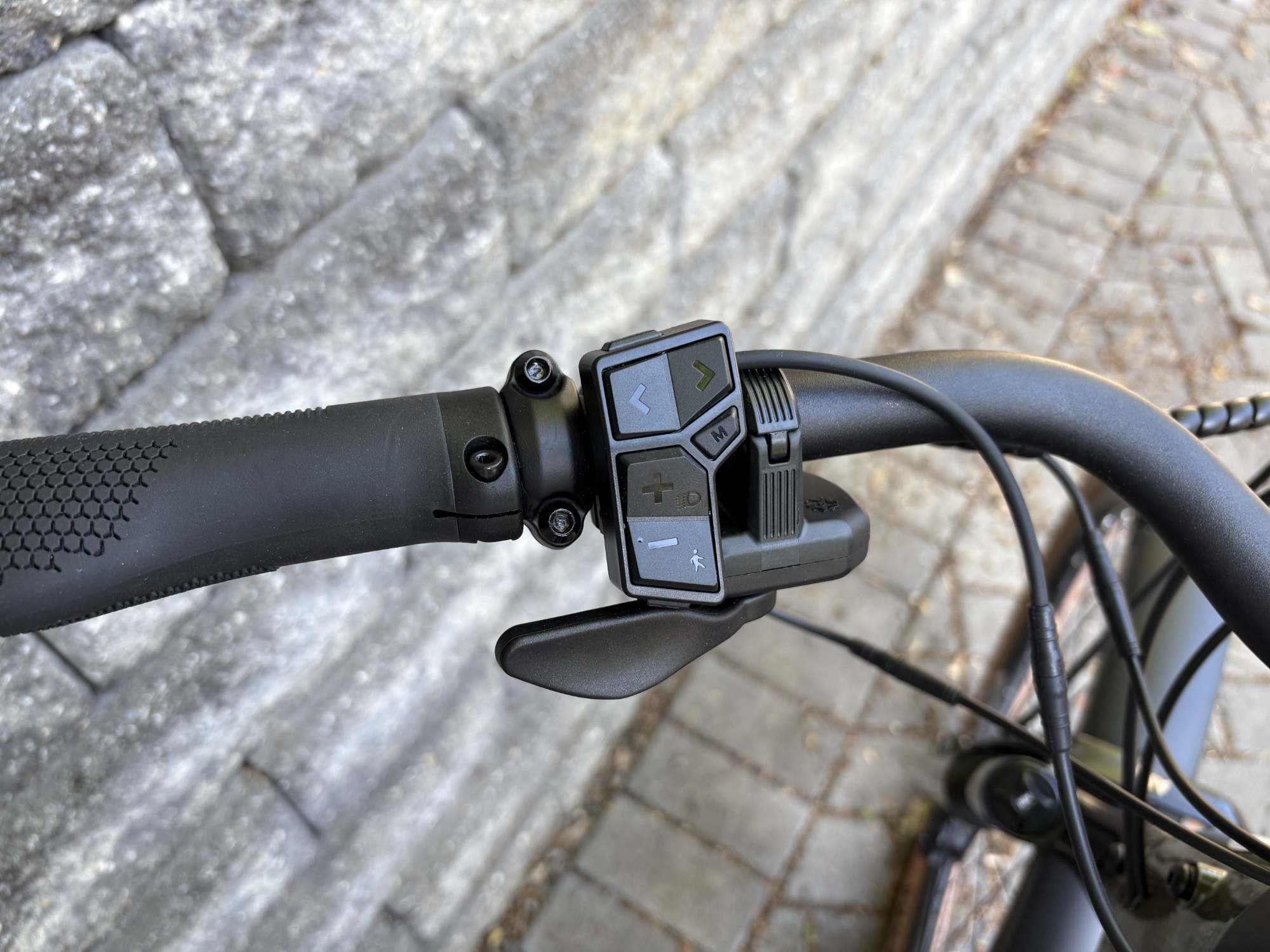
Velotric has provided a simple software solution. If the bike is set to Class 1 or Class 3, the throttle is disabled. While this may seem like a blindingly obvious way to do things, it’s rare enough that I initially thought I had been shipped a bike with a defective throttle.

Image of the handle bar of a bicycle, showing a controller and throttle lever.

Even if you don’t use the throttle, the seven buttons on the controller should keep your left thumb busy.

Even if you don’t use the throttle, the seven buttons on the controller should keep your left thumb busy. Credit: John Timmer

The assist provided by the throttle is a bit weak; I could generally accelerate from a full stop faster by mashing the pedals down with the assist set to high. If you want to cruise around using the throttle to avoid the effort of pedaling, you’re better off activating the cadence sensor and then casually spinning the pedals with the chain in a large gear ring. That will get you to the max speed faster than waiting for the throttle to take you there.

Customize your ride

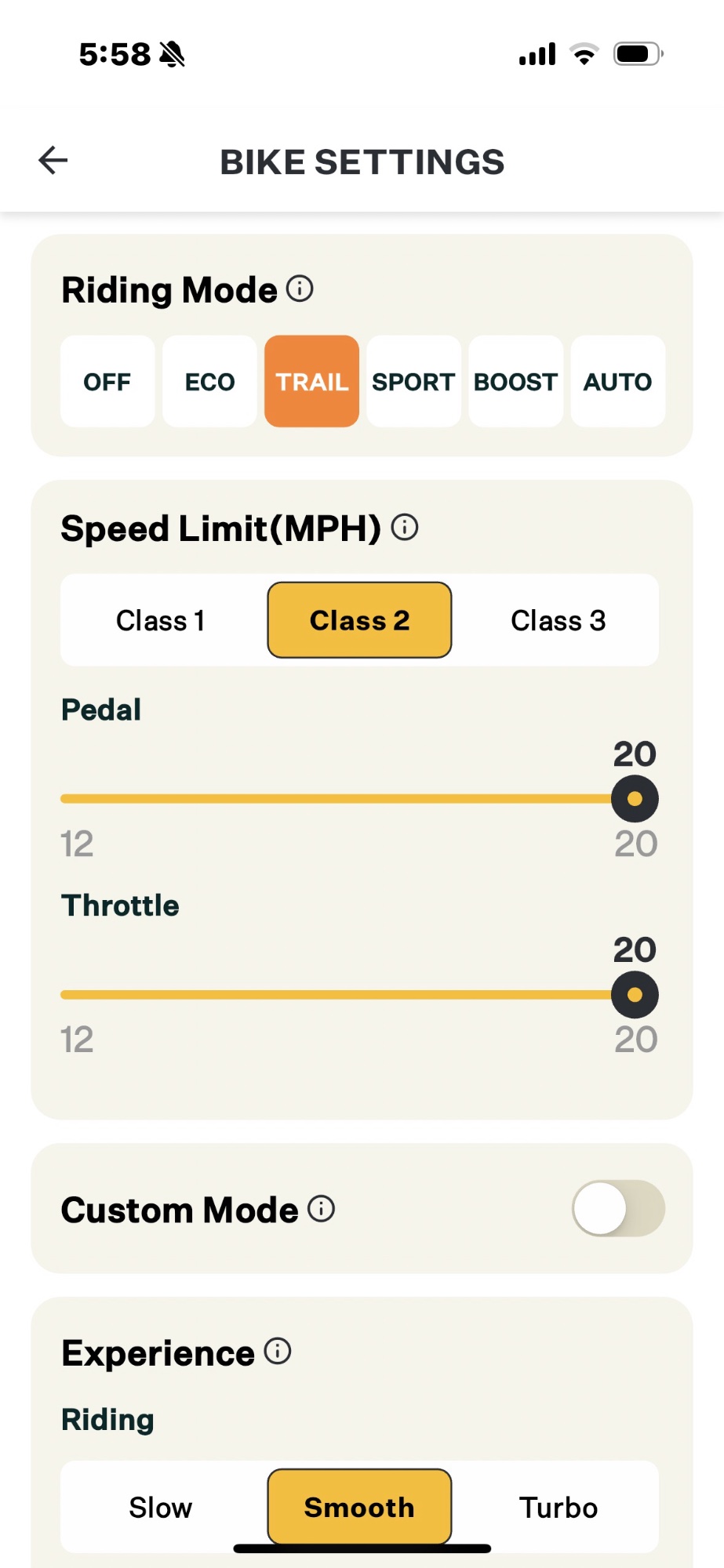
In general, Velotric offers exceptional customization options. You can adjust the speed of any assist level up to its legal maximum. So if you live in an area with low speed limits, you can set Class 1’s assist to max out at 15 mph while leaving the remaining ones untouched. Or if you’re worried you’re not getting enough exercise, you can set the throttle to cut out at 10 mph while leaving Class 2’s 20 mph assist maximum untouched.

This is actually useful because Velotric includes a dedicated button for switching classes on the controller. On most bikes, changing classes requires a trip to a phone application or diving through menus that require you to pull over. Thanks to the button, you simply adjust the class to your current needs. I would set it to Class 1 when sharing space on a heavily trafficked bike path, then switch to Class 3 to match the traffic speeds on suburban streets.

Anything that makes it easier to change classes will obviously also make it easy for riders to switch into a class that may not be appropriate for the conditions. Of course, this sort of rider is more likely to set the bike to Class 3 and keep it there.

This isn’t the only nice bit of electronics that Velotric has added. The bike includes rear turn signals controlled by buttons that are easy to use without looking down, along with an alert when they’re active. I’ve found that leaving them on after a turn can be a real problem, as directionals are not part of my normal cycling routine. The only omission is front directionals, which would be helpful for turning left across oncoming traffic.

Screenshot of a phone application showing a number of sliders and check boxes to adjust things.

If you decide to use the phone app, all the options are logically laid out.

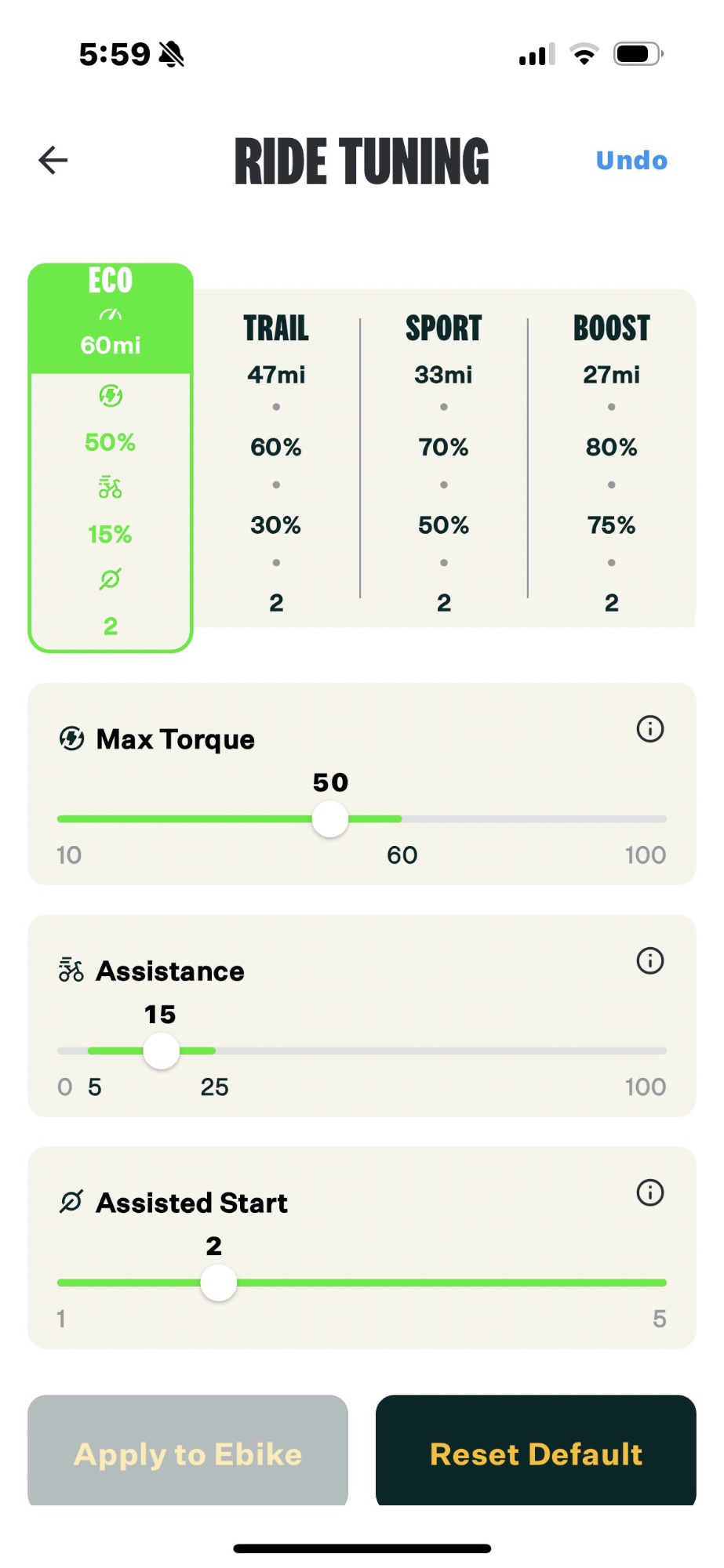
Screenshot of a phone application showing a number of sliders and check boxes to adjust things.

You can do a lot of fine tuning of your bike’s performance.

All this customization can be done through the on-bike display or Velotric’s phone app. On many systems I’ve tested, it felt like I couldn’t access everything I needed without making adjustments on both the bike and the app. Velotric’s system, by contrast, presents the same options in the same order in both places, giving me confidence that I’m not missing out on any options, no matter how I’m setting them.

All that and a great ride

Reviewing the list of features, there’s little that’s missing or problematic. The battery is sufficient, and it comes standard with a robust rear rack and fenders. It’s UL listed, and depending on how aggressively you set the assist, it should deliver the promised 60–80 miles of range (at least 100 km). Hydraulic disk brakes from Tektro provide plenty of stopping power.

The screen is bright and clear, and the settings are easy to navigate, though there are a lot of them. It’s helpful that Velotric’s smartphone app isn’t required, but it’s a nice alternative. The software also integrates with Apple’s Find My system and Google’s equivalent, and it can be set to unlock the bike when you’re nearby. There’s also a USB-C port for charging on the go.

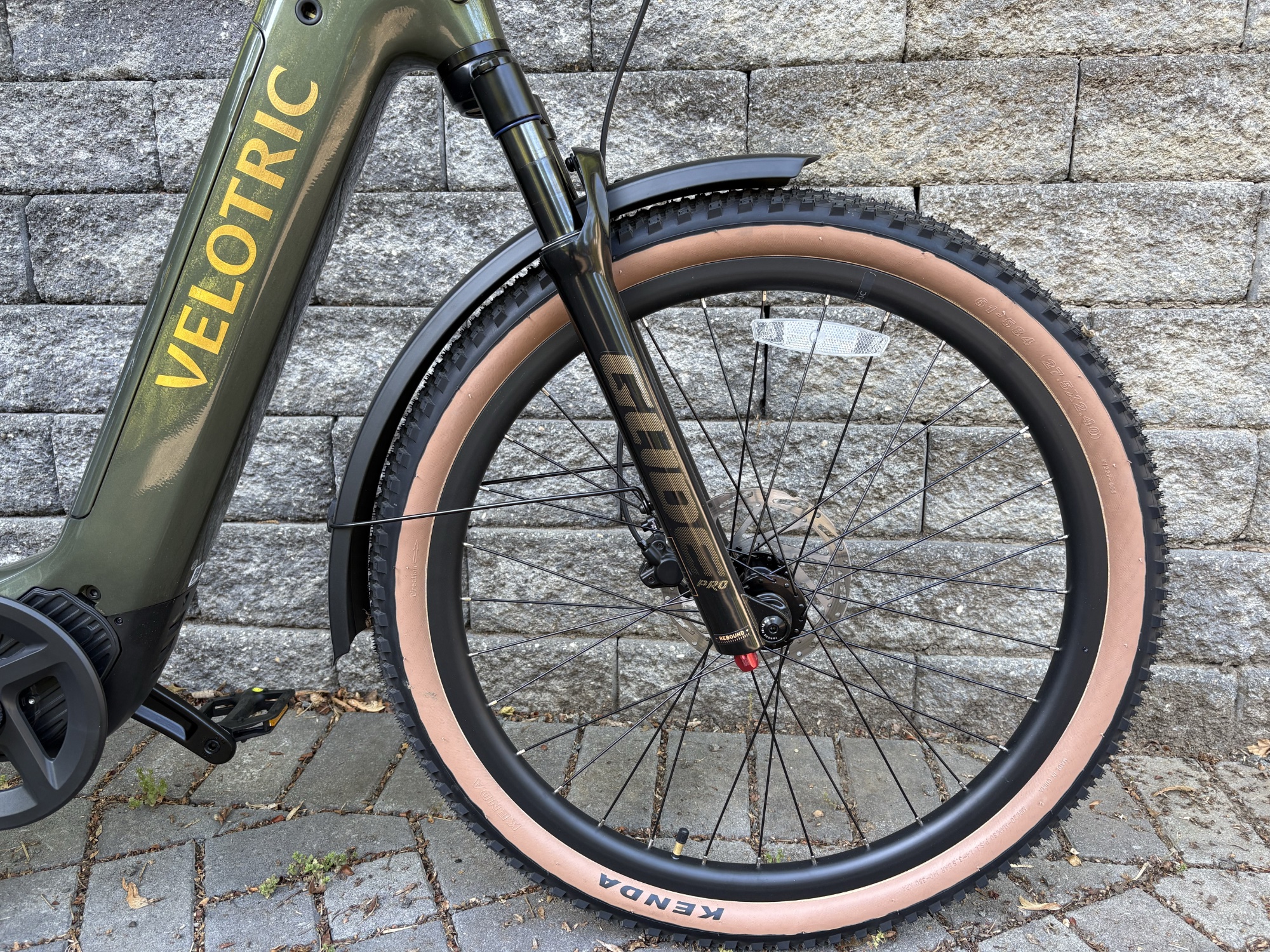
Velotric has also included adjustable front shocks and a shock-absorbing seatpost, coupled with a thick and cushy saddle. The Discover M also comes with some fairly beefy tires that also help cushion any bumps. The result is a very gentle ride, even across my local Worst Paved Road in Town™.

Image of the saddle of a bicycle, showing a mechanical dampener between it and the seat post.

The seat post includes a device that should cushion the bumps.

Image of the front wheel of a bicycle, showing forks with a shock absorber.

There are also front shocks to cushion bad pavement.

In general, the ride is great. You sit with a very upright posture, but it’s comfortable, and the large version is appropriately sized for someone like me (well over 6 feet/185 cm), which isn’t always the case with “large” frames. It’s not a performance bicycle, but the U-shaped frame is solid and gives the sense that the effort you put into the pedals translates directly to forward movement rather than being lost to frame flex.

With three classes and five levels of assist a few button presses away, it was easy to find a setting that worked for the effort I wanted to put in. That could range from powering down the streets in an “I’m going to be late panic” to gentle “I don’t want to end up covered in sweat” rides. Having a useful gearing setup thanks to the Cues components was also a big help in this regard.

At a bit over 60 pounds (27 kg), it’s not enjoyable to ride without the assist, but it’s manageable in a pinch.

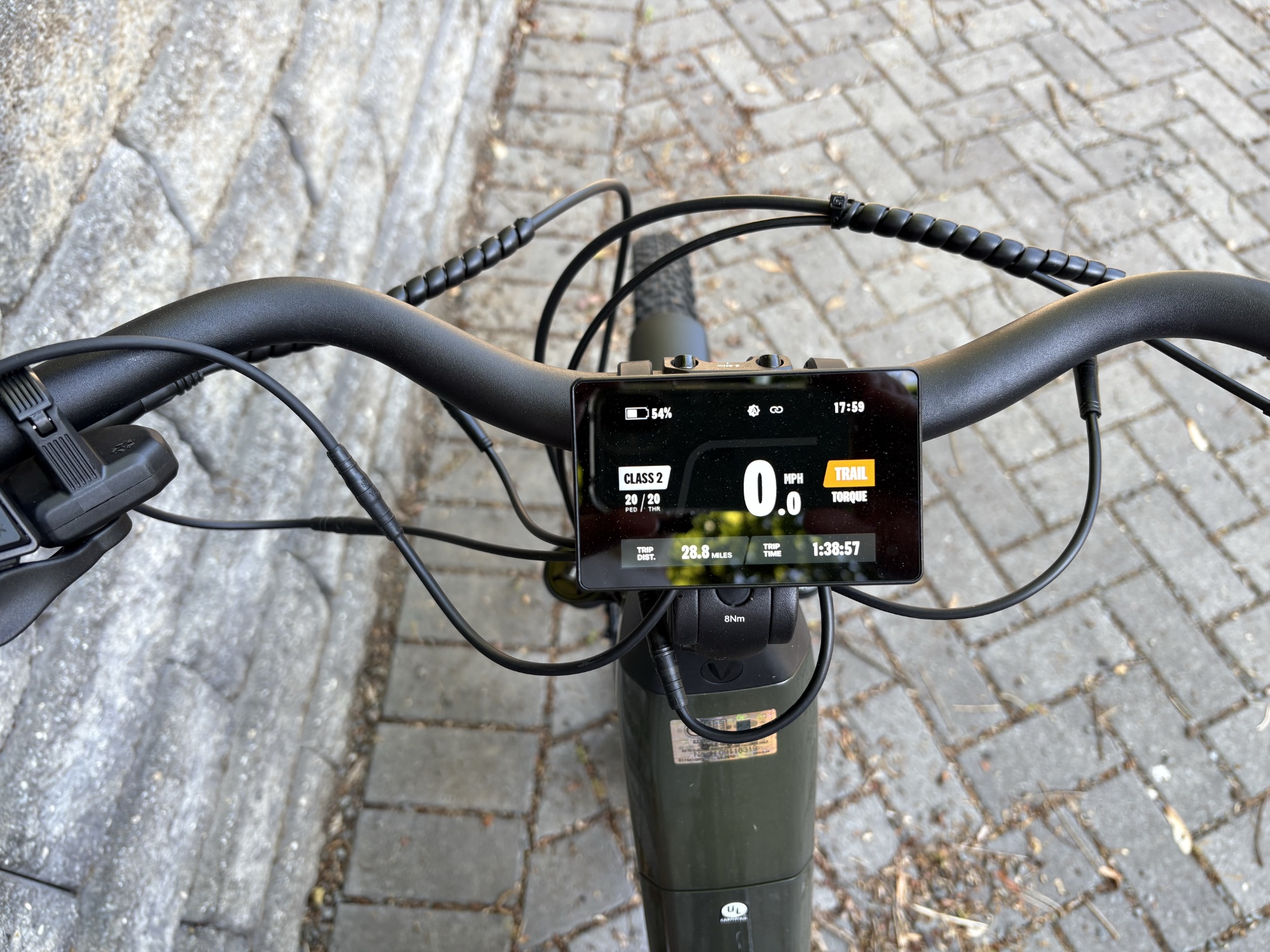
Image of the display screen of a bicycle, which is centered on the handlebars.

When it’s not nagging you to change gears, the display nicely balances information content and information overload.

When it’s not nagging you to change gears, the display nicely balances information content and information overload. Credit: John Timmer

One mildly annoying feature is that the bike uses input from the torque sensor and occasionally flashes a yellow warning on the display recommending when you should shift gears. This typically happened when I was pushing a high speed at high cadence—the bike would prompt me to shift into a higher gear and pedal more slowly with more force. I’m a better judge of my own cadence/power tradeoff than the software, so I found this less than helpful, and there doesn’t appear to be a way to shut it off.

Little to complain about

I’m not really the target audience for a commuter bike; if I had to commute, I’d rather do it on something that could also handle something like a bit of light trail riding. But it was hard not to be impressed with what Velotric has put together. The $2,500 price tag will obviously be a barrier for some people, but it isn’t a huge jump from models that are a significant step down in features and quality. And many commuter bikes that cost substantially more than the Discover M don’t add much to the riding experience, though they likely have higher-quality components.

Velotric itself has also been around long enough to iterate on several of its designs, lending some confidence that the company will be there to provide any service that’s needed in the future.

I see a couple of minor things that could be improved, but they are truly minor. So for the second time since I’ve started reviewing e-bikes, I’m giving one the official Ars seal of approval. If you’re in the market for a good commuter bike, the Discover 3 provides a fantastic balance of price and quality.

The Good

  • Solid and comfortable commuter bike
  • Very competitive price for the quality
  • Great (and actually legal) system for managing the assist class
  • New Shimano Cues components are a big step up from budget gear

The Bad

  • Doesn’t have a front turn signal
  • Throttle takes forever to get the bike up to 20 mph
  • Gets annoying about telling you what gear you should be in

The Ugly

  • There’s nothing ugly about it


Correction:  fixed references to the wrong Velotric model.

Pennsylvanians use town hall meeting to rail against data center boom

0
pennsylvanians-use-town-hall-meeting-to-rail-against-data-center-boom
Pennsylvanians use town hall meeting to rail against data center boom

The latest example of burgeoning opposition to rapid data-center development in Pennsylvania came at a town hall meeting overflowing with frustration about how the state is managing the surge.

As about 225 people watched, more than 20 speakers in the two-hour online forum late Wednesday spoke about resistance to an industry they blame for rising electricity prices, heavy water use, noise pollution and rural industrialization. Gov. Josh Shapiro, who has tried to thread the needle of welcoming data centers while proposing some guardrails, was a frequent target.

“This is a public trust and transparency issue,” said Jennifer Dusart, a small business owner and resident of Mechanicsburg, near the state capital. “Too many Americans are finding out about these projects after decisions have been made. We have been bulldozed over, and when citizens have raised concerns, they are often dismissed as uninformed, emotional or anti-progress.”

According to the Data Center Proposal Tracker, Pennsylvania has nearly 60 data centers that have been officially proposed, are in early planning stages, have received approval to build or are under construction.

Karen Feridun of the environmental nonprofit Better Path Coalition, which organized the town hall, said the Pennsylvania Data Center Resistance Facebook group she started in January with a few dozen members now has more than 12,000 followers. Kelly Donia of East Whiteland Township in southeastern Pennsylvania, who lives near a proposed data center, said she’s a registered Democrat who had been excited about speculation in 2024 that Shapiro would be the Democratic vice presidential candidate. But she said she no longer supports him because he has courted data centers. “He is losing his base,” she said. “I want him to hear this loud and freaking clear. I’m going to make it my job to make sure that man never gets elected again for any office.”

While an Emerson College survey in November found that Pennsylvanians were split on data-center development—38 percent supported it, while 35 percent opposed it—opposition to such development close to home was more pronounced. A February poll of registered voters in the state by Quinnipiac University found even more pushback: 68 percent said they would oppose a data center for AI in their community.

Neither the Data Center Coalition, an industry group, nor Pennsylvania Data Center Partners, a developer of large data centers, responded to requests for comment, though industry advocates have said the growth will bring jobs and tax revenue to the state.

The Shapiro administration said it seeks to protect communities while reaping the economic benefits of the booming data center industry.

“If companies want the Commonwealth’s full support—including access to tax credits and faster permitting—they must meet strict expectations around transparency, environmental protection, and community impact,” Rosie Lapowsky, a Shapiro spokesperson, said in a statement. “This is about setting a higher bar for projects, not lowering it, and ensuring development happens responsibly and in a way that benefits Pennsylvanians.”

In February, Shapiro proposed standards as part of his budget address, including that new data centers seeking state support must either provide their own power rather than drawing it from the grid, or fully fund their power needs and the transmission infrastructure that comes with them.

Feridun said Shapiro did not respond to multiple invitations to attend the town hall, which she thinks the state should have hosted to give people a chance to express their concerns about data centers.

Colby Wesner of the activist group Concerned Citizens of Montour County, which successfully opposed a data center, criticized House lawmakers for passing the Shapiro-supported HB 2151, which would require state officials to draft a model ordinance that towns could use to respond to data center applications.

Supporters say its use would be voluntary and it would help local officials protect quality of life in their communities. But Wesner believes it will benefit the industry if enacted: “There is absolutely no way this ordinance won’t be a data center developer’s dream.”

Donia urged townships to change their zoning so they have the legal right to deny data center applications in places they don’t want them. Without carefully zoned land, towns are vulnerable to lawsuits from developers, she said.

“If you’ve got terrible ordinances in your township, and you add in bad zoning, guess what? You get a hyperscale data center,” she said.

The surge in data center projects in Pennsylvania has been driven by tax breaks for developers, as allowed by a 2021 law that lawmakers should repeal, said Republican state Rep. Jamie Walsh, who spoke at the town hall event. In Virginia, the state with the most data centers, developers have to pay a sales and use tax, but Pennsylvania doesn’t require that, he said.

“That has made Pennsylvania a target. In Virginia, they have to pay tax on the contents of those buildings. Pennsylvania will never realize that. That is why we’ve become ground zero,” said Walsh, who represents Luzerne County in northeast Pennsylvania.

State Sen. Katie Muth, a Democrat who represents part of the Philadelphia suburbs, plans to introduce a bill to place a three-year moratorium on data center development so state and local governments can first study and plan for the industry. She announced the bill in a legislative memo in February and expects to introduce it soon, a spokesman said.

Muth told activists at the town hall that the data center industry has not done enough to fully disclose its plans to the public. ”This has all been planned long before any of us had a clue, so don’t feel that you missed all these things,” she said. “You were supposed to; no one wanted you to know about it.”

Michael Sauers, a retired school teacher from Bloomsburg, southwest of Scranton, called on officials to amend the Pennsylvania Municipalities Planning Code, a regulation first published in 1970.

“This has to be strengthened to empower communities to be able to say no to unwanted development that is being shoved down their throats,” he said. “Communities must be empowered to reject top-down development that gives them little or no voice in the future.”

This story originally appeared on Inside Climate News.

0FansLike
0FollowersFollow
0FollowersFollow
0SubscribersSubscribe
- Advertisement -
Google search engine

Recent Posts