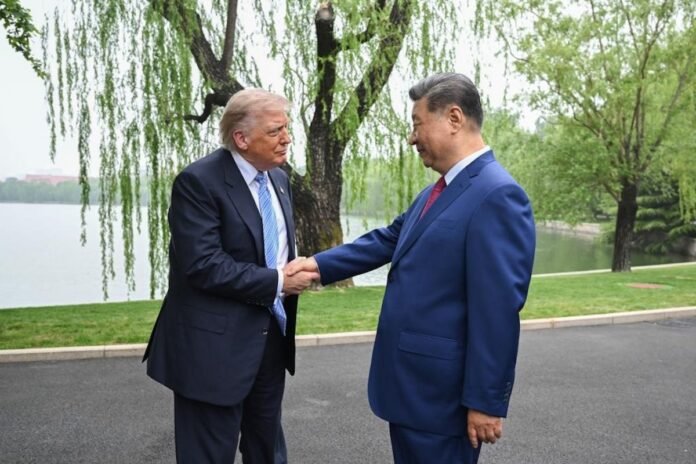
The Trump-Xi summit in Beijing was supposed to signal a new phase of calmer US-China relations. Instead, it exposed a deeper reality that should concern Indonesia and much of Southeast Asia, as stability between great powers can sometimes come at the expense of middle powers.
Donald Trump left Beijing with warm words but very few concrete achievements. Xi Jinping, by contrast, appeared to secure several strategic victories. Reuters described the summit as producing “stability and stalemate” — a diplomatic reset heavy on symbolism but light on substance.
Behind closed doors, Xi reportedly warned Trump that mishandling Taiwan could push the relationship into a “dangerous” conflict. Trump notably declined to publicly comment on the issue afterward.
Meanwhile, Xi introduced a new phrase to define the bilateral relationship, “constructive strategic stability,” replacing the Biden-era language of “strategic competition.”
That semantic shift, which reports indicate Trump agreed to in principle, matters more than it appears.
For Indonesia, the summit suggests that Washington and Beijing are increasingly interested not in resolving their rivalry, but in managing it on terms favorable to themselves.
The danger for Southeast Asia is that regional concerns — especially maritime security and the South China Sea — may become secondary to broader great-power stabilization.
Indonesia has long resisted being trapped between China and the US. Jakarta’s foreign policy tradition is rooted in strategic autonomy, ASEAN centrality and nonalignment.
But that balancing strategy becomes harder when great powers seek to reduce tensions through elite diplomacy while unresolved regional disputes go unaddressed. The South China Sea is the clearest example.
Officially, Indonesia insists it is not a claimant state. Yet China’s “nine-dash line” overlaps with Indonesia’s exclusive economic zone around the Natuna Islands, making Jakarta an unwilling stakeholder in the dispute, along with the Philippines, Malaysia and Vietnam.
Over the last decade, Indonesia has responded cautiously but firmly through maritime patrols, fisheries enforcement and military modernization near Natuna.
What worries Jakarta is not the possibility of a secret US-China deal over the South China Sea. Indeed, Trump is unlikely to formally concede Chinese claims.
The concern is more subtle. A calmer US-China relationship could reduce international scrutiny of Chinese maritime pressure precisely as ASEAN negotiations over the South China Sea Code of Conduct enter a sensitive phase.
China has consistently pushed for a weaker and more flexible Code of Conduct that limits external military involvement, particularly by the US and its allies. Several ASEAN states want stronger legal guarantees grounded in international law and the 2016 arbitral ruling at The Hague that rejected Beijing’s expansive claims over the sea in favor of the Philippines.
If Washington now prioritizes “constructive strategic stability” over maritime pushback, Beijing may feel emboldened to push harder for a softer and less enforceable agreement. That could directly weaken Indonesia’s strategic environment.
The just-concluded summit also carries major economic implications for Jakarta.
Trump arrived in Beijing searching for quick economic wins. He was accompanied by prominent US business executives and focused heavily on Boeing aircraft sales, exports and investment opportunities. But despite the business-heavy delegation, Trump left without any reported major breakthroughs.
There was no official solution to the growing problem of rare earth supply disruptions, which remain crucial for global manufacturing, semiconductors and defense industries. China’s export controls on strategic rare earth materials remain largely intact.
Likewise, there was no meaningful breakthrough on advanced Nvidia H200 chip sales to China. Although Nvidia CEO Jensen Huang reportedly joined the trip at the last minute, Beijing showed little interest in depending on American semiconductor technology.
For Indonesia, this matters because Southeast Asia is increasingly caught in the middle of technological fragmentation between the US and China. Indonesia hopes to attract investment into electric vehicles, battery processing, digital infrastructure and AI-related industries.
But if technological rivalry continues beneath the surface of diplomatic stability, Jakarta may face growing pressure to navigate incompatible supply chains and competing technology ecosystems.
The summit also revealed limits to Trump’s leverage. Xi appeared focused on long-term strategic positioning, while Trump pursued short-term transactional gains.
Beijing framed the summit as the beginning of a stable framework for managing competition over many years. Trump, meanwhile, emphasized commercial deals and public optics.
That asymmetry matters for Indonesia because it reinforces fears that US policy under Trump remains highly personalized and unpredictable.
Southeast Asian governments can adapt to rivalry. What they fear is volatility, sudden policy reversals, transactional diplomacy and the possibility that regional interests become bargaining chips in wider negotiations over Taiwan, trade or Iran.
Notably, Xi offered no meaningful indication that China would pressure Tehran or reduce its broader strategic partnerships. Despite speculation before the summit, there was no clear Chinese concession on Iran. This further reinforced perceptions that Beijing entered the summit from a position of patience and confidence.
For Indonesia, the likely response will be deeper defensive nonalignment.
Jakarta will continue strengthening maritime security around Natuna while avoiding overtly anti-China rhetoric. It will quietly expand security cooperation with Japan, Australia and the US without formally joining containment efforts against Beijing.
At the same time, Indonesia will continue emphasizing ASEAN centrality and international law as safeguards against domination by larger powers. Ironically, then, the Trump-Xi summit may intensify Southeast Asia’s hedging behavior rather than reduce it.
The summit produced calmer headlines but resolved none of the structural tensions driving US-China rivalry. Taiwan remains explosive. Technological competition continues. Military distrust persists. The South China Sea remains crowded with coast guards, naval patrols and overlapping claims.
For Indonesia, the lesson is increasingly clear: when great powers talk about “strategic stability,” smaller states often hear something else — a warning that their interests may once again be managed from distant capitals rather than protected on their own terms.
Muhammad Zulfikar Rakhmat is director of the China-Indonesia Desk at the Jakarta-based Center of Economic and Law Studies (CELIOS) independent research institute. Yeta Purnama is a researcher at CELIOS.





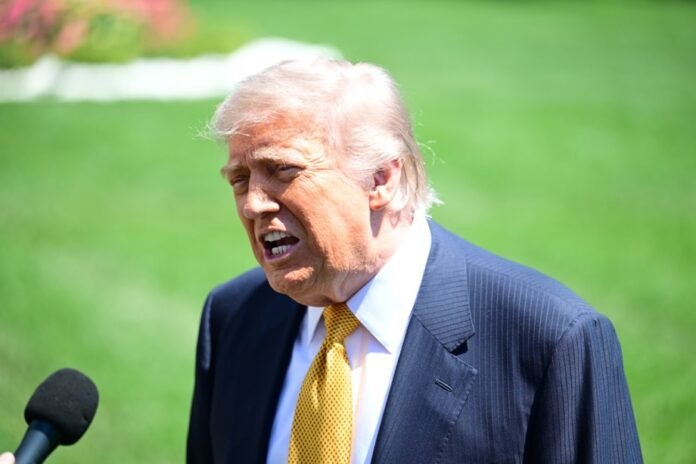

![U.S. President Donald Trump speaks to members of the press before boarding Marine One on the South Lawn of the White House in Washington, United States, on May 12, 2026. [Kyle Mazza - Anadolu Agency]](https://i0.wp.com/www.middleeastmonitor.com/wp-content/uploads/2026/05/AA-20260512-41362279-41362275-US_PRESIDENT_DONALD_TRUMP.jpg?fit=920%2C613&ssl=1)

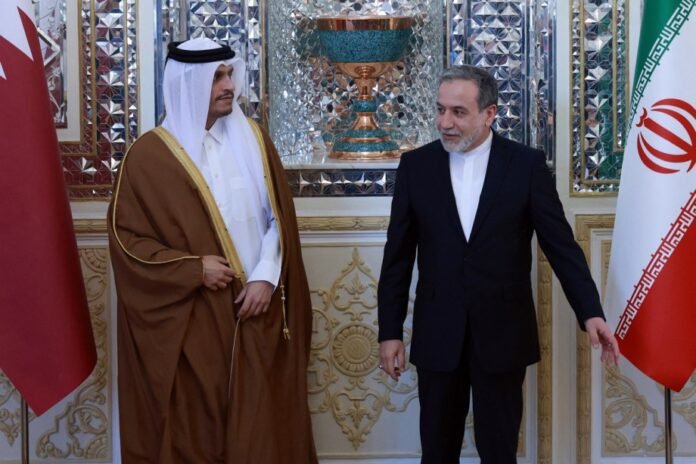
![Iranian Foreign Minister Abbas Araghchi (R) welcomes his Qatari counterpart Mohammed bin Abdulrahman al-Thani ahead of their meeting in Tehran on November 20, 2024 [Photo by -STR/AFP via Getty Images]](https://i0.wp.com/www.middleeastmonitor.com/wp-content/uploads/2025/07/GettyImages-2185086106-1.jpg?fit=920%2C613&ssl=1)





