11.2 C
London
Tuesday, May 12, 2026
Home Blog

7 Examples of Gaza Media Coverage That Prove Pro-Israel Bias

0
7-examples-of-gaza-media-coverage-that-prove-pro-israel-bias
7 Examples of Gaza Media Coverage That Prove Pro-Israel Bias


Ask anyone who has followed news about Gaza with even a smidgen of critical thinking, and they will tell you: Media organizations are biased against Palestinians — and systematically favor Israel. 

It’s easy to say but harder to prove. Doing empirical analysis that shows these biases is time-consuming and complex, full of pitfalls and nuances that can muddy the picture. Yet the double standards are everywhere — and there are ways to do sober, qualitative work that elucidates not only the differences in how Israeli and Palestinian life are covered, but also also in how other recent conflicts are covered.

For my new book “How to Sell a Genocide: The Media’s Complicity in the Destruction of Gaza,” I attempt to demonstrate, beyond a reasonable doubt, that U.S. media coverage of the war on Gaza was one-sided, racist, dehumanizing, and often veered into outright incitement.

I examined over 12,000 articles from the New York Times, the Washington Post, CNN.com, Politico, Axios, USA Today, and The Associated Press, along with 5,000 TV segments that aired on CNN and MSNBC. The focus is on center-left media outlets influential with the Biden administration during the first year of the conflict — with an emphasis on the first few months, when Israel firmly established its narrative justifying the genocide, rendering mass death inevitable.

Here are seven statistical findings that prove the U.S. media’s bias against Palestinians.

Israel’s “Right to Defend Itself”

The media’s penchant for invoking a nation’s “right to defend itself,” typically followed by the rationalization of mass civilian killing, was reserved almost exclusively for Israel. On CNN and MSNBC, guests, anchors, and reporters mentioned the right to self-defense for Israel 94 times more than they did for Palestinians. In print media, Israel was afforded this right over 100 times more frequently than Palestinians in Gaza.

Watch a supercut below of the phrase being repeated on TV news.

“Human Shields” to Justify Killing Palestinians

News outlets frequently apply the term “human shields” to any instance where a guerrilla force operates near civilian infrastructure — a definition rejected by human rights groups, but used by partisans to explain away civilian deaths. That didn’t stop media outlets from invoking the term hundreds of times about civilians near Palestinian fighters, implicitly justifying their deaths in Israeli attacks. On the other hand, my analysis of TV news showed no mention at all of the Israeli military’s use of “human shields” — despite documented cases where Israel’s tactics meet the legal definition.

Emotive Words About Killing Civilians

Cable networks and print media outlets consistently applied a double standard in favor of Israel when using the terms “massacre,” “barbaric,” “savage,” and “slaughter” to describe the killing of civilians. Over a 100-day period that saw roughly 24,000 Palestinians killed, the use of these emotive words in the print media I surveyed was entirely in favor of Israel. (I only included instances when the words appeared in outlets’ own editorial voices, not when they quoted commentators or officials.)

Watch supercuts below of U.S. news personalities using the phrase “savage.”

Using “Hamas-Run” to Downplay Palestinian Deaths

After the October 17 bombing of Gaza’s al-Ahli Arab hospital by Israel, media outlets almost uniformly adopted pro-Israel pressure groups’ pejorative qualifiers “Hamas-run” or “Hamas-controlled” to describe Palestinian death counts, thereby discrediting them. Neither CNN nor MSNBC used the term between October 7 and October 17, 2023, but it quickly skyrocketed in usage as the body count in Gaza grew — with the use of a related phrase becoming an official policy at CNN. This, despite the U.S. State Department, World Health Organization, Human Rights Watch, and others’ long use of Gaza Health Ministry figures.

Sympathetic Victims: Gaza vs. Ukraine

Victims of Israel’s attack on Gaza who could be expected to elicit sympathy from audiences — like journalists and children — received little coverage during the first 100 days of Israel’s assault, compared to their counterparts in Ukraine.

Antisemitism vs. Islamophobia

While incidents of antisemitism and Islamophobia were on the rise in the months after October 7, coverage focused almost entirely on antisemitism with little or no regard for anti-Muslim bigotry or how the mass killing in Gaza impacted Palestinians stateside. This was especially true on college campuses, where students protesting Israel’s war were tarred as antisemites in the mainstream press, while Muslim, Arab, and Palestinian students who faced discrimination barely received any attention.

Campus Antisemitism vs. Killing Children in Gaza

For a poignant example of how Palestinians are dehumanized, consider the media’s treatment of former Harvard University President Claudine Gay in comparison to their coverage, or lack thereof, of the killing of Hind Rajab. Not long after Gay resigned under pressure from Congress amid a monthslong fixation on allegations of antisemitism on college campuses and allegations of plagiarism by Gay over 20 years prior, the Israeli military opened fire on a car carrying Rajab and her family and left the 5-year-old Palestinian girl to die. On the New York Times homepage, stories about Gay appeared in 15 of the 31-day period covering the height of the scandal, whereas Rajab didn’t appear once in the month that followed her death.

Gwadar’s moment has finally arrived for Pakistan

0
gwadar’s-moment-has-finally-arrived-for-pakistan
Gwadar’s moment has finally arrived for Pakistan

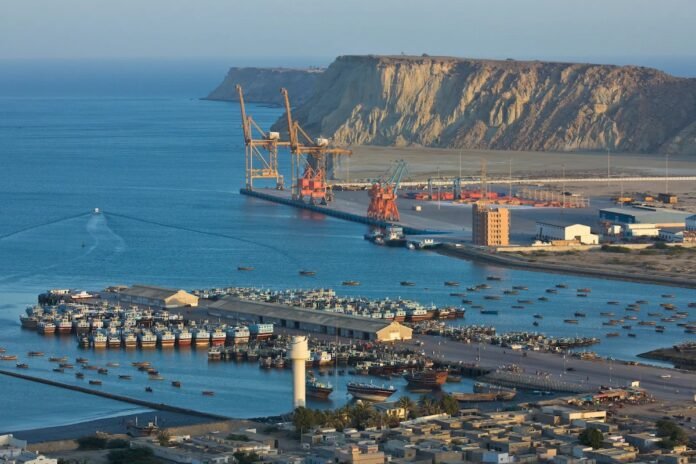
In April 2026, Gwadar Port processed around 11,000 standard shipping containers. For context, the same port handled roughly 8,300 containers throughout 2025. This is not a record broken by a whisker. It is a record shattered and behind it lies a story about geography, patience and a province that will benefit from this.

The trigger is the Strait of Hormuz, the narrow waterway through which nearly 20% of the world’s oil and LNG passes. As tensions there have disrupted global shipping lanes, freight operators have scrambled for alternatives, and quietly, almost as if the map had always known this day would come, the answer has materialized on Pakistan’s southwestern coast.

Gwadar sits roughly 400 kilometers from the Strait of Hormuz, at the exact point where the Arabian Sea opens toward the Gulf of Oman. Its eastern bay is one of the deepest natural harbors in the entire region, capable of accommodating large cargo vessels that shallower ports simply cannot handle. These are advantages Pakistan was born with.

The UAE has its Fujairah bypass pipeline. Saudi Arabia has its East-West link to Yanbu on the Red Sea. But both are partial solutions; they handle a fraction of export volumes and cannot absorb a global rerouting.

Gwadar, backed by the full logistics architecture of the China-Pakistan Economic Corridor, offers something categorically different, a complete alternative corridor connecting the Arabian Sea to Central Asia and western China.

When the world’s shipping industry needed a detour in April 2026, Gwadar did not raise its hand. It was simply there, in the right place, at the right time.

On April 16 alone, two cargo vessels docked carrying 368.7 tons of machinery and 5,000 metric tons of fertilizer. Earlier in the month, a single ship brought over 14,000 metric tons of transshipment goods. A port that historically saw fewer than 20 ships in an entire year is now processing that volume in days.

This is not a blip. This is the beginning of a structural shift, one that Islamabad must now work urgently to make permanent.

CPEC infrastructure

Gwadar’s surge owes to a decade of infrastructure-building under CPEC.

The New Gwadar International Airport, inaugurated in January 2025, was built with a $230 million Chinese grant and spans 4,300 acres, making it Pakistan’s largest airport by area and capable of handling Airbus A380s.

The Eastbay Expressway Phase-I, the Khuzdar-Basima Road and the M-8 motorway linking Hoshab to Gwadar have collectively reduced travel time between Quetta and Gwadar from over 24 hours to roughly eight.

CPEC Phase II is now shifting focus toward Special Economic Zones, agriculture, minerals, and IT, a deliberate pivot from hardware to economic depth. The Planning Commission estimates CPEC has already generated over 200,000 direct jobs nationwide. Gwadar’s moment is the dividend on that investment.

For fiscal year 2025-26, the federal government has allocated a record 205.99 billion rupees (US$739 million) to Balochistan under the Public Sector Development Program, representing nearly 68% of the total combined PSDP for Balochistan, Federal/ICT and AJK.

By March 2026, 73.5 billion rupees had already been disbursed across 148 active projects in the province, spanning roads, water, power and education.

In Gwadar specifically, 22 projects with a combined cost of 184 billion rupees are currently underway. The Pak-China Friendship Hospital, funded with $100 million from China, treated around 43,000 patients from poor communities in 2025, for free. A Chinese-funded desalination plant is providing eight million gallons of drinking water to Gwadar residents.

The Balochistan Special Development Initiative (BSDI), launched in collaboration with the Pakistan Armed Forces, allocated 5 billion rupees toward 137 development projects across some of the province’s most rural districts, namely Kech, Khuzdar, Washuk, Chagai, Panjgur, and Kalat.

By the end of 2025, 13 projects had already been completed, including solar installations in rural health centers and street lighting in remote areas.

On uplifting youth, the provincial government launched its first-ever Balochistan Youth Policy, targeting overseas employment opportunities for 30,000 young people. More than 6,000 skilled youth have already secured jobs abroad.

The Balochistan Education Endowment Fund disbursed roughly 4 billion rupees in scholarships spanning school, university, and PhD level in 2025 alone. These investments in human capital are the ones that compound over time, and benefit the youth.

The Asian Development Bank approved an additional $48 million for water resource development in Balochistan in November 2025, co-financed by Japan. The project focuses on the Zhob and Mula river basins. Meanwhile, 27,000 agricultural tube wells are being solarized at a cost of  55 billion rupees, one of the most significant rural interventions the country has seen.

Perhaps the most consequential long-term development is the Reko Diq project, one of the world’s largest undeveloped copper-gold deposits sits in Balochistan’s soil. In late 2025, the project secured $3.5 billion in international financing from the ADB, the US Export-Import Bank, and other partners, formally moving it from planning into construction.

First copper exports are projected for 2029. At full production, Reko Diq is expected to employ between 7,500 and 13,500 workers. Over 35 years, it could generate $75 billion, greatly benefiting Pakistan.

New leverage

Gwadar offers a new opportunity, a leverage that will grow with use. Pakistan does not merely collect transit fees from Gwadar. It earns geopolitical standing. Gulf states, whose own energy exports depend on Hormuz, have a direct stake in a stable Pakistan with a functional western port.

That calculus is already translating into cash. Saudi Arabia transferred $2 billion to Pakistan in April 2026, with a further $3 billion pledged. These flows reflect Riyadh’s recognition that Pakistan’s stability and Gwadar’s functionality serve Gulf interests in a volatile maritime environment.

When your port becomes indispensable to your neighbors, your neighbors become invested in your well-being. This is soft power expressed in hard currency.

Crises are temporary. The Strait of Hormuz has seen threats before and has reopened each time. When it does, Pakistan cannot rely on emergency rerouting to keep Gwadar busy.

The shipping companies arriving now need reasons to stay when normalcy returns. That means there should be competitive port charges, fast customs clearance, security guarantees, and reliable road and rail connectivity.

The $390 million railway connectivity project linking Balochistan’s mineral belt to national logistics networks, with construction beginning in 2026, is a step in that direction.

So is the continued development of the Gwadar North Free Zone and the push to operationalize Special Economic Zones that turn Gwadar from a transit node into a production hub. When goods are being made in Pakistan, not merely passing through, the economic stakes deepen permanently.

The New Gwadar International Airport, Pakistan’s largest by area, is ready for take off. The port’s deep-water berths are receiving cargo. The road network connecting the port to the national grid is expanding. The architecture is all in place. What is needed now is the commercial and administrative follow-through to make it stick.

Pakistan is working to build it. The investments are real, projects are underway and the momentum is palpable. The cargo ships are docking, the cranes are moving and the country is ready for a new Gwadar-driven beginning.

Farwa Imtiaz is an independent academic researcher with a Master’s degree in Peace and Conflict Studies from National Defence University, Pakistan. Her work has been featured in The Friday Times, Paradigm Shift, South Asia Times, Voice of Germany, Global Connectivities, Stratheia, EcoAsiaNews, International Policy Journal, South Asia
Journal, Sri Lanka Guardian, Global South Forum, and Middle East Monitor.

Hebrew newspaper: Microsoft temporarily moves management of its Israeli branch to France

0
hebrew-newspaper:-microsoft-temporarily-moves-management-of-its-israeli-branch-to-france
Hebrew newspaper: Microsoft temporarily moves management of its Israeli branch to France

The Israeli business daily Globes revealed that Microsoft has temporarily moved the management of its Israeli branch to France following an internal investigation into allegations that it provided services to Israeli security agencies and monitored data related to Palestinians.

The newspaper reported that “Microsoft decided to temporarily move the management of its Israeli branch to France following an internal investigation into allegations that it provided services to Israeli security agencies in a manner that may conflict with its internal policies and code of ethics.”

The report stated that the investigation addressed information concerning the storage of data related to the monitoring of Palestinians on company servers located in Europe, “which raised legal and regulatory concerns within the company, especially in light of European laws related to data protection and privacy.”

READ: Microsoft faces legal action over role in Israel’s genocide in Gaza

The newspaper noted that Microsoft’s general manager in Israel, Alon Haimovich, recently stepped down after four years in his position, and that several officials in the government relations department also left.

It reported that a team from the company’s global management visited Israel in recent weeks to conduct an internal review of the nature of its cooperation with the Israeli security establishment, amid concerns that the company’s services might be used in ways that violate its terms of service.

It added that the management of the Israeli branch has been temporarily relocated to France until a new manager is appointed.

READ: Microsoft set to invest $7.9B in UAE through 2029

F1 set for another engine tweak in 2027, and what’s this about V8s?

0
f1-set-for-another-engine-tweak-in-2027,-and-what’s-this-about-v8s?
F1 set for another engine tweak in 2027, and what’s this about V8s?

Formula 1’s on-track racing might look a bit different in 2026 than it did in 2006 or 1986, but it’s reassuring to know that the sport’s off-track action remains as engrossing as ever. Right now, that involves F1’s stakeholders trying to get out of a corner they painted themselves into with the introduction of new V6 hybrid power units for 2026. We saw the first stab of that in Miami, with small tweaks meant to return some of the spectacle to qualifying, which succeeded. But it seems the sport is in a proactive mood, and further changes are coming to the power balance for 2027. But as we’ll see, trade-offs remain.

F1’s current technical regulations, which came into effect at the beginning of this year, have been in the works for a while. As far back as 2022, we knew there would be a greater emphasis on the electric side, a near-50:50 split with an all-new, supposedly less complex V6 turbo powered by carbon-neutral fuels, and active aerodynamics to cut drag. Two years later, the Fédération Internationale de l’Automobile (which organizes the sport) published the final regulations.

A greater emphasis on the electrical side of the hybrid system was put in place as a sop to the auto industry, and it indeed succeeded in attracting new OEMs. But there were early concerns that the battery capacity would be too small to feed the powerful electric motor for most of a lap. And because there can only be an electric motor at the rear axle, not the front—supposedly out of fear that new entrant Audi would have too much of an advantage—cars could regenerate just a fraction of the total energy possible under braking.

The electric motor can siphon power from the V6 to recharge the battery (a process called super clipping), but any power that goes that route can’t drive the rear wheels, which could create dangerous speed differentials on track, we were told.

Sadly, those warnings proved mostly correct, as was all too clear at the Japanese Grand Prix in March. Refreshingly, there appears to be no defensiveness on the part of the FIA or other stakeholders but rather a desire to respond to the complaints.

2027

The FIA, the teams, the power unit manufacturers, and F1 Management (which controls the commercial side) have agreed—although technically only on principle so far—that for next year, the V6 will become more powerful by 50 kW (67 hp) and the electric motor will be able to deploy 50 kW less, rebalancing the power split to 450 kW (603 hp) from the V6 and 300 kW (402 hp) from the motor-generator unit. The increase in V6 power will be achieved by increasing the engine’s fuel flow.

With less electrical power to deploy, the cars should maintain a higher state of charge throughout a lap. And if the power unit does require some super clipping, the additional V6 output leaves more power available to keep the car driving, reducing those speed differentials. Some other changes are apparently still in discussion. The amount that the electric motor can harvest from the V6 could increase above 350 kW, and the battery capacity could be increased from 4 MJ to 5 MJ.

There are still tradeoffs, though. Absent all of the synthetic fuel partners finding an extra 10 percent energy density in their fuels in the next few months, more powerful V6s with greater fuel flow will either need larger fuel tanks or shorter races. Larger fuel tanks would be preferable; if the races are shorter, everyone from F1TV subscribers to team sponsors might start wondering where their 10 percent refund is. But a larger fuel tank means a redesigned chassis that will now also be bigger and heavier—a trend the 2026 rules finally managed to reverse.

A larger-capacity battery pack would also necessitate a chassis redesign; both the fuel tank and hybrid battery are sandwiched in the middle of the car, behind the driver, ahead of the engine, and as low as possible. Redesigning the chassis takes time and money, and teams will now need to relocate resources under the sport’s tight cost cap to make that happen, particularly the teams that were planning to carry over this year’s carbon-fiber tub into next year.

What’s this about V8s?

Longtime F1 fans will know we haven’t been guaranteed that many exciting grands prix during a season. The cars were light and fast and noisy, but they couldn’t follow each other closely through the corners, and overtaking was so rare that the FIA first reintroduced refueling and then mandatory tire stops to artificially inject some strategy into races.

But many still derived entertainment from the frequent outbreak of hostilities between the teams, the FIA, and the commercial rights holder (then Bernie Ecclestone; now Liberty Media). FIA presidents have almost always been controversial; Jean-Marie Balestre spent much of his time at war with Ecclestone and even precipitated a driver’s strike at the 1982 South African Grand Prix, and Max Mosley’s desire to teach the teams a lesson was responsible for the fiasco that was the 2005 US Grand Prix.

In that context, current FIA President Mohammed Ben Sulayem’s statements that the sport will move to simpler power units by 2031 don’t seem particularly objectionable. I agreed with the idea when he discussed it in 2025. At the time, it was naturally aspirated V10s, still running on synthetic carbon-neutral fuels. Now the call is for V8s, which have a little more relevance to the auto industry.

Ben Sulayem is known to have the ear of the F1 drivers, who are increasingly dismayed with the highly computerized nature of their new power units. Too often, the power units behave unpredictably; the wrong gust of wind here or too much wheelspin there can convince their electronic brains to do something different than they did at that point in prior laps. And even drivers with as much talent as Max Verstappen have been caught out by a car sending all 350 kW of hybrid power when they weren’t expecting it. One thing I haven’t heard discussed for the 2027 changes is returning more control to the driver rather than relying on opaque algorithms.

Ben Sulayem’s vision is a much smaller hybrid system and a much more powerful naturally aspirated engine. “You get the sound, less complexity, light weight. You will hear about it very soon, and it will be with a very, very minor electrification,” he said, adding that the change is happening in 2030 if manufacturers agree and 2031 if they don’t.

“I’m positive they want it to happen. But let’s say the manufacturers don’t approve it… The next year, it will happen. In 2031, it’s done anyway. It will be done. V8 is coming,” he said.

A move back to naturally aspirated engines will be a welcome acknowledgment that F1 is not and should not be about road-relevant technology. Concrete examples of technology transfer from racing cars to road cars are rare enough these days in the world of endurance racing or Formula E; instead, the value of participating in F1 comes from training your people to work in new ways under the relentless pressure of a race schedule, and that will continue.

London Metal Exchange must recognize Indonesia’s aluminum boom

0
london-metal-exchange-must-recognize-indonesia’s-aluminum-boom
London Metal Exchange must recognize Indonesia’s aluminum boom

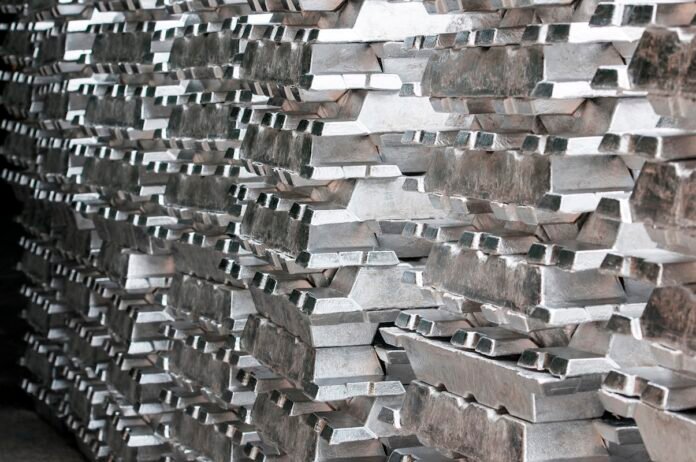
There are a multitude of reasons why the London Metal Exchange should approve China’s Tsingshan Holding Group’s request to register aluminum produced in Indonesia.

Not because markets owe Jakarta a favor, nor because China’s industrial champions deserve another victory lap, but because the global metals economy is changing whether the old commodity powers like it or not.

For decades, exchanges such as the LME sat at the center of a world in which industrial legitimacy flowed largely from Europe, North America and a handful of established producers.

Emerging economies supplied ore. Others captured the financing, branding, warehousing and benchmark pricing. Developing nations like Indonesia were expected to remain at the bottom of that hierarchy indefinitely. But that old order is now collapsing.

Tsingshan’s Hua Chin joint venture in Sulawesi — developed with China’s Huafon Group — has now applied to make its aluminum eligible for delivery against LME contracts. If approved, it would become only the second Indonesian aluminum brand to be recognized by the exchange, after state-backed Inalum.

The smelter’s second expansion phase alone carries an annual production capacity of 480,000 metric tons.

LME eligibility is effectively a passport into the core of the global industrial system. Deliverable brands gain credibility with banks, traders and manufacturers. Financing becomes easier, the pool of potential buyers broadens and price discovery improves.

The metal ceases to be viewed as a peripheral supply and instead becomes part of the benchmark structure that shapes world trade. Indonesia has spent the last decade fighting to earn precisely that status.

Jakarta’s mineral policies were frequently mocked in Western capitals as “resource nationalism.” Export restrictions on nickel ore were portrayed as crude protectionism. Downstream processing requirements were dismissed as state meddling. Chinese investment in Indonesian smelters was treated with suspicion bordering on alarmism.

Yet Indonesia persisted, and the strategy worked. The country has transformed itself from a raw-material exporter into a manufacturing and refining center with astonishing speed. Nickel was the first proof-of-concept. Aluminum increasingly looks like the second.

The timing matters as the global aluminum market is entering a period of structural stress. Conflict in the Middle East has disrupted supply routes and intensified fears around Gulf production, helping push aluminum prices sharply higher this year.

At the same time, China — responsible for roughly 60% of global aluminum production — is nearing its official production ceiling, limiting room for future expansion. That combination has triggered a global search for new sources of reliable supply, and Indonesia is emerging as an obvious answer.

Reuters data shows Indonesian aluminum exports surged to their highest level in more than two years this spring, while new smelting capacity continues to come online across the archipelago.

Commodity price reporting agencies like Fastmarkets and other industry analysts now view Indonesia as one of the world’s fastest-growing aluminum hubs, driven largely by Chinese-backed investment and abundant energy-linked industrial infrastructure.

Tsingshan itself is reportedly exploring another US$3 billion aluminum complex in North Maluku with a possible annual capacity of 800,000 tons. This is not opportunistic speculation. It is the construction of an entirely new industrial geography.

Critics warn that greater Indonesian participation on the LME could deepen China’s influence over global metals trading. But this argument misinterprets what is actually happening.

Indonesia is not merely functioning as an offshore extension of Chinese industry. It is leveraging foreign capital to accelerate domestic industrialization on terms increasingly set by Jakarta itself.

That’s because Indonesia’s leadership recognized something many developing countries learned too late: exporting raw resources rarely creates durable prosperity. The real economic leverage comes from refining, manufacturing and participation in price-setting institutions.

The country’s mineral policy has therefore been unapologetically interventionist — and unusually successful. Western governments may dislike the model, but by now they should nonetheless recognize its logic.

The alternative is continued dependence on increasingly fragile supply chains concentrated in politically volatile regions. The war-driven disruptions affecting Middle Eastern aluminum markets have demonstrated exactly how vulnerable the existing system can become when too much production is concentrated in too few places.

A broader supplier base improves resilience while more deliverable metal from Southeast Asia strengthens market flexibility. That should be welcomed by manufacturers from Detroit to Dusseldorf.

There is also an uncomfortable double standard embedded in many criticisms of Indonesia’s industrial ambitions. Wealthy nations industrialized through aggressive state intervention, subsidies, tariff protections and resource extraction. But when developing economies pursue similar strategies, they are suddenly accused of distorting markets.

Indonesia is essentially being told to remain a mine while others remain factories. Jakarta has rejected that arrangement, and rightly so.

None of this means concerns should be ignored. Indonesia’s aluminum expansion still relies heavily on coal-fired power, while environmental transparency remains uneven. The LME’s evolving sustainability framework will inevitably place greater scrutiny on emissions intensity and traceability. Those pressures are legitimate and likely necessary.

But refusing to integrate Indonesian supply into global benchmark systems will not improve sustainability. It will simply push a growing share of the world metal trade outside traditional institutions altogether. That is the deeper issue facing the LME.

The exchange can either adapt to the realities of 21st-century commodity production or cling to an outdated hierarchy in which industrial legitimacy is reserved for legacy producers.

Approving Tsingshan’s Indonesian aluminum would acknowledge a simple truth: the center of gravity in metals markets is moving toward emerging Asia. The old commodity order assumed countries like Indonesia would remain suppliers of cheap ore forever.

Indonesia has decided otherwise. The LME should recognize that reality rather than resisting it.

Muhammad Zulfikar Rakhmat is director of the China-Indonesia Desk at the Jakarta-based Center of Economic and Law Studies (CELIOS) independent research institute. Yeta Purnama is a researcher at CELIOS.

Legendary ‘One Life to Live’ Star Dead at 82

0
legendary-‘one-life-to-live’-star-dead-at-82
Legendary ‘One Life to Live’ Star Dead at 82


Jennifer Harmon, the veteran Broadway actress who terrified daytime TV fans as scheming villain Cathy Craig Lord on One Life to Live, has died at 82.

Harmon passed away Saturday at her home in New York, her family confirmed, closing the curtain on a career that stretched across Broadway, television, and soap opera history for nearly five decades.

To generations of daytime TV viewers, Harmon will forever be remembered for her unforgettable run as Cathy Craig Lord on the hit ABC soap. She played the role from 1976 to 1978, earning a Daytime Emmy nomination for her chilling performance as the manipulative character who became one of the show’s most talked-about troublemakers.

The role was already famous before Harmon stepped in, but fans say she made Cathy truly unforgettable. Her storyline involving the kidnapping of Viki Lord’s baby became one of the soap’s most explosive plots and remained part of One Life to Live lore for years.

Harmon later returned to the soap in the early 1990s — this time as an attorney representing Erika Slezak’s Viki Lord — bringing longtime viewers a nostalgic full-circle moment.

But Harmon’s career stretched far beyond daytime drama.

The actress appeared on Broadway an astonishing 21 times over nearly 50 years, performing in productions tied to some of the biggest names in theater history. She worked in plays written by legendary playwrights including Tennessee Williams, Neil Simon, Edward Albee, Lillian Hellman, Noël Coward, and Wendy Wasserstein.

Her Broadway résumé included acclaimed productions of Blithe Spirit, The Little Foxes, Barefoot in the Park, The Glass Menagerie, Seascape, and Other Desert Cities.

She also shared the stage — sometimes as an understudy and sometimes as a standby — for some of Hollywood and theater’s most iconic actresses, including Judi Dench, Jessica Lange, Stockard Channing, Blythe Danner, and Marian Seldes.

Born in Pasadena, California, in 1943 and raised in New Orleans, Harmon studied at both the University of Mississippi and the University of Michigan before moving to New York to chase her acting dream.

Before landing her famous role on One Life to Live, Harmon got her start in daytime television on NBC’s How to Survive a Marriage, where her character battled alcoholism, divorce, and remarriage in classic soap fashion.

Over the years, Harmon also appeared on a long list of television hits including Dallas, Barnaby Jones, St. Elsewhere, Homicide: Life on the Street, Oz, Rescue Me, and The Good Wife.

Fans online quickly flooded social media with tributes after news of her death broke, with many remembering her as one of daytime television’s most memorable villains and a powerhouse stage actress whose career quietly spanned generations.

For soap fans and Broadway lovers alike, Jennifer Harmon leaves behind a legacy that won’t soon be forgotten.

Samsung made a “mockery” of Dua Lipa by putting her picture on TV boxes, lawsuit says

0
samsung-made-a-“mockery”-of-dua-lipa-by-putting-her-picture-on-tv-boxes,-lawsuit-says
Samsung made a “mockery” of Dua Lipa by putting her picture on TV boxes, lawsuit says

About a year ago, I was in my parents’ living room, where a new TV sat in its box, waiting to be set up. My sister-in-law pointed to a woman on the packaging and said, “Oh, that’s Dua Lipa!” I barely know who she is, so I didn’t think it was unusual for the singer to be featured on the box. But at least one person thinks it’s a big deal: Lipa herself.

On Friday, Lipa filed a lawsuit against Samsung for using her image on some of its TV boxes, alleging that its use constitutes copyright infringement, trademark infringement, and a violation of her right of publicity. The complaint (PDF), filed in the US District Court for the Central District of California, says that Lipa owns all “rights, title, and interest in the image titled ‘Dua Lipa – Backstage at Austin City Limits, 2024.’”

“Samsung mass-manufactured, distributed (or caused to be distributed) marketed, and sold in interstate commerce across the United States a vast number of its televisions in various sizes in these cardboard boxes containing the [image],” the lawsuit says.

“Samsung’s infringing conduct—using Ms. Lipa’s assets for zero consideration—makes a mockery of her hard work in establishing a successful brand and has deprived her of the ability to control and monetize her assets,” the complaint reads.

The filing says Lipa learned about the boxes around June 2025 “and immediately demanded that Samsung cease and desist.” However, Samsung was “dismissive and callous, and the Infringing Products remain on the market to this day, still being sold throughout” the US, the filing says. Lipa would not have allowed the image to be used on Samsung TV boxes, the complaint says, adding:

On information and belief, a significant portion of the televisions sold by Samsung in the United States in 2025 and to date bear the… Image on their boxes, the use of which has contributed in no insignificant way to the enormous revenue generated for Samsung by the sales of these televisions.

Lipa’s complaint points to apparent screenshots of X posts as evidence that her image helped Samsung sell TVs. One comment, according to the complaint, says, “I wasn’t even planning on buying a tv but I saw the box so I decided to get it[.]” Another X user reportedly said, “get that tv just because Dua is on it.”

Samsung has declined to comment on the lawsuit, telling Reuters that it can not comment on pending litigation.

Lipa is seeking a jury trial and a permanent injunction preventing Samsung and its affiliates from using the image, including displaying it. The British singer also seeks at least $15 million in damages for copyright and trademark infringement and the “misappropriation” of her likeness, the profits that Samsung made from using the image, punitive damages, and attorneys’ fees.

As of this writing, some retailers, including Walmart, are selling Samsung TVs with the image.

That box with Lipa’s image is still in my parents’ house, and it could end up costing Samsung a lot of grief.

Stable weather drives higher number of migrants reaching Crete

0
stable-weather-drives-higher-number-of-migrants-reaching-crete
Stable weather drives higher number of migrants reaching Crete


More than 600 migrants have arrived on Crete and Gavdos in recent days, as boats carrying them were either found adrift by the Greek Coast Guard or managed to reach beaches on the two islands and disembark passengers.

Local authorities have expressed concern about the increase in arrivals, which they attribute to favorable weather conditions and fears over what could happen during the summer months.

Last year, 19,948 migrants, mainly from Egypt, Sudan and Bangladesh, arrived on Crete and Gavdos. In 2024, arrivals along the same migration route did not exceed 5,000.

From last Thursday through Sunday night, nearly 500 people arrived on the two islands. On Sunday morning, a boat was located in the sea area between Ierapetra and the village of Psari Forada. The coast guard rescued 44 people, mainly nationals of Bangladesh and Sudan.

Earlier, two inflatable boats reached the beach at Psari Forada about three hours apart, disembarking 34 and 35 people respectively. The migrants remained on the beach until they were found by local residents. According to the migrants, they began their journey on Saturday morning from the Libyan coast near Tobruk before being transferred by bus to Iraklio.

About 30 people are staying at the municipal school in Kalogeroi, while two tents provided by a nearby naval base were set up for arrivals. A migration pact taking effect July 1 foresees screening, identification, detention and returns after asylum applications are denied there.

Via eKathimerini

Arab Israeli Advocate Yoseph Haddad Eyes Knesset Run With Fleur Hassan-Nahoum

0
arab-israeli-advocate-yoseph-haddad-eyes-knesset-run-with-fleur-hassan-nahoum
Arab Israeli Advocate Yoseph Haddad Eyes Knesset Run With Fleur Hassan-Nahoum


Arab Israeli activist Yoseph Haddad is working to establish a new political party ahead of Israel’s next general election and is in talks about partnering with former Jerusalem Deputy Mayor Fleur Hassan-Nahoum, The Jerusalem Post reported Monday, citing sources close to Haddad. The move would mark a possible shift from pro-Israel advocacy into electoral politics as Israel prepares for elections that must be held no later than October.

Haddad is one of Israel’s most visible Arab public diplomacy figures. A Christian Arab from Nazareth and a veteran of the Israel Defense Forces’ Golani Brigade, he was seriously wounded in the 2006 Second Lebanon War and later founded Together Vouch for Each Other, an organization that promotes Arab integration into Israeli society.

The possible party bid follows months of speculation about whether Haddad could convert his public profile and large social media following into Knesset seats. Israel Hayom reported last week that Haddad had begun taking practical steps toward entering politics, including meeting with a lawyer who specializes in party formation. People close to Haddad told the outlet, “Big things are coming.”

A February Midgam Institute poll, commissioned by people close to Haddad and reported by Israel Hayom, found that a party led by him could win four Knesset seats, enough to cross Israel’s electoral threshold. The same report said such a list could draw votes from Likud, Otzma Yehudit, and former Prime Minister Naftali Bennett, whose Bennett 2026 party is running on the Together electoral list with Yair Lapid’s Yesh Atid. Haddad’s entry into the race could potentially affect the balance between Prime Minister Benjamin Netanyahu’s bloc and the opposition.

At the time of the February poll, Haddad said, “All options are on the table.”

Hassan-Nahoum, who was born in England, served as deputy mayor of Jerusalem from 2018 to 2023 and previously sat on the Jerusalem City Council. She now serves as special envoy for trade innovation at the Foreign Affairs Ministry and as secretary-general of Kol Israel, a faction of the World Zionist Congress.

A Haddad-Hassan-Nahoum list would likely seek voters looking for a Zionist, civic-integration platform centered on Arab participation in Israeli public life, national service, and a more inclusive Israeli identity. Whether that becomes a viable Knesset bid or another election-season trial balloon will depend on organization, funding, alliances, and the unforgiving math of Israel’s electoral threshold.

Starlink shuts down its GPS-style cheat code. Researchers may unlock it anyway.

0
starlink-shuts-down-its-gps-style-cheat-code-researchers-may-unlock-it-anyway.
Starlink shuts down its GPS-style cheat code. Researchers may unlock it anyway.

Starlink is unceremoniously shutting down a GPS-style feature that most of the Internet satellite provider’s customers probably never realized existed. But that won’t stop broader momentum toward harnessing Starlink’s satellite constellation as a navigation alternative—especially when GPS jamming and spoofing have become more widespread.

The Starlink satellite constellation owned by SpaceX is designed to provide communications services first and foremost, rather than pinpointing users’ locations like GPS and other global navigation satellite systems (GNSS). However, SpaceX publicly acknowledged in a May 2025 letter to the US Federal Communications Commission that Starlink could deliver positioning, navigation, and timing (PNT) services. A handful of savvy Starlink customers had even been accessing Starlink PNT capability for several years until Starlink recently decided to shut down access, according to PCMag.

“The beauty of Starlink as a backup to GNSS is that it’s such a different system—frequencies 10 times higher, bandwidths 10 to 100 times wider, power 100 to 1,000 times stronger, satellites 100 times more proliferated,” said Todd Humphreys, director of the Wireless Networking and Communications Group (WNCG) and the Radionavigation Laboratory at The University of Texas at Austin, in correspondence with Ars.

The built-in location feature was previously accessible through the Starlink mobile app’s Debug Data section. It enabled users to give local networks access to their Starlink dish’s “precise latitude, longitude, and altitude with no authentication required,” according to Paul Sutherland, a software developer, in a blog post.

Starlink dishes have their own GPS receivers to help pinpoint their own locations so they can find the nearest Starlink satellites. But the user location feature also offered an option to “use Starlink positioning exclusively.” Humphreys has described that Starlink PNT capability as a “cheat code for those who knew about it,” because it even worked in regions with GPS interference.

That has proven especially useful for users who installed the latest Starlink dishes on recreational vehicles and boats. In one case study highlighted by PCMag, a sailboat cruising through the Red Sea with the Starlink Mini dish—a user device released in 2024—was able to exclusively rely on Starlink positioning data despite GPS jamming and spoofing.

But on April 21, Starlink users received email notifications telling them that dish location data would no longer be available as of May 20, 2026. There was no specific rationale given for the decision, and SpaceX did not respond to an Ars request for comment.

Why Starlink works when GPS doesn’t

Starlink has drawn increased attention as a navigation alternative at a time when GPS jamming and spoofing have become widespread worldwide, impacting shipping routes from Europe to Asia and disrupting hundreds of flights on a daily basis. Jamming involves broadcasting strong signals to overpower the relatively weak radio signals coming from GPS and other global navigation satellite systems. Spoofing relies on transmitting false signals that mimic authentic satellite signals to trick signal receivers into calculating erroneous positions for aircraft and other users.

Global navigation satellite systems such as GPS are vulnerable to jamming because they transmit relatively weaker signals from higher orbital altitudes farther away from Earth. But Starlink and other low-Earth orbit communication constellations transmit higher-power signals in the Ku-band with wider bandwidths that are difficult for adversaries to disrupt through jamming.

Starlink is also much more resilient to spoofing because its user dishes are phased array antennas capable of focusing in the direction of a fast-moving Starlink satellite to detect its specific signal. Starlink’s PNT capability relies on round-trip time measurements between the user dish and a single satellite at a time, Humphreys said. The two-way communication between the user dish and satellite also relies on encrypted signals and can incorporate user authentication features.

By comparison, civilian GPS receivers mostly use omnidirectional antennas that passively receive unencrypted signals from many different points in the sky—they calculate a user’s position by receiving one-way “pseudorange” measurements from many satellites at once to ensure maximum accuracy. That makes them much more susceptible to false signals from adversarial spoofing.

But Starlink PNT’s accuracy is still limited compared with standard GPS. Humphreys and his colleagues have demonstrated how a mock Starlink service can produce navigation and timing solutions with 10-meter-level accuracy if Starlink supplies the real-time clock and orbit corrections—albeit only after a minutes-long processing delay. “We’re now refining our techniques so it can be done in tens of seconds rather than tens of minutes,” Humphreys told Ars.

One challenge is that Starlink’s round-trip time measurements are currently less accurate than the pseudorange technique used by dedicated global navigation satellite systems, Humphreys said. That is in part because Starlink satellites have less precise timekeeping capabilities compared to dedicated GNSS satellites equipped with atomic clocks.

The fact that Starlink PNT is limited to communication with a single satellite at a time also constrains performance, whereas receiving multiple satellite measurement signals from many different angles could improve its accuracy. That goes back to how Starlink user dishes can only form a beam to a single satellite at any given time, Humphreys said.

Despite the current performance constraints, Starlink customers who used the location data feature have expressed dismay at losing it. But SpaceX may have decided to block access because it didn’t want to deal with the liability of giving users access to a location service with “decent but variable” accuracy, Humphreys said.

Other possibilities include wanting to prevent “bad actors” from using the Starlink PNTT capability, or SpaceX potentially cutting off free access to pave the way for Starlink PNT’s for-pay debut, he suggested. The timing of SpaceX’s decision coincides with the company’s preparations to go public with an IPO as soon as this summer.

Finding the third way

Regardless of what SpaceX chooses to do, researchers have already demonstrated how to independently harness signals from Starlink and other low-Earth orbit communications satellite constellations.

In 2021, a team led by Zak Kassas, director of the Autonomous Systems Perception, Intelligence, and Navigation (ASPIN) Laboratory at The Ohio State University, showed how electronically eavesdropping on signals from six Starlink satellites could pinpoint locations on Earth to within 8 meters of accuracy—although that required 13 minutes of tracking rather than delivering instantaneous results.

Such opportunistic eavesdropping is challenging, because Starlink is consistently optimizing for its primary satellite Internet service by turning beams on and off, or sometimes switching beams as the fast-moving satellites talk to many different users, Kassas explained. That creates unpredictable jumps in the signal timing estimates that the researchers rely upon to calculate positioning data.

To tackle those challenges, Kassas and his colleagues use Doppler measurements of signal frequency changes that reflect satellite motions relative to the receiver, along with software algorithms to correct for timing errors. They have also deployed phased-array antennas—capable of communicating with just one or two satellites at a time—in combination with low-gain, omnidirectional antennas that can capture signals from nearly 10 satellites at a time. By 2025, the researchers had shown how to harness signals from an average of three Starlink satellites to deliver positioning results to within 2 meters of accuracy in just 20 seconds.

But this general eavesdropping strategy is not just limited to Starlink’s thousands of satellites—they have also exploited satellite signals from Orbcomm, Iridium, Starlink, OneWeb, NOAA, and the dedicated PNT constellation, Xona. “I’m not really married to Starlink—I love them all,” Kassas said.

The team has demonstrated this alternative navigation solution with ground vehicles, a high-altitude balloon, and a drone. One of the latest experiments showed how exploiting signals from both Starlink and OneWeb satellites could improve ship navigation accuracy off the west coast of Greenland in the Arctic, meaning that the technique could probably work nearly anywhere on Earth.

All this suggests that people may not have to wait much longer for new GPS alternatives, whether they come directly from Starlink or third parties. Kassas and his team have already licensed their technology to some organizations. “I think people are hungry and hurting in the absence of GPS or GNSS, and they want these solutions,” Kassas told Ars.

0FansLike
0FollowersFollow
0FollowersFollow
0SubscribersSubscribe
- Advertisement -
Google search engine

Recent Posts