3.2 C
London
Tuesday, May 12, 2026
Home Blog

Arab Israeli Advocate Yoseph Haddad Eyes Knesset Run With Fleur Hassan-Nahoum

0
arab-israeli-advocate-yoseph-haddad-eyes-knesset-run-with-fleur-hassan-nahoum
Arab Israeli Advocate Yoseph Haddad Eyes Knesset Run With Fleur Hassan-Nahoum


Arab Israeli activist Yoseph Haddad is working to establish a new political party ahead of Israel’s next general election and is in talks about partnering with former Jerusalem Deputy Mayor Fleur Hassan-Nahoum, The Jerusalem Post reported Monday, citing sources close to Haddad. The move would mark a possible shift from pro-Israel advocacy into electoral politics as Israel prepares for elections that must be held no later than October.

Haddad is one of Israel’s most visible Arab public diplomacy figures. A Christian Arab from Nazareth and a veteran of the Israel Defense Forces’ Golani Brigade, he was seriously wounded in the 2006 Second Lebanon War and later founded Together Vouch for Each Other, an organization that promotes Arab integration into Israeli society.

The possible party bid follows months of speculation about whether Haddad could convert his public profile and large social media following into Knesset seats. Israel Hayom reported last week that Haddad had begun taking practical steps toward entering politics, including meeting with a lawyer who specializes in party formation. People close to Haddad told the outlet, “Big things are coming.”

A February Midgam Institute poll, commissioned by people close to Haddad and reported by Israel Hayom, found that a party led by him could win four Knesset seats, enough to cross Israel’s electoral threshold. The same report said such a list could draw votes from Likud, Otzma Yehudit, and former Prime Minister Naftali Bennett, whose Bennett 2026 party is running on the Together electoral list with Yair Lapid’s Yesh Atid. Haddad’s entry into the race could potentially affect the balance between Prime Minister Benjamin Netanyahu’s bloc and the opposition.

At the time of the February poll, Haddad said, “All options are on the table.”

Hassan-Nahoum, who was born in England, served as deputy mayor of Jerusalem from 2018 to 2023 and previously sat on the Jerusalem City Council. She now serves as special envoy for trade innovation at the Foreign Affairs Ministry and as secretary-general of Kol Israel, a faction of the World Zionist Congress.

A Haddad-Hassan-Nahoum list would likely seek voters looking for a Zionist, civic-integration platform centered on Arab participation in Israeli public life, national service, and a more inclusive Israeli identity. Whether that becomes a viable Knesset bid or another election-season trial balloon will depend on organization, funding, alliances, and the unforgiving math of Israel’s electoral threshold.

Starlink shuts down its GPS-style cheat code. Researchers may unlock it anyway.

0
starlink-shuts-down-its-gps-style-cheat-code-researchers-may-unlock-it-anyway.
Starlink shuts down its GPS-style cheat code. Researchers may unlock it anyway.

Starlink is unceremoniously shutting down a GPS-style feature that most of the Internet satellite provider’s customers probably never realized existed. But that won’t stop broader momentum toward harnessing Starlink’s satellite constellation as a navigation alternative—especially when GPS jamming and spoofing have become more widespread.

The Starlink satellite constellation owned by SpaceX is designed to provide communications services first and foremost, rather than pinpointing users’ locations like GPS and other global navigation satellite systems (GNSS). However, SpaceX publicly acknowledged in a May 2025 letter to the US Federal Communications Commission that Starlink could deliver positioning, navigation, and timing (PNT) services. A handful of savvy Starlink customers had even been accessing Starlink PNT capability for several years until Starlink recently decided to shut down access, according to PCMag.

“The beauty of Starlink as a backup to GNSS is that it’s such a different system—frequencies 10 times higher, bandwidths 10 to 100 times wider, power 100 to 1,000 times stronger, satellites 100 times more proliferated,” said Todd Humphreys, director of the Wireless Networking and Communications Group (WNCG) and the Radionavigation Laboratory at The University of Texas at Austin, in correspondence with Ars.

The built-in location feature was previously accessible through the Starlink mobile app’s Debug Data section. It enabled users to give local networks access to their Starlink dish’s “precise latitude, longitude, and altitude with no authentication required,” according to Paul Sutherland, a software developer, in a blog post.

Starlink dishes have their own GPS receivers to help pinpoint their own locations so they can find the nearest Starlink satellites. But the user location feature also offered an option to “use Starlink positioning exclusively.” Humphreys has described that Starlink PNT capability as a “cheat code for those who knew about it,” because it even worked in regions with GPS interference.

That has proven especially useful for users who installed the latest Starlink dishes on recreational vehicles and boats. In one case study highlighted by PCMag, a sailboat cruising through the Red Sea with the Starlink Mini dish—a user device released in 2024—was able to exclusively rely on Starlink positioning data despite GPS jamming and spoofing.

But on April 21, Starlink users received email notifications telling them that dish location data would no longer be available as of May 20, 2026. There was no specific rationale given for the decision, and SpaceX did not respond to an Ars request for comment.

Why Starlink works when GPS doesn’t

Starlink has drawn increased attention as a navigation alternative at a time when GPS jamming and spoofing have become widespread worldwide, impacting shipping routes from Europe to Asia and disrupting hundreds of flights on a daily basis. Jamming involves broadcasting strong signals to overpower the relatively weak radio signals coming from GPS and other global navigation satellite systems. Spoofing relies on transmitting false signals that mimic authentic satellite signals to trick signal receivers into calculating erroneous positions for aircraft and other users.

Global navigation satellite systems such as GPS are vulnerable to jamming because they transmit relatively weaker signals from higher orbital altitudes farther away from Earth. But Starlink and other low-Earth orbit communication constellations transmit higher-power signals in the Ku-band with wider bandwidths that are difficult for adversaries to disrupt through jamming.

Starlink is also much more resilient to spoofing because its user dishes are phased array antennas capable of focusing in the direction of a fast-moving Starlink satellite to detect its specific signal. Starlink’s PNT capability relies on round-trip time measurements between the user dish and a single satellite at a time, Humphreys said. The two-way communication between the user dish and satellite also relies on encrypted signals and can incorporate user authentication features.

By comparison, civilian GPS receivers mostly use omnidirectional antennas that passively receive unencrypted signals from many different points in the sky—they calculate a user’s position by receiving one-way “pseudorange” measurements from many satellites at once to ensure maximum accuracy. That makes them much more susceptible to false signals from adversarial spoofing.

But Starlink PNT’s accuracy is still limited compared with standard GPS. Humphreys and his colleagues have demonstrated how a mock Starlink service can produce navigation and timing solutions with 10-meter-level accuracy if Starlink supplies the real-time clock and orbit corrections—albeit only after a minutes-long processing delay. “We’re now refining our techniques so it can be done in tens of seconds rather than tens of minutes,” Humphreys told Ars.

One challenge is that Starlink’s round-trip time measurements are currently less accurate than the pseudorange technique used by dedicated global navigation satellite systems, Humphreys said. That is in part because Starlink satellites have less precise timekeeping capabilities compared to dedicated GNSS satellites equipped with atomic clocks.

The fact that Starlink PNT is limited to communication with a single satellite at a time also constrains performance, whereas receiving multiple satellite measurement signals from many different angles could improve its accuracy. That goes back to how Starlink user dishes can only form a beam to a single satellite at any given time, Humphreys said.

Despite the current performance constraints, Starlink customers who used the location data feature have expressed dismay at losing it. But SpaceX may have decided to block access because it didn’t want to deal with the liability of giving users access to a location service with “decent but variable” accuracy, Humphreys said.

Other possibilities include wanting to prevent “bad actors” from using the Starlink PNTT capability, or SpaceX potentially cutting off free access to pave the way for Starlink PNT’s for-pay debut, he suggested. The timing of SpaceX’s decision coincides with the company’s preparations to go public with an IPO as soon as this summer.

Finding the third way

Regardless of what SpaceX chooses to do, researchers have already demonstrated how to independently harness signals from Starlink and other low-Earth orbit communications satellite constellations.

In 2021, a team led by Zak Kassas, director of the Autonomous Systems Perception, Intelligence, and Navigation (ASPIN) Laboratory at The Ohio State University, showed how electronically eavesdropping on signals from six Starlink satellites could pinpoint locations on Earth to within 8 meters of accuracy—although that required 13 minutes of tracking rather than delivering instantaneous results.

Such opportunistic eavesdropping is challenging, because Starlink is consistently optimizing for its primary satellite Internet service by turning beams on and off, or sometimes switching beams as the fast-moving satellites talk to many different users, Kassas explained. That creates unpredictable jumps in the signal timing estimates that the researchers rely upon to calculate positioning data.

To tackle those challenges, Kassas and his colleagues use Doppler measurements of signal frequency changes that reflect satellite motions relative to the receiver, along with software algorithms to correct for timing errors. They have also deployed phased-array antennas—capable of communicating with just one or two satellites at a time—in combination with low-gain, omnidirectional antennas that can capture signals from nearly 10 satellites at a time. By 2025, the researchers had shown how to harness signals from an average of three Starlink satellites to deliver positioning results to within 2 meters of accuracy in just 20 seconds.

But this general eavesdropping strategy is not just limited to Starlink’s thousands of satellites—they have also exploited satellite signals from Orbcomm, Iridium, Starlink, OneWeb, NOAA, and the dedicated PNT constellation, Xona. “I’m not really married to Starlink—I love them all,” Kassas said.

The team has demonstrated this alternative navigation solution with ground vehicles, a high-altitude balloon, and a drone. One of the latest experiments showed how exploiting signals from both Starlink and OneWeb satellites could improve ship navigation accuracy off the west coast of Greenland in the Arctic, meaning that the technique could probably work nearly anywhere on Earth.

All this suggests that people may not have to wait much longer for new GPS alternatives, whether they come directly from Starlink or third parties. Kassas and his team have already licensed their technology to some organizations. “I think people are hungry and hurting in the absence of GPS or GNSS, and they want these solutions,” Kassas told Ars.

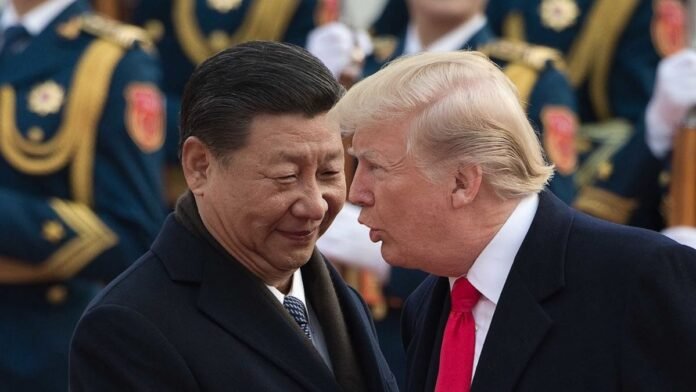
Trump-Xi summit to show that everything now is leverage

0
trump-xi-summit-to-show-that-everything-now-is-leverage
Trump-Xi summit to show that everything now is leverage

Trump’s world is not rules-based globalization or full Cold War fragmentation — it’s perpetual leverage economics.

This week’s summit in Beijing between Donald Trump and Xi Jinping will showcase that reality more clearly than any major diplomatic encounter since Trump returned to the White House.

Forget the ceremonial choreography and the carefully staged photographs in the Great Hall of the People. What matters is that the world’s two largest economies are now negotiating within a permanently transactional framework in which trade, security, energy, finance and military power are fused.

Trump arrives in Beijing carrying tariffs, sanctions, Taiwan, Iran, semiconductors, Boeing aircraft orders, soybean exports and rare earth minerals all in the same negotiating brief.

Xi receives him as China confronts a far weaker domestic economy than It projected only a few years ago. The property sector remains under severe strain after the collapse of developers, including Evergrande and Country Garden. Exports are slowing under mounting trade friction with the US and Europe. 

Foreign direct investment into China fell sharply again last year as global companies accelerated supply-chain diversification. And its energy security is now in question with the Iran war and dueling blockades of Hormuz.

It appears that nothing is compartmentalized anymore. For instance, Taiwan is tied to trade, trade is tied to security, security is tied to energy, energy is tied to sanctions, and sanctions are tied to investment flows.

This is the new operating system of the global economy. For three decades after the Cold War, markets operated on the assumption that economics would gradually overpower geopolitics. 

Countries could compete strategically while still deepening trade integration, expanding supply chains and increasing capital flows. Investors believed economic interdependence reduced the chances of serious confrontation.

Trump and his policymakers never believed that. The US leader’s worldview has always been aggressively transactional. Economic dependence, military alliance, access to American consumer markets creates leverage, tariffs create leverage and tech access creates leverage. And yes, even uncertainty itself becomes leverage.

The Beijing summit will likely reflect this with extraordinary clarity. Ahead of Trump’s arrival, Washington sanctioned several Chinese satellite companies accused of assisting Iran through imagery and logistical support linked to military operations in the Middle East. The Treasury also targeted entities allegedly connected to Iranian procurement networks.

At the same time, the White House is discussing expanded Chinese purchases of Boeing aircraft, US agricultural exports and possible trade-management mechanisms designed to stabilize commerce in non-sensitive sectors. The contradictions are, of course, not accidental; they’re the strategy.

US-China goods trade still exceeded roughly US$575 billion last year despite years of tariffs, sanctions and escalating strategic hostility. China remains one of the largest export markets for American agriculture, particularly soybeans.

Boeing continues to view China as one of the most critical long-term aviation markets globally, even after years of political tensions and delivery disputes.

Yet Washington is simultaneously tightening restrictions on advanced semiconductor exports, increasing scrutiny of outbound investment into China and accelerating military support for Taiwan.

This isn’t Cold War economics. The Soviet Union was never deeply integrated into the architecture of global trade, manufacturing and capital markets. China is central to all three.

China accounts for around 30% of global manufacturing output. It dominates processing capacity for critical minerals essential to electric vehicles, batteries and defense systems. The US, meanwhile, remains the world’s dominant financial power and China’s largest single export market.

Neither side can afford full rupture. But neither side trusts the other enough to preserve the old rules-based framework either. This superpower tension is increasingly driving markets across Asia.

A decade ago, investors focused overwhelmingly on interest rates, earnings and central-bank policy. Today, geopolitical signaling moves markets almost as powerfully as macroeconomic data.

The Taiwan issue demonstrates the dynamic. Beijing wants Trump to shift the official US language toward explicit opposition to Taiwanese independence. Washington publicly insists policy remains unchanged while preparing another substantial arms package for Taipei after approving more than $11 billion in military sales to Taiwan since Trump returned to office.

Yet reports indicate that the White House delayed formal congressional notification of the latest package, in part, to avoid destabilizing the summit atmosphere. As such, even timing becomes leverage.

China faces enormous contradictions of its own. Beijing wants stable export markets, uninterrupted energy flows and calm financial conditions. It also wants strategic partnerships with Iran and Russia, reduced vulnerability to American pressure and greater geopolitical influence across the developing world.

Those objectives increasingly collide with Trump’s worldview. China imports more than 11 million barrels of crude oil per day and remains heavily dependent on Middle Eastern energy flows. As such, serious disruption hits Asian manufacturing, shipping costs, inflation and financial markets.

Yet Beijing resists fully aligning with Washington’s pressure campaign against Tehran because Iran remains strategically valuable to China, both economically and geopolitically.

China increasingly wants the advantages of geopolitical disruption without absorbing the costs of geopolitical disorder. Trump understands this vulnerability instinctively.

His negotiating style is designed to merge commercial pressure with security pressure until the distinction between the two disappears completely. Previous administrations often compartmentalized disputes, but Trump collapses the walls between them.

The result creates a structurally more volatile world for investors. Traditional globalization was optimized for efficiency. The new system optimizes for strategic resilience, political flexibility and leverage.

Many investors still underestimate how profound this transition is likely to become. The world is not returning to the relatively frictionless globalization model that dominated the 1990s and 2000s.

But it is not entering a clean Cold War split either. Instead, the global economy is moving into a permanently negotiated environment where economic relationships become instruments of strategic pressure.

This week’s Beijing summit between Trump and Xi will likely offer the clearest demonstration of this yet. No side fully decouples, no side fully trusts and no issue remains isolated – for everything now is leverage.

Nigel Green is CEO and founder of the deVere Group

Italy evacuates 72 Palestinian students from Gaza under university program

0
italy-evacuates-72-palestinian-students-from-gaza-under-university-program
Italy evacuates 72 Palestinian students from Gaza under university program

Italy has evacuated 72 Palestinian university students from Gaza under a program aimed at allowing them to continue their studies at universities in Italy and San Marino, Anadolu reports.

Italy’s Foreign Ministry said Monday the students were evacuated through the “university corridor” initiative led by Deputy Prime Minister and Foreign Minister Antonio Tajani.

According to the ministry, the students are expected to arrive in Jordan’s capital Amman on Monday evening before traveling to Italy on Tuesday.

Of the 72 students, two will continue their education in San Marino, while the others will enroll at 21 universities across Italy.

READ: EU cannot continue to be ‘bystanders’ on Gaza, West Bank, says Irish foreign minister

The initiative aims to relocate students from Gaza so they can pursue higher education in safer conditions abroad.

The ministry said the latest operation brings the total number of students transferred from Gaza since September 2025 to 229.

According to the statement, 157 students were relocated during four separate operations carried out between September and December last year.

Tajani said the initiative continues to provide Palestinian students “a concrete opportunity for a future, education and safety.”

He added that Italy “reaffirms its humanitarian commitment to the civilian population in Gaza and its support for the right to education in such a dramatic context.”

READ: Gaza: Mothers face triple threat of famine, displacement and loss of children

Data center guzzled 30 million gallons of water and nobody noticed for months

0
data-center-guzzled-30-million-gallons-of-water-and-nobody-noticed-for-months
Data center guzzled 30 million gallons of water and nobody noticed for months

A curious case in Georgia serves as a warning for many parts of the US hastily approving data center developments without first updating their water systems to better monitor for severe upticks in usage.

On Friday, Politico reported that one of the country’s biggest data center developments had guzzled nearly 30 million gallons of water without paying for it. Even worse, the water grab came at a time when nearby drought-stricken residents were warned to restrict their personal water consumption and some reported sudden decreases in water pressure.

An investigation conducted by utility officials in Georgia’s Fayette County found that the Quality Technology Services (QTD) facility had two industrial-scale water hookups that weren’t being monitored. “One water connection had been installed without the utility’s knowledge, and the other was not linked to the company’s account and therefore wasn’t being billed,” Politico reported.

QTS eventually paid about $150,000 for the water, but there were no consequences for exceeding peak limits established by the county during the data center planning process. Frustrating residents, the county declined to fine QTS. Fayette County’s water system director, Vanessa Tigert, told Politico that the decision was partly because the county blamed itself and didn’t want to offend QTS.

“They’re our largest customer, and we have to be partners,” Tigert said. “It’s called customer service.”

Notably, the main reason the water usage was overlooked is that the county is transitioning from outdated water meters to a smart, cloud-based system that is supposed to make it easier to track leaks and other unexpected drains on the county’s water system. Tigert also told Politico that the county failed to notice the water usage because it’s understaffed, explaining that the only worker available to inspect meters is “spread pretty thin.”

Ultimately, the county dismissed QTS’s excess water usage as a “procedural mix-up,” Tigert said, retroactively charging QTS at a higher construction rate for the water but imposing no penalties for taking more water than the county expected.

Asked for comment, QTS told Ars that it’s “false and inaccurate” to suggest the facility “used any water improperly.”

“Once this billing issue was flagged, QTS paid all charges,” QTS said. “All water usage followed relevant and applicable regulations.”

QTS also pointed to statements from county officials denying residents’ claims that the facility’s excess water usage had decreased water pressure across the county system. Residents complaining about water pressure relied on wells, the county has said, while QTS does not draw water from wells or groundwater.

Moving forward, the county confirmed that QTS’s water hookups will now be accurately monitored. Additionally, QTS emphasized that after construction, the facility’s water needs will drastically drop.

However, residents are likely still stinging after receiving county notices recommending they restrict their water consumption due to ongoing drought conditions in the area. And some have lost trust in both QTS and the county.

James Clifton, an attorney and property rights advocate who first exposed the QTS controversy after submitting a public records request, told Politico that he’s upset that QTS will face no consequences simply because “most months” they’re the county’s “No. 1 customer.”

“The first thing they do is lean on the individuals and the citizens to stop water consumption when we have QTS that’s just absolutely draining us,” Clifton said.

AI industry can’t easily solve water crisis

Increased demand for water to fuel America’s AI ambitions comes just as crumbling water systems across the country require upgrades, and, unsurprisingly, many AI firms expect AI to help address water supply problems in the industry.

In a report on Monday, The Information explained why the water-supply question is a problem for the entire AI industry to solve—not just data centers, which are already finding ways to reduce and reuse water.

Citing research from a water technology company called Xylem, The Information reported that “the water toll of AI is far greater at semiconductor factories and the power plants electrifying chipmaking and computing than at the data centers themselves.”

However, as hyperscale data centers from tech giants like Meta, Google, and Microsoft perhaps increasingly rely on power for cooling, the demand for water to cool down power plants will explode, experts suggest. And it doesn’t help that 40 percent of data centers and 29 percent of global chip fabs are built in “water-stressed” areas, Xylen reported.

Over the next 25 years, “AI-associated water use will more than double,” Xylem forecasted.

One solution to make up some of the difference could be to recover about 30 percent of the world’s water that is lost to leaks and theft, The Information reported.

That’s why some AI firms, like Microsoft, are paying to install “high-tech water leak detection systems” built by FIDO Tech.

By feeding sensor data into AI, advanced smart meters can detect and “isolate” leaks, speeding up repairs and preventing excess water loss. Such smart meters can also help identify where fixes are most needed, as many areas scrambling to fix their water systems are “cash-starved” and cannot cover all the needed repairs, The Information reported.

In drought-stricken Georgia, QTS claimed it’s also exploring alternative water solutions, such as capturing stormwater or roof runoff.

The Environmental Protection Agency announced in March a system to strengthen and innovative water systems across the US, with early efforts focusing particularly on rural areas where budgets might be most stretched. However, the water sector isn’t completely sure yet how using AI might impact the nation’s systems and is not rushing to implement tech companies’ solutions.

According to a 2026 State of the Water Industry report from the international nonprofit American Water Works Association, “utilities are cautiously exploring new technologies like artificial intelligence, recognizing both their potential benefits and associated risks, especially in the area of cybersecurity.”

Most organizations haven’t implemented comprehensive solutions yet and “are not expecting revolutionary changes in the immediate future, the report said.

Residents fight to protect water sources

For residents in embattled areas like Fayette County, questions about water remain.

Although QTS plans to use a closed-loop cooling system that does not consume water for cooling when the data center is online, construction, which is draining far more water, is expected to continue for up to five more years, Politico reported.

Additionally concerning to residents, data centers relying on “electricity-hungry equipment” for cooling “often entails a trade-off,” Politico noted.

Consumer Reports reached the same conclusion in March, reporting that “generating the electricity to keep data centers powered up requires additional millions of gallons of water, even more than the water used for cooling.”

That’s why communities aren’t satisfied with data centers promising that construction-phase water consumption represents temporary peak usage.

In drought-plagued Arizona, a nonprofit advocacy group called Ceres estimated that data centers around Phoenix “already use approximately 385 million gallons of water per year for direct cooling need,” Consumer Reports noted. Once all that region’s data centers come online, “that amount will skyrocket to 3.7 billion gallons per year,” Ceres forecasted.

In a letter to Congress last month, more than 120 organizations advocating against rushed data center developments warned lawmakers that it’s not enough to focus legislation on addressing spiking electricity bills.

“Water use is equally alarming,” among other harms, groups said.

“In drought-prone regions,” groups explained, data centers consuming up to 5 million gallons a day strain “drinking water supplies, agriculture, and ecosystems.” Meanwhile, closed-loop systems “require the use of toxic chemicals that, if not properly disposed of, can eventually flow and pollute water ways.”

To avoid disastrous consequences for the country’s water supply, groups recommended that Congress pass laws requiring comprehensive environmental reviews prior to construction. They also want Congress to commit to rejecting “any legislation that would fast-track permitting and development for hyperscale, artificial intelligence, and other conventional data centers” through the end of this legislative session.

Some efforts to protect water resources have had limited success, as backlash over secretive deals allowing data center developments without public notice increases.

In Utah, one hyperscale data center in Box Elder County withdrew an application to transfer 1,900 acre-feet of water from a ranch to their facility. About 4,000 residents paid about $15 each to file notices of opposition to block that request, the Salt Lake Tribune reported. But although that battle was won, residents expect the larger fight to be far from over.

As the war against data centers rages on beyond Utah, the Salt Lake Tribune editorial board published an op-ed, warning that officials risk eroding trust the more they shrug off residents’ reasonable concerns about things like water supplies, electric bills, air quality, and quality of life.

“Even if the data center isn’t as dreadful as feared—or if it never is actually built—the stench attached to the rushed and secret political process will take a very long time to dissipate,” the editorial board wrote. “If it ever does.”

UK’s Keir Starmer says Britain must reclaim leading role in Europe in major post-polls address

0
uk’s-keir-starmer-says-britain-must-reclaim-leading-role-in-europe-in-major-post-polls-address
UK’s Keir Starmer says Britain must reclaim leading role in Europe in major post-polls address


Prime Minister Keir Starmer pledged on Monday to prove the “doubters” in his own party and among the electorate as a whole wrong as he tries to fight off demands to step down after devastating local election results for his Labour Party.

Starmer argued that he will “face up to the big challenges” and restore “hope” to the country.

That includes getting closer to the European Union and “putting Britain at the heart of Europe,” a decade after the UK voted to leave the EU.

“I know I have my doubters and I know I need to prove them wrong and I will,” Starmer said during a speech in London.

He vowed to prove to millions of people “tired of a status quo that has failed them” that the government is on their side.

He said Labour is in “a battle for the soul of our nation,” and the UK will go down “a dark path” if Reform UK, the anti-immigration party led by Nigel Farage, comes to power.

But Starmer’s position is fragile, with dozens of lawmakers calling for him to announce a date for his departure.

Former Deputy Prime Minister Angela Rayner, a powerful lawmaker often seen as a potential challenger, said “what we are doing isn’t working and it needs to change.”

Rayner did not explicitly call for Starmer to quit, but accused him of presiding over “a toxic culture of cronyism” and said the government must “stay true to labour and social democratic values” and ease the cost of living for working people.

“This may be our last chance,” Rayner said in a statement on Sunday.

Labour has been plunged into gloom by heavy losses last week in local elections across England and legislative votes in Scotland and Wales.

The elections have been interpreted as an unofficial referendum on Starmer, whose popularity has plummeted since he swept to power in a landslide less than two years ago.

His government has struggled to deliver promised economic growth, repair tattered public services and ease the cost of living and been hamstrung by repeated missteps and policy U-turns on issues including welfare reform.

He has been further hurt by his disastrous decision to appoint Peter Mandelson, a scandal-tarnished friend of convicted sex offender Jeffrey Epstein, as Britain’s ambassador to the United States.

Last week’s elections saw Labour squeezed from both right and left, losing votes to both Reform UK and the “eco-populist” Green Party. It reflects the increasing fragmentation of British politics, long dominated by Labour and the Conservatives.

Starmer hopes to regain momentum with Monday’s speech and an ambitious set of legislative plans to be set out in a speech Wednesday by King Charles III at the State Opening of Parliament.

He told an audience of party lawmakers and activists in his speech that the government will take control of Britain’s energy, economic and defence security and make the country fairer.

A Trump U.S. Attorney’s Professional Misconduct Must Be Kept “Private and Confidential”

0
a-trump-us.-attorney’s-professional-misconduct-must-be-kept-“private-and-confidential”
A Trump U.S. Attorney’s Professional Misconduct Must Be Kept “Private and Confidential”


An ethics watchdog found that a Trump administration-appointed former U.S. attorney committed professional misconduct in response to allegations that included retaliating against a newspaper for negative coverage. But details about John Sarcone’s case have been deemed “private and confidential” — and aren’t being released to the public.

One of New York state’s grievance committees, disciplinary panels that determines penalties for violations of legal ethics, notified nonprofit groups last week of its finding against Sarcone, Donald Trump’s on-again, off-again U.S. attorney in Albany.

The committee is keeping mum on the exact nature of its findings, and in a letter to a press freedom group last week, it even tried to claim that the foundation could not disclose the very fact that it found “there was sufficient basis for a finding of professional misconduct.”

“No complainant, but especially a press freedom organization, should be told to keep quiet about something so plainly newsworthy and important to New Yorkers and Americans.”

The letter from the Attorney Grievance Committee for the Appellate Division, Third Department, was dated April 1 and sent via email on May 8. The committee did not immediately respond to a request for comment on when the finding was reached.

The committee’s actions fit in a larger pattern of New York shrouding prosecutorial misconduct investigations in secret. One of the groups that filed a complaint, the Freedom of the Press Foundation, said it was time for the state’s legal ethics cops to stop insisting on silence.

“Sarcone is a high-ranking prosecutor who is at the center of national news as we speak and who the New York Grievance Committee found had engaged in professional misconduct after he retaliated against a news outlet,” said Seth Stern, chief of advocacy at the foundation. “No complainant, but especially a press freedom organization, should be told to keep quiet about something so plainly newsworthy and important to New Yorkers and Americans.”

Sarcone and the Justice Department did not immediately respond to requests for comment.

In an emailed statement, the grievance committee said it was following state laws. Under that law, chief committee attorney Monica Duffy said, “until such time as charges of professional misconduct are sustained against an attorney in a public order of the New York State Supreme Court, Appellate Division, all papers, documents and records concerning this Committee’s investigation and disposition of any grievance complaint concerning the conduct of that attorney are sealed and deemed private and confidential.”

Sarcone had no prosecutorial experience when the Trump administration tapped him to lead the U.S. Attorney’s Office for the Northern District of New York last year. Since then, he has been involved in a long-running saga over whether he can even run the office.

Sarcone has never been confirmed by the U.S. Senate. After his temporary appointment to the post expired, judges appointed a veteran prosecutor to fill the post. That replacement was fired within hours. Sarcone has continued to oversee the office as state Attorney General Letitia James and Justice Department lawyers argue in court over whether he lawfully holds the office.

The administration has a major incentive to keep the Trump loyalist in charge: The Albany prosecutor’s office has jurisdiction over New York state politicians who have drawn the president’s ire, including James.

In addition to the question of whether he can hold the office, Sarcone has faced criticism for booting the Albany newspaper off his office’s press list after it reported that he had attempted to claim a boarded-up apartment building in the district as his home to satisfy residency requirements.

That action was a violation of the First Amendment, the Freedom of the Press Foundation argued in the August 11 complaint it filed with the grievance committee, along with Reinvent Albany and the Demand Progress Education Fund. The complaint alleged that Sarcone may have violated at least four of the state’s rules of professional conduct.

In the response to the complaint sent last week, the committee said that “after deliberation, the Committee determined there was a sufficient basis for a finding of professional misconduct and took appropriate action.”

The case was now closed, the committee said. In the letter dated April 1, the committee said that it had reached its conclusion at a “recent” meeting.

What “appropriate action” the committee took is unclear. There are no records of public discipline in Sarcone’s entry on the state attorney directory. The committee has a range of actions it can take short of public discipline, including private letters of reprimand.

Another group that filed a similar complaint against Sarcone, Campaign for Accountability, received a near-identical letter from the grievance committee. In a statement, that group noted that Sarcone remains in charge of the U.S. attorney’s office with a title of first assistant.

“A secret slap on the wrist is insufficient.”

“While we’re pleased the New York Attorney Grievance Committee recognized that Mr. Sarcone, who remains First Assistant in the U.S. Attorney’s Office, engaged in professional misconduct, a secret slap on the wrist is insufficient. Mr. Sarcone’s pattern of conduct reflects on his credibility as an officer of the court, so any court in which he appears — along with the public — deserves to know what he was sanctioned for and why,” said Campaign for Accountability’s executive director, Michelle Kuppersmith.

The letters to both complainants including a heading indicating that they were “confidential.” Stern said that attempting to force people who filed complaints to remain silent about the letters they receive in response would be unconstitutional.

One state grievance committee previously tried to clamp down on law professors who shared details about the complaints they had filed against local prosecutors accused of failing to turn over exculpatory evidence or lying in court. The professors sued and won a federal district court ruling in their favor.

Japan’s highest-grossing live‑action film is a lavish kabuki epic

0
japan’s-highest-grossing-live‑action-film-is-a-lavish-kabuki-epic
Japan’s highest-grossing live‑action film is a lavish kabuki epic

Kokuho is a colourful, lengthy epic, spanning five decades and running almost three hours, set in the world of kabuki – Japan’s most popular traditional performing art. It has been a huge hit in Japan, becoming the country’s highest-grossing live-action film ever.

The film’s title translates as “national treasure.” But that does not refer to tangible treasures like Buddhist temples, tea bowls, or imperial calligraphy. Instead, it refers to ningen kokuho – “living national treasures.” It’s the popular term for people recognized by the Japanese state as embodying a traditional art or craft.

Honorees run the gamut from potters, dyers and swordsmiths to lacquerware makers. But it is the kokuho from the traditional theatrical genres, especially kabuki, who most strongly capture the public’s imagination. Only a handful of kabuki actors in each generation ever make it to this rarefied height of official recognition. In Japan today there are just six of them.

The film traces the career of Kikuo (played as an adult by Ryo Yoshizawa), the orphaned son of a Hiroshima gangster. We follow Kikuo as he first enters the world of kabuki in the late 1940s, trains as an onnagata (a male actor who specializes in female roles) under the uncompromising guidance of a famous Osaka actor, Hanjiro (Ken Watanabe), wins and then loses the friendship of Hanjiro’s son Shunsuke (Ryusei Yokohama) and finally ascends to the rank of kokuho in the 1980s.

Professional kabuki is a tight-knit and all-male world of family connections. Actors pass down their hereditary stage names to their sons (the professional world has been male-only since the early 1600s) and successful outsiders are vanishingly rare. So Kokuho’s central question is far more culturally specific than other A Star is Born-esque narratives. Specifically, what makes a star kabuki actor – hard work or blood?

Youtube video

Where the film truly shines is in its understanding and rich evocation of kabuki’s offstage and backstage life.

Training is strict and fearsome. This is captured convincingly in scenes of the teenage Kikuo and Shunsuke stripped to the waist, sweating buckets in the summer practice room. They repeat sequences of dance movements over and over until they can internalize them to Hanjiro’s satisfaction.

Real kabuki actors are trained by their families and appear on stage regularly from five or six years of age, slowly moving up through minor to starring roles. They truly grow up on stage, under the initially tolerant then later increasingly expectant eyes of audiences who grow old with them.

Kabuki has survived as commercial theater for over 400 years and its impresarios remain in constant need of handsome actors whose image can be fanned and manipulated to attract a new generation of fans into the theaters. Kabuki, therefore, frequently forces promising young actors into roles and new hereditary names before they are quite ready for them.

It’s a reality that Kokuho neatly captures. Shunsuke finds Kikuo backstage, about to play a starring female dramatic role for the first time and trembling with anxiety, unable to do his own makeup. Kikuo begs Shunsuke for a cup of his blood to drink, terrified that his years of hard training may not be enough.

The film does an excellent job of convincing us that Kikuo has indeed become a great actor. The onstage scenes, shot in a variety of lights by Tunisian cinematographer Sofian El Fani (Blue is the Warmest Color, Timbuktu) look ravishing, drawing upon the vibrant colors of costume and set that are kabuki’s trademarks.

The plays chosen for these scenes have been carefully selected from the historical repertoire. With the one notable exception of a love suicide play, they are spectacular dance pieces that permit an emphasis on kabuki’s vivid visual and aural palettes, and on the stunning onstage hikinuki costume changes in which the threads on an outer kimono are cut and it is suddenly whipped away by stage assistants to reveal a contrasting garment beneath.

These choices also allow for lots of rapid cuts that go a long way to disguise the fact that Yoshizawa had only 18 months of kabuki training, instead of 25 years, before filming began.

The film’s attempt to answer its central question of blood or art is nuanced. Interestingly, for a film about an onnagata, it steers coyly clear of any problematic questions about sexual or gender identity. The only hint of that comes in the brief but memorabl scenes with the older onnagata, Mangiku (played by butoh dancer Min Tanaka).

Tanaka brings an acidic taste of threat to his role, speaking directly to the “fearsome, negative narcissism” that Yukio Mishima saw in Utaemon Nakamura VI, the greatest onnagata of the mid 20th century. What we are given instead is the deeply ambivalent sense of self that Yoshizawa brings to Kikuo, untouched by lost loves, abandoned children, ailing friends and even the bloody death of his yakuza father.

The conclusion we are guided to is that his traumatized blankness is the true source of his art. This suggestion reaches its culmination in the film’s final dance sequence in which the spirit of a heron, embodied first as a young then later an older woman, whirls alone at night amid thickly falling theatrical paper snow.

For Kikuo, the creation of identity through a concentrated evocation of beauty in performance is abundantly clear. Quite what message Japan’s film-goers have taken from it is much harder to parse.

Alan Cummings is a senior lecturer in Japanese Studies, SOAS, University of London.

This article is republished from The Conversation under a Creative Commons license. Read the original article.

Kai Trump has Emotional Breakdown Over Scary New ‘Chapter’ (Video)

0
kai-trump-has-emotional-breakdown-over-scary-new-‘chapter’-(video)
Kai Trump has Emotional Breakdown Over Scary New ‘Chapter’ (Video)


Kai Trump is feeling all the emotions as her high school days come to an end — and the president’s granddaughter couldn’t hold back the tears while opening up about the “scary” next chapter in her life.

The 18-year-old granddaughter of President Donald Trump broke down sobbing in a new YouTube vlog while reflecting on her final week as a senior at The Benjamin School in Jupiter, Florida.

“This is not the normal way I start my vlogs,” Kai said while sitting makeup-free in bed beside one of her closest friends before her voice suddenly cracked with emotion.

“I normally don’t cry. Like, I’m not a very emotional person, but it’s very sad because these are the people I’ve been with since eighth grade and since I moved to Florida,” she tearfully admitted.

The emotional moment hit hard as clips played of Kai laughing and hanging out with her tight-knit friend group during what may be their final days together before college changes everything.

Kai moved from New York to Florida with her mom, Vanessa Trump, after Vanessa’s divorce from Donald Trump Jr. The teen explained that while a few of her closest friends will also attend the University of Miami, others are heading off to different schools.

“But we’re all splitting up now, and it’s really sad,” Kai said before becoming too emotional to continue speaking, asking her friend to take over the vlog for a moment.

The social media personality later gathered herself and reflected on how quickly the past four years flew by.

“This is literally our last week of high school ever,” she said. “I’ve had a great time in high school. I’ve met a great group of people, great classes, and school, and everything like that.”

Kai admitted she feels completely torn about graduating, calling the experience both “exciting” and “sad” at the same time.

“It’s on to the next chapter. And it’s scary, but it’s exciting, but it’s sad. It’s like all the emotions in one,” she explained.

The emotional vlog also showed Kai and her classmates celebrating their final week with classic senior traditions, including a messy prank day where students covered the campus in silly string, toilet paper, and Solo cups.

Kai also shared the emotional moment she tried on her graduation cap and gown for the first time, proudly showing it off to her mom, who appeared emotional seeing her daughter ready to graduate.

The future University of Miami student also decorated T-shirts with her college logo alongside her friends as they prepared to officially close the chapter on high school life.

The week wrapped up with one final wild tradition as seniors jumped into the school’s lake on floaties and swam across the water — although Kai admitted the lake was “really gross.”

For Kai, though, the hardest part may not be graduation itself — it’s saying goodbye to the people who helped shape some of the biggest years of her life.

Who Decides Who Is Jewish? Israeli Conversion Bill Reopens Law of Return Debate

0
who-decides-who-is-jewish?-israeli-conversion-bill-reopens-law-of-return-debate
Who Decides Who Is Jewish? Israeli Conversion Bill Reopens Law of Return Debate


Religious coalition lawmakers frame the bill as a return to halachic conversion standards, while opponents say it would hand the religious establishment greater control over Jewish identity

A proposed amendment to Israel’s Law of Return has pushed one of the country’s oldest arguments back to the center of public debate: Who gets to decide which conversions count for citizenship in the Jewish state?

The proposal, promoted by religious coalition lawmakers, would make recognition of conversion for Law of Return purposes dependent on halachic or Orthodox standards. In practice, that could exclude Reform and Conservative conversions that over the years have gained recognition through the courts and through state practice.

Backers of the bill say they are not trying to open a fight with liberal Judaism abroad. They describe the legislation as a correction to a system they believe has drifted too far from the original purpose of the Law of Return and has allowed conversion to become, in some cases, a shortcut around Israel’s immigration rules.

“The Law of Return was meant to help the Jewish people and Jewish communities in the diaspora,” Israeli lawmaker Simcha Rothman said.

During an extended conversation with The Media Line, Rothman repeatedly referred to what he described as “conversion hopping” cases in which individuals allegedly seek out little-known communities abroad to undergo extremely lenient conversion procedures before applying for Israeli citizenship.

“You have a person who cannot immigrate under normal Israeli immigration laws,” Rothman said. “Then he goes to some community nobody has heard of, converts under an ‘everything goes’ process, comes back with a paper saying he’s Jewish, and the courts start recognizing it.”

Rothman rejected accusations that the proposal is designed to target liberal Jewish movements abroad. While acknowledging that some Jewish communities in the US would likely view the initiative negatively, he argued that the practical impact would be relatively limited because only a small percentage of immigrants arrive through non-Orthodox conversions.

It’s clear to me there are communities abroad, especially in the United States, that will feel hurt by this

“It’s clear to me there are communities abroad, especially in the United States, that will feel hurt by this,” Rothman said. “But in practice, it affects a very, very small percentage of immigrants.”

The conversion bill is advancing against the backdrop of another recent Law of Return case. In that ruling, the Supreme Court said non-Jewish children of immigrants are not entitled to automatic citizenship and must instead apply through Israel’s regular naturalization track. The decision did not deal with conversion, but it added to the same larger argument now unfolding around the law: how far Israel’s immigration framework should extend beyond those recognized as Jewish by religious authorities.

That argument is not new. Israel has lived for years with a split between immigration status and religious status. Some immigrants enter legally under the Law of Return, receive citizenship, and only later discover that the Rabbinate does not regard them as Jewish for marriage. That problem became much more visible in the 1990s, after the large immigration wave from the former Soviet Union brought many people with Jewish family ties who did not meet Orthodox definitions of Jewish status.

For Rothman and other backers of the bill, the gap is no longer a technical inconvenience. They argue it has become a doorway for legal confusion and, in some cases, abuse of the system.

Part of their argument rests on history. A January 1960 Interior Ministry document reviewed by The Media Line defines a Jew for registration purposes as either “someone born to a Jewish mother” or “someone converted according to halacha.” For coalition lawmakers backing the proposal, the document reflects Israel’s original administrative understanding before later judicial rulings expanded recognition to non-Orthodox conversions.

Rothman argued that lawmakers themselves should not decide religious doctrine, but that the state should rely on the Chief Rabbinate as the authority responsible for determining conversion standards.

“The legislator does not determine halacha,” Rothman said. “The body authorized to determine halacha in the State of Israel is the Chief Rabbinate.”

To explain the principle, Rothman compared the issue to Israel’s kosher certification system.

The state does not decide what kosher is. The Rabbinate decides.

“The state does not decide what kosher is,” he said. “The Rabbinate decides. The law simply says you cannot call non-kosher food kosher.”

Opposition lawmakers and liberal Jewish groups see the proposal very differently.

“The attempt to paint the change to the Law of Return as ‘preventing abuse’ is nothing more than a smokescreen,” opposition lawmaker Efrat Rayten of The Democrats party told The Media Line. “The real goal here is strengthening the power, money, and control of the most hardline religious establishment.”

Rayten argued that the legislation should not be viewed as an isolated legal amendment, but as part of a broader political and ideological trend inside the current coalition.

This proposal does not stand on its own. It is part of a much broader effort to change the face of the state.

“This proposal does not stand on its own,” she said. “It is part of a much broader effort to change the face of the state.” She linked the initiative to disputes involving rabbinical courts, gender separation policies, and growing religious influence inside public institutions and the military. “It is a coordinated effort to turn Israel into a de facto halachic state,” she said.

For critics of the proposal, the concern extends beyond conversion procedures themselves. They argue that citizenship policy directly affects Israel’s relationship with Jewish communities worldwide, including millions of Jews who identify with Reform and Conservative movements.

The American Jewish reaction is likely to be watched closely. In the US, where most Jews do not identify as Orthodox, the issue touches a familiar point of friction with Israel: decisions made through Israel’s religious establishment can affect Jews abroad who do not live under that authority. Pew Research Center has put Orthodox identification among American Jews at about 9%, a small share compared with the Reform, Conservative, and unaffiliated public.

The difference helps explain why debates that sometimes appear technical inside Israel often resonate very differently abroad.

The conversation also carries particular sensitivity across the Americas, where many organized Jewish communities identify as traditional or Masorti (Conservative) rather than strictly Orthodox. Asked about Masorti communities, Rothman argued that many conversions linked to those communities are already conducted according to Orthodox standards in order to ensure broader recognition across the Jewish world.

“Most conversions done for traditional communities, both in Israel and abroad, are carried out according to halacha,” Rothman said. “Even many rabbis serving traditional communities are themselves Orthodox.”

Rayten warned that the proposal risks creating deeper divisions between Israel and large segments of diaspora Jewry at a time when relations are already under pressure.

“When you control the exclusive gate into the Jewish people, you also control enormous budgets, jobs, and the national identity of the state,” she said. “This turns Judaism from a broad national home into a closed club for whoever they believe belongs there.”

When you control the exclusive gate into the Jewish people, you also control enormous budgets, jobs, and the national identity of the state

The bill will not move forward immediately. Prime Minister Benjamin Netanyahu requested that the Ministerial Committee for Legislative Affairs postpone discussion of Rothman’s proposal, alongside a separate mortgage subsidy bill.

The delay does not remove the proposal from the agenda. It gives the coalition more time to examine one of the most sensitive religion-and-state measures currently before it, while avoiding an immediate vote on a bill that has already drawn concern from opposition lawmakers and Jewish communities abroad.

What began as a dispute over conversion standards has quickly become a test of authority: whether Israel’s elected lawmakers, courts, or religious establishment will shape the legal meaning of Jewish identity, and what that will tell Jewish communities abroad about their place in the state built in their name.


0FansLike
0FollowersFollow
0FollowersFollow
0SubscribersSubscribe
- Advertisement -
Google search engine

Recent Posts