7.2 C
London
Thursday, May 14, 2026
Home Blog

Don’t use GDP to judge China’s strength – look at this instead

0
don’t-use-gdp-to-judge-china’s-strength-–-look-at-this-instead
Don’t use GDP to judge China’s strength – look at this instead

When President Donald Trump arrives in Beijing on May 14 for his summit with Xi Jinping, China will be ready with a figure – 5%.

That is China’s official GDP growth rate and growth target for 2025, and it will be presented as evidence of economic resilience. The target is real. Whether that figure measures economic resilience is a different question.

There is a better metric to watch. It is called the Incremental Capital Output Ratio, or ICOR, and it measures how much additional investment is required to produce one additional unit of economic output.

When an economy is healthy, the ratio stays low. When capital is wasted — when investment flows into projects that don’t pay off, when supply chases demand that doesn’t exist, when the excess is dumped on other countries to mitigate losses — the ratio rises. China’s ICOR is rising quickly.

ICOR, which I calculated here as investment — formally, gross capital formation — as a percentage of GDP divided by the real GDP growth rate, is not an officially reported figure but is derived from China’s National Bureau of Statistics data.

Through the high-growth years of 2000–2007, that figure held steady at around 3.9 – meaning that to generate 1 percentage point of GDP growth, the economy had to invest the equivalent of 3.9% of GDP. 

For context, South Korea and Taiwan ran ICORs of 3.2 and 2.7 , respectively , during their own high-growth decades — suggesting China was already a somewhat less efficient converter of investment into growth even at its best.

Increasingly unproductive

Then came China’s 2008 stimulus. Between 2008 and 2019, China’s ICOR climbed from approximately 4.5 to 7.2 — almost double the pre-crisis baseline. The easy growth wins — coastal manufacturing, infrastructure connecting underdeveloped regions, a population moving from farms to factories — were largely spent.

Since 2020, China’s ICOR has continued to increase. Using official GDP figures, China’s ICOR now stands at approximately 8.5 on an annual basis, approaching 9 on a five-year rolling average.

But using more realistic GDP growth figures from the Rhodium Group, a US-based independent research provider, which estimates China’s 2025 growth in the 2.5–3% range, the implied ICOR is between 14 and 17.

The point is that even the most generous reading of Chinese economic data shows an economy that is rapidly becoming less productive with more subsidized credit.

Beijing hits its official GDP growth targets with remarkable consistency and accuracy – even to the point where high-level Chinese officials have downplayed the legitimacy of the data. It does this, in part, by treating GDP less as an output than as a target — set in advance, then achieved through credit allocation.

State-owned enterprises, local government financing vehicles, and politically connected developers borrow at rates that don’t reflect risk and invest in projects that would fail a commercial return test. 

The result is that more and more investment goes into producing things that Chinese consumers don’t want to meet GDP growth targets. Unable to sell that surplus at home, Beijing exports it — selling below cost into global markets and effectively transferring the losses from its own misallocated investment onto trading partners abroad. 

Implications for Trump-Xi summit

The standard framing treats the US-China trade relationship as one between a dynamic and resilient China and a US in slow decline. The ICOR data, however, complicates that picture considerably.

The US has maintained a relatively stable ICOR over the past two decades — reflecting an economy where investment and growth move in rough proportion. For China, an economy requiring more and more investment for every yuan of additional GDP is not in a position of relative strength.

It is structurally dependent on continued credit expansion and export revenues to service that credit and maintain political legitimacy. Tariffs and other US economic statecraft tools can apply pressure directly to the mechanisms Beijing uses to manage domestic stability, especially the export revenues that service an expanding debt load.  

The most effective response to a structurally weakening China, however, is not for the US to wall itself off from global trade unilaterally. Rather, it is to work with allies to systematically address the dumping that Beijing’s overcapacity model produces.

The rest of the world is absorbing the same flood of underpriced Chinese exports. A coordinated multilateral framework — one that targets the subsidized overproduction at its source rather than simply redirecting it — would apply far more durable pressure than unilateral tariffs, which risk isolating the US from the very partners whose leverage it needs.

None of this means that China is about to collapse. Its system has shown remarkable capacity for managed deterioration by hiding losses, extending timelines and rolling forward problems.

But managed deterioration is different from strength, and China shows no desire to address its underlying imbalances on its own. Beijing will continue to celebrate its 5%. But the number to watch is the one they won’t mention — the rising cost of producing that growth.

Daniel Swift is a senior research analyst for economics, finance and trade for the Center on Economic and Financial Power at the Foundation for Defense of Democracies. He is a retired US diplomat. 

Emmanuel Macron Slapped by Wife Over ‘Text from Iranian Actress’

0
emmanuel-macron-slapped-by-wife-over-‘text-from-iranian-actress’
Emmanuel Macron Slapped by Wife Over ‘Text from Iranian Actress’


French President Emmanuel Macron is facing explosive new claims after a bombshell book alleged his wife, Brigitte Macron, slapped him on camera because she discovered allegedly “flirty” text messages between him and Iranian actress Golshifteh Farahani.

The shocking incident, which went viral around the world last year, happened just moments after the Macrons landed in Vietnam for an official presidential visit. Cameras captured Brigitte appearing to shove her husband’s face away with both hands as they prepared to step off the plane — instantly sparking rumors of trouble behind closed doors.

At the time, Macron brushed off the awkward moment and insisted the couple was only joking around.

“We are squabbling and, rather, joking with my wife,” the French leader told reporters, accusing critics of blowing the interaction out of proportion.

But now, a sensational new book titled Un Couple (Presque) Parfait — translated as An (Almost) Perfect Couple — is offering a far more dramatic explanation.

According to journalist Florian Tardif, Brigitte allegedly lashed out after seeing messages exchanged between Macron, 48, and Farahani, 43, the actress known for films like Body of Lies.

The author claimed the texts left Brigitte, 73, worried she was “being erased” and feared her husband could leave her for the actress.

Tardif later doubled down on the allegations during an interview with RTL radio, insisting the messages were “flirty,” though he stopped short of calling them explicitly sexual.

“The president of the republic maintained a platonic relationship with the actress for several months,” Tardif claimed. “That is what I was told again and again.”

He also alleged some of the messages included compliments such as, “I find you very pretty.”

The author insisted his book contains “facts, facts and only facts.”

Still, both the Macrons and Farahani have strongly denied the rumors.

Sources close to Brigitte reportedly told French newspaper Le Parisien that she never even searched through her husband’s phone and dismissed claims the actress caused tension in the marriage.

Farahani has also denied having any romantic relationship with the French president.

Brigitte herself previously blamed exhaustion and turbulence during the long flight for the now-infamous exchange caught on camera.

“I was very tired,” she reportedly explained. “There was a lot of turbulence during the flight.”

She claimed Macron had been trying to make her laugh and handed her water before she pushed him away.

French magazine Voici later reported the president had been joking around with bodyguards aboard the jet before the awkward moment unfolded.

Even after the video spread like wildfire online, Macron urged the public to stop fueling conspiracy theories.

“Everyone needs to calm down,” he said at the time.

His office also attempted to downplay the incident, describing it as a harmless moment of “complicity” between the couple before the start of a stressful diplomatic trip.

Netanyahu’s Ultra-Ortodox Bloc Cracks; Bennett and Lapid Launch ‘Together’ With One Clear Leader

0
netanyahu’s-ultra-ortodox-bloc-cracks;-bennett-and-lapid-launch-‘together’-with-one-clear-leader
Netanyahu’s Ultra-Ortodox Bloc Cracks; Bennett and Lapid Launch ‘Together’ With One Clear Leader


At a Tel Aviv campaign event, Lapid handed Bennett the stage just as Rabbi Dov Lando’s letter pushed Israel closer to early elections

The launch of “Beyachad,” the Together party, was planned as a campaign event. By the time the doors opened in Tel Aviv, it had become something closer to the first night of an election season. More than 2,000 people filled a large event hall Tuesday evening for the first major public gathering of the new joint political framework between former Prime Minister Naftali Bennett and former Prime Minister and Opposition Leader Yair Lapid’s Yesh Atid.

Outside, activists and lawmakers moved between picnic tables, campaign signs, cameras, and security barriers. Inside, blue light washed over the stage, Together signs filled the screens, and the crowd stood for long stretches, clapping and chanting Bennett’s name.

Only hours earlier, Rabbi Dov Lando, the senior spiritual authority behind Degel HaTorah, had instructed the party’s lawmakers to move toward dissolving the Knesset over the stalled military conscription exemption law. His message, circulated in a handwritten letter and reported across Israeli media, was blunt: “We no longer have trust in Netanyahu.” He added that talk of a political “bloc” no longer existed.

Letter written by Degel HaTorah’s Rabbi Dov Lando, saying “We no longer have trust in Netanyahu.” (Gabriel Colodro/The Media Line)

The timing changed the entire meaning of the evening. Together was no longer launching into a distant 2026 campaign calendar. It was presenting itself just as Prime Minister Benjamin Netanyahu’s governing bloc appeared to be cracking from within, and as opposition factions moved to bring dissolution bills to a vote.

The stagecraft in Tel Aviv left little doubt about the internal hierarchy of the new alliance. Yesh Atid brings the sitting lawmakers, the parliamentary infrastructure, and the nationwide volunteer machine. Bennett, who is not currently a member of Knesset, brings the leadership brand, the premiership experience, and the promise of reaching voters beyond the traditional center-left camp. At the event, that bargain was made visible.

Lapid spoke for roughly 10 minutes. Bennett spoke for close to an hour. The message was polite, carefully choreographed, and unmistakable: Lapid was handing Bennett the center of the stage.

“Before we made this union, I had to ask myself only one question,” Lapid told the crowd. “Am I ready to tell you that Naftali Bennett can lead the country in the coming years? The answer is ‘yes.’”

Moments later, Lapid introduced Bennett as “the former prime minister and the prime minister in the near future of the State of Israel.” The crowd stood, applauded, and chanted. Lapid framed the arrangement not as a concession, but as an act of responsibility after years of political fragmentation.

“I did not put my ego aside,” he said. “I put my heart in the right place.”

He described Together as a joining of “the Israeli center with the liberal right,” saying the aim was not only to merge parties but to reconnect Israeli society after years of rupture. Bennett, he said, was “a right-wing man” while he was “a man of the center,” but the disagreement was part of the point.

Look, people who do not agree on everything know how to work together

“We do not pretend that we agree on everything,” Lapid said. “There are disagreements between us, and that is good. We are saying to Israeli society: look, people who do not agree on everything know how to work together.”

That line captured the political offer Together is trying to make. After the failures and resentments that followed October 7, and after years of coalition politics built around vetoes, sectoral demands, and personal loyalty to Netanyahu, Bennett, and Lapid are presenting their alliance as a return to functioning government.

But Together is not yet structurally balanced. Bennett’s emerging political framework still lacks the kind of party apparatus Yesh Atid has built over 14 years. Bennett has so far publicly presented only three figures for his future list: Jonathan Shalev of Katef el Katef, former Transportation Ministry director-general Keren Turner, and former Communications Ministry director-general Liran Avisar Ben Horin. Yesh Atid, by contrast, has sitting lawmakers, municipal networks, activist groups, and local branches across the country, including language-based communities for Spanish, English, Russian, and French speakers, as well as Arab and Druze citizens, LGBTQ Israelis, people with disabilities, senior citizens, self-employed workers, young adults, and teenagers.

That machine now gives Bennett something his own new list could not have built in time: a campaign army.

Shalev, one of the first public faces of Bennett’s new team, made the leadership formula explicit from the stage: “The most suitable person to lead this historic move, to rehabilitate, unite and rebuild the state, is none other than Naftali Bennett.” He praised Lapid for “putting ego aside” and said there were leaders who saw “only the good of the people and the good of the State of Israel.”

Former Prime Minister Naftali Bennett speaks at a Together Party ceremony in Tel Aviv, May 13, 2026. (Gabriel Colodro/The Media Line)

Bennett, when he took the stage, leaned directly into the contrast between the new alliance and Netanyahu’s coalition. “Yair Lapid and I came here tonight together precisely because we are different,” Bennett said. “Lapid has his beliefs, which he absorbed in his parents’ home, in secular Tel Aviv. I have my beliefs, which I absorbed in my parents’ home, on the Carmel, in Haifa, in a religious-Zionist community. We are not hiding the differences between us. We are proud of them.” He added, “We are proud of them because we are proving that what we have in common is infinitely greater than what separates us.”

The government did not save the country. The people of Israel saved the country.

Bennett’s speech moved between national trauma, political indictment, and policy ambition. He argued that Israel’s darkest hour after October 7 had also exposed its social strength. “The government did not save the country,” he said. “The people of Israel saved the country.”

He praised civilians who rushed south on the morning of October 7, reservists, volunteers, bereaved families, hostage families, and soldiers still fighting in Lebanon. But he accused the current government of behaving as though the massacre had not happened.

“They are trying to deny the past, and they are abandoning the future,” Bennett said. Then he connected the Together launch to the immediate coalition crisis.

“They are talking now about dissolving the Knesset,” he said, referring to the effort to bring forward elections. “Now they are trying to set it in September, before the memorial day for the massacre, because then what? The people of Israel will forget?”

He then delivered one of the sharpest political lines of the night. “This alliance of draft dodgers is collapsing before our eyes,” Bennett said.

This alliance of draft dodgers is collapsing before our eyes

The phrase landed in a hall already aware of the day’s developments. Rabbi Lando’s letter had turned the Haredi draft crisis from a long-running legislative dispute into a possible trigger for elections. The opposition had already begun moving bills to dissolve the Knesset. Reports said Prime Minister Benjamin Netanyahu wanted more time, while Haredi parties were weighing an earlier date.

For the Together party, the issue is more than a campaign weapon. It sits at the heart of the alliance’s attempt to redefine responsibility after October 7. Bennett, who said that before the massacre, he did not feel the same urgency around Haredi military service, told the audience that the war was pivotal.

“October 7 changed everything,” he said during a question-and-answer exchange with a young man preparing for combat service. Bennett argued that the Israel Defense Forces now lacked tens of thousands of combat soldiers and said the burden was falling too heavily on soldiers and reservists already serving.

“Draft evasion is killing our soldiers,” he said, adding that he was not accusing individual Haredi young men, but the political system that had trapped them outside the framework of service.

His proposed solution combined pressure and integration. Those who do not serve, he said, should not receive economic benefits from the state. At the same time, he spoke of creating frameworks that would allow ultra-Orthodox men to serve in ways adapted to their community, including border-defense models that combine Torah study and military duty.

Bennett also used the stage to make a direct promise to the families of October 7 victims: the first act of a government he leads would be to establish a state commission of inquiry.

He told the story of Menashe and Sigal, whose daughters were murdered at the Nova festival, and said they had asked only for answers.

“I promise you that the first action we take in the new government we form will be to establish a state commission of inquiry,” Bennett said. He then added, “I apologize in the name of the state that this has not happened until now.”

Lapid, in his speech, hit a similar theme. He said Israelis wanted a government that sees them and cares about them, not one that describes the October 7 massacre as merely a tactical failure. “They want a normal government of people who work for them,” Lapid said. “And we will give them exactly that.”

Former Prime Minister and Opposition Leader Yair Lapid speaks at a Together Party ceremony in Tel Aviv, May 13, 2026. (Gabriel Colodro/The Media Line)

The event’s emotional language extended beyond the stage. Several Yesh Atid lawmakers and activists used the same words repeatedly in interviews with The Media Line: hope, responsibility, healing, and elections.

Yesh Atid lawmaker Vladimir Beliak described the atmosphere as unusually charged. “There is a very, very special atmosphere here,” Beliak told The Media Line. “This is the first conference of Together, Bennett, and Lapid tonight in the same place, on the same stage. I think there are at least 2,000 people here. I have to say, I have not felt an atmosphere like this for a long time, an atmosphere of change, of hope, especially hope, in light of the news of the last few hours. I think we are going to do something big here.”

MK Naor Shiri (Yesh Atid) and Keren Turner (Bennett 2026). (Gabriel Colodro/The Media Line)

Member of the Knesset Naor Shiri also tied the event directly to Rabbi Lando’s intervention. “This event is, first of all, super moving,” Shiri told The Media Line. “I think we are on a day when maybe we will receive the news that we are going to elections. More than anything, this event symbolizes the maturity, the leadership, and the responsibility of Bennett and certainly of Lapid. They knew how to put ego and disagreement aside, and now we are in an event that has to win.”

Asked about surprises, Shiri laughed and pointed to the political crisis unfolding outside the hall. “There are always surprises,” he said. “Look what a surprise we arranged for you with Rabbi Lando. You didn’t expect it. Nobody knew.”

Former deputy Mossad director and a Yesh Atid lawmaker Ram Ben-Barak put it more simply. “We are here together to change this country,” Ben-Barak told The Media Line. “Together to bring hope, together to return to what we were: a high-tech, liberal, democratic state, one that cares about farmers, one that cares about the weak, and not a state that thinks and worries only about itself and its associates. We will change that.” Asked whether there would be surprises, Ben-Barak said, “The surprise, I hope, is that the Knesset disperses.”

Speaking with The Media Line, Yesh Atid lawmaker Debby Bitton gave the alliance a more social reading. She described it as a meeting point between Yesh Atid’s existing base and Bennett’s appeal to voters who might not have joined Lapid alone. “We gathered for our wonderful unity, together with Bennett,” Bitton said. “We are creating Yesh Atid together with Bennett’s party, Lapid and Bennett, and you can see how much the public wants this clean thing: two decent, honest people, without indictments, who know themselves in the Knesset and will lead this country.”

Bitton said the Bennett-Lapid partnership created room for people with different views to stand together. “There is a vibe,” she said. “You know, there is Yesh Atid, there is Lapid, and suddenly there is really the possibility of a few more opinions. Yes, there are things we do not agree on, but one thing is clear to us: the state comes before everything, the economy comes before everything, and security comes before everything.”

She recalled meeting a local activist who, affectionately, told her he preferred Bennett. After the alliance was announced, she joked to him that the dilemma between them had ended. “That only shows that in the end, in my opinion, the public will vote with its feet,” she said.

In the end, in my opinion, the public will vote with its feet

Bitton also said the public needed healing after years of war and division. “Lapid and Bennett are really brothers,” she said, pointing to their previous experience in government and to the peaceful rotation between them in 2022. “They conducted themselves respectfully. When Lapid had to replace him, Bennett left with nobility.”

She added that Israelis were tired of a politics that had entered family life. “People tell me that brothers cannot sit together at Friday night dinner,” Bitton said. “That is what we need to repair.”

Former Transportation Ministry Director-General Keren Turner, one of the few figures publicly associated with Bennett’s future list so far, told The Media Line that the event showed the kind of team Together wanted to present. “It is fun,” Turner said. “Anyone who is here feels it well. There is hope here, and we have a dream team: professional people and talented parliamentarians who come to work for the State of Israel and its citizens. Our amazing citizens deserve a different government, and I hope that very soon the government we have will disperse. Our people deserve something else.”

MK Matti Sarfati Arkavi and MK Ram Ben Barak. (Gabriel Colodro/The Media Line)

Matti Sarfati Harkavi, a Yesh Atid lawmaker, gave the evening a similar frame. “We are at the launch conference of Together,” she told The Media Line. “There is a smell of elections here, a lot of hope, and that is what unites all of us here. A lot of love, a lot of joy, because we will make the change very soon. And we will repair, repair everything that needs to be repaired. There will be a good society here, one where we will want to raise children and grandchildren.”

That optimism was matched by a hard electoral calculation. Bennett repeatedly attacked Netanyahu’s coalition as exhausted, morally compromised, and dependent on parties that had avoided shared national service. Lapid told Yesh Atid activists that they were now “the largest party in the State of Israel” and would be the foundation of the next government. Shalev told the crowd, “We are going to win big.”

We are going to win big

The night also revealed the practical logic behind the alliance. Bennett is the declared leader, while Yesh Atid brings much of the existing field operation. Bennett gives Together its candidate for prime minister and its ability to speak to voters beyond Lapid’s traditional base; Lapid’s party provides the sitting Israeli lawmakers, the activists, and the organizational memory of a movement built over 14 years.

The crowd did not appear to see that arrangement as a weakness. It was closer to the message of the evening: Lapid’s supporters came to hear why he was giving Bennett the lead, and Bennett’s supporters came to see whether Yesh Atid would fully embrace him as the candidate to replace Netanyahu. By the end of the event, the answer from the stage and from the hall was clear.

The Netanyahu bloc was being challenged from two directions at once. From inside the coalition, Rabbi Lando’s letter signaled that the Haredi partnership with Netanyahu could no longer be assumed. From outside, Bennett and Lapid used Together’s first major rally to present a ready-made alternative.

Whether elections come in August, September, October, or later, the campaign now has its first defining image: Lapid standing before his own party’s national machine and inviting Bennett to lead it. As Lapid put it, “What you are feeling now, and have not felt for a long time, is called hope.”

For Together, the question after Tuesday night is whether that feeling can be turned into votes fast enough.
Protein in Homo erectus teeth suggests Denisovans gave us some of their DNA

0
protein-in-homo-erectus-teeth-suggests-denisovans-gave-us-some-of-their-dna
Protein in Homo erectus teeth suggests Denisovans gave us some of their DNA

Humanity’s ancestry has grown far clearer thanks to our ability to obtain ancient DNA. We now know that, as humans left Africa, they interbred with the groups they met there, Neanderthals and Denisovans. Evidence from the Denisovan genome also suggests that this was nothing new; the Denisovans had apparently interbred with an even earlier group. But the identity of that group remained a bit of a mystery.

Now, some evidence from ancient proteins suggests that the mystery group was Homo erectus, a species that left Africa over a million years ago and spread throughout Eurasia. And, thanks to the Denisovans, it appears that modern humans inherited some of that Homo erectus DNA.

In the teeth

Without access to all the repair enzymes made by living cells, DNA rapidly degrades. The double helix fragments, and bases change identity or fall off entirely. While cooler, drier environments slow this process, it sets a hard limit on how far back in time we can obtain DNA sequences. So far, it seems that Homo erectus remains on the far side of that time limit.

To get around these limits, people have turned to proteins. While those also degrade over time, there are a few structures, like bone and teeth, that are very robust and protect proteins from the environment. By studying proteins in tooth enamel, for example, researchers have obtained the sequence of amino acids from fragments of proteins that are 2 million years old.

Given these past successes, a group of Chinese researchers decided to use microscopic samples of Homo erectus teeth from three sites in China, each dating to about 400,000 years ago. They started by taking samples from animals at the same site and confirmed they were able to isolate and identify protein fragments from the enamel of the teeth. Once they were confident in their process, the researchers turned to the five Homo erectus samples and threw in a Denisovan from Harbin as well.

Depending on which of the six Homo erectus individuals they looked at, they obtained fragments of anywhere from six to 11 enamel proteins. The Harbin individual yielded a similar number, and a few earlier studies had obtained data from individuals elsewhere, including a Denisovan from near Taiwan and an archaic human from Spain.

The authors then searched for locations where the ancient sequences differed from the ones found in modern humans. To be confident that the difference was real, the researchers required that it show up in multiple overlapping fragments and in samples analyzed at two different locations.

A clear difference

They came up with two differences that show up in the Homo erectus proteins, but not in modern humans. Oddly, they’re both in the same protein, called ameloblastin.

One of them appears to be completely distinct to Homo erectus, as it isn’t found in any other primate we’ve looked at. But the second has an odd distribution. The Harbin Denisovan that they looked at had one copy of the version found in Homo erectus and another copy that looked the same as the one found in modern humans. The DNA change that causes this protein difference has been found in the genome of other Denisovans. And, in fact, it’s found in the genomes of many modern human populations that include DNA sequences, such as populations found in India and the Philippines.

There are two ways to interpret finding one of these two differences in these genomes. The first would be that these two changes are in the same protein, only 20 amino acids apart. That means they’re going to be relatively close together in the genome. As a consequence, the two changes are very likely to be inherited together—if you get one, you’ll get the other. While recombination between chromosomes could separate them, the probability of a recombination happening within the relatively small segment of DNA between them is small.

In this view, the Denisovans picked up one of the two mutations independently; its presence in the Denisovan genome has nothing to do with whether they and Homo erectus ever interbred.

But there’s the earlier analysis of the Denisovan genome, which had suggested they carried some DNA from a much older human relative, something that could easily be explained by interbreeding with Homo erectus. And, based on the number of changes around the site of the ameloblastin gene, there’s a good chance that some of that highly archaic DNA probably includes this region. All of which seemingly increases the probability that we’re looking at the results of an otherwise improbable recombination.

In any case, the researchers behind this work favor the latter explanation. If they’re right, then that means that many of the modern human populations that have this variant—and it’s present in over 20 percent of some populations native to the Philippines—have ended up with some Homo erectus DNA in their genomes.

Nature, 2026. DOI: 10.1038/s41586-026-10478-8  (About DOIs).

Hormuz blockade and the fracturing of Asia’s growth narrative

0
hormuz-blockade-and-the-fracturing-of-asia’s-growth-narrative
Hormuz blockade and the fracturing of Asia’s growth narrative

The closure of the Strait of Hormuz on March 4, 2026, was not merely a localized military maneuver; it was the moment the “Asian Century” hit a wall of physical reality.

With Brent Crude surging past US$120 per barrel and liquefied natural gas (LNG) spot prices in Asia jumping by over 140%, the conflict has metastasized into a systemic shock for the Asia-Pacific.

For policymakers in Tokyo, Seoul, and New Delhi, this is no longer a distant geopolitical drama, but a domestic emergency of the highest order. The regional economy, which relies on the Middle East for over 70% of its oil and 60% of its LNG, is facing its most severe test since the 1970s.

This matters this week because the “just-in-time” energy arrivals that fuel the factories of the Pearl River Delta and Vietnam’s industrial corridors have effectively ceased, leaving markets to price in a permanent state of scarcity.

The dominant narrative suggests that Asia is a collateral victim of a Middle Eastern power struggle, yet this is a profound misreading of the structural triage currently underway. In reality, the 2026 Iran war has exposed the “vulnerability of distance” that underpins the region’s economic model.

Asia’s rise was built on the assumption of frictionless maritime trade and stable energy flows, but that assumption is now dead. What we are witnessing is not a temporary disruption but the forced restructuring of the global energy and labor order, with the Asia-Pacific as the involuntary theater of consequences.

While Washington focuses on the tactical dimensions of naval escorts, the strategic reality is that Asia is being forced to subsidize a war it did not start through a massive, undeclared tax on its middle class and industrial base.

The first conceptual pillar of this crisis is the supply-price pincer that is crushing Asian manufacturing. Unlike Western economies, which have diversified their energy baskets over the last decade, the Asia-Pacific remains tethered to the Persian Gulf.

The International Energy Agency has characterized this as the largest supply disruption in history, with a reduction of roughly 10 million barrels per day. The numerical reality is staggering. China, India, Japan, and South Korea account for 75% of Middle Eastern oil exports.

When Iran hit Qatar’s Ras Laffan complex, it did not just damage infrastructure; it effectively erased 17% of Qatar’s LNG capacity. For the agrarian backbones of South and Southeast Asia, this translates directly to food insecurity, as fertilizer prices are projected to increase by 31% this year.

Higher energy costs are driving inflation toward 6% across the region, forcing central banks to keep interest rates high and stifling the very credit needed to transition to alternative energy sources.

This reveals a harsh truth: Asia’s strategic autonomy is a mirage if its “energy umbilical cord” remains under the shadow of Iranian missiles. Beyond the balance sheets of refineries, the war is dismantling a decades-old social contract: the export of Asian labor to the Gulf.

For countries like Pakistan, Sri Lanka, Bangladesh and the Philippines, the Gulf was a vent for surplus labor and a reliable source of hard currency. The war has irreversibly shaken the image of the Gulf as a safe destination for the millions of expatriates who keep the regional economy afloat.

As GCC states divert capital from infrastructure to defense, the wartime boom is at risk of becoming a fiscal black hole. The World Bank notes that growth in the GCC has been downgraded by 3.1 percentage points. This creates a crisis of “insider-outsider” proportions.

From the ground-level perspective in South Asia, the concern is not just about falling remittances, which have dropped by an estimated 22% in the last quarter, but about the potential for mass repatriation.

If millions of workers return to home markets that are already struggling with high inflation and energy shortages, the result will not be a labor surplus, but a social explosion. The global order is being reshaped not by high-level diplomacy, but by the desperate return of a worker who can no longer afford to live in a war zone.

The final pillar of this transformation is the collapse of the logistics model that once defined the Asia-Pacific’s competitive edge. The maritime blockade has forced air cargo to reroute, adding three hours to Asia-Europe flight paths and increasing fuel costs exponentially.

Major carriers have introduced “Emergency Conflict Surcharges” of up to $4,000 per container, while air cargo capacity on the Asia-Europe corridor has dropped by 26%. Furthermore, war-risk insurance premiums have made the Strait of Hormuz virtually uninsurable for commercial vessels.

This logistics crisis changes how we think about the global order by signaling the end of the efficiency-first era. We are moving into a resilience-first world where the proximity of supply chains matters more than their cost.

For the inhabitants of the region, this means that even basic household items – from smartphones to cooking oil – are becoming luxury goods. The common inhabitant is being hit by a triple-weighted shock: more expensive food, more expensive energy, and a more expensive way to move those goods to market.

This systemic failure can be viewed through five distinct numerical aspects of regional degradation. First, the 11.5% jump in consumer prices for every 1% decline in oil production.

Second, the 20% drop in regional foreign direct investment as capital flees to safer, non-maritime jurisdictions. Third, the 40% increase in regional defense spending as Asian nations realize they can no longer outsource their energy security to a thinning US naval presence.

Fourth, the 15% contraction in the purchasing power of the middle class in emerging Asian economies. Fifth, the 50% increase in shipping times for electronics and high-tech components, effectively stalling the regional tech cycle. These figures highlight that the Iran war is not an external shock – it is a fundamental reconfiguration of Asian life.

The next few weeks will determine whether Asia remains an economic powerhouse or regresses into a series of fractured, energy-starved states. The warning for policymakers in Singapore, Hong Kong and Tokyo is clear: the era of separating geopolitics from growth is over.

Asia must now choose between three strategic paths: passive vulnerability, aggressive diversification into nuclear and renewable grids or a newfound diplomatic interventionism. If the Asia-Pacific does not lead the effort to stabilize its energy supply lines, the “Asian Century” will be remembered as a brief, fossil-fueled interlude before the return of regional fragmentation.

The transition from a consumer of security to a guarantor of security is no longer an option; it is a prerequisite for survival. Without a regional consensus to secure the sea lanes of the Indian Ocean, the economic miracles of the last 30 years will be systematically dismantled by a war a thousand miles away.

Strategic analysts in the West often miss the subtle local insight that, for the average Asian citizen, the war is felt at the petrol pump and the grocery store long before it is felt in the corridors of power. In short, this is not a battle over ideology but a battle over the cost of living.

Dr. Imran Khalid is a senior fellow at Foreign Policy In Focus – USA

Why Trump’s call to pull 5,000 US troops from Germany will hurt America

0
why-trump’s-call-to-pull-5,000-us-troops-from-germany-will-hurt-america
Why Trump’s call to pull 5,000 US troops from Germany will hurt America

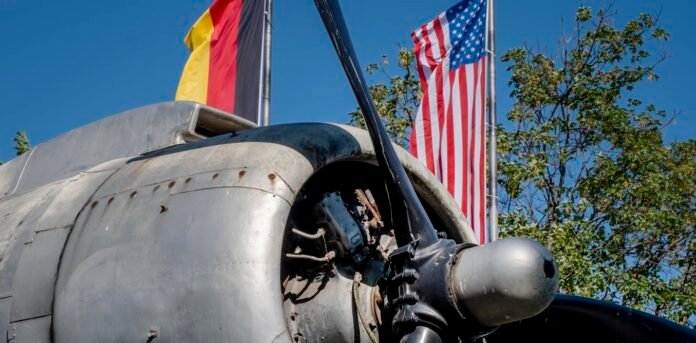
President Donald Trump announced on May 1, 2026, that the United States will withdraw 5,000 U.S. troops from Germany – personnel who had been deployed there as a response to Russia’s invasion of Ukraine.

Germany-U.S. tensions started after the U.S. invasion of Iran. German Chancellor Friedrich Merz refused to support Trump’s war and stated that Iran had humiliated Washington’s leadership by closing the Strait of Hormuz. Trump followed the initial U.S. troop withdrawal announcement with threats to pull more armed forces.

U.S. troops will depart Germany over the next six to 12 months, leaving about 31,000 troops in the country.

The Trump administration’s decision to withdraw personnel comes after weeks of mounting tensions between the U.S. and NATO members. The United Kingdom and Portugal have restricted Washington’s ability to use its bases in those countries for certain activities related to the Iran war.

Trump also threatened to withdraw U.S. troops from Spain and Italy over their opposition to the war and refusal to help the U.S.

“Why shouldn’t I?” Trump said on April 30, 2026, referring to possible U.S. troop withdrawal from the two European countries. “Italy has not been of any help. Spain has been horrible. Absolutely.”

These remarks suggest the Trump administration views U.S. troop withdrawal as punishment for noncompliant European allies. But the reality is more complicated. Although this proposed 5,000-troop reduction is less than 15% of current U.S. forces in Germany, its logic and consequences speak to broader issues of power projection.

As experts in international relations, foreign policy and security cooperation, we have studied the relationship between U.S. military deployments and their host countries for years. While U.S. deployments contribute to the security of the host state, having troops based in Europe and other countries provides the U.S. with significant flexibility for pursuing its own foreign policy goals.

US deployment levels

Europe has historically been one of the regions with the highest concentrations of U.S. military personnel deployed overseas.

Since the end of the Cold War, for example, Italy has hosted between 20,000 and 40,000 personnel, and Spain between 2,000 and 7,000 personnel. Germany has regularly hosted the largest deployments. At the end of the Cold War, the U.S. maintained approximately 227,000 military personnel in Germany. Though Europe remains a significant location for basing U.S. troops, this number fell dramatically in the 1990s, hovering between 50,000 and 75,000 for most years since then.

US power projection

Historians and policymakers often explained U.S. deployments to Europe as a means of deterring the Soviet Union during the Cold War.

Nobel laureate Thomas Schelling described the logic in 1966: Even a small deployment in West Berlin served as a trip wire, ensuring that Soviet incursions would trigger a much larger military response from the U.S. and its European allies.

But a closer look at U.S. foreign policy challenges this view. While U.S. troops stationed in Europe were meant to defend Europe, their utility has extended far beyond that.

U.S. military bases and deployments provide the U.S. with greater flexibility and opportunities to pursue its foreign policy goals. By forward positioning military personnel and assets, the U.S. can reduce response times during crises, as well as the costs of moving its military resources into strategic positions.

A military plane lands on a runway.

A U.S. military aircraft lands at Incirlik Air Base in Adana, Turkey, as part of the operations against ISIS on Aug. 10, 2015. Volkan Kasik/Anadolu Agency/Getty Images

Foreign deployments can convince countries not to attack countries that host them. During the Cold War, for example, the U.S. deployed nuclear weapons to Incirlik Air Base in Turkey, a NATO ally. Turkey’s close proximity to the Soviet Union increased the U.S.’s ability to challenge its superpower rival with these weapons.

These missiles were famously later withdrawn during the Cuban missile crisis in 1962, giving the U.S. something to bargain with in persuading the Soviets to remove their missiles from Cuba.

Larger military engagements, such as the Vietnam War or the wars in Iraq and Afghanistan, have typically relied on U.S. military facilities in allied states that are closer to the conflict. During the Vietnam War, U.S. bases in Germany, Japan and the Philippines were used as staging areas through which U.S. personnel and equipment moved on their way in or out of Southeast Asia.

U.S. facilities in Germany, such as Ramstein Air Base and Landstuhl Regional Medical Center, have been integral to combat operations, satellite control of drones and treating U.S. personnel wounded in combat. Landstuhl has admitted over 97,000 wounded soldiers since its founding in 1953 and has already treated service members injured during the ongoing Iran war.

Further, military equipment such as radar and interceptor missiles often have limited ranges. Deploying this equipment closer to rival countries can increase the chance of successfully intercepting and destroying incoming missiles.

Humanitarian benefits

Beyond warfare, U.S. humanitarian relief and disaster response operations often benefit from U.S. bases.

For instance, after a large earthquake struck Japan in 2011, U.S. personnel and facilities located in and around Japan enabled the rapid mobilization of relief operations.

A military transport plane takes off from a runway.

A U.S. Air Force C-17 Globemaster transport plane takes off from Ramstein Air Base in Germany on June 23, 2025. Boris Roessler/Picture Alliance via Getty Images

In 2004, a powerful earthquake in the Indian Ocean triggered large tsunamis, affecting millions of people in nearby countries. U.S. personnel stationed at Yokota Air Base near Tokyo provided relief and supplies to people throughout Southeast Asia and as far as eastern Africa.

Similarly, after an earthquake in Turkey in 2023, U.S. medical personnel relocated from Germany to Incirlik Air Base to help provide relief.

Beyond their humanitarian benefits, these missions can increase favorable views of the U.S. More positive public views of America may also make foreign governments more likely to support U.S. foreign policy goals.

Lower costs for the US

Host states often make direct and indirect contributions to the costs of hosting and sustaining U.S. personnel. These can range from direct financial transfers to construction, tax reductions and subsidies. Japan and South Korea increased the amount they pay to host U.S. troops after Trump demanded they do so in 2019.

U.S. equipment – from tanks and trucks to planes and ships – also often relies on a host country’s infrastructure to operate and move within the host country. Germany, for example, paid over US$1 billion for construction costs and the stationing of U.S. troops in Germany during the 2010s.

Not all countries that host U.S. troops invest as much in their infrastructure as Germany does, and having those troops elsewhere could prove far more costly than having them in Germany.

The assault on a French nun and the forgotten story of Palestinian Christians

0
the-assault-on-a-french-nun-and-the-forgotten-story-of-palestinian-christians
The assault on a French nun and the forgotten story of Palestinian Christians

The video is horrifying, though it is the kind of horror now synonymous with the behavior of Israel, its military, its armed settlers, and society that has been conditioned to see the ‘other’ as subhuman.

Yet, this was not the typical viral video that emerges almost daily from occupied Palestine. The victim, this time, was not a Palestinian. She was an elderly French nun.  

On May 1, footage surfaced from Jerusalem showing a 36-year-old Israeli man running behind a French nun—a researcher at the French School of Biblical and Archaeological Research—and shoving her violently to the ground. 

In a chilling display of cruelty, the assailant did not simply hit and run. He walked away a few paces, then returned to the fallen woman to kick her repeatedly and mercilessly as she lay helpless.  

What was most astonishing was the sense of normalcy that followed. The assailant remained on the scene, conversing with another man who appeared entirely unperturbed by what should have been a devastating event in any other context. 

The video briefly imposed itself on the mainstream media scene, garnering perfunctory condemnations. Many explained the event as part of the larger landscape of Israeli violence, highlighting the ongoing genocide in Gaza as the most obvious example of this unchecked aggression.

But even the context of general violence does not fully explain why a French nun was targeted. She is not dark-skinned, she is European, she is Christian, and she holds no historical or territorial claims that would typically trigger the ‘security’ paranoia of the Zionist state. 

READ: Latin Patriarchate of Jerusalem files complaint over Israeli occupiers’ encroachments on church-owned lands in West Bank

Still, the incident was anything but ‘isolated,’ despite the rush by Israeli officials to label it a ‘shameful’ exception. To the contrary, the nun was attacked specifically because she is Christian. 

This raises the question: why? 

To answer this, we must acknowledge how Palestinian Christians have been systematically written out of the history of their own land.  

Palestinian Christians are not merely present in the land; they are among the most historically rooted communities in Palestine. They are anything but ‘foreigners’ or ‘bystanders’ caught in a supposed religious conflict between Jews and Muslims. 

In fact, the Christian Arab presence in Palestine predates the Islamic era by centuries. They are the descendants of historic tribes who shaped the region’s identity long before the advent of modern political labels.  

The marginalization of Palestinian Christians is a relatively new phenomenon, deeply linked to Western colonialism. For centuries, European powers used the pretense of ‘protecting’ Christian communities to justify their own imperial interventions. 

Consequently, this framed the native Christian not as a sovereign Arab with agency, but as a ward of the West—a narrative that effectively stripped them of their indigenous status and alienated them from their own national fabric in the eyes of the world.

Zionism added a lethal layer to this erasure. It has often projected itself as a ‘protector’ of Christians to avoid raising the ire of its Western backers. 

In reality, Palestinian Christians have been subjected to the same policies of ethnic cleansing, racism, and military occupation as their Muslim brothers and sisters. How else can we explain the catastrophic dwindling of the Christian population? 

Before the 1948 Nakba, Palestinian Christians made up roughly 12% of the population. Today, that number has plummeted to a mere 1%. During the Nakba alone, tens of thousands were expelled from their homes in West Jerusalem, Haifa, and Jaffa, their properties looted and their communities dismantled.  

A quick look at the map of Jerusalem and Bethlehem today tells the story of an ongoing erasure. Jerusalem is being systematically emptied of its native population, both Christian and Muslim. Christian properties and houses of worship are restricted, and the ‘Little Town’ of Bethlehem has been swallowed by a ring of illegal settlements and an 8-meter-high Apartheid Wall that has transformed the birthplace of Christ into an open-air prison. 

Yet, despite this, we rarely hear about the struggle for survival of Palestinian Christians. Instead, the world occasionally glimpses ‘incidents’—like the common habit of Jewish extremists spitting on foreign pilgrims and clergy in Jerusalem. This behavior has become so normalized that Israeli ministers, such as Itamar Ben-Gvir, have previously defended the act as an “ancient custom” that should not be criminalized.  

The reason the Palestinian Christian story is rarely told is that it fails to factor neatly into the convenient narratives used by Western governments. They are keen on presenting the ‘conflict’ as a Jewish state fighting for its identity against a monolithic ‘Islamic’ threat. Israel is heavily invested in this same ‘Clash of Civilizations’ trope, positioning itself as the vanguard of “Western civilization” against Arab extremism.

READ: Israeli army demolishes Christian monastery, nuns’ school in southern Lebanon

But some Palestinians—Muslim and Christian alike—are, to a lesser degree, also guilty of falling into this trap. The former often frame the Palestinian resistance as an exclusively Muslim struggle; meanwhile, some Christians participate in the very discourse that led to their marginalization in the first place. 

The Gaza genocide, however, has proven this logic not only erroneous but unsustainable. Throughout the slaughter, Israel has destroyed over 800 mosques, but it has not spared the Christian sanctuaries. 

On October 19, 2023, an Israeli airstrike targeted a building within the compound of the Church of Saint Porphyrius—one of the oldest churches in the world. 

In that massacre, 18 Palestinian Christians were killed, their blood mixing with the dust of a sanctuary that had stood for 1,600 years. It was a devastating reminder that the Israeli missile does not distinguish between a mosque and a church, nor between the blood of a Muslim and a Christian. 

The story of the French nun is worth every bit of the attention it received, as is the targeting of pilgrims. But as the headlines move on, we must remember that Palestinian Christians endure a suffering that is collective and rooted in the very soil of Palestine. They are now an endangered community, and Israel is the culprit. Without them, Palestine is not the same. 

The Palestinian homeland is only whole when it is the cradle of religious coexistence, and Palestinian Christians sit at the very heart of that history, dating back two millennia. Their survival is not a ‘minority issue’—it is the survival of Palestine itself.  

OPINION: Subjects of empire: Breaking the cycle of Arab dependency on US elections

The views expressed in this article belong to the author and do not necessarily reflect the editorial policy of Middle East Monitor.

Solar drone with jumbo jet wingspan broke a flight record—then it crashed

0
solar-drone-with-jumbo-jet-wingspan-broke-a-flight-record—then-it-crashed
Solar drone with jumbo jet wingspan broke a flight record—then it crashed

A solar-powered drone has been lost at sea after a record-breaking flight lasting eight days between late April and early May. The crash also marks the untimely demise of the pioneering aircraft Solar Impulse 2, which previously performed the world’s first solar-powered crossings of the Atlantic and Pacific oceans before becoming an uncrewed test platform for US military missions.

The carbon-fiber aircraft could perform such feats of aeronautical endurance while running solely on renewable energy and batteries because of a 236-foot (72-meter) wingspan—comparable to a Boeing 747 jumbo jet’s wings—covered with more than 17,000 solar cells. The company Skydweller Aero purchased and modified the original Solar Impulse 2 aircraft to become a test platform for “perpetual uncrewed flight” with the capability of carrying up to 800 pounds (363 kilograms) of payload.

Skydweller Aero was conducting test flights for maritime patrol mission scenarios with the US military, and the company also holds contracts with the Navy and Air Force. So the Skydweller drone was operating in that capacity when it took off on its final flight in the early morning hours of April 26.

In the Navy

After departing from Stennis International Airport in Mississippi, the Skydweller drone flew to join the US Navy’s annual Fleet Experimentation (FLEX) exercises near Florida’s Key West, according to a Skydweller Aero blog post. The Navy’s press release describes the FLEX 2026 event as testing AI and drone technologies for maritime patrols “in the fight against transnational organized crime.”

As part of the event, the drone used radar along with visual and thermal imaging to observe targets on the water during four days of continuous flight, according to Skydweller Aero. It also acted as a flying communications hub for Navy aircraft and warships while supporting AIS transponder-based tracking of ships in the area.

The Navy also highlighted the demonstration of a “sophisticated kill chain” which incorporated commercial drones with crewed US military helicopters and the Freedom-variant littoral combat ship USS Wichita. Together, such assets “successfully found, fixed, tracked, and targeted a captured drug boat” in a scenario leading up to “kinetic engagements destroying several captured drug boats,” according to the Navy’s press release.

It is unclear what role the Skydweller drone may have played in the exercise’s drug boat scenario. Ars has reached out to the US Navy for comment.

But the naval exercise comes as US Southern Command (SOUTHCOM) has conducted dozens of “lethal kinetic strikes” against alleged drug boats operating in the Caribbean and Pacific since September 2025. The lethal strikes have killed approximately 194 people to date, according to the nonprofit think tank InSight Crime—and legal and human rights experts have said the strikes violate both domestic and international law.

Following the formal end of the Navy exercise on April 30, the Skydweller drone spent several more days demonstrating “extended operational and airspace flexibility within the SOUTHCOM area of responsibility” by flying between Cuba and Mexico’s Yucatan Peninsula, according to Skydweller Aero’s blog post. The drone eventually positioned itself south of Cuba and north of the Cayman Islands while waiting out a period of bad weather.

Final destination

By the night of May 3, the drone was encountering severe weather conditions that included “extreme vertical air mass variability exceeding 10 times typical climb and descent rates,” Skydweller Aero wrote. The company emphasized that all aircraft systems were nominal throughout the flight—but a lack of energy reserves to deal with the extreme weather eventually brought down the drone.

The Skydweller drone was last visible on the flight-tracking service Flight Radar 24 north of Cancun, Mexico, in the early morning hours of May 4. The company described the drone as eventually performing a “controlled water ditching” around 6:30 am Eastern Time, but the aircraft “subsequently sank due to its non-buoyant composite structure.”

By the time it went under, the Skydweller drone had performed a record-breaking, solar-powered flight of eight days and 14 minutes—longer than any previous flights as either a drone or crewed aircraft. The company Skydweller Aero commemorated it as an “operational prototype” that had “validated the practical military utility of a persistent, medium-altitude solar aircraft” despite the loss at sea.

Skydweller drone flights in July 2025.

The aircraft’s earlier accomplishments will almost certainly endure in the public imagination. Solar Impulse 2 became the first solar-powered aircraft to circle the globe after completing a series of flights between 2015 and 2016. Along the way, it set a world record for the longest flight in a solar-powered plane when André Borschberg piloted the aircraft for 117 hours and 52 minutes—almost five days—during a 5,545-mile (8,924-kilometer) journey between Nagoya, Japan, and Hawaii.

Now, the crash of the Skydweller drone means that the Swiss Museum of Transport in Lucerne won’t get to display the historic aircraft per an original agreement with Skydweller Aero, according to SWI Swissinfo. That represents a blow for aviation enthusiasts unless future salvage operations can be carried out.

The pioneering design may nonetheless inspire future solar-powered aircraft for either civilian or military use. Skydweller Aero told Ars that it has no other prototypes immediately ready to replace the lost drone—but the company’s blog post described “planned upgrades using existing technology” that could enable future solar-powered drones to better withstand extreme weather conditions. Meanwhile, the Pentagon has proposed investing at least $54 billion into drone warfare systems.

Probe says sunken Russian cargo ship off Spain was transporting nuclear reactors to North Korea

0
probe-says-sunken-russian-cargo-ship-off-spain-was-transporting-nuclear-reactors-to-north-korea
Probe says sunken Russian cargo ship off Spain was transporting nuclear reactors to North Korea


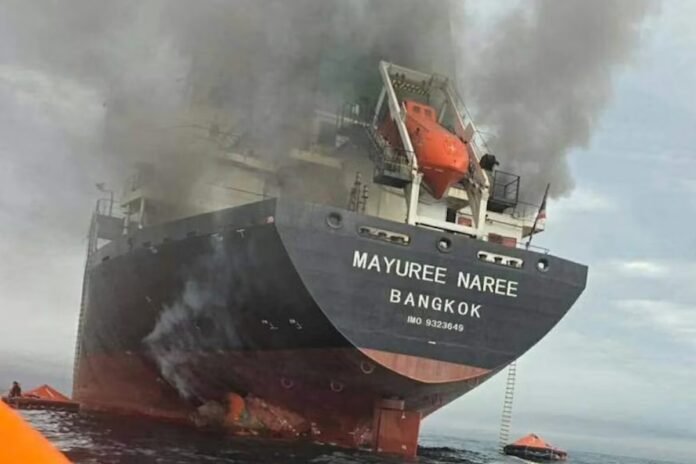
Spanish investigators have discovered that the Russian cargo ship that sank in the Mediterranean in 2024 — originally believed to be part of a weapons retrieval mission to Syria — was secretly carrying nuclear reactor components bound for North Korea.

A Russian cargo ship that sank in the Mediterranean Sea between Spain and Algeria in December 2024 following explosions in its engine room was carrying components for two submarine nuclear reactors likely destined for North Korea, an investigation has revealed.

The Ursa Major sank on 23 December with 16 crew members on board. Fourteen were rescued and brought to Spain, while two crew members — second engineer Nikitin and engineer Yakovlev — remain missing and are presumed dead.

Spanish investigators now believe the vessel may have been deliberately sunk by a Western military using a rare supercavitating torpedo to prevent Russia from delivering advanced nuclear technology to North Korea, according to details of the Spanish probe obtained by CNN.

The Russian Foreign Ministry initially said the vessel sank after an “explosion in the engine room” but provided no explanation for the blast.

However, the ship’s Russian captain later told investigators that items declared on the ship’s manifest as “non-dangerous merchandise” — two large hatch covers — were actually components for two nuclear reactors similar to those used in submarines.

The captain also revealed that he thought the ship would eventually be diverted to the North Korean port of Rason to deliver the reactors, according to a source familiar with the investigation. He did not further discuss the cargo due to fears for his safety.

The vessel, previously known as Sparta III, was constructed in 2009. While its official manifest stated it was travelling from St Petersburg to Vladivostok carrying two large cranes, 129 empty containers and hatch covers, investigators have questioned why Moscow would send such cargo by sea around the world rather than using the country’s extensive rail network.

The investigation suggests the cranes were on board to assist with the delivery of the sensitive nuclear cargo upon arrival in North Korea.

Some details of the Spanish investigation into the incident were initially published by the Murcian local newspaper La Verdad in December 2024.
Suspicious circumstances and Russian interference

The ship was operated by Oboronlogistika, a company owned by the Russian Ministry of Defence. Just two months before the sinking, Oboronlogistika announced its ships had been licensed to carry nuclear material.

The vessel had been under US and UK sanctions since Russia’s full-scale invasion of Ukraine in 2022, due to its owner’s role in supplying cargo to the Kremlin’s military.

The sinking occurred just two months after North Korean leader Kim Jong-un sent some 10,000 troops to support Russia’s full-scale invasion of Ukraine — an exchange that investigators believe may have prompted the Kremlin to transfer nuclear technology to Pyongyang in return.

Russia and North Korea also have a deal in place since late 2024 pledging mutual military aid.

A nuclear-powered submarine was one item on a wish list of sophisticated weaponry that Kim announced during a political conference in 2021. Other weapons included solid-fuelled intercontinental ballistic missiles, hypersonic weapons, spy satellites and multi-warhead missiles.

North Korea released photographs in December 2025 of Kim’s visit showing what appeared to be a largely completed nuclear-powered submarine hull, coated with what was likely anti-corrosion paint, under construction in an assembly hall.

Pyongyang has indicated it plans to arm the submarine with nuclear weapons, calling it a “strategic guided missile submarine” or a “strategic nuclear attack submarine”.

While questions persisted about whether North Korea, a heavily sanctioned country, could obtain resources and technology to build nuclear-powered submarines, experts initially believed it was more likely Pyongyang designed its own reactor with Moscow’s expertise, rather than acquiring a decommissioned Russian one.

In the months following the sinking, significant military activity has been detected around the wreck site, which lies at a depth of approximately 2,500 meters.

One week after the incident, Russian spy vessel Yantar — later detected near UK waters in early 2025, prompting stern warnings from the British government — spent five days positioned over the Ursa Major wreckage.

Meanwhile, US nuclear “sniffer” aircraft have flown over the sunken ship twice in the past year, according to public flight data.

Spanish authorities have stated that recovery of the ship’s data recorder was impossible without incurring major costs and risks. Experts have questioned why this would be the case if no radioactive material were involved.
Russian claims and Syria connection

Russia’s state-linked operator Oboronlogistika claimed the ship was “embarking on another voyage to the Far East carrying significant project cargo as part of state tasks aimed at developing port infrastructure and the Northern Sea Route.”

However, Ukrainian military intelligence (HUR) had previously reported that the Ursa Major was actually headed to Syria to assist with evacuating Russian military equipment from the country’s bases at Tartus and Khmeimim, following the fall of Bashar al-Assad’s regime.

The Ursa Major had been used for years as part of Russia’s “Syrian Express” — a supply route transporting military equipment and weapons to Russian forces in Syria.

A UK sanctions listing states that ships belonging to Oboronlogistika have been used to transport missiles from Syria to the Black Sea.

The Spanish probe concluded that indications the ship would go to Syria were likely a distraction from the trip’s true purpose.

Following pressure from opposition lawmakers, the Spanish government issued only a brief statement in February on the investigation,confirming the captain’s testimony about the components for two nuclear reactors similar to those used in submarines.

South Korean intelligence reported in September 2025 that Moscow had already handed Pyongyang one nuclear reactor, and multiple South Korean government officials told domestic media that the Kremlin was suspected of sending two to three nuclear submarine propulsion modules to North Korea in the first half of 2025.

Via Euronews

Soybeans on Beijing agenda but US farmers should temper optimism

0
soybeans-on-beijing-agenda-but-us-farmers-should-temper-optimism
Soybeans on Beijing agenda but US farmers should temper optimism

In 2017, President Donald J. Trump’s National Security Strategy declared China a competitor, an adversary and a “revisionist power” determined to supplant the United States in Asia.

In his 2025 National Security Strategy, the confrontational epithets were dropped, replaced by anodyne references. The document pledges to “rebalance” the US-China trade relationship and says deterring a conflict over Taiwan is a priority. But the tone of these pledges is neutral.

Even a section of the document that aims fire at China doesn’t use the words “China” or “Chinese.” The section vows to deny “non-hemispheric competitors” access to vital assets in the Western Hemisphere and “to make every effort to push out foreign companies that build infrastructure in the region.” Those “competitors” and “companies” are Chinese.

Could the Donald Trump who was once so tough on China have turned soft? His rhetoric is certainly softer. Applying the “look at what they do, not what they say” test also reveals softening. The administration is still pushing China on several fronts, but it has eased up on tariffs and allowed more sales of high-tech US semiconductors to China.

The chips sales worry China hawks like Matt Pottinger, who helped shape the first Trump administration’s tough approach to China as deputy national security advisor. In Congressional testimony in January, Pottinger criticized the sales, saying they would, among other things, “help China supercharge its military modernization.”

American farmers and ranchers suffered through the US-China trade wars in both Trump administrations. In last year’s trade war, China stopped buying American soybeans altogether for several months after Trump imposed 100% tariffs on Chinese imports.

A recent analysis by the Economist concluded that “agriculture was hit harder by retaliatory tariffs than any other American industry.”

The Chinese agreed last fall to resume purchases and the president agreed to slash the tariffs. This was more like a truce than a peace treaty, however. Neither side can feel confident that the other will continue to abide by the agreement.

President Trump and President Xi Xinping are scheduled to meet in Beijing on May 14 and 15. Soybeans are on the agenda. It’s of course not the only issue the two leaders will discuss. The Chinese want their still-high tariffs further reduced and the Hormuz Strait opened, among other things. The US wish list includes rare-earths materials security and fentanyl-precursor control.

Still, Trump would love to come back with good news for US soybean growers. There’s a reasonable chance Xi will let him claim victory. The Chinese, he’ll crow, will keep buying US beans.

Make no mistake, though. Even if the summit is cordial and ends on a high note, there’s no guarantee of permanent peace. Each side has demonstrated it has the power to inflict pain on the other. Both have indicated a willingness to use that power to make a point.

With the summit just weeks away, China did that – twice. It ordered Meta, the US owner of Facebook, to unwind its $2 billion acquisition of the Chinese AI startup Manus.

And when the US Treasury sanctioned five small Chinese refiners for buying Iranian crude oil, China retaliated by saying the refineries could bring suit in Chinese courts against any bank, insurance company or other party complying with the US sanctions. It was the first time China had activated its anti-sanctions “blocking rules.”

The Wall Street Journal’s Lingling Wei, perhaps the best-sourced US journalist covering China, said she’s hearing from people around the leadership that Xi thinks he’s figured out how to “manage” Trump: “The U.S. president can be exhausted and outwaited, and calibrated escalation resets the bargaining floor instead of blowing up the relationship.”

Is Xi overplaying his hand? Though Trump wants this summit to go well, he doesn’t want to look like he can be “managed.” It wouldn’t be surprising if at some point after the summit he reminds Xi he can inflict pain, too.

It’s a truce, not a permanent end to hostilities. With luck, it will be a long truce. Trade, including soybean sales, will continue.

The Chinese, though, are preparing for the worst. They’re striving to end their reliance on US soybeans. They’re buying Brazilian beans and building infrastructure to help Brazil get product to market. They’re working to reduce soybean consumption by developing fermented feeds for their pigs.

US soybean farmers must prepare for the worst, too. They may still sell some of what they grow to China, but they need greatly increased sales to other markets, both foreign and domestic, in case the truce collapses.

Just as China wants to stop depending on them, they need to stop depending on China.

Former longtime Wall Street Journal Asia correspondent and editor Urban Lehner is editor emeritus of DTN/The Progressive Farmer. This article, originally published on May 11 by the latter news organization and now republished by Asia Times with permission, is © Copyright 2026 DTN, LLC. All rights reserved.  Follow Urban Lehner on X @urbanize.

0FansLike
0FollowersFollow
0FollowersFollow
0SubscribersSubscribe
- Advertisement -
Google search engine

Recent Posts