A routine grocery store trip turned into a nightmare for the family of Atlanta Falcons brothers AJ and Avieon Terrell after their beloved aunt was tragically killed in a violent parking lot crash that witnesses say looked “like a missile” slammed through the lot.
Giselle Perry, 49, was sitting in her parked car outside a Kroger supermarket in Decatur, Georgia, on Wednesday afternoon while waiting for her mother when disaster suddenly struck.
According to local reports, a driver lost control and barreled through the parking lot around 3:20 p.m., smashing directly into Perry’s vehicle with terrifying force. Police say the impact shoved her car into a metal pole and sent debris flying across the sidewalk.
Witnesses described a horrifying scene.
“We seen and heard the car coming and two seconds later, boom,” barber Tony Lackey told local reporters. “It was horrible.”
Another witness, Doderick Moore, compared the speeding vehicle to a “missile.”
“The woman came down here like a missile,” he said. “She knocked every brick off that pole in one lick.”
Perry was killed in the crash. A nearby pedestrian also suffered serious injuries, while the driver who allegedly caused the collision was reportedly badly hurt as well.
The driver’s daughter later claimed her mother had blacked out behind the wheel moments after leaving home.
“My mom blacked out while she was driving and she didn’t even know what was happening,” she said.
The heartbreaking loss sent shockwaves through the Atlanta Falcons organization and the Terrell family.
AJ Terrell, the Falcons star cornerback who joined the team in 2020, shared a touching black-and-white tribute photo with his aunt on Instagram, writing: “I can still hear you.”
His younger brother Avieon Terrell, who was recently drafted by Atlanta in the second round of the NFL Draft, also mourned the woman he called one of his biggest supporters.
The 21-year-old shared emotional footage from his high school football days that showed Perry wildly cheering for him from the sidelines after a touchdown.
Just weeks ago, the brothers celebrated an emotional reunion after Avieon joined AJ on the Falcons roster following the draft. Now, the family is mourning an unimaginable tragedy.
Perry’s husband, Laddyan, revealed the couple was preparing to celebrate their fourth wedding anniversary next month.
“She was everything to me,” he said through tears.
“She was loving, caring, she would do everything for me.”
He added that simply seeing her belongings around their home now causes him to “break down.”
Friends and loved ones have since flooded social media with tributes remembering Perry as the heart of the family and one of the loudest supporters at her nephews’ football games.
Authorities are continuing to investigate the deadly crash.
Record number of candidates fuels fears of political fragmentation in Cyprus
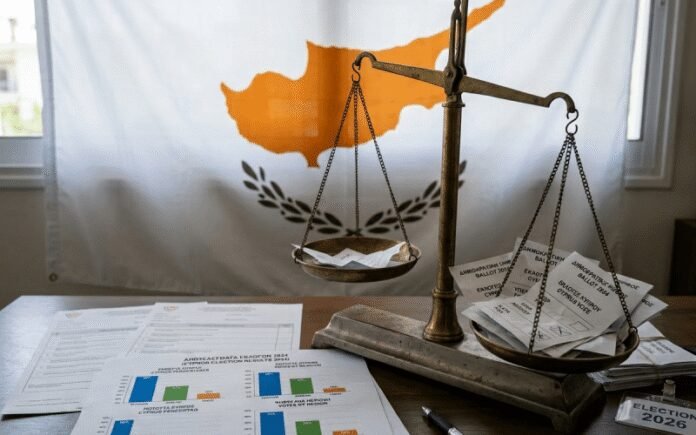
A record number of candidates submitted bids for Cyprus’s May 24 parliamentary election this week in a race which could shape one of the most fragmented legislatures in the island’s history and weaken the influence of three parties supporting incumbent president Nikos Christodoulides.
Some 753 people representing more than 15 parties or themselves put their names forward for 56 seats in the House of Representatives. Cyprus has a presidential system of government, with the vote outcome likely to be a sign of trends for the presidency in 2028. The previous parliament had seven political parties represented.
Polls show three parties supporting Christodoulides – the centrist DIKO, DIPA and EDEK – losing ground, with the far-right ELAM party making gains. Newcomers ALMA, headed by former auditor-general Odysseas Michaelides, look set to win at least 8-10% of the vote.
Michaelides was instrumental in revealing shortcomings in a passports-for-cash scheme which gave wealthy foreigners EU passports in return for investments. Frequently criticised by the EU, it was dismantled by authorities after a string of exposures in 2020.
Opinion polls are showing corruption high on voters’ agenda, said analyst Fiona Mullen. “I think this will be quite a big protest vote against what voters see as a system that just rewards insiders,” she told Reuters. The far right, ELAM, is set to become the third-largest party in parliament, mirroring trends across Europe.
“It’s a by-product of the financial crisis with people trying to find people to blame,” she said.
These Pop Tart Cookie Bars are a fun and irresistible twist on the classic toaster pastry! Imagine everything you love about strawberry pop tarts—sweet jam filling, soft cookie layers, and a sugary glaze—transformed into thick, chewy cookie bars. Easy to make and packed with nostalgic flavor, these bars are perfect for sharing (or keeping all to yourself 😉).
🌟 Why You’ll Love These Bars
Tastes like a real pop tart – but softer, richer, and homemade
Easy to make with simple pantry ingredients
Soft & chewy texture with a sweet fruity center
Customizable – swap the jam flavor for any occasion
Fun and colorful with glaze + rainbow sprinkles
🧁 Ingredients
For the Cookie Dough:
1/2 cup unsalted butter (room temperature)
1 cup granulated sugar
2 large eggs (room temperature)
1 tsp vanilla extract
2 1/2 cups + 2 tbsp all-purpose flour
1/2 tsp salt
1/2 tsp baking soda
2/3 cup strawberry preserves
For the Glaze:
1 cup powdered sugar
1 1/2–2 tbsp milk
1/2 tsp vanilla extract
Rainbow sprinkles
👩🍳 Instructions
1. Prep the Pan
Line an 8×8-inch square baking pan with parchment paper and preheat oven to 375°F (190°C).
2. Make the Dough
Cream butter and sugar until light and fluffy. Add eggs and vanilla, mixing until smooth.
Stir in flour, salt, and baking soda until a soft dough forms. Chill for 20 minutes.
3. Create the Layers
Press half of the dough into the pan. Remove and freeze briefly.
Press remaining dough evenly into the pan. Spread strawberry preserves on top.
Place the chilled dough layer over the jam and press gently to seal.
4. Bake
Bake for 25–28 minutes until golden brown. Let cool completely.
5. Glaze & Decorate
Flip the bars so the bottom becomes the top.
Whisk glaze ingredients until smooth, spread over bars, and add sprinkles.
Let set for 1–2 hours before slicing into bars.
💡 Baking Tips
Use a metal square pan for best texture
Chill dough to make layering easier
Let glaze fully set before cutting
Use clean hands when pressing dough
🔄 Variations
Swap strawberry for blueberry, raspberry, or grape jam
Add flavored sprinkles for themed occasions
Try almond extract for a flavor twist
📦 Storage
Store at room temperature for up to 4–5 days
Freeze for up to 3 months
✨ These Pop Tart Cookie Bars are soft, sweet, and full of nostalgic flavor—perfect for parties, bake sales, or whenever you want a fun homemade treat!
Hezbollah Drones Wound 3 Israeli Soldiers as IDF Strikes Scores of Targets in Lebanon
A reserve Israel Defense Forces (IDF) soldier was seriously wounded, and an officer and another reserve soldier were moderately injured Saturday after explosive drones detonated in the Shlomi area near the Lebanese border, as Hezbollah continued launching drones toward Israeli forces and the Israeli military carried out strikes across Lebanon.
Wounded soldiers were evacuated to a hospital for treatment and that their families had been notified, the military reported.
Several aerial launches directed at soldiers in southern Lebanon were intercepted, with no casualties reported.
Lebanese media reported that 12 people were killed on Saturday in southern Lebanon during Israeli airstrikes. Earlier Saturday, the Israeli military instructed residents in several villages in southern Lebanon to evacuate.
“In light of the Hezbollah terror organization’s violations of the ceasefire agreement, the IDF is forced to act against it with force and does not intend to harm you,” army spokesman Col. Avichay Adraee said in a warning to residents.
Over the past 24 hours, the military said it has struck more than 85 Hezbollah infrastructure targets in multiple areas of Lebanon.The targets included weapons depots, launchers, and Hezbollah buildings.
The military also said it struck an underground weapons manufacturing facility in the Bekaa Valley and targeted militants in southern Lebanon.
Separately, the IDF reported it attacked warehouses containing combat equipment and a Hezbollah drone launch site in southern Lebanon that had been used to launch drones toward Israeli troops. The military added that it also struck two launchers that were loaded and prepared for firing.
Drone infiltration alerts were activated in the Western Galilee on Saturday before the Home Front Command announced the incident had ended and residents could leave protected spaces.
The Air Force also intercepted several suspected aerial targets launched from Lebanon toward Israeli territory, according to the military. In Metula, an explosive drone launched by Hezbollah was detected near the border. The IDF said there were no casualties or damage and that security forces were examining the site.
One Palestinian killed, several injured in Israeli strike in northern Gaza despite ceasefire
One Palestinian man was killed and several other Palestinians injured on Saturday in an Israeli drone strike targeting a motorcycle west of the Jabalia refugee camp in northern Gaza, part of Israel’s continued violations of a ceasefire agreement in force since last October.
A medical source told Anadolu that Eyad al-Motawwaq was killed in the strike, while several others were wounded, without specifying their number.
Witnesses told Anadolu that an Israeli drone targeted the motorcycle in an area west of the camp that lies outside the zones of Israeli military deployment under the ceasefire agreement.
READ: Protesters rally in Stockholm against Israeli attacks on Gaza and Lebanon
In a separate incident, witnesses said Israeli artillery intermittently shelled eastern areas of the eastern Gaza City neighborhood of Al-Tuffah, with no casualties immediately reported.
According to Gaza’s Health Ministry, around 850 Palestinians have been killed and 2,433 others injured by Israeli fire and bombardment since the ceasefire took effect, amid repeated violations by the Israeli army.
The agreement was reached after two years of a genocidal Israeli war starting in October 2023, which later continued in various forms and left more than 72,000 people dead, over 172,000 injured, and caused widespread destruction to 90% of Gaza’s civilian infrastructure.
READ: Britain quietly approves $11.85m arms licence to Israel despite Gaza ban
Ted Turner: The Visionary Who Rewired the Media World
Media mogul Ted Turner, who pioneered the modern 24-hour news culture when he launched the CNN channel, has died at the age of 87.
Ted Turner did not simply build a media empire — he reshaped the way the world receives information. Few figures in modern broadcasting have left a legacy as deep or as disruptive. Turner saw possibilities long before others did, and he pursued them with a mix of audacity, instinct and relentless drive.
His first breakthrough was the “super‑station”, a radical idea that cable television could become a national force independent of the traditional networks.
By turning a struggling Atlanta UHF station into WTBS and distributing it via satellite, Turner proved that cable could be more than a local curiosity. He created a new model for broadcasting — one that others would soon race to copy.
But his most transformative achievement came in 1980 with the launch of CNN, the world’s first 24‑hour news channel. At a time when network news was confined to fixed evening slots, Turner insisted that news should be constant, global and immediate.
CNN became the template for modern rolling news, influencing every major broadcaster that followed. Its coverage of international crises, conflicts and political upheavals changed public expectations of what news could be. Some commentators even credited CNN’s global reach with helping accelerate the collapse of the Iron Curtain.
Turner’s innovations extended far beyond news. He built TNT, Turner Classic Movies, and the Cartoon Network, each expanding the boundaries of what cable television could offer.
His purchase of the MGM film library — mocked at the time — became a masterstroke, fuelling multiple networks and enabling the restoration of classic cinema. He understood content value long before “content is king” became a media cliché.
Even his missteps were bold. His experiments with colourising black‑and‑white films sparked controversy, yet his commitment to film preservation through TCM earned him lasting respect.
His ventures into sports ownership and the creation of the Goodwill Games reflected the same restless ambition: Turner believed media could connect people, entertain them, and push cultural boundaries all at once.
Beyond business, Turner became one of America’s most significant philanthropists. His $1 billion donation to the United Nations and his environmental work through the Turner Foundation showed a global conscience as expansive as his media vision.
Ted Turner was a contradiction — part southern gentleman, part rebel, part showman — but above all, he was a pioneer. He changed how news is delivered, how television is structured, and how audiences around the world understand events as they unfold. His influence is woven into every 24‑hour news cycle, every global broadcast, every moment when information travels instantly across continents.
Turner didn’t just make an impact on the media world. He reinvented it.
Simon Cowell is finally admitting what millions of viewers were thinking during Susan Boyle’s unforgettable Britain’s Got Talent audition — the judges looked “awful” and “horrible” for the way they reacted to her before she even sang.
The music mogul, now 66, reflected on the now-iconic 2009 moment during the debut episode of Celebrity Trenches with Jamie East, confessing that he, Amanda Holden and Piers Morgan completely misjudged the Scottish singer the second she walked onto the stage.
And according to Simon, the footage still makes him cringe.
Susan Boyle shocked the world when she appeared on Britain’s Got Talent looking shy, awkward and completely unlike a typical pop star. Audience members laughed, the judges exchanged skeptical looks, and expectations couldn’t have been lower.
Then she opened her mouth and delivered a jaw-dropping performance of I Dreamed a Dream from Les Misérables — instantly becoming one of the biggest reality TV sensations of all time.
Looking back, Simon admitted the panel’s reactions were even worse behind the scenes than what viewers saw on TV.
“I look back and I just think, ‘My God, we look so awful, horrible,’” Simon confessed. “I actually don’t think we look bad enough. I think we were even worse than that.”
He even singled out former judge Piers Morgan’s facial expression during the audition, calling it one of the worst looks he’s ever seen.
“That look that Piers gives me… I think out of all the looks I’ve ever remembered, that might be the worst,” Simon said. “I was just as bad.”
The American Idol creator admitted he could have edited some of the footage out before the episode aired, but chose not to because it became an important lesson.
“It was a bit of a wake-up call,” he explained. “You can’t judge a book by its cover.”
Simon also acknowledged how quickly public opinion turned once Susan’s performance aired.
“A lot of people are going to realize in about 24 hours that we are just horrible,” he recalled thinking at the time.
Susan herself has spoken openly over the years about how painful the experience initially felt.
The singer, now 65, previously revealed she felt like “an act in a freak show” during her first audition because of the way people mocked her appearance, hair and clothing before she performed.
“It felt quite suffocating,” Susan said in an earlier interview. “Everyone was laughing at me. They wondered who this daft woman with the crazy hair was.”
Despite the humiliation, Susan ultimately had the last laugh.
Her audition became one of the most-watched reality TV moments ever, launching her into international superstardom almost overnight. Since then, she has sold millions of albums, performed around the world and reportedly built a fortune estimated at roughly $40 million.
In recent years, Susan has also undergone a major image transformation, showing off a glamorous new look, lighter hair and a more active social media presence.
The beloved singer regularly shares photos with stars like Sir Elton John, Lionel Richie and Peter Kay, while also promoting her own “Subo” merchandise line to fans online.
And more than 15 years later, that one audition still remains the moment that completely changed reality television forever.
Rocket Report: Alpha Block 2 coming this summer; Falcon sets booster landing mark
Welcome to Edition 8.40 of the Rocket Report! One of the remarkable things about SpaceX is that, after a quarter of a century and becoming the most important launch company of this era, it remains a disruptive force. Even though the Falcon 9 is the most used rocket of the world, and groundbreaking in its reuse capabilities, SpaceX is actively seeking to make it obsolete with the Starship program. Stephen has a great story in this week’s newsletter highlighting the fact that we’re probably past the peak of the Falcon era of flight.
As always, we welcome reader submissions, and if you don’t want to miss an issue, please subscribe using the box below (the form will not appear on AMP-enabled versions of the site). Each report will include information on small-, medium-, and heavy-lift rockets as well as a quick look ahead at the next three launches on the calendar.
Firefly readies for upgraded Alpha rocket launch. Firefly Aerospace plans to debut the upgraded version of its Alpha rocket late this summer, Space News reports. In a May 4 earnings call about the company’s first-quarter financial results, Jason Kim, chief executive of Firefly, confirmed the company was moving ahead with the Alpha Block 2 rocket after a successful return to flight of the original version of the vehicle in March.
Block 2 coming for you … The company announced the Block 2 version of Alpha in January, with stretched first and second stages and upgrades to avionics, batteries, and its thermal protection system. The company said the upgrades were intended to improve the reliability of the vehicle, which suffered two failures and two partial failures in its first six launches. He did not disclose the customer for the Flight 8 mission, but said the company was planning two more launches after that this year.
Orbex was losing nearly $3 million a month. Orbex, the rocket company behind plans for the Sutherland Spaceport in Scotland, collapsed earlier this year after failing to secure fresh funding, The Northern Times reports. According to the filing lodged at the end of April, the company was losing around 2 million pounds ($2.7 million) a month before entering administration in February. By that point, total losses had reached about 73 million pounds ($100 million).
No buyers … The filing shows Orbex had 163 staff and had been working on two rocket systems: the Prime micro-launch vehicle, which was in development, and a larger system called Proxima, still at the design stage. In 2025, Orbex attempted to raise additional capital through a Series D funding round, but this was unsuccessful. Earlier this year, as many as 69 parties expressed interest in buying Orbex, but all discussions fell through.
The Ars Technica Rocket Report
The easiest way to keep up with Eric Berger’s and Stephen Clark’s reporting on all things space is to sign up for our newsletter. We’ll collect their stories and deliver them straight to your inbox.
Rocket Lab posts record revenue. In its first-quarter financial results for 2026, Rocket Lab reported a record revenue level of more than $200 million. This was a 63 percent increase over the first quarter of last year. The publicly traded company also said it had a $2.2 billion backlog and has $2 billion in liquidity that will enable it to make further acquisitions. During the first quarter the company completed its acquisition of Mynaric AG, a leading provider of laser optical communications terminals.
Lots of launch contracts … The company said it signed 31 new Electron and HASTE contracts during the quarter, plus five new dedicated Neutron launches. Rocket Lab has now sold more launches in Q1 2026 than in the full year of 2025. From all appearances, Rocket Lab is continuing to grow as both a formidable launch and space services company.
Have we passed peak Falcon 9? It is far too soon to mention retirement, but astute observers of the space industry have noticed SpaceX’s workhorse Falcon 9 rocket is not launching as often as it used to, Ars reports. The decline is modest so far, and it does not signal any problem at SpaceX or with the Falcon 9. Rather, it is a manifestation of SpaceX’s eagerness to shift focus to the much larger Starship rocket, an enabler of what the company wants to do in space: missions to land on the Moon and Mars, orbital data centers, and next-gen Starlink. Elon Musk’s SpaceX conducted 165 launches with the Falcon 9 rocket (no Falcon Heavy missions) last year, up from 134 Falcon 9 and Falcon Heavy launches in 2024 and 96 Falcon flights in 2023.
Moving away from one of two Florida launch pads … The company plans “maybe 140, 145-ish” Falcon launches in 2026, according to SpaceX President Gwynne Shotwell. The changes are most apparent at Cape Canaveral, Florida. Until last December, SpaceX launched Falcon 9s with regularity from two pads on Florida’s Space Coast—one at NASA’s Kennedy Space Center and another a few miles to the south on military property at Cape Canaveral Space Force Station. SpaceX is transitioning the site at Kennedy, known as Launch Complex-39A, to launch Starships. LC-39A is out of the rotation for Falcon 9 launches.
ESA may move launch from Vega C to Ariane 6. In October 2024, the European Space Agency awarded OHB a 280 million euro contract to develop and build a pair of satellites for its Harmony mission. European Spaceflight recently looked into how this payload will reach orbit. ESA confirmed Vega C as the mission’s baseline launch vehicle during a presentation given by Project Manager Florence Hélière at the agency’s Living Planet Symposium in June 2025. Hélière explained that both satellites would be launched in 2029 aboard a single Vega C Block 2, which features the P160C booster upgrade. She also indicated that cost constraints had helped shape the decision to select a single Vega C launch for both satellites.
P160C upgrade when? … However, last month, ESA published an RFI inviting Arianespace to provide “non-binding information on Ariane 62 launch services for the Harmony mission in Q4 2029 / Q1 2030.” This suggests that ESA may be concerned about whether Vega C Block 2 will be available in time to support the launch. In January 2026, an ESA spokesperson told the publication that there was no urgency to complete the P160C upgrade for Vega C.
Armstrong prize goes to SpaceX reusable team. Purdue University awarded its inaugural Neil Armstrong Space Prize to the Falcon 9 Booster Landing Team for its work to develop the reusable first stage of the rocket. The eponymous award honors aerospace pioneer and Purdue graduate Neil Armstrong (BS aeronautical engineering ’55, honorary doctorate ’70).
Chosen for impact to humanity … The Falcon 9 team was chosen from a long list of impressive nominees. “In the end, the deciding factor was what we felt like was the team’s impact to humanity,” said Dan Dumbacher, chair of the Neil Armstrong Space Prize selection committee. “Their work has had a very clear impact and a very visible impact.” Hard to disagree with that.
Chinese firm pursues aerodynamic recovery. Chinese commercial launch startup Nayuta Space has completed consecutive Pre-A financing rounds to support development of its unconventional Xuanniao-R rocket concept, Space News reports. The two-stage, 70-meter-long, 3.8m-diameter Xuanniao-R launcher features an aerodynamic deceleration and horizontal landing approach to reusability, with Nayuta targeting a debut test flight of the Xuanniao-R in the first half of 2027.
Probably not going to meet that target … While Nayuta Space claims its aerodynamic deceleration approach can reduce the dependence on a launcher engines’ reignition, propulsive braking, and high-precision control capabilities for vertical recovery, the approach will demand new aerodynamic structures, bringing challenges, including increased weight and complexity. The size of the launcher, the novel and unproven approach, and uncertain funding levels suggest that the 2027 timeline for a debut flight is very ambitious.
New record set for safe booster landings. On Tuesday, SpaceX launched another routine Falcon 9 mission from Vandenberg Space Force Base in California, putting yet another batch of Starlink v2-mini satellites into orbit. It was the 611th successful recovery overall of a Falcon booster.
That’s a lot of landings … However, a writer at NASASpaceflight.com, Alex Alcantarilla Romera, noted that this actually represents a significant milestone. With this landing, SpaceX has set a record for consecutive successful booster landings at 268. This matters because with its Starship program, SpaceX ultimately aims to land humans back on Earth via vertical landing, and demonstrating a sustained record of success with this method builds confidence in this technology.
Starship nearing Flight 12. SpaceX on Thursday conducted a 15-second test firing of the Super Heavy booster stage for its Starship launch vehicle, and it appeared to go well based on independent videos of the test. This was a critical test in the campaign to ready the newest iteration of Starship, V3, for its debut launch. SpaceX has not announced a launch date, but mid-May appears possible.
More testing ahead … Next up for the company is moving the Starship upper stage to the launch site at Starbase, Texas. There, the vehicles will be integrated into a full stack and will likely undergo further testing before a launch attempt. Starship V3 is needed to begin demonstrating in-orbit refueling, an enabling capability for turning Starship into a human-rated Moon lander for NASA’s Artemis program.
South Texas residents sue over Starship noise. As SpaceX prepares for the first flight of V3 of its Starship vehicle, the company is facing a new legal challenge from local residents who claim its launches damage their homes, Space News reports. The environmental impacts of Starship launches from Starbase, located on the Gulf Coast of Texas near the Mexico border, have been scrutinized for years. SpaceX has secured environmental approvals from the federal government for Starship launches, although some local residents as well as environmental advocates have opposed the launches.
Concerned about intense engine noise … The latest salvo in that debate was a lawsuit filed in US District Court in the Southern District of Texas on April 30 by dozens of residents against SpaceX. In the suit, they claim their homes suffered damage from previous Starship launches. The plaintiffs, who primarily live in the cities of Port Isabel and South Padre Island, the two closest communities to Starbase, argue that the intense engine noise of both Starship’s liftoff and the return of the Super Heavy booster, along with sonic booms, caused damage to their homes. The complaint does not give specific examples of the damage.
Next three launches
May 11: Long March 7 | Tianzhou 10 | Wenchang Space Launch Site, China | 00:14 UTC
May 11: Falcon 9 | NROL-172 | Vandenberg Space Force Base, California | 22:28 UTC
May 12: Long March 6A | Unknown payload | Taiyuan Satellite Launch Center, China | 11:55 UTC
The Supreme Court Ends Multiracial Democracy as We Know It
The U.S. Supreme Court dealt a fatal blow to the Voting Rights Act, triggering a new wave of redistricting fights in the midst of midterm primary elections. Last week, the court struck down a Louisiana congressional map with a second majority-Black district. The decision requires there to be evidence of intentional racism to prove that a map is discriminatory, making it nearly impossible to successfully challenge racial gerrymandering.
Following the 6-3 decision along partisan lines, Louisiana suspended its already active congressional primary, throwing out cast ballots. Alabama’s Republican governor took steps to gerrymander her state’s maps ahead of November elections. Tennessee GOP leaders also convened a special session to eliminate the last remaining Democratic stronghold in the state, home to Memphis, a majority-Black city and district; the new map would split Memphis into three districts and further split Nashville and the surrounding counties into five districts. On Thursday, Tennessee Gov. Lee signed a bill that repealed a state law prohibiting mid-decade redistricting, and the new map was passed by Tennessee Republicans.
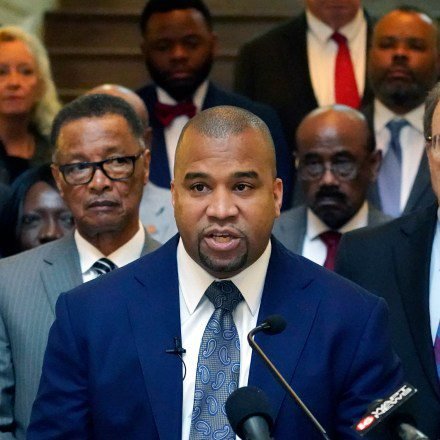
The primary goal state Rep. Justin J. Pearson tells The Intercept Briefing “is to dilute Black political voting power and representation, and it’s starting at the U.S. congressional level.” The Democratic Tennessee state representative for Memphis is running for U.S. Congress in the district at the heart of the state’s re-districting fight. “When you look across the South, the truth is about at least a dozen seats are likely to be taken in this very racist redistricting era that we are in, but it won’t stop there,” Pearson says. “We have over 200 legislative seats in the House and the Senate that are also likely to be eliminated through racist redistricting that is happening.”
Voting rights journalist and author Ari Berman says SCOTUS’s latest blow to voters’ rights is a “power grab.”
This week on the podcast, Berman and Pearson speak to host Jessica Washington about how the latest Supreme Court decision bolsters President Donald Trump and Republicans’ aims to take control of voting in the country.
“This is now the third major decision by the Roberts court gutting the Voting Rights Act,” says Berman. “You can’t understand this latest attack on the Voting Rights Act unless you understand the attacks that came before it, and how this is part of a pattern. … This is part of a larger conservative counterrevolution against the civil rights movement of the 1960s.”
Berman says that this ruling could bring us back to the “dark days” before the Voting Rights Act made the United States a “multiracial democracy.” Now you look at what’s going to happen in these places, in places like Tennessee, in places like Louisiana, Alabama, Mississippi. If they eliminate all of their Black members of Congress, that’s going to make politics a white-only game. If politics is a white-only game, that’s going to mean that white supremacy in some form or another is going to be the dominant politics in those states. It’s already the dominant politics in lots of these states, but it’s going to become much more explicit in terms of how it’s expressed.”
Pearson says that the Supreme Court’s assertion that these protections are no longer necessary is a lie. “The hatred that hung us on lynching trees did not disappear. It dissipated into institutions of power, into state houses, into governor’s mansions, into the U.S. Senate, into the U.S. House, into the presidency of the United States,” says Pearson. “Everybody has to do more than they are currently doing in this moment in time in order for us to preserve this modicum of a democratic constitutional republic. … Because what is likely to happen is the most significant purging of Black political power and elected Black leaders since the end of Reconstruction.”
“The litmus test for America’s progress is not Massachusetts, New York, and California,” says Pearson. “The litmus test for America’s progress is what happens in the South, where 50 percent of Black African American descendants of enslaved people live.”
For more, listen to the full conversation of The Intercept Briefing on Apple Podcasts, Spotify, YouTube, or wherever you listen.
Transcript
Jessica Washington: Welcome to the Intercept Briefing. I’m Jessica Washington, politics reporter at The Intercept.
Maia Hibbett: And I’m Maia Hibbett, managing editor of The Intercept.
JW:Midterms are heating up this week, and Maia, on top of being my editor, you also manage our election coverage. So what’s sticking out with you this week?
MH: This was a really weird week because we’re coming off some primaries where the most-watched races in the country were actually a set of state Senate races in Indiana. And that’s weird because most people don’t even know who their state senator is. It’s very rare to be focused on state legislative elections as the top race.
But this one was seen as a huge test for Trump because essentially he was on this revenge path where a handful of Indiana state senators, Republicans, part of his party, had defied the president when he wanted them to redistrict the state. So he said, I’m gonna primary you, and I’m gonna kick you out of office for not doing what I wanted.
In all but one or maybe two of those cases, the people that Trump backed — so the challengers taking out the incumbents — won. So it looks like, if that was a test of Trump’s power in his base, at least in Indiana, at least there, it looks pretty good for him on that front.
JW: Trump has really set off this redistricting war that’s happening across the country. There was this idea that Donald Trump was going to be weakened by the war in Iran, by the economy. The fact that we’re also seeing redistricting, which generally makes people really angry, also doesn’t seem to be weakening Trump, that sets the stage for something really interesting in the midterms.
MH: It’s a really interesting question because I think it gets at the constant tension in politics between the politician’s identity and the issues.
So on the issues, the conventional wisdom right now is that Trump and the Republicans look really weak going into the midterms, right? People don’t love it when you’re running on lowering the cost of living and not starting new wars — and then you start a new war and spike the cost of living.
But it is still, in my view, a cult of personality around Trump in the Republican Party, and it seems like he still holds a ton of sway over what the Republican base thinks. That’s really interesting if we think ahead, not just to the midterms, but to 2028, which unfortunately we’re already thinking about because even if Democrats have a stronger footing perhaps on a lot of these popular issues right now, they don’t have that figurehead.
JW: Republicans have been unleashed by the Supreme Court ruling striking down Louisiana’s congressional map with a second majority-Black district. The ruling also required there to be evidence of intentional racial discrimination to prove that a congressional map is discriminatory.
Obviously, we know that there’s going to be many new redistricting efforts as a result of this ruling, and we’re going to get into the ruling itself a little later in the episode. But Maia, where are we seeing pushes from Republicans to reshape the map?
MH: Right now, this is according to The AP, as of Thursday, there are four states that are still in flux. Louisiana, as you mentioned; there’s also Alabama, South Carolina, and Tennessee.
This is such an interesting issue because gerrymandering to help your party get seats or keep seats is frankly anti-democratic in the simplest, most literal possible sense of the word. You’re taking some of the power of choice away from the people. But it also puts politicians in a really weird bind because if one party’s doing it, how is the other party supposed to not?
JW: Yeah, as you point out, there’s been a lot of news on that front. On Wednesday, Republicans in Tennessee unveiled a new congressional map that would split Memphis into three distinct districts and further split Nashville and the surrounding counties into five districts. The new Memphis district would span nearly 300 miles. On Thursday, the Tennessee House passed this new map.
Then there’s Virginia. The FBI raided the office of Virginia Senate President Pro Tempore Louise Lucas on Wednesday. She’s one of the leaders in the Democratic-led redistricting fight there, and she’s been a real target of Trump and Republicans’ ire.
On the podcast today, we break down the latest Supreme Court decision with voting rights journalist Ari Berman and Justin J. Pearson. He’s a Democratic Tennessee state representative for District 86 in Memphis. He is also running for Congress in the district at the heart of these redistricting fights. Pearson lays out Republican strategy to eliminate the last remaining Democratic district and gut Black voting power in the South.
But first, we’re going to start with Ari. He’s going to give us more of a bird’s-eye view of what this decision actually means for voters and democracy as we head into an election.
MH: Cool. I’m excited to hear that conversation.
JW: Ari, welcome to The Intercept Briefing.
Ari Berman: Hey, Jessica. Great to see you. Thank you.
JW: Glad to have you on. I want to get into the news of last week. As you’re well aware of, last week, the Supreme Court dealt another blow to the Voting Rights Act, striking down Louisiana’s congressional map with a second majority-Black district, and requiring there to be evidence of intentional racial discrimination to prove that a map is discriminatory.
Ari, you wrote that the Louisiana v. Callais decision “narrows Section 2 of the Voting Rights Act to the point of irrelevance, making it nearly impossible to prove that a gerrymandered map violates the right of voters of color.”
What did you mean by that, and what does this decision mean for voters?
AB: What I meant by that is that the last remaining weapon of the Voting Rights Act is essentially gone. The Supreme Court has already narrowed other parts of the Voting Rights Act, or struck them down altogether, so that the law has lost almost all of its teeth. And now they took away the last part of it, which was the protections against racial gerrymandering — the ability of voters of color to elect candidates of choice.
Basically what they said is, those districts in which voters of color can elect their preferred candidates are unconstitutional. At least, that’s what they ruled in Louisiana. The expectation is that’s what they’ll rule in other places as well.
My big fear with this ruling is that it’s going to lead to a major rollback in representation for candidates of color. It could lead to the largest drop in Black representation since the end of Reconstruction. You could have a situation throughout the South — where the largest percentage of Black Americans live — there could ultimately be no Black representatives. That would take us back to the Jim Crow era, in terms of how representation looks in America.
“You could have a situation throughout the South — where the largest percentage of Black Americans live — there could ultimately be no Black representatives.”
JW: You’re laying out a really scary scenario where we no longer have any of the protections that the Voting Rights Act — that was obviously so hard-won and fought for — those protections are now mostly gone. I guess my question is, for voters as they’re thinking about primaries, November, what does that mean for them?
AB: Voters are going to have less choices. It’s going to mean that red states, in the South in particular, are going to maximize Republican representation. The way they’re going to do that is by eliminating Black representation, because in the South, voting is very racially polarized. By and large, white people vote for Republicans, and Black people vote for Democrats. That was one of the really insidious things that the Supreme Court said in their opinion in Callais was basically that, if Black people support Democrats and Republicans are just targeting Democrats, then it doesn’t matter that Black voters are disenfranchised.
But the fact is that even if race and party are intertwined, this is ultimately about race. This is ultimately about white legislators in all of these states — because all of these Southern states have white-majority legislatures and governors — eliminating Black districts. That means that in a place like Mississippi, for example, that’s 40 percent Black, you could have no Black representatives. In states like Alabama, Louisiana, South Carolina, Tennessee, states with large Black populations, there could be no Black representatives, and that means those communities are going to be underrepresented.
“This is ultimately about white legislators … eliminating Black districts.”
A lot of these communities are alreadyunderrepresented in Congress, and a lot of these communities are already among the poorest, most impoverished areas with the greatest need for representation, and now they’re going to have the least amount of representation. It’s really going to skew representation all across America.
JW: You just brought up Louisiana. And in this episode, we also are going to speak to Justin J. Pearson, a Democratic Tennessee state representative for District 86 in Memphis, about how after the Supreme Court ruling last week, Sen. Marsha Blackburn, a Republican from Tennessee, called for eliminating the one remaining Democratic-held House seat, which is home to Memphis, a majority-Black city.
What’s your reaction to that redistricting effort?
AB: It just reminds me of what happened when Reconstruction ended in the South. That you had a situation where there were Black members of Congress from the South elected during Reconstruction after the passage of the 15th Amendment. And then you had violence, you had fraud, and then you had, ultimately, changing of the laws: things like literacy tests and poll taxes and gerrymandered districts and all-white primaries.
Suddenly, there were no more Black representatives, and that situation lasted for nearly 100 years in the South. When I see states rushing to immediately get rid of majority-minority districts, immediately get rid of districts in which there are Black majorities after this ruling, I think of what happened at the end of Reconstruction.
So it’s a very dark chapter in our history. It’s one that we would like to think we’ve moved past. In his opinion in Callais, Justice [Samuel] Alito talked about all the progress that America has made on race, but he completely ignored the dark parts of American history that could return when laws like the Voting Rights Act no longer exist or are functionally irrelevant.
JW: Do you take the court at face value when they argue that racism, racial gerrymandering, these are issues of our past? Should this be understood as more of a conservative power grab, or are these genuinely held opinions that the court is expressing?
AB: It’s impossible for me to get inside Alito’s head and know that, but I think it’s a power grab, ultimately.
The fact that they not only dismantled the Voting Rights Act but did so leaving Southern states time to actually redistrict for 2026 makes me believe that this is ultimately about a power grab. Because at the very least, they could have waited until June when it was too late for most of these Southern states to be able to redistrict.
Instead, they did it with just enough time for Southern states to redraw their maps. The Supreme Court has said over and over, you shouldn’t change voting laws too close to an election. And now they’ve basically allowed all of these Southern states to change their voting laws in the middle of an election — in some cases, canceling elections to put in place new maps.
This is extremely political to me. It’s extremely partisan. This decision just underscores how partisan, how political, how authoritarian the Roberts court has become.
“The Supreme Court has said over and over, you shouldn’t change voting laws too close to an election. And now they’ve basically allowed [it].”
JW: In her dissent, Justice Elena Kagan touches on just how big of a decision this actually is, and how the court is trying to hide the extent to which this is going to change what voting looks like in this country.
So I’m going to just read a small piece of her dissent: “Under the Court’s new view of Section 2, a State can, without legal consequence, systematically dilute minority citizens’ voting power. Of course, the majority does not announce today’s holding that way. Its opinion is understated, even antiseptic.”
What do you make of what Kagan wrote there? Is this a fair reading of the decision?
AB: Yes, because Alito basically made it sound like he was just updating the VRA, it was just these technical changes, and what Kagan said was, this was a demolition of the law. And it wasn’t the first demolition of the law; it was part of a pattern. This is now the third major decision by the Roberts court gutting the Voting Rights Act.
In 2013, they ruled that states with a long history of discrimination no longer need to approve their voting changes with the federal government. That was the first blow against the Voting Rights Act.
In 2021, they ruled that it was going to be much harder for voters of color to challenge discriminatory voting laws. That was a second major blow against the Voting Rights Act.
“This is now the third major decision by the Roberts court gutting the Voting Rights Act.”
Now they have essentially overturned majority-minority districts, which is a third major blow of the Voting Rights Act.
You can’t understand this latest attack on the Voting Rights Act unless you understand the attacks that came before it, and how this is part of a pattern. A pattern that the Court wants to dismiss, but a pattern that is now impossible to ignore.
JW: To your point, the echoes of the Supreme Court’s 2013 Shelby County v. Holder decision are clearly felt throughout both the dissent and the opinion. For those who don’t know, the Shelby County v. Holder decision effectively struck down Section 5 of the Voting Rights Act, which required certain states and localities to seek preclearance before changing their voting laws. Can you set the stage a little bit more for us about what happened in Shelby County v. Holder, and how we’re still feeling that to this day?
AB: Shelby County v. Holder eliminated the most important part of the Voting Rights Act, because the requirement that states with a history of discrimination, largely but not exclusively in the South, had to approve their voting changes with the federal government. That stopped attacks on voting before they even occurred.
It was like stopping a crime before it had been committed. It was such a powerful tool the federal government had to block voting discrimination. It meant that when all of these Southern states had to do new redistricting plans, they had to be approved with the federal government. Now they no longer have to be approved with the federal government, but they can openly discriminate in terms of these maps.
What was clear at the time was that the Shelby County decision was going to open the door to new attacks on the Voting Rights Act, and the court denied this at the time. Chief Justice John Roberts, who wrote the majority opinion in that case, said this attack on Section 5 of the Voting Rights Act will not affect Section 2, the other part of the Voting Rights Act.
Of course, that’s exactly what happened in 2021, and again in 2026. They attacked the other remaining part of the Voting Rights Act, which makes me believe that they’re not out to get one part of the Voting Rights Act or another part of the Voting Rights Act. They’re out to get the Voting Rights Act altogether, and this is part of a larger conservative counterrevolution against the civil rights movement of the 1960s.
The Voting Rights Act is the most important law of the civil rights movement, of the civil rights era, and that’s why this has been the top target of the right for so many years.
“They’re out to get the Voting Rights Act altogether, and this is part of a larger conservative counterrevolution against the civil rights movement of the 1960s.”
JW: As you point out, it’s been a while since this decision. We’ve had over a decade in between. Do we have any sense that the Supreme Court has been looking at the track record of what happened, the aftermath of them undermining Section 5 of the Voting Rights Act?
Do we have any sense in any of their opinions or writings that they’ve noticed what’s happened, the kind of carnage that they’ve unleashed on the country in this decade-plus since?
AB: No, the Supreme Court completely got all the facts about the aftermath of the gutting of the Voting Rights Act wrong.
Justice Alito said the Black and white turnout gap is narrowing. Well, the elections that it narrowed were 2008 and 2012 when Barack Obama was on the ballot. If you look at what happened after that, in the wake of Shelby County, the Black and white turnout gap has widened. So Justice Alito was just completely wrong in terms of the statistics that he talked about in terms of Black/white turnout, in terms of racial polarization in voting.
The only time that the court has reversed itself was two years ago in Alabama, when they upheld a second majority-Black district in Alabama. That makes the Louisiana ruling even more confounding because the Louisiana case followed from the Alabama case in 2023. It was only because of the Alabama decision, which was authored by John Roberts and joined by Justice Kavanaugh, that Louisiana created a second majority-Black district.
“Alito’s dissent in the Alabama case in 2023 became the majority opinion in the Louisiana case in 2026.”
So some of the justices clearly had buyer’s remorse from that decision. Basically, what happened was Alito’s dissent in the Alabama case in 2023 became the majority opinion in the Louisiana case in 2026.
At some point, someone’s going to write a backstory of how that occurred, but it’s clear that the small victories from voting rights that emanated from the Roberts court have been the exception, rather than the rule. And the rule more often than not has been a steady stream of weakening things like the Voting Rights Act, and more broadly attacking voting rights.
JW: I would definitely read a book on that backstory. I want to ask a little bit more about the history of the Voting Rights Act, because I think to understand what’s happened in the decade-plus since Shelby and what’s likely to happen now, we have to understand how we even got the Voting Rights Act in the first place.
Can you tell us a little bit of that history and how the Voting Rights Act came to be?
“The small victories from voting rights that emanated from the Roberts court have been the exception, rather than the rule.”
AB: The Voting Rights Act was meant to rectify the widespread disenfranchisement of Black Americans in the South who couldn’t vote because of things like poll taxes and literacy tests and grandfather clauses and all-white primaries.
There was a situation where in states like Mississippi, for example, only 6 percent of African Americans were registered to vote. That was a situation that existed for many years in the South. It only changed when there were huge protests of the civil rights movement that people are very familiar with. For example, the march, in Selma, Alabama, on “Bloody Sunday,” March 7, 1965, when John Lewis and civil rights marchers were brutally beaten by Alabama state troopers. The footage from Selma, Alabama really transformed the nation and led to LBJ introducing the Voting Rights Act and Congress passing it overwhelmingly.
It really was a transformative law because of what it did. It got rid of, overnight, those literacy tests and those poll taxes and those things that had disenfranchised Black voters for so many years. It led to a huge registration of previously disenfranchised Americans. Then over a longer period of time, the law was broadened so that it didn’t just help Black Americans, but it helped Americans of color throughout the country, whether it was Latinos or Asian Americans or other language minority groups.
It really made America a multiracial democracy for the first time. It was the first time that you had a situation in which people of color could vote broadly throughout the country, candidates of color could win office, and you had multiracial coalitions being built in America. So it really profoundly shaped American society and American democracy. And I’m very concerned that without that, we’re going to go back to the dark days of racially polarized voting, of Black voters and Black candidates being disenfranchised, of one-party rule and white supremacy being enshrined, particularly throughout the South.
So I think it’s a misnomer to look at the Voting Rights Act in terms of just Black and white. That’s why I always talk about the fact that it made multiracial democracy possible. Because it had a big impact on white voters as well and on white politicians as well, that you didn’t just have to pander to race, and you didn’t just have to appeal to white supremacy to get elected anymore.
Now you look at what’s going to happen in these places, in places like Tennessee, in places like Louisiana, Alabama, Mississippi. If they eliminate all of their Black members of Congress, that’s going to make politics a white-only game. If politics is a white-only game, that’s going to mean that white supremacy in some form or another is going to be the dominant politics in those states. It’s already the dominant politics in lots of these states, but it’s going to become much more explicit in terms of how it’s expressed.
JW: The nightmare scenarios that you’re describing are happening against the backdrop of what the Supreme Court did, but also what the Trump administration is trying to do and Republicans are actively trying to do.
Wired recently ran a story about how the Department of Justice under Trump has essentially dismantled its voting rights [division], going from 30 attorneys to two since he started a second term. What are the implications of this broader attack, both from Republicans and the Trump administration, and now the court as well?
AB: That’s right. You can’t divorce the Supreme Court’s ruling on the Voting Rights Act from the larger context of the attacks on voting rights we’re seeing from the Trump administration. There’s already a mid-decade redistricting war going on that’s trying to eliminate representation for Democrats, and particularly targeting communities of color.
There’s already a huge rollback in civil rights enforcement. The Department of Justice basically doesn’t enforce civil rights laws in America anymore. They’ve weaponized those laws, in fact, to defend white people at the expense of communities of color that these civil rights laws were meant to protect.
You already have the Trump administration, for example, going after elections in Fulton County, Georgia, seizing ballots, demanding names of election workers in the largest county in Georgia, home to Atlanta, which has a huge Black population. So it’s very clear that over and over, the Trump administration has tried to target certain communities.
They’ve tried to target communities that ally with Democrats, and so often those are Black, Latino, other minority communities. That’s why this attack on the Voting Rights Act is part of this larger effort to, in Trump’s words, “take over” the voting system. Some of it succeeded, some of it hasn’t succeeded, but the fact that all of these things happened at the same time is very alarming.
JW: Do voters have any recourse to defend themselves against what appears to be a blatant power grab?
AB: I think, more broadly, there needs to be a lot more investment in the South. A lot of these places, these “red states,” places like Louisiana, Alabama, Mississippi, Tennessee, they’ve been ignored by the national Democratic Party, and I don’t think that can happen anymore.
There has to be investment in these places because if these districts no longer exist, then there’s going to have to be efforts to win in new places and build new coalitions that haven’t existed before. That’s going to take new leaders. It’s going to take new investment. That’s something that needs to be created. That’s one part of it.
I also think that some of the bigger issues that come out of this decision, for example, the need to reform the Supreme Court, the need to actually do something at a national level about the problem of gerrymandering — those are things that voters can demand from their politicians.
What are you going to do about a completely unaccountable and lawless Supreme Court? What are you going to do about the problem of gerrymandering so that states just don’t redraw their maps every year or two when they feel like it because of the political circumstance?
Then I think in terms of what voters can do to protect the election system, voters can become poll workers. Voters can become election monitors. Voters can decide to volunteer for civil rights organizations, things like that. This is an all-hands-on-deck moment for democracy, and people are going to have to get involved in whatever way they think can make the most difference.
JW: Ari Berman, thank you so much for joining me on The Intercept Briefing.
AB: Thank you so much for having me, Jessica.
[Break]
JW: After the most recent Supreme Court ruling further gutting the Voting Rights Act, Tennessee Republican Sen. Marsha Blackburn immediately called for eliminating the one remaining Democratic-held House seat in the state.
Justin J. Pearson is a Democratic state representative in Memphis running for Congress for the district at the heart of Tennessee’s gerrymandering fight. We spoke with Pearson on Tuesday evening as that fight began.
On Thursday afternoon, the state legislature concluded the special session, eliminating the only remaining Democratic-held House District. We speak to Rep. Pearson about the impact this will have on his district and Black voters statewide.
Rep. Justin J. Pearson, welcome to The Intercept Briefing.
Justin J. Pearson: Thank you so much for having me.
JW: After the Supreme Court’s ruling last week invalidating a Louisiana map that — in line with the Voting Rights Act — created two majority-Black districts, Sen. Marsha Blackburn, a Republican from Tennessee, called for eliminating the one remaining Democratic-held House seat in your state, which happens, of course, to be the seat you’re running for and part of your district. What impact is that going to have on your state?
JP: The removal of the only Black-majority district in the state of Tennessee will have detrimental ramifications for our representation and our right to be able to select elected officials of our choosing.
The fact is, this is a racist redistricting and gerrymandering attempt. It is a coup. It is the stealing of a congressional seat on behalf of the president of the United States, the governor, and white supremacist leaders in the state House and state Senate. And I’m using that language very particularly.
This is an election cycle. This is a moment where white supremacy is governing. It’s not what’s best for our citizens. It’s not what’s best for our constituents. But it is a weaponization and a mobilization of power. And stealing it is what this president has asked for the state government of Tennessee to do on his behalf, and it is what they are doing and have done right now in the state.
“It is the stealing of a congressional seat on behalf of the president of the United States, the governor, and white supremacist leaders in the state House and state Senate.”
JW: We’re speaking Tuesday evening after that first redistricting special session that you were part of. What can you tell us about how the first of these sessions taking place this week went down?
JP: Today, committees were assigned, and each of those committees, the biggest ones in the House, was the Congressional Redistricting Committee, there’s a resolutions committee, and a couple of other ones.
But my big concern is these committees are set to operate at the speed of lightning to make a decision that actually undos current statute, which says that there can be no redistricting between apportionments of districts between the census. Now we’re going to undo that law in an attempt to now take a congressional district that would otherwise be directly in contradiction.
“ These committees are set to operate at the speed of lightning to make a decision that actually undos current statute.”
There’s an expectation that we’re going to hold those committees, and that those committees are going to be presented with new gerrymandered maps that break up the only Black-majority district. And the only reason that this is happening at this point in time is because Section 2 of the Voting Rights Act has been gutted, and the ability of Black folks to seek remedies in the judicial system no longer exists in the way that they had before.
They still do exist, but the fact of racial animus and the racial intention has been severely weakened — which is why this case is so devastating. Because our ability to go to the courts and seek remedies from those decisions is really something that has been able to keep the Voting Rights Act in effect. It’s been able to keep Black representation as a possibility in our democracy.
It’s really important to realize we aren’t at this point in our nation’s history of needing a Voting Rights Act because people were just bad, right? It was because of centuries of systematic oppression.
It was violence, lynching, the murdering of people whose bodies were found in the Mississippi River and other small towns all across the South in particular, just for registering to vote or trying to vote. We have to realize the ramifications of what has happened in the state of Tennessee and what is likely to happen in Louisiana, Alabama, Mississippi, and across the South — the Confederacy states — are going to have far-reaching implications for us in this generation and generations to come
JW: People bled out for this. They fought for this. These are rights that are hard-won. In your district, what are you hearing from people in Memphis about, particularly Black people, about how this is going to impact them and the kind of rights that they’re, I’m sure, terrified of losing right now?
JP: I think the first feeling for a lot of people is fear. Fear that they’ll never ever again have the opportunity to send a Black person to the U.S. Congress, that they’ll never — and we’ve been on the campaign trail since October 8 — but that they’ll never really be able to have a voice in the national government is deeply concerning to them as Black people and also for folks who are Democrats. They’re deeply concerned that this won’t happen again because of, again, mid-decade racist redistricting that is happening.
There is some organizing and some energy that has mobilized people into action. We’ve had two busloads of people come up to Nashville every single day — it’d be on Tuesday, Wednesday, and Thursday — who are speaking up and speaking out and saying, “No, this is unfair. This is unjust. This is wrong.” They’re not just coming from Memphis and Shelby County, which I have the privilege of representing in the [Tennessee] House of Representatives for District 86, but these folks are coming from all across the state in small rural counties and other places who fear that their representation will no longer be proximate to them because districts are being created that in some cases stretch 200 miles, just to break up the compactness of our district, just to break up our ability to have Black political power.
That is what is the primary goal of what they’re doing. It is to dilute Black political voting power and representation, and it’s starting at the U.S. congressional level. When you look across the South, the truth is, about at least a dozen seats are likely to be taken in this very racist redistricting era that we are in, but it won’t stop there. We have over 200 legislative seats in the House and the Senate that are also likely to be eliminated through racist redistricting that is happening.
We just have to have people’s eyes wide open to what is going on and to the far-reaching implications this is going to have when you no longer have advocates and people who speak to the concerns, the issues, the culture, the identity of our community.
JW: There’s precedent for what you’re talking about here, for that kind of impact. Back in 2022, Republicans redistricted Nashville in a way that diluted Democratic voters’ influence, making the district lean more toward the GOP. Can you tell us a little bit about what happened then, and what that could mean for the district you represent?
JP: Absolutely. So we did see this in Nashville when the maps were redrawn in 2022. They were forced to have three different congresspeople all representing the city of Nashville. The intention there was to dilute Nashville’s political power, putting them inside of districts where the majority of people probably live very differently, much more rural, vote much more conservatively, and have much less diversity than the city of Nashville does.
Since then, people who live here don’t have representation in the U.S. Congress. The congresspeople don’t have any offices near or around Nashville, and even elected officials that I’ve met who represent Nashville have a hard time accessing any of the people who supposedly are representing them on the federal level.
So the voices in this community have, in effect, been silenced when it comes to the federal government and national government issues, and that has really been detrimental to this community, and many people here will tell you that.
I am deeply concerned that that is the exact same thing that’s going to happen in Memphis. We won’t have a voice in Washington, D.C. We won’t have someone advocating about the issues from the socioeconomic perspective, from public health perspective, from an educational perspective, that can elevate the problems that we know acutely exist in our city.
My city’s the most beautiful place in the world, but we have problems.
A fourth of our adults are living in poverty. We got poor kids because we got poor parents. We haven’t increased the minimum wage to $25 an hour. We need access to universal healthcare in a state that has refused to expand Medicaid. We need housing, 55,000 units of housing for people who make $17,000 a year.
When you understand that history, that tradition, those statistics, not just as numbers on a page, but as something that you feel an accountability to do something about because it’s the community where you live. It’s the community where I’ve grown up. It’s the place that has made me into who I am. That is very different than being connected or thrown into a district that is majority-white in an attempt to silence our voices.
JW: The conservatives on the Supreme Court obviously hold a very different opinion of this issue from you. In this case, and obviously in the Shelby County decision as well, they argue that these protections are no longer necessary because the South has made great strides on racism. As a Black representative who represents a majority-Black district in the South, what do you make of the notion that racial gerrymandering and voter suppression are issues of the past?
JP: Anyone who says that racial gerrymandering and voter suppression and racism no longer exist are lying. The fact that they are saying that shows the depth of racism and the institutionalization of white supremacy in our country, that some people are so enamored with whiteness being right that they don’t see the disparities that are vast and right in front of them.
“Some people are so enamored with whiteness being right that they don’t see the disparities that are vast and right in front of them.”
Black people are still being deprived of educational opportunities. As it relates to housing, Black folks are still living in some of the most segregated neighborhoods in the United States of America. The wealth gap remains about 10 to 1. At every level, Black folks and African American folks are being deprived of life, liberty, and the pursuit of happiness.
In fact, there’s even a case right now of a man named Tony Carruthers who is on death row to be killed on May 21 in the state of Tennessee. Because we know the people who are on death row disproportionately are Black African American people, and even though 10 percent of them could be exonerated, states are using death by lethal injection, or now the federal government wants to do firing squads as a new form of lynching.
Twenty-one percent of Black people can’t vote in the state of Tennessee. Already, 1 out of 5 Black people cannot vote in the state of Tennessee due to felon disenfranchisement. And so for people who are trying to articulate some false narrative and argument that racism is no longer a problem, you are lying.
You are lying to yourselves, and you are lying to communities that are feeling the impacts of racism every single day. Those vestiges are very real, and the hatred that hung us on lynching trees did not disappear. It dissipated into institutions of power, into statehouses, into governor’s mansions, into the U.S. Senate, into the U.S. House, into the presidency of the United States, and that is what we are dealing with right now.
So the Supreme Court has it wrong, but John Roberts has been going after the Voting Rights Act, I think, for [more than 40] years he’s been trying to gut it, since he was a staffer in the White House. So the fact they passed Shelby County v. Holder, which gutted Section 5, and now they passed anti-affirmative action. They wrote an opinion against affirmative action, which again targeted race consciousness, and now gutting Section 2 of the Voting Rights Act is all in sequence of their goal to try and make us somehow believe we live in a colorblind society that just so happens to leave Black African American people at the bottom every single time.
“Their goal [is] to try and make us somehow believe we live in a colorblind society that just so happens to leave Black African American people at the bottom every single time.”
JW: The forces that you’re talking about here of white supremacy are just incredibly strong. We can talk about racial gerrymandering, all of the other issues with racism that we’re dealing with in this country that you just mentioned.
How do we do anything about that? What does resistance look like in this moment? Obviously, in 2023, you were famously expelled from the state legislature for protesting for stronger gun control laws in the wake of a mass shooting in Nashville. That expulsion disenfranchised the voters in your majority Black district.
But instead of accepting an early retirement, you went on to win your district in the next election and continue to fight Republicans in the legislature. Do you think your story has any lessons for how people fight back against this behemoth of white supremacy and this energy of racial disenfranchisement?
JP: It’s multifaceted, the fight back. Here we are three years later from April 6, 2023, and Republicans are at it again disenfranchising our community and seeking to disenfranchise 750,000 people, both white and Black, but majority-Black district here in District 9. The fact of the matter is this: We did not quit then, we must not quit now.
“I do not believe that when I die, this is the type of America that we’re going to live in.”
As horrible as this decision is by the U.S. Supreme Court, what we also need to internalize is we need to organize for the next 50 years. Because I do not believe that when I die, this is the type of America that we’re going to live in. But that isn’t going to happen if we throw our hands up, if we quit, if we say, “Oh, there’s nothing we can do.”
Certainly, you can go quit and go get a job in corporate America, make six figures doing all those other things. But the reality is, if you are living in a society that structurally is designing itself to make you less than, structurally designing itself to tell my wife she is less than, my nephew’s sons, that they are less than American citizens, they’re less than human beings — if you sit on the sidelines at such a time in a critical and crucial moment as this, you are a part of the problem.
I understand some folks are working 80 hours a week just to make it. I get that. But there are some people who are retired, and they’re sitting on the couch, and they won’t pick up the phone to call their state House member, their state senator, and their governor. There are some people who are just hoping and praying in pews, but they’re not willing to show up and help people get to the polls.
That is what we have to quit on. Everybody has to do more than they are currently doing in this moment in time in order for us to preserve this modicum of a democratic constitutional republic that very quickly is being disrupted and destroyed at every single turn. Because what is likely to happen is the most significant purging of Black political power and elected Black leaders since the end of Reconstruction.
That’s what we’re looking at here. This is not a joke. This is not a game. And to anyone who says I would have been there with Dr. King, I would have been marching in the 1960s and 1950s. As one pastor said to me, “Whatever you are doing now is what you would have done then.” And people need to realize they have a responsibility now to do more.
“What is likely to happen is the most significant purging of Black political power and elected Black leaders since the end of Reconstruction.”
JW: Do you feel as if your Democratic colleagues, both in the state legislature and nationally in Congress, do they have your back on this? Are they allies in this? Do you feel like they have that fight in them that you’ve mentioned?
JP: I am seeing more fight right here in the statehouse than I’ve seen in the last three years. People realize that the racism, the bigotry, the white supremacy that for too often has been cloaked in decency and niceness was all a façade.
We get caught up being told you have to learn to work across the aisle. I have done it. I passed resolutions with Republican co-sponsorship, signed on to some Republican bills, but we cannot forget that the roots of the institution are rotten.
They are designed to defeat our ability to resist, to speak up, to stand up against what’s happening.
In this moment in time, what I will say is, we need more support. We need more support. We need in every state, in every city that this is happening, we need a cadre of Congressional Black Caucus members coming to speak and to testify. We need dozens of nonprofit organizations, like we have right here in Tennessee, coming together to fight back and to resist and to speak up and to shout and to sing and to testify and to speak and to organize power at the ballot box. Not just registering people to vote, but making sure people actually get to the polls.
“The South is where the litmus test for America’s future is.”
The South is where the litmus test for America’s future is, and I’ve said this for years. The litmus test for America’s progress is not Massachusetts, New York, and California. The litmus test for America’s progress is what happens in the South, where 50 percent of Black African American descendants of enslaved people live.
If we continue to be neglected, millions of us, tens of millions of us, are going to continue to live under authoritarian, anti-democratic, mobcratic rule, and that is wrong. That should rouse this nation into action. It should force people who might not otherwise show up to show up and to speak up and to do more because their voices are the voices that we’re going to lean on and rely on to help change the status quo that is deeply impacting our states.
JW: Thank you, Rep. Pearson. Those were all of my questions, but do you have any final thoughts to share with our audience?
JP: I think what’s really important here for Black America is to realize this: We did not just come this far to get this far, and our ancestors who marched, who protested, who bled, who died, who were assassinated, who were taken from their families much too soon and too young, like 39-year-old Dr. Martin Luther King Jr., like Medgar Evers, who was quite young and in his 30s, and Fannie Lou Hamer, who was beaten by police officers and other folk. We didn’t come this far easily. This is a difficult road that we trod, as our Black National Anthem says, but we were built for this moment in time.
As a spiritual person who practices Christianity, I have to tell you this: I think we have been sent for such a time as this. And everybody who is alive right now has a responsibility in this moment to do something. So if that is march, do that. If that’s protest, do that. If that’s run for office, do that. If that’s sign a petition, do that.
But you’ve got to do something because the moment is coming where somebody’s going to look you in the eyes, somebody who is not born yet, and they will say, “What did you do in the year 2026, in our 250 year of this country, when democracy was crumbling?” And you need to have a response.
JW: Thank you, Rep. Pearson. We really appreciate you coming on The Intercept Briefing.
JP: I appreciate you, too, and thanks so much for having me.
JW: And that does it for this episode.
This episode was produced by Laura Flynn. Ben Muessig is our editor-in-chief. Maia Hibbett is our managing editor. Chelsey B. Coombs is our social and video producer. Fei Liu is our product and design manager. Nara Shin is our copy editor. Claire Mullen mixed our show. Legal review by David Bralow.
Slip Stream provided our theme music.
This show and our reporting at The Intercept doesn’t exist without you. Your donation, no matter the amount, makes a real difference. Keep our investigations free and fearless at theintercept.com/join.
And if you haven’t already, please subscribe to The Intercept Briefing wherever you listen to podcasts. Do leave us a rating or a review, it helps other listeners to find us. Let us know what you think of this episode, or If you want to send us a general message, email us at podcasts@theintercept.com.
Bahrain Arrests 41 Suspects Accused of Links to Iran’s Revolutionary Guards
Bahrain announced Saturday that authorities arrested 41 people accused of belonging to a network tied to Iran’s Islamic Revolutionary Guard Corps, saying the group was involved in activities linked to espionage and support for Iranian operations.
The Interior Ministry said security agencies uncovered the organization during investigations conducted by the public prosecutor into cases involving “espionage on behalf of foreign entities and sympathy for Iranian aggression.”
The arrests come as Bahrain has increased internal security measures during ongoing regional tensions involving Iran, Israel, and the United States. Bahrain hosts a major US military base and was among the Gulf countries affected by Iranian attacks launched after US and Israeli strikes on Iran.
In a statement issued Saturday, the Saudi Foreign Ministry said Riyadh fully supported Bahrain’s efforts to confront actions aimed at destabilizing the kingdom.
The ministry also praised Bahraini security forces, commending what it described as their effectiveness in preventing attempts to threaten national security.
Since the regional conflict began, Bahraini authorities have taken steps against people accused of publicly supporting Tehran. Last month, Bahrain revoked the citizenship of 69 individuals accused of expressing support for Iran.
The Bahraini Interior Ministry repeated Saturday that the case stemmed from earlier investigations tied to foreign-linked espionage activity and support for Iranian actions.