Europeans celebrate unity, values and democracy on Europe Day 2026
On 9 May, Europeans will celebrate Europe Day.
This year marks the 76th anniversary of the Schuman Declaration, which laid the foundations for the European Union as we know it today, and led to an unprecedented era of peace, democracy, prosperity, integration and cooperation across the continent.
In 2026, Europe Day also marks two important milestones: 40 years since Portugal and Spain joined the EU, and 40 years since the first official Europe Day celebrations.
To mark the occasion, many events will take place across EU Member States and beyond, bringing together citizens from all walks of life. The EU institutions will open their doors to visitors, offering educational activities about their work, as happens every year.
Landmark buildings and monuments across Europe and around the world will be illuminated in the EU colours.
In a rapidly changing world, the EU and its institutions are working to protect democracy, boost prosperity and strengthen security. Europe Day is an opportunity for citizens and their institutions to come together to celebrate their shared community and achievements.
The European Parliament invites citizens to discover how EU legislation shapes everyday life and how they can influence Europe’s future, under the motto ‘Come and See Democracy in Action.’ Doors open at 10:00 CEST in Brussels with a performance by the European Parliament Choir, followed by a solemn opening ceremony at 11:00 CEST in the Hemicycle, with addresses by European Parliament President Roberta Metsola and Vice-President Sophie Wilmès. Visitors can take part in quizzes, presentations and discussions, enjoy family-friendly activities, and follow a live music stage on the Esplanade. In Luxembourg, activities will include guided tours of the Europa Experience and an exhibition on the fight against disinformation. The following day, a rich cultural programme is planned in Wiltz, in the presence of H.R.H. the Grand Duke of Luxembourg.
The European Council / Council of the European Union will open its doors for guided tours in the Justus Lipsius building in Brussels, offering a rare look at where key European decisions are made. Each of the 27 Member States will host a stand showcasing their culture, traditions and culinary specialties. Children will enjoy a treasure hunt and a fun fact quest, while a photo booth will allow visitors to take a selfie on the red carpet, in the shoes of an EU leader.
The European Commission will open its iconic Berlaymont building in Brussels to the public starting at 10:00 CEST with an address by Executive Vice-President Teresa Ribera. Under the slogan ‘Europe’s Moment’, visitors will explore interactive thematic spaces covering democracy and values, climate, prosperity, social justice, security and Europe’s global role, alongside an art and architecture trail. The celebrations will continue into the evening with free live music from 18:30 CEST at Place des Palais in Brussels.
The European Central Bank will take part in Frankfurt‘s Europa-Fest on the historic Römerberg market square, alongside the European Insurance and Occupational Pensions Authority and the Anti-Money Laundering Authority, where visitors will meet experts and enjoy interactive games. The European Central Bank will also be present at the Europa Building in Brussels, where experts will answer questions about the euro, the new banknote redesign and the digital euro project.
The European External Action Service will open its Brussels headquarters from 10:00 CEST to 18:00 CEST, inviting visitors to ‘Step inside EU Diplomacy.’ The programme includes interactive exhibits, meetings with EU ambassadors, and live video calls with EU staff worldwide. The event will also feature ‘The World in One Day’, a cultural celebration with music, dance, freestyle football, crafts and family activities. An opening ceremony will take place at 11:00 CEST in the presence of representatives of partner countries and international organisations.
The European Committee of the Regions will open its doors in Brussels on Europe Day, inviting visitors to discover how the institution representing Europe’s regions and cities works, and what regional and local elected politicians do for them. Visitors will learn about the Committee’s role and activities, explore its political groups, and experience European cultural diversity at the Festival of Regions and Cities, which will showcase projects, arts and crafts, and offer tastings of local produce.
The European Economic and Social Committee will welcome the public to its Brussels premises at rue Belliard 99-101 from 10:00 CEST to 18:00 CEST. Visitors will meet members and staff, join guided tours in different EU languages, and discover how civil society shapes EU policies. The programme includes thematic stands, a puzzle sticker game, a caricaturist, a postcard station, live music and children’s activities. French EESC members will also take part in the ‘Fête d’Europe’ in Paris.
The European Investment Bank Group Permanent Representation will showcase the Group’s role and activities in the Europa building in Brussels. Interactive quizzes and videos will highlight investments across the 27 EU Member States. On 10 May, colleagues from headquarters in Luxembourg will host the same stand at the EU Village in Wiltz, Luxembourg.
In Strasbourg and Luxembourg, EU institutions will also open their doors in May. The European Parliament’s Strasbourg Open Day will take place on 17 May, with visits to the hemicycle and a full civic and cultural programme. Luxembourg will mark Europe Day on 9 May with cultural events and information stands at the Parliament’s Grand Duchy premises.
Across the EU and around the world, in every Member State, European Commission Representations and European Parliament Liaison Offices will organise local Europe Day events — from public debates and school visits to exhibitions and cultural gatherings. Beyond Europe, EU delegations will mark the occasion with public events and outreach worldwide. Landmark buildings across the globe will be illuminated in EU colours.
For three decades after the Cold War, Washington operated under a dangerous assumption: that military supremacy could indefinitely compensate for diplomatic exhaustion.
The United States possessed the world’s most advanced armed forces, unmatched naval reach, and a financial system capable of weaponizing sanctions against adversaries thousands of miles away. From the Balkans to Baghdad, this power often created the appearance of control. But appearances in geopolitics have a short shelf life.
The latest confrontation with Iran has exposed something American policymakers have resisted admitting for years. The age of uncontested US primacy is ending — not because America has suddenly become weak, but because the structure of global power has changed faster than Washington’s strategic imagination.
What makes this realization especially painful is that the erosion of American leverage has not primarily been imposed by enemies. Rather, much of it has been self-inflicted. Great powers, history shows, rarely collapse from a single defeat.
They decline by confusing military capacity with strategic wisdom. Imperial Britain learned this after Suez in 1956. The Soviet Union learned it in Afghanistan. The US now risks learning the same lesson in the Persian Gulf.
The Iran confrontation is demonstrating a striking paradox. America can still inflict enormous damage, yet it struggles to achieve decisive political outcomes. That distinction matters because military victories are tactical events while political victories define history.
Why endless pressure produced diminishing returns
Washington’s Iran policy has oscillated between coercion and fantasy. One administration tears up agreements in pursuit of “maximum pressure.”
Another attempts partial diplomacy while maintaining the architecture of sanctions. Then comes another round of threats, military deployments, cyber operations and economic restrictions. But Washington’s underlying assumption never changes: eventually, Tehran will break under pressure.
Yet states under sustained pressure often adapt instead of surrender. Iran’s survival strategy resembles what smaller powers throughout history have done when confronting stronger adversaries. Vietnam did it against the US.
Hezbollah did it against Israel in 2006. Ukraine, despite vastly different circumstances, is using similar principles against Russia. The objective is not necessarily outright victory. It is denial, making the cost of domination too high for the stronger actor to sustain politically.
That is precisely where Washington appears trapped. Despite overwhelming military advantages, the US is discovering that geography, asymmetric tactics, regional alliances and domestic political outrage and fatigue can neutralize conventional superiority.
The Strait of Hormuz alone remains one of the world’s most critical economic chokepoints. Roughly one-fifth of global oil consumption passes through it. Even limited instability there can send shockwaves through global markets. This creates leverage for Tehran that no sanctions package can entirely erase.
American strategists often speak as though power flows only from aircraft carriers and GDP figures. But geopolitical leverage can emerge from disruption. A weaker actor capable of creating uncertainty inside the global economy possesses a form of deterrence of its own.
The uncomfortable reality is that Washington’s approach has often strengthened the very behavior it hoped to eliminate. Decades of sanctions did not produce regime collapse.
They incentivized Iran to deepen ties with China, expand regional proxy networks, and accelerate domestic military adaptation. Pressure became the engine of resistance.
Multipolarity is no longer theory
For years, discussions about a “multipolar world” sounded abstractly academic. Policymakers in Washington still behaved as though America could unilaterally organize global outcomes while competitors remained secondary players. That world, by all measures, no longer exists.
China’s rise is not merely the result of Beijing’s economic planning or industrial capacity. It has also been accelerated by persistent American strategic overreach. The Iraq war alone cost trillions of dollars while diverting attention from Asia during the very decades China was consolidating manufacturing dominance, technological growth and global infrastructure influence.
History offers a cruel irony here. The US won the Cold War partly because the Soviet Union exhausted itself in unsustainable geopolitical competition. Yet Washington increasingly risks reproducing the same mistake through perpetual military commitments and open-ended confrontations.
Meanwhile, other countries are adapting accordingly. Saudi Arabia now balances relations between Washington and Beijing. India buys Russian oil while deepening ties with the US.
Turkey pursues an aggressively independent regional policy despite NATO membership. Even longtime American allies increasingly hedge rather than align automatically. This is what declining primacy looks like in practice — not dramatic collapse, but gradual diversification.
The phrase “indispensable nation,” once popular in American foreign policy circles, now sounds less like confidence and more like nostalgia. Nations no longer assume Washington’s approval is necessary before pursuing their interests.
Iran understood this earlier than many in Washington did. Years of sanctions pushed Tehran eastward economically and strategically. China became a lifeline. Russia became a partner of convenience.
The BRICS bloc expanded. Dollar alternatives, while still limited, gained momentum. None of this means the US is about to be displaced as the world’s dominant power. But it does mean the costs of coercive unilateralism are rising rapidly.
The nuclear temptation and failure of deterrence theology
One of the most dangerous consequences of prolonged instability is the growing belief that nuclear weapons are the only reliable guarantee of sovereignty.
This argument has gained traction not just in Iran but globally. Nuclear North Korea’s regime has survived. Libya, on the other hand, disarmed and spectacularly collapsed. Ukraine surrendered Soviet-era nuclear capabilities decades ago and later faced invasion.
The lesson many states draw is brutally simple: weakness invites external intervention. But nuclear deterrence is not the universal insurance policy its growing number of advocates imagine.
Pakistan and India both possess nuclear arsenals, yet continue operating under chronic instability. Israel’s undeclared nuclear capability has not prevented repeated regional conflicts. Nuclear weapons may deter total invasion, but they do not eliminate insecurity, proxy warfare, economic stagnation or internal political dysfunction.
The deeper problem is psychological. Once enough states conclude that international law cannot guarantee sovereignty, nuclear proliferation becomes an increasingly rational response. That is not merely a Middle Eastern problem – it is a global one.
And coercive diplomacy accelerates this logic. When powerful states appear unwilling to negotiate in good faith, weaker states search for irreversible deterrents. The tragedy is that every new proliferation crisis then becomes justification for further militarization, creating a cycle with no stable endpoint.
Diplomacy requires humility, not slogans
The most striking weakness in modern American foreign policy is not military overstretch but diplomatic arrogance.
Too often, Washington approaches negotiations with adversaries as exercises in dictation rather than compromise. Yet durable agreements require mutual concessions, even between unequal powers.
The JCPOA nuclear agreement with Iran succeeded precisely because it acknowledged this reality. It was imperfect, but it created verification mechanisms, reduced tensions and prevented immediate escalation.
Its collapse demonstrated something larger than partisan dysfunction. It revealed how fragile diplomacy becomes when domestic political theatrics override strategic continuity.
Sanctions relief, regional security guarantees and international enforcement mechanisms involving other major powers such as China and Russia are almost certainly required for any sustainable settlement with Iran.
That prospect will make many uncomfortable in Washington because it implies sharing responsibility in a world no longer organized around unilateral American command. But diplomacy in a multipolar era cannot function otherwise.
The US still possesses enormous advantages: military reach, technological innovation, cultural influence and financial power still unmatched by any rival coalition. Yet strength without restraint becomes self-defeating.
Empires often assume credibility depends on demonstrating force. In reality, credibility depends on demonstrating judgment. The lesson emerging from the Iran confrontation is therefore larger than the Middle East itself.
America’s greatest strategic challenge is no longer defeating enemies abroad. It is adjusting psychologically to a world where dominance has limits. History suggests that great powers that recognize those limits early adapt successfully. Those who deny them usually learn the hard way.
M A Hossain is a senior journalist and international affairs analyst, based in Bangladesh.
Sony says “efficient” AI tools will lead to even more games flooding the market
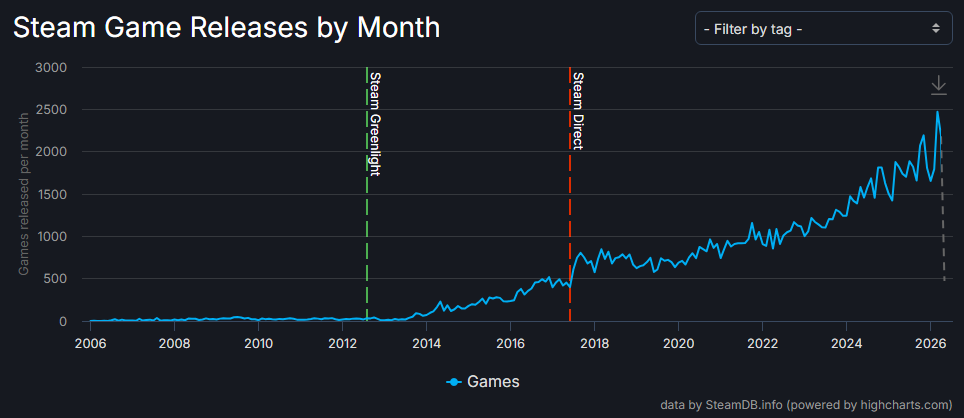
Anyone following the modern game industry knows that easy-to-use game engines and the accelerating shift to digital distribution have helped enable a massive increase in the quantity of commercial games released each year, both on console storefronts and especially on Steam. Now, Sony Interactive Entertainment President and CEO Hideaki Nishino says we should expect the rate of new game releases to accelerate even faster as new AI development tools make it easier for developers big and small to pursue new projects efficiently.
In a presentation to investors on Friday, Nishino noted that Sony “expect[s] to see a meaningful increase in the volume and diversity of content available to players” in the near future. That increase is the inevitable result of AI development tools that are “lowering barriers to creation, accelerating development cycles, and enabling more creators to enter the market,” he said.
By way of evidence, Nishino cited Sony’s first-party game development efforts. Gamemakers inside Sony are already using AI tools to “automat[e] repetitive workflows” in areas like quality assurance, 3D modeling, and animation, he said.
That includes a 3D animation tool called Mockingbird that Nishino said allows Sony artists to convert raw motion capture data into in-game animation much faster. While this tool can’t replace the motion-capture actors themselves, it means that “animation work that would have taken hours can now be completed in a fraction of a second,” Nishino said.
Machine learning tools have also been able to take in “videos of real hairstyles” and apply them to automated animation models that can realistically model “hundreds of strands,” replacing the “labor-intensive process” of animators placing those strands individually, Nishino said.
Elsewhere in the presentation, Sony Group President and CEO Hiroki Totoki praised the increased “efficiency” enabled by AI tools, saying it would, in turn, lead to “more innovative and ambitious projects—projects that were previously difficult to pursue due to constraints of cost and time.”
Totoki also highlighted a pilot partnership with publisher Bandai Namco that “identified massive gains in speed and productivity per person” in video production. While the team has needed to fine-tune generic AI models to prevent problems of “consistency and controllability,” Totoki added that these models can, in some cases, help enable “highly sophisticated and realistic outputs which were not feasible before due to production time constraints.”
The number of monthly Steam releases was already trending upward well before AI entered the picture
The number of monthly Steam releases was already trending upward well before AI entered the picture Credit: SteamDB
Even as AI enables a flood of new game releases, Sony said it believes AI will help players navigate that glut. AI models can already “outperform manual curation” when it comes to suggesting new games players might enjoy, Nishino said, and could soon also suggest “the next gameplay moment, subscription, accessory, or merchandise that best reflects their passion.”
The human equation
Despite Sony’s predictions, there isn’t necessarily a direct relationship between developer efficiency and the raw number of game releases over a given period. Gains in efficiency could reduce the total number of human developers working on a project, rather than the total time spent on it, for instance. On the other side of things, more efficient development tools could increase the baseline quality expectations for high-end game development, meaning more time is needed to meet that baseline.
Despite Sony’s bullishness on AI’s game development potential, the company stopped well short of suggesting that AI could replace game designers wholesale or make entire games from scratch. Nishino said directly that “AI is meant to augment [developers’] capabilities, not to replace them,” and that humans will always be responsible for “the vision, the design, and the emotional impact of our games.”
Speaking more broadly, Totoki said Sony maintains a “core principle” that “human creativity must remain at the center” of the company’s creative efforts. Totoki called AI “an amplifier of human imagination” while saying in practically the same breath that “great content comes from deep personal experiences, unique perspectives, and a strong inner motivation to express something meaningful.”
At the same time, though, Nishino suggested that Sony’s development teams have created “prototypes where NPCs with their own personalities can create a living, dynamic world for the player to explore.” It’s unclear what role human artists would have in a world where NPCs can have their own AI-generated “personalities,” but it would definitely be a far cry from the role they play in game development today.
Big Finance Might Be Dooming the SPLC — Even Before Its Day in Court
Rainey Reitman is the author of “Transaction Denied: Big Finance’s Power to Punish Speech,” and the co-founder and board president of the Freedom of the Press Foundation.
The Southern Poverty Law Center is preparing for the legal fight of its life with the U.S. government — but its most immediate threat is coming from the financial system, rather than the courts.
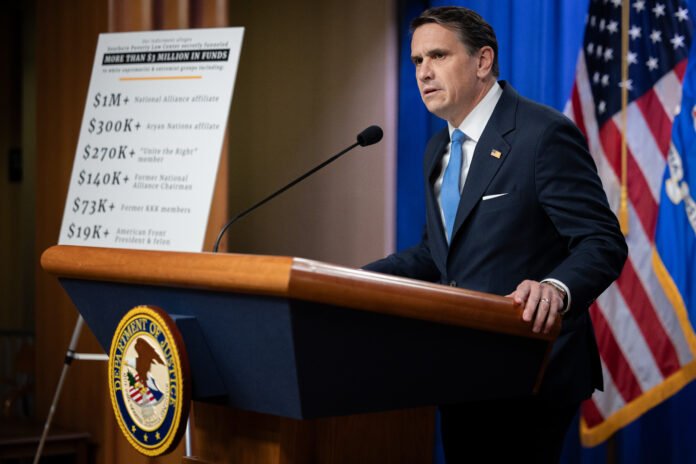
Fidelity Charitable, Charles Schwab affiliate DAFgiving360, and Vanguard Charitable have begunblocking donor-advised fund, or DAF, donations to the SPLC — effectively cutting off one of the organization’s most important funding pipelines at a critical moment. The decision arrives alongside a politicized and bogus indictment announced late last month by the Trump Department of Justice, which is attempting to paint one of the country’s most prominent watchdogs against hate and racial violence as a promoter of it.
A letter from Democratic Reps. Jamie Raskin and Mary Gay Scanlon notes the House Judiciary Committee has received whistleblower reports that the DOJ “ordered the U.S. Attorney’s Office for the Middle District of Alabama to rush through the indictment of the SPLC despite serious concerns about the strength of the case.” As Alabama Reflector editor Brian Lyman wrote, “DOJ has no evidence of SPLC committing a crime. The organization’s real offense, in the eyes of Trump’s toadies, is its lack of obedience.”
But before any courts can assess the merits of the case, the SPLC is already suffering severe financial consequences.
Donor-advised funds have become a key part of American philanthropy. Managed by firms like Fidelity and Vanguard, DAFs allow donors to receive immediate tax benefits while recommending grants to IRS-recognized nonprofits over time. They are one of the primary channels many nonprofits use to connect with donors.
Vanguard, Schwab, and Fidelity are punishing a lawful nonprofit organization that hasn’t been convicted of any wrongdoing.
What’s happening to the SPLC fits a broader pattern of using financial exclusion to punish speakers who challenge those in power. In 2010, after WikiLeaks published State Department cables that embarrassed the U.S. government, major financial institutions — including Visa, Mastercard, and Bank of America — cut off its ability to receive online donations. The punishment happened without WikiLeaks ever having a chance to defend itself in a court of law. The consequences were devastating for the organization, which lost more than 95 percent of its revenue the following year.
That episode is often treated as a one-off, but my research has shown that’s far from the case. I’ve spoken to dozens of law-abiding U.S. citizens who’ve lost financial services due to speech or political viewpoints — groups like VoteAmerica, which had a bank account closed by Chase Bank and was denied an account by First Republic Bank, and the National Committee for Religious Freedom, which also had its bank account shuttered by Chase. I detail these and many other cases in my newly published book, “Transaction Denied: Big Finance’s Power to Punish Speech.”
As with the SPLC, financial censorship sometimes happens to those who have been merely accused of a crime. I’m reminded of the case of a Stop Cop City activist who faced charges for participating in an anti-police protest in Atlanta. The Daily Mail wrote a disparaging news article about her, calling her “an Antifa terrorist who is part of the Atlanta cell.” Shortly after that article was published, Chase closed the bank account she’d held for years, citing “negative media.”
The implications of this type of censorship go beyond the individual accounts impacted; it has a chilling effect on anyone who wants to attend protests or engage in advocacy. Like WikiLeaks before and the SPLC today, organizations and individuals who challenge the status quo must fear drawing the ire of the corporations that wield immense power over our financial lives.
We’ve also seen financial corporations try to police the news, as with a 2022 policy rolled out by PayPal that promised a $2,500 fine to any accounts spreading “misinformation” — a term left conspicuously undefined. PayPal was widely criticized and swiftly retracted the policy. Given the Trump administration’s open hostility to journalism and its novel legal tactics to attack the press, it’s entirely possible that the next target of financial censorship could be a news outlet after the WikiLeaks blockade set the precedent.
Courts have recognized the danger when the government plays a direct role in shuttering financial accounts. In Backpage.com v. Dart, the 7th U.S. Circuit Court of Appeals compared a government official pressuring credit card companies to end services to a website as similar to suffocation, saying it was like “killing a person by cutting off his oxygen supply rather than by shooting him.” The Supreme Court has also seen the dangers of financial companies policing speakers at the behest of the government, noting in National Rifle Association of America v. Vullo that intermediaries like financial companies won’t stand up for free expression because they “will often be less invested in the speaker’s message and thus less likely to risk the regulator’s ire.” But in both of these cases, the government pressure was overt and coercive, triggering the First Amendment protections for the speakers involved.
The case of SPLC is more ambiguous but no less troubling. As of now, there is no public evidence that the government contacted Vanguard, Schwab, or Fidelity directly. Instead, these financial giants are justifying their decisions by pointing to their own terms of service, which they can write and amend as they see fit and which don’t trigger the same First Amendment concerns.
But the ethical and societal concerns are just as important. Vanguard, Schwab, and Fidelity are punishing a lawful nonprofit organization that hasn’t been convicted of any wrongdoing. These companies are under no obligation to shut off SPLC donations at this time. The San Francisco Foundation, which also oversees donor-advised funds, has promised to continue sending DAFs to SPLC, noting, “we are guided by our values and by our donors, not shifting political winds.”
The result of Vanguard, Schwab, and Fidelity’s decisions could be devastating for the SPLC, which will have fewer resources available to fight this politicized prosecution. Regardless of how one feels about the SPLC, we should all object to weaponizing the financial system this way.
This is a problem across the ideological spectrum. The SPLC has itself championed the idea that DAFs should stop the flow of donations to conservative nonprofit organizations it alleges promote hate and racial violence. Pressuring financial intermediaries to advance a political agenda when no court has weighed the merits of a case is no more appropriate in those cases than it is in this one.
What is particularly ironic about this moment is that President Donald Trump himself has spoken out against financial exclusion used as a political weapon, going so far as to sign an executive order against debanking last year that attempted to stop “politicized or unlawful debanking.” But under his administration, one of the country’s most prominent civil rights organizations now faces a sudden constriction of its funding channels.
A financial system that shutters or blocks the accounts of advocacy organizations that have not been convicted of any wrongdoing is not neutral. It is a system that can be used to sideline communities and activists — without ever stepping into a courtroom.
Kids Are Being Harmed by Tear Gas, Pepper Spray Under Trump. There Could Be Long-Term Consequences.
Reporting Highlights
Harming Children: Kids were in cars, at home and walking to school when tear gas or pepper spray left them wheezing, coughing and struggling to breathe. The weapons are especially toxic to kids.
Excessive Force: Judges described the use of these “less lethal” weapons as excessive but had no power to curb them nationwide. Kids in other communities continued to get hurt.
No Uniform Standards: DHS policies on the weapons are less strict than those of some local police departments. The agency’s inspectors general found officers have historically been undertrained.
These highlights were written by the reporters and editors who worked on this story.
The children were walking to school in Broadview, Illinois, or leaving a shopping center in Columbus, Ohio. They were at home in Minneapolis, or sitting in a stroller in Chicago, or at an afternoon protest in Portland, Oregon, alongside dogs on leashes and older people pushing walkers.
They were mostly going about their days when federal immigration agents shot tear gas or fired pepper spray near their homes and schools and into their family cars.
The chemicals blew through the air, sometimes for blocks. They seeped into bedrooms, forcing an asthmatic teen to gasp for air. They stuck to the skin of a young girl, who cried, “It burns!” They caused an infant to stop breathing.
ProPublica identified 79 children across the country who have been harmed by tear gas or pepper spray as immigration officers dramatically stepped up their use during President Donald Trump’s immigration crackdown.
The Department of Homeland Security has repeatedly defended its use of the chemicals, asserting its agents aren’t to blame. The fault, a spokesperson said, lies with “agitators” in the crowds and parents who put their children in harm’s way.
But videos reveal the way agents use these weapons. One captures them releasing tear gas into a crowd with at least seven kids just before someone yells, “There’s children here.” Another shows them hurling tear gas canisters at protesters without apparent provocation; then, with the streets already flooded with white smoke, a Customs and Border Protection agent wearing a body camera shoots pepper balls before muttering, “Fuck yeah,” and shouting, “Woo!”
A CBP officer cheers after other agents threw tear gas canisters and shot pepper balls at protesters outside an Immigration and Customs Enforcement facility in Broadview, Illinois.Obtained by ProPublica
A third shows what happened after an officer fired pepper spray through the driver’s side window of a family’s car, hitting a 1-year-old girl in the back seat; a bystander filmed her in tears, and her family later said she was struggling to breathe. A DHS spokesperson called the incident “a disgusting pepper spray hoax.” But a local pastor who was at the scene rebuked the claim, testifying at an Illinois state accountability commission that “there’s literally video evidence.”
Such scenes of billowing gas and tear-stained faces have prompted some historians to liken the scope and intensity of the agents’ deployment of chemical munitions to brutal crackdowns by Southern law enforcement during the Civil Rights Movement.
And the legality of their use has been challenged. In cities across the country, judges have excoriated both Immigration and Customs Enforcement and CBP, saying their officers used excessive force. One judge said the agents showed “deliberate indifference” to the risks, including to children. They ordered officers to limit the use of these weapons in areas that were the focus of lawsuits. But they had no power to curb the practice nationwide — and kids in other communities, ProPublica found, continued to get hurt.
The controversy over the chemicals has highlighted a lack of consistency in their use: No national standard governs the use of tear gas and pepper spray by law enforcement, and agency policies differ widely. As a result, agents working for DHS could more freely use tear gas in targeted cities like Minneapolis and Portland, where local police policies are stricter.
A Portland officer said in a court declaration that he and several colleagues were tear-gassed by federal agents while observing and patrolling a protest he deemed to be mostly peaceful. At another event, in which he served as incident commander, he said the agents’ use of tear gas was “excessive and disproportionate to the threat posed” and “affected hundreds of peaceful protesters.”
These weapons are toxic, especially to children, who breathe more rapidly, pulling in more contaminated air than adults relative to their body weight. That principle is why coal miners once brought canaries underground, as one emergency medicine doctor explained in a recent court declaration. Because of the birds’ quick breaths and small size, they would stop singing or die when the chemicals started affecting them, giving the miners time to escape. Children are also vulnerable because they have narrower airways and stand closer to the ground, where tear gas tends to pool.
The Trump administration’s use of tear gas has been so extreme — with some children exposed multiple times — that the only research ProPublica found that might approximate the impact is a 2018 survey of Palestinian refugees in the West Bank subjected to the chemicals by Israeli security forces. Kids reported rashes and chronic tonsillitis, but no one knows the extent of the long-term consequences.
ProPublica’s tally of kids harmed by tear gas or pepper spray is nearly four times the number cited in a recent congressional report that relied on news stories, yet it is likely still a vast undercount. We verified incidents by interviewing more than 40 victims or witnesses and reviewing officer-worn body camera footage, social media posts and lawsuits. We included only cases in which we spoke to parents or others with direct knowledge, found at least two news accounts confirming the incident or identified an episode from sworn testimony.
In many of the cases where children were harmed, a DHS spokesperson said, the officers were justified in using tear gas or pepper spray, but the agency did not address how the weapons affected bystanders, including children. “DHS does NOT target children,” the agency said in a written statement.
The spokesperson defended the department’s training and said ICE officers are taught to use “the minimum amount of force necessary to resolve dangerous situations.” That includes “considering the totality of circumstances when deploying crowd control measures” and training in “de-escalation tactics,” according to the statement. “But if you assault an officer or attempt to obstruct law enforcement activities you can expect to be met with an appropriate response. … This is why rioters and agitators should stop obstructing law enforcement operations” and “refrain from knowingly bringing their own children into potentially volatile situations.”
The department did not respond to detailed questions asking whether it had investigated or disciplined officers over their use of tear gas or pepper spray since last year. In January, Stephen Miller, a White House deputy chief of staff, addressed ICE officers in a segment on Fox News, saying, “You have federal immunity in the conduct of your duties.”
Three former DHS leaders said that the number of children exposed to tear gas and pepper spray indicates something is seriously broken in the department. John Roth, who served as its inspector general under President Barack Obama and for part of Trump’s first term, said ProPublica’s findings are a “bright red flag.”
“This should trigger a serious review of how it is that we train people on use of force,” he said.
“I Can’t Breathe”
Tear gas, a catch-all term for various chemical irritants, exists as a fine powder that settles over every surface, triggering nerve endings to feel like they’re on fire. The chemicals sear your lungs and throat, inflaming your airways until it feels like you’re breathing through a straw, while snot and tears stream down your face. They can cause vomiting, rashes and coughs that last for weeks. Pepper spray is made from compounds found in hot peppers and causes similar effects.
Eye and facial pain, blurry vision, and strong production of snot and tears
Burning sensation in lungs and throat, difficulty breathing, and respiratory illnesses like asthma exacerbated
Nausea, vomiting and prolonged coughing
Skin rashes, pain, irritation and sometimes chemical burns
Possible long-term symptoms
Corneal scarring
Bronchitis and other respiratory illnesses
Abnormal menstrual cycles and miscarriage
In extreme cases, death
Dr. Sarita Chung, Dr. Rohini Haar, Sven Jordt and Dr. Benjamin Sanders provided scientific expertise for this graphic. Physicians for Human Rights and the American Academy of Pediatrics offer additional information on the health effects of tear gas and pepper spray.Credit: Isabel Seliger for ProPublica
Once the weapons are fired, it’s often difficult to control who gets hit. The canisters can roll along the ground, and the chemicals drift through the air. In Minneapolis, ProPublica found that tear gas traveled at least a quarter mile, entering a McDonald’s.
Families who live near an ICE facility in Broadview, Illinois, felt the effects inside their homes when officers tear-gassed the protesters who routinely gathered there.
Derrick Nash lives a block and a half east of the facility with his extended family, including four children ages 6 to 17. Each time the tear gas seeped in, the kids coughed, and their throats often burned. The eldest, a high school senior with asthma, would hide out in his second-floor bedroom. One evening, his face turned red as he coughed uncontrollably and sucked on his inhaler without relief.
“He was wigging out, saying, ‘I can’t breathe,’” Nash recalled. The family considered calling an ambulance, but the street was closed.
Nearby, two girls, ages 6 and 10, started wearing layers of surgical masks indoors, but that didn’t prevent their coughing fits.
“It was terrifying. My kids were scared,” said the girls’ mother, who asked not to be named out of fear of retaliation. “We felt it instantly. We were coughing. Our eyes were watering. Our noses felt funny.”
She worries the exposure to tear gas and pepper balls might have caused long-term damage. Since October, her youngest, now 7, has been coughing and wheezing a lot, especially at night. She’s taken the girl to urgent care about five times. “She’s been complaining about her throat,” she said. “It gets to the point she can’t breathe.”
Law enforcement officials have been dismissive of the effects of tear gas. In a lawsuit over the officers’ actions in the Chicago area, CBP supervisor Kristopher Hewson testified that the chemical irritant “doesn’t harm people” and that “after you leave it, it stops those effects within 10 seconds.”
But it’s undeniably toxic. A federal scientific panel in 2014 found that people could be harmed at even very low doses. Much of the research on health effects was conducted on men in the military; little is known about what happens to women, children, older adults and people with respiratory illnesses.
In the United States, some have been seriously hurt after a single exposure to tear gas.
In January, a Minneapolis family with six children was driving home from a youth basketball game when they encountered a protest and stopped for a while. As the situation escalated and they tried to leave, a tear gas canister rolled under their minivan, setting off the airbags and hampering their escape. Their 6-month-old son briefly stopped breathing.
“The baby is not responding. … Oh my god, come on,” a 911 caller said. The infant, who was given CPR, spent time in the hospital, along with two siblings who have severe asthma.
“Deliberate Indifference”
As Trump’s immigration crackdown moved from city to city, residents, journalists and protesters sued to stop the bombardments they said violated their constitutional rights.
Among dozens of declarations from Chicago and its suburbs, one witness in Broadview described seeing children covering their faces while walking to school; another in Brighton Park, who was 8 1/2 months pregnant, said she saw kids “coughing, wheezing, and crying” after tear gas was released.
“Tear gassing expectant mothers, children, and babies shocks the conscience,” U.S. District Court Judge Sara Ellis wrote in her ruling in November. She found that ICE and CBP officers used excessive force, deploying the weapons “without justification, often without warning” against people who didn’t pose a physical threat.
She ordered them to stop. But the injunction covered only the areas mentioned in the complaint.
In December, 15 days after Ellis’ written ruling, residents living diagonally across the street from an ICE facility in Portland filed their own suit. For months, they said, tear gas seeped into their apartments as federal officers fired it at the protesters gathered steps away. The residents filed their accounts to the court: While at home, one 12-year-old boy broke out in hives and suffered “chronic respiratory issues,” requiring an inhaler for the first time in his life. Two sisters, ages 7 and 9, slept inside a fort they made in a closet.
One neighbor, Mindan Ocon, told ProPublica that her 3-year-old daughter, Angelise, screamed and cried one night as the gas drifted in, holding her face as it burned her eyes. Over time, Ocon said, they developed a routine. Whenever Angelise coughed and rubbed her eyes, or when Ocon anticipated trouble, she took her daughter into the bathroom for a bubble bath. On certain days, she did this as many as four times. Angelise now prefers showers and says, “No bath!” when Ocon tries to put her in the tub.
Mindan Ocon with her daughter, Angelise Ocon, 3, at their home in Portland, Oregon. Ocon has relied on air purifiers and taking her daughter into the bathroom to hide from tear gas, and she’s prepared to use gas masks given to her by community members if it gets worse.Leah Nash for ProPublica
Angelise’s cough and eye irritation had subsided by the time she saw Dr. Benjamin Sanders, a pediatrician at Oregon Health and Science University, for treatment. But Sanders said he worried about the long-term effects, both physical and psychological. At this young age, Angelise was “laying down her emotional understanding of the world,” he said, which “includes some pretty dangerous stuff.”
U.S. District Court Judge Amy Baggio ruled that federal officers acted with “deliberate indifference,” a legal standard that means they knew of, but disregarded, a substantial risk of harm. She wrote that the clouds of tear gas made it difficult or impossible for residents inside the complex “to eat, sleep, or simply breathe normally while in their own homes,” and that DHS displayed a “protracted failure even to care.”
Another judge handled a lawsuit regarding what happened on Portland streets on Jan. 31, when thousands attended a Saturday afternoon rally. The event drew families — kids carrying band instruments, parents hoisting small children on their shoulders.
As the protesters marched past the ICE building, up to 50 “agitators” dressed in black tried to tie shut a vehicle gate and threw rocks and eggs at federal officers, according to DHS testimonies. Federal agents said they warned the crowd to move back and, within minutes, began launching weapons. These included Triple Chaser grenades that each separated into three tear gas canisters, dozens of pepper ball projectiles filled with chemical munitions, and “rubber ball grenades” that released stinging pellets, bright lights and loud sounds.
Federal agents fire tear gas into a crowd of protesters in Portland on Jan. 31.Courtesy of Kylie Cleveland
About a half block away, an 11-year-old boy thought those sounds were gunfire; then, the chemicals reached him. “I was coughing and hacking up phlegm and snot,” he told ProPublica. His father, who was with him and his brother, recalled their fear: “I think he really thought we were going to die, and so did I, because of the gas.” The boy’s 15-year-old brother said his eyes were sore for days. (The family asked us not to use names to protect the kids’ privacy.)
Matt Lembo, who went to the protest with his 14-year-old daughter, said the gas gave them sore throats and made their eyes water. “I saw at least a dozen kids,” he said, “getting their eyes washed out … seriously coughing, crying, spitting.”
A judge issued a temporary restraining order that forbade federal agents from using chemical munitions unless targeted at someone who posed “an imminent threat of physical harm.” CBP argued in a court filing that officers needed to be able to use the weapons in certain cases, like to break up a crowd of people blocking their vehicles.
These attempts to get relief in the courts have had limited success. Appellate courts have vacated the federal judges’ rulings in all three cases in Portland and Chicago, removing restrictions on how federal officers can use these weapons.
A mother protects her child who was exposed to tear gas deployed by federal agents in Portland on Jan. 31.Eli Imadali/Oregon Public Broadcasting
“Something Is Wrong”
The DHS policy on force says officers must use tactics that “minimize the risk of unintended injury” and should be guided by “respect for human life.” The CBP policy is more detailed; it says officers “should not use” pepper spray or “less-lethal” chemical munitions against “small children.” ICE’s policy says “the presence of other officers, subjects, or bystanders” are a factor in determining whether an officers’ use of force is reasonable.
Those policies fall short of more concrete reforms on tear gas and pepper spray use that many local police departments have been forced to adopt as a result of lawsuits or laws aimed at curbing excessive force. Portland’s police department requires officers to take into account their proximity to homes when considering tear gas use. Minneapolis forbids officers from using chemical munitions for crowd control unless authorized by the police chief — even when officers fear they will be physically harmed. Police in Akron, Ohio, were recently prohibited from using pepper spray “indiscriminately” to disperse a crowd and face other constraints on tear gas.
DHS officers also have historically been undertrained. In 2017, the department’s inspector general’s office found that agents did not appear to complete required training on weapons including tear gas and pepper spray. Four years later, another IG investigation into agents’ use of force while protecting federal buildings concluded that officers failed to complete required training. The report warned that “without the necessary policies, training, and equipment, DHS will continue to face challenges securing Federal facilities during periods of civil disturbance that could result in injury, death, and liability.”
DHS did not respond to ProPublica’s questions about whether it would examine its training or practices. “The pattern is NOT of law enforcement using force,” an agency spokesperson said in an email. “It’s a pattern of coordinated attacks and violence against our law enforcement.”
ProPublica’s findings make it clear that “something is wrong” with DHS’ use of force practices, said Edward Maguire, a professor of criminology and criminal justice at Arizona State University who advises law enforcement agencies on crowd control. “A responsible law enforcement agency … ought to be taking action to make sure these types of things don’t happen anymore.”
Requiring all law enforcement agencies to adopt uniform policies and training methods would go a long way, experts told ProPublica. These should include more extensive consideration of bystanders. When considering the use of tear gas or pepper spray in a crowd, for example, at least one officer should be assigned to conduct a collateral damage assessment to determine who may be inadvertently harmed, Maguire said. Then, the agency needs to be transparent about whether officers are following the policies.
To make that happen, various experts said, Congress would need to pass a bill mandating that federal law enforcement entities adopt such practices and incentivize local police departments to do the same.
Democratic lawmakers have repeatedly reintroduced the George Floyd Justice in Policing Act, which aims to strengthen use-of-force training and policies alongside more sweeping reforms on local policing. The latest versions, introduced in Congress last year, have not come up for a vote.
More recently, Congress members have drafted two bills narrowly tailored toward DHS and its use of these weapons. Both are with committees and have not been scheduled for hearings.
In the fall, three Democrats introduced a House bill that would strengthen DHS’ use-of-force policy, among other provisions. Notably, the bill would prohibit federal officers from carrying tear gas, pepper spray and other so-called less-lethal weapons unless they are arresting someone trying to enter the country illegally or have prior approval from their supervisor. “They don’t hold them to any standards like we would expect from local law enforcement,” said Rep. Scott Peters, a California Democrat who introduced the bill. “These are the kinds of reforms we need to make to restrain behavior.”
Rep. Delia C. Ramirez, a Democrat who represents Chicago, introduced a separate House bill in January. It would require DHS to publish a report every six months detailing each time officers used force and a summary of whether their actions complied with the department’s policy.
Ramirez said it shouldn’t fall to news outlets like ProPublica to document potential cases of excessive force. That is work “that we Congress members should be demanding from DHS.”
One of her co-sponsors on the bill, Rep. Seth Magaziner, D-R.I., called ProPublica’s tally of 79 kids harmed by tear gas and pepper spray a “horrific” finding. “I have two young children myself. I know how fragile young people can be, and not just physically but emotionally and mentally as well.”
Magaziner said Democrats in Congress may have a chance to question Markwayne Mullin, the secretary of Homeland Security, in a future budget hearing. When that happens, Magaziner said, he intends to ask, “When is there going to be accountability for the people who sprayed pepper spray into a moving vehicle that had a 1-year-old in it?”
About Our Findings
We learned that immigration officers stepped up their use of chemical munitions during President Donald Trump’s immigration crackdown through a data analysis. The University of Washington Center for Human Rights obtained nearly three years of Significant Incident Report data from the Department of Homeland Security. Immigration and Customs Enforcement officers are required to fill out such a report each time they use force, which includes deploying chemical agents. ProPublica analyzed the data and found that ICE officers reported a dramatic increase in their use of chemical munitions, comparing the year ending September 2025 with the prior two years.
Globally, hundreds of millions of users now interact regularly with AI companions. The World Health Organization has declared loneliness a global health threat. AI companions offer an immediate, if unproven, response.
In 2014, Microsoft launched Xiaoice in China, an AI companion designed not to answer questions efficiently but to sustain long, emotionally textured conversations. By 2017, Xiaoice had over 200 million users, with an average conversation length of 23 turns per session, far exceeding industry norms.
Users confided in Xiaoice about heartbreak, loneliness, and suicidal thoughts. Some called it their “virtual girlfriend.” Others treated it as a therapist. The platform was not a productivity tool. It was designed for something older and harder to regulate: the need to feel understood.
Anthropomorphic AI refers to systems that simulate human personality, memory and emotional interaction across text, image, audio, and video. These systems are collapsing the boundary between interface and relationship in ways that regulators are only beginning to confront. The field is expanding faster than the frameworks designed to govern it.
Reports of harm have already emerged. Teenagers have become addicted to AI chatbots and engaged in self-harm following suggestive conversations. A 75-year-old man in China became so attached to an AI-generated avatar that he asked his wife for a divorce. These and other cases prompted the Chinese government to act.
In December 2025, China’s Cyberspace Administration released the Interim Measures for the Management of Anthropomorphic AI Interactive Services, the first comprehensive regulatory framework specifically targeting AI companions.
California, New York and the European Union have also developed regulations for anthropomorphic AI. But their approaches differ sharply, reflecting distinct assumptions about the role of the state, the market, and the individual.
Emotional safety
The growing capabilities of chatbots explain the increasing trend toward regulation. The latest Chinese chatbots can paint, compose music and empathize with users. They generate context-appropriate dialogue and learn from each conversation. The bots develop their personality incrementally through user interaction.
A 2025 study of Chinese AI companion users found that frequency of use reduced loneliness and improved well-being but also increased dependence, though dependence did not erase the psychological benefits. Findings like these help explain why regulators are moving.
China’s draft measures focus on what regulators call “emotional safety.” They require guardian consent and age verification for minors and ban content related to suicide and self-harm. Article 18 of the regulation forbids chatbots from keeping users captive:
“When providing emotional companionship services, providers shall provide convenient exit methods and shall not prevent users from voluntarily exiting. When a user requests to exit through buttons, keywords, or other means in the human-computer interaction interface or window, the service shall be stopped promptly.”
The measures also mandate escalation protocols that connect human moderators to users in distress and require flagging of risky conversations to guardians. Non-compliance triggers immediate suspension, substantial fines, and personal liability for executives.
Chinese policymakers call their approach “controlled acceleration” — a simultaneous push for development and containment. Beijing simultaneously invests billions in domestic AI firms while restricting foreign platforms deemed emotionally manipulative.
The Chinese government sent a clear message: these systems may feel human, but they will not be permitted to replace human bonds or destabilize social order.
Transparency without prohibition
Where China regulates anthropomorphism itself as a category of risk, the United States has responded with a lighter touch: disclosure rather than intervention. Notably, the US lacks a federal companion law for AI. Regulation happens state by state, creating a fragmented landscape.
California’s SB 243 (effective January 1, 2026) mandates clear notification that an AI companion is not human, protocols for addressing suicidal ideation (including crisis hotline referrals) and break reminders every three hours for minor users.
New York’s A3008C (effective November 5, 2025) requires disclosure at the start of every interaction and every three hours. Violations carry penalties of up to US$15,000 per day, enforced by the state attorney general. Both frameworks exempt customer service bots, productivity tools, and video game characters.
The American approach assumes that informed users can make their own choices. Once a person knows they are talking to a machine, they are presumed capable of managing the relationship accordingly.
There is no provision for state intervention in cases of emotional dependency, no mechanism for monitoring attachment patterns. California’s break reminders for minors are the closest approximation: a nudge rather than a barrier.
Principle over category
The EU’s 2024 AI Act does not target AI companions as a standalone category. It governs by risk level. Systems posing unacceptable risk — those that manipulate users through subliminal techniques, enable real-time remote biometric surveillance or implement social scoring — are banned outright.
High-risk systems face rigorous requirements around data quality, transparency, and human oversight. For general-purpose interactive systems like chatbots, Article 52(1) of the AI Act requires transparency. Users must know they are interacting with a machine.
Replika, a chatbot widely used in Europe, treats users as friends, therapists, or romantic partners. It remembers past discussions, checks in on users’ emotional states, and adapts to users’ responses.
Launched in 2017, Replika has millions of users worldwide, with particularly high adoption in Germany, France, and the UK. In 2023, the Italian data protection authority temporarily banned Replika over concerns about risks to minors and emotionally vulnerable users.
For lonely or isolated users, Replika has provided genuine comfort. For others, it has deepened dependency. In a small number of cases, its responses have reportedly encouraged self-harm.
The EU AI Act does not explicitly name emotional dependency or attachment as a distinct category of harm. Instead, it relies on broader principles and existing provisions (such as bans on manipulative practices) to address cases the framework was not originally designed to regulate.
This creates a degree of ambiguity in how AI companions are ultimately supervised in practice.
Three models, one question
China, the EU and the US are not merely regulating software. They are regulating emotional substitution, social fragmentation and technologically mediated intimacy.
China builds a regulatory fortress around emotional safety, intervening directly to prevent addiction and social disruption. The state assumes responsibility for the psychological consequences of technologies it permits.
The US builds transparency guardrails, trusting informed users to navigate their own relationships. Autonomy is the primary value to protect, with California’s break reminders as a small exception.
The EU builds a risk-based framework of general principles, applying existing categories to new phenomena. It leaves considerable ambiguity about how, or whether, AI companions will actually be regulated in practice.
All three regimes face a common enforcement challenge: detecting subtle emotional dependency is difficult, and cross-border services can easily relocate to avoid strict rules. A chatbot banned in one jurisdiction remains a download away in another.
These AI systems do not need consciousness to reshape society. They only need to become emotionally credible. Once machines can reliably simulate recognition, empathy, memory and attachment, the question ceases to be technological. It becomes political. Who defines the boundaries of synthetic intimacy? The state? The market? Or the individual user alone?
China, Europe and the US answer those questions differently. And these differences may shape the emotional architecture of the AI age itself.
Israel continues to bar Red Cross representatives from meeting Palestinian detainees
Israel has decided to continue preventing representatives of the International Committee of the Red Cross (ICRC) from meeting Palestinian detainees, despite allowing visits to prisons for the first time since October 2023, Haaretz daily reported Friday.
“The Israeli government informed the Supreme Court Thursday that it would allow the ICRC representatives to visit prisons holding Palestinian security detainees for the first time since Oct. 7, 2023, while continuing to prevent the organization from meeting with prisoners individually,” the newspaper said.
According to Haaretz, the decision was made on the instructions of Prime Minister Benjamin Netanyahu.
The report said Red Cross representatives would be allowed to tour prison facilities and meet prison staff but would not be permitted to hold private meetings with detainees.
READ: Families’ committee accuses Palestinian Authority forces of torture in al-Junaid prison
Haaretz did not specify when the visits would begin.
Israel had previously suspended visits by representatives of the ICRC to prisons holding Palestinian detainees, as well as the transfer of information regarding prisoners to the organization, after Oct. 7, 2023, according to the newspaper.
Figures from the Palestinian Commission of Detainees’ and Ex-Detainees’ Affairs show that 9,600 Palestinians were being held in Israeli prisons as of April, including 84 women and 350 children.
At least 1,251 detainees from Gaza are being held without charge under Israel’s Unlawful Combatants Law.
The Palestinian Prisoners’ Society said at least 89 Palestinians have died in Israeli detention, including 52 from Gaza, though the actual figure is believed to be higher.
READ: Britain quietly approves $11.85m arms licence to Israel despite Gaza ban
‘They Trifled With Us’: President Trump Downplays Clash in Strait of Hormuz, Says Deal Could Happen ‘Any Day’
President Trump downplayed a military clash between US and Iranian forces in the Strait of Hormuz on Thursday and said a ceasefire agreement with Tehran could happen “any day,” despite renewed exchanges of fire that included US strikes and Iranian missile and drone launches.
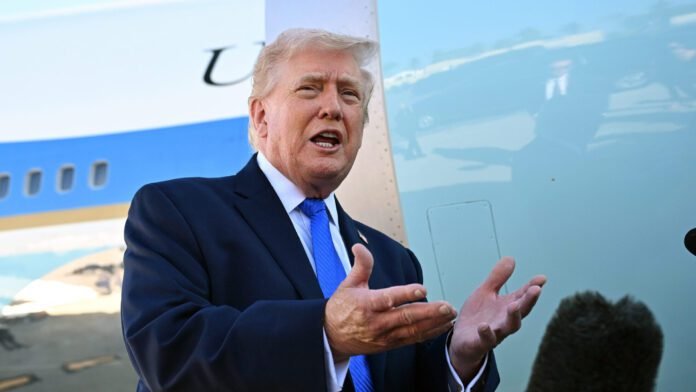
“Yeah, it is. They trifled with us today. We blew them away,” President Trump told reporters while touring construction at the Washington, DC, Reflecting Pool, characterizing the confrontation as a “trifle” and a “love tap.”
President Trump also said a deal with Iran remained possible despite the escalation.
“A deal with Iran might not happen, but it could happen any day. I believe they want the deal more than I do,’” he said.
The US military reported that the destroyers USS Truxtun, USS Rafael Peralta, and USS Mason were attacked by Iranian drones, missiles, and fast-attack boats while transiting the Strait of Hormuz.
US Central Command later confirmed what it described as “self-defense strikes” against Iranian military targets, including drone and missile launch sites. The US said Iranian boats involved in the confrontation were destroyed.
Iranian state media reported that Iranian forces fired on what it described as “enemy units” and said the action came in retaliation for a US strike on an Iranian oil tanker.
Explosions were reported near Iran’s Qeshm Island and Bandar Abbas following the exchange.
The United Arab Emirates said its air defense systems were activated against incoming Iranian missiles and drones.
“UAE air defenses are currently engaging missile and drone attacks originating from Iran,” the UAE defense ministry said on X, adding that interception sounds were heard “across various parts of the country.”
According to a Fox News reporter, the US strikes on an Iranian port city and an island in the Strait of Hormuz followed anger from the UAE and Saudi Arabia over earlier Iranian attacks on the UAE that US officials had downplayed.
The confrontation took place as negotiations continued over a possible ceasefire. The United Nations reported that around 1,500 ships remained trapped in the Gulf because of the ongoing Iranian blockade of the strait, while oil prices rose sharply amid the renewed hostilities.
ABC refuses to capitulate to Trump admin, fights FCC probe into The View
ABC is fighting back against the Trump administration’s attempt to police broadcast television content, saying in a filing that the Federal Communications Commission is violating the First Amendment.
Led by Chairman Brendan Carr, the FCC accused ABC’s The View of not complying with the equal-time rule, even though the interview portions of talk shows have historically been exempt from the rule requiring equal time for opposing political candidates. The FCC also opened an unusual review of ABC’s broadcast licenses one day after the president and First Lady Melania Trump called on ABC to fire Jimmy Kimmel over a recent joke.
An ABC filing that was made public today said the FCC exceeded its authority in actions that “threaten to upend decades of settled law and practice and chill critical protected speech, both with respect to The View and more broadly.” The filing is primarily in response to the equal-time investigation, but ABC also seems determined to fight the larger license review.
ABC said in its filing that in 2002, the FCC confirmed that The View qualifies as a bona fide news program and is thus exempt from the equal-time rule, also known as the equal-opportunities rule. Programs are not required to obtain exemptions, but ABC chose to file a petition for declaratory ruling in 2000 because The View was planning to invite more political candidates onto the show.
The FCC Media Bureau recently ordered an ABC station to file a new petition for declaratory ruling on The View‘s status. ABC said the FCC bureau lacks the authority to make that demand. But ABC did file a petition to lay out its case that the FCC is overstepping its authority and violating the First Amendment rights of broadcasters.
ABC isn’t backing down this time
“Some may dislike certain—or even most—of the viewpoints expressed on The View or similar shows,” ABC said. “Such dislike, however, cannot justify using regulatory processes to restrict those views… The danger is that the government will simply decide which perspectives to regulate and which to leave undisturbed. In fact, while the Commission now questions The View’s decades-long exemption, it has not expressed any inclination to apply a similar interpretation of the equal opportunities rule to other broadcasters, including the many voices—conservative and liberal—on broadcast radio.”
ABC, which is owned by Disney, briefly suspended Kimmel last year after a previous threat by Carr. ABC separately agreed to a $15 million payment to settle a lawsuit that Trump filed in 2024 over statements made by George Stephanopoulos.
This time, ABC isn’t backing down. Legal experts have said the law is on ABC’s side if it chooses to fight.
Several free speech advocacy groups cheered ABC’s decision to fight today. “ABC’s refusal to quietly allow the federal government to dictate the range of viewpoints it may air without fear of retaliation is welcome and commendable,” said Will Creeley, legal director of the Foundation for Individual Rights and Expression (FIRE). “The Federal Communications Commission is not and cannot become the nation’s censor-in-chief, as its chairman once recognized.”
Freedom of the Press Foundation Chief of Advocacy Seth Stern said, “The legal theories the FCC asserts against broadcast licensees are frivolous and unconstitutional, and FCC Chair Brendan Carr knows it, but he hopes broadcast licensees will nonetheless self-censor rather than pick a fight. It’s about time news outlets start telling Carr and his Donald Trump lapel pin to kick rocks.”
“ABC has finally learned”
Media advocacy group Free Press said ABC seems to have learned from past mistakes. “I’m pleased that ABC has finally learned that bullies don’t stop when companies cower in a corner,” Free Press co-CEO Jessica González said.
González said that Carr’s attacks on media are “startling and unpopular across the political spectrum. After Donald and Melania Trump demanded that ABC fire Jimmy Kimmel for making a joke they didn’t like, Carr announced that he would conduct an early review of ABC’s broadcast licenses—an abuse of power that Senator Ted Cruz and people of all political stripes condemned.”
Anna Gomez, the FCC’s only Democrat, said the public will remember “who complied in advance and who fought back. I’m glad Disney is choosing courage over capitulation.”
The filing for ABC was submitted by attorney Paul Clement, who served as US solicitor general under President George W. Bush; and Jennifer Tatel, who was an FCC lawyer during the Obama administration and for part of Trump’s first term. Tatel was promoted to acting general counsel in 2017 by then-FCC Chairman Ajit Pai, who said she “is known for her legal acumen, FCC expertise, and careful judgment.”
ABC’s filing said that The View still meets all of the qualifications for a bona fide news program and that there is no basis for overturning the 2002 order.
“Nevertheless, at the end of March, the Media Bureau ordered KTRK Television [a Houston-based ABC station] to file another Petition for Declaratory Ruling regarding The View’s status as a bona fide news interview program,” ABC said. “In parallel, on April 28, 2026, the Media Bureau issued an extraordinary order demanding the early filing of all of ABC’s license renewal applications, including for KTRK-TV.”
Although the license review has been widely seen as retaliation against ABC for employing Kimmel, the FCC says it is related to a yearlong investigation into ABC potentially violating anti-discrimination rules with diversity, equity, and inclusion (DEI) practices. ABC’s filing said the company has provided over 11,000 pages of documents and extensive answers to questions for the FCC probe. The FCC called ABC’s response inadequate in an order instructing Disney to file early license renewal applications for all of its licensed TV stations by May 28.
“Viewpoint discrimination and retaliatory targeting”
Citing comments that Carr made to Fox about The View, ABC said the FCC publicly announced its investigation into the program “and presag[ed] an outcome.” Carr said in the TV appearance that “when you look at the lineup of guests that have typically been on The View, I think it’s an uphill climb for Disney to make the case that they’re just a straight news program.”
The FCC appears to be “implementing major shifts in policy and practice, including how the Commission intends to apply the equal opportunities requirements,” ABC said. “Such an abrupt and substantial change in long-established policy requires the action of the full Commission and the oversight of the courts.”
ABC pointed out that the FCC hasn’t extended its equal-time crackdown to conservative talk radio shows. The FCC “has not made any public announcements that it is investigating The Mark Levin Show, The Glenn Beck Program, the Guy Benson Show, or the licensees of KTBB, WBAP, KPRC, or KSEV. Nor should it,” ABC said. “But such a clear disparity in the treatment of broadcasters that ought to be subject to the same treatment under law raises serious concerns about viewpoint discrimination and retaliatory targeting.”
The FCC historically has “recognized that it was Congress’s intent that the Commission respect the good-faith news judgments of broadcast licensees,” ABC said. The Carr-led FCC’s actions threaten that longstanding approach, it said.
“Uncertainty as to the scope of broadcast licensees’ editorial discretion threatens to limit news coverage of political candidates and chill core First Amendment-protected speech for years and potentially decades to come,” ABC told the FCC. “As the 2026 midterm election approaches, the American people need more access to political news and more exposure to political candidates, not less. The Commission therefore must act quickly to assure broadcasters that it will uphold long-established legal standards by affirming that The View continues to qualify for the bona fide news interview exemption under Section 315(a).”
UK’s Labour Party suffers heavy early losses as Reform gains in elections
British Prime Minister Keir Starmer suffered heavy early losses in elections on Friday, showing the depth of voter anger with his government and raising fresh doubts about his future just two years after a landslide general election victory.
Starmer’s Labour Party haemorrhaged support in areas reporting results overnight, including traditional strongholds in former industrial regions of central and northern England, along with some parts of London.
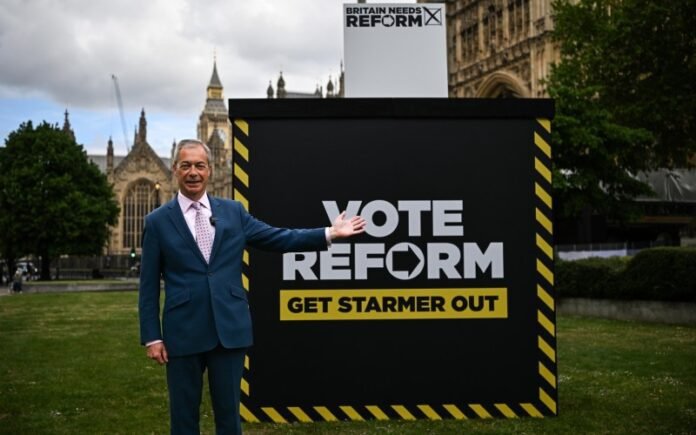
The main beneficiary was the anti-immigration populist Reform UK of Brexit campaigner Nigel Farage, which gained more than 200 council seats in England, and could form the main opposition in Scotland and Wales to the pro-independence Scottish National Party and Plaid Cymru.
“The picture has been pretty much as bad as anyone expected for Labour, or worse,” said John Curtice, Britain’s most respected pollster.
The elections for 136 local councils in England, alongside the devolved parliaments in Scotland and Wales, represent the most significant test of public opinion before the next general election due in 2029.
Lawmakers in the governing Labour Party said if the party performs poorly in Scotland, loses power in Wales, and fails to hold many of the roughly 2,500 council seats it is defending in England then Starmer will face renewed pressure to quit or set out a timetable for his departure.
INSURGENT PARTIES FRACTURE TWO-PARTY SYSTEM
The early results showed the continued fracturing of Britain’s traditional two-party system into a multi-party democracy, in what analysts say represents one of the biggest transformations in British politics in the last century.
The once-dominant Labour and Conservative parties were losing votes to Reform, and at the other end of the political spectrum to the left-wing pro-environment Green Party, while nationalist parties were expected to win the elections in Scotland and Wales.
Farage said the results so far were “way exceeding” his expectations and represented a “historic change in British politics”.
Labour was wiped out in some of the most closely watched early results.
The party lost control of the council of Tameside in Greater Manchester for the first time in almost 50 years after Reform picked up all 14 seats Labour was defending.
In nearby Wigan, a former mining community it has controlled for more than 50 years, Labour also lost every one of the 20 seats it was defending to Reform, and in Salford, the party only held three of the 16 seats it was defending.
The results were “soul-destroying”, said Rebecca Long-Bailey, a Labour member of parliament for Salford.
While incumbent governments often struggle in mid-term elections, pollsters forecast that Labour could lose the most council seats in local elections since former Prime Minister John Major lost more than 2,000 in 1995, when his government was mired in endless corruption scandals.
The Reform UK party added 253 council seats in England with results in more than 4,200 seats still to be counted. The Labour party lost 185 seats and the Conservative party was down 93 seats.
Most of the election results — including the seats in the Scottish and Welsh elections — are due to be declared on Friday afternoon and evening.
U-TURNS AND SCANDALS ERODE STARMER’S AUTHORITY
Starmer, a former lawyer, was elected in 2024 with one of the largest parliamentary majorities in modern British history on the premise that he would bring stability, rather than charisma, after years of political chaos.
But his time in office has been marked by numerous policy U-turns, a rotating cast of advisers and the disastrous appointment of Peter Mandelson as Britain’s ambassador to the United States who was fired nine months into job over his links to the late convicted U.S. sex offender Jeffrey Epstein.
Starmer insists he will lead Labour into the next election, and the party has never successfully removed an incumbent prime minister in its 125-year history.
The prime minister is helped by the fact that two frontrunners to succeed him if he goes – Greater Manchester mayor Andy Burnham and former Deputy Prime Minister Angela Rayner – are not yet in positions to mount leadership bids, and other potential rivals seem unwilling to move against him for now.
The energy minister Ed Miliband denied on Thursday a report in the Times newspaper that he had advised Starmer to consider setting out a timetable for his departure from Downing Street.