14.4 C
London
Saturday, May 9, 2026
Home Blog

Tunisia court sentences former Ennahda leader’s office director to 14 years in prison

0
tunisia-court-sentences-former-ennahda-leader’s-office-director-to-14-years-in-prison
Tunisia court sentences former Ennahda leader’s office director to 14 years in prison

A Tunisian court sentenced Faouzi Kamoun, the former office director of Ennahda leader Rached Ghannouchi, to 14 years in prison after convicting him on “money laundering” charges, according to media reports.

The Mosaique FM radio station said the criminal chamber specializing in “financial corruption cases” at the Tunis Court of First Instance issued the ruling Thursday. The report did not provide details about the case.

An indictment chamber specializing in financial corruption cases at the Tunis Court of Appeal previously upheld an investigating judge’s decision to detain Kamoun pending an investigation on charges related to “money laundering.”

READ: Former Tunisian justice minister sentenced to 20 years in prison

On Feb. 16, 2023, the public prosecutor at the Tunis Court of First Instance authorized officers from the National Guard’s central unit in El Aouina to arrest Kamoun.

Authorities have detained several opposition politicians, lawyers and civil society activists on charges, including “undermining public order”, “conspiring against state security”, “colluding with foreign entities,” and “incitement and money laundering.” Defense lawyers deny the accusations.

Tunisian authorities maintain that the judiciary operates independently and that all legal proceedings are conducted in accordance with the law without political interference. Opposition groups, however, say several prosecutions have targeted political opponents, lawyers and activists.

READ: Amnesty warns over Tunisian opposition leader’s health in prison

Court rules Trump’s 10% tariff is just as illegal as the tariff it replaced

0
court-rules-trump’s-10%-tariff-is-just-as-illegal-as-the-tariff-it-replaced
Court rules Trump’s 10% tariff is just as illegal as the tariff it replaced

The day after the Supreme Court struck down a set of Donald Trump’s emergency tariffs, the president quickly imposed another, using a never-before-invoked provision of a decades-old trade law to order a global 10 percent tariff on most imports.

Now, that second set of tariffs has been deemed illegal, and there are no more emergency levers that Trump can pull to try to replace them any time soon. That leaves Trump without much negotiation leverage a week before he’s set to meet with China’s President Xi Jinping, who already appeared to have the upper hand heading into talks.

For Trump, when the US Court of International Trade invalidated his global tariffs, his key trade policy—which relies on imposing tariffs to supposedly drive more manufacturing into the US—was put at risk of being gutted.

Moving forward, Trump won’t be able to rely on the law to collect the global tariffs.

Lucky for Trump, the international trade court’s narrow ruling did not require a universal injunction blocking tariffs nationwide, and it limited refunds to only importer plaintiffs who sued. That could help the Trump administration avoid even more chaos after Customs and Border Patrol recently began processing refund requests to comply with the Supreme Court ruling.

However, it’s unclear if the court’s ruling could prompt additional lawsuits from other importers that are seeking refunds, as well as anyone who can argue they have been harmed by the global tariffs, such as non-importer customers who can prove they paid higher prices linked to tariffs.

Trump will most likely appeal the ruling. But in the meantime, it likely puts immediate pressure on his administration to quickly conclude investigations into tariff regimes that may be available under other statutes. That could take weeks, if not months, analysts expect.

On Friday, Trump “criticized the judges” at the international trade court, while telling reporters that he would pursue his tariff agenda under other authorities, The New York Times reported.

“So, we always do it a different way,” Trump said. “We get one ruling, and we do it a different way.”

Why the global tariff is illegal

In a 2-1 ruling, Chief Judge Mark A. Barnett and Judge Claire R. Kelly decided that tariffs that Trump imposed under Section 122 of the Trade Act of 1974 were illegal.

Trump had tried to argue that the law allowed him “to impose temporary surcharges up to 15 percent” in order to combat “fundamental international payments problems” and “to deal with large and serious United States balance-of-payments deficits.” If the court allowed the temporary tariffs, he had planned to impose even steeper tariffs under the authority, but the unfavorable court ruling obviously hobbled that strategy.

Fatal for Trump, his argument relied on the caveat that he was authorized to decide what was considered a “balance-of-payments” deficit. Trump’s advisors had agreed that was a “malleable phrase.”

Disputing that, the importers suing successfully argued that Trump had unlawfully redefined the term. They alleged he’d twisted its meaning in a way that ignored the circumstances when the law was initially drafted—which was back when the US dollar was pegged to gold. The importers emphasized that “the President lacked authority to invoke Section 122 because large and serious balance-of-payments deficits cannot occur in a floating exchange rate monetary system,” which the US adopted after abandoning the gold standard. To sum it up, Trump had no authority because the US no longer uses the gold standard, they argued.

The court agreed that Congress couldn’t have intended to grant Trump such expansive authority as he argued was acceptable under the law. “If the President has the ability to select among the sub-accounts to identify a balance-of-payments deficit, unless every sub-account is balanced, the President would always be able to identify a balance-of-payments deficit,” the majority ruled.

In a footnote, the majority said that Trump had also argued that the phrase “fundamental international payments problems” should not constrain him “at all.” The court did not have to rule on that matter, but judges clarified that “the court cannot accept Defendants’ interpretation that disclaims the existence of any meaningful intelligible principle in either ‘fundamental international payments problems’ or ‘balance-of- payment deficits.’” In its summary, the court ruled that words have meanings.

Ultimately, the court put forward its own interpretation of the statute, which rejects both sides’ readings of Section 122, the dissenting opinion from Judge Timothy C. Stanceu said.

That judge did not fight for Trump to keep his tariffs, necessarily. Instead, he disagreed with the court’s interpretation, as well as the timing of the ruling, arguing that parties should have been given time to respond to the court’s interpretation before the court issued an opinion.

“We are not experts in international macroeconomics matters and should hesitate to question whether it was reasonable for the President to rely on” calculations that the majority deemed in line with legislative history, “rather than a calculation of his own that may have been acceptable,” Stanceu wrote. 

Claiming there were no factual disputes to weigh, the majority agreed that plaintiffs showed that harms from unlawful tariffs were imminent and ongoing, requiring relief in the form of a permanent injunction that must be granted once the court reached a decision on how to interpret the statute.

Trump’s efforts to block the injunction by arguing that it would intrude on his conduct of foreign affairs were “unpersuasive,” judges ruled, finding instead that “enjoining unlawful conduct is in the public interest.”

What’s Trump’s next move?

What happens next is anyone’s guess, but don’t expect Trump to give up on tariffs.

After the Supreme Court required refunds on Trump’s so-called reciprocal tariffs under the International Emergency Economic Powers Act (IEEPA), both the US government and US businesses faced lawsuits not just from importers, but companies dealing with importers and those companies’ customers.

Trump has made it clear that he is not happy about court-ordered refunds, which some businesses should start receiving next week, Reuters reported. Last month, he cheered news that Apple and Amazon had yet to request refunds, which CNBC reported was due to fears of “offending” Trump. Deeming that response a sign that those companies understood the way Trump operates, he said, “I’ll remember” any companies that “honor” him by letting the US keep the unlawfully collected IEEPA tariffs.

Ars could not reach Apple or Amazon to clarify their positions on IEEPA tariff refunds.

Most likely, Trump is relieved that the international trade court did not require a similar universal injunction or widespread refunds on Section 122 tariffs. Notably, the president had griped that the Supreme Court failed in its opinion to include a line that said, “you don’t have to pay back tariffs that have already been received,” CNBC reported, suggesting that one part of his tariff strategy was to seize as many duties as he could and hope the courts would not order refunds.

No matter what happens with Section 122 refunds, Trump will probably prioritize concluding “two trade investigations under a legal provision known as Section 301” now that future Section 122 tariffs are unavailable, the NYT reported.

Currently, the United States trade representative is holding stakeholder hearings on those investigations, with the last hearing scheduled Friday and new tariffs expected to be announced as soon as this July.

Advocating for narrow tariffs are groups representing tech stakeholders, including the trade group the Consumer Technology Association and the think tank the Information Technology and Innovation Foundation (which Apple “supports”), Politico reported. They’ve urged USTR to narrowly focus on China—rather than all of the US trading partners—when imposing Section 301 tariffs. Otherwise, Trump’s goal of forcing more manufacturing into the US will face impediments, as tech companies will once again be rocked with high costs and supply chain uncertainties, they warned.

“Broad, economy-wide tariffs raise costs for US manufacturers, retailers and consumers while delivering limited enforcement benefits,” CTA’s vice president of international trade, Ed Brzytwa, reportedly testified. “Restricting access or increasing the cost of inputs that aren’t manufactured in sufficient quantities in the United States—or aren’t made here at all—can increase costs, reduce competitiveness and discourage investment in US manufacturing.”

Copycat Texas Roadhouse Rolls – Soft, Buttery & Irresistible

0
copycat-texas-roadhouse-rolls-–-soft,-buttery-&-irresistible
Copycat Texas Roadhouse Rolls – Soft, Buttery & Irresistible

You are here: Home / All RECIPES / Copycat Texas Roadhouse Rolls – Soft, Buttery & Irresistible

If you’ve ever found yourself filling up on those famous rolls before your meal even arrives, you’re not alone! These Copycat Texas Roadhouse Rolls bring that same soft, fluffy, melt-in-your-mouth goodness right into your kitchen.

Warm, slightly sweet, and brushed with butter straight out of the oven, these rolls taste just like the restaurant version—especially when paired with homemade cinnamon honey butter. The best part? You can enjoy them anytime without leaving home!


Why You’ll Love This Recipe

  • Ultra soft, fluffy texture
  • Slightly sweet and buttery flavor
  • Just like the restaurant version
  • Perfect for holidays, dinners, or meal prep
  • Easy to make with simple ingredients

What Makes These Rolls So Soft?

The secret lies in the enriched dough, made with butter, egg, and yeast. This combination creates a light, tender texture that practically melts in your mouth.

Yes, they take a little time to rise—but the hands-on work is minimal, and the results are absolutely worth it.


Ingredients You’ll Need

  • Active dry yeast
  • Warm milk (105–110°F)
  • Granulated sugar
  • Unsalted butter
  • Egg
  • Salt
  • All-purpose flour
  • Melted butter (for brushing)

How to Make Texas Roadhouse Rolls

Step 1: Activate the Yeast

Combine warm milk and sugar, then sprinkle yeast on top. Let it sit for about 5 minutes until foamy—this means it’s ready to use.


Step 2: Make the Dough

Mix the yeast mixture with butter, egg, salt, and part of the flour. Gradually add more flour until a soft dough forms.

Knead until smooth and slightly tacky (not sticky).


Step 3: First Rise

Place the dough in a greased bowl, cover, and let it rise in a warm place for 45–60 minutes until doubled in size.


Step 4: Shape the Rolls

Roll the dough into a rectangle about ½ inch thick. Cut into squares and place on a baking sheet.


Step 5: Second Rise

Cover and let the rolls rise again for another 45–60 minutes until puffy.


Step 6: Bake

Bake at 350°F (175°C) for 12–15 minutes until golden brown.


Step 7: Finish

Brush with melted butter while warm and serve immediately.


Tips for Perfect Rolls

  • Use warm (not hot) milk to activate yeast
  • Make sure yeast is fresh and foamy
  • Don’t add too much flour—soft dough = soft rolls
  • Let the dough rise fully for best texture
  • Brush with butter right after baking for that classic finish

Yeast Tips

  • If yeast doesn’t foam, start over
  • Store yeast in a cool place or refrigerator
  • Room temperature affects rising time—be patient!

Storage Tips

  • Store at room temperature for up to 5 days
  • Keep wrapped in foil or an airtight container
  • Freeze for up to 6 months and thaw when needed

Final Thoughts

These Copycat Texas Roadhouse Rolls are the ultimate comfort food. Soft, buttery, and slightly sweet, they’re perfect for any occasion—from family dinners to holiday feasts.

How Pakistan became the world’s most useful middle power

0
how-pakistan-became-the-world’s-most-useful-middle-power
How Pakistan became the world’s most useful middle power

As geopolitical competition intensifies across multiple regions, countries capable of maintaining working relationships with rival powers are becoming increasingly valuable.

While global attention remains centered on major-power rivalry, another category of states is quietly gaining strategic importance: middle powers able to engage competing actors without becoming fully dependent on any single bloc.

Pakistan is gradually re-emerging within this category.

For years, Pakistan was internationally viewed primarily through the lens of terrorism, political instability and economic fragility. Yet recent developments suggest Islamabad is repositioning itself as a diplomatically relevant actor capable of influencing regional dynamics beyond what its economic size alone would traditionally suggest.

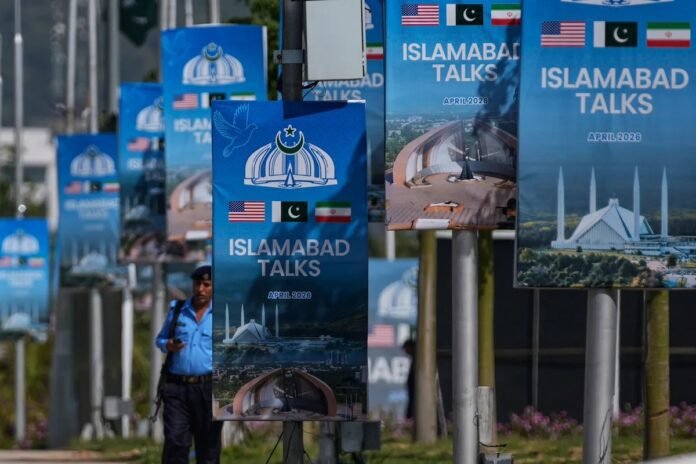
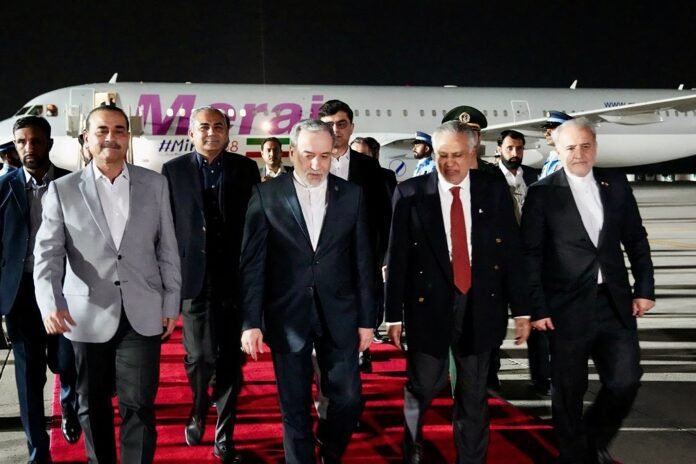
That shift has become particularly visible amid the US-Iran war. Despite deep acrimony between Washington and Tehran, Pakistan has helped to facilitate communication between the warring sides.

Islamabad also secured broad international support for its mediation efforts, reinforcing perceptions that it remains one of the few states able to maintain credible working relations and trust between the US and Iran.

In the increasingly polarized international environment, that diplomatic flexibility is becoming one of Pakistan’s most important strategic assets.

Traditionally, a country’s status has been measured through indicators such as economic output, military expenditure, geography and technological capacity. Those factors remain important, but they no longer fully explain influence in the changing and increasingly multipolar international order.

Political scientist Joseph Nye has argued that states also derive influence from intangible sources, including diplomatic credibility, political legitimacy and soft power. Similarly, Robert A. Dahl has defined power as the ability to influence the behavior of others.

Viewed through this broader lens, Pakistan’s recent diplomatic role reflects an increasing capacity to influence regional developments despite its economic limitations.

The value of multi-alignment

A major source of Pakistan’s growing relevance is its capacity for multi-alignment. Unlike states constrained within rigid alliance systems, Islamabad has maintained solid relationships simultaneously with the United States, China, Iran and Gulf monarchies.

This flexibility enables Pakistan to function as a credible intermediary during periods of regional instability.

For Iran, Pakistan represented a practical mediator because, despite periodic tensions, both countries maintained relatively stable relations shaped by geography, history and long-standing regional interaction. Geographic proximity and historical ties also helped preserve communication channels between Tehran and Islamabad.

For the US, Pakistan remained useful because decades of military and intelligence cooperation created established channels of communication and institutional familiarity. At the same time, Washington viewed Islamabad as capable of engaging Tehran without overt ideological hostility, allowing communication to occur credibly and without immediate escalation.

As competition among major powers intensifies, countries capable of communicating across geopolitical divides are becoming increasingly important. At the same time, Pakistan’s recent diplomatic activism reflects a broader effort to reshape its international image.

A brief but intense military confrontation with India raised new questions regarding assumptions about conventional military asymmetry in South Asia and reinforced Pakistan’s reputation as a capable security actor with credible deterrence and escalation-management capabilities.

This shift strengthened Islamabad’s standing among several regional partners, particularly in the Gulf, where Pakistan continues to be viewed as an important security provider.

Pakistan has long possessed several characteristics associated with middle powers, but inconsistent policymaking and the absence of sustained strategic direction often limited its broader influence. More recently, stronger civil-military coordination and a more coherent external posture have allowed Islamabad to use its diplomatic and military leverage more effectively.

Pakistan has also increasingly attempted to project itself as a supporter of international law and regional stability. Its condemnation of attacks on Iran and Gulf states under Article 2(4) of the UN Charter reflected an effort to present itself as a state committed to sovereignty, restraint and regional stability, despite the potential political costs.

Geography also matters. Positioned at the intersection of South Asia, Central Asia, the Middle East and the Indian Ocean, Pakistan occupies one of the world’s most strategically consequential locations.

The growing importance of Karachi Port and continued development of Gwadar Port position the country as a potential future hub linking Asia, the Gulf and Africa through evolving trade and connectivity corridors.

Yet geography alone does not create middle-power influence. Strategic relevance increasingly depends on diplomatic autonomy and the ability to maneuver between competing centers of power.

Pakistan’s balanced foreign policy, maintaining ties both with Washington and Beijing while preserving relations across the Muslim world, demonstrates a degree of flexibility increasingly rare in the polarized global environment.

Internal constraints

Despite its growing relevance, Pakistan’s emergence still faces limitations.

Political instability, governance uncertainty and economic inconsistency continue to undermine long-term planning and investor confidence. Diplomatic visibility can elevate international standing for a while, but sustaining influence requires institutional continuity and economic modernization.

Persistent militancy, instability linked to Afghanistan and insurgency in Balochistan continue to constrain Pakistan’s broader economic potential and undermine its international image as a stable actor. Without internal stability, Pakistan risks remaining geopolitically important but economically constrained.

The international system is entering a period in which influence will increasingly belong not only to major powers, but also to states capable of navigating between them.

Pakistan’s growing relevance reflects that wider geopolitical shift. Its importance no longer derives solely from geography or military capability, but from its ability to maintain engagement with competing actors simultaneously.

As the international order becomes less centralized and more fragmented, the strategic value of states capable of operating across geopolitical divides is likely to increase. Pakistan’s challenge is whether it can convert renewed geopolitical relevance into lasting diplomatic strength.

Saima Afzal is a researcher specializing in South Asian security, counterterrorism, and broader geopolitical dynamics across the Middle East, Afghanistan and the Indo-Pacific. She is currently a PhD Researcher at Justus Liebig University, Germany.

OPINION – Don’t Fall Into the Iranian Trap

0
opinion-–-don’t-fall-into-the-iranian-trap
OPINION – Don’t Fall Into the Iranian Trap


The American administration must ensure that it does not fall into a trap that Iran is seemingly setting.

The key questions are these: Is the regime capable of a ceasefire? Is this a procrastination ploy? And what will the long-term implications be?

That concern appears well-founded. President Donald Trump is unhappy, and rightfully so, with Iran’s latest proposal, which would reopen the Strait of Hormuz and settle maritime disputes before addressing Tehran’s nuclear program. Washington’s position is that the nuclear file must come first. For the Islamic Republic, however, securing early US concessions while postponing the issues on which it may have to compromise is not a departure from form; it is a familiar negotiating pattern—Iran’s modus operandi.

As ceasefires and agreements hover over what could become a resumption of war, do not be fooled by the mullahs’ cleverness. They are masters of deceit.

The June 2025 12-Day War’s ceasefire had barely taken hold when Israel said the Iranians fired missiles at Beersheba and northern cities.

In 2018, as President Trump withdrew the United States from the Iran nuclear deal, the US Department of State described Iran on its website as the world’s leading state sponsor of terror. On May 8, President Trump said, “The future of Iran belongs to its people.”

President Trump began an incredibly difficult effort to free the world from the grip of the Iranian regime. He was on the right path. Nothing should deter him from following his own assessment and standing by the statements that brought him to this war in the first place.

True, the United States has weakened Iran’s missile capabilities, but ending a war in which stopping Iran’s uranium enrichment remains an unmet key goal could push the regime toward the very red line everyone feared.

Whether China will confront the United States after arming Iran with missiles remains to be seen.

Do not forget that Iran’s proxies are also a weapon.

Hamas is refusing to disarm and rejecting proposals that would require it to do so. Lebanon says it wants to disarm Hezbollah, but can it? True, Iran’s financing and training of Hezbollah have been curbed, but Hezbollah was still firing missiles into northern Israel right up to the pause. And the Iranian-backed proxy continues to fire on and kill Israeli soldiers.

If Iran is left with nuclear capabilities, along with a substantial share of its drone stockpile and missile launchers, as is being reported, the war is not over.

And where are the defectors?

It is a critical question. One of the goals of this war was to weaken the regime to the point that the people could gain control of their country.

Do not be fooled: Unfinished business is waiting in the wings.

American generals know the playbook. If Iran cannot agree to surrender its enriched uranium, Operations Midnight Hammer and Epic Fury will only be catalysts for more Iranian terrorism.

Twenty-four hours after the untrusted regime opened the Strait of Hormuz, the Islamic Revolutionary Guard Corps opened fire on an Indian tanker near the shores of Oman. The regime says it will not reopen the passageway, through which 20% of the world’s oil travels, unless the US stops its blockade. That is another clear violation.

Iran’s main nuclear sites were not newly discovered in recent years, but the deeper problem remains how much of the program inspectors can actually see. Natanz and Arak were exposed in 2002, and Fordow in 2009, yet the International Atomic Energy Agency has still faced recurring gaps in visibility as Iran enriched uranium to 60%, and inspectors later found particles at Fordow enriched to about 84%, close to weapons grade. Satellite imagery showing fortified underground construction near Natanz has only added to concern that key parts of the program could be shielded from routine monitoring.

As for the people of Iran, President Trump asked them to go into the streets and take back their institutions. Iranians need a safety net and clear signs to do so.

If America lets them down, the message to people living in conflict and seeking democracy will be that America played into the hands of the enemy.

Do not fall into the Iranian trap. America must stand by its principles.

Glamorous TV Evangelical ‘Mysteriously’ Dead at 65

0
glamorous-tv-evangelical-‘mysteriously’-dead-at-65
Glamorous TV Evangelical ‘Mysteriously’ Dead at 65


Joni Lamb, the glamorous and controversial co-founder of the massive Christian broadcaster Daystar Television Network, has died at 65 after quietly battling what the network described as a series of “serious health matters” behind closed doors.

The longtime evangelical TV powerhouse passed away Thursday after her condition reportedly took a devastating turn following a back injury that triggered a medical crisis no one around her expected.

In a statement announcing her death, Daystar said Lamb had been privately facing major health struggles for some time but chose not to reveal them publicly.

“Joni’s love for the Lord and for the people we serve shaped this ministry from the beginning,” the network said. “We grieve her loss, and we are grateful for the legacy of faith she leaves behind.”

The shocking news stunned many followers of the Texas-based network, where Lamb had remained a central figure both on-screen and behind the scenes for decades.

Lamb launched Daystar in 1993 alongside her first husband, Marcus Lamb, transforming the once-small religious station into one of the world’s largest evangelical television networks. At its height, Daystar reportedly reached more than 100 million homes across America and generated millions in revenue through donations and airtime sales.

Operating from Bedford, Texas, Lamb became one of the best-known faces in religious broadcasting while living a lavish lifestyle in a multimillion-dollar mansion.

But in recent years, controversy followed the ministry closely.

During the COVID-19 pandemic, Joni and Marcus Lamb drew national attention for promoting anti-vaccine voices and questioning mainstream pandemic guidance on their programs. The couple became closely aligned with vaccine skeptic Robert F. Kennedy Jr., who later became Health and Human Services Secretary.

Marcus Lamb himself died in 2021 at age 64 from COVID-related complications — a death their son Jonathan described at the time as a “spiritual attack from the enemy.”

“As much as my parents have informed everyone about the pandemic and ways to treat COVID, there’s no doubt the enemy is not happy about that,” Jonathan told Relevant Magazine after his father’s death.

Following Marcus’ passing, Joni remarried in 2023 to psychologist and Daystar host Doug Weiss.

But the family would soon be thrown into even deeper turmoil.

In 2024, Daystar was rocked by explosive accusations from Jonathan Lamb, who claimed he was pushed out of the network after reporting allegations that his young daughter had been sexually abused by a male relative.

Jonathan publicly accused his mother of helping cover up the allegations, triggering a bitter and very public family feud.

Joni fiercely denied the claims and accused her son of fabricating the story because he was angry he had not been named president of Daystar after his father’s death.

The investigation ultimately ended without criminal charges, and the accused relative denied wrongdoing.

Even as scandal swirled around the ministry, Joni Lamb remained a powerful figure in Christian media until her sudden decline in health.

Now, supporters are mourning the woman many credited with building a global faith empire — while critics remember the controversies that surrounded her final years.

The unprecedented and deadly cruise ship hantavirus outbreak, explained

0
the-unprecedented-and-deadly-cruise-ship-hantavirus-outbreak,-explained
The unprecedented and deadly cruise ship hantavirus outbreak, explained

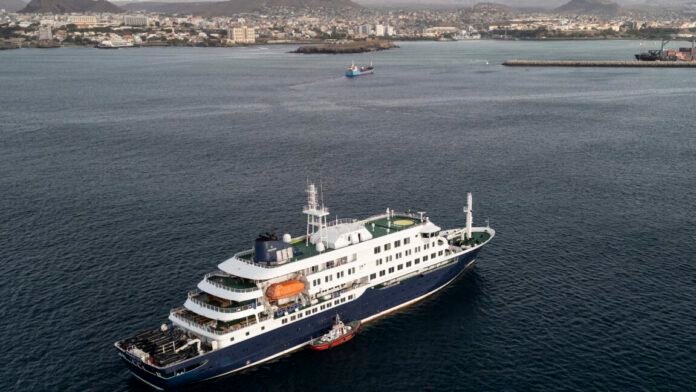
An unprecedented outbreak of hantavirus has rocked a luxury cruise ship off the coast of West Africa, triggering a tsunami of news stories and a flood of post-pandemic anxiety.

So far, eight cases have been reported, including three people who have died. The Dutch-flagged ship, MV Hondius, which began its journey from Ushuaia, Argentina, on April 1, is still carrying 147 passengers and crew. To date, those remaining on board are showing no symptoms and have been asked to sequester themselves in their cabins. At the time of publication, the ship is sailing on a three- to four-day journey that began the evening of May 6 from Cape Verde to the Canary Islands, where Spanish authorities have agreed to assist the imperiled vessel.

With the ship en route, experts assembled by the World Health Organization are now racing to create a novel step-by-step procedure to allow the remaining passengers and crew on board to disembark safely. Meanwhile, authorities are tracking down and monitoring 30 former passengers who disembarked the ship onto the remote island of St. Helena on April 24—before the outbreak was identified but nearly two weeks after the first passenger had died on board on April 11. Those 30 passengers hail from at least 12 different countries, including six from the US.

“Extremely low” risk

The situation evokes chilling memories of the early days of the COVID-19 pandemic, especially the Diamond Princess nightmare, in which over 700 people were infected with the never-before-seen virus while locked down on a luxury cruise ship docked in Japan.

But in the wake of discovering the hantavirus aboard the Hondius, health officials and infectious disease experts have been quick—and virtually unanimous—in trying to quell fears. While the situation within the ship certainly is an emergency requiring careful and prompt response for those on board, the risk to the outside world is low, and the outbreak is expected to stay relatively small.

“This is not COVID. This is not influenza. It spreads very, very differently,” Maria Van Kerkhove, WHO’s acting director for epidemic and pandemic management, emphasized in a press briefing Thursday.

Given the nature of this virus and the precautions and monitoring already in place, “the risk of widespread transmission to the general public is extremely low,” Michael Marks, an infectious disease expert and professor at the London School of Hygiene & Tropical Medicine, said in a statement Thursday.

The comments echo a reassuring risk assessment on Wednesday from the European Centre for Disease Prevention and Control, which elaborated that even if there is disease spread from passengers evacuated from the ship, the virus “does not transmit easily so it is unlikely that it would cause many cases or a widespread outbreak in the community, if infection prevention and control measures are applied.”

The US Centers for Disease Control and Prevention also deemed the risk to the American public to be “extremely low” in a brief statement on Wednesday evening.

So why are infectious disease experts and health officials so confident this is not going to mushroom into another global health crisis?

Here’s what we know about this virus and the outbreak

Hantaviruses

The virus spreading on the ship is a member of the large hantavirus family, which is spread out worldwide. These are enveloped, negative-strand RNA viruses whose genomes consist of three segments.

So-called Old World hantaviruses (including Hantaan, Seoul, Puumala, and Dobrava-Belgrade) are found in Africa, Asia, and Europe, with hotspots of activity in China, Korea, Russia, and certain European countries. The first awareness of these viruses dates back to the 1950s, with disease in soldiers fighting in the Korean War. These viruses cause hemorrhagic fever with renal syndrome (HFRS), a disease marked by fever, bleeding, and kidney damage. Depending on the specific hantavirus virus involved, mortality rates are roughly between 1–15 percent.

Then there are the hantaviruses in the New World, which first came to light in 1993 amid a deadly outbreak of an unknown virus in the Four Corners region of the US. That outbreak was caused by a hantavirus now known as Sin Nombre virus. Since then, researchers have identified many other hantaviruses in North and South America, including Black Creek Canal, Bayou, New York, Juquitiba, Oran, and Andes. New World hantaviruses are associated with Hantavirus Pulmonary Syndrome (HPS).

Based on genetic testing, the hantavirus behind the cruise ship outbreak is the Andes virus, mainly found in Argentina and abbreviated ANDV.

Transmission

For both Old and New World hantaviruses, transmission to humans almost exclusively occurs from exposure to rodents—mice and rats of different species, depending on location—especially their urine, droppings, or other excretions. Rodents show no signs of infection or symptoms of illness.

In Argentina, the common rodent Oligoryzomys longicaudatus, aka the long-tailed pygmy rice rat, is a known source of the Andes virus, which was found on the Hondius.

For hantaviruses, human infections are accidental and almost always dead ends. Transmission to people generally happens when virus-laden rodent excreta gets stirred up in dust and inhaled—for example, a person sweeping out a shed or garage with a rodent infestation without a mask.

Such a scenario made headlines in the US last year when pianist Betsy Arakawa, who was married to actor Gene Hackman, was revealed to have died of hantavirus. A subsequent investigation found an extensive rodent infestation at the couple’s residence.

The one exception to this transmission route is from the Andes virus; ANDV is the only hantavirus that has been documented in rare instances to spread from person to person.

Based on that documented incidence, it is clear that person-to-person transmission requires close, prolonged contact. To date, though, it remains unclear whether breathing significant amounts of aerosolized virus from an infected person or exposure to an infected person’s respiratory droplets is behind the rare transmission.

Incubation period

Whether from rodent exposure or the ultra-rare person-to-person transmission, the incubation period for hantaviruses—the amount of time between exposure and when symptoms develop—ranges from about 7 to 42 days.

The currently recommended quarantine and/or active monitoring period for potentially exposed cases is 42 days.

Disease and symptoms

Infections with ANDV cause Hantavirus Pulmonary Syndrome (HPS), like other New World hantaviruses. This disease starts with a prodromal phase—early, nonspecific symptoms that precede full-blown disease.

In the prodromal phase, infected people have vague flu-like symptoms, often including fever, fatigue, headache, body aches, abdominal cramps, and gastrointestinal disturbances. This lasts about three to six days before the respiratory system becomes compromised in full-blown disease.

Based on information from documented person-to-person spread of ANDV, this prodromal phase is often when person-to-person transmission happens. In a 2018–2019 outbreak with 34 cases, the sole exposure for half the cases (17 people) was close contact with an infected person who was knowingly ill and experiencing their first day of fever.

After the prodromal phase, infected people begin having difficulty breathing, their lungs can fill with liquid, their blood pressure and blood oxygen levels can fall, and in the direst cases, they can go into shock and suffer cardiovascular collapse. Though some cases will only experience relatively minor respiratory compromise, for others, the onset of severe respiratory distress can be rapid, with people descending from minor breathing problems to needing intensive care in mere hours.

The estimated overall mortality rate of HPS can vary but is often reported as being between 30–40 percent. Those who develop the most severe respiratory symptoms face rates as high as 70 percent.

Treatments

There are currently no vaccines or targeted therapies against hantaviruses and their diseases. For those who fall ill, supportive care is critical.

In Chile and other places where hantaviruses are more common, a standard recommendation for patients with respiratory symptoms is to swiftly transfer them to a high-level care facility, preferably one with extracorporeal membrane oxygenation (ECMO). This is a type of life support that performs the work of the heart and lungs, pumping blood outside the body through a machine that oxygenates it using a microporous membrane that allows for gas exchange. ECMO improves survival rates of people with HPS.

Person-to-person ANDV outbreaks

Collectively, the handful of ANDV outbreaks with documented person-to-person transmission suggests this type of transmission is rare and requires close, prolonged contact with people who are knowingly or visibly ill. It’s also clear that steps like isolation measures for ill people, quarantine for high-risk contacts, and active monitoring are highly effective at limiting and ending the outbreaks.

The first evidence of person-to-person transmission came from an outbreak that occurred from 1996 to 1997, starting in the southwestern Argentine town of El Bosón. Genetic and epidemiological data made clear that there was person-to-person spread among 16 people.

“[I]t is remarkable that all 16 cases… were obviously epidemiologically linked; each patient was in close contact (household, health caring, marital contact, and/or traveling together within a car) with one or more members of this group,” the authors concluded.

Before you get concerned about the car exposure, know that it was a 20-hour-long trip with a symptomatic infected person—the housekeeper of the index case. The female exposed in the car had other exposures, as well: she stayed with her infected parents, the sister and brother-in-law of the index case.

The first ANDV person-to-person spread confirmed by whole-genome sequencing was reported in 2014 and found similar close contact between the cases. That outbreak was just three cases, including  71-year-old twin brothers who shared a bedroom. Both died from the infection. The third person was a nurse for one of the brothers, who survived.

An outbreak with superspreaders

The 2018–2019 outbreak with 34 cases in the southern Chubut province of Argentina was fueled primarily by three superspreader events. First, the index case spent 90 minutes at a birthday party while sick with a fever and fatigue. Of the approximately 100 guests at the party, the index case transmitted the viruses to five people sitting close to them.

One of those five people, a man, was the most likely source of six subsequent infections. Those six cases included the man’s spouse, while the rest were social contacts who were likely infected during crowded social encounters the man had during his prodromal phase. The man subsequently died, and his spouse attended his wake with a fever. Ten more people who attended the wake fell ill. Of the 34 cases overall, 11 people died.

Notably, investigators who meticulously examined the outbreak identified 82 healthcare workers at one hospital who were exposed to symptomatic cases. None of them fell ill. The 82 workers included 45 who worked in the intensive care unit or the emergency department. Only a small number of those 45 used personal protective equipment, such as N95 masks, goggles, or disposable lab coats, the investigators noted.

After the 18th case was identified, health authorities ordered isolations for symptomatic cases and quarantines for the exposed. After that, the median estimated R-naught value—the average number of people to which an infected person will spread a disease—fell from 2.12 to 0.96.

Overall, the investigators concluded that “high viral titers in combination with attendance at massive social gatherings or extensive contact among persons were associated with a higher likelihood of transmission.”

A previous close call

While the possibility that people incubating ANDV are flying on planes may sound alarming, this would not be the first time it has happened. In 2018, CDC and state officials reported the first confirmed ANDV case in the US—a woman who had returned from a trip to Argentina and Chile and brought the virus home with her. She developed her first symptoms four days after returning, but then, three days later, she took two commercial flights while sick. She was hospitalized in Delaware three days later, where doctors identified the infection, which she survived.

CDC investigators identified 53 people across six states who had contact with her, including 28 healthcare workers, 15 airline contacts, and 10 other contacts. Investigators were able to contact and monitor 51 contacts, conducting testing on six with symptoms. All were negative, no other cases were identified over the 42-day incubation period, and the investigation was closed.

Current outbreak

Health officials are still working to understand what has happened on Hondius, amid speculation that human-to-human transmission has occurred.

Timeline

The boat left the southern tip of Argentina on April 1, with plans to stop at Antarctica and several islands in the South Atlantic.

The first case was in a man who developed symptoms on April 6. The man was traveling with his wife. Before boarding the ship, the Dutch couple had traveled through Argentina, Chile, and Uruguay on a bird-watching trip, WHO Director-General Tedros Adhanom Ghebreyesus said Thursday. The areas they visited included sites where the rat species known to carry ANDV is present.

The man died aboard the ship on April 11, and at the time, hantavirus was not suspected because his respiratory symptoms resembled those of other diseases. His wife then disembarked at St. Helena on April 24, along with her husband’s remains. She had symptoms. She deteriorated on a flight from the island to Johannesburg, South Africa. There, she collapsed at an airport and died on April 26. Test results from the wife confirmed a hantavirus infection on May 4.

Back on the ship, a third passenger developed symptoms, presenting to the ship’s doctor on April 24. He was evacuated on April 27 from the island of Ascension and traveled to South Africa, where he is now in intensive care. On Thursday, Dr. Tedros reported that the man has shown improvements.

On April 28, a fourth passenger on the ship, a woman, developed symptoms and died aboard on May 2, marking the third death in the outbreak.

Also on May 2, testing from the man in intensive care in South Africa provides the first results showing hantavirus.

The ship arrived in Cape Verde around May 4, where doctors boarded and provided care for three more symptomatic people, bringing the total number of cases from the ship to seven. Those three cases were evacuated to the Netherlands. Two are hospitalized in stable condition, and one is asymptomatic and now in Germany.

The eighth case identified was a man in Switzerland who disembarked in St. Helena on April 24. Upon notification of the outbreak from the cruise operator, he went to a hospital in Zürich and was confirmed to have a hantavirus infection. Genetic testing from this patient confirmed the virus as ANDV.

Next steps

It remains unclear whether any of the other passengers had similar travel histories to the Dutch couple or other possible hantavirus exposures prior to boarding the ship that could explain the cases. But person-to-person spread certainly seems possible given that the hantavirus involved here is the one known for such transmission, and cruise ships are notorious for providing the close, confined environments where viruses can vigorously spread—as is the case for COVID-19 or the gastrointestinal terror norovirus.

Monitoring

For now, WHO officials are working on a plan to get the remaining 147 people off the boat safely. As of May 8, the ship’s operator reports that no one on board has symptoms. However, with the possibility of person-to-person spread, an incubation period up to 42 days, and the last onboard illness onset of April 28, it will take more time before the coast is clear. Health officials will also need to identify and trace the contacts of the people who disembarked the ship amid the outbreak.

In the press briefing on Thursday, WHO officials acknowledged that 42 days is a lengthy quarantine. At this time, the United Nations’ health agency is not recommending that people stay confined for that whole period; rather, the recommendation is to do active monitoring for symptoms, such as daily temperature checks, given that person-to-person spread has only been seen from symptomatic people. Whether people are quarantined in addition to that is up to health authorities in the places with affected people.

Viral genetics

Researchers around the globe are also anxious to get the genomic data of the ANDV virus. Questions have swirled over whether the virus on the ship carries mutations or other changes that might explain the never-before-seen outbreak.

But WHO officials on Thursday were careful to note that the main differentiator of the outbreak so far is simply that it was on a ship. No other major features of the outbreak appear out of line with previously documented ANDV outbreaks involving person-to-person spread.

In the 2018–2019 outbreak, researchers noted that virus genetics didn’t seem to make a difference between an infected person who transmitted the virus to 10 people and an infected person who didn’t transmit the virus at all. The viruses looked about the same. The difference, they concluded, seemed related to individual people and their behavior.

“The absence of evidence for ANDV adaptation within or between hosts or for differences in viral diversity between spreaders and nonspreaders indicates that permissive ecology and social factors have a more substantial influence than genetic changes in sustaining person-to person transmission in human hosts,” they concluded.
Europeans celebrate unity, values and democracy on Europe Day 2026 

0
europeans-celebrate-unity,-values-and-democracy-on-europe-day-2026 
Europeans celebrate unity, values and democracy on Europe Day 2026 


On 9 May, Europeans will celebrate Europe Day.

This year marks the 76th anniversary of the Schuman Declaration, which laid the foundations for the European Union as we know it today, and led to an unprecedented era of peace, democracy, prosperity, integration and cooperation across the continent.

In 2026, Europe Day also marks two important milestones: 40 years since Portugal and Spain joined the EU, and 40 years since the first official Europe Day celebrations.

To mark the occasion, many events will take place across EU Member States and beyond, bringing together citizens from all walks of life. The EU institutions will open their doors to visitors, offering educational activities about their work, as happens every year.

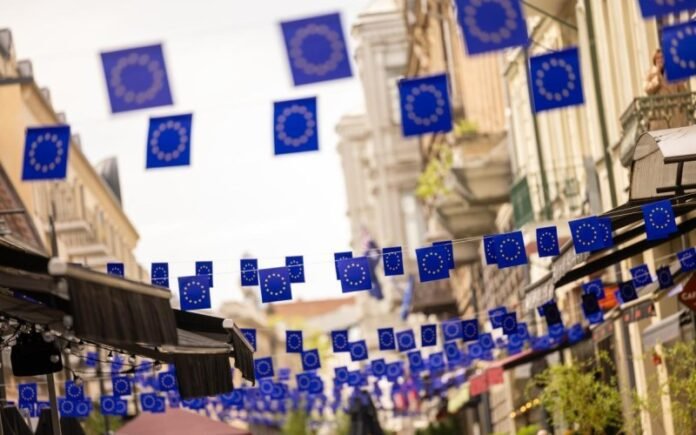
Landmark buildings and monuments across Europe and around the world will be illuminated in the EU colours.

In a rapidly changing world, the EU and its institutions are working to protect democracy, boost prosperity and strengthen security. Europe Day is an opportunity for citizens and their institutions to come together to celebrate their shared community and achievements.

The European Parliament invites citizens to discover how EU legislation shapes everyday life and how they can influence Europe’s future, under the motto ‘Come and See Democracy in Action.’ Doors open at 10:00 CEST in Brussels with a performance by the European Parliament Choir, followed by a solemn opening ceremony at 11:00 CEST in the Hemicycle, with addresses by European Parliament President Roberta Metsola and Vice-President Sophie Wilmès. Visitors can take part in quizzes, presentations and discussions, enjoy family-friendly activities, and follow a live music stage on the Esplanade. In Luxembourg, activities will include guided tours of the Europa Experience and an exhibition on the fight against disinformation. The following day, a rich cultural programme is planned in Wiltz, in the presence of H.R.H. the Grand Duke of Luxembourg.

The European Council / Council of the European Union will open its doors for guided tours in the Justus Lipsius building in Brussels, offering a rare look at where key European decisions are made. Each of the 27 Member States will host a stand showcasing their culture, traditions and culinary specialties. Children will enjoy a treasure hunt and a fun fact quest, while a photo booth will allow visitors to take a selfie on the red carpet, in the shoes of an EU leader.

The European Commission will open its iconic Berlaymont building in Brussels to the public starting at 10:00 CEST with an address by Executive Vice-President Teresa Ribera. Under the slogan ‘Europe’s Moment’, visitors will explore interactive thematic spaces covering democracy and values, climate, prosperity, social justice, security and Europe’s global role, alongside an art and architecture trail. The celebrations will continue into the evening with free live music from 18:30 CEST at Place des Palais in Brussels.

The European Central Bank will take part in Frankfurt‘s Europa-Fest on the historic Römerberg market square, alongside the European Insurance and Occupational Pensions Authority and the Anti-Money Laundering Authority, where visitors will meet experts and enjoy interactive games. The European Central Bank will also be present at the Europa Building in Brussels, where experts will answer questions about the euro, the new banknote redesign and the digital euro project.

The European External Action Service will open its Brussels headquarters from 10:00 CEST to 18:00 CEST, inviting visitors to ‘Step inside EU Diplomacy.’ The programme includes interactive exhibits, meetings with EU ambassadors, and live video calls with EU staff worldwide. The event will also feature ‘The World in One Day’, a cultural celebration with music, dance, freestyle football, crafts and family activities. An opening ceremony will take place at 11:00 CEST in the presence of representatives of partner countries and international organisations.

The European Committee of the Regions will open its doors in Brussels on Europe Day, inviting visitors to discover how the institution representing Europe’s regions and cities works, and what regional and local elected politicians do for them. Visitors will learn about the Committee’s role and activities, explore its political groups, and experience European cultural diversity at the Festival of Regions and Cities, which will showcase projects, arts and crafts, and offer tastings of local produce.

The European Economic and Social Committee will welcome the public to its Brussels premises at rue Belliard 99-101 from 10:00 CEST to 18:00 CEST. Visitors will meet members and staff, join guided tours in different EU languages, and discover how civil society shapes EU policies. The programme includes thematic stands, a puzzle sticker game, a caricaturist, a postcard station, live music and children’s activities. French EESC members will also take part in the ‘Fête d’Europe’ in Paris.

The European Investment Bank Group Permanent Representation will showcase the Group’s role and activities in the Europa building in Brussels. Interactive quizzes and videos will highlight investments across the 27 EU Member States. On 10 May, colleagues from headquarters in Luxembourg will host the same stand at the EU Village in Wiltz, Luxembourg.

In Strasbourg and Luxembourg, EU institutions will also open their doors in May. The European Parliament’s Strasbourg Open Day will take place on 17 May, with visits to the hemicycle and a full civic and cultural programme. Luxembourg will mark Europe Day on 9 May with cultural events and information stands at the Parliament’s Grand Duchy premises.

Across the EU and around the world, in every Member State, European Commission Representations and European Parliament Liaison Offices will organise local Europe Day events — from public debates and school visits to exhibitions and cultural gatherings. Beyond Europe, EU delegations will mark the occasion with public events and outreach worldwide. Landmark buildings across the globe will be illuminated in EU colours.

When the world’s greatest power can’t win

0
when-the-world’s-greatest-power-can’t-win
When the world’s greatest power can’t win

For three decades after the Cold War, Washington operated under a dangerous assumption: that military supremacy could indefinitely compensate for diplomatic exhaustion.

The United States possessed the world’s most advanced armed forces, unmatched naval reach, and a financial system capable of weaponizing sanctions against adversaries thousands of miles away. From the Balkans to Baghdad, this power often created the appearance of control. But appearances in geopolitics have a short shelf life.

The latest confrontation with Iran has exposed something American policymakers have resisted admitting for years. The age of uncontested US primacy is ending — not because America has suddenly become weak, but because the structure of global power has changed faster than Washington’s strategic imagination.

What makes this realization especially painful is that the erosion of American leverage has not primarily been imposed by enemies. Rather, much of it has been self-inflicted. Great powers, history shows, rarely collapse from a single defeat.

They decline by confusing military capacity with strategic wisdom. Imperial Britain learned this after Suez in 1956. The Soviet Union learned it in Afghanistan. The US now risks learning the same lesson in the Persian Gulf.

The Iran confrontation is demonstrating a striking paradox. America can still inflict enormous damage, yet it struggles to achieve decisive political outcomes. That distinction matters because military victories are tactical events while political victories define history.

Why endless pressure produced diminishing returns

Washington’s Iran policy has oscillated between coercion and fantasy. One administration tears up agreements in pursuit of “maximum pressure.

Another attempts partial diplomacy while maintaining the architecture of sanctions. Then comes another round of threats, military deployments, cyber operations and economic restrictions. But Washington’s underlying assumption never changes: eventually, Tehran will break under pressure.

Yet states under sustained pressure often adapt instead of surrender. Iran’s survival strategy resembles what smaller powers throughout history have done when confronting stronger adversaries. Vietnam did it against the US. 

Hezbollah did it against Israel in 2006. Ukraine, despite vastly different circumstances, is using similar principles against Russia. The objective is not necessarily outright victory. It is denial, making the cost of domination too high for the stronger actor to sustain politically.

That is precisely where Washington appears trapped. Despite overwhelming military advantages, the US is discovering that geography, asymmetric tactics, regional alliances and domestic political outrage and fatigue can neutralize conventional superiority. 

The Strait of Hormuz alone remains one of the world’s most critical economic chokepoints. Roughly one-fifth of global oil consumption passes through it. Even limited instability there can send shockwaves through global markets. This creates leverage for Tehran that no sanctions package can entirely erase.

American strategists often speak as though power flows only from aircraft carriers and GDP figures. But geopolitical leverage can emerge from disruption. A weaker actor capable of creating uncertainty inside the global economy possesses a form of deterrence of its own.

The uncomfortable reality is that Washington’s approach has often strengthened the very behavior it hoped to eliminate. Decades of sanctions did not produce regime collapse.

They incentivized Iran to deepen ties with China, expand regional proxy networks, and accelerate domestic military adaptation. Pressure became the engine of resistance.

Multipolarity is no longer theory

For years, discussions about a “multipolar world” sounded abstractly academic. Policymakers in Washington still behaved as though America could unilaterally organize global outcomes while competitors remained secondary players. That world, by all measures, no longer exists.

China’s rise is not merely the result of Beijing’s economic planning or industrial capacity. It has also been accelerated by persistent American strategic overreach. The Iraq war alone cost trillions of dollars while diverting attention from Asia during the very decades China was consolidating manufacturing dominance, technological growth and global infrastructure influence.

History offers a cruel irony here. The US won the Cold War partly because the Soviet Union exhausted itself in unsustainable geopolitical competition. Yet Washington increasingly risks reproducing the same mistake through perpetual military commitments and open-ended confrontations.

Meanwhile, other countries are adapting accordingly. Saudi Arabia now balances relations between Washington and Beijing. India buys Russian oil while deepening ties with the US.

Turkey pursues an aggressively independent regional policy despite NATO membership. Even longtime American allies increasingly hedge rather than align automatically. This is what declining primacy looks like in practice — not dramatic collapse, but gradual diversification.

The phrase “indispensable nation,” once popular in American foreign policy circles, now sounds less like confidence and more like nostalgia. Nations no longer assume Washington’s approval is necessary before pursuing their interests.

Iran understood this earlier than many in Washington did. Years of sanctions pushed Tehran eastward economically and strategically. China became a lifeline. Russia became a partner of convenience.

The BRICS bloc expanded. Dollar alternatives, while still limited, gained momentum. None of this means the US is about to be displaced as the world’s dominant power. But it does mean the costs of coercive unilateralism are rising rapidly.

The nuclear temptation and failure of deterrence theology

One of the most dangerous consequences of prolonged instability is the growing belief that nuclear weapons are the only reliable guarantee of sovereignty.

This argument has gained traction not just in Iran but globally. Nuclear North Korea’s regime has survived. Libya, on the other hand, disarmed and spectacularly collapsed. Ukraine surrendered Soviet-era nuclear capabilities decades ago and later faced invasion.

The lesson many states draw is brutally simple: weakness invites external intervention. But nuclear deterrence is not the universal insurance policy its growing number of advocates imagine.

Pakistan and India both possess nuclear arsenals, yet continue operating under chronic instability. Israel’s undeclared nuclear capability has not prevented repeated regional conflicts. Nuclear weapons may deter total invasion, but they do not eliminate insecurity, proxy warfare, economic stagnation or internal political dysfunction.

The deeper problem is psychological. Once enough states conclude that international law cannot guarantee sovereignty, nuclear proliferation becomes an increasingly rational response. That is not merely a Middle Eastern problem – it is a global one.

And coercive diplomacy accelerates this logic. When powerful states appear unwilling to negotiate in good faith, weaker states search for irreversible deterrents. The tragedy is that every new proliferation crisis then becomes justification for further militarization, creating a cycle with no stable endpoint.

Diplomacy requires humility, not slogans

The most striking weakness in modern American foreign policy is not military overstretch but diplomatic arrogance.

Too often, Washington approaches negotiations with adversaries as exercises in dictation rather than compromise. Yet durable agreements require mutual concessions, even between unequal powers. 

The JCPOA nuclear agreement with Iran succeeded precisely because it acknowledged this reality. It was imperfect, but it created verification mechanisms, reduced tensions and prevented immediate escalation.

Its collapse demonstrated something larger than partisan dysfunction. It revealed how fragile diplomacy becomes when domestic political theatrics override strategic continuity.

Sanctions relief, regional security guarantees and international enforcement mechanisms involving other major powers such as China and Russia are almost certainly required for any sustainable settlement with Iran.

That prospect will make many uncomfortable in Washington because it implies sharing responsibility in a world no longer organized around unilateral American command. But diplomacy in a multipolar era cannot function otherwise.

The US still possesses enormous advantages: military reach, technological innovation, cultural influence and financial power still unmatched by any rival coalition. Yet strength without restraint becomes self-defeating.

Empires often assume credibility depends on demonstrating force. In reality, credibility depends on demonstrating judgment. The lesson emerging from the Iran confrontation is therefore larger than the Middle East itself.

America’s greatest strategic challenge is no longer defeating enemies abroad. It is adjusting psychologically to a world where dominance has limits. History suggests that great powers that recognize those limits early adapt successfully. Those who deny them usually learn the hard way.

M A Hossain is a senior journalist and international affairs analyst, based in Bangladesh. 

Sony says “efficient” AI tools will lead to even more games flooding the market

0
sony-says-“efficient”-ai-tools-will-lead-to-even-more-games-flooding-the-market
Sony says “efficient” AI tools will lead to even more games flooding the market

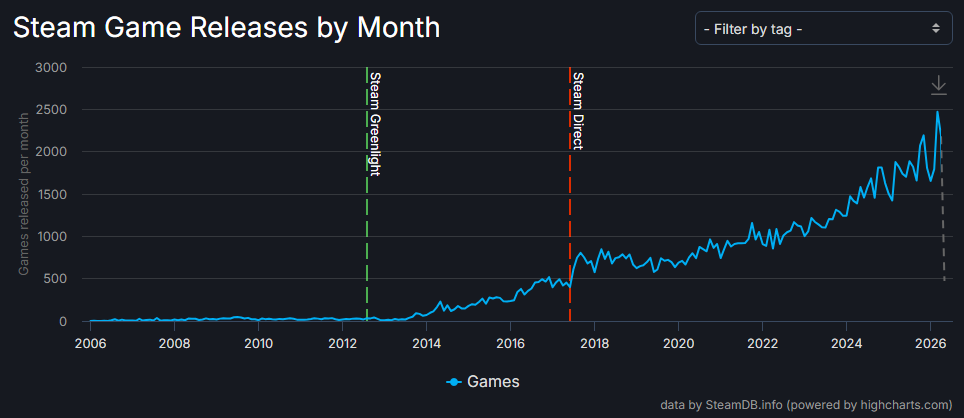
Anyone following the modern game industry knows that easy-to-use game engines and the accelerating shift to digital distribution have helped enable a massive increase in the quantity of commercial games released each year, both on console storefronts and especially on Steam. Now, Sony Interactive Entertainment President and CEO Hideaki Nishino says we should expect the rate of new game releases to accelerate even faster as new AI development tools make it easier for developers big and small to pursue new projects efficiently.

In a presentation to investors on Friday, Nishino noted that Sony “expect[s] to see a meaningful increase in the volume and diversity of content available to players” in the near future. That increase is the inevitable result of AI development tools that are “lowering barriers to creation, accelerating development cycles, and enabling more creators to enter the market,” he said.

By way of evidence, Nishino cited Sony’s first-party game development efforts. Gamemakers inside Sony are already using AI tools to “automat[e] repetitive workflows” in areas like quality assurance, 3D modeling, and animation, he said.

That includes a 3D animation tool called Mockingbird that Nishino said allows Sony artists to convert raw motion capture data into in-game animation much faster. While this tool can’t replace the motion-capture actors themselves, it means that “animation work that would have taken hours can now be completed in a fraction of a second,” Nishino said.

Machine learning tools have also been able to take in “videos of real hairstyles” and apply them to automated animation models that can realistically model “hundreds of strands,” replacing the “labor-intensive process” of animators placing those strands individually, Nishino said.

Elsewhere in the presentation, Sony Group President and CEO Hiroki Totoki praised the increased “efficiency” enabled by AI tools, saying it would, in turn, lead to “more innovative and ambitious projects—projects that were previously difficult to pursue due to constraints of cost and time.”

Totoki also highlighted a pilot partnership with publisher Bandai Namco that “identified massive gains in speed and productivity per person” in video production. While the team has needed to fine-tune generic AI models to prevent problems of “consistency and controllability,” Totoki added that these models can, in some cases, help enable “highly sophisticated and realistic outputs which were not feasible before due to production time constraints.”

The number of monthly Steam releases was already trending upward well before AI entered the picture

The number of monthly Steam releases was already trending upward well before AI entered the picture Credit: SteamDB

Even as AI enables a flood of new game releases, Sony said it believes AI will help players navigate that glut. AI models can already “outperform manual curation” when it comes to suggesting new games players might enjoy, Nishino said, and could soon also suggest “the next gameplay moment, subscription, accessory, or merchandise that best reflects their passion.”

The human equation

Despite Sony’s predictions, there isn’t necessarily a direct relationship between developer efficiency and the raw number of game releases over a given period. Gains in efficiency could reduce the total number of human developers working on a project, rather than the total time spent on it, for instance. On the other side of things, more efficient development tools could increase the baseline quality expectations for high-end game development, meaning more time is needed to meet that baseline.

Despite Sony’s bullishness on AI’s game development potential, the company stopped well short of suggesting that AI could replace game designers wholesale or make entire games from scratch. Nishino said directly that “AI is meant to augment [developers’] capabilities, not to replace them,” and that humans will always be responsible for “the vision, the design, and the emotional impact of our games.”

Speaking more broadly, Totoki said Sony maintains a “core principle” that “human creativity must remain at the center” of the company’s creative efforts. Totoki called AI “an amplifier of human imagination” while saying in practically the same breath that “great content comes from deep personal experiences, unique perspectives, and a strong inner motivation to express something meaningful.”

At the same time, though, Nishino suggested that Sony’s development teams have created “prototypes where NPCs with their own personalities can create a living, dynamic world for the player to explore.” It’s unclear what role human artists would have in a world where NPCs can have their own AI-generated “personalities,” but it would definitely be a far cry from the role they play in game development today.

0FansLike
0FollowersFollow
0FollowersFollow
0SubscribersSubscribe
- Advertisement -
Google search engine

Recent Posts