17.7 C
London
Friday, May 8, 2026
Home Blog

No promised US manufacturing boom as Trump tariffs ruled illegal

0
no-promised-us-manufacturing-boom-as-trump-tariffs-ruled-illegal
No promised US manufacturing boom as Trump tariffs ruled illegal

President Donald Trump signs an Executive Order on the Administration’s tariff plans at a “Make America Wealthy Again” event, Wednesday, April 2, 2025, in the White House Rose Garden. Photo: White House / Daniel Torok / Wikimedia Commons

A panel of federal judges ruled Thursday that US President Donald Trump’s sweeping 10% tariffs on most imports are unlawful, another major legal blow to the centerpiece of the Republican president’s economic agenda – which has failed to produce the manufacturing boom he repeatedly promised on the campaign trail.

The Court of International Trade (CIT) found in a 2-to-1 ruling that Trump violated the law when he unilaterally enacted the 10% import taxes following a February decision by the US Supreme Court, which struck down tariffs the president imposed using emergency powers. But the CIT’s ruling, which the Trump administration is expected to appeal, only barred collection of the tariffs from some of the plaintiffs in the case – including a pair of businesses and Washington state – an thus limited the ruling’s immediate impact.

Representative John Larson (D-Conn.), a member of the House Trade Subcommittee, applauded the new ruling in a statement, saying that “Trump must comply with the law by ending his illegal tax on the American people and getting families and small businesses the refunds they are owed.”

“The Supreme Court already rebuked the president’s costly tariffs, but Donald Trump sees our Constitution as a mere suggestion to follow, and not the law of the land,” said Larson. “As families are squeezed by sky-high grocery bills and gas prices, his latest round of tariffs is only pouring salt in the wound. The average household has already had nearly $2,000 stolen from them by this administration, and they should not have to pay a penny more.”

The decision came as a new analysis of trade and manufacturing data from the first quarter of 2026 found that the president’s “actions on trade have not delivered on his promises to quickly balance trade and revitalize US manufacturing.” Since Trump’s return to the White House last year, US manufacturing employment has declined by 82,000 jobs, according to the Rethink Trade program at the American Economic Liberties Project.

Additionally, the nation’s trade deficit was higher during the first three months of this year compared to the same period in 2024, Rethink Trade found.

“The first-quarter 2026 data show President Trump’s promises to prioritize speedily cutting the trade deficit and create more American manufacturing jobs are getting undermined by his chaotic and often mistargeted use of tariffs and squandering of leverage to demand other countries gut their Big Tech anti-monopoly and other policies instead of mercantilist abuses fueling the trade deficit,” said Lori Wallach, Rethink Trade’s director.

-Common Dreams

How climate change makes your allergies worse

0
how-climate-change-makes-your-allergies-worse
How climate change makes your allergies worse

It’s not in your head.

Climate change is contributing to longer and more severe pollen seasons across the Northern Hemisphere. Dr. Neelima Tummala, an ear, nose, and throat doctor at NYU Langone Health, said her patients tell her every year that their allergies are the worst they’ve ever been—and they might be right.

About a quarter of US adults and 1 in 5 children have seasonal allergies. For those millions of Americans, spring weather brings sniffles, itchy eyes, asthma exacerbation, and other miseries, with effects ranging from mild symptoms to serious medical emergencies.

Now, rising temperatures and carbon dioxide pollution are contributing to worsened pollen seasons across the country. Climate-change-driven heat waves, air pollution, and natural disasters can exacerbate allergy symptoms, too.

Although experts say it’s too early to fully tell how the 2026 pollen season will compare to past years, the trend over recent decades is clear, and evidence so far points to another tough year for the allergy-prone.

According to the USA National Phenology Network—a group focused on data and research concerning the seasonal patterns of plants and animals—spring bloom arrived early across much of the country.

AccuWeather meteorologists say this year’s trends fit into the overall pattern of an extending allergy season due to climate change.

They predict high tree pollen levels in the Ohio River Valley and parts of the Pacific Northwest this spring and say the Northern Plains and the Great Lakes could see early spikes in grass pollen in June and July, due to a combination of high rainfall and warmer weather. The Rockies can expect an intense weed pollen season, while New England and parts of the Gulf South might see lower than usual tree pollen levels, due to a cooler spring and less rain, they said.

Climate change and pollen

As global warming brings shorter winters and earlier thaws, trees start flowering—and therefore producing pollen—earlier in the spring.

A 2021 study found that human-caused climate change is worsening North American pollen seasons. And Climate Central found that between 1970 and 2025, the “freeze-free growing season” lengthened in the lion’s share of 198 US cities the group analyzed, with an average increase of 21 days. The Northwest and Southwest saw the largest average increases.

High levels of carbon dioxide also boost pollen production directly, and could amp it up as much as 200 percent by the end of the century, according to a 2022 study published in Nature Communications.

Pollen counts are rising globally, but they are particularly well studied across North America and northern Europe, said Moshe Ben-Shoshan, a pediatric allergist at the Montreal Children’s Hospital.

Some of Ben-Shoshan’s patients are experiencing stronger symptoms than they have in the past, and they can’t control them with treatments like antihistamines or nasal sprays that used to work.

“It’s the same symptoms, just more intense,” he said.

As climate change delays the first winter frosts across much of North America, summer ragweed also keeps flowering longer, extending the latter part of pollen season into the fall, said David Wees, a faculty lecturer in horticulture at McGill University in Montreal.

Wees himself suffers from seasonal allergies, and he’s noticed them starting earlier and lasting longer.

“There’s a couple birch trees outside my office,” he said. “I know it because my nose feels stuffy and my eyes feel itchy.”

Pollen isn’t the only allergen impacted by climate change. Increased humidity, heat, and flooding also create ideal conditions for mold to flourish in places where it was previously rare.

That can cause mold allergies to flare up, especially in the aftermath of climate-driven disasters like hurricanes, or for patients living in older buildings, basement units, or other homes without proper ventilation, Tummala said.

Pollen piles on

For many people, seasonal allergies are mainly a nuisance: itchy eyes, runny noses, and a seemingly never-ending cold. But pollen also messes with sleep, ups the risk of sinus infections, causes people to miss school and work, and can pose more serious dangers. A 2024 study based in Texas found that allergies can account for a significant portion of emergency department visits for asthma attacks during periods of high pollen counts.

People with allergies are also sensitive to other respiratory triggers, such as heat waves and increased air pollution, Tummala said.

On days with heavy wildfire smoke from Canada, Tummala said her patients experience the miserable effects of multiple respiratory stressors. During one such period last summer, a patient told her they were afraid to go outside.

“That’s just really sad,” Tummala said. “That’s not how you should live your life.”

Drought is another climate-intensified problem. Rain typically washes pollen out of the air. Without it, the fine powder can blow around for weeks without relief, Wees said.

For Tummala, the connection between seasonal allergies and growing climate hazards further illustrates the already pressing need for action to mitigate global warming.

“It’s a modifiable risk factor,” she said. “Climate change is something we can do something about.”

This article originally appeared on Inside Climate News, a nonprofit, non-partisan news organization that covers climate, energy, and the environment. Sign up for their newsletter here.

Africa-EU Parliamentary Assembly to hold inaugural plenary session in Eswatini

0
africa-eu-parliamentary-assembly-to-hold-inaugural-plenary-session-in-eswatini
Africa-EU Parliamentary Assembly to hold inaugural plenary session in Eswatini


The inaugural plenary session of the Africa-EU Parliamentary Assembly will take place in Eswatini from 12 to 14 May, bringing together African and European parliamentarians to discuss cooperation on security, youth policy and critical raw materials.

The opening ceremony is scheduled for 12 May at the Ezulwini Palazzo International Convention and Conference Centre and will be attended by Russell Mmiso Dlamini, His Royal Highness Prince Lindani, and the co-presidents of the assembly, Hilde Vautmans (Renew Europe Group,BE) and David Houinsa.

Over the course of three days, lawmakers are expected to discuss several shared priorities between Africa and the European Union.

Topics on the agenda include the role of regional organisations and parliaments in promoting peace and security, the future of multilateralism and parliamentary diplomacy, youth mobility within the Africa-EU partnership, women in agriculture, and parliamentary perspectives on the global competition for critical raw materials.

The session will conclude with the adoption of recommendations that will be submitted to the Africa-EU Council of Ministers.

Israeli fundraising platform ‘rebranding as American’ to dodge boycotts over genocide

0
israeli-fundraising-platform-‘rebranding-as-american’-to-dodge-boycotts-over-genocide
Israeli fundraising platform ‘rebranding as American’ to dodge boycotts over genocide

Israeli companies are pretending to be American to escape the shame of the Israel brand, Paul Biggar, founder of Tech for Palestine, has uncovered. GivingTech — a “global” philanthropy fintech marketed in the US and Europe is in fact the Tel Aviv-based IsraelGives, Biggar reported. The organisation is reported to have channelled donations to Israeli military units and illegal West Bank settlements.

Biggar, the Irish founder of the developer-tools firm CircleCI, laid out his findings in a thread posted on X on 7 May. The two organisations, he wrote, were tied together by a shared chief executive, an identical logo, near-identical websites and a string of technical fingerprints, including the same Google Analytics codes and an identically-hashed stylesheet that he said could not have come about by coincidence.

Firstly, we found this because we were evaluating a partner and they used a site called https://t.co/DVAgI8yHGP. After we put a small donation through it, the new website’s title became “IsraelGives”.

But actually we had a clue before: the donation form had the IsraelGives logo… pic.twitter.com/rUqaJNKyZx

— Paul Biggar 🇵🇸🇮🇪 (@paulbiggar) May 7, 2026

“This is part of a trend of Israeli companies trying to rebrand their way out of genocide, occupation and boycotts,” Biggar wrote in the closing post of the thread.

IsraelGives, founded in 2009, is an Israeli charitable platform that allows donors abroad to give to Israeli causes and to receive tax receipts in 35 countries. The Israeli platform has been documented before as having processed donations from US-based donors to illegal Israeli settlements in the occupied West Bank, to paramilitary groups, and to Israeli military units.

READ: Google and Amazon struck secret deal to shield Israel from legal scrutiny, leak reveals

Subsequent reporting found that Google employees have been able to direct donations including company-matched ones to the platform via the corporate giving platform Benevity.

By contrast, GivingTech looks like an American firm. Its website presents the company as a global provider of fundraising software for charities, pitching its services to financial advisers, wealth managers and non-profits in the United States. Nowhere on the homepage is there any reference to Israel. According to Biggar, that is precisely the point.

“Once we started probing, the commonalities were everywhere,” he wrote. The same individual, he said, has served as chief executive of both companies concurrently for the past four years. On LinkedIn, the company is listed as headquartered in Tel Aviv. The IsraelGives website, the GivingTech website, and a third sister product, DAFtech, all share the same logo — and the same favicon.

The technical evidence, Biggar argued, was harder still to dismiss. The IsraelGives website, he wrote, loads a stylesheet named givingtech.css whose cryptographic hash is identical to the one used on the GivingTech site — meaning the two pages are, at the code level, the same file. Both sites, he added, also share the same Google Analytics and Microsoft Clarity tracking identifiers, the unique codes used to monitor visitor traffic. “Another smoking gun,” he called it. “If all of that somehow doesn’t convince you, check the websites. They are nigh identical!”

READ: Apple under fire for matching employee donations to IDF and illegal settlements

Medspa Owner Charged with Murder After ‘IV Cocktail’ Causes Patient to Suffer Fatal Cardiac Arrest

0
medspa-owner-charged-with-murder-after-‘iv-cocktail’-causes-patient-to-suffer-fatal-cardiac-arrest
Medspa Owner Charged with Murder After ‘IV Cocktail’ Causes Patient to Suffer Fatal Cardiac Arrest


A Texas medspa owner and a doctor are now facing serious criminal charges after a woman allegedly died from a dangerously administered IV treatment that investigators say was given far too quickly.

Jenifer Cleveland, 47, died on July 10, 2023, after visiting a medspa in Wortham for what should have been a routine wellness treatment. Instead, authorities say the IV infusion triggered a deadly medical emergency that sent her into cardiac arrest within minutes.

According to indictments obtained by PEOPLE, Cleveland received an “IV cocktail” at Amber Johnson’s Luxe Medspa that contained multiple vitamins and electrolytes, including potassium chloride — a substance that can become deadly if administered improperly.

Investigators claim the infusion was delivered at an unsafe speed.

Johnson turned herself in to authorities on April 28 and was booked into the Freestone County Jail. She now faces a long list of charges, including felony murder, manslaughter, criminally negligent homicide, practicing medicine without a license, tampering with physical evidence, and multiple counts related to the delivery of dangerous drugs.

Jail officials confirmed she was later released on a $69,000 bond.

Authorities say Cleveland’s IV treatment began shortly after 11 a.m. on July 10, 2023. Just 27 minutes later, she reportedly lost consciousness, collapsed, and had no pulse.

She was rushed to a local hospital but was pronounced dead shortly afterward.

Medical experts say potassium chloride must be administered slowly and carefully monitored because too much potassium entering the body too quickly can trigger catastrophic complications, including irregular heart rhythms, organ failure, and sudden death.

The Texas Medical Board later launched an investigation into the shocking death.

Following a months-long review, investigators concluded Cleveland died from cardiac arrest caused by the “improper administration” of the IV therapy, according to an August 2024 order suspending the license of Dr. Michael Gallagher, the physician accused of overseeing the medspa.

Authorities allege Johnson did not hold a medical license but still operated the medspa despite Texas laws restricting non-physicians from owning medical practices.

Investigators also accused Gallagher of failing to properly supervise Johnson and allegedly allowing her to use his medical license to obtain dangerous medical substances.

Gallagher was arrested on April 29 and hit with multiple charges of his own, including felony murder, manslaughter, criminally negligent homicide, and numerous counts tied to dangerous drug distribution and illegal medical practices.

He was released on a $96,500 bond.

In the wake of Jenifer’s death, her husband Brian Cleveland filed a civil lawsuit against Luxe Medspa and later pushed for stricter regulations surrounding elective IV therapy clinics.

His efforts eventually led to the passing of “Jenifer’s Law,” which was signed by Texas Gov. Greg Abbott in June 2025. The law created tighter oversight rules for nontraditional healthcare facilities that offer elective IV treatments.

Before the legislation passed, Brian spoke emotionally about the wife he lost.

“She loved life. She loved her people,” he said. “She just wanted to love.”

He added that having the legislation named after Jenifer felt like a way for her legacy to continue helping others long after her death.

Easy One-Bowl Carrot Oatmeal Muffins

0
easy-one-bowl-carrot-oatmeal-muffins
Easy One-Bowl Carrot Oatmeal Muffins

You are here: Home / Desserts / Easy One-Bowl Carrot Oatmeal Muffins

Healthy, moist, and perfect for busy mornings!

Starting your day with something wholesome doesn’t have to be complicated. These Easy One-Bowl Carrot Oatmeal Muffins are the perfect solution for a quick, nutritious, and delicious breakfast. Made with simple ingredients and minimal cleanup, they’re soft, flavorful, and naturally satisfying.

With the natural sweetness of carrots, the heartiness of oats, and warm hints of cinnamon, these muffins feel comforting—almost like a healthier version of carrot cake you can enjoy any day of the week.


Why You’ll Love These Muffins

  • 🥣 One-bowl recipe = easy cleanup
  • ⏱️ Ready in under 30 minutes
  • 🥕 Naturally sweet & moist
  • 💪 Packed with fiber and nutrients
  • 🍽️ Perfect for breakfast, snacks, or meal prep

Ingredients

Dry Ingredients:

  • 1 cup rolled oats
  • 1/2 cup brown sugar (or coconut sugar)
  • 1 tsp baking powder
  • 1/2 tsp baking soda
  • 1/2 tsp cinnamon
  • 1/4 tsp salt

Wet Ingredients:

  • 1 cup grated carrots (about 2 medium)
  • 1/2 cup applesauce or yogurt
  • 1/4 cup vegetable oil or melted coconut oil
  • 1 tsp vanilla extract

Optional Add-ins:

  • 1/4 cup walnuts or raisins

Instructions

  1. Preheat Oven
    Set oven to 350°F (175°C) and line or grease a muffin tin.
  2. Mix Dry Ingredients
    In a large bowl, combine oats, sugar, baking powder, baking soda, cinnamon, and salt.
  3. Add Wet Ingredients
    Stir in grated carrots, applesauce (or yogurt), oil, and vanilla. Mix gently until combined.
  4. Add Extras (Optional)
    Fold in walnuts or raisins if using.
  5. Fill Muffin Tin
    Spoon batter into muffin cups, filling about 2/3 full.
  6. Bake
    Bake for 15–20 minutes, or until a toothpick inserted comes out clean.
  7. Cool
    Let muffins cool for 5 minutes, then transfer to a wire rack.

Tips for Best Results

  • ✔ Grate carrots finely for better texture
  • ✔ Don’t overmix—keeps muffins soft and fluffy
  • ✔ Add spices like nutmeg or ginger for extra flavor
  • ✔ Use coconut sugar for a healthier twist

Storage Tips

  • Store at room temperature: 2–3 days
  • Refrigerate: up to 1 week
  • Freeze: up to 3 months

👉 Reheat in microwave for 15–20 seconds before serving.


Final Thoughts

These Carrot Oatmeal Muffins are proof that healthy can still be delicious. Easy to make, nourishing, and perfect for any time of day, they’re a must-have in your recipe collection.

Make a batch once—and they’ll quickly become part of your weekly routine!

Everyone’s a loser in Strait of Hormuz game that simulates global crisis

0
everyone’s-a-loser-in-strait-of-hormuz-game-that-simulates-global-crisis
Everyone’s a loser in Strait of Hormuz game that simulates global crisis

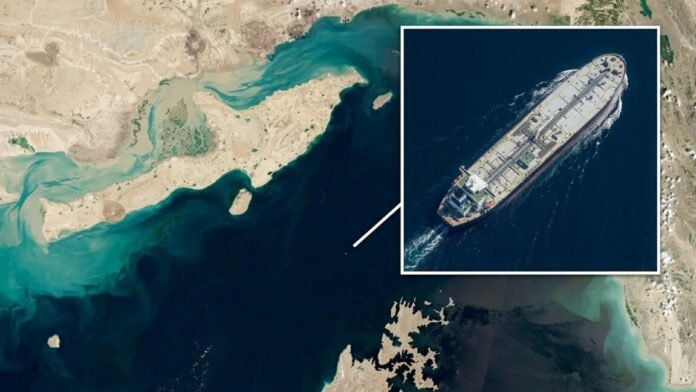
It’s no fun living through the global energy shock and growing economic crisis that has ensued since the conflict choked off shipping through the Strait of Hormuz. But it can be enlightening to play through the new game Bottleneck that forces players to choose among the 2,000 ships still stuck in and around the strait—all while actual news reports and real maritime transit data help tell the story of the unfolding events.

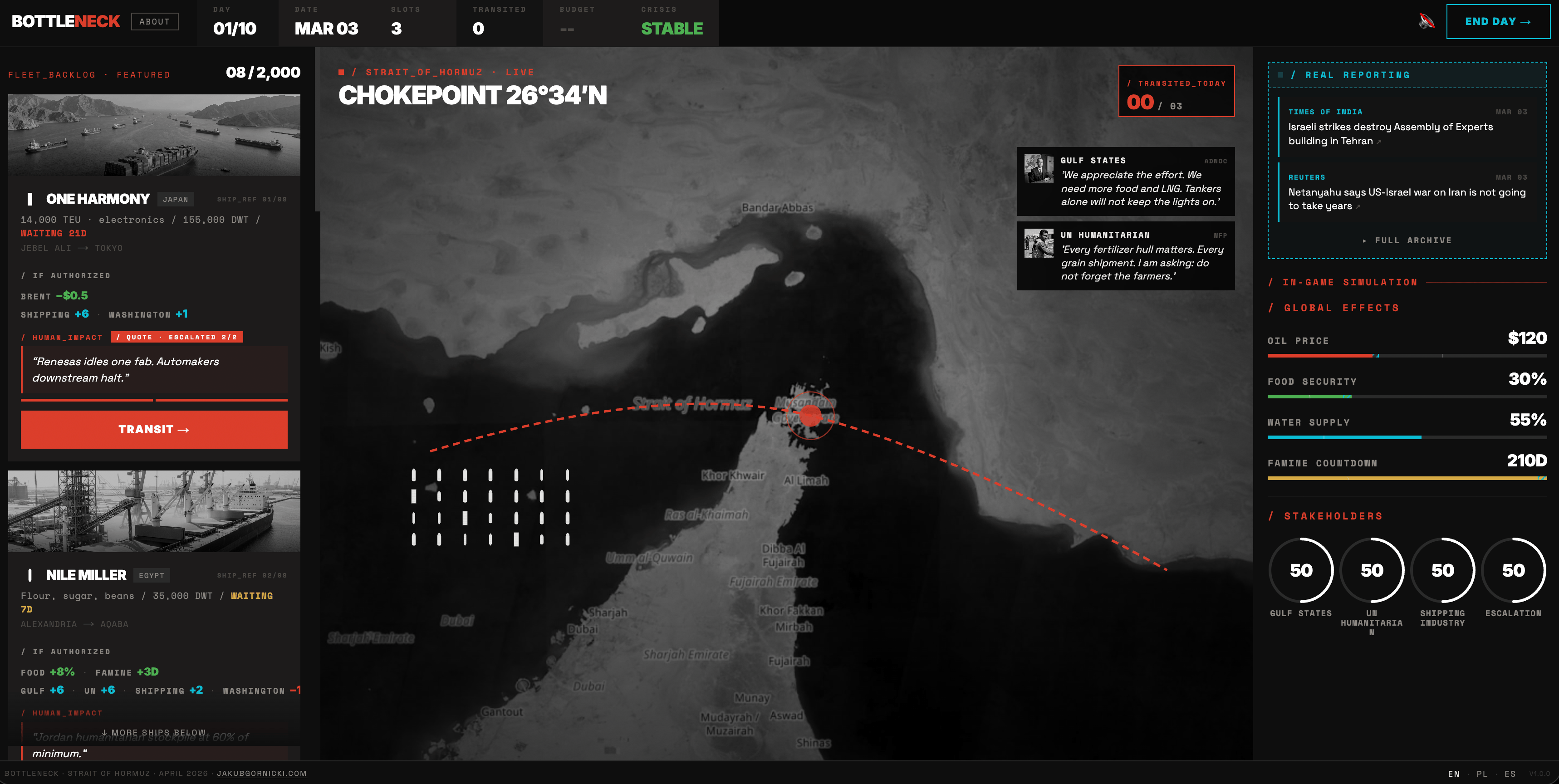
The free browser-based game challenges players to act as a fictional maritime coordinator by selecting a handful of ships that get to pass through the strait each day. Most decisions come with serious costs or trade-offs, whether it’s paying the toll imposed by the Iranian government that has claimed authority over the strait or antagonizing Iran or the United States while pushing either side toward widening the war. Failure to push through enough specific shipments can spark individual crises involving the price of oil, food, and water security, and a countdown to famine in many countries.

“The game does not ask whether you are smart enough to solve the crisis,” said Jakub Gornicki, the journalist and artist who developed the game, in a post. “It asks what kind of damage you choose when every option has a cost.”

Players must also manage relations with factions beyond Tehran and Washington, such as the Gulf States, the United Nations World Food Programme, and the shipping industry. Prioritizing shipments of crude oil and liquefied natural gas may satisfy the US’s interest in keeping energy prices in check, but it will erode the trust of the United Nations, which would rather see more ships carrying fertilizer to stave off future famine.

Playing a bad hand well

That may sound like a lot to wrap your head around for a game that is playable in 15 to 20 minutes, but it’s a surprisingly accessible experience for the most part. The game serves up plenty of explanations and news articles that you can click on to better understand the real-world context and in-game consequences.

However, each ship approved for transit tends to carry a greater cost or trade-off as the game progresses over 10 playable days between March 3 and April 13, 2026. You have the choice of not sending any ships through the strait on any given day, but that can quickly lead to dismal endgame results, like “empty shelves” and “desalination collapse” for Gulf States facing food insecurity and a lack of fresh water from energy-starved desalination plants.

A screenshot of the browser-based game Bottleneck lists ships on the left that players can choose to transit through the Strait of Hormuz. The right shows different factions and global crisis factors that players must manage.

A screenshot of the browser-based game Bottleneck based on the real Strait of Hormuz crisis.

A screenshot of the browser-based game Bottleneck based on the real Strait of Hormuz crisis. Credit: Jakub Gornicki / jakubgornicki.com

If you manage to muddle through and keep all the factions from spiraling, the endgame results still provide plenty of charts and numbers to remind you that the real-life Strait of Hormuz crisis is far from over. Even squeezing through several dozen ships over 10 days—the best-case shipping scenario in the game—remains a far cry from the pre-war average of 130 ships passing through the strait each day. The inadequacy of that shipping rate continues to have daily real-world consequences.

Gornicki designed and built the game by himself over 17 days while executing the game’s underlying code with the help of an AI coding tool, which he described in a press kit as being “audited and corrected at every step.” He also incorporated more than 125 verified and linked news articles, along with shipping data from sources such as Windward Maritime Intelligence and Lloyd’s List.

“The chokepoint is not a story you read once and put down—it returns every week, in fuel prices, in fertilizer shortages, in food security in places far from any tanker,” Gornicki said. “I wanted to give people a form of this reporting they could not skim past.”

Rupiah rout stoking fears of a 1997 repeat in Indonesia

0
rupiah-rout-stoking-fears-of-a-1997-repeat-in-indonesia
Rupiah rout stoking fears of a 1997 repeat in Indonesia

TOKYO – Indonesian officials are working overtime to dismiss any suggestion that Jakarta is catching a whiff of 1997 in the air. But the force of their interventions to steady the rupiah tells a very different story.

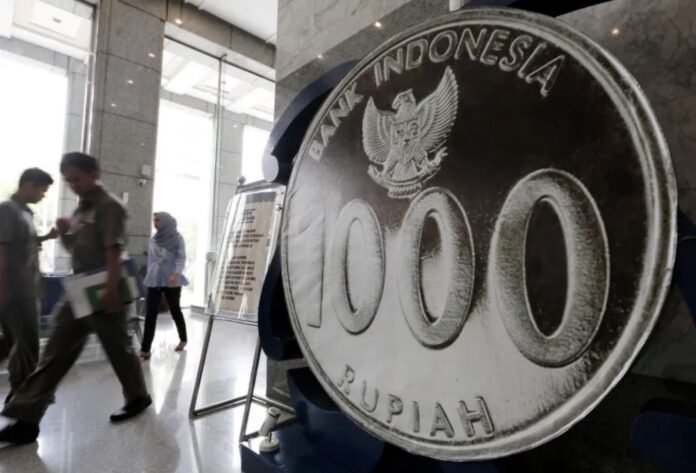
Bank Indonesia is hemorrhaging currency reserves to put a floor under the rupiah, which recently fell to an all-time low. This includes levels seen during the Asian financial crisis 29 years ago, as the fallout from the Iran war slams global markets.

Yet Indonesia’s move to impose capital controls suggests Southeast Asia’s biggest economy is going to the mattresses against currency speculators — in ways that could backfire.

Next week, Indonesia will activate a Bond Stabilization Fund to support the rupiah, according to Finance Minister Purbaya Yudhi Sadewa. Yet Jakarta resorting to so-called capital-flow management tools this early in the battle smacks more of panic than strength.

To be sure, the rupiah’s plunge to around 17,400 to the dollar is dramatic and a clear and present threat to the economy. A weaker exchange rate makes it harder to keep up with overseas debt payments.

It ups the odds Indonesia will import inflation. And it complicates the export of coal, nickel, palm oil and other key commodities, all of which are priced on global markets in dollars.

But there’s a throw-the-baby-out-with-the-bathwater dynamic at play in Jakarta. The capital outflows exiting Indonesia reflect investors voting with their feet against the priorities that President Prabowo Subianto has pursued since October 2024.

The twin budget and current-account deficits are surely part of the problem. But the biggest worry is the yawning gap between Prabowo’s reform promises and the actual macroeconomic policies he’s championed.

It’s fine that Prabowo embraced the mega‑infrastructure agenda of his predecessor, Joko Widodo. But global investors have been left wanting for new projects that boost productivity. They also prefer financing arrangements that don’t crowd out private investment while exacerbating the national debt.

Nor is economic nationalism a good look for a government seeking to increase its regional leadership role. This includes export restrictions on nickel and other minerals that unsettle global supply chains and regulatory volatility that raises risk premiums.

Prabowo, meanwhile, has done little, if anything, of note to reduce Indonesia’s reliance on commodities to generate growth. This dynamic exposes the nation’s 287 million people to extreme price swings.

Team Prabowo has done itself no favors by dismissing investors’ concerns. Its heavy foreign-exchange intervention and pressure on state-owned banks are exacerbating these worries. Indications of bigger spending efforts to come aren’t helping.

It seems markets are no longer buying what Team Prabowo is selling. The rupiah’s plunge “is a signal that macroeconomic fundamentals are under pressure,” says Liza Camelia Suryanata, head of research at Kiwoom Sekuritas Indonesia. Also, Suryanata notes, “the target of 8% GDP growth has become highly unrealistic, and even maintaining around 5% is starting to look difficult.”

Nor is Suryanata surprised that the Jakarta Composite Index is down nearly 19% year to date. That compares to positive year-to-date returns in Malaysia and Thailand and a Philippine stock market that’s essentially flat.

In late April, index giant MSCI extended its review of Indonesia’s stock market to determine whether it might be downgraded to “frontier” from “emerging” status amid growing concerns about transparency under Prabowo.

Since January, Jakarta has announced steps to increase the amount of shareholder data ⁠and doubled the portion of stocks available to the general public to 15%. The exchange also kicked out some tycoon-owned stocks.

Last month, Jeffrey Hendrik, acting CEO of the Jakarta exchange, said his team would “continue to engage with global investors to gather input on strengthening the capital market in the future.”

Indonesia’s troubles are much deeper than that. Nor is it the only Asian economy in harm’s way. The Indian rupee, for example, is down by even more year to date than the rupiah (down 5.1% and 4.1%, respectively).

“Emerging market Asia is in the direct path of the shock with relatively loose policy,” says economist Lucila Bonilla at Oxford Economics, noting that Oxford has added rate hikes to its baseline for India, Indonesia and the Philippines. Thailand, meanwhile, is the “standout risk of patience turning into complacency.”

Indonesia, though, was shaky well before bombs began falling on Iran on February 28. Even before the war began, the rupiah and the stock market were suffering their worst routs since the 1997-98 Asian crisis, flashing warning signs for developing markets across Asia. It was clear in January that markets had grown wary of general-turned-politician Prabowo’s policies.

When Prabowo succeeded the more reform‑minded Widodo, he inherited an economy that had been gathering momentum. Between 2014 and 2024, the widely popular Widodo restored stability to Indonesia’s political landscape and notched several meaningful reforms — most notably a wave of transformational infrastructure projects designed to lift productivity and competitiveness.

In the Widodo era, Indonesia also made headway in tackling corruption and bureaucratic inefficiency, pushing government institutions toward greater transparency. These improvements helped raise the quality of growth, ensuring that more Indonesian households shared in the gains from rising output.

And under Widodo’s stewardship, Indonesia navigated the Covid‑19 shock more effectively than many of its emerging‑market peers. Yet for all his achievements, Widodo left important structural issues unresolved.

Critics say he tolerated the rise of dynastic politics and allowed old‑style patronage networks to persist. And by backing a successor from the armed forces, he opened the door to a far less predictable leadership style — a striking shift given that Widodo was Indonesia’s first president from outside the military or political elite.

Global investors felt the jolt almost immediately after Prabowo took office. His pledge to propel Indonesia’s US$1.4 trillion economy toward 8% annual growth initially rekindled foreign enthusiasm.

But that optimism evaporated once it became clear that his strategy relied on aggressive fiscal expansion. Capital outflows surged as investors reassessed the risks behind the new administration’s growth ambitions.

Nine months into his presidency, in September 2025, Prabowo abruptly dismissed the internationally respected Finance Minister Sri Mulyani Indrawati. A former World Bank managing director, she had long been viewed as the key guardrail against a return to fiscal overreach.

Once she was out, Prabowo installed loyalist Purbaya, who quickly injected roughly $12 billion into the economy to jump-start lending.

Purbaya then moved swiftly to advance Prabowo’s controversial “burden‑sharing” plan — a push to nudge the central bank toward looser monetary policy just as the government was flooring the fiscal accelerator.

Economists worry BI is becoming a mere extension of the president’s growth strategy. ANZ Banking Group strategist Jennifer Kusuma notes that BI’s growing role in the sovereign debt market “would foster moral hazard risks” going forward.

In late January, as the Indonesian rupiah plunged to a record intraday low, Purbaya issued a statement stressing that BI remains free to make its own calls.

“We will maintain the independence of the central bank and the government as much as possible,” Purbaya said. “I will not squeeze the central bank to finance our development programs.”

The folks at MSCI clearly aren’t persuaded. In January, the index provider warned of “fundamental investability issues” in Indonesia’s stock market — a statement that triggered one of the most dramatic selloffs since the 1990s. It amounted to a stinging rebuke of Prabowo’s hyper-positive economic spin.

Many investors now fear it’s too late to give Prabowo the benefit of the doubt. Instead of taking steps to strengthen Indonesia’s economic foundations and rebuild market confidence, his finance minister has taken to attacking economists in a style reminiscent of Donald Trump, further unsettling global funds.

Just as Trump lashed out at Goldman Sachs’ chief economist for not toeing his administration’s line, Prabowo’s team has publicly chastised Citibank analysts after a report warned that Indonesia’s budget deficit could widen to 3.5% of GDP — well above the legal 3% ceiling.

Purbaya veered into Trump‑style theatrics when he dismissed Citi’s forecaster — who holds two master’s degrees — as “not a real economist.” But you don’t need a PhD to see that investors aren’t brushing off Citi’s warning. Least of all MSCI, which has treated the concerns as anything but trivial.

Yet as MSCI continues to argue months later, only bold and transparent capital-market reforms can achieve that. MSCI raised concern about “ongoing opacity in shareholding structures” and “possible coordinated trading behavior that undermines proper price formation.”

The bigger problem is that by prioritizing political control over creating a more productive economy, Prabowo and his economic team may be dragging the economy back to the days of living dangerously.

The irony, of course, is that Prabowo is a protege of dictator Suharto, who was ousted amid the political chaos of the 1997-1998 financial crisis. Without supply-side reforms, Prabowo’s fiscal priorities will also adversely affect the economy.

The same goes for the president’s assault on the central bank. Indonesia, in many ways, has joined the Fed on the frontlines of the battle for monetary policy autonomy.

The risk, says Wijayanto Samirin, economist at Paramadina University, is that BI officials “get too deep and detailed into fiscal matters and this disrupts our monetary policy ecosystem.”

Prabowo’s push to weaken the central bank’s independence and roll out costly populist programs suggests a shaky grasp of the very forces that fueled Indonesia’s 1997–98 crisis.

And despite the cautionary tale of Malaysia’s 1Malaysia Development Berhad scandal, he has pressed ahead with creating a sovereign wealth fund, Danantara — a move that has already raised red flags over governance risks and potential conflicts of interest.

Markets aren’t always right. But chaotic stock losses and rupiah volatility have investors sensing a 1997-like whiff in the Jakarta air. This places the onus on Prabowo to demonstrate that he has a plan to take Indonesia forward.

Current fears about an accelerating backslide are the last thing the nation needs in 2026. And moves to limit capital flows treat the symptoms, not the underlying problems.

Follow William Pesek on X at @WilliamPesek

ISIS Disrupts Damascus Calm, Says It Assassinated Shiite Figure

0


[Damascus] In a major security escalation that shook the Syrian capital and its outskirts, the Islamic State (ISIS) officially claimed responsibility for the assassination of prominent Shiite cleric Sheikh Farhan Hassan al-Mansour, preacher and imam of the Sayyidah Zaynab shrine. 

The attack, which took place on May 1, 2026, revived memories of the group’s past hit-and-run operations targeting carefully selected religious and military figures, demonstrating its ability to breach heavy security fortifications in one of Syria’s most sensitive areas. 

Last Friday morning, a powerful explosion echoed through the southern suburbs of Damascus. A correspondent for The Media Line in Damascus reported at the time that the blast targeted al-Mansour’s vehicle while he was traveling near the Safir Al-Zahra Hotel area surrounding the shrine. 

A Syrian security source who inspected the scene told The Media Line that an explosive device had been planted underneath the vehicle and detonated remotely, killing the cleric instantly and injuring several of his aides, as well as civilians who happened to be nearby. 

The Media Line’s Damascus correspondent said ISIS claimed responsibility for the bombing through its official channels and its weekly newsletter, Al-Naba. In a brief statement, the group described al-Mansour as one of the “imams of the Rafida”—a derogatory term used by extremists to refer to Shiites—claiming that the assassination was part of what it called an act of “revenge” and a continuing campaign targeting religious figures associated with the former Syrian regime and its allies. 

The choice of both the target and the location carries significant strategic symbolism. The Sayyidah Zaynab shrine is not only one of the most important religious sites for Shiites but also, for years, served as a political and military symbol of Iranian and Hezbollah influence in Syria before that presence diminished following the fall of the Assad regime in December 2024. 

The ability to reach and assassinate the shrine’s leading cleric in the heart of his own stronghold sends a powerful message that ISIS sleeper cells still possess the capacity to monitor, maneuver and strike deep inside Damascus. 

Following the bombing, Syrian authorities imposed heightened security measures across Damascus and its countryside. Several Syrian bodies, including the Supreme Islamic Shiite Council, mourned al-Mansour, describing him as a “martyr of the pulpit” known for his moderate positions and calls for unity. 

Local media sources in Damascus later reported that authorities dismantled a three-member cell in the Sayyidah Zaynab area suspected of providing logistical support and facilitating the operation. 

The attack comes at a critical transitional moment for Syria, as ISIS appears to be exploiting vulnerabilities created by the redeployment of military forces and the preoccupation of security agencies with broader political challenges. 

Analysts say the group has shifted from its former strategy of territorial control—which effectively collapsed in 2019—to a campaign of “qualitative attrition” based on assassinations and ambushes aimed at undermining public confidence and exposing the state’s inability to protect key figures. 

The assassination of al-Mansour presents Syrian security agencies with a renewed challenge. While ISIS remnants remain largely hidden in pockets of the Syrian desert, the group has once again demonstrated that its operational reach can extend into vital urban centers, raising questions about the effectiveness of current counterterrorism strategies and the potential for sleeper cells to reshape the security landscape. 


Italy leans on Libya to plug energy gap caused by Iran war

0
italy-leans-on-libya-to-plug-energy-gap-caused-by-iran-war
Italy leans on Libya to plug energy gap caused by Iran war


A delegation of Italian lawmakers has traveled to Libya to explore potentially ramping up energy trade with the war-torn country to fill the gap caused by the war in the Persian Gulf.

It reflects growing interest from Europe and the United States in the country’s vast but under-exploited energy resources, heightened by the recent global energy shortage.

While Libya already exports some gas to Italy, flows have slowed to a trickle since the 2011 civil war that toppled Muammar Gaddafi, leaving the North African country wracked by paramilitary violence and divided between two warring administrations.

But the loss of around 10 percent of Italy’s gas supply following the bombardment of a major Qatari gas plant in mid-March is beginning to change the calculus for top officials across the country.

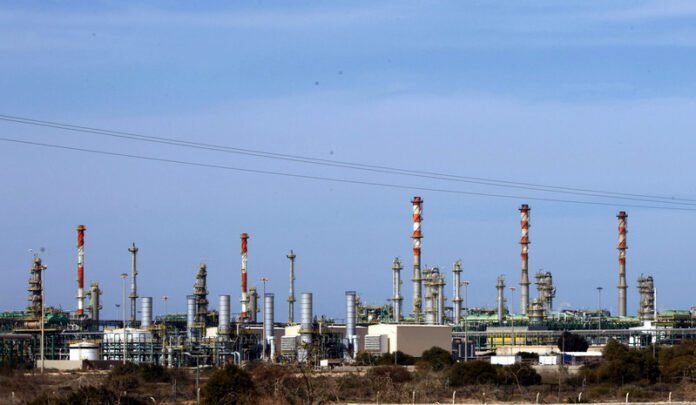
In particular, attention is turning to the Greenstream pipeline, a major undersea conduit capable of transporting up to 11 billion cubic meters of natural gas a year — around a sixth of Italy’s total annual demand — from western Libya to a terminal in Gela, southern Sicily.

The conduit, run jointly by Italian energy giant Eni and Libya’s National Oil Corporation, currently provides Italy with the excess gas that Libya doesn’t consume domestically. However, transit has fallen in recent years due to rising Libyan demand, and the pipeline currently operates at only 10 percent of capacity.

Total Libyan production is also underdeveloped, standing at 394 billion cubic feet in 2023, out of an estimated total 80 trillion cubic feet of reserves, the fifth largest in Africa.

But skepticism toward the country is thawing. Last month, a delegation of lawmakers in Italy’s influential parliamentary intelligence committee, Copasir, visited the cities of Tripoli and Benghazi — which represent the divided country’s rival seats of power — to assess its prospects. And their conclusions, while cautious, hint at a newfound optimism.

“We’ve got something that is directly connected with Italy without any other country in the middle that could create a problem,” League Senator Claudio Borghi, an influential figure in the Copasir delegation, told POLITICO.

He cautioned, however, that “it’s not something that you can do with the snap of a finger. You have to start working. And … that’s exactly what is happening.” 

Specifically, Borghi said that two major, Eni-led infrastructure upgrades, expected to be completed this year, had the potential to improve flows through Greenstream within “months,” in part by reducing flaring, the wasteful practice of burning off unused natural gas during the extraction and production process. He argued this was possible without reducing output to Libya’s gas-dependent domestic market.

A person familiar with Eni’s operations confirmed that the company — which is part-owned by the Italian government and has a receptive audience in Rome — was “working to increase gas production in the country” via both Greenstream and in Libya more broadly. The person didn’t specify how long it would take or whether the company was seeking support from Rome.

Boosting inflows of Libyan gas could provide some much-needed relief for Italy in the wake of the Iran war, which has left Rome seeking new supplies from Algeria, Azerbaijan and Saudi Arabia to offset rising energy costs. Gas accounts for 40 percent of Italy’s energy mix, 16 percentage points more than the European average, and the loss of Qatari supplies has affected the country disproportionately.

Still, the Copasir trip was a bipartisan parliamentary initiative, and it’s not clear whether Rome will back Borghi’s conclusions. While Libyan officials across both administrations were keen to find ways to boost production, Italy’s trade minister, Adolfo Urso, has not yet formulated a view and is merely monitoring the situation, Borghi said.

“One thing is [monitoring] and another thing is having a clear view that this could be an investment area that could [bear] fruit,” the senator complained. He said he would nevertheless relay his impression of Libya’s potential to Matteo Salvini, the League’s leader and Giorgia Meloni’s vice premier.

The burgeoning interest was illustrated by a meeting on Thursday between Italian Prime Minister Giorgia Meloni and Abdul Hamid Dbeibah, the U.N.-backed, Tripoli-based leader of western Libya. The two leaders discussed “strengthening the partnership in the energy sector” between the countries, Dbeibah wrote on X. A spokesperson for the Italian government declined to comment.

The Copasir delegation itself is split on Libya’s potential. In an interview with POLITICO, Copasir Secretary Ettore Rosato — a lawmaker in the opposition Democratic Party — argued that sustainably increasing output would require investment over many years, with parallel investment in renewables needed to “avoid absorbing all additional production through domestic consumption.”

He agreed with Borghi that Libyan authorities were enthusiastic at the prospect of boosting Greenstream output, but said the Italian government was aware of the limited short-term potential of the infrastructure upgrades touted by Eni. “Let’s not fool ourselves into thinking they can produce positive effects in the short term,” he said.

The trip comes amid what diplomats and business leaders in the country have described to POLITICO as a broader U.S. push to unify the country and open it up for more energy trade, which has coincided with renewed — if cautious — engagement by Western energy giants, including Eni and France’s TotalEnergies, as well as several U.S. oil giants. Eni, for its part, discovered two large gas fields off the country’s coast.

Italy has featured heavily in the U.S.-led diplomatic effort, hosting meetings between the U.S. and senior Libyan officials from both administrations in Rome last year. Italian Foreign Minister Antonio Tajani himself endorsed the U.S. re-engagement when asked by POLITICO in February whether it would be beneficial to Italy’s energy sector.

“For us, the Americans are friends — to work with Americans in Libya is not a problem for us,” he said at an event in Rome. “My position is always in favor of more American involvement.” He added that engaging with Libya was vital to countering growing Russian influence in the east of the country, which is dominated by the Kremlin-backed warlord Khalifa Haftar.

Libya has also entered into the “orbit” of talks on diversification in Brussels, an EU official said, while cautioning that the country remains only a peripheral prospect due to its instability.

Via Politico

0FansLike
0FollowersFollow
0FollowersFollow
0SubscribersSubscribe
- Advertisement -
Google search engine

Recent Posts