7.9 C
London
Friday, May 8, 2026
Home Blog

China, Vietnam share a propaganda playbook for digital control

0
china,-vietnam-share-a-propaganda-playbook-for-digital-control
China, Vietnam share a propaganda playbook for digital control

For years, many Western observers believed the internet would inevitably weaken authoritarian regimes.

The logic seemed straightforward: once information could flow freely, state monopolies on propaganda would collapse. The internet, in this view, would become a force of democratization.

Reality turned out differently. Rather than being overwhelmed by the digital revolution, authoritarian governments such as China and Vietnam have adapted to it with remarkable sophistication.

Instead of merely censoring information, they have learned to shape online narratives, manipulate visibility, exploit algorithms and transform cyberspace itself into an instrument of political control.

The authoritarianism of the digital era no longer depends primarily on silencing citizens. Increasingly, it depends on flooding them.

China’s digital authoritarianism laboratory

China pioneered what scholars now describe as “digital authoritarianism.”

Early efforts focused heavily on censorship through the “Great Firewall,” blocking foreign platforms and restricting access to politically sensitive information.

But Beijing gradually realized that blocking alone was insufficient in an era of social media and mobile connectivity. The Chinese model evolved from passive censorship into active narrative management.

Political scientist Gary King and his colleagues estimated that the Chinese government generates hundreds of millions of social media posts annually through coordinated online commentators often referred to as the “50-Cent Party.”

Contrary to popular assumptions, these campaigns do not primarily aim to debate dissidents or refute criticism directly. Instead, they seek to distract public attention, amplify patriotic sentiment and overwhelm politically sensitive discussions with emotional or nationalistic content.

This represents a strategic shift: the goal is no longer simply to suppress dissenting information, but to dilute its political impact.

Equally important, Beijing has decentralized propaganda production itself. Government agencies, local authorities, police departments and state-affiliated influencers increasingly operate as content creators on platforms such as Douyin, China’s version of TikTok.

Nationalist messaging is woven into entertainment, memes, music, lifestyle videos and emotionally engaging short-form content. Propaganda no longer appears solely through rigid ideological slogans or state television broadcasts. It increasingly adopts the language, aesthetics and rhythms of internet culture itself.

The result is a far more adaptive and resilient form of political control. China’s deeper objective is not necessarily to prevent citizens from knowing the truth. Rather, it is to prevent citizens from knowing that others also know the truth, thereby weakening the possibility of collective action.

This dynamic reflects what political theorist Timur Kuran described as the problem of “preference falsification” under authoritarian systems: individuals may privately recognize social discontent while publicly remaining silent because they believe they are isolated.

Digital authoritarianism exploits this uncertainty by manufacturing the illusion of consensus.

From police state to digital police state

Vietnam has increasingly absorbed and adapted elements of the Chinese model while modifying them for a more globally connected internet environment.

Unlike China, Vietnam has not fully blocked major international platforms such as Facebook, YouTube and TikTok. Instead, Hanoi has pursued a strategy of selective pressure, platform cooperation, online surveillance and narrative flooding.

This hybrid approach allows the Vietnamese state to maintain access to global digital infrastructure while simultaneously expanding domestic control mechanisms.

One major feature of this adaptation is the growing role of security institutions in cyberspace governance. Vietnam’s “Force 47” which is a military-linked online cyber unit reportedly involving thousands of participants that represents an upgraded version of organized digital opinion management.

Alongside state-affiliated media networks and patriotic influencers, these forces operate as decentralized instruments for enforcing online narratives.

This evolution reflects a broader transition from a traditional police state to what may be called a “digital police state,” where surveillance, propaganda, online nationalism and algorithmic amplification merge into a continuous system of governance.

Hanoi has also adopted Beijing’s strategy of narrative flooding. Rather than relying solely on arrests or direct censorship, Vietnamese authorities increasingly promote campaigns centered on “positive content” and patriotic messaging.

Official initiatives encouraging the use of “the beautiful to eliminate the ugly” aim to saturate social media with state-approved narratives while marginalizing critical voices.

The strategy is politically efficient. Excessive arrests generate international criticism and may create domestic sympathy for dissidents. By contrast, mobilizing influencers, entertainment content or patriotic TikTok campaigns creates the appearance of voluntary social consensus.

The state’s role becomes less visible even as its influence expands.

Vietnam has also followed China’s regulatory trajectory. Shortly after Beijing enacted its Cybersecurity Law in 2017, Hanoi passed its own Cybersecurity Law in 2018, incorporating similar provisions regarding data localization, platform obligations and content management.

These legal frameworks provide institutional foundations for expanding digital control while pressuring international technology companies to comply with domestic political demands.

Algorithms as governance

The effectiveness of modern digital authoritarianism lies not only in censorship capacity but in understanding how social media systems function.

Authoritarian regimes increasingly recognize that algorithms reward engagement, emotional intensity, outrage and repetition. Content that generates coordinated interaction gains visibility regardless of its informational quality.

By mobilizing networks of commentators, patriotic influencers, or state-affiliated content creators, governments can artificially amplify preferred narratives and dominate users’ feeds without formally banning opposing viewpoints.

In this environment, visibility itself becomes political power. The result is a subtle yet profound transformation of authoritarian governance, in which the state no longer needs to persuade every citizen.

It merely needs to shape the informational environment sufficiently to fragment public attention, exhaust outrage and discourage coordinated dissent.

This model is particularly effective among younger generations whose political perceptions are increasingly shaped by algorithmically curated short-form video content rather than traditional ideological education.

Digital democratic challenge

The adaptation of authoritarian regimes to the digital era presents a far more complex challenge than earlier theories of internet democratization anticipated.

China demonstrated that authoritarian governments could survive the internet age. Vietnam demonstrates that these methods can be adapted even within globally connected digital ecosystems.

The danger is not simply censorship in its traditional form. It is the normalization of invisible influence systems embedded within entertainment culture, influencer economies and algorithmic recommendation systems.

When propaganda no longer resembles rigid state doctrine but instead wears the face of relatable influencers, viral memes, lifestyle content and patriotic entertainment, authoritarian control becomes harder to identify and thus potentially more effective than ever.

The future struggle between democracy and authoritarianism may therefore depend less on access to information itself than on who controls the systems that determine visibility, attention and collective perception online.

Nguyen Ngoc Nhu Quynh, also known as Mother Mushroom, is a Vietnamese writer, human rights commentator and former political prisoner based in Texas, United States. She is the founder of WEHEAR, an independent initiative focusing on Southeast Asian politics, human rights and economic transparency.
Iran war has become a lesson in how power really works

0
iran-war-has-become-a-lesson-in-how-power-really-works
Iran war has become a lesson in how power really works

For months, the Iran war was framed through the language of military success. This was shaped in part by longstanding orientalist assumptions reflected in the rhetoric of leaders such as Donald Trump and Benjamin Netanyahu about the relative weakness and fragility of states such as Iran.

Encouraged by Israeli intelligence capabilities, precision strikes and overwhelming American military superiority, many policymakers appeared to assume Tehran would eventually collapse under pressure. Iran, in this view, was too isolated, internally divided and economically weakened to withstand sustained US-Israeli escalation. Some even suggested American troops would be welcomed by sections of a population frustrated with the regime.

But this hasn’t been the reality of the past two months. The Trump administration now appears to be groping for any settlement it can sell as a “win”. This may be hard if, as has been reported, the US military campaign ends without Iran being forced to make any meaningful concessions over its nuclear programme.

If that transpires, it will suggest that the German chancellor, Friedrich Merz, was right when he said that the US has been humiliated by Iran in a lesson about how power really works.

The problem was not simply military miscalculation. It was strategic incoherence rooted in assumption that Iran could not meaningfully endure prolonged confrontation. As the war progressed, the fantasy of decisive victory collapsed under the weight of economic, political and strategic reality.

No clear objective

At the same time, at least in public, America’s leadership appeared regularly to change its mind about what would represent a “win”. Was it destroying Iran’s nuclear and ballistic missile programmes, neutralising its armed forces, forcing regime change, or ending Tehran’s regional influence? Throughout the conflict, the objectives shifted constantly. That ambiguity was not a minor flaw in strategy. It was the strategy’s central weakness.

Modern wars require a clear objective and a realistic path to achieving it. Throughout this conflict, the US and Israel never convincingly defined either.

If the aim was regime change, there was never serious appetite for the kind of occupation and state reconstruction that had in Iraq and Afghanistan already proved disastrously costly.

If the aim was simply degrading Iran’s military capabilities, that was always going to be a temporary fix – Iran has spent decades building a system designed around resilience, decentralisation and survival under pressure.

And if the aim was to end Iran’s role as a regional power, that has clearly failed. Iran remains intact. Its institutions survived and were able to install a new generation of leadership. And, as we’ve seen over Tehran’s ability to control the Strait of Hormuz, Iran’s strategic relevance survived.

This was never going to be a conventional war about controlling territory. It was a clash between two very different understandings of victory. The US and Israel wanted a decisive and demonstrable victory. Iran wanted to endure. That distinction changed the entire war and handed the strategic advantage to Tehran.

Iran understood something many policymakers in Washington continue to underestimate: weaker states do not necessarily need to defeat stronger powers militarily in order to succeed. They simply need to avoid collapse while imposing sufficient economic, political and strategic costs that the stronger actor eventually recalculates.

This is not a new lesson. It runs through modern history, from Vietnam to Afghanistan. Superior military power does not automatically produce political victory. But more importantly, the conflict also revealed the increasing cost of escalation in an interconnected global economy.

Global battlefield

The war’s consequences spread across the global economy as oil prices surged, shipping routes faced disruption and already fragile supply chains came under renewed pressure. The closure of the Strait of Hormuz – through which roughly one-fifth of the world’s seaborne oil supply passes – was enough to trigger market anxiety. Iran does not need to fully close the strait to create economic shockwaves. In the modern global economy, uncertainty itself is a weapon.

Iran is well aware of the leverage that control of the Strait of Hormuz has brought it. EPA/Abedin Taherkenareh

The longer the war continued, the harder it was to remain politically sustainable – not just regionally, but globally. That is why, despite aggressive rhetoric, neither side now appears eager to return to full-scale war.

There is a broader lesson here that western powers repeatedly struggle to absorb: military power can destroy infrastructure and impose suffering, but it cannot easily manufacture legitimacy, political order or strategic clarity. That is why “winning” modern wars has become increasingly elusive even for the most powerful states on earth. Wars without realistic theories of victory tend to end the same way: through exhaustion, recalculation and negotiation. That increasingly appears to be where this conflict is heading.

The limits of power

Perhaps the greatest irony of the Iran war is that all sides now appear to recognise what should have been obvious from the beginning: total victory was never truly achievable. The war became a demonstration – not of the absence of power, but of its limits.

That matters in an increasingly fragmented global order where wars are becoming less about decisive triumph and more about endurance. States shaped by sanctions and prolonged isolation often develop a capacity to absorb pressure beyond what outside powers anticipate. Iran’s resilience was not created during this war. It was built over decades.

Military superiority still matters enormously. But the ability to endure politically, economically and socially matter just as much. Iran is a state with a complex, resilient structure, and depth of legitimacy especially when it comes to conflicts with the US and Israel. Iran understood that from the beginning.

It has taken Iran’s opponents too long to grasp the same facts. But they have now been educated by experience.

Anthropic’s Claude Managed Agents can now “dream,” sort of

0
anthropic’s-claude-managed-agents-can-now-“dream,”-sort-of
Anthropic’s Claude Managed Agents can now “dream,” sort of

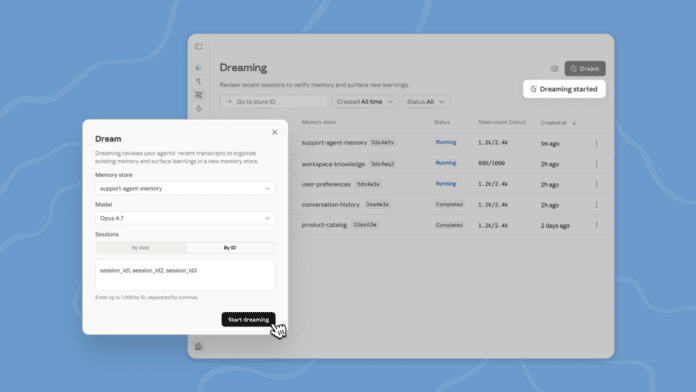
SAN FRANCISCO—At its Code with Claude developers’ conference, Anthropic has introduced what it calls “dreaming” to Claude Managed Agents. Dreaming, in this case, is a process of going over recent events and identifying specific things that are worth storing in “memory” to inform future tasks and interactions.

Dreaming is a feature that is currently in research preview and limited to Managed Agents on the Claude Platform. Managed Agents are a higher-level alternative to building directly on the Messages API that Anthropic describes as a “pre-built, configurable agent harness that runs in managed infrastructure.” It’s intended for situations where you want multiple agents working on a task or project to some end point over several minutes or hours.

Anthropic describes dreaming as a scheduled process, in which sessions and memory stores are reviewed, and specific memories are curated. This is important because context windows are limited for LLMs, and important information can be lost over lengthy projects. On the chat side of things, many models use a process called compaction, whereby lengthy conversations are periodically analyzed, and the models attempt to remove irrelevant information from the context window while keeping what’s actually important for the ongoing conversation, project, or task.

However, that process, as I described it, is usually limited to a specific conversation with a single agent. “Dreaming” is a periodically recurring process in which past sessions and memory stores can be analyzed across agents, and important patterns are identified and saved to memory for the future.

Users will be able to choose between an automatic process, or reviewing changes to memory directly. Says Anthropic:

Dreaming surfaces patterns that a single agent can’t see on its own, including recurring mistakes, workflows that agents converge on, and preferences shared across a team. It also restructures memory so it stays high-signal as it evolves. This is especially useful for long-running work and multiagent orchestration.

Dreaming is in research preview and is not available to all developers; developers can request access. Anthropic additionally announced that two previously revealed research preview features—outcomes and multi-agent orchestration—have become more widely available. Further, Anthropic will be doubling five-hour usage limits for subscribers to its Pro and Max subscription plans, responding to a lot of user frustration as the company’s compute infrastructure has struggled to keep up with demand.

UK voters cast ballots in elections expected to deal blow to Starmer

0
uk-voters-cast-ballots-in-elections-expected-to-deal-blow-to-starmer
UK voters cast ballots in elections expected to deal blow to Starmer


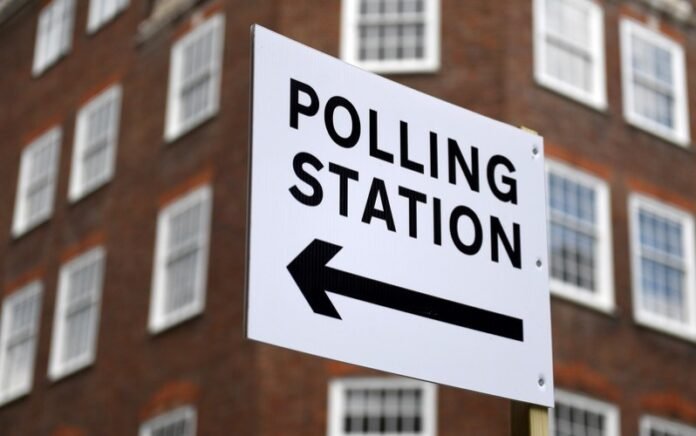
Millions of British voters cast their ballots on Thursday in local and regional elections that are expected to deal a huge blow to Prime Minister Keir Starmer’s Labour ​Party and renew questions over his ability to govern.

Elections for almost 5,000 council seats in England and to the parliaments in Scotland and Wales could signal ‌the beginning of the end of Britain’s traditional two-party system if voters opt for populist and nationalist parties rather than the once-dominant Labour and Conservatives.

Polls suggest the populist Reform UK of Brexit campaigner Nigel Farage will expand its control of councils in England, and could form the main opposition in Scotland and Wales to the pro-independence Scottish National Party and Plaid Cymru.

Challenging from the left, the Greens ​look set to threaten Labour’s strongholds in London and other major centres.

The prospect of losing swathes of council seats in England, the end of its dominance of the Welsh ​Senedd assembly and a possible third-place finish for Scotland’s Holyrood parliament, mean Starmer looks set to come under pressure again to ⁠quit or at least set out a timetable for his departure.

Investors have pushed Britain’s borrowing costs higher in recent weeks, in part over fears that he could be ​replaced by a more left-wing leader, willing to spend more.

STARMER VOWS TO FIGHT ON

Starmer, 63, elected on a landslide less than two years ago, has vowed to fight ​on, pledging to tackle a cost-of-living crisis in Britain stoked by the conflicts in Ukraine and Iran.

“We can rise to this moment together – become a stronger, more resilient and more united nation with opportunities for all, or we can sink into the politics of grievance and division,” Starmer wrote on Substack at the weekend.

“The answer to this moment, to the world we face today, ​is not passive government nor is it the populists who look out at the world and offer only easy answers that would make us weaker, or bankrupt. ​This is a time for patriots.”

Appearing to signal another possible reset after the elections, Starmer promised an “active, interventionist government”.

Starmer will hope he gets a chance to try to again relaunch his ‌premiership, after ⁠spending weeks fending off calls for him to stand down over his appointment of Labour veteran Peter Mandelson as British ambassador to the United States.

That appointment has blown up into a full-scale row over who knew what and when about Mandelson’s ties to the late convicted U.S. sex offender Jeffrey Epstein and his business connections with Russia and China.

Starmer sacked Mandelson last September after a trove of emails revealed the depth of his ties with Epstein. British police arrested Mandelson in February on suspicion of misconduct in public office ​but he has not been charged. He ​does not face allegations of sexual ⁠misconduct.

LABOUR FIGURE WARNS LAWMAKERS AGAINST STARMER CHALLENGE

Labour lawmakers and activists say they have often been met with anger from voters while campaigning.

Losses in the elections will only deepen the frustration with Starmer and his Downing Street operation among many in his party, and ​some Labour lawmakers say there might be a move against him afterwards, possibly in the form of a letter ​calling on him to ⁠set out a timetable for his departure.

But the path to replace him is not easy.

Two frontrunners to succeed him if he goes – Greater Manchester mayor Andy Burnham and former Deputy Prime Minister Angela Rayner – are not yet in positions to mount leadership bids, and other potential rivals seem unwilling to move against him for now.

Former Labour deputy leader Tom Watson, ⁠who signed a ​letter in 2006 calling on then prime minister Tony Blair to name a date for his ​resignation, advised lawmakers to refrain from making the same mistake.

“I would tell them not to be as reckless as we were,” Watson, now a member of the upper house, said in his own Substack column. “Firstly, it will not ​work,” he said. “Secondly … voters will see a party talking to itself while the country is shouting at it.”

US, Japan missile drills put Philippines in China’s line of fire

0
us,-japan-missile-drills-put-philippines-in-china’s-line-of-fire
US, Japan missile drills put Philippines in China’s line of fire

As US and Japanese missiles roar across Philippine skies, the Southeast Asian nation is becoming a forward-deployed missile hub in the intensifying US-China rivalry in the Pacific.

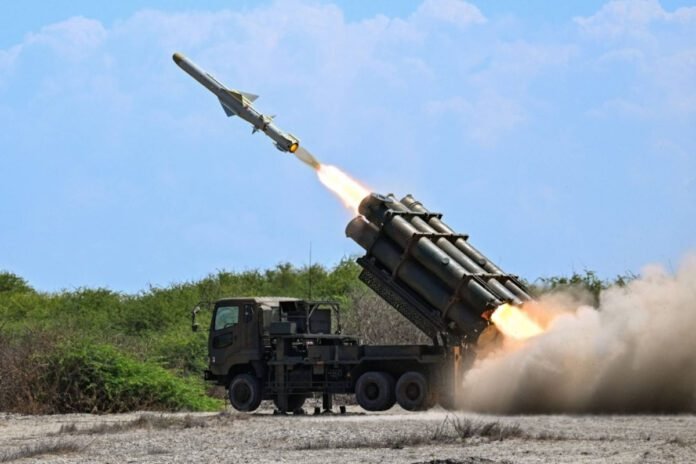
The US and Japan escalated their military profiles in the Philippines during this year’s Balikatan exercises, multiple media outlets reported. The Japanese Ground Self-Defense Force (JGDSF) fired Type 88 surface-to-ship missiles for the first time on Philippine territory, while the US Army test-fired a Tomahawk cruise missile from its Typhon mid-range missile system.

About 140 Japanese troops launched two Type 88 missiles from Paoay, Ilocos Norte, sinking a decommissioned Philippine Navy vessel roughly 75 kilometers offshore in drills observed by Japanese Defense Minister Shinjiro Koizumi and Philippine Defense Secretary Gilberto Teodoro Jr, while Philippine President Ferdinand Marcos Jr monitored remotely.

A day earlier, the US Army Pacific’s 1st Multi-Domain Task Force launched a Tomahawk missile from Tacloban City, Leyte, that struck a target around 600 kilometers away at Fort Magsaysay in Nueva Ecija, simulating support for ground operations.

The exercises, involving about 17,000 troops from the Philippines, US, Japan, Australia, Canada, France, New Zealand and the UK, highlighted expanding maritime strike and island-defense cooperation. China criticized the drills as destabilizing and warned against Japanese “remilitarization.”

The US and Japanese missile firings highlighted how allied missile deployments could strengthen deterrence against China while deepening the Philippines’ strategic vulnerabilities and exposure to regional escalation.

The drills underscored how the Philippines is evolving from a treaty ally into a forward missile platform embedded in the US-led First Island Chain strategy against China.

The Typhon missile test may have validated US rationales for the system’s deployment in the Philippines. Depending on the variant, the Tomahawk’s 1,250-2,000-kilometer range allows the US to threaten targets in mainland China from Philippine territory.

Furthermore, Japan’s deployment of its Type 88 anti-ship missile, with a range of 180 kilometers, can complement the US Navy-Marine Expeditionary Ship Interdiction System (NMESIS), which has a similar range.

These systems could also complement the Philippines’ BrahMos supersonic missiles. While the export variant of the BrahMos missile has a range of 290 kilometers, the Philippines’ limited intelligence, surveillance and reconnaissance (ISR) capabilities could significantly restrict its operational range.

Still, even with limited ISR capabilities, the Philippines could use its BrahMos missiles to threaten Chinese forces at the disputed Scarborough Shoal, just 220 kilometers off Luzon and a fixed location that would remain relatively easy to target.

If Japan follows the US precedent of deploying missile systems in the Philippines under training arrangements similar to those used for US systems, Japan could eventually keep Type 88 batteries in the country on a long-term basis.

Such deployments could contribute to a broader First Island Chain “missile wall” featuring layered coverage of mainland China, the South China Sea and chokepoints such as the Miyako Strait and Bashi Channel.

Despite their mobility and dispersed basing advantages, these systems may remain vulnerable in the Philippines’ small-island geography, where limited roads and sustainment infrastructure could make launchers easier to track and target through satellite ISR, as well as drone or missile strikes.

Furthermore, Japan’s Type 88 missile is a Cold War-era weapon, designed in the 1980s with the Soviet Navy in mind. As such, it may be obsolete against the modern layered ship defenses of China’s carrier strike groups (CSGs) and improved weapons with extended ranges, stealthy designs and hypersonic speeds that may be needed to defeat contemporary ship defenses.

However, the messaging behind these missile firings may be more important. As the US is bogged down against Iran with no clear end in sight, it may need to reassure Pacific allies and partners such as Japan, the Philippines and Taiwan. The US missile firing may thus be a warning to China not to move on Taiwan while it is distracted in the Middle East.

In Japan, the Type 88 firings may reinforce the country’s shift away from its long-held pacifist posture toward a more proactive regional security role. The drills may also signal Japan’s growing willingness to loosen longstanding restrictions on arms exports and defense cooperation with partners such as the Philippines.

They may also serve as a sales pitch to the Philippines ahead of a possible transfer of older Abukuma-class destroyer escorts. While such transfers may face bureaucratic hurdles under Japan’s restrictive arms export policies, the Type 88 batteries, though potentially obsolete against newer threats, could still serve as a test case for Japan’s efforts to loosen longstanding restrictions on exporting lethal military systems.

For the Philippines, Japan’s test firings on its territory could be seen as progress toward engaging alternative defense partners beyond the US. The Philippines is likely to maintain its longstanding alliance with the US, owing to its proximity to the South China Sea and Taiwan, its generally weak military and reliance on US security guarantees via a mutual defense treaty.

However, the unpredictability and transactional nature of the US Trump administration, along with its preoccupation with the Iran war, may have driven the Philippines’ urgency to diversify its defense partnerships. In terms of optics, Japan’s missile launch from its territory may have underscored that point by bringing in a capable potential partner aside from the US to help counterbalance China.

Still, it is debatable just how much agency the Philippines has in hosting these missile systems. While the US and possibly Japan may opt to deploy them on Philippine territory on an indefinite or regular basis, the Philippines has no direct control over them.

The Philippines might face a situation similar to South Korea’s, in which the US moved Terminal High Altitude Area Defense (THAAD) systems from South Korea to the Middle East despite South Korea’s strong objections.

Contingencies in other theaters, such as the Middle East, Eastern Europe or closer to Japan, including the Senkaku Islands, may require redeploying US and possibly Japanese systems from the Philippines to other locations, leaving the Philippines to its own devices against a potentially irked China.

Another issue is that long-term deployment of these systems under the framework of military exercises could further entangle the Philippines in a great-power rivalry it is too weak to influence.

While such deployments may increase the Philippines’ strategic value to the US and Japan, they may also come at the cost of strategic autonomy, potentially leaving the country exposed on the front line of a confrontation it lacks the power to shape, control or stop.

Lebanon-Israel talks to resume in Washington next week: State Department

0
lebanon-israel-talks-to-resume-in-washington-next-week:-state-department
Lebanon-Israel talks to resume in Washington next week: State Department

Lebanese and Israeli officials will hold another round of talks in Washington as an extended ceasefire approaches its expiry on May 17, according to a State Department official.

“There will be talks next Thursday-Friday,” the official told Anadolu on Wednesday, without providing further details on the participants or agenda.

A Lebanese source told Anadolu earlier that the new round of discussions will take place at the US State Department headquarters in Washington.

The two countries, which lack formal diplomatic relations, previously held two rounds of talks in Washington on April 14 and April 23 amid US efforts to advance diplomatic discussions between the two sides.

READ: Israeli army chief says no limits on force in southern Lebanon operations

The upcoming meetings come amid continued Israeli strikes in Lebanon despite a US-mediated ceasefire announced on April 17 and extended until May 17.

Since March 2, Israeli attacks on Lebanon have killed at least 2,715 people, wounded 8,353 and displaced more than 1.6 million, about one-fifth of the population, according to the latest official figures.

Israel occupies areas in southern Lebanon, including some it has held for decades and others since the 2023-2024 war and has advanced about 10 kilometers (6.2 miles) inside the southern border during the current conflict.

READ: Israeli strikes in Lebanon kill 16, wound 21, damage school despite ceasefire

Ted Danson Faces ‘Death Fears’ After Secret Health Scare at 78

0
ted-danson-faces-‘death-fears’-after-secret-health-scare-at-78
Ted Danson Faces ‘Death Fears’ After Secret Health Scare at 78


Ted Danson is opening up about a frightening health scare that reportedly left the beloved TV legend shaken and finally confronting a reality he spent years pushing aside — getting older.

The 78-year-old Cheers icon, who charmed millions as smooth-talking bartender Sam Malone, admitted the mystery medical issue forced him to take a hard look at his life and health after what insiders described as a deeply emotional wake-up call.

While Danson insisted he’s now “totally fine,” sources close to the actor said the ordeal rattled him more than he’s letting on.

“Ted has always had this upbeat energy about him, but this really scared him,” an insider revealed. “It hit him that he’s not invincible anymore. Mortality suddenly became very real.”

The Hollywood veteran recently spoke candidly about the experience during a podcast appearance, admitting the scare completely changed how he sees aging.

“The last thing that kind of hit me that was very liberating was I had a bit of a health scare,” Danson shared. “I’m totally fine, but it was like, ‘Oh, well, that’s real…’”

The actor even poked fun at himself while acknowledging the sobering moment.

“It’s not just a rumor,” he joked. “Ted Danson doesn’t get a free pass. Love his work.”

Friends say the experience left the Emmy-winning star more reflective and determined to slow down and focus on what truly matters.

According to insiders, Danson has dramatically shifted his daily routine since the scare, becoming far more serious about mindfulness, meditation, and emotional well-being.

The actor revealed he and wife Mary Steenburgen now meditate together twice every day — something he admitted he used to only pretend to take seriously.

“It was very humbling and calming,” Danson explained. “I think it was the best thing that could have happened to me, and I’m doing some things differently.”

The longtime Hollywood favorite also said the ordeal changed him emotionally, making him less focused on himself and more interested in connecting with others.

“You can be curious about other people. You can listen and be supportive,” he said. “I do believe the rest of my life is to be curious and listen.”

Despite the unsettling scare, Danson isn’t slowing down professionally just yet.

Netflix recently renewed his comedy series A Man On the Inside for another season, with the actor returning as retired professor-turned-amateur detective Charles Nieuwendyk.

Danson praised creator Mike Schur — who also worked with him on The Good Place — and said he’s grateful to still be doing work he loves at this stage in his life.

Still, those close to the sitcom legend say the recent health scare has permanently changed his outlook.

“This was a turning point for Ted,” the insider added. “He’s thinking about life differently now — and appreciating every moment a lot more.”

Lemkin Family Presses Pennsylvania Over Genocide Institute’s Use of Name

0
lemkin-family-presses-pennsylvania-over-genocide-institute’s-use-of-name
Lemkin Family Presses Pennsylvania Over Genocide Institute’s Use of Name


Relatives of Raphael Lemkin, the Polish Jewish legal scholar who coined the term “genocide,” and the European Jewish Association are pressing Pennsylvania officials to investigate the Lemkin Institute for Genocide Prevention over its use of Lemkin’s name and its accusations that Israel is committing genocide in Gaza.

The dispute centers on a Pennsylvania-registered nonprofit that says it works on genocide prevention and human security. Critics say the group has used Lemkin’s name to lend moral authority to anti-Israel claims. The institute has rejected the allegations and described the campaign against it as political.

The Algemeiner first reported that Joseph Lemkin, a relative of Raphael Lemkin, and the European Jewish Association asked Pennsylvania Governor Josh Shapiro and the state Bureau of Corporations and Charitable Organizations to examine whether the group was improperly using Lemkin’s name. The request reportedly seeks action under state charitable law, not only public criticism of the institute’s positions.

The Washington Free Beacon later reported that more than 100 Holocaust and genocide scholars signed a letter supporting the Lemkin family’s objections, arguing that the institute’s use of the Lemkin name distorts the legacy of a Zionist Holocaust survivor who helped shape the Genocide Convention.

The Lemkin Institute accused Israel of genocide shortly after Hamas’ October 7, 2023, attack on Israel, in which terrorists killed about 1,200 people and abducted more than 250. Israel has strongly denied genocide allegations, saying its campaign in Gaza is a war of self-defense against Hamas. South Africa’s genocide case against Israel remains before the International Court of Justice, which has issued provisional measures but has not made a final ruling on the merits.

Any attempt to revoke the institute’s federal tax-exempt status would face a high legal bar. The Internal Revenue Service controls federal 501(c)(3) status, while Pennsylvania’s charity bureau oversees state charitable registration and solicitation rules. Advocacy, even sharply disputed advocacy, does not by itself usually cost a nonprofit its tax exemption.

Former NASA chief takes helm of national security space firm

0
former-nasa-chief-takes-helm-of-national-security-space-firm
Former NASA chief takes helm of national security space firm

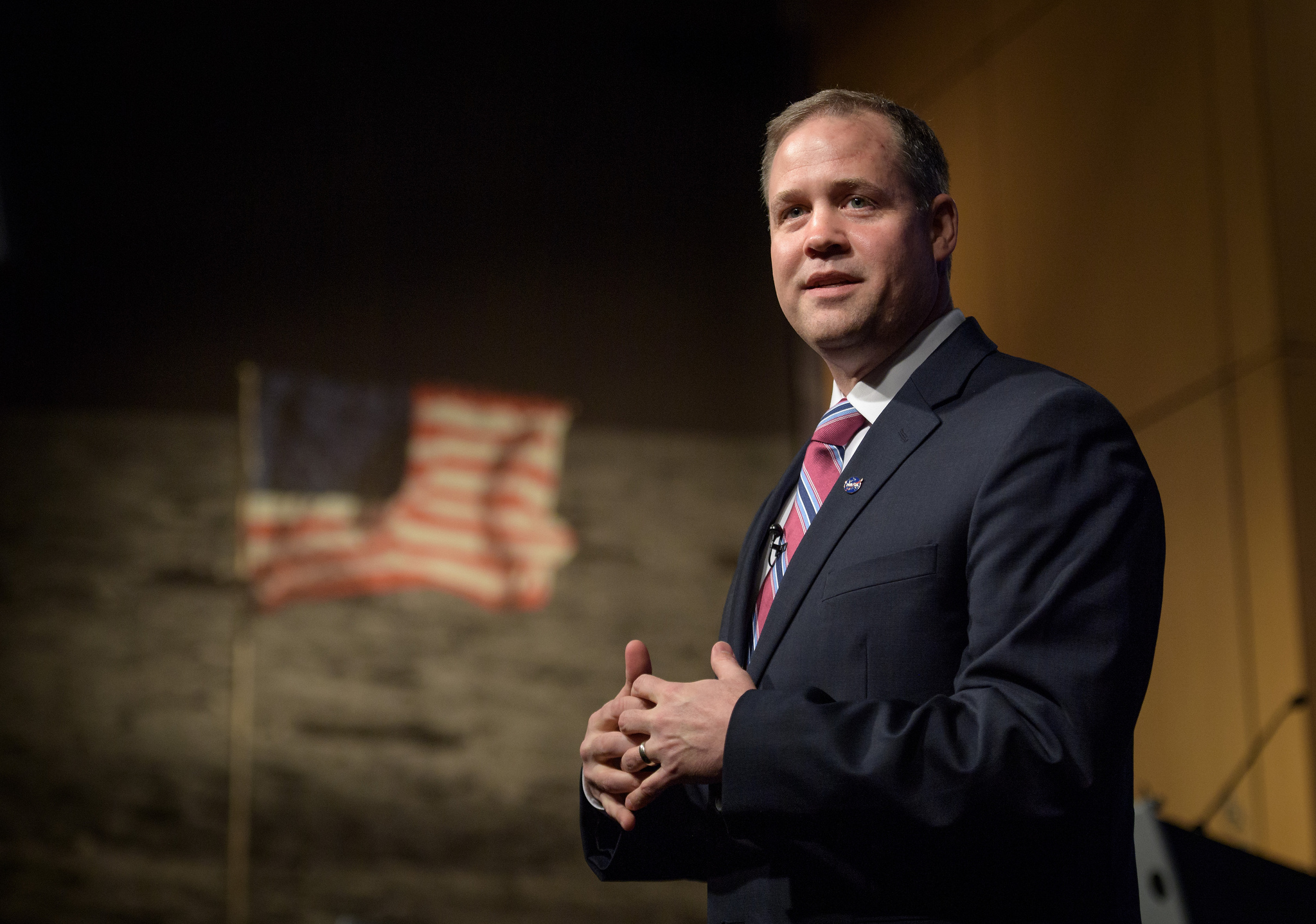
Before he became NASA administrator in 2018, Jim Bridenstine was a naval aviator who then served as a US representative from Oklahoma for three terms, sitting on the Committee on Armed Services. Now, five years after leaving NASA, Bridenstine is returning to those military roots.

This week, Bridenstine was named chief executive of a Maryland-based company, called Quantum Space, that builds “advanced maneuverable spacecraft.”

“For us, national security space is a priority,” said Bridenstine in an interview.

Meet Ranger

The company is developing a spacecraft, Ranger, that is about the size of a Volkswagen Beetle before its solar panels are deployed. Ranger is intended to provide the military an unparalleled maneuvering capability in space, from low-Earth orbit to geostationary orbit to cislunar space. Ranger will carry 4,000 kg of hydrazine propellant on board to enable rapid maneuvering.

“This is high energy,” Bridenstine said. “The fuel gets burned quickly. The spacecraft can also be refueled, and it can refuel others.”

Bridenstine said the US Space Force is interested in bringing on new capabilities for in-space maneuvering. He believes Ranger can meet this demand with its large fuel tanks, capacity to be refueled, and a proprietary “multi-mode” technology that allows the spacecraft to operate in both high-thrust maneuvering mode and high-efficiency operations. To that end, Quantum Space acquired Phase Four last September.

He noted that, in President Trump’s budget request for fiscal-year 2027, funding for the Space Force would increase by approximately 80 percent, to $71 billion.

Getting around space quickly

So, what might the military use Ranger for?

Quantum Space has already won a contract to support the LASSO program for the Defense Advanced Research Projects Agency, which aims to develop spacecraft capable of flying in very low orbit all around the Moon (potentially as low as 10 km above the surface) to characterize the concentration of water on the lunar surface. The company is also involved in the Air Force Research Lab’s Oracle-P program to build space situational awareness spacecraft in cislunar space. Finally, Quantum Space is one of 14 competitors in the $6.2 billion Andromeda program to develop surveillance and reconnaissance satellites.

Bridenstine joins a company with about 75 employees, founded by billionaire businessman Kam Ghaffarian, who previously founded two other space companies, Intuitive Machines and Axiom Space. Quantum Space is currently privately capitalized, having raised $80 million in Series A funding, and Bridenstine said he will be considering various opportunities to raise further capital.

The company plans to launch its first Ranger spacecraft in July 2027 to demonstrate a number of the vehicle’s propulsion capabilities. Quantum is developing some elements of the spacecraft, but sourcing others from industry, including some of its propulsion capabilities.

Happy to see Artemis soaring

While he was at NASA, Bridenstine created the Artemis program, which represents the space agency’s efforts to return humans to the Moon in a more permanent way than Apollo. During his tenure leading NASA, Bridenstine championed commercial space as a means of reducing NASA’s costs while increasing its capabilities. He now hopes to be part of a generation of commercial space companies also doing this for the US military.

Bridenstine said he applauded efforts by NASA’s current administrator, Jared Isaacman, to increase the cadence of Artemis launches to accelerate America’s return to the Moon.

“I think it’s important, and I think he’s making the right decisions for the right reasons,” Bridenstine said of Isaacman’s initiative. “I also think it’s overdue. He talks about making sure we’re exercising our muscle memory, and that’s what we need to do. I’m super excited about the success of Artemis II. We need to benefit from the success of Artemis II.”

NASA Administrator Jim Bridenstine wanted the agency to return to the Moon “fast” but sustainably.

NASA Administrator Jim Bridenstine wanted the agency to return to the Moon “fast” but sustainably. Credit: NASA

Although he was five years removed from NASA when Artemis II launched on April 1 with four astronauts on board, Bridenstine said he was blown away emotionally, and he felt like he was right in the thick of the action.

“I was watching the countdown, and then I saw the clock tick down to T-9:59, and I was like, oh my gosh, we’re going,” he said. “It was amazing how all of a sudden my heart just started beating rapidly, palms were sweaty, all of a sudden I was a wreck. I was just overwhelmed.”

How Pakistan became the primary mediator between the US and Iran

0
how-pakistan-became-the-primary-mediator-between-the-us-and-iran
How Pakistan became the primary mediator between the US and Iran

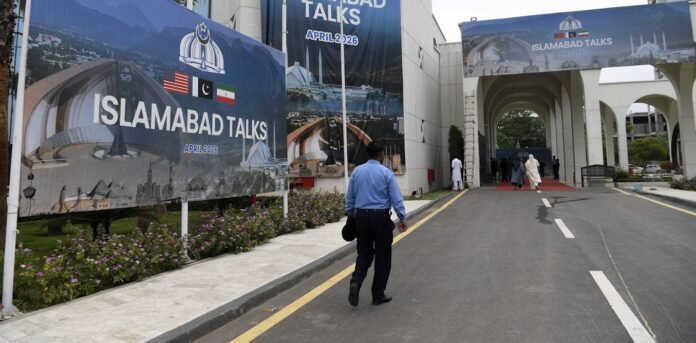
Pakistan has emerged as a central diplomatic broker in the conflict between the US and Iran. When announcing a pause to the US operation to guide stranded vessels through the Strait of Hormuz on May 6, Donald Trump said he had made the decision “based on the request of Pakistan”.

The Pakistani prime minister, Shehbaz Sharif, subsequently expressed hope “that the current momentum will lead to a lasting agreement that secures durable peace and stability for the region and beyond”. This latest intervention comes a month after Pakistan secured its biggest diplomatic win in years by brokering a ceasefire in Iran.

But how did Pakistan emerge as the most trustworthy mediator in this conflict, and what drove Islamabad to involve itself? Pakistan’s biggest advantage is that it enjoys relationships with both the US and Iran, which has helped it be seen as a neutral party by each side.

Pakistan has worked with the US in dealing with Iran for decades. Since 1981, two years after the US and Iran severed diplomatic ties following the Islamic revolution, a dedicated section of the Pakistani embassy in Washington has handled Iranian diplomatic affairs in the US.

Pakistan has also worked with the US in mediation efforts elsewhere. Most notably, it facilitated former US secretary of state Henry Kissinger’s secret visit to China in 1971. This paved the way for the normalisation of relations between the US and China later that decade.

Donald Trump stands alongside Shehbaz Sharif as he delivers a speech.

Donald Trump stands alongside Pakistan’s Shehbaz Sharif as he delivers a speech at the Gaza Peace Summit in Egypt in October 2025. Yoan Valat / EPA

Relations between the US and Pakistan have not always been smooth. In 2011, a decade after the 9/11 terrorist attacks, the Atlantic magazine in the US referred to Pakistan as the “ally from hell”. Whether or not it did so knowingly, Pakistan hosted al-Qaeda mastermind Osama bin Laden following the attack.

Trump himself also denied Pakistan military aid during his first term as president, saying it was not doing enough to combat terrorism. And Pakistan’s human rights record, particularly concerning democratic backsliding and restrictions on civil liberties, have at times led to tension with the US government.

However, Pakistan’s relationship with the US has improved markedly in Trump’s second term. Trump, who often uses personal ties to guide US foreign policy, has developed a strong relationship with Sharif and the chief of Pakistan’s army, Asim Munir. In June 2025, Munir was even invited to the White House for a private lunch. This was the first time a US president had hosted a non-head of state military leader at this level.

Pakistan’s recent efforts to court Trump have played a key role in building these ties. Over the past year Pakistan has nominated Trump for the Nobel Peace Prize, joined his Board of Peace and launched a collaboration with his World Liberty Financial crypto platform.

And in July, Islamabad signed a deal with the US to allow Washington to help develop Pakistan’s largely untapped oil reserves. “We read him [Trump] right,” said the former chairman of the Pakistani Senate’s Defense Committee, Mushahid Hussain Syed, in an interview with the Washington Post on April 20.

A map of the Balochistan region of Iran and Pakistan.

Pakistan shares a nearly 1,000km border with its sout-westerly neighbour Iran. Peter Hermes Furian / Shutterstock

The relationship between Pakistan and Iran has also been characterised by ups and downs. While Iran was the first country to recognise Pakistan’s independence in 1947, their relationship has often been fraught with tension. This largely stems from Iran’s territorial claim to the Balochistan province of Pakistan, as well as from Pakistan’s ties with Iranian rivals.

As recently as January 2024, tensions between the two countries appeared to be escalating again over Balochistan. However, hostilities soon receded and both countries formally resumed their bilateral ties. They subsequently expanded their security cooperation and invited each other’s ambassadors and foreign ministers for a formal reconciliation ceremony.

Strategic necessity

Some commentators argue that Pakistan’s decision to step in as the primary mediator in Iran has been driven by strategic necessity. Its Balochistan province is currently grappling with an insurgency. Islamabad will thus want to avoid a situation where the Iran war spills into Pakistan, as this could destabilise its border regions even further.

There are also economic reasons explaining Pakistan’s involvement. Pakistan has been severely affected by the disruption to Gulf shipping. It imports between 85% and 90% of its crude oil from Saudi Arabia and the United Arab Emirates (UAE) and almost 99% of its liquified gas from the UAE and Qatar.

Before the war broke out, Pakistan’s economy had been starting to gain momentum. But higher oil prices are now affecting government revenues, increasing its fuel import bill from US$300 million (£220 million) before the conflict to US$800 million now. Pakistan’s authorities have been forced to raise consumer fuel prices by more than 50%.

Pakistan’s agricultural sector, which employs around 40% of the country’s population, is also vulnerable to the conflict due to its reliance on fertiliser imported through the Strait of Hormuz. Prices of urea fertiliser have surged by 50% since the war broke out. Prolonged disruption to the agriculture sector risks plunging some of the most vulnerable people in Pakistan further into poverty.

A farmer uses heavy machinery to harvest rice crops in a field on the outskirts of Lahore.

A farmer uses heavy machinery to harvest rice crops in a field on the outskirts of Lahore, Pakistan, in November 2025. Rahat Dar / EPA

Remittances are another area that could be affected by a protracted conflict, with as many as five million Pakistani people living in the Gulf region. Pakistan received roughly US$30 billion in remittances between 2025 and 2026, 54% of which came from the Gulf.

If the war continues to affect Gulf economies, many Pakistani workers may be forced to return home. This will cause remittance revenues to fall, depriving Pakistan of a vital source of foreign exchange, while simultaneously pushing up domestic unemployment.

Pakistan’s relationships with the US and Iran put it in a strong position to intervene in the conflict diplomatically. But its mediation has also been a calculated effort to stabilise its borders and protect its economy.

0FansLike
0FollowersFollow
0FollowersFollow
0SubscribersSubscribe
- Advertisement -
Google search engine

Recent Posts