8.8 C
London
Thursday, May 7, 2026
Home Blog

Trump Bulldozed a 1,000-Year-Old Archaeological Site to Make Room for a Second Border Wall

0
trump-bulldozed-a-1,000-year-old-archaeological-site-to-make-room-for-a-second-border-wall
Trump Bulldozed a 1,000-Year-Old Archaeological Site to Make Room for a Second Border Wall


A rare archaeological site in the Sonoran Desert was bulldozed by a Department of Homeland Security contractor involved in building the latest sections of Donald Trump’s border wall, according to multiple sources briefed on the incident.

The area, in a remote corner of Arizona’s Cabeza Prieta National Wildlife Refuge, is a roughly 280-by-50-foot etching in the desert sand known as an intaglio.

Last Thursday, without any notice, a contractor working for DHS cut a roughly 60-foot swath across the middle of the intaglio, doing irreparable damage to the 1,000-year-old artifact.

“I liken it to destroying the Nazca lines — something that culturally we should have been relishing and promoting.”

Cabeza Prieta, one of the largest wilderness areas outside of Alaska, also encompasses lands sacred to the Tohono O’odham Nation, which borders the refuge to the east. The O’odham have fought to prevent border wall construction across their reservation and during Trump’s first term largely prevailed; they also managed to protect the intaglio and a nearby burial site that they consider to be part of their ancestral lands.

“I liken it to destroying the Nazca lines — something that culturally we should have been relishing and promoting. Not destroying,” Rick Martynec, an archaeologist, said in a phone interview, referring to the hundreds of figures drawn into the deserts of southern Peru.

A spokesperson for U.S. Customs and Border Protection confirmed the destruction in a statement to The Intercept and said the agency was coordinating with tribal authorities to figure out its next steps.

“On April 23, 2026, a border wall contractor inadvertently disturbed a cultural site known as Las Playas Intaglio, located west of Ajo, Arizona along the border,” said the spokesperson, John Mennell, who is working on the construction of the second barrier in Arizona. “The remaining portion of the site has been secured and will be protected in place.”

Well known to government officials, including the Interior Department’s Fish and Wildlife Service, which manages the refuge, the intaglio lies just 10 or 15 feet from the massive steel wall that now runs along the U.S.–Mexico border. The destruction to the ancient site was first reported by the Washington Post.

Rick and Sandy Martynec, his wife, also an archaeologist who has studied the site for more than two decades, said the refuge was in talks with DHS and the contractor to make sure the site was protected as the Trump administration moves forward with a second set of barriers in the ecologically sensitive region.

The Martynecs even visited the intaglio in mid-April and observed stakes that had been put in place by an engineer to mark its boundaries.

The Martynecs were first notified by FWS staff on Monday when they called the refuge to see about visiting the site and to check on its status. According to the archaeologists, Rijk Morawe, the refuge manager, had already been out to survey the damage and told them what had happened.

The news took the Martynecs and others by surprise, since the agency had been in dialogue with DHS and the contractor to come up with an alternative route that would avoid the intaglio, similar to the negotiations that had taken place during Trump’s first term. (DHS’s Customs and Border Protection in Arizona did not comment by press time. FWS declined to comment, referring all border inquiries to CBP.)

“The refuge was pushing as hard as they possibly could to come to a resolution,” Martynec said.

Members of the O’odham Nation had also been keeping a close eye on border wall development. On the day before the site was bulldozed, a group of O’odham runners observed construction getting dangerously close to the protected area. That morning they called Lorraine Eiler, an O’odham elder and co-founder of the International Sonoran Desert Alliance, who lives in the town of Ajo where the Cabeza Prieta Refuge office is located.

According to Eiler, the runners told her that the contractor was indiscriminately clearing the area.

The runners told her, “They’re coming with their bulldozers and they’re knocking down trees and cactus and everything that’s along the border. They’re just bulldozing everything down and they are getting near the intaglio.” 

Eiler made a round of phone calls to tribal officials and environmental groups, but the next day, the contractor moved in and destroyed the site.

“I alerted people, but all I got was, ‘We’re going to have meetings, we’re going to discuss it,’” Eiler said.

During Trump’s first term, border wall construction had widespread impacts on protected landscapes and sacred sites. In one case, DHS blasted through several hills that were too steep to build on directly, including one in Organ Pipe National Monument, east of Cabeza, that was a well-known burial ground. A contractor also bulldozed a road through an archaic Hohokam burial site on the border in Coronado National Forest, even though they’d been briefed by the tribe beforehand.

“This doesn’t bode well for the desert.”

Border security continues to be a priority for the Trump administration, which has allocated more than $11 billion for new barriers and surveillance technology. The path that was cleared through the intaglio is part of an effort to build a so-called “smart wall” that CBP says will allow it to monitor activity in the desert day and night.

To do so, according to the Martynecs, the agency will have to clear a wide swath of land between the original wall and the secondary barrier.

“There won’t be any vegetation on it at all,” Martynec said. “This doesn’t bode well for the desert.”

Correction: May 1, 2026
This story has been updated to correct an errant reference to the day the intaglio was damaged. It was bulldozed on April 23, 2026. The story has also been updated to include a statement from U.S. Customs and Border Protection that was received after publication.

TSMC taps wind power as AI chip demand soars, Taiwan feels energy crunch

0
tsmc-taps-wind-power-as-ai-chip-demand-soars,-taiwan-feels-energy-crunch
TSMC taps wind power as AI chip demand soars, Taiwan feels energy crunch

Taiwanese chipmaker TSMC is raking in record profits during the AI boom—but it is also racing to help Taiwan develop wind power and other energy alternatives to fossil fuels amid a global energy crisis.

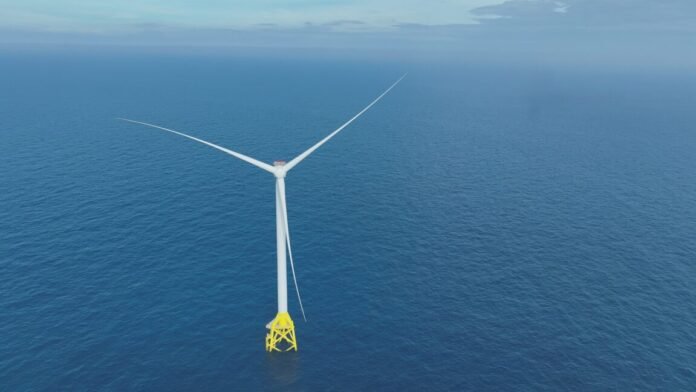
The chipmaker has signed a 30-year corporate power purchase agreement for 100 percent of the power produced by the Hai Long offshore wind project. The deal between TSMC and Northland Power, a Canada-based global power producer, covers more than 1 gigawatt of power capacity at three offshore wind sites located off the western coast of central Taiwan in the Taiwan Strait, according to an April 30 announcement.

Once completed, the Hai Long offshore wind project would have the capacity to power the equivalent of more than 1 million Taiwanese households. The project’s wind farms began supplying power to Taiwan’s grid in 2025 and are scheduled to become fully operational by 2027.

TSMC’s move comes as many countries have scrambled to shore up energy supplies since the war in the Middle East has disrupted regional energy production and effectively halted shipping through the Strait of Hormuz. When Qatar shut down natural gas production after its facilities were damaged by Iranian drone strikes in March 2026, Bloomberg reported that Taiwan’s power grid lost one-third of its usual supply of liquefied natural gas.

That started an energy crunch countdown because Taiwan relies on natural gas plants to generate about half of its electricity—and Taiwan typically has just two weeks of fuels in reserve. So far, Taiwan’s government has managed to stave off energy shortages by tapping alternative natural gas suppliers such as Australia and the United States, Reuters reported.

During an energy forum on May 6, Taiwan’s Vice Minister of Economic Affairs said that the government had secured enough oil and gas supplies to operate normally through August and possibly September, according to Taiwan News.

But the global energy crisis is also spurring the Taiwanese administration of President Lai Ching-te to accelerate efforts to develop fossil fuel alternatives, including restarting shuttered nuclear power plants and building out renewable power projects. Taiwan relies on imported fossil fuels to meet nearly 97 percent of its overall energy needs, including electricity, transport, and heating, according to the Global Taiwan Institute, a think tank based in Washington, DC.

As part of its energy diversification efforts, Taiwan has pushed to expand offshore wind power with a government plan to make 15 gigawatts of capacity available to developers by 2035. Meanwhile, TSMC has announced that it would aim for renewable energy to meet 60 percent of its global operations’ needs by 2030 and 100 percent by 2040.

TSMC plays an outsized role in shaping Taiwan’s energy future, given the energy consumption of its chip fabs. The chipmaker’s energy needs accounted for nearly 10 percent of Taiwan’s total electricity consumption in 2023, according to the International Energy Agency’s report on energy and AI.

That share could grow to nearly one-quarter of Taiwan’s overall electricity usage by 2030 as TSMC invests in more energy-intensive manufacturing to meet global AI demand for advanced chips, according to S&P Global estimates cited by Data Center Dynamics.

Beyond the Hai Long project, TSMC previously signed another power purchase agreement with the Danish renewable energy company Ørsted in 2020 for 920 megawatts of power from the Greater Changhua offshore wind farm project, which is expected to become fully operational later in 2026. The chipmaker also struck a deal with the German renewable energy developer WPD in 2021 to develop more than 1 gigawatt of onshore and offshore wind power.

Family of Journalist Austin Tice Kidnapped in Syria Says He Could Be Alive in Iran 

0
family-of-journalist-austin-tice-kidnapped-in-syria-says-he-could-be-alive-in-iran 
Family of Journalist Austin Tice Kidnapped in Syria Says He Could Be Alive in Iran 


The family of missing American journalist Austin Tice believes he is alive and may have been transferred to Iran after the collapse of Bashar Assad’s regime in 2024, according to statements by his sister Naomi Tice. 

Austin Tice, a former US Marine whose reporting was published by The Washington Post and McClatchy newspapers, disappeared at a checkpoint near Damascus in August 2014 while covering the Syrian civil war. A video released shortly after his disappearance showed him being led away by armed captors. 

His sister, Naomi Tice, said the family believes Iran’s Islamic Revolutionary Guard Corps may have moved him from Syria following the fall of Assad’s government, Houston Public Media reported. 

Naomi Tice said Assad consistently denied holding Austin Tice but noted that some detention facilities in Syria operated under Iranian control. She said that arrangement may explain why Assad denied responsibility if Iranian officials oversaw the sites where detainees were kept. 

“With the regime change, we do think, at that point, Austin might have been brought over to Iran during that time,” Naomi Tice said. “Once again, this isn’t confirmed, but we have strong reason to believe that might be the case.” 

Searches conducted after the Assad regime fell, including inspections of former government prisons in Syria, did not determine Tice’s whereabouts. 

In 2025, The Media Line’s Rizik Alabi reported that human remains believed to possibly belong to Tice were discovered in a remote area of Aleppo province in northern Syria. 

The remains of three people were reportedly recovered based on testimony from a former Islamic State member believed to have had direct or indirect involvement in the kidnapping and killing of journalists and activists during the early years of the Syrian conflict. 

After DNA testing in the US, it was determined that the remains didn’t belong to  Austin Tice. FBI and Qatari search teams later uncovered additional remains believed to belong to Islamic State victims, though Tice’s family rejected reports that his remains were among them and continued to maintain he is alive. 

The family is urging the Trump administration to contact sources in Iran and said it has been in communication with US Ambassador to the United Nations Mike Waltz regarding possible negotiations for Tice’s release. 

They are also requesting that President Trump pressure Russian President Vladimir Putin to seek information from Assad, who is living in exile in Russia, about the journalist’s whereabouts. 

The Tice family has also sought Israeli assistance regarding Khaled al-Halibi, a former Syrian brigadier general currently detained in Austria on war crimes allegations. Al-Halibi was publicly identified by The New York Times as a double agent linked to Israeli intelligence. 

Austin Tice’s brother, Jacob Tice, said the FBI should question al-Halibi in an effort to obtain information that could help clarify Austin’s fate or location. 


China has played key role in Iran war and will continue to do so

0
china-has-played-key-role-in-iran-war-and-will-continue-to-do so
China has played key role in Iran war and will continue to do so

An Iranian walks next to an anti-US mural in a street in Tehran on May 4. Photo: Abedin Taherkenareh / EPA

Donald Trump has paused “Project Freedom”, the US operation aimed at restoring commercial shipping through the Strait of Hormuz. In a post on social media just days after the operation was first announced, Trump said he had made the decision to give US negotiators time to reach an agreement with Iran to end the war.

Iranian state media framed the suspension as a US failure. Iran had warned that it would target vessels attempting to enter the waterway and subsequently launched missiles and drones at civilian ships and the United Arab Emirates. It is unclear where the conflict will go from here. But whatever happens next, the role of China will be crucial.

China has kept Iran’s economy afloat in the first two months of the war. Before the war, China accounted for up to 90% of Iran’s oil exports, importing over a million barrels each day. Iran continued to send large amounts of crude to China during the war’s early stages, with CNBC reporting that at least 11.7 million barrels were shipped between February 28 and March 10.

Payments for Iranian oil have been processed by institutions such as China’s Bank of Kunlun and the Cross-border Interbank Payment System. These are alternatives to the US-dominated Swift global payment system that enable oil trades to be settled in yuan. This has helped Iran bypass western sanctions by putting oil revenues out of the reach of the US Treasury.

The flow of oil from Iran to China has dropped since mid-April, when the US imposed a naval blockade of Iranian ports. But China remains able to provide Iran with a revenue lifeline – albeit a more limited one – moving forward.

On May 2, China’s Ministry of Commerce ordered firms not to comply with US sanctions on five Chinese refiners linked to the Iranian oil trade. This enables the refiners to continue processing Iranian crude that arrives by train or is already outside the blockade area. Roughly 160 million barrels of Iranian crude were in transit or in floating storage at sea as of April 21.

China’s economic support for Iran is emerging as a source of friction between Washington and Beijing ahead of Trump’s upcoming summit with Chinese leader Xi Jinping. In an interview with Fox News on May 4, the US treasury secretary, Scott Bessent, said China’s continued purchases of Iranian oil amounted to funding global terrorism.

However, the influence of China over Iran’s economy gives it leverage over Tehran. And it does appear to be in the interests of China for the war to end. Rising prices are beginning to affect the Chinese economy, and helping the conflict come to an end would also assist the Chinese government in its push to present itself as the responsible global power.

China has already played an important diplomatic role in the conflict. While Pakistan has served as one of the key mediators between the US and Iran, many analysts have credited China as being the key driving force behind the April ceasefire. At that time, Iranian officials said China had asked them to show flexibility and defuse tensions.

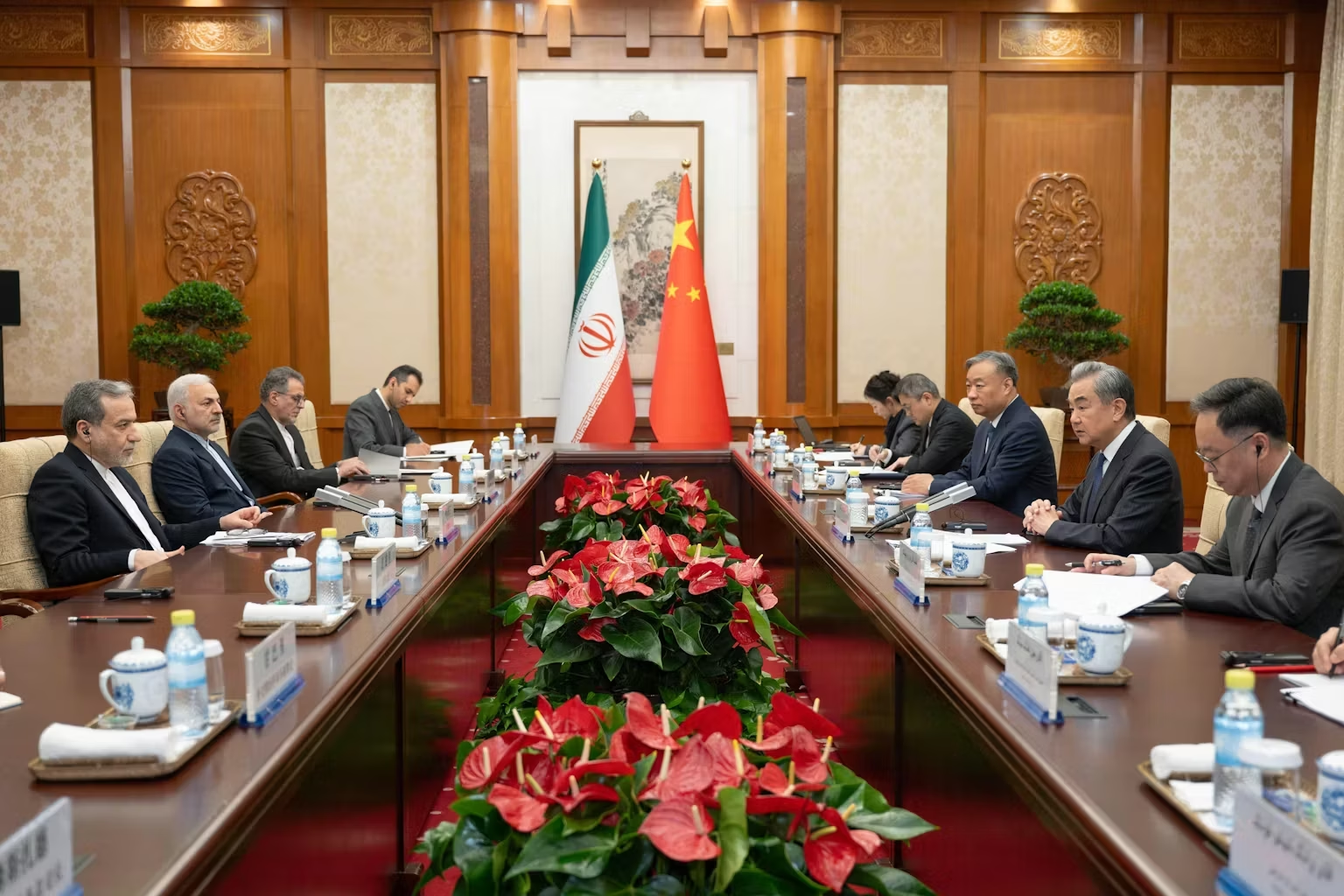
China seems to have continued pressing Iran to negotiate with the US since then. Hours after Trump announced he was pausing the US effort to guide vessels out of the Strait of Hormuz, Iran’s foreign minister, Abbas Araghchi, met with his Chinese counterpart, Wang Yi, in Beijing. This is the first time Araghchi has travelled to China since the war broke out.

The Chinese foreign minister, Wang Yi, holds talks with his Iranian counterpart, Abbas Araghchi, in Beijing on May 6. Photo: Cai Yang / Xinhua

In a statement released after the meeting, the Chinese foreign ministry said: “China considers that a complete cessation of fighting must be achieved without delay … and that continuing to negotiate remains essential.” Also after the meeting Araghchi said Iran would protect its “legitimate rights and interests in the negotiations” but will “accept a fair and comprehensive agreement.”

Chinese military support

At the same time, there are some signs that China is hedging its bets. A protracted war involving the US in the Middle East has advantages for China too, primarily because it would divert US attention from the Asia-Pacific region. Reports suggest that China is considering taking steps that would help Iran militarily if a full-blown conflict returns.

According to US intelligence, Beijing has weighed transferring air defense systems to Iran, possibly routing the shipments through other countries to mask its involvement. CNN reported in April that the defense systems in question were shoulder-fired anti-air missiles known as Manpads. China responded by saying it “has never provided weapons to any party to the conflict.”

Chinese technical assistance also enhanced the effectiveness of Iran’s military earlier in the war. Since 2021, Iran has been implementing BeiDou, a Chinese satellite navigation system. As an alternative to the US-run Global Positioning System (GPS), BeiDou has helped guide Iranian missile strikes in the conflict and has enabled more effective monitoring of US military deployments.

China has played a key role in how the conflict has played out so far. And given its position of influence over Iran, it will be a leading factor in whether the war reaches a negotiated end or spills back into open conflict.

Tom Harper is a lecturer in international relations, University of East London.

This article is republished from The Conversation under a Creative Commons license. Read the original article.

Anthropic raises Claude Code usage limits, credits new deal with SpaceX

0
anthropic-raises-claude-code-usage-limits,-credits-new-deal-with-spacex
Anthropic raises Claude Code usage limits, credits new deal with SpaceX

SAN FRANCISCO—At its Code with Claude developer conference on Wednesday, Anthropic announced a deal with SpaceX to utilize the entire compute capacity of the latter’s data center in Memphis, Tennessee.

On stage at the conference, CEO Dario Amodei said the deal was intended to increase usage limits for Anthropic’s Pro and Max plan subscribers.

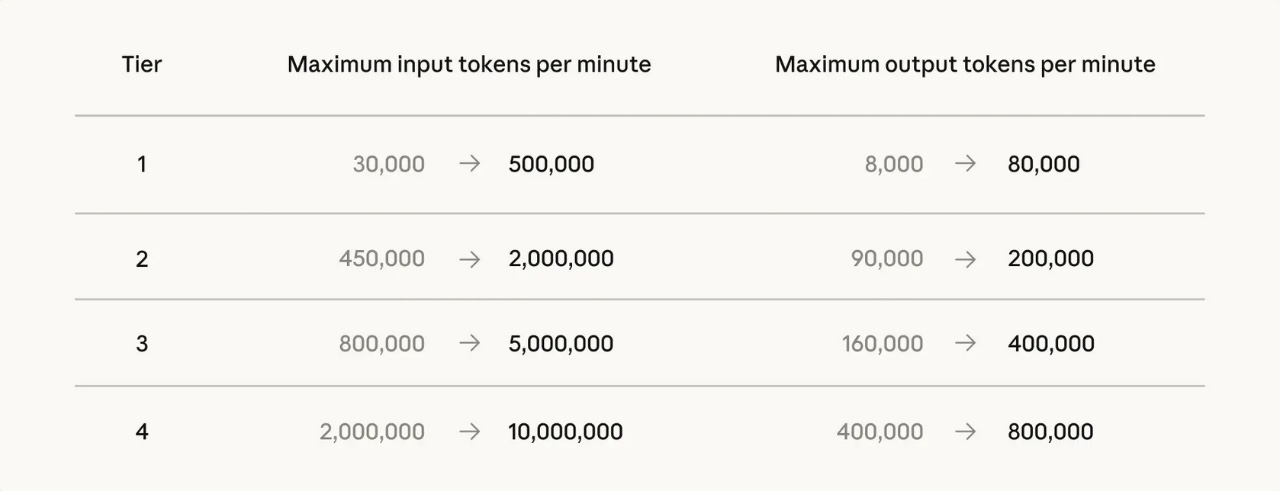
The announcement was accompanied by an increase in those usage limits; Anthropic doubled Claude Code’s five-hour window limits for Pro and Max subscribers, removed the peak-hours limit reduction on Claude Code for those same accounts, and raised API limits for its Opus model. The table below outlining the Opus changes was shared in the company’s blog post on the topic.

A table showing usage limits increasing

Opus usage limit changes on May 6, 2026.

Opus usage limit changes on May 6, 2026. Credit: Anthropic

Anthropic claims the deal gives the company access to more than 300 megawatts of new compute capacity. For its part, SpaceX focused its announcement on the capability of the Colossus 1 supercomputer that’s at the center of the deal. “Colossus 1 features over 220,000 NVIDIA GPUs, including dense deployments of H100, H200, and next-generation GB200 accelerators,” SpaceX wrote.

Additionally, Anthropic “expressed interest” in working with SpaceX to build up “multiple gigawatts” of orbital compute capacity, tying into a recent (but unproven) focus on exploring orbital data centers as an answer to the problem that “compute required to train and operate the next generation of these systems is outpacing what terrestrial power, land, and cooling can deliver on the timelines that matter.”

The deal might be surprising to those who have followed Musk’s recent public comments—he was, until now, critical of Anthropic. For example, in February, he declared on X that “Anthropic hates Western Civilization,” while sharing a false tweet from Trump administration official Emil Michael about Anthropic’s practices with its constitution for Claude.

The tune changed with the deal—or into the lead-up to it, as Musk tells it. “I spent a lot of time last week with senior members of the Anthropic team to understand what they do to ensure Claude is good for humanity and was impressed,” Musk tweeted on Wednesday. “No one set off my evil detector.”

Exploding demand amid constrained compute supply

Anthropic has seen a significant increase in demand for Claude Code and other products related to its models over the past few months. The increase has been driven partly by users moving away from OpenAI after controversy over its agreements with the United States military, increasing adoption of Claude Code in professional software development organizations, and a user behavior (and product) shift away from single-agent, chat-based tasks to more demanding multi-agent workflows.

The company has made controversial moves lately to address demand outpacing available compute capacity, amid outages and other problems. That included introducing new usage limits during peak hours, and even a short-lived and very limited trial, apparently testing the notion of removing Claude Code from the $20/month Pro plan.

Vocal frustration with usage limits has been a staple of Hacker News, Reddit, X, and other platforms where software developers congregate. Many developers are using these models and tools, and they’re frustrated that they can’t use them more.

Last month, Anthropic reportedly signed massive deals with Microsoft, Google, Amazon, Nvidia, and more to scale up its access to compute infrastructure. The company credits those, along with this SpaceX deal, for its ability to raise limits, though gains from some of them will take time to materialize.

Sweden announces new spy agency in rethink prompted by war in Ukraine

0
sweden-announces-new-spy-agency-in-rethink-prompted-by-war-in-ukraine
Sweden announces new spy agency in rethink prompted by war in Ukraine


Sweden has announced plans to establish a new foreign intelligence agency as part of a broader security overhaul driven by Russia’s full-scale invasion of Ukraine.

Foreign Minister Maria Malmer Stenergard said the new service, to be named Sweden’s foreign intelligence service (UND), is expected to begin operations in January 2027 and will focus on overseas threats and strategic intelligence gathering.

She said the war in Ukraine has highlighted how crucial rapid information, technological adaptability and intelligence superiority are, comparing the planned agency to the UK’s MI6. The move reflects Sweden’s reassessment of its defence posture after abandoning two centuries of military non-alignment and joining NATO in 2024 following Russia’s invasion.

Sweden already operates the Military Intelligence and Security Service (MUST), which handles external military threats, alongside the domestic-focused Swedish Security Service (SAPO) and the signals intelligence agency FRA. The new body will take over some responsibilities from MUST and work closely with these agencies and the armed forces.

Stenergard said Sweden’s NATO membership brings “new expectations” in terms of intelligence cooperation and collective security responsibilities.

The reform is part of a wider effort to strengthen Sweden’s defence and intelligence capabilities in response to a more volatile European security environment, ensuring better coordination between military and civilian intelligence structures while improving the country’s ability to respond to emerging global threats.

via Euronews

Melania Trump Brutally Trolled After ‘Struggling’ to Read (Video)

0
melania-trump-brutally-trolled-after-‘struggling’-to-read-(video)
Melania Trump Brutally Trolled After ‘Struggling’ to Read (Video)


Melania Trump is once again finding herself at the center of online backlash — this time after stumbling through part of a public speech while introducing husband Donald Trump at a White House event honoring military mothers ahead of Mother’s Day.

The First Lady, 56, delivered a heartfelt introduction praising the president as a compassionate leader, but social media critics quickly zeroed in on her thick Slovenian accent and a few awkward pauses during the speech.

“Most know my husband as the strong Commander in Chief, but his empathy transcends the role and shapes a caring leader,” Melania told the crowd during the May 6 ceremony.

The line immediately drew laughter from people in the room — including Donald Trump himself — as many appeared amused by the description of the famously hard-charging president as “caring” and full of “empathy.”

Melania smiled and glanced back at her husband before continuing her remarks, calling him a leader who “constantly remembers each and every American soldier is someone’s child.”

But the internet wasted no time tearing into the First Lady after clips of the speech spread across X.

Political commentator Aaron Rupar posted video from the event and wrote, “Melania Trump is having some difficulty reading,” referring to a moment where she stumbled over the line: “A mother is awestruck when she welcomes her child into the world.”

Critics piled on almost instantly.

“She has been here for 28 years and speaks like someone who has been learning English for a week,” one user fumed.

Another mocked: “I’m told she speaks eight languages. Obviously English ain’t one of them.”

A third sneered: “Can someone please repeat what she said IN ENGLISH?”

Others called the First Lady “an embarrassment to this country,” while another critic slammed her for allegedly struggling to read from prepared remarks.

The backlash reignited a years-long debate over the relentless criticism Melania has faced since entering the political spotlight during Trump’s first presidential campaign.

Born in Slovenia, Melania moved to the United States in 1996 to pursue a modeling career and later became an American citizen in 2006. Despite speaking multiple languages fluently, her accent has frequently become a target for critics and late-night comedians alike.

One of the most infamous moments came during a 2018 episode of the daytime talk show The View when co-host Sunny Hostin appeared ready to imitate Melania’s accent on-air.

Moderator Whoopi Goldberg quickly stepped in, warning her twice: “Don’t do it.”

Hostin ultimately avoided directly mimicking the accent, but critics at the time still accused the panel of mocking the First Lady’s intelligence and immigrant background.

Melania’s former communications director Stephanie Grisham later blasted the controversy, accusing critics of hypocrisy and “disrespectfully mocking someone’s accent.”

Still, the latest White House appearance proves the scrutiny surrounding Melania Trump hasn’t faded — and neither have the brutal online attacks whenever she steps behind a microphone.

Israeli strikes in Lebanon kill 16, wound 21, damage school despite ceasefire

0
israeli-strikes-in-lebanon-kill-16,-wound-21,-damage-school-despite-ceasefire
Israeli strikes in Lebanon kill 16, wound 21, damage school despite ceasefire

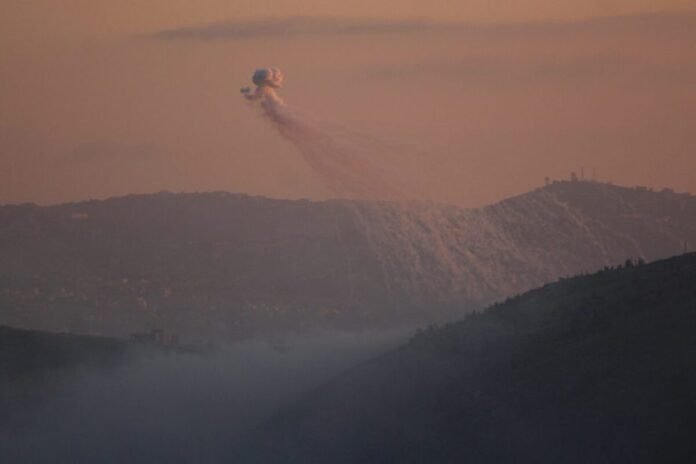
Israeli drone and air strikes in southern and eastern Lebanon killed 16 people and wounded 21 others, including paramedics, and damaged a school, Lebanese officials said on Wednesday, in the latest apparent violation of a ceasefire, Anadolu reports.

Two people were killed in drone strikes on the town of Mefdoun, while additional airstrikes targeted areas between Zawtar al-Sharqiya and Zawtar al-Gharbiya, Lebanon’s National News Agency reported.

Four more people were killed and three others injured in a separate strike that hit the home of a municipal council head in the town of Zellaya in western Bekaa, with rescue operations ongoing at the site, the agency added.

An Israeli strike also hit a car between the towns of Zawtar al-Sharqiya and Mifdoun in southern Lebanon, leaving two people dead, the same source said.

An Israeli drone targeted paramedics affiliated with the Islamic Health Authority in the town of Deir Kifa, wounding three of them, who were taken to nearby hospitals, the NNA said.

A separate Israeli airstrike on the town of Aadchit in the Nabatieh district killed one person, according to the same source.

The agency also reported that an Israeli strike on the town of Saksakiyeh in the Zahrani area killed five and wounded 15 others.

The Health Ministry said in a statement later that the strike on Saksakiyeh resulted in four deaths and the injury of 33 others, including six children and four women.

In the Tyre district, civil defense teams recovered two bodies following a strike that targeted a vehicle on the al-Haddathiya road near al-Siraj Secondary School between Wadi Jilo and Tayr Debba, the report said.

Israeli warplanes also carried out strikes on the towns of Rishknaniyah, Safad al-Battikh, Baraachit, and Qallawiyeh, causing severe damage to a school building in Burj Qallawiyeh, the agency said.

Israeli warplanes also carried out an airstrike on a residential home in the Bir Zbib neighborhood of the town of Doueir in the Nabatieh district, destroying it completely, NNA said.

On Tuesday, the Israeli army carried out about 60 attacks across Lebanon, killing five people and injuring others as part of ongoing hostilities since March 2.

Despite a ceasefire announced April 17 and extended until May 17, the Israeli army continues daily strikes in Lebanon and widespread demolition of homes in dozens of villages, echoing its years-long devastation of Gaza.

Since March 2, Israeli attacks on Lebanon have killed at least 2,715 people and wounded 8,353 and displaced more than 1.6 million, about one-fifth of the population, according to the latest official figures.

Israel occupies areas in southern Lebanon, including some it has held for decades and others since the 2023-2024 war, and has advanced about 10 kilometers (6.2 miles) inside the southern border during the current conflict.

Nearly $1 billion in oil shorts bet just before Iran peace report

0
nearly-$1-billion-in-oil-shorts-bet-just-before-iran-peace-report
Nearly $1 billion in oil shorts bet just before Iran peace report

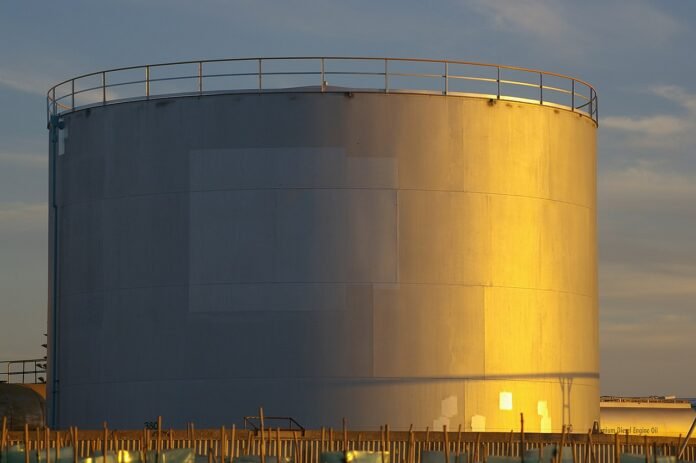
Photo: Gnangarra / Wikimedia Commons

Observers are once again raising concerns about insider trading on Wednesday after a trader took a colossal crude oil short position just over an hour before a US-Iran peace deal was reported to be on the horizon, causing prices to fall.

The Kobeissi Letter, a financial newsletter, reported on X that at 3:40 am on Wednesday, “nearly 10,000 contracts worth of crude oil shorts were taken without any major news.”

This was equivalent to $920 million in notional value, which the letter described as “an unusually large trade” so early in the morning. But it would soon pay off.

At 4:50 am, just 70 minutes later, Axios published an exclusive scoop by Middle East reporter Barak Ravid that the White House believed the US and Iran were on the verge of agreeing to a one-page “memorandum of understanding” to end the war, which included more nuclear negotiations, one of the key sticking points for US President Donald Trump.

By 7:00 am, just over two hours after Axios dropped its report, oil prices had fallen by 12%, allowing the savvy investor to make $125 million in a matter of hours, which led to accusations that it was yet another example of “epic insider trading” by those in the know about Trump’s plans.

Prices have since rebounded by about 8% after Iran announced the creation of the new “Persian Gulf Strait Authority,” to mediate the passage of ships through the Strait of Hormuz on its terms.

The Trump administration has already been deluged with accusations that its members are using insider information to take advantage of financial markets and prediction market apps.

Last month, an active-duty US special forces soldier was indicted by the Department of Justice after he made about $400,000 betting on Polymarket that Venezuelan President Nicolás Maduro would be removed from power, a bet he allegedly placed using classified information about an operation he himself was involved with.

More bettors collected around $1 million in profits from bets on the specific timing of Trump’s war with Iran in late February. The Financial Times also reported a surge of more than $580 million in oil futures trading right before Trump announced a pause in strikes on Iran’s energy facilities in March.

Of course, Wednesday’s bet theoretically could have been made without the aid of insider information.

The new peace framework is the latest in what has seemed to be an endless pattern over the past several weeks in which US officials tell media outlets that a peace agreement is on the horizon, causing oil prices to dip, only for it to collapse later in the week, often with Trump issuing hostile threats or making new demands.

It has become such a familiar story that some have speculated that the announcement of productive ceasefire talks is deliberately choreographed to calm oil markets and bring down prices, which have become a growing problem for Trump among voters.

But as The Economic Times explained, the bet placed Wednesday morning likely “is not a routine hedge” or “a portfolio rebalancing move.”

“At that hour, in that size,” it said, “a crude oil short of that magnitude is a deliberate, high-conviction directional bet.”

Former Rep. Marjorie Taylor Greene (R-Ga.), a one-time Trump cheerleader who’s become one of his leading critics, suggested Trump’s erratic approach to negotiating an end to the war was just a tool used by him and his allies to profit.

“When is everyone going to start realizing that the on-again, off-again war/peace rhetoric is really just insider trading? And sprinkle in some murder,” Greene wrote on social media. “Only a select few in the top tax bracket are benefiting from this, and the majority of you ain’t in it.”

Democrats in Congress have urged the Securities and Exchange Commission (SEC) to investigate what Sen. Chris Murphy (D-Conn.) suggested could be “mind-blowing corruption” by the White House, not only related to Trump’s wars, but also to his tariff regime, which has caused similar market chaos that bettors have been able to capitalize on with fortuitously timed wagers.

But critics have described profiting from the machinations of a war that has killed more than 1,700 civilians as particularly grotesque.

“This has to stop,” said Fox News commentator Jessica Tarlov. “Lives on the line so they can insider trade!”

-Common Dreams

SpaceX is starting to move on from the world’s most successful rocket

0
spacex-is-starting-to-move-on-from-the-world’s-most-successful-rocket
SpaceX is starting to move on from the world’s most successful rocket

It is far too soon to mention retirement, but astute observers of the space industry have noticed SpaceX’s workhorse Falcon 9 rocket is not launching as often as it used to.

The decline is modest so far, and it does not signal any problem at SpaceX or with the Falcon 9. Rather, it is a manifestation of SpaceX’s eagerness to shift focus to the much larger Starship rocket, an enabler of what the company wants to do in space: missions to land on the Moon and Mars, orbital data centers, and next-gen Starlink.

Elon Musk’s SpaceX conducted 165 launches with the Falcon 9 rocket (no Falcon Heavy missions) last year, up from 134 Falcon 9 and Falcon Heavy launches in 2024 and 96 Falcon flights in 2023. The company plans “maybe 140, 145-ish” Falcon launches in 2026, SpaceX president Gwynne Shotwell told Time earlier this year. “This year we’ll still launch a lot, but not as much,” she said. “And then we’ll tail off our launches as Starship is coming online.”

Letting off the gas

We’re beginning to see what the long, slow tail-off will look like. The changes are most apparent at Cape Canaveral, Florida, where SpaceX has launched the lion’s share of its rockets. Until last December, SpaceX launched Falcon 9s with regularity from two pads on Florida’s Space Coast—one at NASA’s Kennedy Space Center and another a few miles to the south on military property at Cape Canaveral Space Force Station.

SpaceX is transitioning the site at Kennedy, known as Launch Complex-39A, to launch Starships. LC-39A is out of the rotation for Falcon 9 launches, although it remains available for occasional flights of the more powerful triple-core Falcon Heavy. SpaceX launched the first Falcon Heavy in a year and a half last week from LC-39A, and a handful more Falcon Heavy flights are on tap later this year.

Activity at SpaceX’s oldest launch site, Space Launch Complex-40 at Cape Canaveral, is also waning. Last month, SpaceX retired one of its two Florida-based seagoing landing platforms from service for future use as a transporter to ferry Starships and Super Heavy boosters from SpaceX’s factory in South Texas to Florida. SpaceX is constructing a second Starship factory at Kennedy Space Center, but officials want to begin Starship flights from Florida before the factory is operational.

“With 39A becoming a primarily Falcon Heavy and Starship pad, we don’t actually need two operational droneships on the East Coast to maintain our Falcon manifest,” wrote Kiko Dontchev, SpaceX’s vice president of launch, in a post on X last month. The other landing vessel in Florida can support a launch and recovery every four days, according to Dontchev, and some Falcon missions can return their boosters to land onshore.

But those four-day turnarounds are becoming rare at Cape Canaveral. Most SpaceX missions launch satellites for the company’s Starlink broadband constellation. The bulk of SpaceX’s Starlink missions will now depart from Vandenberg Space Force Base, California, where Falcon 9s can launch from the same pad as often as every three or four days. For now, the new norm at Cape Canaveral will average about one Falcon 9 launch per week, approximately the same as SpaceX’s launch cadence at the Florida spaceport in 2023.

The Falcon 9 is not going away anytime soon. The rocket that made SpaceX the world’s most successful space company will remain operational at least as long as the International Space Station. The retirement of the ISS, previously targeted for 2030, is now unlikely to occur before 2032. The Falcon 9 and Dragon capsule are the only US vehicles available to transport crews to and from the station. The Space Force will also rely on the Falcon 9 and Falcon Heavy into the 2030s.

However, SpaceX will put Starship to work as soon as possible by launching upgraded Starlink Internet satellites. Eventually, SpaceX aims to tap Starship to launch nodes for an orbital data center constellation, a project forged by SpaceX’s acquisition of xAI, another Elon Musk company. NASA and SpaceX will also require an untold number of refueling launches each time Starship lands astronauts on the Moon.

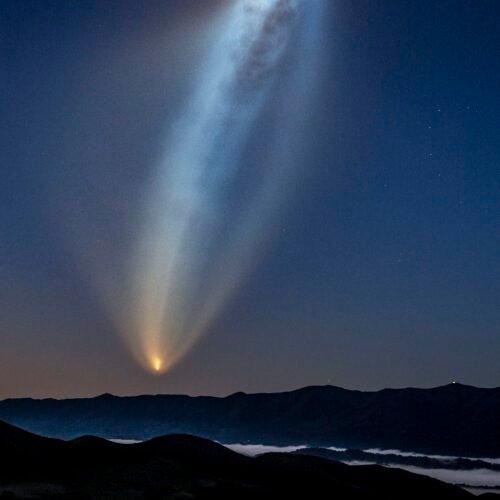
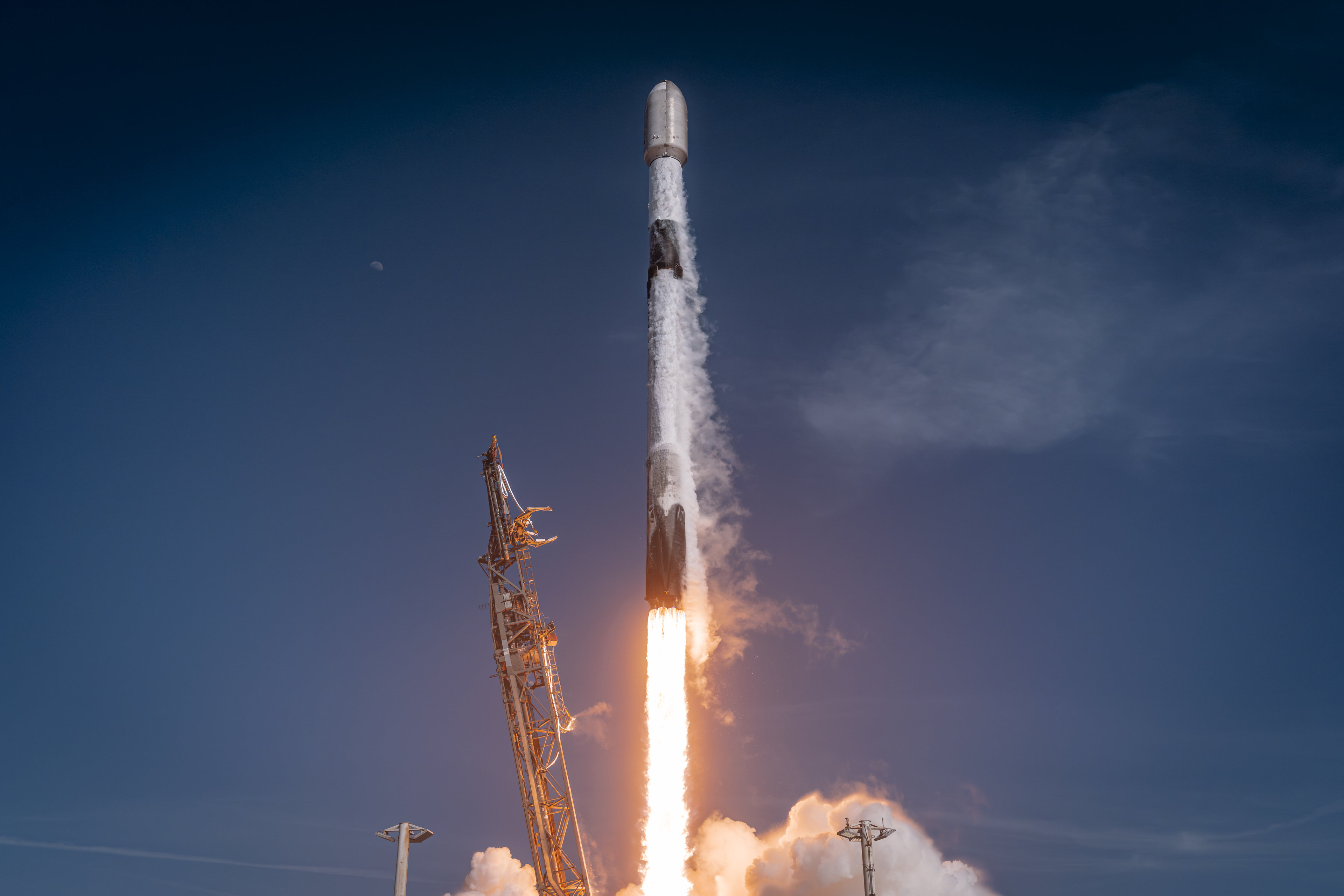
File photo of a Falcon 9 launch from Space Launch Complex 4-East at Vandenberg Space Force Base, California.

File photo of a Falcon 9 launch from Space Launch Complex 4-East at Vandenberg Space Force Base, California. Credit: SpaceX

All in at Vandenberg

SpaceX is launching more often than ever at Vandenberg, some 140 miles northwest of Los Angeles. More than half of all of SpaceX’s launches so far this year have lifted off from the California spaceport. Last year, it was less than 40 percent, and in 2024, it was one-third. Sources tell Ars this trend is expected to continue this year, putting Vandenberg on pace to become SpaceX’s busiest launch site. It’s a remarkable turnaround for the spaceport on the hillsides of California’s Central Coast. In 2020, Vandenberg hosted just a single space launch.

Vandenberg may overtake Florida’s Space Coast—combining NASA- and military-owned launch pads—in launch activity this year, depending on how often other companies like Blue Origin and United Launch Alliance fly their rockets. The last time Vandenberg launched more rockets than Cape Canaveral was in 1987 and 1988, during the grounding of NASA’s Space Shuttle fleet after the Challenger accident.

Nearly 180 rockets took off from the Florida and California spaceports last year, including satellite launches and long-range missile tests. While those numbers may plateau or slightly decline this year, the overall trend points upward. How quickly the launch rates rise will largely hinge on when SpaceX’s Starship becomes operational.

“We see those rates potentially tripling in the near term, the next five years,” said Col. James Horne, commander of Space Launch Delta 30 at Vandenberg, in a roundtable with reporters last month.

Col. Brian Chatman, commander of the military unit overseeing Cape Canaveral’s launch range, said the Space Force is preparing for as many as 500 launches per year from Florida’s Space Coast by 2036. The growth will require new construction, access to utilities, and increased reliance on automation at the military ranges, which are responsible for ensuring public safety during rocket launches.

SpaceX aims to routinely launch Starships from multiple launch pads in Florida and Texas (it has not announced plans for a Starship pad in California), and last month, the Space Force selected Blue Origin to build a brand new launch pad for its New Glenn rocket on an undeveloped site at Vandenberg. Stoke Space and Relativity Space are building launch sites at Cape Canaveral. The only other orbital-class spaceport on federal property is at Wallops Island, Virginia, where Rocket Lab, Northrop Grumman, and Firefly Aerospace plan to base their rockets.

This doesn’t count privately owned spaceports, like SpaceX’s Starbase in South Texas, which operate outside the Space Force’s jurisdiction.

0FansLike
0FollowersFollow
0FollowersFollow
0SubscribersSubscribe
- Advertisement -
Google search engine

Recent Posts