9.9 C
London
Wednesday, May 6, 2026
Home Blog

Meta to expand teen safeguards to 27 EU countries, Facebook safeguards in June

0
meta-to-expand-teen-safeguards-to-27-eu-countries,-facebook-safeguards-in-june
Meta to expand teen safeguards to 27 EU countries, Facebook safeguards in June


Meta Platforms will expand technology safeguards for ​teen accounts to 27 European Union countries and ‌to Facebook in the United States, the U.S. tech giant said , as it seeks to fend off ​criticism regarding its efforts protecting teenagers online.

Tech companies ​are coming under increasing pressure worldwide to ⁠come up with age-checking measures over mounting concerns about ​online abuse, teen mental health and the spread of ​AI-generated child sexual images.

Meta last year rolled out technology to proactively find accounts they suspect to be teens, even if ​they list an adult birthday, and place them ​in Teen Account protections.

“This technology will be expanded to 27 countries ‌in ⁠the European Union. Meta is also expanding this technology to Facebook in the United States for the first time, with the UK and EU to ​follow in June,” ​the company ⁠said in a blogpost.

It also detailed its use of advanced artificial intelligence to ​detect underage accounts beyond simple admissions of ​age.

This ⁠includes using AI technology to analyze entire profiles for contextual clues to determine if an account likely ⁠belongs to ​someone underage and strengthening circumvention ​measures to prevent new accounts from users Meta suspects are underage.

OpenAI president forced to read his personal diary entries to jury

0
openai-president-forced-to-read-his-personal-diary-entries-to-jury
OpenAI president forced to read his personal diary entries to jury

Greg Brockman never wanted to discuss his personal journal in public. But the OpenAI president has been stuck for days doing exactly that, while testifying in a trial in which Elon Musk has alleged that OpenAI abandoned its nonprofit mission to instead focus on personally enriching leaders like Brockman and Sam Altman.

“It’s very painful,” Brockman told OpenAI lawyer Sarah Eddy during his second day on the stand.

Although he’s not “ashamed” of any of the journal entries, he considers them to be deeply personal, he said. Rather than serving as a straightforward log of his actions or feelings, the entries reflect a stream of consciousness that meanders as it explores alternate viewpoints.

Sometimes, Brockman explained, he would jot notes reflecting another person’s thoughts, just to feel them out for himself. Because of this, Brockman can appear self-contradictory at times, he testified.

Other times, he recorded text messages or Signal messages from people to capture and mull their ideas, he noted. And that supposedly makes it harder to parse his entries out of context.

In total, Brockman estimated that his journal has about 100 pages of entries. He started the journal in school and continued using it to mull over big decisions in his professional life, he testified.

No one was ever supposed to read the journal but Brockman, he said. But there was no keeping them private after his journal entries were revealed in court filings in January. OpenAI submitted the journals as evidence in October that was initially sealed and then unsealed in January.  The entries, Musk’s legal team alleged, show the moment when OpenAI leaders decided to abandon the nonprofit mission, with Brockman explicitly discussing stealing a charity from Musk and hoping to earn a billion for his contributions at OpenAI.

Ultimately, the OpenAI president had to read some of the most embarrassing entries aloud in front of a jury and a packed courthouse, as well as over a YouTube livestream that peaked at around 1,200 viewers.

The entries cited during the trial were written between 2015, when OpenAI was founded, and 2023, when Brockman and OpenAI CEO Sam Altman were briefly ousted as leaders over the OpenAI board’s alleged safety concerns.

Musk hopes the diary entries paint Brockman as a money-hungry executive who, early on, cared little about OpenAI’s mission.

To overcome that characterization of his mindset in OpenAI’s early days, Brockman has the challenging task of convincing the court that, instead, they show the opposite: displaying the careful musings of the person who is perhaps most committed to OpenAI’s mission.

Brockman likened to “bank robber”

Musk’s attorney, Steven Molo, spent the first day of Brockman’s testimony isolating passages and demanding that Brockman answer for the apparent greed that his journal entries revealed.

For example, Brockman drafted a journal in 2017, around the same time he testified that Musk had delivered an ultimatum: Either Musk would have full control over a for-profit arm of OpenAI, or OpenAI would remain a nonprofit.

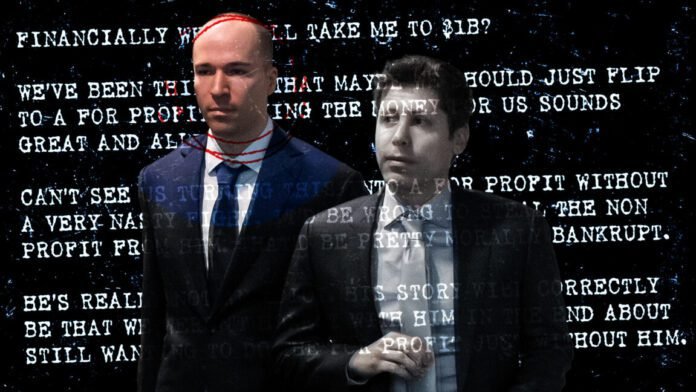
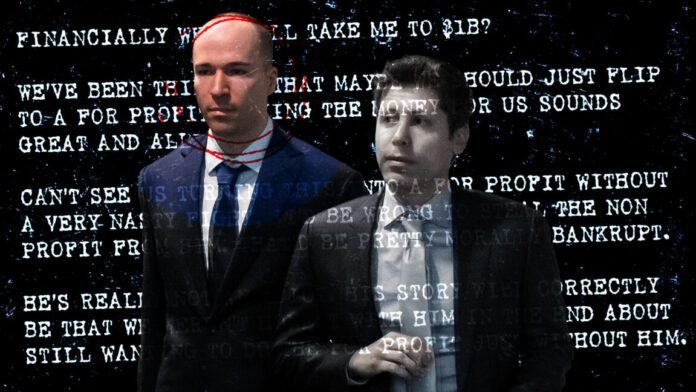
In that entry, Brockman appears greedy, writing that “we’ve been thinking that maybe we should just flip to a for-profit. Making the money for us sounds great and all.”

And Brockman, of course, did make a lot of money after OpenAI created a for-profit arm in 2018, with his stake today worth about $30 billion. More than a dozen times, NBC News reported, Molo asked Brockman to justify his stake, while repeatedly pointing to the journal entry in which the OpenAI president also said that $1 billion was all he wanted for his career goal.

“Financially, what will take me to $1B?” Brockman wrote in 2017, while mulling whether Musk was the “glorious leader” he wanted to run OpenAI or if he should back Altman.

At a contentious point, Molo asked whether Brockman would consider giving $29 billion back to the nonprofit arm. But Brockman said no, pointing out that he received the stake well before ChatGPT’s release spiked OpenAI’s value. He also emphasized that he helped grow the best-funded nonprofit in the world. According to The Information, Molo then likened Brockman to a “bank robber” who downplays the theft of only $1 million because there’s much more money left in the bank.

Brockman forced to explain journal entries

Hoping to paint Brockman in a more sympathetic light, OpenAI’s lawyer Eddy spent considerable time going over each entry that Molo flagged to allow Brockman to explain his intentions behind his posts.

Part of that attempted recovery found Brockman reading earlier passages of the same entry that Molo called out. Those paragraphs showed that at that moment, Brockman was contemplating not just whether OpenAI would need a for-profit arm to achieve its nonprofit mission, but also if he would be happy as an engineer working under Musk.

To Brockman, it seemed like OpenAI’s mission could be endangered if Musk’s co-founders accepted either of the conditions that Musk had raised as acceptable for him to stay on board. The mission could be at risk if Musk ever refused to relinquish control that he desperately sought before leaving OpenAI—potentially becoming what Brockman said he feared, a sort of “AGI dictator”—or if Musk ended up quitting OpenAI after the other co-founders agreed to remain a nonprofit.

Addressing his “$1B” comment, Brockman testified that weighing his personal happiness was a secondary consideration in the entry to his primary concerns over whether Musk’s proposal to lead OpenAI would work to uphold the mission.

Additionally, Brockman’s journal showed him grappling with whether voting against Musk’s plan or for Musk’s ejection from the board would be morally wrong.

“Can’t see us turning this into a for-profit without a very nasty fight,” Brockman wrote in another entry. “It’d be wrong to steal the non-profit from him. That’d be pretty morally bankrupt.”

Further on in the same entry, Brockman seemingly validated Musk’s central claim in his lawsuit—that OpenAI made a fool out of him and stole “free funding.” Describing Musk, Brockman wrote, “he’s really not an idiot. His story will correctly be that we weren’t honest with him in the end about still wanting to do the for-profit just without him.”

Guided by Eddy, who was repeatedly accused of leading the witness, Brockman testified that his comments on stealing the nonprofit only applied if they’d voted to remove Musk from the board, which never happened. Instead, Musk voluntarily left the board in 2018. When asked whether the journal entry had anything to do with creating a for-profit if Musk left the board on his own, Brockman said no.

The same logic applied to the “nasty fight” comments, which Brockman said only applied to circumstances that would have followed Musk’s removal from the board.

And in the same entry—when Brockman wrote that he cannot say he’s committed to a nonprofit because that would turn out to be a “lie” if they decided to start the public benefit corporation—he said that he was mulling the conditions that Musk had established, not his own thoughts on committing to the nonprofit.

As Brockman explained it, Musk had backed his co-founders into a difficult corner, and he had cut off his donations while keeping tabs on how hard it was to fundraise for the nonprofit. In the end, the other co-founders never committed to keeping OpenAI as a nonprofit, and Brockman testified that nearly all of OpenAI’s value today has come from efforts that post-date Musk’s involvement.

Further, Brockman testified that Musk failed to recognize when OpenAI reached a significant milestone with an early version of ChatGPT, becoming so critical of the first chatbot tool that he saw that the engineer who presented it to him allegedly almost quit the field entirely. Although Musk was an expert on rockets and electric cars, “he did not and I believe does not know AI,” Brockman testified, explaining “that was a major concern” and why he ended up backing Altman.

To Brockman, Musk issuing the ultimatum seemed like the best way to get out from under Musk, his journals showed. And on the stand, Brockman did not appear to regret his decision, describing Musk as a leader that allegedly damaged team morale and cared little about the team’s commitments to AI safety.

As an example, Brockman discussed Musk’s exit from OpenAI.

After Musk announced he was resigning from OpenAI in February 2018, Musk gave a departing speech at an all-hands meeting, Brockman testified. In front of about 40 OpenAI employees, Musk said that he was leaving because the only viable path that he saw forward was for OpenAI to merge with Tesla. However, the other leaders did not think so, Musk said, choosing a different path that Musk would never choose. According to Brockman, the speech was meant to lower morale at OpenAI, as workers understood that Musk was leaving to pursue artificial general intelligence (AGI) at Tesla because he no longer had confidence in OpenAI.

Following his speech, Musk took some questions from OpenAI staffers, and Brockman said that one of the first questions raised was how he would do things differently while pursuing AGI at Tesla.

Supposedly, Musk shocked OpenAI staff by confirming that his plan was to cut corners on AI safety, while insisting that would be the only way for Tesla to keep up with Google.

For Musk, who spent three days on the stand last week, Brockman’s testimony was probably viewed as more critical than his own. But Brockman mostly maintained composure while explaining why his journals shouldn’t be viewed as a smoking gun proving that Musk was defrauded. Instead, he highlighted a journal that he likely hopes sticks with the jury more than others. In it, he noted that a top reason why he didn’t want anyone, including Musk, to have “unilateral control” over how OpenAI runs not because Brockman wouldn’t make as much money if Musk had a larger equity share but because that “technology that we’re building is just too important.”

Boy Dies After Being Sucked into Jacuzzi Filter at Hotel During Family Vacation 

0
boy-dies-after-being-sucked-into-jacuzzi-filter-at-hotel-during-family-vacation 
Boy Dies After Being Sucked into Jacuzzi Filter at Hotel During Family Vacation 


A family getaway turned into a nightmare in Italy after a 12-year-old boy died following a horrific accident inside a hotel spa.

Matteo Brandimarti was staying with his family at the Duca di Montefeltro Hotel on Easter Sunday when tragedy struck. According to local reports, the young boy was using the jacuzzi when his leg became trapped in a powerful suction nozzle while the hydromassage system was running.

The incident happened around 10:30 a.m., and staff rushed to shut off the system as panic broke out. Matteo had reportedly been held underwater for several minutes before he could be freed.

Emergency crews airlifted him to a nearby hospital, where doctors placed him on life support. After days of fighting for his life, Matteo was declared brain dead on April 9.

The heartbreaking loss has shaken the small community, where Matteo was known as a bright and energetic student. School officials and local leaders described him as kind, curious, and deeply loved by classmates and teachers.

Now, serious questions are being raised about how this could have happened.

The family’s attorney says an inspection of the spa is scheduled, focusing on the jacuzzi’s suction system, which may have malfunctioned. Early findings suggest the possibility of negligence tied to improper maintenance or safety failures.

Authorities are currently investigating multiple individuals connected to the hotel, including management and maintenance staff, on suspicion of negligent homicide. No foul play is suspected, but officials are looking closely at whether safety regulations were ignored.

In the midst of unimaginable grief, Matteo’s family made a selfless decision — donating his organs to help save the lives of six other children.

Broiled Salmon Fillets

0
broiled-salmon-fillets
Broiled Salmon Fillets

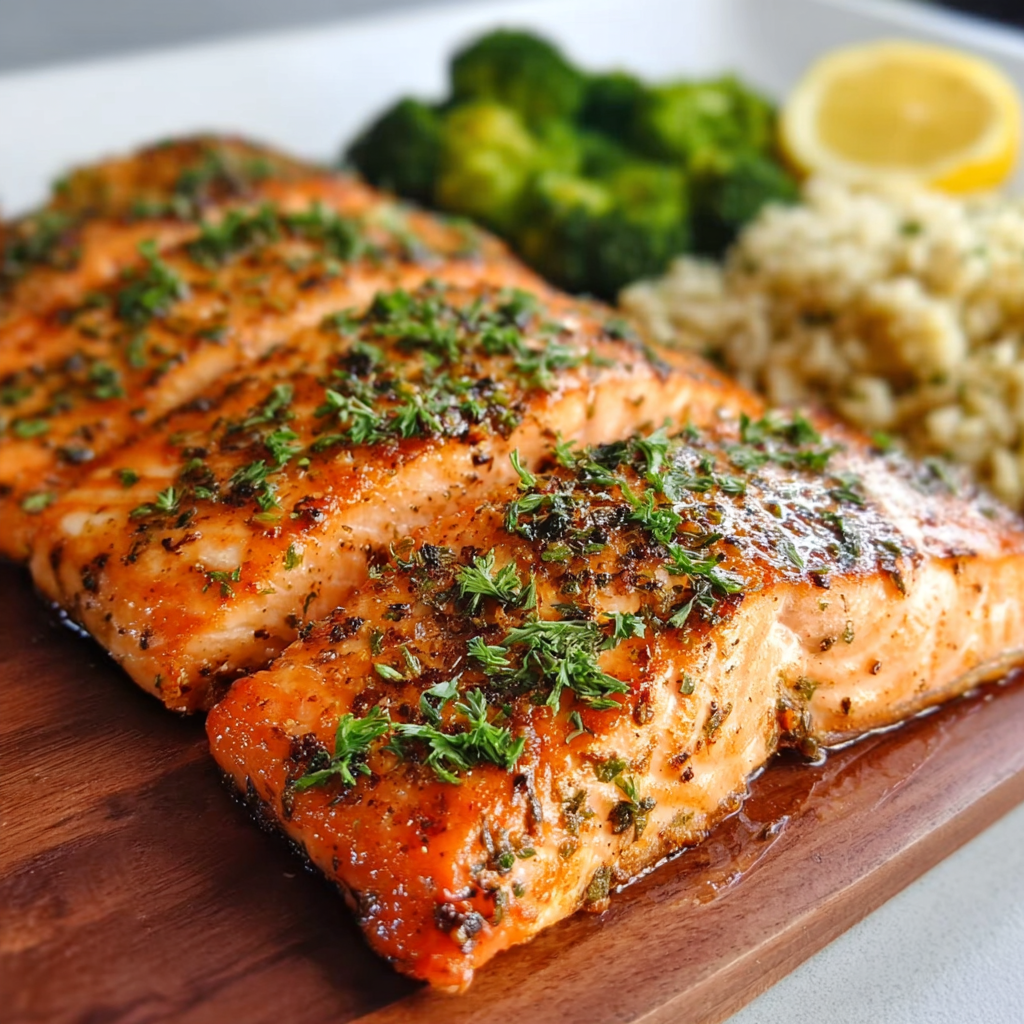
If you’re looking for a healthy, elegant dinner that feels restaurant-worthy but comes together with minimal effort, these Broiled Salmon Fillets are exactly what you need. Tender, flaky salmon is coated in a light citrus-soy marinade that enhances the natural richness of the fish while adding bright, savory flavor in every bite.

The best part? There’s no need to marinate overnight. This quick and easy recipe takes less than 30 minutes from start to finish, making it perfect for busy weeknights, meal prep, or even a special dinner at home.

Whether served with rice, roasted vegetables, or a crisp salad, this broiled salmon is always a winner.

Why You’ll Love This Broiled Salmon

This salmon recipe has everything you want in an easy dinner:

  • Ready in under 30 minutes
  • Healthy, protein-packed meal
  • Simple ingredients
  • Light, fresh, and flavorful
  • Naturally gluten-friendly with easy swaps
  • Perfect for weeknights or entertaining
  • No complicated techniques required

Once you see how easy and delicious this recipe is, you’ll want to make it again and again.

What Makes This Salmon So Good?

The secret is the simple marinade.

A combination of:

  • olive oil
  • fresh lemon juice
  • soy sauce
  • lemon zest
  • black pepper

creates the perfect balance of:

  • brightness
  • richness
  • savory depth
  • subtle caramelization

The broiler then works its magic, creating lightly golden edges while keeping the salmon moist, tender, and flaky.

Ingredients You’ll Need

For the Marinade

  • 4 tablespoons olive oil
  • 1 tablespoon fresh lemon juice
  • 1 tablespoon soy sauce
  • 2 teaspoons fresh lemon zest
  • ½ teaspoon black pepper
  • Salt, to taste

For the Salmon

  • 4 salmon fillets (about 6 ounces each)
  • 1 tablespoon fresh parsley, chopped

Ingredient Notes

Salmon

Fresh salmon works beautifully, but frozen fillets work too.

If using frozen salmon:

  • thaw completely in the refrigerator
  • pat dry before marinating

Skin-on salmon is highly recommended.

The skin helps:

  • lock in moisture
  • prevent overcooking
  • protect the fillet under high heat

Lemon

Fresh lemon gives the brightest flavor.

Both juice and zest make a big difference.

Soy Sauce

Adds:

  • savory depth
  • beautiful color
  • subtle umami flavor

Low-sodium soy sauce works well too.

How to Make Broiled Salmon

Step 1: Prepare the Marinade

In a medium bowl, whisk together:

  • olive oil
  • lemon juice
  • soy sauce
  • lemon zest
  • black pepper

Mix until fully combined.

Step 2: Season the Salmon

Lightly season the salmon fillets with:

  • salt
  • black pepper

Add the fillets to the marinade.

Gently toss until evenly coated.

Allow the salmon to marinate for:

10–15 minutes

That’s all it needs.

Step 3: Prepare the Oven

Position your oven rack:

6 inches from the broiler

Line a rimmed baking sheet with foil for easy cleanup.

Step 4: Arrange the Salmon

Place the salmon fillets:

skin-side down

on the prepared baking sheet.

Step 5: Broil

Broil for:

8–12 minutes

depending on thickness.

The salmon is ready when:

  • it flakes easily with a fork
  • the center is slightly translucent
  • the flesh turns from deep orange to opaque pink

Step 6: Finish and Serve

Remove from the oven.

Sprinkle with fresh parsley.

Serve immediately.

How to Know When Salmon Is Perfectly Cooked

Salmon should be:

  • tender
  • flaky
  • moist

The center should be slightly translucent—not raw.

A perfectly cooked fillet easily flakes with a fork.

Internal temperature:

125–145°F, depending on your preference.

Pro Tips for Perfect Broiled Salmon

Choose Even-Sized Fillets

Uniform fillets cook evenly.

Watch Closely

Broilers cook quickly.

Start checking around:

8 minutes

Don’t Over-Marinate

Fish absorbs flavor quickly.

15 minutes is plenty.

Let It Rest

Allow the salmon to rest:

2–3 minutes

after broiling.

This helps the juices redistribute.

Delicious Variations

Want to change it up?

Add Garlic

Whisk in:

  • 1–2 cloves minced garlic

Add Heat

Sprinkle in:

  • red pepper flakes
  • cayenne
  • chili paste

Asian-Inspired

Add:

  • fresh ginger
  • sesame oil
  • green onions

Honey Citrus

Add:

  • 1 tablespoon honey

for subtle sweetness and caramelization.

What to Serve with Broiled Salmon

This salmon pairs beautifully with:

Vegetables

  • roasted broccoli
  • asparagus
  • green beans
  • cauliflower

Grains

  • jasmine rice
  • wild rice
  • quinoa
  • couscous

Potatoes

  • roasted baby potatoes
  • mashed potatoes
  • parmesan potatoes

Salads

  • cucumber salad
  • arugula salad
  • strawberry spinach salad

Storage Instructions

Refrigerator

Store leftovers in an airtight container for:

up to 3 days

Reheating

Microwave

Place salmon on a plate with a small cup of water nearby.

Heat gently.

Oven

Wrap in foil.

Bake at:

350°F for 10–15 minutes

Leftover Ideas

Turn leftover salmon into:

  • salmon salad
  • grain bowls
  • wraps
  • pasta
  • salmon cakes

Frequently Asked Questions

Can I bake instead of broil?

Absolutely.

Bake at:

400°F for 12–15 minutes

Can I use frozen salmon?

Yes—just thaw fully first.

Can I make this on the grill?

Yes.

Grill over medium-high heat for:

6–8 minutes per side

Can I marinate longer?

Not recommended.

Fish can become mushy if marinated too long.

Final Thoughts

These Broiled Salmon Fillets prove that healthy meals can be simple, fast, and incredibly delicious. With a bright lemon-soy marinade, perfectly flaky texture, and minimal prep, this easy salmon recipe is ideal for everything from weeknight dinners to elegant meals at home.

One bite, and this may become your new favorite way to cook salmon.

The method in Iran’s madness? Closure of Strait of Hormuz echoes a centuries-old Danish play − and is a tragedy for the world order

0
the-method-in-iran’s-madness?-closure-of-strait-of-hormuz-echoes-a-centuries-old-danish-play-−-and-is-a-tragedy-for-the-world-order
The method in Iran’s madness? Closure of Strait of Hormuz echoes a centuries-old Danish play − and is a tragedy for the world order

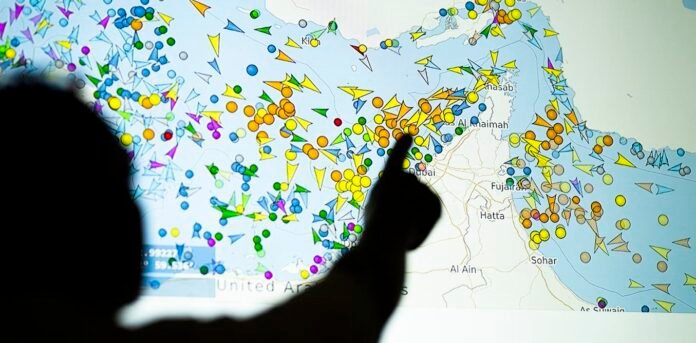
More than two months into the war in Iran, navigation through the Strait of Hormuz – the key waterway through which more than a third of the international trade in oil and gas passes – remains perilous and uncertain. Underscoring the uncertainty, on May 3, 2026, the Trump administration launched Project Freedom to help stranded ships through the strait. Yet the next day, at least two ships came under fire from Iran.

Iran began blocking the strait to navigation on Feb. 28, after the United States and Israel launched a military campaign against the country. By mid-March, Tehran was demanding tolls of up to US$2 million per vessel. In response, the U.S. imposed what President Donald Trump declared to be a “complete” maritime blockade on Iran and subsequently threatened punishing economic sanctions on any entity that pays Iran’s tolls.

Following Iran’s lead, other nations are now contemplating using their own leverage over crucial choke points closer to their shores. Indonesia floated a proposal to charge tolls on vessels transiting the Strait of Malacca, before walking it back. China has also issued warnings against foreign military vessels transiting the Taiwan Strait.

These events have prompted commentators to warn of the end of a golden era of navigational freedom that the U.S. has underwritten for more than a century. But as an expert on international law, I know that attempts by nations to weaponize their leverage over crucial geographic choke points at sea and on land are nothing new. In fact, they go back at least six centuries.

The Danish roots of sea tolls

From the early 15th century until 1857, Denmark required ships passing through the narrow straits connecting the North Sea to the Baltic Sea to stop at the port city of Helsingør — or Elsinore, as Shakespeare styled it in “Hamlet” — and pay a toll before proceeding.

At their peak, these Sound Dues generated nearly 10% of Danish national revenues. The Sound Dues rankled the maritime powers of the day, but Denmark could easily enforce them thanks to the narrowness of the Øresund Strait, which is less than 3 miles wide at Helsingør.

Ultimately, they were ended not through war but through diplomacy, led in large part by a rising maritime power with a strong interest in open sea-lanes: the United States.

Seeking to increase its trade with Prussia, in 1843 the administration of President John Tyler advised Denmark of the United States’ refusal to pay the Sound Dues because they lacked any basis in international law. Rumors swirled that the U.S. was willing to back up its refusal to pay with force.

After years of uncertainty, the fate of the Sound Dues was resolved by the Copenhagen Convention of 1857. Denmark agreed to abolish the tolls forever in exchange for a one-time, lump-sum payment from the major trading nations. The principle of free navigation of the world’s oceans has largely prevailed since then, in part as a result of subsequent U.S. efforts to exercise these freedoms against those who would restrict them.

How the law developed

The Danish settlement reflected a broader body of law – the law of transit – that had been evolving alongside an international system of sovereign states for centuries.

Its core principle is that when convenience dictates or necessity requires, a country must allow the people, goods and vessels of other nations to pass through its territory for a journey that begins and ends elsewhere. The principle has deep roots in American and international legal history: Thomas Jefferson invoked it when negotiating with Spain, which then controlled Louisiana, to secure the United States’ right to navigate the Mississippi River.

Free transit guarantees have been a feature of every major international order since the Congress of Vienna ended the Napoleonic wars in 1815. Yet in each case, those guarantees have come under pressure as the order that produced them weakened.

Before World War I, restrictions on transit rights multiplied across Europe. The League of Nations, a precursor to today’s United Nations, made strengthening transit rights its first priority in the 1920s. But these arrangements fell apart as fascism rose across Europe and Asia and regimes from Nazi Germany to Imperial Japan denounced their international legal obligations.

The post-World War II order reaffirmed transit rights – through the law of the sea, trade agreements and the laws governing civil aviation – and for decades they held.

The International Court of Justice clarified the governing legal principle for international straits in its very first case, decided in 1949: Any body of water useful to international navigation between two open seas is open to the vessels of all nations.

The U.N. Convention on the Law of the Sea, concluded in 1982, reaffirmed this rule in holding that countries may not charge tolls on vessels passing through straits within their waters. Although neither Iran nor the U.S. has ratified the convention, the U.S. accepts its provisions on navigational freedom as binding on all countries.

Iran’s levying of tolls in the Strait of Hormuz violates the core legal principle that nations may not exploit advantages of geography to bilk foreigners who need to traverse their land or maritime territory. Yet the American and Israeli military campaign that provoked Iran’s response likewise violates the U.N. Charter’s rules on the use of force.

A large ship is seen at sea.

The Iran-flagged tugboat Basim motors near a ship anchored in the Strait of Hormuz on May 4, 2026. Amirhossein Khorgooei/ISNA/AFP via Getty Images

Such issues are not just limited to the Strait of Hormuz. Indeed, trade law, security commitments and the norms against the unilateral redrawing of borders are all under strain.

Seen in this larger context, China’s warnings against military passage through the Taiwan Strait and Indonesia’s trial balloon over the Malacca Strait are not isolated provocations. They are symptoms of the same underlying condition: an international order losing the shared commitment that has often made its rules enforceable.

In January 2026, Trump told The New York Times that he did not need international law and that his own moral judgment was the only constraint on American foreign policy. Around the same time, Canadian Prime Minister Mark Carney warned that the American-led international order was “fading.”

The Strait of Hormuz is where those trend lines are now colliding – to the detriment of billions of people around the world, and to the idea of an international order based on law rather than the naked exercise of power.

Hegseth claims ceasefire holds despite attacks on Iranian vessels

0
hegseth-claims-ceasefire-holds-despite-attacks-on-iranian-vessels
Hegseth claims ceasefire holds despite attacks on Iranian vessels

This picture was made on April 19, before the ceasefire, when the US Navy fired on an Iranian ship that was trying to get past the American blockade. Members of the US military then took control of the ship. Photo: US Central Command, via X

While assuring reporters that the ceasefire agreement reached last month between the Trump administration and Iran is holding, Defense Secretary Pete Hegseth on Tuesday said the American forces are acting “aggressively” in the Strait of Hormuz, where he said US Central Command has “established a powerful red, white, and blue dome” as a “direct gift from the US to the world.”

The metaphorical “dome” the US has placed over the key shipping route for oil and other goods has taken the form of what the Trump administration is calling Project Freedom, which launched Monday and involves the US guiding ships out of the strait, according to President Donald Trump. Iran effectively shut the waterway more than two months ago in retaliation for the unprovoked US-Israeli war on the country, and the US Navy has blocked ships from going to or from Iran in response.

Hegseth emphasized Tuesday that Project Freedom is “separate and distinct” from the military assault on Iran that began on February 28 with the stated aim of eliminating the country’s missile and nuclear capabilities.

“The ceasefire is not over,” said the secretary. “We expected there would be some churn, which happened, and we said we would defend and defend aggressively, and we absolutely have.”

He added that the US is “not looking for a fight.”

Adm. Brad Cooper, the head of US Central Command, told reporters that US warships shot down Iranian cruise missiles that the Islamic Revolutionary Guard Corps (IRGC) had fired at the vessels Navy ships were guiding out of the strait on Monday, and Army helicopter gunships sank six military speedboats from Iran.

As Common Dreams reported Tuesday, an Islamic Revolutionary Guard Corps commander told Iran’s state-affiliated media that US forces actually attacked “two small boats carrying people on their way from Khasab on the coast of Oman to the coast of Iran on Monday” and killed five civilians, but did not hit any IRGC ships.

At his press conference with General Dan Caine, chairman of the US Joint Chiefs of Staff, Hegseth insisted that Iran is the “aggressor” even as he threatened the country with restarting “major combat operations” if Trump deems them “necessary.”

Project Freedom, said Hegseth, “is about free flow of commerce, all the things that happened before, and only Iran is contesting, so right now the ceasefire certainly holds, but we’re going to be watching very, very closely.”

One reporter, with the Epoch Times, asked whether the president plans to seek congressional approval if he decides it is necessary to restart “major combat operations.”

Days before the fighting in the strait, Trump notified Congress last Friday that hostilities with Iran had been terminated. The announcement came on the deadline set by the 1973 War Powers Act, which requires US presidents to end conflicts that have not been authorized by Congress no more than 60 days after notifying lawmakers of the hostilities.

Trump told Congress that the fighting has been effectively terminated since the US and Iran agreed to the ceasefire on April 7, a view that Hegseth pushed on Tuesday in response to the question about congressional authorization.

“Our view is… that ultimately with the ceasefire, the clock stops,” said Hegseth. “If it were to restart that would be the president’s decision. That option is always there and Iran knows that.”

NBC News senior national politics reporter Jonathan Allen responded that he had “never heard” of Hegseth and Trump’s reasoning for not planning to seek congressional approval for more combat operations.

“Understand that what he is doing here is desperately trying to avoid the War Powers Act,” said Fred Wellman, a Democratic congressional candidate in Missouri. “They made up a new interpretation that says the 60-day clock is ‘paused’ for a ceasefire. Now they are lying and saying this is an all-new, shiny war and not the same one.”

-Common Dreams

Iran denies attacking UAE, warns of ‘decisive response’ if strikes launched from its territory

0
iran-denies-attacking-uae,-warns-of-‘decisive-response’-if-strikes-launched-from-its-territory
Iran denies attacking UAE, warns of ‘decisive response’ if strikes launched from its territory

Iran’s armed forces denied carrying out any missile or drone attacks against the United Arab Emirates in recent days, Iranian state media IRIB reported Tuesday.

IRIB, citing a statement by a spokesman for Iran’s Khatam al-Anbiya Central Headquarters, said no such operations had been conducted, adding that any action would have been “clearly and officially announced.”

The spokesman also rejected accusations by the UAE Defense Ministry as “baseless.”

He warned that if any attack against Iran originates from the UAE territory, Tehran would respond with a “decisive and regret-inducing” retaliation.

He also accused the UAE of allowing US and Israeli forces to operate from its territory, urging Emirati authorities not to become a base for what he described as hostile powers.

READ: UAE says Iran targeted ADNOC tanker with drones in Strait of Hormuz

The warning comes amid heightened tensions in the Gulf, including a second consecutive day of reported strikes targeting the UAE.

Authorities in the UAE said air defenses intercepted waves of missiles, cruise missiles and drones launched from Iran, with an earlier attack causing a major fire at the Fujairah Oil Industry Zone.

Regional tensions have escalated since the United States and Israel launched strikes on Iran on Feb. 28, triggering retaliation from Tehran and disruptions in the Strait of Hormuz.

A ceasefire took effect on April 8 through Pakistani mediation, but talks in Islamabad failed to produce a lasting agreement. The truce was later extended by US President Donald Trump without a set deadline.

Since April 13, the United States has enforced a naval blockade targeting Iranian maritime traffic in the strategic waterway.

OPINON: The UAE: Anti-Islamic alignment and the politics of illusion

Mamdani Condemns NYC Expo Promoting Property Sales in Israeli West Bank Settlements

0
mamdani-condemns-nyc-expo-promoting-property-sales-in-israeli-west-bank-settlements
Mamdani Condemns NYC Expo Promoting Property Sales in Israeli West Bank Settlements


A roving real-estate expo for land sales in Israel and the occupied Palestinian territories is set to hold an event at a New York synagogue on Tuesday, drawing a rebuke from Mayor Zohran Mamdani over the potential for land sales that violate international law.

The Great Israeli Real Estate Event — a showcase that advertises its services in helping people in the United States, Canada, and the U.K. purchase land in Israel and the West Bank — will host an event at Park East Synagogue in Manhattan’s Upper East Side on Tuesday. The expo helps potential buyers navigate taxes, education concerns, and other issues that arise during relocation to Israel.

Ahead of the event, Mamdani spoke out against the possibility of potentially illegal land sales being facilitated within the city.

“Mayor Mamdani is deeply opposed to the real estate expo this evening that includes the promotion of the sale of land in settlements.”

“Mayor Mamdani is deeply opposed to the real estate expo this evening that includes the promotion of the sale of land in settlements in the Occupied West Bank,” said Sam Raskin, a spokesperson for Mamdani, in a statement to The Intercept. “These settlements are illegal under international law and deeply tied to the ongoing displacement of Palestinians.”

The website for the expo includes a reference to Gush Etzion, a cluster of some 20 settlements in the West Bank, southeast of Jerusalem, that are considered illegal under international law. Lara Friedman, president of the Foundation for Middle East Peace, said the inclusion of Gush Etzion was a telling reminder of the claim made on all of the Occupied Territories by the pro-settlement movement.

“Gush Etzion is the Israeli term for an area of the West Bank located south of Jerusalem on which, under international law, all Israeli construction, all Israeli communities are considered illegal under international law,” Friedman said. “The pro-settlement movement around the world, and most Israelis, do not make any distinction between Israel and the West Bank. The idea is that all of this is Eretz Yisrael” — Hebrew for “the land of Israel” — “and it belongs to the Jews because God gave it to them.”

Past Discrimination Allegations

The expo is being sponsored by a group called Home in Israel, but it isn’t the only organization putting on events of this sort. In recent years, real estate fairs put on by similar groups have popped up in New York and other North American cities, including Baltimore, Montreal, and others, including at synagogues.

Israeli settlements in the West Bank are widely considered to be open only to Jewish residents. At one real estate event in suburban New Jersey in 2024, protesters said they were explicitly asked about their religious affiliations when they tried to register for the fair, potentially implicating anti-discrimination laws. The New Jersey Civil Rights Division reportedly questioned realtors about their practices. (The New Jersey Civil Rights Division not immediately respond to requests for comment.)

Pal-Awda, a pro-Palestine group, announced plans on social media for a protest on Tuesday outside the Park East Synagogue.

“We will not be silent as ethnic cleansing is being actively promoted in our neighborhoods,” the group wrote.

Self-proclaimed supporters of the synagogue have circulated a flyer on social media announcing a counter-protest. “All members of the Jewish community need to come out and protect the synagogue,” says the flyer. Though it includes the social media handles of the synagogue, the call for a counter-protest did not appear to come from Park East Synagogue itself. (A spokesperson for the synagogue declined to comment.)

Past events have led to sometimes violent confrontations between protesters and counter-demonstrators.

In light of the dueling protests planned outside Park East Synagogue, Raskin, the mayoral spokesperson, called for both the safety of eventgoers and respect for the free-speech rights of the protesters.

“Our administration has also been clear that we are committed to ensuring safe entry and exit from any house of worship,” he said, “and that such access never be in question while all protesters are able to exercise their First Amendment rights.”

Protests at Park East

Park East Synagogue has already been the site of one anti-Zionist protest that raised hackles in New York.

In November, Pal-Awda organized a demonstration against an event hosted by Nefesh B’Nefesh, a group that facilitates migration to Israel, sparking howls of protest from then-Mayor Eric Adams and other political leaders in the city.

That protest, along with others across New York City, were part of the impetus behind a bill introduced this year in the City Council aimed at creating a so-called buffer zone to keep demonstrators at a distance from any house of worship.

Despite the opposition of free-speech advocates, a version of that bill — requiring the New York Police Department to provide a plan for protecting houses of worship but without the buffer zone provision — passed in March and became law on April 25 after Mamdani declined to sign or veto it. The bill gave the New York Police Department 45 days to provide a proposed plan of action and 90 days to give a final plan, meaning it is not yet in full effect.

A related bill proposing buffer zones for universities and other educational institutions passed the City Council but was vetoed by Mamdani, who criticized the bill as overbroad and a threat to free speech.

OpenAI president explains to jury why his diary entries sound greedy

0
openai-president-explains-to-jury-why-his-diary-entries-sound-greedy
OpenAI president explains to jury why his diary entries sound greedy

Greg Brockman never wanted to discuss his personal journal in public. But the OpenAI president has been stuck for days doing exactly that, while testifying in a trial in which Elon Musk has alleged that OpenAI abandoned its nonprofit mission to instead focus on personally enriching leaders like Brockman and Sam Altman.

“It’s very painful,” Brockman told OpenAI lawyer Sarah Eddy during his second day on the stand.

Although he’s not “ashamed” of any of the journal entries, he considers them to be deeply personal, he said. Rather than serving as a straightforward log of his actions or feelings, the entries reflect a stream of consciousness that meanders as it explores alternate viewpoints.

Sometimes, Brockman explained, he would jot notes reflecting another person’s thoughts, just to feel them out for himself. Because of this, Brockman can appear self-contradictory at times, he testified.

Other times, he recorded text messages or Signal messages from people to capture and mull their ideas, he noted. And that supposedly makes it harder to parse his entries out of context.

In total, Brockman estimated that his journal has about 100 pages of entries. He started the journal in school and continued using it to mull over big decisions in his professional life, he testified.

No one was ever supposed to read the journal but Brockman, he said. But there was no keeping them private after his journal entries were revealed in court filings in January. OpenAI submitted the journals as evidence in October that was initially sealed and then unsealed in January.  The entries, Musk’s legal team alleged, show the moment when OpenAI leaders decided to abandon the nonprofit mission, with Brockman explicitly discussing stealing a charity from Musk and hoping to earn a billion for his contributions at OpenAI.

Ultimately, the OpenAI president had to read some of the most embarrassing entries aloud in front of a jury and a packed courthouse, as well as over a YouTube livestream that peaked at around 1,200 viewers.

The entries cited during the trial were written between 2015, when OpenAI was founded, and 2023, when Brockman and OpenAI CEO Sam Altman were briefly ousted as leaders over the OpenAI board’s alleged safety concerns.

Musk hopes the diary entries paint Brockman as a money-hungry executive who, early on, cared little about OpenAI’s mission.

To overcome that characterization of his mindset in OpenAI’s early days, Brockman has the challenging task of convincing the court that, instead, they show the opposite: displaying the careful musings of the person who is perhaps most committed to OpenAI’s mission.

Brockman likened to “bank robber”

Musk’s attorney, Steven Molo, spent the first day of Brockman’s testimony isolating passages and demanding that Brockman answer for the apparent greed that his journal entries revealed.

For example, Brockman drafted a journal in 2017, around the same time he testified that Musk had delivered an ultimatum: Either Musk would have full control over a for-profit arm of OpenAI, or OpenAI would remain a nonprofit.

In that entry, Brockman appears greedy, writing that “we’ve been thinking that maybe we should just flip to a for-profit. Making the money for us sounds great and all.”

And Brockman, of course, did make a lot of money after OpenAI created a for-profit arm in 2018, with his stake today worth about $30 billion. More than a dozen times, NBC News reported, Molo asked Brockman to justify his stake, while repeatedly pointing to the journal entry in which the OpenAI president also said that $1 billion was all he wanted for his career goal.

“Financially, what will take me to $1B?” Brockman wrote in 2017, while mulling whether Musk was the “glorious leader” he wanted to run OpenAI or if he should back Altman.

At a contentious point, Molo asked whether Brockman would consider giving $29 billion back to the nonprofit arm. But Brockman said no, pointing out that he received the stake well before ChatGPT’s release spiked OpenAI’s value. He also emphasized that he helped grow the best-funded nonprofit in the world. According to The Information, Molo then likened Brockman to a “bank robber” who downplays the theft of only $1 million because there’s much more money left in the bank.

Brockman forced to explain journal entries

Hoping to paint Brockman in a more sympathetic light, OpenAI’s lawyer Eddy spent considerable time going over each entry that Molo flagged to allow Brockman to explain his intentions behind his posts.

Part of that attempted recovery found Brockman reading earlier passages of the same entry that Molo called out. Those paragraphs showed that at that moment, Brockman was contemplating not just whether OpenAI would need a for-profit arm to achieve its nonprofit mission, but also if he would be happy as an engineer working under Musk.

To Brockman, it seemed like OpenAI’s mission could be endangered if Musk’s co-founders accepted either of the conditions that Musk had raised as acceptable for him to stay on board. The mission could be at risk if Musk ever refused to relinquish control that he desperately sought before leaving OpenAI—potentially becoming what Brockman said he feared, a sort of “AGI dictator”—or if Musk ended up quitting OpenAI after the other co-founders agreed to remain a nonprofit.

Addressing his “$1B” comment, Brockman testified that weighing his personal happiness was a secondary consideration in the entry to his primary concerns over whether Musk’s proposal to lead OpenAI would work to uphold the mission.

Additionally, Brockman’s journal showed him grappling with whether voting against Musk’s plan or for Musk’s ejection from the board would be morally wrong.

“Can’t see us turning this into a for-profit without a very nasty fight,” Brockman wrote in another entry. “It’d be wrong to steal the non-profit from him. That’d be pretty morally bankrupt.”

Further on in the same entry, Brockman seemingly validated Musk’s central claim in his lawsuit—that OpenAI made a fool out of him and stole “free funding.” Describing Musk, Brockman wrote, “he’s really not an idiot. His story will correctly be that we weren’t honest with him in the end about still wanting to do the for-profit just without him.”

Guided by Eddy, who was repeatedly accused of leading the witness, Brockman testified that his comments on stealing the nonprofit only applied if they’d voted to remove Musk from the board, which never happened. Instead, Musk voluntarily left the board in 2018. When asked whether the journal entry had anything to do with creating a for-profit if Musk left the board on his own, Brockman said no.

The same logic applied to the “nasty fight” comments, which Brockman said only applied to circumstances that would have followed Musk’s removal from the board.

And in the same entry—when Brockman wrote that he cannot say he’s committed to a nonprofit because that would turn out to be a “lie” if they decided to start the public benefit corporation—he said that he was mulling the conditions that Musk had established, not his own thoughts on committing to the nonprofit.

As Brockman explained it, Musk had backed his co-founders into a difficult corner, and he had cut off his donations while keeping tabs on how hard it was to fundraise for the nonprofit. In the end, the other co-founders never committed to keeping OpenAI as a nonprofit, and Brockman testified that nearly all of OpenAI’s value today has come from efforts that post-date Musk’s involvement.

Further, Brockman testified that Musk failed to recognize when OpenAI reached a significant milestone with an early version of ChatGPT, becoming so critical of the first chatbot tool that he saw that the engineer who presented it to him allegedly almost quit the field entirely. Although Musk was an expert on rockets and electric cars, “he did not and I believe does not know AI,” Brockman testified, explaining “that was a major concern” and why he ended up backing Altman.

To Brockman, Musk issuing the ultimatum seemed like the best way to get out from under Musk, his journals showed. And on the stand, Brockman did not appear to regret his decision, describing Musk as a leader that allegedly damaged team morale and cared little about the team’s commitments to AI safety.

As an example, Brockman discussed Musk’s exit from OpenAI.

After Musk announced he was resigning from OpenAI in February 2018, Musk gave a departing speech at an all-hands meeting, Brockman testified. In front of about 40 OpenAI employees, Musk said that he was leaving because the only viable path that he saw forward was for OpenAI to merge with Tesla. However, the other leaders did not think so, Musk said, choosing a different path that Musk would never choose. According to Brockman, the speech was meant to lower morale at OpenAI, as workers understood that Musk was leaving to pursue artificial general intelligence (AGI) at Tesla because he no longer had confidence in OpenAI.

Following his speech, Musk took some questions from OpenAI staffers, and Brockman said that one of the first questions raised was how he would do things differently while pursuing AGI at Tesla.

Supposedly, Musk shocked OpenAI staff by confirming that his plan was to cut corners on AI safety, while insisting that would be the only way for Tesla to keep up with Google.

For Musk, who spent three days on the stand last week, Brockman’s testimony was probably viewed as more critical than his own. But Brockman mostly maintained composure while explaining why his journals shouldn’t be viewed as a smoking gun proving that Musk was defrauded. Instead, he highlighted a journal that he likely hopes sticks with the jury more than others. In it, he noted that a top reason why he didn’t want anyone, including Musk, to have “unilateral control” over how OpenAI runs not because Brockman wouldn’t make as much money if Musk had a larger equity share but because that “technology that we’re building is just too important.”

Trump-Xi summit at best may codify new US-China coexistence rules

0
trump-xi-summit-at-best-may-codify-new-us-china-coexistence-rules
Trump-Xi summit at best may codify new US-China coexistence rules

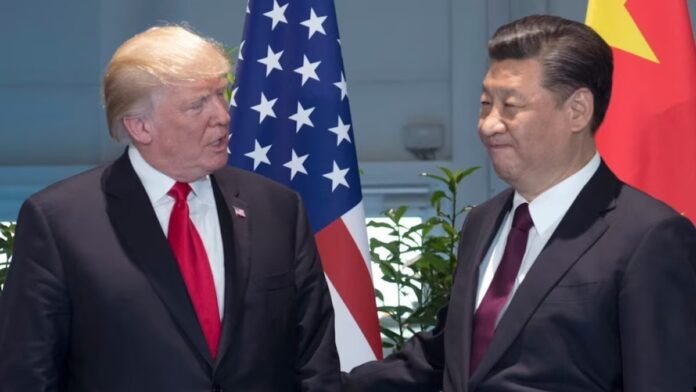
Next week, when President Donald Trump arrives in Beijing to meet President Xi Jinping, the choreography will be in quintessential familiar style.

Yet their carefully crafted calisthenics, their ritual reaffirmations and the language of leadership will not hide the truth that this encounter is less about reconciliation and more for managing their irreconcilability, with some hope for global stability on the side.

The United States and China together generate over 42% of global GDP. This makes them anchors of global supply chains that stand disrupted by the geopolitics of protracted conflicts in Europe and the Middle East. These have unleashed volatility in global commodity markets threatening life and livelihoods around the world.

But the Trump-Xi summit is not going to aspire for any utopian end of their rivalry. At best, the two may acknowledge to each other that their rivalry has become structural and must now be managed from both the sides.

From détente to guardrails

Cold War analogies, however, are more likely to obscure than to illuminate the current state of US-China equations. Theirs is no hope for the sort of détente that transformed US-Soviet relations in the 1970s. For the US and China have little mutual trust, no ideological softening and no shared strategic horizon.

What is emerging instead is their search for guardrails — informal limits to escalation that can prevent crises from spiralling into conflict. Unlike formal US-Soviet arms control agreements of 1970s, these novel mechanisms are unlikely to be codified or publicly celebrated. They will exist only as tacit understandings.

This is because their reality is far more complex than what the prevailing narrative of detente or decoupling can imagine.

Since 2022, Washington has constructed an expansive China-focused export-control regime targeting advanced semiconductors, artificial intelligence and other frontier technologies. Beijing has responded by leveraging its dominance in critical minerals such as gallium and germanium. Yet their economic interdependence remains substantial. Bilateral trade continues at scale, financial linkages are enduring and production networks remain, by design, deeply integrated.

Therefore what both sides have engineered is a form of stratified complex interdependence — high barriers around technologies that define future power, along with continued openness where mutual benefit outweighs strategic risk. Total decoupling is neither feasible nor desirable. What matters is how they have restructured their guardrails for this interdependence to survive.

Geo-economics as new geopolitics

Meanwhile, the center of gravity in US-China rivalry has also shifted decisively from the military to the economic domain. Export controls, sanctions and supply-chain networks now function as instruments of strategic coercion.

Economic tools are now deployed to achieve geopolitical objectives. With amalgamation of development and security pursuits, the distinction between markets and strategy has eroded. Trade policy is now inseparable from their national security doctrines.

For third countries, this transformation creates acute dilemmas. Other states have to carefully navigate between these two competing ecosystems and their constantly changing codes of conduct and strategic alignments. It is not an easy binary between Beijing and Washington, but a complex landscape of constrained autonomy, where bandwidth of strategic flexibility is increasingly difficult to accurately define.

So if the Beijing summit produces anything of lasting value, it will not be a grand bargain or a formal treaty. As was the case with the last Xi-Trump meeting, at Busan, this summit will produce a set of rather technical, opaque and yet more consequential understandings open to varying interpretation.

Recent incidents in the South China Sea and around Taiwan underscore the possibilities for inadvertent escalation. The absence of a codified crisis management mechanism amplifies such risks. In this context, even the most modest understanding — for communication channels, operational protocols or thresholds of escalation — can become a game changer.

Following the Cuban Missile Crisis, the US and the Soviet Union established mechanisms to prevent accidental wars. The US-China ties today require codification of  a similar, even if less formalized, architecture of mutually recognized guardrails.

Trump-Xi chemistry matters

Personalised leadership style, however, introduces yet another layer of complications. Trump’s diplomatic approach is transactional, oriented toward immediate, visible outcomes. Xi’s is strategic and long-term, embedded within a broader vision of China’s rise. This disconnect will shape their outcomes at Beijing.

Trump will seek demonstrable gains — on trade balances, symbolic concessions or security assurances. As host, President Xi will calibrate responses to ensure that his concessions fit within China’s long-term trajectories.

Even their best results, therefore, will be tactical, reversible agreements — useful for short-term stabilization but insufficient for building durable frameworks. Such arrangements will also be contingent upon leadership dynamics rather than institutionalized cooperation.

The most consequential dimension of US-China rivalry also lies beyond their bilateral relationship. Across Asia, Africa and Latin America, states are being drawn into their competing visions of development, governance and connectivity.

Xi’s Belt and Road Initiative has established a significant presence across regions, embedding Chinese standards and financing structures. As the Trump administration struggles with conceptualiaing alternatives to Belt and Road, it has often resorted to the use of force as was recently seen in Venezuela and Iran.

For the rest of the world, therefore, the question is no longer which module is normatively preferable but which one can safely deliver tangible benefits. It is in this context that the outcome of US-China rivalry will be shaped not by summits but by their global credibility.

Selective coordination

Within structural rivalries, systemic shocks – paradoxically – can also create limited spaces for cooperation. Energy market instability, pandemic risks, terrorism and nuclear proliferation are issues regarding which both Washington and Beijing share overlapping priorities, even as they compete elsewhere.

The ongoing disruptions linked to the Middle East illustrate this dynamic. Even if for different reasons, both economies depend on stable energy markets and both are vulnerable to market volatility. Even in the absence of any broader strategic alignment, such shared vulnerabilities can create narrow corridors for transactional partnerships.

This pattern aligns with what scholars describe as competitive interdependence — marked by intensifying strategic rivalry alongside persistent economic and technological entanglements that neither side can fully unwind.

The cumulative effect of these dynamics is that their engagements have hiccups, containment is impractical and convergence has proven illusory. What remains is selective coordination for competitive coexistence.

In this framework, stability is not derived from trust or shared values, but from the recognition of mutual vulnerability and the costs of escalation. The US-China relationship exemplifies this simple logic: Rivalry persists, but it is bounded by necessity.

What to expect next

The Beijing summit, then, is not expected to resolve the central tensions in US-China rivalry. Taiwan will remain contested, technological competition will intensify and mutual suspicion will endure. What the summit may achieve will be modest and yet most consequential: It may buy time for both sides.

In an international system marked by uncertainties and fragmentations, time is a strategic resource. Managed rivalry, however imperfect, is certainly preferable to its unmanaged alternatives.

Trump and Xi do not see each other as reliable partners, nor are they likely to become so. They are, in a deeper sense, rivals by design — leaders of systems whose trajectories are fundamentally at odds, yet whose coexistence is their only choice. The understandings they develop in this summit will not end rivalry. At best, these will define its limits.

For now, that may be the most world can expect from Beijing summit.

Swaran Singh is a professor of international relations, Jawaharlal Nehru University, New Delhi.

0FansLike
0FollowersFollow
0FollowersFollow
0SubscribersSubscribe
- Advertisement -
Google search engine

Recent Posts