17.8 C
London
Saturday, August 29, 2026
Home Blog

India-China competition in the Indian Ocean: stability is not a reset

0
india-china-competition-in-the-indian-ocean:-stability-is-not-a-reset
India-China competition in the Indian Ocean: stability is not a reset

This article first appeared in Pacific Forum and is republished with permission. Read the original here.

There are multiple interpretations of where the India-China relationship stands today. Is there a thaw? Are the two sides gradually moving toward a reset? Or are ties still tense?

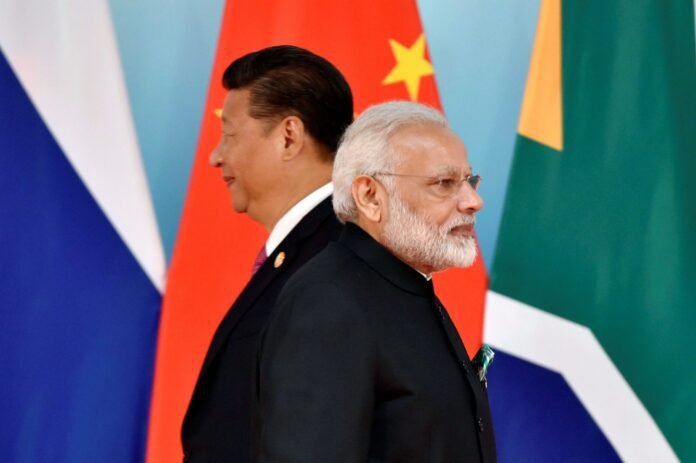
The reality lies somewhere in between. Since the Galwan Valley clashes in 2020, India has sought to manage ties with China, and there has been some momentum. The August 2025 meeting between Xi Jinping and Narendra Modi, along with some easing of restrictions on Chinese investment, suggests that both sides are now inclined toward preventing bilateral tensions from escalating further.

However, stabilization should not be confused with a reset. The fundamental sources of tension, including the boundary dispute, trade imbalance, security competition in South Asia, and broader strategic contest in the Indo-Pacific remain.

The disengagement along parts of the border has reduced the immediate risk of another confrontation but has not resolved the underlying differences and strategic mistrust that has deepened since 2020.

The developments of recent years have created a sense of normality, but not normalization. In this context, the current situation could only be described as fragile stabilization alongside continued strategic competition.

That competition, however, is not confined to the land border. The boundary dispute remains at the core of India-China tensions, but both countries have also strengthened their maritime capabilities and expanded their presence in the Indian Ocean Region (IOR), where their interests increasingly intersect.

Maritime competition between the two is not new, but its implications for regional security and stability are growing. This matters, particularly for India, because the IOR is part of its immediate neighborhood and a region in which it has longstanding interests.

As China’s military presence expands, India needs to consider not only how to respond, but what kind of role it wants to play in the Indian Ocean.

Maritime contestation in the IOR

India’s interests in the IOR span geography, economics, strategy, and civilizational connections.

Its geographical position offers it a direct stake in the security and stability of the region, while its economic dependence on the Indian Ocean makes the security of maritime routes particularly important. A large part of India’s trade and energy supplies pass through the maritime trade routes and sea lanes of communication of the Indian Ocean.

India’s strategic interests in the region also translate into a greater maritime role. India has sought to establish itself as a net security provider in the IOR and expanded its naval engagement with countries across the region. Its role as a first responder has helped consolidate this image.

India has strengthened its role through humanitarian assistance and disaster relief (HADR), naval exercises, capacity-building, and other forms of maritime cooperation. There is also a strong civilizational dimension to India’s relationship with the Indian Ocean. India has had longstanding connections with countries across the region through trade, migration, religion and cultural exchange.

China, though not an Indian Ocean littoral state, has rapidly expanded its economic, diplomatic, and naval presence in the region over the past decade. Its interests include energy security, trade, maritime routes, anti-piracy, and the protection of its growing overseas interests.

The scale and nature of this expansion raise a broader question: Does China seek only to secure its interests in the IOR, or to shape the maritime regional order in its favor? Undoubtedly, China has clear economic and security interests in the region, but its activities suggest ambitions beyond securing trade routes, energy supplies, and overseas interests.

Its growing military and dual-purpose presence give China greater capacity to sustain operations in the Indian Ocean and project power farther from its shores. Gwadar Port, China’s 99-year lease of Hambantota Port, and its first overseas military base in Djibouti illustrate that its economic and strategic presence increasingly intersect.

For India, the concern is that China’s growing capabilities could allow it to translate its interests into sustained maritime power and influence. Over time, this could give China a greater role in determining the regional balance and potentially allow it to dominate parts of its maritime sphere.

Its expanding military and dual-purpose presence in India’s neighborhood consequently add a maritime dimension to an existing security challenge and has become an important part of India’s assessment of the regional environment.

From China’s perspective, India’s position and capabilities are also central to its calculations in the IOR, allowing New Delhi to monitor and potentially constrain China’s regional maritime activities. India’s presence also forms part of the strategic environment that China must account for as it expands its Indian Ocean presence.

The competition extends beyond naval capabilities. Both India and China seek to build relationships with Indian Ocean states through political outreach, development, connectivity, maritime cooperation and security partnerships.

India has given greater attention to the IOR, particularly under the Modi administration. Modi’s consequential visits to Indian Ocean littoral states, including Maldives, Seychelles and Mauritius over the past decade signal a more sustained political outreach to the region.

India has also supported regional mechanisms and dialogues, including the Indian Ocean Rim Association, the Indian Ocean Dialogue, and the Indian Ocean Conference. Initiatives such as SAGAR, Samudra ManthanProject Mausam and the Indo-Pacific Oceans Initiative also point to India’s effort to give greater strategic depth and coherence to this engagement.

This has been accompanied by regular naval deployments and port visits across the region, making naval diplomacy an important part of India’s engagement with Indian Ocean states.

China pursues its own regional outreach, establishing the China-Indian Ocean Region Forum in 2022 and expanding its naval engagement, including port visits, exercises, maritime security cooperation, and HADR, among other forms of cooperation.

A more proactive Indian Ocean strategy

India’s response to China’s growing presence cannot be to match China ship for ship. China has a much larger industrial base, much greater shipbuilding capacity, and substantially greater resources available for sustained naval expansion.

India is unlikely to close this gap in the foreseeable future. The objective should instead be to build a maritime strategy suited to India’s own geographic advantages and regional interests.

India has already begun to move in this direction. Attention to the IOR under the Modi government represents a departure from India’s traditionally more continental strategic focus. But India’s outreach remains spread across a number of initiatives rather than a clearly defined long-term IOR strategy.

First, India needs to move from individual initiatives toward a more coherent and institutionalized IOR framework. Rather than treating maritime security, HADR, connectivity, capacity-building and development partnerships as separate strands of engagement, India should find a way for different tools to serve its broader regional objectives. A clearer coherent framework would also help provide greater continuity across governments and institutions.

Second, India should use this coherent framework to build on the partnerships it has already established. Modi’s outreach to countries in the region has already created the much-needed political momentum, while India already has a range of development, connectivity, HADR, capacity-building and maritime security initiatives across the region. The priority now should be to make sure of the implementation of the initiative and that these engagements more reliable, sustained and predictable.

This means following through on existing commitments, strengthening institutional mechanisms with partner countries and ensuring that India’s engagement responds to their priorities. India does not need to match every Chinese initiative, and it cannot, but it needs to focus on building a reputation as a consistent and dependable long-term partner.

Third, India needs to strengthen the security component of its regional engagement. India’s broader developmental engagement in the Indian Ocean is an advantage, but it needs to be complemented by a stronger security-oriented presence if India is to fulfil its ambition of becoming a net security provider.

This could involve expanding logistical support agreements, coastal surveillance, information sharing, and joint operations. India should also make greater use of partnerships with countries that share an interest in a stable and open Indian Ocean.

France is particularly important in this regard, given its territorial presence and military capabilities in the region. Closer cooperation with France, as well as other partners, can expand India’s maritime reach and capabilities without requiring India to replicate China’s scale of naval deployment.

Finally, India needs to be more confident in articulating what kind of regional role it wants to play. India does not need to choose between being a security provider and a development partner. It needs to strengthen the mechanisms and partnerships it already has rather than continually creating new initiatives.

Its geographical position, naval capabilities, development partnerships and longstanding relationships with Indian Ocean states give it a strong foundation on which to build. China’s growing military presence in the IOR is likely to remain a feature of the regional security environment and will continue to pose a direct challenge to India.

India’s response should not be limited to reacting to Chinese moves. Instead, Beijing’s growing presence should push New Delhi to sharpen and strengthen an Indian Ocean strategy that builds on its existing interests, partnerships, initiatives and capabilities.

India’s greatest advantage is also its most obvious one: It is a resident Indian Ocean power with the geographic position and maritime capabilities to shape the regional order and safeguard stability.

Sana Hashmi, PhD, (sanahashmi2@gmail.com) is a fellow at the Taiwan-Asia Exchange Foundation. She is an affiliated scholar with the Research Institute for Indo-Pacific Affairs. She has also served as a consultant with India’s Ministry of External Affairs’ Southern Division. The views expressed here are personal.


EXPLAINER – From Ebla to Iran: How Sanctions Became the Weapon Between Diplomacy and War 

0
explainer-–-from-ebla-to-iran:-how-sanctions-became-the-weapon-between-diplomacy-and-war 
EXPLAINER – From Ebla to Iran: How Sanctions Became the Weapon Between Diplomacy and War 


Economic pressure has evolved from ancient trade restrictions into a global system of asset freezes, embargoes, financial penalties, and export controls 

Sanctions are a form of nonmilitary pressure imposed by governments, groups of countries, or international bodies on a state, armed group, company, or individual. They restrict trade, financial transactions, travel, or access to technology in an effort to change behavior, deter prohibited conduct, or limit a target’s capabilities. 

Governments now use sanctions as a central instrument of Middle East policy, particularly in relation to Iran, Yemen, Libya, Syria, and armed groups operating across the region. 

The modern sanctions system is largely a product of the 20th century, but rulers employed trade restrictions and other forms of economic coercion thousands of years earlier. 

One of the oldest surviving diplomatic agreements is the treaty between Ebla, a city-state in what is now northwestern Syria, and neighboring Abarsal, dating to about 2400–2350 BCE. The agreement regulated movement, supplies, and obligations between the two polities and prescribed penalties for violations. Although it would be anachronistic to describe the treaty as a modern sanctions regime, it shows that ancient rulers used economic restrictions and punitive measures to manage relations with neighboring states. 

A clearer early example of an embargo dates to around 1230 BCE. Hittite King Tudhaliya IV ordered Shaushgamuwa, the ruler of the Hittite vassal kingdom of Amurru, to sever commercial ties with Assyria. Merchants from Amurru were barred from trading with Assyria, Assyrian merchants were to be denied passage through Amurru, and Assyrians who entered could be seized and handed over to the Hittite king. 

Athens’ Megarian Decree of 432 BCE remains the best-known early Western example. It excluded Megarian merchants from Athenian markets and ports and became one of the disputes preceding the Peloponnesian War. States in the ancient Near East, though, had used coercive restrictions on trade and movement centuries earlier. 

Today, sanctions may be imposed unilaterally by one country, collectively by groups such as the European Union, or multilaterally through the UN Security Council. Those imposing them generally present sanctions as a way to address war, terrorism, nuclear proliferation, human rights abuses, corruption, or violations of international law without immediately resorting to military force. 

Common sanctions include: 

  • Asset freezes prevent a targeted person, company, or state entity from accessing money, property, or investments held within the jurisdiction imposing the measures. The assets normally remain the target’s property but cannot be moved, sold, or used without official authorization. 
  • Trade restrictions prohibit or limit the sale, purchase, or transfer of goods to or from a target. They may apply broadly or focus on specified products, such as weapons, oil equipment, software, advanced technology, or goods with both civilian and military uses. 
  • Export controls restrict the transfer of specified goods, software, or technology for national-security or foreign-policy reasons. Although often used alongside sanctions, export controls are generally administered under separate legal authorities. 
  • Financial sanctions limit access to banking services, loans, investments, insurance, payment systems, or foreign currency. They can make international business difficult even when the underlying trade is not formally prohibited. 
  • Travel bans prevent named individuals from entering or traveling through participating countries. They are often imposed on political leaders, military commanders, financiers, or members of armed groups. 
  • Arms embargoes prohibit the sale, supply, or transfer of weapons, ammunition, and related military equipment. They may also cover training, technical assistance, and financing connected to military activity. 
  • Shipping sanctions target vessels, cargoes, owners, operators, insurers, or port services involved in prohibited trade. They are commonly used to disrupt illicit oil exports, weapons transfers, or sanctions-evasion schemes. 
  • Secondary sanctions threaten penalties against foreign financial institutions, companies, or individuals that conduct specified business with a sanctioned target. They allow a country to exert influence beyond its own borders by forcing foreign businesses to choose between the sanctioned market and access to the sanctioning country’s economy. 

The word “sanctions” can therefore describe very different measures. Some impose sweeping restrictions on a government or a major economic sector; others target a single commander, company, ship, or financier. 

Primary sanctions generally govern the conduct of people and companies within the sanctioning country’s jurisdiction. US primary sanctions, for example, commonly prohibit US citizens, residents, companies, and financial institutions from conducting specified transactions. Secondary sanctions target certain conduct by foreign parties even when no US person is directly involved. 

Iran is subject to the Middle East’s most extensive current sanctions regime. The US maintains broad restrictions related to Iran’s nuclear and missile activities, support for armed groups, human rights abuses, petroleum trade, military procurement, and other conduct. 

On Aug. 24, the US Treasury Department expanded the Iranian economic sectors covered by Executive Order 13902 to include aviation, digital assets, gold, shipping, and technology. The action did not create an entirely new Iran sanctions system. It broadened the categories of activity that can expose people and businesses to designation or secondary-sanctions risk. 

The European Union maintains separate sanctions connected to Iran’s nuclear proliferation activities, human rights violations, military support for Russia’s war against Ukraine, support for armed groups in the Middle East and Red Sea region, and threats to freedom of navigation in the Strait of Hormuz. 

Yemen is not subject to a comprehensive UN embargo. UN measures focus on designated people and entities judged to threaten the country’s peace, security, or stability. They include asset freezes, travel bans, and a targeted arms embargo. 

Libya remains subject to a separate UN framework that includes an arms embargo, asset freezes, and travel bans. The Security Council has also authorized measures against vessels involved in illicit exports of Libyan crude oil and other petroleum products. 

US policy toward Syria shifted substantially in 2025. President Trump revoked the comprehensive Syria sanctions program, but Washington retained targeted authorities covering members and associates of the former Assad government, human rights abusers, Captagon traffickers, terrorist organizations, people linked to chemical-weapons or proliferation activities, and others considered threats to Syria or its neighbors. 

Elsewhere in the region, sanctions are generally narrower. US measures concerning Lebanon and Iraq tend to target particular people, companies, or networks accused of corruption, terrorism financing, destabilizing conduct, or other threats to security rather than either country’s economy as a whole. 

Middle Eastern governments also use economic coercion against neighboring states and rivals. 

The 2017–2021 blockade of Qatar was a prominent recent example. Saudi Arabia, the United Arab Emirates, Bahrain, and Egypt severed diplomatic relations and sharply restricted transport and commercial ties with Qatar, accusing it of supporting terrorism and interfering in other countries’ affairs. Qatar denied the accusations. 

Qatar initially faced disrupted supply routes and travel but developed alternatives through Turkey, Iran, and new shipping arrangements. The blockade ended in January 2021 without Qatar publicly accepting the full list of demands originally presented by the four countries. 

Regional economic pressure is often less formal than US, EU, or UN sanctions. It may involve border closures, airspace restrictions, boycotts, banking constraints, trade restrictions, or pressure on companies not to deal with a particular state or organization. A coercive economic measure does not have to carry the formal label “sanction” to produce similar effects. 

Sanctions can raise the cost of prohibited conduct, restrict access to money or technology, isolate key individuals, and create incentives for negotiation. They tend to exert greater pressure when major economies act together and the target depends on them for finance, trade, military equipment, or essential imports. 

Measures are less reliable when the objective is regime change, the reversal of a deeply rooted security policy, or the collapse of a determined government. Targets may find alternative buyers, employ intermediaries, expand smuggling, draw on reserves, or shift the economic burden onto their populations. Governments may also blame foreign sanctions for economic failures caused partly by their own policies. 

Sanctions can impose humanitarian costs even when food, medicine, and humanitarian assistance are formally exempt. Banks and suppliers may refuse otherwise lawful transactions because they fear inadvertently violating complex rules or suffering legal and reputational consequences. This practice, often called overcompliance or derisking, can impede humanitarian work and access to essential goods, particularly in countries already affected by war, institutional collapse, or economic mismanagement. 

Whether sanctions work depends less on their severity alone than on the objective, international cooperation, enforcement, available exemptions, and the target’s ability to replace lost markets and financial relationships. 


Meta makes AI glasses slightly less creepy with limit on nonconsensual recording

0
meta-makes-ai-glasses-slightly-less-creepy-with-limit-on-nonconsensual-recording
Meta makes AI glasses slightly less creepy with limit on nonconsensual recording

Meta is rolling out an obvious fix to make its AI glasses less creepy amid backlash over the glasses’ non-consensual recordings that have flooded the Internet.

On Friday, The Verge reported that Meta closed a loophole that made it easy for smart glasses users to cover up an LED light that is supposed to alert bystanders that the device is actively recording. Meta had previously deactivated recording if a user attempted to start capturing video after placing a sticker over the light, but people quickly learned that they could get around that by reversing the order of the steps and covering up the light after they started recording.

In a post on Threads, Meta’s executive vice president of wearables, Alex Himel, explained that an update would be rolled out soon that ensures that “the camera will now stop working if the light is covered during a recording.” That way “the capture LED can reliably alert bystanders when photos or videos are being captured for someone’s gallery,” Himel said.

According to Himel, “only a tiny minority of people try to get around these protections, and the fact they have to go to these lengths shows our efforts are working. We’ll keep improving and evolving our approach.”

However, bad actors may still be able to modify the glasses or tamper with the light without affecting recordings. And it’s unclear if popular bypasses, like using semi-transparent stickers that make the light less noticeable, would block recording under Meta’s new safeguard.

Data regulators in the European Union are currently probing privacy concerns with Meta’s glasses and have suggested that Meta may not have properly field-tested the LED light to ensure that the public would understand its safety functionality. Germany is considering banning the glasses after a nonprofit filed a criminal complaint alleging that they breach Germany’s strict privacy laws, Politico reported. And Germany is not alone, as many countries in the EU mull a crackdown on the technology, which they see as invasive and carrying a risk of expanding mass surveillance. Another Politico report confirmed that the European Data Protection Board will release a report later this summer to decide what actions should be taken to ensure no one in the EU is recorded without their consent.

Meanwhile, there’s a proposed nationwide class action lawsuit advancing in the US that accuses Meta of continually lying about privacy risks in the marketing of its AI glasses. Meta has yet to file a response in that litigation, but in its statements and marketing campaigns, the tech giant continues to insist the glasses are designed with privacy in mind.

Privacy risks remain, users say

In addition to the tweak to block some smart glasses users from bypassing the only safeguard that helps prevent nonconsensual recording, Meta also launched a new marketing campaign to spread awareness about the LED light feature, The Verge reported.

In Los Angeles, for example, there’s a billboard that shows an image of a smiling girl wearing Meta glasses, with her fingers placed to draw attention to the recording light that shines as brightly as her grin. The caption reads, “The camera lets you capture the moment. The light lets everyone around you know when you do.”

“Designed for everyone,” the billboard says. “Not just the people wearing them.”

Whether that messaging is going to drive it home to people breezing past the billboard that Meta glasses may be recording you if you see a light on, the EU suspects that we don’t really know.

However, people who bought into the privacy promises and are now suing Meta for false advertising have warned that Meta has long been pushing this messaging, claiming in prior ads that Meta AI Glasses are “Built for your privacy and others’ too.” But “in reality, users of Meta AI Glasses cannot control what happens to their data, or the data they capture of the people around them,” the users alleged.

Although the class action complaint is not explicitly focused on nonconsensual recording, the complaint alleged that its core claims reveal another layer of the issue that many members of the public likely don’t understand from the marketing campaigns.

The lawsuit challenges Meta’s advertising claims that glasses users control data, saying this is “false” and alleging that Meta does not inform users that human data annotators in Kenya review all footage captured by the glasses, allegedly in order to train Meta AI. That reportedly includes watching “deeply personal” videos, including those depicting sexual activity or bathroom visits, as well as sensitive content, like credit card information or private text messages.

As one example of how this ropes in unwitting people who aren’t aware of the privacy risks of nearby glasses, the complaint cited one video where a user set down his Meta glasses on his nightstand, which then captured video of his wife undressing.

“The video was sent to people halfway around the world to view and annotate in order to train AI—all without the woman’s knowledge that the video of her had been captured in the first place,” the lawsuit said.

Users suing are hoping to force Meta to pay out damages, including potentially punitive damages, to every person in the US who bought smart glasses under the allegedly false premise that Meta cared about user privacy.

“Despite their actual knowledge of the human review pipeline and the inherent safety and privacy risks associated with such sharing of data, Defendants have continued to market the Glasses using the same ‘designed for privacy’ representations,” the lawsuit said.

They’ve also asked the court to force Meta to change its messaging. That would include blocking Meta from continuing to advertise glasses as privacy-protecting, which users alleged would ensure that Meta’s future customers aren’t exposed to “unreasonable risks of dignitary harm, emotional distress, stalking, extortion, identity theft, and reputational injury.” In a loss, Meta could also be required to improve its public awareness campaigns and fully explain the privacy risks of its smart glasses.

If Meta’s alleged deception goes unchecked, users suing have claimed that the company will continue treating smart-glasses wearers as a lucrative new source of data, without meaningfully protecting them or the public from the most significant privacy risks.

“The consumer data is extremely valuable to Meta,” the lawsuit said. “New data input is central to AI production, but as AI labs exhaust publicly available data, proprietary sources of new data can cost hundreds of millions of dollars. But instead, Meta can farm personal data from unknowing consumers who have already purchased the Products—turning consumers themselves into commodities without them ever knowing it.”

Poland rules out hosting nuclear weapons

0
poland-rules-out-hosting-nuclear-weapons
Poland rules out hosting nuclear weapons


Poland “does not want” allied nuclear weapons stationed on its territory, the country’s Deputy Defense Minister Paweł Zalewski said, despite growing worries of a Russian incursion into NATO territory.

“I would like to say very clearly and openly: Poland does not want to have nuclear warheads on its territory,” he told reporters at NATO headquarters in Brussels. “We want to participate in NATO nuclear deterrence, [which] does not mean to have a nuclear warhead on our territory.”

Zalewski’s statement is Warsaw’s most categorical statement on the topic. While it has previously expressed skepticism toward hosting nuclear weapons, Poland has also said it was in early-stage talks with the U.S. around a potential expansion of Washington’s nuclear deterrent in Europe, and had in parallel joined a French initiative aimed at extending Paris’ own deterrent in Europe.

Separately, Polish President Karol Nawrocki has left the door open to Warsaw eventually building its own nuclear weapons program.

Western officials have warned Russia could attack NATO territory by the end of the decade, while recent U.S. intelligence suggests an attack could come even sooner.

Via Politico

Nepal glacial disaster and the new geography of climate risk

0
nepal-glacial-disaster-and-the-new-geography-of-climate-risk
Nepal glacial disaster and the new geography of climate risk

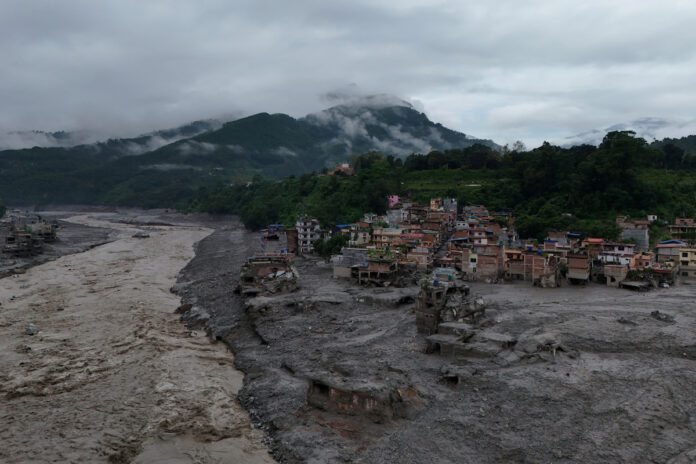
On August 26, the Himalayas seemed to move. An enormous mass of ice and rock broke loose near the Nepal-Tibet border, plunging into the Lhende Khola River and unleashing a wall of water, mud, boulders and debris down the mountain valleys.

What followed was not merely a flood but a cascading geological event: glacier collapse, debris flow, river surge and infrastructure failure compressed into minutes. The torrent swept away homes, bridges, roads and hydropower installations along Nepal’s Bhote Koshi and Trishuli river systems.

By Thursday, 353 were declared dead across Nepal and Tibet, with more than 1,300 missing. Reportedly, these include 517 citizens of more than 33 countries, including 178 from India, 65 Americans, 55 Malaysians, 53 Ukrainians, 25 Canadians and others from Germany, France, UK, Italy and so on.

It may be tempting to see this as another distant natural disaster. But what has happened is a warning about a rapidly changing geography of climate risk. Mountains around the world are becoming less predictable, infrastructure more vulnerable and environmental hazards increasingly transnational.

Glaciers becoming geopolitical actors

The most unsettling was its speed. The US Geological Survey and satellite imagery reveal an ice-rock mass broke away at high altitude, “collapsed about 1.2km vertically” before entering the river system. The resulting surge pushed river levels dramatically upward, in places reportedly by as much as nine meters in 30 minutes.

A glacier did what diplomats and armies do; it crossed a political boundary with dangerous consequences. The collapse occurred on the Tibetan side of the Himalayas; the devastation raced into Nepal; downstream rivers carried the consequences farther downstream, with India placing its neighboring under high alert.

This is the beginning of the new geopolitics of the cryospheres. Climate change is turning ice into an instrument — not of political intention, but of geopolitical consequence. Of course, the question is no longer whether Nepal should develop its hydropower, roads and tourism. The question is whether 20th-century infrastructure can survive 21st-century mountain physics.

Much of Himalayan development remains conceived around a relatively stable understanding of mountain hazards. Roads are carved into unstable slopes—Hydropower projects constructed in narrow valleys. Towns expanded along rivers. Tourism and pilgrimage routes multiplied. Bridges and transmission lines followed the logic of accessibility rather than the increasingly complex logic of cascading risks.

But the climate has changed faster than these engineering assumptions. The 2021 Melamchi flood demonstrated how a single catchment can threaten both urban settlements as well as Kathmandu’s critical water-supply infrastructure. An Asian Development Bank assessment subsequently argued for catchment-wide hazard mapping, early warning and a fundamentally new design basis for infrastructure.

These underlying assumptions must also move from national to regional level. A road should not merely be designed against yesterday’s landslide. A hydropower plant can not be assessed against a historical flood record that assumes the climate is stationary.

Urban expansion cannot treat riverbanks and floodplains as empty real estate. The central engineering question must become: What happens when several hazards occur sequentially — or simultaneously?

Himalayas feed two billion people

The Hindu Kush Himalaya contains more than 63,000 glaciers that provide water and ecosystem services to nearly two billion people, roughly one-quarter of humanity. Agriculture, drinking water, hydropower and major Asian river systems depend upon the mountains’ snow and ice.

The Himalayan cryosphere is changing at extraordinary speed. ICIMOD reported in 2023 that glaciers in the Hindu Kush Himalaya disappeared 65% faster during 2011-2020 than during the preceding decade. Its 2026 assessment found that glaciers have lost up to 27 meters of ice thickness since 1975, with ice loss accelerating markedly since 2000.

For centuries, societies learned to live with monsoon floods, landslides and avalanches as recurring features of Himalayan life. But the Anthropocene is changing those parameters. Warmer temperatures accelerate melting; thawing permafrost weakens mountain slopes; expanding glacial lakes create unstable reservoirs; intense precipitation can mobilize enormous quantities of sediment and rock.

With rampant urbanization downstream, the mountains are becoming more important as water towers but also more dangerous as hazard systems. The result is not simply more floods. It is more complex floods.

Cascade disasters to come

Scientific research now describes Himalayan disasters as compound or cascading events. A 2025 analysis of 1,015 floods across High Mountain Asia found a significant increase in flood frequency since 2000 and, crucially, greater unpredictability in when floods occur. Climate change is interacting with snowmelt, rainfall, glaciers, landslides and topography to create hazards that no longer fit neatly into one category.

The June 2021 Melamchi disaster had combined extreme rainfall with landslides, glacial-lake outburst and temporary river damming. In October 2023, the South Lhonak glacial lake outburst in India’s Sikkim destroyed 13 bridges and a major hydropower plant and affected more than 60,000 people. The 2021 Chamoli disaster in Uttarakhand killed or left missing more than 200 people after a massive rock-and-ice collapse generated a destructive flood.

These are not identical events, and scientists rightly caution against attributing every individual glacier collapse directly to climate change. But the larger physical system is unmistakably changing.

The danger lies precisely in the cascade: a warming climate destabilizes ice and slopes; human settlement increases exposure; infrastructure channels the consequences; and one failure triggers another.

No longer a faraway problem

This Himalayan catastrophe must not be ignored as a faraway challenge. The world has become increasingly intertwined.

A large number of foreign nationals, for example, are among those reported missing in Nepal; subsequent counts may change as authorities reconcile lists. Many victims were trekkers, tourists or pilgrims traveling toward Mount Kailash during the peak pilgrimage season.

The tragedy exposes one more novel dimension of climate insecurity: mobility. Global citizens increasingly travel into climate-vulnerable landscapes — from Himalayan valleys to Arctic communities, wildfire zones and hurricane corridors.

Therefore, governments must collectively think beyond evacuation and disaster relief toward innovative, anticipatory diplomacy:: satellite monitoring, consular preparedness, cross-border search and rescue, emergency communications and reliable early-warning systems.

The answer does not lie in abandoning the mountains. It lies in stopping treating them as static scenery for livelihoods, fun and adventure.

The Himalayas need a transboundary climate-risk architecture: shared glacier and river monitoring; interoperable early-warning systems; real-time data exchange; climate-adjusted engineering standards; hazard-sensitive urban planning; and much stronger community-level preparedness.

The way forward

For over two centuries, modernity has imagined mountains as obstacles to be conquered, rivers as resources to be harnessed and glaciers as permanent features of the landscape. The Anthropocene is fast eroding such illusions.

The mountains are moving. The ice is retreating, and rivers are becoming less predictable. And the infrastructure built to master the Himalayas may increasingly find itself at the mercy of cascades.

These flash floods must compel Nepal, India and China to build functioning mechanisms for communicating about hazards that do not respect their borders. A glacier does not wait for a diplomatic note.

Nations with expertise in these sciences too have a role — not merely through emergency assistance but through satellite technology, climate science, disaster-risk finance, insurance expertise and resilient infrastructure investment. The great lesson of Nepal’s flood is therefore way larger than Nepal.

The question before Asia — and increasingly before the world — is no longer how to control the mountains. It is how to live intelligently with mountains whose climate, ice and hazards are shifting beneath our feet.

Swaran Singh is professor of international relations at Jawaharlal Nehru University, New Delhi.

US Democratic senators urge Israel to halt settlement plan in occupied West Bank

0
us-democratic-senators-urge-israel-to-halt-settlement-plan-in-occupied-west-bank
US Democratic senators urge Israel to halt settlement plan in occupied West Bank

A group of Democratic senators is urging Israeli Prime Minister Benjamin Netanyahu to cancel a planned settlement project in the occupied West Bank that they say would effectively divide the Palestinian territory, Anadolu reports.

In a statement Friday led by Arizona Democratic Sen. Ruben Gallego, 29 lawmakers criticized Israel’s decision to open bidding for construction in the E1 area east of Jerusalem, according to The Hill.

“The United States must remain committed to a two-state solution that delivers lasting peace and security for both the Jewish, democratic State of Israel and for a future Palestinian state,” the Democrats wrote. “Construction in E1 would take us further away from that goal.”

The project includes seven residential compounds totaling 1,234 housing units. Israel’s Construction and Housing Ministry opened bidding on Aug. 18, with a deadline of Oct. 19.

The senators warned that the development could further isolate occupied East Jerusalem from Palestinian population centers such as Bethlehem and Ramallah. The E1 project has been stalled for decades amid regional and international opposition.

“For decades, Republican and Democratic administrations have recognized that development in E1 would seriously jeopardize the prospects for a Palestinian state,” the lawmakers wrote. “That concern remains just as urgent today.”

The statement also referenced a separate letter signed by 44 Democratic senators and independent Sen. Angus King calling for action over reported violence by Israeli occupiers against Palestinians in the occupied West Bank.

“We urge the Israeli government to immediately rescind these tenders, halt settlement expansion in the West Bank, and take urgent action to rein in settler violence,” the Democrats wrote.

They also warned that failure to change course risked weakening Israel’s international standing.

Our 10 favorite scenes from T2: Judgment Day

0
our-10-favorite-scenes-from-t2:-judgment-day
Our 10 favorite scenes from T2: Judgment Day

I’m on record declaring James Cameron’s Terminator 2: Judgment Day (1991) to be The Best Damn Sequel of All Time, and I stand by that assessment. August 29, the fictional date (in 1997) of the franchise’s original nuclear holocaust, is fast approaching, and Judgment Day is celebrating its 35th anniversary this year. So StudioCanal has decided to mark both occasions with a special theatrical rerelease of the film this weekend. What better time to revisit some of our favorite scenes from this seminal sci-fi action blockbuster?

(Many, many spoilers below.)

Nobody really expected 1984’s The Terminator to be a hit, but it racked up an impressive $78 million at the box office against its modest $6.4 million budget. Star Arnold Schwarzenegger was keen to do a sequel, but Cameron was busy with other projects, including Aliens in 1986 (another killer sequel). There were also legal complications over the film rights until Schwarzenegger convinced Carolco Pictures, the studio behind Total Recall (1990), to buy everyone out and hire Cameron to make Judgment Day.

Cameron wrote the script in about six weeks, diverging significantly from the stripped-down feel of its predecessor (which some have described as a “science fiction slasher”). Instead, Cameron chose to make his original Terminator the reprogrammed hero of the sequel, serving as a mechanical father figure to a young John Connor (Edward Furlong). Cameron likened the transformation to the Tin Man getting a heart in The Wizard of Oz. Linda Hamilton agreed to reprise her role as Sarah Connor, and this “found family” triad became the emotional core of the film. Hamilton worked out like a fiend for the role, and her resulting lean-yet-ripped physique made her an action heroine on par with Sigourney Weaver’s Ripley.

Released over the July 4th holiday weekend in 1991, Terminator 2: Judgment Day was a critical and financial smash hit, despite predictions that the film would bomb and lose its estimated $70 million production budget. It ended up grossing $520 million, which sadly was not enough to protect Carolco from other film losses. (The studio went bankrupt in 1995.) It’s the perfect sci-fi action film, expertly paced with well-drawn character dynamics, amazing special effects, emotional beats, and humorous touches to keep things from getting too grim. No subsequent film in the franchise even comes close.

A “found family” triad

Sarah Connor’s (Linda Hamilton) lean-yet-ripped physique made her an action heroine on par with Sigourney Weaver’s Ripley in the Alien franchise.

Robert Patrick’s advanced T-1000 makes for a seemingly unbeatable antagonist for the ages.

The film also has one of the best villains in cinema with the shapeshifting T-1000 (Robert Patrick). Cameron actually had the idea for a Terminator made of liquid metal when he was writing the first film, but the technology available at the time wasn’t up to the task. Then Cameron made The Abyss in 1989, which featured a flowing, water-like alien at the very end created by Industrial Light & Magic (ILM). ILM made a major investment, expanding its staff and spending over $3 million on new equipment and specially designed software just for Judgment Day.

The gamble paid off. The T-1000 and other visual effects earned critical raves and an Oscar (the film snagged four in all) and helped usher in the golden age of CGI. Audiences loved the character, which had as much to do with Cameron’s expert pacing as the effects. The T-1000’s abilities are only gradually revealed. Initially, the slender Patrick seems no match for Schwarzenegger’s heavily muscled T-800, even if he can take on anyone’s form. Then we see its liquid metal form is impervious to bullet wounds, healing them instantly—even when a gunshot blast splits its head in two. Cameron keeps upping the ante, until one becomes convinced the T-1000 is well-nigh invincible.

T2 was made for theaters, and our lovingly prepared 3D version, coming back to the big screen, is the absolute best way to see the film,” Cameron told Deadline Hollywood via statement. “I believe it’s safe to do spoilers after 35 years, so SPOILER ALERT: the good guys win against the AI super intelligence. And maybe that’s a message of hope we could use this summer.”

There is a staggered global rollout for the rerelease. It’s now available in Germany, Latin America, the Czech Republic, the US, Italy, and Poland. The film will be released in France on September 2; Australia, New Zealand, the Netherlands, Sweden, and Hungary on September 3; and the United Kingdom on September 4.

And now, we give you 10 of our favorite scenes:

The T-800 in the biker bar

Credit: Paramount/Studio Canal

Judgment Day‘s eye-popping special effects certainly provide plenty of highlights, but Cameron didn’t skimp on the story either. This is a prime example of how the director used touches of levity to make even the film’s more workmanlike segments entertaining. The T-800 arrives from the future naked as a jaybird and must acquire clothing, transportation, and weaponry. Naturally, he wanders into a biker bar—to the delight of the female patrons—finds a dude his size, and demands the biker’s clothes and motorcycle.

The biker thinks it’s a joke at first and refuses, extinguishing his cigar on the T-800’s bared pectoral muscle—with no effect. The outcome of the ensuing bar fight is a given. The T-800 walks away with cool leather clothing, a motorcycle, a shotgun, and a pair of stylish black sunglasses as George Thorogood and the Destroyer’s “Bad to the Bone” plays. The song’s been overused in films since then, but it was the perfect grace note for this scene.

Chase through the aqueduct

Credit: Paramount/Studio Canal

This is the first major chase sequence, with both the T-800 and the T-1000 trying to get to a fleeing John Connor first. John’s little motorbike proves no match for the large truck commandeered by the T-1000, which blasts through a cinder block wall at one point. The T-1000 never falters in its single-minded pursuit, but the arrival of the T-800 saves the boy. The truck eventually explodes, seemingly incinerating the T-1000. It’s only after the T-800 and John ride away that we see the T-1000 emerge from the flames and resume his police officer appearance.

The sequence was filmed over nine hours in LA’s San Fernando Valley. The T-800’s big stunt involved jumping a motorcycle 60 feet (at an altitude of roughly 15 feet) to the flood control channel below. Stunt coordinator Joel Kramer rigged up a support mechanism for the 750-pound motorcycle, since otherwise the jump was deemed too dangerous. The rigging and wires were erased during post-production.

The T-1000 emerges from floor tiles

Credit: Paramount/Studio Canal

This is one of those “upping the ante” moments. We’ve seen the T-1000’s amazing shapeshifting abilities, taking on the form of a policeman and John’s foster mother in quick succession. We’ve seen his arms transform effortlessly into weapons. We’ve seen him heal bullet holes instantly. When he arrives at the psychiatric hospital to take out Sarah Connor, he must briefly hide as a team of detectives exits. A lone security guard goes into the hall to get coffee from the vending machine. The T-1000 is nowhere to be seen—until it slowly oozes up out of the checkerboard hospital floor tiles right behind the unsuspecting guard.

The shot required a special bit of software capable of reshaping specific regions of a 2D image using 3D geometry, mapping a computer-generated replica of the floor to the actual footage. This was combined with animation of the T-1000 taking shape. As for the T-1000 taking on the guard’s shape—that was achieved the old-fashioned way, since the actor Don Stanton had a twin brother (Dan).

“Come with me if you want to live”

Credit: aramount/Studio Canal

This is where flipping the script to make the T-800 John’s protector instead of the hunter really pays emotional dividends. Sarah Connor has reshaped her entire persona (not just her physique) in the wake of what happened to her in the first film. Everything centers on protecting John from the machines. Her obsession gets her locked up in a psychiatric hospital, and her odds of release are not good.

She’s in the middle of breaking out on her own—quite effectively—and has made it to the elevator, which opens to reveal the T-800, her former adversary, back (in her mind) to kill her and John. Horrified, Sarah flees back the way she came and is briefly subdued by hospital staff until the T-800 tosses them aside like rag dolls. She sees John is safe, and the T-800 reaches down and repeats the line her protector uttered in the first film: “Come with me if you want to live.”

Bonus: Sarah’s psychiatrist and everyone else who thought she was crazy rattling on about killer machines from the future must confront the fact that she was right all along, especially when the T-1000 shows up.

Sarah’s nuclear holocaust dream

This powerful dream sequence shows Sarah and the rest of Los Angeles utterly annihilated by a nuclear blast. It starts with children and their mothers—including a younger, more innocent Sarah Connor—on a playground, oblivious to the danger, as a distraught Sarah soundlessly tries to warn them by banging on the chain-link fence. Then the blast hits, burning Sarah alive (actually a full-sized puppet) and reducing those children to ash.

It took a ton of special effects work to pull off the sequence, combining practical effects, miniatures, and CGI enhancements. The team built a mini-Los Angeles based on the live-action footage, including skyscrapers and an overpass. Some of the model buildings stood 5 feet tall, and many were designed to break away to mimic the effects of a blast. The nuclear fireball was actually a backlit, 8-foot plexiglass column. The most powerful visual effect is the ashy remains of the playground victims, still intact—until a shock wave scatters the ashes to the wind.

That arm scene

Credit: aramount/Studio Canal

Sarah’s dream is sufficiently traumatic to compel her to leave John with the T-800 and seek out Miles Dyson (Joe Morton), Cyberdyne’s director of special projects and the scientist most responsible for developing what would become Skynet. Her plan is to kill Miles and stop Judgment Day from ever happening—hence the film’s catchphrase, “No fate but what we make.” But she can’t go through with it, even as John and the T-800 arrive to stop her.

To prove to Miles that Sarah is telling the truth—that his work will lead to humanity’s near-annihilation—the T-800 removes the skin from his hand and forearm, revealing the cyber skeleton underneath. As he flexes the mechanical fingers in front of a horrified Miles and his wife, the T-800 intones, “Now listen to me very carefully….” I’m sure Miles was hanging on his every word.

The Cyberdyne showdown

Credit: aramount/Studio Canal

John, Sarah, and the T-800 enlist Miles’ help to break into Cyberdyne headquarters and steal the salvaged arm and computer chip left behind by the T-800 in the first film. They are working against the clock, since pretty much every law enforcement unit in the city arrives at the building to stop them. John’s hacking skills prove useful, as does the T-800’s extensive firepower—although per John’s instructions, there are zero human fatalities.

Ultimately, Miles sacrifices himself so that the others can escape, holding onto the detonator that sets off a massive explosion until his final breath. The filming site was an empty office building in Fremont, California, and the explosion was real; pyrotechnician Tom Fisher used hundreds of gallons of gas to create that giant fireball. Respect.

T-1000 vs. liquid nitrogen

The carefully orchestrated high-speed chase down a highway that immediately precedes this scene deserves its own spot on the list, just for the ingenuity of the stunt design. That chase ends with a semitruck pulling a tank of liquid nitrogen overturning and skidding into an active steel mill, spilling liquid nitrogen all over the street. The T-1000 resolutely wades toward its targets anyway, only to start to freeze from the feet up, breaking its legs off at the knees and losing a hand before it solidifies, a look of shocked surprise on its face. The T-800 blasts it to smithereens with a well-timed, “Hasta la vista, baby.”

That should be the end of the T-1000, right? RIGHT? But within minutes the scattered shards start to melt in the heat of the steel mill and begin to coalesce yet again. “We don’t have much time,” the T-800 observes—and indeed, the T-1000 soon reassembles. The frozen shards were actually made of serabin, a material used as ballast for model railroad cars that resembles chrome when it’s polished. Frozen mercury didn’t work because it turned white. But globs of liquid mercury worked just fine to show the melting shards coming together, even though its toxicity meant the special effects crew had to wear protective gear over the two-day shoot.

The T-1000 has a meltdown

Spoiler alert: The T-1000 is not quite unbeatable. Sure, he recovers nicely from a hole in the head, courtesy of Sarah, and being cleaved in two by the T-800 wielding a piece of rebar—the former achieved with a mechanical head and shoulders replica of Patrick (“Donut Head”), the latter with a maquette sculpture (“Cleave Man”), both augmented with CGI. Just when things are looking dire for John and Sarah, the T-800 reboots on auxiliary power and shoots the T-1000 with a grenade launcher. The torso explodes and creates “Pretzel Man” (achieved with three full-sized puppets).

A teetering T-1000 then topples into a vat of molten steel and slowly melts into oblivion, running through each of the human forms it took on over the course of the film (foster mom, security guard, etc.) before vanishing in a howl. This was the most difficult sequence for the special effects team and took weeks to complete, matching carefully choreographed movements of all the actors in the live-action pit with splashing liquid filmed in a separate miniature version of the vat. The illusion of molten steel was basically water and mineral oil mixed with a little powdered sugar; creative lighting and heaters placed below the cameras—plus a few CGI sparks in the background—did the rest.

The result didn’t quite satisfy Cameron, but the rendering shots took so long that the director ran out of time, even with the production crew working 24-hour shifts. The final print wasn’t delivered to theaters until the night before the official release. But audiences were blown away. It was the perfect way to bring about the T-1000’s demise.

The T-800’s final sacrifice

Credit: Paramount/Studio Canal

After that spectacular special effects achievement, Cameron closed things out with an emotional, well-earned farewell. John drops the first T-800 arm and chip into the vat of molten steel to destroy them. But there is one chip left: the one in the new T-800’s head. Since it cannot self-terminate, Sarah is tasked with lowering the machine into the vat, against John’s anguished objections. It’s the final payoff to the relationship Cameron has painstakingly built between John and the machine—and the T-800 goes out in style, giving a gloved thumbs-up as its hand slowly sinks into the liquid steel.

The geopolitical imperative for a self-reliant South Korea

0
the-geopolitical-imperative-for-a-self-reliant-south-korea
The geopolitical imperative for a self-reliant South Korea

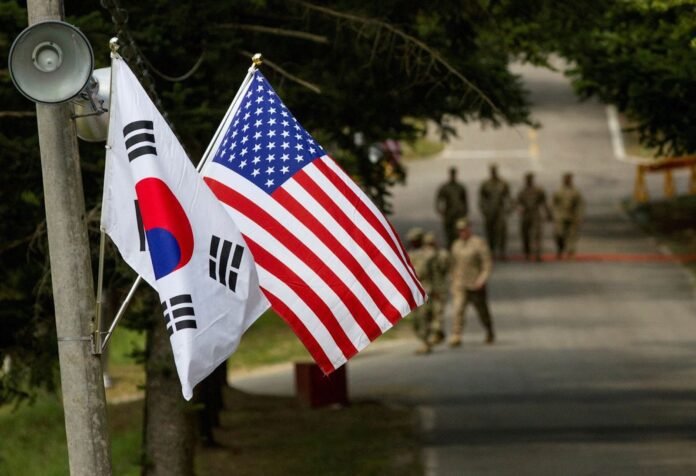
US President Donald Trump’s abrupt directive on August 16, 2026, to drastically scale back the joint “Ulchi Freedom Shield” (UFS) military exercises sent shockwaves across the Asia-Pacific geostrategic landscape.

The unilateral announcement, posted to social media mere hours before the large-scale maneuvers involving 18,000 South Korean troops were set to launch, was justified by Washington on grounds of cost efficiency, claims of a close personal rapport with North Korean leader Kim Jong Un and executive frustration over South Korean President Lee Jae-myung’s refusal to commit Seoul’s military to denuclearization operations against Iran.

This transactional and unilateral maneuver directly fractures the foundation of the US-led extended deterrence doctrine, which has served as the bedrock of stability on the Korean Peninsula for over seven decades.

When a nation’s security guarantees can be summarily revoked to accommodate Washington’s domestic political calculus, absolute reliance on the American defense umbrella ceases to be a protective asset. Instead, it becomes an existential vulnerability threatening national survival.

This new geostrategic reality compels South Korea to face an unavoidable historical crossroads. Discourse surrounding strategic autonomy has shifted radically: transitioning from a progressive academic debate into an urgent geopolitical imperative to safeguard national sovereignty against the erratic behavior of its principal ally.

The American dilemma

Washington’s unilateral decree demands an accelerated transfer of Wartime Operational Control (OPCON) to the South Korean military. Although evaluations for Full Operational Capability (FOC) are slated for completion in 2026, severe systemic gaps in intelligence, surveillance, and reconnaissance (ISR) integration continue to cast a long shadow over Seoul.

Limitations in independent satellite monitoring to track North Korea’s highly mobile missile launchers and subterranean installations leave South Korea heavily dependent on Washington’s early-warning satellite network.

Without integrating AI-driven automated target recognition and rapidly deploying low-Earth-orbit micro-satellite constellations, assuming operational command risks creating critical tactical blind spots.

A parallel fragility haunts the paradox of South Korea’s defense industry (K-Defense). Despite remarkable global export surges, ranking 10th worldwide with a US$47.6 billion defense budget in 2024, South Korea’s military technology supply chain remains tightly tethered to US licensing.

A staggering 86% of South Korea’s total arms imports between 2020 and 2024 originated from the United States, while flagship platforms such as the KF-21 fighter jet and FA-50 light attack aircraft rely heavily on Washington-licensed engines and components.

International Traffic in Arms Regulations (ITAR) grant Washington effective veto power over South Korean arms exports; true industrial self-reliance thus requires aggressive domestic component substitution and supply chain diversification toward NATO partners.

At the strategic level, the conventional Three-Axis System and the ultra-heavy Hyunmoo-5 ballistic missile reveal structural limitations when confronting a nuclear-armed adversary. The potential for preemptive escalation from Pyongyang makes conventional deterrence inadequate to guarantee absolute security.

While public opinion polls indicate 76% of South Koreans support developing an independent nuclear capability, backing among strategic experts hovers at just 30–40%, reflecting fears of international sanctions and economic isolation.

Consequently, the most pragmatic path for Seoul is pursuing “nuclear hedging”, drastically shortening its breakout time by developing civilian uranium enrichment and spent fuel reprocessing capabilities.

Managing regional geopolitical friction

The ultimate success of strategic autonomy hinges on South Korea’s capacity to navigate complex domestic constraints. A severe demographic crisis, marked by the world’s lowest fertility rate, endangers the sustainability of a traditional conscription-based military structure.

Transitioning to a professionalized, tech-centric force powered by autonomous systems and artificial intelligence will require raising the defense budget to 3.0%–3.5% of GDP, just as fiscal demands for an aging population mount. Furthermore, deep political polarization between conservative and progressive blocs threatens foreign policy continuity with every electoral transition.

Regionally, a reduced US military footprint forces South Korea to manage relations with China without an absolute counterweight from Washington. To hedge against Beijing’s assertive posture in the Yellow Sea and the Korean Air Defense Identification Zone (KADIZ), Seoul must execute a doctrine of structural hedging.

This entails fortifying asymmetric maritime defenses, such as quiet, SLBM-equipped submarines, while maintaining diplomatic neutrality to signal that South Korea’s strategic autonomy aims at sovereign self-reliance, not at serving as an instrument for Chinese containment.

Concurrently, a waning US role as a trilateral facilitator will reconfigure South Korea’s relationship with Japan. Without Washington’s mediating presence, historical grievances and territorial disputes could trigger local security dilemmas and an arms race.

Conversely, a shared awareness of existential threats could catalyze an autonomous East Asian security axis through direct, institutionalized intelligence sharing unmediated by the Pentagon.

Restructured middle-power role

President Trump’s transactional playbook, coupling defense burden-sharing demands with commercial tariff threats, has eroded the institutional trust linking the Pentagon and South Korea’s Ministry of National Defense.

The cancellation of joint exercises via social media underscores that Washington’s security commitment has transformed into a volatile variable. To counter potential US economic retaliation, South Korea can leverage its near-monopolistic position in global memory semiconductor supply chains and deepen its integration into multilateral trade frameworks such as the CPTPP and RCEP.

In regional diplomacy, strategic autonomy creates space for South Korea to redefine itself as an assertive, independent middle power. Under the Korea-ASEAN Solidarity Initiative (KASI), Seoul can lead inclusive security consolidation across Southeast Asia.

Unencumbered defense industrial partnerships and enhanced maritime security cooperation offer South Korea a path out of the trap of US-China bipolar rivalry.

Ultimately, the scaling back of the UFS exercises presents South Korea with a rare diplomatic opening. By stepping into the role of a regional “pacemaker,” Seoul can craft an independent formula for de-escalation with Pyongyang.

Calibrating military exercises can be deployed as direct leverage to curb North Korean missile activity, free from the shifting political agendas of Washington’s executive branch. The shift could thus mark a vital evolution from a passive alliance follower to a primary architect of peace on the Korean Peninsula.

Ronny P Sasmita, PhD, is senior international affairs analyst at Indonesia Strategic and Economic Action Institution, a Jakarta-based think tank.

Apple One and Apple TV subscription prices increase by up to 20 percent

0
apple-one-and-apple-tv-subscription-prices-increase-by-up-to-20-percent
Apple One and Apple TV subscription prices increase by up to 20 percent

Apple increased the price for a monthly subscription to Apple TV by $2, to $15, today.

Annual prices increased by 20 percent from $99 to $119. Current subscribers will receive one month’s notice before paying the new prices, Apple said, per Variety.

Apple’s most recent price hike was in August 2025, when monthly prices went from $10 to $13. Monthly prices also increased in October 2023 and October 2022. Apple TV (then called Apple TV+) started in 2019 for (a seemingly financially unsustainable) $5/month.

Apple TV doesn’t have commercials and is still cheaper than many of its biggest rivals, like Netflix (ad-free plans start at $20/month) and Disney+ (ad-free plans start at $19/month). However, Apple TV has a much smaller library than many subscription-based streaming services.

Apple also increased the cost of a monthly individual subscription to Apple One—which bundles the Apple TV streaming service with Apple Arcade, Apple Fitness+, Apple Music, Apple News+, and iCloud+—from $20 to $22 today. The price bump tracks somewhat logically, considering new higher fees for Apple TV, as well as Apple Music, whose monthly price increased from $11 to $13 last month.

Last month, Apple also increased the prices of Apple One’s Family (from $26 to $28) and Premier (from $38 to $40) plans.

The higher prices come as Apple continues relying heavily on services revenue. In the quarter ending on June 27, services represented 28.1 percent of Apple’s revenue compared to 71.9 percent from hardware. Apple’s services business also had a disproportionately lower cost of sales compared to its hardware business (13.7 percent for services versus 86.3 percent for hardware), adding to its appeal.

After years of spending massive amounts of money on content for its streaming service, Apple may be keen on bringing Apple TV closer to profitability. Although Apple originally framed the streaming service as a pathway to other Apple offerings, it would be reasonable for Apple to want more from the service now.

In 2025, The Information reported that Apple TV was Apple’s only service offering that wasn’t profitable, and, per an anonymous employee, it wasn’t expected to be so for at least its first 10 years. Notably, Apple has never disclosed profitability figures for its streaming service, but The Information report, citing two anonymous sources, claimed at the time that Apple TV was “losing more than $1 billion annually.”

Without ads, small price hikes could be the simplest way for Apple TV to drive revenue. However, this also risks harming another obvious avenue: getting more subscribers.

Grammy Winner Cancels Concert After Crew Member is Killed

0
grammy-winner-cancels-concert-after-crew-member-is-killed
Grammy Winner Cancels Concert After Crew Member is Killed


J. Cole canceled a highly anticipated California concert just hours before he was scheduled to take the stage after a member of his touring crew was killed in a devastating truck accident.

The Grammy-winning rapper, 41, had been set to perform Thursday night at Sacramento’s Golden 1 Center when his team announced the show would not go forward.

“Following the tragic passing of a member of the touring crew in a trucking accident this morning,” the team said, the Sacramento performance had been canceled.

“Our thoughts are with the crew member’s family and loved ones during this incredibly difficult time,” the statement continued.

The victim was later identified as 66-year-old Jarlath Parkinson of Jackson, South Carolina.

Parkinson had reportedly been hauling equipment for J. Cole’s Sacramento concert when the truck crashed Thursday morning.

According to the California Highway Patrol, the truck overturned after veering onto the right shoulder of the freeway, CBS News Sacramento reported.

TMZ reported that Parkinson apparently tried to steer the truck back onto the roadway before it overturned.

He was killed in the crash.

The shocking accident left J. Cole’s touring operation grieving and forced the last-minute cancellation of Thursday night’s performance.

Golden 1 Center also issued a statement expressing condolences.

“Our thoughts are with the crew member’s family and loved ones during this incredibly difficult time,” the arena said.

There was no immediate word on whether the Sacramento concert would be rescheduled.

0FansLike
0FollowersFollow
0FollowersFollow
0SubscribersSubscribe
- Advertisement -
Google search engine

Recent Posts