Home Blog

I Reached Out to the White House Counterterrorism Czar for Comment. He Lashed Out on X.

0
i-reached-out-to-the-white-house-counterterrorism-czar-for-comment-he-lashed-out-on-x.
I Reached Out to the White House Counterterrorism Czar for Comment. He Lashed Out on X.

Counterterrorism czar Sebastian Gorka is one of the most controversial figures in the Trump administration, a gate crasher in the buttoned-up world of national security. 

In a field where quiet professionalism is revered, Gorka is loud and mercurial. With a booming, British-accented voice, he describes U.S. operations turning suspected terrorists into “red mist” and stacking bodies “like cordwood.” He wears a lanyard inscribed with “WWFY & WWKY,” referencing a line from President Donald Trump: “We will find you and we will kill you.”

It is a testament to the frenzy of Trump’s first year back in office that even the colorful Gorka had faded into the background as the nation reeled from a mass deportation campaign and sweeping cuts to federal agencies. That changed this February with the launch of the U.S.-Israeli war on Iran, which heightened the risk of retaliatory attacks on American citizens and interests around the world. Overnight, there was renewed interest in who leads White House counterterrorism efforts.

My editors and I decided it was time to break out the Gorka files. For six months, I had monitored Gorka’s public remarks for clues about the status of his long-promised national counterterrorism strategy and updates on deadly U.S. strikes in Africa and the Middle East. It had started as old-fashioned beat reporting; I cover counterterrorism, and he’s the senior director for counterterrorism at the National Security Council.

The trove of details I collected from months of Gorka’s public statements, along with interviews with more than two dozen current and former security officials, were woven into a ProPublica investigation published in April. It’s an in-depth look at Gorka and his role in the hollowed-out national security apparatus after a year of leadership turmoil and personnel loss as Trump shifted resources toward his immigration agenda.

ProPublica reached out to Gorka for comment in multiple ways. He never responded, instead lashing out at me via posts on X before the story published. He told his 1.8 million followers that I was anti-American and accused me of writing a “putrid piece of hackery.”

There went my hopes for a good-faith exchange. After discussion with my editors, ProPublica decided to note the insults in the story. It was another revealing layer to the combustible leader Trump had installed in a sensitive national security role. A former senior official noted the eruption was “Gorka being Gorka.”

Increasingly, journalists are pushing back against attacks on our credibility by “showing the work,” guiding readers through the reporting process to dispel myths and foster transparency. In that spirit, I wanted to take this opportunity to show how basic beat reporting — fact-checking the assertions of a powerful figure — led to a broader story about the state of the U.S. counterterrorism mission at a critical moment.

I’ve covered the post-9/11 counterterrorism apparatus for more than two decades, so Gorka was a familiar presence, an academic known mainly for a well-documented hostility toward Islam, which he has portrayed as inherently violent. Gorka has dismissed criticism of this portrayal as “absurd,” saying his focus is “the war inside Islam” between radicals and Western-aligned Muslim leaders. He also served as an adviser under the first Trump administration but was ousted after just seven months amid White House infighting. 

At the time, dozens of lawmakers had demanded his resignation, and investigative outlets detailed links — which Gorka denies — to the Hungarian far right. After the bruising exit, Gorka waited patiently as the Republican Party swung harder right in the Biden era and eventually returned Trump to office.

Gorka was appointed White House counterterrorism czar — he called it his dream job — in a new era without the “adults in the room,” as some officials referred to the more moderate advisers around Trump in the first term. Privately, national security personnel expressed alarm that intelligence about threats was in the hands of an official who reportedly struggled to get security clearance in the first Trump administration.

To me, Gorka was a weather vane for the administration’s national security thinking: Would his “war on terror” mindset clash with the more isolationist “America First” camp that wanted no more forever wars? How would a vast security apparatus built for the Islamist militant threat reorient toward a new focus on far-left “antifa” militants and Latin American drug cartels newly designated as terrorist organizations?

I was especially interested in the status of a national counterterrorism strategy Gorka had been promising since taking office; such documents typically lay out an administration’s approach to fighting the most urgent threats. Though Gorka had described his plan as “imminent” and “on the cusp” of release, months ticked by without any sign of it.

To glean clues about the strategy, I made it my mission to watch every news appearance, read every interview and listen to every podcast featuring Gorka since December 2024, the month before he entered the White House. It took some digging — he rails against the mainstream news media and prefers to appear (largely unchallenged) on niche pro-Trump news outlets and at conservative think tanks.

I developed a nightly ritual. After dinner with my family, I’d hole up to listen to Gorka, hunting for the scraps of news buried in his over-the-top vocabulary and graphic storytelling. Alongside my note categories for “Trump Anecdotes” and “Militant Death Tolls” was one for “Big Words.” For example, the president calls Joe Biden “sleepy”; Gorka prefers “somnambulant.”

Weeks into the reporting, in February 2026, I realized Gorka’s speech had burrowed into my brain when I watched a silly video and thought, in his voice, “Preposterous!” It was time for a break.

I reread my notes from hours of listening sessions. I interviewed counterterrorism analysts and national security watchdog groups about Gorka and his remit. Veteran national security personnel added context and analysis. Just as my editors and I were discussing how to turn the findings into a story, the Iran war began and the spotlight on Gorka grew brighter.

Much of the material on air strikes and the dismantling of guardrails was first incorporated into a story I reported about the Pentagon moving away from more robust civilian protections, a reversal highlighted by a deadly U.S. attack on a girls’ school in Iran. Other reporting ended up in the story about Gorka’s phoenixlike return to the White House and what it says about the Trump counterterrorism doctrine.

Gorka didn’t respond to requests for comment beyond the hostile posts on X. When I asked the White House for comment, spokesperson Anna Kelly praised Gorka’s “incredible job” but sidestepped questions about his approach. “Anyone attempting to smear him and the President’s national security team is only revealing that they haven’t been paying attention for the past year,” Kelly wrote, “as anyone with eyes can see that our homeland is more secure than ever.” 

As of writing, exactly two months into the Iran war, Gorka’s counterterrorism strategy has yet to appear.
Read More

Tanker Hit by Unknown Projectiles Off UAE Coast as UK Agency Urges Caution

0
tanker-hit-by-unknown-projectiles-off-uae-coast-as-uk-agency-urges-caution
Tanker Hit by Unknown Projectiles Off UAE Coast as UK Agency Urges Caution


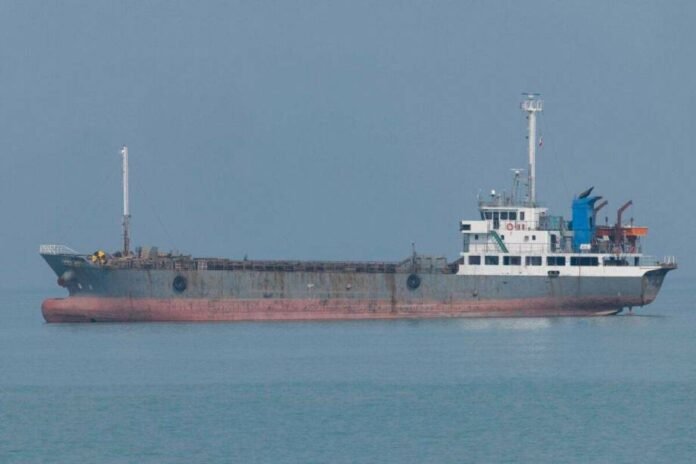
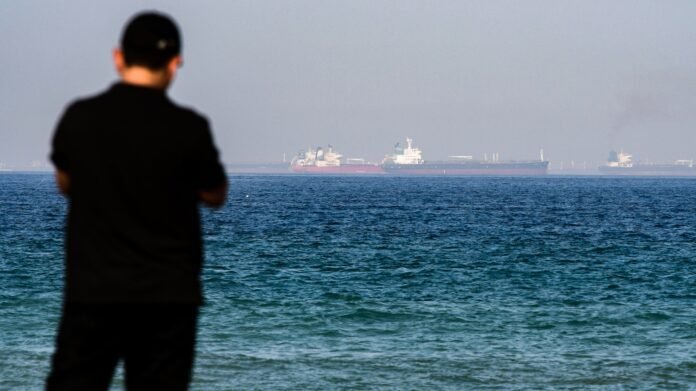
Unknown projectiles hit a tanker about 78 nautical miles north of Fujairah in the United Arab Emirates, a UK maritime trade organization said on Monday, as authorities urged caution in the region.

No injuries were reported among the crew.

“A tanker has reported being hit by unknown projectiles,” the United Kingdom Maritime Trade Operations said, adding that all crew members were safe. The agency called on vessels to transit the area “with caution” as the incident is investigated.

Circumstances of the strike were not immediately clear.

The incident comes amid heightened tensions following a period in which the United Arab Emirates was repeatedly targeted during the recent war with Iran. During that period, attacks included missile and drone strikes on energy facilities, ports, and urban areas.

Among the incidents cited were a drone strike on the Fujairah port, described as a key oil hub, and a tanker fire at Dubai Port. In Abu Dhabi, debris from intercepted missiles caused fires at the Habshan gas complex.

Attacks during the war were described as focusing primarily on economic and infrastructure targets. Air defense systems intercepted many incoming threats, limiting broader damage.

The latest strike on the tanker occurred as the United States and Iran remain at an impasse in ceasefire negotiations, with speculation increasing that armed conflict may be renewed.

Europe’s consummate systemic rival: Ursula von der Leyen

0
europe’s-consummate-systemic-rival:-ursula-von-der-leyen
Europe’s consummate systemic rival: Ursula von der Leyen

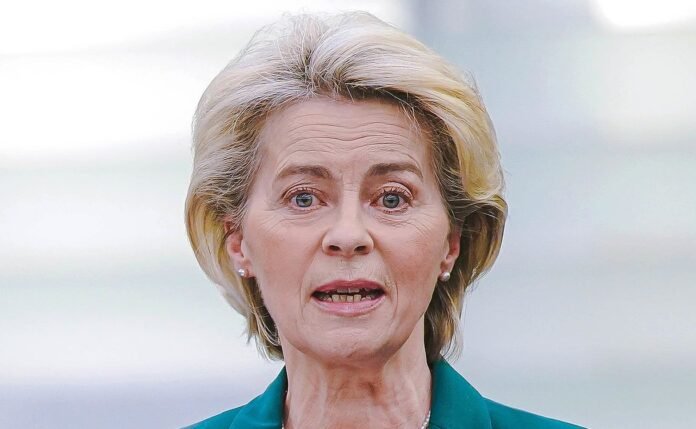
The most consequential threat to Europe in the past decade has not arrived from Moscow, Beijing or Washington. It has been manufactured, word by word, policy reversal by policy reversal, on the 13th floor of the Berlaymont building in Brussels.

Ursula von der Leyen has achieved something genuinely rare: becoming the EU’s most reliable liability. She has built a career on announcing Europe’s future while presenting the consequences of her own failures as if they had arrived from nowhere.

The problem is not that the European Commission President makes mistakes—which any politician does — but that she makes them at scale, from the Union’s highest executive office, across long stretches of time, with the confidence of someone who has never been held accountable for any single consequence.

The pattern is familiar: announce a doctrine, enforce it with bureaucratic zeal, watch it fail, return with a correction that contradicts the first line, and receive applause from the same circles that applauded the first version. Repeat, indefinitely, at a global scale.

Fail, contradict, retreat

The latest cycle has been remarkable even by her standards. On March 9, she told ambassadors that “Europe can no longer be a custodian for the old-world order, that has gone and will not return,” while still claiming to defend it. She even questioned whether the “system that we built [is] more a help or a hindrance to our credibility as a geopolitical actor.”

In her terms, Europe had entered an age beyond American protection. However, Europe’s dependence on Washington was not an inheritance she encountered; it was a condition her own presidency repeatedly accommodated. One cannot lament submission after years spent entrenching it.

Those remarks took place in the context of Trump’s Iran war. Yet she offered no account of why endorsing escalation in a conflict that raises oil and gas prices, strengthens Russian export revenues and helps finance Putin’s wars, increases costs for European households and industry, threatens supply routes, and may trigger new refugee flows serves any European interest. She asked to reverse the EU principles while backing warfare that imposes costs on Europe and yields no gain.

According to this former German defense minister, the post-war architecture of multilateralism, consensus, and international law, the same order her mandates were meant to embody and export, is now a burden in a world that has moved on.

Within 24 hours, her office was backpedaling. The speed of that retreat exposed the weakness of the disruptive line and the thin authority behind it. It also laid bare a deeper problem: von der Leyen operates from a worldview that is genuinely her own and detached from the member states that placed her in office. She governs by announcement and manages dissent ruthlessly.

The pattern overreach-retreat repeated on April 19, when she declared the EU should not be “influenced by Russia, Turkey, or China.” Lecturing Turkey — one of the EU’s largest trading partners, a NATO member spanning two continents, and a longstanding candidate state — was a calculated willingness to antagonize Ankara at the worst possible moment. By the following day, her office was again re-contextualizing.

A few days later, Sabine Weyand — a 32-year veteran of European institutions? — was forced out after she acknowledged the humiliation occurred at a Trump golf course: while von der Leyen posed thumbs raised for a group photo, Weyand stood with hands in her pockets and an unchanged expression.

Essentially, the illustration between those who perform European dignity and those who embody it. In any institution with a functioning accountability culture, naming a problem is not a firing offense. In this Commission, it appears to be.

What makes these episodes worth examining is what they reveal about von der Leyen’s mandates. In 2019, at the start of her first term, she promised a geopolitical Europe: a bloc that would act as a power, not only as a market, a regulator, or a moral actor.

When the second presidency began, the geopolitical map of Europe was neither revised nor reformulated. It simply vanished from Commission scripts.

Six years later, when the international order was described as an obstacle to European interests, she was not unveiling a new vision but the collapse of a claim she had spent years performing. The gap between rhetoric and record had grown too wide to conceal.

What followed was an attempt to recast belated recognition as leadership. That failure deserves to be evaluated as failure, not repackaged as foresight. It also exposed the emptiness of six years of values talk that failed to shift any other government’s policies by a single degree.

Under pressure, values and interests became opposing choices. The call for “a more realistic and interest-driven foreign policy” only made explicit what recent peer-reviewed work argues about her own stances: that she applies a racialized double standard, humanizing Ukrainians while dehumanizing Palestinians through an “extreme form of Othering that negates both their political agency and their status as a political community.”

Unrecognized nuclear reckoning

No issue better illustrates this pattern of long-term denial followed by abrupt reversal than nuclear energy — and no issue carries heavier consequences for the continent’s industrial and strategic future.

In March 2011, von der Leyen was Federal Minister of Labour and Social Affairs, a full member of Merkel’s cabinet when Germany decided, within days of the Fukushima accident and before its own technical assessments were complete, to accelerate the nuclear phase-out.

Germany’s reactor commission later concluded that the conditions behind Fukushima were “practically impossible” in Germany and that plants were safer than the Japanese reactors that failed. That finding did nothing to alter the decision.

As long as the plants remained standing, so did the possibility of reversing the policy, pleasing the anti-nuclear lobby. Demolition removed the evidence and the option.

When von der Leyen arrived to Berlaymont in 2019, she had a second chance, this time at continental scale, to correct that huge miscalculation. Instead, she made the Green Deal a cornerstone of her mandate, treated nuclear with suspicion, allowed Germany’s anti-nuclear inheritance to weigh on the EU taxonomy debate, and left Europe deeper in gas dependence until Russia made that dependency catastrophic.

In 2026, she calls it an “error of judgment,” announces 200 million euros in EU risk guarantees for private investment in new nuclear technologies, and moves on, without any reckoning with her own record or with the scale of the damage.

The Commission’s April 2026 Energy Union communication now states that nuclear power plants supply clean power “suitable for enhancing system integration and providing flexibility facilitating further roll-out of other clean technologies,” that “new small modular reactors or avoiding the premature retirement of existing nuclear capacity can help reducing the need for fossil fuel use,” and that “there is unlocked potential regarding existing nuclear power plants.”

This is the policy environment von der Leyen inhabited, promoted, and defended, and the cost was borne by European consumers facing the world’s highest electricity prices, by industry moving production to jurisdictions with cheaper and more reliable power, and by a climate policy that replaced carbon-free nuclear generation with coal and gas at the worst moment.

That record would have buried a less protected politician. But if she has one undeniable talent, it is turning crisis into a mechanism for centralizing power. In moments of emergency, she moves authority upward, disciplines hesitation, and makes Brussels look decisive. The difficulty begins when that concentration of power must be matched by consistency, transparency, or strategic judgment.

Von der Leyen’s plentiful sycophants operate in Brussels and Berlin think tanks, EU-funded research institutes, together with a commentary platoon that turns Commission priorities into respectable prose.

Much of that material is then fed back to the same public asked to bear the cost, repackaged as sober analysis for audiences expected to subsidize failure. The laundering is so efficient that even the slogans return wearing a decent policy brief costume.

This is the incentive structure of institutional politics. It produces refined arguments for positions that fail on the merits. The academic retreat on nuclear energy showed how narrow the space for dissent had become inside Germany’s policy and expert class. Brussels did not correct that pathology; it elevated it into a method of rule, where failure is recoded as expertise.

Stripped of title and ceremony, von der Leyen represents the European technocratic class at its most self-referential: those who design policy also judge it, failure becomes learning, and the official who helped produce the problem is invited to unveil the cure. The EU institutions have perfected the miracle of political self-absolution.

Expensive costs

History offers sobering precedents: institutions do not collapse only under external assault. They hollow themselves from within. They corrupt themselves through the very structures built to sustain them. What looks, from the outside, like strength is often the late stage of a managed decline.

She promised a geopolitical Europe and delivered bureaucratic performance. She pushed an energy transition without sufficient baseload and the citizens inherited the most expensive energy system globally. She declared defunct the post-war order on Monday and retreated on Tuesday.

She will now present a new doctrine for European security, a new realism for a new era, Socialism with European characteristics, or some other commissioned slogan with a logo and a launch event, and her well-funded defenders will write as though the earlier doctrines had been someone else’s idea.

If someone still dares to criticize this excruciating level of sophisticated institutional capture, they are speedily branded as pro-Trump, soft on China, anti-European, or on Putin’s payroll—or shown the door, as with Weyand. The accusation spares its authors the argument.

But now, consider what her policies delivered: an energy model that enriched Russian gas exporters, deindustrialization that pushed parts of European manufacturing toward China, and an incoherence that made American coercion easier. The outcome strengthened each of Europe’s main external pressures at once.

Officials who spent years warning Europe about external rivals helped produce the very weaknesses on which those rivals feed. If a Kremlin operative, a Beijing trade official, and a Mar-a-Lago lobbyist had collaborated on an EU policy agenda, the results would look remarkably similar.

Europe’s problem is not only a harsher international environment, an unreliable US, a stronger China, or Russian aggression. It is a Union leadership class that has spent years producing the conditions of its own irrelevance under a Commission President whose chief talent is to describe the crisis as if she had found it, not made it.

Europe deserves better than the architect of its vulnerabilities presenting herself, eternally, as the solution to them.

Sebastian Contin Trillo-Figueroa is a Hong Kong-based geopolitics strategist with a focus on Europe-Asia relations.

Iran executes three men accused of links to Mossad and killing security officer

0
iran-executes-three-men-accused-of-links-to-mossad-and-killing-security-officer
Iran executes three men accused of links to Mossad and killing security officer

Iranian authorities said three men have been executed after being convicted of collaborating with the Israeli spy agency, Mossad and, in one case, killing a member of the security forces during protests.

According to Iranian media, one of those executed, Mehrab Abdullahzadeh, was found guilty of involvement in the killing of Abbas Fatemieh, a member of Iran’s volunteer security forces. Authorities said the killing took place during protests, with Abdullahzadeh accused of fatally beating Fatemieh with iron bars.

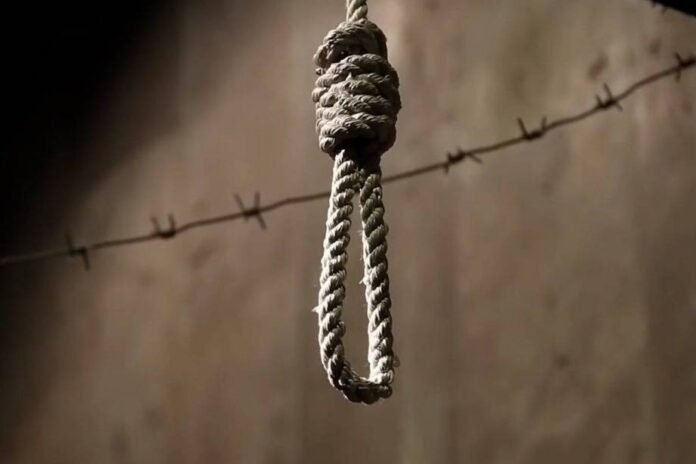
In a separate case, two other men—Yaqoub Karimpour and Nasser Bakarzadeh—were executed by hanging after being convicted of espionage for Israel. Iranian authorities said their sentences were upheld by the Supreme Court.

Officials stated that the two men had gathered information on government and religious figures, as well as sensitive locations including the Natanz nuclear facility, and passed it to Mossad.

The executions come amid a broader pattern of similar cases, with Iranian authorities reporting multiple executions in recent months on charges related to espionage and involvement in unrest.

READ: Iran sets one-month deadline for US to end naval blockade, wars in Iran, Lebanon

Cracker Barrel Pancake Recipe (Fluffy, Buttery & Better Than the Restaurant)

0
cracker-barrel-pancake-recipe-(fluffy,-buttery-&-better-than-the-restaurant)
Cracker Barrel Pancake Recipe (Fluffy, Buttery & Better Than the Restaurant)

You are here: Home / Desserts / Cracker Barrel Pancake Recipe (Fluffy, Buttery & Better Than the Restaurant)

This Cracker Barrel Pancake Recipe gives you everything you love about the original: golden edges, soft fluffy centers, rich buttermilk flavor, and that homemade comfort-food feel—all with just a handful of simple ingredients.


Why You’ll Love These Cracker Barrel Pancakes

These pancakes are everything homemade pancakes should be.

Fluffy and Tender

Soft centers with those beautiful golden edges.

Buttermilk Flavor

That subtle tang makes all the difference.

Simple Ingredients

Nothing fancy.

Just pantry staples.

Fast and Easy

Ready in about 9 minutes.

Freezer Friendly

Make extra now…

Thank yourself later.


Ingredients You’ll Need

All-purpose Flour
Buttermilk
Egg
Butter

For the pancakes:

  • 2 cups all-purpose flour
  • 2 teaspoons baking soda
  • 1 teaspoon salt
  • 2 tablespoons granulated sugar
  • 2 large eggs
  • 2 cups low-fat buttermilk
  • Butter, for cooking

Simple.

Classic.

Perfect.


Optional Add-Ins

Want to make them extra fun?

Try adding:

Chocolate Chips
Pecan
Blueberry
Banana

Because pancakes should never be boring.


How to Make Cracker Barrel Pancakes

Step 1: Mix the Wet Ingredients

In a large bowl, whisk together:

  • buttermilk
  • eggs

Mix until smooth.


Step 2: Add the Dry Ingredients

Add:

  • flour
  • baking soda
  • salt
  • sugar

Stir gently until just combined.

Do not overmix.

A few small lumps are perfectly fine.

Actually…

They’re what help make fluffy pancakes.


Step 3: Heat the Griddle

Preheat a griddle, cast iron skillet, or nonstick pan over medium-high heat.

Lightly grease with butter.

And yes…

Your kitchen is already starting to smell amazing.


Step 4: Pour the Batter

Using a ½ cup measure, pour batter onto the hot skillet.

Gently spread into circles if needed.


Step 5: Cook

Cook for 2–3 minutes until:

  • bubbles form on top
  • edges begin to set

Flip carefully.

Cook another 2 minutes until golden brown.


Step 6: Repeat

Transfer cooked pancakes to a plate.

Butter the skillet again.

Repeat until all batter is used.

And try not to eat one straight from the pan.

(Or do. Quality control matters.)


Secrets to Perfect Pancakes

Use Real Buttermilk

This is the secret to that authentic Cracker Barrel flavor.

Don’t Overmix

Overmixed batter = tough pancakes.

Gentle mixing = fluffy perfection.

Cook on a Hot Surface

A properly heated griddle gives those beautiful golden edges.

Flip Only Once

Wait for bubbles before flipping.

Trust the bubbles.


Need a Buttermilk Substitute?

No buttermilk?

No problem.

Make your own:

  • 1 cup milk
  • 1 tablespoon lemon juice

or

  • 1 tablespoon vinegar

Let sit for 5 minutes.

And you’re good to go.


Easy Flavor Variations

Pecan Pancakes

Add:

Pecan

for extra crunch.

Chocolate Chip Pancakes

Because mornings deserve chocolate.

Birthday Pancakes

Add sprinkles.

Instant happiness.

Berry Pancakes

Blueberries or strawberries work beautifully.


A Little Story from My Kitchen

Weekend pancakes have always been a big deal in our house.

When I first tried recreating Cracker Barrel pancakes, I wasn’t expecting much.

Maybe “close enough.”

Maybe “pretty good.”

But after that first bite…

My family looked up and said:

“Wait… these taste exactly like Cracker Barrel.”

And now?

Saturday mornings officially belong to pancakes.

And pajamas.

And way too much syrup.


Frequently Asked Questions

How do I make pancakes extra fluffy?

Use fresh baking soda, real buttermilk, and don’t overmix.

Can I make them ahead?

Absolutely.

They reheat beautifully.

How do I store leftovers?

Store in an airtight container in the fridge for up to 4 days.

Can I freeze them?

Yes.

Freeze between parchment paper for up to 2 months.

How do I reheat?

Microwave for 20–30 seconds or warm in a skillet.


Best Pancake Toppings

These pancakes are amazing with:

Maple Syrup
Butter
Strawberry
Blueberry
Banana
Powdered Sugar
Peanut Butter

And if your kids request chocolate spread…

Honestly…

That’s never a bad idea.


Serve With

Turn breakfast into a full brunch spread with:

Bacon
Sausage
Fruit Salad

Now that’s a weekend worth waking up for.


Final Thoughts

This Cracker Barrel Pancake Recipe is buttery, fluffy, golden, and everything a homemade breakfast should be.

It’s:

  • quick
  • easy
  • family approved
  • freezer friendly
  • packed with buttermilk flavor

And once you make them…

Don’t be surprised if everyone suddenly starts waking up early on weekends.

West Asia’s old security order is dead and gone

0
west-asia’s-old-security-order-is-dead-and-gone
West Asia’s old security order is dead and gone

West Asia is not returning to the old regional order. Too many assumptions have failed, and too many actors have discovered the limits of their power.

For years, security in the region was treated as something that could be imposed: by American military presence, Israeli deterrence, Iranian strategic depth, Gulf wealth, Turkish influence or the pressure of armed non-state groups. Each actor believed that enough force, money, alliances or pressure could shape the environment around it.

That confidence is weaker now. The Gaza war, the US-Israel-Iran war, attacks on Red Sea shipping, the Hormuz blockades, the growing role of non-state actors and Arab doubts about relying entirely on Washington have pushed West Asia into a new security reality. No single state, and no single camp, can define stability on its own.

Although the US and Israel remain the region’s strongest military actors, their current confrontation with Iran has exposed the limits of military power. The campaign did not deliver the quick or decisive success many in Washington and Tel Aviv had expected. Instead, it imposed heavy financial costs.

Israel’s Finance Ministry estimated the war with Iran at $11.5 billion in budgetary expenses, while Reuters reported that the damage to Israel’s economy could reach nearly $3 billion a week under wartime restrictions.

In Washington, the Pentagon’s comptroller told lawmakers that the Iran operation had cost about $25 billion, prompting sharp questions in Congress over strategy, cost and the absence of a clear political endgame.

The message for the region is clear: even overwhelming military power can become costly, uncertain and politically vulnerable when it is used without a workable path to lasting security.

Gaza has made this painfully clear. The war has shattered the idea that the Palestinian question can be pushed aside while governments pursue normalization, trade corridors and investment diplomacy. UNRWA, citing OCHA and Gaza health authorities, reported that 72,344 Palestinians had been killed in Gaza between October 7, 2023 and April 15, 2026. Numbers on that scale cannot be treated as a side issue.

For years, some regional and external actors hoped that West Asia could move around Palestine rather than through it. Gaza has shown the weakness of that assumption. A political wound does not disappear because diplomats stop mentioning it; it returns through public anger and legitimacy crises.

The Iran-Israel confrontation shows how quickly a conflict that is kept “under control” can stop being controlled at all. For years, Israel treated its confrontation with Iran as something it could manage from the shadows — through cyber operations, targeted assassinations, and repeated strikes on Iranian-linked positions in Syria and across the region.

That strategy may have delayed an open war, but it did not reduce the danger. In many ways, it kept raising the temperature while assuming the other side would never answer directly.

That assumption broke down in April 2024, when Reuters reported Iran’s drone and missile attack on Israel after the strike on Iran’s consulate in Damascus. The point is not simply that Iran and Israel exchanged fire. The larger point is that Israel’s habit of using force beyond its borders has helped widen the battlefield and make escalation harder to contain.

In a region already filled with drones, missiles, foreign bases and armed groups, one attack rarely ends with one attack. It creates pressure for another, and then another. That is why the old idea of “controlled escalation” now looks less like strategy and more like wishful thinking.

Non-state actors have also become impossible to ignore. Hezbollah, Hamas, the Houthis and Iraqi armed factions do not have the power of states, but they can expand the geography of conflict. The Houthis’ Red Sea attacks disrupted global trade and forced shipping firms to reroute vessels around southern Africa.

This does not prove that armed movements can create a stable order. But it does prove that any regional security framework that ignores them will remain incomplete. West Asia’s conflicts are no longer fought only by regular armies or managed only through traditional state diplomacy.

The Gulf states understand this shift better than many outside the region assume. For years, Washington presented its military presence as a source of stability. But the record now looks far more complicated.

American bases, arms sales, intelligence networks and naval deployments have not prevented war, escalation or insecurity. In many cases, they have made the region more militarized and more dependent on crisis management rather than political settlement.

This is why Gulf capitals have become more careful. They are not simply looking for new partners because they want variety. They are doing it because the old American security formula has become less convincing.

Carnegie has noted that Saudi Arabia and the UAE increasingly see national security as extending beyond physical borders to airspace, territorial waters and maritime trade routes. It also describes Gulf efforts to hedge through ties with China, cooperation with Russia, regional partnerships and domestic defense industries.

That hedging carries a quiet message: the region can no longer afford to organize its security around Washington’s priorities. The US may still have troops, bases and weapons in West Asia, but its presence has not created confidence. It has often encouraged arms races, hardened rivalries and given local actors the false impression that military backing can replace diplomacy.

The cost of this insecurity is rising sharply. SIPRI estimated that military expenditure in the Middle East reached $218 billion in 2025. Saudi Arabia’s spending rose to $83.2 billion, while Turkey’s grew to $30 billion.

Yet the region does not feel safer in proportion to what it spends. West Asia has more weapons, more air defenses and more military technology than before, but also more mistrust and more ways for a local crisis to become a regional one.

Israel’s role in this pattern is also central. Its repeated reliance on force has not produced lasting security. Tactical success — whether in Gaza, Syria or elsewhere — cannot substitute for political legitimacy.

A state may win battles, destroy infrastructure and strike beyond its borders, but that does not mean it has created stability. Gaza has shown the opposite: when military power is used without a political horizon, it deepens anger, widens the battlefield and makes future conflict more likely.

For the Arab states of the Persian Gulf, diversification is necessary, but more partners and more weapons will not automatically create security. The region does not need another patron, another axis or another outside promise of protection.

It needs practical rules that make escalation harder: crisis hotlines, maritime security arrangements, limits on drone and missile attacks, protection for civilian infrastructure and a serious political track for Palestine.

West Asia has heard enough promises of victory. It needs a more honest idea of security — one that does not confuse American military presence with stability, or Israeli military superiority with peace.

Jenny Williams is an independent American journalist and writer focusing on foreign policy, human rights and conflict. She aims to bring clarity to complex security debates and to foreground the domestic consequences of overseas engagement.

Iconic Singer Dead at 79

0
iconic-singer-dead-at-79
Iconic Singer Dead at 79


The music world just lost one of its most unforgettable voices.

Former Santana frontman Alex Ligertwood has died at 79, leaving fans of classic rock reeling.

His wife, Shawn Brogan, confirmed the heartbreaking news in a Facebook post, revealing the beloved singer “passed peacefully in his sleep” — with his loyal dog Bobo right by his side.

“Alex was loved by so many,” she wrote. “If you knew him, you loved him. He touched so many with his extraordinary voice. He was all heart and soul.”

For longtime fans, Ligertwood wasn’t just another voice — he was the voice behind some of the band’s most powerful hits during a golden era of rock. He served as lead vocalist for Santana on and off from 1979 to 1994, working closely with guitar legend Carlos Santana.

During that run, his vocals helped define tracks like “Winning,” “Hold On,” and “You Know That I Love You” — songs that still blast from classic rock radio decades later.

Behind the scenes, his passion for music never faded. According to his wife, Ligertwood had just taken the stage weeks before his death.

“He did it his way, on his terms, till the end,” Brogan shared, adding that performing was always his greatest joy.

Born in Scotland, Ligertwood’s love for music stretched back to the 1950s when he first picked up a guitar. That passion eventually carried him across the world — and onto some of the biggest stages in rock history.

Over the years, he also performed with major acts including the Jeff Beck Group and Average White Band, building a reputation as a powerhouse vocalist with unmatched soul.

Tributes quickly poured in after news of his death broke.

“We are so sad!” members of The Magic of Santana tribute group wrote online. “He was one of the best singers on this planet… we will deeply miss him.”

Ligertwood had reportedly been dealing with ongoing health issues in recent years while living in Santa Monica, California.

Still, those closest to him say he never lost his love for music — or the fans who adored him.

Now, as the tributes grow louder, one thing is clear: his voice — and the era he helped define — won’t be forgotten anytime soon.

Pakistan Arrests Journalist and YouTuber in Lahore Over Alleged al-Qaida Links

0
pakistan-arrests-journalist-and-youtuber-in-lahore-over-alleged-al-qaida-links
Pakistan Arrests Journalist and YouTuber in Lahore Over Alleged al-Qaida Links


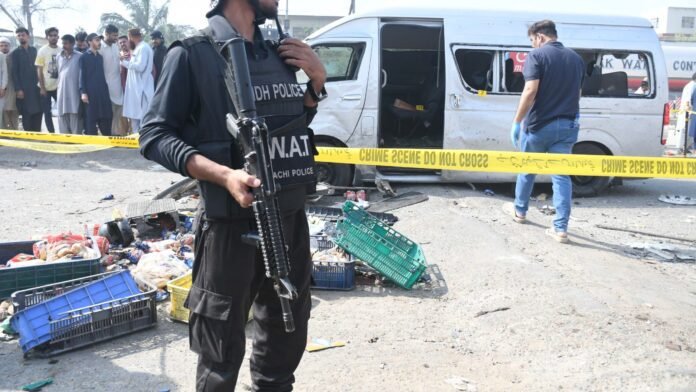
Pakistani counterterrorism authorities arrested investigative journalist and YouTuber Muhammad Saad bin Riaz in Lahore during a joint intelligence operation, alleging that he had links to al-Qaida. Authorities said the arrest was made based on confirmed intelligence.

Security sources said an al-Qaida identification card, images of Osama bin Laden, and related literature were recovered from a bag in his possession. Riaz, who was also identified as Muhammad Saad, is a 31-year-old academic scholar, researcher, and journalist from Lahore.

Muhammad Saad completed his MPhil in political science from Government College University and has worked for the past two years with the EON YouTube channel as a researcher and content strategist.

An intelligence official told The Media Line that the department had received information that a suspect was encouraging people to join the banned al-Qaida organization and distributing prohibited literature to them. The official said swift action was taken and a man, who identified himself as Muhammad Saad, was taken into custody.

According to the official, five copies of a book related to Osama bin Laden were recovered from his bag during the search, and “an al-Qaida membership card was also found in his possession.” In addition, Muhammad Saad had apparently pinned a poster featuring Osama bin Laden’s image on his X account, @Hafizsaadriaz.

A case has been registered against Muhammad Saad and he was shifted to a safe house for further interrogation. Meanwhile, his wife, Ayesha A. Qayyum, rejected the allegations made by the counterterrorism department as baseless. In a statement posted on social media, she said the case was “an illegal act, a blatant violation of the requirements of justice, and driven by mala fide intent.”

In September 2024, reports emerged that Hamza bin Laden, the son of Osama bin Laden, was alive and regrouping al-Qaida in Afghanistan, contradicting earlier claims that he was killed in a 2019 CIA airstrike.

It is believed that Hamza bin Laden and al-Qaida’s de facto leader, Saif al-Adel, are using safe houses in several Afghan provinces, including Kandahar, Ghazni, Laghman, Parwan, Herat, and Helmand. These safe houses reportedly facilitate the movement of al-Qaida members to and from Iran.

Osama bin Laden, the founder of al-Qaida and mastermind behind the Sept. 11 attacks, was killed on May 2, 2011, in a covert US military operation in Abbottabad, Pakistan. Fifteen years after his killing, the alleged al-Qaida affiliation of a young scholar and social media influencer arrested in Lahore signals what some see as an alarming situation.

The case also contributes to the perception that al-Qaida may be quietly seeking to maintain or expand its influence, and according to some observers, it could be using anti-Israel and pro-Palestinian sentiments as a shield for its narrative.

Global fragmentation is rewiring Asia’s economic future

0
global-fragmentation-is-rewiring-asia’s-economic-future
Global fragmentation is rewiring Asia’s economic future

Asia became prosperous in an era of predictable globalization. Open markets, cheap energy, integrated supply chains and export-led manufacturing transformed once-poor economies into the world’s most dynamic growth centers. But the very interdependence that powered Asia’s rise is now becoming a source of systemic vulnerability.

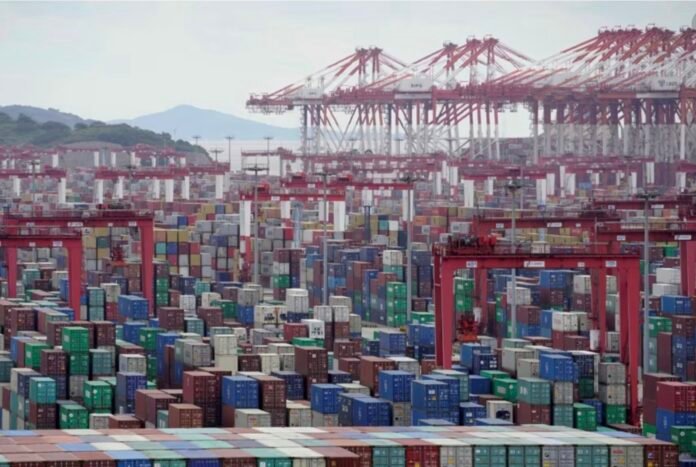
The escalating instability around the Strait of Hormuz offers a stark reminder. Nearly one-fifth of the world’s oil passes through the narrow waterway, much of it destined for Asia. Even the threat of disruption is enough to drive up energy prices, weaken currencies, fuel inflation, and strain public finances across the region.

For Asia’s highly trade-dependent economies, geopolitical shocks no longer remain external events. They now penetrate directly into domestic economic stability. This is not merely an energy-security problem. It is evidence that globalization itself has entered a more fragmented and volatile phase.

For decades, Asia’s development model rested on a simple bargain: economies specialized in export-oriented production, integrated into global value chains and relied on external markets, capital, technology and energy to sustain growth.

Under relatively stable globalization, the strategy delivered extraordinary results. China became the world’s manufacturing center. South Korea evolved into a technological powerhouse. Southeast Asia emerged as a critical production hub. Hundreds of millions escaped poverty.

But a model built for an era of stability is struggling in an era of geopolitical rivalry.

The same interconnectedness that once transmitted efficiency now transmits shocks. Energy disruptions rapidly feed inflation. Financial tightening in the United States triggers capital outflows and currency depreciation across emerging Asia.

Trade restrictions and sanctions increasingly reshape investment decisions and industrial supply chains. Economic integration has become politicized.

South Korea illustrates the dilemma. The country imports more than 90% of its energy, much of it from the Middle East, leaving it acutely exposed to Gulf instability. At the same time, its semiconductor industry — the backbone of the Korean economy — sits at the center of intensifying US-China technological competition. Korean firms are no longer navigating markets alone; they are navigating geopolitical confrontation.

The problem extends far beyond Korea. India imports nearly 90% of its crude oil. Japan remains heavily dependent on external energy supplies. More than 70% of Middle Eastern oil exports flow to Asian markets.

Meanwhile, East Asia dominates global semiconductor production, while China controls much of the world’s rare-earth processing capacity. These concentrations once reflected economic efficiency. Today they represent strategic chokepoints.

Semiconductors, batteries, critical minerals, shipping lanes, and digital infrastructure are no longer simply commercial assets. They have become instruments of economic statecraft.

Washington now treats advanced semiconductors as strategic assets central to national security, while Beijing increasingly views technological self-sufficiency as an economic imperative. Supply chains that once reflected market efficiency are being reorganized around geopolitical alignment

The consequences are profound. Asia’s growth model was designed to maximize efficiency, not resilience. Supply chains were optimized for cost minimization. Energy systems prioritized affordability. Manufacturing networks concentrated production in the most competitive locations. In a stable global order, this logic worked exceptionally well.

But efficiency without resilience has become a liability. The emerging global economy is being shaped less by free-market integration than by strategic competition. Governments are intervening more aggressively in trade, technology, and industrial policy. Supply chains increasingly follow geopolitical alignment rather than pure market logic. Strategic sectors are being securitized.

This does not mean globalization is ending. Asia cannot decouple from the world economy, nor should it try. Its prosperity still depends on openness and international integration. But the region must adapt to a world in which interdependence carries both economic benefits and geopolitical risks.

That adaptation requires a fundamental shift in policy thinking.

First, Asian economies must diversify critical dependencies. Excessive reliance on single suppliers, markets, energy corridors, or technologies creates systemic exposure. The goal is not autarky, but strategic flexibility.

India’s push into renewable energy, Japan’s diversification of liquefied natural gas imports, and efforts by several Asian economies to broaden semiconductor supply chains all reflect growing recognition that concentration risk has become a national-security issue.

Second, governments must prioritize resilience alongside efficiency. For decades, redundancy was viewed as wasteful. Today it is increasingly essential. Strategic reserves, diversified logistics networks, domestic technological capabilities, and more robust infrastructure may reduce short-term efficiency, but they increase long-term stability.

Third, macroeconomic adaptability has become critical. Economies that depend heavily on external capital and volatile trade flows require stronger financial buffers, more flexible policy tools, and greater institutional capacity to absorb shocks. In a world of repeated disruptions, resilience is no longer only about supply chains; it is also about governance.

None of these adjustments will be easy or cost-free. Building resilience often means accepting higher production costs, slower optimization, and more active state intervention. Yet the alternative is increasingly dangerous: remaining deeply exposed to geopolitical disruptions that governments cannot control.

Asia’s challenge is therefore not whether to remain integrated into the global economy. It is whether it can remain prosperous in a world where globalization itself has become more fragmented, politicized, and unstable.

The era that powered Asia’s rise was defined by expanding trade, relatively predictable rules, cheap energy and deepening economic interdependence. That era is fading. A new one is emerging — shaped by strategic rivalry, supply-chain insecurity, technological competition, and recurring geopolitical shocks.

Asia cannot retreat from globalization, nor can it afford to cling to an outdated model built solely around efficiency and external dependence. The region’s future growth will depend on its ability to redesign economic systems for a more volatile age: diversifying critical dependencies, strengthening resilience and building greater strategic autonomy in key sectors.

The deeper shift is unmistakable. Asia’s rise was built in a period when economics largely operated above geopolitics. That separation is now collapsing. Energy flows, semiconductor supply chains, critical minerals, financial networks and advanced technologies are increasingly becoming instruments of strategic competition.

In this new global order, resilience is no longer a complement to growth. It is the foundation on which sustainable growth itself will depend.

Golam Rasul is a scholar and policy commentator working on sustainability, political economy, globalization, and development transitions in Asia. My commentary has appeared in East Asia Forum, South Asia Monitor and leading South Asian newspapers.

Iranian supertanker carrying $220M of oil evades US blockade, says tracker

0
iranian-supertanker-carrying-$220m-of-oil-evades-us-blockade,-says-tracker
Iranian supertanker carrying $220M of oil evades US blockade, says tracker

An oil tanker is being pictured in the Persian Gulf near the seaport city of Bushehr, in Bushehr Province, southern Iran, on April 29, 2024 [Morteza Nikoubazl/NurPhoto via Getty Images]

An oil tanker is being pictured in the Persian Gulf near the seaport city of Bushehr, in Bushehr Province, southern Iran, on April 29, 2024 [Morteza Nikoubazl/NurPhoto via Getty Images]

An Iranian supertanker carrying nearly $220 million worth of oil has evaded US blockade efforts, TankerTrackers reported Sunday, Anadolu reports.

“A National Iranian Tanker Company (NITC) VLCC supertanker carrying over 1.9 million barrels (valued at nearly $220 million dollars) of crude oil has managed to evade the U.S. Navy and reach the Far East,” TankerTrackers wrote on US social media platform X.

The vessel, identified as “HUGE” (9357183), was last seen off Sri Lanka more than a week ago and is currently moving through the Lombok Strait in Indonesia toward the Riau Archipelago.

The tanker has not transmitted Automatic Identification System (AIS) signals since March 20, when it departed the Strait of Malacca bound for Iran, according to maritime tracking information.

0FansLike
0FollowersFollow
0FollowersFollow
0SubscribersSubscribe
- Advertisement -
Google search engine

Recent Posts