Home Blog

Global fragmentation is rewiring Asia’s economic future

0
global-fragmentation-is-rewiring-asia’s-economic-future
Global fragmentation is rewiring Asia’s economic future

Asia became prosperous in an era of predictable globalization. Open markets, cheap energy, integrated supply chains and export-led manufacturing transformed once-poor economies into the world’s most dynamic growth centers. But the very interdependence that powered Asia’s rise is now becoming a source of systemic vulnerability.

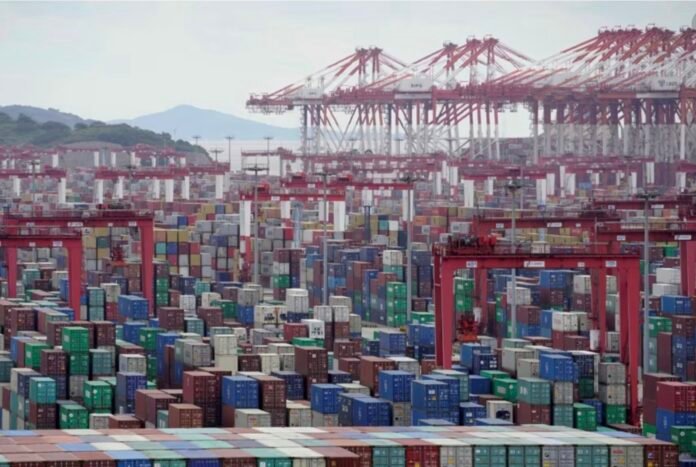
The escalating instability around the Strait of Hormuz offers a stark reminder. Nearly one-fifth of the world’s oil passes through the narrow waterway, much of it destined for Asia. Even the threat of disruption is enough to drive up energy prices, weaken currencies, fuel inflation, and strain public finances across the region.

For Asia’s highly trade-dependent economies, geopolitical shocks no longer remain external events. They now penetrate directly into domestic economic stability. This is not merely an energy-security problem. It is evidence that globalization itself has entered a more fragmented and volatile phase.

For decades, Asia’s development model rested on a simple bargain: economies specialized in export-oriented production, integrated into global value chains and relied on external markets, capital, technology and energy to sustain growth.

Under relatively stable globalization, the strategy delivered extraordinary results. China became the world’s manufacturing center. South Korea evolved into a technological powerhouse. Southeast Asia emerged as a critical production hub. Hundreds of millions escaped poverty.

But a model built for an era of stability is struggling in an era of geopolitical rivalry.

The same interconnectedness that once transmitted efficiency now transmits shocks. Energy disruptions rapidly feed inflation. Financial tightening in the United States triggers capital outflows and currency depreciation across emerging Asia.

Trade restrictions and sanctions increasingly reshape investment decisions and industrial supply chains. Economic integration has become politicized.

South Korea illustrates the dilemma. The country imports more than 90% of its energy, much of it from the Middle East, leaving it acutely exposed to Gulf instability. At the same time, its semiconductor industry — the backbone of the Korean economy — sits at the center of intensifying US-China technological competition. Korean firms are no longer navigating markets alone; they are navigating geopolitical confrontation.

The problem extends far beyond Korea. India imports nearly 90% of its crude oil. Japan remains heavily dependent on external energy supplies. More than 70% of Middle Eastern oil exports flow to Asian markets.

Meanwhile, East Asia dominates global semiconductor production, while China controls much of the world’s rare-earth processing capacity. These concentrations once reflected economic efficiency. Today they represent strategic chokepoints.

Semiconductors, batteries, critical minerals, shipping lanes, and digital infrastructure are no longer simply commercial assets. They have become instruments of economic statecraft.

Washington now treats advanced semiconductors as strategic assets central to national security, while Beijing increasingly views technological self-sufficiency as an economic imperative. Supply chains that once reflected market efficiency are being reorganized around geopolitical alignment

The consequences are profound. Asia’s growth model was designed to maximize efficiency, not resilience. Supply chains were optimized for cost minimization. Energy systems prioritized affordability. Manufacturing networks concentrated production in the most competitive locations. In a stable global order, this logic worked exceptionally well.

But efficiency without resilience has become a liability. The emerging global economy is being shaped less by free-market integration than by strategic competition. Governments are intervening more aggressively in trade, technology, and industrial policy. Supply chains increasingly follow geopolitical alignment rather than pure market logic. Strategic sectors are being securitized.

This does not mean globalization is ending. Asia cannot decouple from the world economy, nor should it try. Its prosperity still depends on openness and international integration. But the region must adapt to a world in which interdependence carries both economic benefits and geopolitical risks.

That adaptation requires a fundamental shift in policy thinking.

First, Asian economies must diversify critical dependencies. Excessive reliance on single suppliers, markets, energy corridors, or technologies creates systemic exposure. The goal is not autarky, but strategic flexibility.

India’s push into renewable energy, Japan’s diversification of liquefied natural gas imports, and efforts by several Asian economies to broaden semiconductor supply chains all reflect growing recognition that concentration risk has become a national-security issue.

Second, governments must prioritize resilience alongside efficiency. For decades, redundancy was viewed as wasteful. Today it is increasingly essential. Strategic reserves, diversified logistics networks, domestic technological capabilities, and more robust infrastructure may reduce short-term efficiency, but they increase long-term stability.

Third, macroeconomic adaptability has become critical. Economies that depend heavily on external capital and volatile trade flows require stronger financial buffers, more flexible policy tools, and greater institutional capacity to absorb shocks. In a world of repeated disruptions, resilience is no longer only about supply chains; it is also about governance.

None of these adjustments will be easy or cost-free. Building resilience often means accepting higher production costs, slower optimization, and more active state intervention. Yet the alternative is increasingly dangerous: remaining deeply exposed to geopolitical disruptions that governments cannot control.

Asia’s challenge is therefore not whether to remain integrated into the global economy. It is whether it can remain prosperous in a world where globalization itself has become more fragmented, politicized, and unstable.

The era that powered Asia’s rise was defined by expanding trade, relatively predictable rules, cheap energy and deepening economic interdependence. That era is fading. A new one is emerging — shaped by strategic rivalry, supply-chain insecurity, technological competition, and recurring geopolitical shocks.

Asia cannot retreat from globalization, nor can it afford to cling to an outdated model built solely around efficiency and external dependence. The region’s future growth will depend on its ability to redesign economic systems for a more volatile age: diversifying critical dependencies, strengthening resilience and building greater strategic autonomy in key sectors.

The deeper shift is unmistakable. Asia’s rise was built in a period when economics largely operated above geopolitics. That separation is now collapsing. Energy flows, semiconductor supply chains, critical minerals, financial networks and advanced technologies are increasingly becoming instruments of strategic competition.

In this new global order, resilience is no longer a complement to growth. It is the foundation on which sustainable growth itself will depend.

Golam Rasul is a scholar and policy commentator working on sustainability, political economy, globalization, and development transitions in Asia. My commentary has appeared in East Asia Forum, South Asia Monitor and leading South Asian newspapers.
Iranian supertanker carrying $220M of oil evades US blockade, says tracker

0
iranian-supertanker-carrying-$220m-of-oil-evades-us-blockade,-says-tracker
Iranian supertanker carrying $220M of oil evades US blockade, says tracker

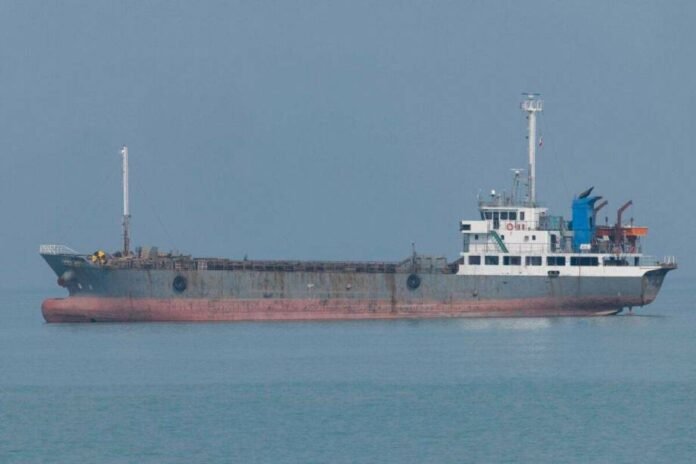
An oil tanker is being pictured in the Persian Gulf near the seaport city of Bushehr, in Bushehr Province, southern Iran, on April 29, 2024 [Morteza Nikoubazl/NurPhoto via Getty Images]

An oil tanker is being pictured in the Persian Gulf near the seaport city of Bushehr, in Bushehr Province, southern Iran, on April 29, 2024 [Morteza Nikoubazl/NurPhoto via Getty Images]

An Iranian supertanker carrying nearly $220 million worth of oil has evaded US blockade efforts, TankerTrackers reported Sunday, Anadolu reports.

“A National Iranian Tanker Company (NITC) VLCC supertanker carrying over 1.9 million barrels (valued at nearly $220 million dollars) of crude oil has managed to evade the U.S. Navy and reach the Far East,” TankerTrackers wrote on US social media platform X.

The vessel, identified as “HUGE” (9357183), was last seen off Sri Lanka more than a week ago and is currently moving through the Lombok Strait in Indonesia toward the Riau Archipelago.

The tanker has not transmitted Automatic Identification System (AIS) signals since March 20, when it departed the Strait of Malacca bound for Iran, according to maritime tracking information.

Shurat HaDin Files Complaints Alleging Qatari Influence on ICC Prosecutor in Israel Warrants Case

0
shurat-hadin-files-complaints-alleging-qatari-influence-on-icc-prosecutor-in-israel-warrants-case
Shurat HaDin Files Complaints Alleging Qatari Influence on ICC Prosecutor in Israel Warrants Case


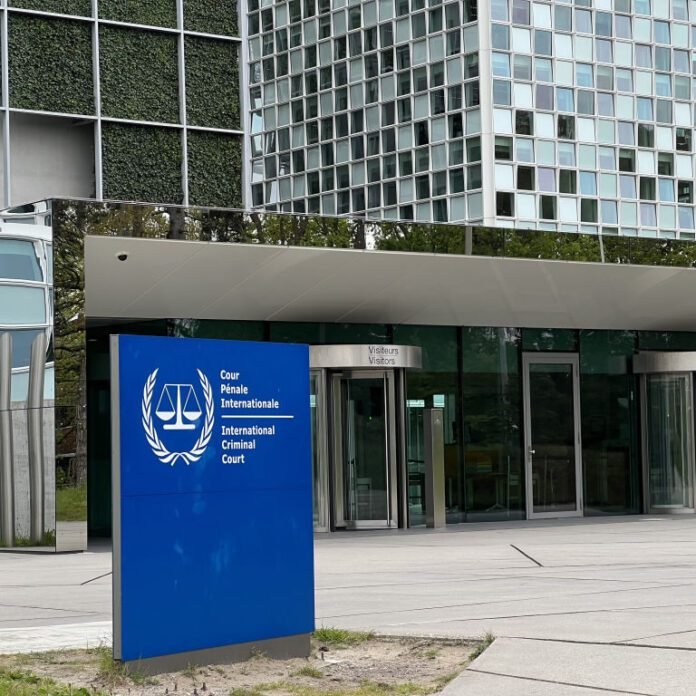
Shurat HaDin–Israel Law Center said it has filed criminal complaints with the International Criminal Court (ICC) in The Hague and Israel’s attorney general, alleging attempts to improperly influence ICC Prosecutor Karim Khan in connection with arrest warrants against Israeli officials.

The legal advocacy group said its submission, dated May 3, 2026, cites allegations that individuals linked to Qatar offered assistance or protection to Khan related to his decision to pursue warrants against Prime Minister Benjamin Netanyahu and former Defense Minister Yoav Gallant. The claims were based on reporting by The Wall Street Journal and described as drawing on an affidavit submitted to the FBI and audio recordings.

According to the complaint, intermediaries allegedly offered to “look after” Khan if he advanced the case. Khan has denied wrongdoing, while Qatar has dismissed the allegations as baseless.

Shurat HaDin said the alleged conduct could constitute violations under Article 70 of the Rome Statute, which addresses interference with the administration of justice, including attempts to corruptly influence court officials or tamper with evidence.

The group also raised concerns about the possible role of private intelligence firms, alleging they may have conducted surveillance, interfered with witnesses, or attempted to manipulate evidence connected to the ICC investigation into Israel and to separate sexual misconduct allegations involving Khan.

In a parallel request to Israeli Attorney General Gali Baharav-Miara, the organization called for a criminal investigation in Israel, arguing that the alleged actions could also constitute offenses under Israeli law, including aiding Hamas.

The filing calls for an independent inquiry and requests that key evidence, including the reported affidavit and recordings, be secured and reviewed to determine whether external influence affected the integrity of the proceedings.

“The International Criminal Court is not only a political body, but also a corrupt one. It too has fallen victim to the hostile and silent takeover of the Qatari octopus, whose money bribes officials and institutions around the world.”

The statement continued, “The court’s arrest warrants are nothing more than a blood libel, carried out by a person accused of serious crimes and by a state that sponsors terrorism. These warrants have fueled the delegitimization campaign against Israel and increased antisemitism around the world. This hunting campaign must stop now,” said Attorney Nitsana Darshan-Leitner, founder and president of Shurat HaDin.

Prince Harry ‘More Miserable Than Ever’ According to Insiders

0
prince-harry-‘more-miserable-than-ever’-according-to-insiders
Prince Harry ‘More Miserable Than Ever’ According to Insiders


Prince Harry’s California fairytale is facing a fresh round of scrutiny after a former royal editor claimed the Duke of Sussex appears “more unhappy now than he’s ever been.”

Harry, who walked away from royal life with Meghan Markle in 2020, has spent years trying to build a new world far from palace walls. But according to former royal editor Duncan Larcombe, the prince may still be carrying the emotional weight of his past.

The claim comes after Harry spoke openly about therapy, fatherhood and childhood trauma during a recent appearance at a Movember event in Melbourne, Australia.

The Duke said becoming a father made him realize he had unresolved pain from his earlier years.

“I knew that I had stuff from the past that I needed to deal with,” Harry said, referring to the period before Prince Archie was born in 2019.

He also defended therapy as something that does not have to come only after a breakdown.

“You don’t have to wait until you’re lying on the kitchen floor in the foetal position,” Harry said.

But while Harry has often presented his new life in Montecito as peaceful and free, Larcombe suggested the prince’s emotional openness tells a different story.

Speaking to New magazine, Larcombe said Harry has long been open about his “flawed and traumatic” childhood and described him as someone who wears his heart on his sleeve.

He added that Harry, unlike Prince William, seems “tortured” by the past and prone to emotional outbursts.

Then came the cutting claim: “He seems more unhappy now than he’s ever been.”

The remark is likely to fuel even more debate over whether Harry truly found the freedom he said he wanted when he left the royal fold.

Since stepping back from royal duties, Harry and Meghan have settled in California with their two children, Prince Archie and Princess Lilibet. But the couple’s post-palace life has been anything but quiet, with family feuds, security battles, media deals and public criticism keeping them firmly in the spotlight.

After their recent trip to Australia, Meghan returned home with the children while Harry traveled alone to Ukraine for non-royal engagements.

For supporters, Harry’s honesty about mental health is a sign of growth. For critics, it is another reminder that even after leaving the monarchy behind, the prince may still be fighting battles he cannot escape.

Iran sets one-month deadline for US to end naval blockade, wars in Iran, Lebanon

0
iran-sets-one-month-deadline-for-us-to-end-naval-blockade,-wars-in-iran,-lebanon
Iran sets one-month deadline for US to end naval blockade, wars in Iran, Lebanon

A view shows a large billboard displayed at Vanak Square in Tehran, Iran, on April 12, 2026. [Fatemeh Bahrami - Anadolu Agency]

A view shows a large billboard displayed at Vanak Square in Tehran, Iran, on April 12, 2026. [Fatemeh Bahrami – Anadolu Agency]

Iran has set a one-month deadline for negotiations on a deal to reopen the Strait of Hormuz, end a US naval blockade and permanently end the war in Iran and Lebanon, according to a report Saturday by Axios, Anadolu reports.

Tehran submitted a 14-point revised proposal Thursday for a framework agreement to Washington. Two sources briefed on the document said it lays out a strict one-month timeline to secure a deal covering maritime access, ending the US naval blockade and a lasting ceasefire on both fronts.

“If they misbehave, if they do something bad — but right now, we’ll see. It’s a possibility that could happen, certainly,” US President Donald Trump told reporters Saturday when asked whether he could order new strikes.

The proposal envisions a second phase only after an initial deal is sealed, launching an additional month of negotiations focused on the nuclear program, according to the sources.

Although Trump said Friday he was dissatisfied with the Iranian proposal, he told reporters Saturday before leaving Palm Beach for Miami that he would review it during the flight.

“I’m looking at it. I’ll let you know about it later,” he said. “They told me about the concept of the deal. They’re going to give me the exact wording now,” he said.

Moments later, Trump struck a far sharper tone on Truth Social, saying he “can’t imagine that it would be acceptable” and insisting Iran “has not yet paid a big enough price for what they have done to Humanity, and the World, over the last 47 years.”

In the same remarks to the media, Trump characterized the blockade on Iranian ports as a “very friendly” and uncontested measure, maintaining it does not contradict his claim that hostilities have been “terminated.”

California will soon have more than 300 data centers. Where will they get their water?

0
california-will-soon-have-more-than-300-data-centers.-where-will-they-get-their-water?
California will soon have more than 300 data centers. Where will they get their water?

This story was originally published by Inside Climate News and is reproduced here as part of the Climate Desk collaboration.

The new data center proposed for a quiet city about 115 miles east of San Diego came across people’s radars in different ways.

For patrons of the deli on West Aten Road, it was the white “Not In My Backyard” signs jutting out of lawns.  

For local irrigation district workers, it was something called an “electric service application.” 

For Margie Padilla, it was a rant on Facebook.

The 43-year-old mom came across a post online while she had a few minutes to scan social media last spring after a day spent tending her garden and taking care of her two boys.

“Somebody was complaining about this center,” Padilla said. “I was like, ‘Whoa, what’s going on here?’” 

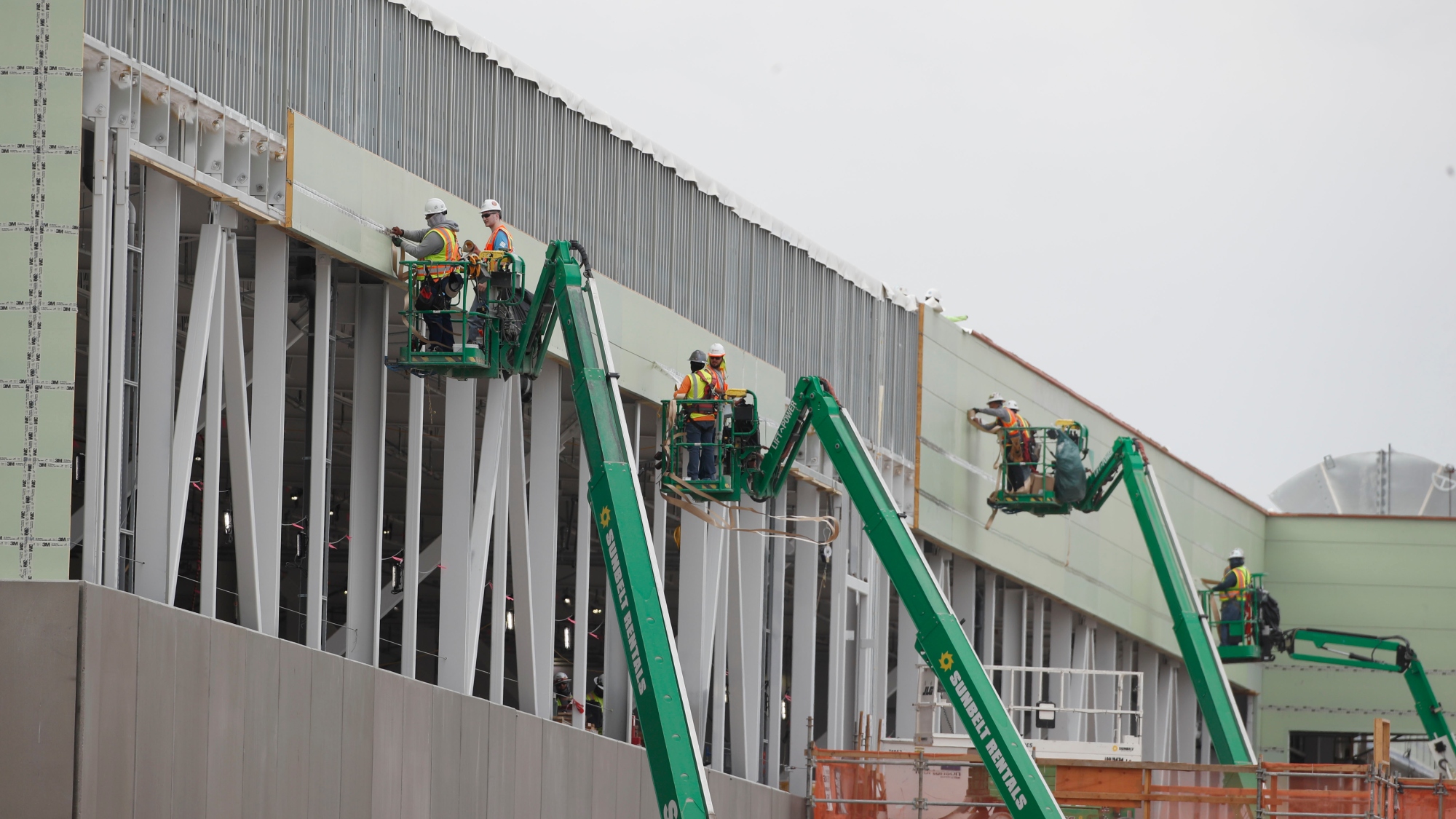
What’s going on is the second-largest new data center being considered statewide, which would be less than half a mile from Padilla’s stucco home in the center of Imperial Valley. If finished by 2028, as the developer expects, the at least 950,000-square-foot, two-story data center could be the largest operating statewide, taking up 17 football fields’ worth of land. 

The roughly $10 billion, 330-megawatt data center would require 750,000 gallons of water a day to operate, said developer Sebastian Rucci, who insists electricity and water costs won’t rise due to the data center. 

An aerial view of a data center

The proposed 330-megawatt data center in Imperial, Calif., is slated to take up 17 football fields of land and needs 750,000 gallons of water a day. Courtesy of Sebastian Rucci

“We have studies on the air. We have studies on the water. The electricity could be handled,” Rucci said. “We did our homework.” 

Imperial officials haven’t quelled local concerns, only noting that the project is facing litigation and that the center’s long-term impacts on utilities haven’t been determined. 

On top of the financial burden of maintaining her family’s health, gas and grocery expenses strain Padilla’s budget, and she’s worried a new data center will only increase water and power costs. Padilla, who first heard of the data center a year ago, has only grown more concerned, and she’s not alone. 

Some residents would see it from their backyards.

“I can only imagine the rates going up once that data center is up and running,” she said, shading her eyes from the beaming sun.

This is one of two dozen data centers expected to open in California in the next few years.

Growing concern and regulatory gaps

A majority of respondents to a nationwide poll by the US Water Alliance’s Value of Water campaign share Padilla’s worries, with 54 percent extremely or very concerned about the effect data centers will have on water quality, water supply, and costs in their area. 

In its first question about data centers since the poll began in 2016, two-thirds of voters said it was important for their state to have a plan for the effects of data centers on water in the coming years.

“I suspect that as data centers continue to be part of the broad conversation, then these numbers will probably continue to go up as people are more concerned about the impacts they have on the things that affect them and their communities, like supply, quality and cost,” said Scott Berry, the senior advisor on policy and external affairs at the US Water Alliance, from Water Week in Washington D.C. this month.

More than 90 percent of data centers in the U.S. get most of the water they need for cooling from municipal systems, estimated Shaolei Ren, an associate professor of electrical and computer engineering at the University of California, Riverside. 

During the hottest summer days, a large 100-megawatt facility can use about 1 million gallons of water for evaporative cooling. That amount is the same as about 10,000 people’s daily water use at home, Ren said. 

But those centers require “zero water for many days of the year when it’s cool outside,” he said.

Some data centers are exploring alternatives like treated wastewater or graywater for cooling instead of drinkable water, providing residents and officials with options that could reduce strain on local water supplies.

California doesn’t require AI data centers to report water usage, and the state’s Water Resources Control Board does not maintain a specific list of water rights held by data centers. Although residents are working to require more transparency about water use from data centers, recent efforts to require the facilities’ owners to report how much water they use to the state have faltered.

On top of the data center boom in California, the hundreds of water districts, a deepening Southwestern megadrought and the diminishing of the Colorado River increasingly complicate water issues. 

Also, while data centers can take as little as two to three years to build, developing new water sources can take as long as 20 years, said Ren.

Plans for the steep increase in water demand from California data centers inevitably focus on infrastructure, experts said.

“Water is not purely an environmental issue,” Ren noted. “In many places, it is fundamentally an infrastructure challenge.”

Across the country, water infrastructure upgrades are estimated to cost between $10 billion to $58 billion, Ren’s research team found. How many more facilities are built and where will be a big factor in future infrastructure costs.

The site of the proposed data center in Imperial, California. Steven Rodas / Inside Climate News

The amount of electricity a data center uses, to some degree, determines how much heat it produces, and consequently how much cooling it requires and, in turn, how much water it needs.

The Imperial County data center is one of 24 planned for completion across California by 2030, according to the latest information gathered by analysts at Cleanview, a market intelligence platform. 

Based on the about 1.7 GW of electricity the proposed data centers would use, with at least two projects for which there aren’t energy consumption figures, water infrastructure upgrade costs just for the demands of the centers in the state could run from about $200 million to $800 million, Ren said.

“This number assumes that California data centers’ water use intensity is the same as the national average,” he explained.

There is no central permitting authority for data centers in California, and most are overseen by city and county governments, according to the California Public Utilities Commission. Data Center Map shows 286 of the facilities currently operating in California.

While California’s size and tech focus lead some to expect many more data centers here, the cost and availability of power and land, as well as the general tax and regulatory climate, have been hurdles to building them out, according to the Data Center Coalition, which represents big corporations like Amazon, Meta, Google, and Microsoft.

Read Next

Nonetheless, California trails only Virginia and Texas in the number of individual data center locations, but its centers have much lower total new electricity capacity, which may also indicate lower water demand.

A research team at the University of California, Riverside, recently found that data centers could collectively require 697 to 1,451 million gallons per day (MGD) of new water capacity nationally through 2030. New York City’s average daily supply is about 1,000 MGD.

Currently, data centers are estimated to use about 39 billion gallons of water nationally each year, Khara Boender, the senior manager for state policy at the Data Center Coalition, said, citing market research from Bluefield

“I know when we start to talk about billions of gallons of water in a year, that sounds absolutely crazy,” Boender said. “Looking at how that falls into context with some of these other large water users, I think that that kind of contextualization could be surprising to folks.”

Alfalfa irrigation in California’s Imperial Valley alone uses more than 800 billion gallons a year, an April essay in Outside highlighted. The beverage industry uses 533 billion gallons of water a year, and the semiconductor industry uses 59 billion gallons, Boender noted.

But spikes in water needs for data centers can lead to bottlenecks in small community water systems, Ren, at the University of California, Riverside, noted. “Only comparing the annual totals can obscure the real water challenge,” he said.

There is no single fix for the pressure data centers are placing on water supplies across the state, which will be different depending on the location and water systems where each facility is built, said Shivaji Deshmukh, the general manager of the Metropolitan Water District of Southern California — the largest supplier of treated water in the U.S. The district serves 19 million people in six California counties.

“Every community — even within our service area — is different in terms of costs, what type of supply they have. Some regions have access to groundwater. Some have access to treated wastewater or recycled water somewhere along the coast,” Deshmukh said.

So industries, most of which require water for cooling, will look to satisfy that thirst from different sources, depending on their location. 

“Imperial Irrigation District is one where I know they’re discussing … installation of data centers in their area,” Deshmukh said.

The Imperial dilemma

The plot of dirt on West Aton Road betrays nothing of the colossal data center that could one day sit on the land. Owner Sebastian Rucci hopes to have the facility up and running by the summer of 2028, he said.

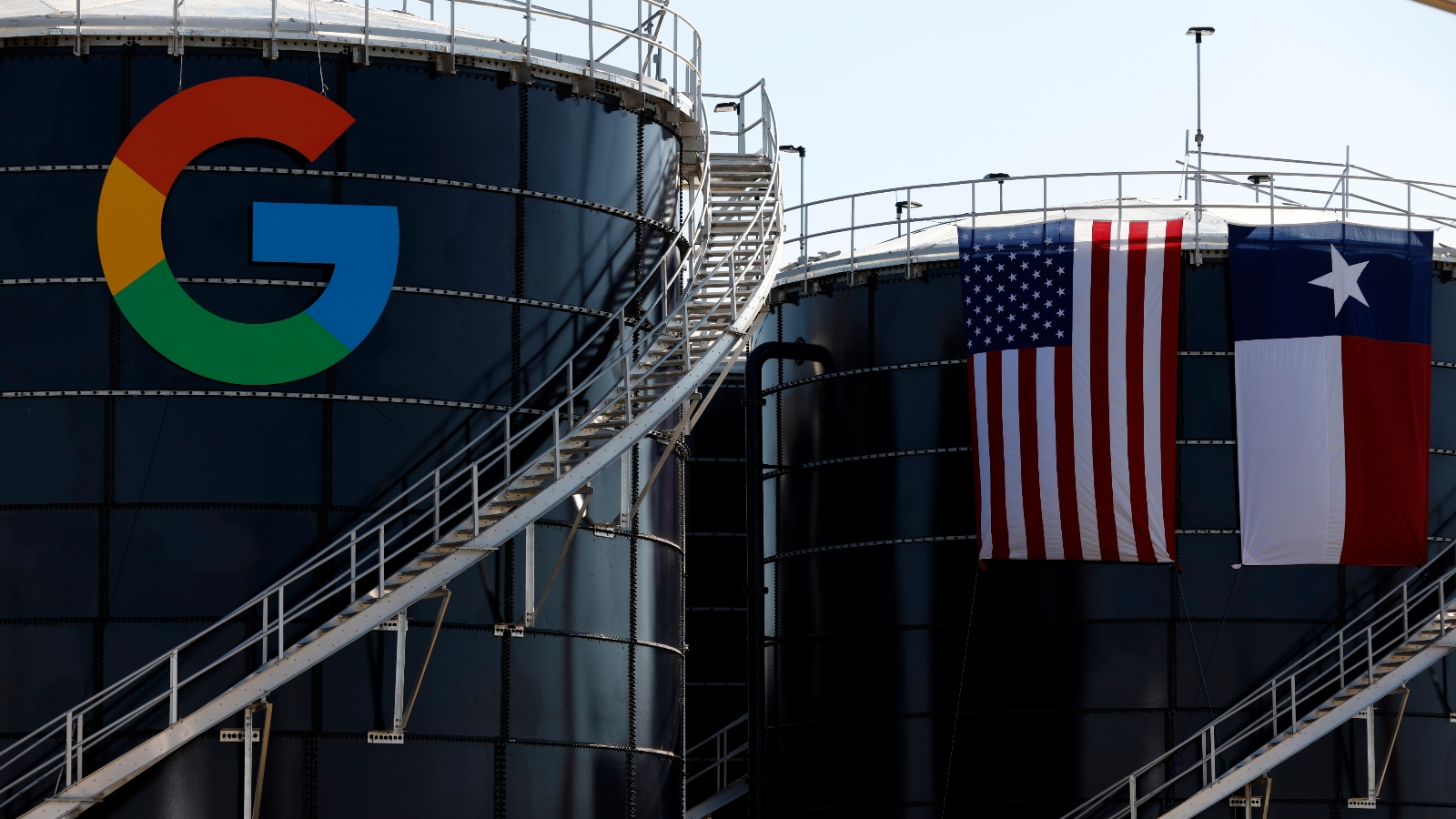
Rucci, who is also a lawyer, has purchased 235 acres for his data center so far. He says the data center will allow Google to train its Gemini artificial intelligence, although Google denies any involvement “in a data center project in Imperial County.”

Before he can begin building on the site, a judge will weigh in on the city of Imperial’s lawsuit against the project, which demands that it clear higher environmental hurdles, including the California Environmental Quality Act — which often draws ire from developers who claim it can needlessly stall proposals. The local water district also has to complete its review of the project.

Rucci is determined, though, citing a series of studies conducted by survey and consulting groups, and by the district itself, which manages water and provides power. He posted those reports online to show the data center made sense — in part because water and power could be effectively provided to the data center, and the land was permitted for industrial use. 

Margie Padilla tours her garden on April 16, where she holds a carrot that she thinks hasn’t grown well due to drier temperatures in the Imperial Valley. Steven Rodas / Inside Climate News

The debate between supporters and opponents of the facility has escalated, with the next court date set for the end of April.

With that date in mind, Padilla, the Imperial mother, set out to work in her garden on a balmy Thursday morning. 

Donning a green, short-sleeved shirt and flip-flops, she checked on her squash, poked at her cherry tomatoes, and dug in her spade to move periwinkle to a better spot for watering. And through it all, she wondered what the thirst of the proposed data center would do to her garden. And her monthly water bill.

Her payment for water, sewer, and trash services currently ranges from $90 to $130 a month — more than double what she paid six years ago. 

“I’m also afraid they’re going to put [water] restrictions for us, for the residents,” said Padilla, who estimates her family of four uses about 300 gallons of water a day. “That’s going to be harsh on me, particularly, because of my garden. I grow my own food, my own vegetables.” 

Worries over power and water price surges are misguided, Rucci said. He has been considering power and water needs for the 18 months he has worked on the project, he said, and outlined how it would bring various economic benefits to the region, including about 100 permanent jobs post-construction. 

Read Next

Still, Padilla is thinking about other things. She says her two sons were anemic when they were younger, requiring them to eat fresh produce to supplement the iron their bodies needed. Even after treating the condition, the Imperial mom keeps her sons’ diet filled with veggies and fruits. She needs her garden for that.

The Imperial Irrigation District declined to be interviewed for this story but, in a written statement, noted that it has yet to receive a formal request for water for the project.

The District, which provides water and power to all of Imperial County as well as parts of Riverside and San Diego counties, did not have specific estimates of how demand from the data center could impact its costs.

“Water was very concerning to us from the beginning,” Rucci said.

He’s spoken with city officials in Imperial and El Centro to arrange a water deal for the facility, he said, and proposed getting 6 million gallons per day of reclaimed water from both cities.

“Our plan was we would do all the municipal upgrades at our cost, and then we would take the excess water and run it clean to the Salton Sea,” he said. 

Those conversations have not paid off, although Rucci said he remains hopeful municipal officials will help him get water for his facility. 

“We first tried to do reclaimed water. I still prefer that, but that seems to be taking months, and I don’t know if that … will happen,” Rucci said. “Probably we’ll just get it from the [Imperial Irrigation District]” by purchasing it for industrial use.

How the center obtains its water may change as its plans are updated, he added. 

Through it all, he remains confident the data center will be built in Imperial County and be good for the area.

Carolina Paez disagrees.

The 46-year-old mother’s backyard abuts the data center site. She says she’d be able to hit it with a rock from her property. 

Both she and her son have asthma, and she’s worried about the construction dust, potential pollution, and noise from the data center. And higher bills.

“I’m not just thinking about the expenses that are going to increase, but also about the things that are going to lose value — for instance, my house,” Paez said in Spanish.

“What am I going to do with this property? Who would even want to live here?”


Florence Officials Condemn Threats Against Jews and Israeli Consul

0
florence-officials-condemn-threats-against-jews-and-israeli-consul
Florence Officials Condemn Threats Against Jews and Israeli Consul


Italian officials from across the political spectrum condemned antisemitic and threatening graffiti found Sunday on walls in central Florence, after vandals targeted Jews and Marco Carrai, Israel’s honorary consul in Tuscany, with slogans invoking violence and death.

The graffiti appeared on a wall in Via dei Banchi and in the underpass of the Santa Maria Novella train station, according to La Nazione. The phrases included “Zionists hanged,” “Carrai die,” “Jews burned alive,” “Jews to the stake,” “No Jews,” and “Free Palestine,” along with a swastika, according to Italian media reports. City sanitation workers removed the graffiti after it was discovered.

Florence Mayor Sara Funaro said the city would not allow such messages to stand. “The antisemitism that resurfaces on the walls of our city is something serious and unacceptable,” Funaro said. “Today we woke up to writings that incite hatred, violence, and death, bringing back to memory the darkest years of our history.” She said the slogans “have nothing to do with the values of Florence and the identity of our community” and expressed solidarity with Carrai.

“Florence responds to hatred and violence with unity,” Funaro said. “We have already ordered the immediate removal of the writings. At the same time, I hope those responsible will be identified as soon as possible. Florence does not deserve all this.”

Carrai thanked law enforcement officials who protect him and his family, saying he has been the target of repeated personal threats. He also thanked local and national political figures who, he said, have supported and defended him. He criticized those who condemn anonymous vandals while remaining silent toward public voices that, in his view, fuel hatred more subtly.

Tuscany Regional President Eugenio Giani said he stood with Carrai and condemned the intimidation. “Every form of threat or intimidation is unacceptable and must be firmly condemned, because it strikes not only the individual but the proper functioning of public and democratic debate,” Giani said. “Tuscany is and must remain a land where dissent is always expressed with respect for people and institutions, without violent or intimidating drifts.”

Dario Nardella, a member of the European Parliament for the center-left Democratic Party and former mayor of Florence, said the threats against Carrai must be condemned “without hesitation.” He called on institutions and civil society to respond through education, respect, and schools, saying, “There is a climate of hatred in the world that produces even more hatred.” Nardella linked that climate partly to the war in the Middle East and tensions in the Mediterranean.

Cristina Manetti, Tuscany’s regional culture councilor, called the graffiti “another serious and unacceptable act of intimidation” and said such episodes attack civil coexistence and mutual respect.

The incident follows other antisemitic episodes in Italy, including the recent vandalism of Holocaust memorial stumbling stones in Turin, and comes during a broader rise in tensions over the Israel-Hamas war that began with Hamas’ October 7, 2023 attack on Israel.

Related articles:


Secret Service Tackles ‘Unruly Man’ at Trump Golf Club (Video)

0
secret-service-tackles-‘unruly-man’-at-trump-golf-club-(video)
Secret Service Tackles ‘Unruly Man’ at Trump Golf Club (Video)


Tensions are still running high around President Donald Trump — and a wild scene at his Florida golf resort just proved it.

An out-of-control man was taken down and arrested by Secret Service agents Saturday afternoon at Trump National Doral Golf Club after allegedly causing a major disturbance at a security checkpoint.

According to officials, the chaos unfolded around 4:15 p.m. when the unidentified man reportedly refused to follow orders, set off security alarms, and even got physical with a federal agent.

Video circulating online shows the suspect pacing nervously before being quickly restrained and slapped in handcuffs near the entrance screening area — a spot typically packed with tight security and armed personnel.

Authorities say the man triggered magnetometers — the same kind used to detect weapons — instantly putting agents on high alert.

Despite the tense moment, officials were quick to shut down any panic.

“At no point did this situation impact the established security posture,” said a Secret Service spokesperson, emphasizing that there was no broader threat to Trump or future visits.

Still, the optics are hard to ignore.

The suspect now faces charges of disorderly conduct and resisting arrest without violence. He’s currently being held at a Miami jail as investigators sort out exactly what sparked the outburst.

Notably, Trump was not at the resort when the incident went down.

But the timing couldn’t be more alarming.

The confrontation comes just one week after a chilling security breach rocked the White House Correspondents’ Dinner — when a heavily armed suspect allegedly stormed a checkpoint with a shotgun and knives in what prosecutors say was a plot to assassinate the president and members of his cabinet.

That suspect, identified as Cole Allen, is now facing a mountain of federal charges — and could spend the rest of his life behind bars if convicted.

Taken together, the back-to-back incidents paint a troubling picture: security threats surrounding the president aren’t slowing down — and every disturbance, no matter how small, is now being treated like the real thing.

Apple… The digital Strait of Hormuz

0
apple…-the-digital-strait-of-hormuz
Apple… The digital Strait of Hormuz

I return to my favourite writer, John Thornhill, and borrow from him that rare glint of insight. When he replaced the Strait of Hormuz with Apple, the analogy seemed exaggerated at first glance, almost too bold. But the more one contemplates it, the more its precision reveals itself.

The Strait of Hormuz is not merely a waterway; it is a choke point of power, a bottleneck through which energy flows and from which the world is watched.

Apple, in Thornhill’s metaphor, performs the same function—only in the digital geography. When it comes to how artificial intelligence is deployed in consumer services, Apple controls the technological equivalent of the Strait of Hormuz. Not because it is always the most innovative, nor because it leads the AI race, but because it owns the passage—the passage to the user.

Apple can be both partner and toll collector, much like the strait itself. It can license a third‑party model, wrap it in its own cloud‑based service, and take a cut of every subscription sold through the App Store.

And just as a fifth of the world’s oil passes through Hormuz, Apple’s platforms, App Store rules, and sheer volume of transactions give it immense power to shape entire markets, tax them, or redirect them altogether.

This analysis arrives at a delicate moment—one filled with speculation about Apple’s future leadership. Tim Cook, who carried forward the legacy of the late visionary Steve Jobs with quiet managerial discipline, was not the maker of the myth but its custodian. He transformed Apple from the genius of an individual into the machinery of a system—from inspiration into infrastructure.

Since taking over as CEO in 2011, Cook has overseen Apple’s expansion from a company valued at around $350 billion to one exceeding $4 trillion. Revenues have nearly quadrupled, and Apple has grown into a global ecosystem of more than 2.5 billion active devices.

Today, the company is undergoing one of the most significant leadership transitions in its modern history. After more than a decade at the helm, Cook will move into the role of Executive Chair, while John Ternus—Apple’s long‑time head of hardware engineering—prepares to assume the CEO position on 1 September 2026.

Ternus represents continuity, but also a shift in emphasis. A mechanical engineer by training, he has spent most of his professional life at Apple, rising through the ranks to lead hardware engineering for its flagship products. His track record is deeply intertwined with Apple’s core identity: building tightly integrated, high‑performance devices. He played a pivotal role in the evolution of the Mac and iPhone, in Apple’s transition to its own silicon, and in the launch of products such as AirPods.

But the question now is whether guardianship is enough in an age of technological explosions.

Thornhill hints at a striking paradox: power no longer lies solely in invention, but in controlling the channels of passage. AI companies multiply, ideas flow, models compete—but the user remains held within the grip of a screen. And at that screen stands Apple, the gatekeeper. The phone is no longer a device; it is a closed system of decisions.

What can be installed, what must be paid for, how a service is presented—all of it passes through a single filter. Not merely a technical filter, but an economic one. And here lies Apple’s own “Hormuz tax.”

Every app that crosses, every service that reaches the user, every subscription activated—there is a percentage taken, a decision made.

In geopolitics, the danger of chokepoints is well known: any tension raises oil prices, any threat rattles markets. In technology, the threat is quieter—but deeper.

When one company becomes the passage, innovation itself begins to adapt to it. Developers stop thinking about what is possible and start thinking about what is permitted. Creativity becomes negotiation. AI amplifies this contradiction.

Revolutions happen in laboratories, but usage happens in pockets—and the pocket, for the most part, is governed by Apple. A small company may develop a groundbreaking model, but it still needs a window. And the window is neither free nor neutral.

Apple does not need to dominate AI research to dominate its distribution. By controlling the most important points of sale and the most advanced silicon production lines, it can impose its terms on everyone. This is why the new CEO, John Ternus, promises influential AI products—and why Tim Cook becomes a global ambassador. Ternus must keep Apple’s devices and developer platform attractive enough for companies to continue relying on them, while Cook must keep diplomatic channels open in Brussels, Beijing, and Washington.

READ: Hormuz is the war’s invoice—and Washington can’t pay it

In the past, knowledge was power. Today, access is power. Apple does not need to be first in AI; it only needs to be the gate through which everyone must pass. This is a silent shift—but a profound one.

The question that imposes itself is whether this strait can be broken.

History says yes, but only under difficult conditions: either a technological revolution that changes the very shape of the device, or regulatory intervention that redistributes power.

So far, neither has fully materialised.

Apple, in this sense, is not merely a company. It is a form of invisible infrastructure—unseen by the consumer, yet decisive. It resembles the pipelines that no one notices but that determine what reaches the end user.

In the end, Thornhill is not praising Apple as much as he is warning about it. Warning of the moment when technology becomes a strait, and innovation becomes a compulsory crossing. At that point, the question is no longer: Who is better? but rather: Who is allowed to pass?

What began as a geographical metaphor ends as an economic truth: Apple is not a company, but a strait—and whoever controls the strait controls the passage.

The views expressed in this article belong to the author and do not necessarily reflect the editorial policy of Middle East Monitor.

New School Rejects Student Senate Vote To Defund Hillel Chapter

0
new-school-rejects-student-senate-vote-to-defund-hillel-chapter
New School Rejects Student Senate Vote To Defund Hillel Chapter


The New School said Saturday that its University Student Senate had no authority to defund or cut ties with the university’s Hillel chapter, after student leaders voted Friday in New York City to declare the Jewish campus organization “not in good standing” over Israel-related programs and trips. The university said the administration, not the student senate, controls recognition, funding eligibility, and official status for registered student organizations.

The student senate alleged that Hillel’s ties to Hillel International, Birthright Israel, Onward Israel, and programs involving visits or volunteering on Israel Defense Forces bases linked the chapter to violations of international law. The senate said Hillel could return to good standing if it cut ties with Hillel International and ended participation in several Israel-related student trips.

“To continue to fund Hillel at the New School would mean that your student fees would be used to support violations of international law,” the senate said. “Our shared values require us to enforce our policies until Hillel agrees to affirm and abide by international law.” The student senate also cited Birthright Israel activities, including travel in the Golan Heights.

The university rejected the move. “The student senate does not have the authority to determine the recognition, funding eligibility, or official status of registered student organizations. That authority rests with university administration,” a spokesperson said. “Our Hillel chapter remains, as it always has been, in good standing, eligible for funding, and supporting Jewish life at The New School.”

The vote was believed to be the first such action against a Hillel chapter in the US. Hillel officials said they were in talks with the university after the vote. The campus chapter serves Jewish students at The New School, a private university in Manhattan.

The decision drew criticism from Jewish leaders and elected officials. Mark Treyger, chief executive officer of the Jewish Community Relations Council of New York, called the vote “disgraceful and dangerous.” New York City Council Member Eric Dinowitz described it as “a direct attack on Jewish life on campus.” Rep. Ritchie Torres said the episode showed that “discrimination against Jewish individuals and institutions is becoming increasingly normalized.”

The Council on American-Islamic Relations – New York welcomed the vote as “a step toward accountability and adherence to international human rights principles,” while Jewish Voice for Peace praised the action and said it hoped similar campaigns would spread.

The dispute comes as US universities continue to confront conflicts over Israel, antisemitism, campus speech, and Jewish student life following Hamas’ October 7, 2023, attack and the war in Gaza.

0FansLike
0FollowersFollow
0FollowersFollow
0SubscribersSubscribe
- Advertisement -
Google search engine

Recent Posts