19 C
London
Sunday, May 3, 2026
Home Blog

Apple… The digital Strait of Hormuz

0
apple…-the-digital-strait-of-hormuz
Apple… The digital Strait of Hormuz

I return to my favourite writer, John Thornhill, and borrow from him that rare glint of insight. When he replaced the Strait of Hormuz with Apple, the analogy seemed exaggerated at first glance, almost too bold. But the more one contemplates it, the more its precision reveals itself.

The Strait of Hormuz is not merely a waterway; it is a choke point of power, a bottleneck through which energy flows and from which the world is watched.

Apple, in Thornhill’s metaphor, performs the same function—only in the digital geography. When it comes to how artificial intelligence is deployed in consumer services, Apple controls the technological equivalent of the Strait of Hormuz. Not because it is always the most innovative, nor because it leads the AI race, but because it owns the passage—the passage to the user.

Apple can be both partner and toll collector, much like the strait itself. It can license a third‑party model, wrap it in its own cloud‑based service, and take a cut of every subscription sold through the App Store.

And just as a fifth of the world’s oil passes through Hormuz, Apple’s platforms, App Store rules, and sheer volume of transactions give it immense power to shape entire markets, tax them, or redirect them altogether.

This analysis arrives at a delicate moment—one filled with speculation about Apple’s future leadership. Tim Cook, who carried forward the legacy of the late visionary Steve Jobs with quiet managerial discipline, was not the maker of the myth but its custodian. He transformed Apple from the genius of an individual into the machinery of a system—from inspiration into infrastructure.

Since taking over as CEO in 2011, Cook has overseen Apple’s expansion from a company valued at around $350 billion to one exceeding $4 trillion. Revenues have nearly quadrupled, and Apple has grown into a global ecosystem of more than 2.5 billion active devices.

Today, the company is undergoing one of the most significant leadership transitions in its modern history. After more than a decade at the helm, Cook will move into the role of Executive Chair, while John Ternus—Apple’s long‑time head of hardware engineering—prepares to assume the CEO position on 1 September 2026.

Ternus represents continuity, but also a shift in emphasis. A mechanical engineer by training, he has spent most of his professional life at Apple, rising through the ranks to lead hardware engineering for its flagship products. His track record is deeply intertwined with Apple’s core identity: building tightly integrated, high‑performance devices. He played a pivotal role in the evolution of the Mac and iPhone, in Apple’s transition to its own silicon, and in the launch of products such as AirPods.

But the question now is whether guardianship is enough in an age of technological explosions.

Thornhill hints at a striking paradox: power no longer lies solely in invention, but in controlling the channels of passage. AI companies multiply, ideas flow, models compete—but the user remains held within the grip of a screen. And at that screen stands Apple, the gatekeeper. The phone is no longer a device; it is a closed system of decisions.

What can be installed, what must be paid for, how a service is presented—all of it passes through a single filter. Not merely a technical filter, but an economic one. And here lies Apple’s own “Hormuz tax.”

Every app that crosses, every service that reaches the user, every subscription activated—there is a percentage taken, a decision made.

In geopolitics, the danger of chokepoints is well known: any tension raises oil prices, any threat rattles markets. In technology, the threat is quieter—but deeper.

When one company becomes the passage, innovation itself begins to adapt to it. Developers stop thinking about what is possible and start thinking about what is permitted. Creativity becomes negotiation. AI amplifies this contradiction.

Revolutions happen in laboratories, but usage happens in pockets—and the pocket, for the most part, is governed by Apple. A small company may develop a groundbreaking model, but it still needs a window. And the window is neither free nor neutral.

Apple does not need to dominate AI research to dominate its distribution. By controlling the most important points of sale and the most advanced silicon production lines, it can impose its terms on everyone. This is why the new CEO, John Ternus, promises influential AI products—and why Tim Cook becomes a global ambassador. Ternus must keep Apple’s devices and developer platform attractive enough for companies to continue relying on them, while Cook must keep diplomatic channels open in Brussels, Beijing, and Washington.

READ: Hormuz is the war’s invoice—and Washington can’t pay it

In the past, knowledge was power. Today, access is power. Apple does not need to be first in AI; it only needs to be the gate through which everyone must pass. This is a silent shift—but a profound one.

The question that imposes itself is whether this strait can be broken.

History says yes, but only under difficult conditions: either a technological revolution that changes the very shape of the device, or regulatory intervention that redistributes power.

So far, neither has fully materialised.

Apple, in this sense, is not merely a company. It is a form of invisible infrastructure—unseen by the consumer, yet decisive. It resembles the pipelines that no one notices but that determine what reaches the end user.

In the end, Thornhill is not praising Apple as much as he is warning about it. Warning of the moment when technology becomes a strait, and innovation becomes a compulsory crossing. At that point, the question is no longer: Who is better? but rather: Who is allowed to pass?

What began as a geographical metaphor ends as an economic truth: Apple is not a company, but a strait—and whoever controls the strait controls the passage.

The views expressed in this article belong to the author and do not necessarily reflect the editorial policy of Middle East Monitor.

New School Rejects Student Senate Vote To Defund Hillel Chapter

0
new-school-rejects-student-senate-vote-to-defund-hillel-chapter
New School Rejects Student Senate Vote To Defund Hillel Chapter


The New School said Saturday that its University Student Senate had no authority to defund or cut ties with the university’s Hillel chapter, after student leaders voted Friday in New York City to declare the Jewish campus organization “not in good standing” over Israel-related programs and trips. The university said the administration, not the student senate, controls recognition, funding eligibility, and official status for registered student organizations.

The student senate alleged that Hillel’s ties to Hillel International, Birthright Israel, Onward Israel, and programs involving visits or volunteering on Israel Defense Forces bases linked the chapter to violations of international law. The senate said Hillel could return to good standing if it cut ties with Hillel International and ended participation in several Israel-related student trips.

“To continue to fund Hillel at the New School would mean that your student fees would be used to support violations of international law,” the senate said. “Our shared values require us to enforce our policies until Hillel agrees to affirm and abide by international law.” The student senate also cited Birthright Israel activities, including travel in the Golan Heights.

The university rejected the move. “The student senate does not have the authority to determine the recognition, funding eligibility, or official status of registered student organizations. That authority rests with university administration,” a spokesperson said. “Our Hillel chapter remains, as it always has been, in good standing, eligible for funding, and supporting Jewish life at The New School.”

The vote was believed to be the first such action against a Hillel chapter in the US. Hillel officials said they were in talks with the university after the vote. The campus chapter serves Jewish students at The New School, a private university in Manhattan.

The decision drew criticism from Jewish leaders and elected officials. Mark Treyger, chief executive officer of the Jewish Community Relations Council of New York, called the vote “disgraceful and dangerous.” New York City Council Member Eric Dinowitz described it as “a direct attack on Jewish life on campus.” Rep. Ritchie Torres said the episode showed that “discrimination against Jewish individuals and institutions is becoming increasingly normalized.”

The Council on American-Islamic Relations – New York welcomed the vote as “a step toward accountability and adherence to international human rights principles,” while Jewish Voice for Peace praised the action and said it hoped similar campaigns would spread.

The dispute comes as US universities continue to confront conflicts over Israel, antisemitism, campus speech, and Jewish student life following Hamas’ October 7, 2023, attack and the war in Gaza.

Jane Fonda Reveals Shocking Bombshell About Robert Redford

0
jane-fonda-reveals-shocking-bombshell-about-robert-redford
Jane Fonda Reveals Shocking Bombshell About Robert Redford


Hollywood icon Jane Fonda just dropped a jaw-dropping behind-the-scenes story about her longtime co-star and close friend Robert Redford—and it’s not what you’d expect from one of the most handsome leading men in movie history.

Speaking at the TCM Classic Film Festival, Fonda revealed that while Redford had women practically throwing themselves at him, the attention didn’t flatter him—it made him deeply uncomfortable.

“He was the most gorgeous human being I had ever been with,” Fonda said, recalling their early days filming Barefoot in the Park. Even before he became a full-blown superstar, she noticed something unusual: women couldn’t take their eyes off him. “Every secretary would open her door just to watch him walk by,” she said, laughing. “I knew right then—he was going to be huge.”

And huge he became.

From classics like Butch Cassidy and the Sundance Kid to The Sting and All the President’s Men, Redford turned into one of Hollywood’s biggest box office draws. But behind the fame? A very different story.

Fonda says things reached a fever pitch while filming The Electric Horseman in Las Vegas. “Women would run to him and faint at his feet,” she revealed. “I had never seen anything like it… and it made him so uncomfortable.”

Yes—Robert Redford, the ultimate heartthrob, didn’t enjoy the chaos of fame.

According to Fonda, being a movie star wasn’t easy for him. The constant attention weighed on him, even if he appreciated the doors it opened. That fame ultimately helped him launch the Sundance Institute and the world-famous Sundance Film Festival—a move that reshaped independent cinema forever.

Still, Redford wasn’t just a serious filmmaker. Fonda painted a more playful picture too, calling him “really funny” and a lover of practical jokes—though she joked he had one flaw: “He was always two or three hours late,” turning short shoots into months-long productions.

Fonda and Redford shared the screen four times, including their emotional final reunion in Our Souls at Night, where they played aging neighbors finding love later in life—a fitting full-circle moment for two legends.

Redford passed away in 2025 at 89, leaving behind a legacy of iconic films and a quieter truth many fans never saw: the man everyone adored never quite got used to being adored.

And maybe that’s what made him unforgettable.

Iran strikes damaged 16 US military sites in Middle East, report claims

0
iran-strikes-damaged-16-us-military-sites-in-middle-east,-report-claims
Iran strikes damaged 16 US military sites in Middle East, report claims

Iran and its allies struck no fewer than 16 US military sites in eight countries across the Middle East in the latest military conflict, leaving some of them “virtually unusable,” CNN reported on Friday citing sources.

The report was based on dozens of satellite images and interviews with sources from the US and Gulf Arab countries, and the affected facilities make up the “majority of US military positions” in the region.

“There has been a spectrum of assessments,” one source said. “From a pretty dramatic side, of the whole facility is destroyed and needs to be shut down, to leaders who say these things are worth repairing due to the strategic benefit they give the US.”

READ: US says it redirected 48th vessel from Iranian ports

Satellite images showed that Tehran’s main targets included advanced radar systems, communications systems and aircraft. Many of those assets are expensive and difficult to replace.

“It’s notable they really identified those facilities as the most cost-effective targets to hit,” the source said. “Our radar systems (are) our most expensive and our most limited resources in the region.”

On Wednesday, Pentagon comptroller Jules “Jay” Hurst III told lawmakers that the war in Iran has cost the US about $25 billion so far. However, a source later told CNN that the actual figure is likely closer to $40-50 billion.

The war is currently on a halt and efforts to end it permanently continue. US President Donald Trump on Friday said “Iran isn’t coming through with the kind of deal that we have to have.”

READ: Iranian foreign minister says US ‘lying’ about war cost, claims $100B burden

Thai Police Raid Daycare With 89 Israeli Children, Arrest Iranian and Thai Operators

0
thai-police-raid-daycare-with-89-israeli-children,-arrest-iranian-and-thai-operators
Thai Police Raid Daycare With 89 Israeli Children, Arrest Iranian and Thai Operators


Thai authorities raided an unauthorized daycare on Koh Phangan on Friday, arresting several individuals and filing multiple charges after finding 89 Israeli children enrolled at a facility licensed for far fewer, Bangkok Post reported.

The raid took place on Friday at Arki Kid School in Moo 3 village. Officials said the center was approved to accommodate only 18 children aged two to 12, but discovered 89 on-site.

Among those detained were Aidin Kishipoor and Ndin Kishipoor, an Iranian couple both aged 45, and Prathumthip Yu-in, a Thai national aged 61. Authorities charged them with operating an unlicensed private school, employing foreign nationals without permits, failing to declare foreign workers, and breaching child protection regulations.

Investigators said the facility relied heavily on foreign labor. Forty employees were from Myanmar, with additional staff from other countries. Three South Africans and one American were charged with working without authorization. A French woman and a South African woman, both holding work permits, were prosecuted for failing to properly report their employment details.

The daycare collected tuition of 64,000 baht per child per semester, according to the report.

Koh Phangan has attracted a growing Israeli community, with about 2,500 Israelis now residing on the island.

Material published on the school’s website described its approach to education, stating: “While we don’t adhere strictly to an external curriculum, we align our approach with international education standards to ensure that our students acquire the same foundational knowledge as their peers in other international schools.”

Nancy Guthrie’s Son-in-Law’s ‘Creepy’ School Video Resurfaces

0
nancy-guthrie’s-son-in-law’s-‘creepy’-school-video-resurfaces
Nancy Guthrie’s Son-in-Law’s ‘Creepy’ School Video Resurfaces


Three months after beloved 84-year-old Nancy Guthrie vanished without a trace, the internet is once again buzzing — and this time, it’s all about her son-in-law.

Newly resurfaced videos of Tommaso Cioni, a teacher who was once under intense scrutiny in the case, are making the rounds online — and people can’t agree on what they’re seeing.

In the clips, Cioni appears far removed from the grim headlines that have surrounded him. The sixth-grade science teacher is shown joking with students, cooking pasta during a school project, and even attempting some lighthearted breakdancing moves. In one moment, he flashes a playful Italian gesture, leaning into the role of a fun, energetic educator.

But not everyone is buying the lighter side.

“He creeps me out,” one viewer wrote bluntly after watching the footage. Others piled on, calling his demeanor “weird,” “unapproachable,” and even “mean-looking,” despite the upbeat setting.

Still, a surprising number of commenters pushed back, saying the clips humanized a man who had been unfairly judged in the court of public opinion.

“This actually makes me see him as a normal person,” one user admitted. “If he’s innocent, people are going to regret how quickly they turned on him.”

Cioni’s name has been tied to the case since day one. He and his wife, Annie Guthrie, were the last known people to see Nancy alive after hosting her for dinner the night before she disappeared from her Tucson home on February 1.

When Nancy failed to show up for church the next morning — something completely out of character — panic set in. A 911 call launched a desperate search that, even now, has led nowhere.

Early reports claimed Cioni was considered a “prime suspect,” but authorities later said the entire Guthrie family had been cleared. Still, suspicion has lingered in online circles, where armchair detectives continue to dissect every detail.

The case has only grown more haunting with time. Despite a staggering $1 million reward, no solid leads have emerged. Nancy’s daughter, Savannah Guthrie, even stepped away from her duties on the Today show for over a month to focus on the search before returning to work in April.

And now, just when the trail seemed to be going cold, these resurfaced videos have thrown gasoline on the fire.

Are they harmless glimpses into a teacher’s personality — or something more unsettling?

For now, Nancy Guthrie remains missing, and the questions just keep getting louder.

UAE restores normal air traffic after war-related disruption

0
uae-restores-normal-air-traffic-after-war-related-disruption
UAE restores normal air traffic after war-related disruption

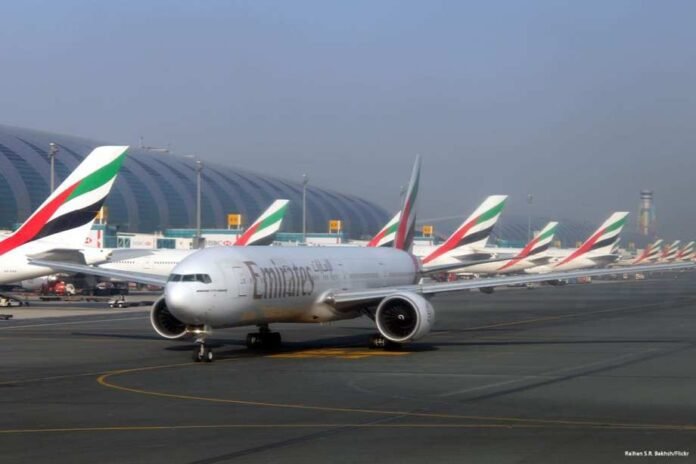
The UAE General Civil Aviation Authority announced Saturday that air traffic has returned to normal air navigation and temporary precautionary measures imposed during the US-Israeli war on Iran have been lifted, Anadolu Agency reports.

“Following a comprehensive evaluation of operational and security conditions, we have officially lifted the temporary precautionary measures previously in place,” the authority said in a statement.

“Our priority remains the safety of our skies, and we continue to maintain continuous, real-time monitoring to ensure the highest levels of aviation safety for all,” it added.

The UAE had announced a “temporary and partial” closure of its airspace on Feb. 28, as a precautionary measure at the outset of the war, which is on a hold after Pakistan mediated a ceasefire last month. Efforts to end the conflict permanently have continued since.

READ: US approves possible military sales to Qatar, Kuwait, UAE

In a related development, Qatar Airways said it will resume operations to Iraq, with flights to Baghdad, Basra and Erbil restarting from May 10.

The airline said cargo flights to Baghdad will resume from May 7.

It recently confirmed the return of daily flights to Dubai and Sharjah in the UAE, as well as to Bahrain, Damascus, and India’s Kozhikode.

Qatar Airways also announced plans to expand its schedule from June 16 to cover more than 150 destinations across six continents, without specifying new routes.

READ: UAE to withdraw from OPEC, OPEC+

White House Seeks May 11 Netanyahu and Aoun Meeting; Israel Strikes Hezbollah Targets

0
white-house-seeks-may-11-netanyahu-and-aoun-meeting;-israel-strikes-hezbollah-targets
White House Seeks May 11 Netanyahu and Aoun Meeting; Israel Strikes Hezbollah Targets


US President Donald Trump is seeking to host a May 11 meeting at the White House between Prime Minister Benjamin Netanyahu and Lebanese President Joseph Aoun, according to a report by the Lebanese network Al-Mayadeen citing a diplomatic source.

The US Embassy in Lebanon issued a statement supporting the proposed meeting, saying, “A direct meeting between President Aoun and Prime Minister Netanyahu, facilitated by President Trump, would give Lebanon the chance to secure concrete guarantees on full sovereignty, territorial integrity, secure borders, humanitarian and reconstruction support, and the complete restoration of Lebanese state authority over every inch of its territory—guaranteed by the United States.”

Aoun has previously indicated he would not meet directly with Netanyahu, while at other times suggesting such a meeting could take place later in negotiations rather than at the outset.

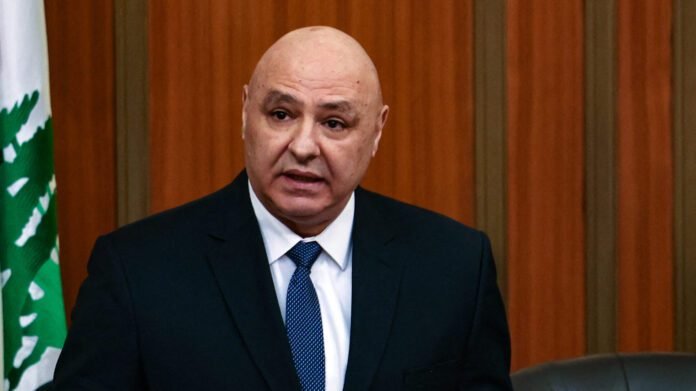
On Saturday in Beirut, Lebanon Army Commander Rodolphe Haikal met with US General Joseph Clearfield, who heads the ceasefire monitoring mechanism, at an Air Force base. The talks focused on the security situation in Lebanon, regional developments, and ways “to maximize the effectiveness of the existing mechanism and improve its operations,” including strengthening the role of the Lebanese army.

Meanwhile, the Israel Defense Forces reported a wave of strikes on Hezbollah targets in southern Lebanon on Saturday, saying about 70 buildings used by the group were destroyed along with roughly 50 additional infrastructure sites. The military said the targets included command centers, a weapons storage facility, and other structures associated with Hezbollah.

The IDF also said Hezbollah fired several rockets toward Israeli soldiers in southern Lebanon, with the projectiles landing in open areas.

Brig. Gen. Avichay Adraee, the IDF’s Arabic-language spokesperson, issued an evacuation warning for areas in southern Lebanon, calling on residents to leave.

Separately, a drone infiltration alert was triggered at Kibbutz Yiftah in the Upper Galilee, with the IDF saying the details remain under investigation.

Umpire ‘Drops’ After Brutal Hit To The Face (Video)

0
umpire-‘drops’-after-brutal-hit-to-the-face-(video)
Umpire ‘Drops’ After Brutal Hit To The Face (Video)


It was supposed to be just another heated SEC showdown—but it turned into a terrifying scene that left fans holding their breath.

During a clash between Alabama and Vanderbilt, things took a frightening turn in the second inning when Alabama’s Brennan Holt sent a foul ball screaming straight back behind home plate. In a split second, the ball smashed directly into the facemask of home plate umpire Scott Kennedy—and what happened next stunned everyone watching.

Kennedy staggered for a moment like he was trying to stay upright… then suddenly collapsed backward onto the dirt.

Players froze. The crowd went silent.

The impact knocked his mask clean off, and Kennedy lay motionless on the ground for several tense minutes as trainers from both teams sprinted onto the field. It was the kind of moment that instantly shifts a game from competitive to deeply concerning.

Medical staff surrounded him, carefully checking for injuries as players and coaches watched anxiously. After what felt like an eternity, Kennedy was finally helped to his feet—and in a huge sigh of relief for everyone, he was able to walk off the field under his own power.

Still, the scare was enough to halt the game for about 15 minutes.

Second base umpire Anthony Perez stepped in to take over behind the plate for the rest of the game at Sewell-Thomas Stadium in Tuscaloosa.

Afterward, Alabama officials shared a brief update, saying Kennedy was “doing better,” though no detailed medical report has been released.

Crimson Tide head coach Rob Vaughn echoed what everyone was thinking: “First and foremost, you’re just hoping Scott’s OK… I think he’s doing better.”

The game eventually resumed, with Alabama shutting out Vanderbilt 5-0—but the final score felt secondary after such a heart-stopping moment.

For fans, players, and coaches alike, it was a sobering reminder of just how dangerous the game can be—even for those not swinging the bat.

Rocket Report: Falcon Heavy is back; Russia’s Soyuz-5 finally debuts

0
rocket-report:-falcon-heavy-is-back;-russia’s-soyuz-5-finally-debuts
Rocket Report: Falcon Heavy is back; Russia’s Soyuz-5 finally debuts

Welcome to Edition 8.39 of the Rocket Report! There’s a lot of news to share in the universe of powerful rockets this week, and we’re delighted to sum it up in this week’s edition. The biggest rocket of them all, Starship, had a relatively quiet week as SpaceX aims to launch the vehicle’s next test flight, perhaps sometime in May. The results of that flight and the outcome of Blue Origin’s first attempt to land on the Moon with its Blue Moon cargo lander in the coming months should tell us a lot about NASA’s actual chances of putting astronauts on the lunar surface in 2028.

As always, we welcome reader submissions. If you don’t want to miss an issue, please subscribe using the box below (the form will not appear on AMP-enabled versions of the site). Each report will include information on small-, medium-, and heavy-lift rockets, as well as a quick look ahead at the next three launches on the calendar.

These 12 companies are developing SBIs. The US Space Force released a list on April 24 of a dozen companies working on Space-Based Interceptors for the Pentagon’s Golden Dome initiative, a multilayer defense system to shield US territory from drones and ballistic, hypersonic, and cruise missile attacks, Ars reports. The roster of Golden Dome Space-Based Interceptor (SBI) contractors, some of which were previously reported, includes Anduril Industries, Booz Allen Hamilton, General Dynamics Mission Systems, GITAI USA, Lockheed Martin, Northrop Grumman, Quindar, Raytheon, Sci-Tec, SpaceX, True Anomaly, and Turion Space. The companies will contribute in different areas to develop and deliver SBI prototypes for testing. The agreements have a maximum combined value of $3.2 billion. Contracts for full-scale production will come later with a significantly higher price tag.

If they’re ever built… SBIs are widely seen as the most challenging and expensive element for Golden Dome, but they may not be the panacea administration officials argued for when President Donald Trump signed the executive order for Golden Dome in January 2025. Gen. Michael Guetlein, director of the Golden Dome program, suggested SBIs for boost-phase missile intercepts, which Trump’s executive order originally called for, may not be built. “We are so focused on affordability. If we cannot do it affordably, we will not go into production,” Guetlein said in a hearing before the House Armed Services Strategic Forces subcommittee earlier this month. “We are looking at the threats from a multi-domain perspective to make sure I have redundant capabilities, and I don’t have single points of failure,” he added. “So, if boost-phase intercept from space is not affordable and scalable, we will not produce it, because we have other options to get after it.”

The Ars Technica Rocket Report
The easiest way to keep up with Eric Berger’s and Stephen Clark’s reporting on all things space is to sign up for our newsletter. We’ll collect their stories and deliver them straight to your inbox.

Sign Me Up!

Hello to Virgin Galactic’s new rocket plane. Virgin Galactic has completed structural assembly of the first Delta-class SpaceShip and moved the vehicle into an adjacent facility in Mesa, Arizona, to begin ground tests, bringing the company a step closer to resuming commercial suborbital flights later this year, Aviation Week & Space Technology reports. That is the plan, at least. A photo released by Virgin Galactic shows there’s much work to do inside and outside the vehicle. The most recent schedule update from Virgin Galactic called for flight testing of the first Delta-class spaceship to begin in the third quarter, followed by commercial private astronaut flights to suborbital space by the end of the year.

The only game in town... Virgin Galactic hasn’t flown to space since June 2024, but the company finds itself leading the suborbital human spaceflight market after Blue Origin suspended flights of its New Shepard suborbital booster earlier this year. Virgin decided to move on to the Delta-class program after completing 12 flights to the edge of space—above 80 km or 50 miles, as defined by the US government—with the previous-generation VSS Unity rocket plane. The Delta-class ships are designed for a higher flight rate.

The Moon as a dartboard. Astronomers say the upper stage of a Falcon 9 rocket that launched in early 2025 will strike the Moon later this summer, likely on the near side of the Moon, Ars reports. Bill Gray, who writes the widely used Project Pluto software to track near-Earth objects, has published a comprehensive report on the impact expected to occur at 2:44 am ET (06:44 UTC) on August 5. The Falcon 9 rocket’s upper stage is 13.8 meters (45 feet) tall and has a 3.7-meter (12 feet) diameter. Since the Moon has no atmosphere, it will strike the lunar surface intact. Although the Moon will be visible to the eastern half of the US and Canada, and in much of South America, Gray said he believes the impact will probably be too faint to be seen by Earth-based telescopes.

This happens... Four years ago, Ars reported that astronomers believed another Falcon 9 upper stage would strike the Moon. However, subsequent analysis revealed that the object was, in fact, an upper stage from the Chinese Chang’e 5-T1 mission. Gray said there is no doubt that this object is the Falcon 9 upper stage because it has been tracked since launch. There is no risk from its impact to anything on the Moon. It is a dead world, and there are no human-landed objects nearby.

Ukraine has a Russian spaceport in its sights. If you believe official Russian reports, the country’s northern spaceport has come under attack from drones on multiple occasions in the last few months, Ars reports. The drones did not succeed in striking the spaceport, but the attempted attacks come as Russia ramps up activity at Plesetsk Cosmodrome to deploy a new constellation of Internet and data relay satellites akin to SpaceX’s Starlink, a space-based network underpinning much of Ukraine’s military communications infrastructure. Plesetsk is a military base located in Russia’s Arkhangelsk region, some 500 miles north of Moscow. Russian officials have not identified the source of the drones, but Russia’s defense ministry has ascribed other drone swarms in the Arkhangelsk region to Ukraine. Ukrainian drones have routinely struck deep into Russian territory, hitting Russian military bases, oil refineries, and the Russian capital.

Cloaked launch schedule… Since the reported drone incursions, the Russian government has put a tighter lid on information about its launches from Plesetsk. Authorities typically publish airspace warning notices called NOTAMs advising pilots to steer clear of a rocket’s flight path and downrange drop zones where spent booster rockets fall back to Earth. These NOTAMs usually cover a few minutes to a few hours for a primary launch date, and perhaps a backup date in the event of a delay. The notices accompanying the most recent launches from Plesetsk covered much longer time periods, with daily windows of up to 10 hours over up to 14 consecutive days. This makes it more difficult to pin down when a launch will occur ahead of time.

Russia debuts new rocket. Russia’s new Soyuz-5 rocket has taken to the skies at long last, Space.com reports. The Soyuz-5 lifted off for the first time ever on Thursday, rising off a pad at the Russia-run Baikonur Cosmodrome in Kazakhstan at 2 pm EDT (18:00 UTC). Things apparently went well on the flight, which was a brief suborbital shakeout cruise. “The first and second stages of Soyuz 5 performed as planned, and a mockup was launched onto the calculated suborbital trajectory, followed by a reentry into an area in the Pacific Ocean previously closed to shipping and aviation,” officials with Russia’s federal space agency, Roscosmos, said via the Telegram app on Thursday.

Resurrecting Zenit… Russia has been developing the Soyuz-5 rocket since 2017. It is a new vehicle, but it does not represent a major leap forward in technology, Ars reported last year. The Soyuz-5 is a replacement for the medium-class Zenit rocket, which had tanks manufactured in Ukraine coupled with Russian-made engines. The Zenit last flew in 2017. It was developed in the 1980s, before the Soviet Union’s breakup, and continued to fly for decades while Russia and Ukraine remained on good terms. That changed after Russia’s annexation of Crimea in 2014. The Soyuz-5 uses the same basic type of Russia-built RD-171 engine that flew on the Zenit rocket, but the tanks and structures are also built within Russia’s borders. Soyuz-5’s performance slots it in between Russia’s smaller legacy Soyuz-2 rocket and the heavy-lift Angara-A5. (submitted by EllPeaTea)

FAA tells launch companies it’s time to pay up. The Federal Aviation Administration is ready to begin collecting user fees for the first time for commercial launches and reentries, which could generate millions of dollars annually, Space News reports. The legal foundation for the user fees was signed into law last year by President Donald Trump as part of the “One Big Beautiful Bill Act,” which called for the FAA to phase in user fees over eight years, beginning in 2026. The money will go into a trust fund to help pay for the operating costs of the FAA’s commercial space office. The FAA will assess the user fee as the lesser of two amounts. For 2026, that fee is 25 cents per pound of payload, capped at $30,000 per launch or reentry. The FAA will retroactively charge launch and reentry operators for fees accrued since the beginning of this year.

SpaceX will pay most… The company most impacted by the user fees will be SpaceX, which owns and operates the vast majority of US launch and reentry vehicles. Based on the assessment of 25 cents per pound of payload, SpaceX initially would pay a fee of between $9,000 and $10,000 for each of its Falcon 9 launches carrying Starlink Internet satellites. The fee rate will increase over the next eight years, with the maximum fee reaching a cap of $200,000 in 2033. The funding will be used by the FAA to improve integration of launches and reentries into the national airspace system.

Atlas V launches again for Amazon. United Launch Alliance completed its second Atlas V rocket launch of the month Monday, marking the company’s fastest turnaround between two Atlas V missions from the same launch pad at Cape Canaveral, Florida, Spaceflight Now reports. It beats the previous record by nearly three days. Onboard the Atlas V rocket was a batch of 29 Amazon Leo satellites. This was ULA’s sixth flight delivering production versions of Amazon’s broadband Internet satellites to orbit and its seventh overall, including the two demo satellites launched on the Protoflight mission in October 2023.

The end is near… This was the 108th launch of an Atlas V to date. ULA is hitting a stride with the Atlas V rocket as the company’s new Vulcan launch vehicle remains grounded due to a booster anomaly on its most recent flight in February. But the Atlas V program is winding down, with hardware for just eight more Atlas Vs in ULA’s inventory, including two more for the Amazon Leo constellation. ULA is on contract to launch 38 Vulcan rockets to deploy satellites for the Amazon Leo network, but those missions are on hold pending the investigation into Vulcan’s solid rocket motor problem. (submitted by EllPeaTea)

Ariane launches for Amazon, from the Amazon. Less than three days after the Atlas V launch from Florida, another cluster of 32 Amazon Leo satellites rode a European Ariane 6 rocket into orbit from the Guiana Space Center in South America, European Spaceflight reports. The rocket launched in its Ariane 64 configuration that features four solid-fuel boosters. The first of the 32 satellites was separated from the rocket’s upper stage just under an hour and a half after liftoff. All 32 satellites were deployed over 12 separation events lasting roughly 25 minutes in total.

Hitting a cadence… Arianespace has been contracted by Amazon to carry out 18 missions supporting the deployment of its satellite constellation, which is intended to compete with SpaceX’s Starlink global broadband network. Arianespace has indicated that it plans to launch up to eight Ariane 6 flights in 2026, a significant portion of which will be dedicated to working through its backlog for Amazon. (submitted by EllPeaTea)

Lofty launch targets for New Glenn. Earlier this week, Blue Origin posted a job opportunity for a “senior manager” to oversee tank fabrication for “Quattro,” and the description contained some intriguing information, Ars reports. Quattro is the company’s nickname for a more powerful upper stage for the New Glenn rocket, which will feature four BE-3U engines instead of the two currently powering the booster. Blue Origin revealed plans for this more powerful variant of New Glenn, 9×4 (nine first stage engines, and four upper stage engines), last November. The 9×4 could debut as soon as next year, and the person Blue hires for upper stage tank fabrication will be charged with executing a “rate ramp” of 12 per year to 100 per year by 2029.

Miles to go… The upper stage is currently not reusable, so each new build will equate to one launch. Blue Origin has a long way to go before achieving 100 New Glenn flights, and doing it within three years sounds overly optimistic. The company has a lot on its plate with the development of a human-rated Moon lander for NASA, a standardized spacecraft bus and space tug called Blue Ring, and other lesser-known projects. The New Glenn rocket’s current upper stage, with two BE-3U engines, failed on the most recent launch earlier this month. But Blue Origin has talented engineers and deep pockets thanks to its owner Jeff Bezos, so it’s worth taking the goals seriously. Money solves many, if not all, ills.

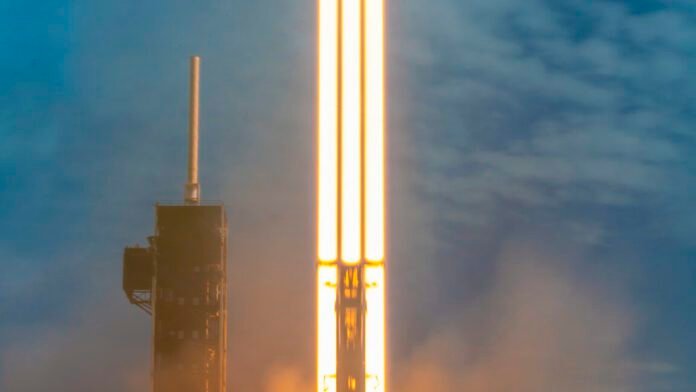
Welcome back, Falcon Heavy. A triple-core SpaceX Falcon Heavy, the company’s most powerful operational rocket, blasted off from Florida on Wednesday, boosting a ViaSat Internet satellite into space, the company’s third in a globe-spanning fleet of high-speed broadband relay stations, CBS News reports. Along with putting the ViaSat-3 satellite into its planned preliminary orbit, the rocket’s two side boosters, heralded by competing sonic booms, executed on-target touchdowns on separate pads at the Cape Canaveral Space Force Station after boosting the vehicle out of the dense lower atmosphere. It was the 12th flight of a Falcon Heavy rocket since the booster’s maiden launch in 2018 and the first since October 2024 when SpaceX sent NASA’s Europa probe on the way to Jupiter.

A healthy backlog… Despite the long gap between flights, SpaceX has quite a few Falcon Heavy missions planned over the next few years. The next one is set to launch NASA’s Nancy Grace Roman Space Telescope from Florida in September. Another Falcon Heavy will launch a commercial lunar lander for Astrobotic, perhaps toward the end of this year. SpaceX has at least a dozen more Falcon Heavy flights on contract through the end of the decade. (submitted by EllPeaTea)

Artemis III core stage arrives at KSC. The largest piece of hardware for NASA’s Artemis III mission arrived at Kennedy Space Center, Florida, on Monday after a trip by barge from its factory in New Orleans, Florida Today reports. Ground teams at Kennedy offloaded the core stage—still lacking its engine section—from the barge on Tuesday and transferred it inside the Vehicle Assembly Building. There, technicians will install the core stage’s four RS-25 main engines and prepare the rocket for stacking.

Next year, maybe… NASA hopes to launch Artemis III next year on a mission to Earth orbit. The astronauts on Artemis III will perform rendezvous and docking tests in orbit between NASA’s Orion crew capsule and one or both human-rated lunar landers developed by SpaceX and Blue Origin. The agency’s administrator, Jared Isaacman, told lawmakers on Monday that SpaceX and Blue Origin say they could have their spacecraft ready for the Artemis III mission in Earth orbit in late 2027, somewhat later than NASA’s previous schedule of mid-2027. If Artemis III flies next year, NASA hopes to follow it with a human lunar landing attempt in 2028. (submitted by EllPeaTea)

Next three launches

May 1: Falcon 9 | Starlink 10-38 | Cape Canaveral Space Force Station, Florida | 17:35 UTC

May 3: Falcon 9 | CAS500-2 rideshare | Vandenberg Space Force Base, California | 06:59 UTC

May 6: Falcon 9 | Starlink 17-29 | Vandenberg Space Force Base, California | 02:00 UTC

0FansLike
0FollowersFollow
0FollowersFollow
0SubscribersSubscribe
- Advertisement -
Google search engine

Recent Posts