22.3 C
London
Friday, May 1, 2026
Home Blog

War in the Gulf and on US free speech

0
war-in-the-gulf-and-on-us-free-speech
War in the Gulf and on US free speech

Brent crude oil surged to US$126 (£94) a barrel after US president Donald Trump announced that he was willing to prolong the blockade of Iranian ports for “months if needed”. This conflict has been billed as a matter of who can absorb the most pain. And Trump is betting on it being the US.

Trump has been rather bullish in his public pronouncements of late, declaring that Iran is in a “state of collapse”. Reports that the country’s inflation rate has risen to 50% from 40% since the war began at the end of February would seem to back this assessment.

The damage done to Iran’s economy will be made worse if the country is forced to shut down oil production due to a lack of storage capacity, something Trump is also confident about. He told Axios: “The blockade is somewhat more effective than the bombing. They are choking like a stuffed pig.”

Now in its eighth week, the conflict is having knock-on effects throughout the region and beyond. Perhaps the most telling sign this week was the announcement by the United Arab Emirates (UAE) that it was quitting Opec, the oil producers’ cartel.

Adi Imsirovic, an energy expert at the University of Oxford, believes that while this decision has been brewing for some time – UAE and Opec’s de facto leader, Saudi Arabia, are at loggerheads over the civil war in Yemen and conflicts in Sudan and across the Horn of Africa. But the war has sharpened political sensibilities across the Gulf. Abu Dhabi has been unhappy about the lack of support from the Gulf Cooperation Council (GCC) after being on the receiving end of intense bombardment from Iran.

Meanwhile, it has chafed under production quotas imposed by the cartel, which it sees as being well short – unfairly so – of its production capacity. When the Strait of Hormuz opens and countries begin to restock their reserves, UAE believes it can cash in on increased demand.

For Imsirovic, the episode reveals something deeper: as the transition by much of the world to retool their economies away from dependence on fossil fuels, big producers like the UAE worry about being left with oil in the ground that nobody wants. Hence the desire to pump out more oil without being constrained by Opec quotas.


Read more: UAE’s departure from Opec tells a story about the limited future of oil production


Another question inevitably raised by the Middle East conflict and the chokehold that the Strait of Hormuz has over energy markets is why nobody has figured out an alternative route. After all, Iran has been threatening to close the strait whenever threatened since the early 1980s.

The fact is, various countries have figured out an alternative route, writes David B. Roberts of King’s College London; it’s just not big enough to cope. The East-West Pipeline (or Petroline) can pipe oil across the Saudi peninsula at a rate of 5-7 million barrels a day. This compares with an estimated 20 million barrels that transit the Strait of Hormuz in normal times.

A map showing the East-West Pipeline in Saudi Arabia and the Abu Dhabi Crude Oil Pipeline in the United Arab Emirates.

The East-West Pipeline in Saudi Arabia and the Abu Dhabi Crude Oil Pipeline in the United Arab Emirates are two crucial Hormuz workarounds. Peter Hermes Furian / Shutterstock

The Abu Dhabi crude oil pipeline, which takes oil from the Habshan onshore field in Abu Dhabi and runs to Fujairah on the Gulf of Oman handles less than 2 million barrels per day. Both pipelines have been damaged by Iran during the war. And both were operating before the Strait of Hormuz was closed, so the idea that these pipelines can replace the strait is not feasible.


Read more: What alternatives do Gulf states have to the Strait of Hormuz?


Trump assassination attempt

It was shocking and depressing to read of another apparent attempt on the US president’s life – the third in two years – at the White House Correspondents’ Dinner on Saturday. It was the first of these dinners that Trump had attended since 2011 when he was famously the butt of Barack Obama’s jokes in the by-now familiar comedy “roast” that is traditionally a highlight of the evening.

A man armed with two guns and a knife attempted to enter the ballroom where the dinner was being held, so the principals were evacuated and the dinner broke up in disarray. It later emerged that the would-be assassin had written a “manifesto” in which he revealed his hatred for the US president.

White House press secretary Karoline Leavitt blamed what she called “hateful and constant and violent rhetoric directed at President Trump”, which she said had “helped to legitimise this violence and bring us to this dark moment”. She pointed the finger at the US Democrats and “some in the media”.
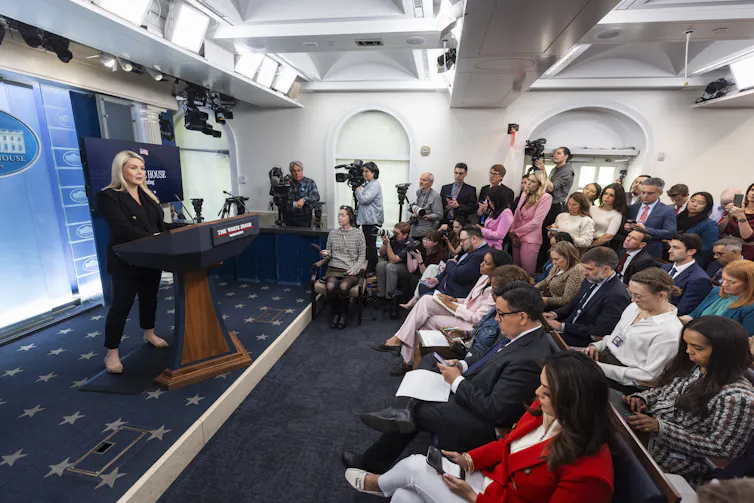
White House press secretary addresses the press in the Press Briefing Room.

‘You’re part of the problem’: White House press secretary berated the media for creating a politically polarising climate. EPA/Jim Lo Scalzo

Seeking to link the assassination attempt to political rhetoric is a pretty direct attack on the first amendment to the US constitution, which protects free speech, writes Eliza Bechtold, a US constitutional law expert at the University of Oxford. The Trump administration has a track record of lionising the first amendment when it suits them (the January 6 US Capitol rioters were characterised by some as peaceful protesters exercising first amendment rights). But attacking the media or the Democrats for their criticisms of Trump’s administration is, writes Bechtold, a denial of everything the first amendment was designed to do.


Read more: Trump uses assassination attempt to justify his assault on first amendment rights to free speech


But not everyone in Trump’s Maga movement is now singing from the authorised songbook, writes Clodagh Harrington of the University of Cork. First it was Marjorie Taylor Greene, once a fervent Trump fan in the House of Representatives, now a bitter critic – who jumped ship in 2025, largely due to what she sees as his mishandling of the Epstein files.

More recently, it has been former Fox host Tucker Carlson, who has gone from introducing Trump at election rallies in 2024, to apologising to the US public for “misleading” them into voting for Trump. For Carlson, it’s the Iran war that flies in the face of one of Trump’s core election promises: no new wars.

Mind you, Harrington notes, Carlson’s move may also be dictated by a dream to launch his own presidential run in 2028. A TV personality running for president? Well, it has been known.


Read more: Is Trump losing the support of his Maga base?

Asian currencies wilting in the Iran war’s heat

0
asian-currencies-wilting-in-the-iran-war’s-heat
Asian currencies wilting in the Iran war’s heat

TOKYO – India and Indonesia aren’t often at the center of the global financial zeitgeist. But as the rupee and rupiah lead Asian currencies down and down, events in Mumbai and Jakarta speak to the ways the Iran war is imperiling economies everywhere – and at an accelerating rate. 

In the two months since bombs first fell on Tehran, Asian governments have been racing to sandbag financial systems from energy supply shocks. They’ve restricted fuel use, amped up subsidies, made the biggest work-from-home pivot since the Covid-19 crisis and dispatched diplomats to secure other oil sources.

Yet as the conflict stretches into a third month and oil trades above $120 per barrel, the rupee, rupiah and currencies of nations with chronic fiscal and current-account deficits are already short of options. And a sense of panic is setting in as the giant game of chicken between the US and Iran plays out.

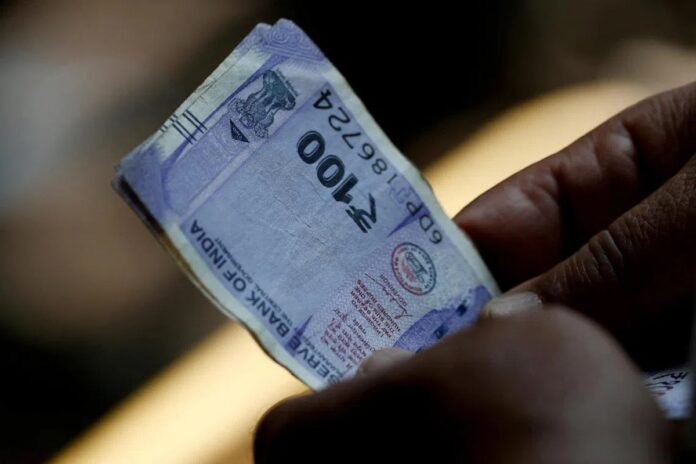
At the Reserve Bank of India headquarters in Mumbai, officials are trying to put a floor under the exchange rate. This week, the rupee fell to another record low — this time hitting 95.34 to the US dollar. The drop could accelerate if the RBI can’t stop foreign funds from fleeing.

Topping the RBI to-do list is curbing excessive volatility and taming speculative bets. The RBI, for example, has told banks to limit their foreign currency exposure to a maximum of US$100 million at the end of each trading day. It means Indian banks will have to cut dollar holdings.

Governor Sanjay Malhotra’s team is tapping the RBI’s massive foreign exchange reserves — which topped $700 billion in late April — to support the rupee in the spot and forward markets.

The RBI is tightening regulations on so-called non-deliverable forwards (NDFs). Effectively, it stops banks from offering related derivative contracts to clients, limiting investors’ latitude to bet against the rupee in overseas markets.

The RBI is getting granular as well. It slapped curbs on rebooking previous foreign exchange contracts. This alone could force the unwinding of as much as $50 billion in arbitrage trades.

In Jakarta, Bank Indonesia is stepping up efforts to defend the rupiah. BI Governor Perry Warjiyo’s team is scrambling to tighten monetary policy, engage in aggressive market intervention and restrict foreign exchange management.

Clearly, the rupiah being back at the 17,000 level versus the US dollar for the first time since the 1997-98 Asian financial crisis is its own warning sign.

The downward pressure is coming from US dollar strength, capital outflows, rising energy costs and renewed worries about fiscal sustainability. The latest risk is that foreign investors are selling Indonesian government bonds.

As Warjiyo said on April 22: “Bank Indonesia is prepared to implement a further strengthening of monetary policy as needed to maintain the stability of the rupiah exchange rate and keep inflation in 2026 and 2027 within the target range.”

Much depends on how long the Middle East war drags on. “If the Iran war ends soon,” says Jason Tuvey at Capital Economics, “we think there’s a good chance that BI will lean towards cutting rates towards the end of the year.”

Yet that “if” is getting bigger by the day. In the interim, currency traders are pricing in around a 33% chance that the rupiah weakens to 18,000 over the next three months. Bets on a weaker Philippine peso are also taking on a life of their own.

Clearly, “more credible signs of de-escalation are needed to ease depreciation pressures,” says Lloyd Chan, a strategist at MUFG Bank.

Risks from the stalled ceasefire, a dual blockade on the Strait of Hormuz and surging inflation mean “Asian currencies are far from out of danger — and a ceasefire collapse could trigger a recessionary spiral,” Ashwin Binwani, founder of Alpha Binwani Capital, tells Bloomberg. “The structural reality is brutal for most Asian currencies.”

Binwani thinks the rupiah and peso are the “most vulnerable” as the war continues to drive commodity prices higher.

Not that the weak yen isn’t grabbing headlines. The yen surged by as much as 3% on Thursday, the most in a day in over three years, amid reports Tokyo intervened for the first time since 2024 to stabilize the falling currency.

Japanese Finance Minister Satsuki Katayama said the time to take “decisive action” had arrived, her strongest signal yet of potential intervention to prop up the sagging yen. With the yen flirting with the psychologically important 160 level, it’s not clear if it’ll work.

“Past intervention has had only a temporary effect on the yen if the underlying fundamentals haven’t ​shifted,” says Kristina Clifton, senior currency strategist at Commonwealth Bank of Australia. “Continued yen depreciation may prompt several rounds of intervention, which in turn would cause larger two-way ‌swings” in the dollar-yen rate.

All this means “the key region to watch is Asia, where dependence on physical energy deliveries from the Middle East is highest,” notes Elliot Hentov, a strategist at State Street Investment Management.

Hentov explains that early signs of inflation pass-through are now emerging, with the Philippines the first emerging-market central bank to tighten policy.

Further rate hikes across the emerging markets appear likely, though there remains a case for central banks to look through near-term inflation toward the eventual growth slowdown—and accompanying disinflationary forces — and stay on hold. “It is at this juncture that scenario outcomes and policy responses diverge most materially,” he says.

The bottom line, Hentov notes, “re-escalation of war is still possible, but the core risk is an elongated diplomatic process where energy flows remain blocked. Risk assets globally do not seem priced according to the probabilities of sustained disruption and mounting economic costs in energy-sensitive regions and sectors.”

A big question is what happens with the dollar. In 1997, a multi-year dollar rally made Asia’s currency pegs impossible to maintain.

First, Thailand devalued the then-pegged baht. Next Indonesia. Then South Korea. All three went hat in hand to the International Monetary Fund and other agencies for giant bailouts totaling $118 billion. The turmoil also pushed Malaysia and the Philippines to the brink.

Since then, emerging markets have been very sensitive to the specter of the Fed hiking rates. Case in point: the 2013 Fed “taper tantrum.”

Market jitters over mere hints that the Fed might be hitting the brakes prompted Morgan Stanley to publish a “fragile five” list that no emerging economy wanted to be on. The original group: Brazil, India, Indonesia, South Africa and Turkey. 

Now, a surging dollar is complicating Asia’s development plans anew. History’s greatest magnet is luring capital from every corner of the globe, hogging liquidity needed to finance budget deficits, keep bond yields stable and support equity markets.

The Iran war has the dollar’s wrecking-ball tendencies bursting back onto the scene. Despite the US national debt nearing $40 trillion, high inflation and US President Donald Trump’s tariffs, tax cuts and profligate spending, the dollar is rising — against all odds and economic fundamentals.

Despite Trump’s policy chaos, the US bond market is still acting as a safe haven, says David Lubin, an economist at Chatham House.

“As anxiety levels rise during a crisis, institutional investors and governments flock to dollar-denominated assets because US capital markets are easier to trade in and out of than any others; and because the ability of the Federal Reserve to act as lender and liquidity-provider of last resort is second to none.”

But, Lubin adds, “global trust in the US seems to be eroding, both before and during this year’s war on Iran.”

So, he notes, “it’s worth asking whether the dollar’s safe-haven status is showing any signs of ill-health. The performance of US asset prices may say less about the dollar’s status than it does about the relative insulation of the US economy from the crisis.”

The quick answer is no, “but it would be wrong to conclude that all is well, for two reasons,” Lubin says. “In the first place, the performance of US asset prices may say less about the dollar’s status than it does about the relative insulation of the US economy from the crisis. And second, China’s capital markets are emerging really very well from the current crisis, which might give Washington some pause for thought.”

The same goes for the intensifying drama at the Fed. In mid-May, Trump will get his long-stated wish to replace Jerome Powell as Fed chair.

Though Trump 1.0 named Powell to the job in 2018, the two men have been at loggerheads during the Trump 2.0 era. Yet as Trump’s pick to replace Powell takes the helm, Kevin Warsh will be under extreme pressure to cut rates – and fast.

Warsh, though, is sure to encounter strong pushback from Fed board members – including Powell, who’s staying on as a governor – with inflation heating up. In March, the personal consumption expenditures price index, the Fed’s preferred inflation barometer, increased at a 3.5% rate year-on-year.

“Warsh would be a more dovish voice” who “would lobby for an aggressive reduction in the size of the Fed’s balance sheet, and would attempt to make significant changes to the Fed’s communication strategy, says economist Nancy Vanden Houten at Oxford Economics.

“TheFed chair can’t make such changes unilaterally, however, and we expect the need for Warsh to build consensus would limit the extent of changes in policy or how the Fed communicates.”

Asia will be on the frontlines of this standoff between Fed doves and hawks. Yet it’s already there when it comes to fallout from the US-Israeli war in Iran. Asia’s currencies are flashing red warning signs for the global economy, which could presage disaster if the war in Iran reignites and fuel flows remain blocked for much longer.

Follow William Pesek on X at @WilliamPesek

Blue Origin certainly has ambitious launch targets for New Glenn

0
blue-origin-certainly-has-ambitious-launch-targets-for-new-glenn
Blue Origin certainly has ambitious launch targets for New Glenn

Earlier this week, Blue Origin posted a job opportunity for a “senior manager” to oversee tank fabrication for “Quattro,” and the description contained some intriguing information.

“As part of a hardworking team of specialists, technicians, and engineers you will be the Senior Manager of Gen 2.0 Tank Fabrication, and will own the production execution of the most structurally complex and schedule-critical subsystem on the vehicle—the propellant tank,” the job posting states.

Quattro is the company’s nickname for a more powerful upper stage for the New Glenn rocket, which will feature four BE-3U engines instead of the two currently powering the booster. Blue Origin revealed plans for this more powerful variant of New Glenn, 9×4 (nine first stage engines, and four upper stage engines), last November.

It is possible this rocket, significantly larger than the 7×2 variant currently flying and necessary for the company’s lunar ambitions as part of NASA’s Artemis program, could make its debut next year.

Get ready to ramp production

There is some additional information in the posting that underscores the ambition Blue Origin is chasing with its New Glenn vehicle, which has launched three times since its initial flight in January 2025.

The job responsibilities include executing a “rate ramp”—which is to say, a production rate—of 12 per year currently to 60 per year by the third quarter of 2028, followed by a production rate of 100 second stages annually by 2029. A company official told Ars that these production targets are accurate.

For the time being, Blue Origin is still studying whether to pursue a reusable upper stage for New Glenn, so each launch of the vehicle requires a new upper stage. A production rate of 60 a year in 2028 suggests the company is targeting a launch rate of 60 New Glenn 9×4 rockets annually just three years from now. That would be in addition to the 7×2 variant currently flying, which would continue to be used for less demanding missions.

Building lots of infrastructure

These targets, of course, are overly optimistic. Before the year 2025, for example, Blue Origin founder Jeff Bezos told the company he wanted New Glenn to launch eight times that year. It ended up flying twice, in January and November. And frankly, for such a large and new rocket, that is not a bad flight rate at all, especially with the company landing the first stage of the second New Glenn launch successfully.

The company is also dealing with an upper stage anomaly on the most recent launch of New Glenn earlier this month. So no one should be penciling in several dozen launches a year before the end of this decade just yet.

However, it would also be foolish to dismiss Blue Origin’s aspiration to launch the super heavy lift rocket frequently. Bezos continues to make major investments in infrastructure in Florida, most recently in an 800,000-square-foot new manufacturing facility known as “Project Horizon.” It is possible that New Glenn second stages could be manufactured at this facility.

And if you want to be the person responsible for building 100 tanks a year for these stages, it sounds like Blue Origin has a job open for you.

Facebook, Instagram charged with breaching rules, must do more to protect kids below 13, EU says

0
facebook,-instagram-charged-with-breaching-rules,-must-do-more-to-protect-kids-below-13,-eu-says
Facebook, Instagram charged with breaching rules, must do more to protect kids below 13, EU says


Meta Platform’ Facebook and Instagram were charged on Wednesday with breaching landmark EU ​tech rules and must do more to prevent children ‌under 13 from accessing both social networks, EU regulators said on Wednesday.

The charges under the Digital Services Act, which requires Big ​Tech to do more to tackle illegal and harmful ​content on their platforms, came after a two-year ⁠long investigation by the European Commission.

The EU tech enforcer ​said Meta does not do enough to enforce its restrictions ​against children under 13 from using Facebook and Instagram and that measures to identify and remove them when they do access the services ​were inadequate.

It said 10-12% of children under 13 in ​Europe use Facebook and Instagram.

“Our preliminary findings show that Instagram and ‌Facebook ⁠are doing very little to prevent children below this age from accessing their services,” EU tech chief Henna Virkkunen said in a statement.

“Terms and conditions should not be mere ​written statements, but ​rather the ⁠basis for concrete action to protect users – including children,” she said.

The Commission said both platforms ​must change their risk assessment methodology and ​that they ⁠need to strengthen measures to prevent, detect and remove minors from their services.

Meta can respond to the charges and ⁠take measures ​before the Commission issues a ​decision. DSA breaches can cost companies fines as much as 6% of their ​global annual turnover.

Democratic Leaders Wanted to Control the Maine Senate Race. Their Pick Just Dropped Out.

0
democratic-leaders-wanted-to-control-the-maine-senate-race-their-pick-just-dropped-out.
Democratic Leaders Wanted to Control the Maine Senate Race. Their Pick Just Dropped Out.


The Democratic Party’s pick for Maine senator suspended her candidacy on Thursday. Democratic Gov. Janet Mills, who entered the race as the establishment pick and assumed favorite, announced her campaign did not have the financial resources to continue.

Mills’s exit less than six weeks before the June primary clears the path for populist candidate Graham Platner, now the presumed nominee, to face off against incumbent Republican Sen. Susan Collins in the November general election after the party worked to subdue Platner’s campaign. The Democratic Party’s decision to wade into the primary at all had reignited a criticism that the Democratic establishment would stop at nothing to keep progressives out of Congress.

“The Democratic establishment — and especially calcified Senate leadership — is learning in real time that they are wildly out of touch with what Democratic primary voters want,” said Amanda Litman, co-founder of Run for Something, which recruits young progressive candidates for office. “The establishment simply doesn’t have the juice (or the trust) anymore.”

By the time Mills, 78, ended her campaign on Thursday, party leaders had changed their tune on Platner. Senate Minority Leader Chuck Schumer, who backed Mills early in the race, released a statement with New York Sen. Kirsten Gillibrand, the chair of Democratic Senatorial Campaign Committee, saying that Collins “has never been more vulnerable” and that they would work with Platner to beat her. The DSCC had financially backed Mills’s campaign, forming a joint fundraising committee with her in October. And they stuck by Mills even as her campaign appeared to languish. 

Platner, once considered a long-shot candidate marred by controversy, has surged this year in fundraising and polling. In a statement in January, Gillibrand said she was “very optimistic” about Mills’s race. In February, when polling numbers came out showing Platner beating Mills with 64 percent support to her 26, Schumer remained in her corner. 

The upset marks “a massive embarrassment for Chuck Schumer and DSCC operatives,” a Democratic strategist told The Intercept, speaking on the condition of anonymity for fear of professional reprisal. “This was their star recruit and she couldn’t even make it to the election. No longer can they be the gatekeepers.” 

Platner has faced a slew of controversies since launching his campaign last year, including revelations that he had a Nazi tattoo and had posted a series of regrettable comments on Reddit. Those pitfalls led many of Platner’s critics to compare him to another populist Democratic darling who took a hard turn to the right after entering Congress: Sen. John Fetterman, D-Pa.

On Thursday, Fetterman made clear that he would not welcome the comparison. While other members of his party prepared to embrace Platner, Fetterman told reporters: “Democrats really, really like Platner in Maine, but the Republicans fucking love him. If Maine wants an asshole with a Nazi tattoo on his chest, they get him.”

In a statement on Thursday, Platner said he looked forward to working with Mills to defeat Collins in November. “This race has never been about me or about any one person. It’s about a movement of working Mainers who are fed up with being robbed by billionaires and the politicians they own, and who are taking back their power.” 

The day before she dropped out of the race, The Associated Press published an article about Mills campaigning as an underdog in the race despite having the resume for the job. On Thursday, Mills’s campaign was over.

India’s softer tone on Bangladesh hits a hard note in Assam

0
india’s-softer-tone-on-bangladesh-hits-a-hard-note-in-assam
India’s softer tone on Bangladesh hits a hard note in Assam

Dhaka on Thursday (April 30) issued a sharp diplomatic protest by summoning India’s acting High Commissioner, Pawan Badhe, following controversial remarks by Assam Chief Minister Himanta Biswa Sarma that Bangladesh says undermine bilateral ties.

Officials at the Ministry of Foreign Affairs called in the envoy, where Director General (South Asia) Ishrat Jahan conveyed Dhaka’s “strong displeasure” over what it described as “disparaging” comments.

The move, the first such summons since the Bangladesh Nationalist Party-led government assumed office in February, signals how quickly rhetorical excess can spill into formal diplomacy.

The immediate provocation is striking for its bluntness. CM Sarma reportedly said he “prays” that relations between India and Bangladesh do not improve, arguing instead that ties should continue to deteriorate. It is rare for a senior elected official in a neighboring country to articulate, so openly, a preference for diplomatic decline.

Dhaka’s response was therefore less about theatrics than about drawing a line: such language, left unchecked, corrodes the foundations of an already delicate relationship.

Yet the episode is not an aberration. It reflects a longer pattern of rhetoric emanating from Assam’s political arena, where Bangladesh has often been cast less as a partner and more as a problem.

Himanta Biswa Sarma has repeatedly framed Bangladesh in security terms — warning of “infiltration”, alleging demographic pressure and invoking threats to India’s northeast. Over time, such framing has seeped into administrative practice, most notably in periodic “push-in” operations along the border.

These push-ins — where individuals alleged to be undocumented migrants are forced across the frontier—have been a recurring irritant. Bangladeshi border authorities have, on multiple occasions, reported groups of people being sent across by India’s Border Security Force without verification of nationality.

In several instances, those pushed in were found to be Indian citizens or long-term residents lacking documentation rather than Bangladeshi nationals. Each episode triggers localized tension, erodes trust between border forces and feeds a narrative in Bangladesh that parts of India’s state machinery view it through a lens of suspicion and expediency.

The political utility of such rhetoric in Assam is not hard to decipher. Migration — real, perceived, and politicized — has long been central to the state’s electoral discourse. Casting Bangladesh as the source of demographic anxiety helps consolidate domestic constituencies.

But what plays well in Guwahati sits uneasily with the strategic calculus in New Delhi. Because, at the national level, India appears to be moving in the opposite direction. There is a growing recognition among policymakers and think tanks that India must “reset” its relationship with Bangladesh.

That reset is, of course, driven by hard interests: connectivity to the northeast, access to transit routes, cooperation on energy and the management of shared rivers. Bangladesh is not a peripheral partner; it is central to India’s eastern strategy.

Recent signals from New Delhi suggest a degree of seriousness about this recalibration. The decision to appoint a politically heavyweight like Dinesh Trivedi as envoy to Dhaka indicates that the relationship is being elevated, not downgraded.

Engagements have focused on trade facilitation, infrastructure connectivity, and maintaining security cooperation along the border. Even amid political transitions in Dhaka, India has shown a willingness to keep channels open.

This creates a dissonance. On one track, New Delhi seeks a pragmatic reset with Dhaka, emphasizing mutual benefit and regional stability. On another, influential leaders in border states continue to amplify narratives that cast Bangladesh as a destabilizing force. The result is mixed signaling — one that risks confusing both policymakers and publics on either side.

The costs of such incoherence are not abstract. Bangladesh and India share one of the most densely populated and sensitive borders in the world. Cooperation is essential to manage everything from river flows to smuggling networks. When rhetoric hardens, operational coordination becomes harder.

Border incidents — whether accidental or deliberate — become more likely. And domestic audiences in both countries grow more receptive to nationalist framing, narrowing the political space for compromise.

There is also a reputational dimension. India has, over the past decade, positioned itself as a responsible regional power — one that values stability and connectivity. Allowing subnational rhetoric to undercut that posture weakens its credibility.

For Bangladesh, meanwhile, the calculus is equally clear: it cannot afford a relationship defined by episodic hostility, but nor can it ignore statements that question the very premise of cooperation.

None of this suggests that disagreements should be papered over. Bangladesh and India have real differences—over trade imbalances, water sharing, and border management. But diplomacy depends on a baseline of respect. Publicly wishing for deteriorating ties crosses that baseline.

Dhaka’s decision to summon the envoy is therefore best read not as escalation but as calibration. It is a reminder that rhetoric matters, that words spoken in one capital reverberate in another, and that managing a complex bilateral relationship requires discipline across all levels of government.

If India is serious about resetting ties, it will need to align its internal messaging with its external objectives. That means reining in narratives that reduce Bangladesh to a security trope and addressing contentious practices such as push-ins with greater transparency and coordination.

For Bangladesh, the challenge will be to respond firmly without allowing such episodes to derail broader engagement. The alternative is a slow drift into mistrust — fuelled not by grand strategy but by the cumulative effect of smaller provocations.

In a relationship as intricate as that between Bangladesh and India, that would be a costly failure of both politics and imagination.

Faisal Mahmud is a Dhaka-based journalist

Instead of indirectly insulting Yemen, Prabowo should be building relations with it

0
instead-of-indirectly-insulting-yemen,-prabowo-should-be-building-relations-with-it
Instead of indirectly insulting Yemen, Prabowo should be building relations with it

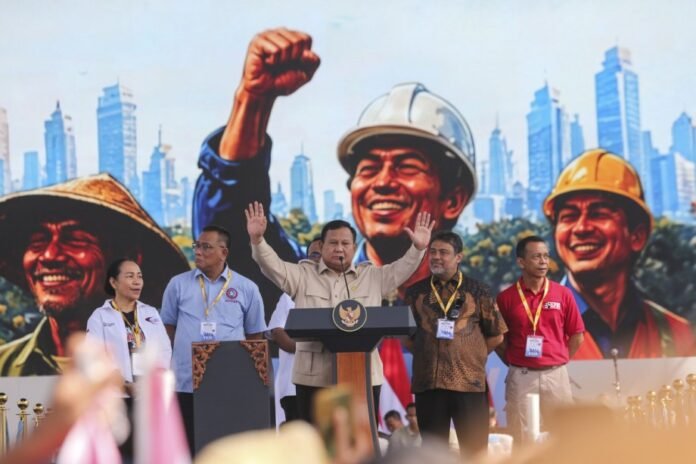
At a high-profile industrial groundbreaking event in Central Java, President Prabowo Subianto responded sharply to critics who describe Indonesia as being in decline. Rejecting the phrase “Indonesia is dark,” he declared that such critics have “blurred vision,” insisted the country is “bright,” and then went further: if they are unhappy, they should simply leave—adding, pointedly, that they could “run away to Yemen.” 

It was a moment meant to project confidence. Instead, it exposed a troubling lapse in judgment—one that reaches far beyond Indonesia’s domestic debate and directly into its relationship with the wider world.

Let’s be clear: this was not just an attack on critics. It was an insult to Yemen.

By invoking Yemen as a destination for those who want to “escape,” Prabowo was not engaging in neutral geography. He was making a comparison—implicitly placing Yemen on the losing end of it. The message, stripped of political context, is unmistakable: if Indonesia is “bright,” then Yemen is something else—something lesser, something undesirable.

That is not rhetoric. That is hierarchy.

And it is a dangerous one for a leader to project.

Yemen is not a symbol to be deployed in domestic political theater. It is a country with deep historical, cultural, and religious significance—particularly for Indonesia itself. For centuries, Yemeni scholars, especially from Hadramaut, have helped shape Indonesian Islam, education, and social life.

Entire communities in Indonesia trace their intellectual and familial roots back to Yemen. These ties are not incidental; they are foundational.

To reduce Yemen to a throwaway line is to disregard that shared history with astonishing carelessness.

It is also diplomatically incoherent. Prabowo has built much of his presidency around global engagement. He has traveled extensively, cultivated partnerships, and positioned himself as a leader who understands the importance of international relationships. His own foreign policy principle—“a thousand friends are too few, one enemy too many”—suggests a worldview rooted in respect and strategic cooperation.

READ: Indonesia suspends participation in Board of Peace following attack on Iran

But statements like this contradict that worldview outright.

You cannot claim to build friendships while casually diminishing another nation in public. You cannot present yourself as a bridge to the Muslim world while speaking about one of its countries as if it were a geopolitical punchline. And you cannot expect credibility in the Middle East if your language suggests that some nations are useful only as negative comparisons.

This is not strength. It is indiscipline.

Worse still, the remark reflects a deeper problem in how Prabowo handles dissent. Faced with criticism, he did not argue, persuade, or even acknowledge the concerns being raised. He dismissed them—and told critics to leave. This is not a good way to dissent his critics. It is a refusal to engage in the very democratic process that gives such criticism meaning.

Strong leadership does not exile disagreement. It confronts it.

By telling critics to “go elsewhere,” Prabowo is not defending Indonesia’s progress—he is avoiding scrutiny. And in doing so, he drags Yemen into a domestic political exchange where it does not belong, using it as collateral damage in a rhetorical fight.

That has consequences.

For audiences in the Middle East, the signal is hard to ignore. If Yemen can be casually invoked as a place of escape—implicitly inferior, implicitly undesirable—then respect is conditional. And conditional respect is no respect at all.

This is particularly striking given that Indonesia has just taken steps to strengthen its diplomatic presence in Yemen, including appointing a new ambassador in 2026. That move suggests recognition of Yemen’s importance. But diplomacy is not built on appointments alone—it is built on tone, consistency, and the ability to treat partners with dignity in both formal and informal settings.

READ: Yemen’s Houthis say to intervene militarily if needed amid Iran-US war

On that front, the president has fallen short.

Yet this moment also presents a clear path forward—if he chooses to take it.

Instead of using Yemen as a rhetorical device, Prabowo should be investing in the relationship. Indonesia is uniquely positioned to engage Yemen through humanitarian assistance, educational exchange, and religious diplomacy grounded in shared traditions.

At a time when Global South cooperation is increasingly vital, strengthening ties with Yemen is not just morally sound—it is strategically smart.

But that requires a shift in mindset.

It requires recognizing that countries facing hardship are not symbols to be exploited, but partners to be respected. It requires understanding that words spoken casually at home can resonate deeply abroad. And it requires a willingness to treat criticism not as a nuisance to be dismissed, but as a challenge to be addressed.

Because in today’s world, leadership is not just about power. It is about perception.

Right now, the perception created by this remark is simple and damaging: that Yemen can be reduced to a punchline, and that dissent can be brushed aside rather than engaged. Neither reflects the values Indonesia claims to uphold.

Prabowo still has time to correct course. But that correction must begin with a basic principle—one that should guide any leader with global ambitions:

Respect is not optional.

OPINION: Indonesia and the Gulf must do more than soft power in a time of war

The views expressed in this article belong to the author and do not necessarily reflect the editorial policy of Middle East Monitor.

Researchers try to cut the genetic code from 20 to 19 amino acids

0
researchers-try-to-cut-the-genetic-code-from-20-to-19-amino-acids
Researchers try to cut the genetic code from 20 to 19 amino acids

The genetic code is central to life. With minor variations, everything uses the same sets of three DNA bases to encode the same 20 amino acids. We have discovered no major exceptions to this, leading researchers to conclude that this code probably dated back to the last common ancestor of all life on Earth. But there has been a lot of informed speculation about how that genetic code initially evolved.

Most hypotheses suggest that earlier forms of life had partial genetic codes and used fewer than 20 amino acids. To test these hypotheses, a team from Columbia and Harvard decided to see if they could get rid of one of the 20 currently in use. And, as a first attempt, they engineered a portion of the ribosome that worked without using an otherwise essential amino acid: isoleucine.

Changing the code

First off, why would you do this? Most work in the field has focused on altering the genetic code in ways that are useful, such as using more than 20 amino acids to enable interesting chemistry.

The reasoning here seems to be that, prior to the last common ancestor of life on Earth, organisms experimented with various genetic codes and probably used a mix of proteins and catalytic RNAs to run their metabolisms. While we’ve done a lot of studies on catalytic RNAs, we have far less of an idea of what sort of chemistry is possible with a reduced genetic code. And the researchers suggest that AI-based tools have matured enough that redesigning proteins to use fewer amino acids is far more realistic than it was just a few years ago.

Isoleucine is one of three highly similar amino acids, along with leucine and valine. In the portion of the structure that’s distinct from other amino acids, all three have a branched structure that’s composed entirely of carbon and hydrogen. That makes them all hydrophobic, and they often are located in the interior of proteins, which keeps them away from the watery environment of the cell. So, purely by reasoning it out, one of those three would seem to be a good candidate to get rid of.

The researchers involved backed that reasoning up with evidence. They ran an analysis of the E. coli genome, checking which amino acids were substituted by other ones in related proteins from other species. Isoleucine was the amino acid that was most frequently swapped out for a different one. So, the researchers decided to start answering the question of whether we really need it at all.

Editing all 4,500 or so genes in E. coli would be a monumental task, and that many changes at once would almost certainly end up killing it, so the researchers started out with much smaller tests. To begin with, they took a set of 36 essential genes and replaced every isoleucine in them with valine, a similar amino acid, and then put the introduced gene back into the genome. For 22 of the genes, doing so killed the cells. But that does indicate that 17 of them got by ok without isoleucine, including one where it was swapped out in 45 different positions along the amino acid chain.

Notably, even in cases where cells tolerated the change, their growth often slowed compared to the unedited cells. That will become a recurring theme.

Redesigning the ribosome

To give their project a focus, the researchers decided to start engineering an isoleucine-free ribosome. The ribosome is a large complex of proteins and RNAs that translates messenger RNAs into proteins—you can think of it as a bit like one of the hardware components that’s needed to boot a living cell from a genome. Obviously, many of the proteins in the ribosome have critical enzymatic activities. But bringing that complex together requires that these proteins interact with each other and RNAs. So, the ribosome provides a stringent test of whether engineering out an amino acid can be tolerated by cells.

As a preliminary test, the team did an isoleucine-to-valine swap for 50 different individual genes that contribute proteins to the ribosome. Eighteen of those worked with no obvious problems, another 19 grew more slowly, and the changes were lethal for the remaining 13 genes. The team then focused on the 32 genes with reduced fitness and adapted deep-learning protein-design software to suggest alternative sequences that did not include isoleucine.

Iterative testing using four different software packages produced alternative protein sequences for 25 of these 32 proteins that eliminated the fitness issues.

For the remaining five, they went back and forced changes at the isoleucine. They then let the software design changes in the amino acids that are physically close to it within the three-dimensional structure of the protein, the idea being that the change in amino acid may disrupt the protein’s structure in a way that other changes in nearby amino acids could compensate for. This led to successful redesigns for four of the five problem proteins.

While these are impressive achievements, testing them individually doesn’t really give the full picture of whether these redesigned proteins can put together a functionally equivalent ribosome. To do that, the researchers decided to remove isoleucine from all of the proteins in the small subunit of the ribosome. This is largely a matter of convenience. The genes for the 21 proteins in the small subunit are all clustered next to each other on a 10,000-base-long stretch of the genome, so the researchers could just replace them all at once.

Thinking small

Using the redesigned proteins from the earlier work, they started replacing ever-larger stretches of the genes along this 10,000-base stretch of DNA. Starting from one side, they replaced 10 genes without any trouble. By the time they got to replacing 17 of the 21, the cells were growing more slowly. Replacing 18 genes at once, however, killed the cells entirely.

So, they started working in from the other direction and found that the changes were tolerated until they hit the same gene identified as problematic when going from the other direction. That gene, called rplW, seems to be the critical holdup. Replacing 20 of the 21 genes and leaving rplW untouched led to cells that not only survived, but grew at about 70 percent the rate of an unmodified E. coli cell.

So, they took a careful look at the changes the software had suggested for rplW. It turns out that the software had compensated for the changes to isoleucines by deleting some small stretches of amino acids nearby. While that apparently worked to get a functional protein, it differed enough that it wouldn’t work in combination with all the other changes.

At this point, the team just brute-forced the issue. They had software packages suggest a number of alternative amino acids for each of the four isoleucine positions in rplW and tested every possible combination of them (16 designs in total). One of these designs was able to complete the isoleucine-free small subunit, with the resulting strain growing about 60 percent as fast as the unedited ones. The cells were grown for 400 generations and typically picked up 20–30 mutations, but none of those restored an isoleucine to any of the ribosomal proteins.

Notably, if you just put this version of rplW back into the genome on its own, the cells die. It’s only tolerated in the context of all the other changes to the ribosome caused by the other redesigned proteins.

Some notes about the AI use

It’s unclear that any of this would have been possible without the heavy use of AI tools. All of the protein design tools were AI-based, and their outputs were checked using AlphaFold 2, the Nobel-winning AI protein structure software. And the authors of the paper highlight a number of cases where the AI software made suggestions that most biologists would have shied away from. These include replacing the structurally flexible, neutral isoleucine with either a charged amino acid or one that’s locked into a rigid structure.

That said, the results also show the limits of working with current AI models, largely because, unlike a human, they can’t really explain the process by which they’re making decisions. For example, some of the models made very different suggestions from each other, which the researchers say implies that they are exploring different regions of the space of possible sequences. But we don’t actually know whether that’s the case, or if each model had mathematical reasons for disliking the other’s suggestions.

That’s one of a number of cases in the paper where the researchers tried to reason backward about what the model was doing based on its output. In at least one case, the software redesigned the entire structural element (an alpha helix) the isoleucine it changed was located in, for reasons they don’t even hazard a guess.

It’s a good reminder that, at the moment, these software packages are tools: they let us do things that would otherwise not be possible, but they don’t actually help us understand all that much. We’re still left to reason through phenomena using the neural networks inside our skulls.

This doesn’t necessarily have to be the case; we could put more emphasis on exposing the inner workings of this software when developing it in order to get some insights into its decision-making process. But for now, I think the emphasis has been (quite reasonably) on getting something that works.

An amazing achievement, but is it useful?

Overall, this is astonishing work. These proteins have to interact with each other, interact with ribosomal RNAs, transfer RNAs, messenger RNAs, the growing proteins the ribosome makes—plus all the normal proteins over on the large subunit. Each of those has had billions of years to evolve the ability to work with each other. The fact that we could make such radical changes to the system over the course of a couple of years is just mind-blowing.

We still don’t know what’s slowing these cells down. It’s possible that the revised ribosome is less accurate, making more defective proteins by putting together amino acid chains with more frequent errors. Or it could be slower catalytically, becoming a bottleneck for cell growth. That’s something we could definitely experiment with, and giving the strain time to evolve might bring its growth rate back up a bit.

Can we use it as a starting place to get to an isoleucine-free genome? I’d rate that as still in the “maybe” category. There are lots of other large protein complexes in the cell, and there may be some that the AI tools struggle with. We’ll see if these labs have time and funding to continue down this path. Still, I’m skeptical that it will tell us much about life before the universal common ancestor, given how much about the rest of the cell has changed in the meantime.

It may, however, prove effective in that regard, in that it could inspire other scientists to think about experiments that might give us a better picture of what cells with a limited genetic code might look like.

Science, 2026. DOI: 10.1126/science.aeb5171 (About DOIs).

Iran war shows US economic coercion isn’t what it was

0
iran-war-shows-us-economic-coercion-isn’t-what-it-was
Iran war shows US economic coercion isn’t what it was

Two months after the United States, along with Israel, launched a war against Iran, that conflict appears far from a lasting resolution.

Much commentary on the protracted nature of the conflict has centered on the limits of both the military and diplomatic approaches to the war. But the conflict has also exposed another key reality: the limits of US sanctions.

The US has been the world’s preeminent economic and military power for decades, certainly since the end of the Cold War. It is at the center of much global financial activity and has a military budget well beyond China, the closest competitor.

Leveraging that power, the US has long used economic coercion to achieve its foreign policy goals, whether against North Korea under the Kim regime, Russia over its invasion of Ukraine or Iran since the 1979 revolution that overthrew the US-allied shah.

But as US power in the world has slowly declined amid the rise of China and an increasingly multipolar world, the country has likewise lost some of its ability to effectively use economics as a weapon.

Indeed, as scholars of economic sanctions and statecraft, we believe that the conflict against Iran has made clear the diminishing returns of US economic sanctions.

The limits of sanctions on Iran

Since 1979, relations between Washington and Iran have been antagonistic. US policy has been largely to punish, contain or isolate Iran, and successive administrations have done so in part through a mix of primary, secondary and targeted financial economic sanctions.

US economic coercion has been applied on Iran for a variety of reasons, including its alleged state sponsorship of terrorism throughout the region and its nuclear program.

The emergence of that nuclear program in 2003, which later resulted in United Nations sanctions against Iran, saw US and European Union interests around Iran converge.

A man in a suit stands at a podium during a press conference.
Then-Secretary of State Mike Pompeo speaks during a news conference announcing the Trump administration’s restoration of sanctions on Iran in 2020, two years after it left a nuclear non-proliferation deal with Iran. Photo: AP via The Conversation / Patrick Semansky

This convergence led to the US and EU cooperating on economic sanctions against Iran, which limited Iranian access to the European banking system. The combined coordinated efforts proved onerous for the Iranian economy, which, as political scientist Adam Tarock notes, meant Iran was “winning a little, losing a lot.”

The Joint Comprehensive Plan of Action (JCPOA), negotiated between the US, Iran, members of the EU, Russia and China in 2015, placed limits on Iran’s nuclear program in exchange for sanctions relief.

At the time, the Iranian economy was suffering crushing inflation and rampant food prices. The agreement would provide relief from decades of economic punishment and the removal of EU, UN and US economic sanctions.

However, the US withdrew from the agreement in 2018 under the first Trump administration and later reimposed sanctions on Iran. The return of economic sanctions as part of the first Trump administration’s maximum pressure campaign – even if not supported by other nations – saw most global firms refrain from doing business with Iran out of risk aversion.

Additionally, despite the EU’s efforts to preserve the JCPOA, Iran restarted its nuclear enrichment program in 2019, one year after the US withdrawal. The Biden administration’s subsequent expressed intention to reenter the deal never came to fruition.

Believing sanctions relief was not a realistic outcome after the agreement’s failure, Iran – though battered by losing access to the global financial system – has found increasingly creative workarounds.

Those have included utilizing so-called shadow fleets shipping illicit Iranian goods, creating successful homemade military products like cheaply made drones and ramping up trade with partners outside the Western orbit.

Indeed, since the nuclear agreement’s collapse, Iran has pursued much closer ties with China and Russia at the expense of prior robust economic relations with Europe. As Iran reorients its trade and economic relations, the US and the West have lost economic coercive leverage.

Separated from a diplomatic endgame, US sanctions – and the current blockade of Iranian-linked ships – appear to be only hardening Iranian resolve. Even if a deal were reached to reopen the Strait of Hormuz, Iran has said it plans to push for commercial ships to pay a toll going forward – something that didn’t exist before the war.

In effect, Iran’s ongoing de facto closure of the strait has redirected US economic coercion back at the Trump administration.

Blowback in the energy markets

The biggest costs of that ongoing closure for the US has been in energy.

The US today is one of the largest exporters of crude and refined petroleum globally, making it particularly exposed to oil price volatility. At the same time, some Americans see the development of fossil fuel resources as a key policy priority.

As the US becomes more embedded in the export energy sector, it is increasingly experiencing collateral damage – namely, higher oil and gasoline prices – when its foreign policy decisions disrupt oil-related trade.

A woman fills up her car with gas.
The price of oil has reached the highest level since 2022, making for higher costs at the gas pump. Photo: Ap via The Conversation / Jenny Kane

One way that collateral damage manifests is the affordability problem for many Americans as gas prices rise, which is likely to also create political costs for the Trump administration.

While the US has taken steps to ease the economic disruptions to American consumers by relaxing oil sanctions on Russia and Iran – thus undermining its own sanctions policy – these policy shifts have done little to nothing to offset rising fuel prices.

They will likewise fail to ameliorate the potential for economic damage caused by the ongoing disruptions to commerce due to the Strait of Hormuz dangers and uncertainties.

Famed economist Albert O. Hirschman once noted that countries use their strategic position to shift others’ cost–benefit calculations, especially through trade disruptions. And for decades, the US used its privileged position in the global financial system to pressure both rising countries and those not explicitly part of the US alliance.

But as the US becomes more exposed to the consequences of its own decisions, its ability to lead and coerce has stalled under costs it cannot easily absorb.

No longer leading by example

Historically, US economic power was made possible not only by the country’s unilateral strengths but its willingness to pool resources and work multilaterally with other nations.

The Trump White House’s inability to put together a multinational coalition to address the political and economic challenges caused by US-Israeli attacks on Iran is not surprising. But they further reflect the evaporation of goodwill the US previously enjoyed with allies in and outside the region.

As the US abandons a playbook that has buttressed its power for decades, Russia has grown bolder, China is edging ahead of the West and middle powers like Iran are able to hold out against American economic and military strength.

None of this means the US no longer holds significant global power. But its turn toward a sanction-first, ask-questions-later approach has, we believe, eroded its ability to shape the behavior of other nations.

And it has done so while imposing increasingly tangible costs on both American strategy and the well-being of its own citizens.

Charmaine N. Willis is assistant professor of political science, Old Dominion University and Keith A. Preble is teaching assistant professor, East Carolina University

This article is republished from The Conversation under a Creative Commons license. Read the original article.

Syrian, Iraqi Forces Dismantle Cross-Border Captagon Network

0
syrian,-iraqi-forces-dismantle-cross-border-captagon-network
Syrian, Iraqi Forces Dismantle Cross-Border Captagon Network


[DAMASCUS] In a joint security operation described as a high-profile example of intelligence cooperation, Syrian and Iraqi authorities announced the dismantling of an international network that specialized in drug trafficking and the seizure of a large quantity of Captagon pills. Estimated at approximately 1.73 million tablets, they were intended to be smuggled across borders to neighboring countries.

The media office of the Syrian Interior Ministry stated that the operation was the result of joint intelligence coordination between the relevant agencies in both countries, following careful monitoring that lasted for a period and included tracking the network’s movements and activities within Syrian territory and beyond.

The ministry indicated that units from the Anti-Narcotics Department carried out a series of simultaneous raids at several locations in the Damascus countryside and Homs province, areas believed to have been used as centers for storing narcotics and preparing them for smuggling.

The operations resulted in the seizure of the entire shipment, in addition to the arrest of eight individuals suspected of involvement in the network, including a woman.

According to preliminary information, the dismantled network is involved in cross-border trafficking that relies on multiple routes to transport narcotics between more than one country, taking advantage of interconnected borders and the difficulty of monitoring in certain areas.

The Iraqi Interior Ministry confirmed its participation in the operation through the exchange of intelligence information and coordination of field efforts, noting that this cooperation directly contributed to identifying the network’s locations, dismantling it completely, and thwarting the attempt to smuggle the seized quantity out of the country.

Security authorities in both countries explained that the operation was the result of long-term joint work, which included close monitoring of the network’s movements and members, as well as tracking its financing and distribution routes, enabling simultaneous strikes that brought its activities to an end.

This development comes amid escalating regional security efforts to combat drug trafficking, particularly Captagon, which has seen widespread proliferation in the region in recent years.

Several countries are working to enhance security cooperation and exchange information in order to curb the activities of international networks operating in this field.

The relevant authorities confirmed the continuation of coordination between Damascus and Baghdad to track any potential extensions of the network and pursue other possible suspects inside and outside the country’s borders, as part of a broader strategy aimed at dismantling organized smuggling networks and cutting off their sources.

0FansLike
0FollowersFollow
0FollowersFollow
0SubscribersSubscribe
- Advertisement -
Google search engine

Recent Posts