15.9 C
London
Friday, May 1, 2026
Home Blog

Democratic Leaders Wanted to Control the Maine Senate Race. Their Pick Just Dropped Out.

0
democratic-leaders-wanted-to-control-the-maine-senate-race-their-pick-just-dropped-out.
Democratic Leaders Wanted to Control the Maine Senate Race. Their Pick Just Dropped Out.


The Democratic Party’s pick for Maine senator suspended her candidacy on Thursday. Democratic Gov. Janet Mills, who entered the race as the establishment pick and assumed favorite, announced her campaign did not have the financial resources to continue.

Mills’s exit less than six weeks before the June primary clears the path for populist candidate Graham Platner, now the presumed nominee, to face off against incumbent Republican Sen. Susan Collins in the November general election after the party worked to subdue Platner’s campaign. The Democratic Party’s decision to wade into the primary at all had reignited a criticism that the Democratic establishment would stop at nothing to keep progressives out of Congress.

“The Democratic establishment — and especially calcified Senate leadership — is learning in real time that they are wildly out of touch with what Democratic primary voters want,” said Amanda Litman, co-founder of Run for Something, which recruits young progressive candidates for office. “The establishment simply doesn’t have the juice (or the trust) anymore.”

By the time Mills, 78, ended her campaign on Thursday, party leaders had changed their tune on Platner. Senate Minority Leader Chuck Schumer, who backed Mills early in the race, released a statement with New York Sen. Kirsten Gillibrand, the chair of Democratic Senatorial Campaign Committee, saying that Collins “has never been more vulnerable” and that they would work with Platner to beat her. The DSCC had financially backed Mills’s campaign, forming a joint fundraising committee with her in October. And they stuck by Mills even as her campaign appeared to languish. 

Platner, once considered a long-shot candidate marred by controversy, has surged this year in fundraising and polling. In a statement in January, Gillibrand said she was “very optimistic” about Mills’s race. In February, when polling numbers came out showing Platner beating Mills with 64 percent support to her 26, Schumer remained in her corner. 

The upset marks “a massive embarrassment for Chuck Schumer and DSCC operatives,” a Democratic strategist told The Intercept, speaking on the condition of anonymity for fear of professional reprisal. “This was their star recruit and she couldn’t even make it to the election. No longer can they be the gatekeepers.” 

Platner has faced a slew of controversies since launching his campaign last year, including revelations that he had a Nazi tattoo and had posted a series of regrettable comments on Reddit. Those pitfalls led many of Platner’s critics to compare him to another populist Democratic darling who took a hard turn to the right after entering Congress: Sen. John Fetterman, D-Pa.

On Thursday, Fetterman made clear that he would not welcome the comparison. While other members of his party prepared to embrace Platner, Fetterman told reporters: “Democrats really, really like Platner in Maine, but the Republicans fucking love him. If Maine wants an asshole with a Nazi tattoo on his chest, they get him.”

In a statement on Thursday, Platner said he looked forward to working with Mills to defeat Collins in November. “This race has never been about me or about any one person. It’s about a movement of working Mainers who are fed up with being robbed by billionaires and the politicians they own, and who are taking back their power.” 

The day before she dropped out of the race, The Associated Press published an article about Mills campaigning as an underdog in the race despite having the resume for the job. On Thursday, Mills’s campaign was over.

India’s softer tone on Bangladesh hits a hard note in Assam

0
india’s-softer-tone-on-bangladesh-hits-a-hard-note-in-assam
India’s softer tone on Bangladesh hits a hard note in Assam

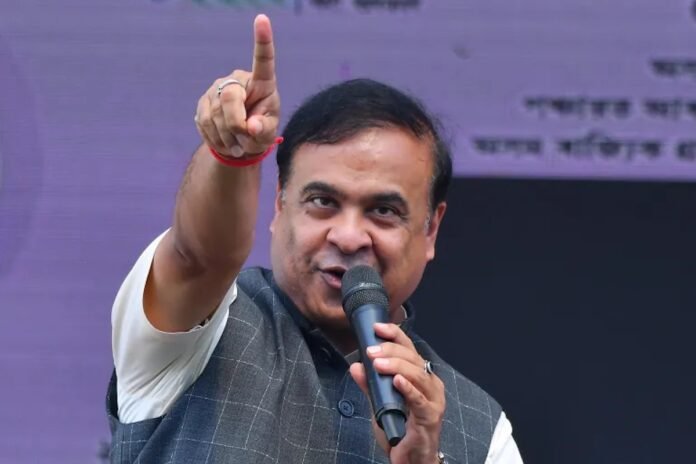
Dhaka on Thursday (April 30) issued a sharp diplomatic protest by summoning India’s acting High Commissioner, Pawan Badhe, following controversial remarks by Assam Chief Minister Himanta Biswa Sarma that Bangladesh says undermine bilateral ties.

Officials at the Ministry of Foreign Affairs called in the envoy, where Director General (South Asia) Ishrat Jahan conveyed Dhaka’s “strong displeasure” over what it described as “disparaging” comments.

The move, the first such summons since the Bangladesh Nationalist Party-led government assumed office in February, signals how quickly rhetorical excess can spill into formal diplomacy.

The immediate provocation is striking for its bluntness. CM Sarma reportedly said he “prays” that relations between India and Bangladesh do not improve, arguing instead that ties should continue to deteriorate. It is rare for a senior elected official in a neighboring country to articulate, so openly, a preference for diplomatic decline.

Dhaka’s response was therefore less about theatrics than about drawing a line: such language, left unchecked, corrodes the foundations of an already delicate relationship.

Yet the episode is not an aberration. It reflects a longer pattern of rhetoric emanating from Assam’s political arena, where Bangladesh has often been cast less as a partner and more as a problem.

Himanta Biswa Sarma has repeatedly framed Bangladesh in security terms — warning of “infiltration”, alleging demographic pressure and invoking threats to India’s northeast. Over time, such framing has seeped into administrative practice, most notably in periodic “push-in” operations along the border.

These push-ins — where individuals alleged to be undocumented migrants are forced across the frontier—have been a recurring irritant. Bangladeshi border authorities have, on multiple occasions, reported groups of people being sent across by India’s Border Security Force without verification of nationality.

In several instances, those pushed in were found to be Indian citizens or long-term residents lacking documentation rather than Bangladeshi nationals. Each episode triggers localized tension, erodes trust between border forces and feeds a narrative in Bangladesh that parts of India’s state machinery view it through a lens of suspicion and expediency.

The political utility of such rhetoric in Assam is not hard to decipher. Migration — real, perceived, and politicized — has long been central to the state’s electoral discourse. Casting Bangladesh as the source of demographic anxiety helps consolidate domestic constituencies.

But what plays well in Guwahati sits uneasily with the strategic calculus in New Delhi. Because, at the national level, India appears to be moving in the opposite direction. There is a growing recognition among policymakers and think tanks that India must “reset” its relationship with Bangladesh.

That reset is, of course, driven by hard interests: connectivity to the northeast, access to transit routes, cooperation on energy and the management of shared rivers. Bangladesh is not a peripheral partner; it is central to India’s eastern strategy.

Recent signals from New Delhi suggest a degree of seriousness about this recalibration. The decision to appoint a politically heavyweight like Dinesh Trivedi as envoy to Dhaka indicates that the relationship is being elevated, not downgraded.

Engagements have focused on trade facilitation, infrastructure connectivity, and maintaining security cooperation along the border. Even amid political transitions in Dhaka, India has shown a willingness to keep channels open.

This creates a dissonance. On one track, New Delhi seeks a pragmatic reset with Dhaka, emphasizing mutual benefit and regional stability. On another, influential leaders in border states continue to amplify narratives that cast Bangladesh as a destabilizing force. The result is mixed signaling — one that risks confusing both policymakers and publics on either side.

The costs of such incoherence are not abstract. Bangladesh and India share one of the most densely populated and sensitive borders in the world. Cooperation is essential to manage everything from river flows to smuggling networks. When rhetoric hardens, operational coordination becomes harder.

Border incidents — whether accidental or deliberate — become more likely. And domestic audiences in both countries grow more receptive to nationalist framing, narrowing the political space for compromise.

There is also a reputational dimension. India has, over the past decade, positioned itself as a responsible regional power — one that values stability and connectivity. Allowing subnational rhetoric to undercut that posture weakens its credibility.

For Bangladesh, meanwhile, the calculus is equally clear: it cannot afford a relationship defined by episodic hostility, but nor can it ignore statements that question the very premise of cooperation.

None of this suggests that disagreements should be papered over. Bangladesh and India have real differences—over trade imbalances, water sharing, and border management. But diplomacy depends on a baseline of respect. Publicly wishing for deteriorating ties crosses that baseline.

Dhaka’s decision to summon the envoy is therefore best read not as escalation but as calibration. It is a reminder that rhetoric matters, that words spoken in one capital reverberate in another, and that managing a complex bilateral relationship requires discipline across all levels of government.

If India is serious about resetting ties, it will need to align its internal messaging with its external objectives. That means reining in narratives that reduce Bangladesh to a security trope and addressing contentious practices such as push-ins with greater transparency and coordination.

For Bangladesh, the challenge will be to respond firmly without allowing such episodes to derail broader engagement. The alternative is a slow drift into mistrust — fuelled not by grand strategy but by the cumulative effect of smaller provocations.

In a relationship as intricate as that between Bangladesh and India, that would be a costly failure of both politics and imagination.

Faisal Mahmud is a Dhaka-based journalist

Instead of indirectly insulting Yemen, Prabowo should be building relations with it

0
instead-of-indirectly-insulting-yemen,-prabowo-should-be-building-relations-with-it
Instead of indirectly insulting Yemen, Prabowo should be building relations with it

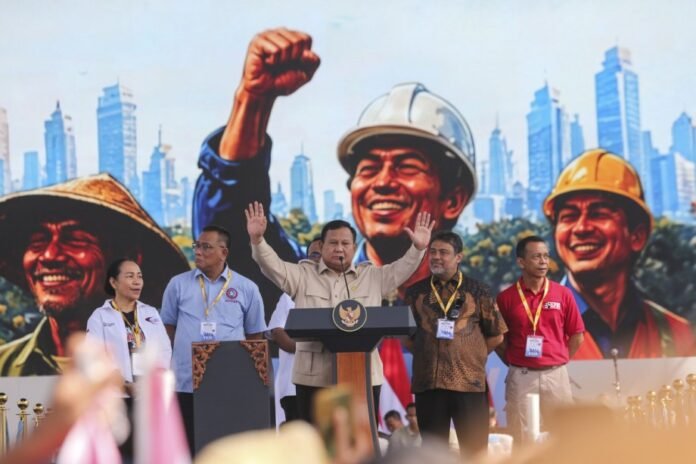
At a high-profile industrial groundbreaking event in Central Java, President Prabowo Subianto responded sharply to critics who describe Indonesia as being in decline. Rejecting the phrase “Indonesia is dark,” he declared that such critics have “blurred vision,” insisted the country is “bright,” and then went further: if they are unhappy, they should simply leave—adding, pointedly, that they could “run away to Yemen.” 

It was a moment meant to project confidence. Instead, it exposed a troubling lapse in judgment—one that reaches far beyond Indonesia’s domestic debate and directly into its relationship with the wider world.

Let’s be clear: this was not just an attack on critics. It was an insult to Yemen.

By invoking Yemen as a destination for those who want to “escape,” Prabowo was not engaging in neutral geography. He was making a comparison—implicitly placing Yemen on the losing end of it. The message, stripped of political context, is unmistakable: if Indonesia is “bright,” then Yemen is something else—something lesser, something undesirable.

That is not rhetoric. That is hierarchy.

And it is a dangerous one for a leader to project.

Yemen is not a symbol to be deployed in domestic political theater. It is a country with deep historical, cultural, and religious significance—particularly for Indonesia itself. For centuries, Yemeni scholars, especially from Hadramaut, have helped shape Indonesian Islam, education, and social life.

Entire communities in Indonesia trace their intellectual and familial roots back to Yemen. These ties are not incidental; they are foundational.

To reduce Yemen to a throwaway line is to disregard that shared history with astonishing carelessness.

It is also diplomatically incoherent. Prabowo has built much of his presidency around global engagement. He has traveled extensively, cultivated partnerships, and positioned himself as a leader who understands the importance of international relationships. His own foreign policy principle—“a thousand friends are too few, one enemy too many”—suggests a worldview rooted in respect and strategic cooperation.

READ: Indonesia suspends participation in Board of Peace following attack on Iran

But statements like this contradict that worldview outright.

You cannot claim to build friendships while casually diminishing another nation in public. You cannot present yourself as a bridge to the Muslim world while speaking about one of its countries as if it were a geopolitical punchline. And you cannot expect credibility in the Middle East if your language suggests that some nations are useful only as negative comparisons.

This is not strength. It is indiscipline.

Worse still, the remark reflects a deeper problem in how Prabowo handles dissent. Faced with criticism, he did not argue, persuade, or even acknowledge the concerns being raised. He dismissed them—and told critics to leave. This is not a good way to dissent his critics. It is a refusal to engage in the very democratic process that gives such criticism meaning.

Strong leadership does not exile disagreement. It confronts it.

By telling critics to “go elsewhere,” Prabowo is not defending Indonesia’s progress—he is avoiding scrutiny. And in doing so, he drags Yemen into a domestic political exchange where it does not belong, using it as collateral damage in a rhetorical fight.

That has consequences.

For audiences in the Middle East, the signal is hard to ignore. If Yemen can be casually invoked as a place of escape—implicitly inferior, implicitly undesirable—then respect is conditional. And conditional respect is no respect at all.

This is particularly striking given that Indonesia has just taken steps to strengthen its diplomatic presence in Yemen, including appointing a new ambassador in 2026. That move suggests recognition of Yemen’s importance. But diplomacy is not built on appointments alone—it is built on tone, consistency, and the ability to treat partners with dignity in both formal and informal settings.

READ: Yemen’s Houthis say to intervene militarily if needed amid Iran-US war

On that front, the president has fallen short.

Yet this moment also presents a clear path forward—if he chooses to take it.

Instead of using Yemen as a rhetorical device, Prabowo should be investing in the relationship. Indonesia is uniquely positioned to engage Yemen through humanitarian assistance, educational exchange, and religious diplomacy grounded in shared traditions.

At a time when Global South cooperation is increasingly vital, strengthening ties with Yemen is not just morally sound—it is strategically smart.

But that requires a shift in mindset.

It requires recognizing that countries facing hardship are not symbols to be exploited, but partners to be respected. It requires understanding that words spoken casually at home can resonate deeply abroad. And it requires a willingness to treat criticism not as a nuisance to be dismissed, but as a challenge to be addressed.

Because in today’s world, leadership is not just about power. It is about perception.

Right now, the perception created by this remark is simple and damaging: that Yemen can be reduced to a punchline, and that dissent can be brushed aside rather than engaged. Neither reflects the values Indonesia claims to uphold.

Prabowo still has time to correct course. But that correction must begin with a basic principle—one that should guide any leader with global ambitions:

Respect is not optional.

OPINION: Indonesia and the Gulf must do more than soft power in a time of war

The views expressed in this article belong to the author and do not necessarily reflect the editorial policy of Middle East Monitor.

Researchers try to cut the genetic code from 20 to 19 amino acids

0
researchers-try-to-cut-the-genetic-code-from-20-to-19-amino-acids
Researchers try to cut the genetic code from 20 to 19 amino acids

The genetic code is central to life. With minor variations, everything uses the same sets of three DNA bases to encode the same 20 amino acids. We have discovered no major exceptions to this, leading researchers to conclude that this code probably dated back to the last common ancestor of all life on Earth. But there has been a lot of informed speculation about how that genetic code initially evolved.

Most hypotheses suggest that earlier forms of life had partial genetic codes and used fewer than 20 amino acids. To test these hypotheses, a team from Columbia and Harvard decided to see if they could get rid of one of the 20 currently in use. And, as a first attempt, they engineered a portion of the ribosome that worked without using an otherwise essential amino acid: isoleucine.

Changing the code

First off, why would you do this? Most work in the field has focused on altering the genetic code in ways that are useful, such as using more than 20 amino acids to enable interesting chemistry.

The reasoning here seems to be that, prior to the last common ancestor of life on Earth, organisms experimented with various genetic codes and probably used a mix of proteins and catalytic RNAs to run their metabolisms. While we’ve done a lot of studies on catalytic RNAs, we have far less of an idea of what sort of chemistry is possible with a reduced genetic code. And the researchers suggest that AI-based tools have matured enough that redesigning proteins to use fewer amino acids is far more realistic than it was just a few years ago.

Isoleucine is one of three highly similar amino acids, along with leucine and valine. In the portion of the structure that’s distinct from other amino acids, all three have a branched structure that’s composed entirely of carbon and hydrogen. That makes them all hydrophobic, and they often are located in the interior of proteins, which keeps them away from the watery environment of the cell. So, purely by reasoning it out, one of those three would seem to be a good candidate to get rid of.

The researchers involved backed that reasoning up with evidence. They ran an analysis of the E. coli genome, checking which amino acids were substituted by other ones in related proteins from other species. Isoleucine was the amino acid that was most frequently swapped out for a different one. So, the researchers decided to start answering the question of whether we really need it at all.

Editing all 4,500 or so genes in E. coli would be a monumental task, and that many changes at once would almost certainly end up killing it, so the researchers started out with much smaller tests. To begin with, they took a set of 36 essential genes and replaced every isoleucine in them with valine, a similar amino acid, and then put the introduced gene back into the genome. For 22 of the genes, doing so killed the cells. But that does indicate that 17 of them got by ok without isoleucine, including one where it was swapped out in 45 different positions along the amino acid chain.

Notably, even in cases where cells tolerated the change, their growth often slowed compared to the unedited cells. That will become a recurring theme.

Redesigning the ribosome

To give their project a focus, the researchers decided to start engineering an isoleucine-free ribosome. The ribosome is a large complex of proteins and RNAs that translates messenger RNAs into proteins—you can think of it as a bit like one of the hardware components that’s needed to boot a living cell from a genome. Obviously, many of the proteins in the ribosome have critical enzymatic activities. But bringing that complex together requires that these proteins interact with each other and RNAs. So, the ribosome provides a stringent test of whether engineering out an amino acid can be tolerated by cells.

As a preliminary test, the team did an isoleucine-to-valine swap for 50 different individual genes that contribute proteins to the ribosome. Eighteen of those worked with no obvious problems, another 19 grew more slowly, and the changes were lethal for the remaining 13 genes. The team then focused on the 32 genes with reduced fitness and adapted deep-learning protein-design software to suggest alternative sequences that did not include isoleucine.

Iterative testing using four different software packages produced alternative protein sequences for 25 of these 32 proteins that eliminated the fitness issues.

For the remaining five, they went back and forced changes at the isoleucine. They then let the software design changes in the amino acids that are physically close to it within the three-dimensional structure of the protein, the idea being that the change in amino acid may disrupt the protein’s structure in a way that other changes in nearby amino acids could compensate for. This led to successful redesigns for four of the five problem proteins.

While these are impressive achievements, testing them individually doesn’t really give the full picture of whether these redesigned proteins can put together a functionally equivalent ribosome. To do that, the researchers decided to remove isoleucine from all of the proteins in the small subunit of the ribosome. This is largely a matter of convenience. The genes for the 21 proteins in the small subunit are all clustered next to each other on a 10,000-base-long stretch of the genome, so the researchers could just replace them all at once.

Thinking small

Using the redesigned proteins from the earlier work, they started replacing ever-larger stretches of the genes along this 10,000-base stretch of DNA. Starting from one side, they replaced 10 genes without any trouble. By the time they got to replacing 17 of the 21, the cells were growing more slowly. Replacing 18 genes at once, however, killed the cells entirely.

So, they started working in from the other direction and found that the changes were tolerated until they hit the same gene identified as problematic when going from the other direction. That gene, called rplW, seems to be the critical holdup. Replacing 20 of the 21 genes and leaving rplW untouched led to cells that not only survived, but grew at about 70 percent the rate of an unmodified E. coli cell.

So, they took a careful look at the changes the software had suggested for rplW. It turns out that the software had compensated for the changes to isoleucines by deleting some small stretches of amino acids nearby. While that apparently worked to get a functional protein, it differed enough that it wouldn’t work in combination with all the other changes.

At this point, the team just brute-forced the issue. They had software packages suggest a number of alternative amino acids for each of the four isoleucine positions in rplW and tested every possible combination of them (16 designs in total). One of these designs was able to complete the isoleucine-free small subunit, with the resulting strain growing about 60 percent as fast as the unedited ones. The cells were grown for 400 generations and typically picked up 20–30 mutations, but none of those restored an isoleucine to any of the ribosomal proteins.

Notably, if you just put this version of rplW back into the genome on its own, the cells die. It’s only tolerated in the context of all the other changes to the ribosome caused by the other redesigned proteins.

Some notes about the AI use

It’s unclear that any of this would have been possible without the heavy use of AI tools. All of the protein design tools were AI-based, and their outputs were checked using AlphaFold 2, the Nobel-winning AI protein structure software. And the authors of the paper highlight a number of cases where the AI software made suggestions that most biologists would have shied away from. These include replacing the structurally flexible, neutral isoleucine with either a charged amino acid or one that’s locked into a rigid structure.

That said, the results also show the limits of working with current AI models, largely because, unlike a human, they can’t really explain the process by which they’re making decisions. For example, some of the models made very different suggestions from each other, which the researchers say implies that they are exploring different regions of the space of possible sequences. But we don’t actually know whether that’s the case, or if each model had mathematical reasons for disliking the other’s suggestions.

That’s one of a number of cases in the paper where the researchers tried to reason backward about what the model was doing based on its output. In at least one case, the software redesigned the entire structural element (an alpha helix) the isoleucine it changed was located in, for reasons they don’t even hazard a guess.

It’s a good reminder that, at the moment, these software packages are tools: they let us do things that would otherwise not be possible, but they don’t actually help us understand all that much. We’re still left to reason through phenomena using the neural networks inside our skulls.

This doesn’t necessarily have to be the case; we could put more emphasis on exposing the inner workings of this software when developing it in order to get some insights into its decision-making process. But for now, I think the emphasis has been (quite reasonably) on getting something that works.

An amazing achievement, but is it useful?

Overall, this is astonishing work. These proteins have to interact with each other, interact with ribosomal RNAs, transfer RNAs, messenger RNAs, the growing proteins the ribosome makes—plus all the normal proteins over on the large subunit. Each of those has had billions of years to evolve the ability to work with each other. The fact that we could make such radical changes to the system over the course of a couple of years is just mind-blowing.

We still don’t know what’s slowing these cells down. It’s possible that the revised ribosome is less accurate, making more defective proteins by putting together amino acid chains with more frequent errors. Or it could be slower catalytically, becoming a bottleneck for cell growth. That’s something we could definitely experiment with, and giving the strain time to evolve might bring its growth rate back up a bit.

Can we use it as a starting place to get to an isoleucine-free genome? I’d rate that as still in the “maybe” category. There are lots of other large protein complexes in the cell, and there may be some that the AI tools struggle with. We’ll see if these labs have time and funding to continue down this path. Still, I’m skeptical that it will tell us much about life before the universal common ancestor, given how much about the rest of the cell has changed in the meantime.

It may, however, prove effective in that regard, in that it could inspire other scientists to think about experiments that might give us a better picture of what cells with a limited genetic code might look like.

Science, 2026. DOI: 10.1126/science.aeb5171 (About DOIs).

Iran war shows US economic coercion isn’t what it was

0
iran-war-shows-us-economic-coercion-isn’t-what-it-was
Iran war shows US economic coercion isn’t what it was

Two months after the United States, along with Israel, launched a war against Iran, that conflict appears far from a lasting resolution.

Much commentary on the protracted nature of the conflict has centered on the limits of both the military and diplomatic approaches to the war. But the conflict has also exposed another key reality: the limits of US sanctions.

The US has been the world’s preeminent economic and military power for decades, certainly since the end of the Cold War. It is at the center of much global financial activity and has a military budget well beyond China, the closest competitor.

Leveraging that power, the US has long used economic coercion to achieve its foreign policy goals, whether against North Korea under the Kim regime, Russia over its invasion of Ukraine or Iran since the 1979 revolution that overthrew the US-allied shah.

But as US power in the world has slowly declined amid the rise of China and an increasingly multipolar world, the country has likewise lost some of its ability to effectively use economics as a weapon.

Indeed, as scholars of economic sanctions and statecraft, we believe that the conflict against Iran has made clear the diminishing returns of US economic sanctions.

The limits of sanctions on Iran

Since 1979, relations between Washington and Iran have been antagonistic. US policy has been largely to punish, contain or isolate Iran, and successive administrations have done so in part through a mix of primary, secondary and targeted financial economic sanctions.

US economic coercion has been applied on Iran for a variety of reasons, including its alleged state sponsorship of terrorism throughout the region and its nuclear program.

The emergence of that nuclear program in 2003, which later resulted in United Nations sanctions against Iran, saw US and European Union interests around Iran converge.

A man in a suit stands at a podium during a press conference.
Then-Secretary of State Mike Pompeo speaks during a news conference announcing the Trump administration’s restoration of sanctions on Iran in 2020, two years after it left a nuclear non-proliferation deal with Iran. Photo: AP via The Conversation / Patrick Semansky

This convergence led to the US and EU cooperating on economic sanctions against Iran, which limited Iranian access to the European banking system. The combined coordinated efforts proved onerous for the Iranian economy, which, as political scientist Adam Tarock notes, meant Iran was “winning a little, losing a lot.”

The Joint Comprehensive Plan of Action (JCPOA), negotiated between the US, Iran, members of the EU, Russia and China in 2015, placed limits on Iran’s nuclear program in exchange for sanctions relief.

At the time, the Iranian economy was suffering crushing inflation and rampant food prices. The agreement would provide relief from decades of economic punishment and the removal of EU, UN and US economic sanctions.

However, the US withdrew from the agreement in 2018 under the first Trump administration and later reimposed sanctions on Iran. The return of economic sanctions as part of the first Trump administration’s maximum pressure campaign – even if not supported by other nations – saw most global firms refrain from doing business with Iran out of risk aversion.

Additionally, despite the EU’s efforts to preserve the JCPOA, Iran restarted its nuclear enrichment program in 2019, one year after the US withdrawal. The Biden administration’s subsequent expressed intention to reenter the deal never came to fruition.

Believing sanctions relief was not a realistic outcome after the agreement’s failure, Iran – though battered by losing access to the global financial system – has found increasingly creative workarounds.

Those have included utilizing so-called shadow fleets shipping illicit Iranian goods, creating successful homemade military products like cheaply made drones and ramping up trade with partners outside the Western orbit.

Indeed, since the nuclear agreement’s collapse, Iran has pursued much closer ties with China and Russia at the expense of prior robust economic relations with Europe. As Iran reorients its trade and economic relations, the US and the West have lost economic coercive leverage.

Separated from a diplomatic endgame, US sanctions – and the current blockade of Iranian-linked ships – appear to be only hardening Iranian resolve. Even if a deal were reached to reopen the Strait of Hormuz, Iran has said it plans to push for commercial ships to pay a toll going forward – something that didn’t exist before the war.

In effect, Iran’s ongoing de facto closure of the strait has redirected US economic coercion back at the Trump administration.

Blowback in the energy markets

The biggest costs of that ongoing closure for the US has been in energy.

The US today is one of the largest exporters of crude and refined petroleum globally, making it particularly exposed to oil price volatility. At the same time, some Americans see the development of fossil fuel resources as a key policy priority.

As the US becomes more embedded in the export energy sector, it is increasingly experiencing collateral damage – namely, higher oil and gasoline prices – when its foreign policy decisions disrupt oil-related trade.

A woman fills up her car with gas.
The price of oil has reached the highest level since 2022, making for higher costs at the gas pump. Photo: Ap via The Conversation / Jenny Kane

One way that collateral damage manifests is the affordability problem for many Americans as gas prices rise, which is likely to also create political costs for the Trump administration.

While the US has taken steps to ease the economic disruptions to American consumers by relaxing oil sanctions on Russia and Iran – thus undermining its own sanctions policy – these policy shifts have done little to nothing to offset rising fuel prices.

They will likewise fail to ameliorate the potential for economic damage caused by the ongoing disruptions to commerce due to the Strait of Hormuz dangers and uncertainties.

Famed economist Albert O. Hirschman once noted that countries use their strategic position to shift others’ cost–benefit calculations, especially through trade disruptions. And for decades, the US used its privileged position in the global financial system to pressure both rising countries and those not explicitly part of the US alliance.

But as the US becomes more exposed to the consequences of its own decisions, its ability to lead and coerce has stalled under costs it cannot easily absorb.

No longer leading by example

Historically, US economic power was made possible not only by the country’s unilateral strengths but its willingness to pool resources and work multilaterally with other nations.

The Trump White House’s inability to put together a multinational coalition to address the political and economic challenges caused by US-Israeli attacks on Iran is not surprising. But they further reflect the evaporation of goodwill the US previously enjoyed with allies in and outside the region.

As the US abandons a playbook that has buttressed its power for decades, Russia has grown bolder, China is edging ahead of the West and middle powers like Iran are able to hold out against American economic and military strength.

None of this means the US no longer holds significant global power. But its turn toward a sanction-first, ask-questions-later approach has, we believe, eroded its ability to shape the behavior of other nations.

And it has done so while imposing increasingly tangible costs on both American strategy and the well-being of its own citizens.

Charmaine N. Willis is assistant professor of political science, Old Dominion University and Keith A. Preble is teaching assistant professor, East Carolina University

This article is republished from The Conversation under a Creative Commons license. Read the original article.

Syrian, Iraqi Forces Dismantle Cross-Border Captagon Network

0
syrian,-iraqi-forces-dismantle-cross-border-captagon-network
Syrian, Iraqi Forces Dismantle Cross-Border Captagon Network


[DAMASCUS] In a joint security operation described as a high-profile example of intelligence cooperation, Syrian and Iraqi authorities announced the dismantling of an international network that specialized in drug trafficking and the seizure of a large quantity of Captagon pills. Estimated at approximately 1.73 million tablets, they were intended to be smuggled across borders to neighboring countries.

The media office of the Syrian Interior Ministry stated that the operation was the result of joint intelligence coordination between the relevant agencies in both countries, following careful monitoring that lasted for a period and included tracking the network’s movements and activities within Syrian territory and beyond.

The ministry indicated that units from the Anti-Narcotics Department carried out a series of simultaneous raids at several locations in the Damascus countryside and Homs province, areas believed to have been used as centers for storing narcotics and preparing them for smuggling.

The operations resulted in the seizure of the entire shipment, in addition to the arrest of eight individuals suspected of involvement in the network, including a woman.

According to preliminary information, the dismantled network is involved in cross-border trafficking that relies on multiple routes to transport narcotics between more than one country, taking advantage of interconnected borders and the difficulty of monitoring in certain areas.

The Iraqi Interior Ministry confirmed its participation in the operation through the exchange of intelligence information and coordination of field efforts, noting that this cooperation directly contributed to identifying the network’s locations, dismantling it completely, and thwarting the attempt to smuggle the seized quantity out of the country.

Security authorities in both countries explained that the operation was the result of long-term joint work, which included close monitoring of the network’s movements and members, as well as tracking its financing and distribution routes, enabling simultaneous strikes that brought its activities to an end.

This development comes amid escalating regional security efforts to combat drug trafficking, particularly Captagon, which has seen widespread proliferation in the region in recent years.

Several countries are working to enhance security cooperation and exchange information in order to curb the activities of international networks operating in this field.

The relevant authorities confirmed the continuation of coordination between Damascus and Baghdad to track any potential extensions of the network and pursue other possible suspects inside and outside the country’s borders, as part of a broader strategy aimed at dismantling organized smuggling networks and cutting off their sources.

Meta cuts contractors who reported seeing Ray-Ban Meta users have sex

0
meta-cuts-contractors-who-reported-seeing-ray-ban-meta-users-have-sex
Meta cuts contractors who reported seeing Ray-Ban Meta users have sex

In February, numerous workers from a company that Meta contracted to perform data annotation for Ray-Ban Meta reported viewing sensitive, embarrassing, and seemingly private footage recorded by the smart glasses. About two months later, Meta ended its contract with the firm.

According to a BBC report today, “less than two months” after a report from Swedish newspapers Svenska Dagbladet and Göteborgs-Posten and Kenya-based freelance journalist Naipanoi Lepapa came out featuring Sama workers complaining about watching explicit footage shot from Ray-Ban Metas, “Meta ended its contract with Sama.”

Sama is a Kenya-headquartered firm that Meta contracted to perform data annotation work, including working with video, image, and speech annotation for Meta’s AI systems for Ray-Ban Metas. Sama claims that Meta’s cancellation of the contract affected 1,108 workers.

A Meta spokesperson told BBC that Meta “decided to end our work with Sama because they don’t meet our standards.” Ars Technica reached out to Meta asking how, specifically, Sama failed to meet Meta’s expectations and will update this article if we hear back. Ars has also reached out to Sama.

In a statement shared with BBC, Sama claimed that it was never notified of any failure to meet Meta’s standards.

BBC reported that Sama workers believe Meta ended the contract because workers spoke out about seeing Ray-Ban Meta-shot footage of people performing personal acts, like changing their clothes, having sex, and using the toilet.

In a statement shared with Ars, Sama said:

We do not comment on specific client processes or decisions, however, we can confirm that the engagement with Meta is ending. Sama has consistently met the operational, security, and quality standards required across all of our client engagements, and we stand behind the integrity of our work. Our focus is on supporting our employees during this transition while continuing to deliver for our clients.

In February’s report, an anonymous Sama employee was quoted as saying, per a machine translation, they “are just expected to carry out the work” even when viewing private footage.

After Sama workers told journalists that they had watched private footage that appeared to be recorded unbeknownst to glasses owners, Meta responded by halting business with Sama, a spokesperson said, per BBC’s report today.

“Last month, we paused our work with Sama while we looked into these claims,” the spokesperson said. “We take them seriously. Photos and videos are private to users. Humans review AI content to improve product performance, for which we get clear user consent.”

BBC said that Meta has not responded to allegations that it cut ties with Sama because the workers spoke out.

Ray-Ban Meta scrutinized after Sama workers’ claims

In response to the February report, Meta confirmed that it sometimes shares content that glasses owners provide to the Meta AI generative AI chatbot with contractors so that the contractors can review data with “the purpose of improving people’s experience.” The company said that such “data is first filtered to protect people’s privacy,” such as by blurring out faces in pictures.

Ray-Ban Metas show a light when taking photos or recording a video; however, Sama workers said in February that it appeared that some users remained unaware that their glasses were recording sometimes.

“People can record themselves in the wrong way and not even know what they are recording,” an anonymous employee was quoted as saying, per a machine translation of the Swedish newspapers.

Since Sama workers’ claims became public, Ray-Ban Meta glasses have faced extra scrutiny. In March, a class-action complaint was filed in the US District Court for the Northern District of California, San Francisco Division [PDF] against Meta and Luxottica of America, a subsidiary of EssilorLuxottica, which is Ray-Ban’s parent company. The complaint accuses Meta of breaking state consumer protection laws and seeks damages, punitive penalties, and an injunction requiring Meta to make changes in order “to prevent or mitigate the risk of the consumer deception and violations of law.”

That same month, the UK Information Commissioner’s Office (ICO) said it would send Meta a letter about the Sama workers’ “concerning” reports. The data watchdog told BBC at the time that “devices processing personal data, including smart glasses, should put users in control and provide appropriate transparency.”

“Service providers must clearly explain what data is collected and how it is used,” the ICO’s statement said.

The office of Kenya’s Data Protection Commissioner said in March that it was investigating “privacy concerns raised in relation to the Ray-Ban Meta glasses and the processing of personally identifiable information for the training of Meta AI.”

Trump says the US is reviewing a potential reduction of its troops in Germany

0
trump-says-the-us-is-reviewing-a-potential-reduction-of-its-troops-in-germany
Trump says the US is reviewing a potential reduction of its troops in Germany


President Donald Trump, who has criticized Germany and other NATO allies for not ​sending their navies to help open the Strait of Hormuz, said his administration is looking at reducing the number of ‌U.S. troops in Germany.

“The United States is studying and reviewing the possible reduction of Troops in Germany, with a determination to be made over the next short period of time,” Trump said on Truth Social.

A senior White House official had told Reuters earlier this month that Trump had discussed the possibility of removing some U.S. troops from Europe.

The U.S. had just ​over 68,000 active-duty military personnel assigned permanently in its overseas bases in Europe as of December 2025, data from the U.S. Defense Manpower ​Data Center (DMDC) shows.

More than half – about 36,400 – are based in Germany. That is a fraction of the 250,000 U.S. troops ⁠that were based there in 1985, before the fall of the Berlin Wall and the end of the Cold War.

TRUMP AND MERZ SPAR OVER IRAN WAR

Trump ​has been sparring with German Chancellor Friedrich Merz over the war in Iran in recent days. On Tuesday, he said Merz didn’t know what he was ​talking about after the German leader said the Iranians were humiliating the U.S. in talks to end the two-month-old war. Merz on Wednesday said relations with Trump were good, despite the row over the war.

Trump’s post came hours after Germany’s top general, Carsten Breuer, met with Defense Undersecretary Elbridge Colby and other U.S. defense officials on Wednesday to discuss his ​country’s first military strategy outside the NATO umbrella since World War Two.

Colby lauded the German document, which lays out Berlin’s goal to become Europe’s largest conventional ​force in a series of posts on X after it was released last week, saying it showed “a clear path forward.”

“President Trump has rightly laid out that Europe must step ‌up, and ⁠NATO must no longer be a paper tiger,” Colby said on X. “Germany is now taking the leading role in this. After years of disarmament, Berlin is stepping up.”

Breuer told reporters in Washington that Colby showed “great appreciation” for Germany’s military strategy and its push to take on a greater leadership role in NATO, and its financial commitment to reach that goal.

Breuer gave no indication that U.S. officials had discussed the prospect of reducing U.S. troops in Germany.

The German embassy had no ​immediate comment. The Pentagon referred queries ​to the White House, which had ⁠no immediate comment.

Trump has long been critical of Germany and other European countries for failing to spend more on their own defense, although he lauded NATO members’ decision to boost their defense spending to 5% of GDP.

Tensions flared again ​after NATO allies refused to give Trump the support he demanded for the war against Iran, which Trump launched ​together with Israel without ⁠consulting or informing them. Trump’s desire to acquire Greenland from NATO member Denmark, which has been firmly rebuffed, also strained ties at the political level.

Trump sought a major reduction in U.S. troop levels in Germany during his first term, although that was never realized, said Jeff Rathke, a former U.S. diplomat and president of the ⁠American-German Institute ​at Johns Hopkins University.

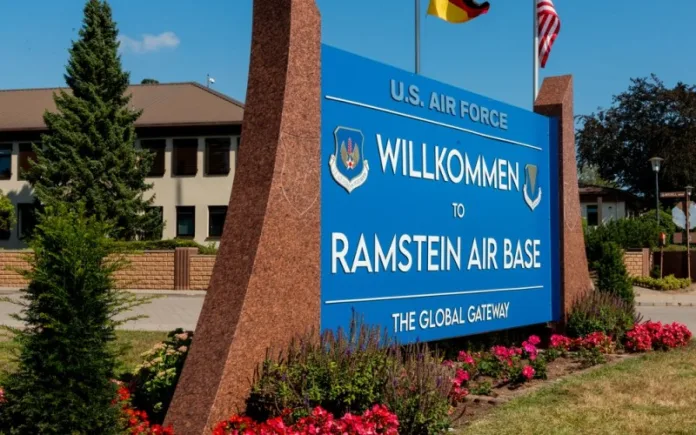
Rathke said the U.S. military benefitted greatly from having a forward presence at ​bases overseas, including Ramstein in Germany. “U.S. forces in Europe are not a charitable contribution to ungrateful Europeans – they are an instrument of America’s global military reach,” he said.

U.S. and German military officials ​say their working relationship remains strong despite Trump’s sporadic social media posts about quitting NATO or cutting troops.

Secret Epstein ‘Suicide Note’ to be Exposed in Court Fight?

0
secret-epstein-‘suicide-note’-to-be-exposed-in-court-fight?
Secret Epstein ‘Suicide Note’ to be Exposed in Court Fight?


A secret “suicide note” allegedly written by Jeffrey Epstein could soon be dragged into the light—and it’s already stirring up fresh controversy in one of America’s most talked-about scandals.

According to a new report from The New York Times, the outlet has gone to court to demand that a federal judge unseal the mysterious note, which has been locked away for years. The chilling message was reportedly written during Epstein’s first failed suicide attempt behind bars—and what it supposedly says is raising eyebrows.

The note was discovered by Epstein’s former cellmate, Nicholas Tartaglione, who claims it included a haunting line: “time to say goodbye.”

But here’s where things get even stranger.

Instead of becoming key evidence in the investigation into Epstein’s death, the note was sealed as part of Tartaglione’s own criminal case. That meant federal investigators never even had access to it after Epstein died—leaving a major piece of the puzzle hidden from view.

Tartaglione says he stumbled upon the note tucked inside a graphic novel in their shared cell. Written on yellow legal pad paper, the message allegedly read something like: “What do you want me to do, bust out crying? Time to say goodbye.”

At the time, Tartaglione—now serving time for a brutal quadruple homicide—turned the note over to his lawyers. He reportedly believed it could help protect him if Epstein ever accused him of trying to harm him while they were locked up together.

Meanwhile, the United States Department of Justice has already released millions of pages tied to Epstein after bipartisan pressure forced the files open. But this particular note? It wasn’t included.

And that omission is fueling even more suspicion.

Epstein’s death in August 2019—officially ruled a suicide—has been the subject of endless debate, conspiracy theories, and unanswered questions. He was found dead in his jail cell after reportedly taking his own life sometime overnight, despite being under federal custody and previously placed on suicide watch.

At the time, then-Attorney General William Barr said he was “appalled” by the circumstances, calling for answers as scrutiny mounted over how such a high-profile inmate could die behind bars.

Yet even years later, critical details remain murky—and the alleged suicide note was never mentioned in official investigations, including a 2023 watchdog report.

Now, with pressure mounting to unseal the document, the Epstein saga is once again front and center—and dragging powerful names back into the spotlight.

Epstein, who was accused of abusing hundreds of underage girls, had ties to politicians, billionaires, and celebrities. Among them was Donald Trump, who once had a long-standing friendship with the financier before the two reportedly fell out in the early 2000s.

As the legal battle heats up, one question looms large: what exactly did Epstein write in that final note—and why has it been kept secret for so long?

If the court orders it unsealed, the answer could reignite one of the most explosive scandals in modern American history.

Taiwan’s Cheng will face a tough crowd on US visit

0
taiwan’s-cheng-will-face-a-tough-crowd-on-us-visit
Taiwan’s Cheng will face a tough crowd on US visit

Fresh from consultations with Chinese paramount leader Xi Jinping in April, Cheng Li-wun, the Chairwoman of Taiwan’s Kuomintang (KMT), plans to visit the US in June.  It will be awkward.

During her US visit, at which she hopes to talk with US officials and politicians and visit think tanks and elite universities, Cheng says she will explain an approach to cross-Strait relations that will secure peace for Taiwan while also aligning with US interests.

It is unclear, however, how she will simultaneously pacify Beijing while maintaining US support.

Beijing’s and Washington’s agendas for Taiwan directly clash. China wants to sever Taiwan’s security relationship with the US, so Taiwan’s people believe they have no alternative but to accept formal political unification with the People’s Republic of China (PRC).  

For both ideological and strategic reasons, the US wants to help Taiwan maintain its liberal democratic political system and deter any Chinese attempt at forcible annexation. From the US standpoint, the urgent need is to arm Taiwan to address its otherwise hopeless quantitative military inferiority to the PRC.

While Cheng’s policy ideas made for smooth meetings in China, they will encounter challenges in America.

There is a schism within the KMT over Taiwan’s grand strategy. Cheng represents the party faction that is relatively pro-Beijing and anti-American. Along with politicians such as KMT vice-chairman Hsiao Hsu-tsen and legislators Fu Kun-chi and Jessica Chen Yu-jen, Cheng advocates accommodating China and skepticism toward the US.  

This faction argues that the US is an unreliable protector, emphasizes that Taiwan should avoid provoking China, objects to what it considers excessive defense spending and cautions against a close relationship with Washington.

Cheng has said that, in principle, she wants continued US arms sales.  That will presumably be part of her pitch during the US visit. But she has also criticized these weapons transactions.

First, she says the ruling DPP government’s approach to arms sales lacks transparency and fiscal discipline, partly by allocating funds before receiving letters of offer and acceptance from the US government for specific weapons packages.  

Second, Cheng complains that arms sales inordinately benefit the US rather than Taiwan, and even turn Taiwan into a “powder keg.” Her views seem a mashup of recognizing Taiwan’s defense needs, incorporating China’s outlook and bashing her domestic opposition.

Cheng specifically says, “the United States is treating Taiwan as a chess piece, a pawn, to strategically provoke the Chinese Communist Party at opportune times.” Regarding the Ukraine war, Cheng blames NATO as the “core reason” for the conflict, while defending Putin as “not a dictator; he is a democratically elected leader.”

Cheng’s other takeaway from the war is that the US did not send troops to fight alongside Ukrainians, but rather sent only weapons to keep the war going, plus levied sanctions against Russia, with the results of massive death and destruction in Ukraine and failure to defeat Russia or bring down Putin.  

She suggests something similar would happen in a cross-Strait war: the US would use Taiwan as a proxy, China would win the war anyway and Taiwan would be destroyed in the process.  

These comments by Cheng align with prominent themes in PRC propaganda: NATO as the cause of the Ukraine war; the US allegedly tricking its friends into proxy wars intended to weaken China, resulting in the devastation of America’s security partners; and the absurd conspiracy theory of a “US plan to destroy Taiwan.”

The alternative KMT faction — which includes Eric Chu, Johnny Chiang, Lu Shiow-yen, Jaw Shaw-kong, Hau Lung-bin — argues for maintaining strong defense ties with the US and seeking limited engagement with China.  

This group is willing to increase defense spending, has fewer reservations about buying weapons from the US and wants to try to meet Washington’s expectations. It seeks to engage China from a position of strength and to avoid making Taiwan more vulnerable to Chinese economic coercion.

Public support for the two factions is mixed. A March 2025 opinion poll by the Taiwanese Public Opinion Foundation found that only 39% of Taiwanese respondents believed the US would send military forces to intervene if China attacked Taiwan.  

Nevertheless, most of Taiwan’s people have favorable views of the US and negative views of China, and most also support closer economic and political ties with the US. Less than 10% of Taiwanese trust China. A TVBS poll released April 24 indicated that only 39% of respondents supported Cheng’s meeting with Xi. Most disapproved of what they perceived as an attempt to achieve peace by selling out Taiwan’s sovereignty.

Mindful of public opinion, Jaw Shaw-kong wrote in an April 30 social media post, “The Kuomintang has already been labeled ‘pro-China’ by the DPP. If they are also called ‘anti-American,’ then there will be no need to hold elections this year or in 2028.”

Despite being an America skeptic, Cheng maintains that Taiwan’s relationship with the US is valuable. She has said it is “impossible” for Taiwan to do without US assistance, and “very crucial and important for us to have solid US support for Taiwan.”

That potential contradiction will get tested.  At least some people in Cheng’s American audience will be very familiar with her past statements on Taiwan’s relations with China and the US, and journalists covering the events will have done their homework.

Cheng should expect that Americans will have problems with her narrative about what the Ukraine war means for Taiwan. First, the Ukraine war doesn’t demonstrate the US’s unreliability. Considering that Ukraine is not a US ally, is 5,000 miles from the US and that the war there is a far more immediate threat to Western Europe, the fact that the US provided half of the outside military support for Ukraine during the first three years of the war is rather impressive.  

Second, Taiwan is more important to the US than Ukraine. There was never any chance the US would send its own military personnel to fight to defend Ukraine, but there is a strong likelihood American armed forces would intervene to protect Taiwan.  

The Trump Administration’s National Defense Strategy and National Security Strategy specifically state that the US has an interest in preventing China from seizing the first island chain, of which Taiwan is the central piece.

Third, the US policy-making community generally believes the cause of the Ukraine war is Putin’s aggressive obsession with absorbing Ukraine, not the eastward expansion of NATO.  

Finally, rather than destroying Ukraine, Americans would tend to view US assistance as having helped the Ukrainians keep most of their territory even into the fourth year of the war, while those parts of Ukraine occupied by Russia have suffered from various atrocities and war crimes.

A second problem for Cheng is that the US expects Taiwan to make a reasonable effort to defend itself.  As Admiral Samuel Paparo, commander of US military forces in the Asia-Pacific region, said in April, “We can’t want Taiwan’s defense more than they want it itself.”

The most visible metric of this effort is national defense spending. Both John Noh, the Pentagon’s top official for the Asia-Pacific region, and Elbridge Colby, undersecretary of defense for policy, have said the Trump administration expects Taiwan to spend 10% of its GDP on defense.

Cheng, however, has ruled out the idea of Taiwan spending even 5% of GDP as “too high and unreasonable for Taiwan.” She says disparagingly that the US treats Taiwan like “an ATM.”

The KMT, which controls the most seats in Taiwan’s legislature, has been blocking a proposed special defense budget championed by the DPP-controlled executive branch of Taiwan’s government that would spend US$40 billion over eight years. Instead, the KMT has offered a counter-proposal that is 70% smaller than the DPP’s proposed special budget.

In February, a bipartisan group of senior US members of Congress sent a letter to Taiwan’s legislature expressing “serious concerns” over the failure to pass the US$40 billion special budget.  “We need Taiwan to step up,” the letter says.  

In April, American Institute in Taiwan Director Raymond Greene, America’s quasi-ambassador to Taiwan, said passage of the special defense budget is “vital” and delay could cause Taiwan to lose its place in the queue waiting for US weapons deliveries.

Other senators said they were disappointed, questioning whether Taiwan is serious about its own defense, and believed “short-changing Taiwan’s defense to kowtow to the CCP is playing with fire.”

Americans acknowledge that the US has been slow to deliver weapons systems already purchased by Taiwan, but they think the solution is for US industry to speed up production, not for Taiwan to stop buying US-made armaments.

Cheng is trying to have it both ways on three fronts. She wants peace, as do Taiwan’s people, but via a means that most Taiwan voters do not approve.

She has made an overture to China to reduce cross-Strait military tension, but Beijing will be willing to back off only if Cheng can persuade the Americans to withhold arms sales and high-level US-Taiwan official contacts and persuade Taiwan’s people to vote Cheng’s KMT faction into control of the government.  

Now Cheng faces the challenge of appealing to the US for continued American support, despite a record of denigrating the value of that support in ways that echo PRC propaganda. As she addresses some tough questions, two other countries will be listening closely to her answers.

Denny Roy is a senior fellow at the East-West Center in Honolulu.
0FansLike
0FollowersFollow
0FollowersFollow
0SubscribersSubscribe
- Advertisement -
Google search engine

Recent Posts