The Iran miscalculations that we were warned about
There is a particular kind of silence that follows a war’s opening salvos — the silence of think-tank papers being quietly archived, of cable-news predictions being scrubbed from the chyron, of confident assurances that “this time it will be different” colliding with the stubborn evidence that, in fact, it never is.
Twelve weeks into the Iran war, that silence is louder than the bombing.
Let’s review what the war’s supporters told us, because we owe ourselves the discipline of remembering.
We were told that the strikes would be surgical. We were told that a weakened Iran would prove brittle — that a regime battered by sanctions, decapitated of Hezbollah’s deterrent shield, and abandoned by a collapsed Assad in Damascus would fold under sufficient pressure.
We were told that the assassination of Ali Khamenei on February 28 would produce, if not a Persian spring, then at least a chastened Persian autumn.
We were told that the Strait of Hormuz could be kept open through American resolve. We were told that the Gulf monarchies, however ambivalent, would tacitly cheer. We were told that the Iranian street, given the right shove, would do the regime-changing for us.
Each of these assumptions, examined now, betrays the same structural flaw: the conflation of fragility with compliance. They are not the same thing. A wounded state is not a docile one.
A regime stripped of its founding charismatic figure does not necessarily liberalize — it may, as Iran’s Interim Leadership Council has demonstrated, harden, decentralize and become more difficult to negotiate with, not less. The hawks confused the absence of a single decision-maker with the absence of decision-making.
The second miscalculation was the theory of limited retaliation. Tehran, the argument ran, would calibrate its response to preserve regime survival. Iran would absorb the blows, lash out symbolically, and return to the table on terms more favorable to Washington and Jerusalem.
This was always a curious thing to believe about an adversary whose entire doctrine of strategic depth — the proxies, the missiles, the maritime harassment capacity — was built precisely to make limited war impossible.
We knew this. It was in every CENTCOM briefing for two decades. And yet when the moment arrived, planners assumed Tehran would behave like a rational actor inside a rationality defined in Washington rather than in Qom.
Iran has now struck American bases in Qatar, the UAE, Bahrain, Saudi Arabia, Kuwait, Jordan, and Iraq. The Houthis have closed the Bab el-Mandeb. The Strait of Hormuz functions intermittently, on Iranian sufferance. This was the predictable response. It was predicted.
The third miscalculation concerned the regional coalition. The architects of this war seem genuinely to have believed that the Abraham Accords had produced something more than a transactional arrangement — that the Gulf states’ quiet animosity toward Iran would translate into active alignment with an American war. It has not.
Riyadh allowed its airspace to be used and then, within forty-eight hours, was on the phone to Beijing. Pakistan, locked into its defense pact with the Saudis, has spent ten weeks performing a contortionist act, mediating ceasefires it cannot enforce while protecting equities it cannot reconcile. Turkey is hedging. The UAE intercepted Iranian missiles and simultaneously expanded its trade corridors with Tehran’s commercial partners.
This is not coalition warfare. This is a region trying not to be set on fire by its security guarantor.
The fourth miscalculation — and this is the one the war’s defenders will have the hardest time confronting — is the question of what victory was supposed to look like. Read the official justifications in sequence and you will notice that they shift:
Degrade the nuclear program.
Restore deterrence.
Induce regime change.
Reassert primacy.
These are not the same objective. They are not even compatible objectives. A war whose purposes multiply as its costs mount is a war whose architects did not know what they wanted before they began.
That is not a quibble. It is the central failure. Clausewitz had something to say about wars conducted without a clear political object, and none of it was flattering.
The fifth miscalculation concerned the American public. The supporters of the war assured themselves, and the rest of us, that the absence of large-scale ground commitments would keep this conflict politically manageable at home.
They are now discovering, as their predecessors discovered in 1965 and 1991 and 2003, that wars begun with airstrikes do not end with airstrikes — they end with body bags, blockades, fuel-price shocks and a citizenry that begins to ask, somewhat tardily, who exactly authorized this.
The naval blockade now in place, the failed Islamabad talks, the prospect of escalation through the Lebanese front: None of this was on the menu the country thought it was ordering.
I take no pleasure in any of this. The realist tradition does not enjoy being vindicated by catastrophe. It would have preferred to be ignored quietly and proven correct in some footnote no one read.
But it has been the recurring fate of Washington’s foreign-policy establishment to mistake the absence of immediate cost for the absence of cost altogether — to confuse the silence that precedes consequences with the absence of consequences. Iran’s restraint in 2024 and 2025 was read in Washington as weakness. It should have been read as patience.
The war’s defenders will, in time, produce the explanations they always produce. The plan was sound; the execution was flawed. The Iranians did not behave as they were supposed to. The allies were unreliable. The president pulled his punches. The American people lacked the resolve.
The lessons will be that next time we must be more committed, more unified, more willing to do what was, evidently, not done.
These are the lessons that get drawn when one is unwilling to learn the actual lesson, which is older and harder and was available the whole time: that the Middle East is not a problem to be solved by force from outside, that Iran is a country and not a target set, and that the gap between what American power can break and what it can build remains the central, unhealed fact of our post–Cold War foreign policy.
We were warned. The warnings are now history. What we do with the warnings still to come is the only question that matters.
This article was originally published on Leon Hadar’s Global Zeitgeist and is republished with kind permission. Become a subscriber here.
This Eid al-Adha, Help Raise the Bar on Middle East Reporting
As Muslims across the Middle East and around the world prepare to mark Eid al-Adha, The Media Line extends warm wishes for a blessed holiday of reflection, sacrifice, generosity, and renewal.
Today is the Day of Arafah, one of the most sacred days in the Islamic calendar. It falls on the 9th day of Dhul Hijjah, as pilgrims gather at Mount Arafat during Hajj in a central act of prayer, humility, and repentance. Because Eid al-Adha begins on the 10th of Dhul Hijjah, the Day of Arafah always comes on the eve of the holiday.
Eid al-Adha recalls the willingness of Ibrahim to give what was most precious in obedience to God, and it is observed with prayer, family gatherings, charity, and the sharing of food with neighbors and those in need. In a region too often defined by conflict, suspicion, and political noise, the holiday’s message still speaks with force: Faith must be joined to responsibility, and devotion must be measured not only in words but in acts of compassion.
That message matters deeply to our work.
At The Media Line, we report from a region where headlines are rarely simple and where the stakes are often human before they are political. Behind every diplomatic crisis, border clash, election, protest, and negotiation are families, communities, believers, skeptics, refugees, soldiers, officials, students, and ordinary people trying to live with dignity.
Our mission is to raise the bar on Middle East reporting by bringing readers careful, independent journalism that crosses borders, faiths, and political divides. We do not chase slogans. We do not reduce the region to caricature. We train young journalists, work with reporters on the ground, and seek the context that helps readers understand not only what happened, but why it matters.
Your donation supports reporting that is fair, serious, and rooted in the region itself. It helps us cover Muslim, Jewish, Christian, Druze, secular, Arab, Israeli, Iranian, Turkish, Kurdish, and other voices with the depth they deserve.
As Eid al-Adha reminds us, giving is not an afterthought. It is part of the obligation.
Please consider making a donation to The Media Line today and help us strengthen the journalism the Middle East urgently needs.
3D-printable humanoid legs let robotics experiments run wild
A $2,500 pair of humanoid robot legs built from 3D-printed parts and off-the-shelf components is not going to win marathons just yet. But such relatively inexpensive hardware could enable researchers to more easily test and train AI-powered robotics software in a physical body during real-world experiments.
The newly available LeRobot Humanoid project comes from the machine learning and AI development platform Hugging Face. The full-stack release gives robot builders and researchers access to a bill of materials, files for 3D-printable parts, wiring documentation, and physical assembly instructions—but it also includes software tools for calibrating and controlling the robot in both the physical body and in simulation.
“If you are looking for the most advanced humanoid robot, this is not it,” according to Virgile Batto, a robotics engineer at Hugging Face, in a blog post coauthored with other colleagues. “If you are looking for a humanoid you can build, understand, repair, instrument, simulate, and use for learning experiments, this is the robot we are trying to make.”
The Hugging Face team aimed for a “practical balance between affordability, mechanical performance, and ease of assembly.” The design, built around printable parts, off-the-shelf hardware, and affordable actuators and electronics, means the bipedal robotic platform can be easily fixed and modified to enable rapid experimentation and development, rather than being a “one-off prototype useful for a demo.”
Such a design also aims to enable a more reproducible “full-robot design loop” in which robots designed in simulation can be tested and validated in physical body experiments, according to Batto and colleagues. In turn, data from the real-world trials can help inform and improve the simulations used for training robot behaviors.
The team also promised that the LeRobot Humanoid legs are just the start of a bigger roadmap that includes integration with an upper body and more advanced behaviors. The company previously released a 3D-printable robotic arm.
The push for affordable robots
Hugging Face is backing open-source robotics projects to help make robots affordable while mitigating industry dominance by large corporate interests, Hugging Face CEO Clem Delangue previously told TechCrunch. In May 2025, the company announced it was working with the French company The Robot Studio to develop the HopeJR humanoid robot with 66 actuated degrees of freedom and a target price tag of $3,000.
Hugging Face has also begun selling a small $299 robot called Reachy Mini that is primarily designed for expressive behaviors and interactions with people.
The push for affordable robotics development comes as companies also look to reduce the manufacturing costs of commercial robots. A commercial humanoid robot still typically costs between $30,000 to $150,000 per unit as companies work to build out supply chains, according to an April 2026 report by the consulting firm McKinsey. Meanwhile, venture capital funding for robotics has more than tripled between 2023 and 2025 to surpass $40 billion last year.
Some Chinese companies, such as Unitree Robotics, are already selling robot models at price points below $20,000. Unitree is also looking to raise $610 million in its initial public offering with Shanghai’s Star Market—but the South China Morning Post highlighted a 53 percent drop in Unitree’s reported first-quarter profits despite the company seeing a 68 percent rise in revenue. SCMP described the Unitree “profit squeeze” as coming from “soaring expenses and a brutal price war,” with the company itself also acknowledging a possible “cooling” of hype surrounding humanoid robots.
Meanwhile, Hyundai Motor Group is reportedly looking to mass-produce the Boston Dynamics humanoid robot Atlas by setting up a manufacturing line at the Hyundai electric vehicle plant in Georgia, according to UPI. There is also discussion of setting up a US-based facility capable of producing 350,000 robotic actuators annually.
She Faced a Life-Threatening Miscarriage. Under Arkansas’ Abortion Ban, Even Calls to the Governor’s Office Didn’t Help.
Reporting Highlights
Treated as a Liability: Emily Waldorf was denied care for a risky miscarriage due to Arkansas’ abortion ban, even after she met the hospital’s CEO, called the governor’s office and got a lawyer.
Lawyers, Not Doctors: Medical standards say it’s necessary for doctors to offer abortion. Women have died without it. But in states with bans, lawyers often decide if patients get care.
An Isolated Fix: Texas recently provided guidance that says doctors don’t need to wait for miscarrying patients to get sicker before intervening. Arkansas and other states have not.
These highlights were written by the reporters and editors who worked on this story.
On the morning of Sept. 16, 2024, Emily Waldorf’s preschooler found her curled on the bathroom floor. Waldorf had felt a strange pressure during a shower, like a balloon bulging into her vagina, and was now bleeding. “I can be your pillow, mommy,” her daughter said, nuzzling into her neck.
Waldorf was 17 weeks pregnant. She and her husband, Justin, dropped their daughter off at her grandparents’ and rushed to Washington Regional Hospital in Fayetteville, Arkansas, where Waldorf worked as an acute care physical therapist.
In a dark room, a doctor pointed to an hourglass shape glowing on the ultrasound screen: There was her amniotic sac, funneling into her dilated cervix, and there was their tiny daughter’s foot, dipping out.
“Your body is about to miscarry,” the doctor said.
Three doctors gathered and told the couple that the longer Waldorf’s cervix remained open and her uterus exposed to bacteria, the higher her risk of developing a life-threatening infection. The standard of care, they explained, would be to quickly empty her womb.
But they couldn’t do that, one doctor said apologetically, sighing deeply. The baby still had a detectable heartbeat, and stopping it would run afoul of a state abortion ban that snapped into place after the Supreme Court overturned Roe v. Wade in 2022; violations carried penalties of up to $100,000 in fines and 10 years in prison. They needed to wait until Waldorf went into labor on her own or showed signs of a dangerous infection, or until the fetal heartbeat ended.
“Our hands are tied behind our backs,” Dr. Erin Large later told her, according to a journal Waldorf began keeping on her phone and shared with ProPublica. “Tell your friends to vote differently.”
Raised Baptist in a Republican family, Waldorf struggled to understand what the doctors were saying as waves of grief hit her. How could an abortion ban aimed at women who wanted to end their pregnancies keep doctors from helping a woman who didn’t?
Waldorf didn’t oppose abortion, but she had never considered that the law could apply to her. Her father was a doctor. This was the hospital where she had worked for the past six years. The OB-GYN team treating her had delivered her daughter, and some of them lived blocks from her parents. She was a highly educated 38-year-old woman with connections to the governor. As she lay in a hospital bed, worried that infection could enter her uterus at any moment, she finally understood the ban now applied to anyone losing a baby.
Trapped in a medical limbo, she took a nurse friend’s advice and began writing everything down. That journal, along with her medical records and interviews, offer a rare, harrowing account of how Arkansas’ abortion ban, not best practices or medical training, guided her doctors’ choices.
She was miscarrying as hospitals, physicians, lawmakers and medical boards around the country were being confronted with the reality that the bans, designed to be as strict and punitive as possible, were causing preventable harm and even deaths. Yet even as more of these cases stacked up, there was no coordination between states to protect women. Each state, each woman seemed to operate in a vacuum. And Waldorf would find she was in it alone.
One of the doctors advised Waldorf to go home and told her what to expect: At any moment, she could start bleeding heavily and go into labor. It might happen while she was going to the bathroom or playing on the floor with her daughter.
When the baby started to emerge, the doctor said, Waldorf shouldn’t pull too hard or she could rip the baby’s head off. She would need to cut the umbilical cord herself and return to the hospital for care in a diaper, her fetus wrapped in towels and the cord hanging between her legs.
Waldorf didn’t want her daughter, or herself, to have those memories inside their home. So she begged to stay, and the doctors agreed. No one could predict when the ordeal would be over.
Waldorf settled into a small hospital room, her husband glued to the vinyl couch beside her, both reeling from the impending loss of what would have been their second daughter.
The pregnancy had been far enough along to start getting their 4-year-old daughter excited about decorating a nursery, family-of-four camping trips and what it would mean to become a big sister.
Now they had to engage in the morbid ritual of waiting for that dream to die. Doctors and nurses with Doppler machines and ultrasounds kept showing up, forcing them to hear the heartbeat and see the movement of a tiny body. “Oh look,” Large said during one of the ultrasounds, “she’s opening and closing her mouth.”
“My body failed a baby,” Waldorf wrote in her journal.
Waldorf’s job, treating critical patients in the intensive care unit, had taught her to compartmentalize, to stay cool under pressure. But as the days bled together, her resolve turned to panic when she discovered one outcome she had not considered.
Scrolling through social media on her third night, a headline caught her eye: “Abortion Bans Have Delayed Emergency Medical Care. In Georgia, Experts Say This Mother’s Death Was Preventable.”
On the day Waldorf was admitted to the hospital, ProPublica had published an investigation on the death of Amber Thurman, a 28-year-old medical assistant who died of infection after doctors delayed emptying her uterus. Thurman left behind a 6-year-old son.
“Oh my god, it isn’t just me,”Waldorf thought.“But she died.”
Waldorf hopes speaking out about her ordeal during a dangerous miscarriage under Arkansas’s abortion ban will help other women.Kathleen Flynn for ProPublica
Almost exactly three years before Waldorf showed up at Washington Regional in urgent need of care, a 28-year-old woman named Josseli Barnica arrived at a Houston emergency room with the same condition. She, too, was 17 weeks pregnant. The fetus’ head was pressed up against her dilated cervix, and a miscarriage was, according to her medical record, “inevitable.”
When her husband rushed from work to her side, she relayed what she said the medical team had told her: Inducing delivery or emptying her uterus would be “a crime,” he later told ProPublica. “They had to wait until there was no heartbeat.”
Texas, like Arkansas, has a criminal abortion ban. Had Barnica landed in one of the hospitals across the world, from Nigeria to Mexico, that follow standards from the World Health Organization and countless medical associations, her treatment would have been much different.
In those hospitals, when a patient’s cervix opens too soon, signaling an “inevitable miscarriage,” or when their water breaks before the fetus can survive, known as previable preterm premature rupture of membranes (shorthanded as “PPROM”), it’s standard for doctors to offer to empty the uterus. That’s true even if there is still a heartbeat, given the high risk of infection.
“This is basic obstetrics,” said Dr. Alison Goulding, a maternal-fetal-medicine specialist in Texas. “Everyone should know that you have to provide an abortion in these settings or women can die.”
For 40 hours, Barnica waited in the hospital for the heartbeat to stop, with her cervix exposed to bacteria. She died three days after she delivered, ProPublica reported in October 2024; the cause was a deadly infection. The hospital declined to comment on Barnica’s case but said “our responsibility is to be in compliance with applicable state and federal laws and regulations” and physicians exercise their independent judgment. The doctors involved did not respond to requests for comment.
Texas lawmakers responded to ProPublica’s investigations by amending the exceptions in their state laws to make clear that a life-threatening emergency did not need to be “imminent” for physicians to act. The state’s medical board specified that doctors can empty the uterus of any patient with PPROM, and it requires doctors to undergo training to ensure they know that.
But Texas’ reforms stopped at its borders. Without a single federal law governing abortion, each of the 19 other states with similar bans were not required or advised to follow suit. That includes Arkansas, which touts its designation as the “most pro-life state in America.”
Since its ban took effect, not one person there has been granted a medically necessary abortion, according to the state’s public data.
The state’s Republican lawmakers and officials have repeatedly shot down attempts to broaden the law’s exceptions. And when advocates tried to launch a ballot initiative to let voters weigh in, Republicans blocked it over a paperwork error and created restrictions to make those initiatives harder to file.
The doctors and Democrats fighting for reform have been doing so without essential knowledge that could help make their case. Though the two states share a border, news of Texas’ changes to its abortion ban — and why they were made — had failed to have an impact across the state line.
Three Democratic state representatives said they hadn’t heard of the new Texas guidance until ProPublica asked about it. “If there are things that are working in other states, we should be looking at that,” said one, Ashley Hudson, who has tried twice to pass broader exceptions.
On her fourth morning in the hospital, Waldorf was sitting on the toilet when she felt something heavy fall. There was so much blood, she couldn’t see what it was. She thought it was the baby, but a nurse confirmed it was a blood clot, 3 inches across.
Waldorf’s water had broken. All morning, she watched the amniotic fluid drain out of her. Now there was virtually no chance the fetus’s lungs would develop to reach the edge of viability in seven weeks. There was only the risk of infection, growing every passing hour.
She was convinced that this meant the doctors would finally have to induce her to avoid infection. But after confirming that her fetus still had heart tones, the OB-GYN on duty, Dr. Britte Smith, said she couldn’t induce yet. First she’d need to consult the hospital’s risk-management team.
“Oh,” Waldorf thought. “I’m a liability.”
Smith returned about two hours later, Waldorf recalled, and told her she had two options: She could remain under observation at the hospital, or she could get into her car and drive nearly four hours to Kansas, a state with no abortion ban, where doctors could induce her. The hospital would not authorize a transfer or arrange to send her in an ambulance, and it offered no explanation for why.
Medical records note that the risk-management team was consulted twice over the next 31 hours, and Smith wrote: “Since there is still a heartbeat and no signs of maternal infection, we can not proceed” with induction of labor. Smith did not respond to requests for comment.
Waldorf called the maternal-fetal-medicine team at the University of Arkansas for Medical Science in Little Rock, the state’s only academic health center. The team told her standard treatment guidelines recommended that she be induced if she didn’t deliver within 12 to 24 hours because the risk for infection rises every hour. But they also said: “It can’t be done in Arkansas.” The hospital told ProPublica it could not comment on Waldorf’s experience.
Waldorf’s sister, Elizabeth Rowe, had almost died of hemorrhaging during childbirth, so the family felt an hourslong drive to Kansas through rural roads without medical support was not an option.
Waldorf’s family and friends were shocked she was running into so many obstacles. Her father, a gastroenterologist named Kenneth Rodgers, was baffled. “You don’t sit around and wait for somebody to become septic. You do whatever it takes to prevent them from becoming septic,” he said. “If I don’t do what’s medically indicated in a potentially life-threatening situation, then I am liable for neglect. Why isn’t this the same thing?”
Her mother and stepfather were also outraged.
“It’s inhumane,” her mother, Linda Quattlebaum, said. “I’m pro-life, but for the mother.” Her husband, Paul Quattlebaum, fumed, “If I took my dog to a vet and it had this problem, that dog would get better treatment.”
The next morning, day five, 24 hours had gone by since Waldorf’s water broke. She texted a friend from college that her temperature had risen to 99.3 degrees.
“What is next?” her friend, Lindsey Haire, wrote back. “Can they help you now?”
“I think it has to be like 100.4,” Waldorf wrote. “They will continue to monitor my temp or my symptoms.”
“Dear lord,” Haire responded.
Waldorf had spelled out the catch-22 in her journal that morning: “If I need a blood transfusion and it stabilizes my condition, they cannot induce. If my temp continues to spike then they can induce.”
When her sister, Rowe, walked in that morning, she found Waldorf with her eyes wide and glazed over, her jaw tensed. Justin slumped on the couch looking defeated. “Are they going to let me die?” Waldorf asked.
Rowe had never seen her sister this way; Waldorf was always the calm and practical one when challenges arose.
“That’s crazy,” Rowe said. “We’re in a hospital. People come to the hospital for them to save your life, not to let you die.”
Elizabeth Rowe, left, and her sister, Emily Waldorf, at Waldorf’s office in Fayetteville, ArkansasKathleen Flynn for ProPublica
Some hospitals in states with abortion bans have taken steps to protect their patients.
When Ohio was under a six-week ban in 2022 and 2023, a group of hospitals in one region gathered to hash out collective policies, including for miscarriages, said Dr. Justin Lappen, the chair of the Society for Maternal Fetal Medicine’s committee on reproductive health. “Everyone at the same time thought the worst thing to do would be to have different practices,” he said.
So they resolved to interpret the vague law the same way: PPROM qualified as a medical emergency. “There’s power in numbers,” he said. “If we are going to do something, we should do it together and be similar, because that also hopefully gives you legal protection.”
But that’s far from the norm. A 2024 Senate Finance Committee report, commissioned in the wake of ProPublica’s reporting on Thurman’s death, found that many hospital leaders and lawyers have left doctors to fend for themselves and have at times remained “conspicuously and deliberately silent” on how to provide care for miscarriages under the bans.
Physicians described hospital lawyers who “refused to meet” with them for months, were “pretty much impossible” to reach during “life or death” scenarios, and offered little help beyond “regurgitating” the law, according to the report. Information on how to handle the legal conflicts between the bans and federal law is usually not written down and, in some cases, is provided only on a “need-to-know” basis.
Many hospitals in abortion ban states will not even disclose their policy on PPROM to the public, ProPublica surveys have found. Of 10 hospitals with significant labor and delivery wards in Arkansas, only one responded to ProPublica’s questions.
The University of Arkansas Medical Sciences shared its frequently asked questions on abortion policy that stated, in part, “Under Arkansas law, may an abortion be performed if the mother’s life is at risk? It depends.” Only abortions “necessary” to preserve a patient’s life are allowed, not ones that could prevent “possible” emergencies, according to the hospital’s general counsel.
“Hospital leaders and institutional lawyers are basically interpreting these laws so conservatively, and so worried about a criminal charge, that they have forgotten about basic professionalism values of healthcare,” said Dr. Jody Steinauer, a professor of OB-GYN at the University of California, San Francisco who studies the impacts of abortion bans.
In interviews with seven doctors who worked in Arkansas, all said that no hospitals allow doctors to provide abortions for patients with “inevitable miscarriage” or PPROM without signs of infection.
Dr. Dina Epstein, an OB-GYN in Little Rock, said she and her colleagues see cases like Waldorf’s often. They are always excruciating.
Her patients often panic and beg for help, but none have had the resources to travel to another state for care. Doctors at her hospital are left to negotiate among themselves over what counts as sick enough for them to act, Epstein said. “What organ needs to fail? What thing needs to happen that pushes us over the edge?”
Many hospitals and doctors remain paralyzed, experts say, even though none have been prosecuted for treating a miscarriage with a procedure that would be considered an abortion.
“It’s been five years, and people are still like: ‘I don’t know what we can do,’” said Ghazaleh Moayedi, a doctor in Texas who never stopped providing abortions for women facing miscarriages. “That’s willful ignorance at this point.”
A case study included in the Texas Medical Board’s new mandatory training for OB-GYNs explains that an abortion can be performed when a patient has PPROM, a condition that leads to miscarriage, even if there is no sign of infection yet.Texas Medical Board
Rowe wracked her brain for something, or someone, who might be able to help her sister.
She began calling up private ambulance companies, but they would not agree to drive Waldorf because they considered her condition unstable. The cost of a medevac helicopter was in the tens of thousands of dollars. Rowe considered putting it on a credit card.
Then it struck her. “Let’s call up Sarah,” Rowe said.
The family didn’t personally know Gov. Sarah Huckabee Sanders, but in their small-town Baptist circles, she felt only a degree away. Waldorf had gone to the same college, four years behind, and joined the same sorority, known as a social club, at Ouachita Baptist University. They had friends whose cousins had been in the governor’s wedding or had gone on vacation with her. One of those friends had even invited Waldorf to stay at a historic eight-room bed and breakfast with the governor during Ouachita’s annual alumni event in two weeks’ time.
On Waldorf’s fifth day in the hospital, Rowe reached an aide in the governor’s office at 9:27 a.m., according to Waldorf’s journal. She tried to lay it on thick, telling the aide about the connections Waldorf and Sanders shared.
“We recommend you seek legal advice,” the aide responded.
“This is an emergency,” Rowe countered. “We need some help now!”
The aide’s reply, according to Rowe: “What is it you expect the governor’s office to do?”
The sisters had the law’s exception language pulled up on a phone. It defined a medical emergency as “a condition in which an abortion is necessary to preserve the life of a pregnant woman whose life is endangered by … a physical condition caused by or arising from the pregnancy itself.” Waldorf’s case certainly counted, they argued, and they begged for someone to call the hospital and the attorney general’s office.
The aide offered to learn more and call back, but the family says it never received another call. A friend also called the governor’s office twice and reached two different aides and got a similar response. ProPublica asked the governor’s office if Sanders was aware of the calls at the time, and if not, what her message would be to women facing this kind of situation. The spokesperson did not respond to the questions, but said: “Governor Sanders has prioritized not just the wellbeing of Arkansas’ unborn children but also at-risk kids and mothers.”
A friend reached out to Molly Duane, at the time a senior attorney at the Center for Reproductive Rights, who was representing dozens of women denied medical care under abortion bans. Among them was Amanda Zurawski, a Texas woman who contracted sepsis and lost a fallopian tube in 2021 after doctors refused to induce her at 18 weeks pregnant in circumstances much like Waldorf’s. In response to that case, the Texas Supreme Court said PPROM should count as a medical emergency.
When Duane received the call, she was confident she had the expertise and the data to fix any fear or misunderstanding the hospital might have. “This is not a hospital in the middle of nowhere,” Duane said, “This is the hospital where she works. Surely I can convince them that providing the standard of care is legal.”
Her arguments made little headway. In a conversation with Andrew Cozart, the hospital’s director of risk management, and Thomas Olmstead, its general counsel, Olmstead told her, “We cannot rule out the possibility of an overzealous prosecutor,” she recalled.
Duane sent Cozart evidence it would be a violation of medical standards and common understandings of the law’s exception if the hospital didn’t provide Waldorf an induction. ProPublica reviewed the letter Duane sent and reached out to Cozart and Olmstead, who did not respond to requests for comment.
At 5 p.m., about an hour after the email was sent, Waldorf was getting out of the shower when the CEO of the hospital, Larry Shackelford, knocked on her door. “Let me put on some clothes first,” she told the nurse, flustered.
Waldorf was used to seeing Shackelford addressing staff at the front of a conference room, polished in a suit and tie. But when he opened the door, he looked disheveled, like he had stood up from his desk and run down the hall.
Waldorf and her husband recall him standing awkwardly at the foot of the bed as she looked at him with her arms crossed. “I feel like a ticking time bomb right now,” Waldorf told him. “I’ve been here for five days, and you guys have not done anything for me.”
“I’m so sorry you’re in this situation,” the Waldorfs recalled Shackelford saying. “We’re going to take the very best care of you.”
He didn’t say much else, except to repeat that she would get the best care, as if that was all he had been authorized to say. When he left, the couple was confused. Was Shackelford saying the hospital was finally going to allow an induction? Or was this a political visit meant to mollify them? Shackelford did not respond to a request for comment.
But Large returned and told them the hospital’s decision hadn’t changed. “With positive fetal heart rate and no evidence of maternal distress/severe illness at this time unable to augment/induce labor to expedite delivery,” the doctor wrote in the medical records; she advised they should consider going home.
Soon after, Washington Regional officials told Duane they would agree to transfer Waldorf to a hospital in Kansas, where abortion at her gestational stage was legal. Duane found a team at The University of Kansas Health System about four hours away.
Before authorizing the transfer, though, Large told Waldorf she had to say specific words.
“Repeat after me,” Large said, the Waldorfs and Rowe recall. “I no longer want to receive care here. I would like to transfer to another hospital with a higher level of care.”
Waldorf repeated the words, and they were noted in her medical record.
At 10:20 p.m., Waldorf was strapped into a five-point harness in the back of an ambulance and began the bumpy ride along rural roads. Her husband and sister followed behind, watching her anxiously through the window.
Her arrival at the Kansas hospital felt nothing like what she had experienced in Arkansas, Waldorf wrote. Women in green scrubs and hairnets were lined up to greet her as her stretcher rolled out of the elevator. Their leader, Dr. Megan Thomas, spoke first.
“We are so glad you made it,” she said.
Waldorf took a picture inside the ambulance during her ride from Arkansas to Kansas to receive lifesaving medical care.Kathleen Flynn for ProPublica
The University of Kansas hospital system was not always this helpful.
Two years earlier, its legal team at a separate facility had blocked care to a woman named Mylissa Farmer for PPROM at 17 weeks, even though the state did not have a sweeping abortion ban.
The Biden administration investigated the case as a violation of the Emergency Medical Treatment and Labor Act, which it interpreted as dictating that hospitals must offer patients abortions in emergency situations, even if they are in states with bans.
Federal investigators learned that The University of Kansas Health System officials had deemed the political climate “too hot and heated” to help Farmer, according to their report. The government cited the hospital for violating the law and threatened fines if the system didn’t correct issues that led to the denial of care. The hospital said Farmer’s care was in line with hospital policy, medical standards and the law based on the facts known at the time. The University of Kansas Health System has since become something of a beacon for women in Waldorf’s situation.
It’s hard to see where that kind of accountability push would come from today.
The Trump administration rescinded the Biden-era guidance pressing hospitals to offer emergency abortions and dropped the government’s related lawsuit.
Republican lawmakers in states with bans haven’t introduced legislation to punish hospitals and physicians who fail to provide care, even though they often blame deaths and injuries under bans on malpractice and confusion.
And state medical boards, which oversee the licensure of doctors, have not disciplined physicians reported to have refused to perform a medically necessary abortion during a miscarriage, including the doctors involved in Barnica’s, Zurawski’s and Farmer’s care.
If the medical board in Arkansas could issue guidance about PPROM like the one put out in Texas, that would help enormously, doctors there told ProPublica. “It addresses the vagueness and all the specific questions we have as providers,” Epstein, the Little Rock doctor, said.
Even the prominent anti-abortion advocacy group Americans United for Life told ProPublica it agreed with the Texas stance on treating previable PPROM.
ProPublica asked the Arkansas Medical Board, the governor’s office and Republican lawmakers who sponsored the abortion ban if they planned to issue similar guidance.
The Arkansas board told ProPublica the law is already clear enough. Medical boards in 18 other states that banned abortion either said they did not have plans to issue new guidance or did not respond to ProPublica’s questions.
The governor’s office did not answer questions from ProPublica.
In response to ProPublica’s questions, Mary Bentley, a Republican state representative and lead sponsor of the original ban, said she believes that the law does allow doctors to offer abortions to women with PPROM and that they do not need to wait for signs of infection. She said she is reaching out to the medical board to see if they can issue guidance similar to Texas’ and she would work toward more legislation if needed.
“Medical decisions should not be made by lawyers,” she said. “We need to just clarify it for them better. The women of our state definitely deserve it.”
One of the last levers of accountability is the courts. Abortion-rights groups, including Amplify Legal, where Molly Duane is now the litigation director, have sued at least 13 states over their laws, sometimes forcing clarifying statements from judges — though they’ve had limited impact so far.
One lawyer in Texas has started filing malpractice lawsuits. Michelle Maloney represents 10 women or their families who allege doctors did not provide medical care that should have been considered legal under the abortion law’s medical emergency exception.
“I think it is the most effective way to potentially make hospital systems do what they need to do to support doctors,” Maloney said. “If we can create some risk on the other side, hopefully we can motivate people to do the right thing.”
Soon after Waldorf arrived at the Kansas hospital, she received misoprostol to induce labor and delivered around 1 p.m.
She and Justin held their daughter for a few precious moments as her heartbeat stilled, marveling at her perfect tiny fingers and toes and whispering private words of love.
They named her Bee, in honor of the interconnectedness of the natural world, and so they could see reminders of her each spring.
Then the tenor in the room turned. Waldorf’s placenta was having trouble detaching. Blood kept gushing out, soaking the pads under her dark red. The nurse kept weighing them.
“Is that a lot of blood?” Waldorf asked, her eyes locked with those of the nurse.
“It’s a lot of blood,” the nurse replied.
The monitor began beeping. Waldorf’s blood pressure was dangerously low. Justin saw his wife’s face turn white.
Working in the intensive care unit, Waldorf had seen patients die with this exact combination of symptoms. “This is it,” she thought.
A doctor reached elbow-deep into her uterus, trying to loosen the placenta. The team was about to take her to the operating room when he was finally able to detach it.
Doctors said she lost a liter of blood and her complications were likely worse for having been forced to wait so long to deliver.
Waldorf realized that if she had gone into labor at home or on the road, there was no way she would have made it to the hospital in time.
In Waldorf’s medical record, the Kansas doctors stated the induction was performed “with the intent to preserve the life and health of the mother.” It included four dense paragraphs citing evidence of the high risks of sepsis and hemorrhage if the medical team waited to empty her uterus.
Some hospitals in states with bans have provided similar prewritten language their physicians can use to remove ambiguity about why an abortion falls under an emergency exception. Washington Regional, which has not provided such guidance to its doctors, declined to comment on its policies. None of the doctors involved in Waldorf’s care at Washington Regional agreed to discuss the case.
Back at home, Waldorf’s mother came to stay. Waldorf continued to bleed so much that she didn’t want to go out in public and suffered headaches for a week. In her journal, she unpacked her grief and rage.
“It all feels quite like the Handmaid’s tale,” she wrote on Sept. 24. “I had to seek refuge, travel by ambulance across borders.”
She and Justin had a hard time explaining to their daughter what had happened when she would ask when her little sister would arrive. They told her she wasn’t coming anymore, until the girl eventually stopped asking.
Alumni weekend came around. Waldorf had canceled the stay at the bed-and-breakfast with the governor, but she decided seeing her community might be healing. At the opening event, the emcee announced that Sanders was in attendance and the audience rose to applaud. Waldorf stayed seated. So did her mother and stepfather, who had supported the governor for years.
Her stepfather tore the Sanders bumper sticker off his car and made it known to local politicians what had happened.
On Dec. 8, the night before she was scheduled to return to work, Waldorf found herself frantically cleaning her house and snapping at her daughter.
The next morning, she could barely push herself out of the car. Walking into Washington Regional, she was flooded with memories of the days she had spent there as a patient, and of how her colleagues and the CEO had not been able to help her.
A month later, she submitted her resignation letter. The decision made her feel lighter, she wrote. “Exhausted. Free.” She started her own physical therapy practice that spring, naming it Hive Therapy in honor of Bee.
She estimates the lost income, startup debt and out-of-pocket medical costs from her ordeal at more than $147,000. Included in the tally was more than $5,000 for the ambulance ride to Kansas, which Washington Regional was unwilling to pay for.
In a letter to Duane, the hospital’s general counsel, Thomas Olmstead, used Waldorf’s words against her — the words Large had asked her to repeat.
The ambulance transfer happened because of Waldorf’s “specific request,” he wrote, and not because the attending physician believed that Waldorf needed a “higher level of care.”
“It is simply not reasonable for you to make demand that WRMC assume responsibility for the cost of a patient-directed transfer,” he wrote. Olmstead has since been promoted to executive leadership. He did not respond to a request for comment.
When reached for comment, Large would not speak about Waldorf’s case even though Waldorf had given her permission to. But, she said, “I am glad that the topic at hand is being discussed, because that’s incredibly important. I’m glad her voice is being heard.”
The Arkansas Medical Board said it is not currently investigating any complaints against the doctors. Local lawyers have been unwilling to take on a malpractice case because Waldorf didn’t die or end up with permanent injuries.
A year after leaving her job, in February 2026, Waldorf joined a lawsuit led by Duane, alongside an OB-GYN and five other women denied care under the Arkansas abortion law. It seeks to block the state’s ban on the grounds that it violates the state constitution; named as defendants are Sanders, the Arkansas attorney general, state prosecutors and members of the state medical board. The state is currently trying to get the case thrown out on jurisdictional grounds, and the governor’s office told ProPublica, “Governor Sanders looks forward to defending Arkansas’ pro-life laws in court.”
Waldorf’s personal story and deep Arkansas roots seem to have grabbed the attention of people who don’t usually follow abortion policy. Boys she knew in college who she hasn’t talked to in 20 years reached out to say how upset they were to hear about her experience. A pastor she’d known since childhood defended her on Facebook against anti-abortion attacks. Friends who described themselves as “pro-life” have written long messages about how her story has sickened them and how they want the law changed.
Waldorf said she hopes that sharing the details of her trauma may finally make a difference. But it hasn’t stopped her from reliving it all. Fayetteville is small. Barely a day goes by where she doesn’t bump into former co-workers from the hospital — at the grocery store or the coffee shop or school pick-up. Recently, she saw Large a few booths over at a local restaurant.
Each run-in brings it all pouring back. The ultrasounds. The “risk management.” The blood, so much blood.
But also, the state line. The relief she felt crossing it.
A girl walks past the cross atop Mount Sequoyah, a hilltop landmark and overlook above Fayetteville, Arkansas.Kathleen Flynn for ProPublica
Methanol, pistachios and cement: the other Iranian exports being choked by the war
The war between Iran, the US and Israel has escalated into a major global crisis, with consequences that are reaching far beyond the Middle East. The closure of the Strait of Hormuz, through which around 25% of the world’s oil ordinarily passes, has rattled global energy markets.
This has only been worsened by the US naval blockade of Iranian ports, which was imposed on April 13 in an attempt to restrict Iran’s ability to export its oil. In early May, the US Defense Department estimated that Iran had been denied nearly US$5 billion (£3.7 billion) in oil revenue due to the blockade.
But Iran’s role in the global economy is not merely centred on oil, as the conflict has shown. From methanol to pistachios and cement, the war is choking trade in a range of Iranian exports that underpin supply chains across Asia and the Middle East.
Methanol
Methanol is one of the war’s most consequential commodity stories. It is used in a variety of industrial and household products, including windshield cleaning fluids, antifreeze, plywood, plastic and fuel. Iran produces roughly 10 million tonnes of methanol a year, manufactured from its vast natural gas reserves, making it the world’s second-largest supplier after China.
But since hostilities began in February, Iranian methanol exports have effectively ceased. Strikes on Iran’s gas infrastructure have cut off both the feedstock and energy needed to run the country’s methanol plants. Combined with the closure of Hormuz and suspension of operations at Qatar’s Ras Laffan and Mesaieed natural gas complexes, over 30% of global seaborne methanol supply has been removed from the market.
Liquefied natural gas facilities in Ras Laffan Industrial City, Qatar, in February 2026.Hannibal Hanschke / EPA
China is being affected by the disruption most severely. It imported around 14 million tonnes of methanol in 2025, with much of it entering the country through coastal ports. For China, importing methanol has historically been more cost effective than hauling domestic production overland from its remote western regions to demand centres in the east.
Domestic producers have lifted output to offset part of the shortfall. But this alternative supply comes at a substantial cost for eastern industrial users, who are now paying up to 500 yuan (£55) per tonne more for methanol produced domestically than methanol sourced from overseas.
Pistachios
Iran is the second-largest producer of pistachio nuts globally, sandwiched between the US in first and Turkey in third. Pistachio prices reached US$4.57 (£6.10) a pound in March, their highest level since 2018.
Iran’s pistachio orchards are concentrated in the north-eastern province of Khorasan, where US and Israeli strikes have been less intense than in the west and south. But key ports near the Strait of Hormuz have been severely disrupted, with reports suggesting that Iranian pistachio exports have fallen by around 30% on the year.
The war has added pressure to a market that was already under strain. Harvests among the three major producers fell short of expectations in 2025 due to drought. Iranian exports were further constrained from January 2026, when the government in Tehran responded to internal unrest by shutting down the internet. This limited contact between exporters and foreign buyers.
The clearest beneficiary of constrained Iranian supply is the US. A 40-year-old US tariff on Iranian in-shell pistachios, introduced after the 1979 revolution, gradually helped California’s domestic industry develop into a global leader. The vast majority of the pistachios consumed in the US are now grown there.
The impact is instead falling on south Asian retailers in places like Kashmir and on the Gulf-driven “Dubai chocolate” boom, which relies heavily on Iranian kernels for the pistachio cream filling. In the six months to March 2025 alone, Iranian pistachio exports to the United Arab Emirates (UAE) rose by 40% compared with the previous year as confectioners scrambled to meet rising consumer demand for Dubai chocolate.
Cement
Iran also ranks as one of the world’s largest cement producers. Its annual output of 70 million tonnes is largely exported to neighbouring countries. Iraq has historically been the main buyer of Iranian cement. Next in line are Kuwait, Afghanistan and Syria.
Iranian cement output was already constrained before the conflict by domestic gas shortages and electricity rationing. Exports of clinker, the main constituent of cement, were down 17% in 2024 compared with the previous year. During the 2024 summer power crisis, 70% of cement kilns also halted operations.
Reliable wartime figures are not yet available, but the strikes on Iran’s gas infrastructure have worsened the feedstock problem. Temporary suspensions of port operations, as happened in the southern Iraqi city of Basra in March following attacks on two tankers off the coast, have further hampered Iran’s ability to export cement.
A cement production facility in the Khorasan province of north-eastern Iran.Mieszko9 / Shutterstock
Meanwhile, Iraq and Kuwait face a double bind. As Iranian cement supplies tighten, both countries are losing the means to compensate. Iraq ships 97% of its energy exports through the Strait of Hormuz and Kuwait 100%. Both have shut down production.
The collapse in state revenue is straining infrastructure budgets in these countries. So even where alternative supply exists – from Turkey, Pakistan, Saudi Arabia and the UAE – Iraq and Kuwait lack the fiscal capacity to absorb the higher costs.
For years, much analysis of Iran has focused on the country’s isolation. But, in reality, Iran is involved in supply chains all over the world – from food to chemicals and building materials. The war has made this abundantly clear.
Train collides with school van in Belgium, killing four
A train crashed into a school van at a level-crossing in the Belgian town of Buggenhout on Tuesday, killing four people including two special needs pupils, authorities said.
The driver and an adult accompanying the pupils also died while two other students were badly injured.
Images in Belgian media showed a white minivan lying on its side near the track, its front badly crumpled.
Transport Minister Jean-Luc Crucke said security camera footage showed the crossing’s safety barriers had come down.
“What could have been a beautiful spring morning suddenly turned into a pitch-black day,” East Flanders Provincial Deputy Kurt Moens told news outlet VRT NWS.
European Commission President Ursula von der Leyen said on X: “Today, Europe grieves with Belgium.”
PAST ACCIDENTS
The accident occurred early on Tuesday near Buggenhout station, about 23 kilometres (14 miles) north of Brussels.
The van was carrying seven pupils with special needs to their school, and a chaperone, Belgian federal police spokesperson An Berger said.
RTL quoted a spokesperson for the state railway infrastructure operator, Infrabel, saying that the train driver had applied the emergency brakes but that “the shock was extremely violent.”
Belgium, where a dense railway network criss-crosses towns and villages, has a history of accidents at level-crossings.
Since 2021, 36 people have died in 168 such accidents, according to Infrabel’s website.
The 1994 World Cup helped rescue ‘the beautiful game’ from mediocrity. On its return to the US, expect more of that beauty
Ahead of the 1994 World Cup – the first staged in the United States – players were asked to do something they never had before: sign a fair play declaration. The document, in which the soccer stars of the day pledged to respect the rules and opponents, was part of a plan by governing body FIFA to restore soccer’s reputation as “the beautiful game.” And expectations ran high before kickoff.
After all, it could not be as bad as the previous edition of the tournament, held in Italy four years earlier. That dour affair left a sour taste in the soccer world. Noting that it had the lowest goals per game in World Cup history, Eduardo Galeano, known as the game’s global poet laureate, wrote that Italia ’90 consisted of “boring soccer without a drop of audacity or beauty.”
The remarks not only referred to the aesthetics of the game – tedious matches devoid of skillful merit that were unpleasing to watch. They also pointed to its ethics – questionable behaviors and strategies that belittled soccer and its practitioners. This was an era in which wasting time, intentional fouling, theatrics and defensive schemes predominated.
The state of soccer after Italia ’90 required a holistic approach to understanding and improving the game.
For almost 30 years, I have been studying the ethics and aesthetics of soccer as both a philosopher of sport and an aficionado of the beautiful game. In that time I have seen how thoughtful changes to the rules shaped the game for the better. It has left me hopeful that, borrowing from Galeano, soccer is not “condemned to mediocrity.”
FIFA’s response to an ugly tournament
Reviewing Italia ’90, Los Angeles Times sportswriter Grahame Jones urged that something had to be done to increase goal-scoring and put an end to “the cynical, don’t-lose-at-any-cost approach” that dominated the game.
FIFA was not oblivious to such criticism. This was strikingly evident in the governing body’s technical report of the tournament, which described the final between Argentina and West Germany – an ugly 1-0 victory for the latter – as “a dreadful advertisement for the game of football.”
The report was not wrong. Looking back, the final is marked out by intentional fouling, the first red card in a World Cup final and plenty of simulation, including diving – a ploy players use to deceive referees and get a favorable call. Indeed, the incident resulting in the penalty from which West Germany scored is widely seen as a case of diving. That match illustrated the unimaginative and negative soccer played throughout the tournament.
Sepp Blatter, then FIFA’s general secretary and later its reproved president, concluded that “something is wrong with this game.” His main concerns, shared with many within the soccer community, were the time-wasting, intentional fouling and theatrics that were extensive in Italia ’90.
To address these concerns and improve the game, FIFA established a commission composed mainly of former players and coaches. Largely based on the observations of this group shortly after the 1990 World Cup, FIFA and the International Football Association Board, the body that oversees the game’s rules, decided to implement changes.
One key change was the adoption of a three-point system for wins during the group phase of the 1994 World Cup instead of two. This meant that teams were rewarded more for winning, encouraging imaginative and positive play over unimaginative and negative play aimed at sneaking a win or grinding out a draw.
Another change was the refinement of the offside rule to make it less restrictive for forwards trying to score. In addition, referees were instructed to apply the rules regarding fouls and misconducts more strictly – a move meant to protect players and their inventiveness.
However, the most momentous change was the introduction of the backpass rule, which would eventually revolutionize the game. This rule prohibited goalkeepers from receiving the ball with their hands if a teammate deliberately kicked it to them. It was planned to curb typical time-wasting that was orchestrated by goalkeepers and defenders and was painful to watch.
As a whole, the aspirations of these changes were to improve the aesthetics of the game, by promoting matches with plenty of forward-looking and creative play that was pleasurable to watch, as well as its ethics, by discouraging and sanctioning behaviors and strategies that disrespected soccer’s defining skills and opponents.
All four of these changes were in place by the time 24 nations competed in the nine U.S. venues during the 1994 World Cup.
So, too, was FIFA’s requirement that players sign its fair play declaration. Although the latter was largely a symbolic gesture intended to emphasize desired behaviors and strategies and minimize skulduggery, the tournament was nonetheless an improved spectacle.
In its technical report of the tournament, FIFA proclaimed that “USA ’94 was much better than Italia ’90,” with “more goals, fewer fouls, more attacking play and almost no ugly incidents between players.”
While for FIFA it was “most encouraging to see that the new measures … were so successful,” it admitted that the final between Brazil and Italy, won by the former in a penalty kick shootout, “did not live up to expectations,” with “few highlights in terms of pure skills.”
A mediocre final aside, USA ’94 was seen favorably. George Vecsey, reporting for The New York Times, spoke for many when he said, “It was a very good World Cup.”
What to expect in Canada/Mexico/USA ’26?
Much has shifted in soccer since USA ’94. But the game has definitely benefited from the changes introduced ahead of that tournament and some that came after.
In 1998, for instance, FIFA introduced the six-second rule, which prohibits goalkeepers from controlling the ball with their hands for more than six seconds. Eventually, new sanctions for actions such as diving along with the use of video assistance for referees were also brought in. Other developments have helped advance the game, from better training methods and medical care to innovative tactics and skill improvement, expanded youth talent identification and development, and data-driven match plans.
Clearly, the level of the game has been elevated. FIFA considered the last World Cup, held in Qatar in 2022, to have “produced arguably some of the most intricate and entertaining technical and tactical football that the World Cup has ever seen,” culminating in “a scintillating game” that many consider as “one of the best FIFA World Cup final matches ever witnessed.”
Given the current state of the game, it is reasonable to expect exciting, enjoyable-to-watch soccer at the upcoming World Cup, co-hosted by Canada, Mexico and the United States. This does not mean that time-wasting, intentional fouling and theatrics – as well as occasionally prosaic play – will not rear their ugly heads. Such tactics have not been, and probably will never be, eradicated from the game. Consider, too, relatively new forms of trickery, such as manipulating substitution procedures or spying on rivals.
Yet, while there are still some who embrace the “dark arts” of soccer, such practices do not seem to have the favor they once had. Indeed, there is a widespread belief that soccer is experiencing another golden age. And even though soccer has many ethical and aesthetic flaws, both on and off the pitch, the beautiful game seems to have been largely restored.
Next power move in China’s SE Asia strategy is nuclear
China’s expanding nuclear industry is becoming a new instrument of geopolitical influence across Southeast Asia.
From Vietnam to Indonesia, governments increasingly view nuclear energy as necessary to sustain industrial growth, AI infrastructure and rising electricity demand while reducing dependence on coal. The result is a regional nuclear reconsideration that would have seemed politically improbable only a decade ago.
At the center of this transformation stands China. While France, Russia, South Korea and the United States remain major exporters, Beijing has emerged as perhaps the most consequential long-term nuclear partner for Southeast Asia, combining financing, industrial scale and state-backed delivery capacity few rivals can match.
Nuclear partnerships are not ordinary infrastructure deals. They are strategic relationships that can last more than half a century and shape everything from fuel dependency and industrial standards to regulatory systems and geopolitical alignment.
China’s nuclear industrial rise
China’s emergence as a major nuclear exporter is the result of decades of sustained industrial policy and technological accumulation. As of 2026, China operates 61 nuclear reactors and has another 36 under construction, giving it the world’s third-largest reactor fleet while leading global nuclear construction.
Unlike many Western industries that stagnated after the Cold War, China sustained investment across reactor engineering, manufacturing and workforce development. This enabled Beijing to localize roughly 90% of reactor components domestically.
That localization reduces supply-chain vulnerabilities, lowers manufacturing costs and allows Chinese firms to offer comprehensive turnkey packages covering engineering, procurement, construction, financing, training and long-term fuel supply.
In effect, China is exporting entire nuclear ecosystems rather than standalone reactors. The centerpiece of this strategy is the Hualong One (HPR1000), a third-generation pressurized-water reactor jointly developed by China National Nuclear Corporation and China General Nuclear Power Group.
With more than 40 units operational or under construction, Hualong One has become one of the world’s most actively deployed reactor designs. It incorporates advanced safety systems and generates around 1,100 megawatts per unit – enough for roughly one million homes.
For developing economies facing mounting electricity deficits and industrial expansion pressures, these capabilities are highly attractive.
China’s nuclear appeal also lies in speed. Western nuclear projects frequently struggle with cost overruns and lengthy delays. Russia faces mounting geopolitical constraints, while South Korea lacks China’s scale of financing.
China, by contrast, offers financing, rapid deployment and integrated implementation simultaneously.
Beijing has reportedly set a target of exporting 30 reactors to Belt and Road Initiative countries by 2030, a push potentially worth 1 trillion yuan (US$145 billion). Projects and nuclear cooperation agreements already extend across Pakistan, Argentina, Kenya, Kazakhstan and Saudi Arabia.
For Southeast Asian governments operating under tight development timelines, this matters enormously.
Strategic risks behind the opportunity
Yet the attraction of Chinese nuclear technology comes with strategic consequences that regional governments cannot easily ignore.
Nuclear infrastructure creates an unusually deep, long-term dependency. Reactor lifespans often exceed 40 years, while fuel supply, technical upgrades and spent-fuel management remain tied to the original vendor for decades.
This is particularly significant because only a limited number of states possess industrial-scale uranium enrichment capability. Russia still dominates global low-enriched uranium supply, but China is rapidly expanding its own fuel-cycle infrastructure to support future reactor exports.
As a result, recipient states could become dependent on Beijing not only for reactor construction but also for long-term fuel access and operational continuity.
Technology lock-in may ultimately prove even more consequential than fuel dependency. Unlike ports or industrial parks, nuclear ecosystems are exceptionally difficult to unwind once institutional and technological dependence becomes embedded over decades.
Maintenance systems, engineering standards and regulatory adaptation usually remain linked to the original supplier, gradually shaping industrial priorities and strategic alignment over time.
This does not necessarily imply malign intent, as all major nuclear exporters create similar dependencies. But China combines reactor exports with Belt and Road financing, industrial integration and broader geopolitical influence mechanisms, making the strategic implications especially significant.
For Southeast Asian states seeking to preserve strategic autonomy amid intensifying US-China rivalry, that matters. Washington increasingly views critical infrastructure competition in maritime Southeast Asia through a strategic lens as Chinese-backed energy, port and digital projects expand across the region.
Chinese reactor diplomacy could therefore become another dimension of Indo-Pacific competition over influence, standards and long-term regional alignment.
ASEAN governments are consequently likely to hedge rather than align exclusively with any single supplier. Maritime Southeast Asian states such as Indonesia and the Philippines may pursue more diversified technology partnerships, while mainland Southeast Asian economies could become more deeply integrated with Chinese industrial and financing ecosystems.
This divergence risks creating competing technological ecosystems whose infrastructure standards and fuel arrangements increasingly reflect broader geopolitical alignments, adding another layer of fragmentation to Indo-Pacific competition.
China is also investing heavily in next-generation nuclear systems, particularly thorium molten-salt reactors. In June 2024, China’s Wuwei Thorium Molten Salt Reactor reportedly reached full operational capacity, marking an important milestone in advanced reactor development.
While thorium technology is promoted as safer and more sustainable than conventional uranium cycles, its geopolitical significance may ultimately matter more than its technical characteristics.
If China becomes the first major exporter of commercially viable thorium reactors, Beijing could gain substantial influence over future nuclear technology standards across parts of the developing world.
Southeast Asia’s balancing strategy
Still, portraying Southeast Asian states merely as passive recipients of Chinese influence oversimplifies regional realities. Many governments are seeking external partnerships to accelerate domestic technological learning and industrial capacity building.
Thailand provides one example. In 2015, Ratchaburi Electricity Generating Holding acquired a 10% stake in two Hualong One reactors at Fangchenggang in Guangxi province, while Chinese firms simultaneously trained Thai nuclear professionals. This cooperation later helped underpin the 2025 China-Thailand memorandum on peaceful nuclear energy cooperation.
Importantly, China itself followed a similar developmental path. Beijing’s modern nuclear industry was built partly through technological absorption from Canadian, French, Russian and American systems before China eventually developed reactors with largely indigenous intellectual property rights.
Southeast Asian states may now attempt a comparable strategy by leveraging foreign partnerships initially while gradually building domestic expertise, regulatory capacity and industrial capability.
The challenge will be maintaining diversification. If regional governments become overly dependent on any single supplier – whether China, Russia or the West – strategic flexibility could narrow significantly over time.
Southeast Asia’s nuclear revival is no longer solely about decarbonization or electricity generation. It is increasingly tied to industrial competitiveness, technological sovereignty, AI infrastructure expansion and geopolitical positioning.
For China, reactor exports strengthen industrial reach, expand geopolitical influence and reinforce Beijing’s image as a provider of advanced technological solutions for the developing world.
For Southeast Asian governments, Chinese nuclear cooperation offers financing, rapid deployment and industrial learning opportunities that many competitors currently struggle to match.
The countries that dominate Southeast Asia’s future nuclear infrastructure may ultimately shape the Indo-Pacific balance of technological influence for the rest of the century.
Saima Afzalis a researcher specializing in South Asian security, counterterrorism, and broader geopolitical dynamics across the Middle East, Afghanistan, and the Indo-Pacific. Her work examines strategic affairs and evolving patterns of regional conflict. She is currently a Research Scholar at Justus Liebig University, Germany.
Review: The Boroughs is a smart, pitch-perfect creature feature
The Duffer brothers wrapped up their blockbuster series Stranger Things earlier this year and also departed Netflix for a lucrative new production deal with Paramount. But a couple of their production projects remain with Netflix: the animated series Stranger Things: Tales from ’85, which dropped in April to mixed reviews; and the newly released The Boroughs, a supernatural thriller set in a retirement community in the New Mexico desert. I’m happy to report that The Boroughs is a creative home run, with a smart, witty script, terrific ensemble cast, and engrossing central mystery.
(Some spoilers below but no major reveals.)
Sam Cooper (Alfred Molina) is a recently widowed, retired aeronautical engineer who (very) reluctantly moves into The Boroughs retirement community. It was his late wife’s choice to move there, and the company refuses to let him out of the contract he co-signed when Lilly (Jane Kaczmarek) was still alive. So he’s grumpy about the whole arrangement, snapping at his long-suffering daughter, Claire (Jena Malone) and pretty much anyone else who crosses his path.
Sam’s attitude softens when he meets his neighbor Jack (Bill Pullman), whose relentless good humor and generosity has made him a favorite in the community (especially with the ladies). Jack introduces Sam to his inner circle: Art and Judy (Clarke Peters and Alfre Woodard); retired doctor Wally (Denis O’Hare), who has terminal prostate cancer; and retired music manager Renee (Geena Davis). Sam decides to stay, despite the fact that he was attacked by one of the former occupants of his house, Edward (Ed Begley, Jr.), who suffers from advanced dementia and keeps insisting there is an “owl in the walls,” accusing Sam of being “one of them.”
Edward’s mind might be crumbling, but he’s not wrong about something sinister lurking beneath the idyllic facade of The Boroughs. The pilot episode’s cold open showed Edward’s (now deceased) wife, Grace (Dee Wallace) being attacked by a mysterious spindly creature in the middle of the night. Someone (or something) has been stealing all things quartz in the community. Art witnesses a flock of crows suddenly dash themselves into the ground in the surrounding desert for no apparent reason.
Signs and wonders
Recently widowed engineer Sam (Alfred Molina) is a reluctant new resident of The Boroughs.
Netflix
Recently widowed engineer Sam (Alfred Molina) is a reluctant new resident of The Boroughs. Netflix
Jack (Bill Pullman) befriends a grumpy Sam.
Netflix
Jack (Bill Pullman) befriends a grumpy Sam. Netflix
Unbeknownst to Sam, the previous occupant, Grace (Dee Wallace), met with a mysterious end.
Netflix
Unbeknownst to Sam, the previous occupant, Grace (Dee Wallace), met with a mysterious end. Netflix
Jack (Bill Pullman) befriends a grumpy Sam. Netflix
Unbeknownst to Sam, the previous occupant, Grace (Dee Wallace), met with a mysterious end. Netflix
Something creepy this way comes….
Netflix
Blaine (Seth Numrich) and Anneliese (Alice Kremelberg) Shaw run The Boroughs.
Netflix
Art (Clarke Peters), Judy (Alfre Woodward), Sam, Wally (Denis O’Hare), and Renee (Geena Davis) team up to solve the mystery.
Netflix
Renee finds an ally and romantic interest in security guard Paz (Carlos Miranda).
Netflix
Sam and Wally run a few experiments.
Netflix
A spectacular phenomenon.
Netflix
Sam belts out Springsteen’s “Thunder Road” on karaoke night in the memory ward.
Netflix
And then the creature comes for Jack. Sam discovers the thing crouched over his new friend’s lifeless body, seemingly feeding off him. It’s a bold move to kill off a major star’s character at the end of the first episode, but it certainly establishes the stakes. Because Jack was so beloved, his loss becomes the linchpin for the surviving neighbors to work together to solve the mystery of how and why he died.
It’s nice to see Netflix embracing senior-themed series of late, starting with the two seasons (thus far) of A Man on the Inside, an excellent comedy drama that also features a grieving widower (Ted Danson) figuring out how to rebuild his post-retirement life. There’s a vast amount of world-class 60+ acting talent out there, and The Boroughs’ stellar cast proves it.
These are meaty roles with broad emotional ranges. Sam breaking down to Jack is a highlight of episode 1. He rants about how his wife is dead and yet somehow everyone just goes right on living their lives, oblivious to her loss, while he bottles up his overwhelming grief. Jack responds with gentle hard-won wisdom that earns a tearful smile from Sam. It’s an entirely believable exchange played to perfection by Molina and Pullman.
The retirement community setting lends itself naturally to delving into themes of grief, aging, and fear of death, with the monster serving as a central metaphor—although the characters do find themselves grappling with who the real monsters might be. The series also holds a mirror up to how our society undervalues seniors. When Sam et al. uncover the truth about The Boroughs, they can’t just broadcast it to the authorities or the media, because nobody would believe them. People would just assume they were going senile or suffering from dementia, and they’d find themselves prisoners in The Manor—the community’s pastel-hued memory ward—courtesy of the machinations of CEO Blaine Shaw (Seth Numrich) and his wife Anneliese (Alice Kremelberg).
Speaking of The Manor, viewers of a certain age might find it jarring to see the elderly residents of the memory ward enthusiastically belting out Bruce Springsteen’s “Thunder Road” on karaoke night. But it tracks: Born to Run was released in 1975, i.e, 51 years ago, and Springsteen himself turns 77 this year. The song is threaded throughout the season: Sam and his late wife were dancing to it when she collapsed from a sudden stroke, so it holds special emotional significance.
The Boroughs works perfectly as a standalone one-off, but the finale does leave several nagging questions unanswered and hints at a possible second chapter for our plucky protagonists. The supernatural ongoings could be much bigger than this season’s classic creature feature. The Duffer brothers served solely as executive producers for the series, and it’s not clear if they would still be involved. But if co-creators/showrunners Jeffrey Addiss and Will Matthews can successfully flesh out the broader mythology and embed it in another compelling mystery, I’m definitely down for more.
Middle East nations ‘will no longer be shield’ for US bases, Iran’s supreme leader says
A view of a banner featuring Iran’s new Supreme Leader Mojtaba Khamenei and senior commanders of the Islamic Revolutionary Guard Corps (IRGC) as the attacks by the United States and Israel against Iran continue on March 14, 2026. [Fatemeh Bahrami – Anadolu Agency]
Iran’s Supreme Leader Mojtaba Khamenei said Tuesday that the nations of the Middle East “will no longer be a shield for American bases” and that Washington will no longer have a “safe haven” in the region, Anadolu reports.
Khamenei’s remarks came in a statement issued to mark the climax of the Islamic Hajj pilgrimage, according to the state-run IRNA news agency.
He called on Muslim nations and other countries of the region “to pursue shared interests” for shaping a new regional and global order.
“I sincerely invite all Islamic countries and governments to friendship and cooperation for the common good,” he added.
The call comes amid Pakistan-led mediation efforts to put an end to the US-Israeli war on Iran that started on Feb. 28, inviting retaliatory attacks from Tehran.
A ceasefire took effect on April 8 and was later extended by US President Donald Trump indefinitely.
READ: Qatar denies reports of $12bn offer to Iran to secure US deal
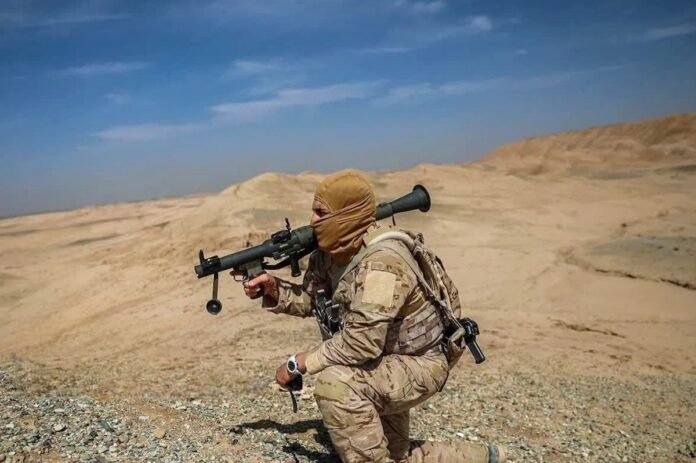






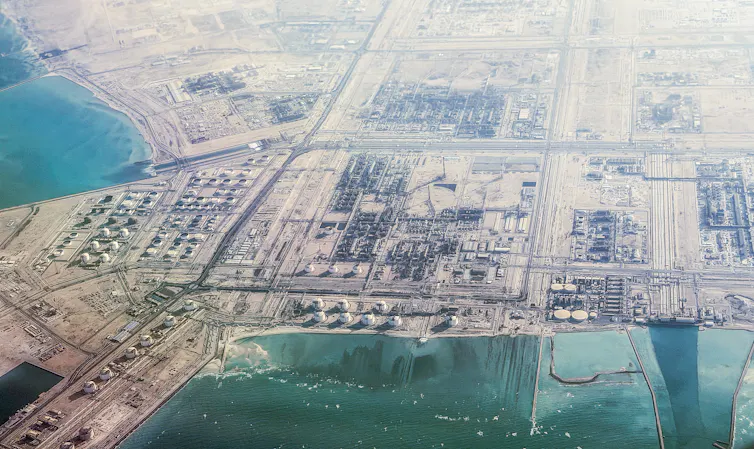
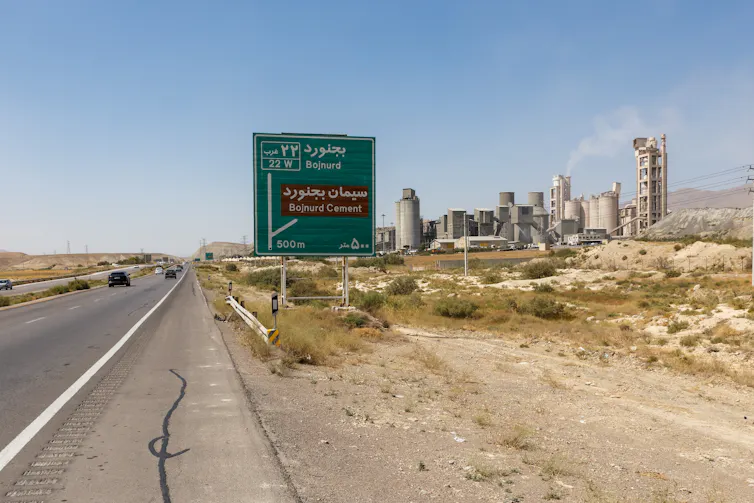





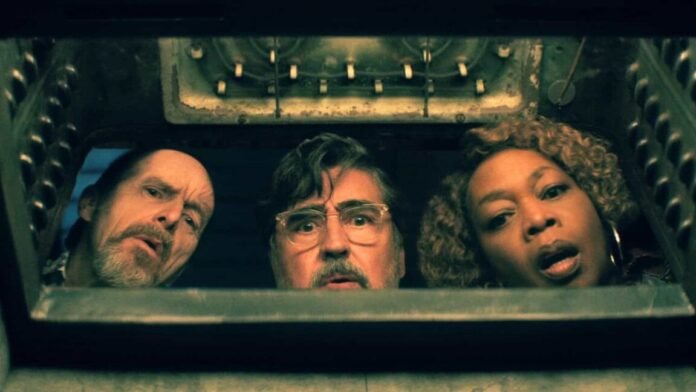





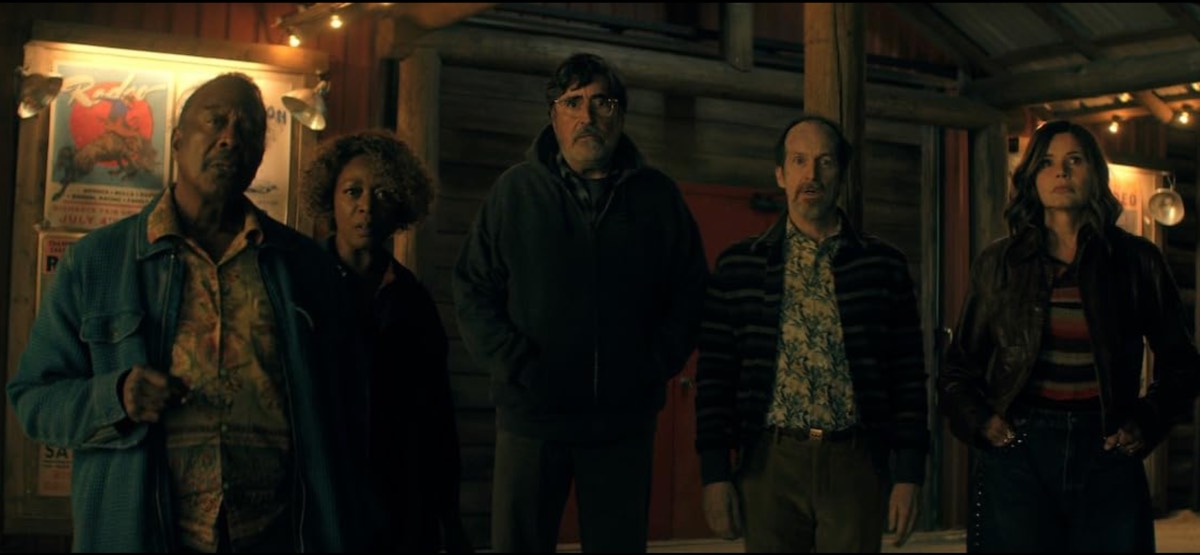




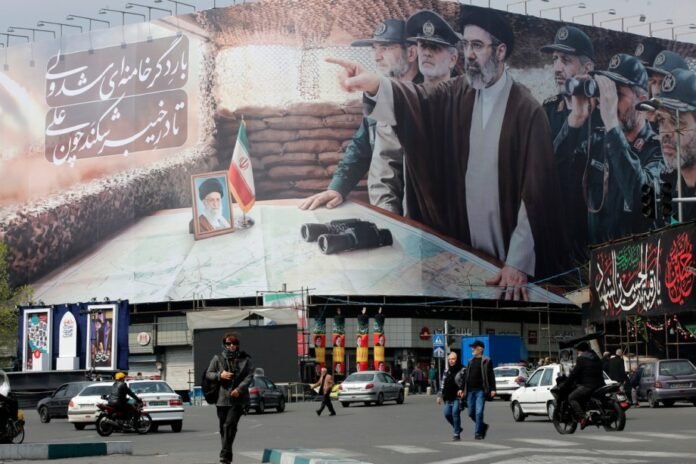
![A view of a banner featuring Iran’s new Supreme Leader Mojtaba Khamenei and senior commanders of the Islamic Revolutionary Guard Corps (IRGC) as the attacks by the United States and Israel against Iran continue on March 14, 2026. [Fatemeh Bahrami - Anadolu Agency]](https://i0.wp.com/www.middleeastmonitor.com/wp-content/uploads/2026/03/AA-20260314-40822389-40822378-BANNER_OF_IRANS_NEW_SUPREME_LEADER_MOJTABA_KHAMENEI_IN_TEHRAN.jpg?fit=920%2C613&ssl=1)






